Matsutake
Tricholoma matsutakesyn. Tricholoma bakamatsutake, Tricholoma fulvocastaneum
 Alex Heyman (CC0)
 © wkee4ager (CC BY 4.0)
 © Leila S. Berg (CC BY)
 © Erik Kagge (CC BY)
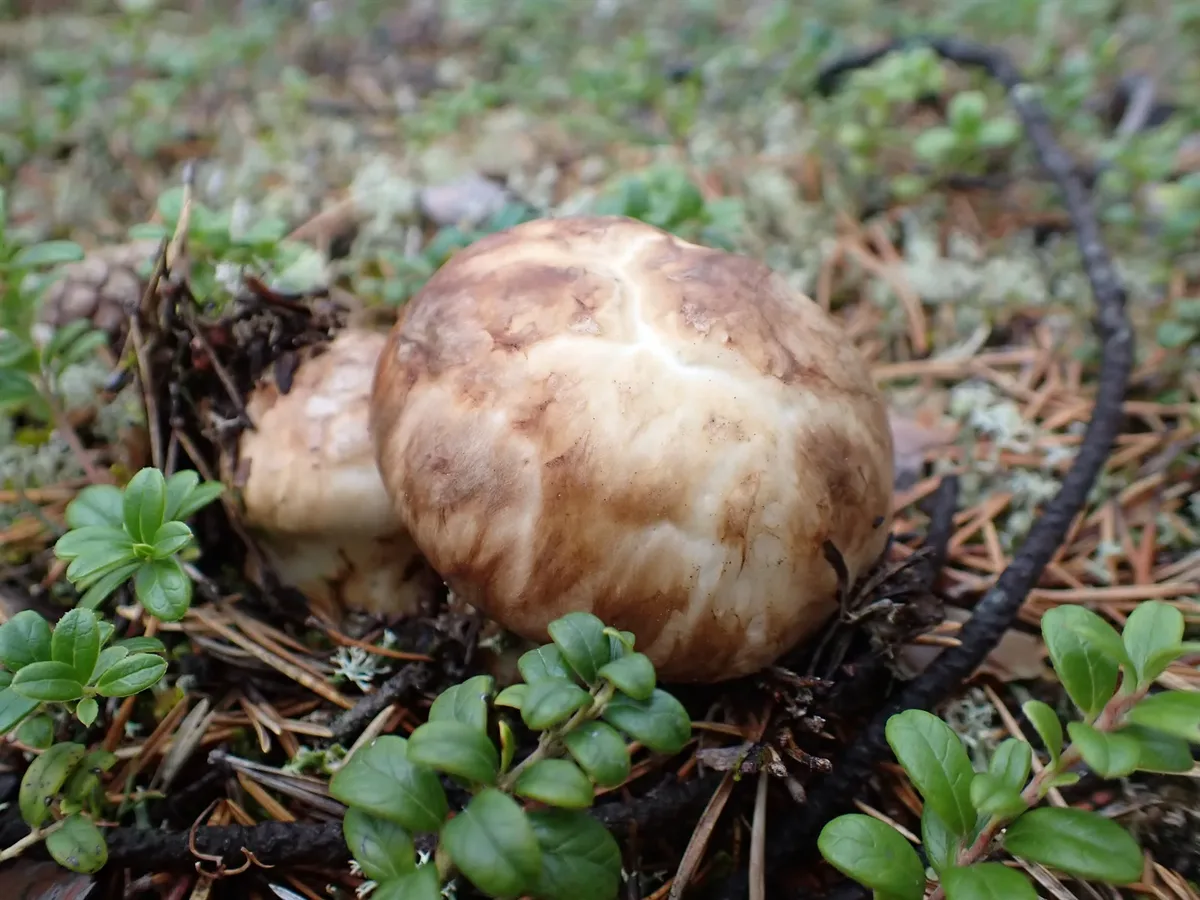 © Erik Kagge (CC BY)
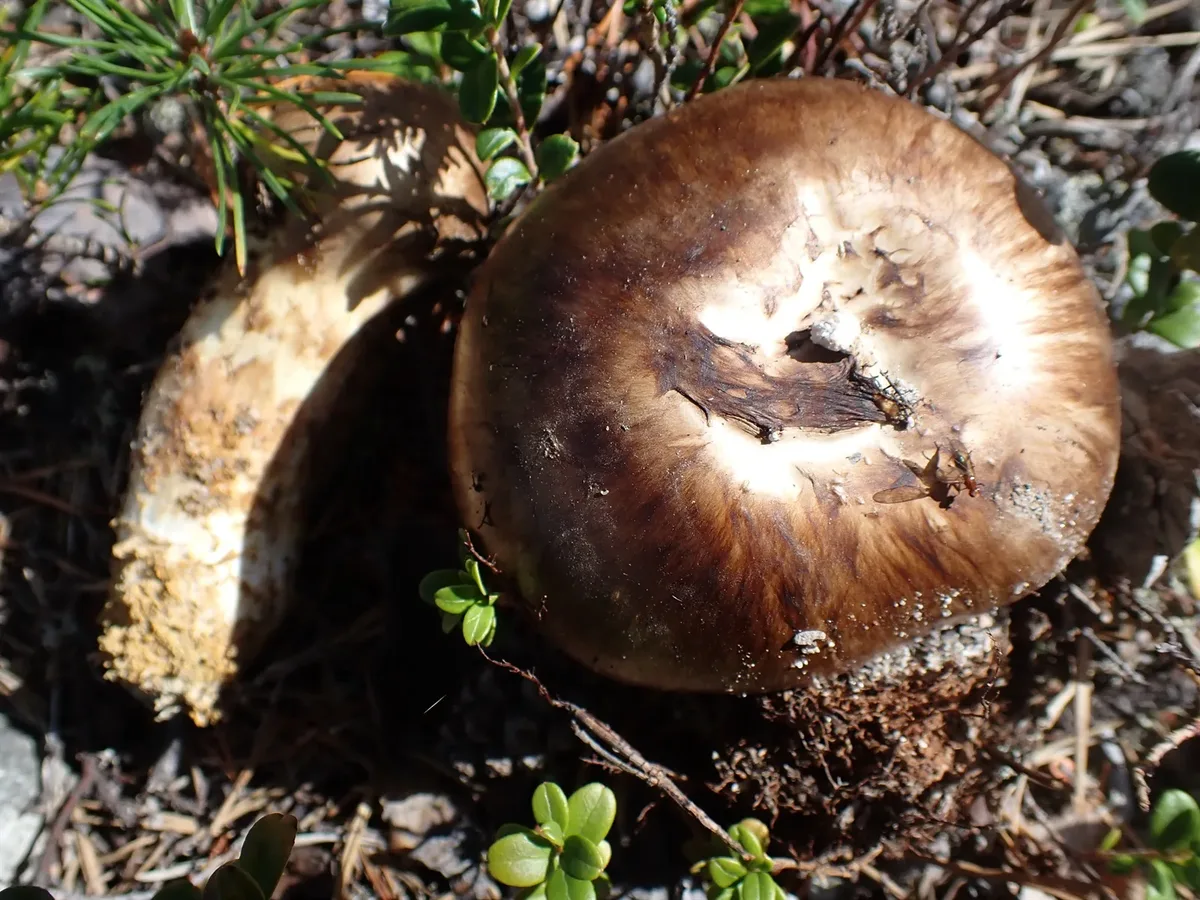 © Erik Kagge (CC BY)
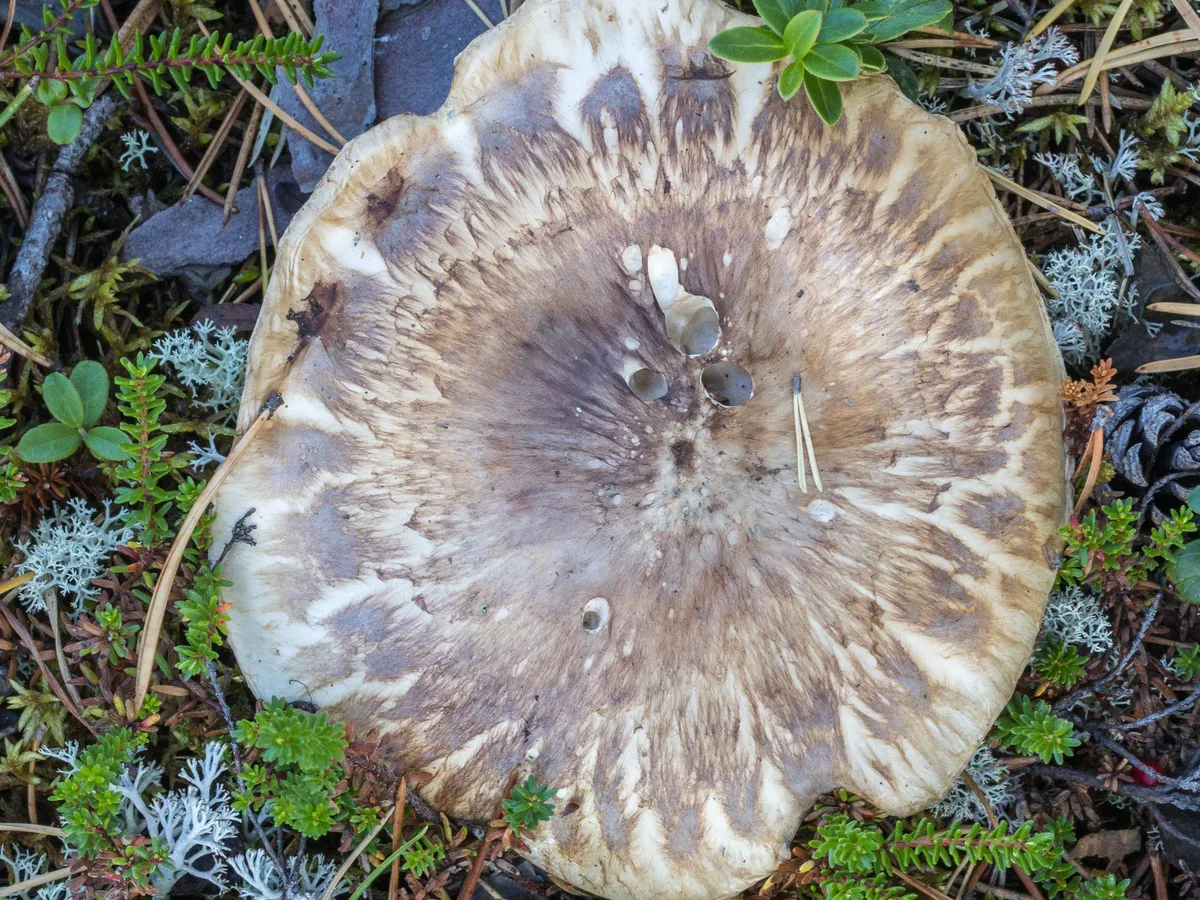 © Alpo Huhmarniemi (CC BY)
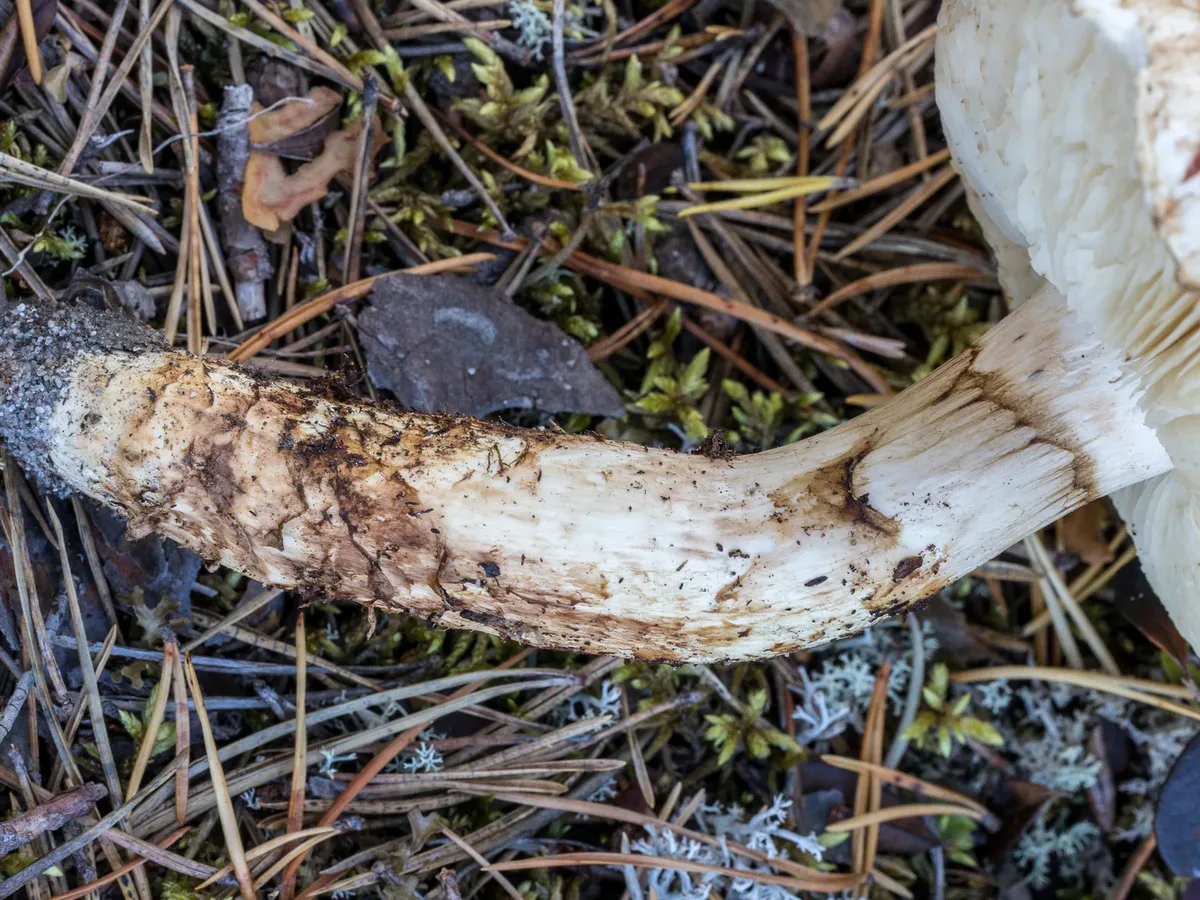 © Alpo Huhmarniemi (CC BY)
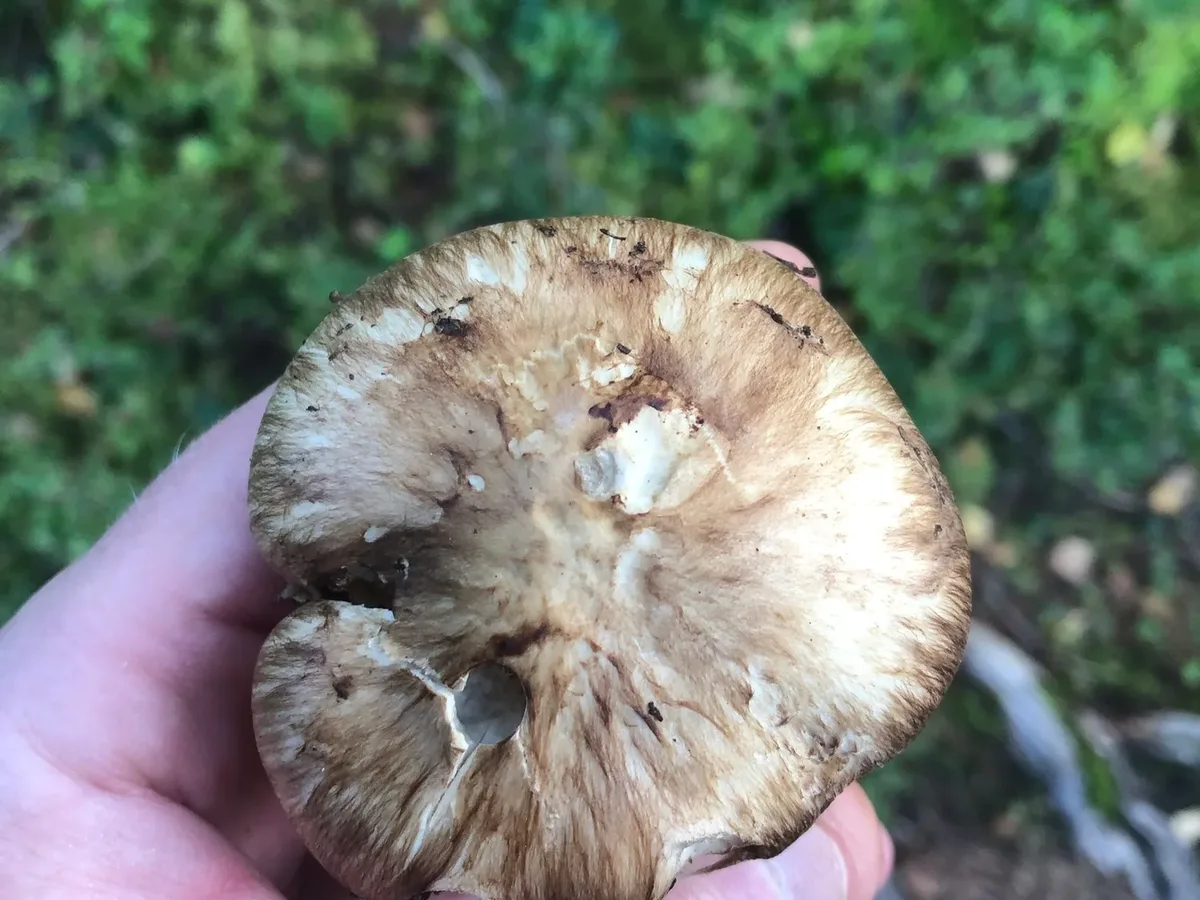 © wkee4ager (CC BY 4.0)
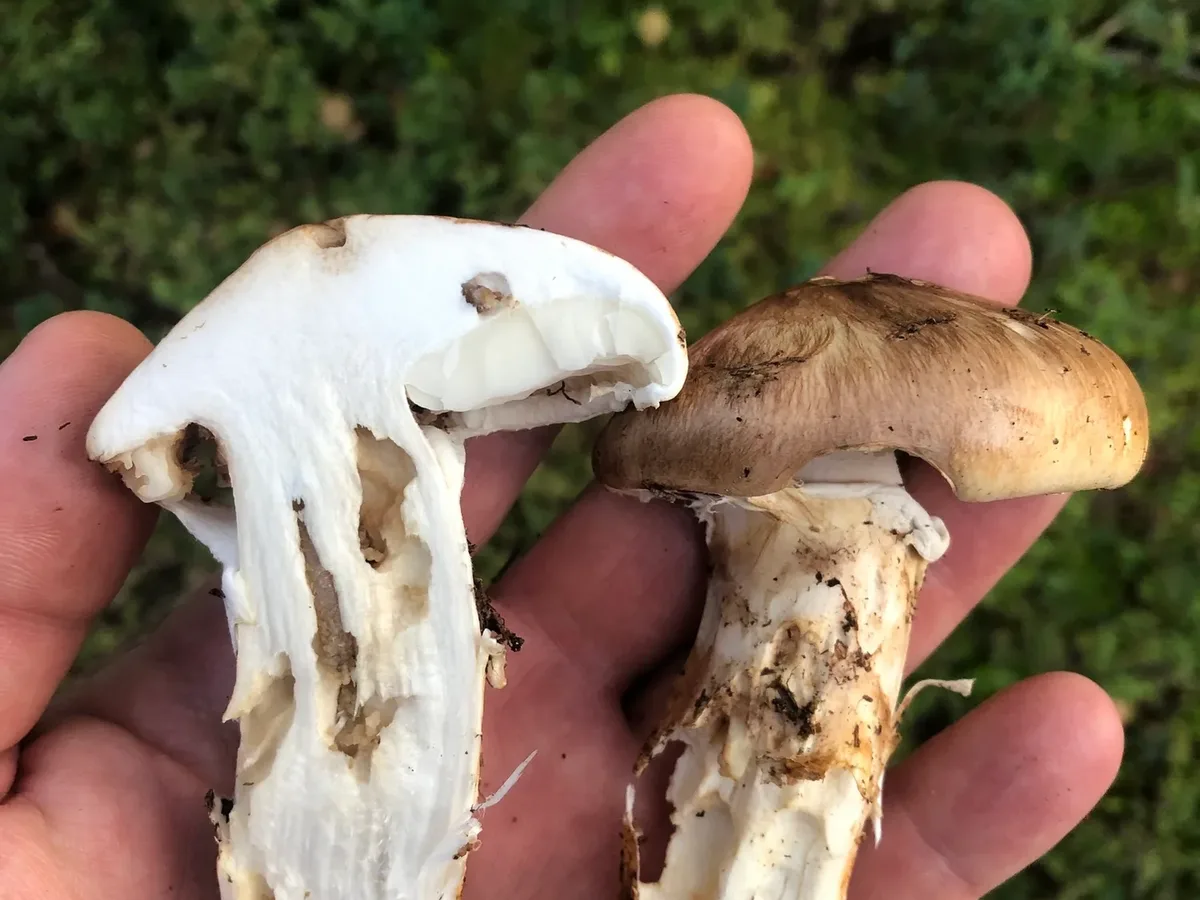 © wkee4ager (CC BY 4.0)
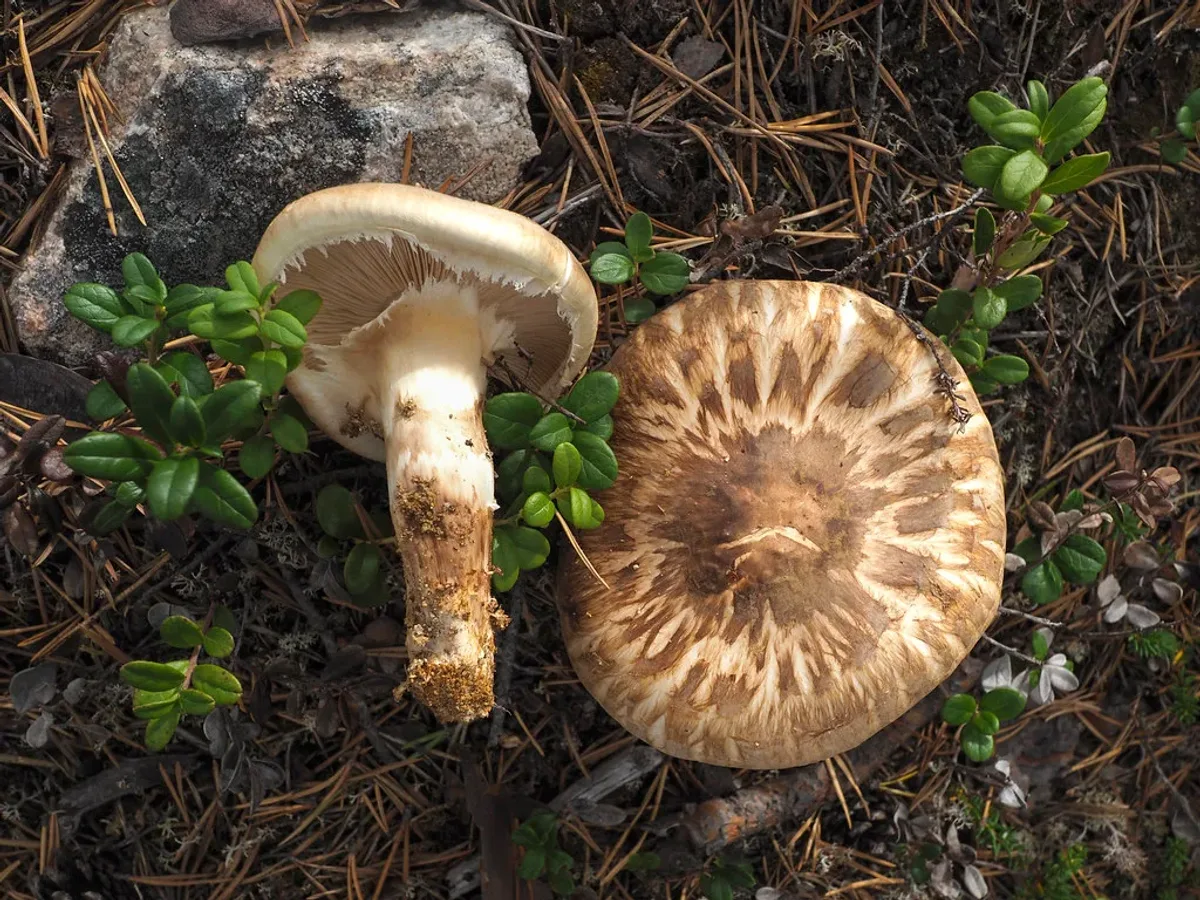 © Helene Lind Jensen (CC BY 2.0)
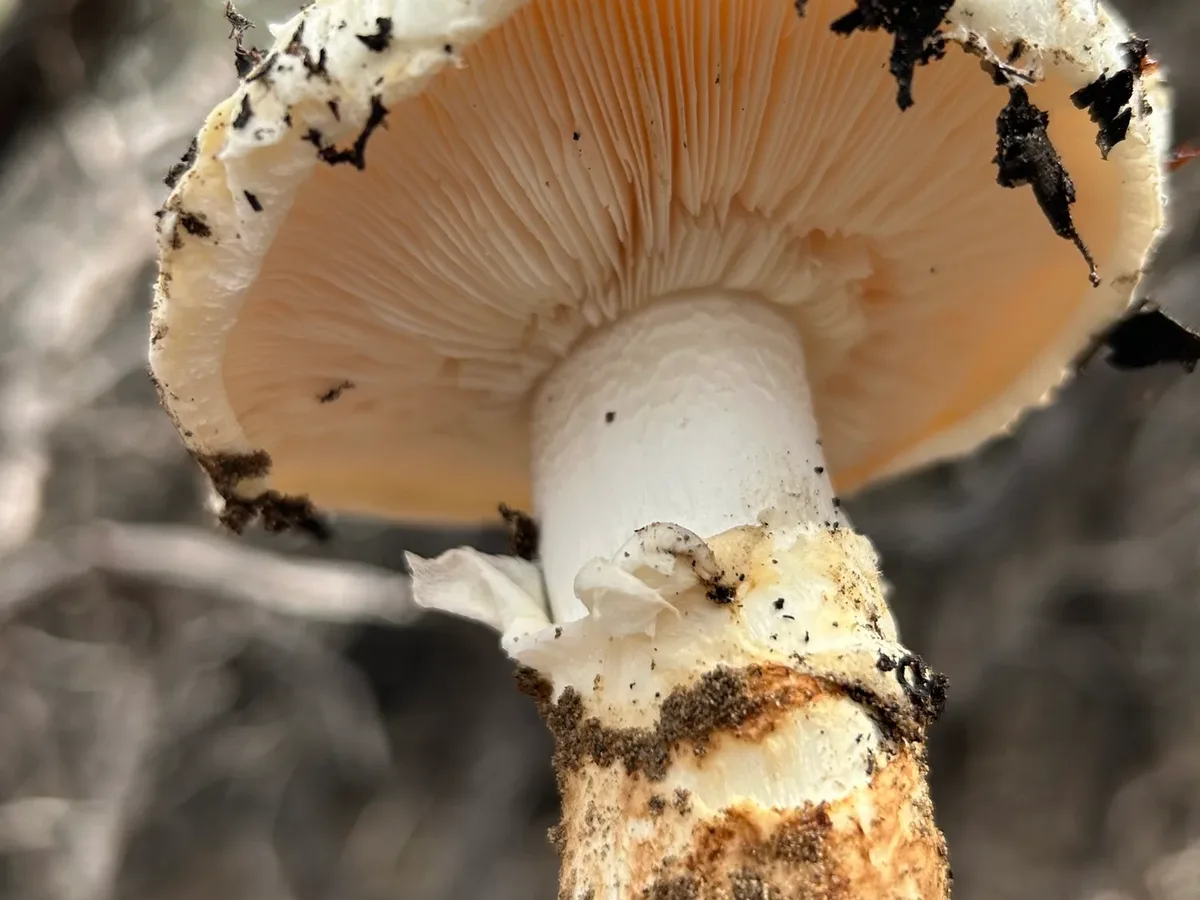 Alex Heyman (CC0)
 Alex Heyman (CC0)Alex Heyman (CC0)© wkee4ager (CC BY 4.0)
One of the best mushrooms you can bring home - once you are certain of the identification.
Never eat a mushroom you are not 100% sure of - check the look-alikes below, and always cook wild mushrooms.
How to recognise it
Tricholoma matsutake is built for presence.
Cap
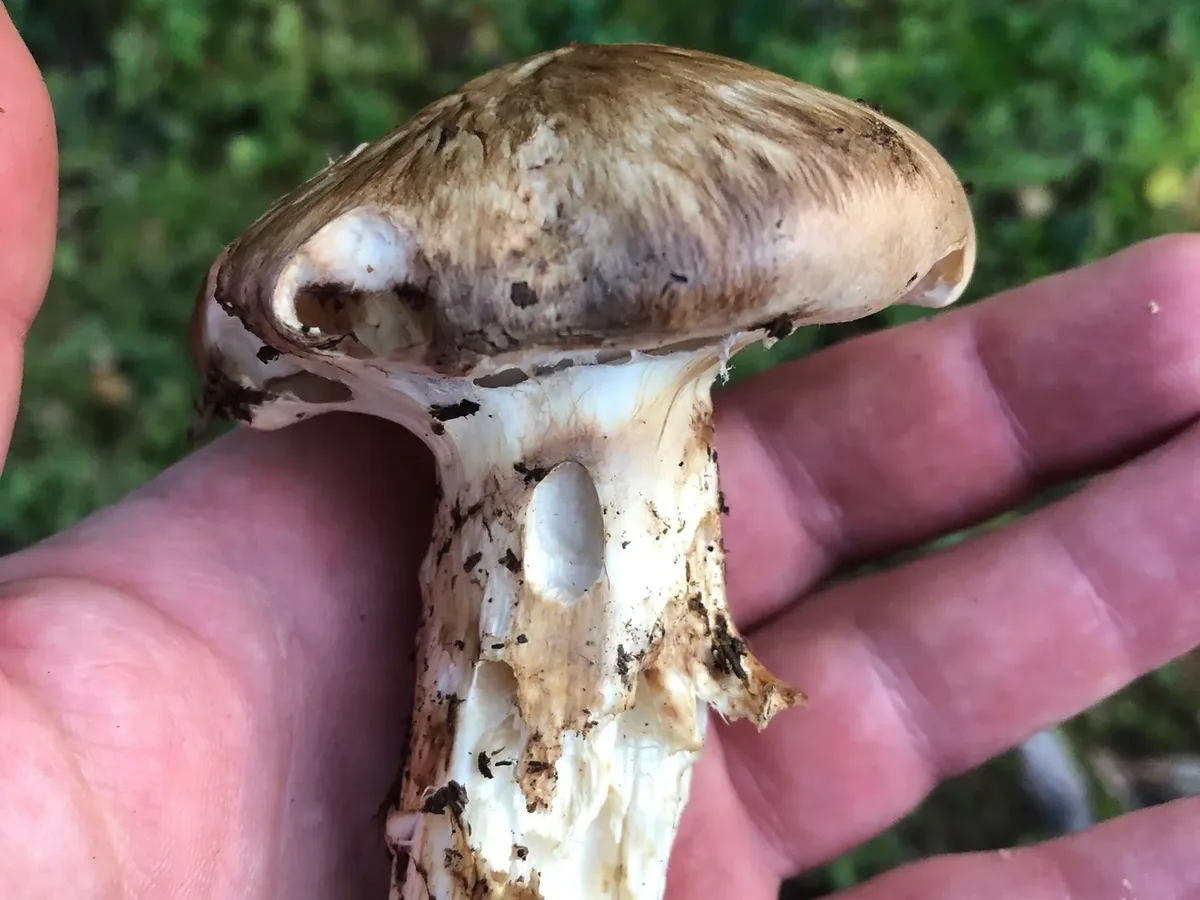
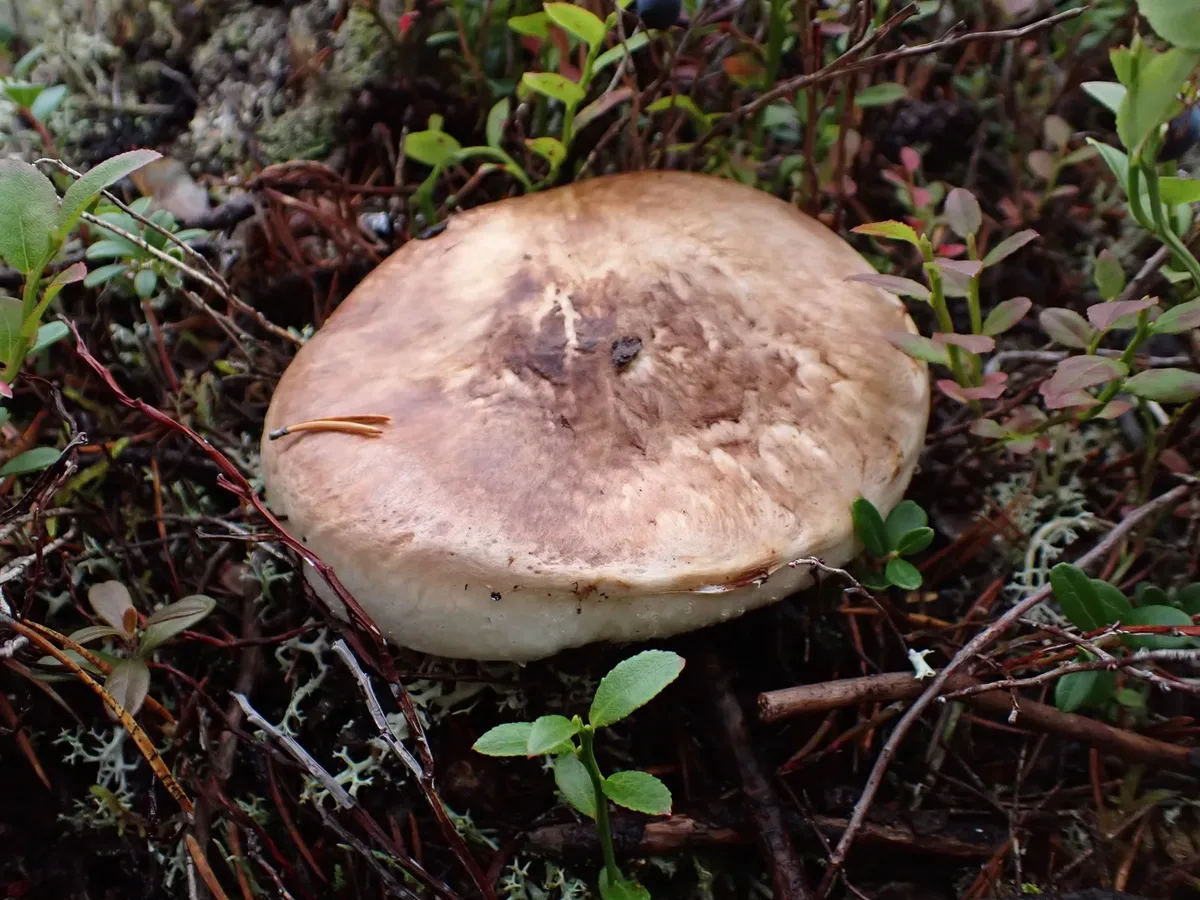
Young buttons push through the needle litter like pale, rounded loaves - white to ivory, the surface smooth and clean - but as the cap expands it is progressively armoured with dark cinnamon-brown fibrils that press into the flesh and form coarse scales, giving the mature pileus a distinctly two-toned look: pale ground colour showing between darker fibrillose patches.
The cap spans 8-20 cm on a typical fruiting body and can reach 35 cm on exceptional specimens, its margin remaining inrolled and cottony for longer than most Tricholoma species.
Stem
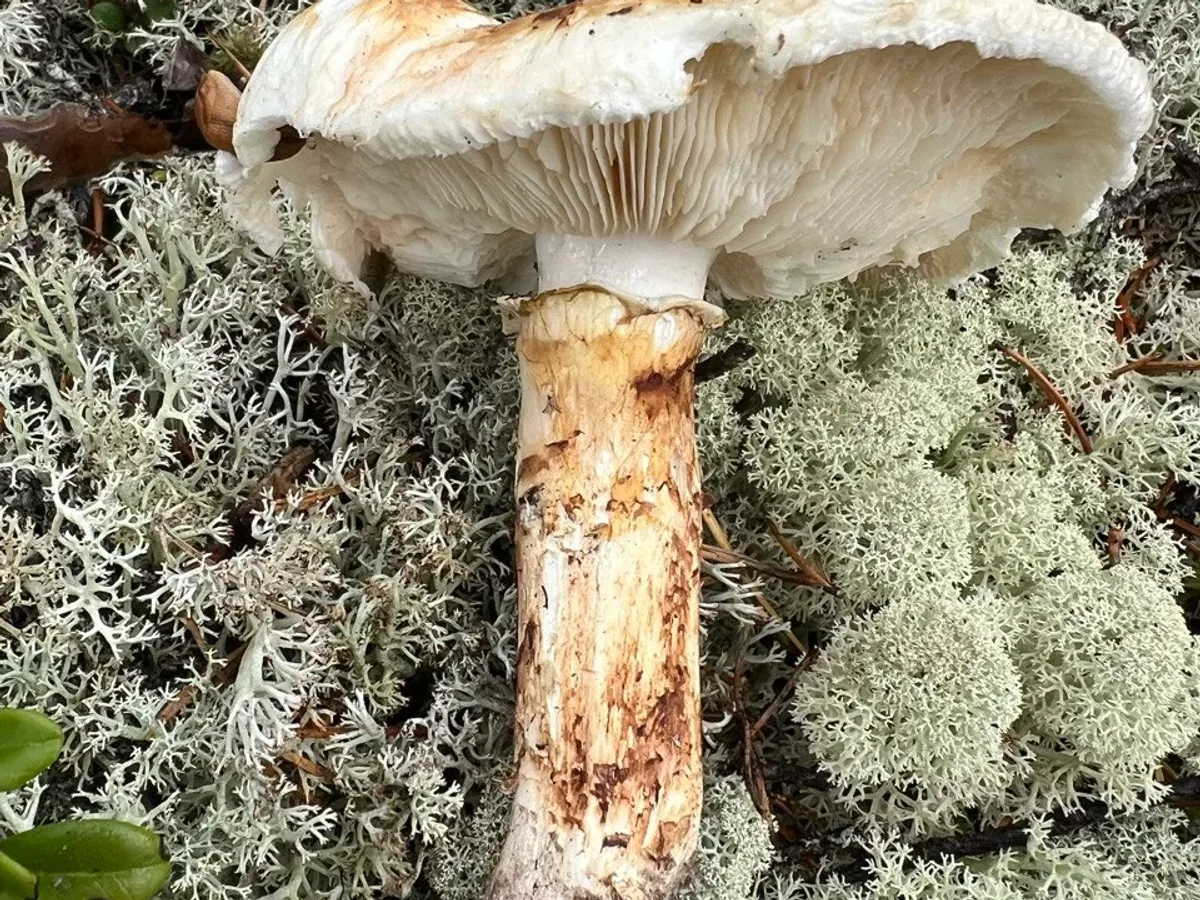
The stem is the giveaway: massively stout, up to 15 cm tall and 5 cm in diameter, with a prominent membranous ring - the remains of the partial veil - that hangs like a skirt roughly halfway down.
Above the ring the stem surface is white and smooth; below it is densely covered in the same dark fibrillose scales as the cap.
Gills
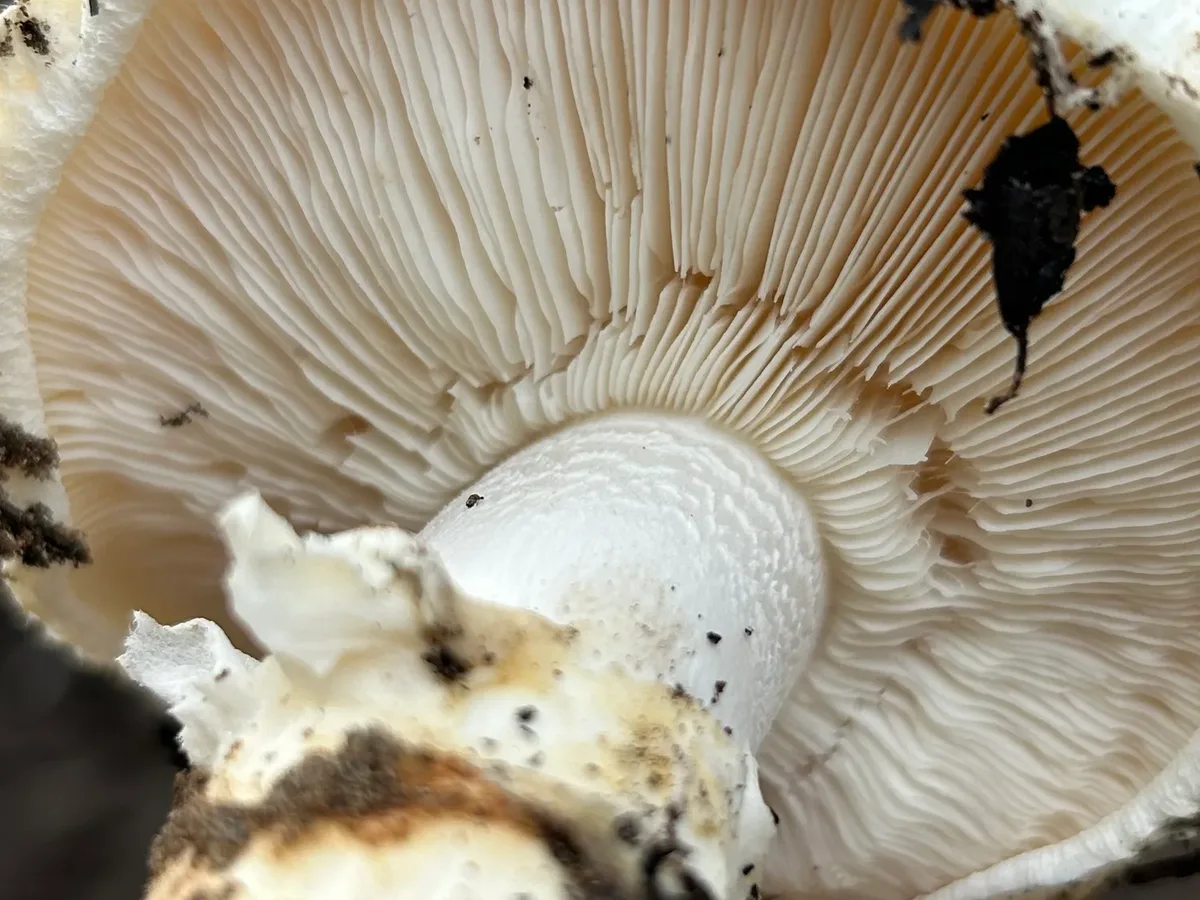
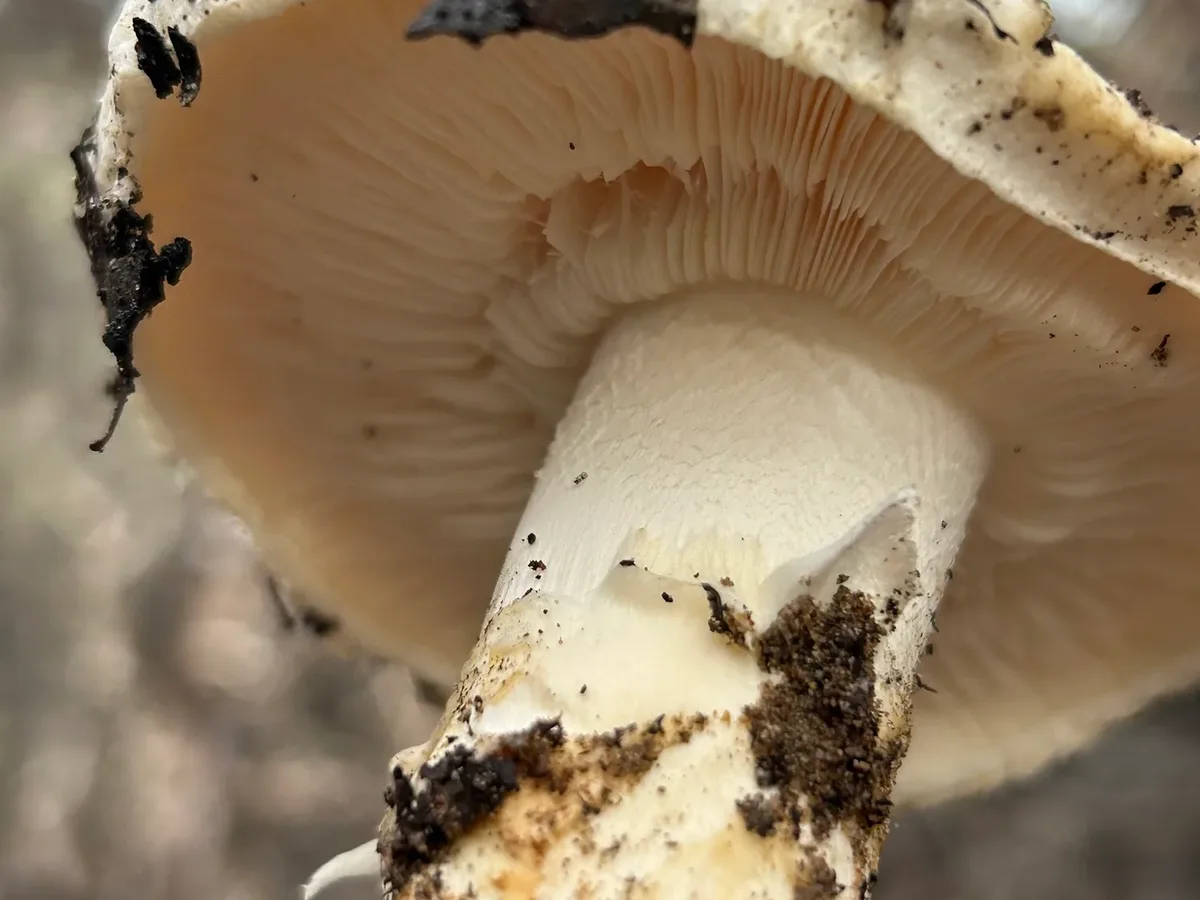
The gills are white, densely packed, and have a slightly sinuate (curved) attachment to the stem - never decurrent, never free.
Flesh
Slice through the flesh and it stays white; there is no bluing, no reddening, no latex, no staining of any kind. The spore print is white.
Smell & taste
The feature that overrides all others is olfactory: a warm, penetrating fragrance described as spiced pine resin, combining cinnamon-like volatiles with earthy forest notes, principally driven by 1-octen-3-ol (octenol, the ubiquitous "mushroom alcohol") alongside methyl cinnamate and other aromatic esters.
No other wild mushroom in the northern hemisphere produces exactly this scent, and in Japan it has been encoded in the language of culture, poetry, and cuisine for over a thousand years.
Where & when it grows
Habitat
Matsutake's habitat requirement begins underground, in the fine root tips of its host pines, and extends outward from there in ways that make it almost impossible to cultivate.
The fungus forms ectomycorrhizal sheaths - dense wrappings of hyphal tissue - around the absorbing roots of its host, exchanging mineral nutrients and water for photosynthate sugars from the tree. This is not a casual arrangement: the partnership is obligate for the fungus, meaning it cannot complete its life cycle on dead organic matter the way a saprophyte can.
It needs a living tree, and not just any tree. In Japan and Korea the preferred host is Pinus densiflora, the Japanese red pine - a relatively light-demanding, fire-adapted species that historically occupied much of the managed satoyama landscape. In Yunnan and Sichuan it shifts to Pinus yunnanensis, Pinus armandii, and several oak species; in Tibet and Bhutan local pine species substitute.
The soil chemistry matters as much as the tree: matsutake demands well-drained, nutrient-poor, acidic mineral soil, typically pH 4.5-5.5. Compacted soils, fertilised forest floors, or ground enriched by decades of leaf-litter accumulation suppress it.
This is one reason populations in Japan collapsed through the 20th century: the abandonment of traditional satoyama management allowed understorey vegetation to thicken, organic matter to accumulate, and soil conditions to drift away from the lean, open state matsutake requires.
The mycelium organises itself into a "shiro" (literally "castle" in Japanese) - a ring-shaped mat of hyphae spreading concentrically outward from a founding point, sometimes reaching 3-5 m in diameter and potentially persisting for many decades. The shiro is the fruiting engine; it advances at a few centimetres per year, and foragers who understand the pattern can mark its position from one season to the next.
When
Matsutake is a creature of narrow windows.
In the classic Japanese and Korean terrain - low to mid-elevation pine forest - the season runs from late September into October, covering roughly 30 days of genuine peak availability, with the exact timing tracked week by week in market bulletins and newspaper columns.
The triggering conditions are not fully understood even now, but cool nights following late-summer warmth, combined with adequate late-season rainfall, consistently bring on the flush. Soil surface temperature dropping through roughly 15°C appears to be one key cue.
In Yunnan and Sichuan the calendar is entirely different: the summer monsoon delivers rain from July onward, and matsutake there fruits from July through September - well before the Japanese season opens and a full ecological mirror of what summer means at those subtropical altitudes.
This geographic spread means the global matsutake trade operates across an extended window, with Yunnan product reaching Japanese markets in July and August before domestic Japanese harvest begins.
In the Russian Far East, fruiting tracks the autumn cooling in September-October, broadly paralleling Japan.
The commercial stakes attached to the season intensify the folklore around first-flush dates: in Japan, the price of first-of-season matsutake - the first basket to arrive at Kyoto's Nishiki market or Osaka's Kuromon market - has historically made national news.
How it grows
Because it is an obligate mycorrhizal species, matsutake has resisted every commercial cultivation attempt for over a century of effort. The shiro mycelium can be grown in controlled laboratory conditions, and mycorrhizal seedlings can be produced, but coaxing them to fruit under field conditions has not been achieved at commercial scale.
This places matsutake in a category of irreplaceable wild food alongside white truffle and périgord truffle - its supply is entirely at nature's discretion.
Fruiting bodies develop from button stage to maturity over roughly 5-10 days when conditions are right, emerging singly or in small clusters at the leading edge of the shiro. They push upward through the litter layer with impressive force for their size, the thick white veil stretched tight across the gills of a young specimen.
As the cap expands the veil tears from the cap margin and collapses into the skirt-like ring.
The entire shiro advances a few centimetres outward each year; veteran foragers revisit known shiro positions annually, knowing that the fruiting edge has moved and that the ring of previous years' pickings marks where to look now.
Because the shiro is finite and sensitive, repeated deep disturbance of the soil around a known mat - digging rather than picking - can damage or kill it. Sustainable harvest means picking cleanly at the stem base without disturbing the surrounding needle litter more than necessary.
Fruiting conditions
Mycorrhizal with pine on well-drained, nutrient-poor, acidic soil (pH ~4.5-5.5); fruits in autumn, with Yunnan populations triggered earlier by summer rains.
Look-alikes
The critical safety issue with matsutake is that it is large, pale, and ringed - characteristics shared by some of the most dangerous Amanita species.
The risk is not theoretical: in North America, matsutake pickers from Asian immigrant communities have been poisoned after confusing Amanita smithiana for Amanita-naïve reasons. A. smithiana causes acute tubular nephritis - kidney toxicity - which may be delayed in onset and require dialysis.
Apply three checks:
- 1Volva (the single most reliable distinguishing structure): all Amanita species develop from a universal veil that leaves a sac, cup, or collar of tissue at the very base of the stem, either above or just below the soil surface. Matsutake has no volva, none whatsoever. Dig carefully around the stem base of any pale ringed mushroom in pine forest and examine it - if there is any hint of a membranous sac or collar, stop.
- 2Scent: Amanita species have a faint, mushroomy to faintly chemical smell, nothing resembling the warm, spiced-pine fragrance of matsutake. A specimen that looks right but does not produce the characteristic aroma when the flesh is broken should not be eaten.
- 3Stem scales: matsutake has dense, dark fibrillose scales below the ring that are pressed into the flesh; many Amanitas have a smoother or more fragile stem surface.
Tricholoma caligatum, the European matsutake or booted knight, is a close Tricholoma relative that can appear similar in outline and scent but has a distinctly bitter taste on the raw flesh - a clear disqualifier.
Use all three checks together: no volva, correct scent, fibrillose scales.
Matsutake has NO volva (no sac at the stem base), bears fibrillose brown scales, and has a very characteristic spicy pine aroma. Amanitas have a volva, white gills, softer flesh, and lack the matsutake scent.
In North America, false matsutake is confused with Amanita smithiana, which is a kidney toxin. Check for absence of a volva and presence of the spicy pine aroma.
Similar in appearance but bitter.
In the kitchen
Picking & cleaning
Matsutake is graded with a precision that reflects its extraordinary market value, and understanding that grading is inseparable from how it should be picked.
In Japan the system runs from Grade 1 (closed-cap, firm, long-stemmed, pristine) through Grades 2 and 3 (cap beginning to open, rim spreading) down to Grade 4 or 5 (fully open, flat cap, aroma beginning to diminish). The closed-cap Grade 1 specimen - stem white below the ring, scales sharp and dark, veil intact - commands prices that can exceed several hundred US dollars per kilogram at peak season, and first-of-season examples reach far higher.
The practical consequence for the picker: harvest young. A closed cap means maximum aroma, maximum texture, and maximum commercial value. A fully open cap has lost much of its volatile charge and is worth a fraction of the price.
Once picked, do not wash it. Water is the enemy of the scent: 1-octen-3-ol and the cinnamate esters responsible for the aroma are volatile and partially water-soluble, and once diluted or washed away they are gone. Transport in a cool, breathable container - traditionally a cedar box in Japan - and use within 24-48 hours.
In Korea the parallel grading system moves through Forestry Cooperative auctions using grades 1 (finest) to 4-5; the criteria are similar.
Yunnan product is frequently airfreighted to Tokyo within 48 hours of harvest, the entire cold chain calibrated around preserving that signature scent across 3,000 kilometres.
Cooking
Japanese culinary philosophy around matsutake is built on a single principle: protect the scent, minimise intrusion. The aroma is the point; everything else serves it.
- Dobin mushi is perhaps the purest expression - the mushroom is steamed in a small clay teapot (dobin) with a light kombu-and-bonito dashi, a few pieces of chicken or white fish, shrimp, ginkgo nuts, and occasionally a single mitsuba leaf. The pot is sealed and steamed gently until just cooked through; diners pour a little of the broth into the teapot lid and drink it separately, then eat the contents, squeezing a few drops of sudachi citrus over everything. The entire dish is an argument for subtlety.
- Matsutake gohan - rice cooked with sliced matsutake, kombu dashi, soy sauce, sake, and a little salt - is the household version: the mushroom steams with the rice and perfumes every grain.
- Yaki-matsutake, grilled over a charcoal fire with almost nothing added and finished with a squeeze of sudachi, lets the Maillard reaction intensify the aromatic compounds that already exist.
- Tempura is less common but works well when the oil is clean and hot.
In Korea, songi is often eaten with far less ceremony: raw, thinly sliced, dipped in sesame oil and salt, or simmered briefly in a clear beef or chicken broth.
In Yunnan the local tradition was historically to treat it as an everyday pine-forest mushroom - sliced raw with soy sauce, boiled in chicken broth with goji berries, or stir-fried simply - and only the export trade to Japan created the premium framing that now attaches to it there.
Across all preparations the shared wisdom is: low heat, short time, no water, no aggressive seasoning that would compete with the aroma you spent so much to acquire.
Good to know
Matsutake itself is a well-established edible with no documented intrinsic toxicity in correctly identified specimens; the safety risk is entirely about misidentification.
The danger profile is high because it grows in the same habitat and season as toxic Amanita species, shares a pale colour and prominent ring, and attracts pickers from cultural backgrounds where the mushroom is deeply familiar - meaning confidence can outrun care when habitat and conditions change across continents.
The protocol is straightforward but must be applied in full every time:
- 1Examine the very base of the stem, below soil level. There must be no volva - no sac, no collar, no fragment of a membranous cup.
- 2Smell the broken flesh. The spiced-pine aroma should be immediate and unmistakable; a faint or absent scent is a red flag.
- 3Confirm the gills are white, densely packed, and sinuate, with no decurrent run down the stem.
- 4The flesh must not discolour when cut.
If any of these checks raises doubt, do not eat the specimen. Because the deadly lookalikes in this genus cause kidney failure - potentially delayed by a day or more after consumption - there is no margin for uncertainty.
A reference guide - never an edibility guarantee. When in doubt, leave it out.