Gassy knight
Tricholoma inamoenumsyn. Agaricus inamoenus Fr., Gyrophila inaminoena (Fr.) Quél.
 © Alex Reitan (CC BY)
 © Andrejus Gaidamavičius (CC BY)
 © Ulrik Andreassen (CC BY)
 © Lillian Iversen (CC BY)
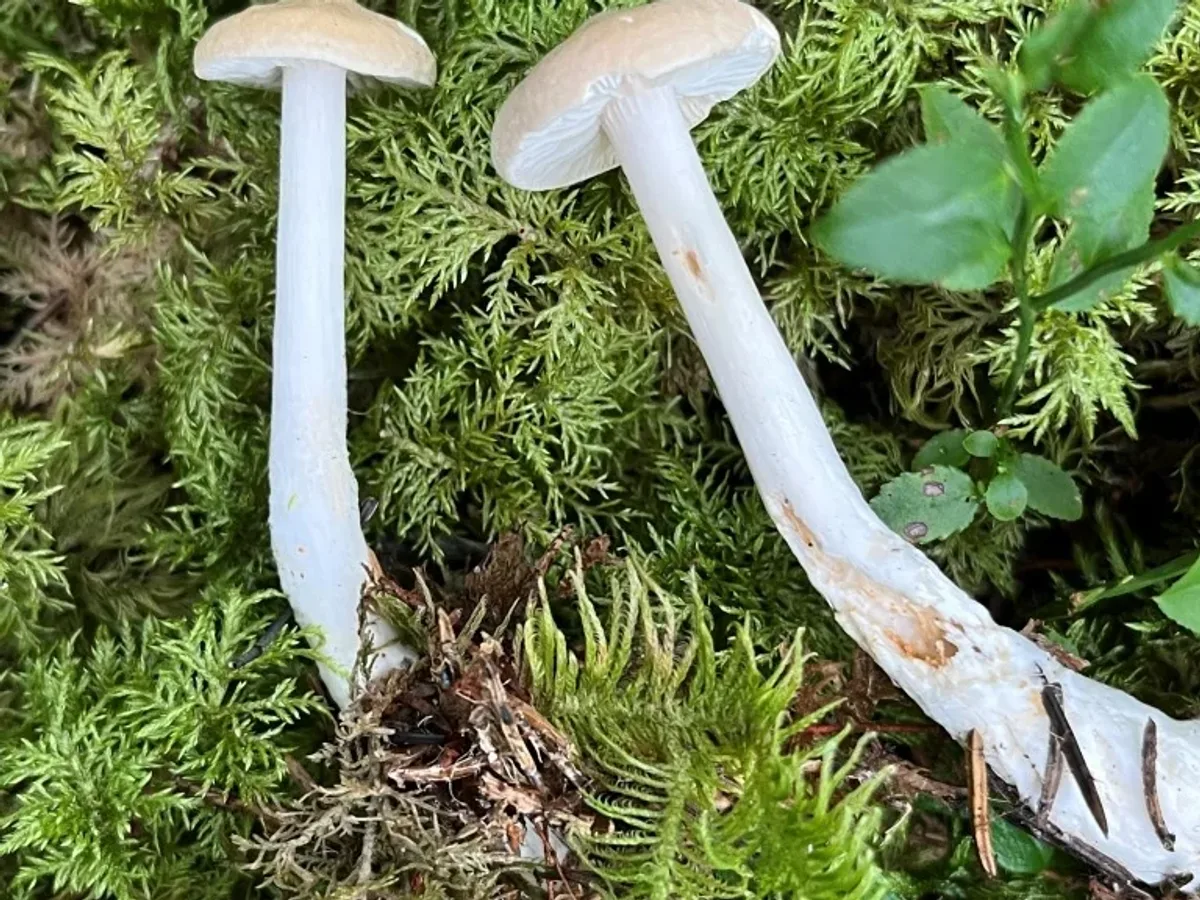 © Siv Moen (CC BY)
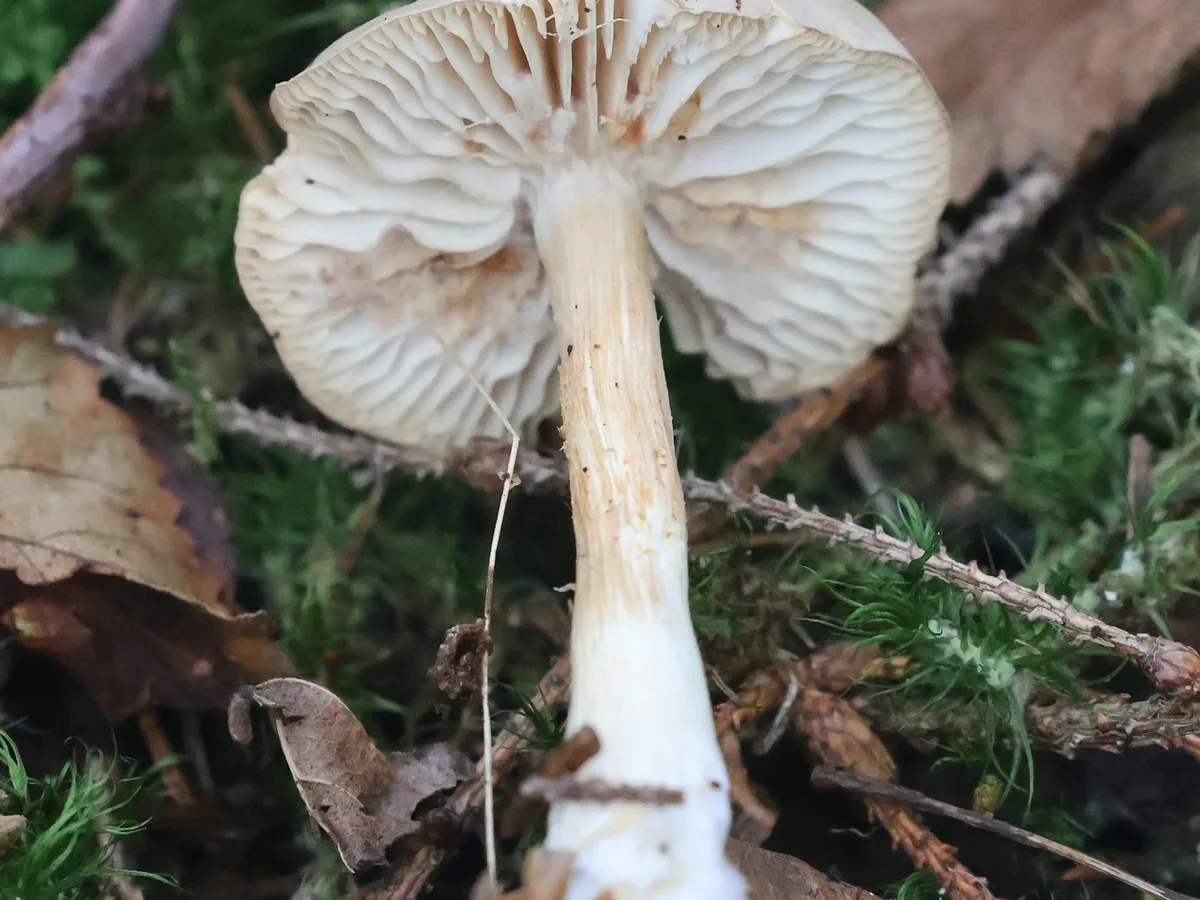 © Andrejus Gaidamavičius (CC BY)
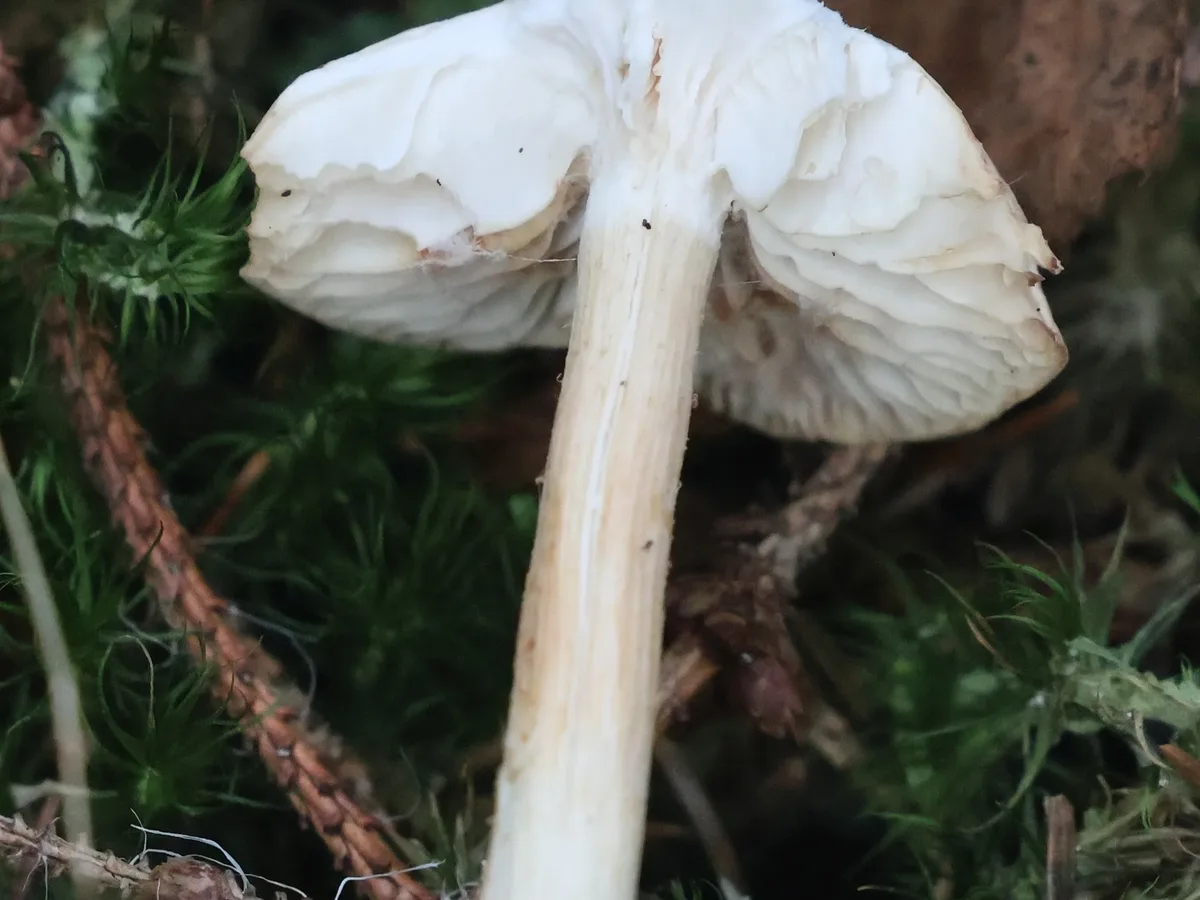 © Andrejus Gaidamavičius (CC BY)
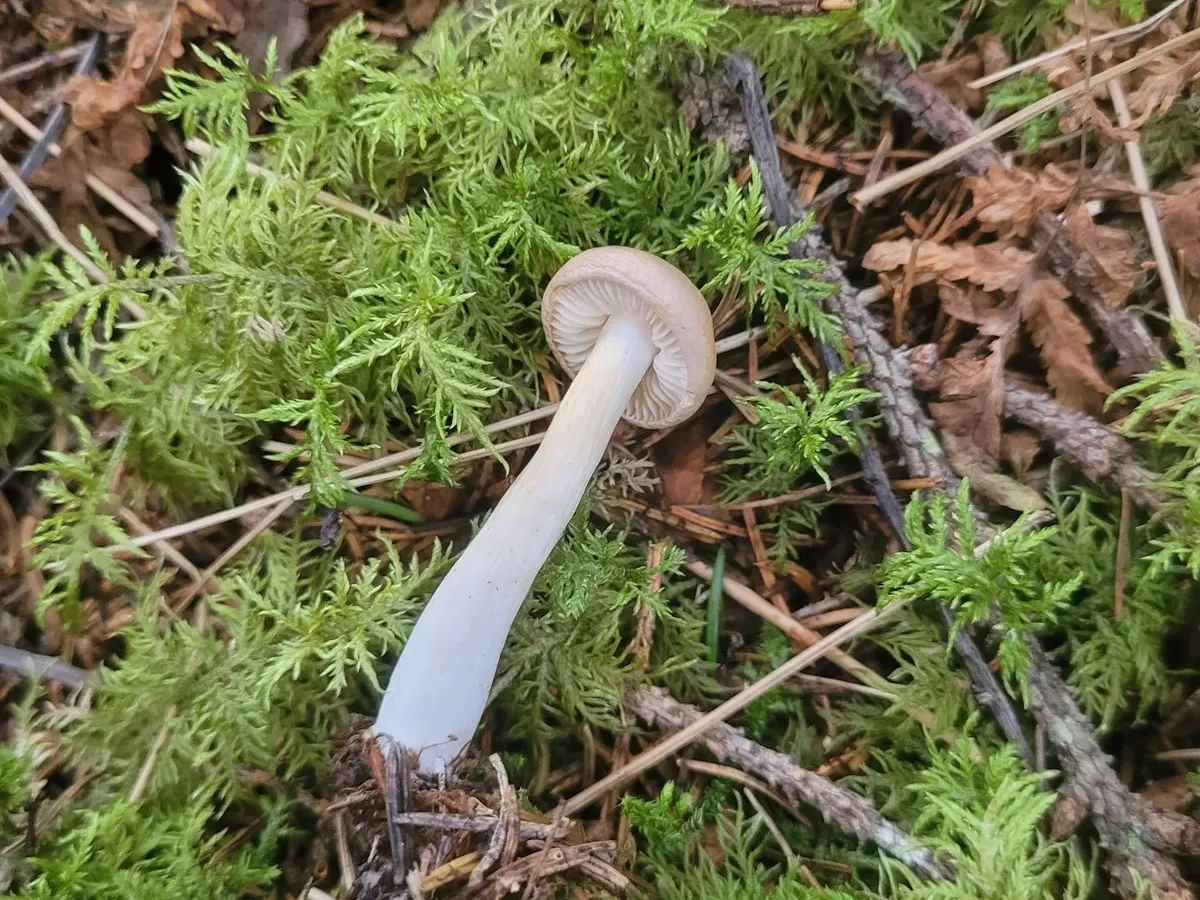 © Siri Lie Olsen (CC BY)
 © Alex Reitan (CC BY)© Alex Reitan (CC BY)© Andrejus Gaidamavičius (CC BY)
Edible only with the right preparation - or safe for some people but not others. Learn the caveats first.
Never eat a mushroom you are not 100% sure of - check the look-alikes below, and always cook wild mushrooms.
How to recognise it
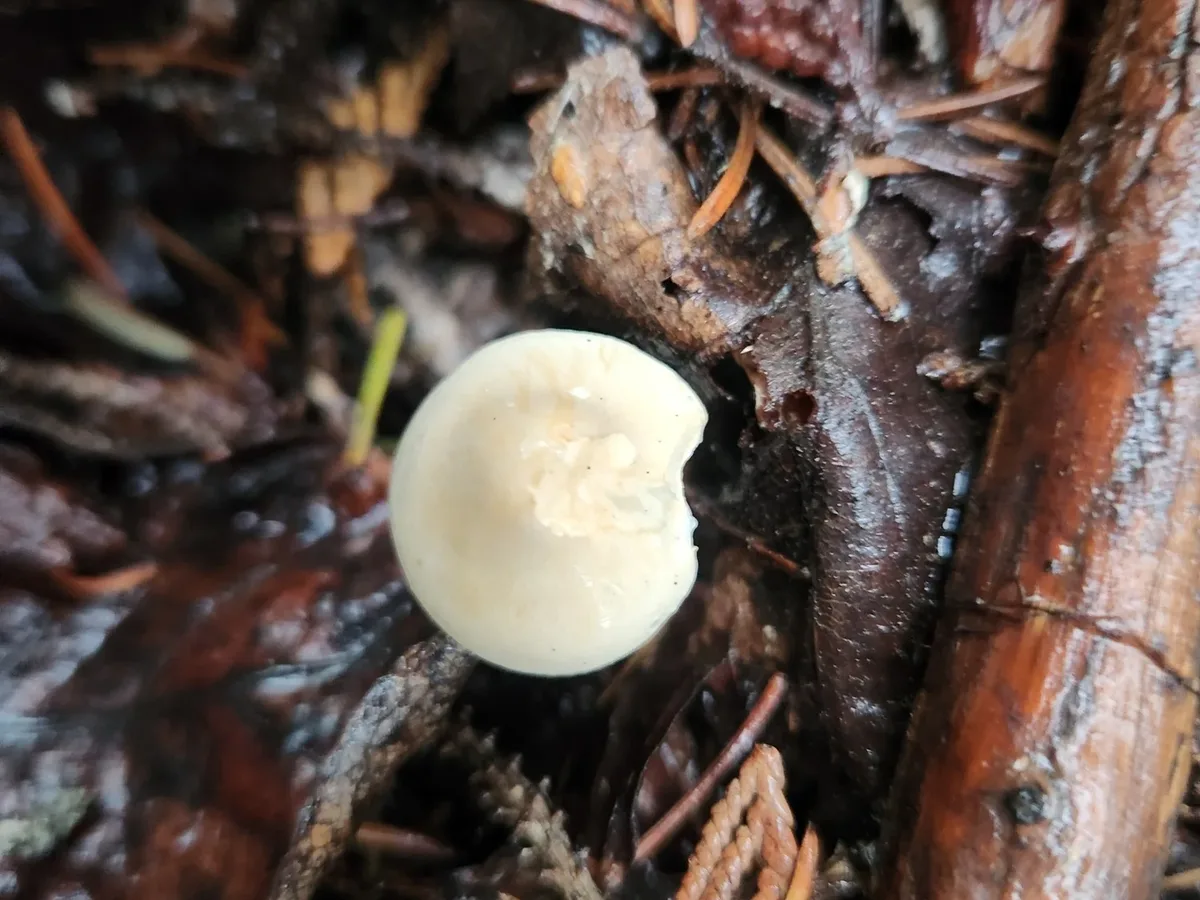
Tricholoma inamoenum is a medium-sized, predominantly white to pale ivory mushroom that belongs to a group of white-fleshed, white-capped knights.
Cap
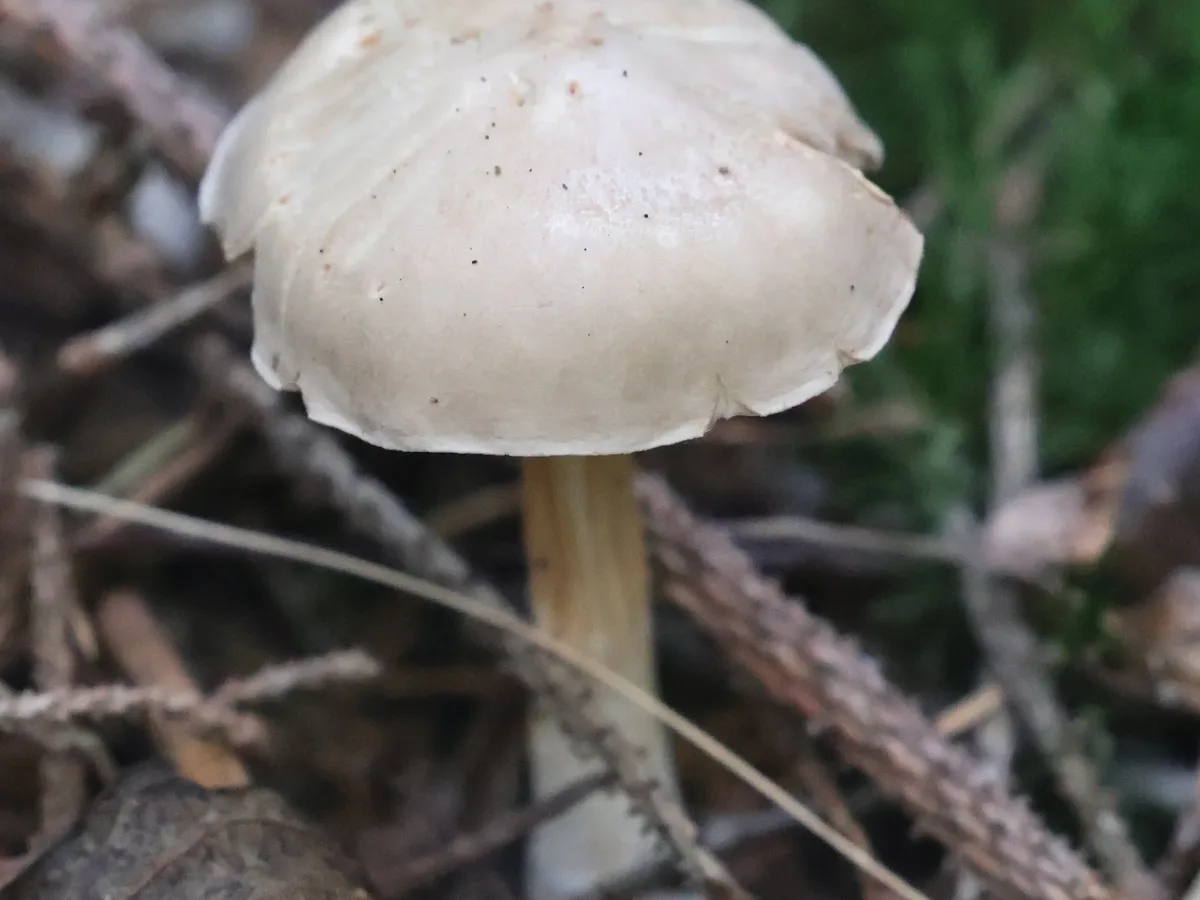
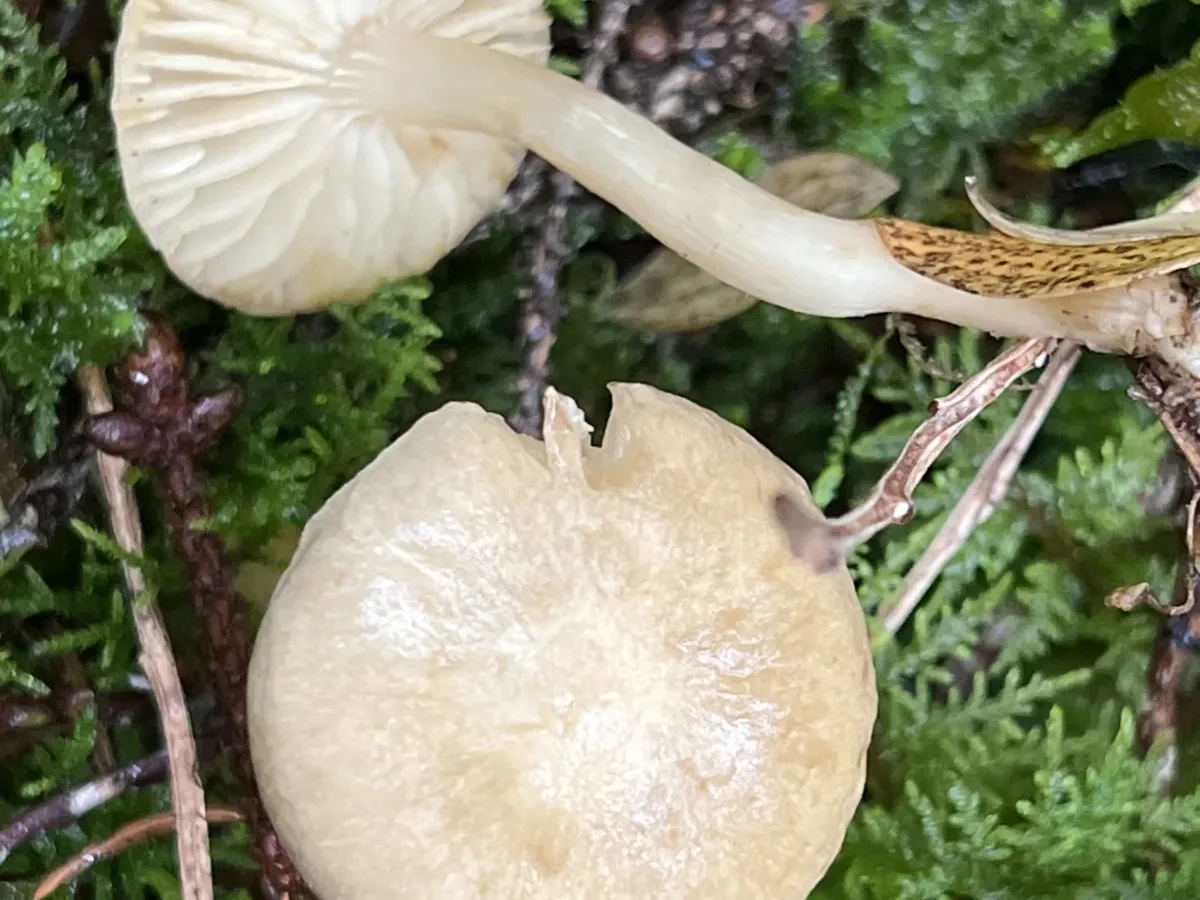
The cap starts convex and becomes broadly flat or shallowly depressed with age, measuring 4-9 cm across, with a surface that is dry and smooth to very finely fibrillose.
The colouring is quiet - white, pale ivory, or very faintly buff, occasionally with a slightly more ochreous tinge at the centre - and gives no visual warning of the species' most important character.
Gills
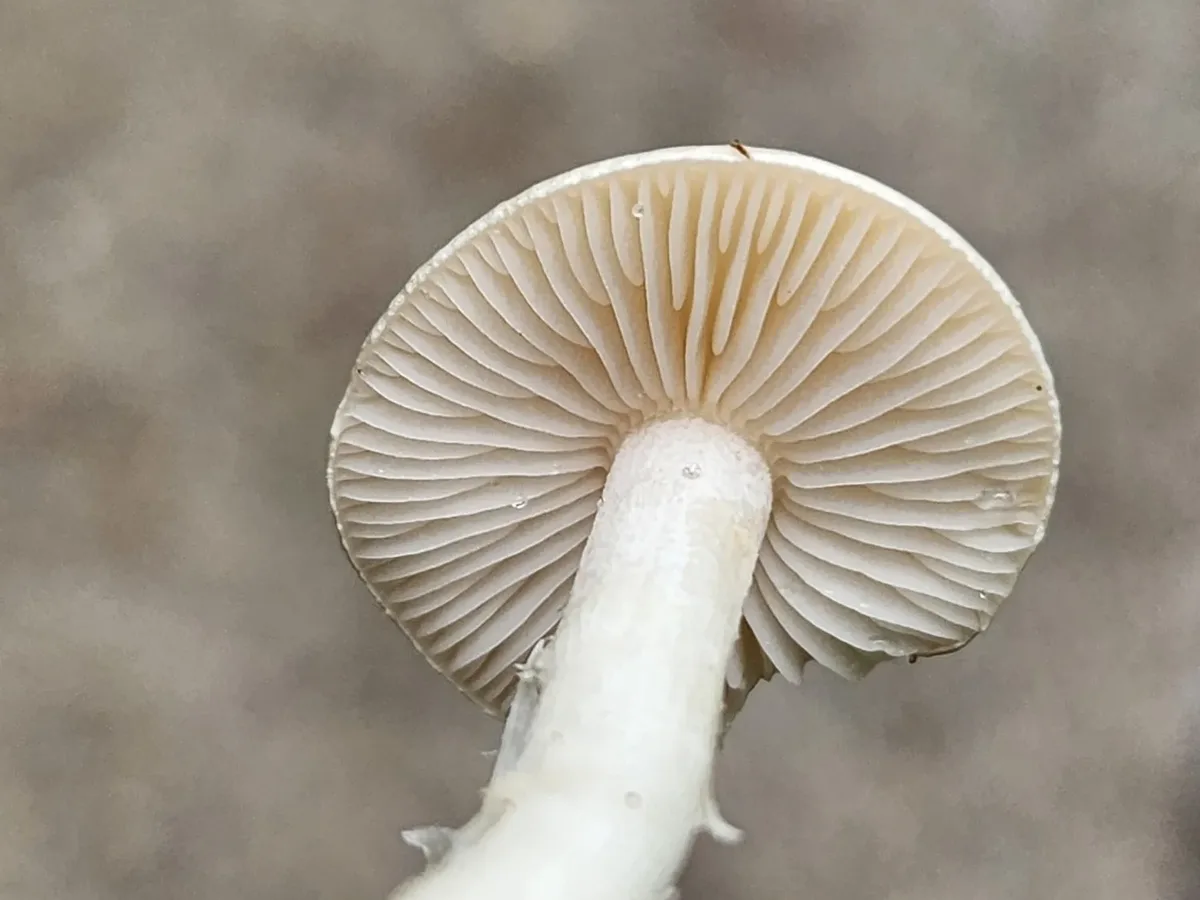
The gills are sinuate (notched where they meet the stem), fairly crowded, and white to cream, not changing colour appreciably.
Stem
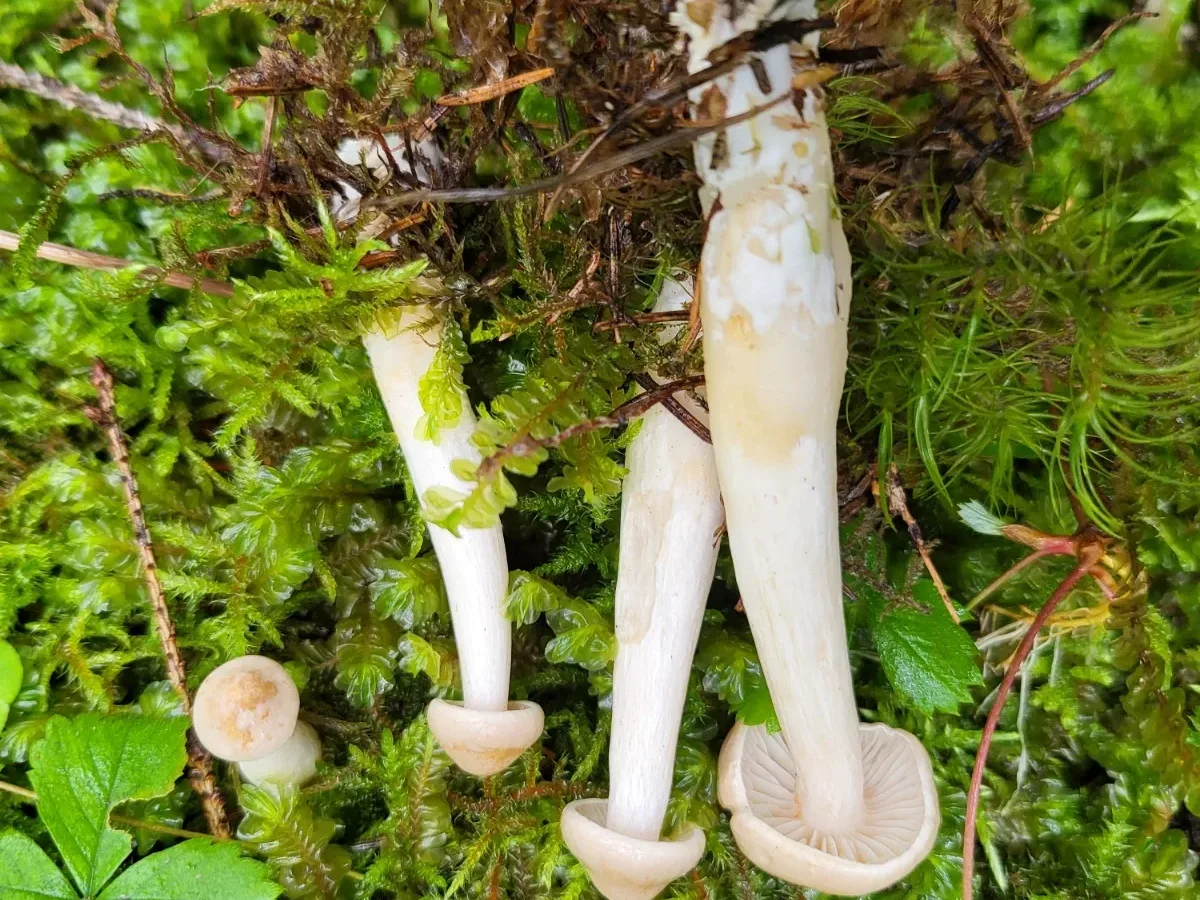
The stem is white, solid, and cylindrical, lacking both the ring of an Amanita and any basal volva.
Flesh
The flesh is firm and white, and cutting it reveals nothing unusual - no colour change, no latex, no particular odour from the flesh itself.
Smell & taste
The single overwhelming diagnostic feature is the smell: this mushroom emits a ferociously strong odour of coal gas or acetylene - a sharp, chemical, petroleum-like stench with undertones of rotten rubber - that is virtually unmistakable and detectable from metres away.
Once encountered, the smell is unforgettable and sufficient on its own to identify the species in the field.
Why it's dangerous
Not considered life-threatening in a healthy adult under ordinary circumstances.
The primary danger is indirect: the white appearance of T. inamoenum means it can be found alongside genuinely lethal white mushrooms (T. josserandii, Amanita virosa) in the same habitat, and a collector who focuses on appearance rather than smell and structural features could make a fatal error among co-occurring species.
A secondary danger is the taint risk - a single specimen mixed into an edible harvest introduces its GI-irritant compounds into the cooked dish.
Toxin
The volatile compounds responsible for the characteristic gas odour include acetylene-related and unsaturated straight-chain hydrocarbons, but the precise gastrointestinal toxins have not been fully characterised.
The irritant principle is believed to act on the gastrointestinal mucosa in a manner similar to other irritant Tricholoma species.
Cooking does not fully neutralise the compounds - the smell alone renders culinary use inconceivable in practice.
Symptoms
Gastrointestinal onset within 30 minutes to a few hours of ingestion:
- Nausea
- Vomiting
- Abdominal cramps
- Diarrhoea
Symptoms are self-limiting in healthy adults and generally resolve within 12-24 hours.
Severe or prolonged illness, or poisoning in children, the elderly, or immunocompromised individuals, warrants medical attention and supportive care (hydration). No specific antidote.
Staying safe
Tricholoma inamoenum is classified as inedible and potentially toxic. The repellent coal-gas odour makes deliberate ingestion extremely unlikely, but accidental inclusion in a mixed harvest of knights is the realistic hazard - the smell of a single specimen can taint a whole basket or dish.
Ingestion of significant quantities causes gastrointestinal irritation: nausea, vomiting, and diarrhoea. While not considered deadly, the toxicity is genuine and the GI symptoms can be distressing.
The more serious risk is misidentification of a nearby deadly species (T. josserandii, Amanita virosa) in the same habitat during collection.
Any forager targeting white Tricholoma species in conifer forest must be competent to identify and reject not only T. inamoenum but all the dangerous white mushrooms that coexist with it.
Where & when it grows
Habitat
This species is a mycorrhizal associate of conifers and mixed forest. It is most consistently found under spruce (Picea abies) and pine (Pinus sylvestris), often fruiting through a carpet of moss or deep needle litter in closed-canopy stands.
It also appears under fir and occasionally in mixed beech-spruce forest.
Preferred soils are moderately acid to neutral mineral forest soils; it is less common on rich calcareous ground.
Look for it in montane and sub-montane spruce forest across central Europe (Scandinavia, Germany, Austria, Switzerland, France's Vosges and Jura, the Carpathians), where it fruits singly or in scattered groups.
It does not grow on wood and will never appear far from living conifers.
When
Tricholoma inamoenum is a creature of autumn, emerging quietly alongside the other knights as the forest floor cools and the first serious rains soak through the needle litter.
The main window runs from late August through October, with the densest fruiting in September and early October - the weeks when soil temperatures ease down from summer highs and the mycelium responds to the change.
In cooler montane spruce forest the season can begin earlier in August; at lower altitudes mild weather may push it into November.
Wherever you find it, the season overlaps closely with other white and pale Tricholoma species in the same habitat, which makes careful identification in autumn conifer forest especially important.
How it grows
Strictly terrestrial, arising from ectomycorrhizal mycelium associated with conifer roots; it cannot be cultivated.
Fruitbodies emerge singly or in small scattered groups, never in tufts or dense rings.
The robust stem is often deeply embedded in needle litter or moss and requires careful extraction to remain intact.
Young caps emerge with strongly inrolled margins, and the gas odour is present from the very earliest stage - it is not a smell that develops with age.
Fruiting conditions
Typical autumn conifer-floor fruiting pattern: flushes follow rain events once summer soil temperatures drop below approximately 15 °C. Relatively tolerant of cooler conditions. Peak production September-October in central Europe, somewhat earlier in boreal and montane zones.
Look-alikes
The powerful gas smell sharply distinguishes T. inamoenum from most other mushrooms, but the pale appearance can cause confusion before the smell is noticed - and some dangerous white mushrooms share the same conifer forest habitat.
- Tricholoma josserandii (the 'deadly knight' or 'poisoning knight') is a pale whitish-grey to buff Tricholoma of conifer and mixed forest with white gills and a mealy or acidic smell (not gas-like). It causes severe gastrointestinal poisoning that can be fatal, particularly in children and vulnerable individuals, and is therefore a deadly lookalike that must not be confused with T. inamoenum.
- Amanita virosa (the destroying angel) is pure white, grows in the same conifer habitats, and is lethally toxic via amatoxins. It is distinguished by its ring (skirt) on the stem, a sac-like volva at the swollen stem base, and free (not sinuate) gills; T. inamoenum has no ring and no volva, but any white mushroom in conifer forest must have these characters explicitly checked and ruled out before drawing any conclusion.
- Tricholoma album is another white to cream Tricholoma of deciduous woodland with a similarly unpleasant but different smell - more rancid or acrid rather than gas-like - and is inedible and mildly toxic.
- Clitocybe dealbata (the ivory funnel) is smaller, has gills that run slightly down the stem (decurrent rather than sinuate), a mealy smell, and grows in grassy habitats rather than deep conifer forest; it is muscarine-poisonous and dangerous.
The most important safety principle: any white or pale mushroom in autumn conifer or mixed forest must be checked for:
- 1The absence of a ring and volva (rules out deadly Amanita)
- 2Spore print colour (white for Tricholoma)
- 3Gill attachment (sinuate for Tricholoma, not decurrent)
Never rely on smell alone to rule out dangerous species in the vicinity.
T. josserandii is pale whitish-grey to buff with a mealy or slightly acidic smell - never the powerful coal-gas odour of T. inamoenum. It lacks any striking chemical odour, making it far more likely to be confused with edible white knights than T. inamoenum is. T. josserandii causes severe, potentially fatal gastrointestinal poisoning and is one of the most dangerous European Tricholoma species.
Also pure white and grows in the same conifer forest in autumn, but A. virosa has a ring (skirt) on the stem, a sac-like volva at the swollen base, and free (not sinuate) gills. T. inamoenum has no ring, no volva, and sinuate gills. Amanita virosa is lethally toxic via amatoxins and causes delayed liver and kidney failure. Always check the stem base carefully - the volva can be buried in litter and must be actively excavated.
Smaller (cap 2-5 cm) and typically found in grassland or woodland edges rather than deep conifer forest. Gills are slightly decurrent (running down the stem) rather than sinuate-notched. Smell is mealy, not gas-like. Muscarine-poisonous and capable of causing severe cholinergic poisoning (sweating, salivation, miosis, bradycardia).
T. saponaceum is variable in colour (grey-brown to olive-grey) rather than white, smells of soap rather than coal gas, and characteristically flushes pink to red in the flesh and stem base when cut - T. inamoenum has pure white non-staining flesh. Both are inedible and mildly toxic.
T. album is white to cream-coloured with an unpleasant rancid or acrid-acidic smell (not the coal-gas character of T. inamoenum) and grows mainly under deciduous trees (especially oak and beech). Mildly toxic and inedible.
A reference guide - never an edibility guarantee. When in doubt, leave it out.