Blue spot knight
Tricholoma columbetta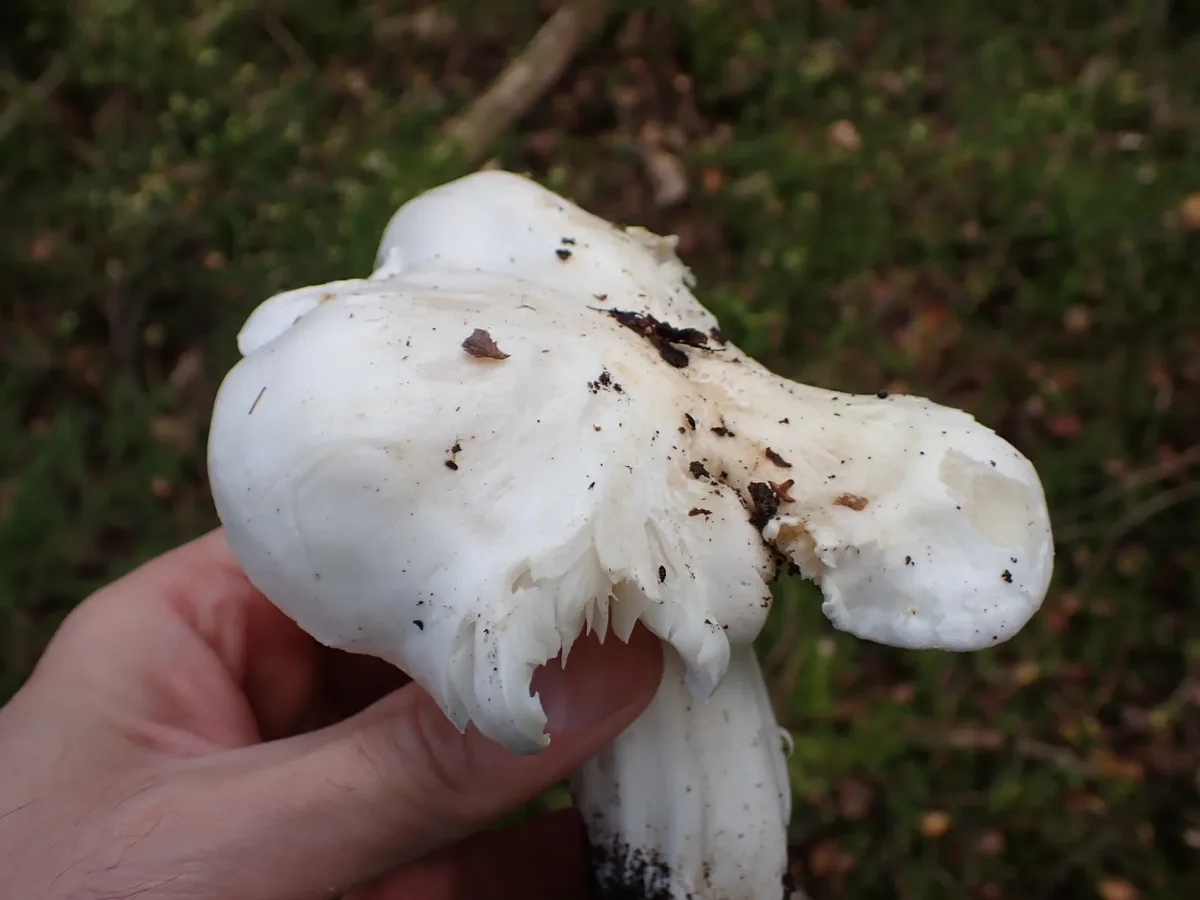 © Johan Adler (CC BY)
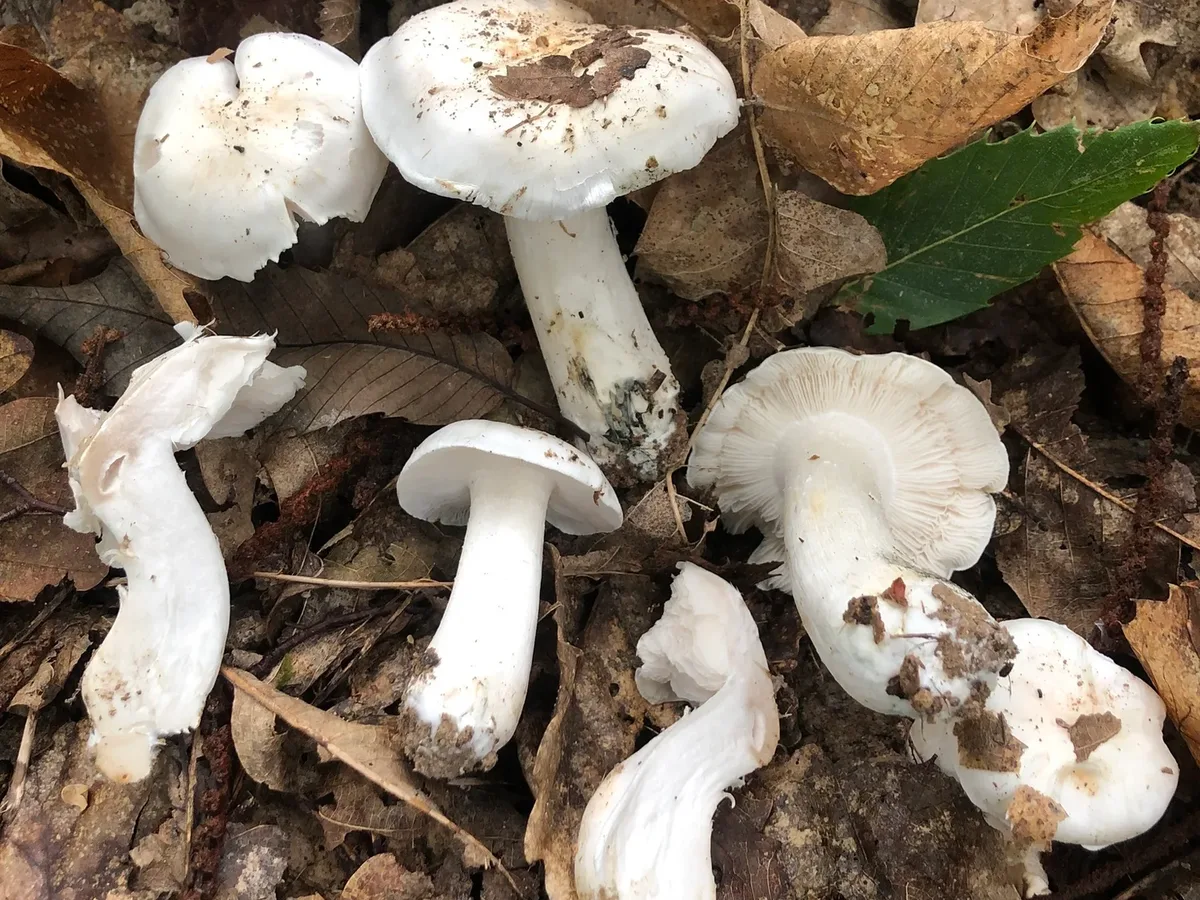 © gerardbertrand (CC BY)
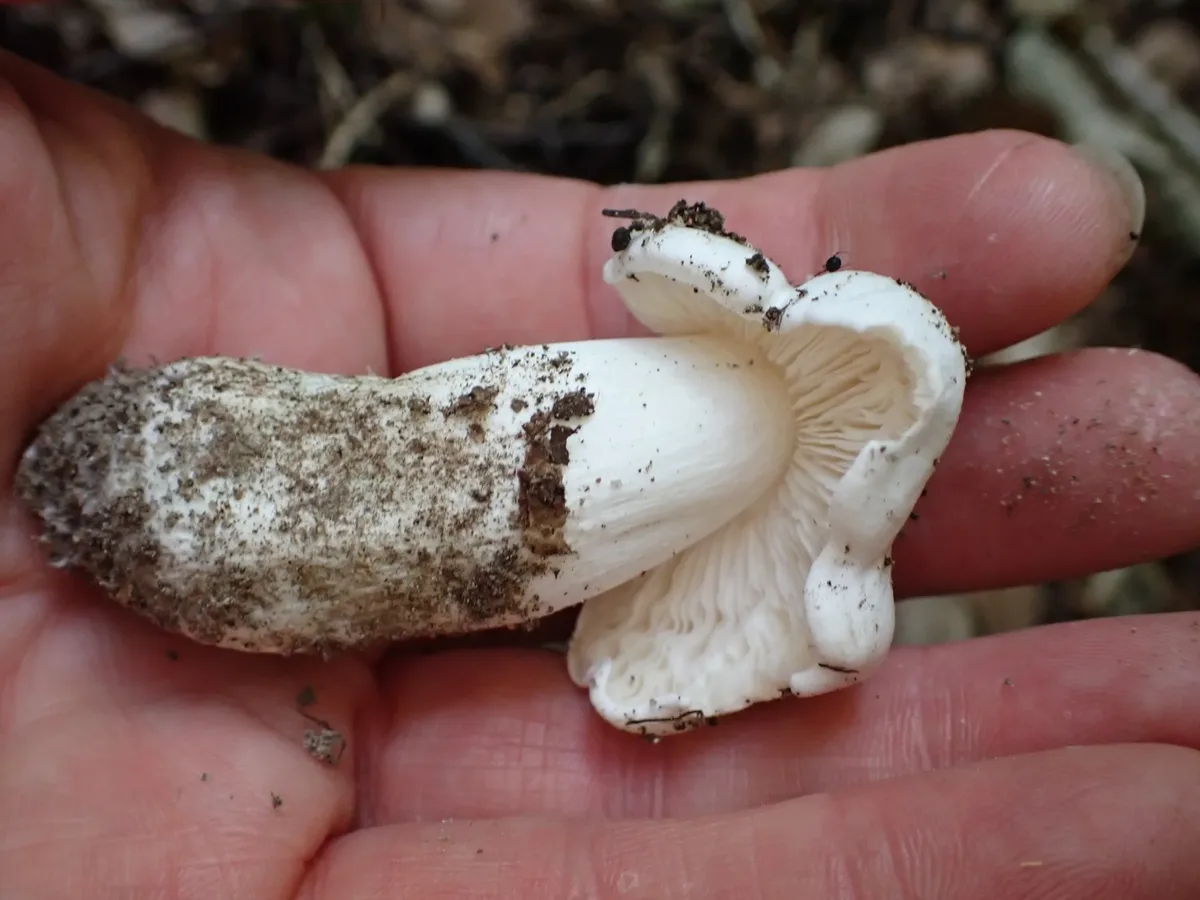 © Johan Adler (CC BY)
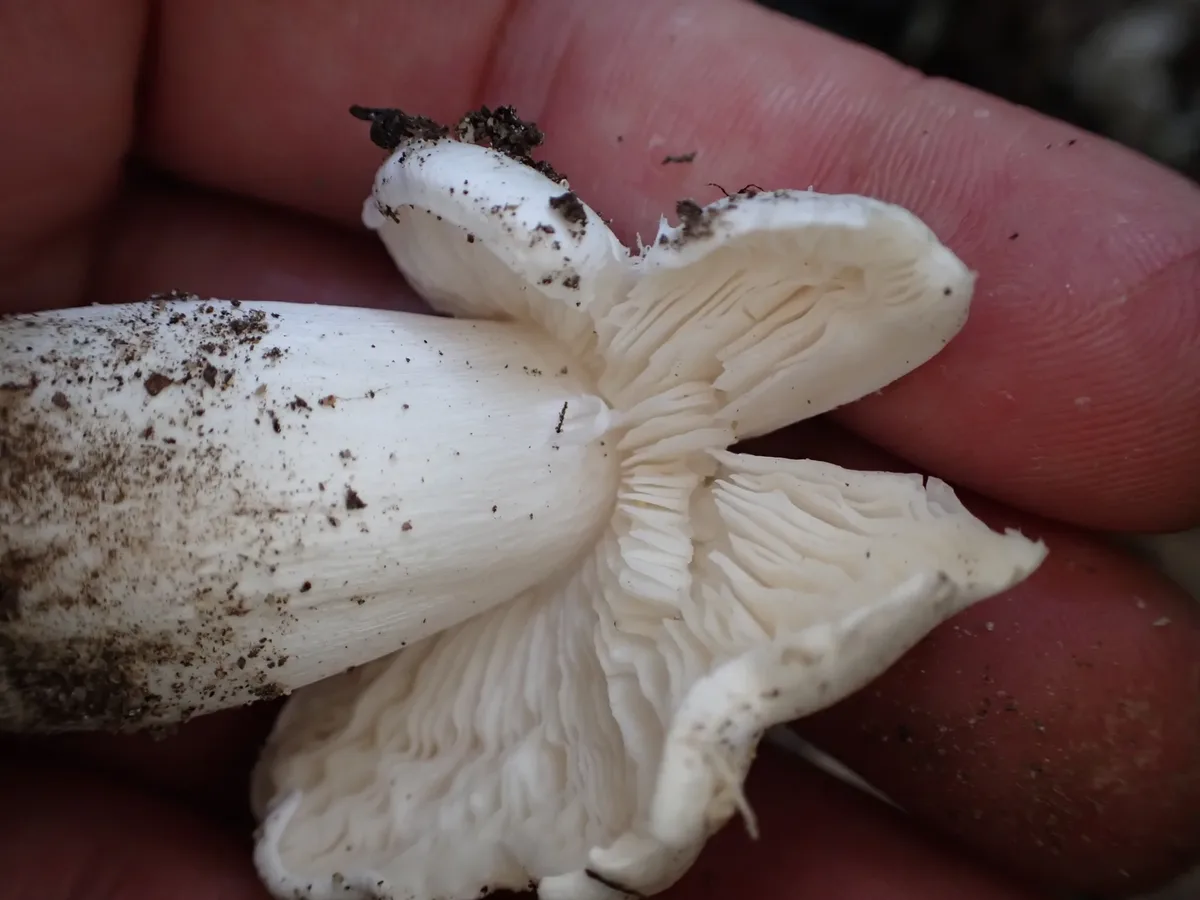 © Johan Adler (CC BY)
 © Bjørn Eidhammer (CC BY)
 © Jian Ren (CC BY)
 © Jian Ren (CC BY)
 © Ulrik Andreassen (CC BY)© Johan Adler (CC BY)© gerardbertrand (CC BY)
Good to eat, once you have identified it with certainty and cooked it through.
Never eat a mushroom you are not 100% sure of - check the look-alikes below, and always cook wild mushrooms.
How to recognise it
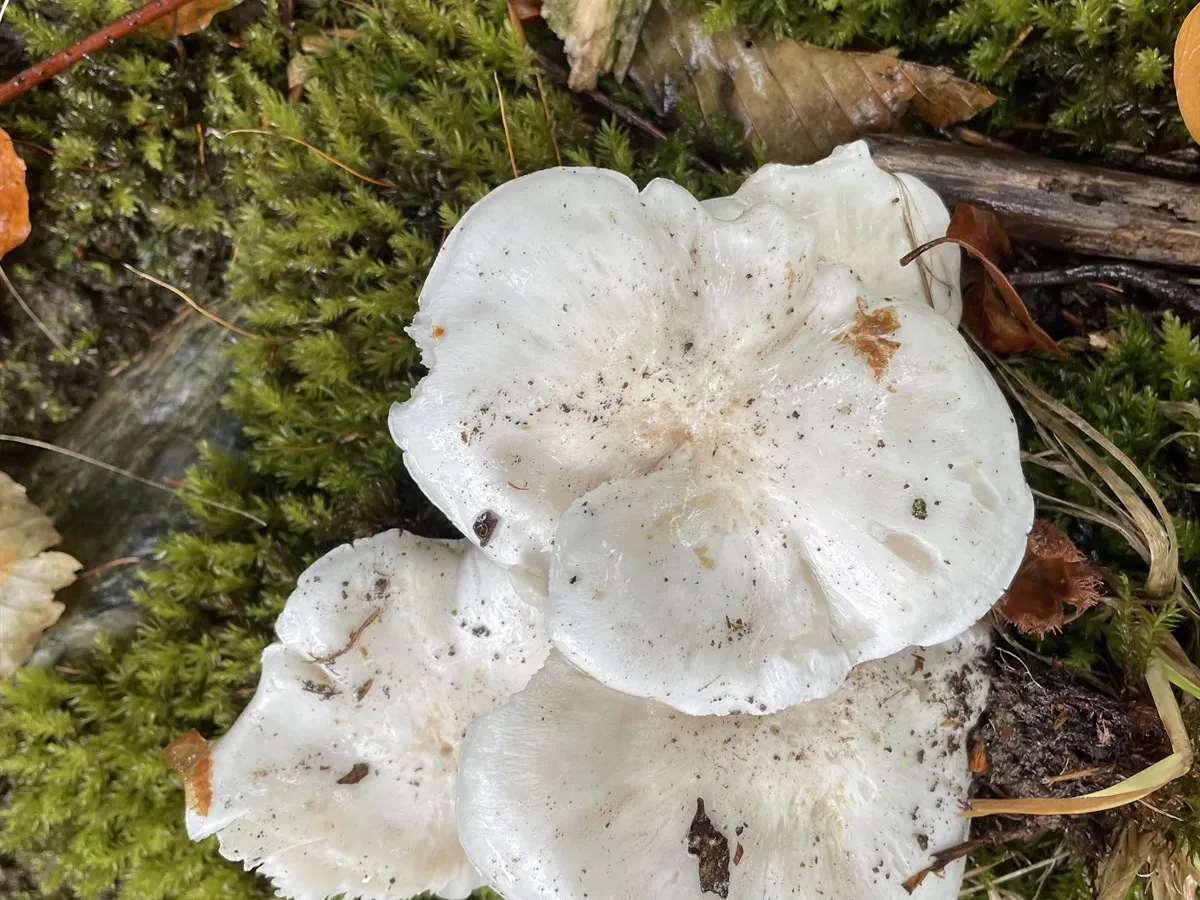
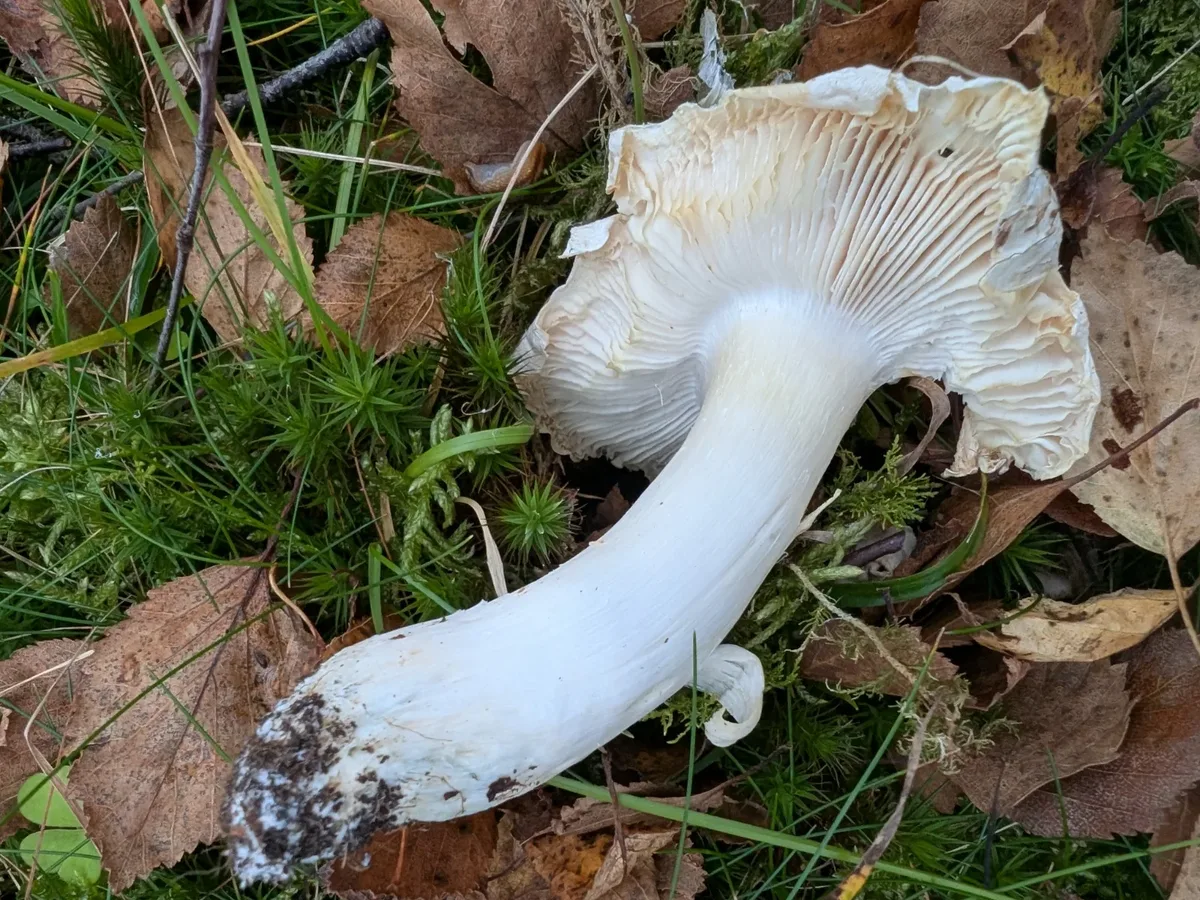
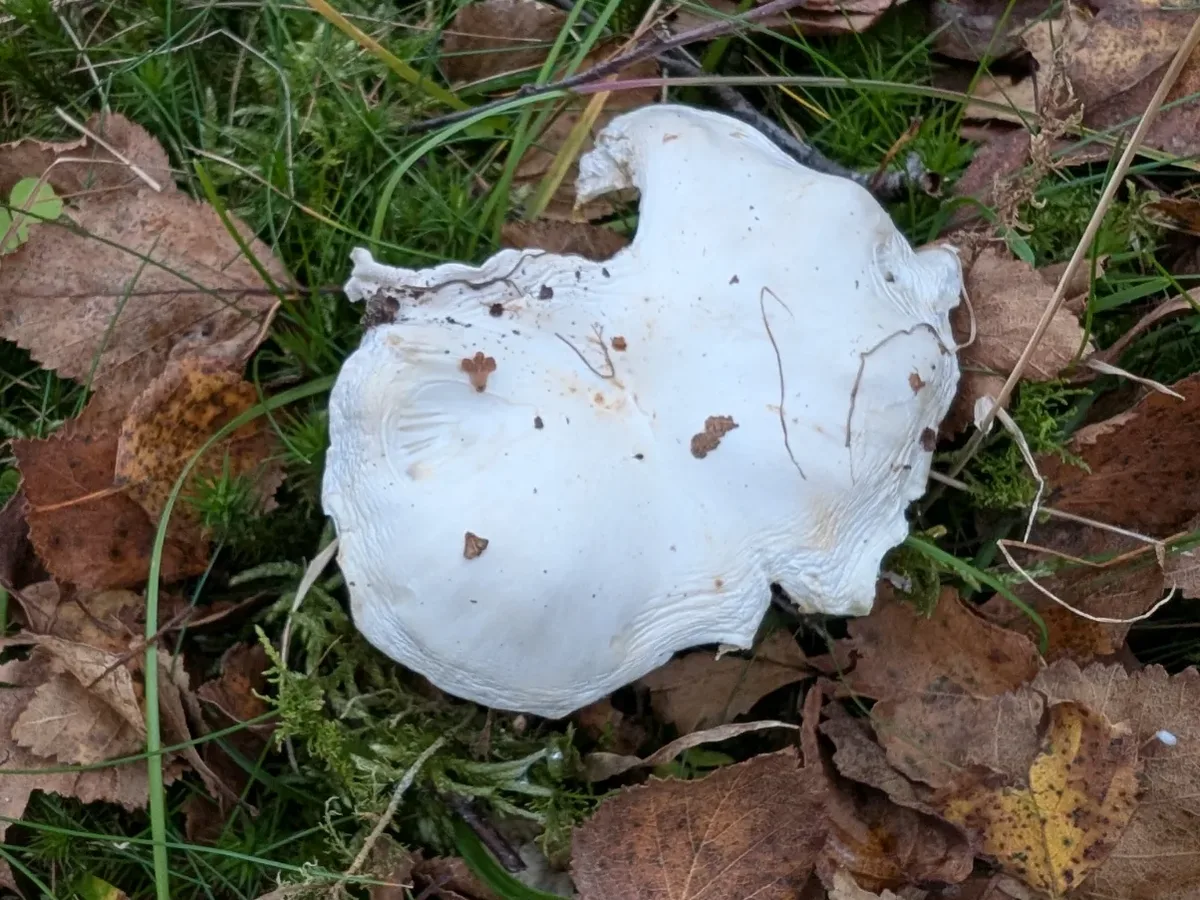
The blue spot knight is an entirely white to ivory-coloured mushroom at all stages.
Cap
The cap runs 5-12 cm, starting convex then flattening or becoming undulate, with a smooth silky surface that feels dry to slightly slippery.
The single most useful field character is the development of pale blue-green to blue-grey tints or smudges on the cap margin and especially at the base of the stem as the fruiting body ages - press the base gently and look for a blue-green blush. This staining is absent from the deadly white Amanitas.
Gills / Pores
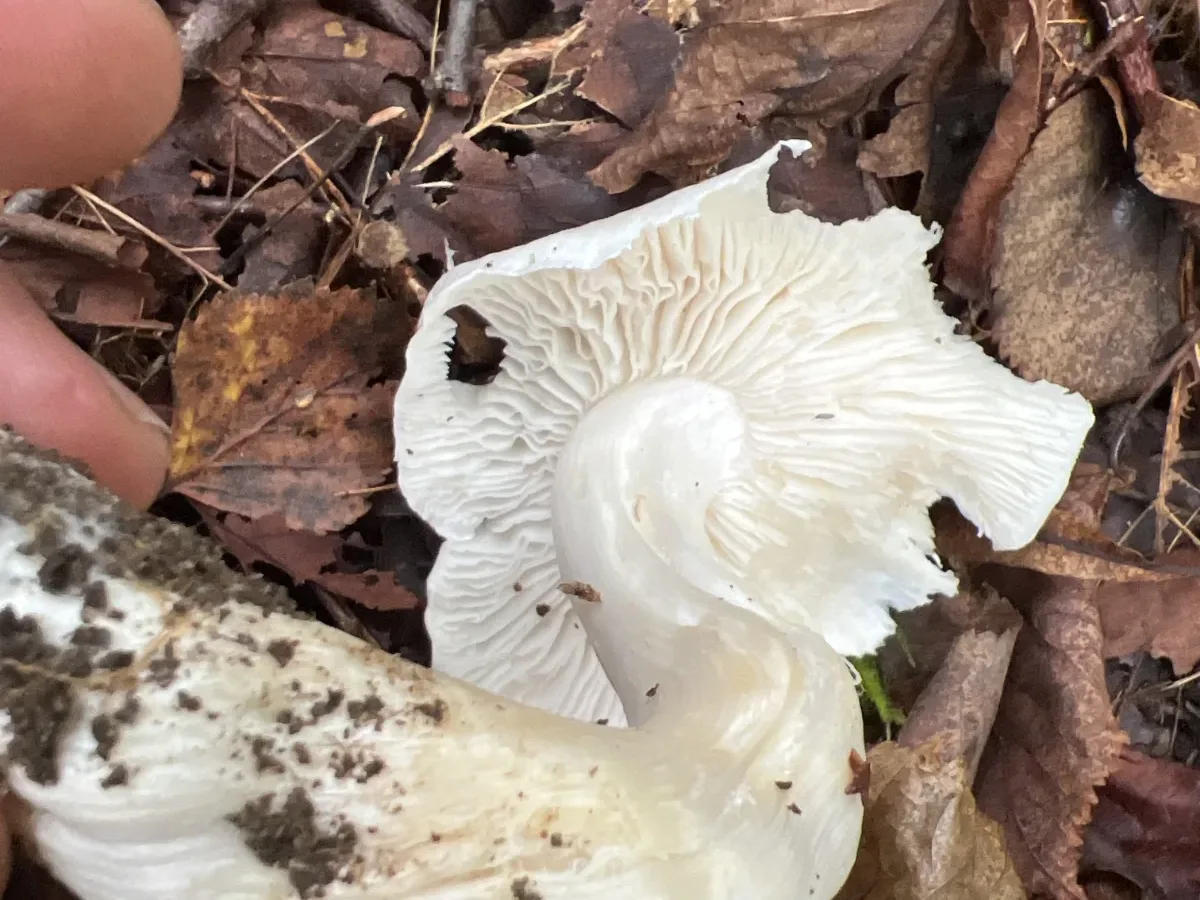
Gills are white, crowded, and sinuate (they dip toward the stem before attaching). The spore print is white.
Stem
The stem is solid, white, and entirely lacks the ring (annulus) and the bag-like cup (volva) that would immediately indicate a destroying angel.
Smell & taste
Smell is faintly mealy or floury.
Where & when it grows
Habitat
A mycorrhizal partner of deciduous trees, particularly oak and beech, favouring the kind of mixed woodland common across Scandinavia, central and western Europe.
Grows on reasonably well-drained soils, often where the woodland floor is open enough to allow moderate light.
In Nordic sites it tends to appear where oaks are present even among predominantly coniferous forest. Occurs singly or in small scattered groups.
When
Late summer into autumn, from August through October, peaking in September and early October in Nordic regions.
Fruiting is triggered by autumn cooling and adequate moisture following warm summer months. It is not a cold-tolerant species and disappears before the first hard frosts.
How it grows
Ectomycorrhizal, meaning the white knight does not live alone. Its underground mycelium is woven into a long-running partnership with the fine rootlets of its host trees, exchanging water and minerals for sugars in a relationship that can persist for many years beneath a single oak.
Individual fruitbodies emerge singly or in small scattered groups, rarely in clusters. They grow slowly and are typically robust and firm when found.
Fruiting conditions
Typical late-summer to autumn Tricholoma fruiting pattern: requires a drop in temperature and adequate rainfall after summer heat; soil temperatures cooling through 8-16 °C trigger flushing, with fruitbodies appearing 7-14 days after sufficient rain.
Look-alikes
The most dangerous confusion is with white-phase destroying angel species, principally Amanita virosa (European destroying angel) and Amanita bisporigera (North American destroying angel). Both are pure white, grow in woodland, and at the button or young stage before the ring tears away can look superficially similar to a pale Tricholoma.
The critical differences - Amanita virosa/bisporigera have:
- a membranous ring on the stem (sometimes torn or missing in old specimens);
- a distinctive bulbous base enclosed in a cup-shaped volva;
- when young, button-like fruitbodies enclosed in a universal veil.
None of these features are present in T. columbetta. Tricholoma columbetta also lacks the intensely sweet sickly smell that many Amanita virosa specimens carry.
Tricholoma album is a bitter-white knight of similar size and woodland habitat, but lacks the blue-green staining and has a distinctly bitter taste - it causes gastrointestinal illness and must not be eaten.
Clitocybe dealbata and related white Clitocybe species are smaller, funnel-forming, with decurrent (running-down) gills and contain muscarine.
Leucoagaricus leucothites has a ring and grows in grassy open areas rather than woodland.
A. bisporigera is restricted to eastern North America and cannot co-occur with T. columbetta, which is a European species only. This entry is retained as a genus-level structural reference: like all white Amanita species, A. bisporigera carries a membranous ring on the stem and a cup-shaped volva at the base - the same structural features that distinguish A. virosa in European habitats. Any all-white woodland mushroom lacking both ring and volva is unlikely to be a destroying angel regardless of continent.
Also pure white and found in woodland; at the button stage superficially similar. Amanita virosa has a membranous ring on the stem, a prominent cup-shaped volva at the stem base (dig to find it), and contains deadly amatoxins. Tricholoma columbetta has no ring, no volva, and often develops distinctive blue-green stains at the stem base. Never collect white mushrooms from woodland without carefully inspecting the base for a volva.
Very similar appearance and woodland habitat; distinguished by a strongly bitter taste and the absence of blue-green staining. Causes gastrointestinal illness if eaten. Always taste a tiny piece (then spit out) - bitterness confirms T. album.
Smaller, paler, found in grassy areas and woodland edges; has decurrent (running-down) gills that slope down the stem, a more funnel-shaped cap, and contains muscarine causing sweating, salivation, and gastrointestinal distress. T. columbetta has sinuate (notched) gills and a more robust form.
White, but has a membranous ring, grows in grassy open habitats (gardens, roadsides, meadows) rather than woodland, and has free gills (not reaching the stem). No blue-green staining.
In the kitchen
Picking & cleaning
Cut the stem cleanly at ground level; avoid uprooting the mycelium.
Because it grows in the same habitats as deadly Amanita species, extreme care is mandatory before collecting.
Check every specimen:
- 1No ring on the stem.
- 2No volva or bag at the base (dig slightly to check - the base must be examined).
- 3Blue-green staining should develop.
If any doubt remains, do not collect. Carry specimens loosely in a basket to preserve the base for inspection.
Cooking
The flavour is mild, pleasant, and faintly floury.
Works well in cream sauces, risotto, pasta, and alongside other woodland mushrooms. Sauté in butter or olive oil with garlic; the firm flesh holds its texture well.
Blanching before use is not required. Pairs well with thyme and fresh parsley.
Good to know
Tricholoma columbetta is a recognised edible mushroom with no known toxins. It has been eaten across Europe for generations without documented poisoning from the species itself.
However, it grows in precisely the habitats where the most lethal European mushrooms - destroying angels (Amanita virosa and relatives) - are found. A cautious forager must examine every single specimen for the volva and ring of Amanita before collecting.
The blue-green staining at the stem base is a genuinely useful safety character: its presence strongly supports T. columbetta, its absence does not rule it out (the staining may not yet be visible on young specimens or in cool dry conditions).
If you are not fully confident in the identification, do not eat it.
A reference guide - never an edibility guarantee. When in doubt, leave it out.