White Knight
Tricholoma albumsyn. Agaricus albus Schaeff., Gyrophila alba (Schaeff.) Quél., Tricholoma album var. album
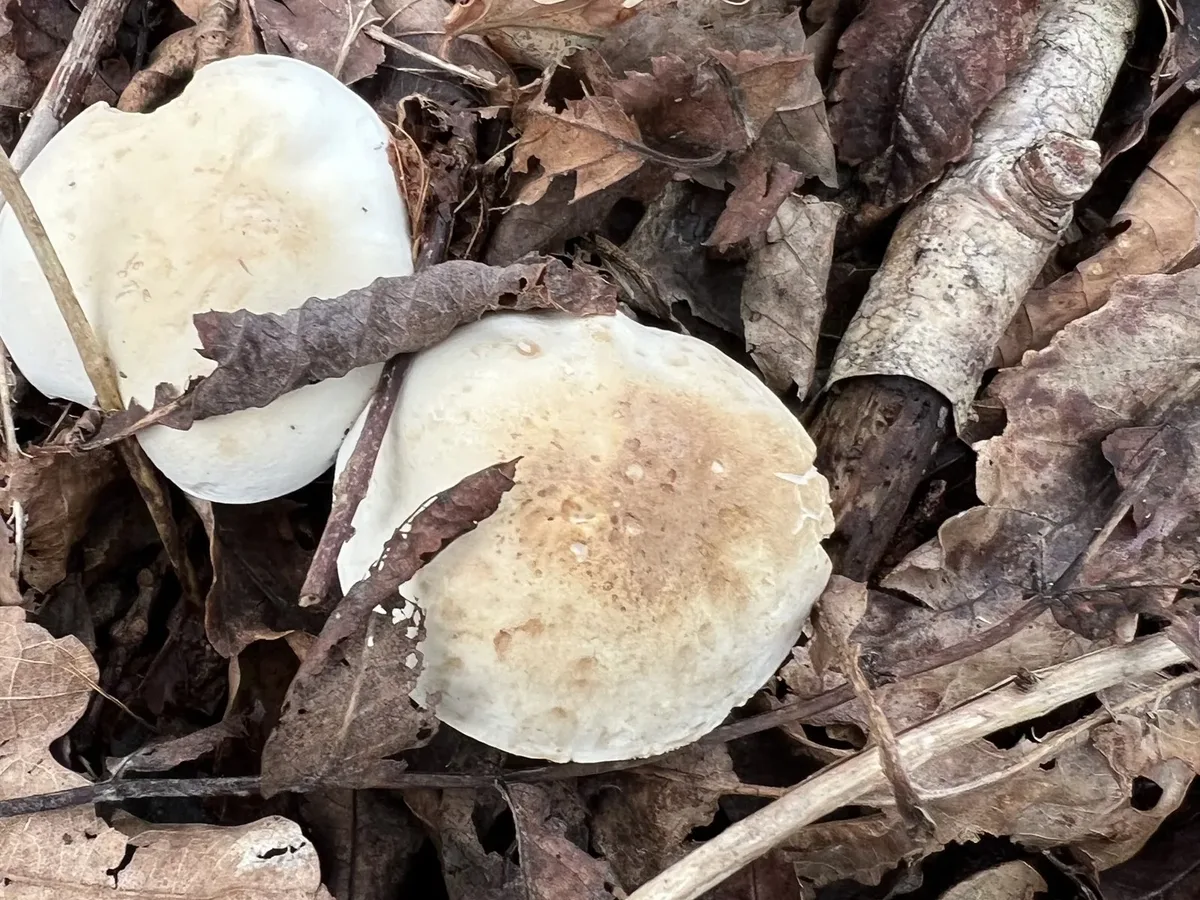 © Rune Zakariassen (CC BY)
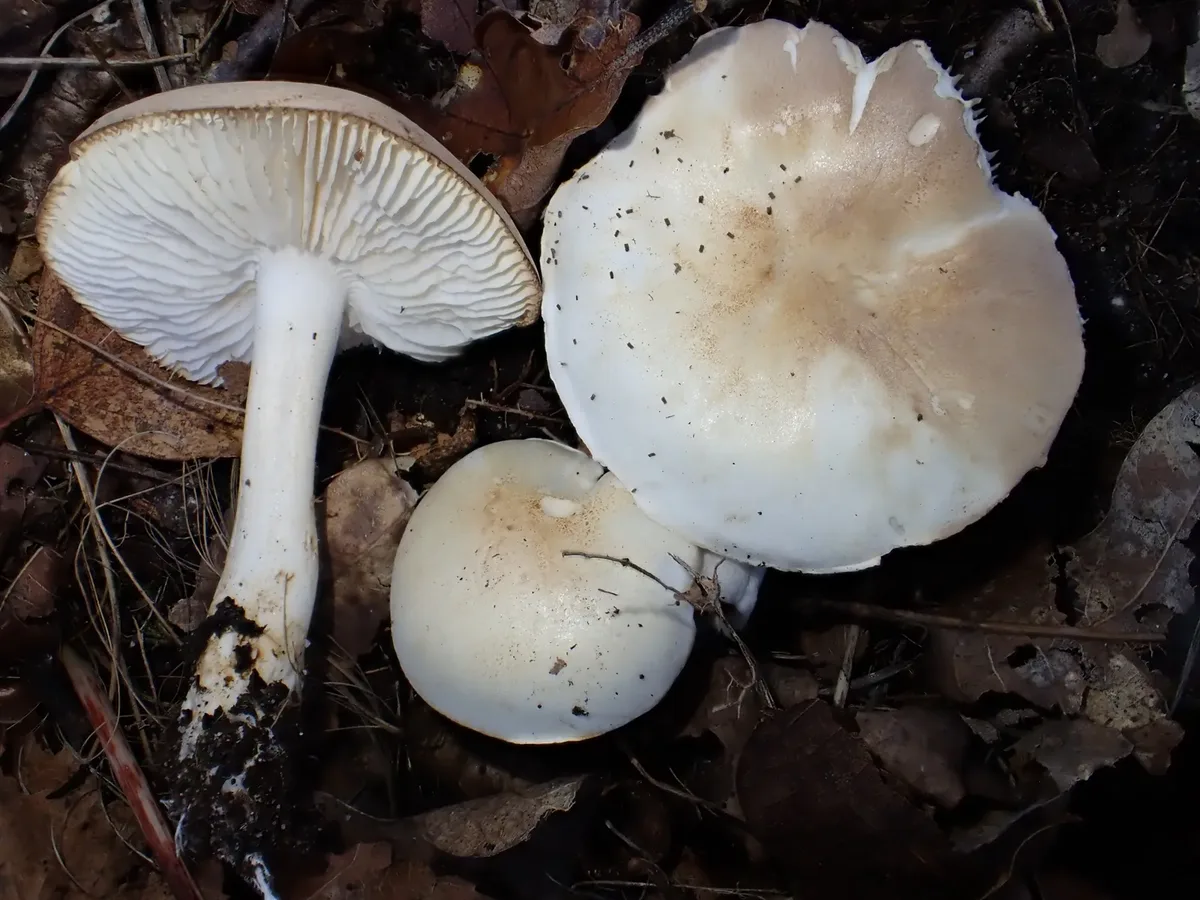 © Per Marstad (CC BY)
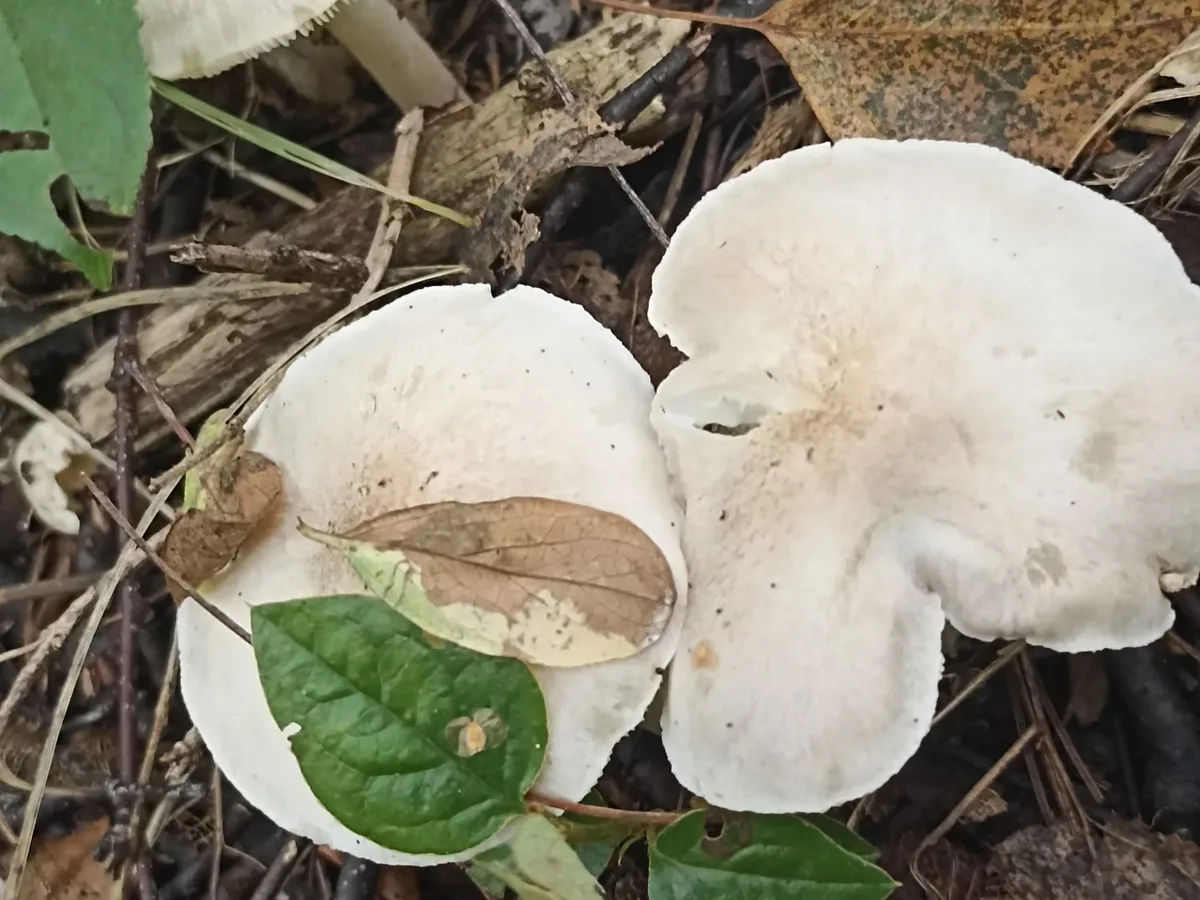 © Светлана Князева (CC BY)
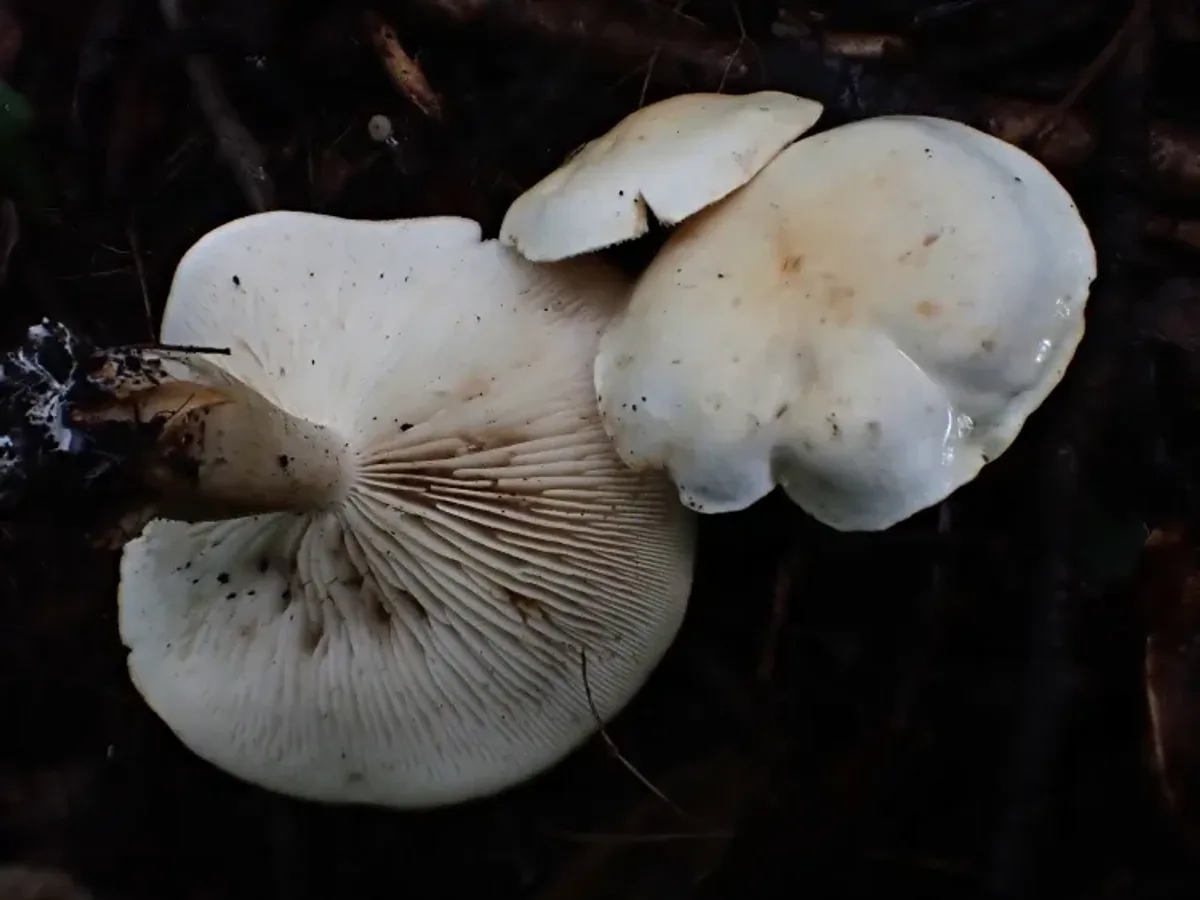 © Morten Pettersen (CC BY)
 © Beniamin Abramczyk (CC BY-SA)
 © Rune Zakariassen (CC BY)
 © Rune Zakariassen (CC BY)
 © Rune Zakariassen (CC BY)
 © Rune Zakariassen (CC BY)
 © Rune Zakariassen (CC BY)© Rune Zakariassen (CC BY)© Per Marstad (CC BY)
Edible only with the right preparation - or safe for some people but not others. Learn the caveats first.
Never eat a mushroom you are not 100% sure of - check the look-alikes below, and always cook wild mushrooms.
How to recognise it
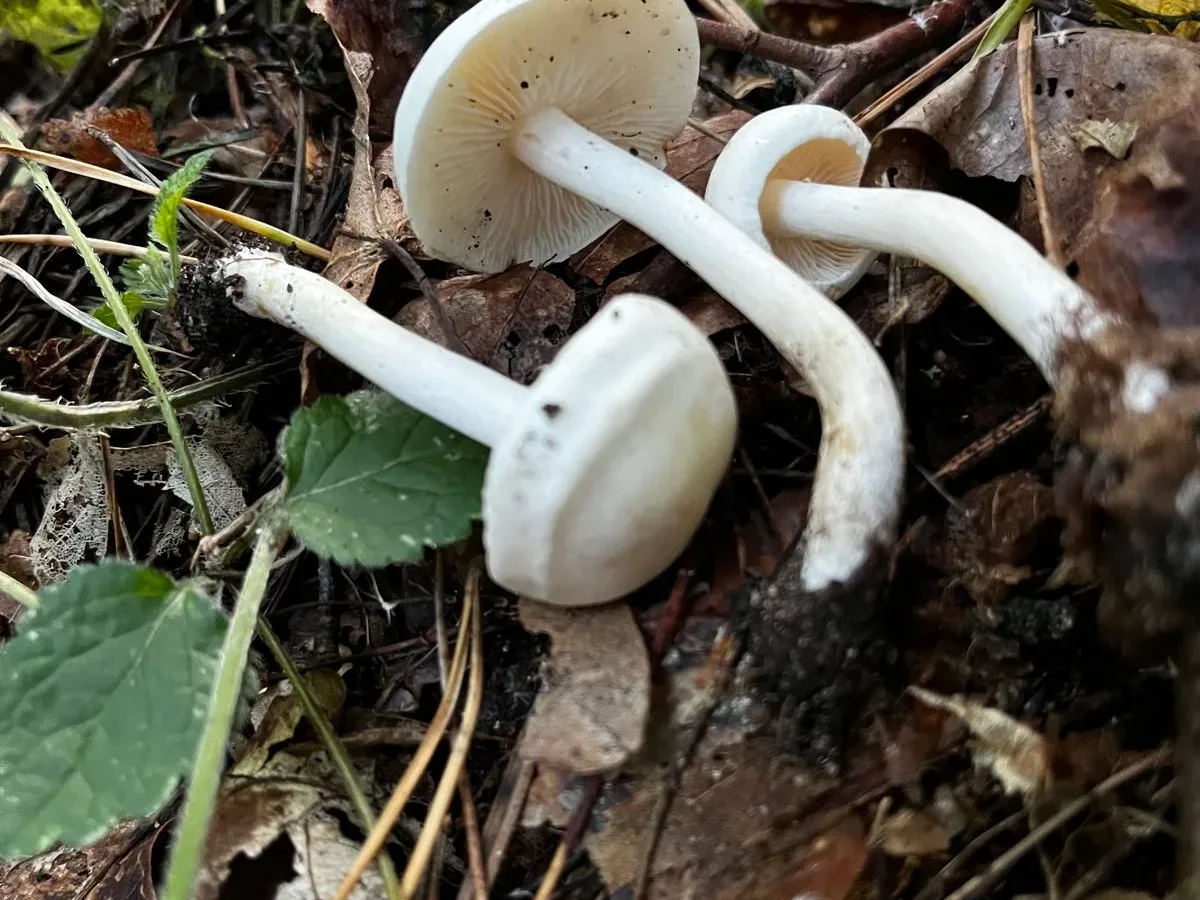
Tricholoma album is an all-white to ivory-white mushroom with none of the coloured caps or distinctive markings that make many species easier to identify - which is precisely what makes it dangerous.
Cap
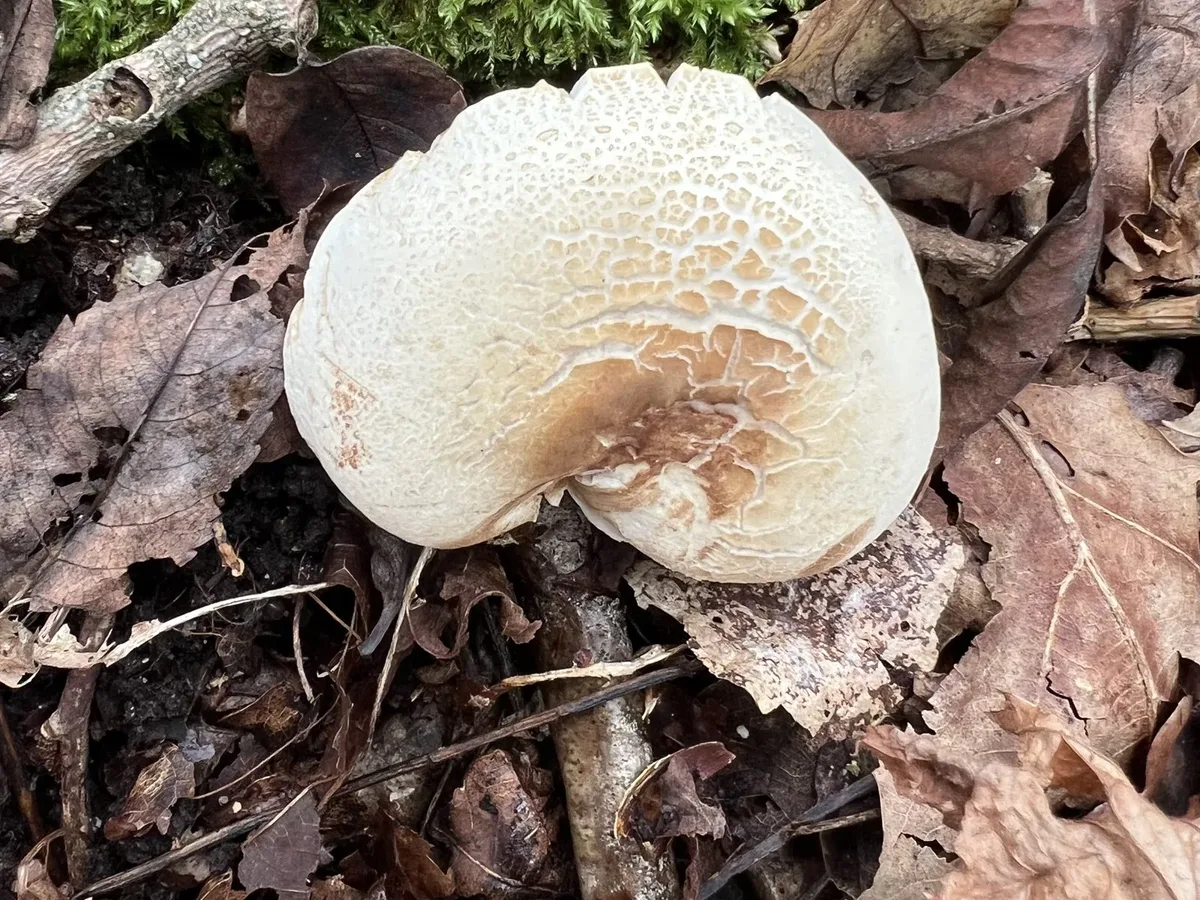
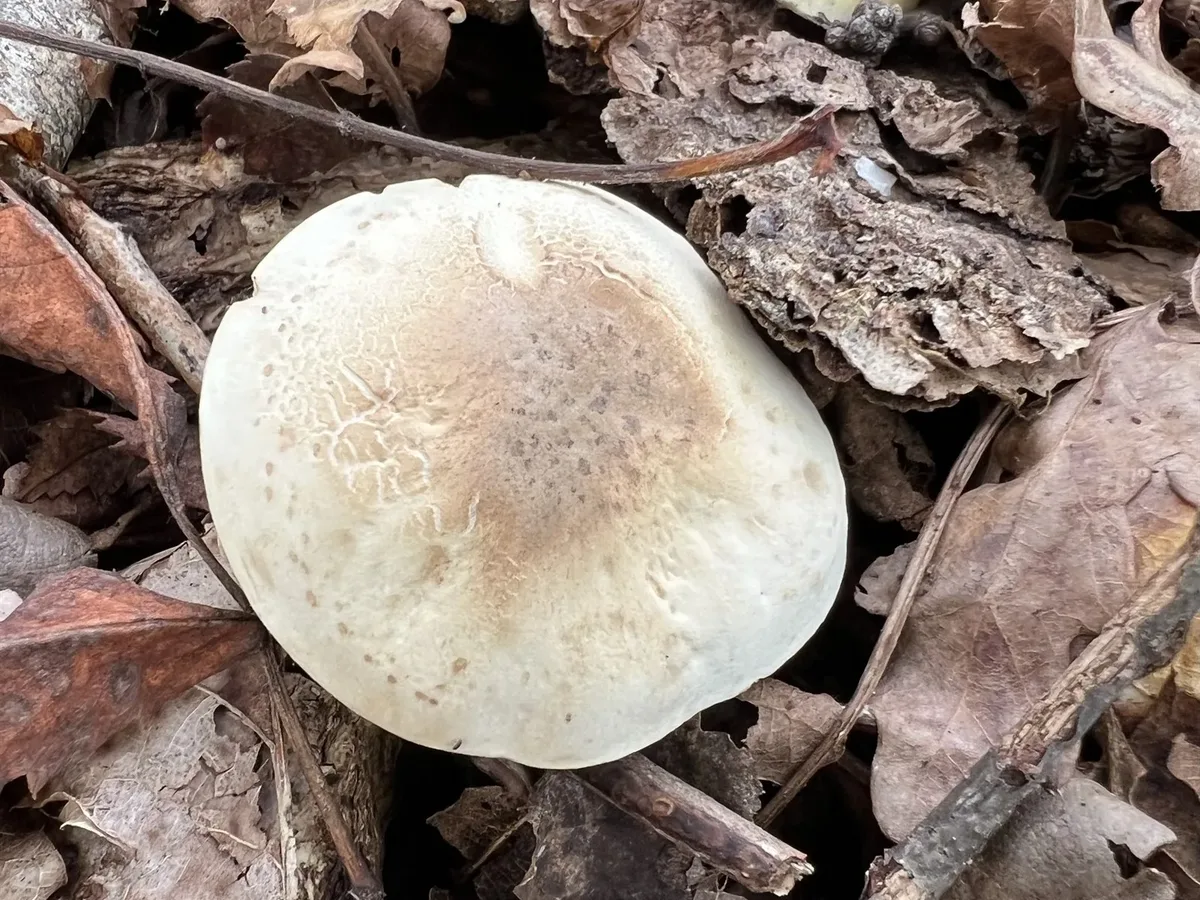
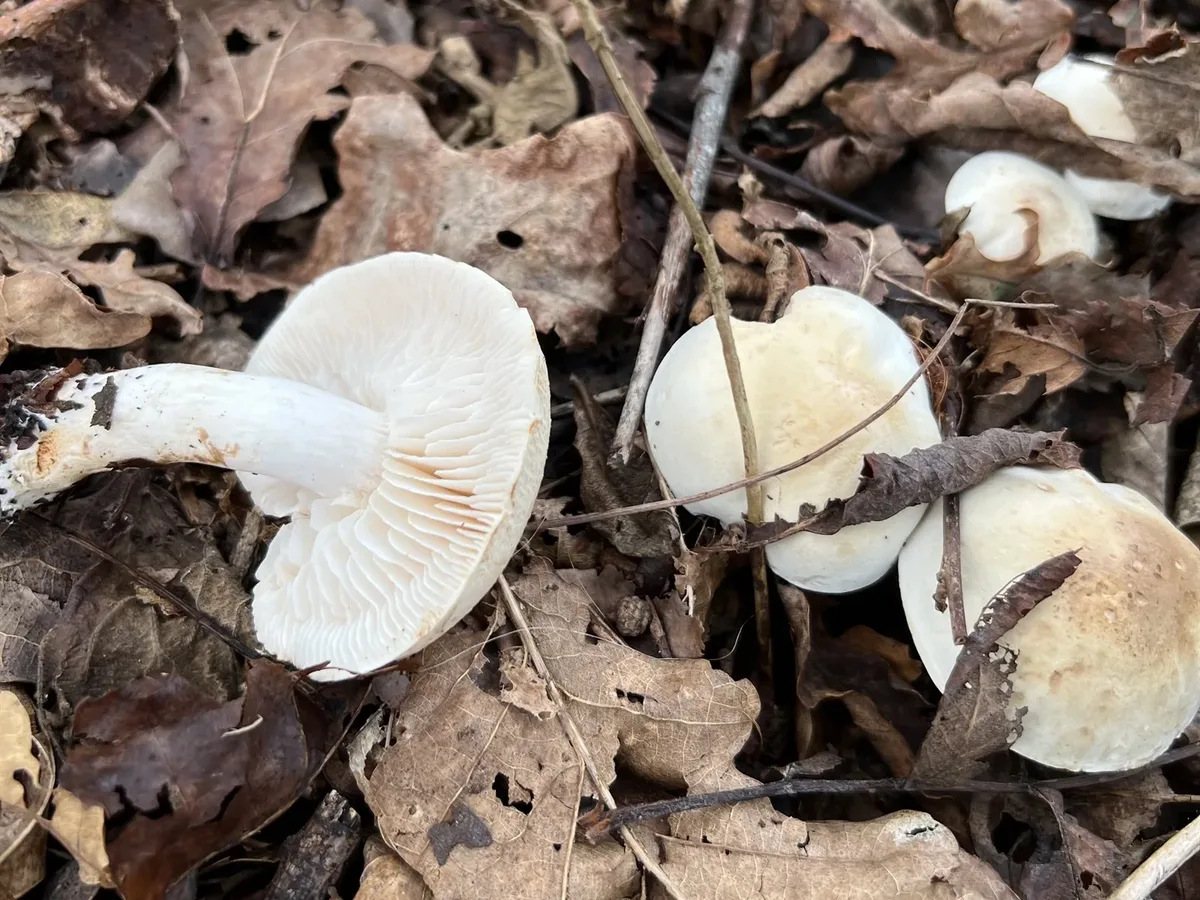
The cap starts out hemispherical with a firmly incurved margin, looking clean and pristine, and slowly expands to a broad, slightly irregular dome 4-10 cm across. The surface is dry and silky, never sticky, and remains essentially white throughout, though old or handled specimens may develop faint creamy-buff tones at the centre.
Gills / Pores
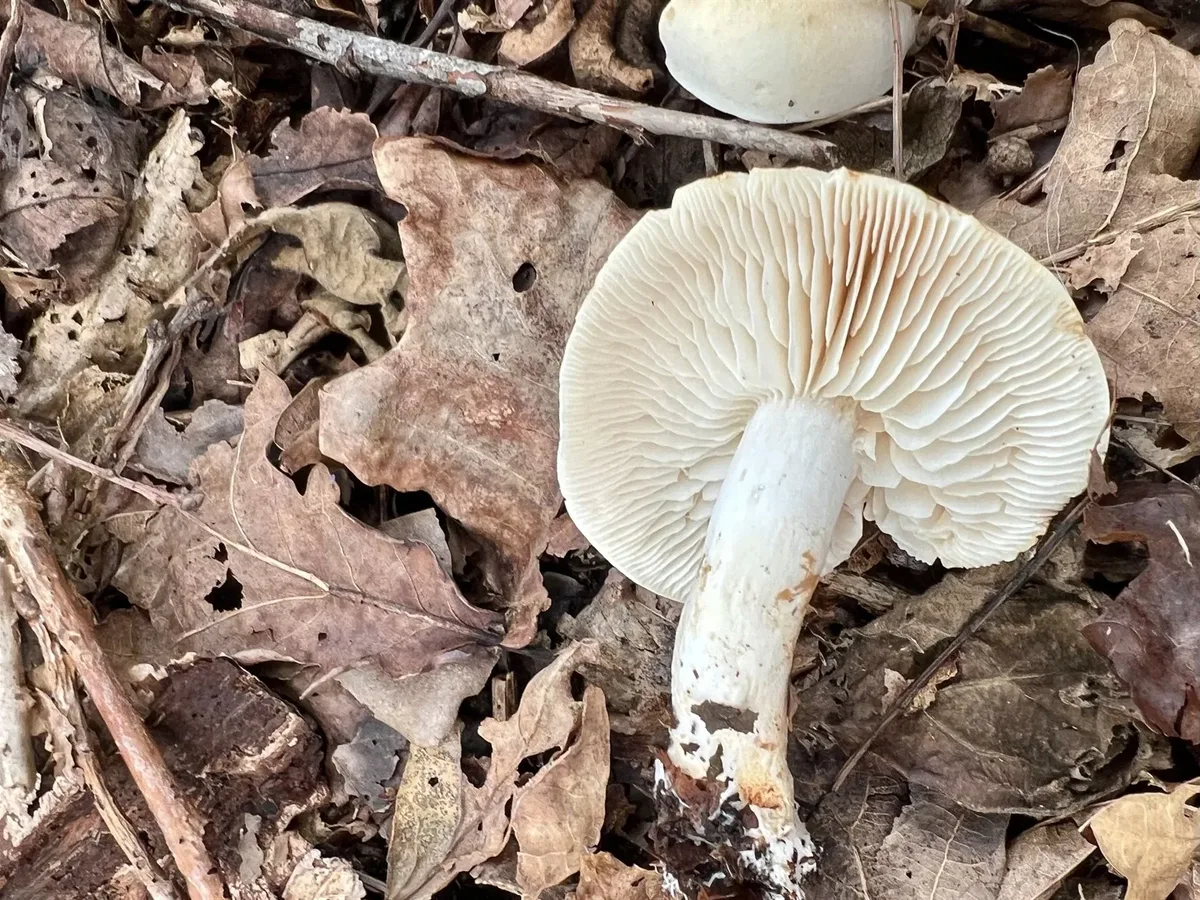
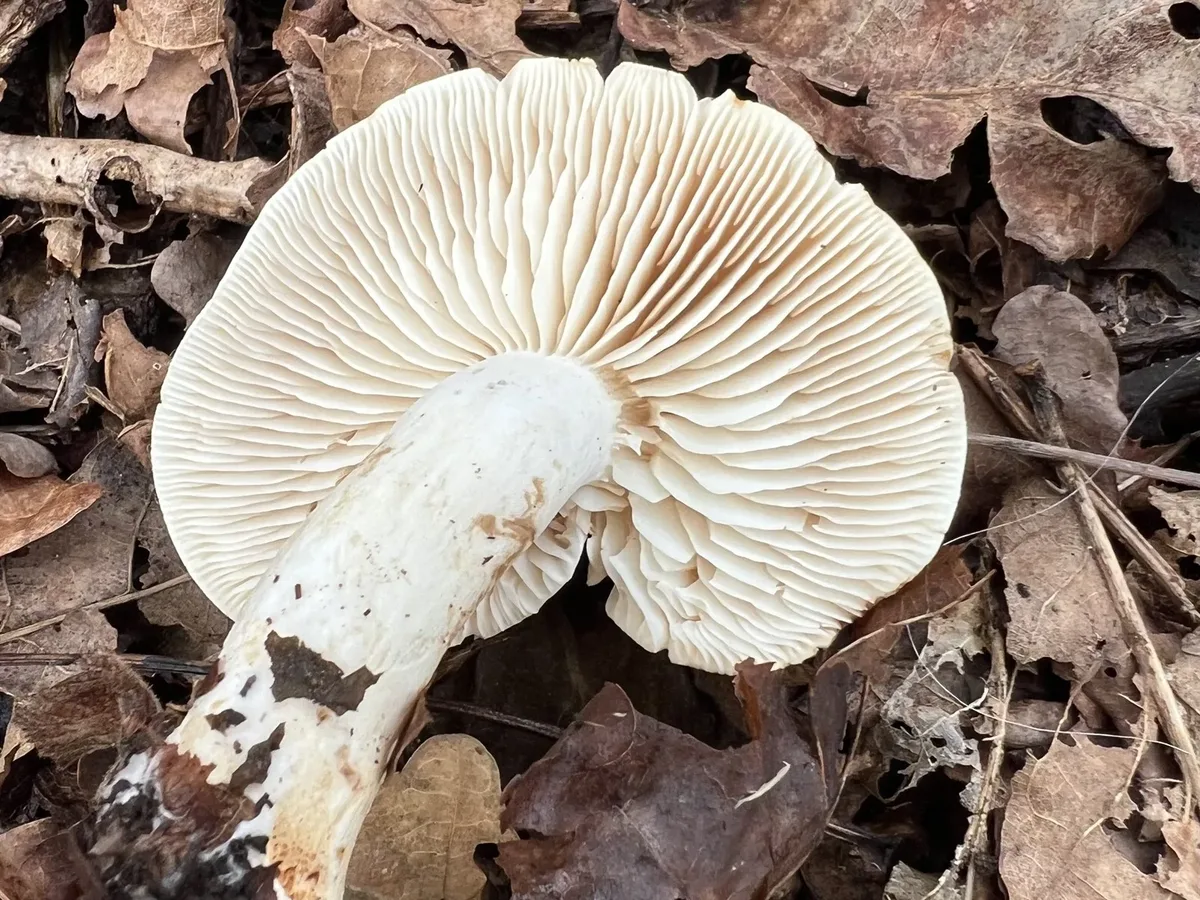
The underside reveals crowded, white, notched gills - the characteristic sinuate or emarginate gill form, where each gill has a distinct upward notch just before it meets the stem, is the hallmark of the genus Tricholoma and an important structural clue.
Stem
The stem is all-white, solid, cylindrical, and bears no ring and no volva (cup at the base).
Flesh
The flesh is firm and white and does not change colour when broken or sliced.
Smell & taste
The single most important identification feature is the smell: it is disagreeable in a specific way - sour, rancid-mealy, faintly chemical, like stale old flour or bad butter.
This unpleasant odour, combined with a bitter and unpalatable taste, makes Tricholoma album unmistakable once these features are experienced; they also make it extremely unlikely to be eaten accidentally by anyone who takes time to smell and taste (and spit).
Why it's dangerous
The primary direct danger is gastrointestinal poisoning from the irritant compounds in T. album itself.
The secondary and more serious danger is misidentification: a forager targeting T. album under oak or beech trees may inadvertently collect Amanita virosa (Destroying Angel) in the same basket. Amanita virosa contains alpha-amanitin and phalloidin, which cause progressive, often fatal liver and kidney failure.
Any confusion between these two species when gathering to eat is life-threatening.
The only safe rule: do not collect white, all-white, ringed-and-volvate, or ring-less-but-white mushrooms to eat unless you have expert certainty about each individual specimen, including full examination of the stem base.
Toxin
The exact toxic agents in Tricholoma album are not fully characterised, but are gastrointestinal irritants. They are thermostable (not destroyed by cooking) and act on the gut mucosa to cause nausea, vomiting, abdominal pain, and diarrhoea.
They are distinct from the amatoxins, orellanins, gyromitrin, and muscarine associated with other deadly species. The toxicological profile places T. album firmly in the 'gastrointestinal syndrome' (GI irritant) category of mushroom poisoning.
Symptoms
Symptoms of Tricholoma album poisoning are typically gastrointestinal: nausea, vomiting, cramping abdominal pain, and diarrhoea, usually beginning within 30 minutes to 3 hours of ingestion. Symptoms are self-limiting in most cases and resolve within 12-24 hours with supportive care (hydration).
However, any suspected poisoning involving white woodland mushrooms requires urgent medical evaluation to exclude amatoxin poisoning (Amanita virosa / A. phalloides), which has a characteristic symptom-free latency of 6-24 hours followed by severe liver and kidney failure.
A white mushroom forager who feels well for several hours after eating is not yet safe from Amanita poisoning.
Staying safe
Tricholoma album is poisonous and must not be eaten. It causes gastrointestinal irritation - nausea, vomiting, abdominal cramps, and diarrhoea - through irritant compounds not yet fully characterised at the molecular level (they are not amatoxins, gyromitrin, or orellanin, but are sometimes grouped with general gastrointestinal irritants).
The onset of symptoms is typically within 30 minutes to a few hours of ingestion.
Although fatalities directly attributable to T. album are not reliably documented, the species carries a serious secondary risk through confusion: it grows in the same woodland habitat as the deadly Destroying Angel (Amanita virosa), whose button stages resemble all-white Tricholoma.
A forager collecting 'white knights' could accidentally include an Amanita virosa - and amatoxin poisoning from even a small portion of that species is potentially lethal.
This species should be left alone. The unpleasant smell and bitter taste are nature's own deterrents, but they only work if the forager stops to investigate before picking.
Where & when it grows
Habitat
This is a woodland species, firmly attached to mature broadleaved trees through mycorrhizal partnership. It obtains sugars from its host trees in exchange for delivering water and minerals via the shared root-fungal network.
Look for it in deciduous forest and old parkland under oak, beech, lime, hornbeam, and hazel, on well-drained, often somewhat calcareous soils. It tends to grow singly or in scattered individuals under the tree canopy rather than in obvious rings, appearing when the light is low under a closing canopy.
The woodland setting is important for identification: a white Tricholoma found under broadleaved trees in autumn is much more likely to be T. album (or a close relative) than any edible species.
When
Tricholoma album fruits in the classic European autumn mushroom season, from late August through October and into November. It peaks in September and October, when cooling air temperatures and autumn rainfall combine with still-warm soils.
Like many mycorrhizal species, it tends to appear a few days to a week after significant rainfall, once soils have begun to cool from summer warmth. Cold snaps and hard frosts end the season.
How it grows
Tricholoma album lives as a mycorrhizal partner of broadleaved trees - not a decomposer feeding on dead matter, but a genuine trading partner woven into living root systems.
The fungus supplies the tree with water and minerals in exchange for sugars the tree photosynthesises. The mycelium can persist as an invisible network in the soil for many years, threading outward from root contact zones across a wide area.
This deep dependency on established trees means it cannot be cultivated commercially and will only fruit where its host oaks, beeches, or limes have had time to mature.
The scattered, loosely clustered fruitbodies you find near the base or drip-line of a large tree are the visible tip of that hidden partnership - the rest of the fungus has been there, unseen, far longer than the mushroom itself.
Fruiting conditions
Mycorrhizal autumnal species; flush follows 5-12 days after significant autumn rainfall when soils are cooling from summer; ceases with hard frost. Soil temperatures of 7-16 °C are optimal; fruiting is sparse above 18 °C.
Look-alikes
Several white woodland and grassland mushrooms can be confused with Tricholoma album, and some of these confusions carry a serious or deadly risk.
- Destroying Angel (Amanita virosa), or the closely related A. bisporigera, is the most dangerous risk - in immature button stages both can appear as white, upright, unmarked mushrooms. Amanita virosa is separated absolutely by its sac-like volva (a membranous cup) at the base of the stem - always dig up the whole base - plus a fragile, often skirt-like ring on the upper stem; T. album has neither. It also smells unpleasantly sweet or faintly honey-like rather than rancid-mealy, and its gills remain pure white and free (not touching or notched at the stem).
- White Clitocybe species (Clitocybe dealbata, C. rivulosa, C. phyllophila) are another hazard - these contain muscarine and cause life-threatening cholinergic poisoning. They differ from T. album by their decurrent or running gills (gills that run down the stem rather than notching at it), their more crowded and thinner gills, their lack of the rancid-mealy smell, and their preference for grassland or leaf-litter edges rather than directly under trees.
- Within Tricholoma, T. lascivum is very similar but has a more sour-fruity or spermous smell.
- T. stiparophyllum (= T. album var. stiparophyllum of some authors) is sometimes treated as a separate species, with a slightly more yellow cap tinge and different host associations.
- T. columbetta (the Blue-spot Knight) is edible and resembles T. album in its white colouring, but has a mild, pleasant smell and taste and often shows faint blue-green marks on the stem base.
Careful attention to smell and - for safety - the presence or absence of a volva resolves the most dangerous confusions.
Deadly - contains amatoxins causing potentially fatal liver and kidney failure. Shares the same woodland habitat and is similarly all-white. Distinguished by the membranous sac-like volva (cup) enclosing the swollen stem base - always dig up the whole mushroom and look for this - and a fragile skirt-like ring on the upper stem; Tricholoma album lacks both. A. virosa gills are free (do not touch or notch at the stem), white, and crowded; T. album gills are sinuate (notched at the stem). A. virosa has a sweet, faintly honey-like smell, not rancid-mealy.
Edible. Also all-white with the same sinuate gill attachment as T. album, but distinguished by a mild, pleasant (not rancid-mealy) smell, a mild taste, and - importantly - characteristic faint blue-green or blue-grey stains on the lower stem or base. When these blue marks are present, identification is straightforward; when absent, smell and taste are decisive.
Not deadly in the normally encountered form, but shares woodland and can appear white (especially the white form f. alba). Distinguished by the faint lemon-yellow tinge on the cap, the prominent sac-like volva at the stem base, a ring on the stem, and the characteristic smell of raw potato or radish. Any mushroom with a volva must be treated with extreme caution as a potential Amanita.
Poisonous (muscarine). Very similar to C. dealbata and often treated as the same species; same muscarine hazard. White, crowded, decurrent gills (running down the stem), grassy or dung-enriched habitats, mealy smell. Not a woodland tree-root associate.
Inedible; unpleasant smell. Very similar to T. album, occurring under the same broadleaved trees. Distinguished by a more sour-spermous or fruity odour rather than the rancid-mealy smell of T. album; some authorities treat these as close variants. Considered inedible but not definitively toxic.
Mildly toxic (GI irritant). Similar knight proportions but typically has a grey, grey-green, or olive-tinged cap rather than pure white; flesh may slowly turn pink-red when cut; smell is soapy rather than rancid-mealy. An all-white form exists but is uncommon.
Poisonous (muscarine); not lethally deadly in typical doses but causes severe cholinergic crisis (sweating, salivation, tears, slowed heart). A smaller white mushroom with decurrent gills that run down the stem rather than notching at it; prefers grassy or leafy-edge habitats rather than directly under trees; smells mealy but not rancid; lacks the bitter taste. Gill attachment is the key structural difference.
A reference guide - never an edibility guarantee. When in doubt, leave it out.