Yellow brain
Tremella mesentericasyn. Tremella lutescens, Gyraria mesenterica
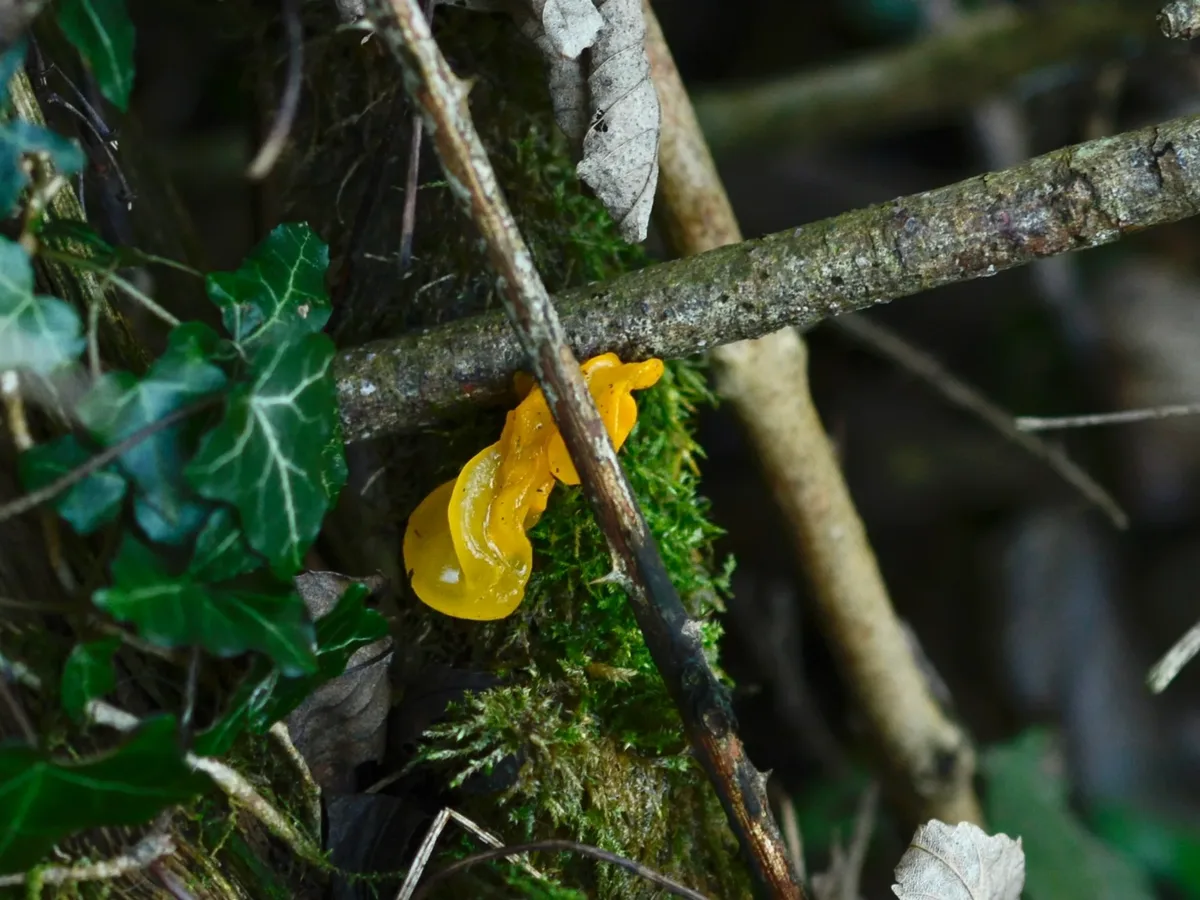 © Cara Ennis (CC BY)
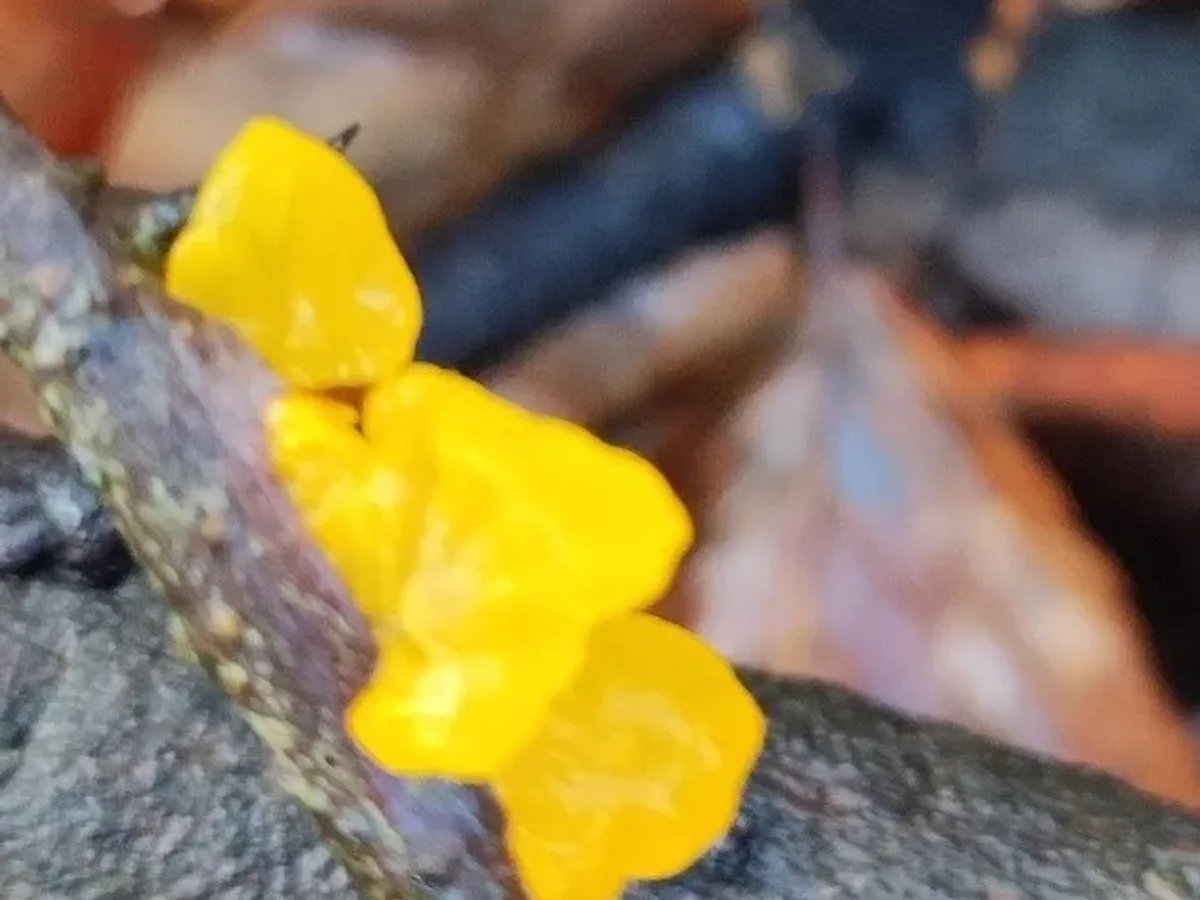 © Dmitry Ivanov (CC BY)
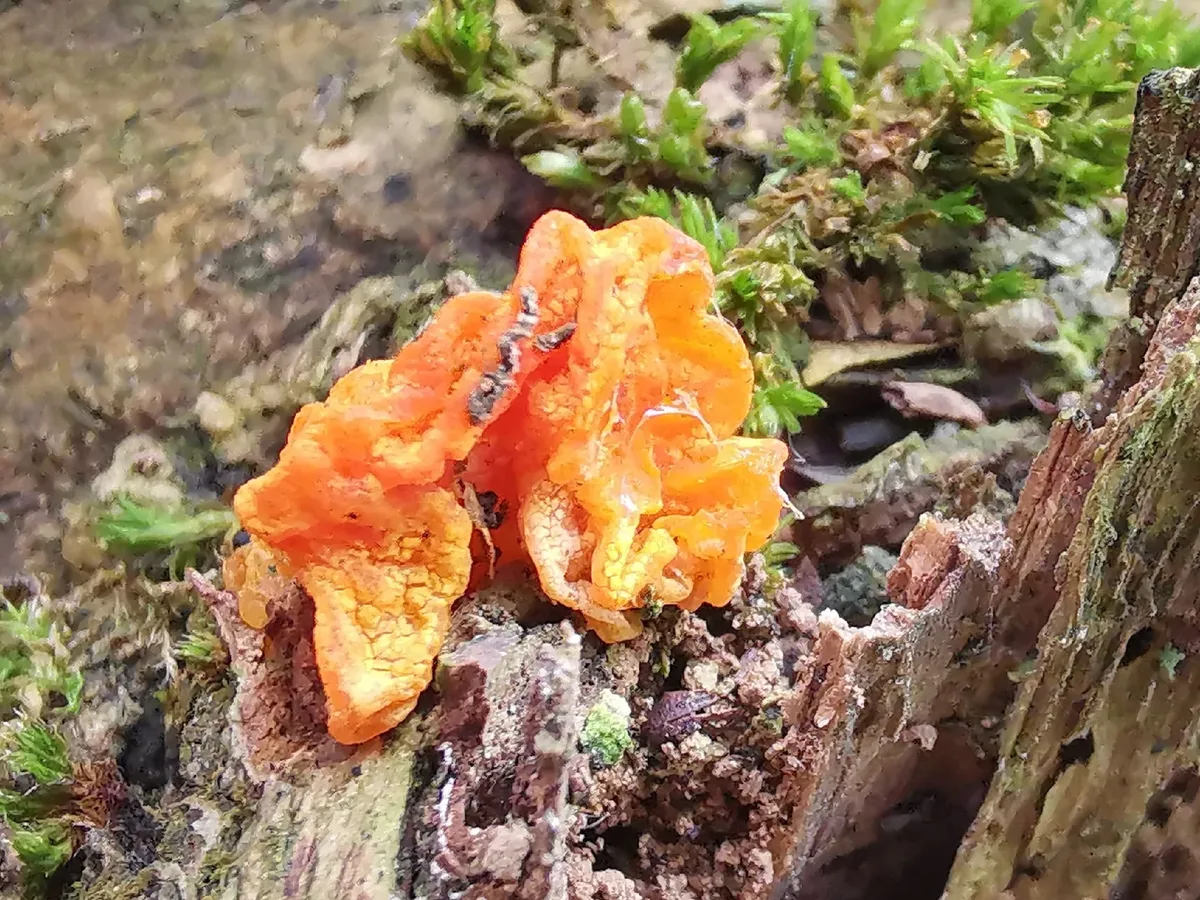 Jason Thompson (CC0)
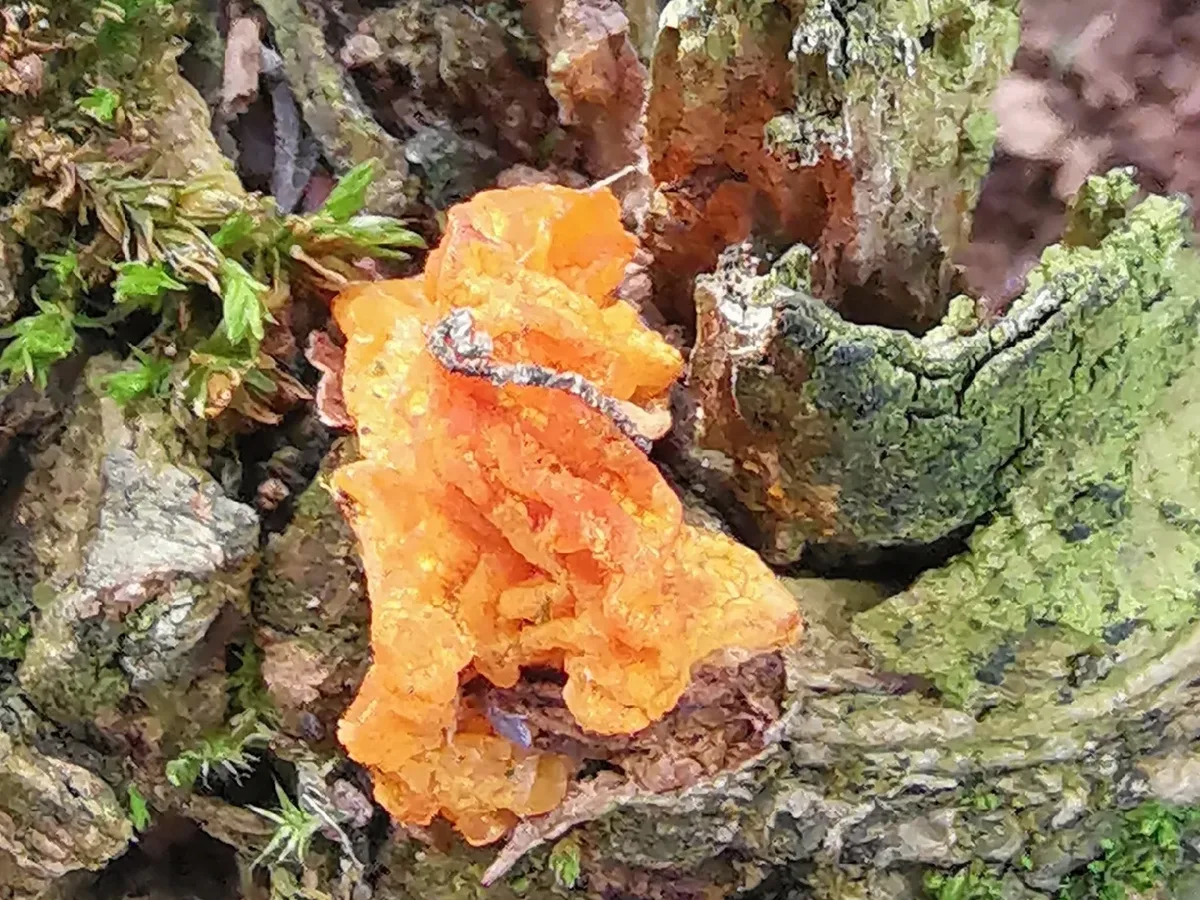 Jason Thompson (CC0)
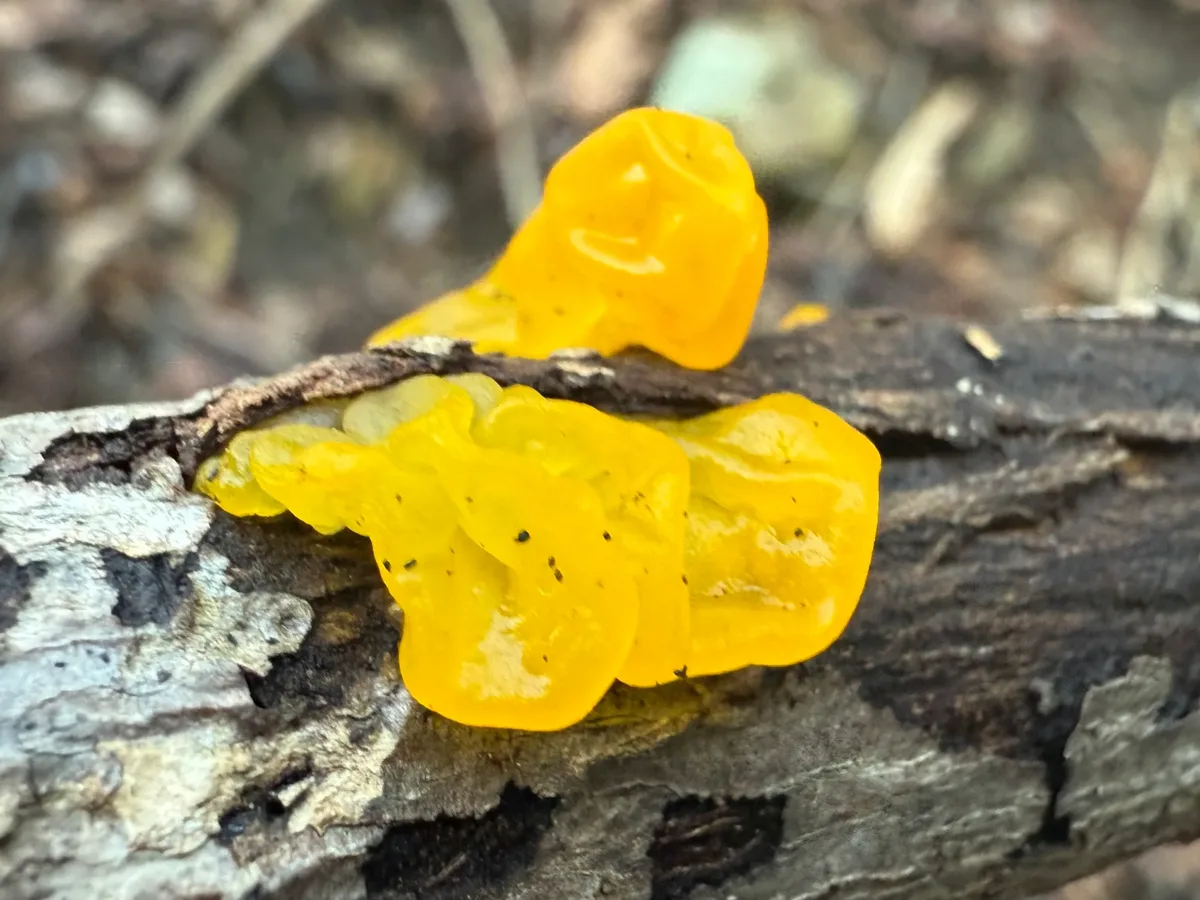 © Hill Craddock (CC BY)
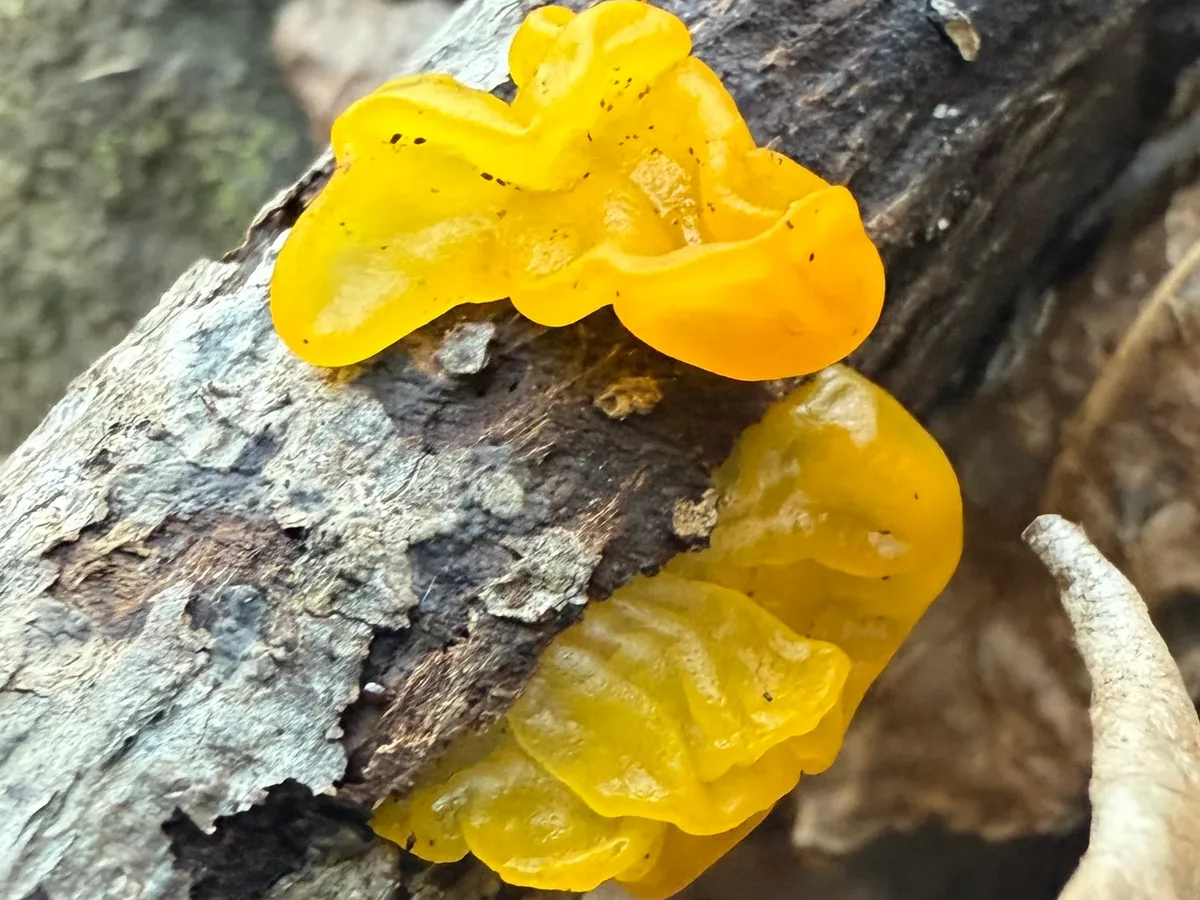 © Hill Craddock (CC BY)
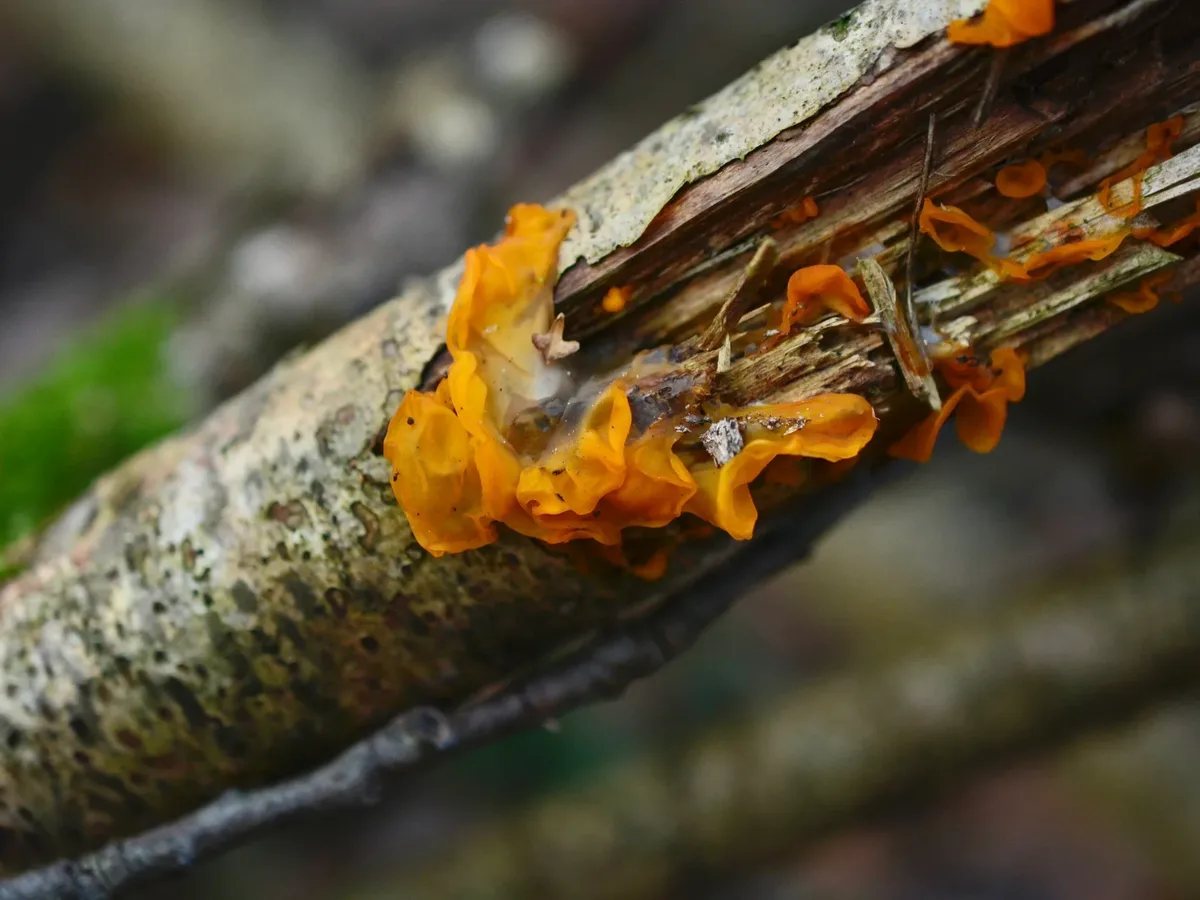 © Cara Ennis (CC BY)© Cara Ennis (CC BY)© Dmitry Ivanov (CC BY)
Not poisonous, but not worth eating - too tough, bitter, or bland for the pot.
How to recognise it
Tremella mesenterica produces one of the most visually striking fungal fruitbodies of the winter woodland.
The gelatinous, brain-like mass measures 2-10 cm across and 1-4 cm tall, composed of tightly folded, convoluted lobes with a surface that glistens brilliantly when wet.
In prime fresh condition the colour is an intense golden-yellow to deep amber-orange, immediately eye-catching against grey bark.
The entire body is soft, rubbery, and slightly translucent - pressing a finger into it leaves an impression that springs back slowly. There is no stem; the fruitbody is attached directly to the bark over a broad base.
In dry conditions the whole structure collapses to a flat, almost lacquer-like orange-yellow skin clinging to the wood surface. A brief soaking in rain or simply humid weather causes it to swell back to full three-dimensional form within hours - a fact worth knowing when identifying old material.
The flesh is gelatinous throughout with no differentiation into layers; it has no notable smell and essentially no taste.
The spore print is white. Spores are ellipsoid to broadly sausage-shaped, smooth, and hyaline, germinating not by germ tubes but by budding off yeast-like conidia - a feature shared across the genus Tremella.
Where & when it grows
Habitat
Yellow brain is a mycoparasite: its vegetative mycelium grows inside the mycelium of corticioid crust fungi - principally species of Peniophora - that colonise dead attached and recently fallen branches of deciduous trees.
Because the host is itself a wood-decay fungus residing within the bark, Tremella mesenterica appears to fruit on bare dead wood with no obvious host present. A careful inspection with a hand lens or a scrape of the bark will often reveal the thin, pale-cream to violet-grey crust of Peniophora underneath or nearby.
It is most frequently encountered on:
- dead gorse stems in coastal and lowland heathland
- bramble and rose in hedgerows
- hazel in coppiced woodland
- oak, beech, willow, elder, and alder branches on the woodland floor or on standing deadwood
It generally does not colonise living trees. Suitable micro-habitats include:
- the undersides of branches
- wood exposed by storm damage
- cut stumps in managed woodland
When
The main fruiting window is autumn through early spring - roughly October to March in the British Isles and central Europe - reflecting the species' preference for cool, wet, mild weather rather than hard frosts.
It is one of the comparatively few conspicuous fungi that continues to fruit reliably through December and January, when the woodland floor offers little else.
Appearance is closely tied to rainfall: a period of 10-20 mm of rain after a dry spell can trigger fruitbody formation or revive collapsed specimens within 24-48 hours.
In Scandinavia the season tends to be compressed into October-December, while in Atlantic-facing regions (Ireland, western France, coastal Iberia) fresh fruitbodies can appear in any month except the driest part of summer.
How it grows
Yellow brain belongs to an ancient lineage of fungi whose spore-bearing cells (basidia) are divided by internal cross-walls - quite different from the simple club-shaped basidia of gilled mushrooms.
It is also a mycoparasite with an unusual social prerequisite: two compatible mating types must find one another in the wood before any fruitbody can form, much like a lock requiring a specific key.
Once the partnership is established, the fungus threads its hyphae through the mycelium of its Peniophora host, drawing on carbohydrates the host has already extracted from the dead wood.
Fruitbodies begin as tiny gelatinous pustules on the bark surface and expand and fuse over several days into the familiar brain-shaped mass.
Individual fruitbodies are remarkably resilient. They can:
- shrivel to a flat crust in dry weather
- lie dormant for weeks
- swell back to full three-dimensional form after rain
This cycle may repeat many times while the fungus continues to shed spores. After the final spore discharge, the remains dry to a pale film that can cling to the bark for months.
Fruiting conditions
Responds very rapidly to rainfall after dry periods; fruitbodies can swell to full size within 24 hours of rewetting. Optimal temperatures are cool and mild (2-12 °C); fruiting is suppressed by hard frost and ceases in warm summers. The short flush lag reflects both revival of desiccated existing fruitbodies and formation of new ones.
Look-alikes
Several European jelly fungi can be confused with yellow brain, but each differs clearly:
- Dacryopinax spathularia (fan-shaped jelly) - the most frequently confused species in Europe; smaller and more orange-red, growing mainly on conifer wood.
- Calocera cornea and Calocera viscosa - bright orange-yellow jelly fungi, but coral-branched or antler-shaped rather than brain-like, and also favour conifers.
- Guepinia helvelloides (apricot jelly) - salmon-pink to orange, spatula-shaped, and grows from buried roots.
- Exidia thuretiana - white and gelatinous.
- Dacryomyces stillatus - forms small orange-yellow pustules on conifer wood.
None of these are dangerous, and none closely mimics the bright-yellow brain-shaped mass of T. mesenterica on deciduous bark.
Small orange-yellow pin or unbranched club, 0.5-2 cm tall; grows on conifer wood; not lobed or brain-like
Bright orange-yellow but coral- or antler-branched, not brain-shaped; grows strictly on conifer wood; firmer and more rubbery
Tiny orange pustules, 1-5 mm across; grows on conifer wood; far smaller than T. mesenterica fruitbodies
Small fan-shaped or spathulate jelly fungus, orange-red, mainly on wet decorticated conifer wood
White to translucent, smaller, irregularly lobed jelly blobs on dead deciduous branches; distinguished immediately by colour
Salmon-pink to apricot-orange, spatula-shaped with a distinct stem, grows from buried roots in conifer or mixed woodland
Dark brown to black gelatinous brain-like fruitbodies on oak; easily distinguished by colour
In the kitchen
Picking & cleaning
Tremella mesenterica is collected only occasionally - it is technically edible but of very poor culinary quality, being nearly tasteless and almost entirely water.
Anyone wishing to harvest it for novelty should select young, bright-yellow specimens on dry days, handling gently to preserve the lobes. Cut the base with a knife rather than pulling, which can detach bark.
The fungus has attracted research interest for its polysaccharide content (tremella polysaccharides are studied for potential medicinal and cosmetic applications, particularly as moisturising agents), but foragers should regard this species as something to observe and photograph rather than eat.
Cooking
Not recommended as food. The flavour is essentially absent and the texture - a slippery, watery gel - does not improve with cooking.
In East Asian culinary traditions, related Tremella species (particularly T. fuciformis, snow fungus) are prized for their ability to absorb flavours in soups and desserts. T. mesenterica could theoretically be used similarly but yields very little material and is far inferior in texture.
If incorporated as a novelty:
- 1Rinse well.
- 2Blanch briefly.
- 3Use as a garnish in clear broths.
Drying concentrates the almost non-existent flavour minimally, and the dried material can be rehydrated as with other jelly fungi.
Good to know
Tremella mesenterica poses no known toxicological hazard. It is not poisonous.
The main safety concern is theoretical - the possibility of:
- misidentifying it as one of the colourful toxic jelly fungi in tropical regions (none are relevant to European foragers)
- consuming a specimen heavily contaminated with pollutants if collected from roadside trees
The species has been eaten in parts of Asia and Europe without reported ill effects, though the flavour and culinary merit are negligible.
No deadly lookalikes are associated with this species in its native range.
A reference guide - never an edibility guarantee. When in doubt, leave it out.