Golden Jelly Fungus
Tremella aurantialbasyn. Naematelia aurantialba, Tremella aurantia sensu auct. asiat. (misapplied)
 Atlas of Living Australia (CC0)
 Fumikas Sagisavas (CC0)
 Fumikas Sagisavas (CC0)
 Atlas of Living Australia (CC0)
 Atlas of Living Australia (CC0)
 Atlas of Living Australia (CC0)Atlas of Living Australia (CC0)Fumikas Sagisavas (CC0)
Good to eat, once you have identified it with certainty and cooked it through.
How to recognise it
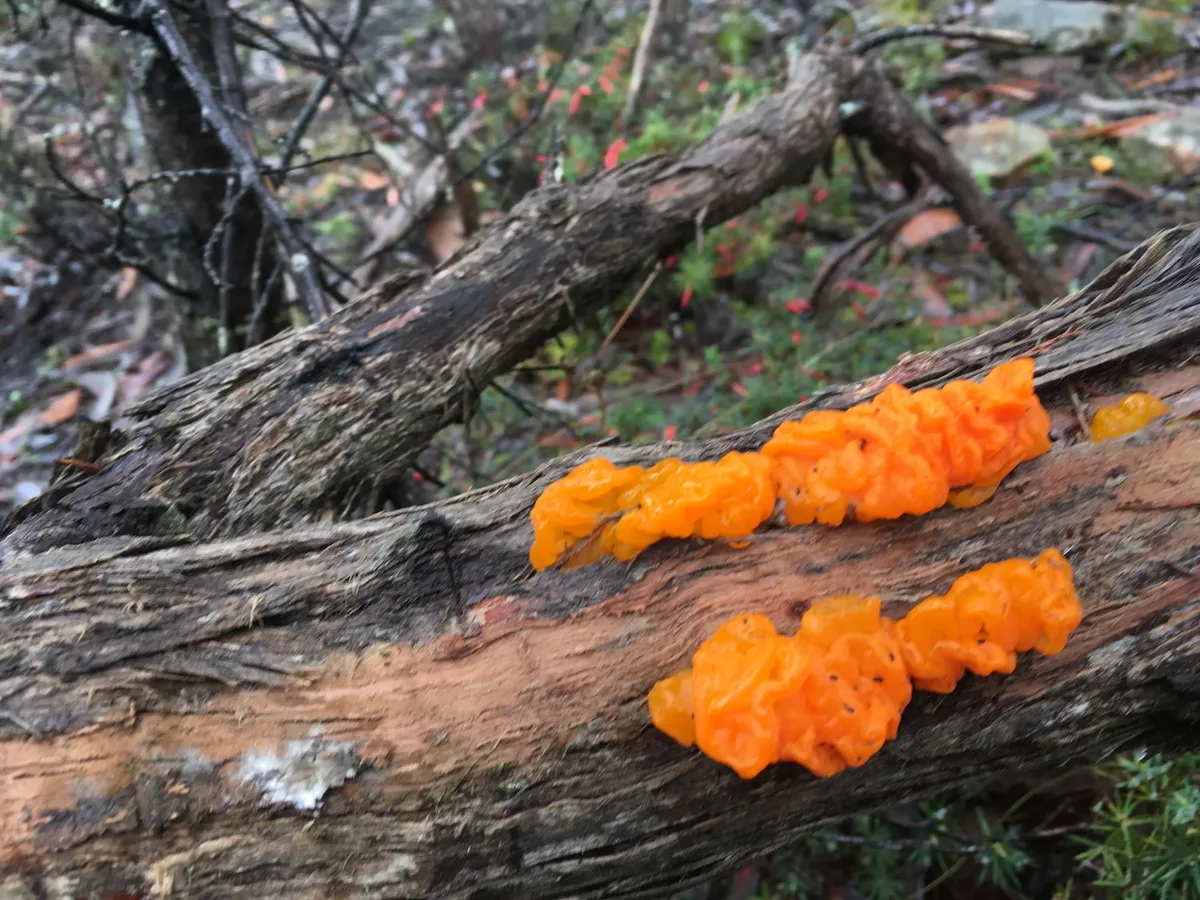
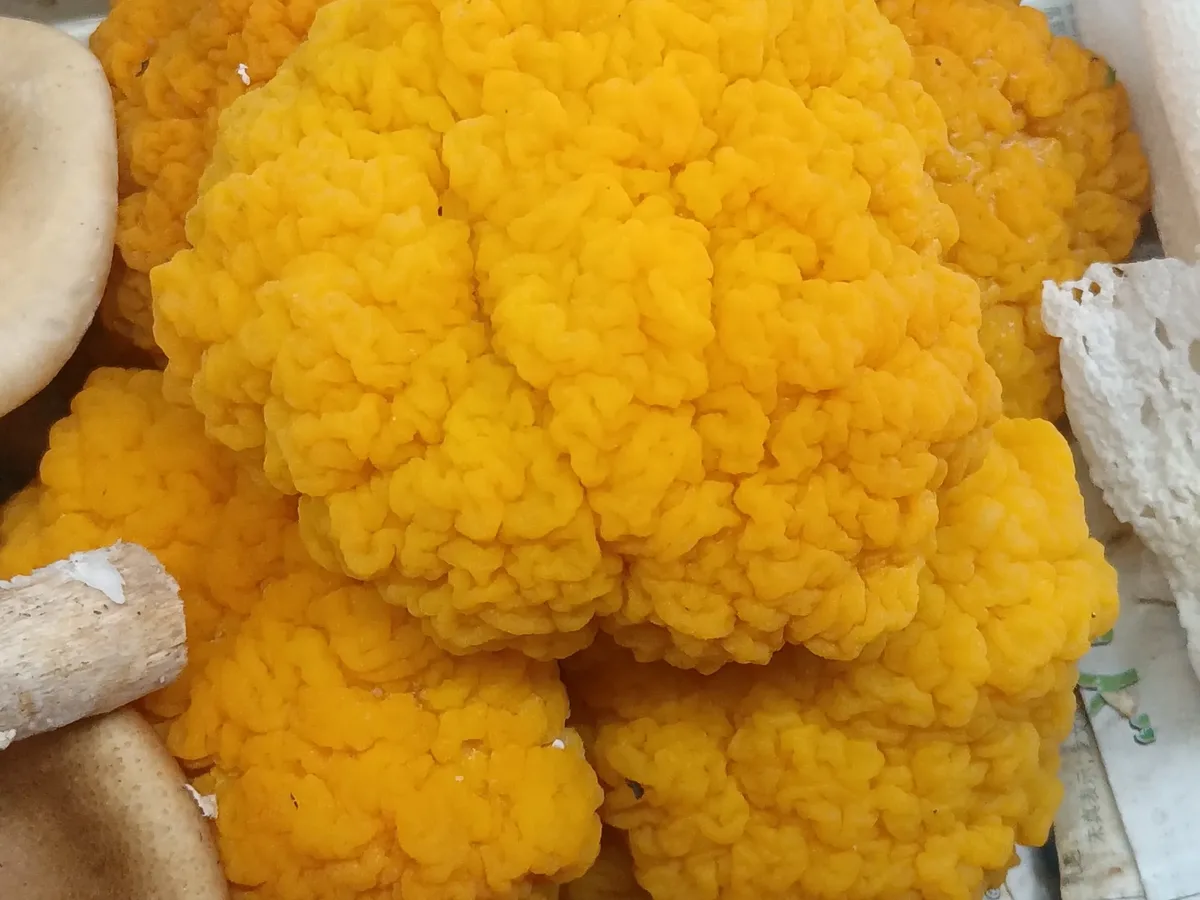
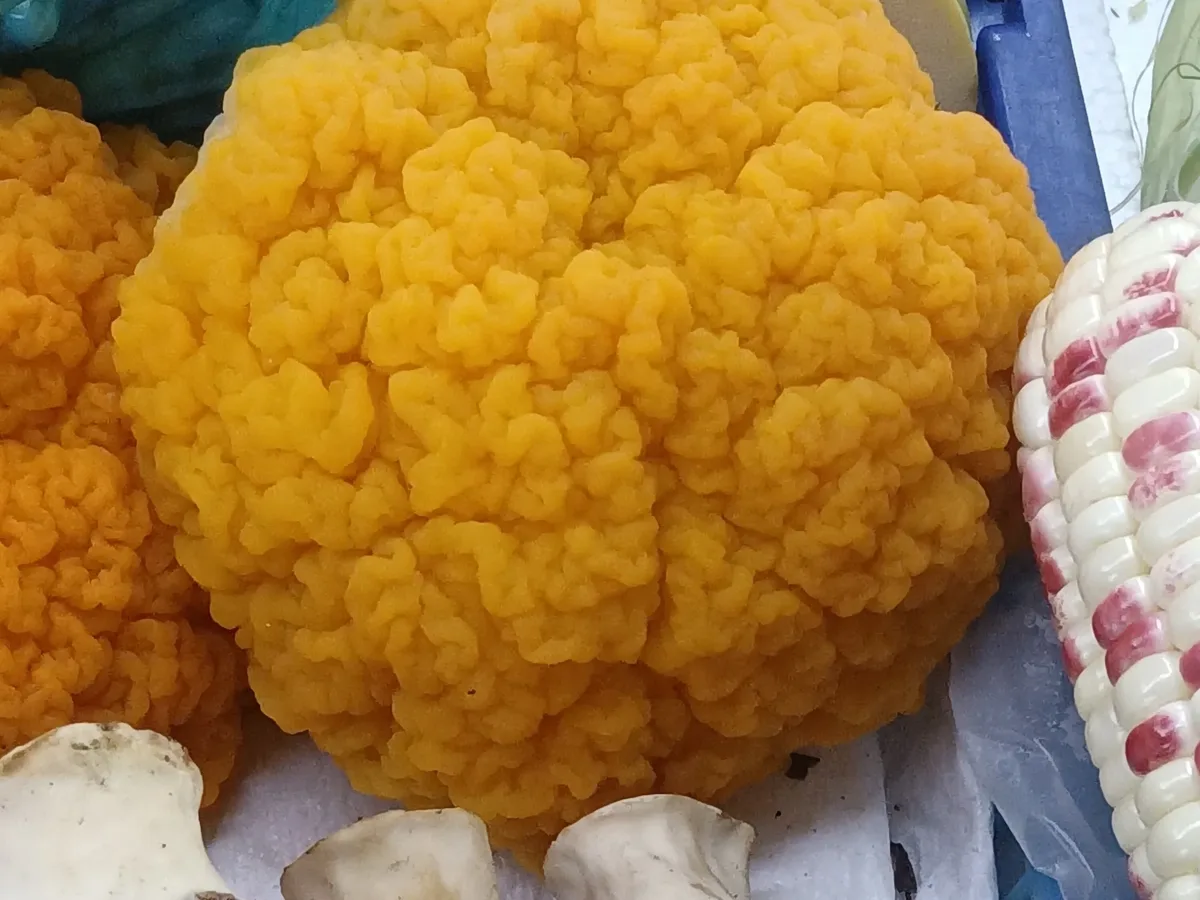
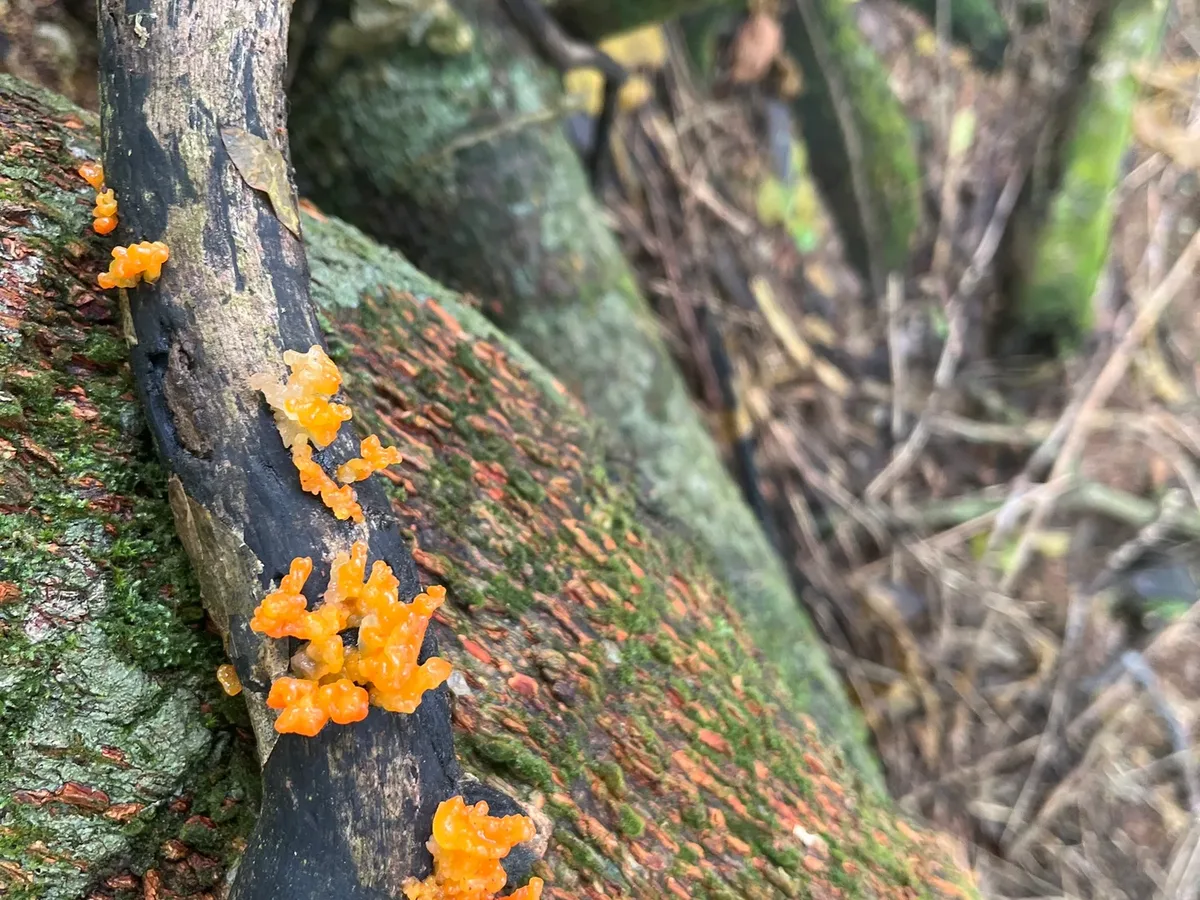
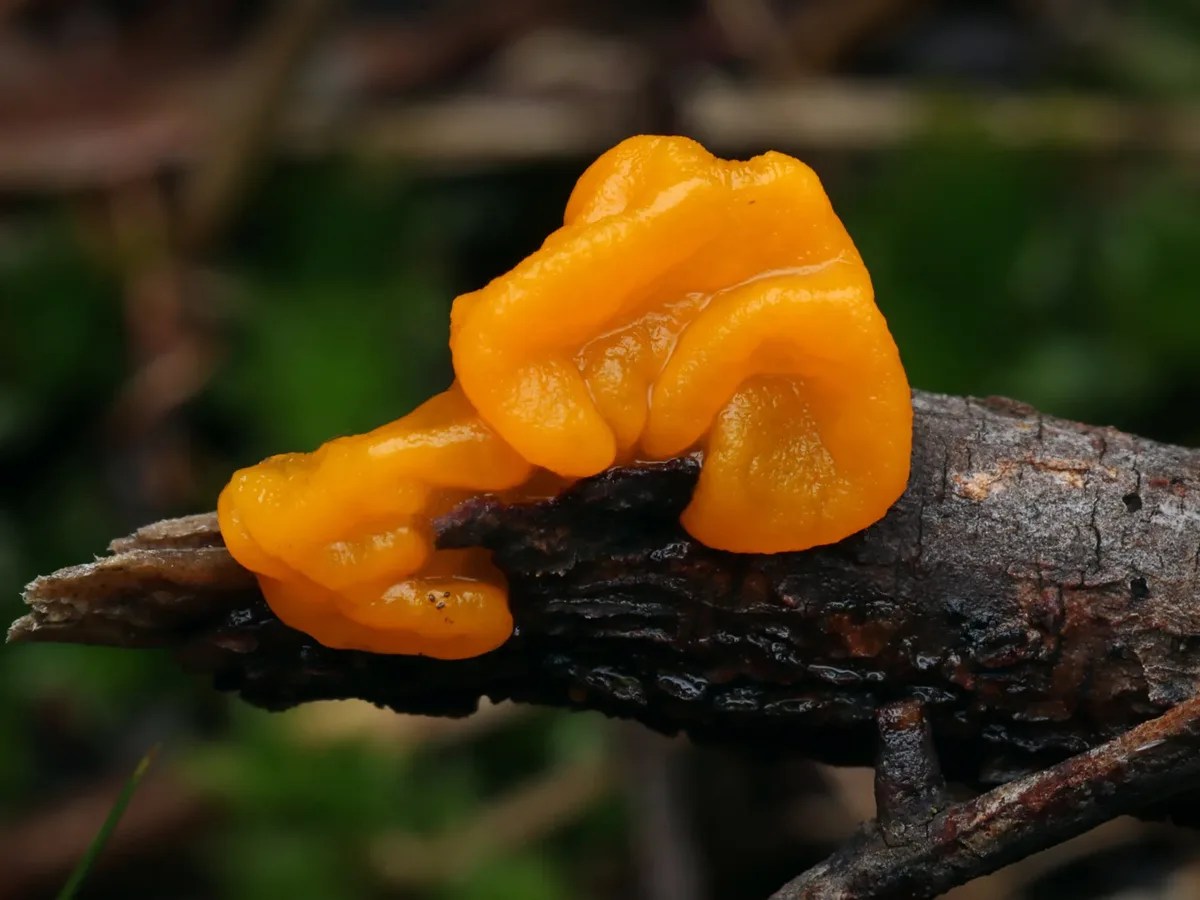
Tremella aurantialba is one of the most visually distinctive jelly fungi in East Asia: a plump, brain-like mass of convoluted orange-gold lobes that sits on dead hardwood like a burnished golden ornament.
A mature specimen measures 5-12 cm across and can weigh a few hundred grams fresh, making it substantially larger than most Tremella species.
The colour is the first and most useful character: a rich, warm golden-orange to amber-orange, deeper and more saturated than the yellow of Tremella mesenterica and entirely unlike the white of T. fuciformis.
The lobe surface is smooth, glistening, and slightly tacky when moist, and the entire mass is gelatinous and yielding when pressed. There is no cap, stem, gills, or ring - just the rounded gelatinous mass attached broadly to the substrate.
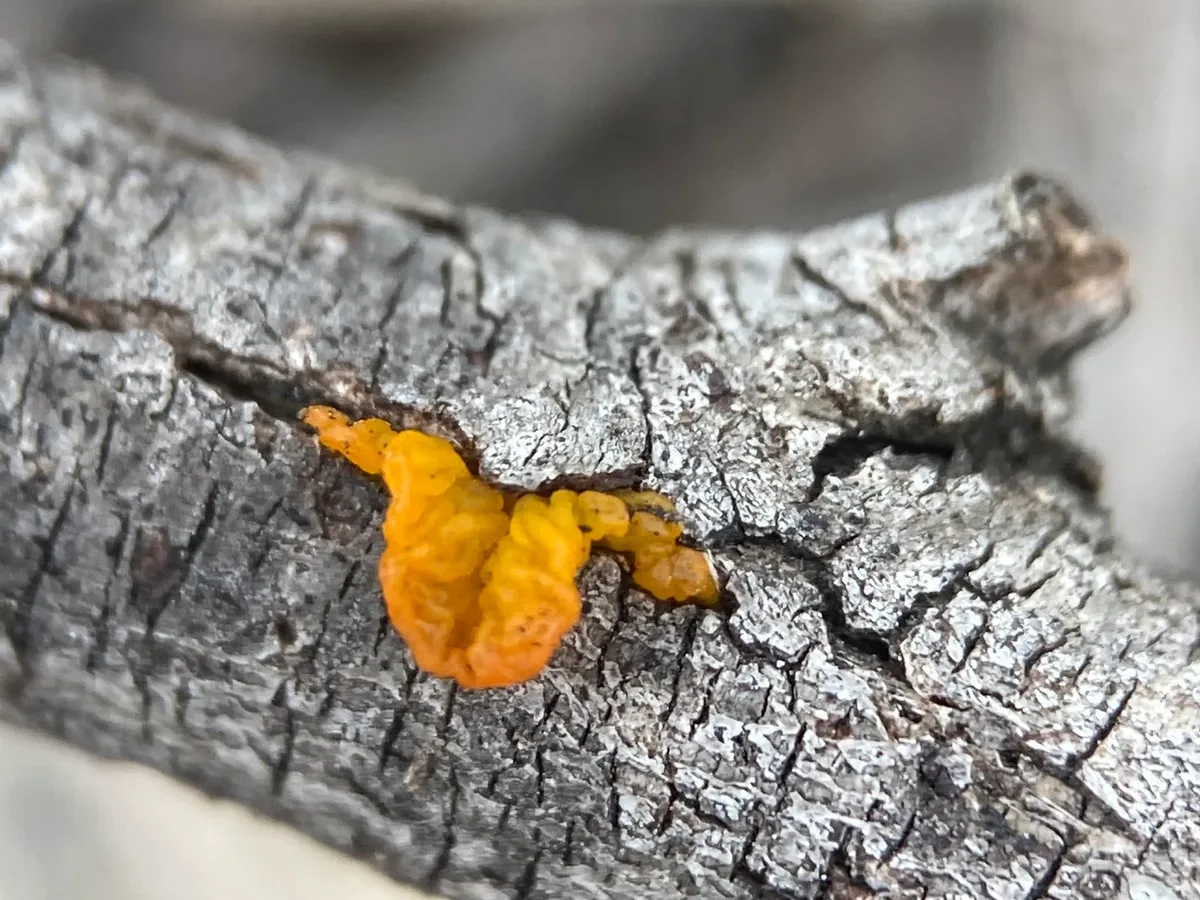
In dry conditions the fruitbody deflates to a tough, flat, leathery skin; rain returns it to full three-dimensional form within hours.
The flesh is gelatinous throughout, faintly translucent orange-yellow, with very little raw odour and a mild, neutral taste.
The combination of size, golden-orange colour, brain-like lobe structure, gelatinous texture, and dead broadleaf wood substrate makes this species straightforward to recognise once seen.
Where & when it grows
Habitat
Golden ear grows on the dead and decaying trunks of hardwood trees throughout the warm-temperate and subtropical forests of East Asia. Its heartland is the montane and subalpine oak forests of Yunnan Province, China, where it has been harvested and cultivated for centuries.
The key to understanding where it fruits lies in its biology: it is not a wood-decomposer but a mycoparasite of Hymenochaete, a genus of corticioid (crust) fungi that coat the surface of dead hardwood. The orange jelly you see is essentially growing on and through the invisible mycelium of another fungus beneath the bark.
This means productive spots are doubly specific - they need both the right tree and an established Hymenochaete colony in the same log. Oak and chestnut are most commonly cited, but any broadleaf hardwood already colonised by the right Hymenochaete species is a candidate.
In Yunnan the species is found from about 1,000 to 2,500 m elevation, appearing on fallen logs and the bases of standing dead trees in humid forest clearings and along stream banks where moisture is retained. In Japan it is recorded from warm-temperate broadleaf woodland at lower elevations.
When
The productive season in temperate East Asia is late spring through early autumn - roughly May to October - with the peak in June through August, when monsoon-season warmth and rainfall converge.
At higher elevations in Yunnan (2,000-2,500 m) the window is somewhat later and shorter, running June to September.
The fungus is closely responsive to rainfall: fruitbodies can develop within a few days of sustained rain on a substrate that already hosts the Hymenochaete parasite host.
Unlike the white snow fungus (T. fuciformis), which is produced commercially year-round, golden ear in the wild is a distinctly seasonal find. In Yunnan markets it appears fresh in summer and dried throughout the year.
In tropical parts of its Southeast Asian range it may fruit more broadly through the wet-season months.
How it grows
Golden ear shares the mycoparasitic biology typical of the genus Tremella, but parasitises species of Hymenochaete (order Hymenochaetales) rather than the Peniophora associates of T. mesenterica or the Annulohypoxylon host of T. fuciformis.
Before any fruitbody is visible, the parasitic hyphae of T. aurantialba thread through the corticioid mycelium of the host Hymenochaete colony within the wood, extracting carbohydrates that the host has itself obtained by decomposing the lignocellulose of the dead tree.
Only when this energy acquisition is well established and environmental conditions are right - warmth and moisture together - does the fungus switch from its vegetative parasitic phase to produce the conspicuous gelatinous fruitbody on the wood surface.
The fruitbody starts as a small gelatinous knob and expands rapidly, fusing lobes into the characteristic convoluted mass. Individual fruitbodies can persist for weeks, desiccating and reviving repeatedly with fluctuating humidity.
Commercial cultivation of golden ear follows the same dual-culture approach used for T. fuciformis: sawdust substrate blocks or logs are inoculated with both T. aurantialba and a compatible Hymenochaete strain, then managed for temperature and humidity. Yunnan Province is the main production centre.
Fruiting conditions
Warm-season, moisture-triggered mycoparasite fruiting on deadwood substrates already colonised by Hymenochaete host fungi. Fruitbodies develop rapidly after sustained rainfall when temperatures are 15-28 °C. Desiccated specimens revive after rewetting. Peak season June-August in temperate montane Yunnan; broader wet-season window in subtropical and tropical portions of the range.
Look-alikes
Tremella aurantialba is relatively easy to identify among East Asian jelly fungi once its distinctive golden-orange colour is known, but a few species share the gelatinous, lobed form.
- Tremella mesenterica (yellow brain) - the closest in overall appearance, but consistently lemon-yellow to golden-yellow rather than the deeper amber-orange of T. aurantialba, substantially smaller, parasitises Peniophora rather than Hymenochaete, and has a cooler-season peak (autumn to early spring in temperate zones) compared to the warm-season fruiting of T. aurantialba.
- Tremella fuciformis (snow fungus) - white, and therefore not confusable in the field.
- Dacryopinax spathularia and other Dacrymycetes - orange but fan-shaped or antler-like, not brain-lobed, and favour conifer wood.
- Calocera viscosa - also orange-yellow but coral-branched, and grows strictly on conifer wood.
None of the realistic lookalikes in East Asia are known to be toxic or deadly.
Orange-yellow, gelatinous, and similar in colour, but formed as a densely branched coral or antler structure rather than a brain-lobed mass. Grows exclusively on conifer wood (stumps, logs, roots), not on the broadleaf hardwood that T. aurantialba requires. Much smaller in fruiting body volume.
Small (1-3 cm), orange to orange-red, fan-shaped or spathulate jelly fungus growing in clusters on decorticated moist wood, predominantly conifers in Asian forests. Shares gelatinous orange colour but is dramatically smaller and has an entirely different shape - there is no lobed brain-like mass.
Snow fungus is white to translucent-white with a ruffled, frilly, more open lobe structure - immediately distinguishable from the deep amber-orange colour of golden ear. Both parasitise different host fungi (T. fuciformis on Annulohypoxylon, T. aurantialba on Hymenochaete). Both are choice edible species widely cultivated in East Asia.
Yellow brain is yellow to golden-yellow, not the deeper amber-orange of T. aurantialba. It is also substantially smaller (typically 2-10 cm vs. up to 15 cm for T. aurantialba), parasitises Peniophora crust fungi rather than Hymenochaete, and fruits primarily in autumn and winter in temperate zones rather than in the warm-season summer peak of T. aurantialba. Both are edible (though yellow brain is of poor culinary quality); neither is toxic.
In the kitchen
Picking & cleaning
Select young to mature fruitbodies that are plump, moist, and fully golden-orange in colour. Avoid specimens that are darkening toward brown (past prime) or show signs of mould or softening at the base.
The fruitbody attaches broadly to the wood, so use a knife to slice cleanly through the base rather than pulling. Pulling can detach bark and damage the underlying mycelium, preventing future flushes from the same substrate.
Golden ear is substantially firmer and more robust than T. fuciformis, so it handles transport better, but keep it cool and use within one to two days fresh.
For longer storage, dry sliced pieces at 40-50 °C until completely desiccated. Dried golden ear reconstitutes well in warm water and is available commercially in this form throughout China.
Rinse fresh fruitbodies to remove any debris or insects that may inhabit the crevices between lobes.
Cooking
Golden ear (金耳, jīn'ěr) is a valued ingredient in Yunnan cooking and in Chinese traditional medicine, appreciated equally for its distinctive appearance, pleasant texture, and purported nutritional properties.
Prepare fresh fruitbodies:
- 1Rinse thoroughly.
- 2Trim away the tough basal attachment.
- 3Tear or cut the lobes into bite-sized pieces.
The raw texture is firmer and more substantial than T. fuciformis - slightly crunchy-gelatinous rather than purely silky - and this character is retained after moderate cooking.
In traditional Yunnan cooking it appears in clear soups and hot pots, simmered gently with chicken, ham, or pork until the lobes turn glossy and tender.
It also works well in the sweet dessert soup tradition of southern Chinese cooking: simmered with rock sugar, red dates, longan, and lotus seeds until the broth thickens slightly and the golden lobes are soft and jewel-like.
Dried golden ear requires 30-60 minutes of soaking in warm water before use; the soaking liquid, which takes on a mild golden colour, can be added to the pot.
The firmer texture means it stands up well to longer cooking than T. fuciformis, and it absorbs surrounding flavours readily while contributing a mild, clean taste of its own.
In traditional Chinese medicine it is regarded as having yin-nourishing and lung-tonifying properties, similar to the related silver ear (T. fuciformis).
Good to know
Tremella aurantialba has a well-documented edibility record in China, particularly in Yunnan Province, where it has been consumed for centuries as both food and traditional medicine. No credible reports of toxicity exist in the mycological or medical literature.
It is classified as choice edible by contemporary Chinese mushroom guides and has been commercially cultivated safely for decades. It is consumed both fresh and dried without reported adverse effects.
As with all edible wild fungi, individuals with known sensitivities to jelly fungi should exercise the usual caution when eating it for the first time.
The mycoparasitic life history means the fruitbody contains no direct decomposition products from the host wood, which is no different from T. fuciformis in terms of substrate-related concerns. Collect only from clean environments away from polluted or treated timber.
A reference guide - never an edibility guarantee. When in doubt, leave it out.