Breadlike pouch webcap
Thaxterogaster artosinussyn. Cortinarius artosinus Cleland & Cheel, Secotium artosineum
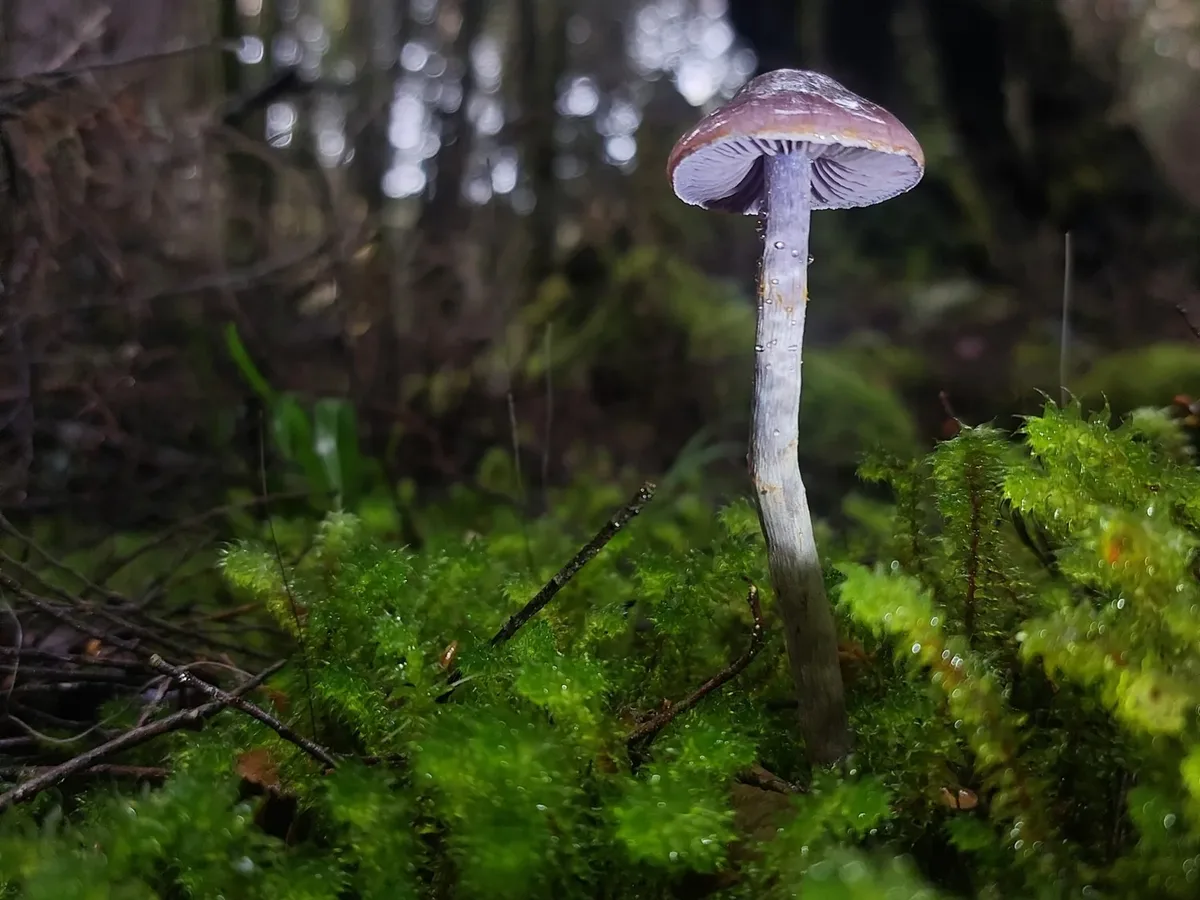 Atlas of Living Australia (CC0)
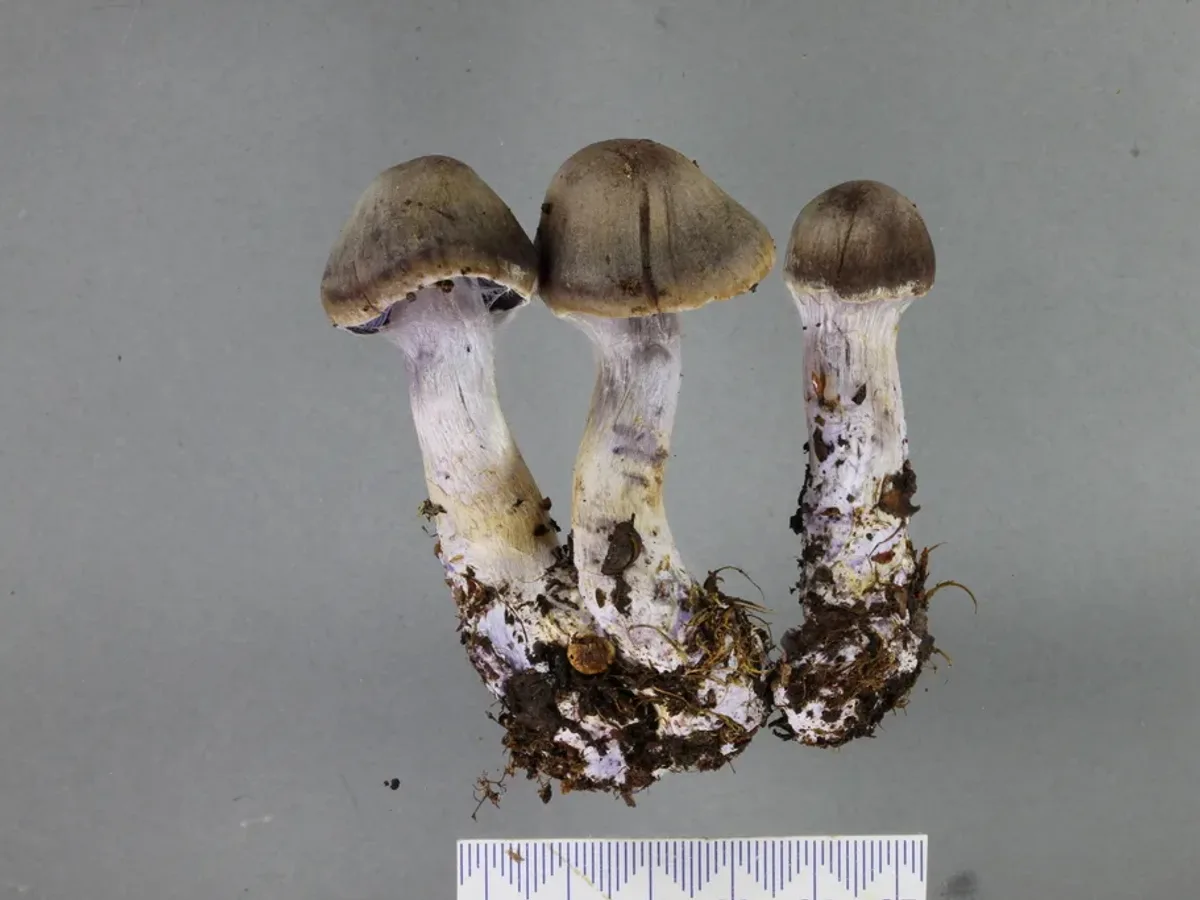 (c) David Orlovich, some rights reserved (CC BY)
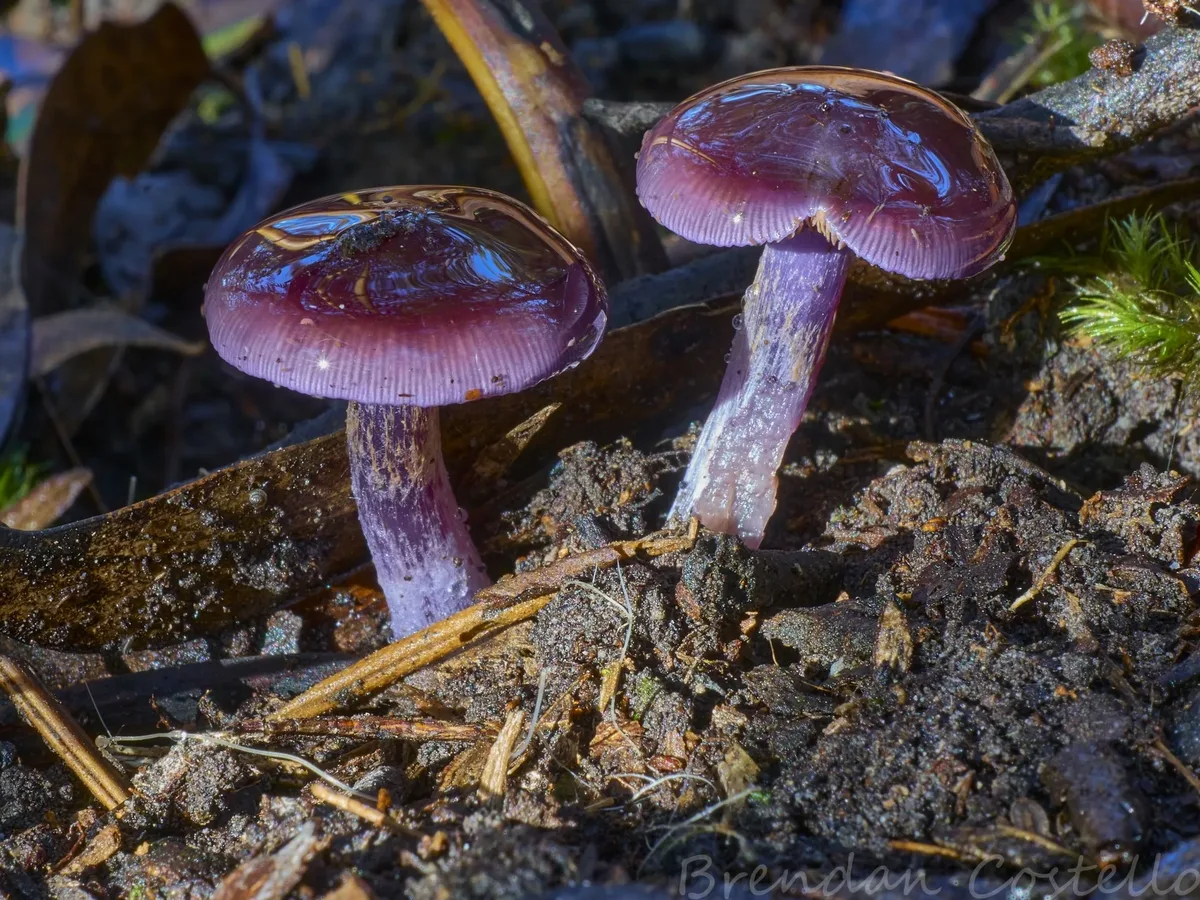 Atlas of Living Australia (CC0)
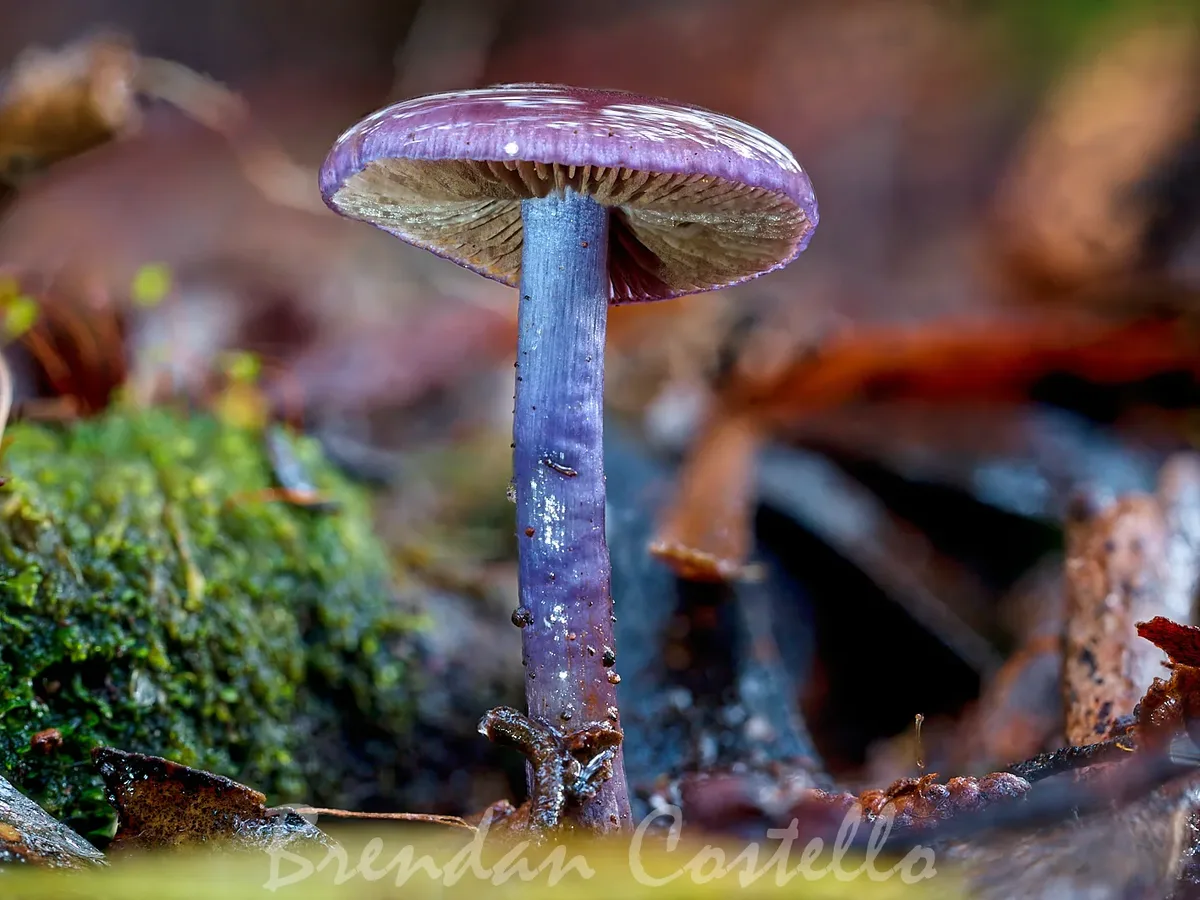 Atlas of Living Australia (CC0)
 Atlas of Living Australia (CC0)Atlas of Living Australia (CC0)(c) David Orlovich, some rights reserved (CC BY)
Not poisonous, but not worth eating - too tough, bitter, or bland for the pot.
Never eat a mushroom you are not 100% sure of - check the look-alikes below, and always cook wild mushrooms.
How to recognise it
Thaxterogaster artosinus is not a conventional gilled mushroom - it is a secotioid or gastroid fungus, meaning its spore-bearing surfaces never fully open to the air but remain enclosed or only partially exposed within a compact, bread-roll-shaped to lobed body.
This is the feature that names it: 'artosinus' combines the Latin artus (bread, or close-pressed) with sinus (fold or bay), describing the bread-like, internally folded structure.
In the field it looks something like a pale-brown lump of dough or a small oddly shaped potato sitting in the leaf litter - neither quite a puffball (which has a smooth hollow interior) nor a normal webcap cap.
Cutting it in half reveals a pale, chambered interior criss-crossed by narrow compressed gill-plates, the whole gradually darkening from buff to rust-brown as spores mature.
The outer surface is dry, fibrillose, ochre-buff to pale clay-brown, sometimes hinting at the violet-blue tones characteristic of related Cortinarius/Thaxterogaster species when very fresh. No free stem is typically present - the base is simply a compacted, fibrous mass.
This secotioid architecture is thought to represent an evolutionary strategy for spore dispersal in dry environments: rather than releasing spores from open gills (which requires atmospheric humidity), the enclosed body allows the spore mass to dry and fragment, relying on wind, insects, or animal disturbance to distribute spores.
Where & when it grows
Habitat
This species belongs firmly to native Australasian ecosystems and cannot be expected elsewhere. It forms ectomycorrhizal relationships with Australian eucalypts and possibly acacias, requiring a living tree partner and the undisturbed soil fungal community of native woodland.
The favoured setting is dry to semi-arid eucalypt woodland and open sclerophyll forest - drier habitats than those preferred by the blue-violet gilled Cortinarius species of the same family, reflecting an ecological adaptation to drier conditions.
Look for it fruiting from leaf litter, bare soil, or light grass at the base of mature eucalypts. It does not occur in pine plantations, under introduced oaks or birches, or in disturbed garden soils.
Its occurrence in Western Australia, South Australia, and Victoria places it across the southern eucalypt zone. Records from the Northern Territory or tropical north are not established.
When
Fruiting is a Southern Hemisphere autumn phenomenon, running broadly from March to July and peaking in April-May.
The fruiting trigger follows the general Cortinariaceae pattern: the combination of post-summer cooling (soil temperatures dropping through the 10-16 °C range) and the arrival of significant autumn rainfall (20 mm or more over a 10-14 day period) stimulates the underground mycelium to produce fruiting bodies.
The gastroid form is an advantage in dry conditions: the closed body retains moisture longer than open caps and can persist above ground for days to weeks as it dries and the spore mass matures. This means a 'fresh' and an 'old' specimen can look quite different in texture and colour, with old specimens appearing deflated, darker, and papery.
How it grows
As a mycorrhizal species, T. artosinus is anchored to a long-term underground partnership with living eucalypt roots, forming a mycelial network that may persist for many years in the same soil. The gastroid fruiting bodies visible above ground are just the seasonal spore-producing expression of this hidden, established relationship.
The secotioid form - with enclosed, chambered interior - appears to be an evolutionary response to the dry seasonal conditions of southern Australian woodland, reducing moisture loss from the spore-bearing surface.
Spore dispersal is achieved not by air currents catching released gill-drop spores, but by the body fragmenting or being disturbed after drying, releasing the dust-like spore mass.
Fruiting occurs singly or in very small scattered groups. Mass fruiting events (as sometimes seen with edible species after rain) are not a feature of this species.
Fruiting conditions
Southern Hemisphere autumn species fruiting March-July. Trigger: soil temperature cooling through the 8-16 °C range following 15+ mm of rainfall over 14 days. The gastroid body persists longer above ground than open-capped species, so bodies from a single flush may remain visible for weeks. Flush lag 10-21 days after the triggering rain event, consistent with Cortinariaceae ectomycorrhizal fruiting biology.
Look-alikes
The primary identification challenge with T. artosinus is distinguishing it from other gastroid, secotioid, or partially emergent fungi in the same habitat. Of particular concern are other Thaxterogaster species with similar body form, as well as the young 'button' stages of deadly gilled Cortinarius species before their caps expand and gills become visible.
A compact, doughy, rust-brown-spored lump at the base of a eucalypt in southern Australia should be treated with the same caution as any Cortinarius in that environment until definitively identified.
Pisolithus (dead man's foot, earth ball) is superficially similar at a glance - a rounded brownish mass in eucalypt woodland - but has a very different interior: at maturity it contains a mass of lens-shaped peridioles surrounded by powdery dark spores in a fetid jelly-like matrix. Cut it in half and you will immediately see the distinctive chamber structure.
Scleroderma (earthball) species are also firm, rounded, and brown but have a thick, hard peridium that cracks open, a purple-black interior when young, and produce a dark spore mass.
Unlike T. artosinus, neither Pisolithus nor Scleroderma have gill-like internal plates visible on cross section.
Another confirmed orellanine-bearing Australasian webcap, C. archeri is violet-lilac with a typical gilled structure and rusty spore print. Though its open cap form differs from the gastroid T. artosinus, in young button stages or mixed-species collections in eucalypt litter the two may be picked together inadvertently. Any rust-brown-spored Cortinariaceae in native Australian forest must be assumed deadly. Do not attempt to sort mixed collections for safe and unsafe items.
Cortinarius rotundisporus is a gilled species with an expanded blue-violet cap, rusty-brown spore print, and cobwebby cortina - quite different in form from the enclosed gastroid body of T. artosinus. However, very young C. rotundisporus 'buttons' before the cap has opened may superficially resemble a compact gastroid lump in the leaf litter. Key distinction: any enclosed or semi-enclosed body with gill-like internal chambers and rust-brown spores at a eucalypt root in native Australian forest is in the same dangerous family; treat all encounters as potentially orellanine-bearing. Never taste any species in this habitat group.
Several other Thaxterogaster species have been described from Australasia with similar secotioid body forms, rust-brown spore masses, and eucalypt associations. None have been confirmed toxicologically safe. Because the genus as a whole shares the Cortinariaceae orellanine risk context, all Thaxterogaster species encountered in Australasian native woodland should be treated as potentially deadly. Species-level identification within the genus requires microscopy of spore ornamentation and dimensions.
Scleroderma citrinum has a distinctive thick, hard, yellow-brown to buff peridium with a rough scaly or cracked surface, and its interior when young is a dense, solid, grey-purple to black-purple mass - sharply different from the rust-brown chambered interior of T. artosinus. It typically grows in partially open woodland or disturbed sandy soils. Scleroderma is toxic if consumed (can cause severe GI distress and systemic effects) but is not an orellanine risk. The two are unlikely to be seriously confused once examined, but both should be left uneaten.
Pisolithus arhizus is also a gastroid eucalypt-associated woodland species in the same region and at first glance - a brown, rounded, stem-less lump in the litter - can cause momentary confusion. Cut it open: a fresh Pisolithus interior contains distinctly lens-shaped peridioles (spore packets) embedded in a blackish, fetid-smelling gelatinous matrix, very different from the compressed gill-plate chambers of T. artosinus. Old Pisolithus becomes a powdery dark-brown mass. Pisolithus is not edible either, but is not a deadly-lookalike risk - the interior structure distinguishes the two immediately on sectioning.
In the kitchen
Picking & cleaning
Thaxterogaster artosinus should not be picked for any culinary purpose:
- It has no history of safe human consumption.
- Its secotioid form makes it practically unappealing even if it were safe.
- Critically, it belongs to the family Cortinariaceae, which contains some of the deadliest mushroom toxins known (orellanine nephrotoxins).
Although no toxin has been specifically confirmed in T. artosinus, the absence of published toxicological data does not mean the species is safe - it means it has not been tested.
If collection is required for scientific identification purposes:
- Use gloves.
- Avoid contact with mucosal surfaces.
- Wash hands thoroughly afterwards.
- Never place the specimen in the same container as edible fungi.
Cooking
There is no known preparation method that makes Thaxterogaster artosinus safe to eat, and none should be attempted.
Orellanine, the class of nephrotoxin found in closely related Cortinarius species, is fully heat-stable and is not destroyed by boiling, frying, roasting, drying, pickling, or freezing.
Because specific chemical analysis of T. artosinus has not been published, it is not possible to confirm whether orellanine or related compounds are present - but this uncertainty is itself the reason not to cook with it.
The gastroid form also means the texture of the cooked product would be dense, rubbery, and compressed, with no culinary merit even hypothetically. Never attempt to use this species as food.
Good to know
Do not eat Thaxterogaster artosinus. Although no poisoning cases are documented specifically from this species, the rationale for caution is strong.
The genus Thaxterogaster is nested within Cortinariaceae - the same family as Cortinarius, a genus responsible for some of the world's most dangerous mushroom poisonings via orellanine, a heat-stable nephrotoxin capable of causing irreversible kidney failure with a latency period of two to six weeks.
Whether T. artosinus itself contains orellanine or related compounds has not been established by published chemical analysis. The precautionary principle applied by mycological authorities worldwide to Cortinariaceae is clear: in the absence of confirmed safety data, any member of this family in the genus Thaxterogaster or Cortinarius must be treated as potentially nephrotoxic.
The enclosed gastroid form means that foragers who might recognise the rust-brown spore print or cobwebby cortina as warning signs on a gilled Cortinarius may not recognise those cues on this species.
If ingestion is suspected, contact the Poisons Information Centre (Australia: 13 11 26; New Zealand: 0800 764 766) immediately, even without symptoms - orellanine poisoning is characterised by delayed onset.
A reference guide - never an edibility guarantee. When in doubt, leave it out.