Porphyry Bolete
Sutorius eximiussyn. Boletus eximius, Tylopilus eximius, Porphyrellus eximius, Boletus porphyrosporus var. eximius
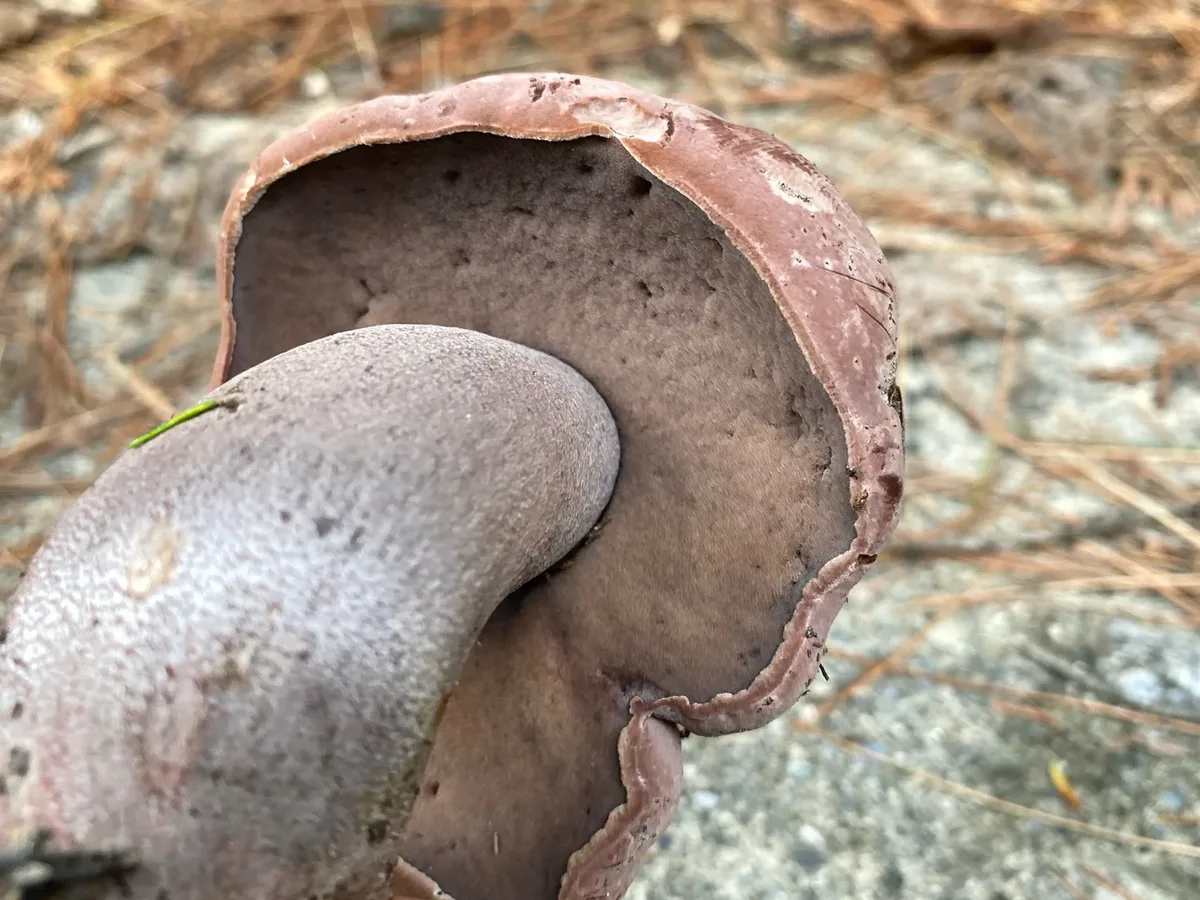 © Erik E (CC BY)
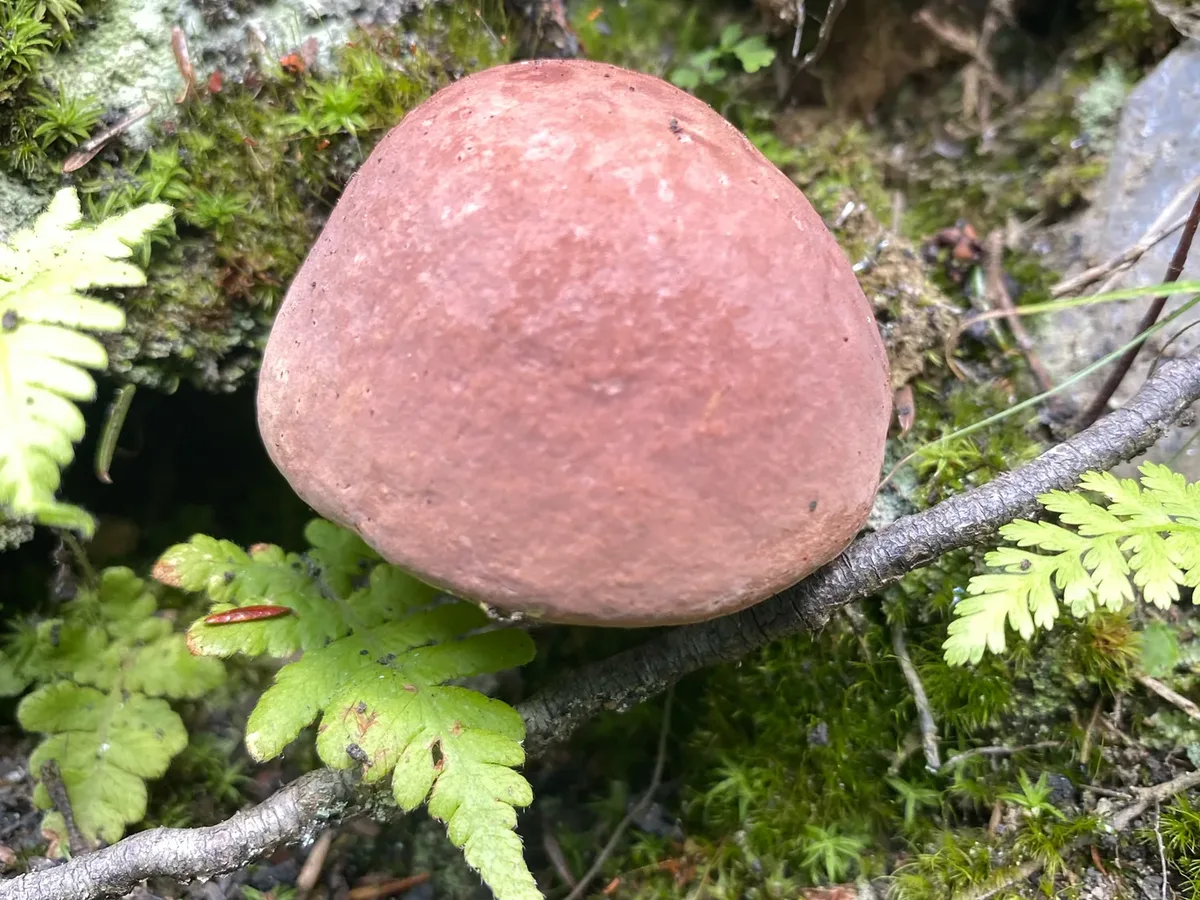 © Erik E (CC BY)
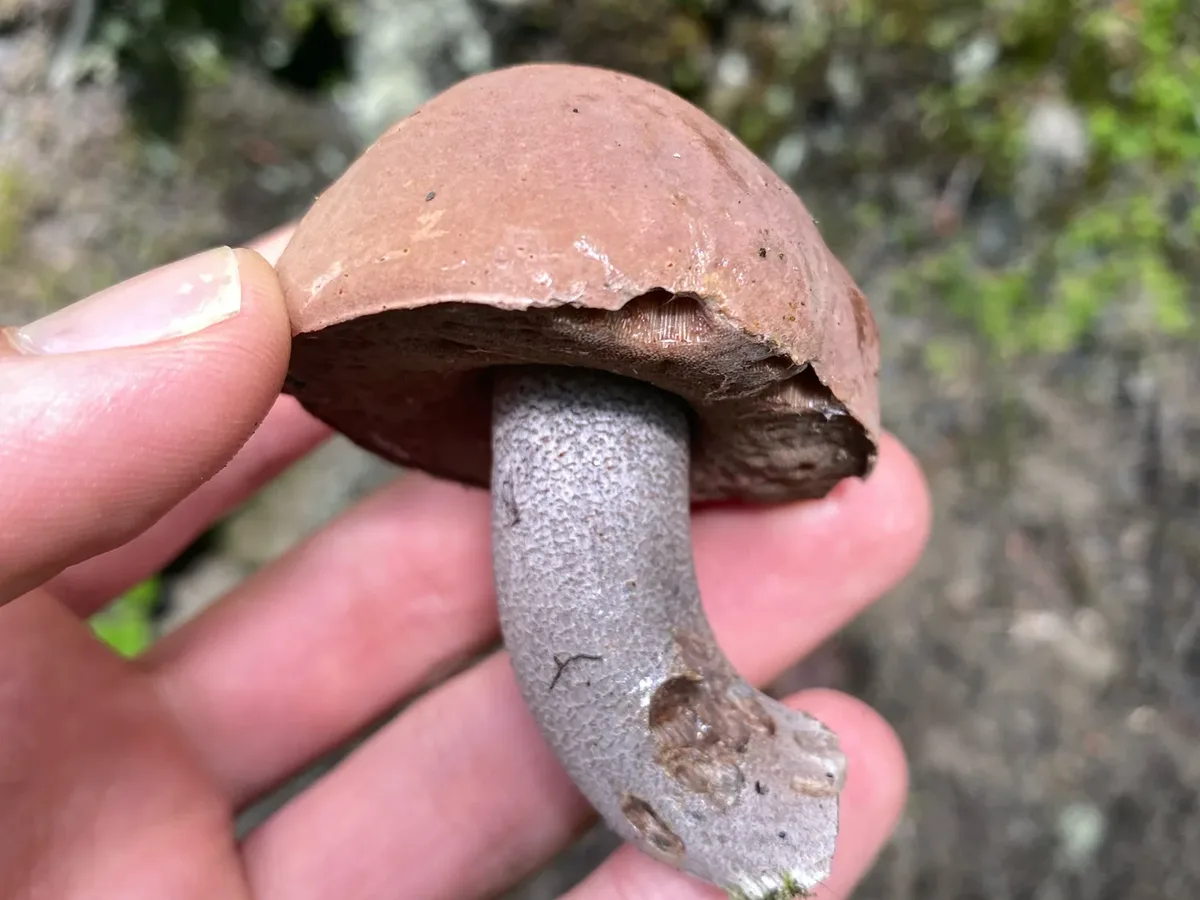 © Erik E (CC BY)
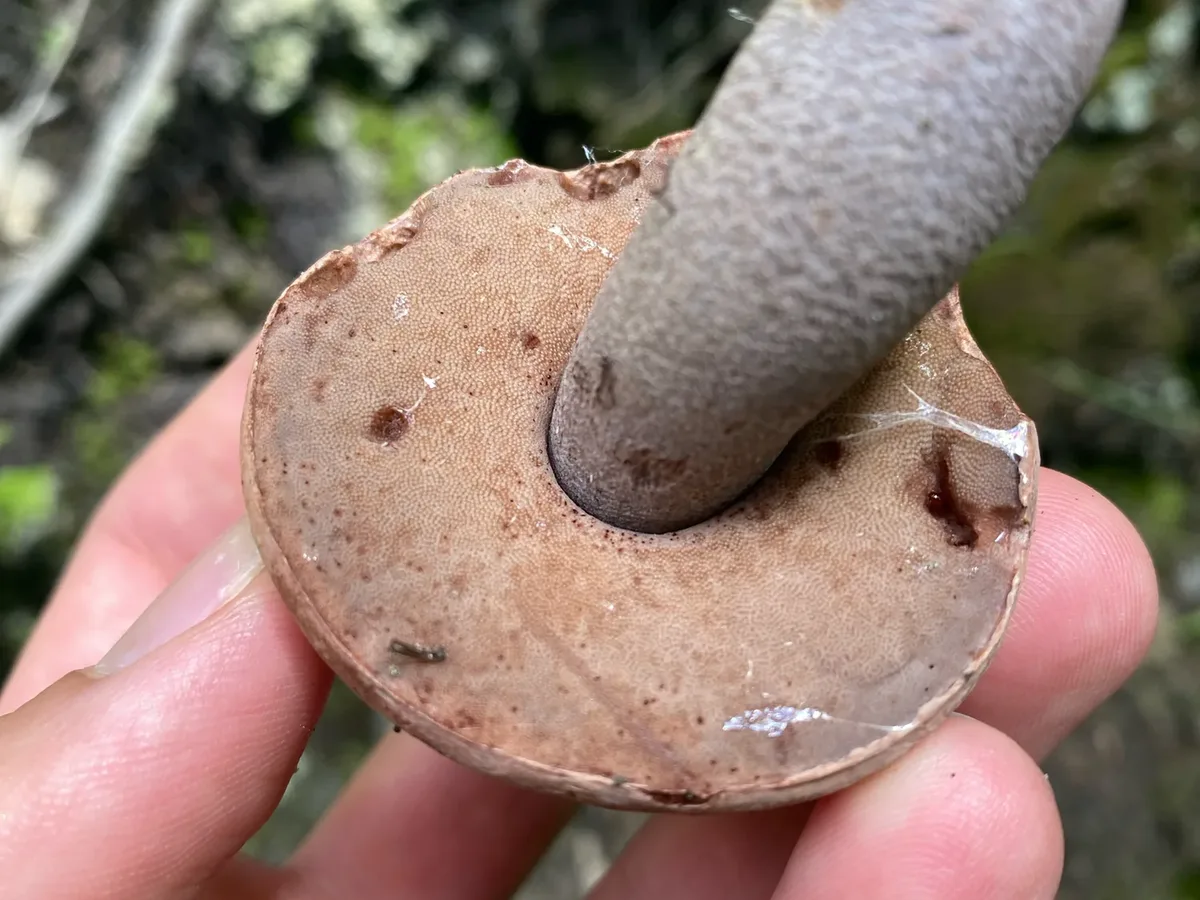 © Erik E (CC BY)
 © Erik E (CC BY)
 © Dave Muska (CC BY)
 © Dave Muska (CC BY)
 © Dave Muska (CC BY)
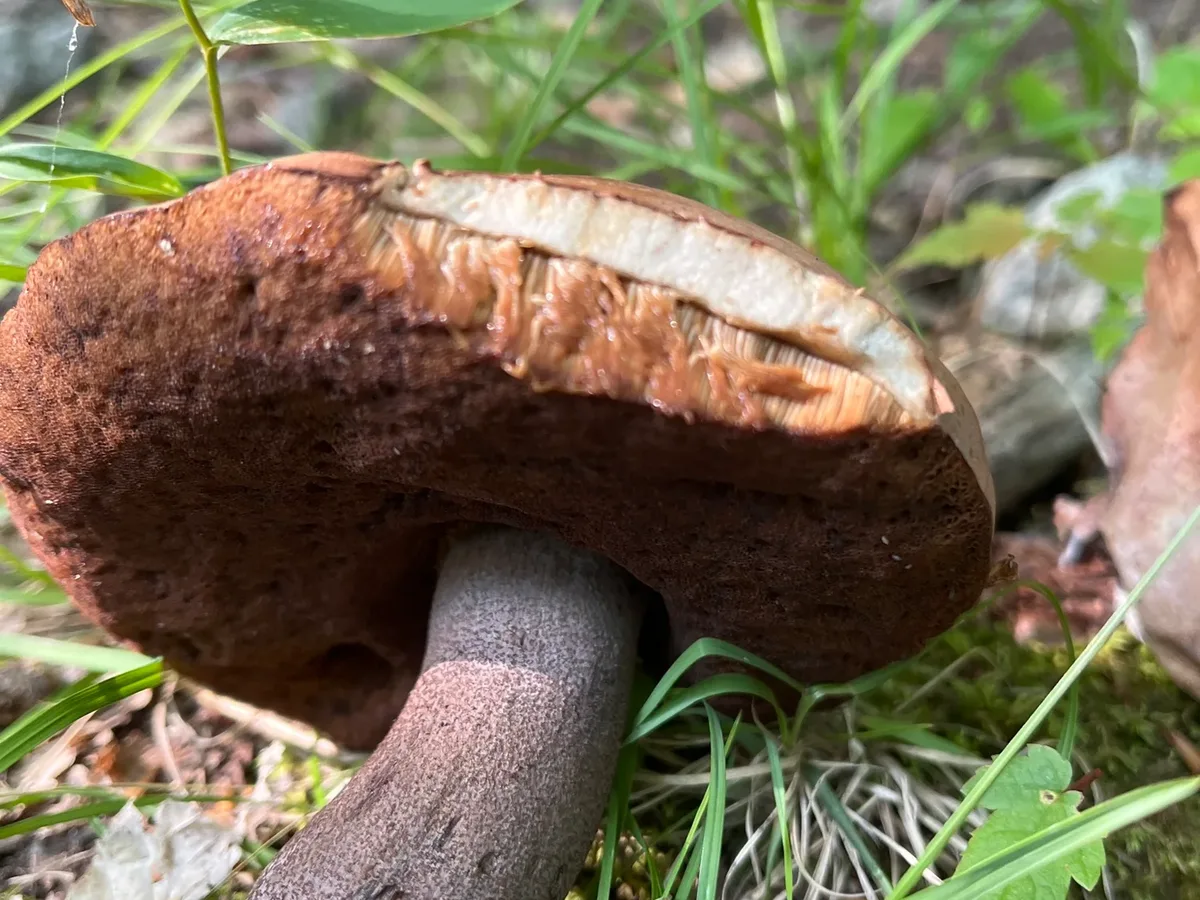 © Dave Muska (CC BY)
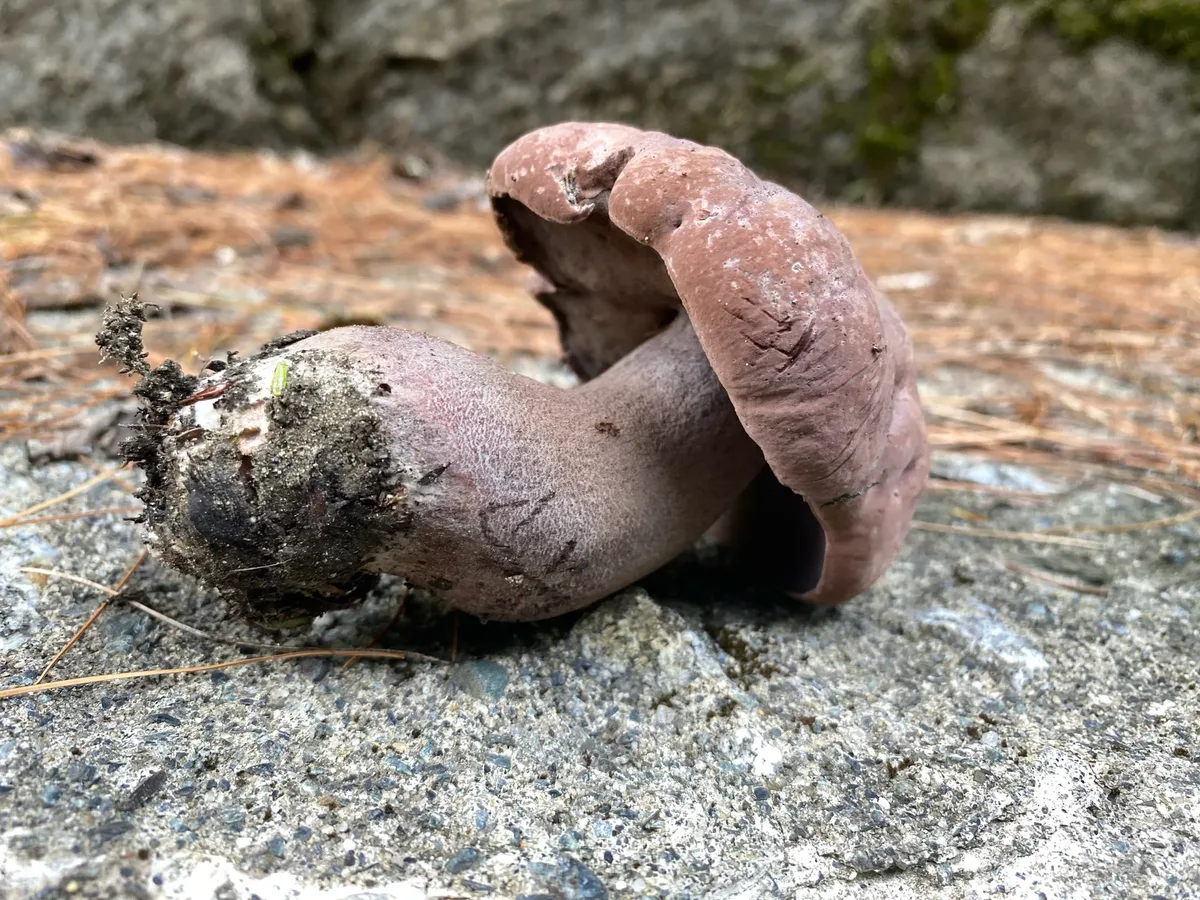 © Erik E (CC BY)© Erik E (CC BY)© Erik E (CC BY)
Edible only with the right preparation - or safe for some people but not others. Learn the caveats first.
How to recognise it
Sutorius eximius is unmistakable among the boletes of East and Southeast Asia, and not only for its size.
Cap
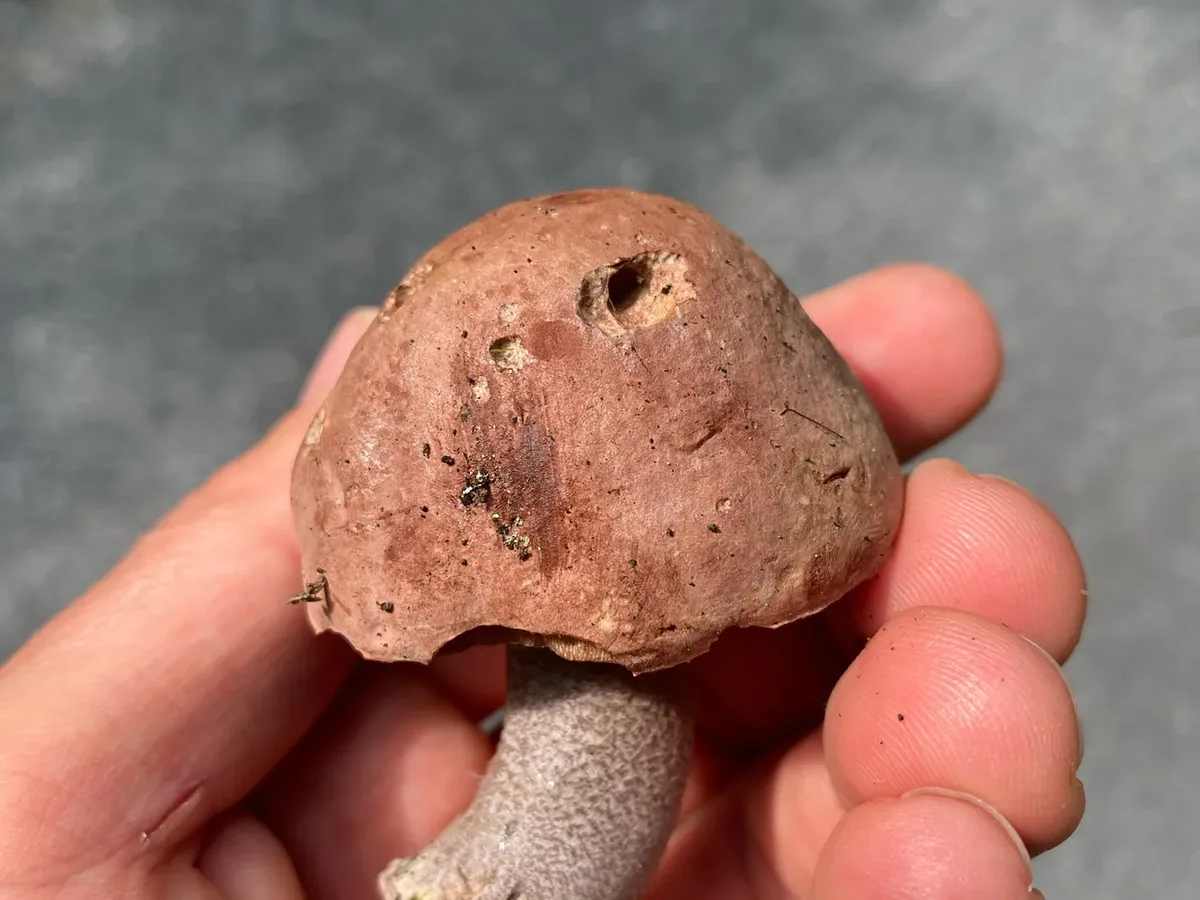
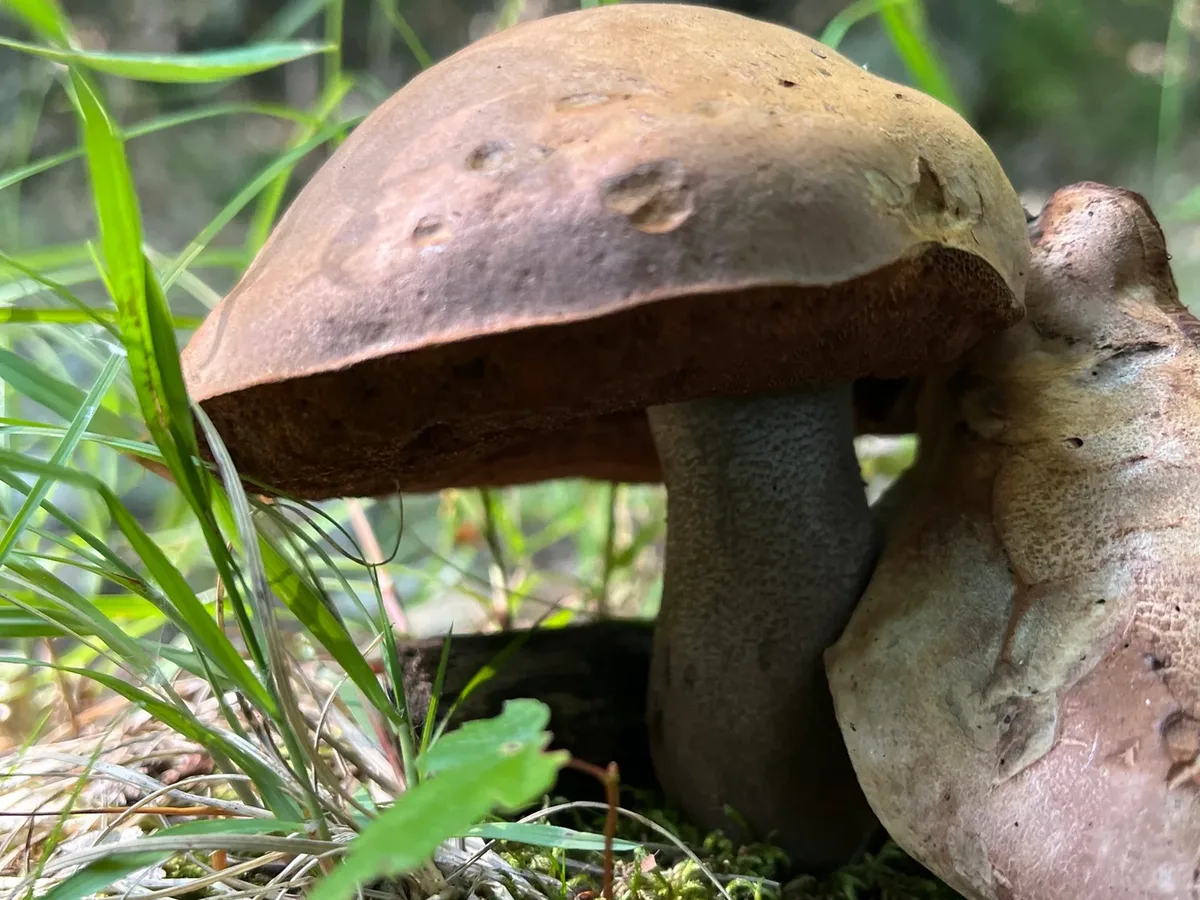
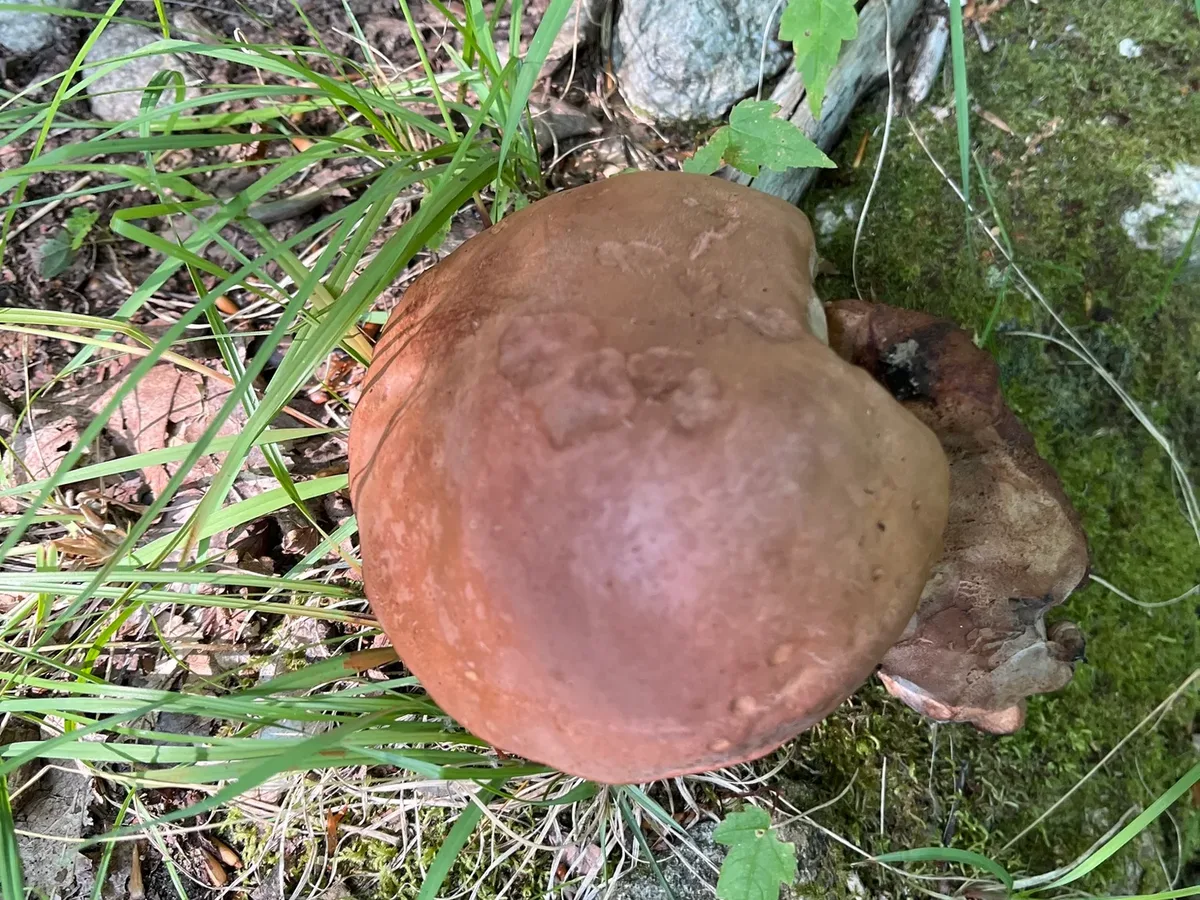
The cap is that deep, saturated porphyry-purple - the colour of aged wine, of polished aubergine skin, of dark storm-cloud shadow - that inspired both the common name and the old placement in Porphyrellus.
Young caps are tightly hemispherical and richly dark, almost black-maroon at the centre; as the cap expands to its mature breadth of 8-25 cm, the colour softens slightly to reddish-brown or purple-grey towards the margin while the disc may retain the darkest tone.
The surface is dry and minutely downy rather than greasy, which means dew and light rain bead on it rather than making it slick - a pleasant contrast to many of its bolete relatives.
Pores
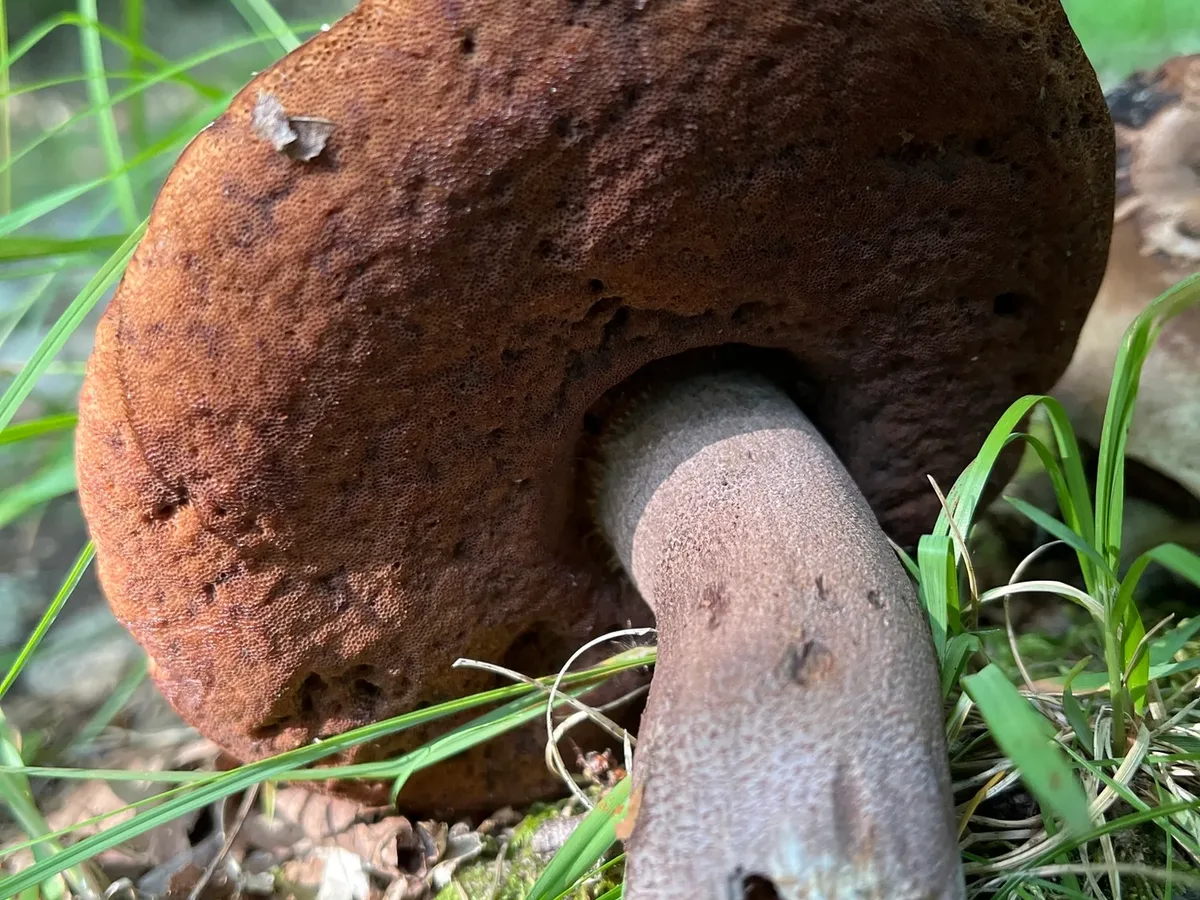
Below the cap, where gills would be in many mushrooms, is instead a dense sponge of tubes terminating in small round pores.
These pores are pale - whitish to cream or the faintest possible grey - and this pallor is diagnostic: no reddening, no blueing, no discolouration of any kind when the pore surface is pressed or cut.
Stem
The stipe is stout, often barrel- or club-shaped, and coloured a pale lavender-grey to off-white-purple, adorned over much of its length with a fine raised network (reticulation) in the same pale lilac-grey tones.
Flesh
Cutting through the stipe reveals firm, dense white flesh that stays firmly white - again, no hint of blue or red.
The overall colour palette - purple cap over pale grey pores over pale lilac stipe - is unique and, once seen, indelible in memory.
Where & when it grows
Habitat
Sutorius eximius is a mycorrhizal species, meaning it cannot grow without a living tree partner; you will never find it on wood chips or in a garden unless a suitable host tree is present.
The partnership is with Fagaceous trees - the great oak-chestnut family - and the species ranges through subtropical and warm-temperate montane forest across East and Southeast Asia wherever these trees are found.
- In Yunnan Province, its core Chinese habitat, look in mixed montane broadleaved forest dominated by subtropical oaks and chinquapins at elevations of roughly 800-2800 m, on moist slopes with deep leaf litter.
- In Japan it occurs in warm broadleaved forest in the southern and central islands.
- It has been recorded across Southeast Asia (Thailand, Vietnam, and neighbouring countries) in the montane belt where Fagaceous trees dominate.
The forest floor micro-habitat is consistent: some shade, good moisture retention, humus-rich and slightly acidic soil - conditions that maintain the stability of the underground mycorrhizal network.
Once established, the fungus returns year after year from the same mycelium, so a productive spot revisited in similar weather is often productive again.
When
The fruiting calendar of Sutorius eximius is governed by the summer monsoon in its northern range and by the wet season in its southern range.
In Yunnan and Guizhou, the arrival of the monsoon in late June marks the opening of the season; fruiting builds through July and peaks in late July and August, trailing into September and sometimes October.
The trigger is straightforward: sustained warm rain (not just a single brief shower) that penetrates the upper soil, followed by continued warmth.
- At elevations above 1800 m the season starts later and may peak in August-September.
- In Japan the season is broadly July-September in warm forest zones.
- In tropical mainland Southeast Asia the wet season can extend the window considerably.
The peak ISO weeks across most of the range are approximately weeks 27-36 (early July to early September in the Northern Hemisphere).
How it grows
Fruit bodies emerge singly or in small scattered groups, never in dense clusters or tufts.
The mycelium exists as a long-lived underground network attached to the roots of its host trees - the mushroom above ground is simply the spore-dispersing tip of an organism that may have been in that soil for decades.
Under the right conditions a button can swell from ground level to full-sized in 3-5 days. The striking dark cap is visible at a considerable distance against pale leaf litter, making detection easier than for more cryptically coloured boletes.
Productive sites under established old Quercus or Castanopsis trees are among the most reliable in the Yunnan market circuit - local collectors return to known trees year after year, timing their visits to 7-14 days after significant rainfall.
Fruiting conditions
Fruiting is triggered by warm monsoon rain after soils have warmed to 16-26 °C. Flush lag of 7-14 days after significant rain is typical for mycorrhizal boletes of this size. In Yunnan and Guizhou the monsoon onset (late June) marks the season start; peak fruiting is late July to August. Cooler or wetter than average summers advance or extend the window; drought suppresses fruiting even where soil temperature is adequate.
Look-alikes
The combination of large size, distinctive porphyry-purple cap, pale non-blueing pores, and white non-blueing flesh makes Sutorius eximius difficult to confuse with dangerous species if all features are carefully checked. The main risks arise from collecting in haste or failing to test for flesh colour change.
- Blue-staining boletes - including Rubroboletus sinicus and related red-pored species of East and Southeast Asian forest - have red or orange pore surfaces and flesh that turns intensely blue when cut; these cause severe gastrointestinal poisoning and their distinction from S. eximius (white pores, no blueing) is clear-cut provided the collector actually tests for colour change.
- Tylopilus species (bitter boletes) may share a brownish cap and the same forest, but their pores age to distinctly pink and a tiny taste of raw flesh is intensely bitter - a reliable and immediate distinction (taste then spit without swallowing).
- Other Sutorius species, where they exist, are closely related and likely similarly edible; no deadly species is known to closely mimic S. eximius specifically.
The dark cap colour is unusual enough that confusion with the pale-capped porcini relatives is unlikely.
Several Tylopilus species with brownish to dark caps occur in East and Southeast Asian Fagaceous forest alongside S. eximius. They consistently develop pink to vinaceous pores with age and typically have a bitter taste. Sutorius eximius maintains whitish to grey (never pink) pores and has a mild, pleasant taste. Bitterness test (raw fragment, spit out immediately) distinguishes them reliably.
Brown cap possibly similar to a faded S. eximius but pores open white and age to distinctly pink or dirty rose; the stipe reticulation is dark brown-black on a pale background (inverse of S. eximius's pale net on a pale ground); most reliably, a tiny taste of raw flesh is intensely bitter (spit out completely without swallowing). Not toxic but thoroughly unpalatable and will ruin a dish.
A brownish to dark cap bolete with similarly dark spore print; primarily European. Pores pale brown, often bruising slightly darker; stipe surface brownish-fibrous, lacking a clear net; flesh may discolour slightly on cutting. Edibility uncertain to mildly inedible. Historical taxonomic overlap with Sutorius eximius in older literature means some records may be confused, but geographic ranges are largely non-overlapping (P. porphyrosporus is European; S. eximius is Asian).
Red to orange-red pore surfaces and flesh that turns intensely and immediately blue when cut are the definitive markers. Causes severe gastrointestinal poisoning requiring hospital treatment. Sutorius eximius has white to pale grey pores and white, non-blueing flesh - any specimen with red pores or blueing flesh is not S. eximius and must not be eaten.
In the kitchen
Picking & cleaning
Select firm, young to mid-mature specimens with tight, pale pores and intact caps.
The flesh should be firm and white when the stipe is cut; any unusual softness or discolouration suggests overmaturity or insect damage.
Cut the stipe cleanly near the base rather than pulling, to avoid uprooting surrounding mycelium and to keep the specimen clean.
Before placing it in the basket, verify the three key safety anchors:
- 1the distinctive porphyry-purple to dark maroon cap
- 2pale, whitish pores that do not blue or redden when pressed or cut
- 3firm white non-blueing flesh inside the stipe
Any deviation - especially blue bruising or red pores - means the specimen is NOT Sutorius eximius and must not be eaten.
Carry in an open basket rather than a bag; boletes deteriorate rapidly when sealed in plastic.
Inspect closely for maggot tunnelling in the stipe base and discard heavily infested portions.
Cooking
Sutorius eximius is sold at Yunnan and other southwestern Chinese mushroom markets as a desirable edible and is a welcome find for any forager in its range.
The firm white flesh holds up well to heat, making it versatile in the kitchen:
- slice and sauté in butter or oil until golden
- add to hotpots and rice dishes
- stir-fry with garlic and chilli
- incorporate into soups and braises
The flavour is mild and pleasant, with the characteristic nuttiness of good boletes.
Like all boletes it dries well: slice 5-8 mm thick, dry at low heat, and store airtight; dried specimens intensify in aroma and make an excellent addition to stocks and sauces.
Soak dried pieces in warm water before use and add the fragrant soaking liquid to the pot.
Always cook thoroughly - do not eat raw.
Good to know
Sutorius eximius has an established tradition of consumption in China, particularly in Yunnan Province where it appears in markets, and is documented as edible in mycological literature across the range. There are no credible reports of toxicity.
That said, foraging in East and Southeast Asian montane forest requires general vigilance because the same habitats host some genuinely dangerous boletes.
Apply two inviolable tests before eating any specimen:
- 1Check the pore surface - if it is red, orange, or blues on pressing, discard the specimen without hesitation. Sutorius eximius has white to pale grey non-blueing pores.
- 2Cut the stipe open - if the flesh turns blue anywhere, discard. S. eximius flesh stays white.
Always cook boletes thoroughly; eating raw or undercooked boletes commonly causes gastrointestinal upset even with choice edible species.
On first acquaintance with this species, eat a modest portion and wait 24 hours before eating more. Beginners should have specimens confirmed by an experienced local forager or mycologist familiar with the regional bolete flora.
A reference guide - never an edibility guarantee. When in doubt, leave it out.