Velvet bolete
Suillus variegatus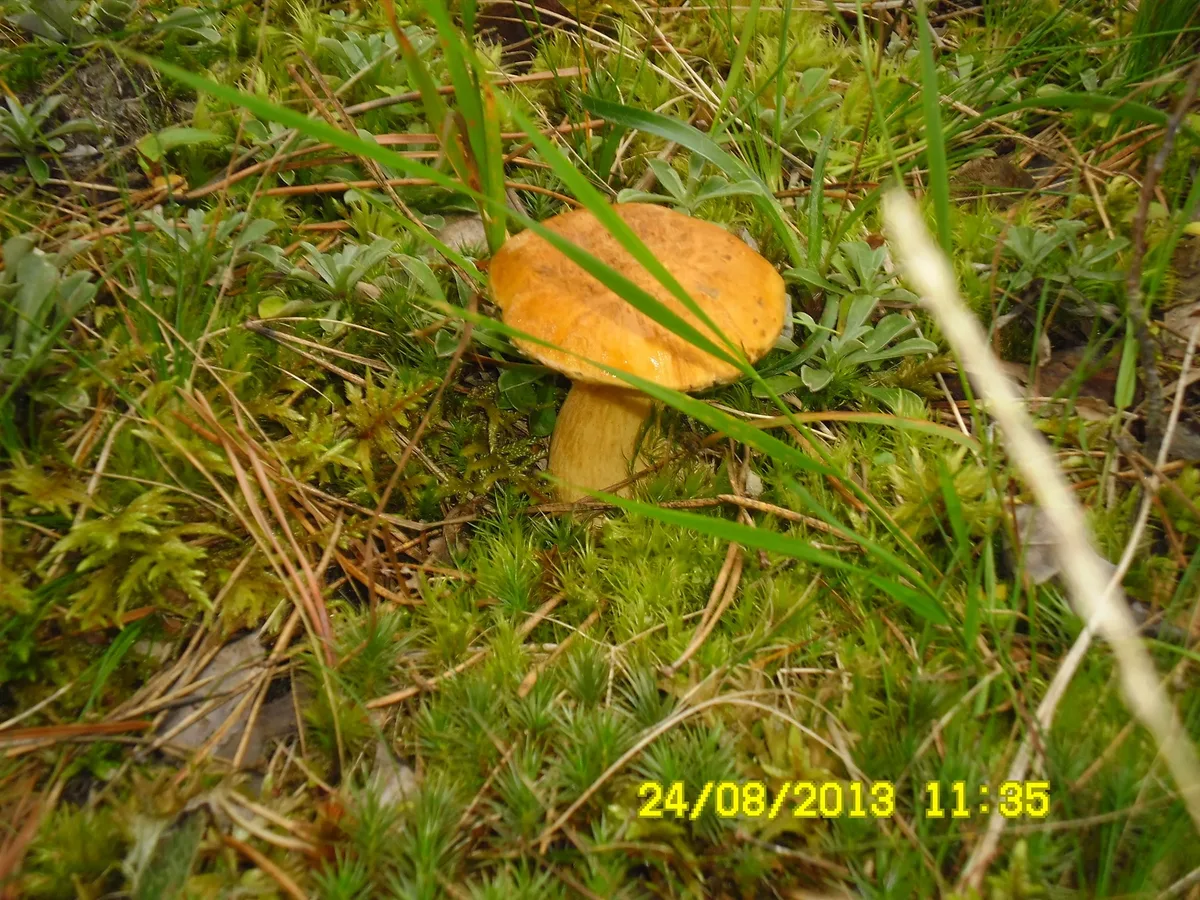 © Михаил Малышев (CC BY 4.0)
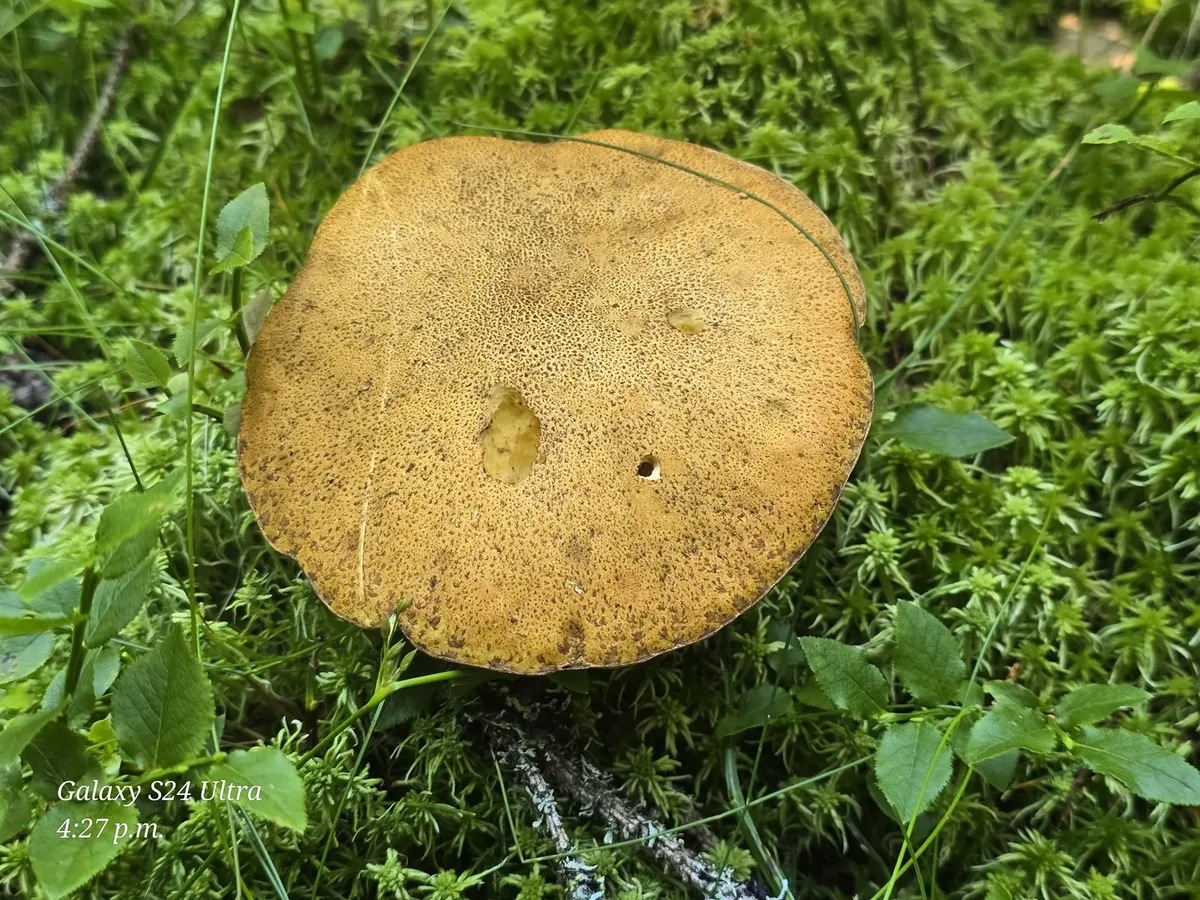 © Nils Edvard Stokke (CC BY)
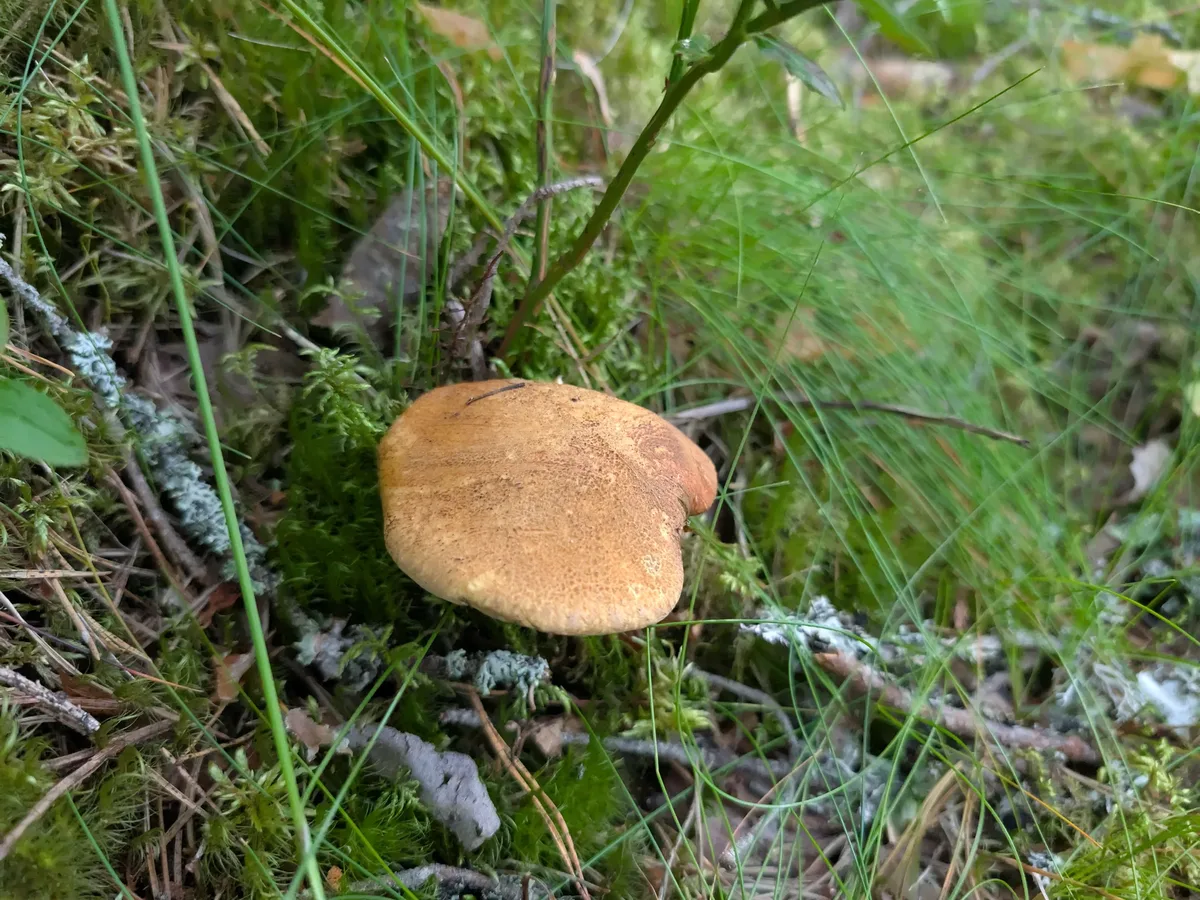 © Petri Roponen (CC BY-SA)
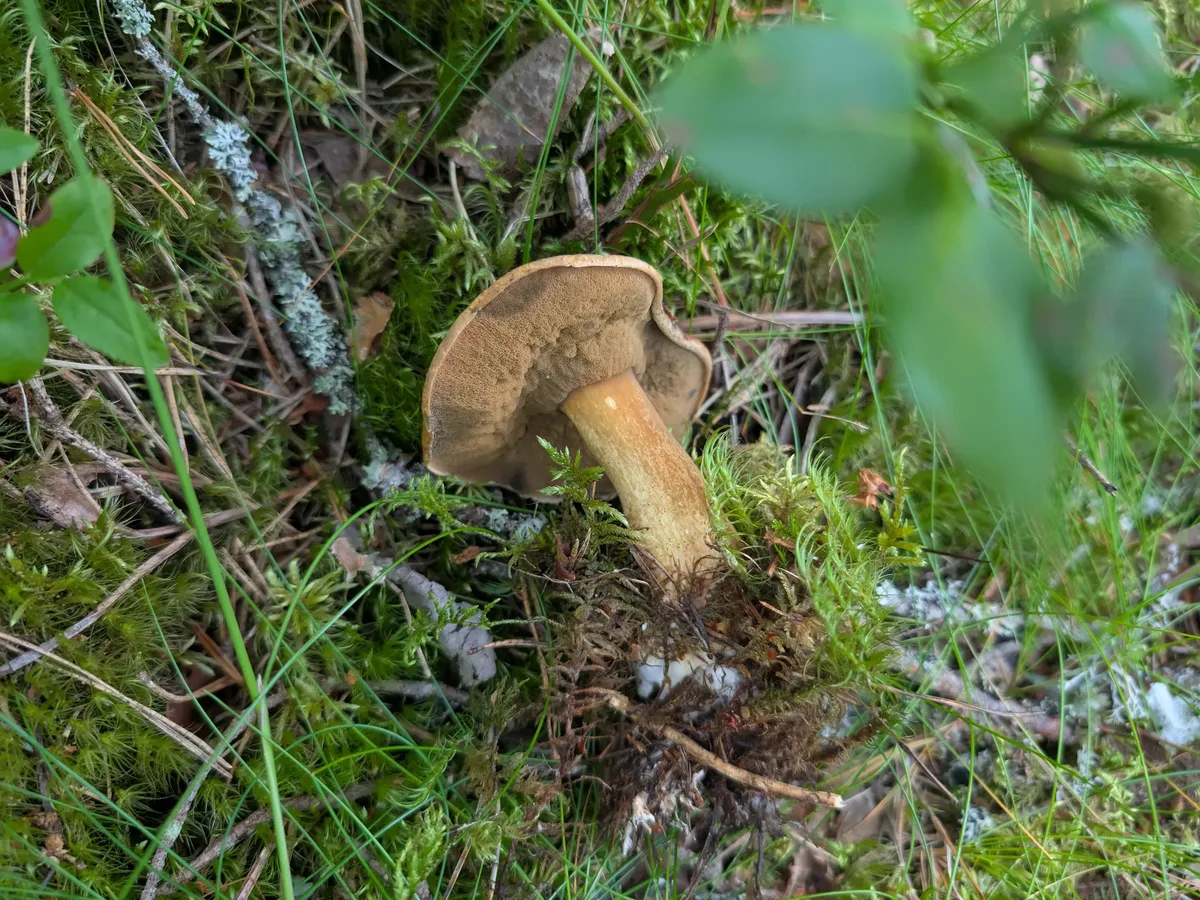 © Petri Roponen (CC BY-SA)
 © Nils Edvard Stokke (CC BY)
 © Jonas Heggedal (CC BY)
 © Jonas Heggedal (CC BY)
 © Jonas Heggedal (CC BY)
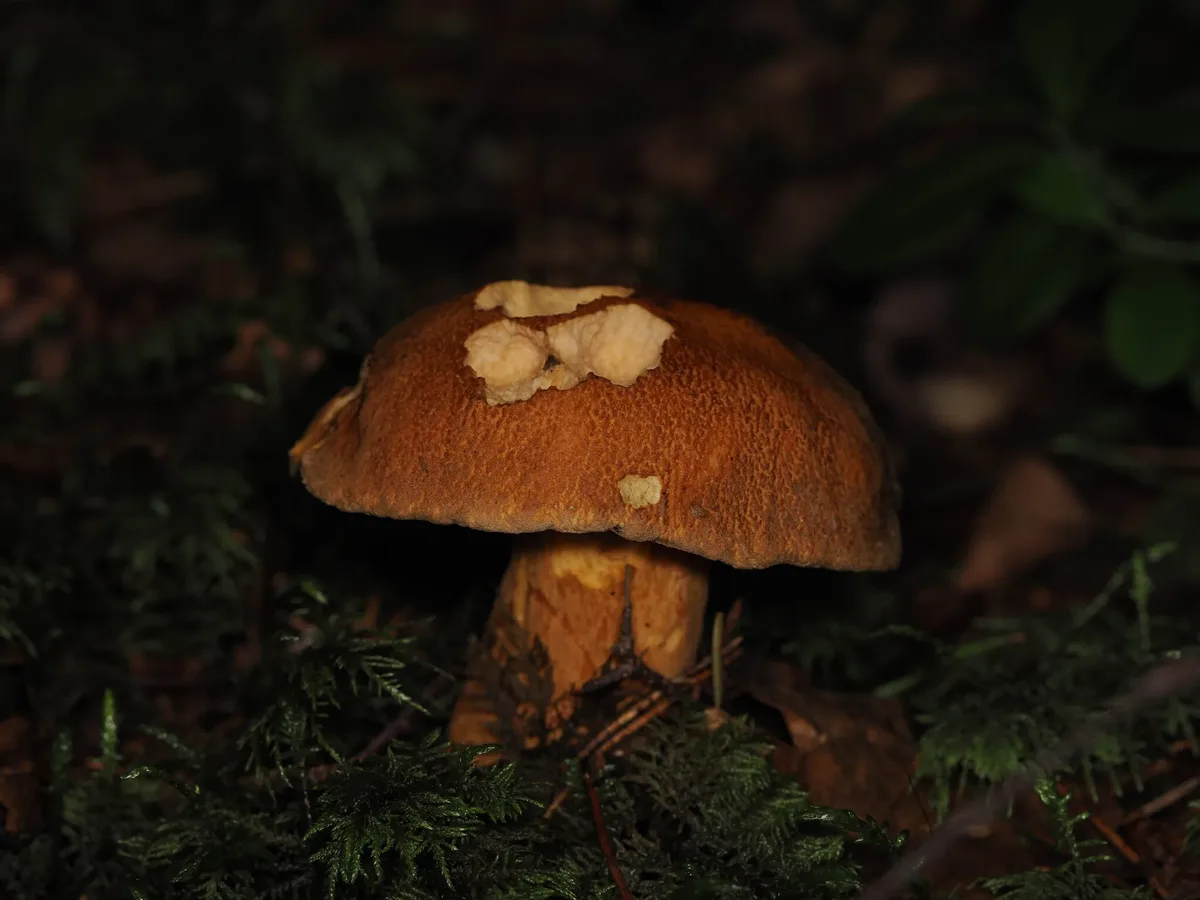 Tero Linjama (CC0)
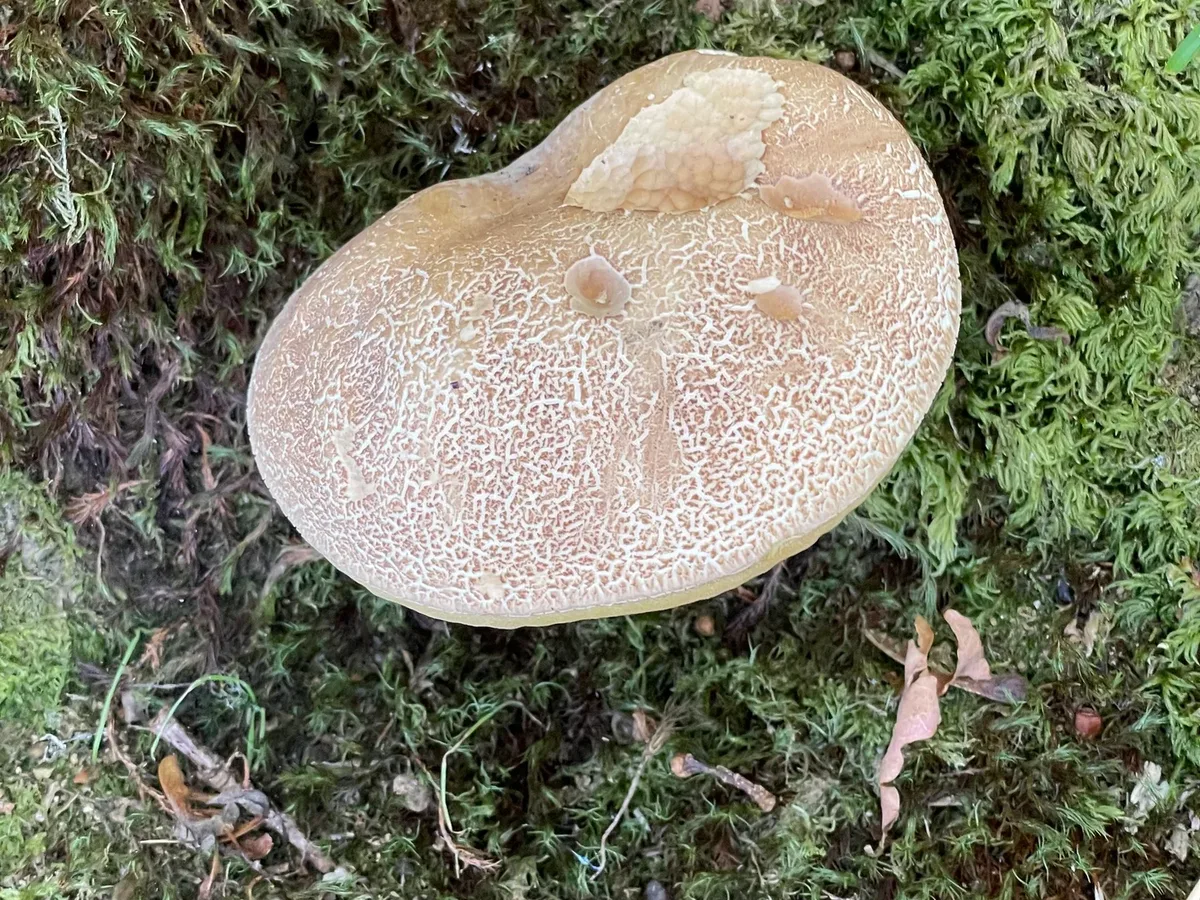 rossheth (CC0)
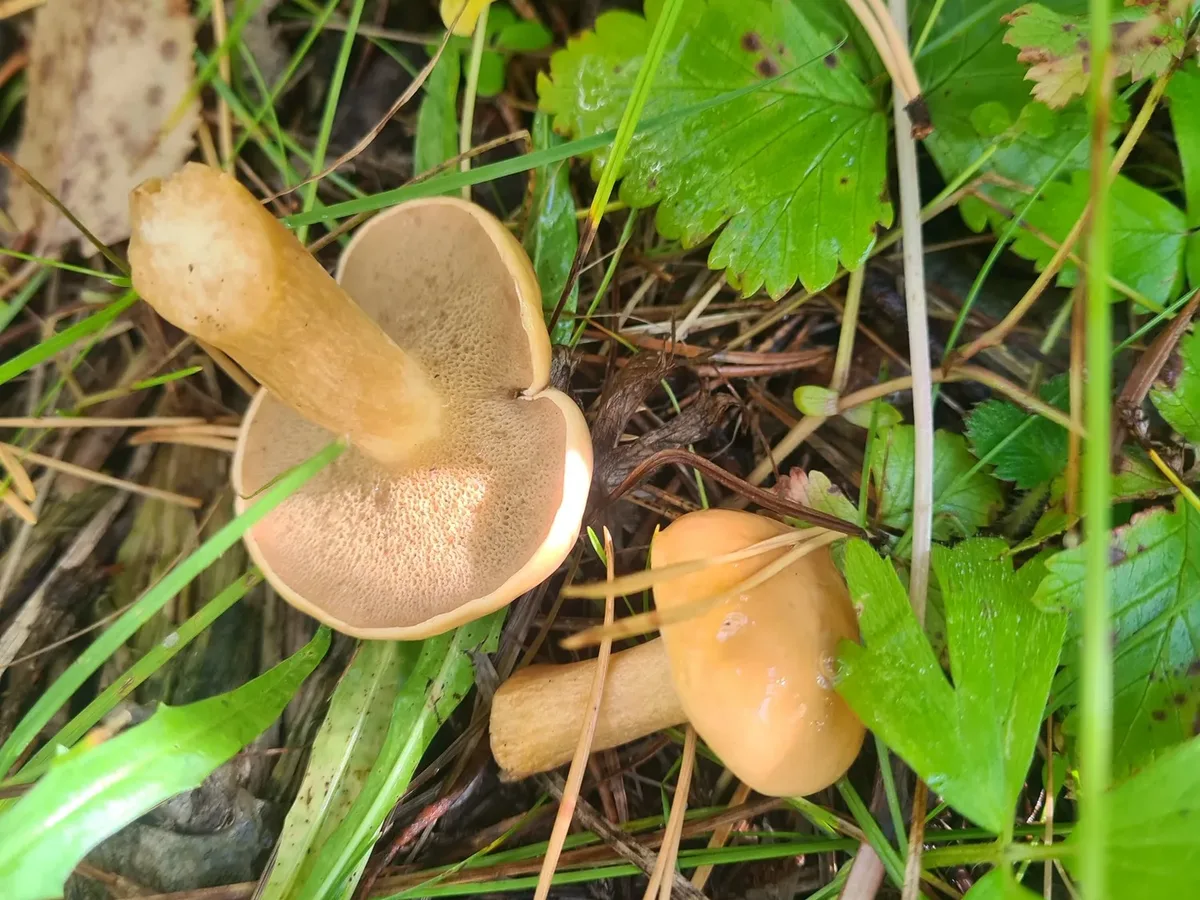 © Tatiana Strus (CC BY 4.0)
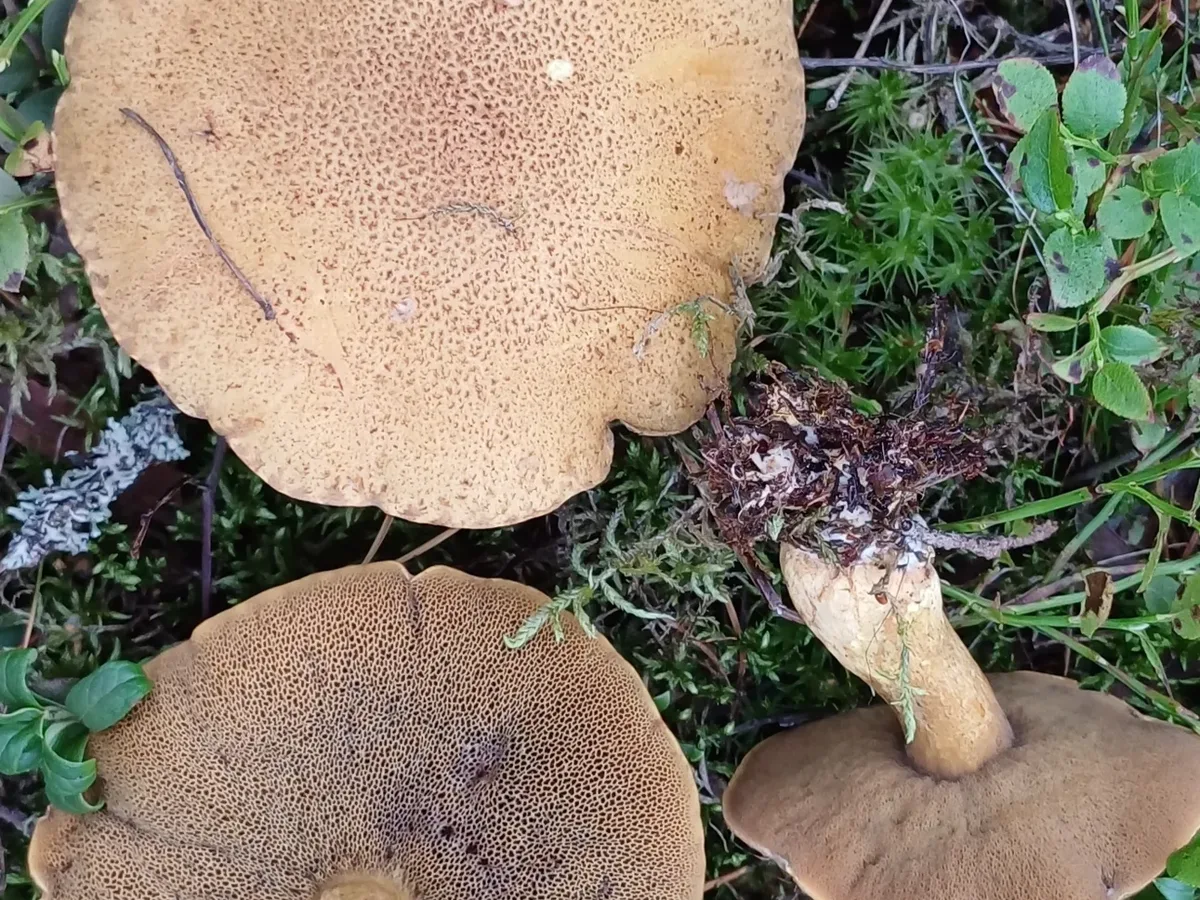 © Mikko Heikkinen (CC BY 4.0)© Михаил Малышев (CC BY 4.0)© Nils Edvard Stokke (CC BY)
Good to eat, once you have identified it with certainty and cooked it through.
How to recognise it
Suillus variegatus earns its epithet - variegatus, meaning "variegated" or "diversely marked" - from the cap surface that sets it apart from almost every other bolete in northern pine forests.
Cap
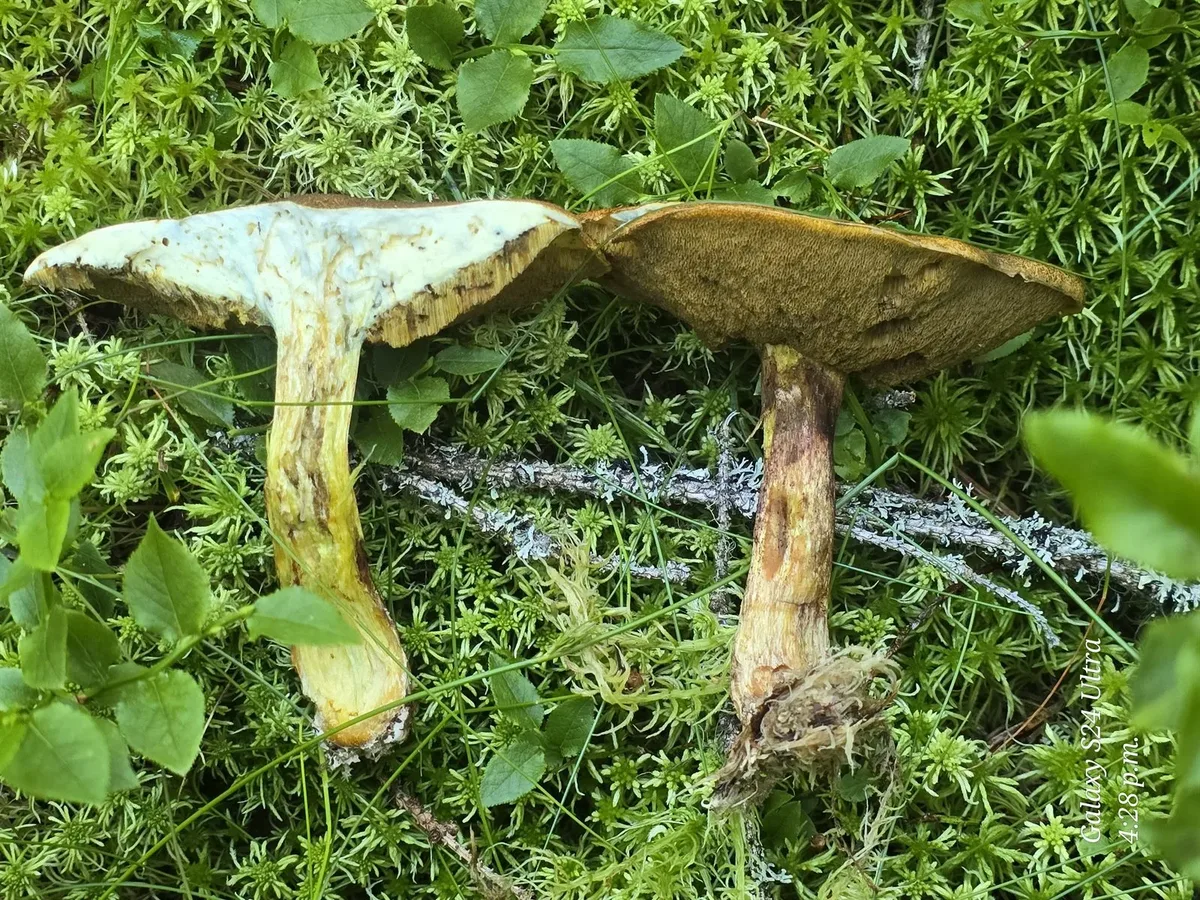
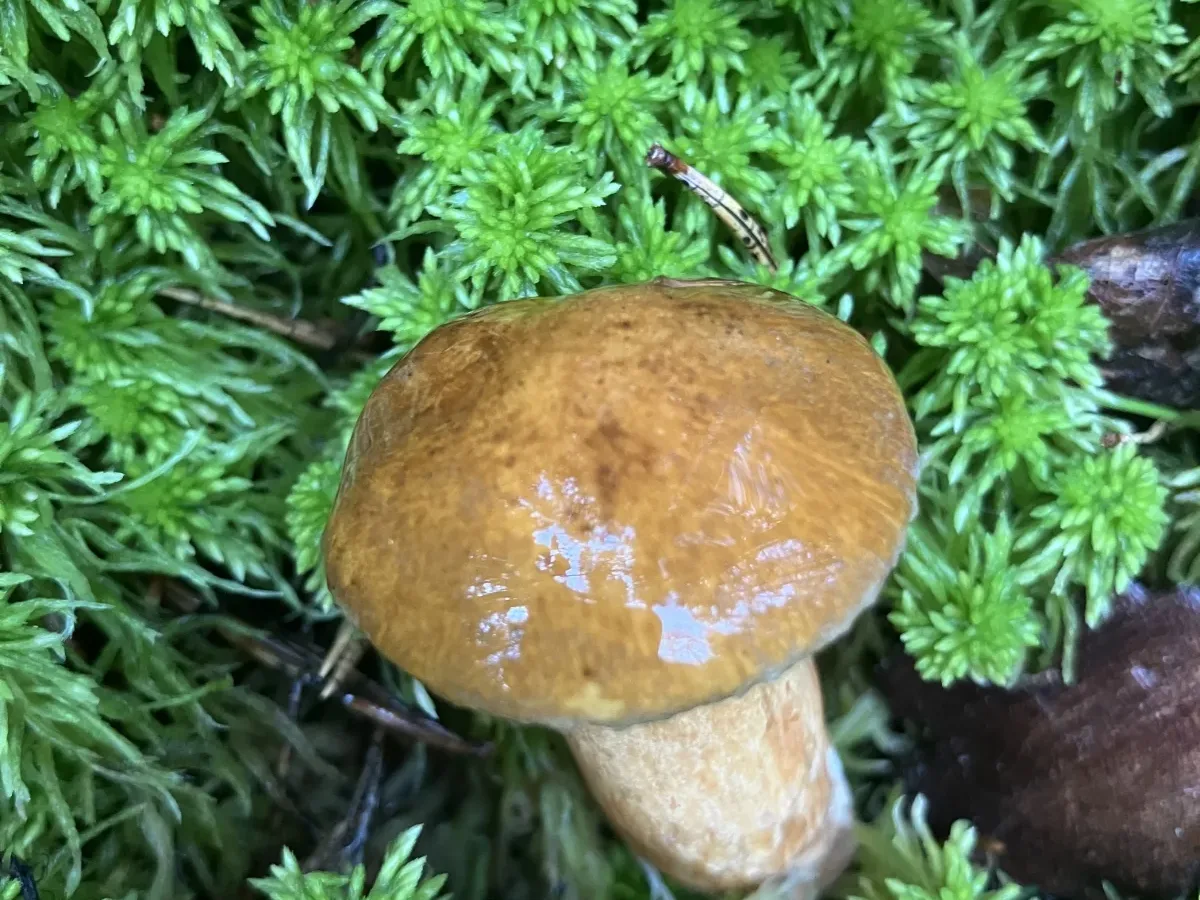
The cap begins convex, 5-15 cm across, and the surface is dry and matte rather than slimy, a distinction worth noting in a genus where viscid caps are the norm.
The background colour runs from warm ochre-yellow through tawny olive-brown to a rich amber in older specimens, but the defining feature is the layer of small, dense darker scales that freckle the entire cap - brownish flecks pressed close together, giving the surface a velvety or granulose texture that is almost suede-like to the touch.
Gills / Pores
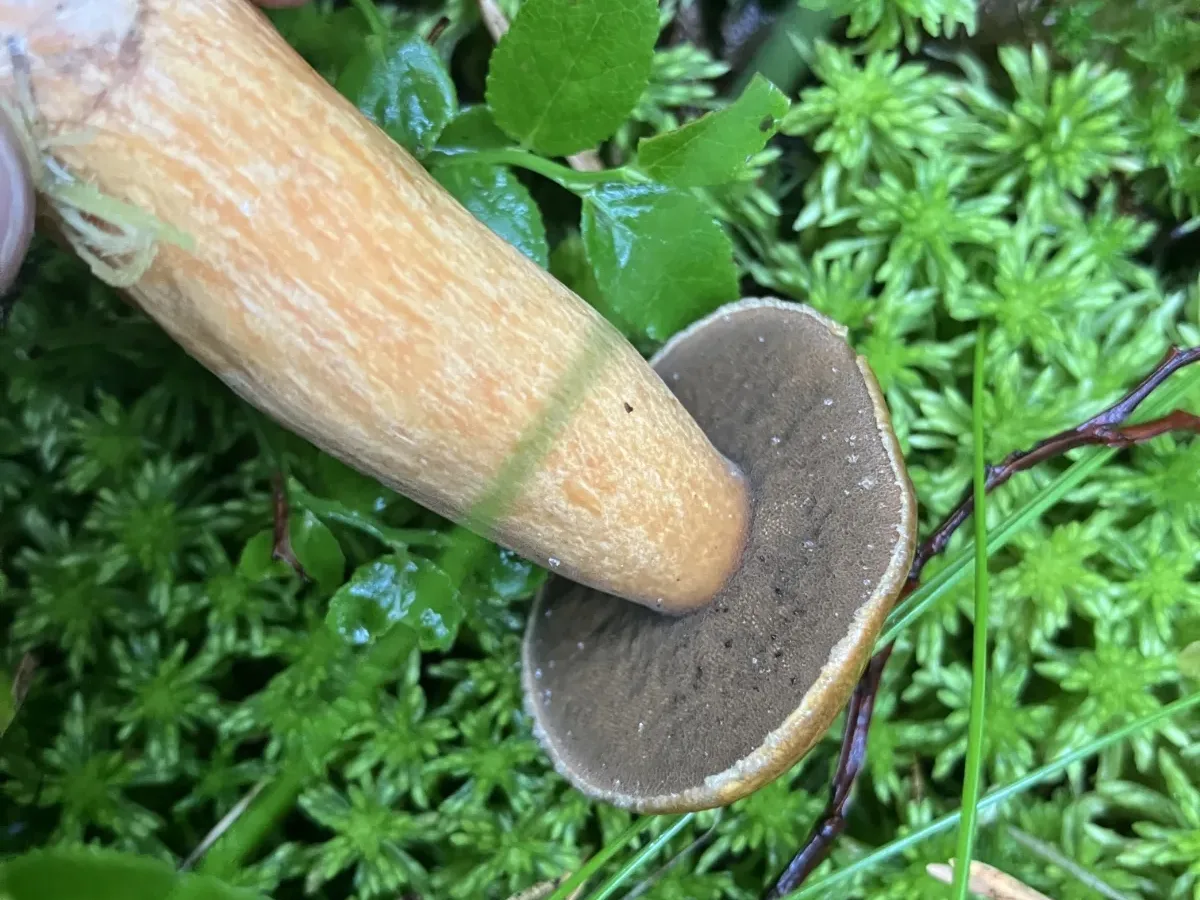
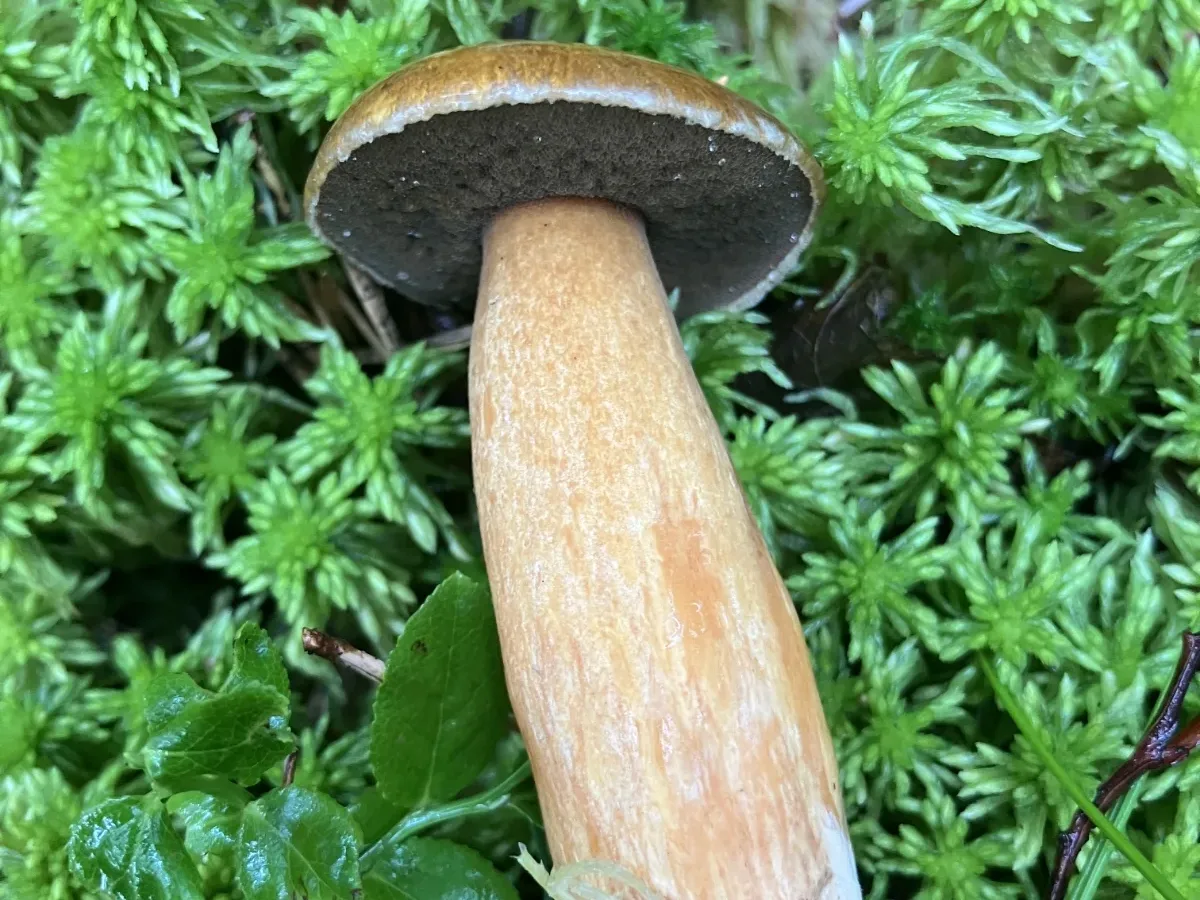
Beneath the cap, the pore layer is notably angular and rather coarse, coloured yellowish to olive-brown, staining rusty-brown where handled.
Stem
The stem is 4-8 cm tall, relatively stout, pale to light brown, tapering only slightly downward, and carries neither ring nor reticulate net - two absences that are diagnostic when comparing to other boletes.
Flesh
The cut surface of the flesh is pale yellow, and in the vast majority of fresh specimens it turns noticeably blue within seconds of exposure to air - a reaction driven by the oxidation of variegatic acid to blue quinone polymers. This bluing is reliable but not instantaneous; give it 15-30 seconds.
Smell & taste
The smell is mild and slightly acidic, reminiscent of sourdough or green apples, and is one of the most consistently reported odour notes for the species.
Where & when it grows
Habitat
Suillus variegatus is one of the most faithfully pine-associated boletes in Scandinavia. It is an obligate mycorrhizal partner of Scots pine (Pinus sylvestris) - it does not grow with spruce, birch, oak, or any other tree, a specificity that makes habitat reading a powerful identification aid.
It favours acidic, nutrient-poor soils:
- sandy heathlands
- dry lichen-covered outcrops
- the margin between pine forest and open bog
- the thin mossy mats that accumulate on glacially scoured bedrock
Calcareous soils all but exclude it.
In Sweden, this ecological fingerprint makes it one of the signature species of the vast boreal pine forests stretching across Norrland and the upland plateaus of central Sweden, and it has been chosen as the provincial mushroom of Dalarna - a recognition that captures both its abundance there and its embeddedness in the landscape character of the region.
The mycorrhizal threads it extends from pine roots can persist for decades in the humus layer, the fungus weathering dry summers as dormant mycelium and re-emerging when soil temperature and moisture align.
It is rarely solitary; find one and there will almost always be more within a few metres, the mycelial network distributed around one or several trees rather than arising from a single point.
When
The fruiting window opens in July when soil temperatures at depth reach roughly 8-10 °C and closes in October as the first hard frosts consolidate.
Peak abundance follows the classic pattern of northern boreal boletes:
- a tentative early wave in late July to mid-August when nights are still warm
- a more generous main flush in late August through September after the heavy rains that characterise the transition between summer and autumn
The species is among the more cold-tolerant boletes and will continue producing fruitbodies well into October in a mild year, outlasting many of its relatives.
During dry spells the mycelium retreats below ground and does not waste energy on fruitbodies - foragers who return to a productive patch after two weeks of drought will often find it barren.
A 20 mm rainfall event followed by 7-14 days of mild temperatures is the reliable trigger, and the lag between rain and emergence is short enough that planning a foray around the forecast is genuinely productive strategy.
How it grows
Because Suillus variegatus is mycorrhizal rather than saprotrophic, it cannot be cultivated in isolation and does not arise from decaying wood or leaf litter.
Its mycelium is woven through the fine root tips of Scots pine in a sheath-like mantle, the Hartig net penetrating between cortical cells and facilitating a bidirectional flow:
- the fungus delivers water, phosphorus, and trace minerals dissolved from weathered mineral soil
- the tree returns fixed carbon as sugars
This partnership is not merely opportunistic - the same mycelial individual can remain connected to the same pine root system for many seasons, the fruitbodies appearing year after year in the same micro-patch.
After triggering rains, the primordia swell rapidly; a pin-head visible in the moss on one morning can be a full-grown cap by the third day.
Growth is fastest at soil temperatures between 10-15 °C and slows markedly above 20 °C or below 6 °C.
Colonies under a productive pine stand can number dozens of fruitbodies of varying ages simultaneously, making a single visit rewarding over an extended area without depleting any one spot.
Fruiting conditions
Conservative standard mycology estimate; fruits after substantial late-summer to autumn rains following warm soil.
Look-alikes
Within the pine forests where Suillus variegatus grows, several other boletes share its season and substrate.
Bovine bolete (Suillus bovinus) is the most likely co-occurring confusion species: it is smaller, the cap surface lacks the prominent darker freckle-scales and tends toward a smooth pinkish-buff or greyish-ochre, and the pore layer is distinctive - irregular, angular, almost labyrinthine, and grey-pink rather than olive-yellow. Both are edible, so a misidentification carries no safety risk, but the flavour profiles differ enough to matter in the kitchen.
Weeping bolete (Suillus granulatus) and slippery jack (Suillus luteus) share the pine association but differ clearly:
- granulatus has a smooth, slimy cap and stem with milky droplets on the pore surface when young
- luteus has a prominent slimy ring
Neither is dangerous.
Peppery bolete (Chalciporus piperatus) is a small species with brick-red pores and an intensely peppery taste; it is inedible though not truly toxic.
The one species worth a categorical warning in any bolete key is devil's bolete (Rubroboletus satanas): it has a pale, bulbous stem flushed red, a red tube layer, and pores that are red even before bluing.
It is very rare in Scandinavia and mainly a southern European species, but any bolete showing red coloration on the stem or tubes should be immediately set aside by all foragers regardless of experience.
Smaller and lacks the darker freckle-like scales; edible.
The only poisonous bolete mentioned; has a red stem and red tube layer. Very rare. Beginners should avoid any bolete showing a red tone.
Peppery taste; inedible.
Edible.
Edible.
In the kitchen
Picking & cleaning
Velvet bolete is among the more forgiving species to harvest and process in the field.
The dry, scaly cap surface does not trap mud or leaf litter the way a slimy cap would, and most debris can be brushed away with a soft brush or dry cloth before the mushroom ever reaches a basket.
The stem base is often embedded in sandy or mossy substrate; a gentle twist-and-lift is preferable to cutting, as it removes the base cleanly. Cut specimens are prone to browning at the wound within minutes.
Field-trimming is worthwhile - remove any worm-tunnelled base sections before packing, as the larvae continue feeding en route home.
The cap cuticle can be peeled away from the margin inward if you want a cleaner, less strongly flavoured result, though this is optional.
Suillus variegatus dries exceptionally well and this is genuinely the best way to handle a large harvest: sliced 5-8 mm thick and dried at 40-50 °C until completely crisp, it stores for a full year in an airtight jar with essentially no degradation.
The bluing reaction stops once moisture is gone, and dried slices take on a pleasant golden-tan colour.
Cooking
The kitchen reputation of velvet bolete is carried almost entirely by its dried form.
Fresh, the flavour is pleasant but unspectacular - mild, slightly sour, with a soft texture that can become waterlogged if sautéed without care.
Drying is transformative: at 40-50 °C over four to six hours the moisture leaves and the flavour concentrates into something deeper and slightly nutty, with a resonance that has led many Scandinavian foragers to compare it to false morel (Gyromitra esculenta) - minus any toxicity. This comparison is not fanciful; both develop somewhat similar volatile aromatic compounds during drying.
Once dried crisp and stored, the velvet bolete can be used:
- whole (rehydrated in warm water for 20 minutes, liquid reserved as stock)
- ground to a fine powder for incorporation into sauces, braises, and mushroom gravies
- crumbled coarsely as a seasoning for pasta and rice dishes
Fresh specimens are best cooked promptly: slice them and sauté in butter over medium-high heat until the water has evaporated and the slices begin to colour.
Combine with other foraged species - chanterelles, porcini, yellowfoot - where the velvet bolete adds body and background depth rather than standing as the centrepiece flavour.
Good to know
Suillus variegatus is considered a safe edible species with no documented toxicity in properly prepared form.
The slight sour or acidic odour is a characteristic feature, not a warning sign, and does not indicate any harmful compound.
However, like several Suillus species, it is best not eaten raw or in large quantities - mild gastric upset has been reported in sensitive individuals, particularly when consumed uncooked. Standard cooking (sautéing, simmering, or thorough drying) is sufficient to eliminate any concern.
The species does not have a dangerous lookalike that shares all its diagnostic features - the combination of dry freckled cap, olive-yellow pores, pine-only habitat, and bluing flesh is effectively unique.
Foragers with no previous experience of boletes should confirm the flesh-bluing reaction by slicing through the cap: a blue colour developing within 30 seconds in the context of the above characters is a reliable ensemble.
The cap cuticle is sometimes said to be mildly indigestible and is often peeled for that reason, though many foragers leave it intact without issue.
A reference guide - never an edibility guarantee. When in doubt, leave it out.