Blue-staining slippery jack
Suillus tomentosussyn. Boletinus tomentosus, Ixocomus tomentosus
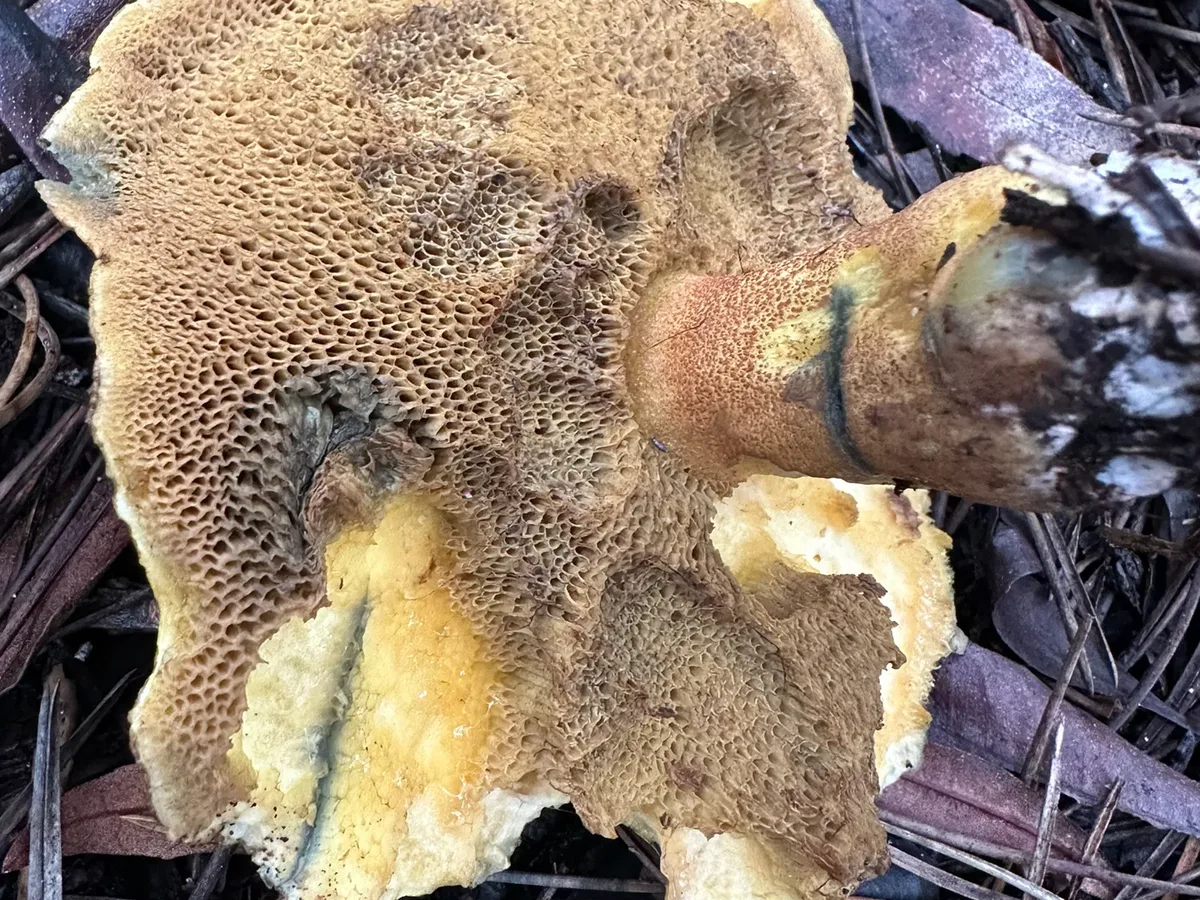 © Kyle Elshoff (CC BY)
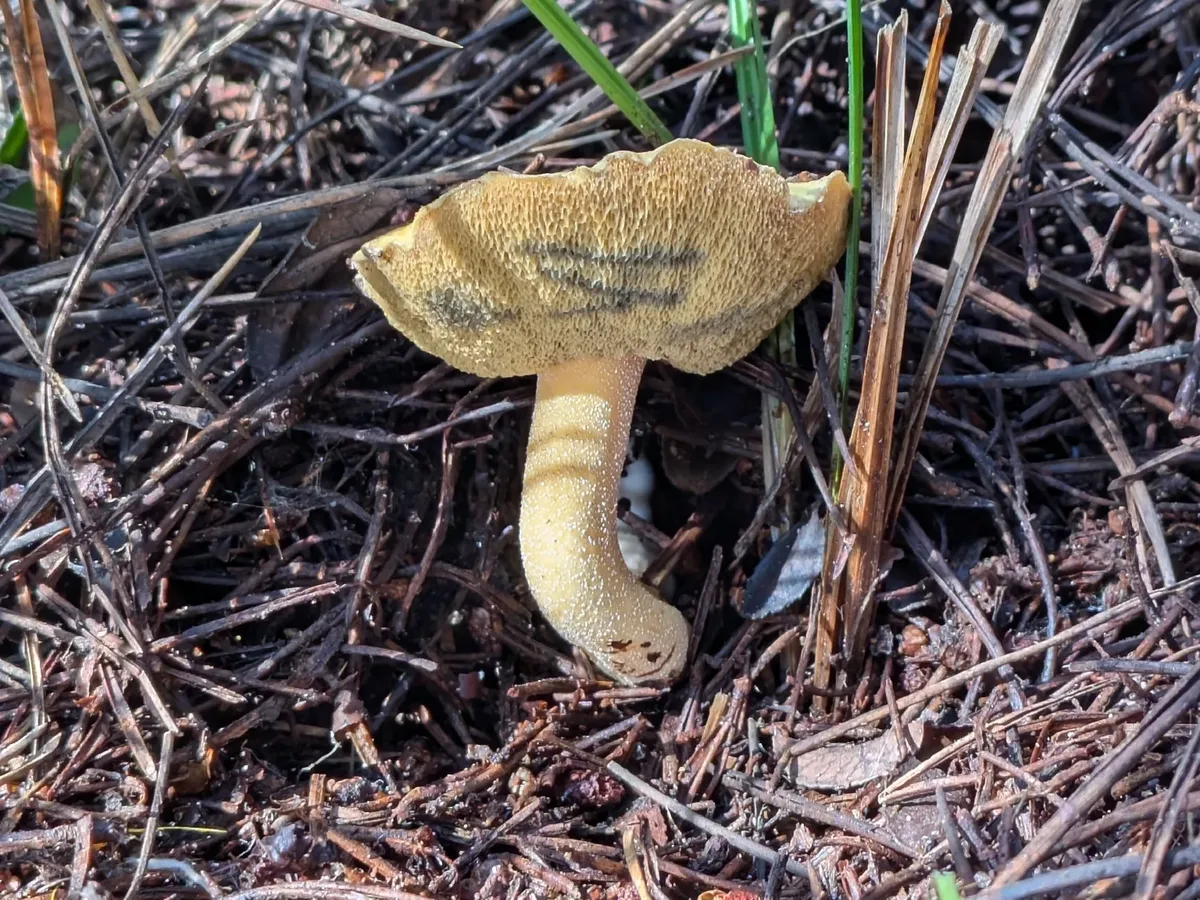 eli (CC0)
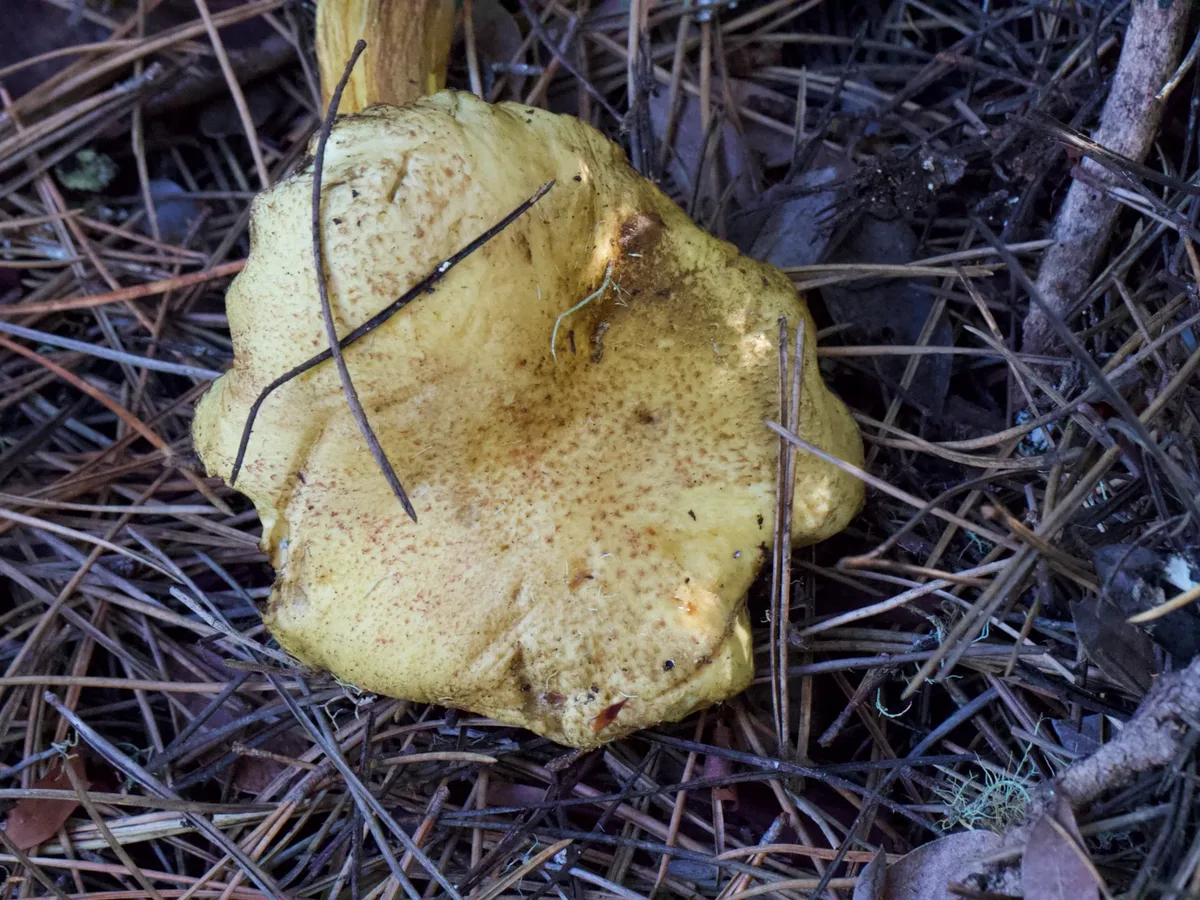 © Arvel Hernandez (CC BY)
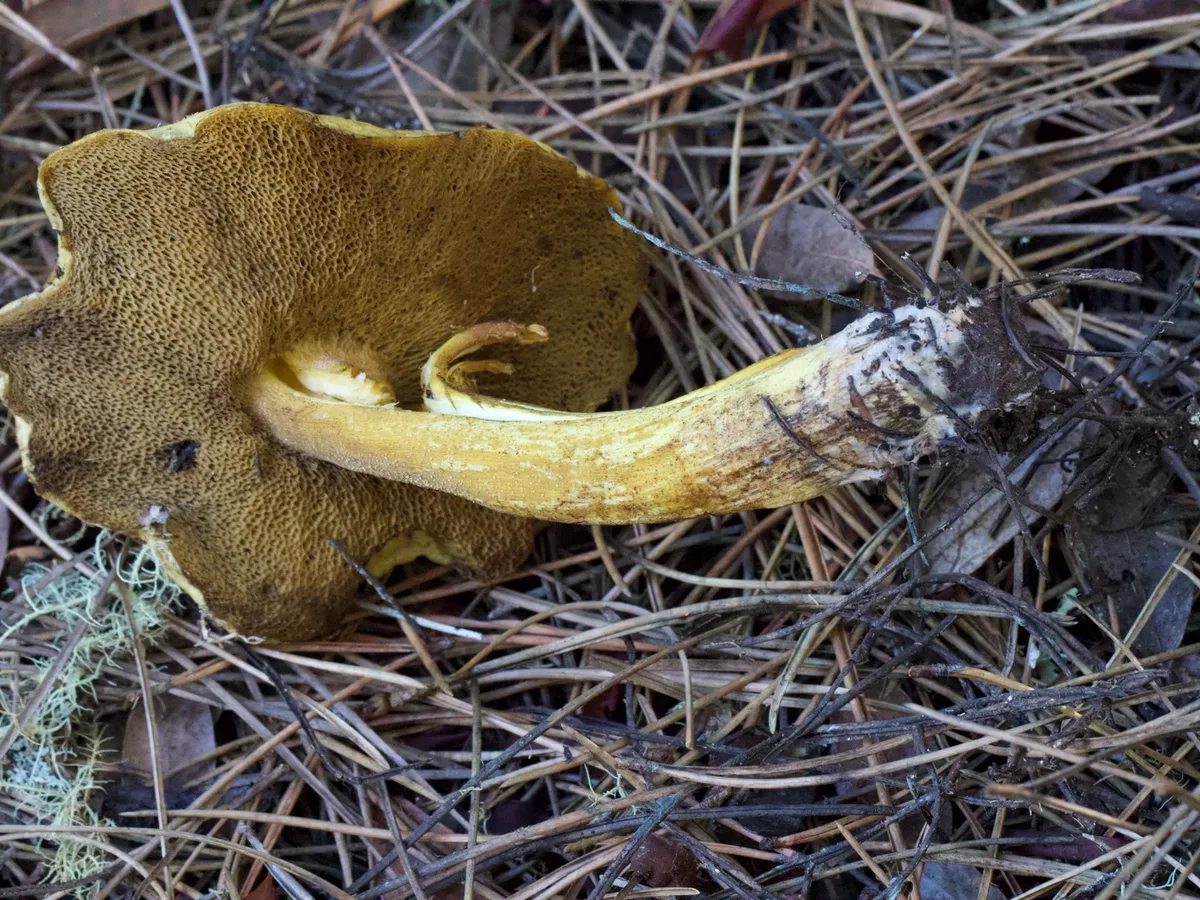 © Arvel Hernandez (CC BY)
 © Kyle Elshoff (CC BY)
 © Kyle Elshoff (CC BY)
 © Kyle Elshoff (CC BY)© Kyle Elshoff (CC BY)eli (CC0)
Good to eat, once you have identified it with certainty and cooked it through.
Never eat a mushroom you are not 100% sure of - check the look-alikes below, and always cook wild mushrooms.
How to recognise it
Cap
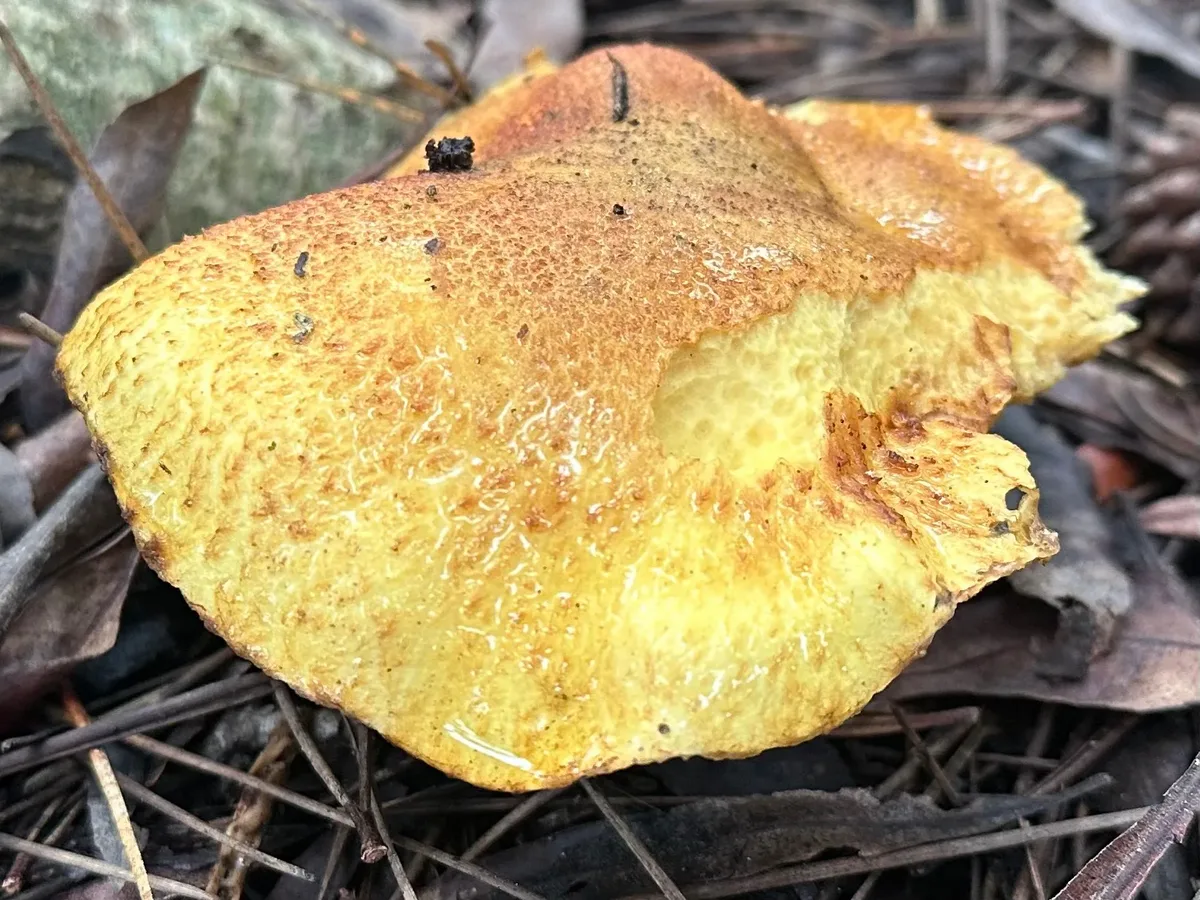
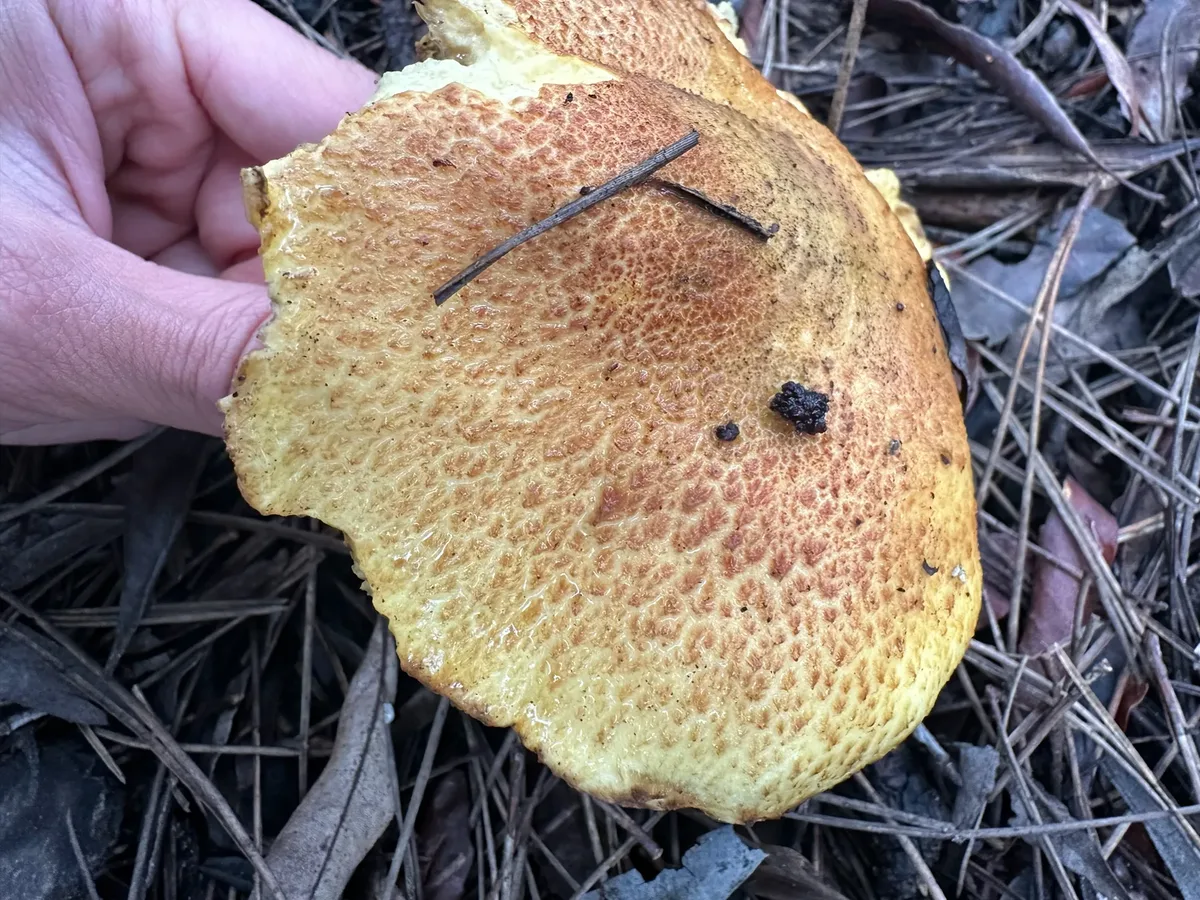
Cap 5-12 cm across, convex becoming broadly umbonate to flat with age.
The surface is dry to slightly viscid when wet, densely covered in small woolly-tufted scales (tomentum) in shades of tawny-yellow, ochre-brown, or grayish-buff - markedly duller and more textured than the chocolate-brown slimy cap of the closely related Slippery Jack (Suillus luteus).
Pores
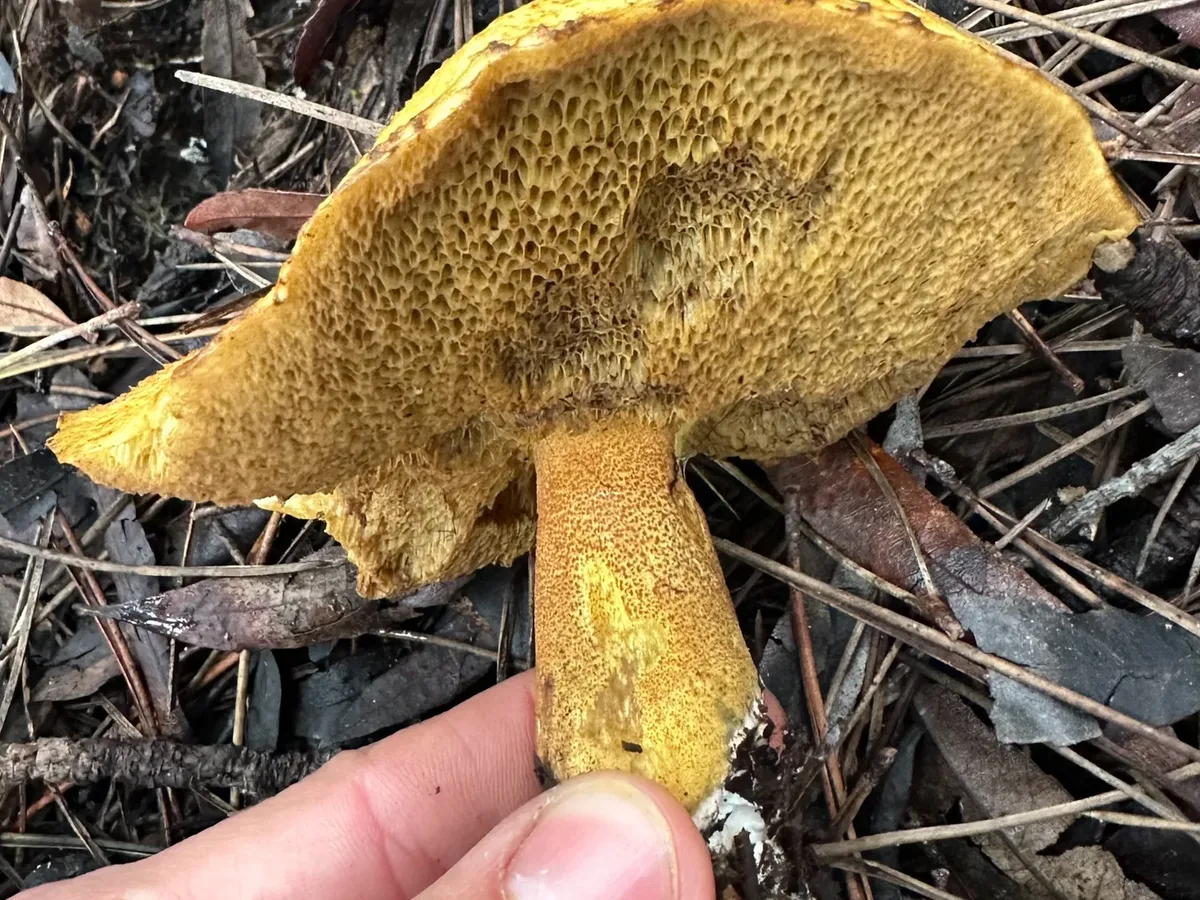
The pore surface is yellow, aging to dull ochre, with angular pores 1-3 per mm.
The pores and tubes bruise distinctly blue to blue-green within seconds of being cut, pressed, or damaged - this bluing reaction is the single most reliable field mark.
Stem
The stem is 4-8 cm tall, pale yellow to buff, covered with scattered reddish-brown glandular dots but lacks a ring entirely.
Flesh
Flesh is pale yellow, firm, and turns blue on exposure to air especially near the pore layer and stem base.
Spore print cinnamon-brown to ochre.
Where & when it grows
Habitat
Strictly mycorrhizal under 5-needle pines. In the Pacific Northwest it favours western white pine (Pinus monticola) and lodgepole pine (Pinus contorta) at montane to subalpine elevations, typically on well-drained, somewhat acidic needle duff.
Grows singly to scattered, occasionally in loose troops.
The bluing reaction is particularly useful because other common Pacific Northwest Suillus species (S. lakei under Douglas fir, S. caerulescens under Douglas fir) do not have this host association; if you are standing under a 5-needle pine and a Suillus turns blue, this is your species.
When
July through October; peak August-early October.
Fruiting is triggered by significant rain events (at least 20-30 mm over 2 weeks) once soil temperatures drop below about 18 °C, with fruiting bodies appearing 7-14 days after rewetting.
In the Cascades, snowmelt moisture in early July can produce an early flush, followed by the main autumn flush driven by the first maritime rains.
How it grows
Like all Suillus, this species is ectomycorrhizal - its mycelium threads through the soil around pine roots in a partnership that is obligatory for both sides.
Suillus tomentosus cannot fruit without its pine host, and young pines often establish more readily when this fungal partner is present, exchanging water and minerals for the tree's sugars.
The hidden network can persist for years under the duff before conditions bring up fruiting bodies. They emerge singly or scattered, occasionally in loose troops across the needle carpet. The species does not grow on wood.
Fruiting conditions
Fruits after significant rain events rewet montane pine duff; main autumn flush triggered by first Pacific maritime rains once soil temperatures drop below about 18 °C. Standard mycology estimate.
Look-alikes
No dangerous lookalikes exist. Other Suillus species are the realistic confusions:
- Suillus lakei - under Douglas fir, not 5-needle pines; cap with dry reddish-brown scales; does not blue or blues weakly.
- Suillus caerulescens - under Douglas fir; blues weakly; slimy rather than tomentose cap.
- Suillus punctipes and Suillus subalpinus - associate with 5-needle pines but have differing cap textures and bluing patterns.
Paxillus involutus is superficially similar in colour but has gills rather than pores and is dangerously toxic.
Imleria badia (bay bolete) blues strongly but lacks the tomentose cap and grows under spruce and fir.
For beginners, the combination of these three features is diagnostic - no deadly species shares all three:
- 15-needle pine habitat
- 2Tomentose/woolly dry cap
- 3Strong bluing on cut flesh and pores
Superficially similar in colour but has gills rather than pores; cap margin inrolled; causes potentially fatal haemolytic anaemia with repeated consumption. Never confuse a Suillus (pores) with Paxillus (gills).
Also blues strongly on cutting. Grows under spruce and fir rather than pine; cap is smooth chocolate-brown without woolly scales; stem lacks glandular dots.
Also blues but grows exclusively under Douglas fir, not 5-needle pines. Cap is viscid/slimy rather than tomentose-scaly.
Grows under Douglas fir, not 5-needle pines. Cap has dry reddish-brown fibrous scales rather than the woolly tomentum of S. tomentosus. Does not blue significantly on cutting.
In the kitchen
Picking & cleaning
Collect young, firm specimens with intact pore surfaces.
The tomentose (woolly-scaly) cap skin is not as prominently slimy as in Suillus luteus, but in wet conditions it becomes sticky and should be peeled before cooking - the slime can cause gastrointestinal irritation in sensitive individuals and makes the texture unpleasant.
Peeling the cap skin in the field prevents it from coating other mushrooms in the basket. Remove the tube layer on older, soft specimens as it becomes mushy.
The bluing reaction is an excellent in-field confirmation after picking.
Cooking
Honest but modest table fare - not a star on its own, but a solid supporting player in mixed mushroom dishes.
- Peel the cap skin first (it can be sticky even when the cap seems dry).
- Slice and dry-sauté in butter over moderate heat to drive off moisture before adding any liquid or aromatics; Suillus can become waterlogged if rushed.
- It works well in soups, risottos, and cream sauces where its mild flavour fills out without competing with more aromatic species.
Drying is not recommended - texture and flavour both suffer. Use it fresh within a day or two of picking.
Good to know
Edible, but the slimy cap skin should be removed before cooking - it can cause mild gastrointestinal upset in sensitive people.
Some individuals experience mild GI discomfort from raw or under-prepared Suillus species; always cook thoroughly.
The bluing of the flesh is caused by variegatic and xerocomic acids reacting with oxidases and is harmless - it does NOT indicate toxicity (contrast with Rubroboletus satanas, which is toxic and has a red pore surface and stem, not yellow).
As a mycorrhizal pine-forest mushroom, avoid collecting near roadsides, mines, or industrial areas where heavy metal accumulation is possible.
A reference guide - never an edibility guarantee. When in doubt, leave it out.