Slippery white bolete
Suillus placidussyn. Boletus placidus Bonord., Ixocomus placidus (Bonord.) E.-J. Gilbert, Suillus strobi sensu auct. (misapplied)
 © Lucian Clanet (CC BY)
 © Manuela Fiorini (CC BY)
 © Virn Stothers (CC BY)
 © Virn Stothers (CC BY)
 © Virn Stothers (CC BY)
 © Manuela Fiorini (CC BY)
 © Manuela Fiorini (CC BY)
 Garrett Taylor (CC0)
 © Manuela Fiorini (CC BY)
 © Manuela Fiorini (CC BY)© Lucian Clanet (CC BY)© Manuela Fiorini (CC BY)
Good to eat, once you have identified it with certainty and cooked it through.
How to recognise it
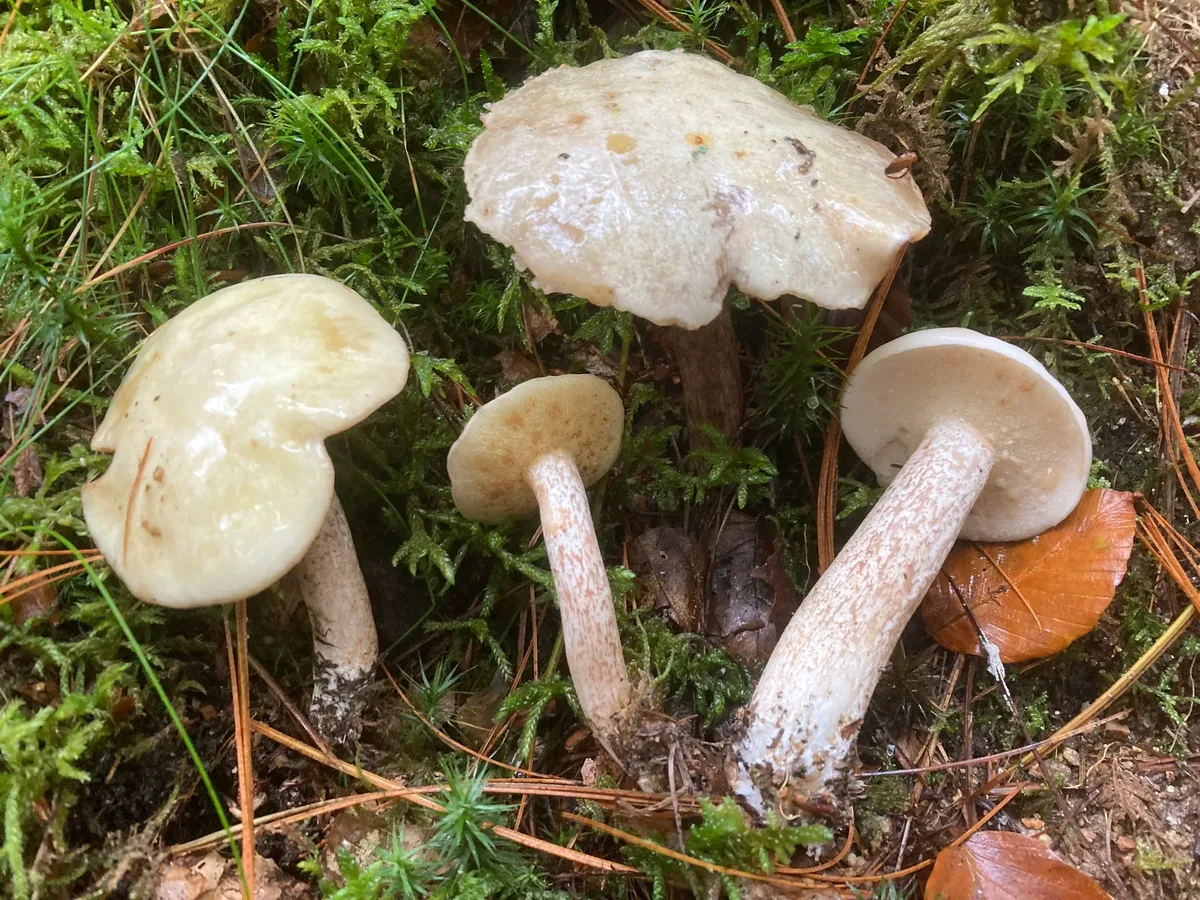
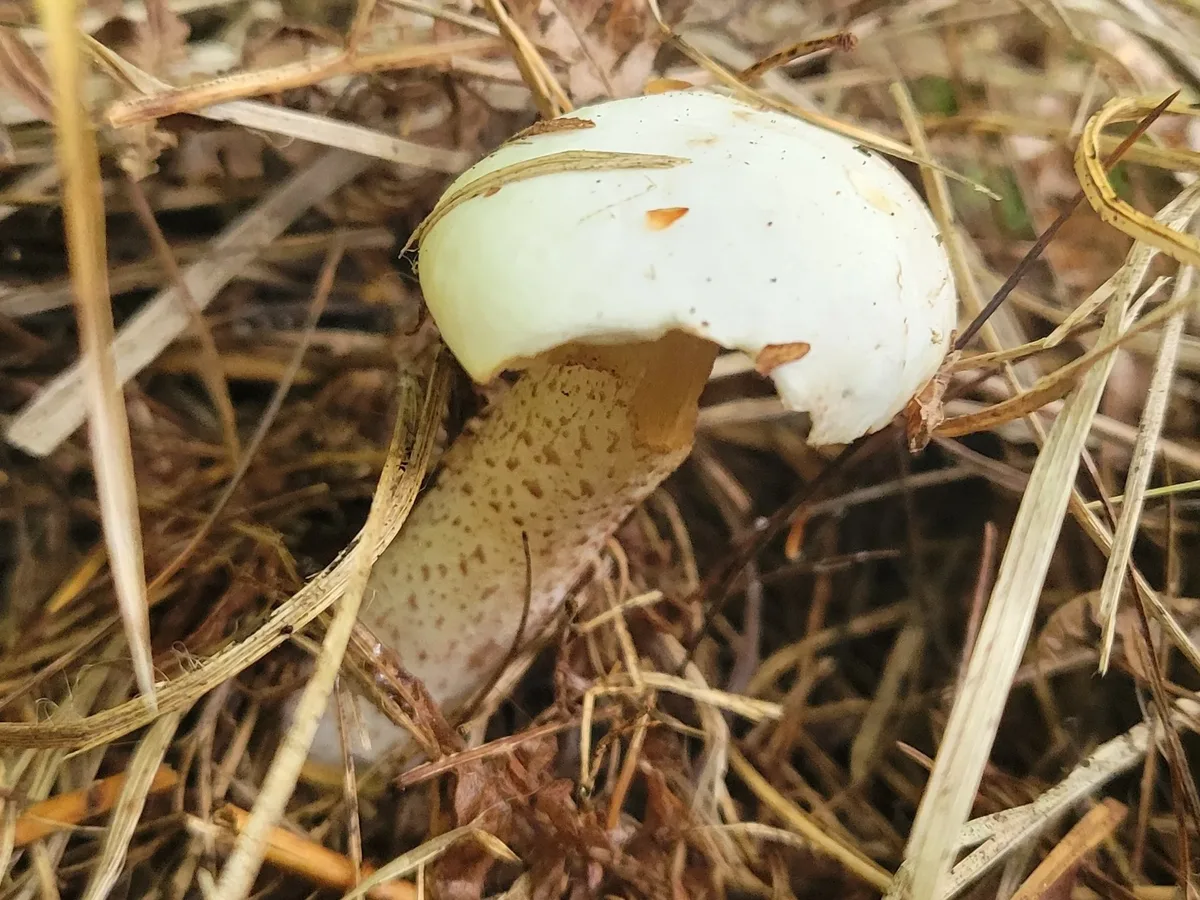
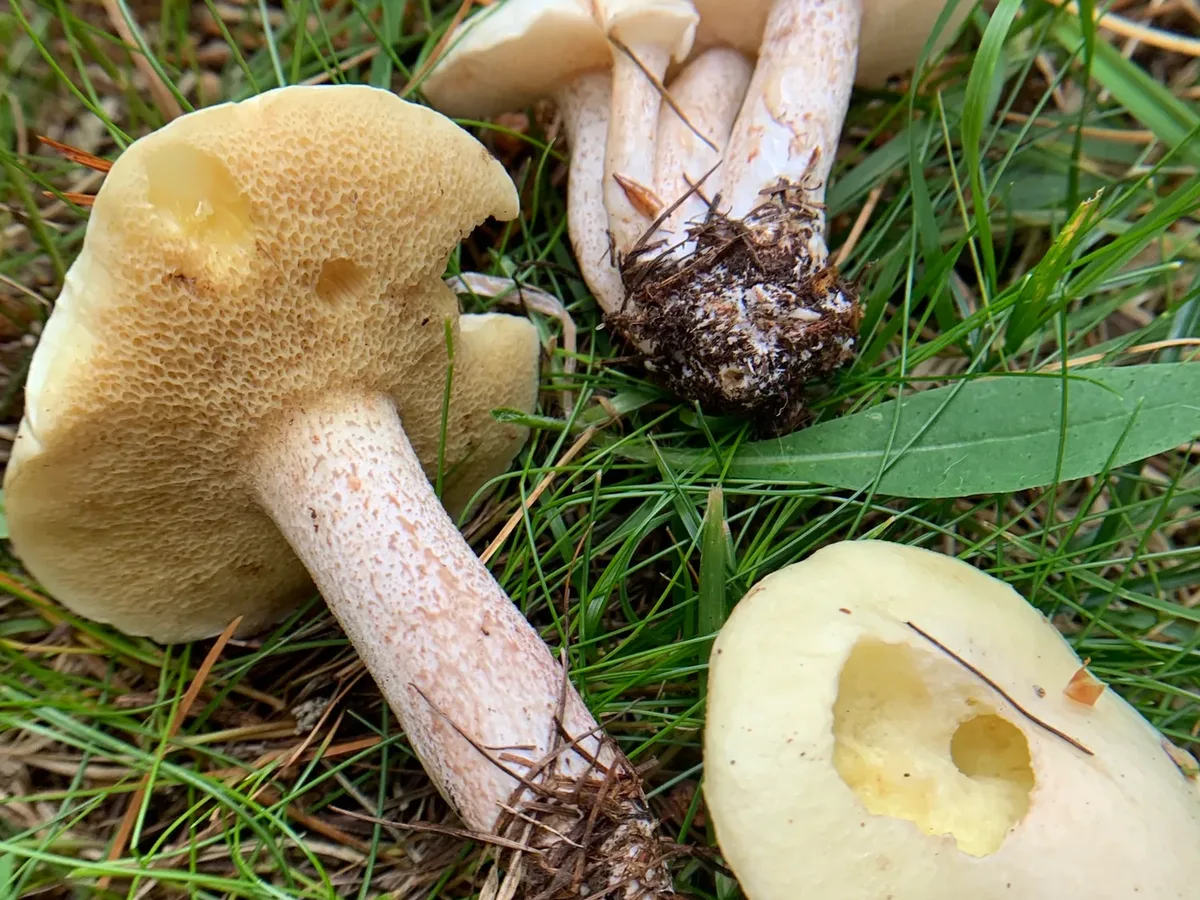
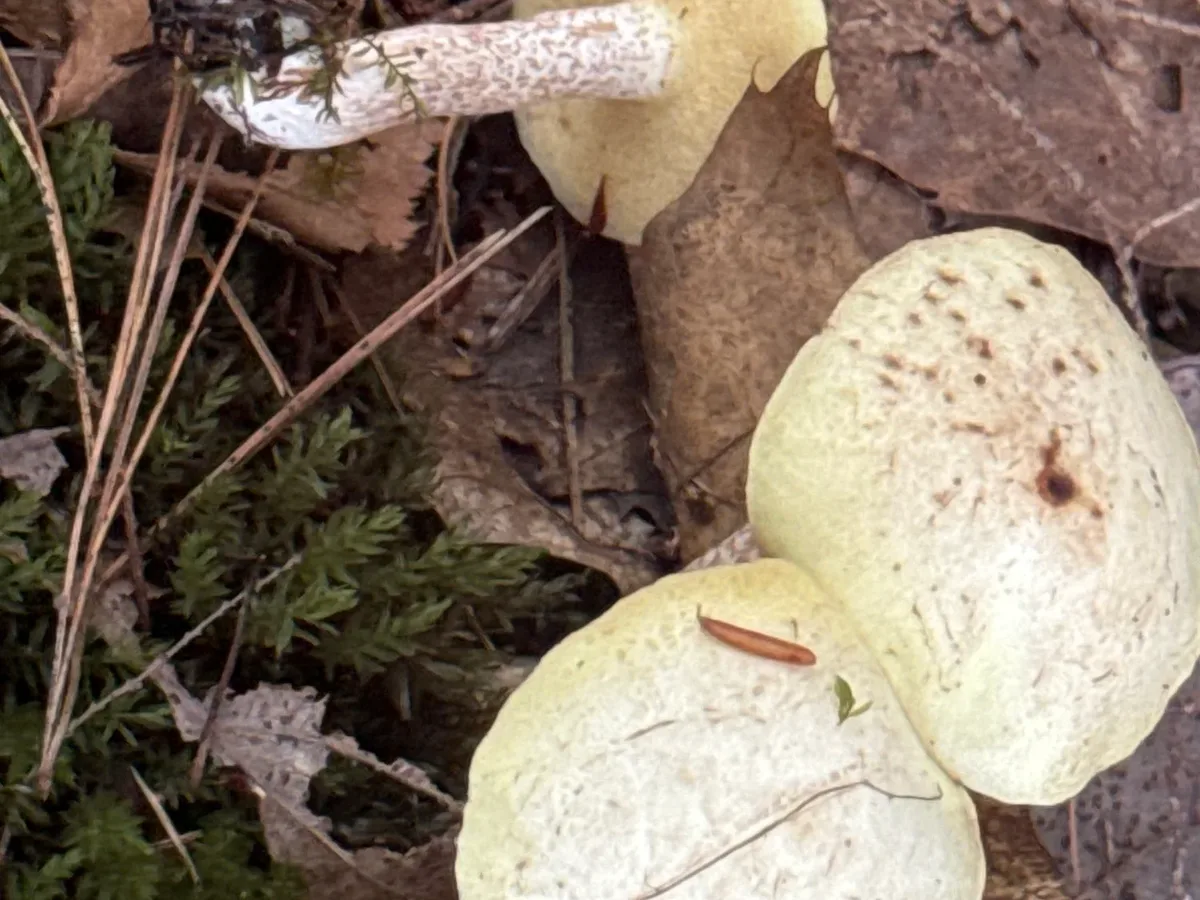
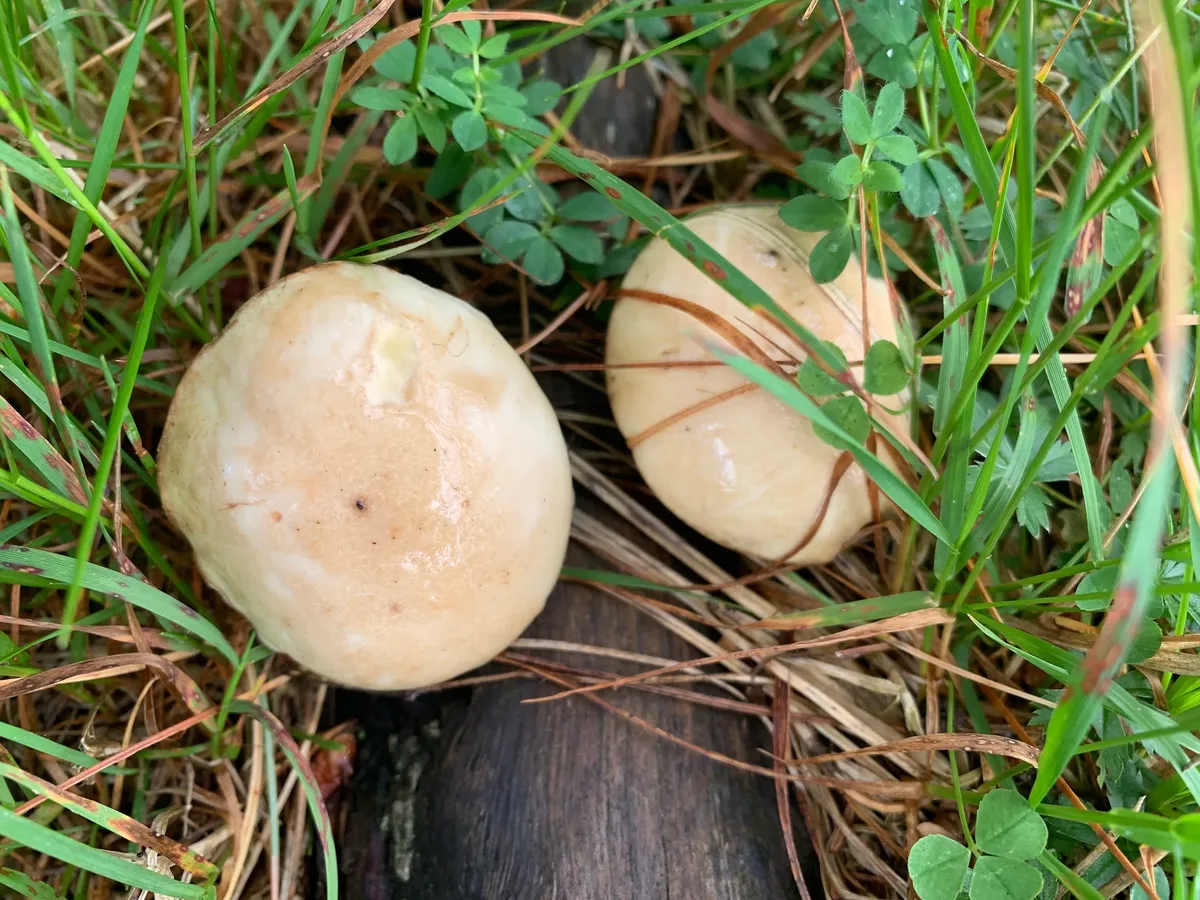
Among the slippery boletes of European pine woods, Suillus placidus stands out for one instantly striking reason: its cap is white to ivory, not brown or ochre. This pallor - caused by a very pale colourless to cream-buff glutinous slime covering a whitish cap surface - makes it one of the easiest Suillus to recognise at a glance, since all common European Suillus have brown, tan, or golden caps.
Cap
The cap starts convex and can reach 10-12 cm, eventually flattening with a broad central hump. Old specimens can fade to a light buff-tan at the centre while the margin stays whitish.
Gills / Pores
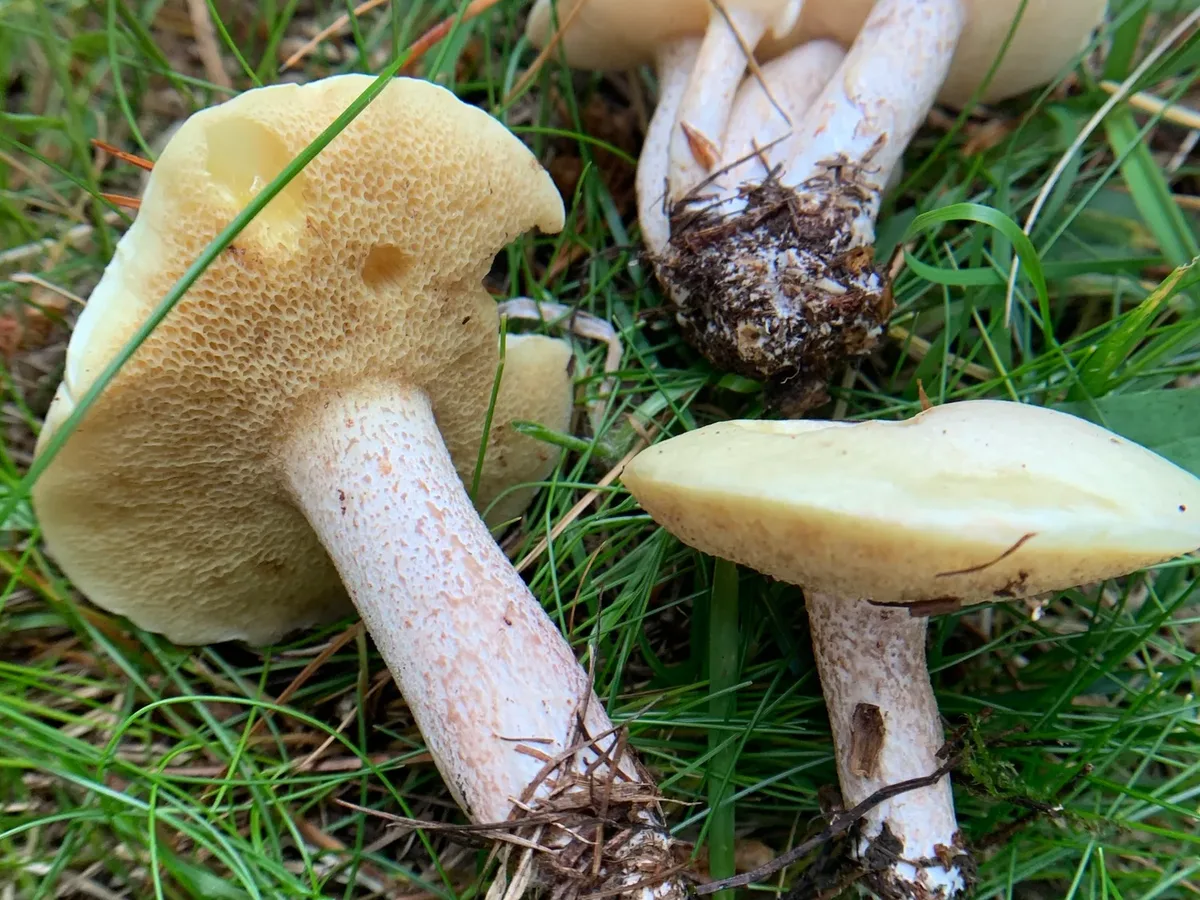
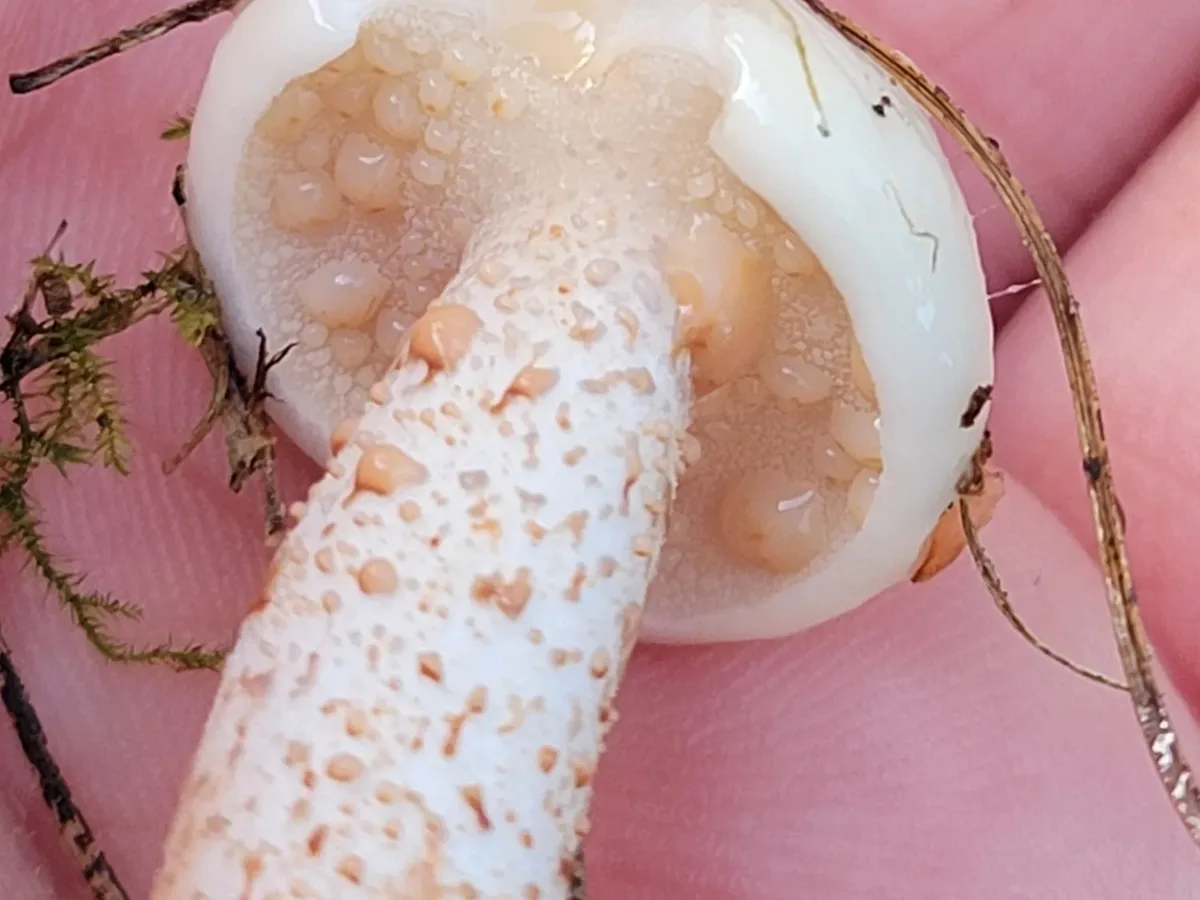
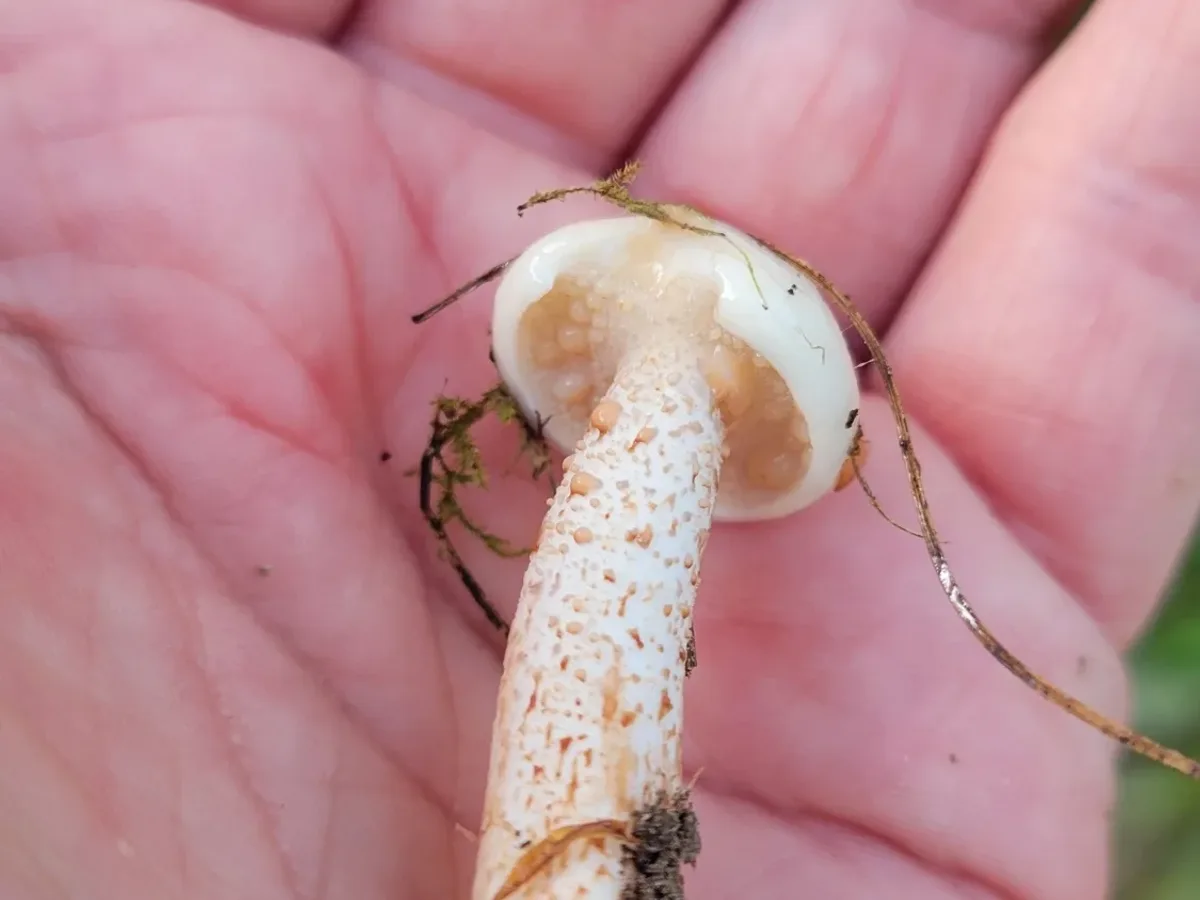
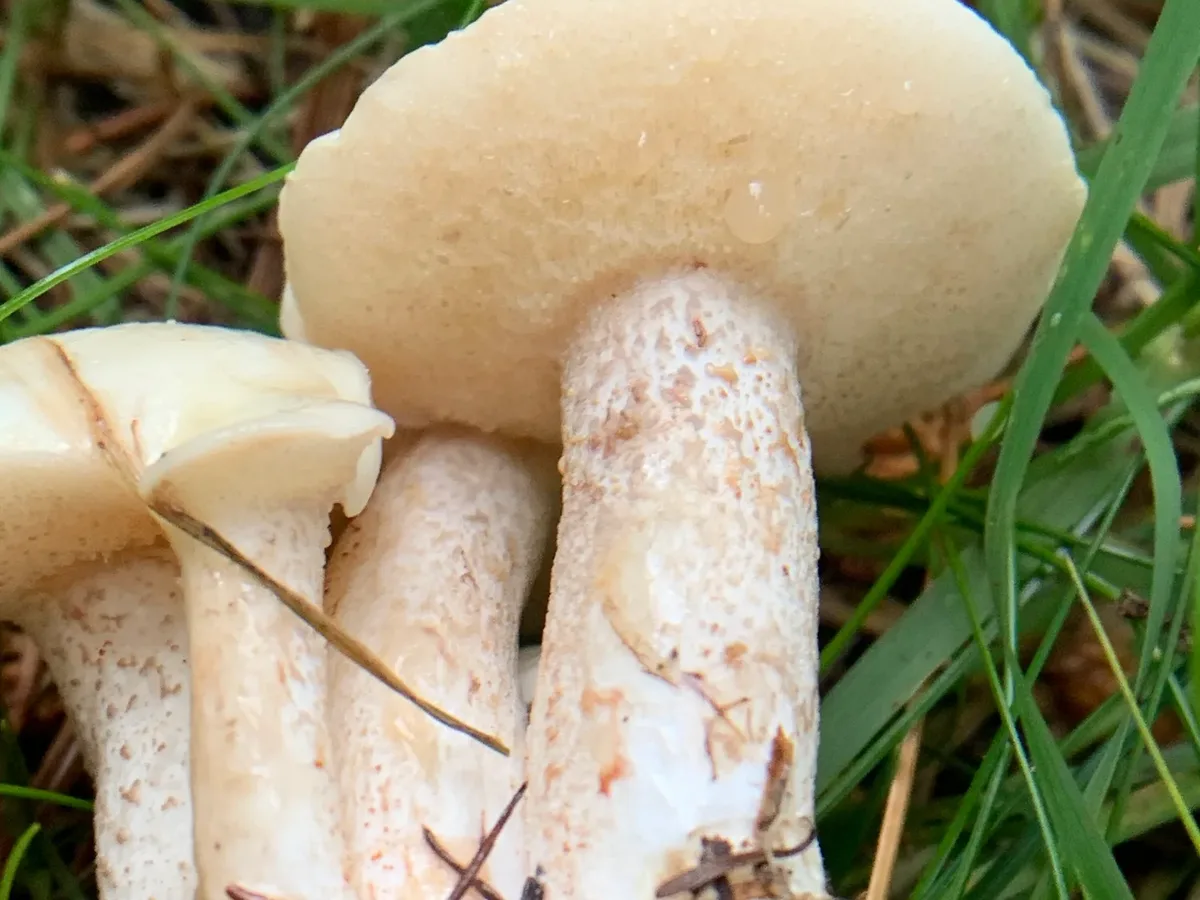
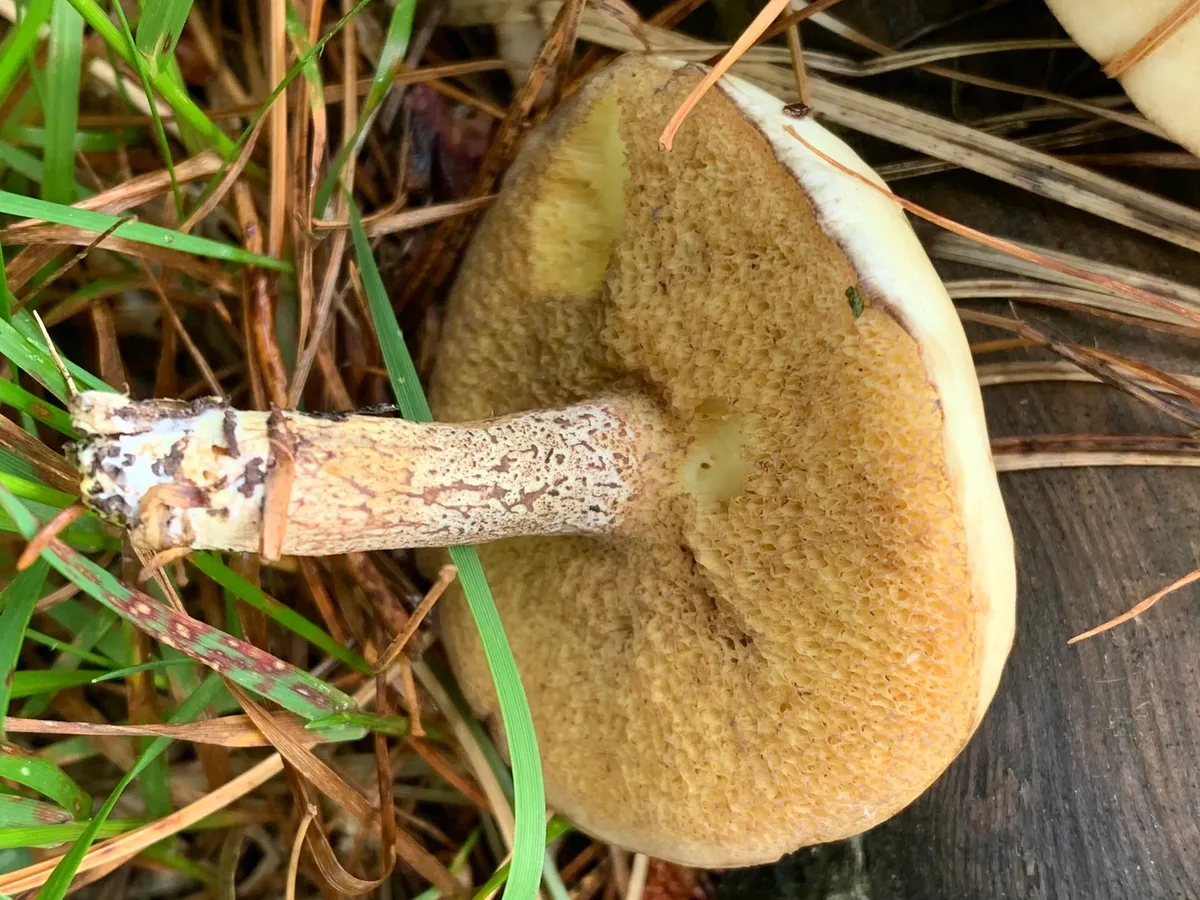
Turn it over and you find a fine spongy pore layer - white to very pale yellowish - that may weep tiny clear or milky droplets when young.
Stem
The stem is 4-9 cm, equal, white to pale yellow, and critically lacks a ring entirely. Its surface is peppered with small pinkish to reddish-brown granular glandular dots, especially dense near the apex (identical in nature to those on S. granulatus).
Flesh
The flesh is soft and white, and does not stain blue when cut. Basal mycelium is white. Spore print is pale ochre to cinnamon-buff.
Where & when it grows
Habitat
Suillus placidus is an obligate mycorrhizal partner of five-needle (Strobus group) pines - it will not fruit unless a five-needle pine is present nearby.
In central and western Europe this makes it mostly a park and arboretum species wherever eastern white pine (Pinus strobus) has been planted, as well as an Alpine and sub-Alpine species under Arolla pine (Pinus cembra) and Balkan pine (Pinus peuce).
It is considerably rarer and more localised in Europe than the common Suillus (S. luteus, S. granulatus) that grow with two- and three-needle pines, because the five-needle hosts are less widespread as timber species. In eastern North America it is native and common in eastern white pine forests.
Always look for the combination: a white-capped slimy bolete growing from the soil within a few metres of a five-needle pine - that pairing alone is nearly diagnostic.
When
Look for Suillus placidus from late August through October across temperate Europe and North America, with the main flush peaking around September-October following late-summer or early-autumn rains.
In Alpine zones under Pinus cembra the window is tighter - typically July through September before the cold closes in.
Warm wet summers can push the first fruits out as early as July; mild autumns may keep them coming into November.
The trigger is sustained rainfall of 15 mm or more over a few days, with soil still warm enough - above around 10 °C.
How it grows
Suillus placidus lives as an ectomycorrhizal partner exclusively with five-needle pines (subgenus Strobus), its underground mycelium woven around the roots of its host.
That mycelium is perennial - once established beneath a pine, it can persist for many years, flushing fruit bodies season after season as long as the tree remains.
After suitable rain the mushrooms emerge quickly, often within a few days to two weeks, so a patch that was bare ground can be dotted with pale caps almost before you notice.
They typically appear singly or in small scattered groups, occasionally forming larger colonies under extensive white pine or Arolla pine stands.
Fruiting conditions
Fruits a few days to two weeks after sustained rainfall of 15 mm or more when soil temperatures are between about 9-20 °C. Peak productivity at 11-15 °C. Season ends with first hard frosts. In Alpine zones under Pinus cembra, the warm window is shorter and fruiting is compressed into July-September.
Look-alikes
The white cap is the decisive field mark that separates Suillus placidus from almost all other boletes at a glance. Within the Suillus genus, no other common European species has a uniformly white to ivory slimy cap, so realistic confusion is limited.
The closest lookalikes are:
- Suillus granulatus (weeping bolete) - the same ringless, glandular-dotted structure but with a distinctly brown to ochre cap; grows under two- or three-needle pines.
- Suillus lactifluus - a related white or whitish Suillus occurring under white pines in North America, sometimes treated as synonymous with or very close to S. placidus; harmless.
- Suillus luteus (slippery jack) - a brownish cap and a prominent ring on the stem; grows under Pinus, but two- and three-needle species.
- Leucoagaricus and Amanita species could very superficially suggest a white mushroom in the field from a distance, but they have gills not pores - confirm the spongy pore layer before picking anything white.
No deadly species realistically resembles a white slimy bolete with a pored underside and glandular-dotted ringless stem. The entire Suillus genus contains no deadly species.
Ringless with glandular-dotted stem like S. placidus but has a distinctly brown cap with radiating fibres and pink basal mycelium. Grows under two-needle pines. Harmless if confused.
A closely related North American species also with a whitish cap under five-needle pines; sometimes treated as a synonym of S. placidus or a very close relative. Distinguished at most by minor microscopic details. Entirely harmless.
Has a brown to ochre-tan slimy cap and a prominent membranous ring on the stem. Cap is never white or ivory. Grows under two- and three-needle pines. Harmless if confused.
Almost identical structure (ringless, glandular-dotted stem, weeping pores) but has a distinctly brown to ochre slimy cap, never white or ivory. Grows under two- and three-needle pines (Scots, black, maritime pine), not five-needle pines. Harmless if confused.
White waxy-cap mushrooms (such as the ivory woodwax) can appear superficially similar in colour from above, but they have widely-spaced decurrent gills (not a spongy pore layer) and a dry or only slightly viscid stem. Always check the underside: S. placidus has a sponge-like pore surface; gilled white mushrooms are a different class of fungus entirely. No white waxy cap is dangerous.
In the kitchen
Picking & cleaning
The pale slimy cap skin should be peeled off before cooking - it slips off easily when fresh - as the gluten imparts an unpleasant slimy texture in the pan.
Remove the spongy pore layer too (it becomes mushy when cooked), keeping only the firm cap flesh and stem.
- Pick young to middle-aged firm specimens; old waterlogged ones deteriorate rapidly and are prone to insect infestation.
- Carry in an open basket rather than a bag; the slime will stick to and wet other mushrooms.
- Process within a day of picking.
Cooking
Suillus placidus is a mild, honest edible - not a powerhouse of flavour like king bolete (Boletus edulis), but a pleasant, versatile addition to the pot.
Prepare it properly first: peel off the slimy cap skin (it slips away easily when fresh) and remove the spongy pore layer. You are then left with firm pale flesh that won't turn to mush.
Sliced and sautéed in butter it makes a simple, satisfying side; added to soups, stews, and cream sauces it blends in and thickens without dominating.
Drying is the best way to concentrate the mild flavour and to preserve a larger haul - dried slices reconstitute well in warm water and work nicely in pasta sauces and risottos. It also pickles well.
Because the taste is delicate, let it pair with ingredients that complement rather than overwhelm: butter, garlic, cream, thyme, and mild cheeses all work. It shines brightest when combined with more strongly-flavoured mushrooms rather than served alone.
Good to know
Suillus placidus is considered a safe edible with no deadly lookalikes; the Suillus genus contains no dangerous species.
The main practical caution is individual GI sensitivity. As with other Suillus, a minority of people experience mild stomach upset (nausea, loose stools) after eating it - particularly if it is undercooked, eaten in large quantity, or if the slimy cap cuticle and tube layer are not removed.
Standard practice is to peel the gluten skin, scrape away the pore layer, and eat a small trial portion on first encounter. Cook thoroughly - never eat raw.
Because the cap is white, take extra care to ensure the pore layer is visible and confirmed before consuming. White gilled mushrooms (some Amanita and Lepiota) can be deadly, but these always have gills, not a spongy pore sponge, and they do not have a slimy glutinous cap.
Always verify before eating:
- Spongy pore layer (not gills)
- Ringless stem with glandular dots
- No bluing of the flesh
- Proximity to a five-needle pine
A reference guide - never an edibility guarantee. When in doubt, leave it out.