Matte Jack
Suillus lakeisyn. Boletinus lakei Murrill, Fuscoboletinus lakei (Murrill) Pomerleau & A.H.Sm., Ixocomus lakei (Murrill) E.-J. Gilbert
 Ben Keen (CC0)
 Alex Heyman (CC0)
 Alex Heyman (CC0)
 Alex Heyman (CC0)
 Alex Heyman (CC0)
 Alex Heyman (CC0)
 Alex Heyman (CC0)
 Alex Heyman (CC0)
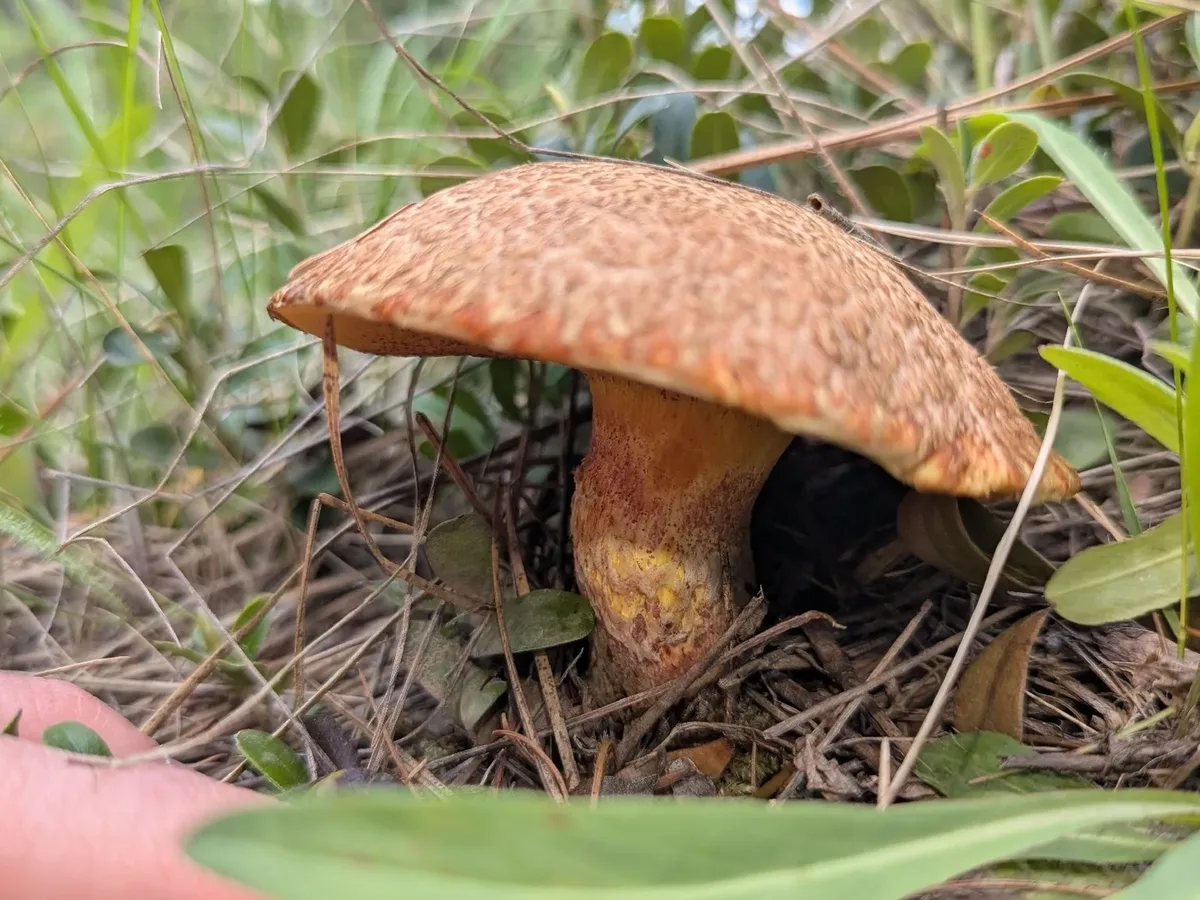 Ben Keen (CC0)Ben Keen (CC0)Alex Heyman (CC0)
Good to eat, once you have identified it with certainty and cooked it through.
How to recognise it
The Matte Jack is one of the more visually distinctive members of the Suillus genus precisely because it refuses to conform to the genus stereotype.
Cap
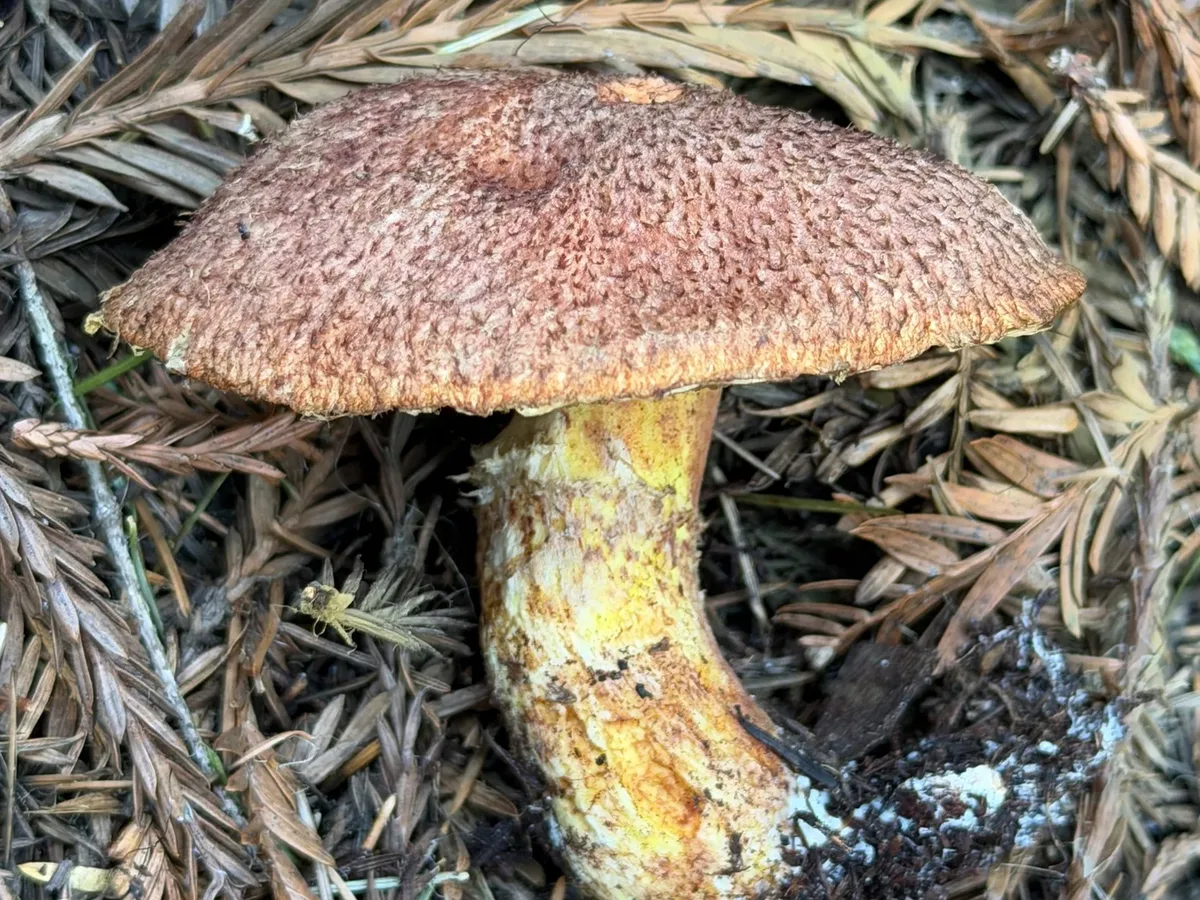
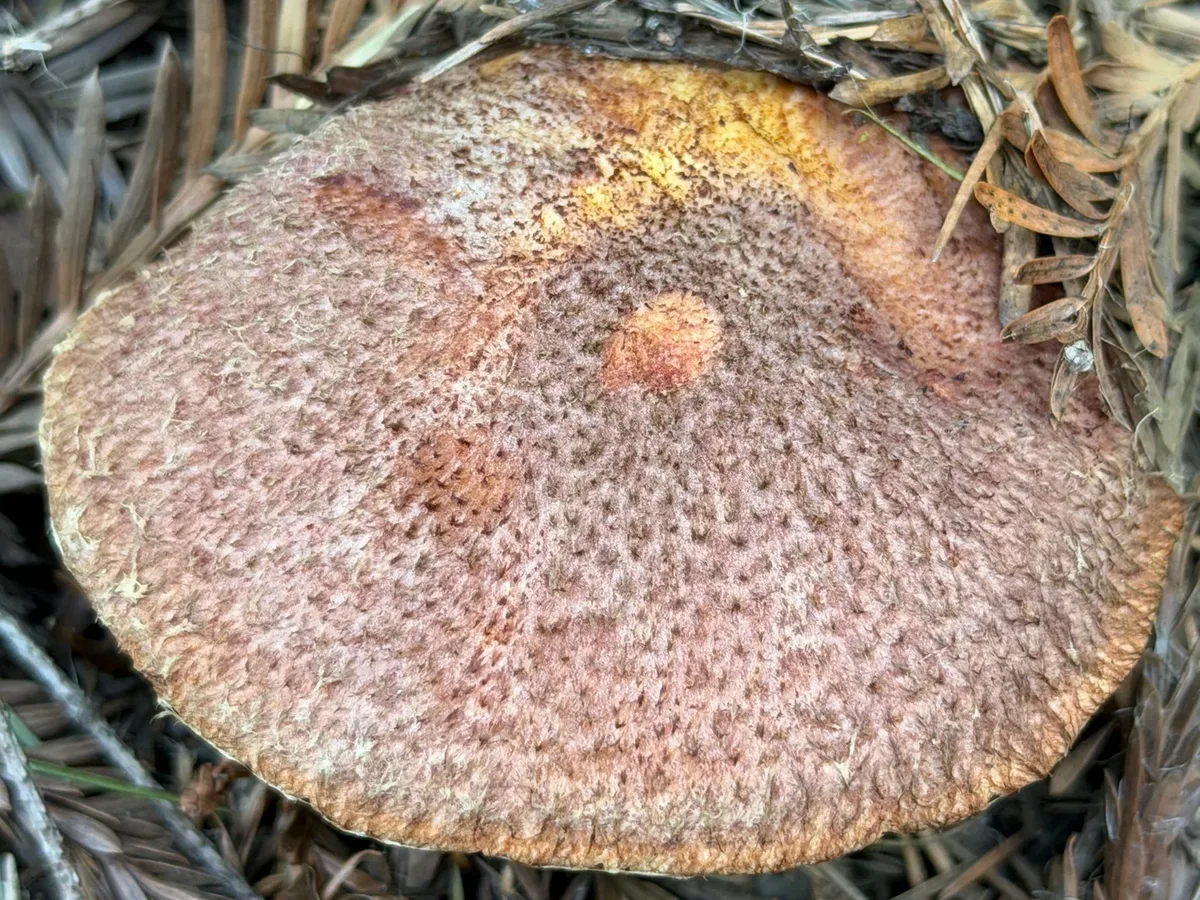
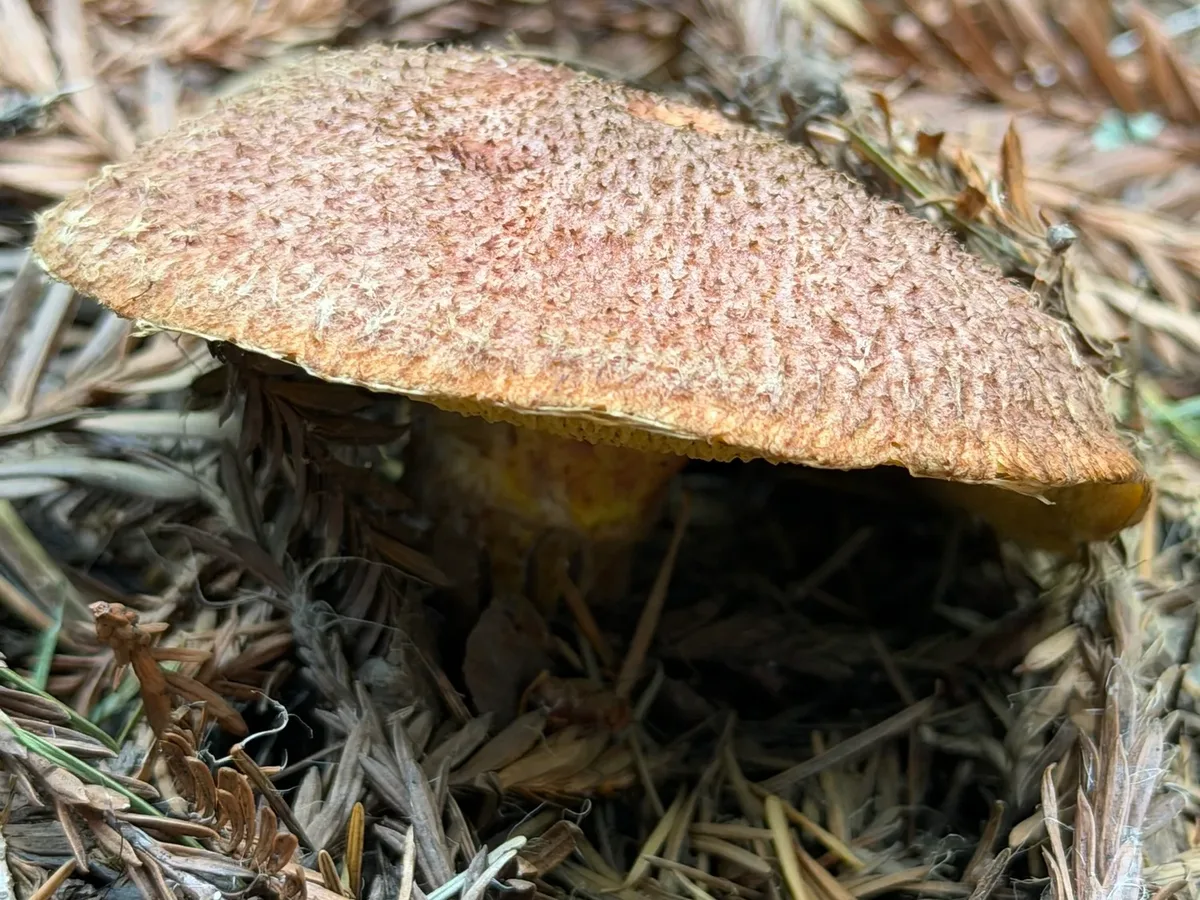
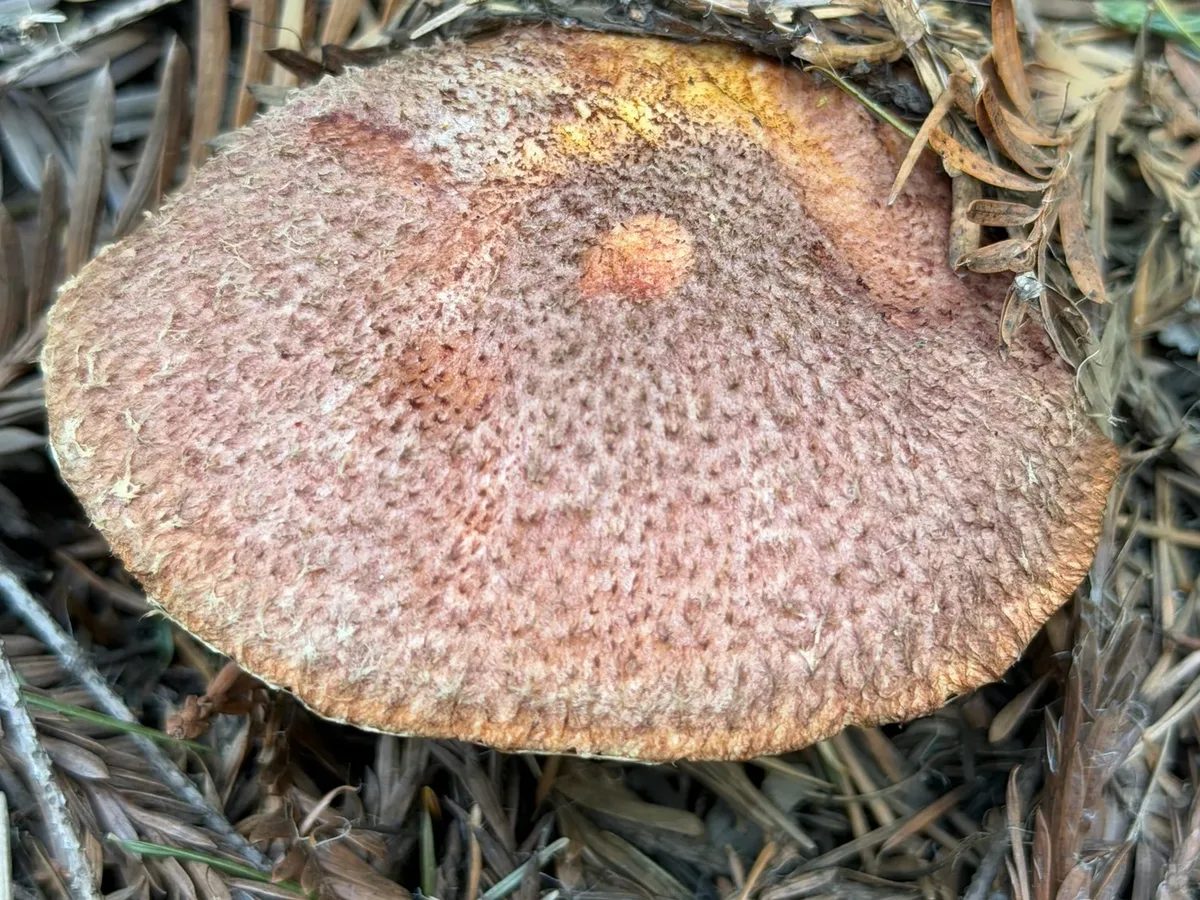
Where most of its relatives wear slimy, glossy caps, Suillus lakei carries a dry, decidedly matte surface covered in coarse fibrous scales of brick-red, reddish-brown, or tawny-orange - giving the cap an almost shaggy texture that recalls a small Leccinum or a painted suillus rather than the slick slippery jacks of Suillus luteus or Suillus granulatus.
Flesh
The underlying cap flesh is pale yellow, peeping between the scales near the outer margin and producing a two-tone effect. The flesh throughout remains pale and unchanged on exposure.
Gills / Pores
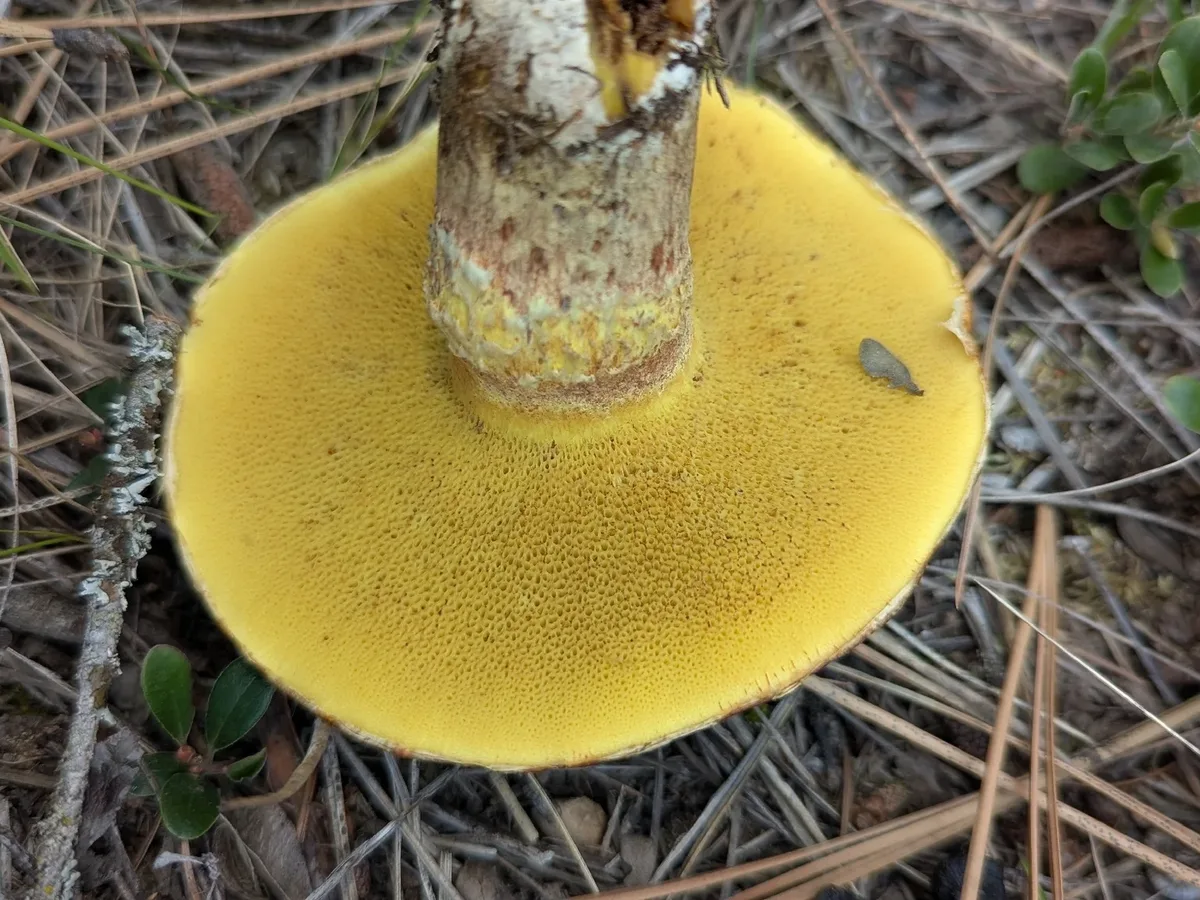
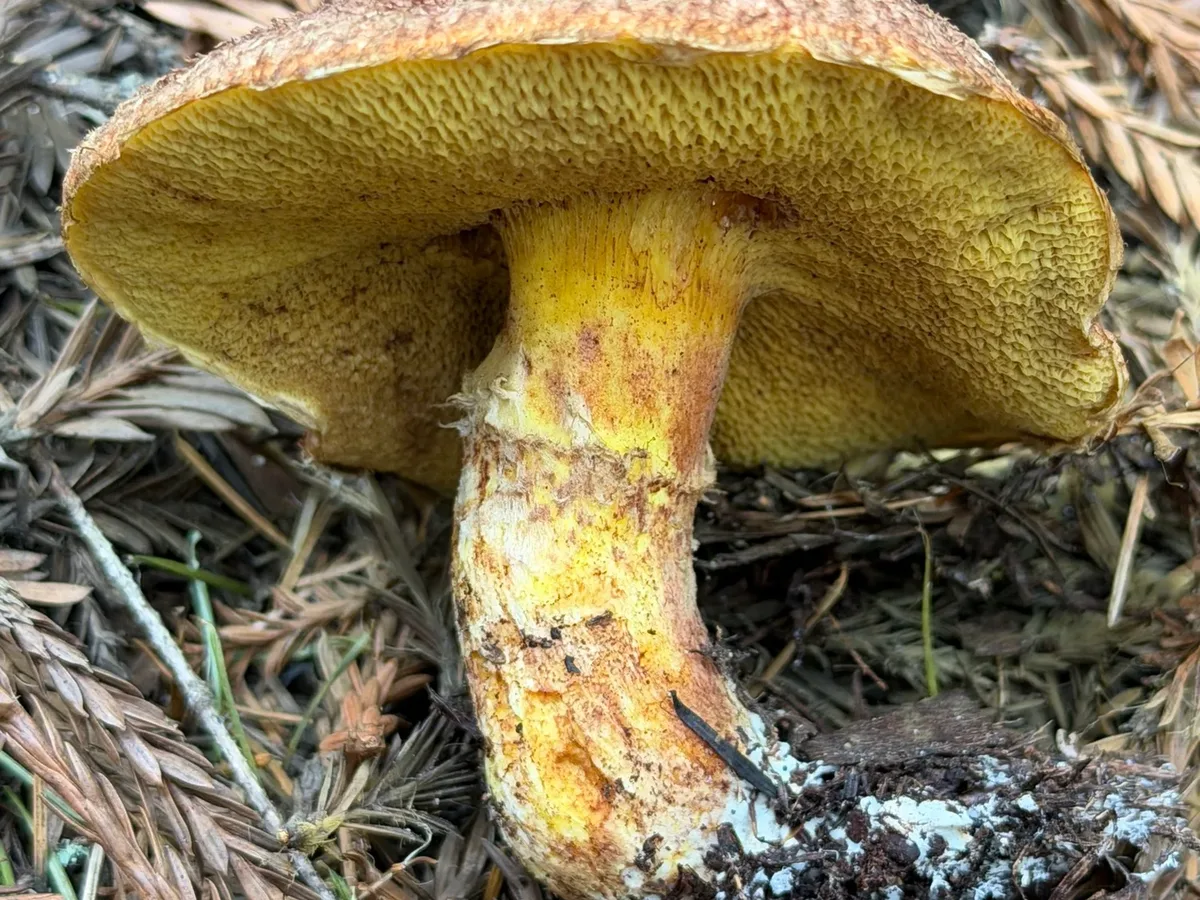
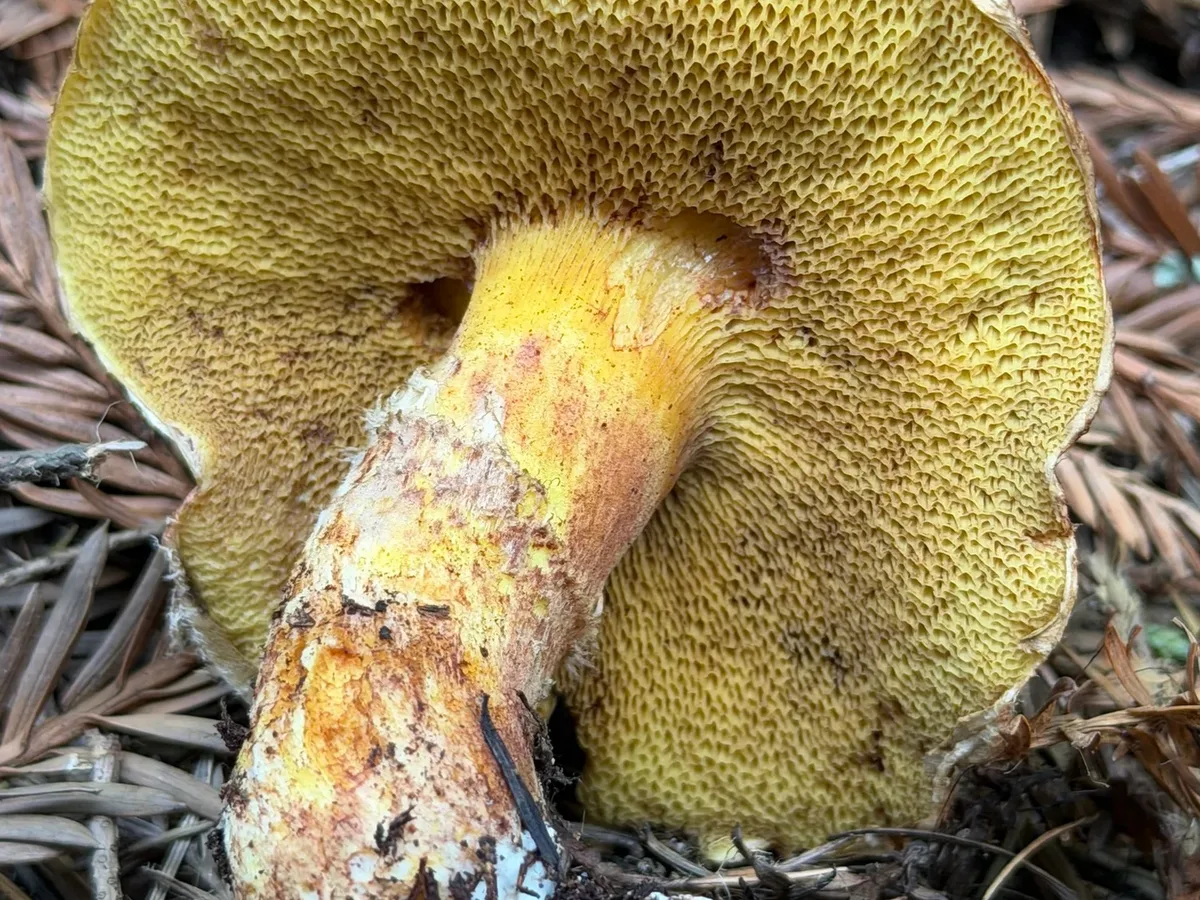
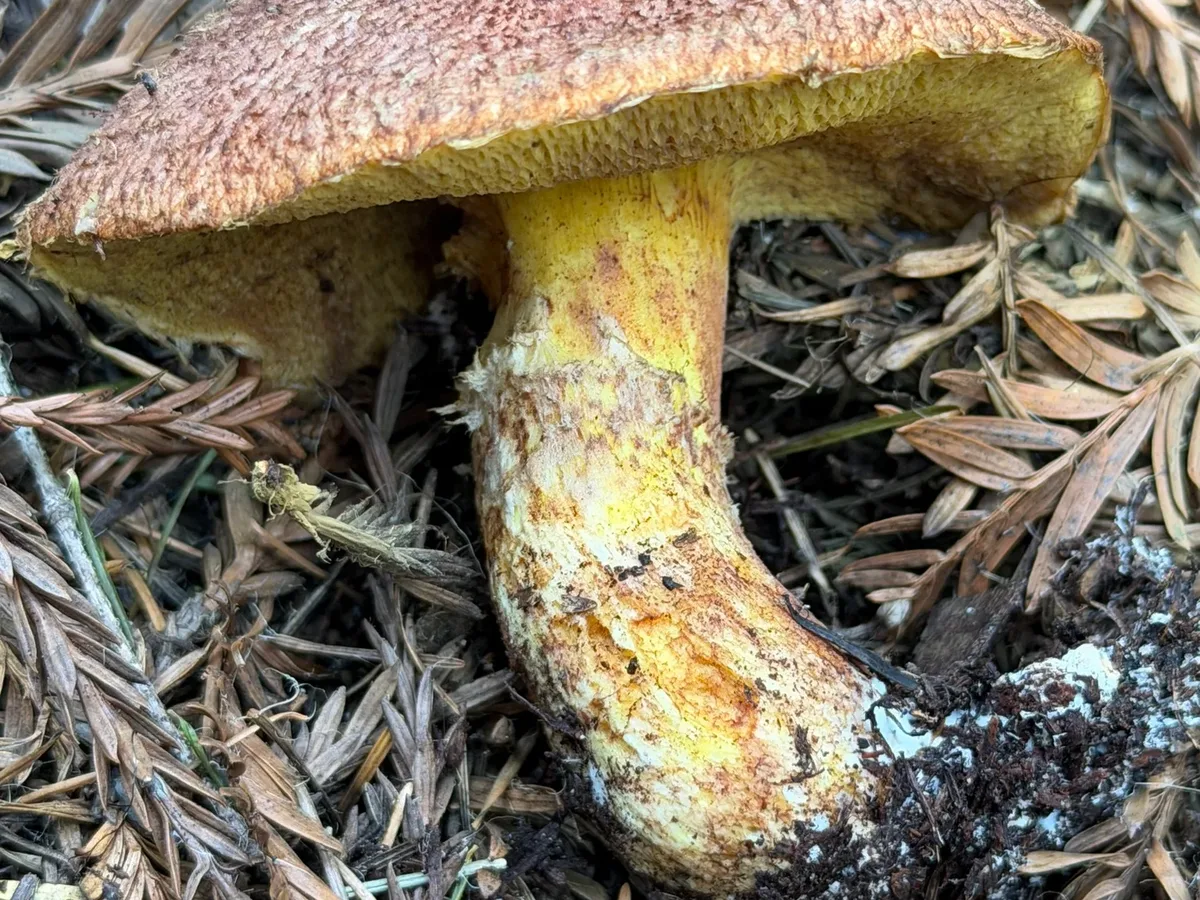
The pore surface underneath is a cheerful sulphur-yellow in young specimens, dulling to ochre-yellow with age but never bluing significantly on bruising - a useful separator from Suillus tomentosus, which turns blue promptly.
Stem
A white to pale ochre partial veil is present and leaves a persistent, fibrous ring on the upper stem; the ring is often tattered and shredded in older material but enough remnant typically remains to be visible. The stem below the ring is pale buff, dotted with reddish-brown glandular granules.
The spore print is cinnamon-brown.
Where & when it grows
Habitat
Suillus lakei is inextricably and exclusively bound to Douglas-fir (Pseudotsuga menziesii). No other Suillus species in western North America has this particular host fidelity, which makes habitat an extremely powerful identification tool.
If you are standing under Douglas-fir - that towering, rough-barked conifer with distinctive pendulous cones bearing three-pronged bracts that give them the appearance of a mouse diving into the scales - and you find a scaly-capped bolete with a ring, you have very likely found Suillus lakei.
The species thrives in the classic Douglas-fir forests of the Pacific Coast ranges and Cascades, from British Columbia south through Washington, Oregon, and into California. It also occurs in Rocky Mountain Douglas-fir forests east to Idaho and Montana.
Look among the brown needle carpet within the drip-line of living trees. Young, smaller Douglas-firs in recently regenerated patches or forest edges can be especially productive because their root systems actively expand and the mycelial network is particularly vigorous.
When
Across its Pacific Northwest heartland, Suillus lakei is predominantly an autumn mushroom. The main flush arrives with the first significant autumn rains - usually September or October - as maritime systems laden with Pacific moisture sweep inland and rewet the summer-dry needle duff under Douglas-fir. Fruiting can continue well into November in mild coastal areas.
In the California Coast Ranges and Sierra Nevada foothills, where the dry-summer Mediterranean pattern is pronounced, the season often spans September through December, occasionally stretching into January during mild, rainy winters.
At higher elevations in the Rockies, a summer monsoon flush may occur in July-August when warm-season precipitation events bring sufficient soil moisture, but autumn remains the peak season throughout the range.
The trigger is reliable: a week or more of substantial rainfall (25 mm or more over a 10-14 day window) following summer drought, with soil temperatures that have dropped from their summer peak but remain above about 5-6 °C.
How it grows
Like all Suillus species, the Matte Jack is an obligate ectomycorrhizal fungus. Its mycelium penetrates and sheaths the fine root tips of Douglas-fir in a mutually beneficial partnership that is, from both perspectives, non-optional.
The exchange runs both ways:
- The fungus gains photosynthetically fixed carbon (sugar) from the tree's roots.
- The tree gains dramatically improved water and mineral uptake, particularly phosphorus, through the mycelium's vastly greater surface area in the soil.
This symbiosis is so significant that Douglas-fir regenerates more successfully on sites where appropriate ectomycorrhizal partners, including Suillus lakei, are already present in the soil.
The mycelial network is perennial and can persist for many years under the duff. A single healthy network may produce fruiting bodies across multiple seasons, appearing in a diffuse arc or irregular patch that gradually expands year after year.
Basidiocarps emerge singly to scattered, occasionally in loose groups, typically from beneath or through the needle mat rather than from exposed mineral soil.
Fruiting conditions
Suillus lakei follows the classic late-summer to autumn pattern of Douglas-fir forest fungi in the Pacific Northwest. Reliable flushes require at least 25 mm of rain over a 14-day period after summer drought, with soil temperatures that have descended from their summer peak to the 5-16 °C range. After significant autumn rain events, fruiting bodies typically emerge 7-14 days later. In the Rockies, summer monsoon moisture (July-August) can trigger an earlier flush at higher elevations before the main autumn flush in September-October.
Look-alikes
Suillus lakei's dry, scaly reddish-brown cap and ring are distinctive characters within the Suillus genus, and no deadly species is a realistic confusion. The most likely mix-ups are with other western North American Suillus or bolete species sharing Douglas-fir forests.
- Suillus caerulescens (also called the blue-staining suillus or Douglas-fir suillus) shares the Douglas-fir host exactly and is the most common confusion species. It can be separated by its slimy (viscid) rather than dry-scaly cap, which is more uniformly brown rather than reddish-scaly, and by its tendency to blue lightly on cutting - though the bluing is less dramatic than in S. tomentosus.
- Suillus tomentosus grows under five-needle pines (not Douglas-fir) and blues strongly and promptly on cutting; host tree and bluing reaction together separate it definitively.
- The painted suillus (Suillus spraguei / S. pictus) in eastern North America has a similar dry, scaly, reddish cap but grows exclusively under eastern five-needle pines (Pinus strobus) and has a more vividly red-and-yellow patterned cap; it is not a western species.
- Leccinum species - young specimens in Douglas-fir forests might superficially recall Suillus lakei, but Leccinum has a dry, non-slimy, smooth to fibrous-scaly cap, and the stem is covered in distinctive coarse, erect scabers (dark fibrous tufts) rather than glandular dots; additionally, many Leccinum species blue or blacken on cutting.
No deadly lookalike exists for Suillus lakei in its natural habitat.
Also grows exclusively under Douglas-fir, but has a slimy (viscid) cap that is more uniformly ochre-brown rather than dry and reddish-scaly. Flesh and pores blue lightly on cutting; S. lakei does not blue or blues only very faintly. The slimy vs. dry-scaly cap surface is the clearest visual separator in the field.
Grows under five-needle pines (Pinus monticola, P. contorta), not Douglas-fir. Blues strongly and promptly on cutting - one of the most vivid bluing reactions in the genus. Cap is woolly-tufted tawny-buff rather than reddish-scaly. Host tree is the primary separator.
Eastern North American species associated exclusively with eastern white pine (Pinus strobus), not Douglas-fir; does not occur in the Pacific Northwest. Cap is more vividly two-toned red-and-yellow. Not found in western North America where S. lakei occurs.
Young Leccinum species can superficially resemble Suillus lakei in colour and habitat. The key separator is the stem: Leccinum has coarse, erect dark scabers (fibrous tufts) rather than glandular dots. Leccinum caps are smooth, not fibrous-scaly. Many Leccinum species blacken dramatically on cutting. Not a dangerous confusion.
In the kitchen
Picking & cleaning
Collect young to medium-aged specimens with firm, intact caps and turgid pore surfaces. Avoid specimens that are very old, waterlogged, soft, or extensively colonised by fungal gnat larvae (tunnelling through the flesh is a reliable freshness indicator).
Cut at the base with a knife rather than pulling; the mycelial junction is left intact, and the surrounding duff is less disturbed.
The dry, scaly cap skin of Suillus lakei does not require peeling as urgently as the slimy skin of its relatives - it contributes less bitterness and only minimal gluey texture - but removing it (it peels with some effort when fresh) does improve the eating quality slightly by removing the sometimes tough, fibrous scale layer.
The partial veil ring, while present, is not edible and can be stripped off during preparation.
The pore layer on older specimens becomes soft and waterlogged; removing it and using only the cap flesh avoids a mushy texture in the dish.
Cooking
Suillus lakei is honest table fare: edible, mild-flavoured, and worth eating when fresh, though it is not among the prize wild boletes.
The dry scaly cap skin can be left on or peeled according to preference; peeling produces a slightly cleaner flavour and removes the sometimes-tough fibrous scale layer.
Sautéing is the standard approach:
- 1Slice cap and stem.
- 2Dry-sauté in butter or olive oil over moderate-to-high heat until the moisture evaporates and the slices begin to colour lightly.
- 3Season with salt, pepper, garlic, and fresh thyme or parsley.
This method concentrates the mild, nutty mushroom flavour that can be diluted if moisture is allowed to accumulate in the pan.
The species works well in cream sauces, pasta, risotto, soups, and omelettes, playing a supporting role alongside more assertively flavoured mushrooms such as chanterelles or porcini.
The soft pore layer of older specimens becomes mushy when cooked; removing it preserves texture.
Suillus lakei can also be dried (40-50 °C for several hours), which improves the flavour by concentrating it; dried slices reconstitute adequately in warm water and are useful in stocks and stews.
As with all Suillus species, avoid eating large quantities on the first occasion; test personal tolerance with a modest portion.
Good to know
Suillus lakei is a safe edible mushroom without dangerous lookalikes and without known serious toxins. Nonetheless, several practical cautions apply.
Like all Suillus species, it contains minor compounds - primarily the polysaccharide and protein components of the slime and scale layer - that can irritate the gastrointestinal tract in sensitive individuals, particularly when eaten raw or inadequately cooked. Always cook thoroughly before consumption.
A subset of the population experiences mild nausea, cramps, or loose stools from Suillus species even when properly cooked; this appears to be an individual sensitivity rather than a universal toxicity.
Some people also develop contact dermatitis from handling fresh specimens; washing hands after handling raw mushrooms is a sensible precaution.
Confirm identification with the following check:
- 1Host tree is Douglas-fir (check the cones - distinctive three-pronged bracts).
- 2Cap is dry and reddish-brown to brick-red with fibrous scales.
- 3Pores are yellow and do not blue significantly on cutting.
- 4A ring or ring-zone is present on the upper stem.
- 5Stem has glandular dots.
These five points together are diagnostic.
A reference guide - never an edibility guarantee. When in doubt, leave it out.