Weeping Bolete
Suillus granulatussyn. Boletus granulatus, Boletus lactifluus, Suillus lactifluus, Ixocomus granulatus, Rostkovites granulatus
 © Heidi Meudt (CC BY)
 © Heidi Meudt (CC BY)
 George Cox (CC0)
 George Cox (CC0)
 George Cox (CC0)
 George Cox (CC0)
 © kiwialli (CC BY)
 © kiwialli (CC BY)© Heidi Meudt (CC BY)© Heidi Meudt (CC BY)
Good to eat, once you have identified it with certainty and cooked it through.
How to recognise it
A medium-sized, slippery-capped bolete of pine woods.
Cap
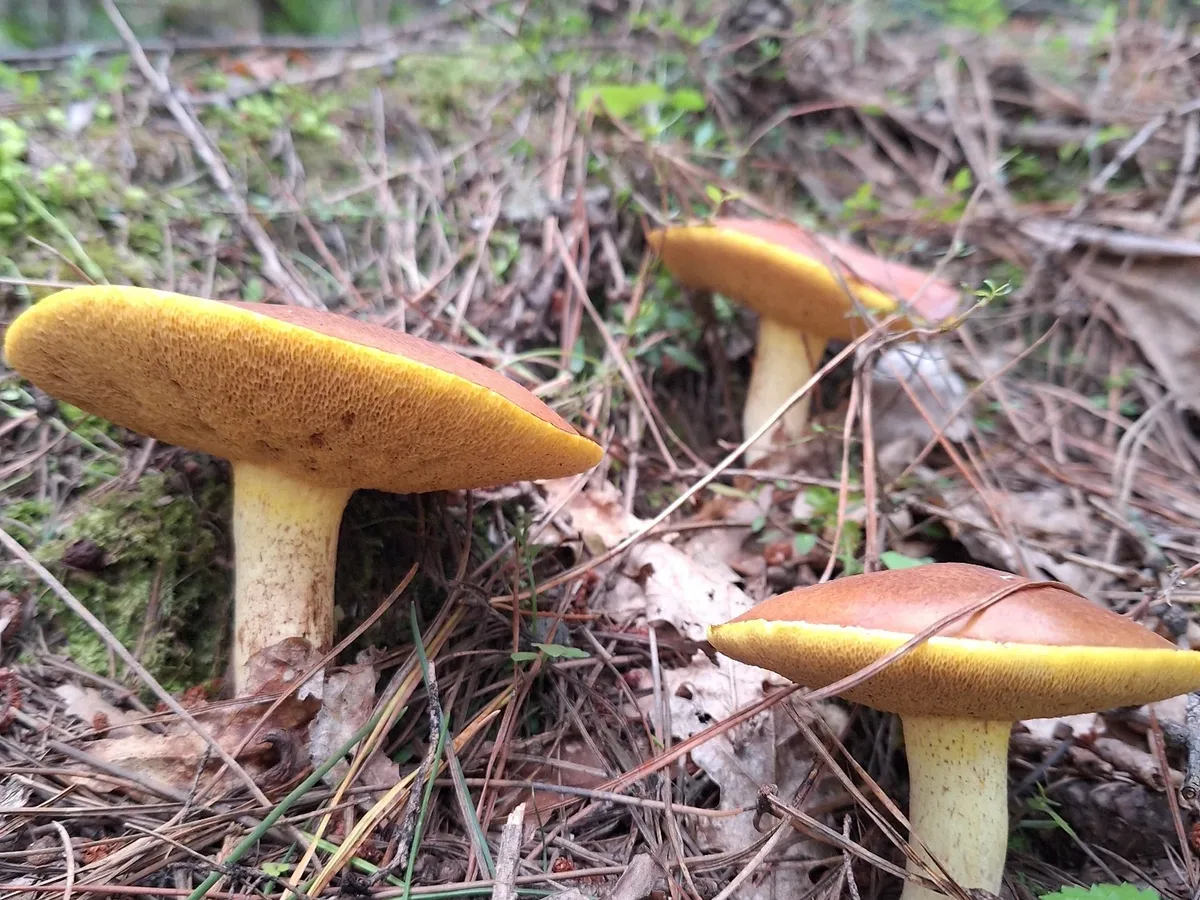
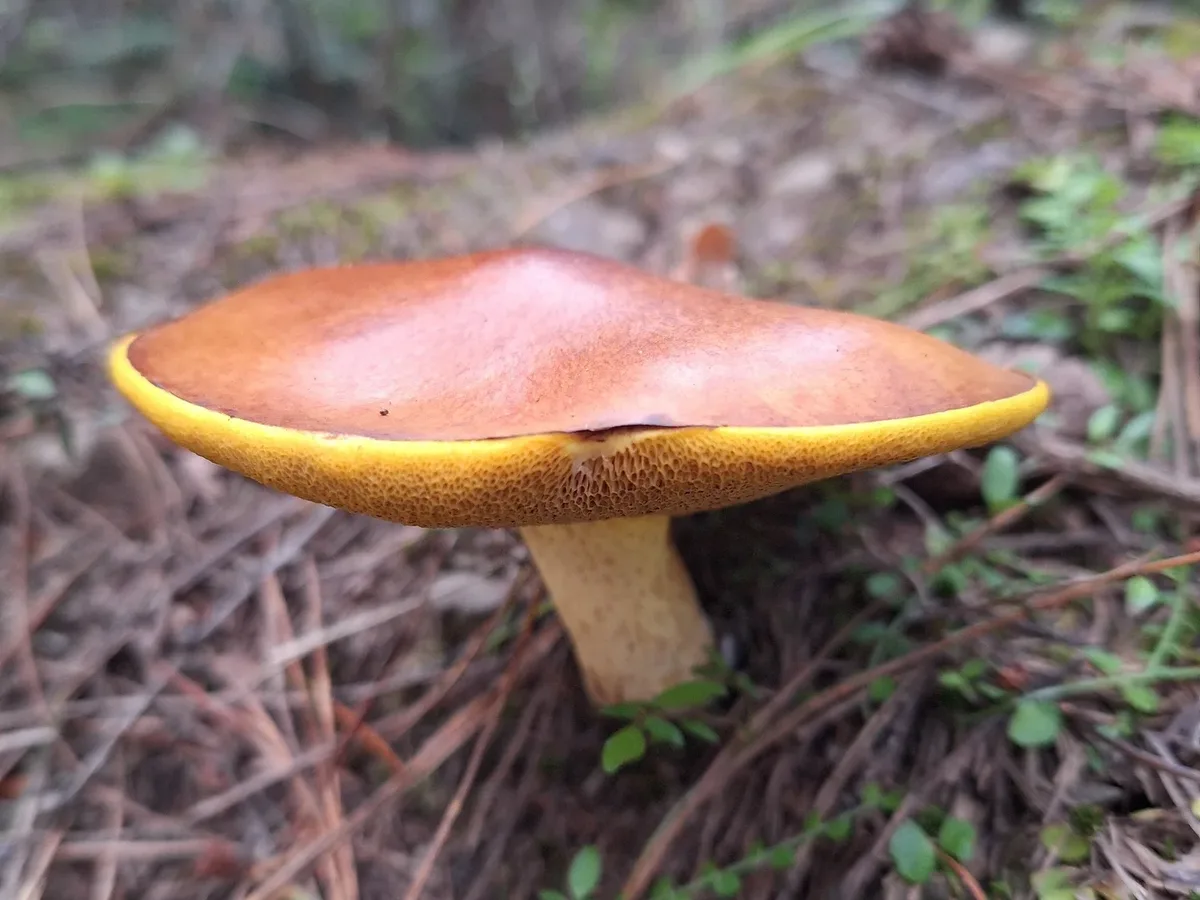
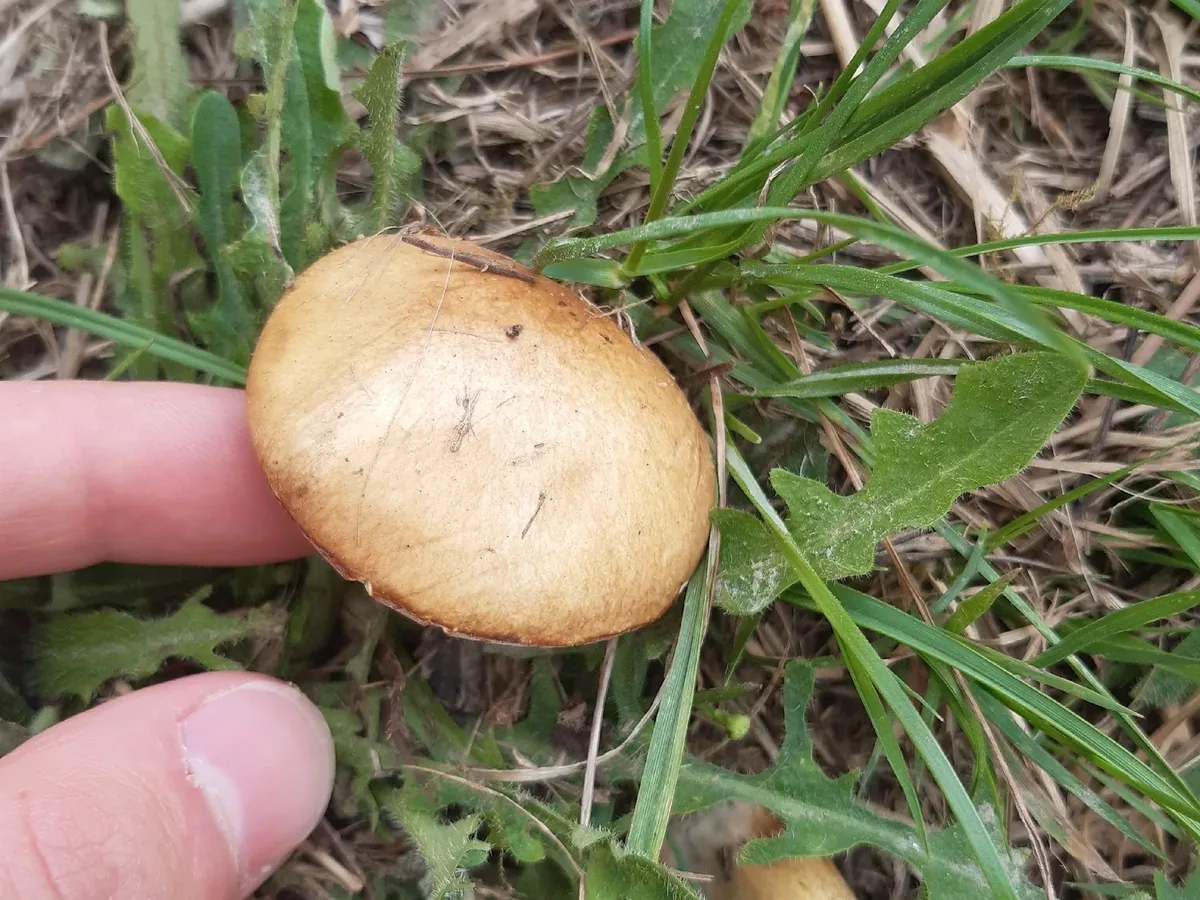
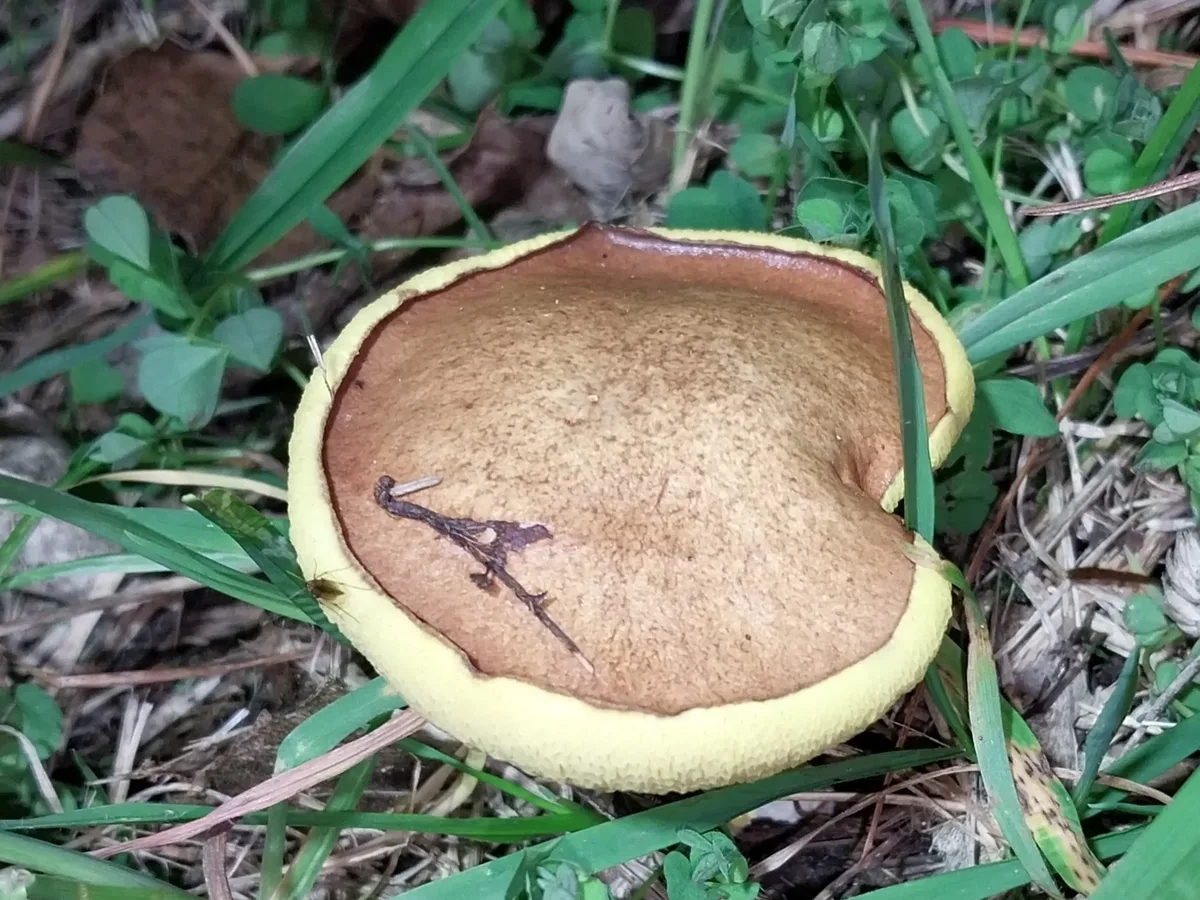
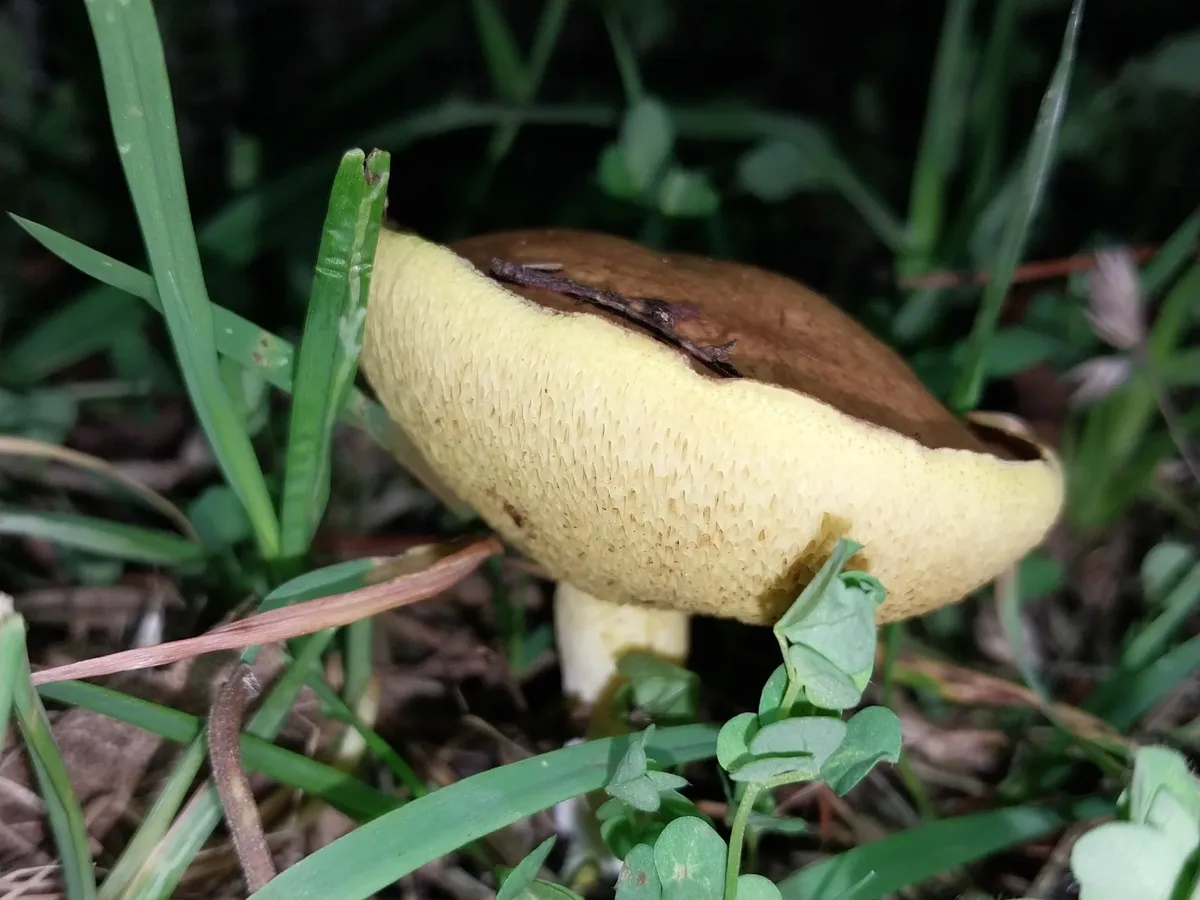
The cap (4-10 cm, occasionally larger) is convex then flattening, with a smooth skin that is distinctly slimy and glutinous in wet weather and becomes shiny when dry. Its colour ranges from cinnamon- and ochre-brown to a warm yellowish- or orange-brown, usually fading toward a paler margin.
Gills / Pores
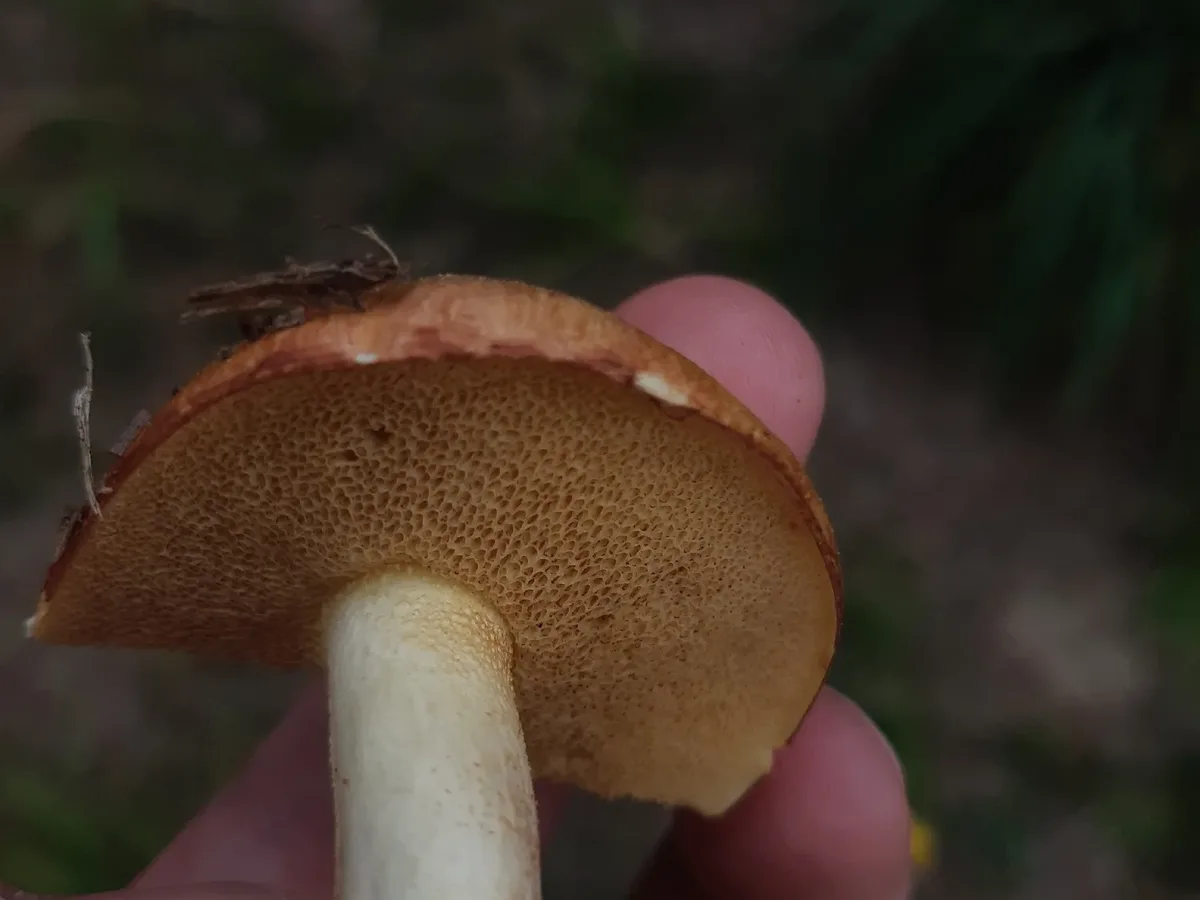
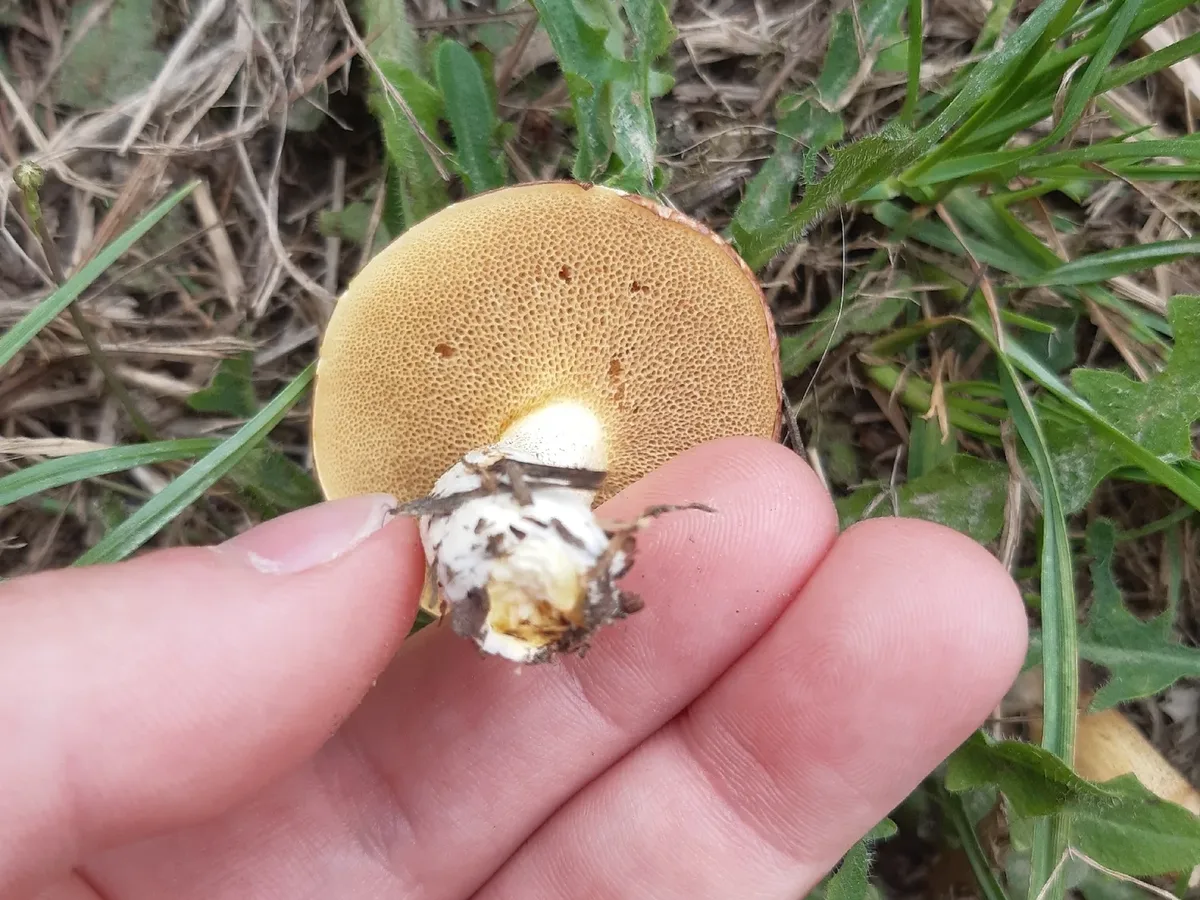
Turn it over and you find not gills but a sponge-like layer of fine, pale lemon-yellow pores that dull to ochre with age.
The single most distinctive feature is the way young specimens 'weep': milky-white to pale amber droplets ooze from the pores and the cut tube ends, drying to little brownish dots.
Stem
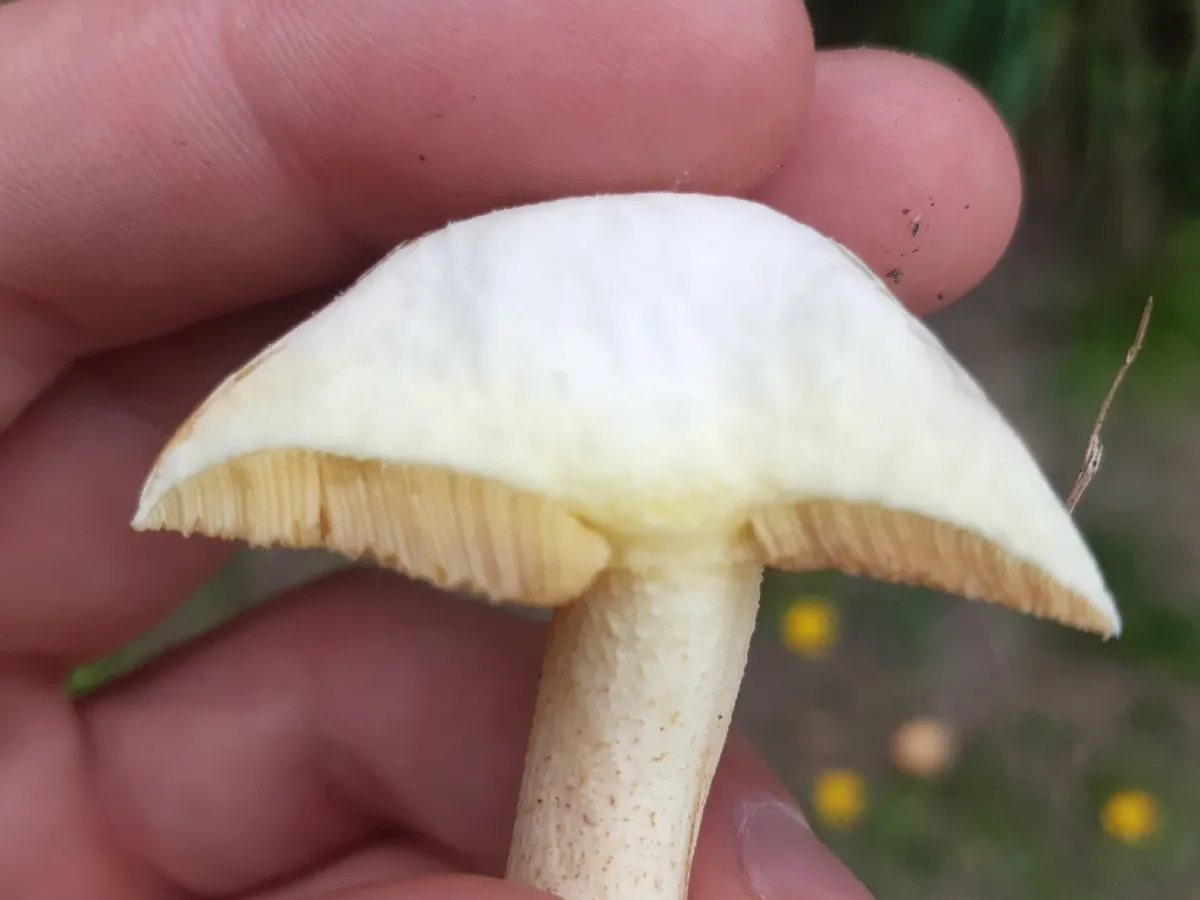
The stem is 3-8 cm tall, pale yellow to whitish, equal or slightly tapering, and crucially has NO RING and no veil. Its upper third is peppered with small reddish-brown granular 'glandular dots' that darken as the mushroom ages.
Flesh
The flesh is soft and pale yellow and, importantly, does NOT stain blue when cut. The basal mycelium is white. Spore print pale ochre-brown.
Where & when it grows
Habitat
Look for it on the ground beneath pines and nowhere else: in pine plantations, mixed conifer woods, dune and heath pine, parkland, shelterbelts and along sandy woodland rides.
It is a ground-dwelling mycorrhizal partner of pine roots and so always grows in soil near living pines, never on wood.
It particularly likes well-drained, sandy or limey ground and is abundant in young and middle-aged pine stands.
Often gregarious, appearing in scattered troops, arcs or large gatherings, which makes it an easy mushroom to collect in quantity.
When
An early and long-seasoned bolete.
In cool-temperate Europe and North America it begins in summer and runs through to late autumn, with the heaviest flushes in September and October.
In Mediterranean and other warm climates it can fruit from late spring right through into winter whenever warm weather coincides with rain.
It is frequently among the very first boletes to appear after the first substantial summer or early-autumn rains.
How it grows
Forms an ectomycorrhizal symbiosis exclusively with pines (chiefly two- and three-needle species such as Scots, black, maritime, stone and Aleppo pines), exchanging soil nutrients and water for sugars from the tree.
Fruit bodies push up rapidly a few days to a couple of weeks after warm rain.
It is a prolific fruiter and one of the most common Suillus species across its range, often producing repeated flushes through a good season.
Fruiting conditions
Fruits a few days to two weeks after warm soaking rain in pine stands; tolerant of a wide temperature range, allowing both warm-summer and cool-autumn flushes, and in mild climates can fruit through winter.
Look-alikes
Several other pine-associated Suillus are similar and, helpfully, none of the realistic confusions are dangerous.
- The Slippery Jack (Suillus luteus) is the closest, but it has a prominent membranous ring on the stem (a partial veil), whereas S. granulatus never has a ring or veil and instead weeps milky droplets when young.
- Suillus collinitus is very close and ringless too, but its cap is darker with fine radiating brown fibrils and, decisively, its basal mycelium is PINK rather than white.
- Suillus bellinii and other Mediterranean pine boletes are also ringless relatives, told apart by colour and pore details.
- Larch boletes (Suillus grevillei, S. viscidus) grow only under larch, not pine.
The good news for safety is that all true Suillus are pored, ringless-or-ringed slimy boletes of conifers and none are toxic - the genus contains no deadly members.
There is no realistic risk of confusing this soft, slimy, pine-only, non-blueing bolete with any deadly gilled mushroom such as a Death Cap or Amanita. Those have papery dry gills (not a spongy pore layer), a ring AND a sac-like volva at the base, white spores, and grow with broadleaf or mixed trees - so always confirm a spongy pore layer underneath before eating.
Ringless Mediterranean pine bolete with a paler whitish to pinkish-buff cap and stouter stem; told apart by colour and habit. Harmless if confused.
Bright golden-orange to chestnut, has a ring, and grows ONLY under larch, never pine; habitat and ring separate it. Harmless if confused.
A closely related Mediterranean ringless pine bolete distinguished by microscopic and subtle colour features; not dangerous if confused as all Suillus are non-toxic.
Has a conspicuous membranous ring on the stem (a partial veil) and does not weep milky droplets; S. granulatus is always ringless and the young pores ooze milk-like drops. Edible if confused.
Also ringless, but its cap is darker with fine radiating brown fibrils and its basal mycelium is PINK; S. granulatus has a more uniform cap and WHITE basal mycelium. Edible if confused.
In the kitchen
Picking & cleaning
Cut or gently twist the whole fruit body from the soil and check that the stem has glandular dots but no ring, and that young caps weep droplets.
Young, firm specimens are far better than old waterlogged ones, which become soft, slimy and maggoty very quickly.
Because the cap skin is slimy and the tube layer turns to mush in the pan, most foragers peel off the gluey skin and scrape away the spongy pore layer in the field or kitchen, keeping only the firm cap flesh.
Carry in an open basket; the slime makes it stick to and wet other mushrooms. It does not keep long fresh - process within a day.
Cooking
A solid everyday edible rather than a gourmet highlight.
Before cooking, peel off the slimy cap skin and scrape away the spongy pore layer - both turn unpleasant in the pan - leaving the pale, firm flesh.
That flesh fries, stews and soups well, and it takes readily to drying: thin slices dried at low heat concentrate the mild, nutty flavour nicely and are a practical way to preserve a big haul.
Always cook thoroughly; never eat it raw.
The texture can soften quickly with heat, so many cooks pair it with firmer mushrooms in mixed-species dishes rather than serving it as a solo centrepiece. It contributes good body to sauces and forest-mushroom ragùs without dominating.
Good to know
There are no deadly lookalikes; the genus Suillus contains no dangerous species, so a correctly identified weeping bolete is safe to eat.
The chief caveat is individual tolerance. Suillus species, including this one, give some people mild gastric upset (loose stools, cramps), an effect linked partly to the slimy cap skin and the soft tube layer.
For this reason it is standard practice to remove the cap cuticle and the pore layer and to eat only a small amount the first time (a tolerance test). Cook thoroughly and never eat it raw.
Always discard old, soft or insect-ridden specimens, which spoil rapidly and are a more common cause of stomach trouble than the fresh mushroom itself.
As with any wild mushroom, never eat a collection unless every specimen has been positively identified. The safe diagnostic combination here is:
- spongy yellow pore layer (not gills)
- ringless stem with reddish granular dots
- milky weeping droplets on young pores
- white basal mycelium
- flesh that does not blue
- growth on soil under pine
A reference guide - never an edibility guarantee. When in doubt, leave it out.