Jersey cow bolete
Suillus flavidussyn. Ixocomus flavidus, Boletus flavidus
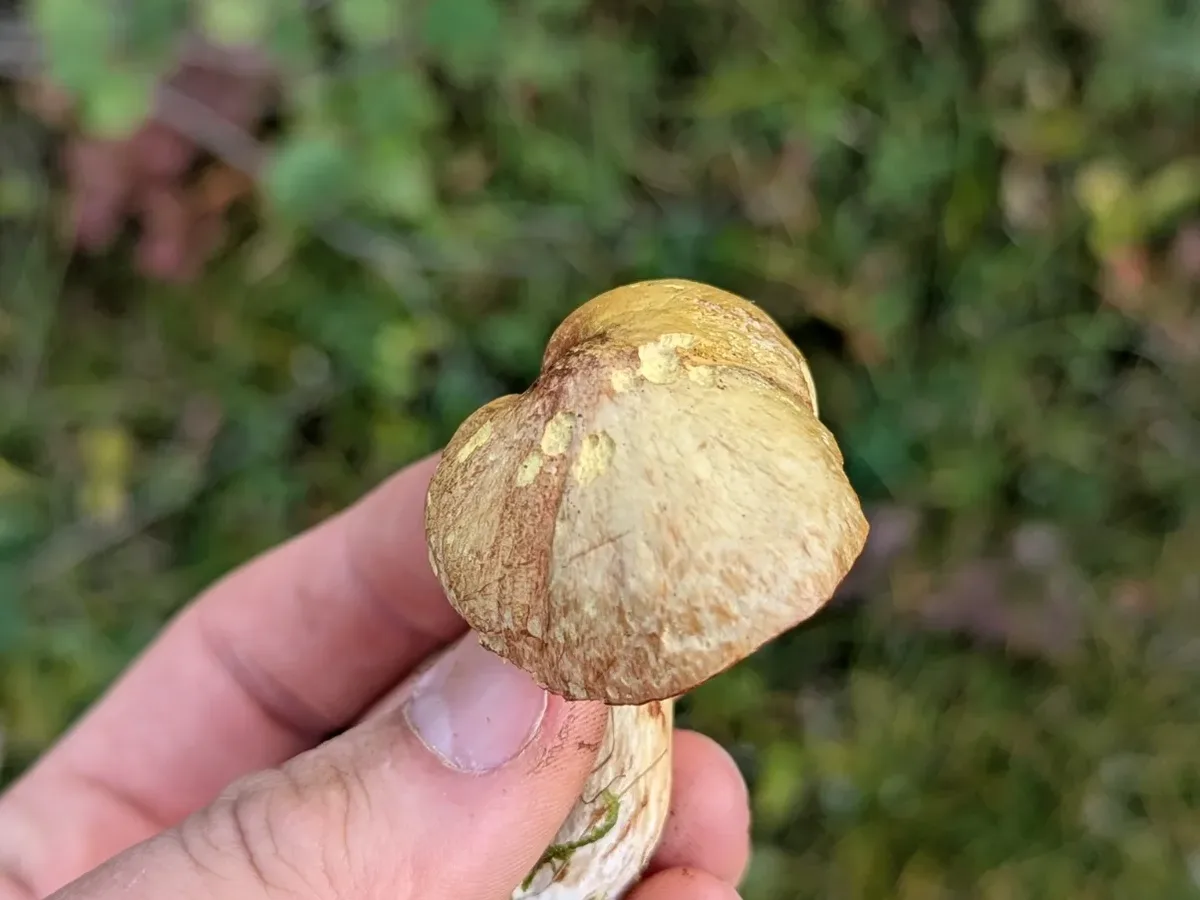 © Ole Christian Hagestad (CC BY)
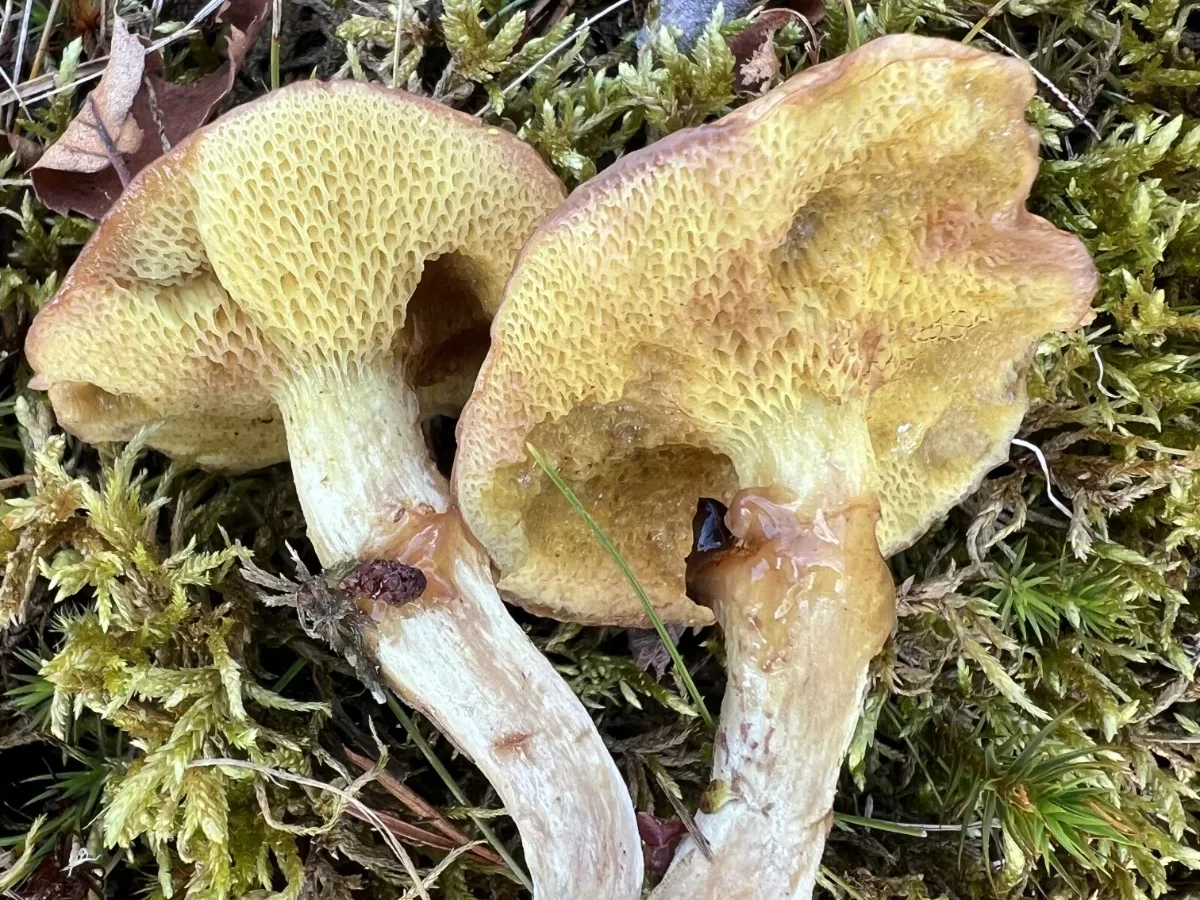 © Ingunn Moslet (CC BY)
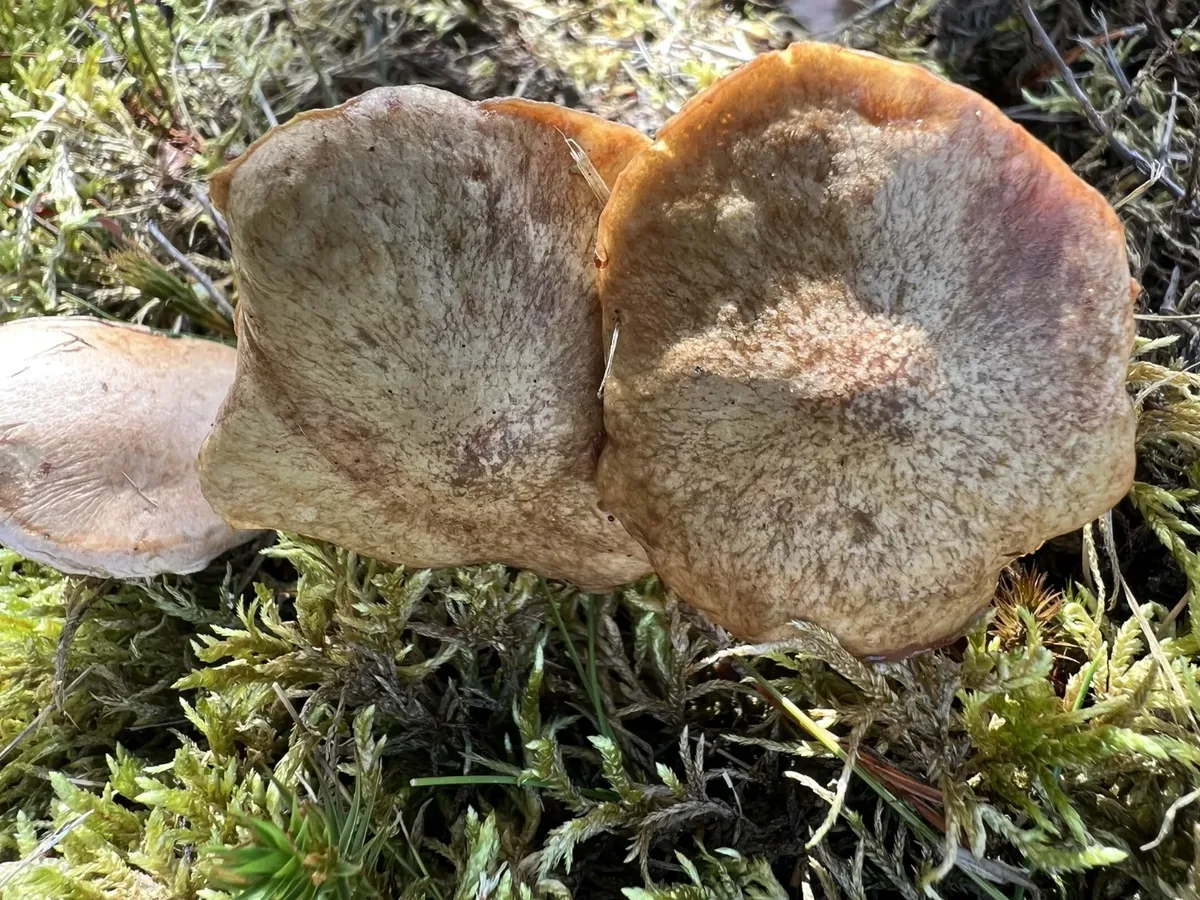 © Ingunn Moslet (CC BY)
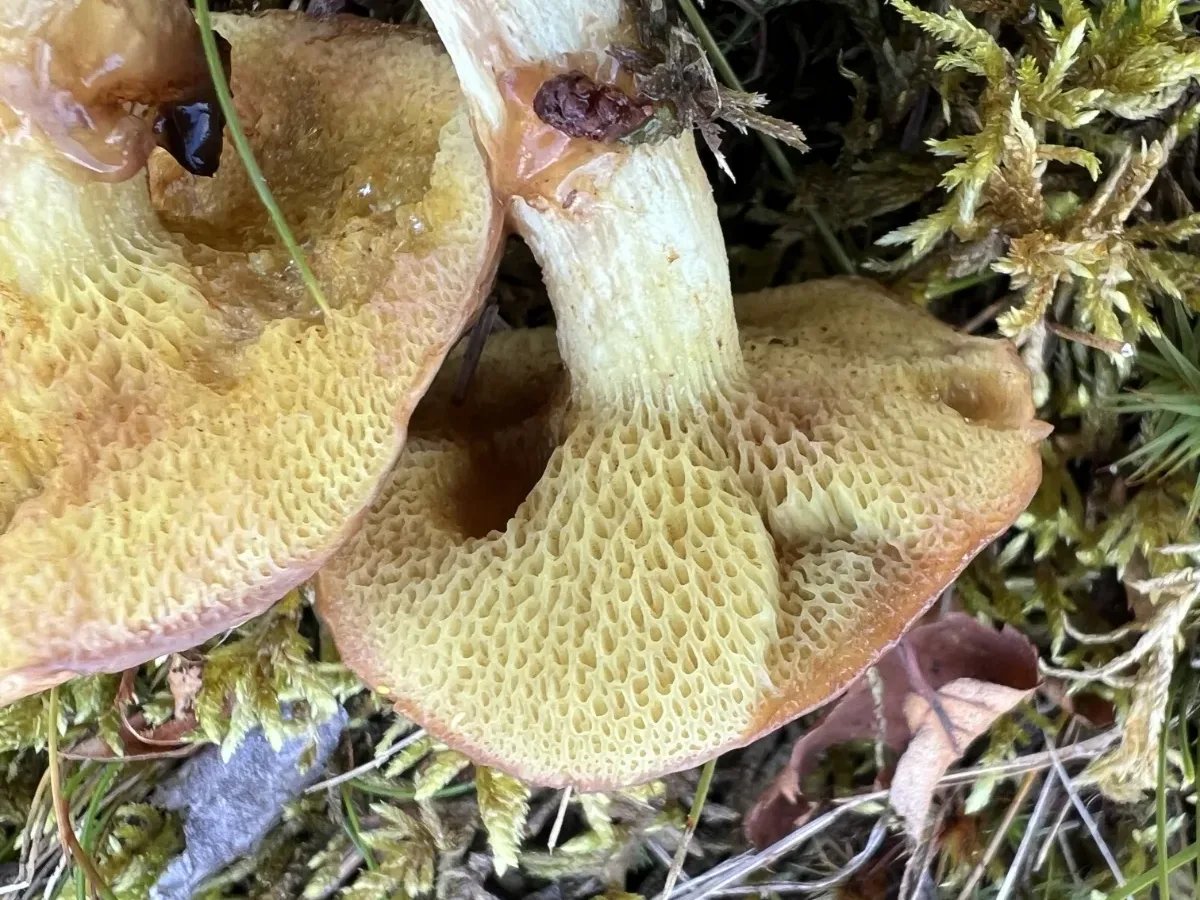 © Ingunn Moslet (CC BY)
 © Cecilie Ness (CC BY)
 © Cecilie Ness (CC BY)
 © Siv Moen (CC BY)
 © Erik Kagge (CC BY)
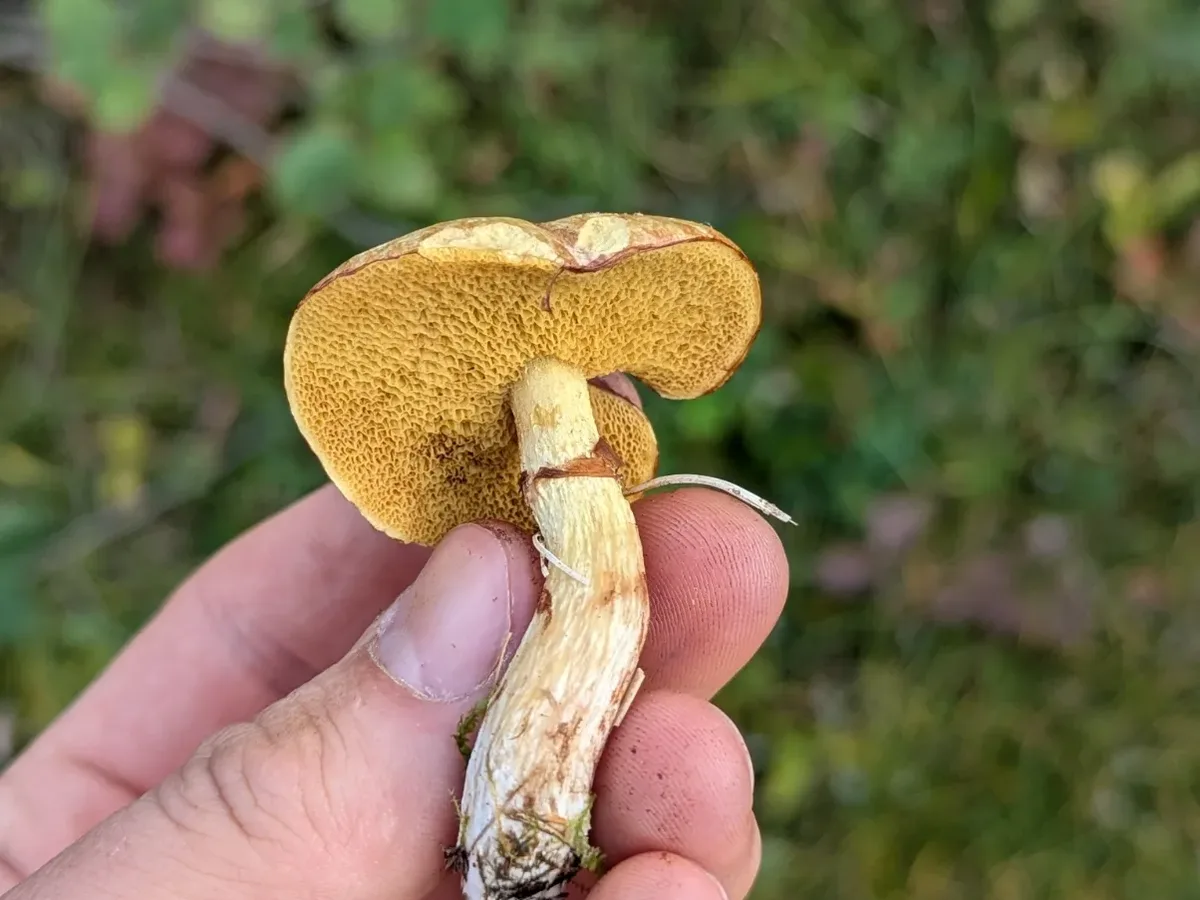 © Ole Christian Hagestad (CC BY)© Ole Christian Hagestad (CC BY)© Ingunn Moslet (CC BY)
Good to eat, once you have identified it with certainty and cooked it through.
How to recognise it
Cap
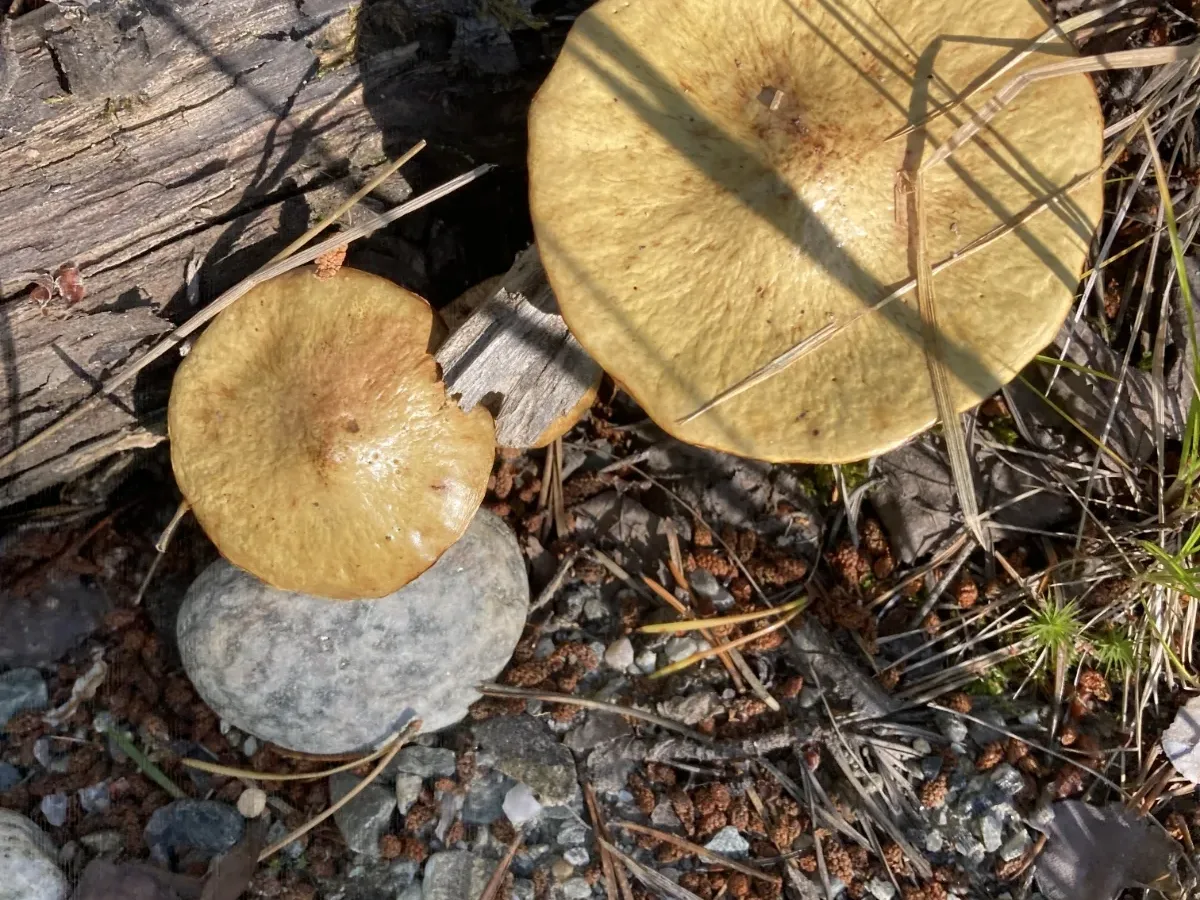
The cap (3-8 cm) starts hemispherical then flattens to broadly umbonate - and its most striking quality is its sliminess.
In wet weather the cap is frankly slimy to the touch; in sun it dries to a glassy, almost lacquered sheen.
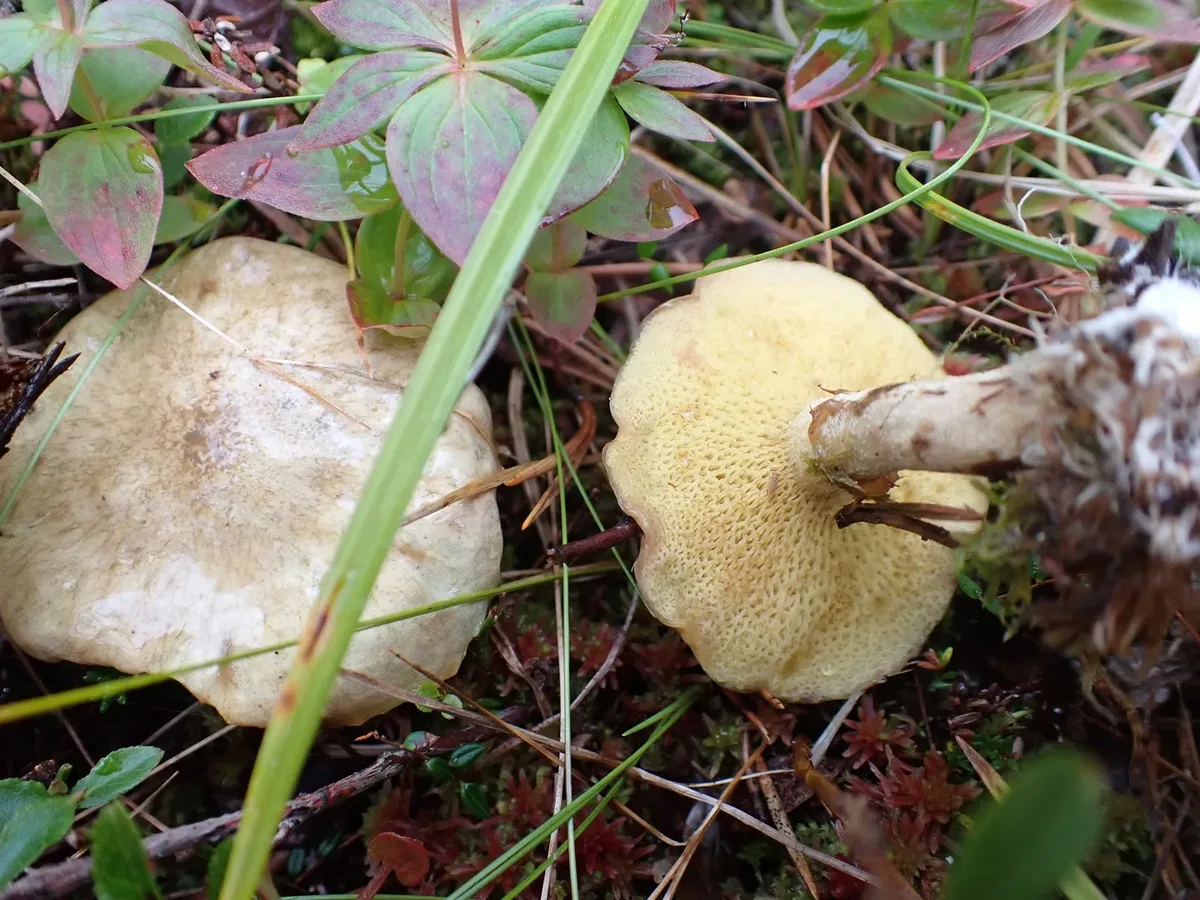
The colour is pale yellow to honey-yellow or straw-ochre, occasionally with faint olivaceous overtones.
Gills / Pores
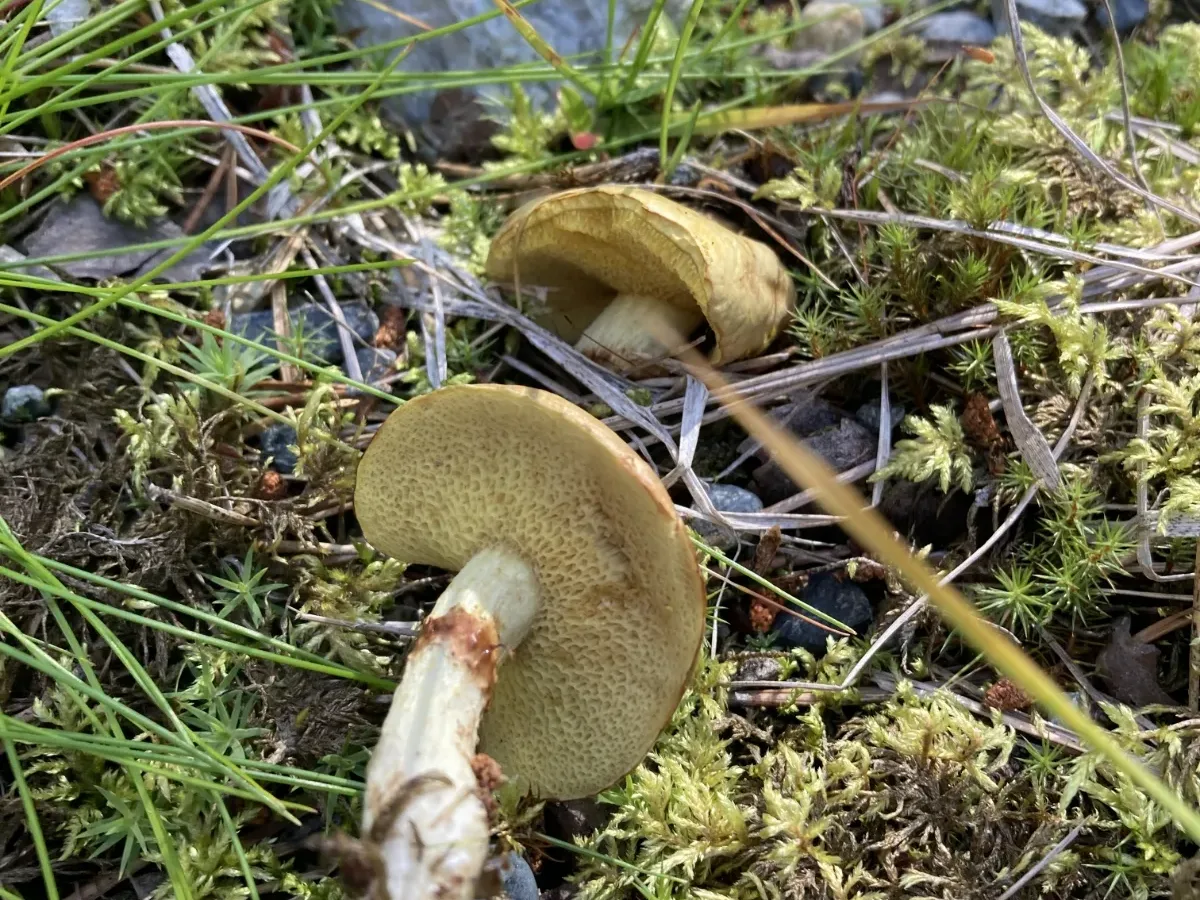
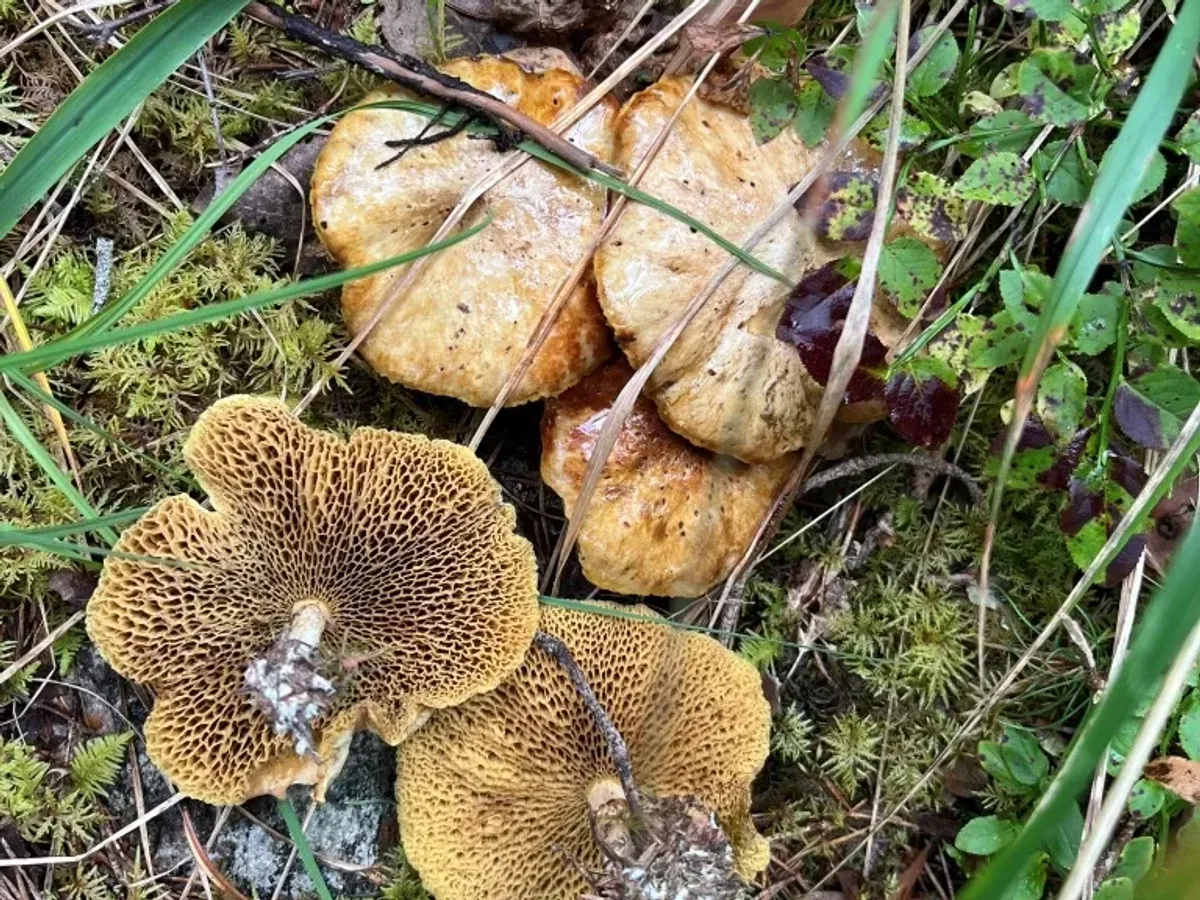
Turn the cap over and you'll find a yellow pore surface aging to ochre-yellow, the pores angular rather than round and - importantly - not bluing when cut or bruised, which rules out the small handful of genuinely dangerous blue-bluing boletes.
Stem
The stem is slender (0.5-1.5 cm) and elongated (4-8 cm), lemon-yellow, and carries a conspicuous persistent ring roughly in the middle. Below the ring, fine glandular dots texture the surface; above it, the stem is smooth.
Flesh
Flesh is pale yellowish and soft, remaining unchanged when cut.
Where & when it grows
Habitat
Suillus flavidus has carved out a niche that almost no other bolete occupies: sphagnum bog with Scots pine.
It grows directly among sphagnum hummocks in open or semi-open bog pine forest, often in the soggiest patches where other fungi rarely venture.
This tight habitat preference is itself a useful safety filter - a ringed, slimy, yellow bolete pushing up from sphagnum moss in a pine bog is essentially self-identifying.
It is ectomycorrhizal with Scots pine (Pinus sylvestris) and does not fruit under other tree species.
When
Fruiting runs from late July through October across the Nordic region, peaking in August and September.
It tends to appear after significant summer or early-autumn rainfall. The sphagnum bog naturally retains moisture well, so it is somewhat less dependent on sharp rainfall pulses than boletes of drier forest soils.
In cool, wet years fruiting bodies can persist well into October.
How it grows
Fruits gregariously, typically in loose clusters of 3-10 fruiting bodies spread across sphagnum hummocks.
The consistently moist bog environment means fruiting can be more drawn-out and less pulse-driven than in well-drained forest. Warm soil (above around 8 °C) is still needed to trigger the flush.
The mycelium lives on in its bog-pine partnership year after year; the fruiting bodies are just the brief, visible signal of a much longer underground relationship.
Fruiting conditions
Bog habitat retains moisture well; fruiting is triggered by summer warmth combined with at least moderate recent rainfall. Flush lag is typical for boreal boletes. Lower soil-temperature ceiling than forest boletes reflects the cooler, waterlogged bog microclimate.
Look-alikes
The bog habitat and ringed stem are the twin keys that narrow the field considerably.
- Suillus granulatus (weeping bolete) also has a slimy yellow cap and grows with pine, but lacks a ring and grows in drier pine forest rather than sphagnum bogs.
- Suillus bovinus (bovine bolete) is smaller, has cinnamon-buff pores, and also lacks a ring.
- Suillus luteus (slippery jack) is the most morphologically similar - it has a slimy cap and a ring - but its cap is dark brown to chocolate-brown (not yellow), and it grows in drier pine forest on mineral soil.
- Suillus grevillei (larch bolete) has a yellow-orange slimy cap and ring but is strictly associated with larch trees.
None of the realistic confusions are dangerous; all Suillus species encountered in Nordic bog pine forest are edible or at worst mildly gastro-irritant.
The only truly dangerous boletes in Europe (Rubroboletus) have vivid red pores and red stem base, completely absent in Suillus flavidus.
Smaller and flatter, cinnamon-buff pores, no ring, drier habitat; edible.
Very similar yellow cap and ring, but obligately associated with larch (Larix), not pine; cap often more orange-yellow; edible.
Dark chocolate-brown to purple-brown cap (not yellow), ring present but grows in drier mineral-soil pine forest rather than sphagnum bogs; edible.
Slimy yellow-brown cap but no ring on stem; grows in drier pine and spruce forest; edible.
In the kitchen
Picking & cleaning
The slimy cap and debris-catching ring call for a little care in handling. Peeling the slimy cap cuticle - easily done in the field - improves both texture and handling.
The flesh is soft and does not travel as well as firmer boletes, so pick only fresh, firm specimens and get them home and processed the same day.
Trim the base of the stem before packing.
Cooking
Not a gourmet prize, but a perfectly decent contributor to mixed mushroom dishes.
Peel the slimy cap cuticle first, then slice and sauté in butter over high heat to cook off the extra moisture before the flesh turns waterlogged. It works well in soups, stews, omelettes, and mushroom sauces.
Drying does it real favours - slice thinly and dry at 40-50 °C; the flavour concentrates and the texture firms up nicely. Dried slices can also be ground into mushroom powder for seasoning.
Good to know
No toxins are recorded for Suillus flavidus.
Like all slimy boletes, removing the slimy cap skin is advisable - the mucilaginous layer can cause mild digestive discomfort in sensitive individuals if consumed in quantity. It is safe to eat in normal food portions.
The mediocre flavour and soft texture mean it is best used in mixed preparations rather than as a star ingredient.
A reference guide - never an edibility guarantee. When in doubt, leave it out.