Fibrillose slippery jack
Suillus collinitussyn. Boletus collinitus Fr., Ixocomus collinitus (Fr.) Quél., Rostkovites collinitus (Fr.) P.Karst., Suillus fluryi Huijsman
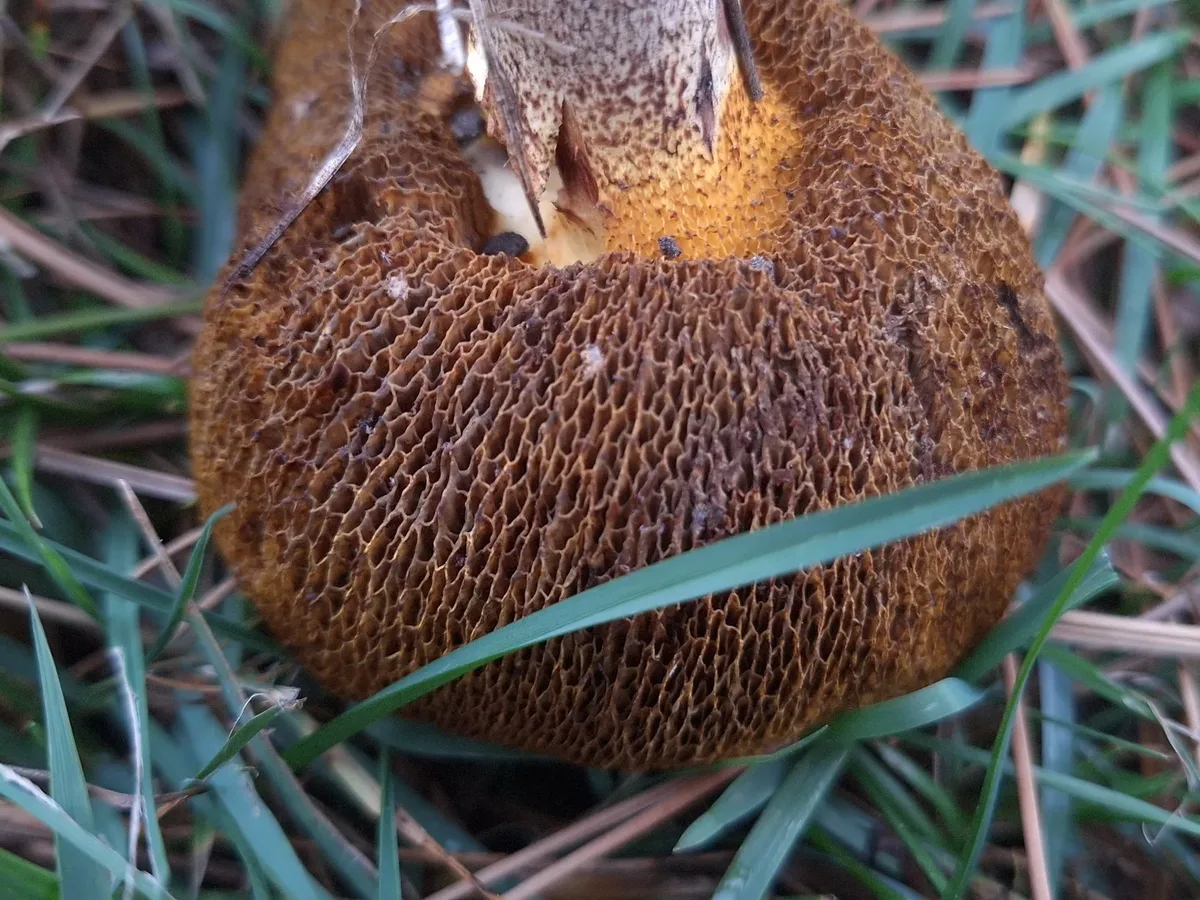 © yellowplant (CC BY)
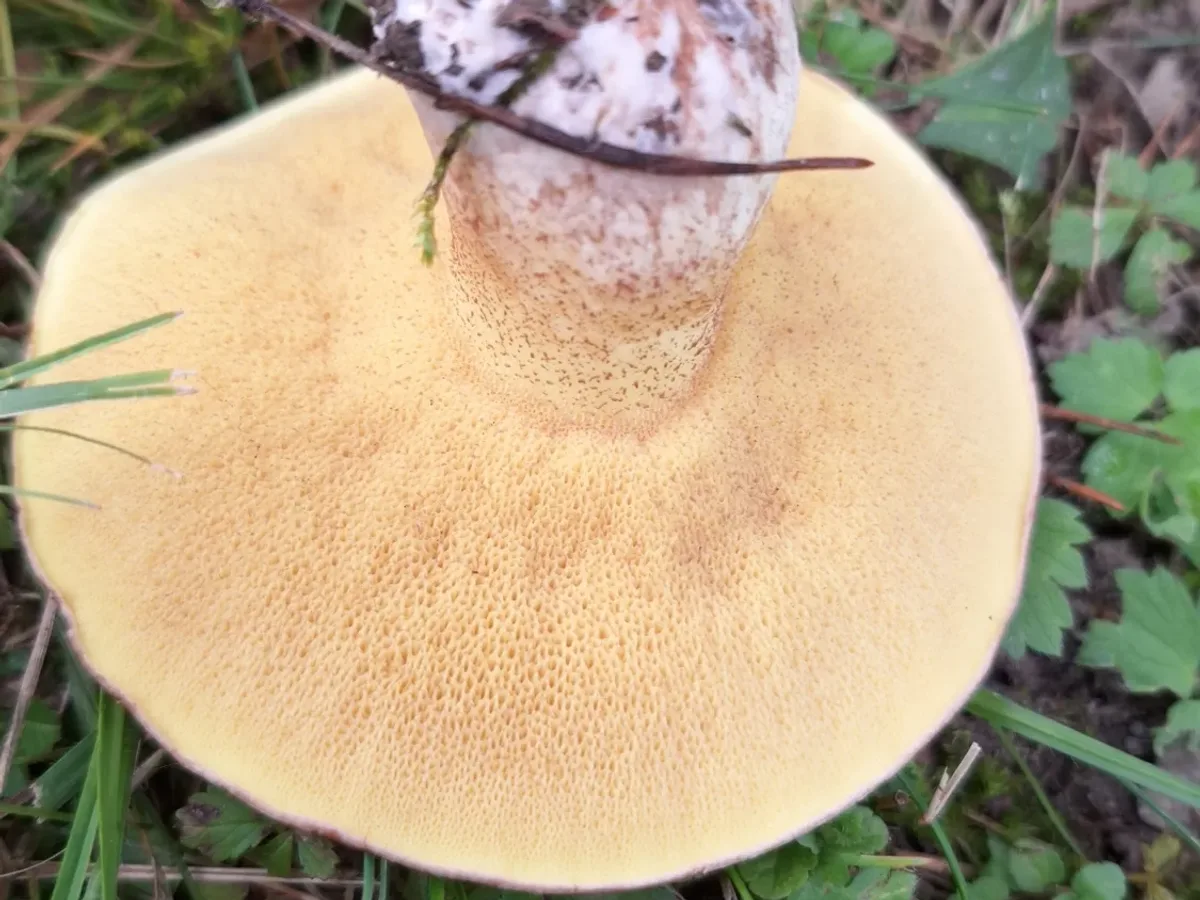 © Gergely Nigg (CC BY)
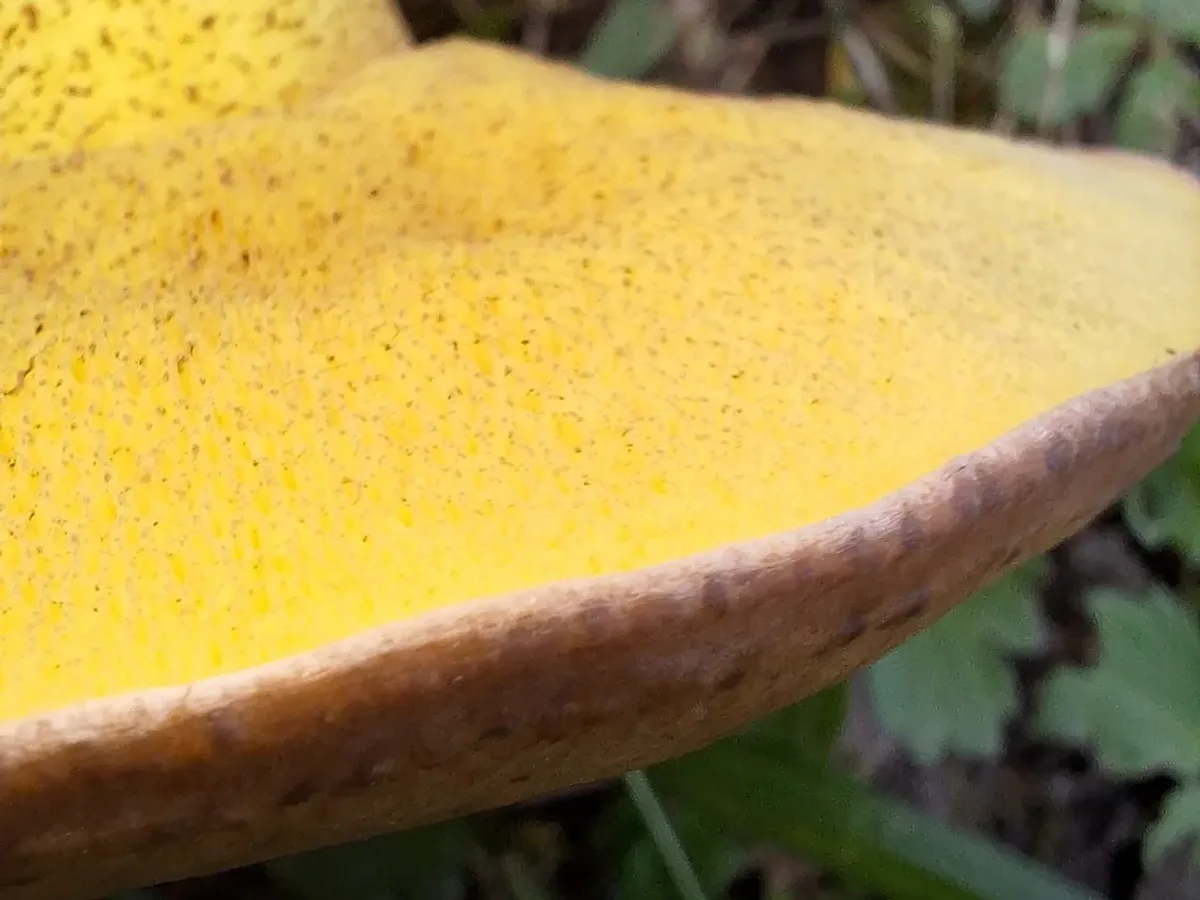 © Gergely Nigg (CC BY)
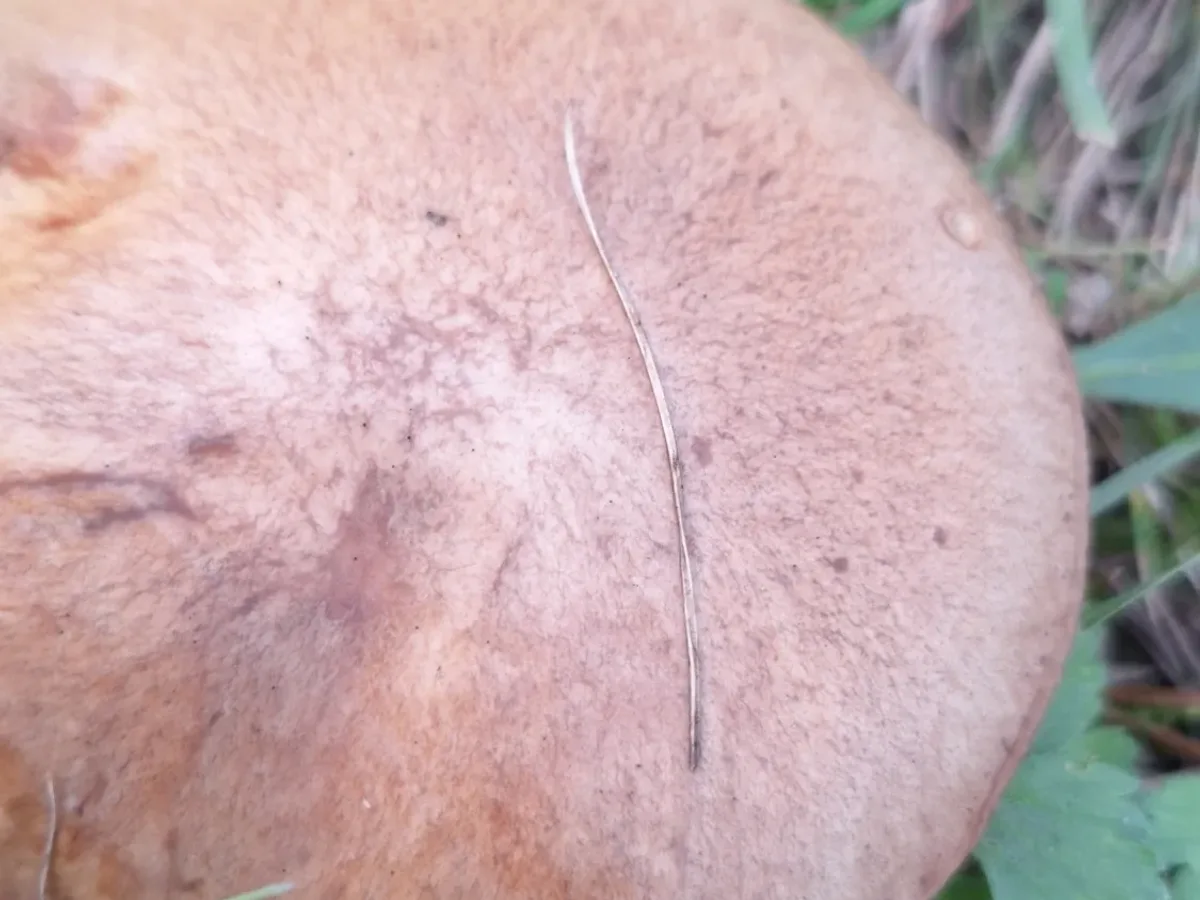 © Gergely Nigg (CC BY)
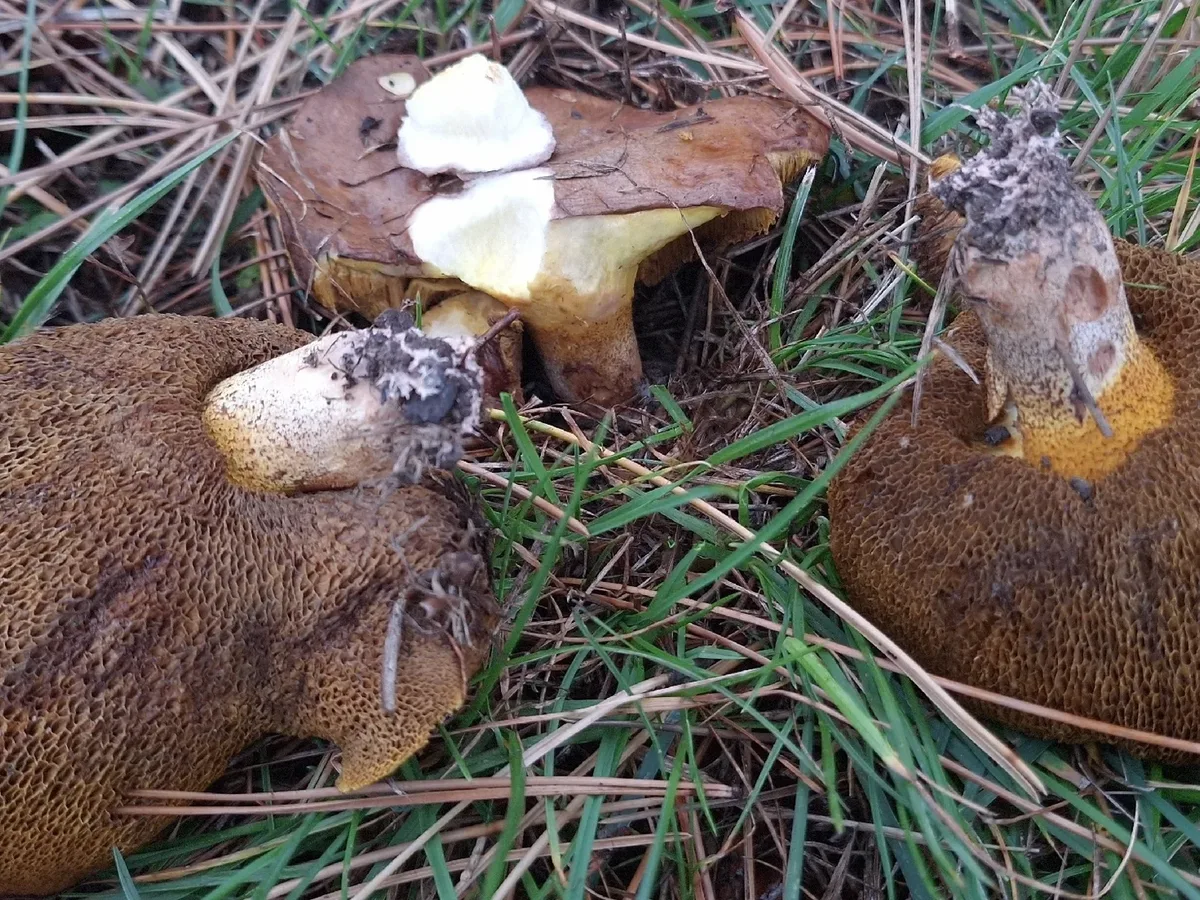 © yellowplant (CC BY)
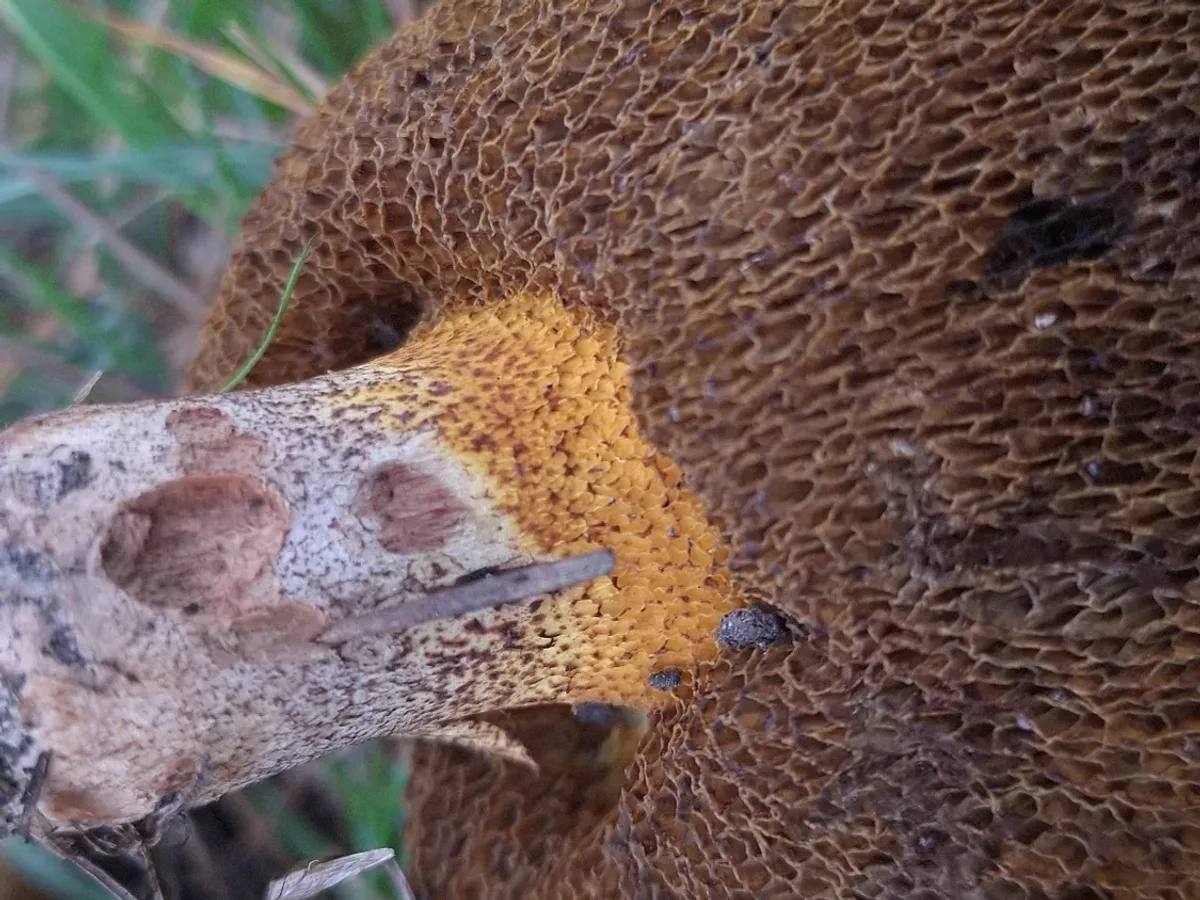 © yellowplant (CC BY)
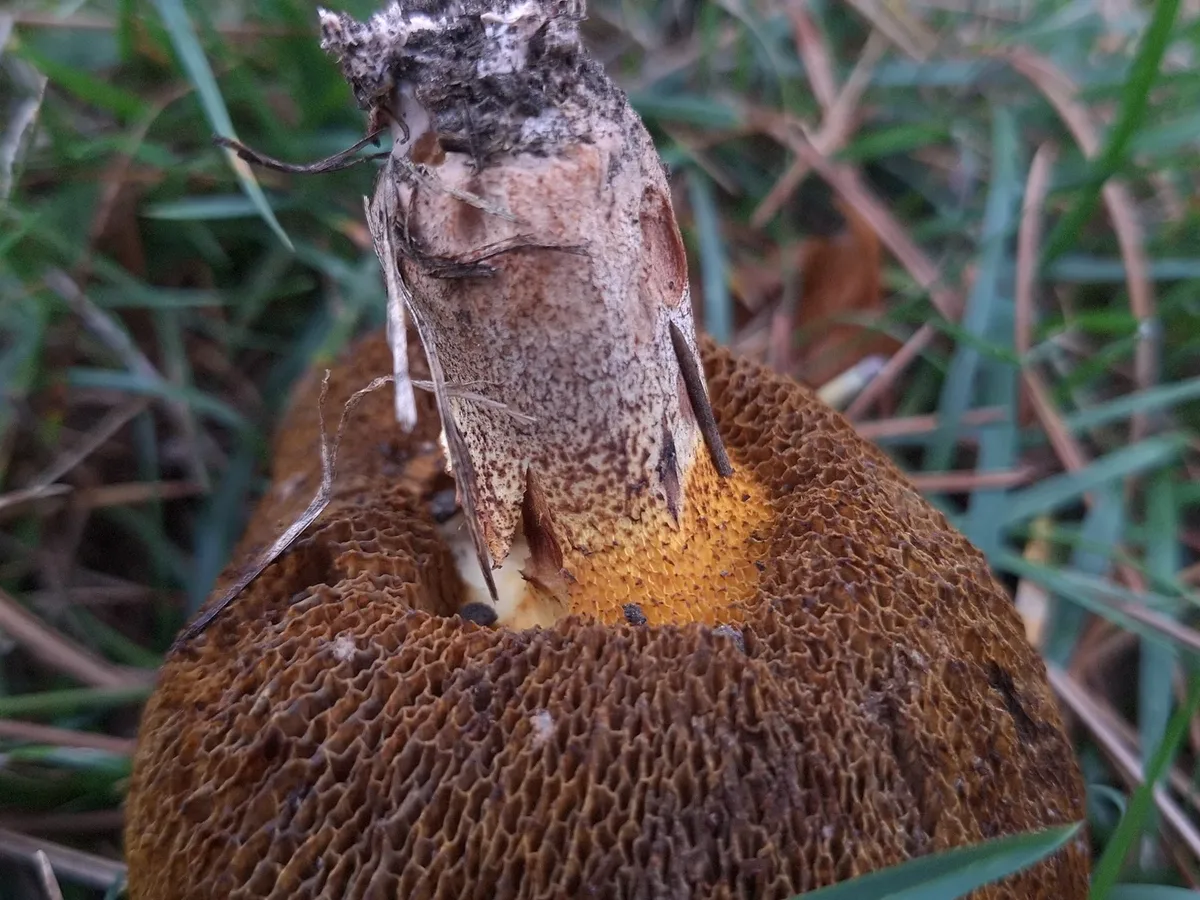 © yellowplant (CC BY)© yellowplant (CC BY)© Gergely Nigg (CC BY)
Good to eat, once you have identified it with certainty and cooked it through.
How to recognise it
Suillus collinitus is a medium to large, slimy-capped bolete of Mediterranean pine woodland. It sits in the same complex as the weeping bolete (Suillus granulatus) and shares many of its features - but two details set it apart immediately.
Cap
First, look at the cap surface: it is overlaid with fine, radially aligned, dark brown fibres or streaks arranged like the spokes of a wheel over the slippery brown background, giving it a streaked, slightly shaggy look even through the gluten.
The cap (5-12 cm) is convex in youth, flattening to a shallow plateau with age, and coated in a thick viscid slime that makes it greasy to the touch in damp weather.
Stem
Second, and most decisive: dig gently around the stem base and look at the mycelium - it is distinctly pink to rose-lilac. This single character immediately eliminates S. granulatus (white mycelium) and is so reliable it should be the first thing checked when the two species overlap.
The ringless stem carries the characteristic glandular reddish-brown dots on its upper surface.
Gills / Pores
The underside shows the typical Suillus pore layer: fine, angular pale-yellow pores that may weep milky droplets in young, vigorous fruitings.
Flesh
Flesh is pale yellow, firm in youth, and does not stain blue when cut - ruling out any confusion with toxic bluing boletes.
Where & when it grows
Habitat
Like all true Suillus, this species will never be found away from its host tree. It is overwhelmingly a pine associate and, within the pines, it gravitates toward the drought-tolerant, warmth-loving Mediterranean species:
- Aleppo pine, stone pine, and maritime pine are the primary hosts around the Mediterranean basin.
- Scots pine and black pine host it where the range extends north.
Look for it in the dry, often rocky or sandy floors of pine garrigue and coastal pine woodland, around the bases of trees in open stands, and in pine plantations throughout southern Europe and North Africa.
The mushrooms often appear in loose rings or arcs that trace the outer edge of the underground mycorrhizal mat, returning season after season to productive spots. In the Mediterranean climate it is frequently the most abundant Suillus in its range.
When
The Mediterranean autumn flush is the main event. After the summer drought breaks - typically with the first significant rains in September or October - Suillus collinitus can fruit prolifically through November and December, and in mild, wet winters continues into January and February.
This extended winter season is a major ecological advantage over its more temperate cousins and makes it a reliable late-season find for Mediterranean foragers.
At higher elevations or in the cooler northern parts of the range, the season compresses to a more conventional September-November window. A late-summer flush (August) may occur if early rains break the summer heat.
How it grows
Suillus collinitus forms an obligate ectomycorrhizal partnership with pines, exchanging mineral nutrients and water absorbed by its hyphae for sugars produced by the tree.
The mycelium is perennial: unseen threads persist through summer drought and through winter cold, threading the soil around root tips for years - possibly decades - before conditions bring another flush of fruit bodies to the surface.
When autumn rain arrives and soil temperatures ease, mushrooms push up rapidly through the needle litter within days of a good soaking. The pace of development quickens with warmer soil.
It is a gregarious species and typically appears in groups rather than singly, so a productive site can yield generous quantities.
Fruiting conditions
Mediterranean climate fruiting depends on the arrival of autumn rains after summer drought. Once 20 mm or more of rain falls over a 14-day period and soil temperatures drop below about 20 °C, fruitings can be rapid (4-7 days). The extended Mediterranean season allows multiple flushes from October through February in mild years. In cooler parts of the range, optimal soil temperatures of 10-15 °C coincide with the September-November window.
Look-alikes
Several closely related Suillus are realistic confusions, but reassuringly none are dangerous - all Suillus species are non-toxic.
- Suillus granulatus (weeping bolete) - the most important separation. Nearly identical, but has a more uniformly coloured cap (without the fine fibrillose streaking), white basal mycelium (not pink), and typically weeps abundant milky droplets from its pores. Both are edible and safe if confused; the distinction matters mainly for identification completeness.
- Suillus luteus (slippery jack) has a prominent membranous ring on the stem and a darker, purplish-brown ring colour; it also grows under pines but the ring is unmistakable once noticed.
- Suillus bellinii is another Mediterranean ringless pine bolete but has a paler, whitish to pinkish-buff cap lacking the dark fibrillose streaks.
- Suillus mediterraneensis and Suillus collinitus have historically been confused in Mediterranean literature; they are separated by microscopy and minor differences in host preference.
None of the realistic lookalikes are dangerous.
The key safety check - confirm:
- a spongy pore layer (not gills)
- no ring
- glandular dots on the upper stem
- pink basal mycelium
- no blue staining of the flesh
- growth on soil under pine
Another ringless Mediterranean pine bolete but paler - cap is whitish to pale pinkish-buff without dark fibrillose streaking; stem base is often reddish. Also grows under Mediterranean pines. Edible and harmless if confused.
Redundant entry provided for clarity: separated from S. collinitus by white (not pink) basal mycelium and uniform (not fibrillose) cap. Both safe to eat.
Real-world confusion with S. collinitus is implausible given the complete absence of shared morphological or ecological features. R. satanas is restricted to calcareous broadleaf woodland (oak, hornbeam, beech) and is never found under pine; it has a pale cream-white cap, blood-red pore mouths, a red-reticulated bulbous stem, and all flesh stains blue instantly when cut - none of which applies to S. collinitus (brown fibrillose cap, yellow pores, ringless stem with glandular dots, no bluing, pink basal mycelium under pine). R. satanas causes severe gastrointestinal toxicity (bolesatine) with risk of hospitalisation but is not classified as a fatally toxic species alongside amatoxin or orellanine fungi. As a genus-level check: any bolete showing red pore mouths or instant bluing of flesh is not a Suillus and should not be eaten.
S. luteus has a distinctive membranous ring on the stem (a partial veil remnant), which S. collinitus entirely lacks at all stages. The ring of S. luteus is purplish-brown on the underside. Also grows under pines but the ring makes identification straightforward. Edible if confused.
Most similar of all lookalikes; S. granulatus has a more uniformly coloured, less streaked cap surface and, crucially, WHITE basal mycelium. S. collinitus has PINK to rose mycelium and a distinctly fibrillose-streaked cap. Both are edible; confusion is harmless.
In the kitchen
Picking & cleaning
- Remove the whole fruit body by cutting cleanly at the base or gently twisting; check the mycelium at the base - it should be pink or rose-tinged.
- Take young, firm specimens; older individuals become waterlogged, very slimy, and rapidly infested with insect larvae (maggots spread quickly in warm Mediterranean weather).
- The thick glutinous cap skin is best removed before or during cleaning: grasp the edge of the cuticle and peel it back, as this slime is unpleasant in texture and can contribute to digestive upset.
- Most foragers also remove the spongy tube layer with a spoon, as it softens to mush when cooked.
- Carry in an open basket so the slime can breathe; avoid packing in plastic where it ferments quickly.
- Process within a day of collection.
Cooking
A useful and productive edible, if not in the top tier of flavour. The mild, pleasantly mushroomy flesh holds up well in cooked preparations.
Always peel the slimy cap cuticle and, optionally, scrape away the soft tube layer before cooking.
- Slice and sauté in butter with garlic for a simple preparation; the flesh absorbs the fat well and gains colour.
- It works excellently dried: slice thinly and dehydrate at 40-50 °C; dried slices can be stored for months and reconstituted in warm water for soups, risottos, sauces, and pasta dishes - drying concentrates the flavour noticeably.
- Suitable for pickling in lightly acidified brine, a preservation method popular in Mediterranean and Eastern European traditions.
Pairs well with tomatoes, olive oil, garlic, rosemary, and other Mediterranean aromatics that complement its growing habitat.
Because the texture is somewhat soft, it blends best into dishes where it cooks with liquid (soups, stews, sauces) rather than requiring a firm texture. Mix with firmer mushrooms when a textural contrast is desired.
Good to know
Suillus collinitus is a safe edible mushroom with no known deadly lookalikes and no toxic compounds in the flesh.
As with virtually all Suillus species, a minority of people experience mild gastrointestinal upset - loose stools or cramps - after eating it, particularly if the cap skin and spongy tube layer are not removed. These reactions are usually attributed to the glutinous compounds in the cuticle and the soft tube tissue; peeling the cap and removing the tubes eliminates most of the problem.
- Always cook thoroughly; never eat raw.
- Try a modest portion on first acquaintance to assess personal tolerance.
- Discard old, soft, maggot-ridden specimens, which are the most frequent cause of digestive complaints from this and related species.
The characteristic pink basal mycelium, ringless stem with glandular dots, spongy yellow pore layer, and pine habitat together form an unambiguous identification signature - no genuinely dangerous mushroom matches this combination.
In particular, deadly Amanitas have:
- white gills (not pores)
- a ring on the stem
- a cup-like volva at the base
- white spore print
They grow with broadleaf or mixed trees, not specifically under pines.
A reference guide - never an edibility guarantee. When in doubt, leave it out.