Hollow-stemmed bolete
Suillus cavipessyn. Boletus cavipes Opatowski, Boletinus cavipes (Opatowski) Kalchbr., Fuscoboletinus cavipes (Opatowski) Pomerl. & A.H. Sm., Ixocomus cavipes (Opatowski) Quél.
 © Manuela Fiorini (CC BY)
 © Matteo Martini (CC BY)
 © Matteo Martini (CC BY)
 Dr. Alan Inman (CC0)
 Dr. Alan Inman (CC0)
 © Manuela Fiorini (CC BY)
 © Manuela Fiorini (CC BY)
 © Manuela Fiorini (CC BY)
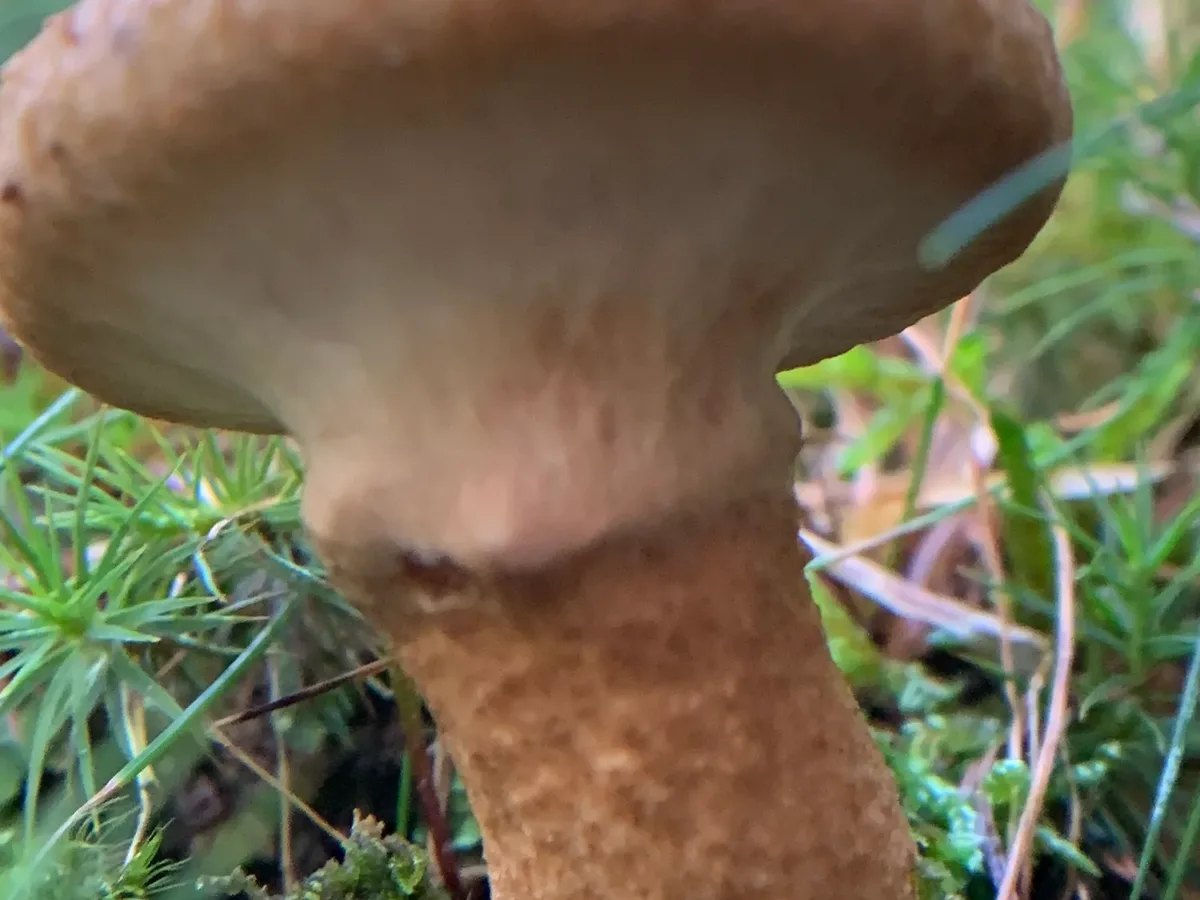 © Manuela Fiorini (CC BY)
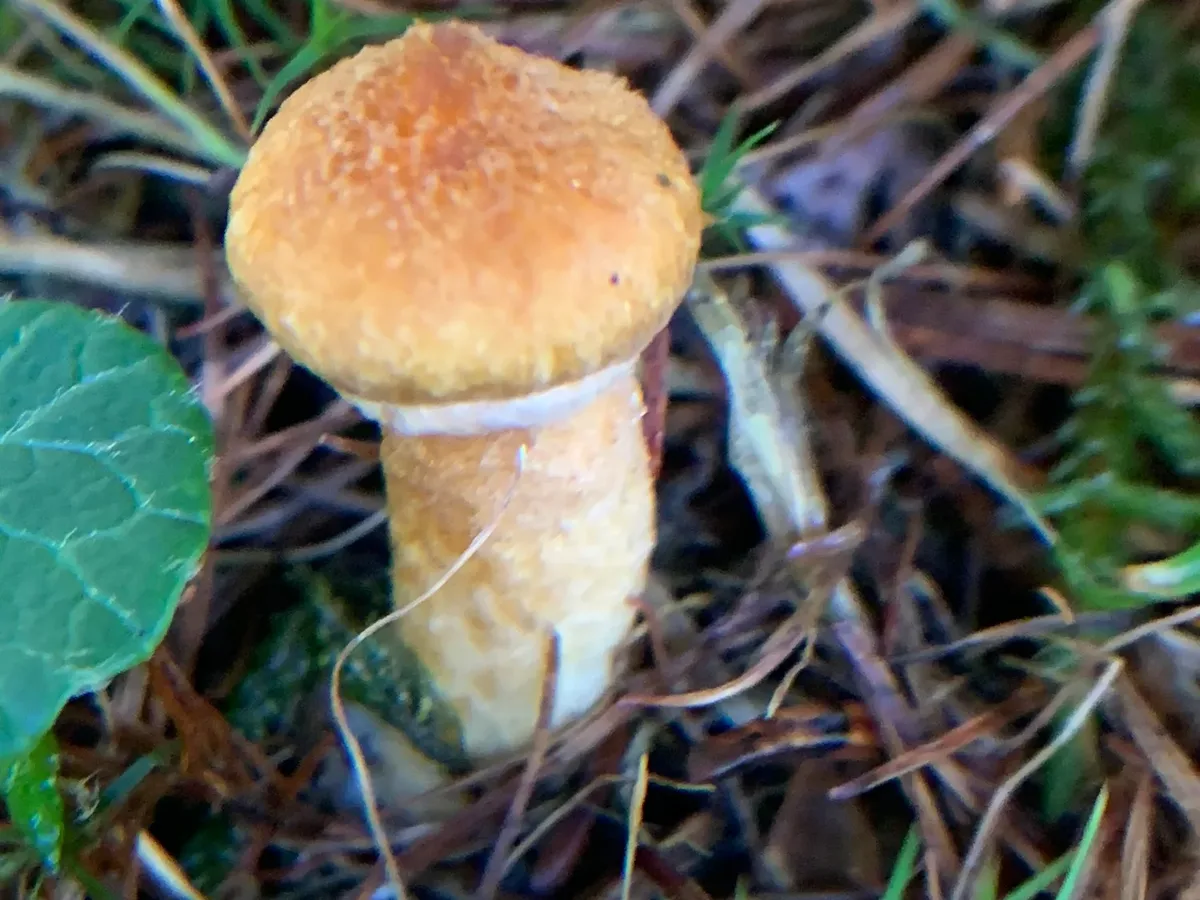 © Manuela Fiorini (CC BY)© Manuela Fiorini (CC BY)© Matteo Martini (CC BY)
Good to eat, once you have identified it with certainty and cooked it through.
How to recognise it
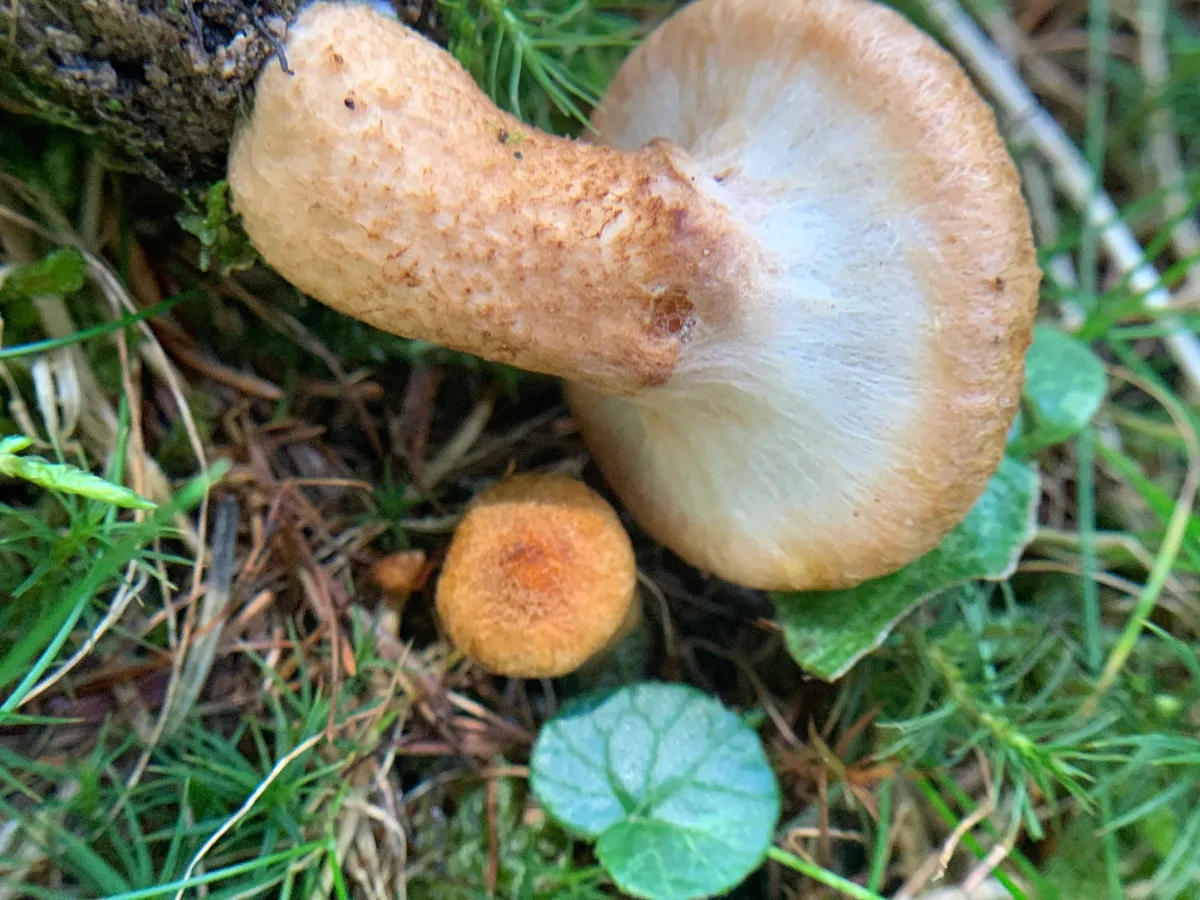
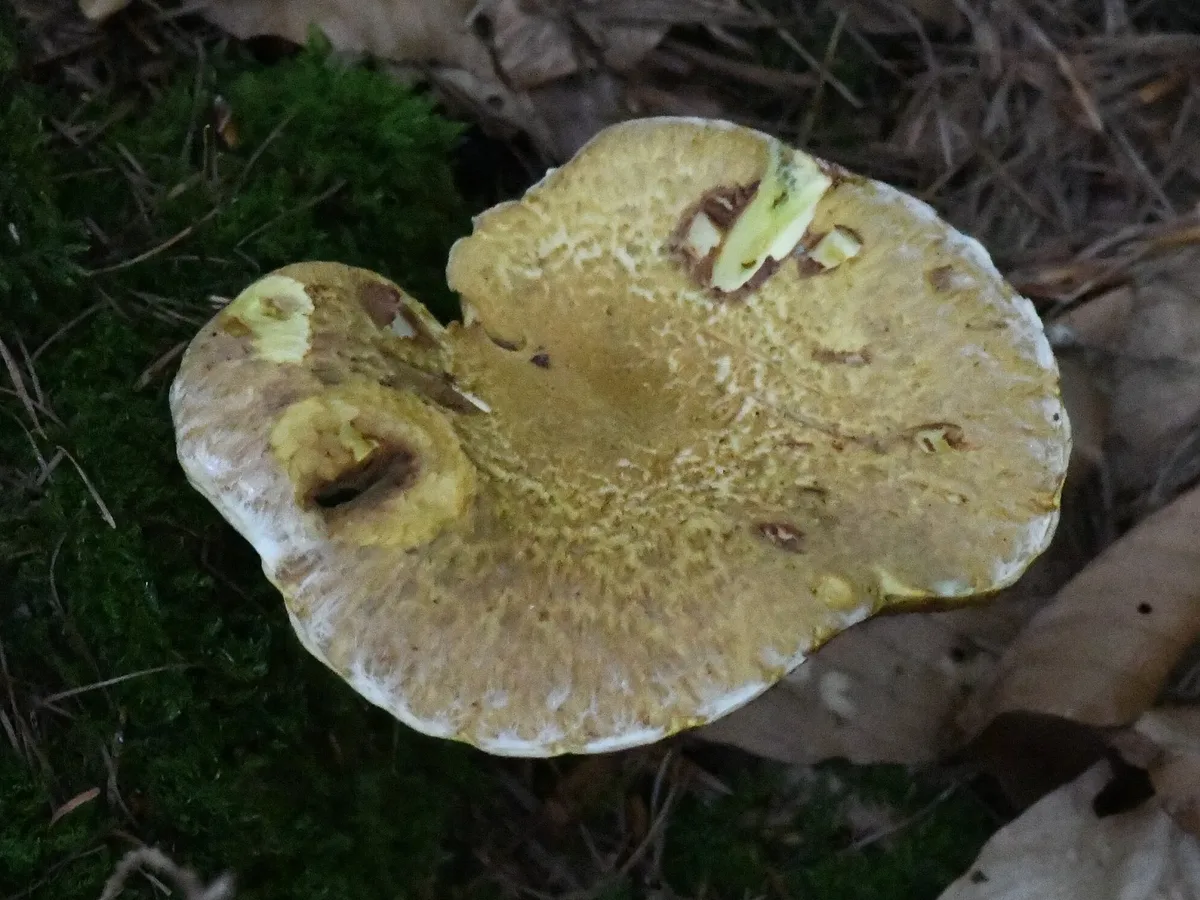
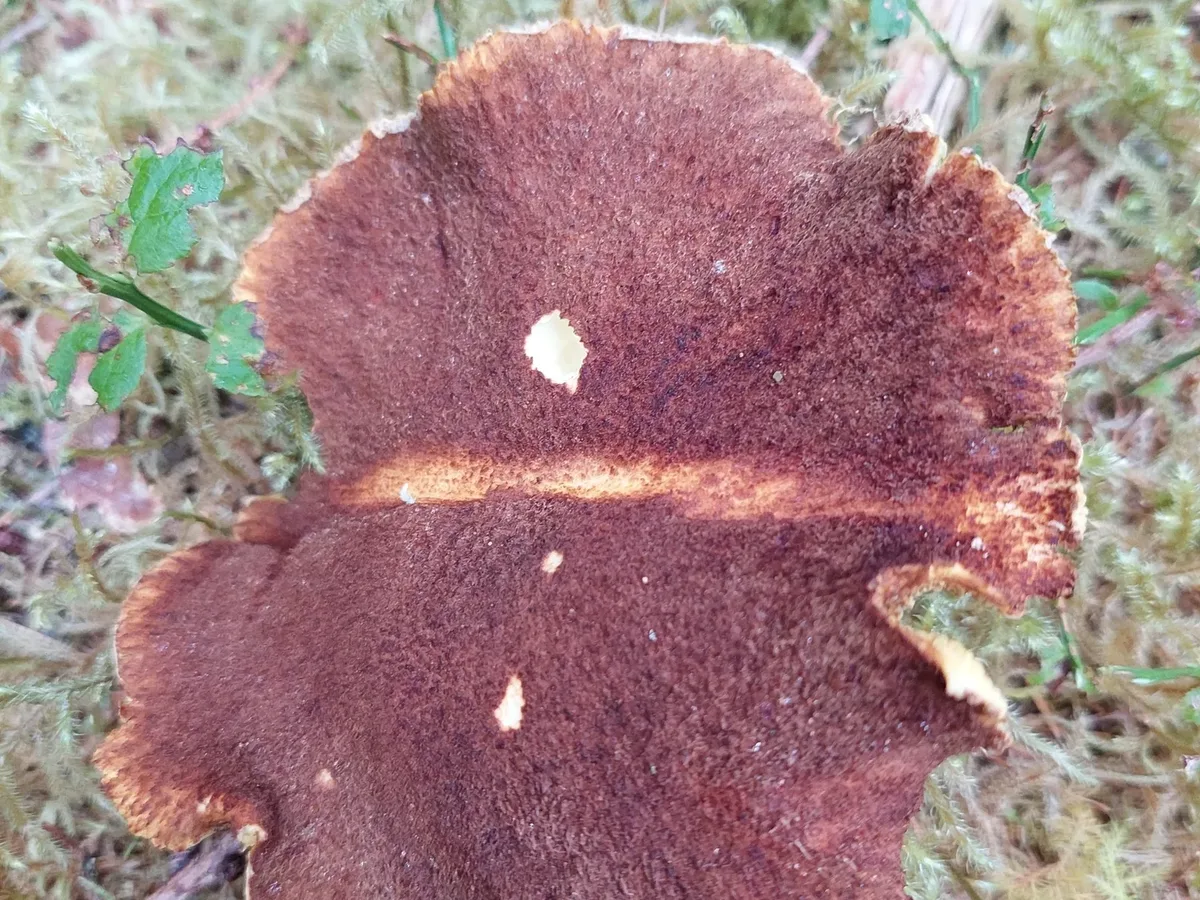
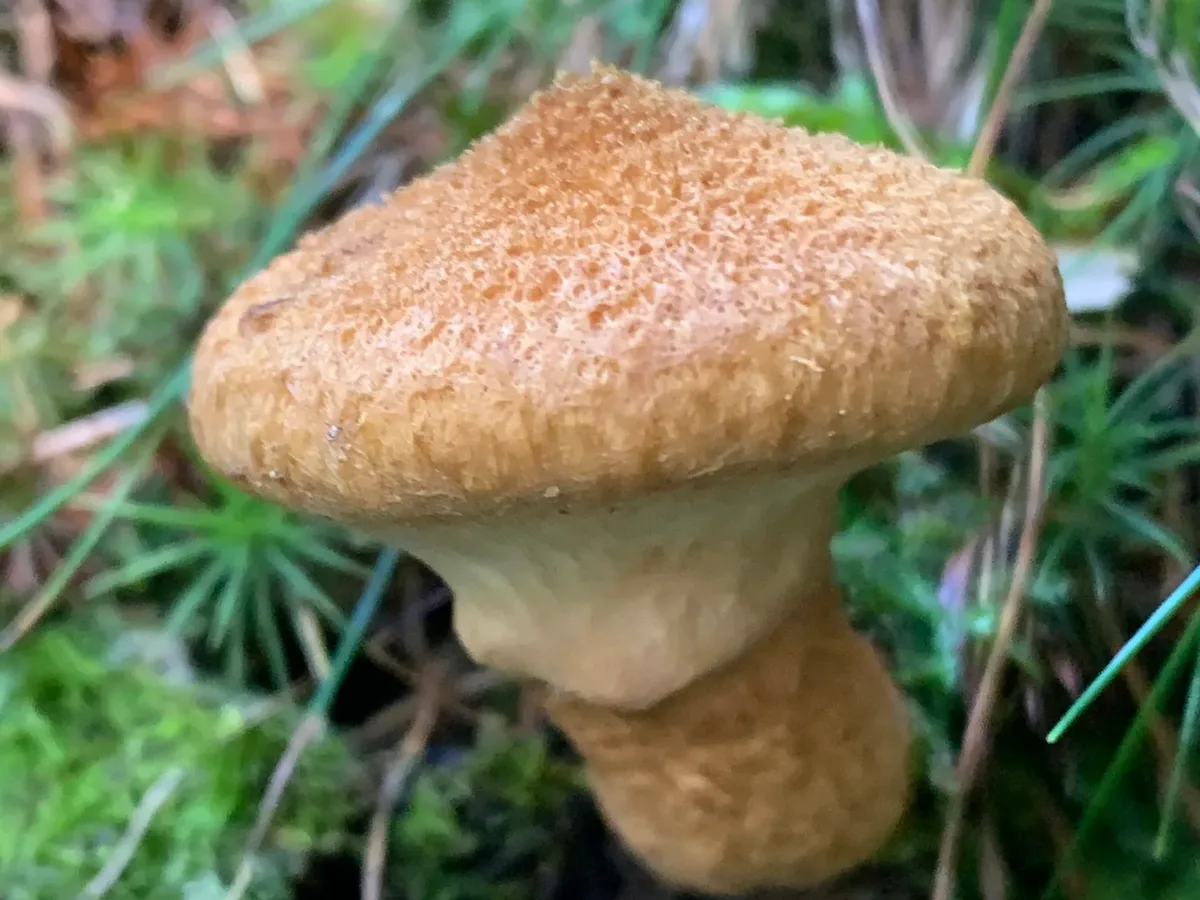
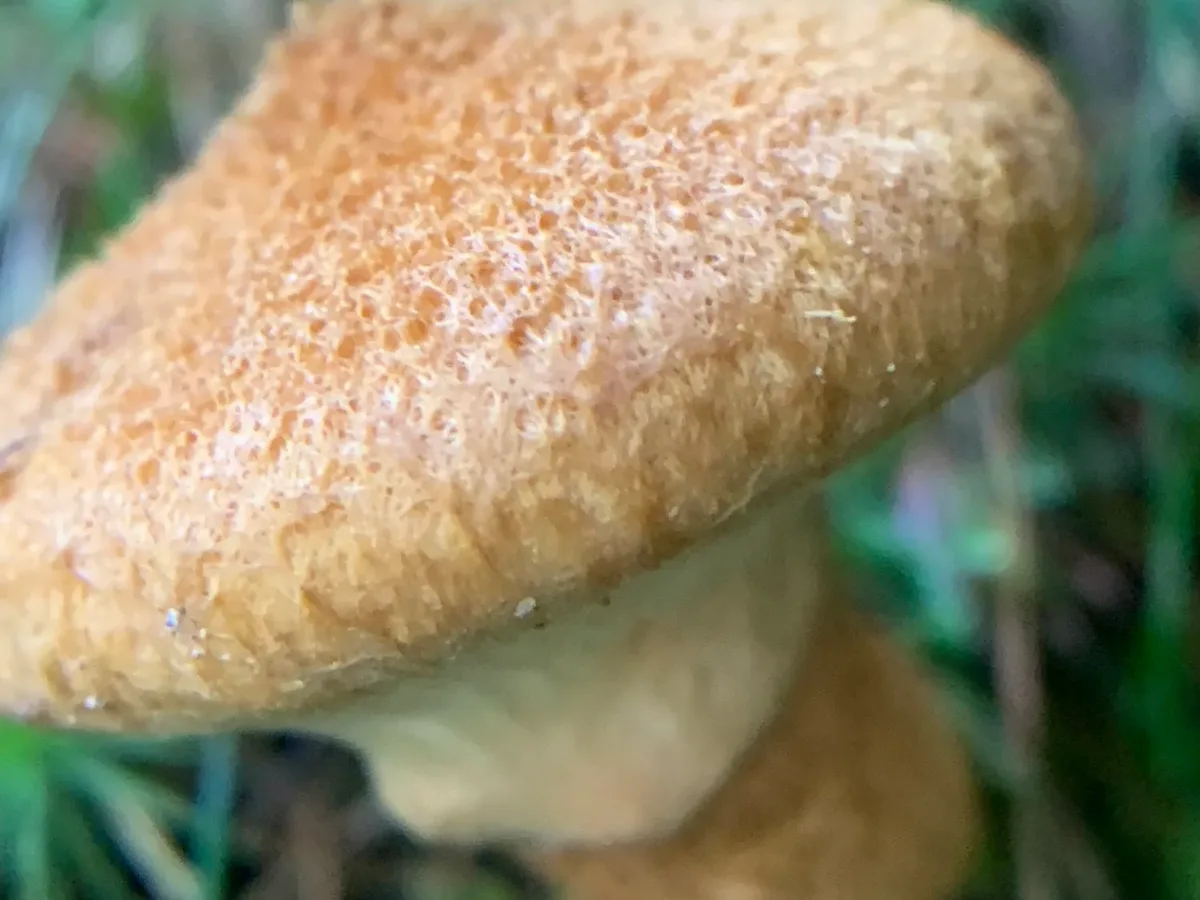
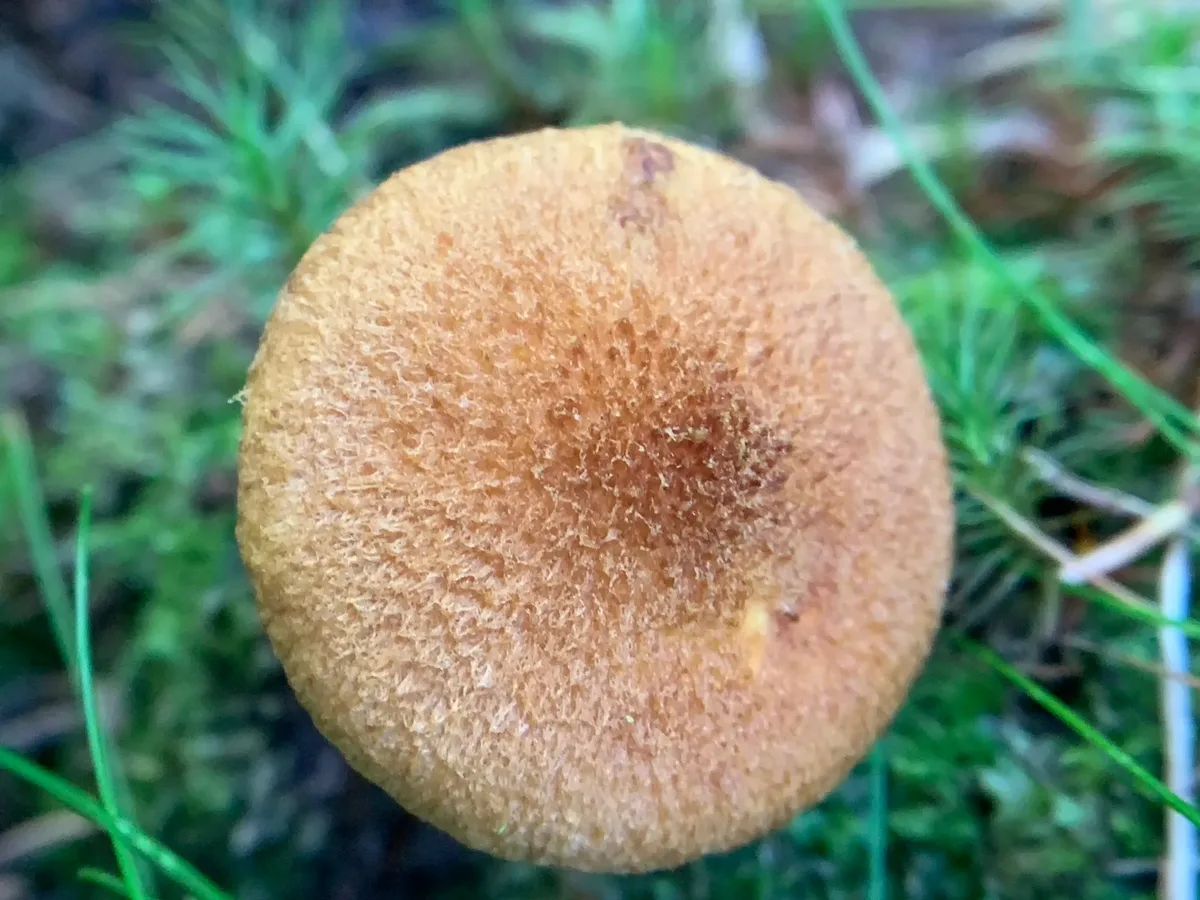
Suillus cavipes stands apart from nearly every other member of its genus by a single, remarkable character: a permanently dry, fibrous-scaly cap - not the glutinous, slimy surface that defines most Suillus species.
Cap
The cap begins as a hemispheric, woolly mass of rusty-chestnut fibres and tawny scales on a paler buff background. As the cap expands, the scales persist but may press flatter; the background becomes more visible as yellower ochre.
In wet conditions the cap feels damp from absorbed rain but never develops true slime or a gluten layer.
Gills / Pores
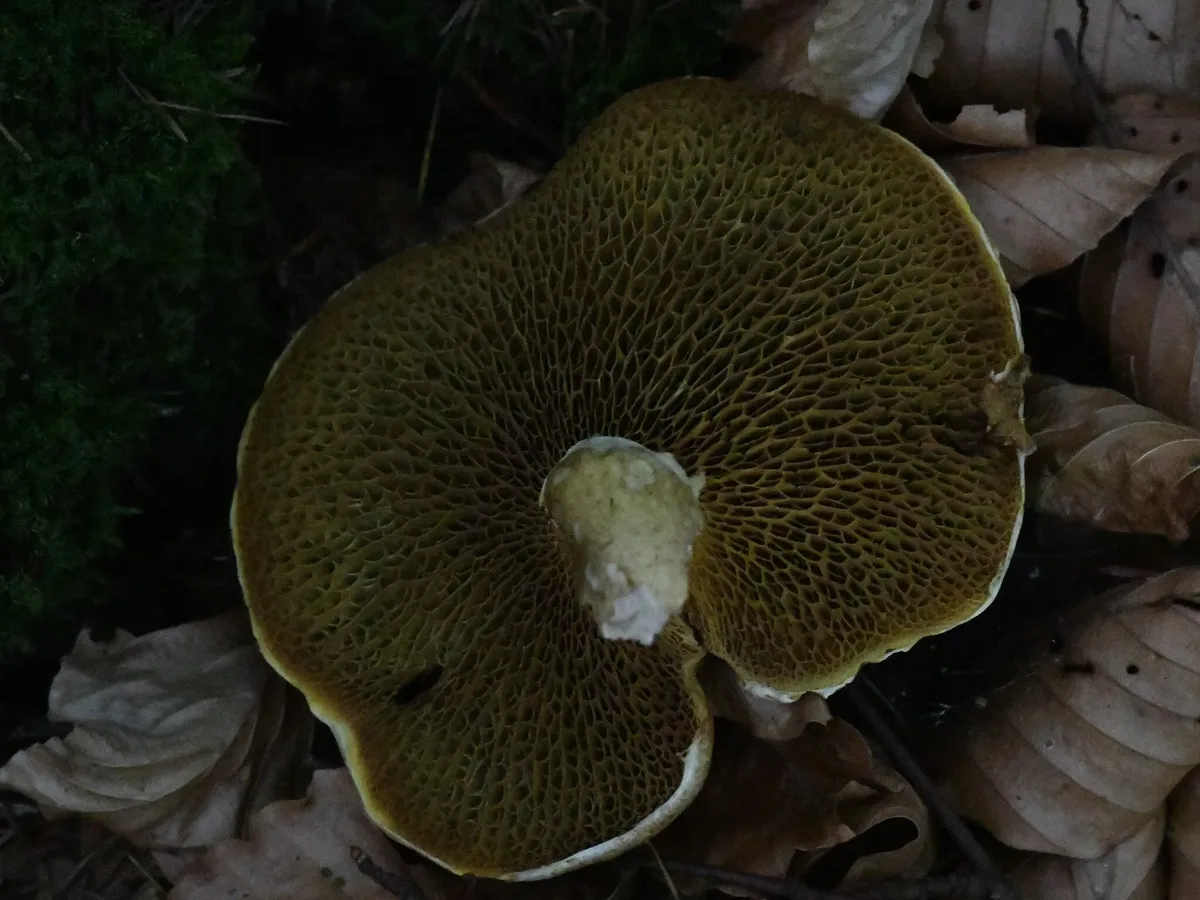
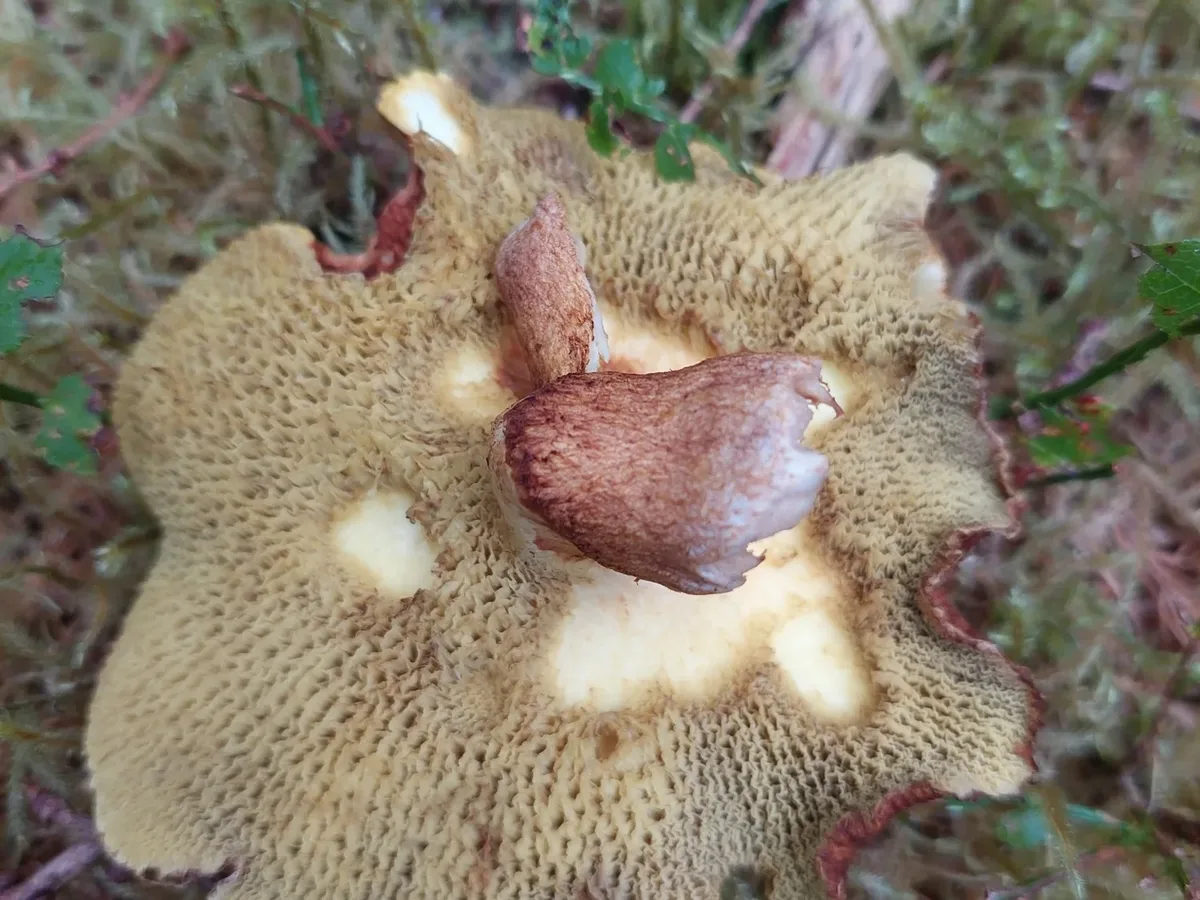
The pores are unusually large and angular for Suillus - up to 2-3 mm wide - and are sulphur-yellow, decurrent onto the stem, and compound (subdivided by secondary walls).
Stem
The second crucial feature is the hollow or spongy stem: cut a specimen lengthwise and the pith is absent or barely there, leaving a visible cavity. This hollow stem distinguishes S. cavipes from all close relatives.
There is no persistent ring - only young fruitbodies may show fibrous veil remnants fused to the cap margin.
Flesh
Flesh is pale yellow-cream, thin in the cap, and does not stain blue or change colour on injury.
Where & when it grows
Habitat
Suillus cavipes is inseparable from larch. No larch, no hollow-stemmed bolete - the relationship is fully obligate mycorrhizal.
It thrives in the needle duff of established larch stands at any altitude, from sea-level plantation belts in northern France, Germany, and Britain, up through the subalpine larch forests of the Alps and Carpathians at 1 600-2 000 m.
In Scandinavia it is common in planted larch and also in natural subarctic larch woodland where those occur.
The species is widely distributed across Eurasia where Siberian or Dahurian larch dominate the boreal forest, and has been recorded under tamarack (Larix laricina) in eastern North America.
Look for it beneath the canopy, in needle mats, or pushing through mossy ground.
The dry cap means it remains recognisable even in heavy rain - when all the slimy Suillus around it are glistening, S. cavipes will still feel fibrous to the touch.
When
In the mountains, Suillus cavipes may appear as early as late June after snowmelt, with a primary summer flush in July-August.
At lower elevations the main season opens in late August and runs through October, driven by the classic late-summer rainfall cycles. Warm, wet spells after cool dry periods are particularly productive.
Fruiting ceases with the first hard frosts; at altitude this can happen rapidly in September or early October.
Mature trees support returning crops year after year from the same established mycelial network.
How it grows
Like all Suillus, this species is fully mycorrhizal and will only fruit in the company of its larch partner. Fruitbodies arise singly, scattered, or in small loose clusters, occasionally forming diffuse arcs where the underground mycelium has spread outward around a larch root system.
The hollow stem is not a sign of age or decay - even buttons sliced in half show the cavity already forming in the pith.
Fruiting responds most reliably to a gentle soaking: around 10-15 mm of rain over 7-14 days, with soil temperatures between 8-16 °C, is usually enough to bring a flush to the surface.
Established mycelial networks are long-lived, and productive patches have a way of returning to the same ground year after year.
Fruiting conditions
Flushes most reliably after 10-15 mm of rain over a 7-14 day period when soil temperatures are 8-16 °C. Peak productivity occurs at soil temperatures of 10-14 °C. Fruiting terminates abruptly with the first hard frosts; at high Alpine elevations this can occur as early as late September.
Look-alikes
Within its larch habitat, the most likely confusion is with Suillus grevillei (larch bolete), which shares the same host tree.
- Suillus grevillei has a brilliantly yellow to orange, viscid slimy cap and a conspicuous persistent membranous ring on the stem - two characters absent from S. cavipes.
- Suillus aeruginascens (grey larch bolete) also grows under larch, has a persistent ring and a slimy, grey-brown cap; it is edible.
- Suillus luteus (slippery jack) has a very slimy brown cap with a dark ring, but grows under pine (Pinus), not larch.
- Suillus variegatus has a dry, granular-scurfy cap resembling S. cavipes superficially, but lacks the hollow stem, has smaller pores, and grows strictly under Scots pine.
- Chroogomphus rutilus is a pink-orange to wine-coloured species with decurrent gills (not pores) under conifers.
None of the realistic lookalikes in the larch habitat are dangerously toxic.
Also grows under larch and bears a ring, but cap is viscid and grey to grey-brown (not dry and tawny-scaly). Stem is solid or only slightly spongy, not distinctly hollow. Also edible.
Suillus grevillei shares the larch host but has a brilliant golden-orange to tawny cap covered in thick viscid slime, a prominent persistent membranous ring on the stem, and a solid (not hollow) stem interior. The slimy cap surface and the ring immediately distinguish it from the dry, ring-less, hollow-stemmed S. cavipes.
Excluded immediately by its bright red pore mouths and vivid blue staining of all flesh within seconds of cutting. Cap is viscid when moist. Grows under spruce and fir, not specifically larch. No ring, no hollow stem.
Has a very slimy, glossy brown cap, a dark purple-brown ring, and grows exclusively under Pinus (not larch). Stem is solid. No overlap with S. cavipes in host tree preference.
Has a dry, granular-scurfy ochre-brown cap that superficially resembles S. cavipes, but grows strictly under Scots pine (Pinus sylvestris), has smaller, more regular pores, and a solid stem with no cavity when sliced. Also edible.
In the kitchen
Picking & cleaning
Collect young to medium-aged fruitbodies before the flesh in the cap becomes too thin and the stem too hollow to be worthwhile. Cut cleanly at the base with a knife.
The dry, fibrous cap requires no peeling (unlike slimy Suillus) - simply brush off debris.
Remove the stem or discard it if the hollow cavity has collapsed or the flesh is mushy; only the cap flesh is worth eating in older specimens.
The large pores can become soft and waterlogged after heavy rain; blot or briefly dry before cooking.
Because the flesh is soft and thin, these mushrooms deteriorate within a day or two of picking; process promptly.
Suillus cavipes is perfectly edible but considered of modest quality - adequate for bulk cooking, soups, and drying, rather than a gourmet table mushroom.
Cooking
Suillus cavipes is an edible mushroom of modest culinary quality - wholesome and palatable but not in the same league as Boletus edulis or Cantharellus cibarius.
The dry cap and firm flesh (in youth) make it easier to handle than slimy Suillus species and no peeling is required.
- Best uses are in soups, sauces, and mixed mushroom dishes where a neutral, mild, slightly earthy flavour integrates well.
- Sauté sliced caps in butter or oil with onion and garlic; the flesh softens nicely.
- It dries reasonably well: slice thinly and dry at 40-50 °C; dried material reconstitutes in warm water and adds body to stews and risottos.
- Pickling in vinegar brine (as practised in Eastern Europe) is a traditional use.
The large pores can become mushy if overcooked; add near the end of cooking for best texture.
Discard very hollow or collapsed stems, retaining only cap flesh from older specimens.
Always cook thoroughly - do not eat raw.
Good to know
Suillus cavipes is a safe edible species with no documented serious toxicity.
As with many Suillus species, a minority of consumers report mild gastrointestinal discomfort - nausea or loose stools - particularly when eating raw or insufficiently cooked material; always cook before eating.
Some individuals develop contact dermatitis from handling raw Suillus; washing hands after collection is sensible.
There are no deadly lookalikes that would realistically be confused with this species in its correct ecological context: if the host is confirmed as larch, the cap is dry and scaly, the stem is hollow, and the pores are yellow with no blue-staining, the identification is reliable.
Do not consume any bolete that stains blue on cutting - this rule eliminates all genuinely dangerous boletes.
The key identification points to check before eating:
- 1host tree is larch
- 2cap is dry and fibrous-scaly
- 3stem is hollow when cut lengthwise
- 4pores do not blue when damaged
A reference guide - never an edibility guarantee. When in doubt, leave it out.