Jersey cow bolete
Suillus bovinussyn. Boletus bovinus L., Ixocomus bovinus (L.) Quél., Viscipellis bovina (L.) Quél.
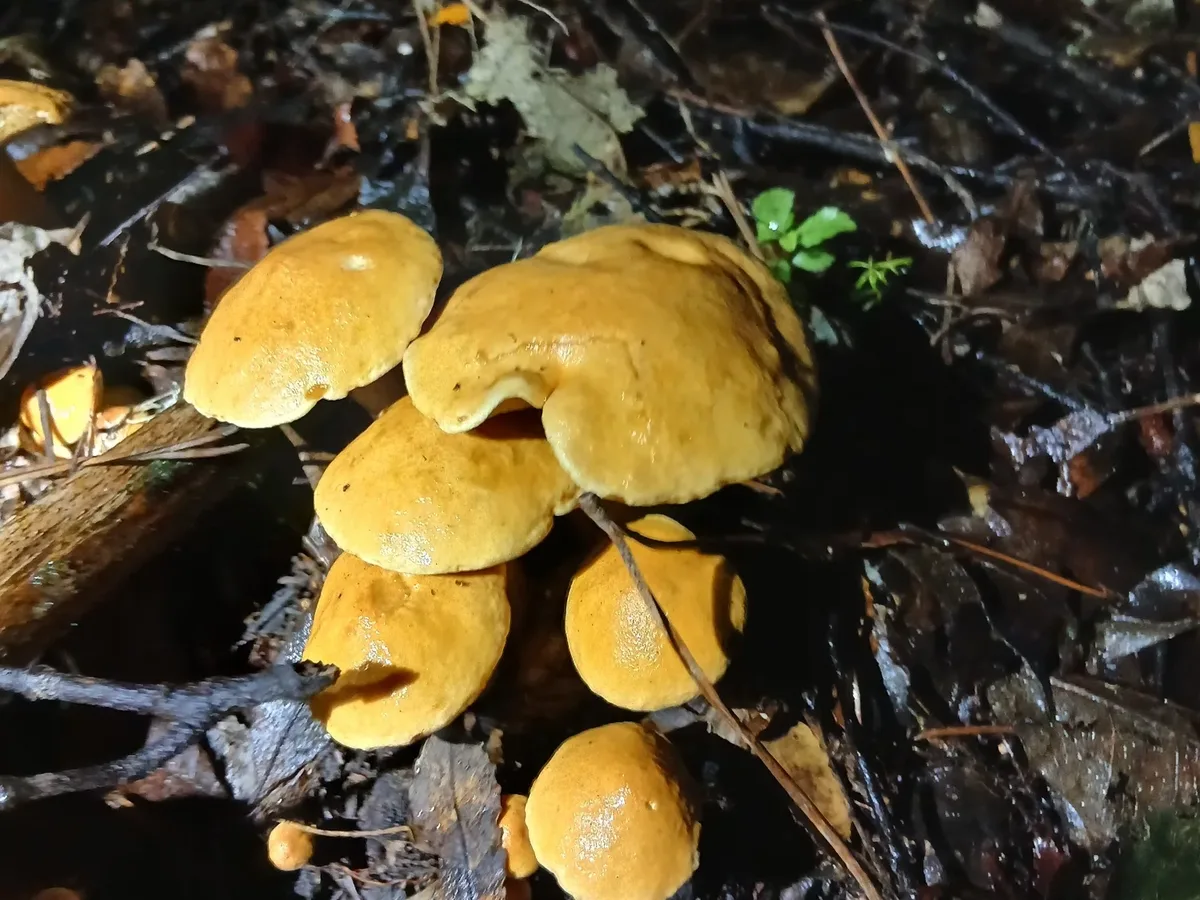 Matt H (CC0)
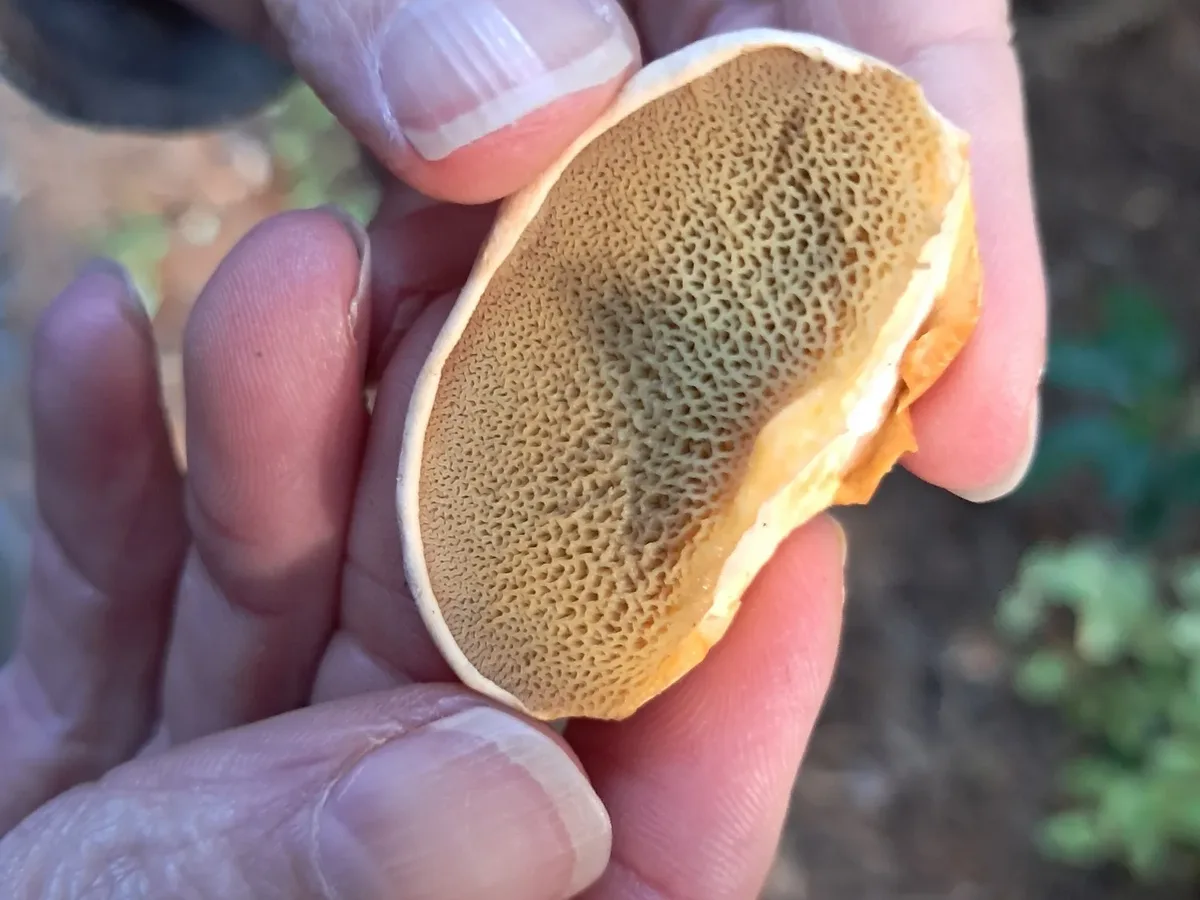 Pluto Hooper (CC0)
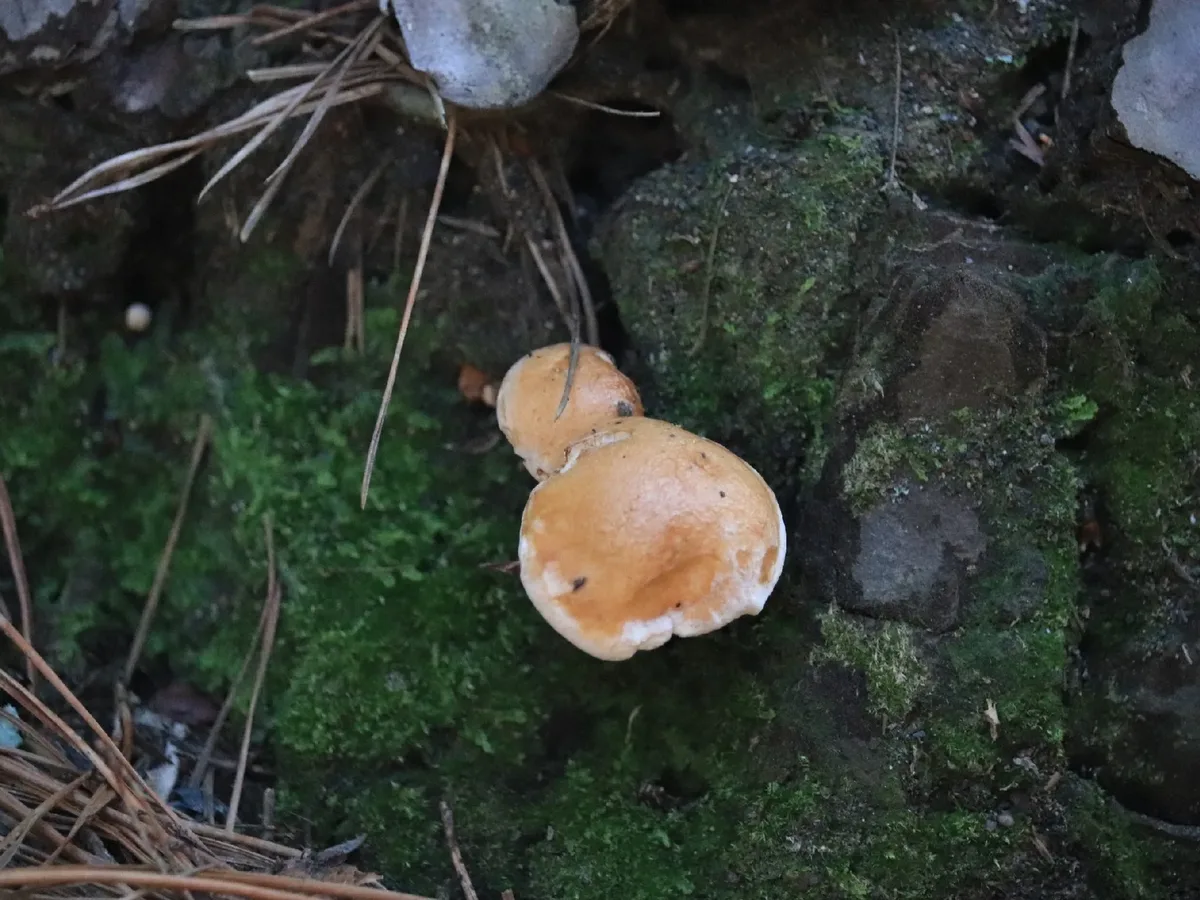 Pluto Hooper (CC0)
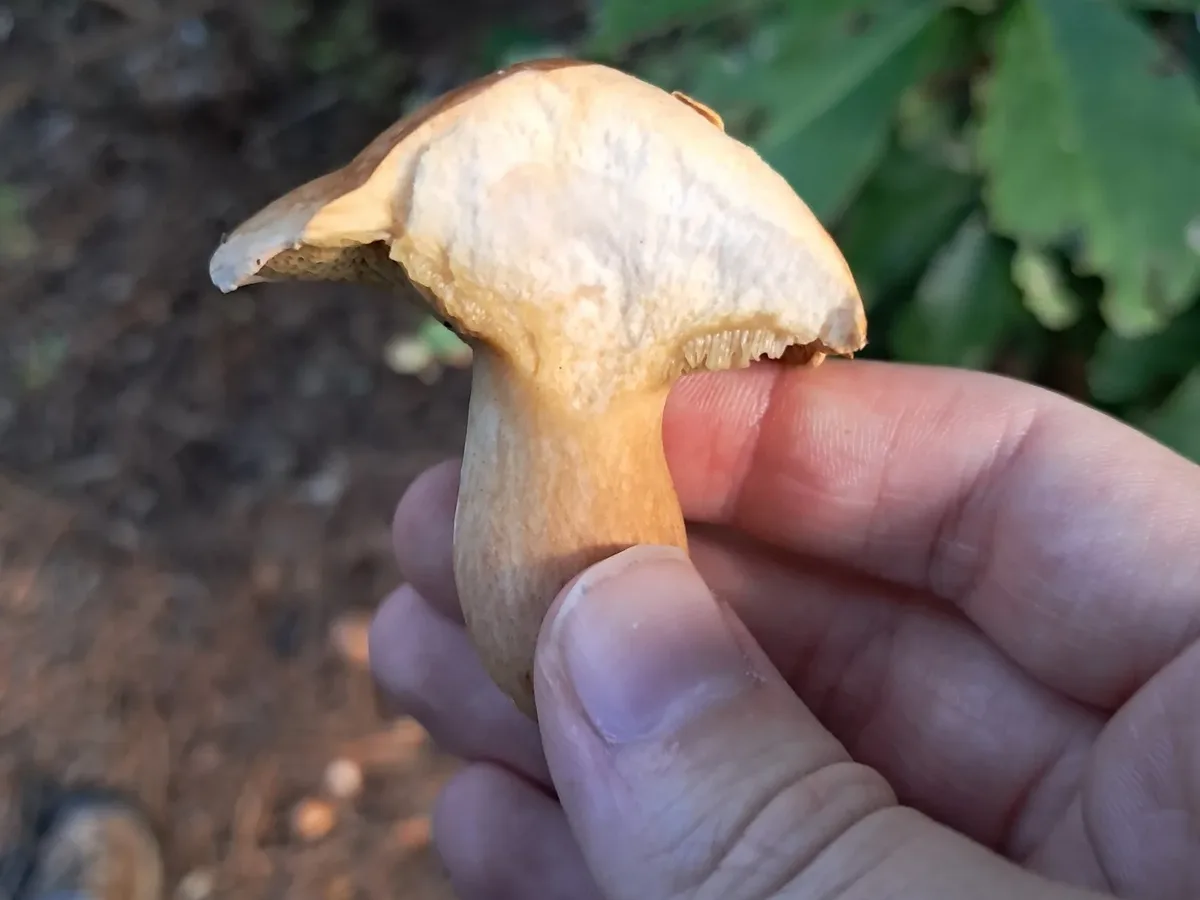 Pluto Hooper (CC0)
 Matt H (CC0)
 Matt H (CC0)
 Matt H (CC0)Matt H (CC0)Pluto Hooper (CC0)
Good to eat, once you have identified it with certainty and cooked it through.
Never eat a mushroom you are not 100% sure of - check the look-alikes below, and always cook wild mushrooms.
How to recognise it
Suillus bovinus is a medium-sized, slippery bolete of modest colouring.
Cap
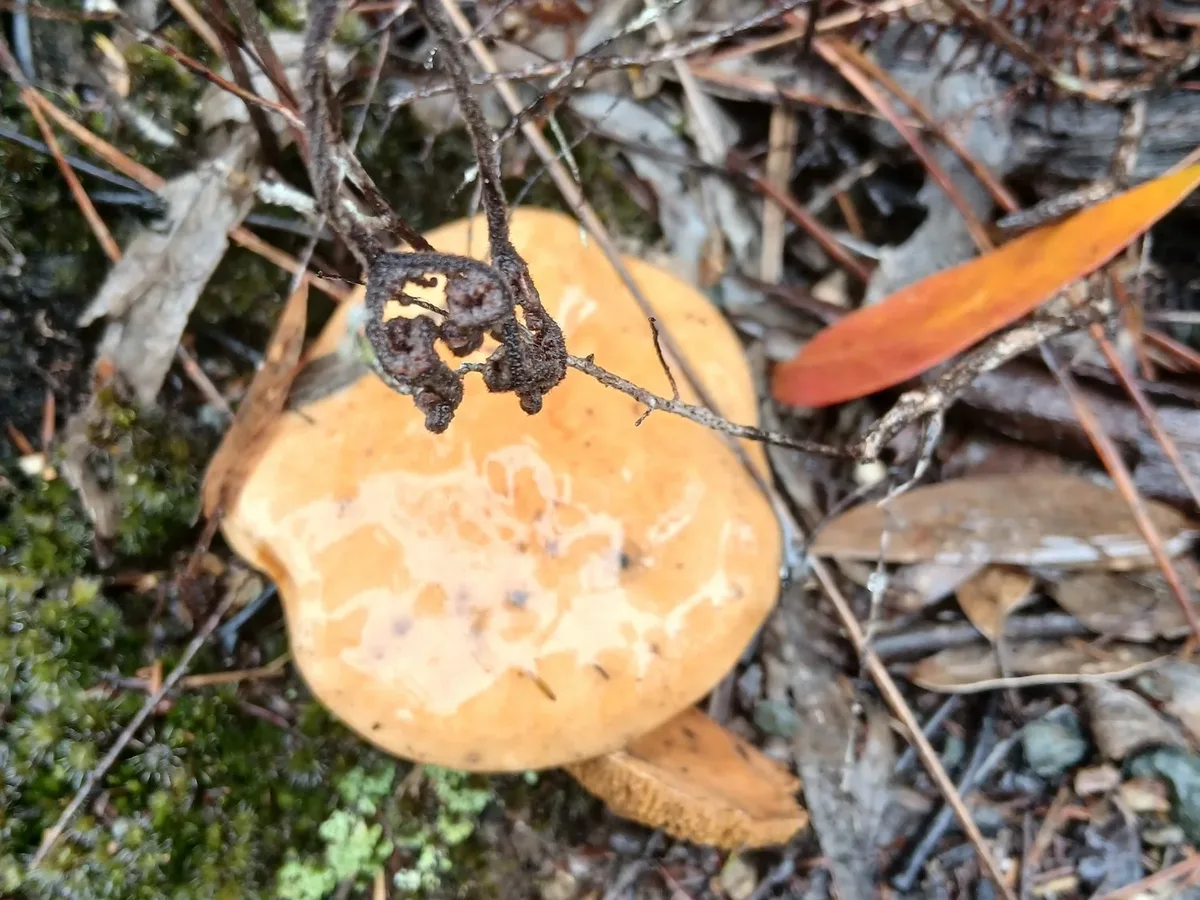
The cap (3-10 cm) begins convex with an inrolled margin, becoming broadly flat with age. The surface is persistently viscid or glutinous in wet weather, smooth, and ranges from sandy-ochre to tawny-buff or pale cinnamon, occasionally with a faint olivaceous or pinkish wash, especially near the margin.
There is no veil and therefore no ring on the stem - an important character separating it from Suillus luteus and S. granulatus.
Pores
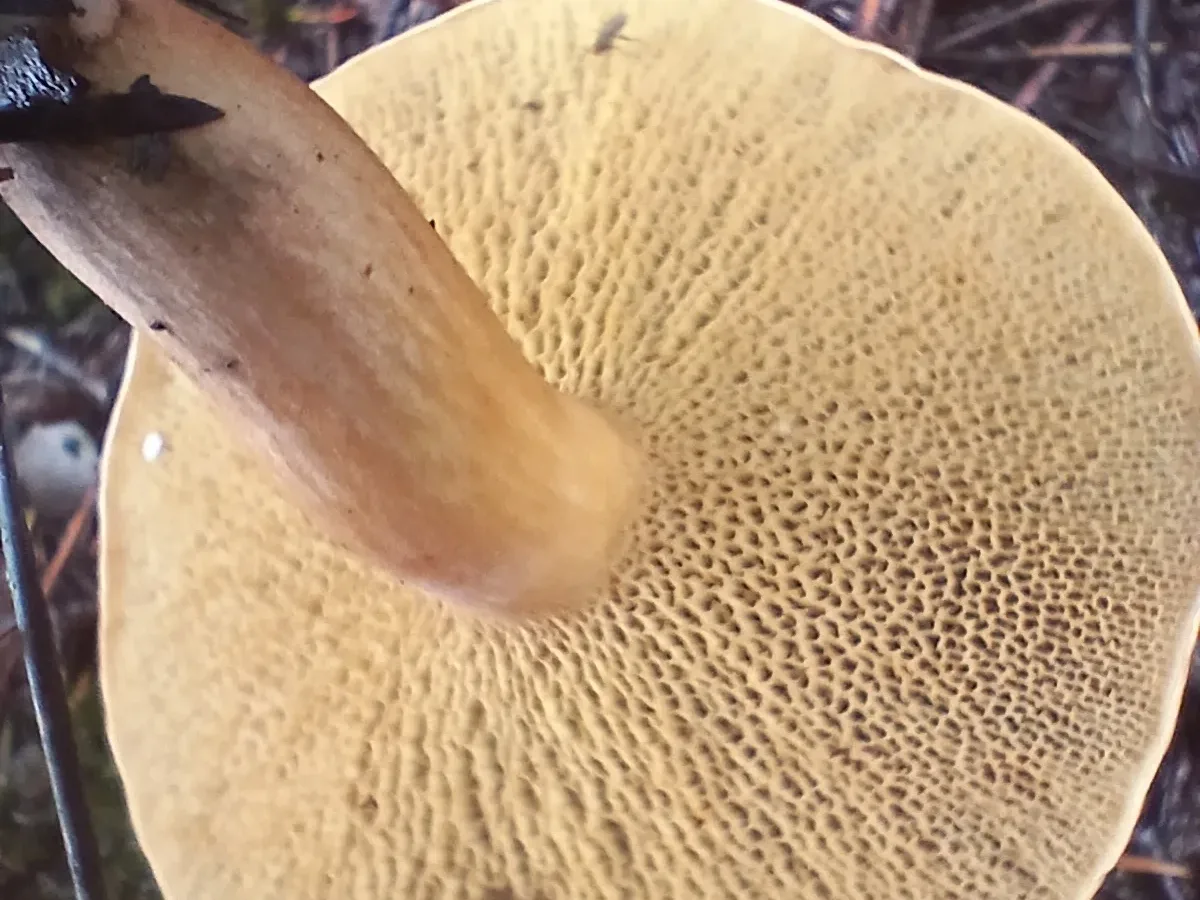
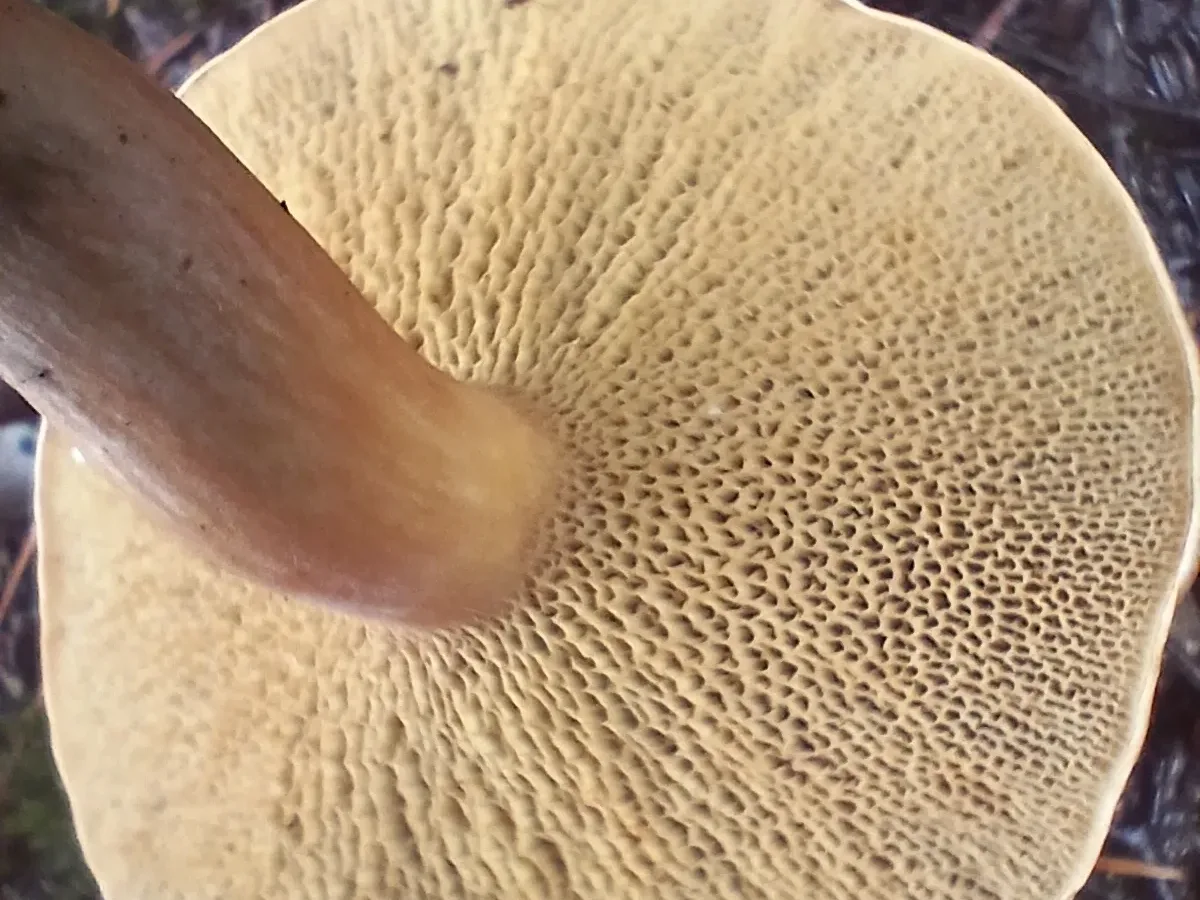
The pore surface is the most distinctive feature: pale ochraceous-grey to pale buff-grey, with pores clearly angular and compound, forming an irregular, almost labyrinthine (maze-like) pattern visible to the naked eye, especially in mature specimens.
Pores do not turn blue when damaged. Tubes are shallow (3-8 mm).
Stem
The stem (3-8 cm × 0.8-1.5 cm) is cylindrical, dry, and concolorous with the cap, notably lacking the glandular dots or granules characteristic of S. granulatus and S. luteus.
Flesh
Flesh is white to pale yellowish, soft and somewhat watery, especially in mature caps; it does not blue when cut.
Smell & taste
The smell is faintly fruity-sour or slightly acidic, the taste mild and pleasant.
Spore print is cinnamon-brown to ochre-brown.
Where & when it grows
Habitat
A strict partner of two-needle pines - overwhelmingly Scots pine (Pinus sylvestris) in Europe, but also Pinus mugo, P. nigra, and closely related species.
S. bovinus colonises acidic, sandy, nutrient-poor soils:
- heathlands
- duneside pine woods
- old pine plantations
- the boreal pine-lichen forest floor
It avoids calcareous substrates almost entirely.
An ecologically fascinating indicator: the parasitic gilled fungus Gomphidius roseus is obligately linked to S. bovinus mycelium (the parasite's hyphae invade S. bovinus mycelium for nutrition).
Finding the small, rosy-capped Gomphidius nearby is therefore a near-certain sign that S. bovinus is present or nearby - and vice versa. S. bovinus fruits gregariously, often in large scattered troops across the needle duff.
When
Fruits from midsummer (July) through late autumn (November), peaking from late August to mid-October across most of its European and boreal range. In the far north of Scandinavia and Finland the season is compressed to August-September.
Warm, humid weather after late-summer rains triggers heavy flushes. A second flush can follow October rains if soils have not yet cooled below about 7 °C.
How it grows
Suillus bovinus is ectomycorrhizal - its mycelium threads through the soil and wraps around the finest root tips of its host pines, exchanging mineral nutrients and water for the tree's sugars.
It is one of the first mycorrhizal fungi to arrive when young pines push into open sandy ground, quietly making the soil workable before the forest has even taken shape.
The underground network spreads outward year after year, and fruiting bodies follow that advance, appearing in arcs or loose troops that trace the unseen reach of the mycelium below.
Adding another layer of complexity, the mycelium also hosts an unwelcome guest: Gomphidius roseus, a gilled fungus whose hyphae parasitise Suillus bovinus directly for nutrition, making this partnership a rare window into fungal-on-fungal parasitism.
Fruiting conditions
Flushes best after warm late-summer rains (July-August) when soil temperatures are 10-18 °C. Requires a cumulative rainfall of at least 20 mm over the preceding 14 days. A secondary autumn flush (September-October) follows cooler rains if soil temperature remains above 7 °C.
Look-alikes
Key lookalikes within the genus Suillus and related boletes:
- Suillus variegatus (velvet bolete): cap surface dry or only slightly tacky, pore surface ochre-yellow often with reddish tinge, pores smaller and rounder, no labyrinthine pattern; flesh very faintly bluing when cut in some collections; associated with Scots pine.
- Suillus luteus (slippery jack): has a prominent gelatinous ring on the stem, the stem below the ring is dotted with glandular spots, cap is darker purplish- to chestnut-brown; pores smaller and more regular.
- Suillus granulatus (weeping bolete): no ring, but stem is densely covered in glandular dots that exude milky droplets when young; pores more regular and less labyrinthine; cap often more orange-brown.
- Suillus collinitus: similar to S. granulatus, glandular-dotted stem, mycelium at base of stem tinged pink-magenta - a useful character at collection.
- Gomphidius roseus (rosy spike-cap): often fruits alongside S. bovinus; gilled (not pored), pink to rosy-salmon caps, decurrent gills; clearly not a bolete - no risk of confusion in an informed forager.
- Paxillus involutus (brown roll-rim): lacks tubes/pores, has crowded, forking, decurrent gills that bruise brown; strongly inrolled cap margin; deadly when consumed repeatedly - important to distinguish from boletes for novice foragers.
Has crowded, forking, decurrent gills (not pores/tubes); strongly inrolled margin; bruises brown; deadly when consumed repeatedly due to immune-mediated haemolysis - examine hymenium carefully
Often fruits alongside S. bovinus but is clearly gilled (not pored), rosy-pink cap, decurrent grey gills that blacken with age; no risk of confusion on close inspection
Bears a prominent gelatinous ring on the stem; stem below ring has dark glandular dots; cap darker purplish-chestnut; pores smaller and more regular
Cap surface dry to slightly tacky (not slimy), ochre-yellow pores often with a reddish tinge, pores smaller and rounder without the labyrinthine pattern; flesh may faintly blue when cut
No ring, but stem is densely glandular-dotted exuding milky droplets when young; pores more regular, less labyrinthine; cap often more orange-brown; lacks maze-like pore pattern
In the kitchen
Picking & cleaning
Choose young, firm specimens with caps still somewhat convex and pores pale and close-textured. Old, large caps become very soft, watery, and prone to insect infestation.
- Peel the slimy cap skin before cooking (it is perfectly safe but unpleasant in texture and taste); the skin peels easily from the margin.
- The tubes in very mature specimens can become spongy and are best scooped away.
- Slice and check the flesh for maggot channels.
S. bovinus is less prized than S. luteus or S. granulatus owing to its softer, more watery flesh, but young specimens are entirely acceptable when properly prepared.
Cooking
The watery, soft flesh of S. bovinus means it performs best when moisture is driven off quickly over high heat.
- 1Peel the cap skin (it slides off readily) and trim the tubes from very old caps.
- 2Slice 5-8 mm thick.
- 3Sauté in butter or oil over high heat until golden and the released water has evaporated (5-8 minutes); the flavour concentrates significantly.
It works well in several ways:
- Partners with garlic, thyme, and cream for a pasta sauce.
- Blends into mixed mushroom soups and stews, where its somewhat neutral, mildly acidic flavour carries.
- Can be dried (thin slices at 50 °C until crisp) but shrivels markedly.
- Pickling in mild vinegar with bay leaf and peppercorn is a Scandinavian and Eastern European tradition that suits it well.
Not recommended for eating raw.
Good to know
Suillus bovinus is regarded as edible and is not known to contain significant toxins. However, several caveats apply:
- 1Some individuals experience mild gastrointestinal upset from Suillus species generally, probably from resinous compounds in the slime; peeling the cap skin reduces this.
- 2The species should never be eaten raw - thorough cooking is essential, as with virtually all wild boletes.
- 3Suillus species may cause skin rashes on contact in sensitive individuals (Suillus dermatitis).
- 4As always, collect only from areas free of industrial contamination, as boletes accumulate heavy metals.
Although S. bovinus has no deadly lookalikes within the pore-bearing boletes, novice foragers must be aware of Paxillus involutus (brown roll-rim), which has gills (not pores/tubes), a strongly inrolled margin, and gills that bruise brown.
Paxillus involutus is deadly when consumed repeatedly due to immune-mediated haemolysis.
Always verify the hymenium is a spongy pore layer - not gills - before consuming any bolete.
A reference guide - never an edibility guarantee. When in doubt, leave it out.