Chicken fat suillus
Suillus americanussyn. Boletus americanus Peck, Ixocomus americanus (Peck) Kuntze, Fuscoboletinus americanus (Peck) Pomerleau & A.H.Sm.
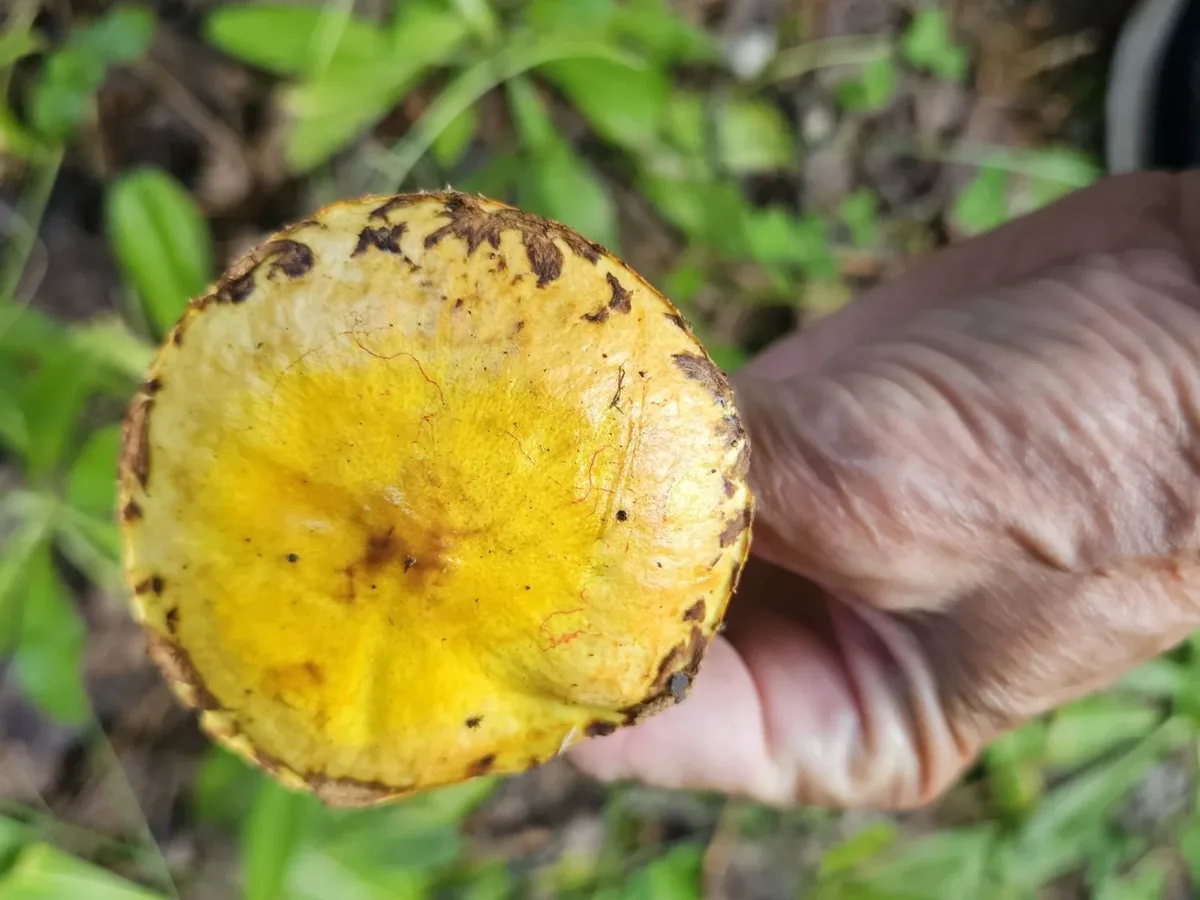 © Norma Malinowski (CC BY)
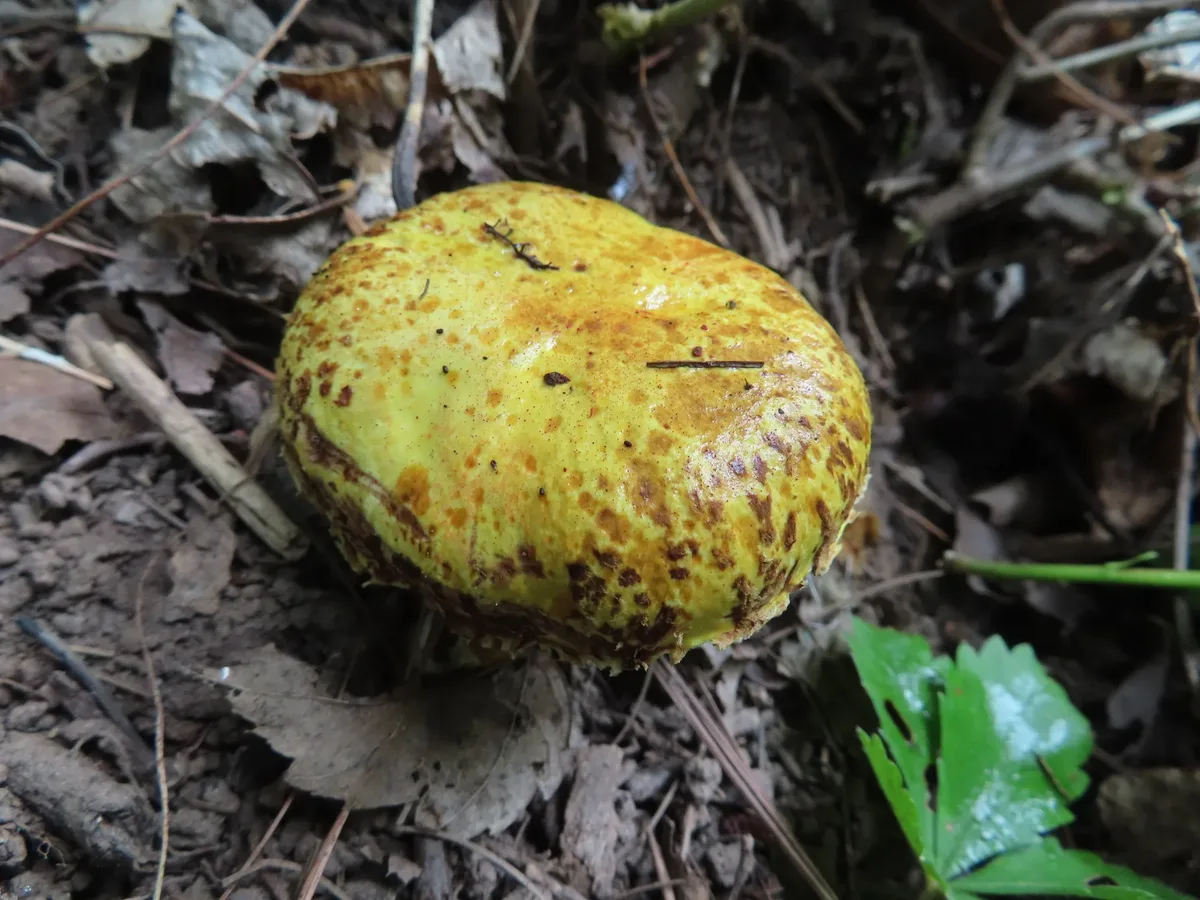 © Ken Clark (CC BY)
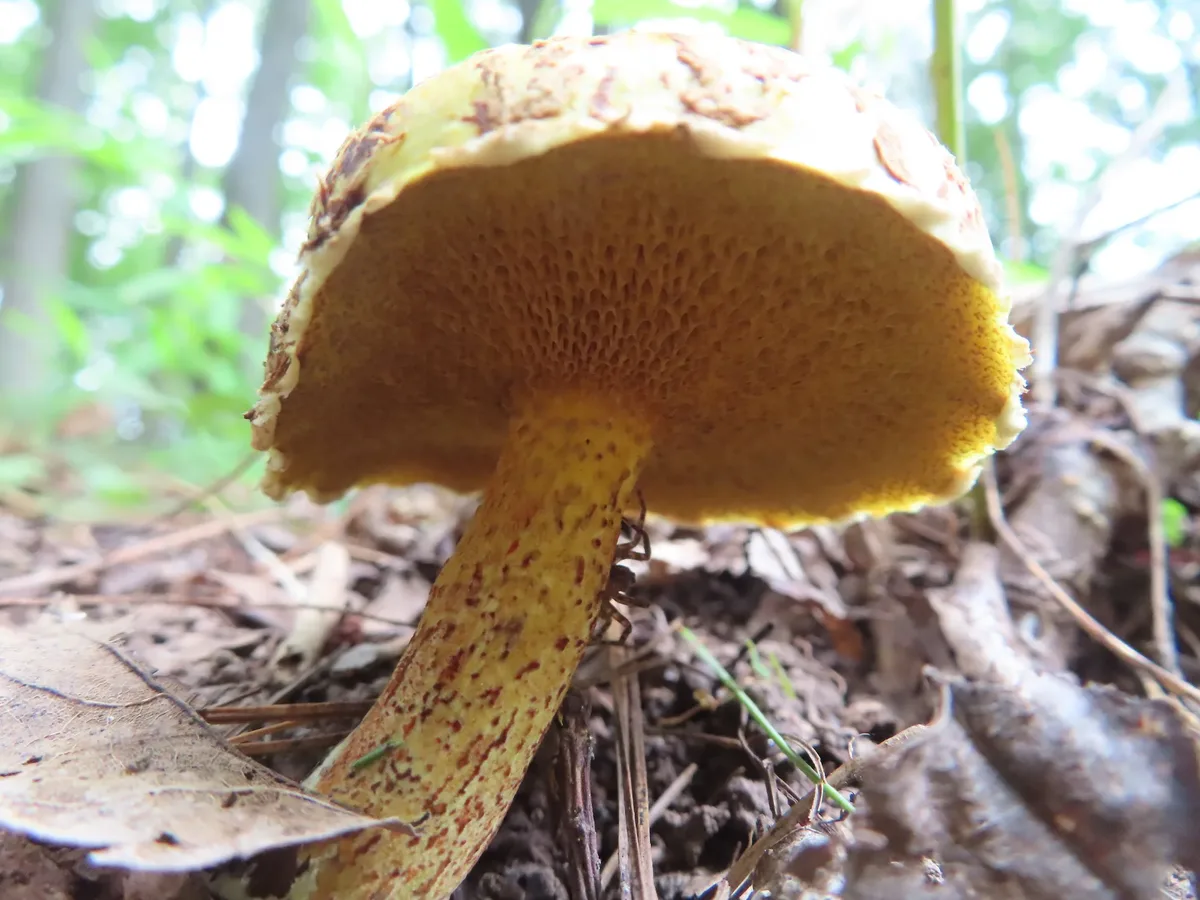 © Ken Clark (CC BY)
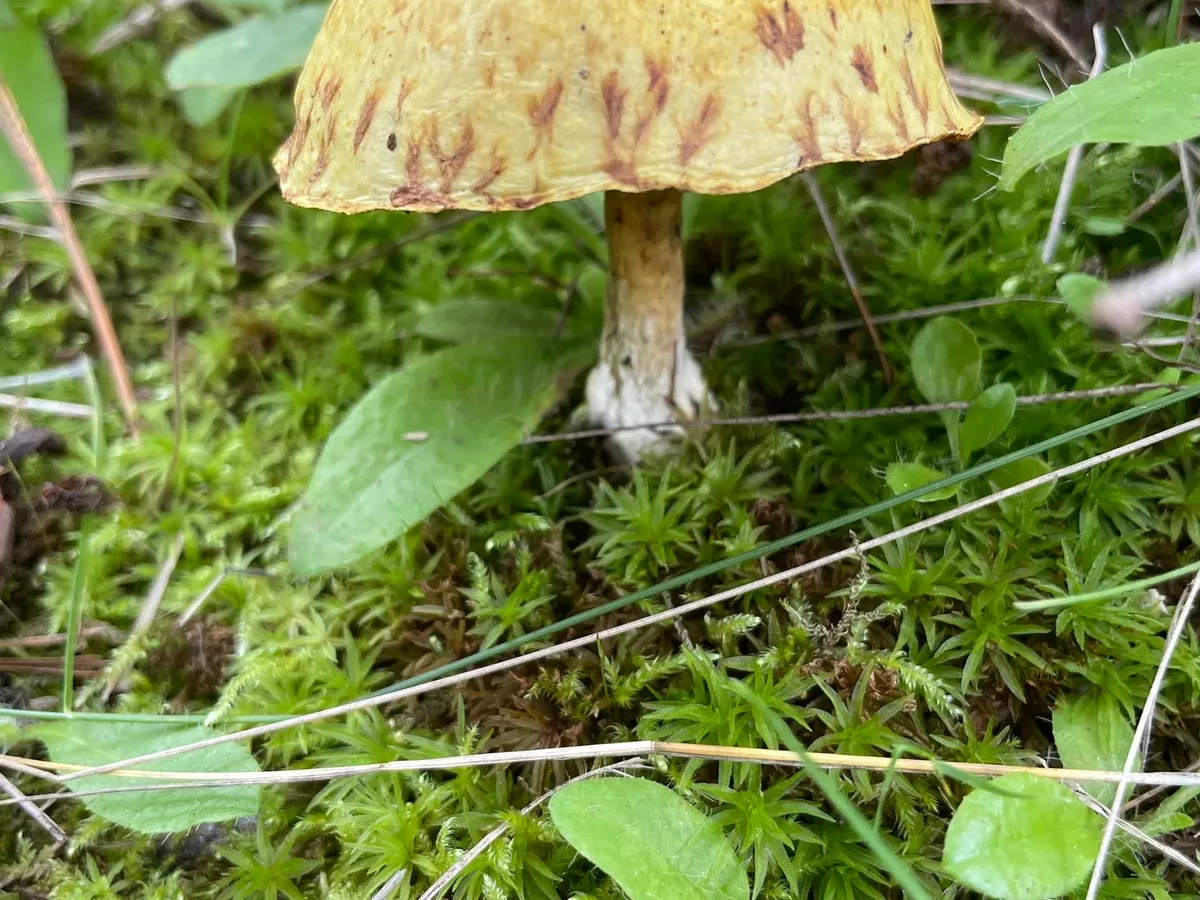 forestgray (CC0)
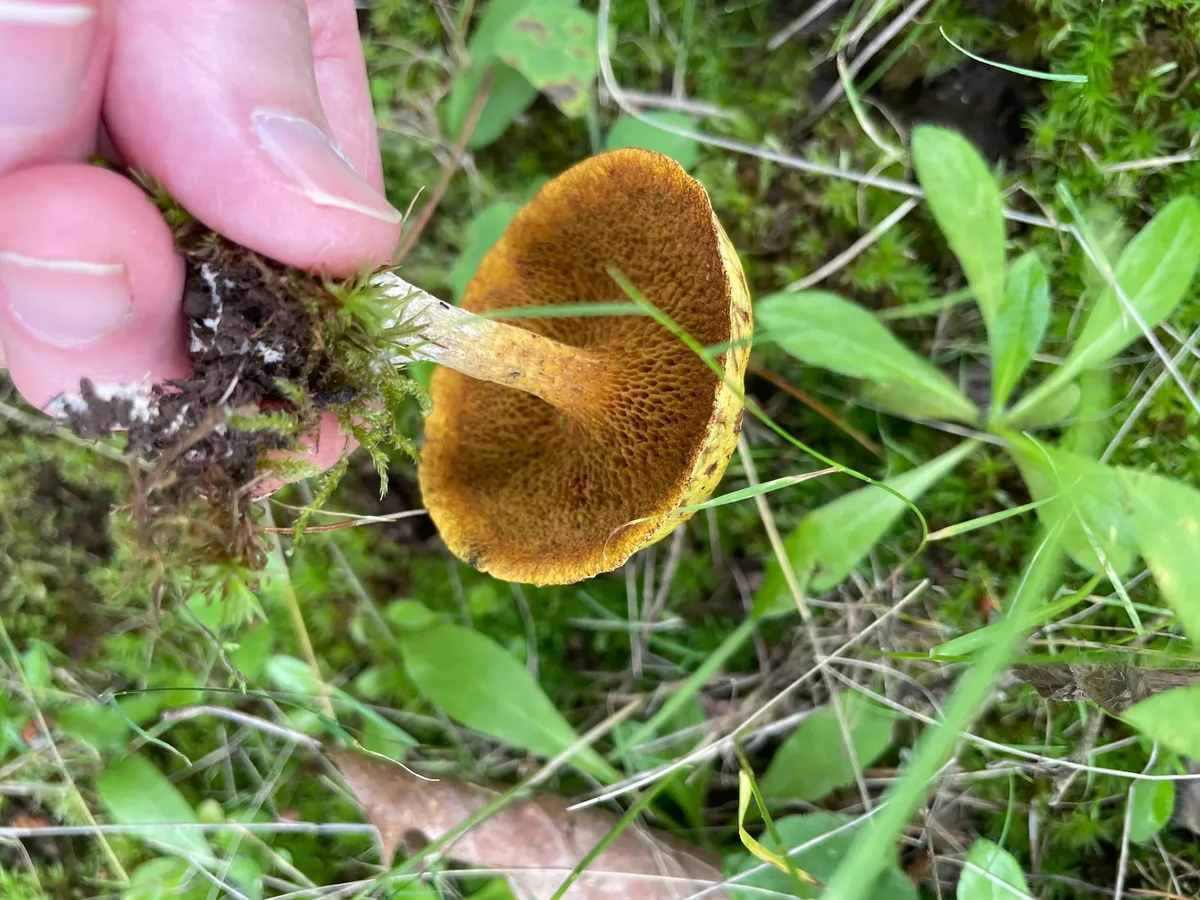 forestgray (CC0)
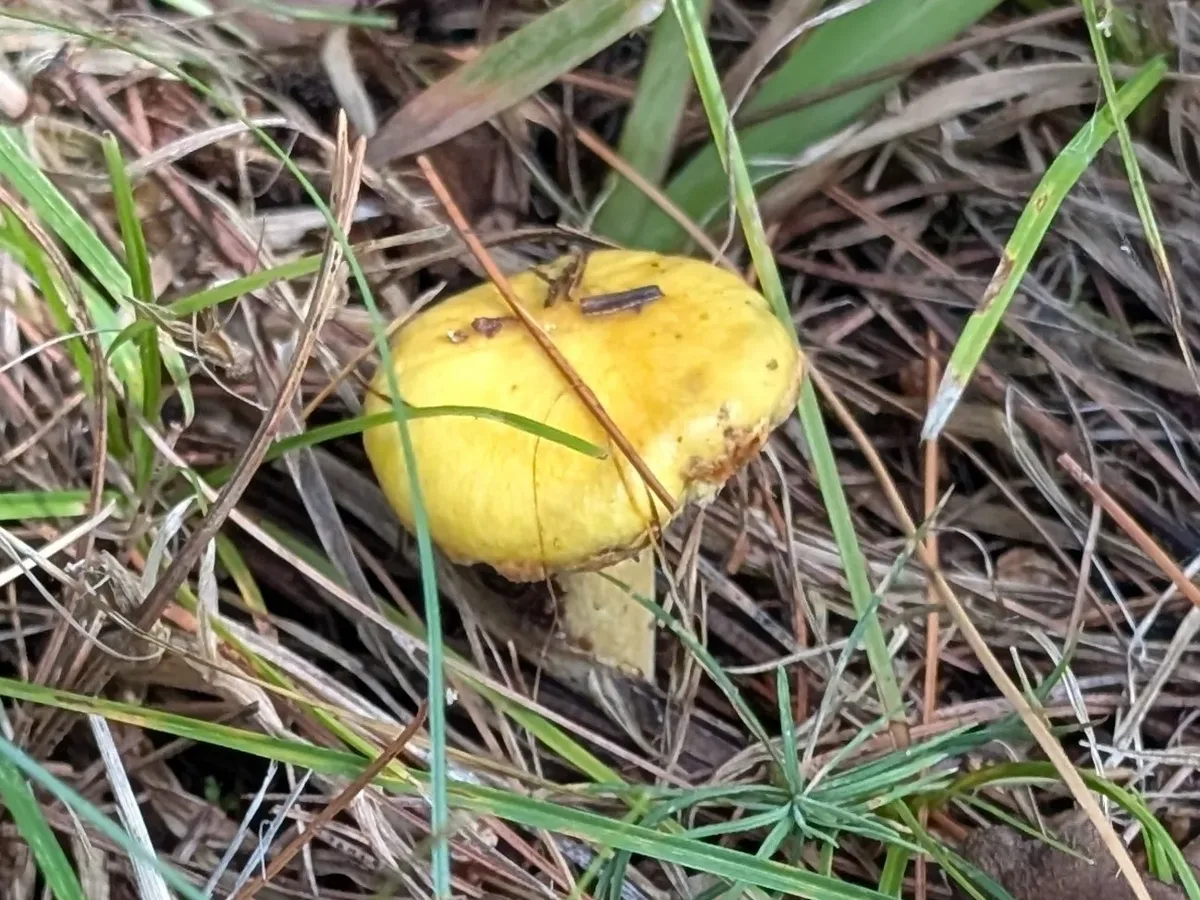 © Tom and T Herman (CC BY)© Norma Malinowski (CC BY)© Ken Clark (CC BY)
Good to eat, once you have identified it with certainty and cooked it through.
How to recognise it
Suillus americanus is one of the most instantly recognisable boletes in eastern North America, earning the name 'chicken fat suillus' for its vivid, butter-yellow colour that recalls the fat of a freshly roasted chicken.
Cap
The cap is a bright chrome- to egg-yolk yellow, coated in thick, shiny slime that makes it slippery to handle when fresh. Below the gluten, faint reddish-brown fibrils streak the cuticle radially, particularly toward the margin.
Pores
The pores and tubes echo this yellow tone, shifting to ochre in age.
Stem
The slender stem carries no ring whatsoever - an important point - but is dotted from top to bottom with reddish-brown glandular spots, which are small, resin-secreting cells that dry to dark brown streaks or specks.
This dotted stem, combined with the vivid yellow cap and pores and the complete absence of a ring, is a reliable identification suite for this species.
Flesh
The flesh is pale yellow and unchanging on exposure, without bluing or reddening.
Where & when it grows
Habitat
The chicken fat suillus is inseparable from eastern white pine (Pinus strobus) in the forests of eastern North America. It fruits in any habitat where white pine grows:
- mature mixed forests
- pure pine stands
- old-growth remnants
- secondary regrowth
- suburban parks
- golf-course woodlots
- roadsides with roadside pines
Because it is mycorrhizal, the mycelium lives in the root zone of living white pine trees, and no fruiting will occur without a nearby host.
The species has followed white pine into cultivation, appearing in European parks and plantations where Pinus strobus has been introduced, though it is far more common in its native range.
Look for mushrooms among the brown litter of fallen pine needles within the drip line of white pines, typically on acidic, sandy, or loamy soils.
When
Suillus americanus is primarily a summer bolete, fruiting earlier in the season than many of its relatives. Across the northeastern United States and southeastern Canada it begins appearing in late July, peaks through August and early September, and tapers off in October.
It tolerates summer heat better than most boletes, and abundant fruiting in July and August is typical when rainfall is adequate. Warm soil combined with summer rain events of 15 mm or more within a 7-10 day window reliably triggers flushes.
The season ends with the first sustained frosts of autumn, though fruiting may continue longer in the south (southern Appalachians, Gulf Coast pine forests) where frosts arrive later.
How it grows
Fruits singly or in loose, scattered groups, rarely tightly clustered. Individual basidiocarps arise from the duff layer or from soil immediately beneath white pine trees, often emerging in loose arcs or diffuse rings as the mycelial front spreads outward.
The mycelium is perennial, and a productive patch under a large white pine can be harvested repeatedly across many years.
Young buttons emerge as tight yellow-orange hemispheres, rapidly expanding to flat or umbonate caps over two to four days in warm, humid conditions.
Old specimens become very slimy and quickly colonised by fungal gnats and their larvae.
Fruiting conditions
Suillus americanus is a warm-season summer bolete, fruiting at higher soil temperatures than most northern boletes. Reliable flushes occur when 15 mm or more of rain falls over a 14-day period with soil temperatures between 12-22 °C. Unlike autumn boletes, it peaks in the heat of summer (July-August) and is one of the earliest boletes to appear under white pine each season. Fruiting tapers with the cooling temperatures of October and ceases after the first sustained frost.
Look-alikes
In its typical white pine habitat in eastern North America, Suillus americanus has no dangerous lookalikes. The realistic confusions are all with other Suillus species sharing the same habitat or nearby forests:
- Suillus granulatus also fruits under pines, with a slimy pale brownish-yellow cap and dotted stem, but its cap is much more subdued in colour - ochre to tan rather than vivid chrome-yellow - and it grows predominantly under two- and three-needle pines rather than white pine.
- Suillus luteus (slippery jack) is darker brown, has a prominent purple-brown ring on the stem, and grows under two-needle pines; the ring immediately separates it from S. americanus.
- Suillus spraguei (painted suillus, also called painted slippery jack) shares the white pine association and has a similar dotted stem but is distinguished by its dry, fibrous-scaly, brick-red to rosy cap that lacks any slime.
None of these lookalikes are dangerously toxic, though all Suillus species can cause mild gastrointestinal distress if eaten raw or in large quantities.
The combination of bright chrome-yellow slimy cap + no ring + dotted stem + white pine host is diagnostic.
Similar slimy cap and dotted, ringless stem, but the cap is pale ochre to tan - much more muted than the vivid yellow of S. americanus - and the pores exude milky droplets in young specimens (a unique character). Grows primarily under two- and three-needle pines, not white pine.
Has a dry, fibrous-scaly rust-brown cap, a ring on the stem, and a stem that becomes hollow in age; grows specifically under larch (Larix), not white pine. Excluded by host tree, dry cap, and ring presence.
Shares the eastern white pine habitat and dotted, ringless stem, but has a completely dry, fibrous-scaly cap that is brick-red to rosy-pink in colour - never slimy and never vivid yellow. The dry, scaly cap surface is an immediate separator.
Suillus luteus has a prominent purple-brown to dark chocolate-brown membranous ring on the stem - the single most reliable separator from S. americanus, which is entirely ringless. The cap of S. luteus is darker brown to ochraceous-brown, not the vivid chrome-yellow of S. americanus. Grows under two-needle pines (especially Pinus sylvestris), not white pine.
In the kitchen
Picking & cleaning
Harvest young to medium-aged specimens with firm caps; old, soft, or heavily fly-tunnelled fruit bodies should be left or discarded.
Cut cleanly at the base with a knife; pulling destroys the mycelium junction and disturbs the duff layer unnecessarily.
Always peel the slimy cap cuticle before cooking - it slips off easily when fresh, and its removal significantly improves both texture and flavour, eliminating the gluey, slightly bitter note the gluten contributes.
After peeling, wipe the stem clean and inspect for any insect galleries running through the flesh.
Collect only what can be used within a day or two, as Suillus species deteriorate rapidly in warm weather.
Cooking
The chicken fat suillus is a worthwhile, if mild-flavoured, edible mushroom once the slime layer is removed. Peel the cap cuticle first - it separates cleanly in fresh material.
The yellow flesh is tender and slightly spongy, with a mild, pleasantly mushroomy flavour lacking the depth of prime boletes like Boletus edulis.
It is best suited to supporting roles:
- sautéed in butter as a side dish with garlic, shallots, and fresh herbs;
- stirred into cream sauces, soups, or pasta;
- or used as a pizza or tart topping.
The pore layer can become mushy when cooked; removing it and using only the cap flesh produces a better texture, though this is optional.
Suillus americanus dries acceptably: slice thinly and dry at 40-50 °C, which intensifies the flavour considerably. Reconstituted in warm water, dried slices work well in risottos and bean soups.
The species is also suitable for pickling in acidulated brine. As with all wild mushrooms, eat only modest portions at first to test personal tolerance.
Good to know
Suillus americanus is a safe edible species with no deadly lookalikes in its typical habitat and no meaningful toxin risk. However, several cautions apply:
- All Suillus species contain compounds that can cause gastrointestinal upset - nausea, cramping, or loose stools - in susceptible individuals when eaten raw or in large quantities; always cook thoroughly before consumption.
- The slimy cap cuticle can act as a mild irritant or sensitiser: some individuals develop contact dermatitis from repeated handling of fresh specimens, and wearing gloves during preparation is advisable.
- The gluten (slime) layer contributes an unpleasant taste and sticky texture if not removed before cooking; peel it before use.
When identifying, always confirm:
- 1the host is eastern white pine (five-needle pine),
- 2the cap is vivid chrome-yellow with visible slime,
- 3the stem is dotted but ringless, and
- 4the flesh does not blue when cut.
These four points together exclude all dangerous look-alikes.
A reference guide - never an edibility guarantee. When in doubt, leave it out.