Lurid bolete
Suillellus luridussyn. Boletus luridus, Boletus erythropus var. luridus, Ixocomus luridus
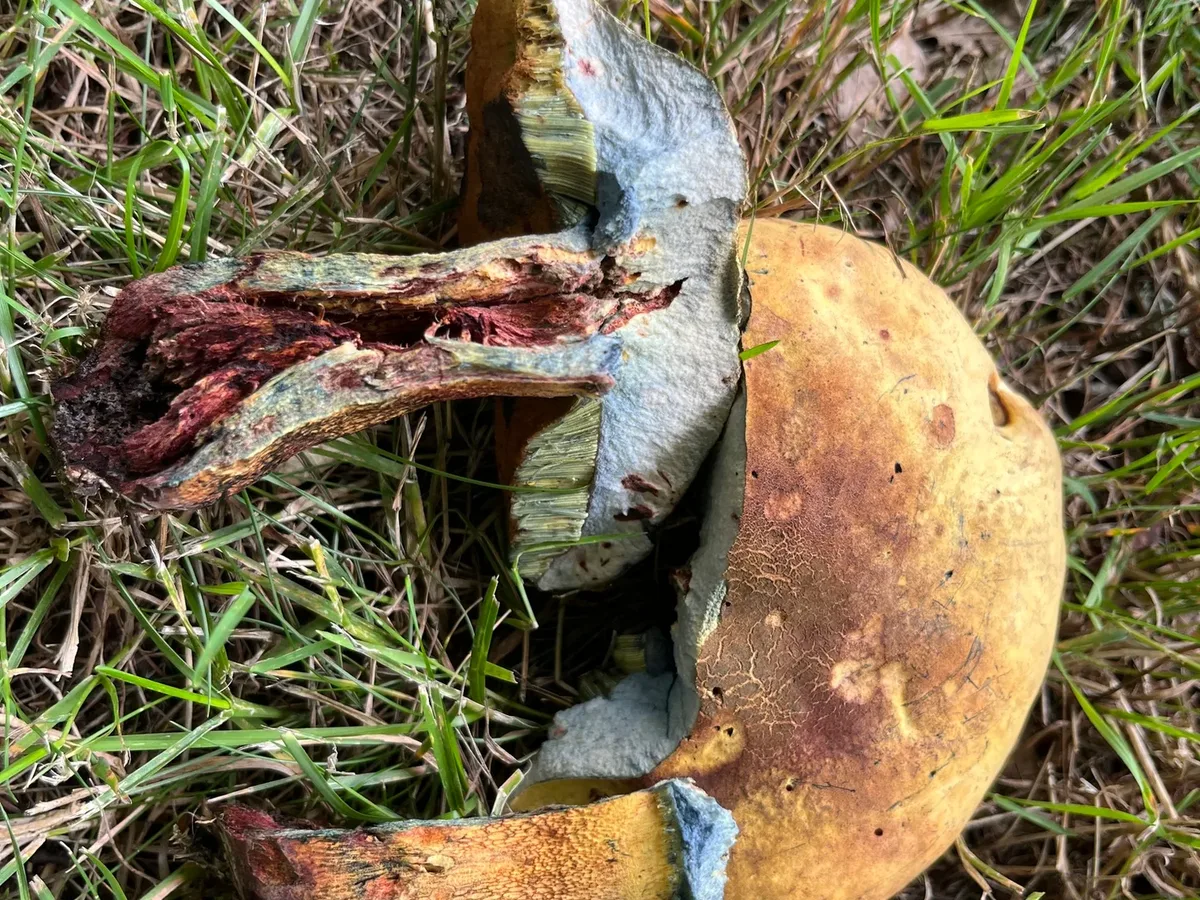 © Tony KM (CC BY)
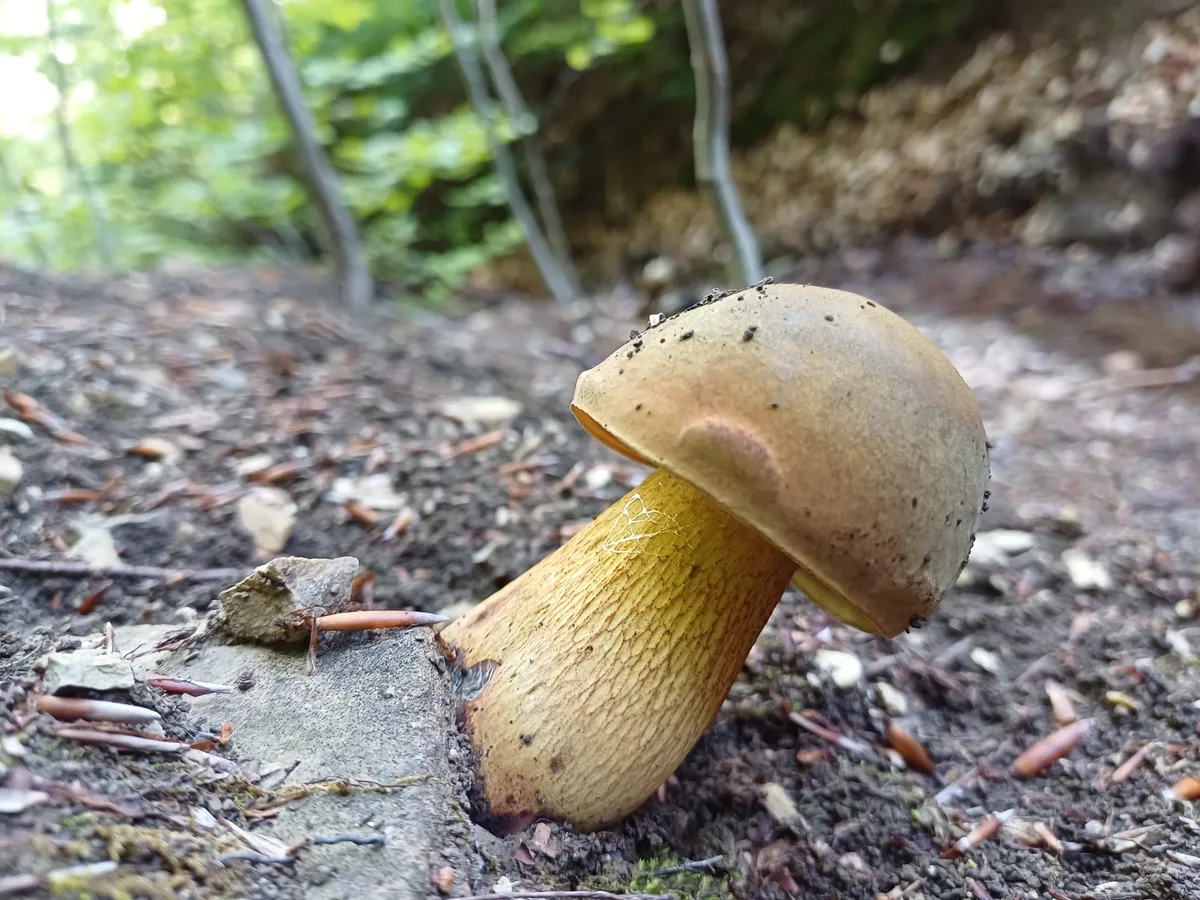 © Daniel Ellehammer Larsen (CC BY)
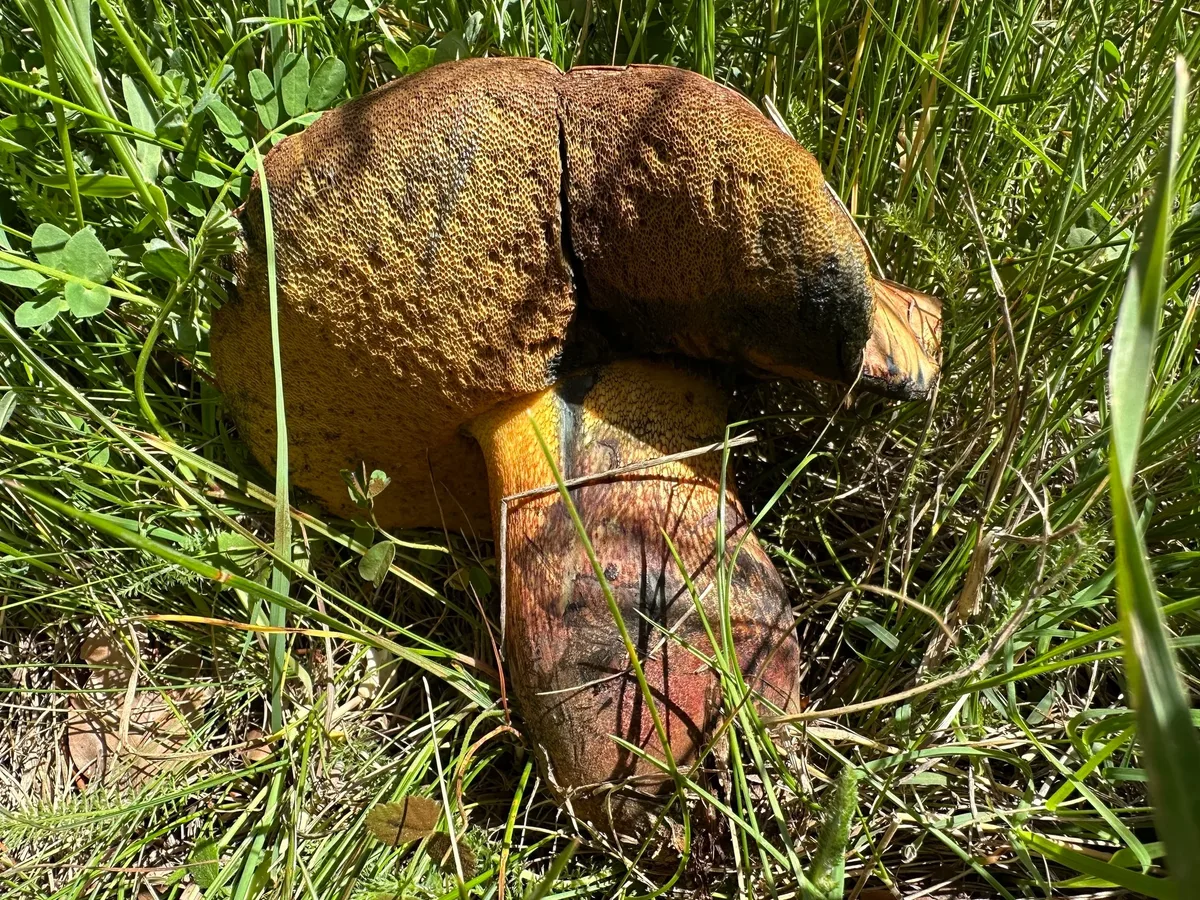 © Katrin Simon (CC BY)
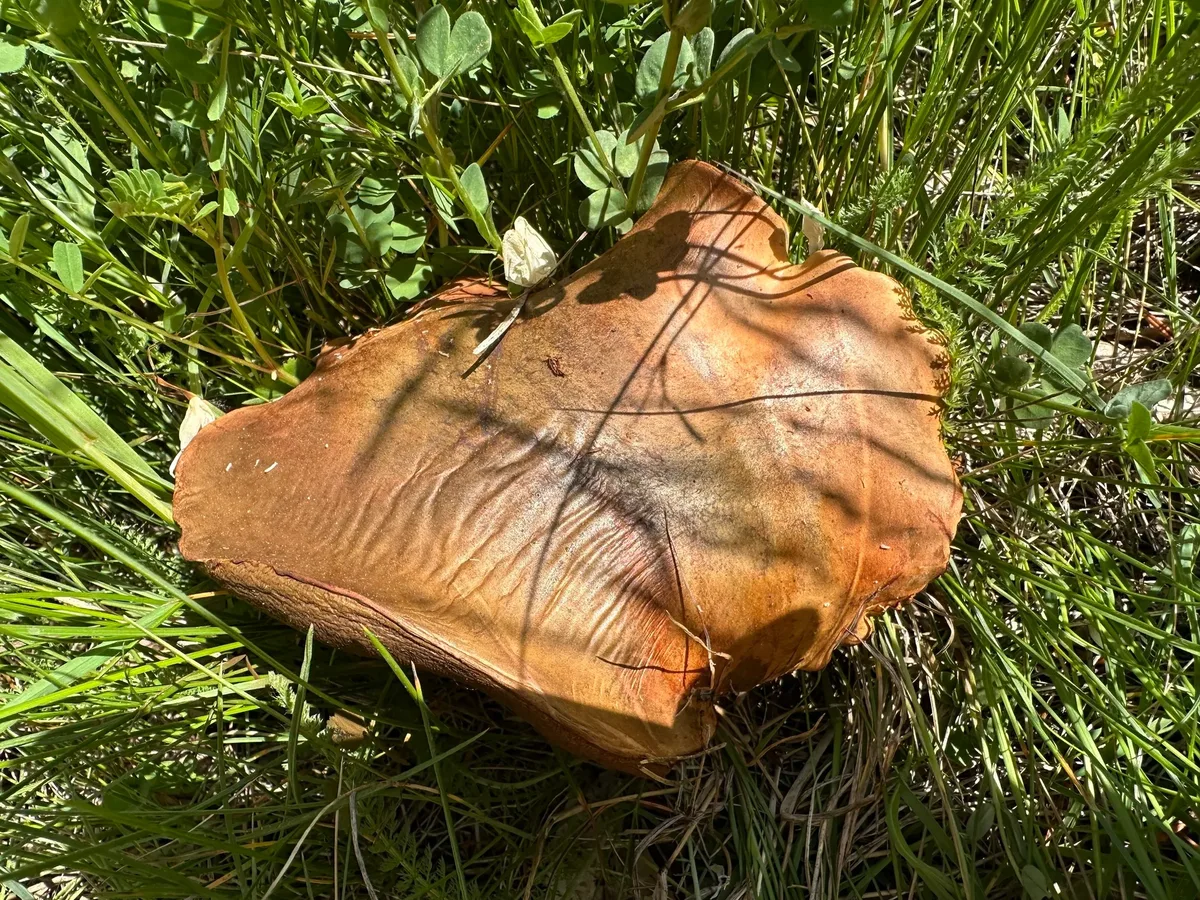 © Katrin Simon (CC BY)
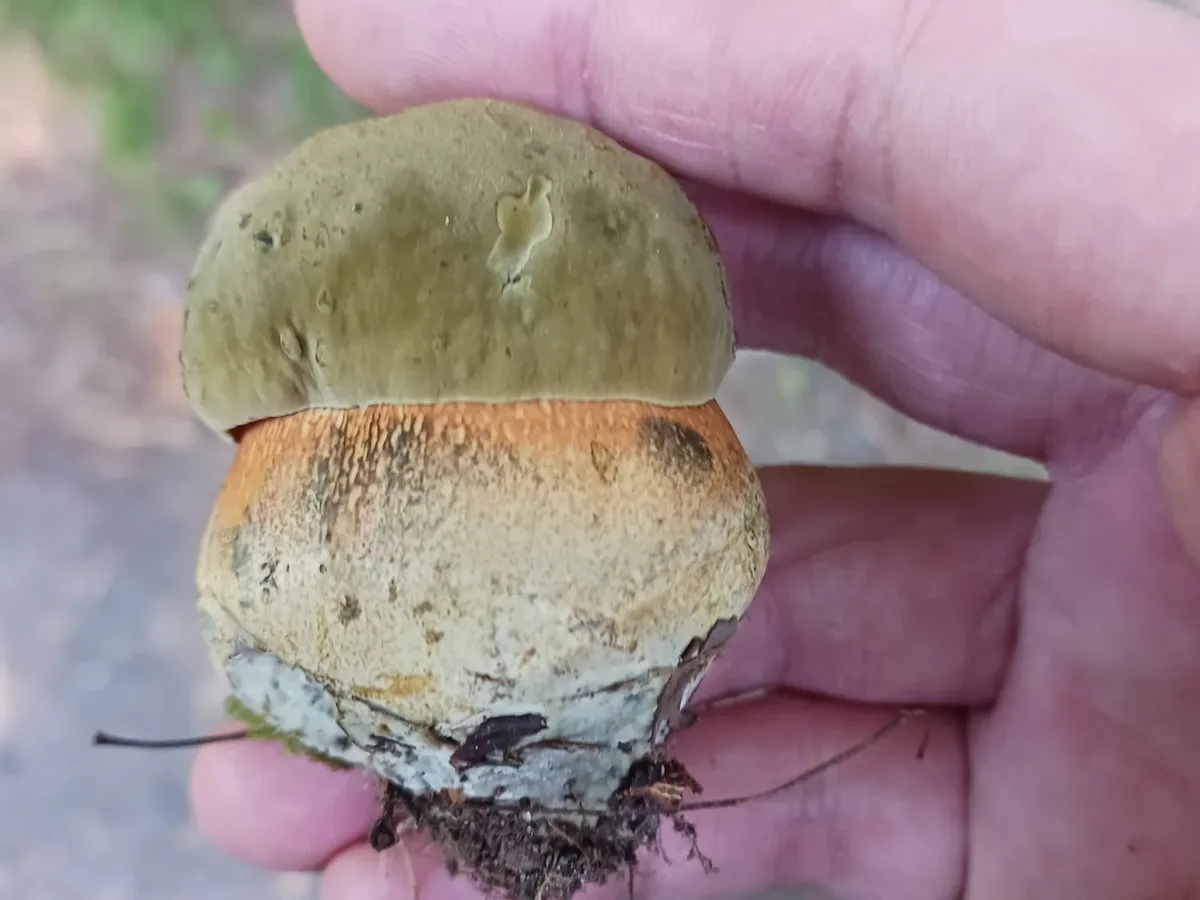 T. Pedro Hafermann (CC0)
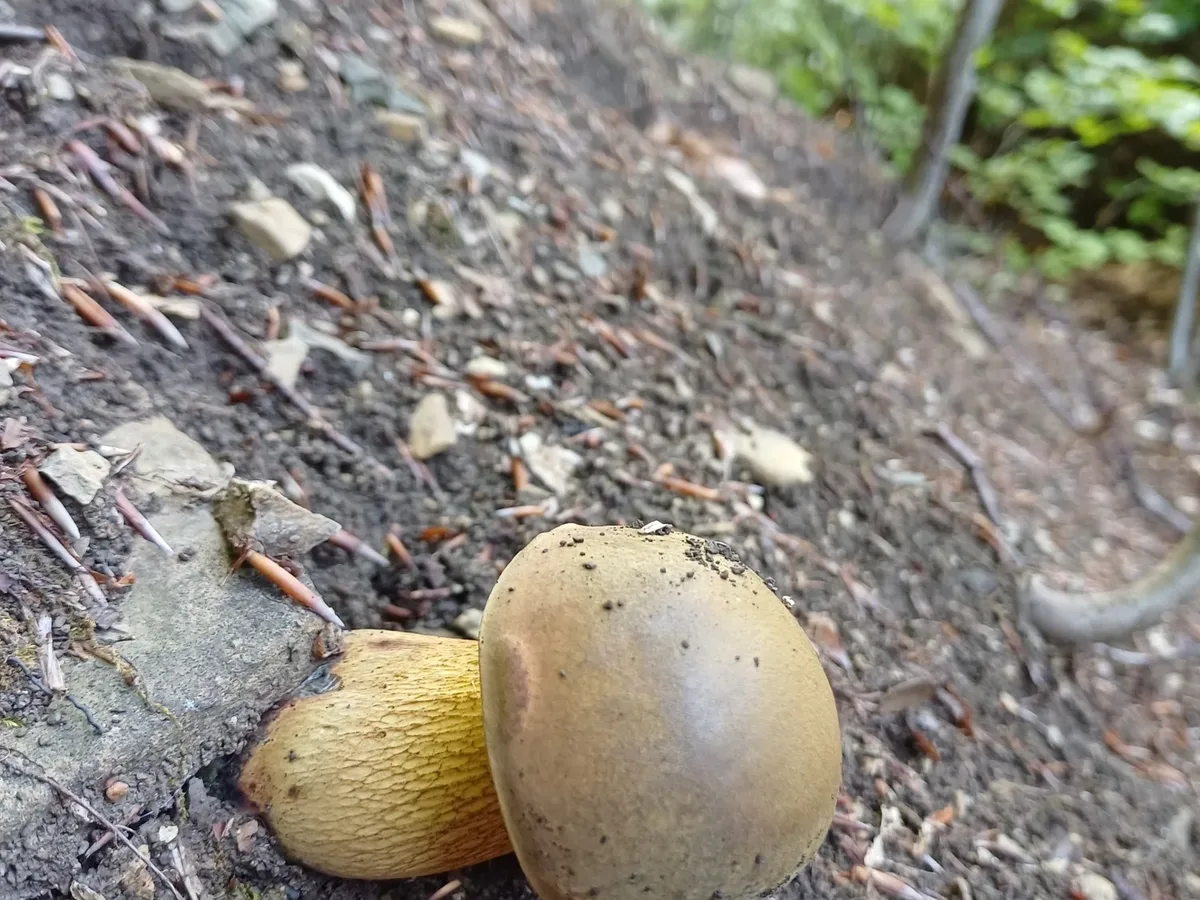 © Daniel Ellehammer Larsen (CC BY)
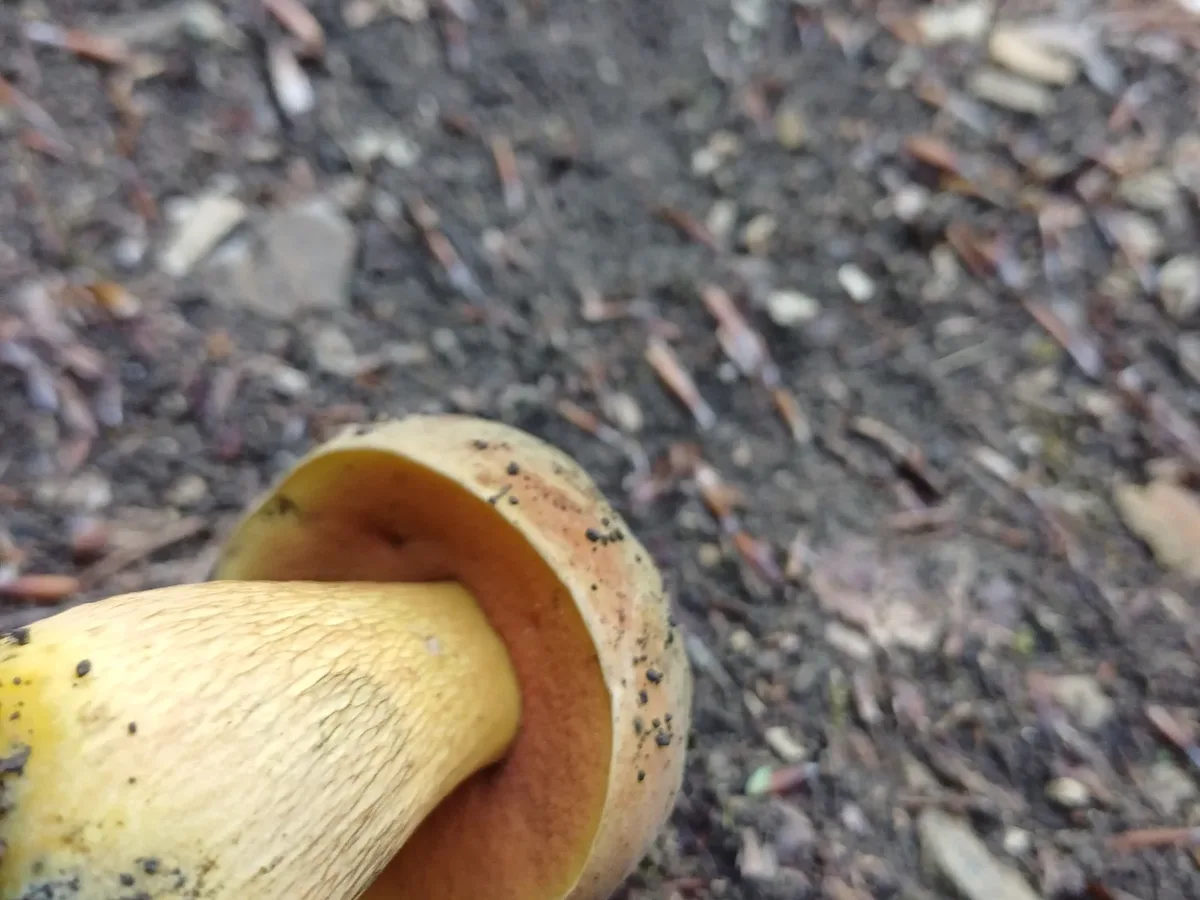 © Daniel Ellehammer Larsen (CC BY)
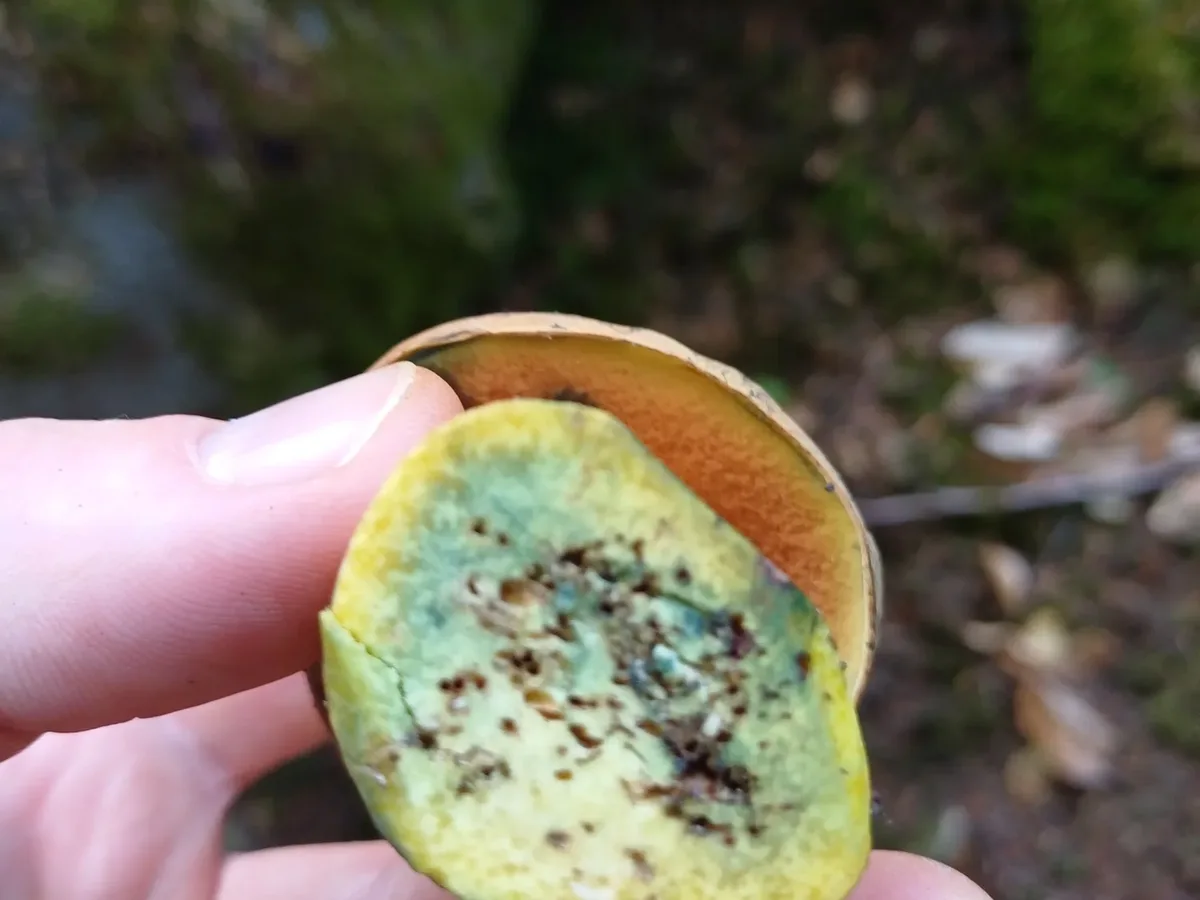 © Daniel Ellehammer Larsen (CC BY)
 © Tony KM (CC BY)© Tony KM (CC BY)© Daniel Ellehammer Larsen (CC BY)
Edible only with the right preparation - or safe for some people but not others. Learn the caveats first.
Never eat a mushroom you are not 100% sure of - check the look-alikes below, and always cook wild mushrooms.
How to recognise it
Suillellus luridus is a large, thick-fleshed bolete that makes itself known through vivid colouration and one of the most striking chemical reactions in the fungal world.
Cap
The cap reaches 5-20 cm across, starting convex and tightly rounded, then broadening to a cushion shape in maturity.
The surface is dry and finely velvety when young, smoothing out and sometimes turning faintly greasy in wet weather.
Colour ranges from pale ochreous-olive to mid olive-brown, often with yellowish or faintly reddish tints toward the margin; it never reaches the bright scarlet-orange of Neoboletus luridiformis.
Pores
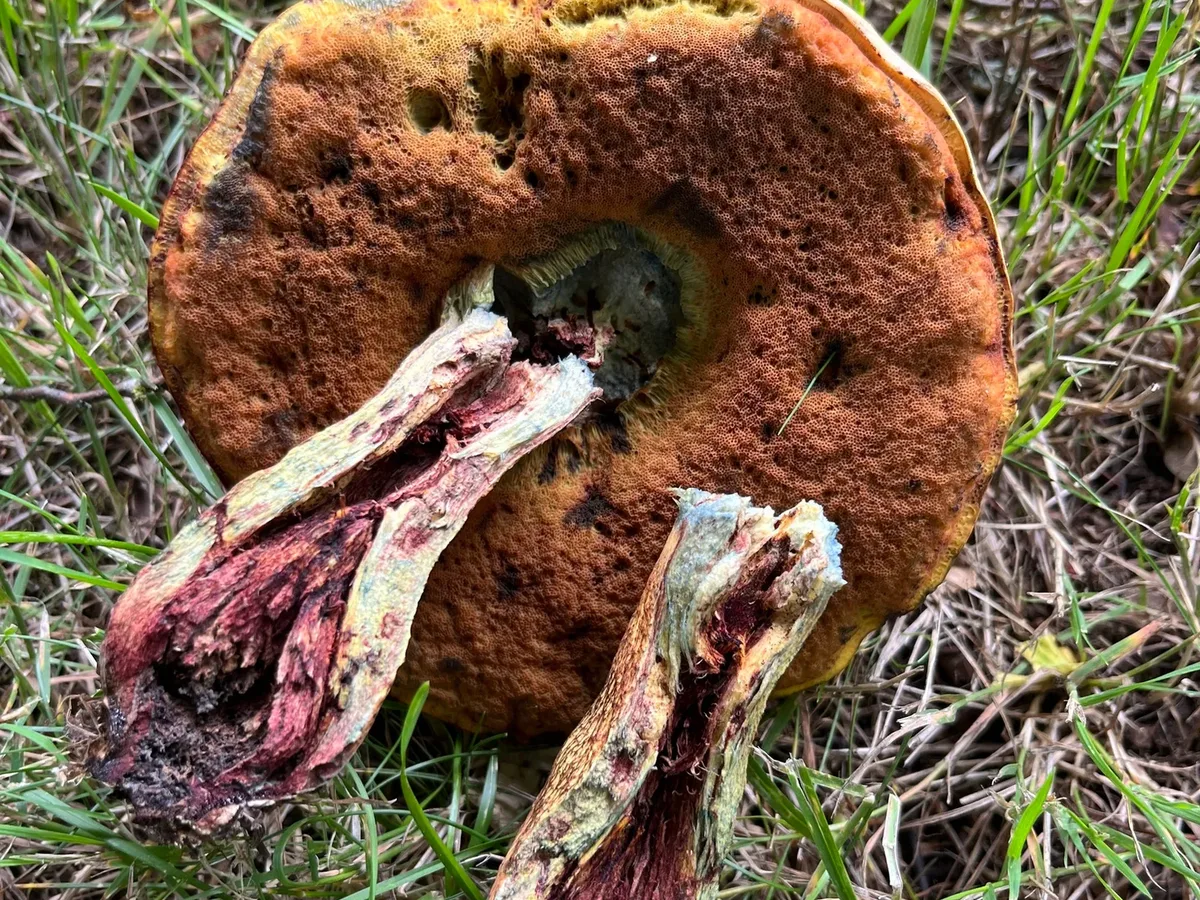
The undersurface is pored, not gilled: the pores are tiny (0.5-1 mm), regular, and a brilliant blood-red to orange-red when fresh and young, fading to brick-red or dull orange with age.
Press them gently and they stain deep blue-black within seconds - a reaction both immediate and dramatic. The tubes beneath are 10-20 mm long and similarly coloured.
Stem
The stem is the key diagnostic feature: 5-12 cm tall and 2-5 cm wide, typically club-shaped or bulbous at the base, and covered over most or all of its surface with a bold raised network of red ridges on a yellow to orange-red background.
This coarse reticulation runs down the full stem, distinguishing S. luridus from the deadly Rubroboletus satanas, whose net is largely confined to the upper stem and whose cap is whitish-grey.
Flesh
The flesh throughout is thick, firm, and pale to mid yellow - then, on cutting or breaking, it turns blue-black with a speed and completeness that can seem almost wilful: the entire interior can appear dark within a minute. That blue slowly fades to grey or greyish-brown.
Smell & taste
Smell is mild and pleasant; taste mild.
Why it's dangerous
Raw or undercooked consumption is dangerous and should be avoided entirely.
The species must be distinguished from Rubroboletus satanas with absolute certainty - misidentification of R. satanas as this species poses a serious poisoning risk.
Experienced foragers only.
Toxin
The precise toxic compound responsible for raw-consumption poisoning is not fully characterised, but is known to be heat-labile - substantially or completely destroyed by thorough cooking above 70°C.
The bluing reaction itself is caused by enzymatic oxidation of variegatic acid to methylene quinones; this is a separate chemical phenomenon from the toxin.
Reports of alcohol-intolerance reactions are anecdotal, and the mechanism (coprine or similar) has not been confirmed by laboratory isolation for this species.
Symptoms
After eating raw or undercooked specimens, beginning 30 minutes to 3 hours after ingestion:
- nausea
- vomiting (often profuse)
- abdominal cramps
- diarrhoea
- profuse sweating
Symptoms generally resolve within 12-24 hours with supportive care, but severe cases may require hospitalisation for fluid replacement.
If alcohol-interaction symptoms occur (flushing, tachycardia, hypotension), treat supportively; symptoms usually resolve within a few hours once alcohol is eliminated.
Staying safe
Suillellus luridus occupies a tricky edibility category. It is consumed traditionally across Central and Eastern Europe after thorough cooking, and many thousands of people eat it each year without harm.
However, it is unequivocally poisonous raw, causing severe gastrointestinal upset, and has caused documented poisonings even after cooking - particularly if cooking was incomplete.
The heat-labile toxin is destroyed by sustained high-temperature cooking; gentle steaming or brief sautéeing may be insufficient.
- Never blend or consume in raw preparations.
- Keep away from children who might nibble raw specimens in the field.
A possible disulfiram-like reaction with alcohol (vomiting, flushing, palpitations) has been reported anecdotally; the mechanism has not been confirmed in the laboratory for this species. If in doubt, abstain from alcohol for 24-48 hours after eating.
Beginners should not collect this species: the risk of confusing it with R. satanas is real, and no reward from eating S. luridus justifies that risk until the identifier is thoroughly experienced with both species in hand simultaneously.
For experienced foragers confident in identification:
- cook thoroughly;
- eat in moderate quantity on a first trial;
- always retain a fragment of the cooked material for identification in the event of any adverse symptoms.
Where & when it grows
Habitat
S. luridus is a strict mycorrhizal partner of broadleaved trees, living its hidden life as a thread of mycelium woven through the roots of oaks and other broadleaves - a partnership that can persist for decades before a single fruiting body appears.
It favours soils that are calcareous or at least base-rich: limestone plateaux, chalk downland woodland edges, and riverine forests on alluvial mineral soils. It avoids strongly acidic or highly organic ground.
A warmth-loving species, it reaches only the southern fringe of Scandinavia (Skåne and Denmark), but across Central Europe, the British Isles (mainly southern England), France, Germany, and the Balkans it can be locally common.
Parkland oaks, ancient wood-pastures, and old deciduous forest edges are among its best habitats. It occasionally grows under beech or hornbeam on similar soils, but oak is the primary host.
Fruiting bodies reliably emerge near the same mycelial network year after year - so a spot that produces them once is worth remembering.
When
Fruiting runs from June to October in Central and Western Europe, with a strong peak in July, August, and September when soils are warm (above 14°C) and moisture arrives after rain. This is a high-summer species, not a spring mushroom.
Individual flushes typically follow warm rain by 7-14 days - the mycelium responds to the combination of warmth and moisture.
At altitude in the Alps or Apennines the season compresses to August-September. In unusually warm autumns it can persist into October or even early November at favourable low-elevation sites.
How it grows
Emerges singly or scattered rather than in dense clusters.
Fruiting bodies push up directly from the soil, anchored by the robust bulbous stem base, and expand quickly - from small button to full size in 3-5 days under warm, moist conditions.
The above-ground fungus is only the visible tip. The mycelium threads the soil for years or decades, largely invisible, maintaining its root partnership with host trees and returning to fruit in the same places season after season as long as those trees stand.
Fruiting conditions
Warm-weather species requiring sustained soil warmth and adequate rainfall. Calcareous soils drain quickly, so a significant rain event (>25 mm in 2 weeks) is often the trigger. Fruiting ceases once night temperatures drop consistently below 8-10°C.
Look-alikes
Three lookalikes are of critical importance:
- 1Rubroboletus satanas - DEADLY. Satan's bolete shares the red-pored, bluing habit but differs decisively: its cap is whitish-grey to pallid, never olive-brown; the stem reticulation is restricted largely to the upper zone on a pale background (not extending over most of the stem as in S. luridus); and mature specimens have a revolting cadaverous or sickly-sweet stench. Eating R. satanas causes severe acute gastrointestinal poisoning. If you have any doubt about cap colour or stem reticulation pattern, do not pick.
- 1Neoboletus luridiformis (scarletina bolete) - edible when cooked, not deadly, but confusion is possible in the field. It has a darker brown to blackish-red cap rather than olive-brown, and its stem surface is covered with granular reddish dots or points (pruinose-dotted) rather than a raised net; it blues equally dramatically.
- 1Suillellus queletii (formerly Boletus queletii) - very similar; shares the red pores, olive-brown cap, and bluing flesh; differs in having a stem that is smooth to only faintly reticulate (not coarsely netted) and tends to uniform orange-red without a yellow background. Treat as S. luridus for edibility purposes - edible only when thoroughly cooked.
Also note that Imleria badia (bay bolete) - which has cream-white to yellow-white pores that do not flush red, and a plain brown stem without reticulation - is never a realistic confusion for experienced foragers, but beginners should compare pore colour carefully.
Cap is whitish-grey to pallid, never olive-brown; stem reticulation is confined largely to the upper stem only on a pale background (not extending over most of the stem as in S. luridus); mature specimens have a revolting cadaverous or sickly-sweet stench; stem base broadly and symmetrically rounded-bulbous. If the cap is whitish or pale grey, do not pick.
Pores are cream to yellow-white, not red; bluing is weaker and slower; stem is brown without any red or reticulation; cap is bay-brown without olive tones. Edible.
Virtually identical cap and pore colour; stem smooth to only faintly reticulate (not coarsely netted), tending to uniform orange-red without yellow background. Edible only when thoroughly cooked; treat with same caution as S. luridus.
Cap is darker - blackish-brown to red-brown rather than olive-brown; stem surface is covered with granular reddish dots or points (pruinose-dotted), NOT forming a raised net or reticulation; equally strong bluing reaction. Edible when thoroughly cooked.
A reference guide - never an edibility guarantee. When in doubt, leave it out.