Old man of the woods
Strobilomyces strobilaceussyn. Strobilomyces floccopus, Boletus strobilaceus, Boletus floccopus
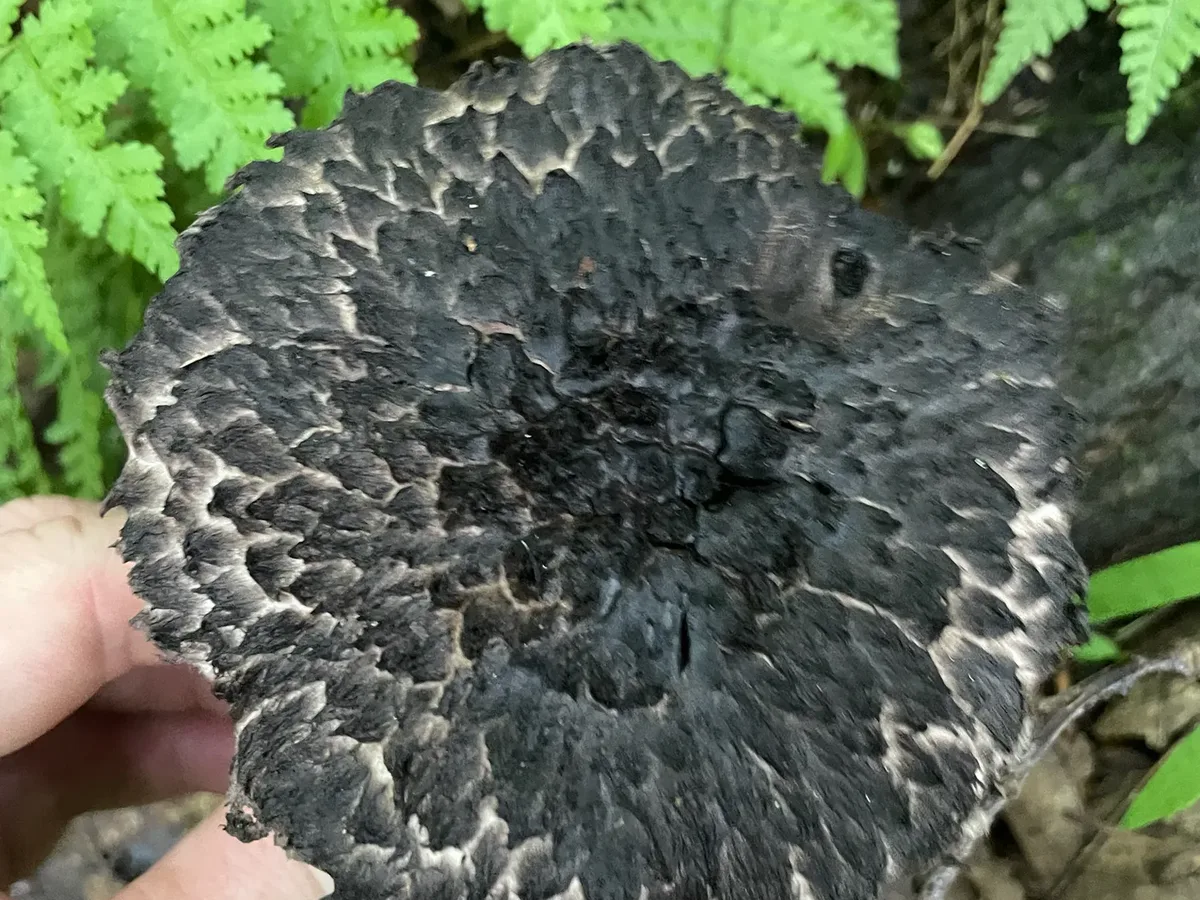 Nathan Cobbett (CC0)
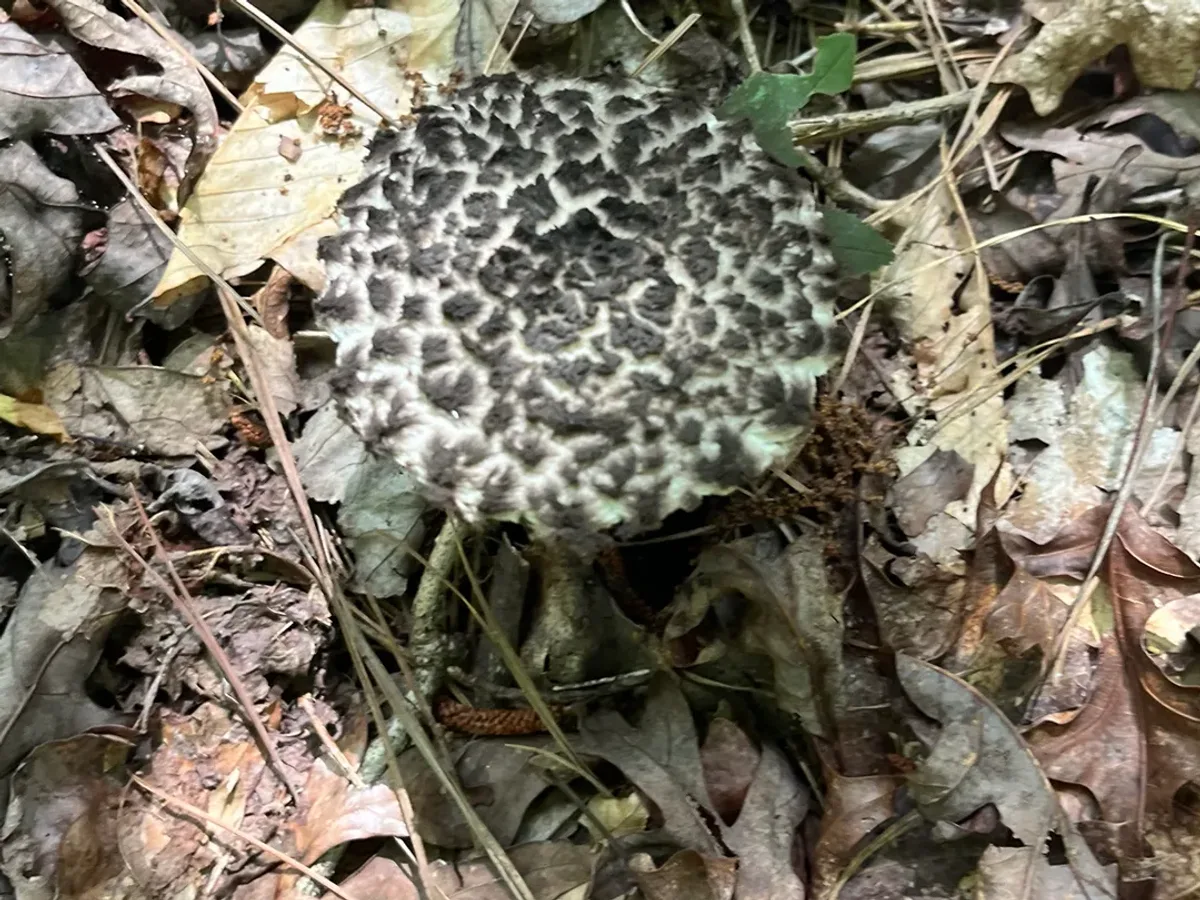 Niyan Shehan (CC0)
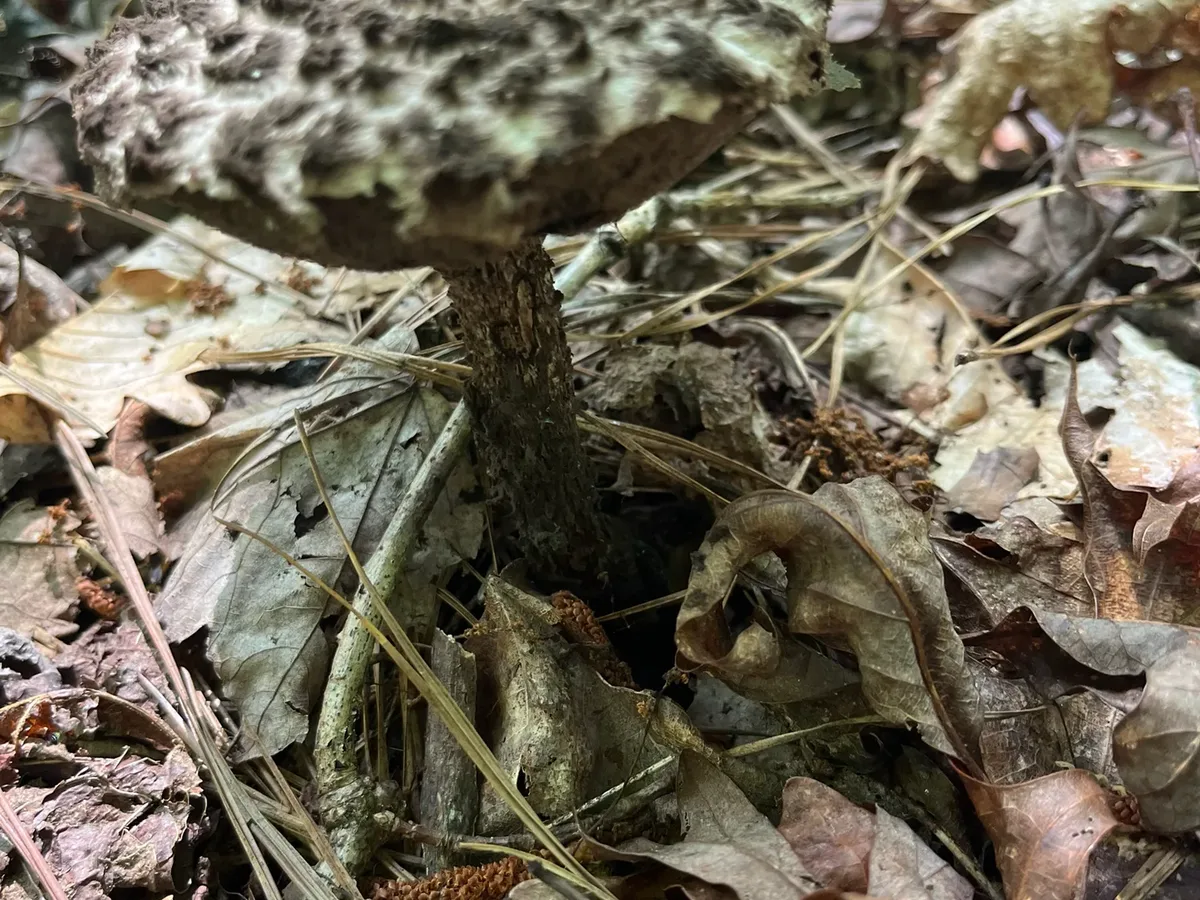 Niyan Shehan (CC0)
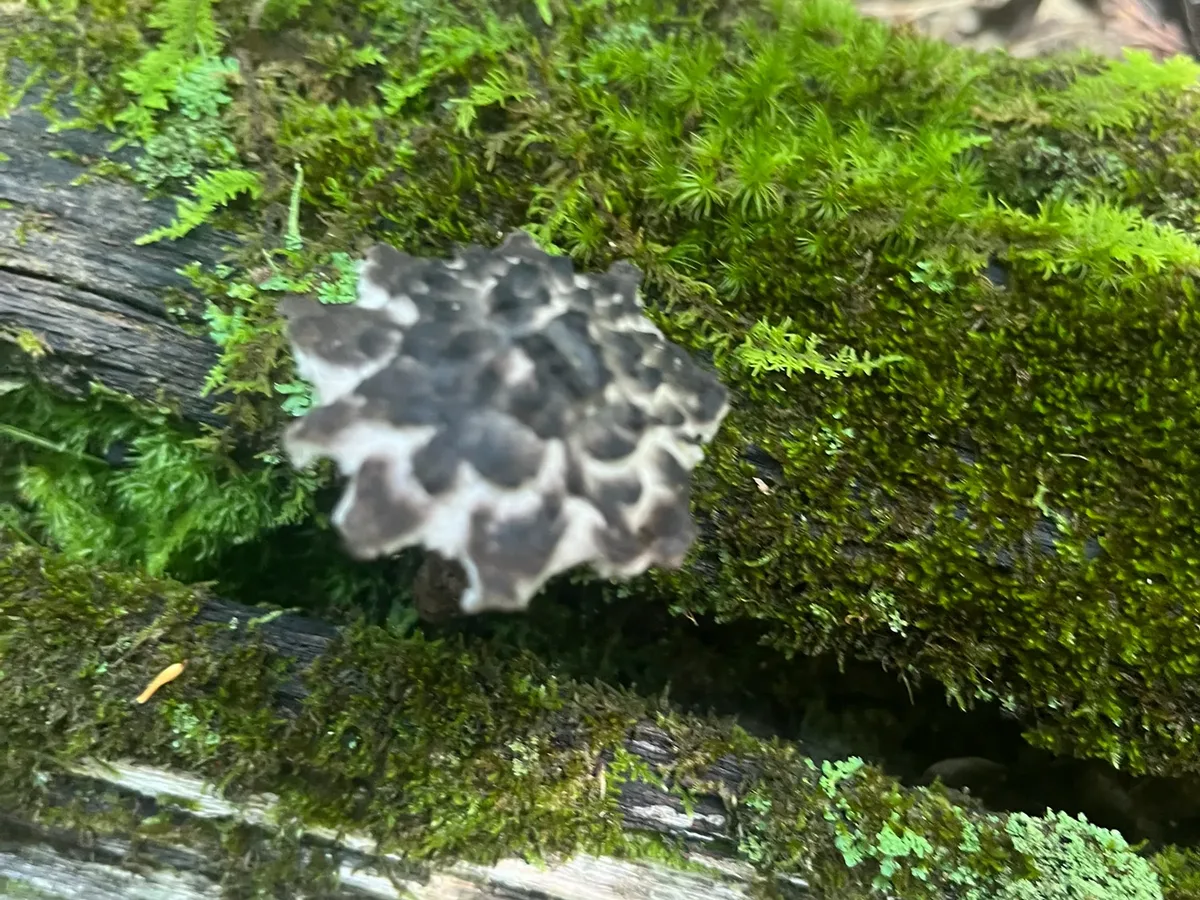 Niyan Shehan (CC0)
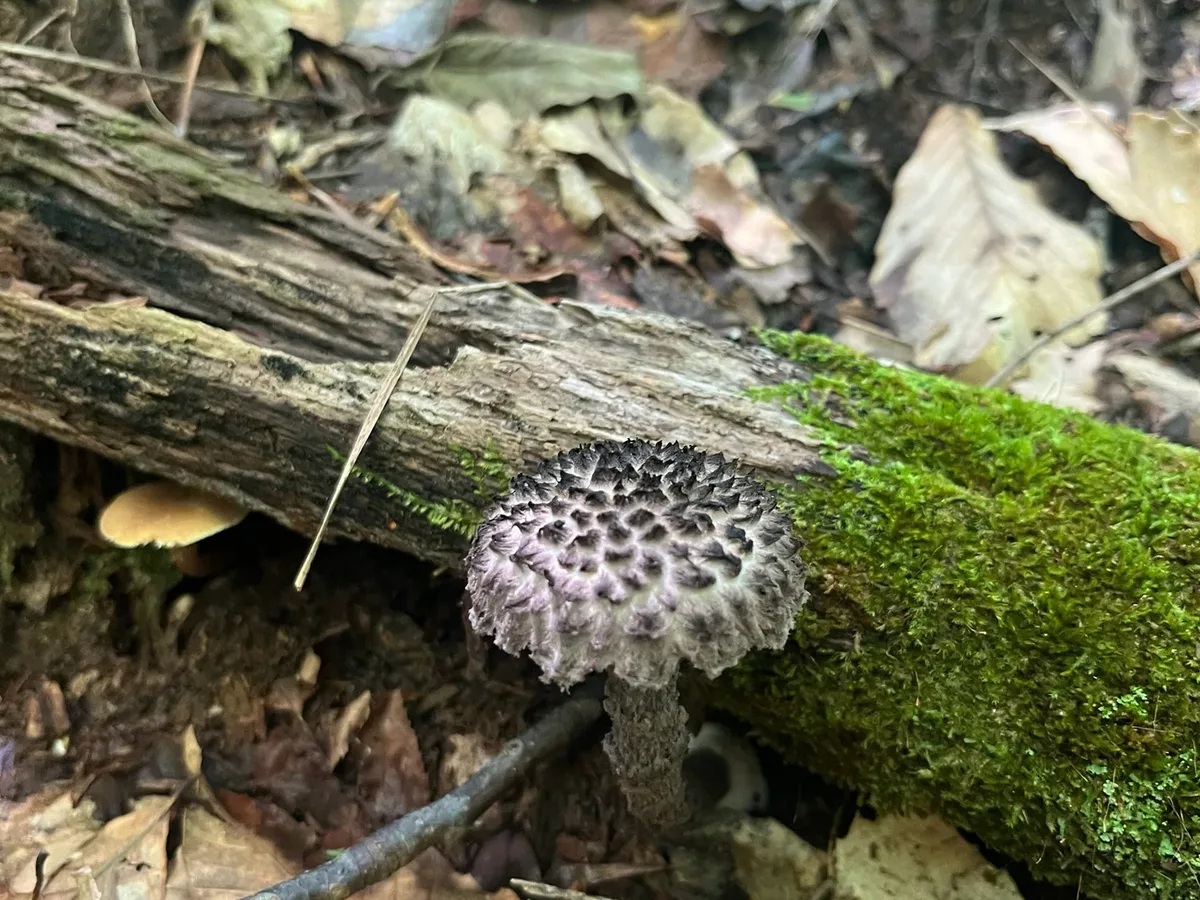 Niyan Shehan (CC0)
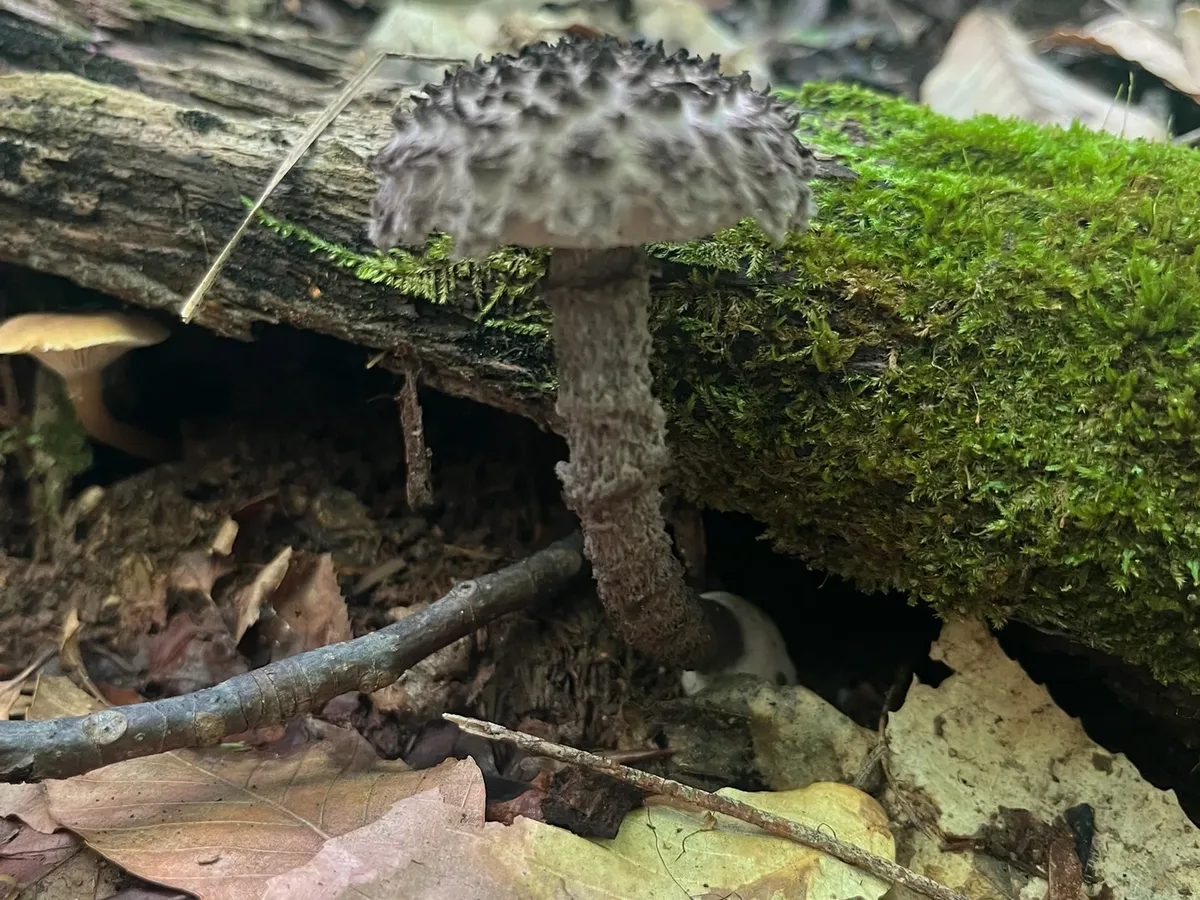 Niyan Shehan (CC0)Nathan Cobbett (CC0)Niyan Shehan (CC0)
Good to eat, once you have identified it with certainty and cooked it through.
How to recognise it
Few woodland mushrooms announce themselves as plainly as the old man of the woods - its common name captures it well.
Cap
The cap is domed to broadly convex, 5-15 cm in diameter, and thickly armoured with large, coarse, erect scales of blackish-grey to dark brown that stand up like the bracts of a pine or fir cone (the genus name comes from the Greek strobilos, a pinecone).
Beneath those scales the underlying tissue is pale whitish-grey in youth, but cap and scales alike darken progressively toward sooty black as the fruiting body ages.
Flesh
Touch it, cut it, bruise it - and it darkens before your eyes. This rapid oxidative blackening is so consistent and so fast that it functions almost as a field chemical test.
A young specimen sliced open turns pinkish-red within seconds, then slowly shifts through grey to deep black over the next 15-30 minutes. No other European bolete follows this exact pale → pink/red → black progression, which makes it the most reliable single identification criterion the species has.
Gills / Pores
The pore surface starts pale grey and is initially masked by a thick, coarse, blackish-grey partial veil stretched between cap margin and stem. As the cap expands the veil tears, leaving a shaggy ring-zone on the stem and cottony fringe remnants at the cap edge.
The pores themselves are angular, 1-2 per mm, and darken to grey or black with age.
Stem
The stem is 5-15 cm tall and 1.5-3 cm thick - robust, fibrous-scaly, darkly coloured below the ring zone, and paler grey-white above it. Young stems are firm and solid; older ones become spongy or hollow.
Smell & taste
Smell is mild and indistinct. Spore print is black to dark purplish-black - a further distinguishing point, since most European edible boletes yield brown or olive-brown prints.
Where & when it grows
Habitat
The old man of the woods is an obligate mycorrhizal partner, its mycelium woven quietly into the roots of its host trees - principally:
- oaks (Quercus spp.)
- beech (Fagus sylvatica)
- hornbeam (Carpinus betulus)
- chestnut (Castanea sativa)
It occasionally associates with conifers at the edges of its range.
These underground partnerships typically span decades, which is why the species is bound to mature, relatively undisturbed woodland: heavily managed forests and newly planted stands rarely support it. It prefers deep, humus-rich, acidic to slightly neutral soils.
In Europe it occurs most frequently in lowland and colline forests of the central and southern zones - widespread in the British Isles, France, Germany, the Benelux countries, and Iberia, extending east through central Europe and into parts of Russia - and becomes progressively rarer northwards into boreal regions.
In North America an ecologically similar (and possibly conspecific) taxon occurs under oaks and conifers in eastern hardwood forests.
Fruiting bodies appear singly or in small scattered groups on the forest floor, occasionally among mosses or leaf litter; they are never found in large dense clusters.
When
The fruiting season runs from mid-summer into mid-autumn. In central and western Europe this is typically from late July or August through October, with the main flush concentrated in August and September (approximately calendar weeks 32-39).
Warm, humid summers preceded by moderate rainfall can bring early flushes in July; the season closes when overnight temperatures drop consistently below freezing. It does not fruit in spring.
Because individual specimens rapidly blacken and decay, they can appear abundant in a good year yet be easy to overlook once past their prime.
How it grows
As a mycorrhizal species, Strobilomyces strobilaceus forms long-lived subterranean associations with the root systems of its host trees and cannot be cultivated in the usual sense - it does not respond to the substrate cultivation techniques used for saprotrophic species.
Fruiting bodies emerge once the mycelium has accumulated sufficient carbohydrate reserves and enough soil moisture is available. There is typically a lag of 10-21 days after a significant rainfall event before new fruiting bodies appear.
The species fruits at best sporadically and in moderate numbers; bumper years alternate with lean ones.
Growth is relatively slow: a young button can take several days to fully expand, and old specimens persist (though increasingly blackened and insect-riddled) for one to two weeks.
Fruiting conditions
Requires warm, humid summer conditions; most productive after moderate summer rains when soil temperatures are in the range 12-20 °C. Flush lag is typically 10-21 days post-rainfall. Ceases fruiting when soils cool below approximately 8-10 °C in autumn.
Look-alikes
The combination of pine-cone-like shaggy scales, rapid flesh blackening, and black spore print is unique among European boletes and renders serious confusion unlikely for an experienced forager. No toxic European bolete shares this profile.
In North America, S. strobilaceus sensu lato is sometimes distinguished from closely related species in the S. confusus / S. dryophilus complex, all of which are edible and structurally similar.
No deadly lookalikes are known - the blackening flesh and black spore print effectively exclude all of the dangerous Amanita species (which have white gills, not pores, and a volva). The species is unmistakable to anyone who has seen it once.
Satan's bolete is a poisonous species causing severe gastrointestinal illness (vomiting, diarrhoea, potentially requiring hospitalisation) via bolesatine/lectin-mediated toxins; it is not classified as deadly in the toxicological literature. Structurally it looks nothing like S. strobilaceus: it has a pale whitish cap, bright red pores, and flesh that blues (not blackens) on cutting, with no shaggy scales and an unpleasant smell. Confusion with S. strobilaceus requires ignoring every key feature and is essentially impossible in practice. Included here because beginners sometimes ask about darkening boletes generally.
North American taxon with finer, more appressed scales and slightly smaller spores. Equally edible. Confusion is possible in North America but not ecologically relevant in Europe.
In the kitchen
Picking & cleaning
Harvest young, firm specimens before significant blackening has occurred - the flesh is still white to pale grey inside and the texture is best at this stage. Old, blackened, or heavily insect-tunnelled specimens are unpleasant and should be left.
In the field:
- Cut the stem at ground level rather than pulling, to avoid disturbing the mycorrhizal mat.
- Assess freshness: because the flesh blackens within minutes of cutting, a sliced stem should show white or pale pink flesh with only a moderate darkening.
- Brush the coarse scales off; the flesh does not peel cleanly.
Strobilomyces is rarely collected in large quantities - its relative scarcity, combined with the rapid blackening of cut flesh, makes it a curiosity rather than a basket-filling find. Nevertheless, freshly collected young specimens are worthwhile eating.
Cooking
The culinary reputation of old man of the woods is modest but real - it is edible, nutritious, and distinctly flavoured, though it is more prized as a novelty or supporting ingredient than as a centrepiece. The flesh has a mild, slightly earthy, somewhat robust mushroom flavour.
Importantly, cooking turns the flesh uniformly black or very dark grey. This is purely aesthetic and does not affect taste or safety, but it will colour stocks, risottos, and sauces dramatically; some cooks find this off-putting.
Young, firm specimens are best. Suitable preparations include:
- sautéing in butter with garlic and herbs, where the colour becomes part of the visual character
- inclusion in mixed mushroom dishes where the dark colour is diluted
- mushroom soups, where colour is less critical
- drying - dried slices rehydrate well and retain flavour
The thick, firm flesh holds its texture better than many boletes when cooked. Avoid combining with very pale, cream-coloured dishes unless the dramatic colour change is intentional. As with all wild boletes, thorough cooking is recommended.
Good to know
Strobilomyces strobilaceus has no known toxicity and is not associated with poisoning cases in the mycological literature.
Because the flesh blackens dramatically it can look alarming to a novice, but this is a normal oxidation reaction and poses no risk.
Identification is straightforward thanks to a unique combination of features:
- shaggy pine-cone appearance
- black spore print
- three-stage flesh colour change
Nevertheless, as with all wild fungi, collect only when identification is certain, and avoid old, decomposing specimens. There are no deadly lookalikes in Europe.
A reference guide - never an edibility guarantee. When in doubt, leave it out.