Eastern cauliflower mushroom
Sparassis spathulatasyn. Sparassis americana, Clavaria spathulata
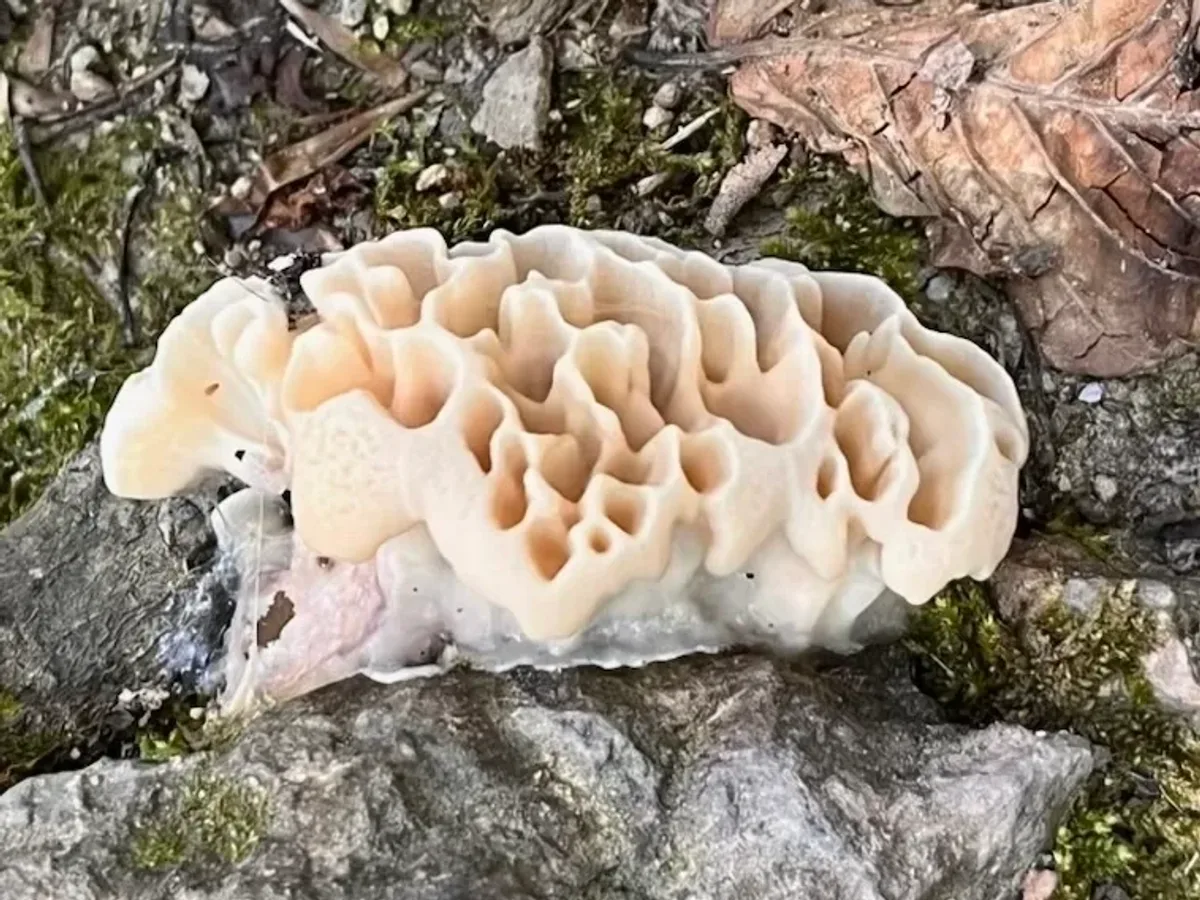 © martin_livezey (CC BY)
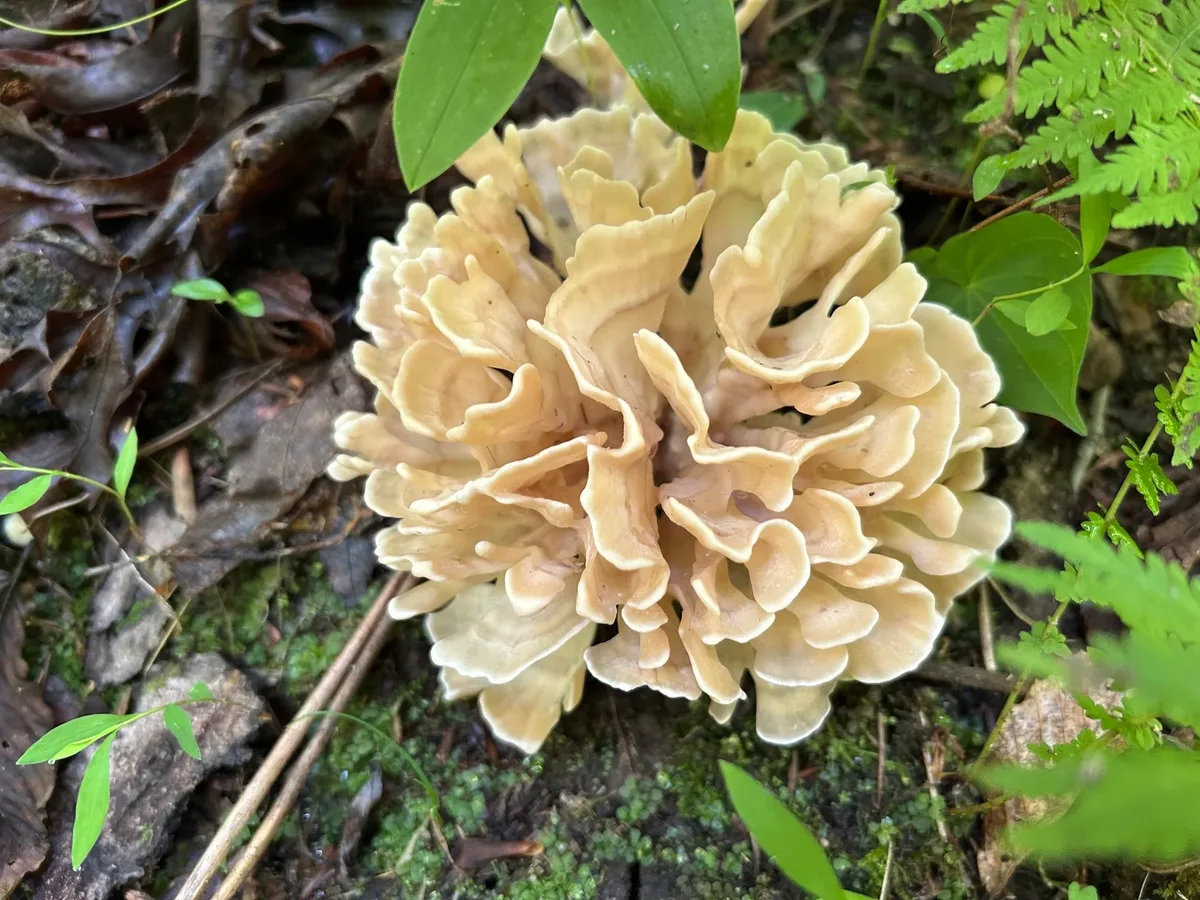 Andrea Kautz (CC0)
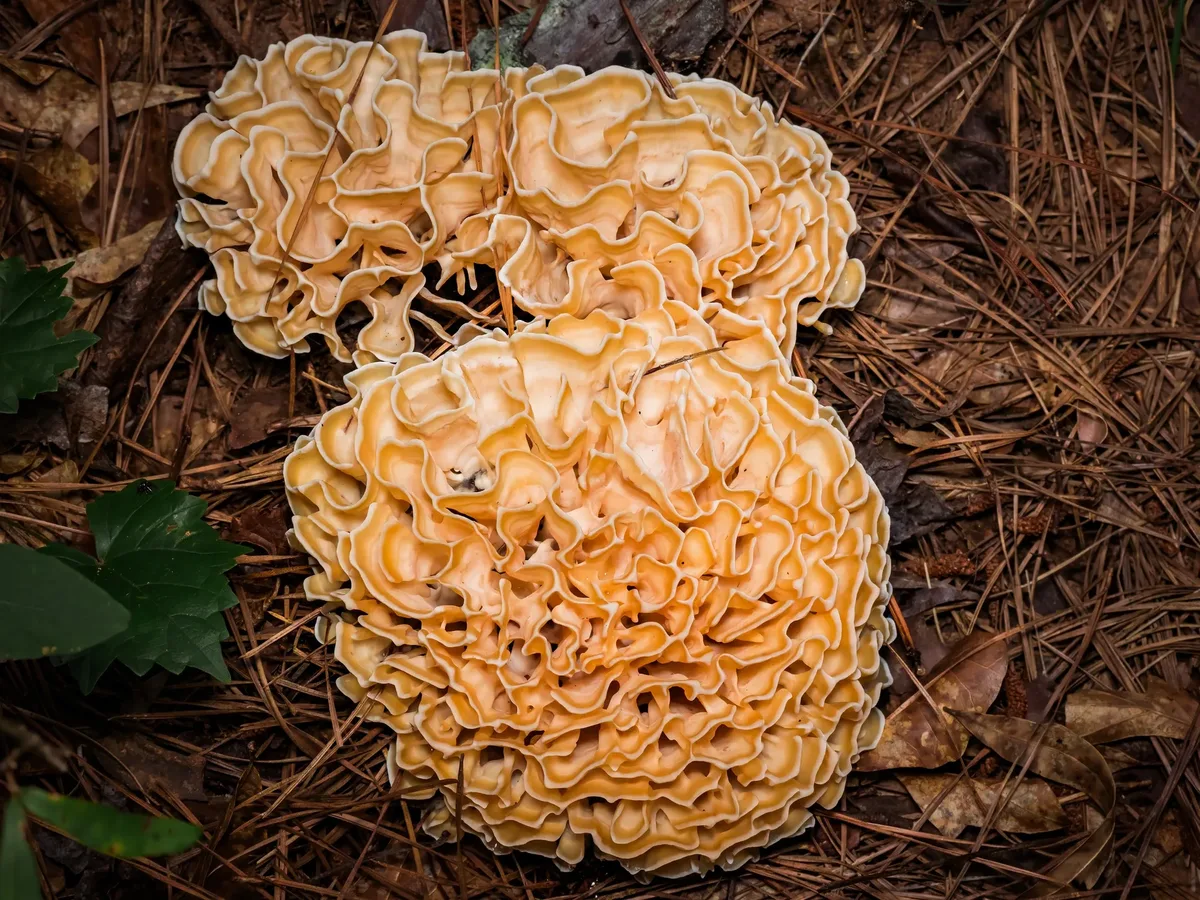 © Heatherelle (CC BY)
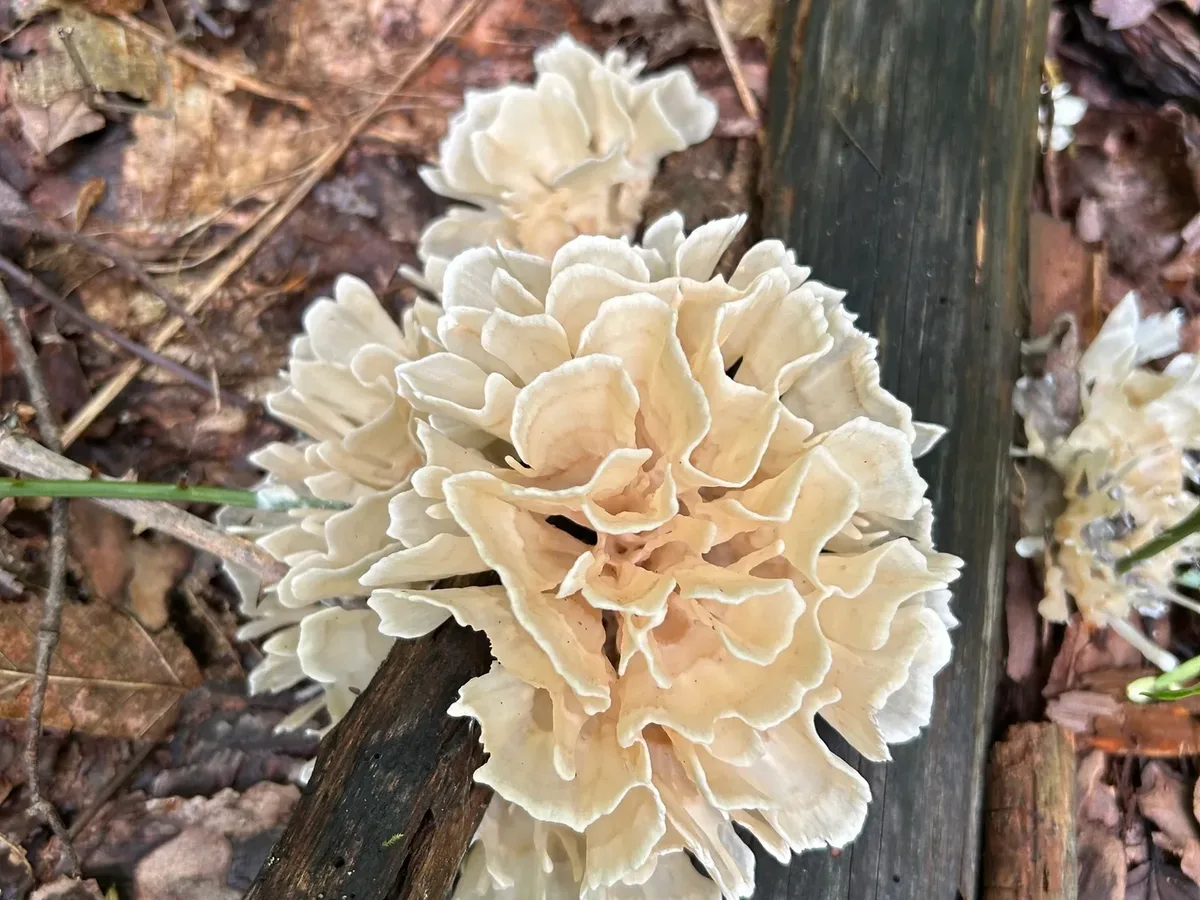 Andrea Kautz (CC0)
 © Julie Travaglini (CC BY)
 © Julie Travaglini (CC BY)
 © DiegoH (CC BY)
 © martin_livezey (CC BY)
 © martin_livezey (CC BY)
 © martin_livezey (CC BY)© martin_livezey (CC BY)Andrea Kautz (CC0)
One of the best mushrooms you can bring home - once you are certain of the identification.
How to recognise it
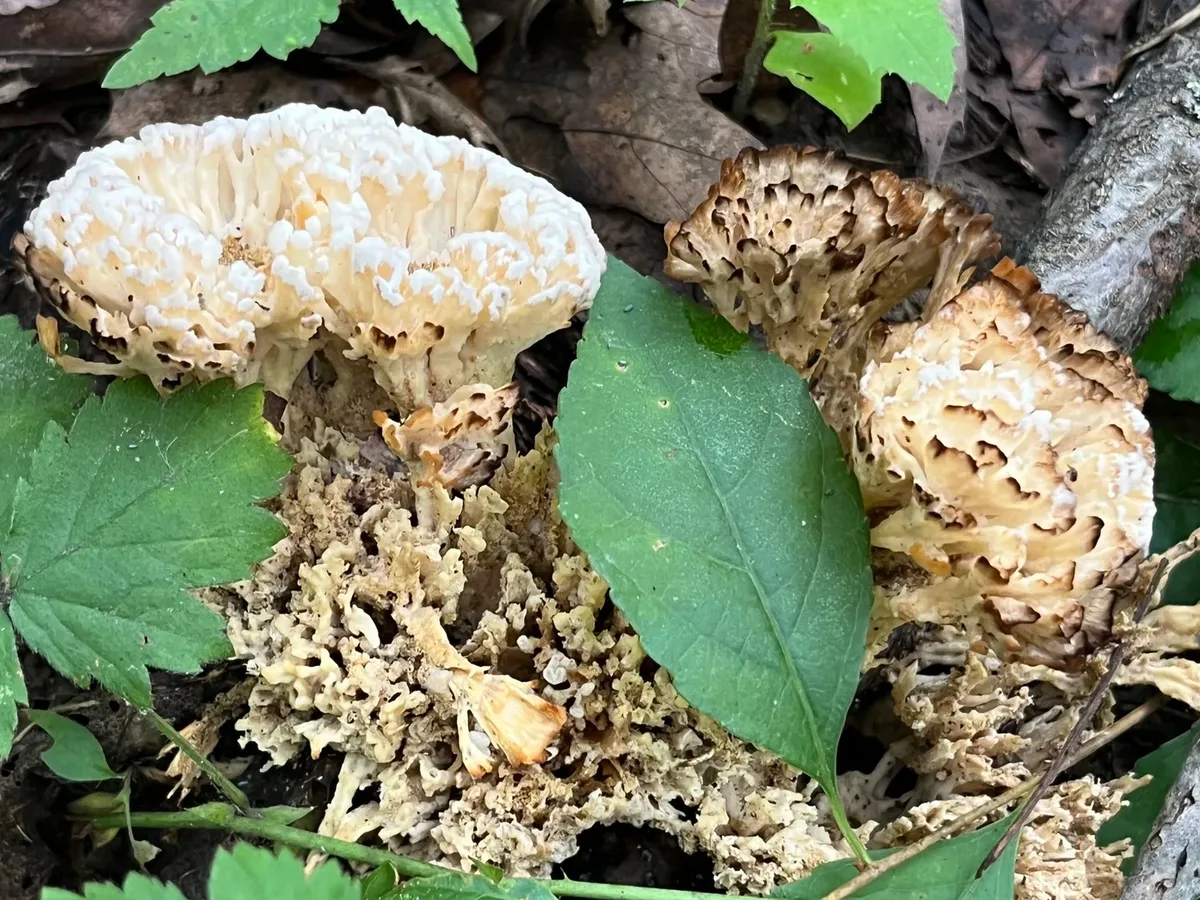
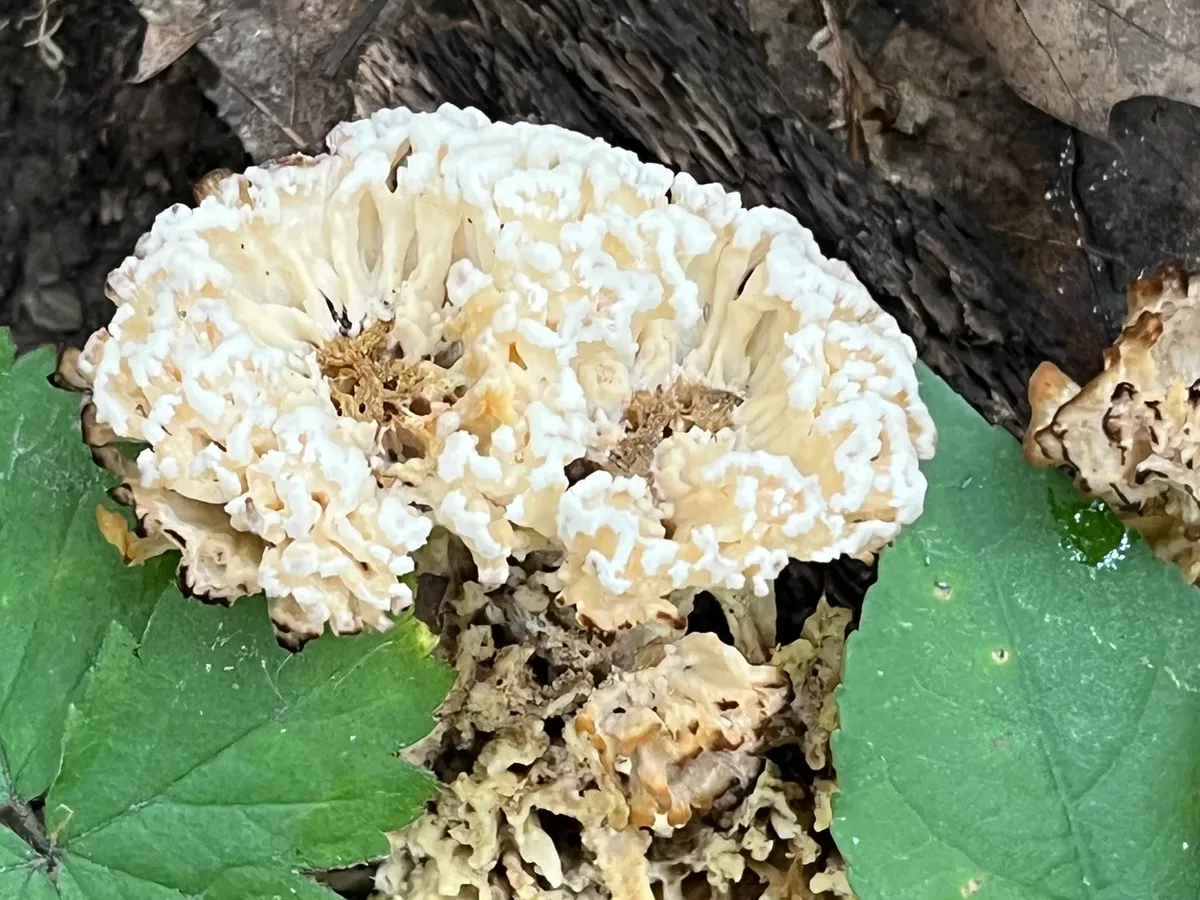
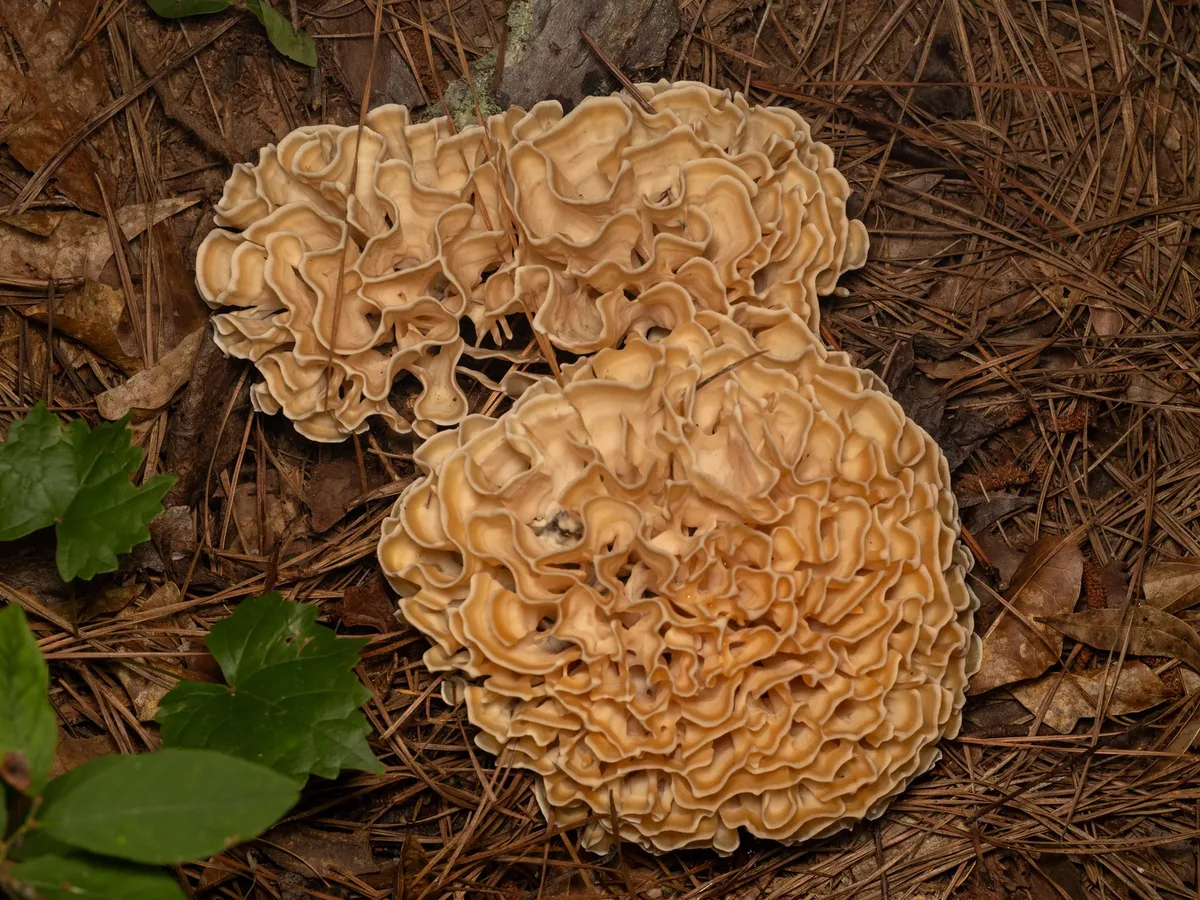
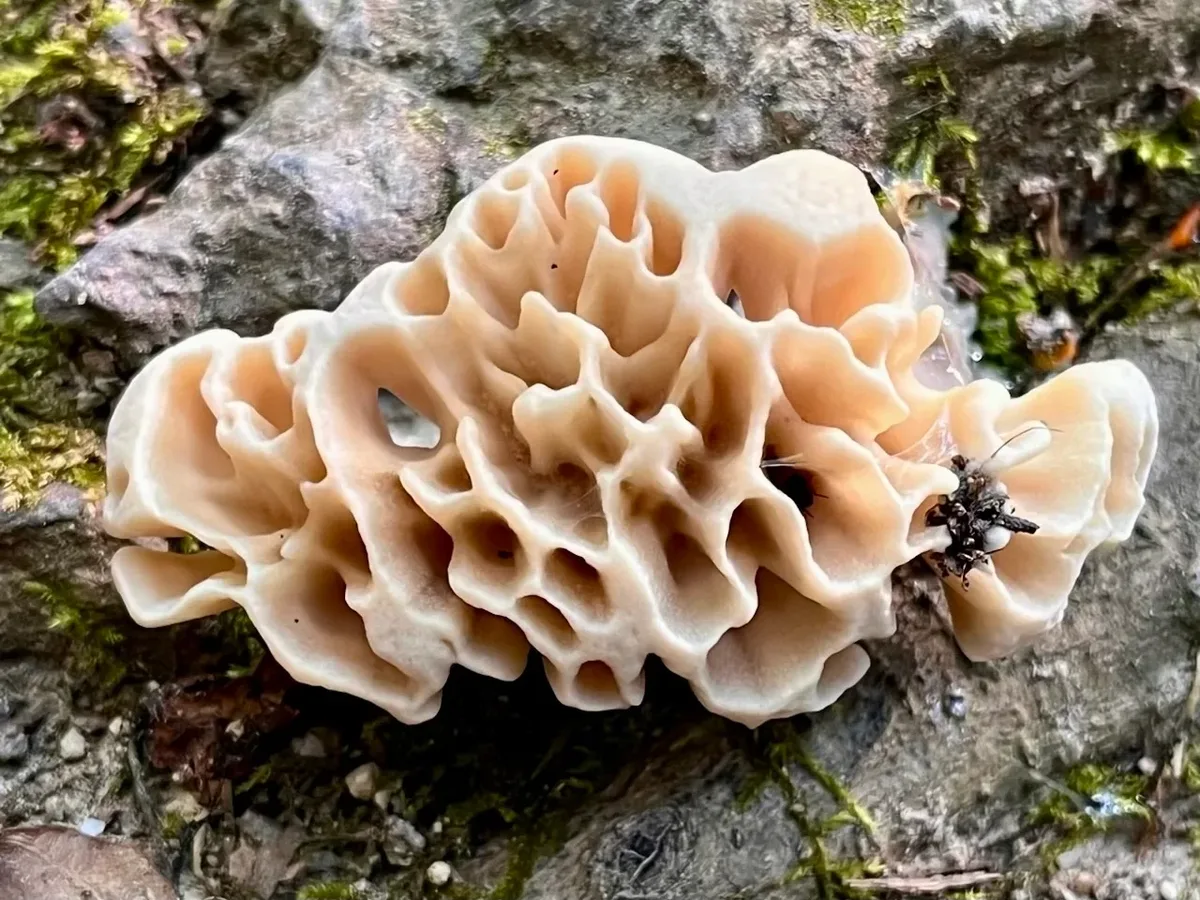
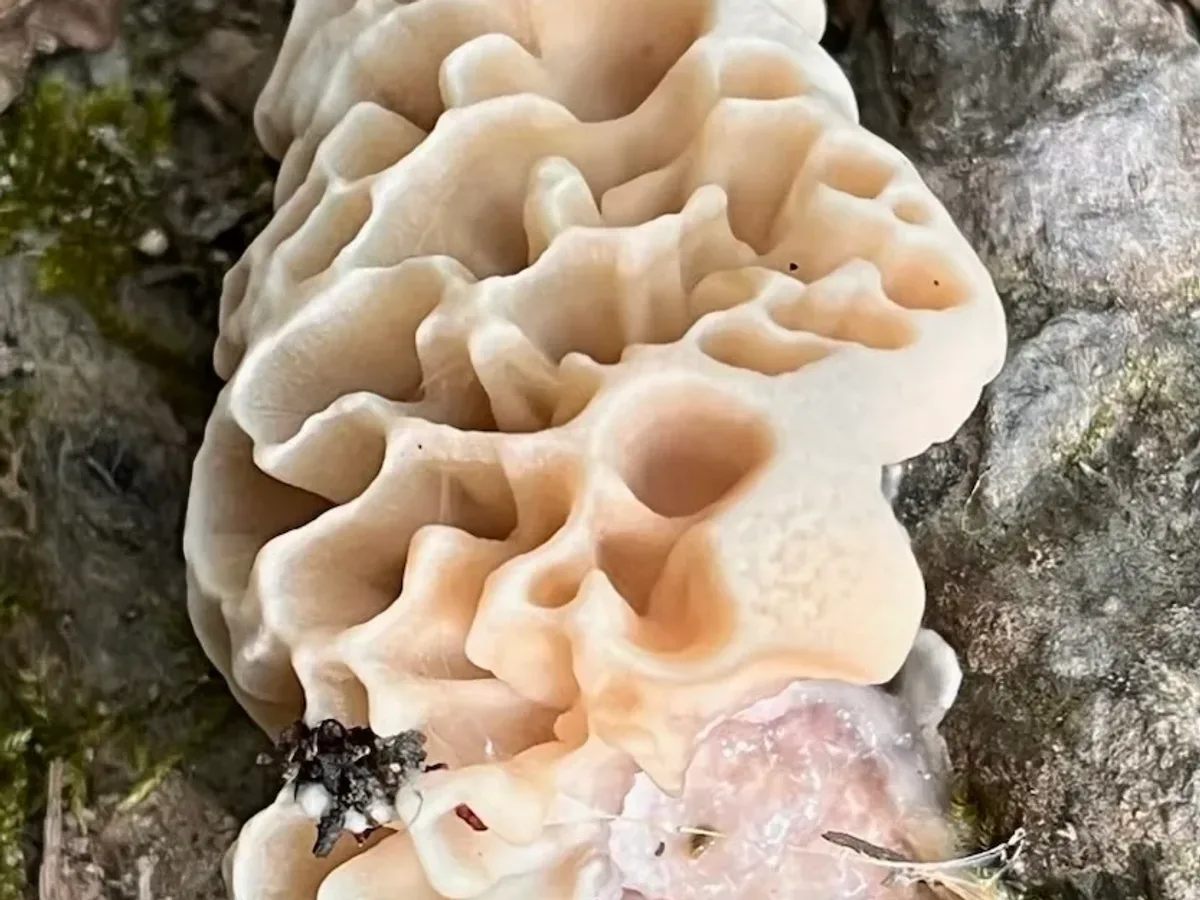
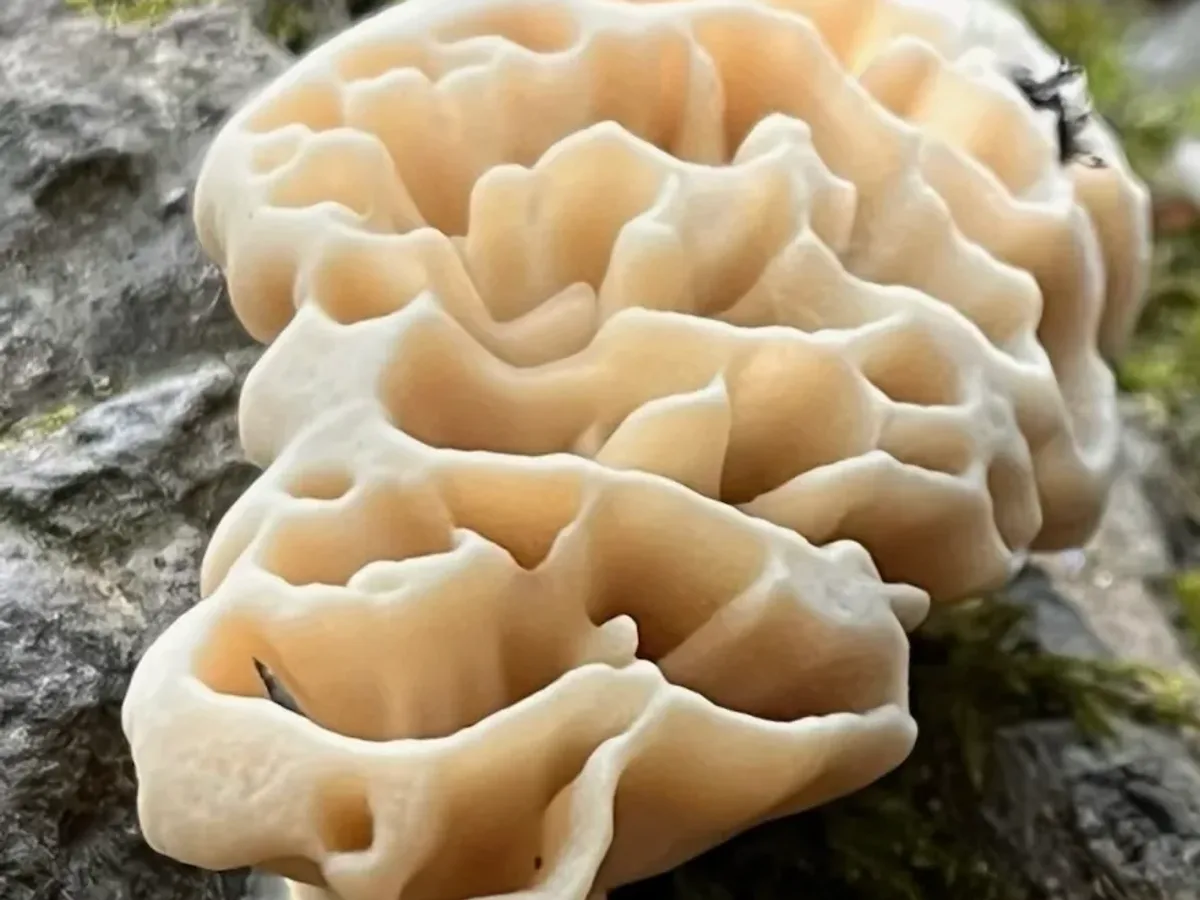
Sparassis spathulata forms one of the most unmistakable fruiting bodies in North American mycology: a massive, rounded cauliflower- or brain-like mass of tightly interwoven, flattened lobes all arising from a stout, buried, root-like base.
The lobes are spatula-shaped to paddle-like (hence 'spathulata'), broader and less finely divided than the fern-frond lobes of the European Sparassis crispa.
They are smooth on the surface and range from pure white to cream or ivory when fresh and young, gradually becoming tan to pale buff or yellowish as the fruiting body matures and dries. In age or dry weather the tips may darken to brownish.
The flesh throughout is white, firm, and brittle-crisp - snapping cleanly rather than tearing. It has no color change when cut or bruised.
The smell is pleasantly fungal, mild, slightly nutty. The spore print is white.
Individual lobes measure roughly 2-8 cm wide. Entire fruitbodies frequently weigh 1-3 kg, with exceptional specimens exceeding 5 kg.
Where & when it grows
Habitat
An oak-forest specialist in eastern North America, Sparassis spathulata is consistently found growing from the base of living or recently dead oaks (Quercus spp.) and related hardwoods such as chestnut (Castanea) and hickory (Carya). It occasionally colonizes beech (Fagus) and, less often, conifers in mixed stands.
It is a facultative parasite and brown-rot wood-decaying fungus: it colonizes the root system and lower trunk, causing a root and butt rot. This habit means the fungus is perennial - once established it may fruit from the same stump, root collar, or buried root for many consecutive seasons.
It is at home in old-growth and mature second-growth deciduous forest, woodland edges, large parks with mature oaks, and old urban tree plantings. It is not found in disturbed sites without suitable host trees.
Elevation range spans sea level to roughly 1200 m in the Appalachians.
When
Fruiting runs from mid-August through November across eastern North America, peaking firmly in September and October.
The trigger is a familiar autumn pattern: late-summer rains followed by cooling nights, with daytime highs around 15-22 °C and nighttime lows of 8-14 °C.
A productive tree will typically throw one large flush per season, occasionally a second if conditions cooperate.
Once you find a reliable spot, it is worth marking it - the same root system tends to fruit again year after year.
How it grows
Sparassis spathulata is a brown-rot wood-decaying fungus that quietly establishes itself in the root system and lower trunk of its host. There the mycelium can persist for years - sometimes for the better part of a tree's lifetime.
Unseen below ground, it breaks down cellulose while leaving the lignin intact, producing the characteristic brown, cubical, crumbling residue of a brown-rot fungus.
Then, when autumn warmth gives way to cooler, moist nights, that hidden network bursts into action: a full-sized fruitbody can emerge and reach maturity within 10-14 days.
Fruiting bodies emerge from buried roots or the root collar and may appear to rise from bare soil several feet from the trunk - the fungus working along root channels far from the tree. A single mycelial network can push up fruitbodies from several spots around the same tree in a good season.
Fruiting conditions
Flushes typically initiated after late-summer or early-autumn rains following a warm period; requires soil temperatures to drop below ~20 °C at night. Peak fruiting at soil temperatures of 12-18 °C. A productive host tree will typically produce one flush per season.
Look-alikes
The eastern cauliflower mushroom has very few dangerous lookalikes due to its unusual size and structure.
The principal confusion species are:
- 1Sparassis crispa - the European cauliflower mushroom, with finer, fern-frond-like lobes; largely absent from eastern North America but may co-occur in overlap zones; it is equally edible.
- 2Sparassis radicata - western North American species, typically associated with conifers (especially pines), with finer lobes; also edible.
- 3Cauliflower-like Ramaria species (R. botrytis, R. flava, R. formosa) - these are coral fungi with rounded, branching tips rather than flat spatula lobes; they lack the single white cauliflower mass and flat lobe character; some Ramaria species (notably R. formosa) cause gastrointestinal poisoning.
The distinction from Ramaria is straightforward: Sparassis lobes are broad, flat, and paddle-shaped; Ramaria branches are cylindrical with rounded tips. No deadly species is easily confused with Sparassis spathulata.
Ramaria species form cylindrical branching structures with rounded or pointed tips, not flat, paddle-shaped lobes. They do not form a single cauliflower mass. Ramaria botrytis is edible but some Ramaria species cause gastrointestinal upset. The flat lobe character of Sparassis is definitive.
Lobes are finer and more fern-frond or feather-like, not broad spatula-shaped. Associated with conifers in Europe; rare in eastern North America. Both are edible; identification to species is academic from a safety perspective.
Salmon-pink to coral-orange cylindrical branches with pale yellow tips; causes gastrointestinal poisoning. Entirely different architecture from Sparassis: branches are upright and cylindrical, not flat and paddle-shaped. Occurs in hardwood (beech, oak) forests and may share habitat with S. spathulata. Confirm the flat spatula-lobe structure of Sparassis before consuming.
Occurs in western North America, associated with pines and firs rather than oaks. Lobes slightly finer; not present in eastern North America where S. spathulata dominates. Also edible.
Bright yellow to ochre coral branches with rounded tips; entirely different architecture from the flat, cream-white lobes of Sparassis. May cause GI distress. No risk of realistic confusion once the lobe structure of Sparassis is understood.
In the kitchen
Picking & cleaning
Harvest while lobes are still white to cream and the flesh is firm - do not wait until the tips have browned significantly or the texture has become leathery, as older specimens harbor grit, insects, and off-flavors.
A sharp knife at the base is best; leave the stump undisturbed to encourage future fruiting.
The dense, multi-lobed structure traps an enormous amount of forest debris (leaf fragments, soil, pine needles, insects). Field cleaning is essential:
- 1Separate lobe clusters and shake out debris.
- 2Soak briefly in salted water, or rinse thoroughly under running water, working between lobes.
- 3Pat dry before cooking.
Fresh specimens keep well for 5-7 days refrigerated, loosely wrapped. The mushroom dries and rehydrates exceptionally well - dehydrated powder is a culinary prize.
Cooking
Sparassis spathulata is one of the finest edible fungi of eastern North America, prized for its firm, meaty texture and mild, nutty flavor that intensifies on cooking.
The flat lobes hold their shape remarkably well and take on a pleasant, slightly chewy texture similar to egg pasta. Separate the lobes into manageable clusters before cooking.
Pan-frying in butter or olive oil over medium-high heat is the classic approach - the lobes brown beautifully and develop a delicate, slightly crispy edge.
Other ways to use it:
- As a pasta substitute (the shape and texture is similar to wide noodles).
- Folded into risotto in place of or alongside conventional mushrooms.
- As a base for cream sauces.
The mushroom is excellent dried and powdered - the powder makes an intense mushroom broth or a seasoning for pastas and gravies.
Avoid overcooking, which turns it rubbery. It pairs well with garlic, thyme, cream, aged cheeses, and egg dishes. Very large fruitbodies can be blanched and frozen successfully.
Good to know
Sparassis spathulata is widely regarded as safe and a top-quality edible. No toxins are known.
A few precautions still apply:
- 1Always cook before eating - like most fleshy fungi, it should not be eaten raw in quantity.
- 2Individuals with general mushroom sensitivity may experience mild GI effects; as with all edible fungi, try a small portion first.
- 3Thorough cleaning is critical because the tightly nested lobes trap soil, insects, and decomposing organic matter that can cause GI distress if not removed.
- 4Older, browned specimens can harbor bacterial decay - harvest fresh and discard any soft, darkened, or strongly fetid sections.
- 5In the unlikely event of confusion with a Ramaria coral fungus, note that Ramaria formosa causes gastrointestinal poisoning; always confirm the flat, paddle-shaped lobe structure before eating.
A reference guide - never an edibility guarantee. When in doubt, leave it out.