Cauliflower Fungus
Sparassis crispasyn. Clavaria crispa, Manina crispa, Masseeola crispa, Sparassis radicata Weir
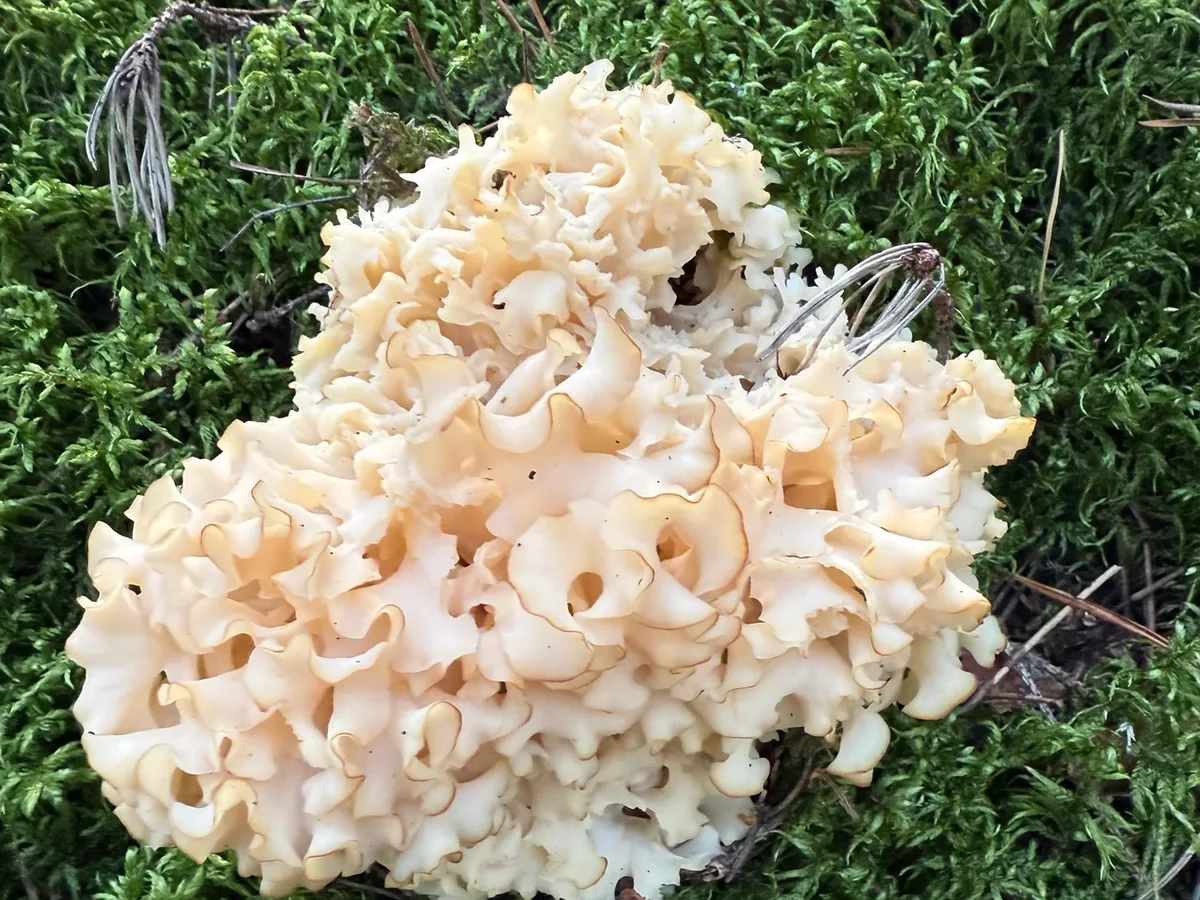 © Vitaly Radionov (CC BY)
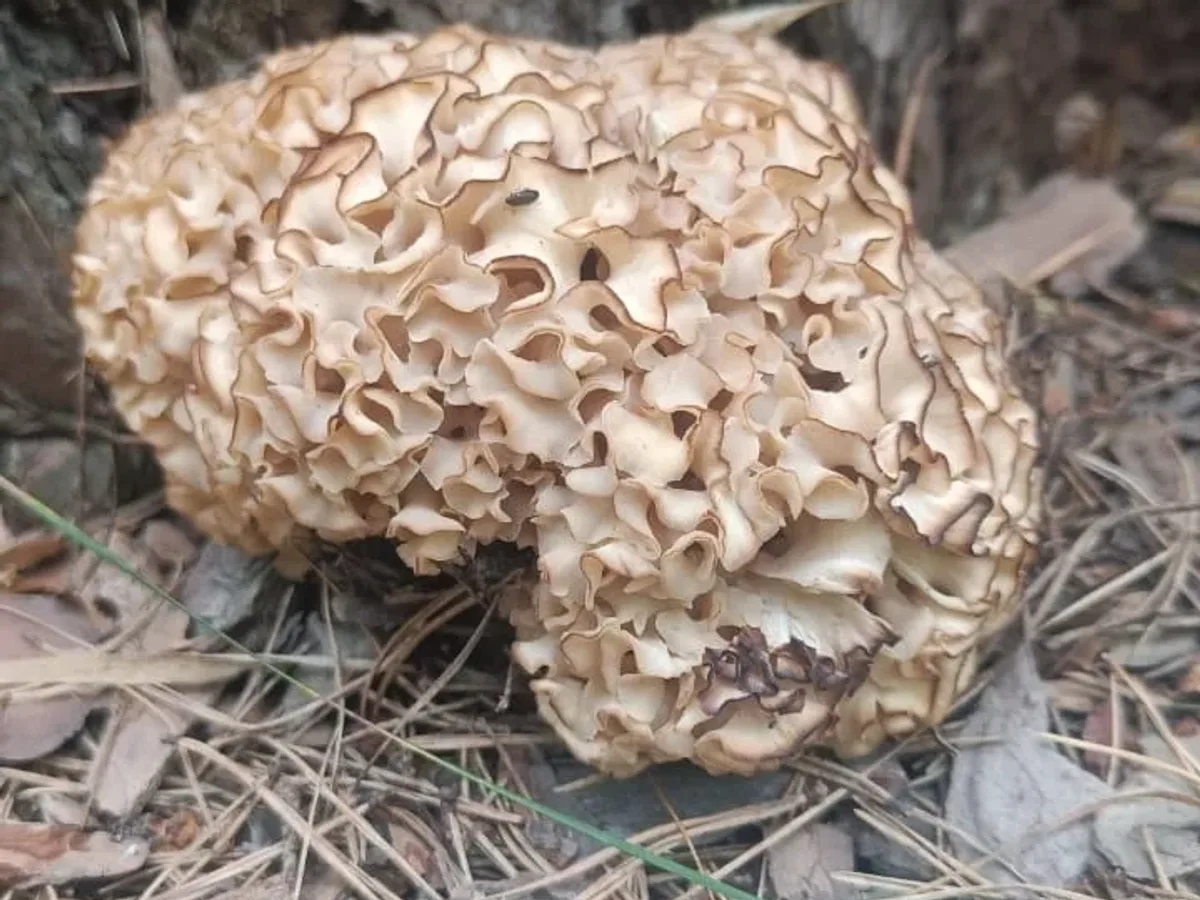 © Pavel Borodin (CC BY)
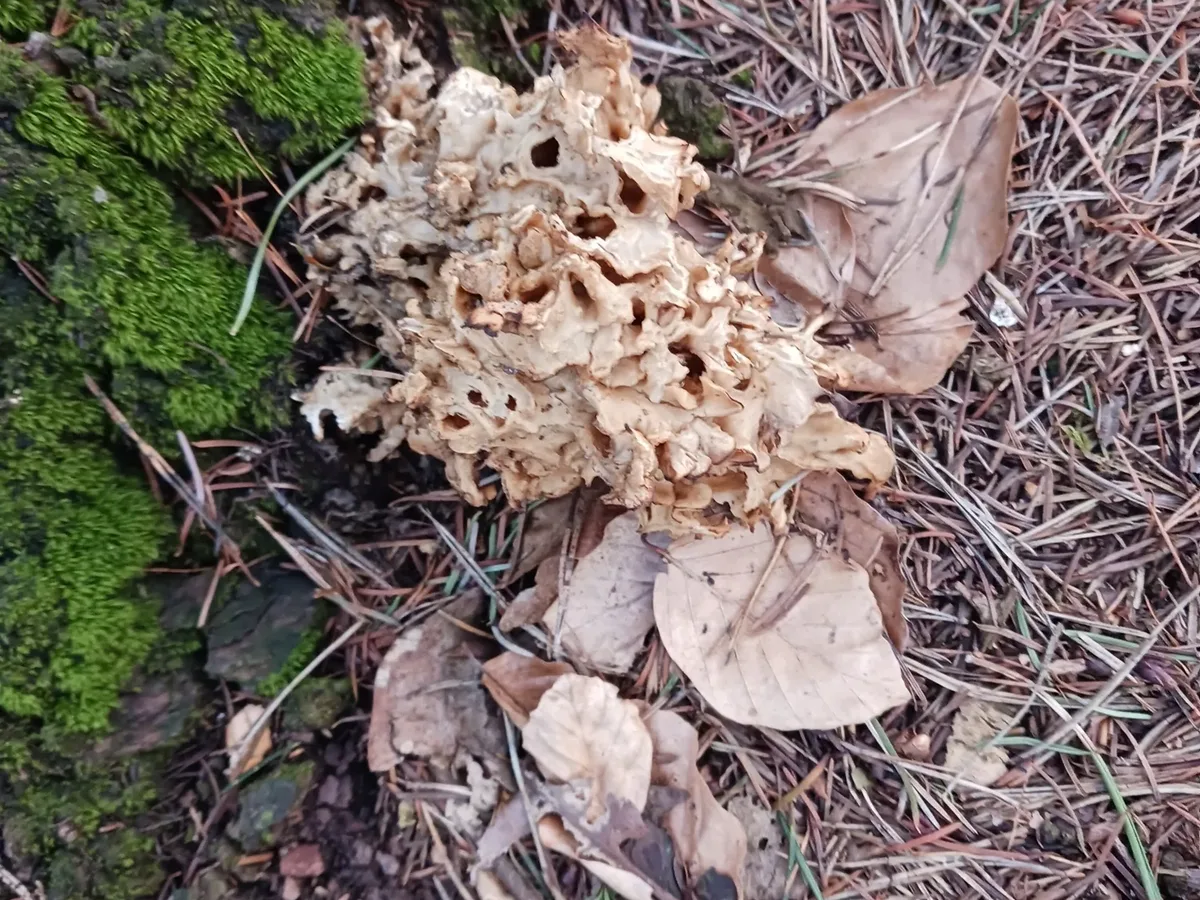 T. Pedro Hafermann (CC0)
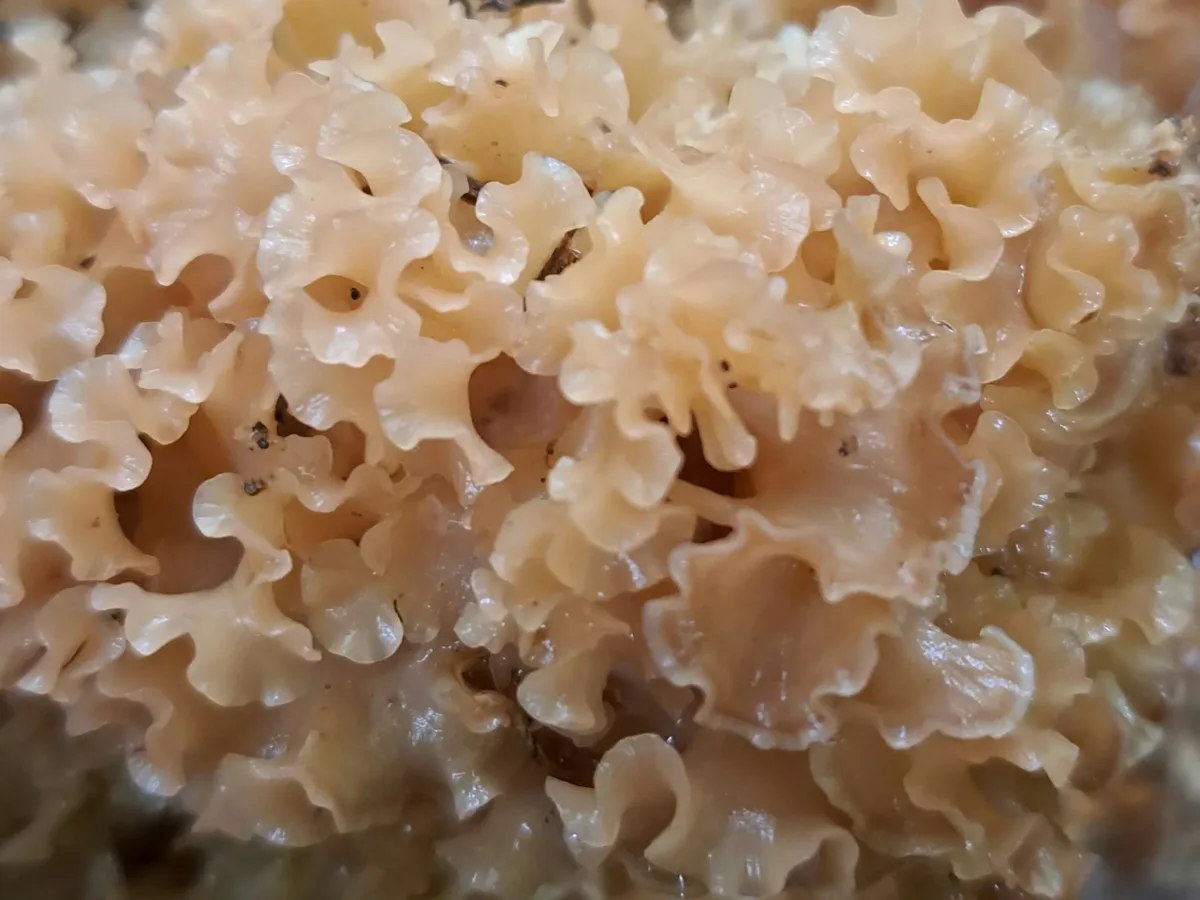 © Markus Krieger (CC BY)
 © Markus Krieger (CC BY)
 © Dietmar K. L. Moser (CC BY)
 © Dietmar K. L. Moser (CC BY)
 © Vitaly Radionov (CC BY)© Vitaly Radionov (CC BY)© Pavel Borodin (CC BY)
One of the best mushrooms you can bring home - once you are certain of the identification.
How to recognise it
Sparassis crispa is one of the most distinctive of all woodland fungi and, once seen, is almost impossible to confuse with anything dangerous.
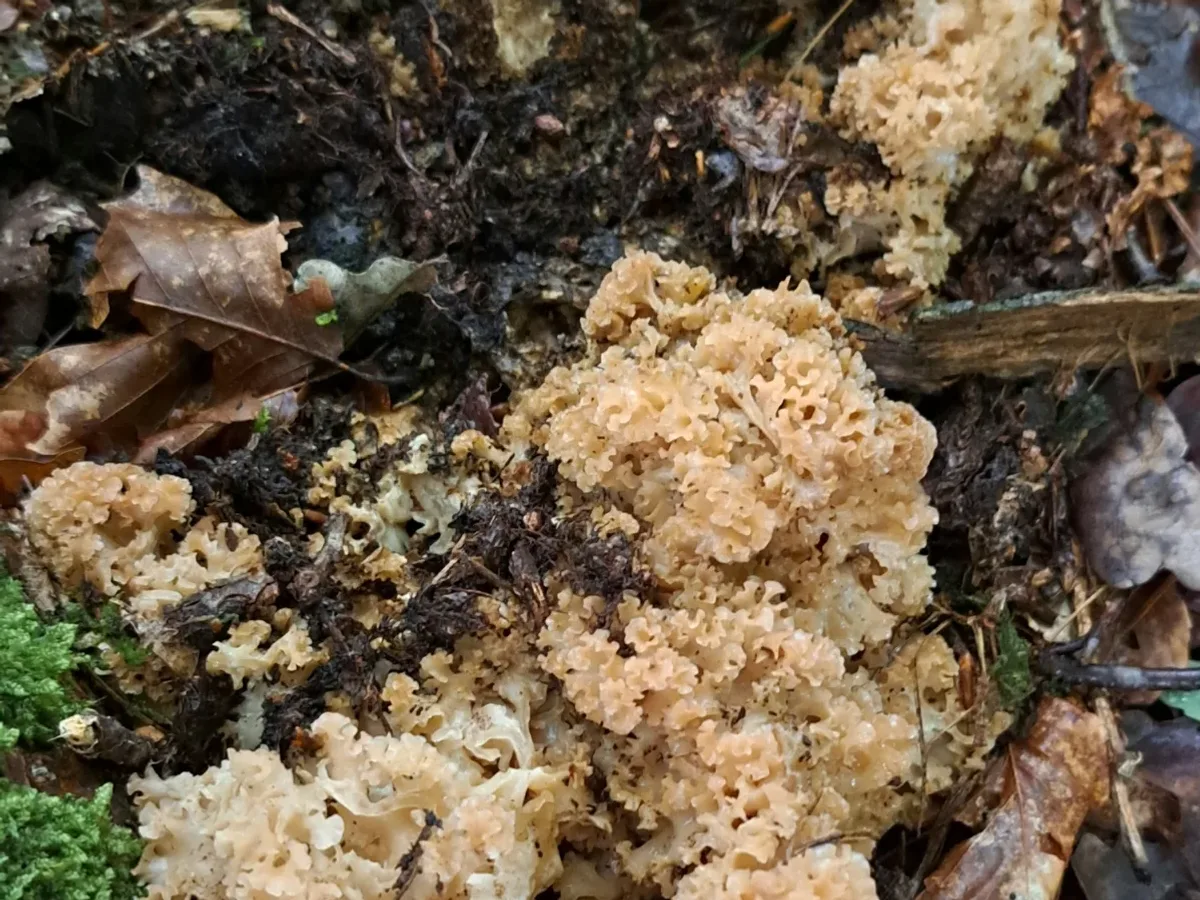
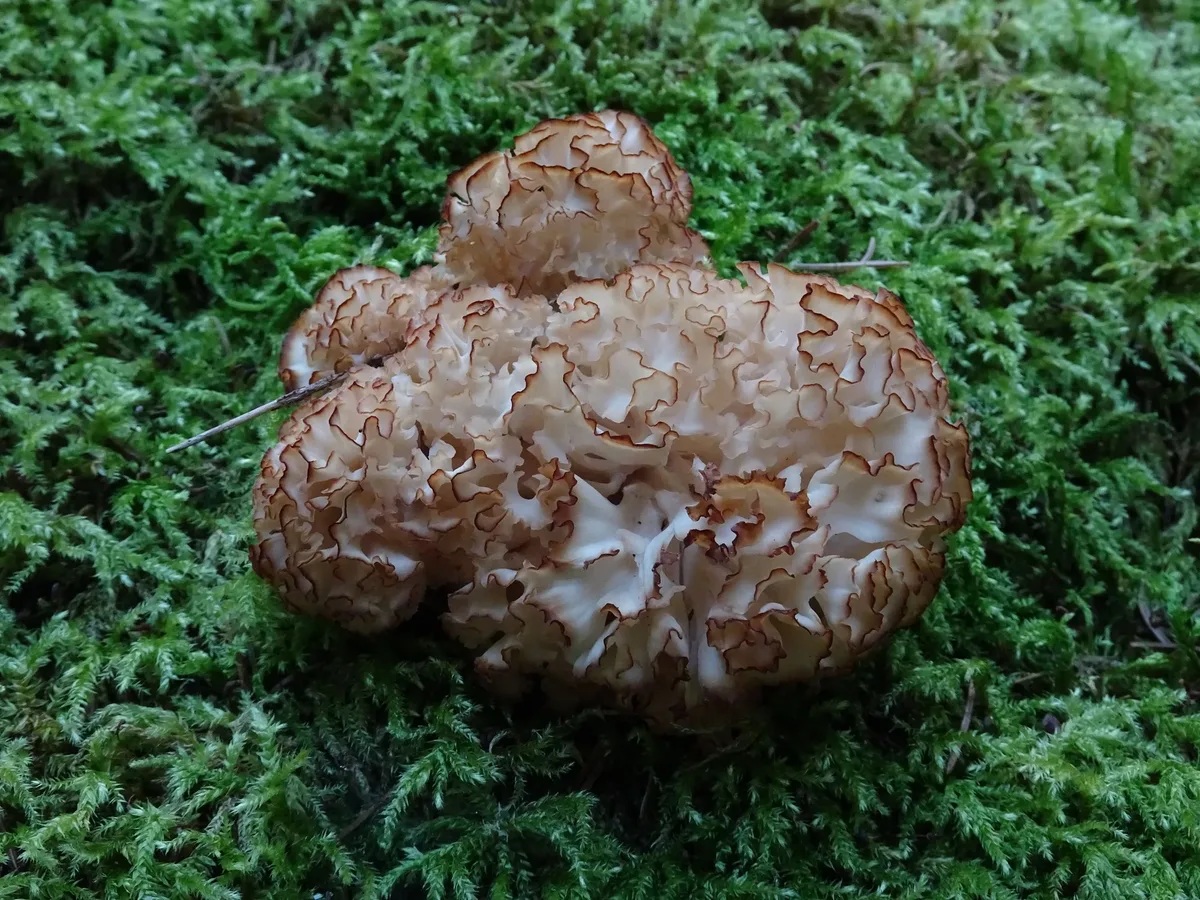
The fruiting body forms a single large, rounded mass, typically 10-40 cm wide (exceptional specimens reach 50-60 cm and several kilograms in weight), that looks remarkably like a cauliflower head, a giant egg-noodle nest, or a pale marine sponge.
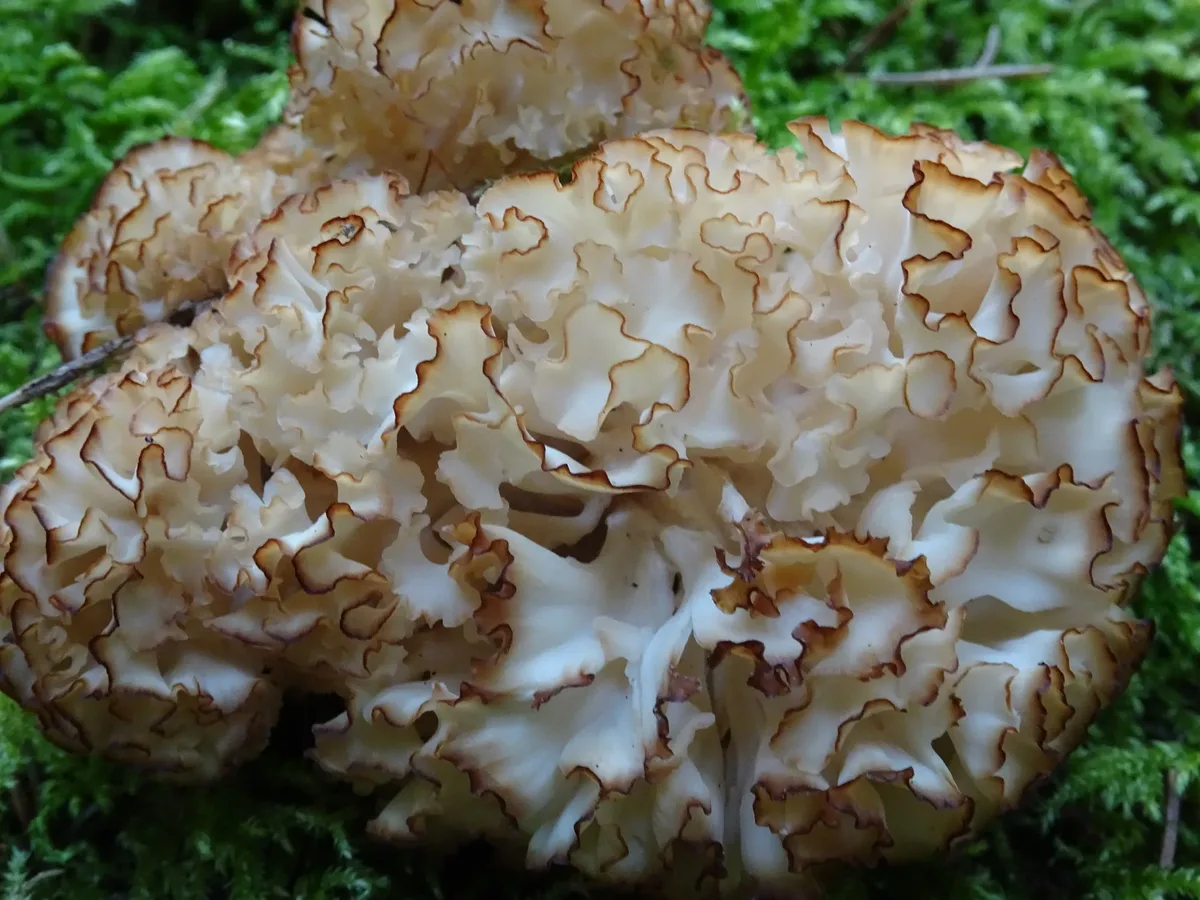
It is built from dozens of thin, flat, wavy lobes - each like a crisped, ribbon-shaped petal - all springing from a single short, tough, deeply rooting stem-base that is anchored into the wood or root below.
When young and fresh the whole mass is a clean pale cream, ivory or pale buff; with age it discolours to ochre, tan and finally dull brown, and any bruised or insect-damaged areas brown noticeably.
Gills / Pores
There are no gills, no pores and no tubes: the microscopic spores are produced on the smooth faces of the flattened lobes.
Flesh
The flesh is firm yet pleasantly elastic, almost rubbery, and dries hard and brittle.
Smell & taste
The smell is one of its charms - sweet, fragrant and faintly spicy or aniseed-like.
A white to pale cream spore print confirms identity.
Where & when it grows
Habitat
This is a fungus of conifers and conifers alone.
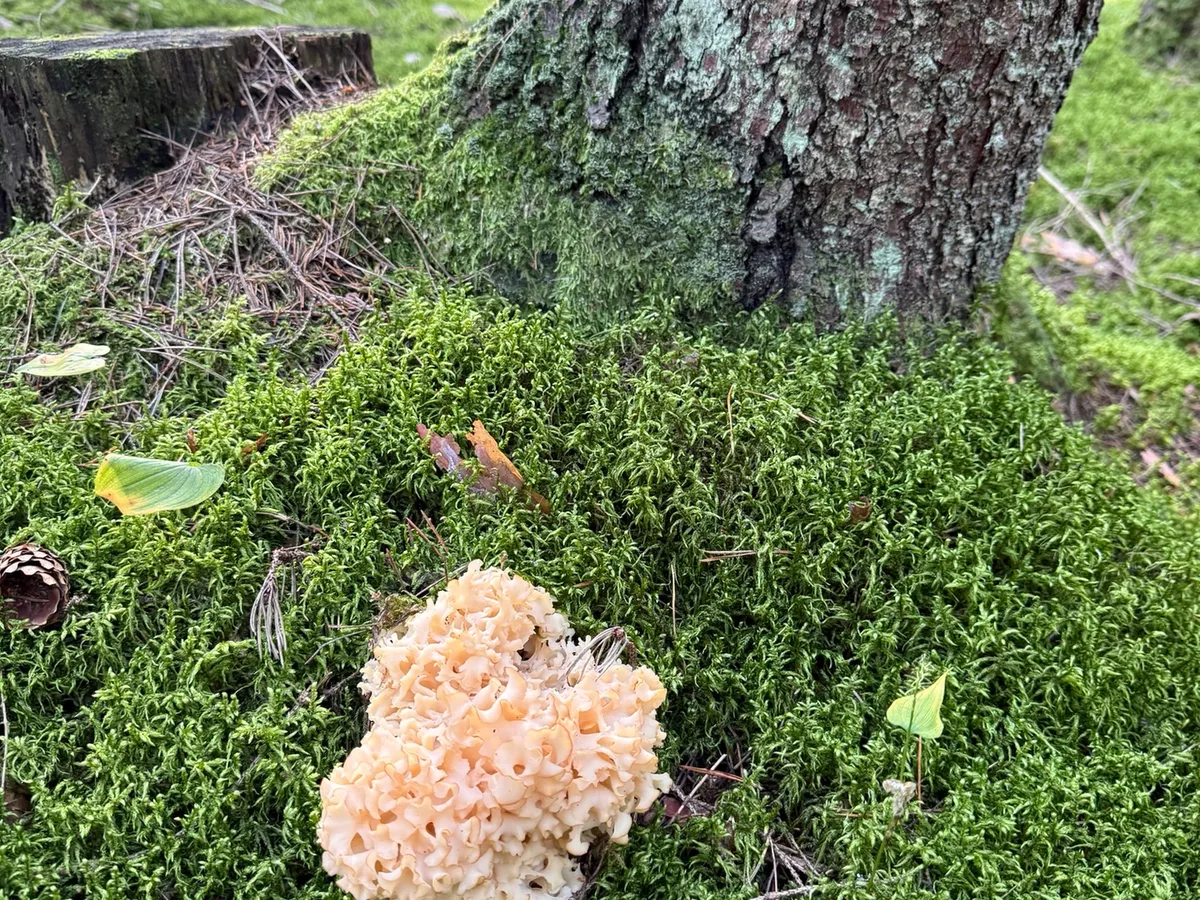
Look for it hugging the base of living or freshly dead conifer trunks, sprouting from stumps, or apparently emerging from the ground directly above buried conifer roots.
It is a brown-rot organism that lives parasitically and saprotrophically in the heartwood and root system, slowly hollowing the wood while only weakly harming the tree.
It strongly favours mature and over-mature stands - old Scots pine is the classic host across Europe - and is most reliably found along sunlit woodland edges, firebreaks, ride margins and plantation tracks rather than in deep shade. Acidic, sandy, free-draining soils suit it best.
Crucially, it tends to be faithful to a site: once it has colonised a root system it often re-fruits at or very near the same tree base for several years running.
When
The cauliflower fungus is a late-summer to autumn species. The first specimens appear from July, but the great majority are found in September and October, tailing off through November as the first hard frosts arrive.
Fruiting is triggered by late-summer warmth followed by sustained autumn moisture.
Individual fruiting bodies grow slowly, taking one to two weeks to reach full size, and a firm specimen can sit at the tree base for several weeks.
Because it returns to known spots year after year, experienced foragers keep a mental map of their cauliflower trees and check them each autumn.
How it grows
Sparassis crispa grows as a solitary fruiting body (rarely two or three around one large stump) rather than in troops.
It begins as a small knobbly cream cushion at the trunk base and expands outward into the familiar ruffled dome over a week or two, all arising from one rooting basal stalk fused to the wood.
Underground, the mycelium permeates the host's heartwood and roots, where it digests the wood as a brown rot - leaving the residue dry, brown and crumbling into cubical blocks.
The fungus is a weak parasite of living trees and an efficient saprotroph on dead conifer roots, which is why the same root mass keeps fruiting after the tree has died.
Fruiting conditions
Triggered by late-summer warmth followed by sustained autumn rain; fruiting bodies develop slowly over 1-2 weeks at conifer bases and persist for several weeks in cool, damp conditions. Values are general field estimates, not strict thresholds.
Look-alikes
This is an excellent species for beginners because it has no deadly lookalikes. The closest relatives are other Sparassis species, all of which are edible, so confusion among them is not dangerous.
- In much of Europe, Sparassis brevipes (often treated as the same as S. laminosa) has fewer, broader, thicker and flatter lobes, a less crisped 'cauliflower' look, and associates with hardwoods (oak, beech) as well as silver fir.
- S. spathulata likewise tends to broader, more spatula-shaped lobes and hardwood hosts.
- In western North America, the large coastal cauliflower fungus is Sparassis radicata (sometimes treated within a S. crispa group), with a notably long rooting stalk.
Two non-Sparassis groups deserve a beginner's attention:
- Hen of the Woods (Grifola frondosa) is sometimes likened to it but is quite different - it forms tiers of overlapping grey-brown fan-shaped caps with pores beneath, and grows mainly at the base of broadleaf trees, especially oak; it is also a prized edible.
- Branched coral fungi (Ramaria species) can superficially resemble a cauliflower mass from a distance, but are made of upright, antler- or tree-like branches (not flat, crisped, ribbon-like lobes), are often coloured (yellow, ochre, pink, brownish), and are brittle rather than elastic. Several Ramaria - notably R. formosa and R. pallida - are toxic and cause vomiting and diarrhoea (not deadly, but unpleasant).
Always confirm the flat, ribbon-like, ruffled-lobe structure and the conifer-base habitat before eating.
Made of upright, antler- or tree-like branches rather than flat, crisped, ribbon-like lobes; often coloured (yellow, ochre, pink, brownish) and brittle rather than elastic; grow from soil/litter, not fused to a conifer base. Several Ramaria are toxic and cause vomiting and diarrhoea (not deadly), so confirm the flat ruffled-lobe structure before eating.
Fewer, broader, thicker and flatter lobes giving a less tightly 'crisped' look; often associated with hardwoods (oak, beech) and silver fir rather than pine. Frequently treated as the same as S. laminosa. Also edible, so confusion is harmless.
Forms tiers of overlapping grey-brown fan-shaped caps with a white pored undersurface, not flat ribbon-like cream lobes; grows mainly at the base of broadleaf trees (especially oak). A prized edible, so no danger from confusion.
Broader, more spatula- or fan-shaped lobes and a preference for hardwood (oak) bases. Edible; not a dangerous confusion.
The large Pacific Northwest cauliflower fungus, with a long, deeply rooting basal stalk; sometimes treated as part of the S. crispa complex. Edible.
In the kitchen
Picking & cleaning
Harvest only young to middle-aged specimens that are still pale cream and firm; old yellow-brown, soft or sour-smelling masses are tough and not worth taking.
Cut the whole head cleanly through the rooting base with a knife, leaving the buried root and mycelium intact so the spot can fruit again in future years.
The intricate folds are a magnet for soil, pine needles, slugs and insect larvae, so expect to do significant cleaning - many foragers cut the head into sections in the field and shake or brush out the worst debris before bagging.
Take what you will use; a single head can be very large and feeds a household.
Cooking
An outstanding choice edible with a pleasant, mild, faintly nutty flavour and a distinctive firm, springy, almost noodle-like texture that holds up beautifully to cooking.
Only the young, pale, firm flesh is worth eating; old yellowed material is tough and bitter.
Clean carefully (a thorough rinse and even a brief soak is acceptable here given how dirty it gets), tear or slice into manageable pieces, and cook well - it should never be eaten raw.
It is excellent used in several ways:
- Slow-fried or sauteed in butter until lightly crisp at the edges.
- Added to soups, stews, risottos and stir-fries.
- Used like pasta/noodles thanks to its ribbon-like lobes.
It pairs well with cream, garlic and strong herbs.
It dries well for storage and also takes pickling; the rehydrated or cooked-and-frozen product keeps its characteristic bite.
In East Asia (where the cultivated form is known as Hanabiratake) it is also valued as a functional food rich in beta-glucans.
Good to know
Sparassis crispa is a safe, well-known edible with no deadly lookalikes. Its unique cauliflower/sponge form built from flat, crisped, ribbon-like lobes, plus its conifer-base habitat, are diagnostic.
The one genuine identification caution is not to confuse it with branched coral fungi (Ramaria spp.), some of which (e.g. R. formosa, R. pallida) are toxic and cause vomiting and diarrhoea. Corals are made of upright, antler-like brittle branches and are often brightly coloured, never flat ruffled cream lobes.
Beyond identification the safety points are practical:
- Clean it scrupulously, because the folds trap grit, debris and insect larvae that are hard to remove and unpleasant if cooked in.
- Always cook it thoroughly and never eat it raw, as it is indigestible raw.
- Reject old, slimy, sour-smelling or heavily insect-ridden specimens, which can cause stomach upset simply from spoilage.
- As with any wild food, try only a small portion the first time to rule out personal intolerance.
- Because it can grow on conifers in managed or roadside settings, avoid harvesting from obviously polluted or chemically treated ground.
A reference guide - never an edibility guarantee. When in doubt, leave it out.