Singerocomus guadelupae
Singerocomus guadelupaesyn. Xerocomus guadelupae
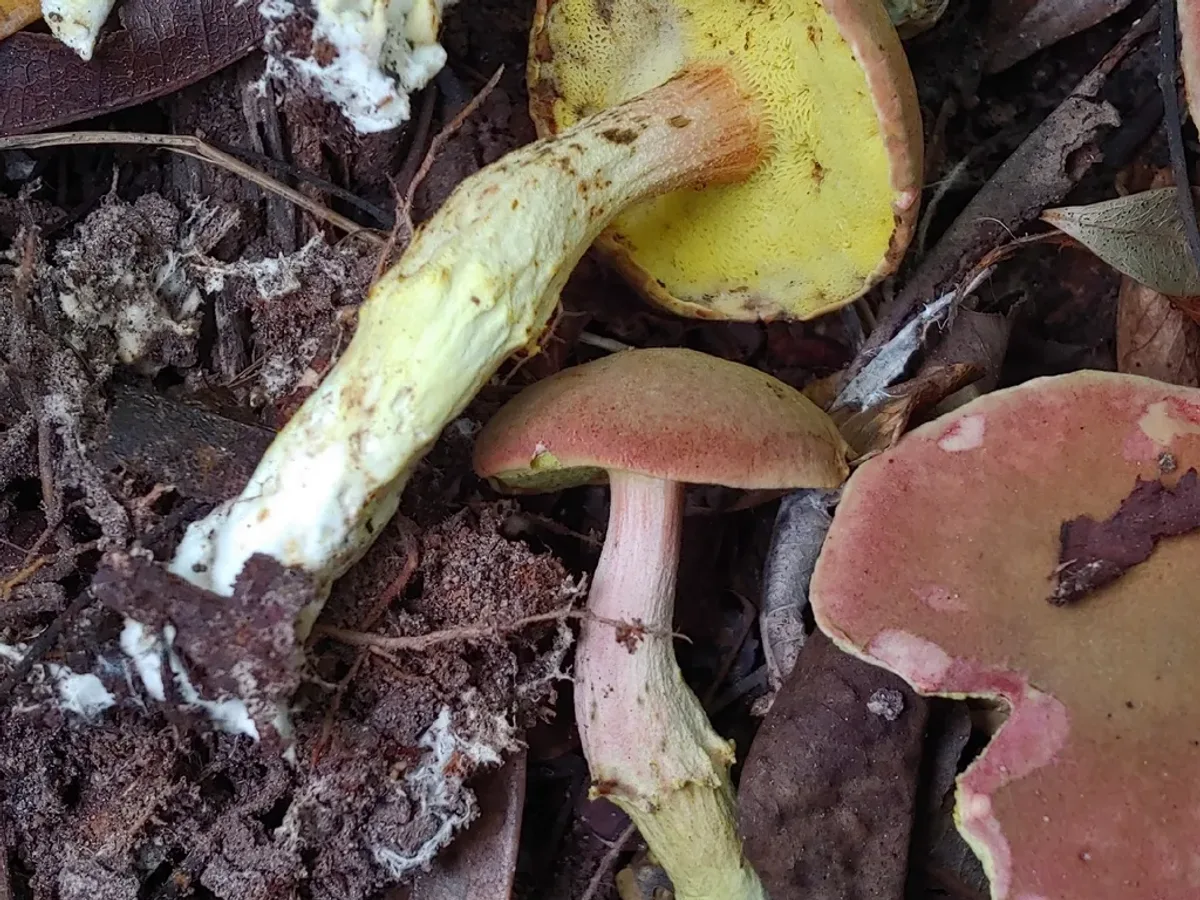 (c) Kurt Miller, some rights reserved (CC BY-SA)
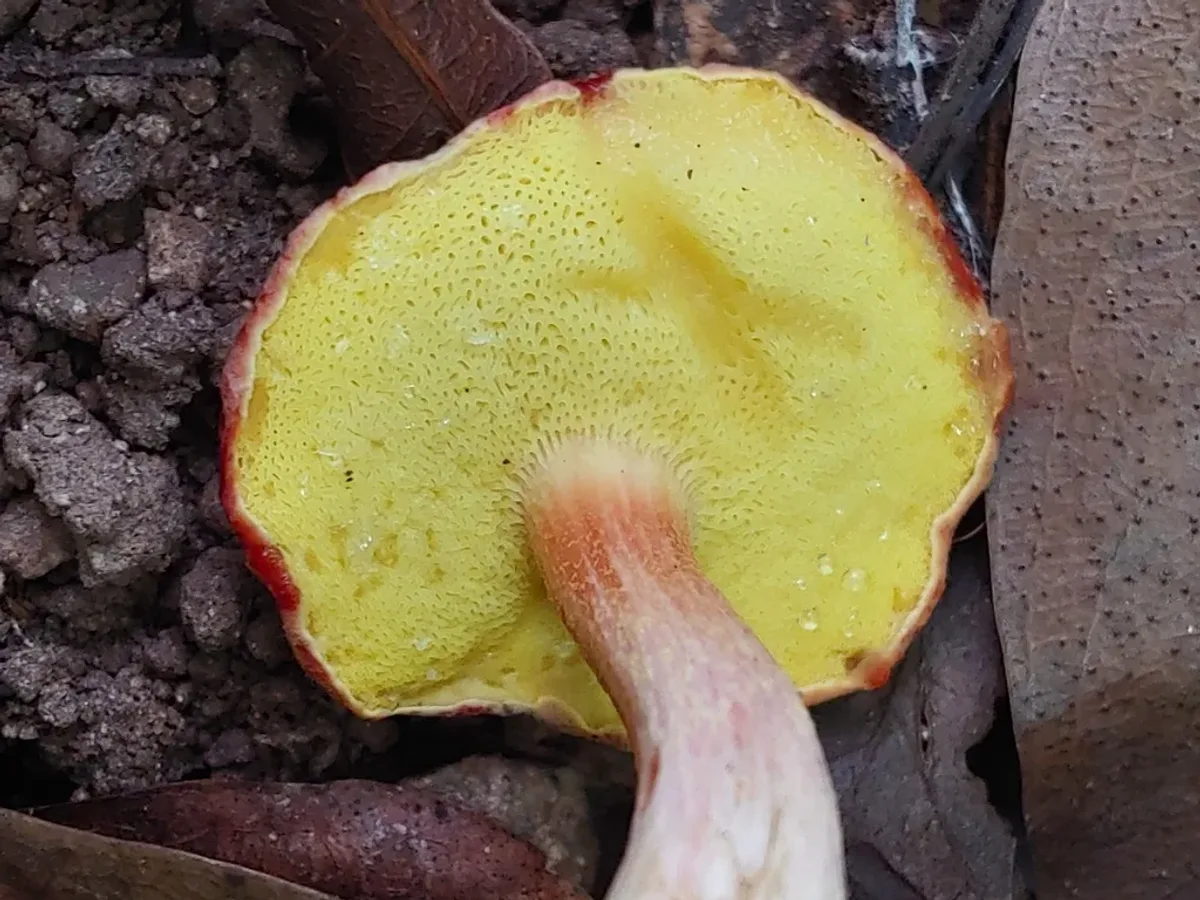 (c) Kurt Miller, some rights reserved (CC BY-SA)
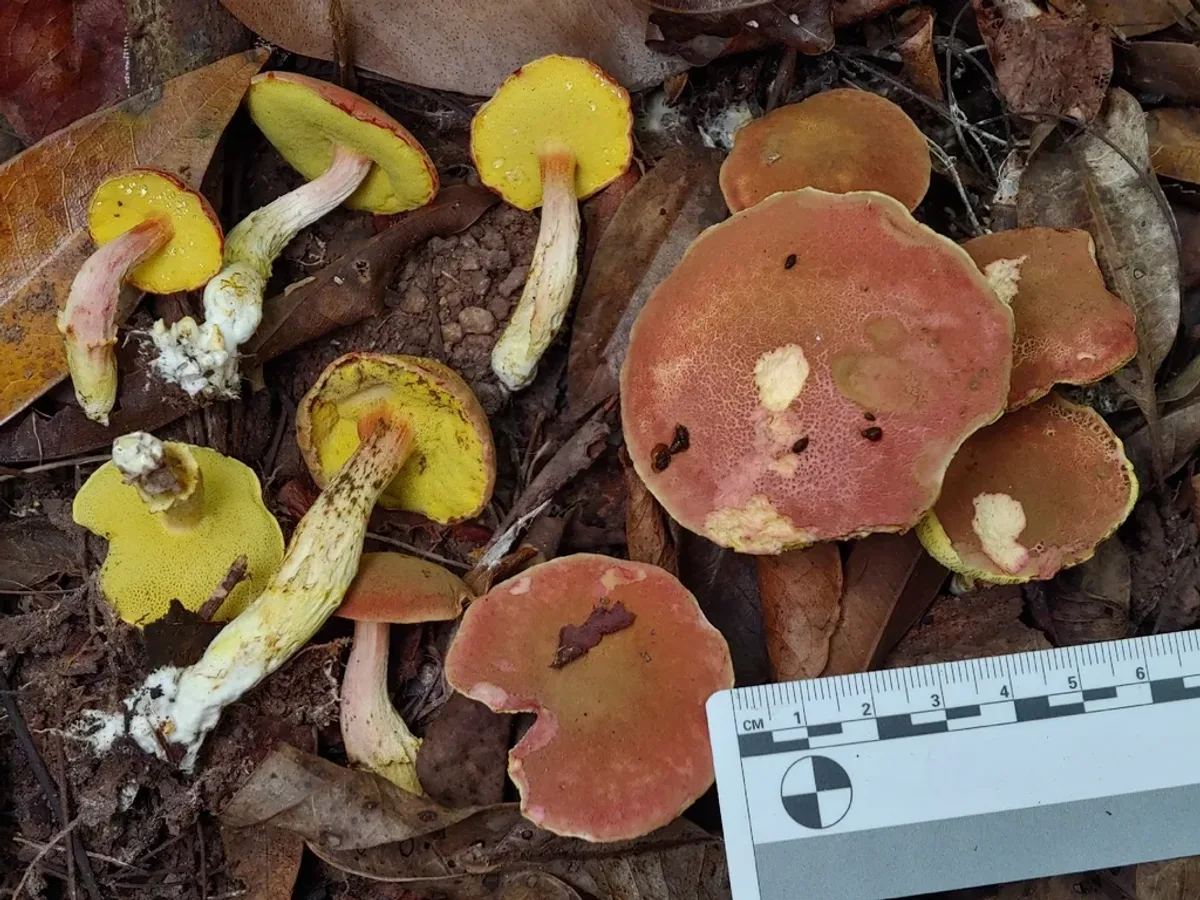 (c) Kurt Miller, some rights reserved (CC BY-SA)
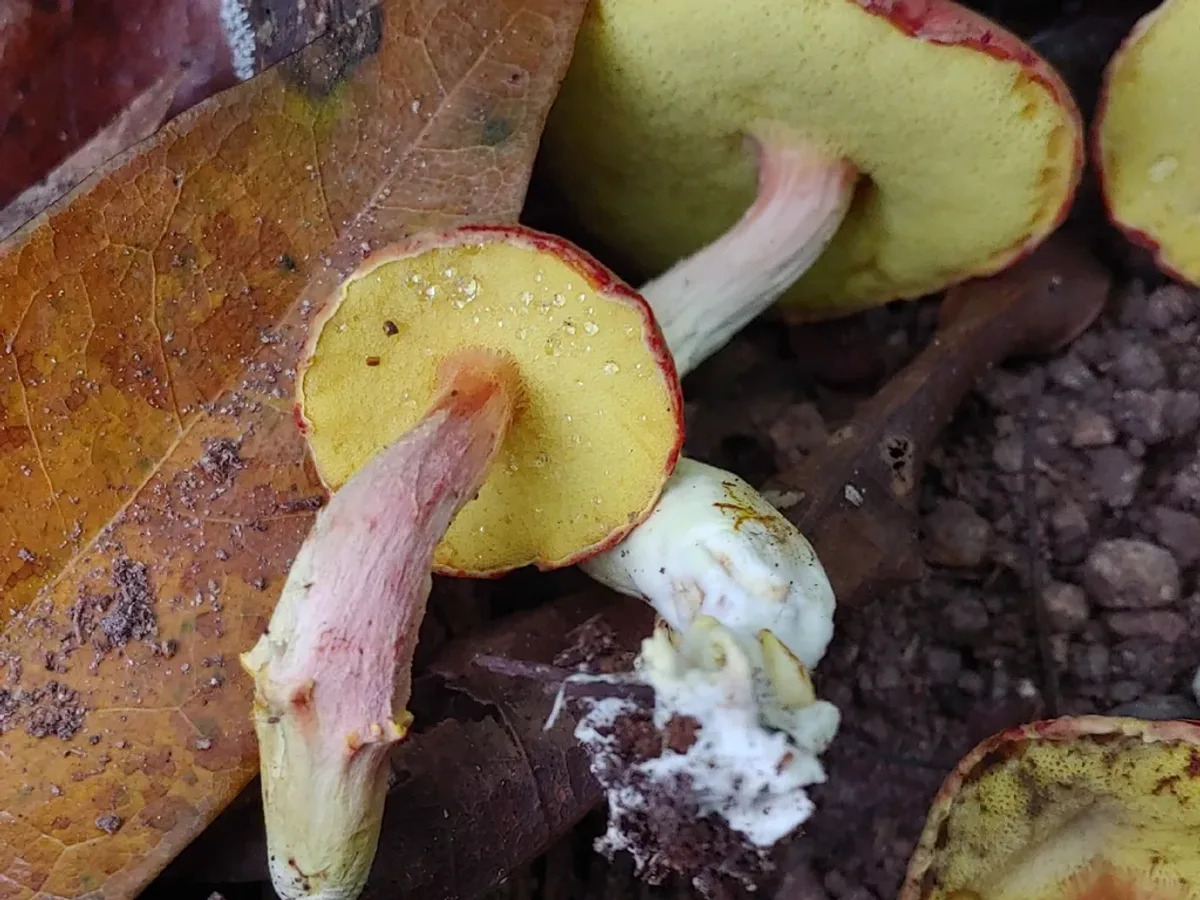 (c) Kurt Miller, some rights reserved (CC BY-SA)
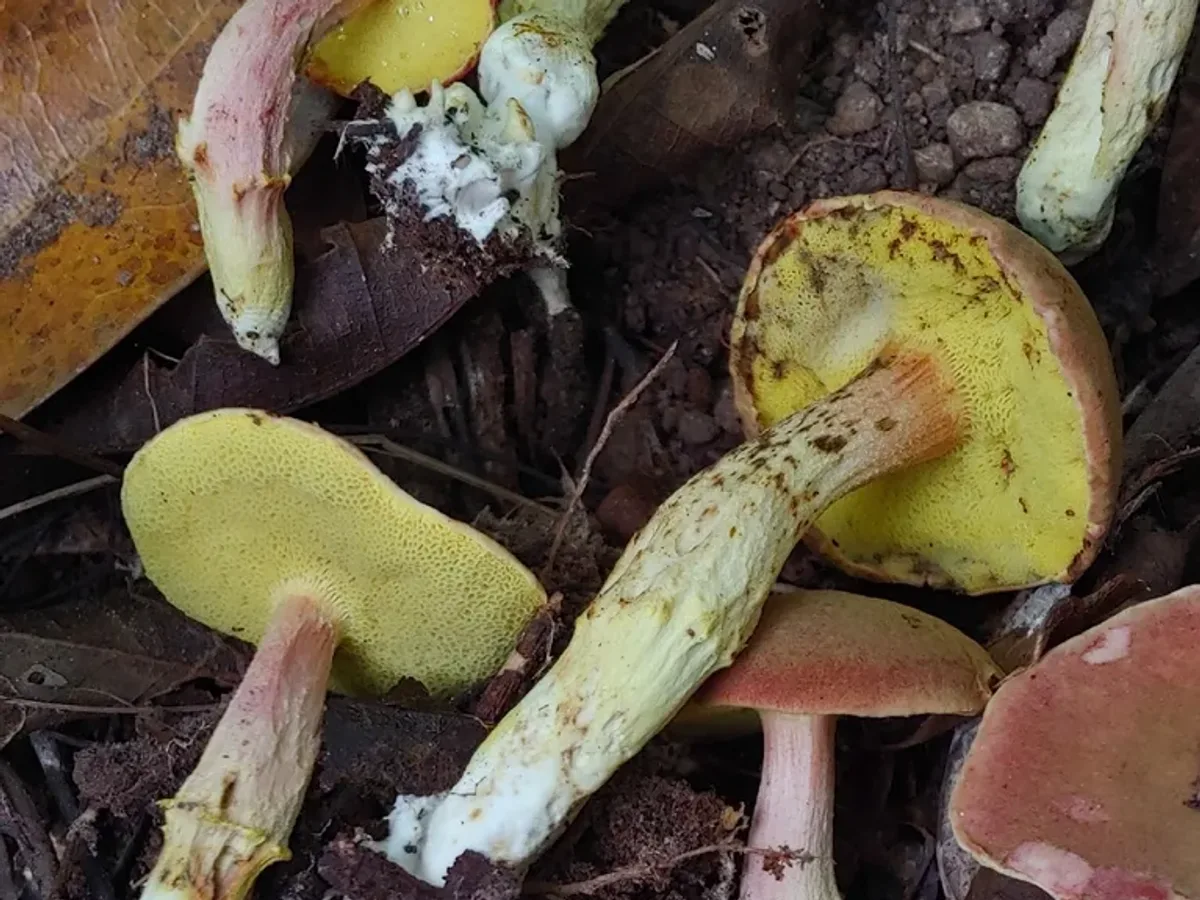 (c) Kurt Miller, some rights reserved (CC BY-SA)
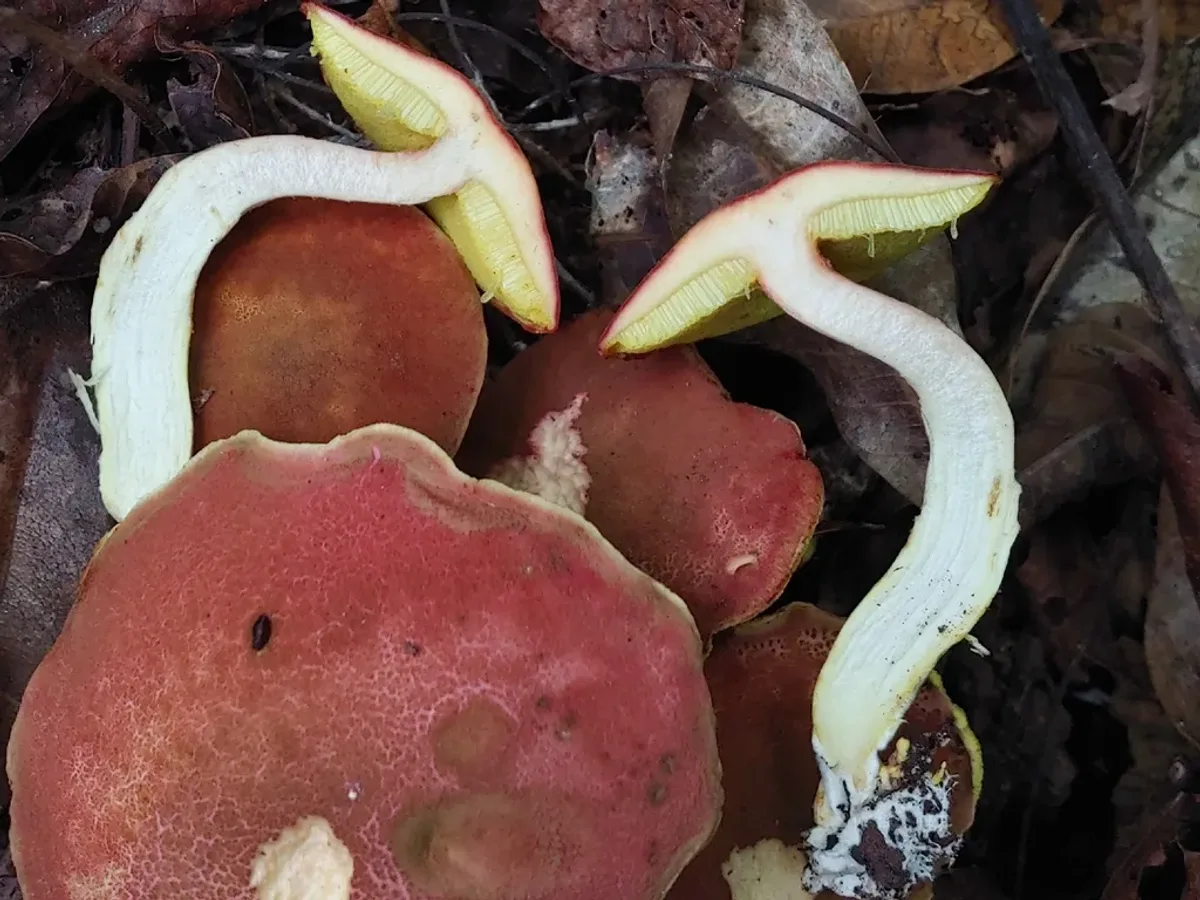 (c) Kurt Miller, some rights reserved (CC BY-SA)(c) Kurt Miller, some rights reserved (CC BY-SA)(c) Kurt Miller, some rights reserved (CC BY-SA)
Not poisonous, but not worth eating - too tough, bitter, or bland for the pot.
Never eat a mushroom you are not 100% sure of - check the look-alikes below, and always cook wild mushrooms.
How to recognise it
Singerocomus guadelupae belongs to a small genus of neotropical boletes characterised by their xerocomoid construction - a deliberate combination of a dry, tomentose cap, spongy tube layer, and bolete-shaped fruitbody that places them superficially in the company of Xerocomus species but with their own deep evolutionary history in the Boletaceae.
Cap
The cap is a dull olive-brown to yellowish-brown, reliably dry and felty to the touch even in wet conditions, and in old or parched specimens often breaks into a mosaic of flat areolae. This cracking tendency is a useful field mark in xerocomoid boletes generally.
Pores
The pore surface is pale and fades to a greyish-yellow, and - critically - it shows the blue or blue-green bruising reaction characteristic of many boletes when pressed or cut. The bluing is not vivid or instant; it develops slowly (several seconds to a minute) and fades back to greyish-cream.
Stem
The stem is smooth and fibrous rather than reticulate (no net pattern), which helps separate it from many porcini-type boletes.
Flesh
Cut the flesh: it is pale yellowish-white and may show a faint bluing under the cuticle that quickly fades.
The overall impression is a modest, quiet-coloured bolete without the handsome richness of edible relatives.
Where & when it grows
Habitat
This species straddles two biogeographically significant tropical systems.
Its type locality is Guadeloupe in the Lesser Antilles, and it is recorded across other Caribbean islands in humid broadleaf forest growing on volcanic or sedimentary soils under native canopy trees - including the sprawling mastic, manchineel, and tree-of-life forests that persist as fragments in those island landscapes.
Its 2023 record in Paraíba state, northeastern Brazil, extends its known range substantially southward into the Atlantic Forest, one of the most biodiverse and most threatened forest biomes on Earth. There it associates with native hardwoods in forest fragments within the Caatinga-Atlantic Forest ecotone.
This dual distribution across island Caribbean and continental neotropical Atlantic Forest suggests the species may have a broader range in northeastern Amazonia and the Guiana Shield that is simply underdocumented due to limited mycological survey effort in these regions.
Like all ectomycorrhizal boletes, it requires intact, living root networks of its host trees and will not be found in cleared, degraded, or plantation landscapes.
When
The wet tropics do not have seasons in the northern European sense; instead, the rhythm of fungal fruiting is driven by rainfall.
In both the Caribbean islands and northeastern Brazil, the rainy season typically spans June through November, with peak rainfall from July to September.
Singerocomus guadelupae tracks that rainfall window: expect fruitings from June onward, with the most reliable season running July through September.
Even in the dry months a single heavy storm can trigger isolated fruitings, but sustained, multi-specimen flushes are a wet-season phenomenon.
Soil temperatures across this species' range remain consistently warm year-round (rarely below 20 °C), so temperature is not the limiting factor it would be at temperate latitudes - moisture is the primary driver.
A rainfall event of 20-30 mm over a few days, followed by 5-10 days of continued warmth and humidity, is the typical trigger pattern.
How it grows
Fruits singly or in scattered groups of two to four on the forest floor among leaf litter.
Because this is a mycorrhizal species, its mycelium is intimately associated with the root network of its host trees. Fruitbodies tend to reappear near the same trees in successive years when conditions allow.
The fruitbody develops relatively quickly in the warmth of tropical soils, reaching maturity within 5-8 days of emergence. Older specimens degrade rapidly in the heat and humidity, so fresh, firm specimens are fleeting.
Fruiting conditions
Fruiting is driven primarily by rainfall in the consistently warm tropical environment. A minimum of approximately 20 mm of rainfall over a 14-day period, combined with soil temperatures above 20 °C (nearly constant throughout the year in Caribbean and northeastern Brazilian lowlands), triggers fruiting with a lag of 5-10 days. The wet season (June-November) provides the most reliable conditions; the dry season (December-May) may produce isolated fruitings after storm events but not sustained flushes.
Look-alikes
Several other bolete species occur in the same Caribbean and northeastern Brazilian forest environments and could be confused with Singerocomus guadelupae.
- Within the genus itself, Singerocomus rubriflavus (from the Guiana Shield and Atlantic Forest) is the most closely related; it is distinguished by a more distinctly reddish or red-pileate cap (typically brighter red-orange tones contrasting with the paler spore-bearing surface) and a more vivid bluing reaction.
- Various unnamed or undescribed Xerocomus and Phylloporus species occur in the same forests and could be confused superficially; Phylloporus species are distinguished immediately by having gills instead of a tube-and-pore layer.
- Neotropical Boletus species and segregate genera (including Rubroboletus-like entities) with red or orange pore surfaces should be treated as potentially deadly and avoided. The key distinction is pore colour at all ages - no safe Caribbean bolete has red or orange pores, and any bluing bolete with red pores is almost certainly toxic.
- Phlebopus marginatus and related large tropical boletes with non-bluing dark pores are ectomycorrhizal or saprotrophic in tropical forest and are broadly different in habit.
In the Atlantic Forest and Caribbean, a forager unfamiliar with local bolete species should leave all unidentified boletes uncollected.
Several neotropical boletes have orange-red to blood-red pore surfaces, all of which should be treated as potentially deadly. Unlike Singerocomus guadelupae - which has whitish to pale yellowish pores - these species show vivid red or orange-red pore colour even at button stage. Any bluing bolete in the Caribbean or Atlantic Forest with red or orange pores must never be eaten. The pore colour alone is the critical field mark: check it on the youngest part of the cap.
Various Phylloporus species occur in Caribbean and Atlantic Forest tropical woodland and have a similar brownish cap and bolete-like stature. The definitive distinction is the reproductive surface: Phylloporus species have decurrent true gills (blade-like lamellae running down the stem), never a tube-and-pore layer. If the underside of the cap shows a sponge of tubes and angular pores rather than blade-like gills, it is not a Phylloporus.
The closest relative, sharing the same genus and overlapping range in the Guiana Shield and Atlantic Forest. S. rubriflavus has a distinctly red to red-orange cap colour (from which the epithet 'rufiflavus' derives) contrasting with the olive-brown to yellowish-brown cap of S. guadelupae; the pore surface tends toward yellow and the bluing reaction may be more vivid. Both are inedible.
Introduced through European trade in tropical urban gardens and parks; has a dry, velvety olive-brown to yellowish-brown cap very similar to Singerocomus guadelupae, and also a non-reticulate stem. Distinguished by its temperate-zone preferred habitat (associated with oaks and other introduced European trees rather than native tropical hardwoods), smaller average size, more consistently yellow pore surface, and the fact that it is rarely found in intact primary Caribbean or Atlantic Forest. Considered of low-quality edibility in Europe; status in the tropics is not reliably established.
In the kitchen
Picking & cleaning
Singerocomus guadelupae has no known culinary use and is considered inedible. There is no tradition of collecting or eating this species, and no reliable safety data exists to determine whether regular consumption would be harmful. Do not collect it for food.
If encountered, it is worth photographing carefully, as distribution data for this poorly documented species is scientifically valuable. Note:
- cap colour
- pore colour
- bluing reaction
- stem texture
- host trees
Specimen collections with voucher data have value for regional herbaria and ongoing Neotropical mycology surveys.
Good to know
Singerocomus guadelupae is not known to be poisonous based on available mycological literature; no toxins have been identified and no confirmed poisoning incidents are documented.
However, the species is also not documented as edible or consumed in any traditional or contemporary culinary context, and formal chemical analysis has not been conducted.
The bluing reaction visible in the flesh and pores indicates the presence of variegatic acid or related compounds - the biochemical system that produces blue colour on oxidation. In some bolete genera this is associated with gastrointestinal irritants, though bluing alone does not guarantee toxicity.
Given the combination of no confirmed edibility, bitter or astringent raw taste, minimal scientific data, and no culinary tradition, this species must be treated as inedible. Do not consume it.
In tropical Caribbean and Atlantic Forest environments more broadly, a general rule applies: the bolete flora is incompletely known, and species that look edible by northern-hemisphere analogy may not be safe without specific local knowledge.
A reference guide - never an edibility guarantee. When in doubt, leave it out.