Earthstar Earthball
Scleroderma polyrhizumsyn. Scleroderma geaster, Lycoperdon polyrhizum, Scleroderma stellatum, Polysaccum pisocarpium var. polyrhizum
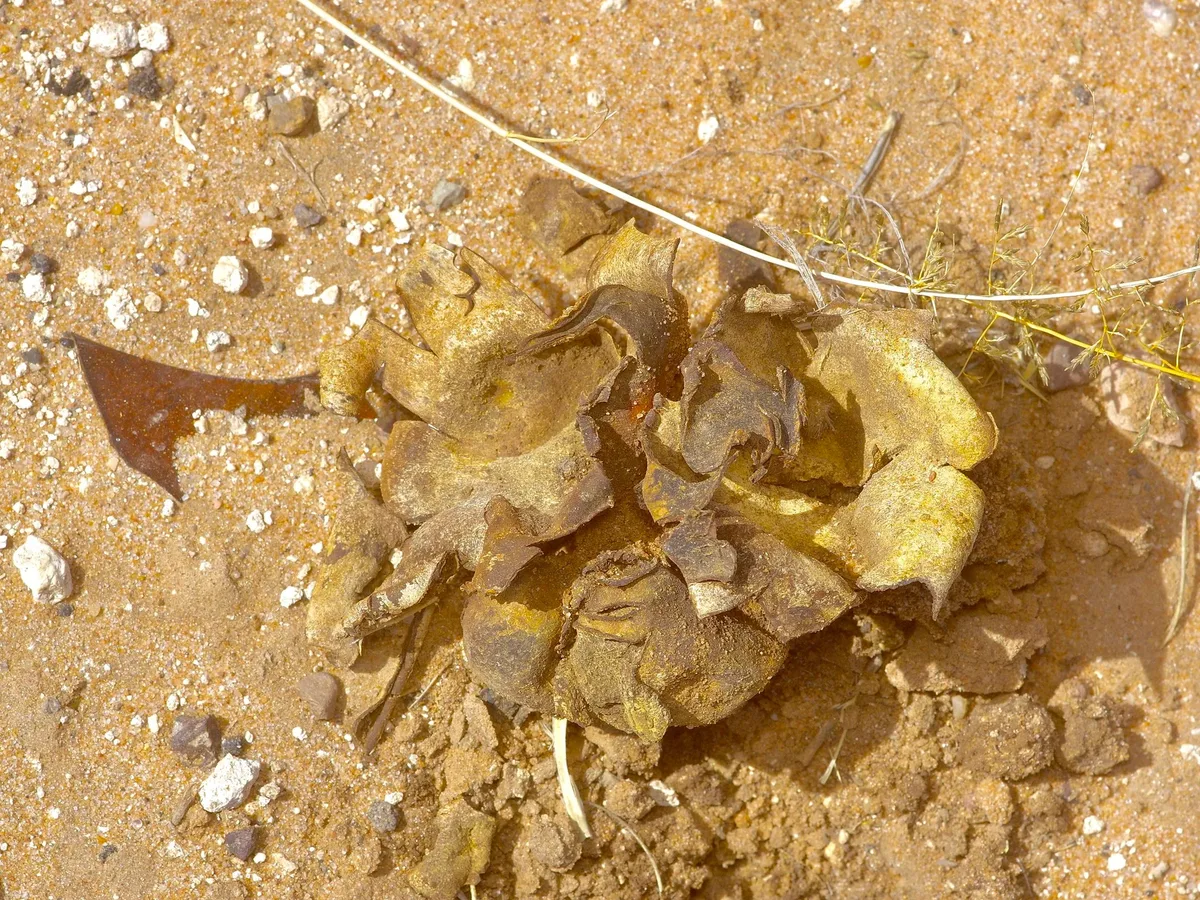 © Michelle W. (鍾偉瑋) (CC BY)
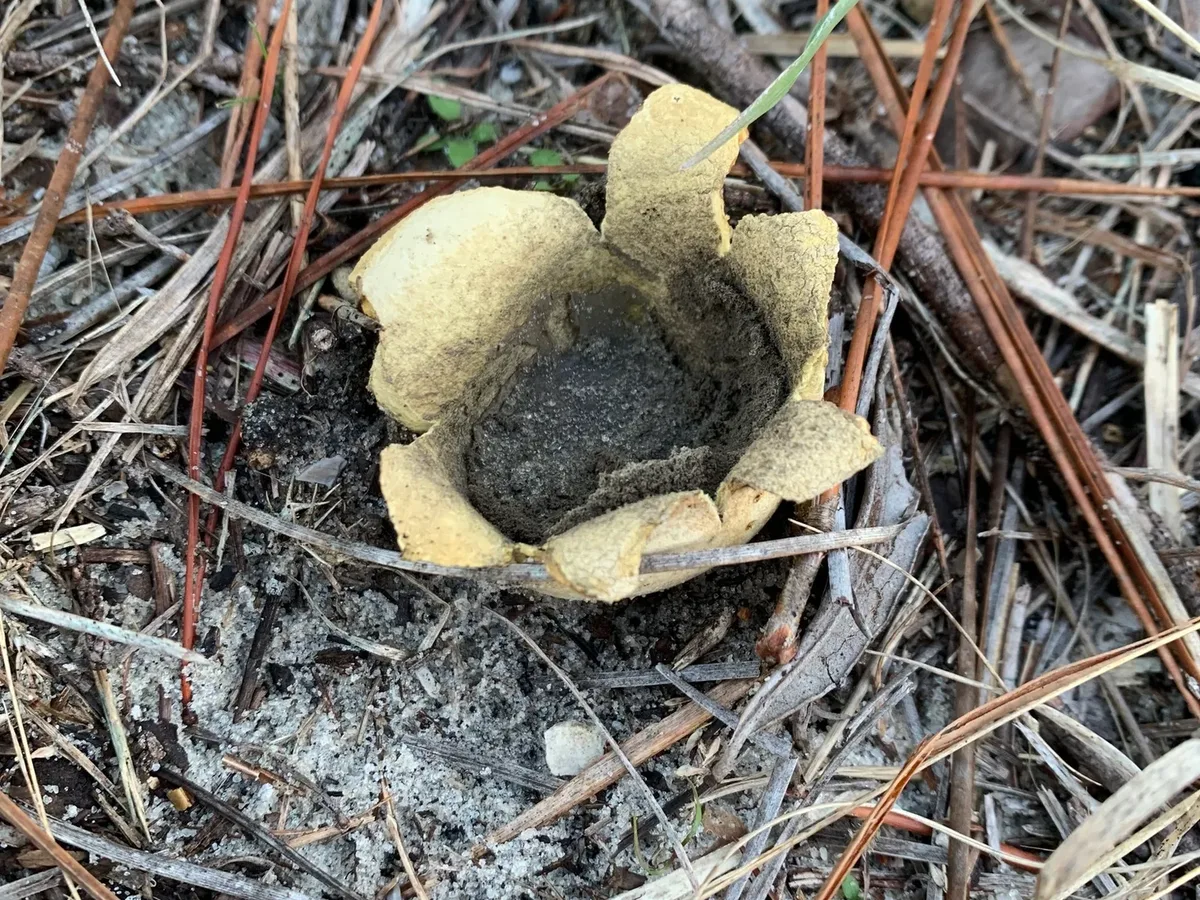 © Senna Bryce Robeson (CC BY)
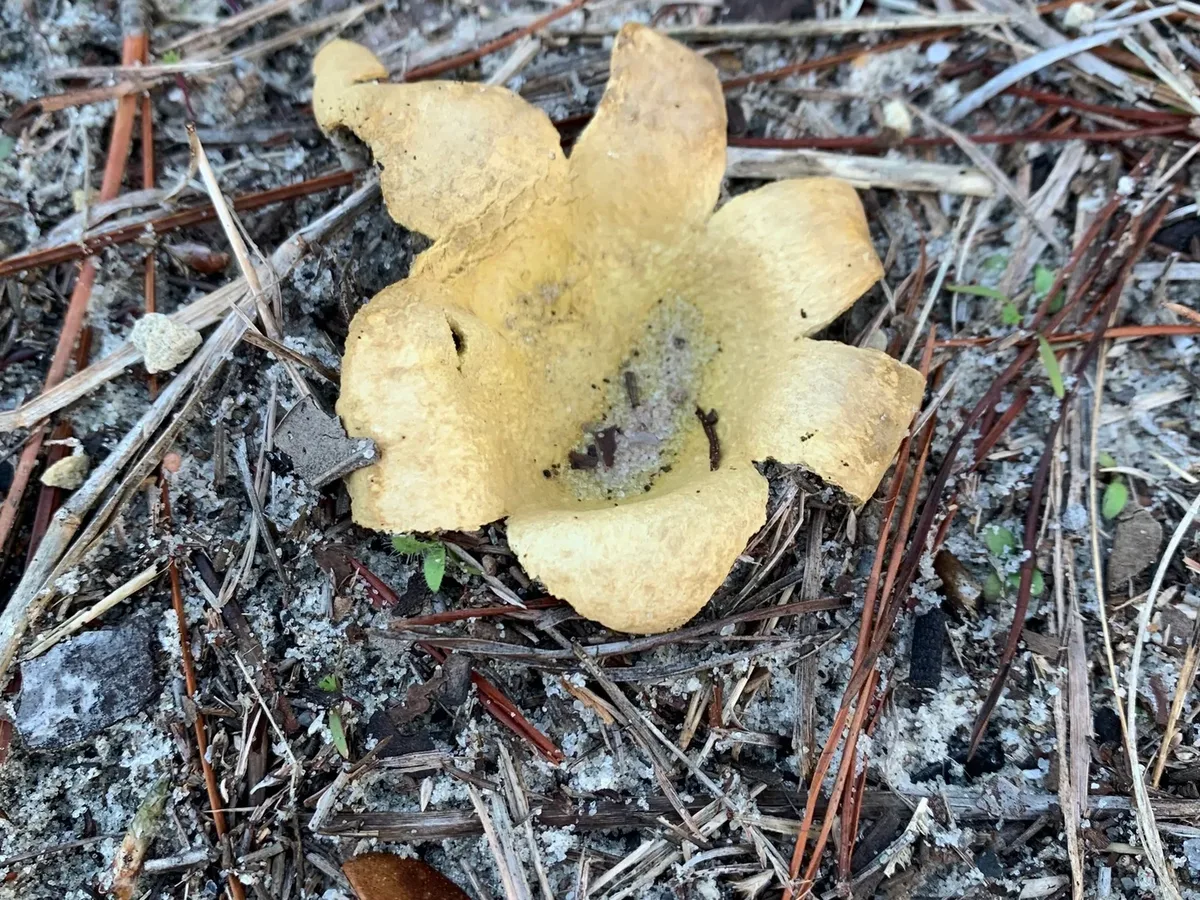 © Senna Bryce Robeson (CC BY)
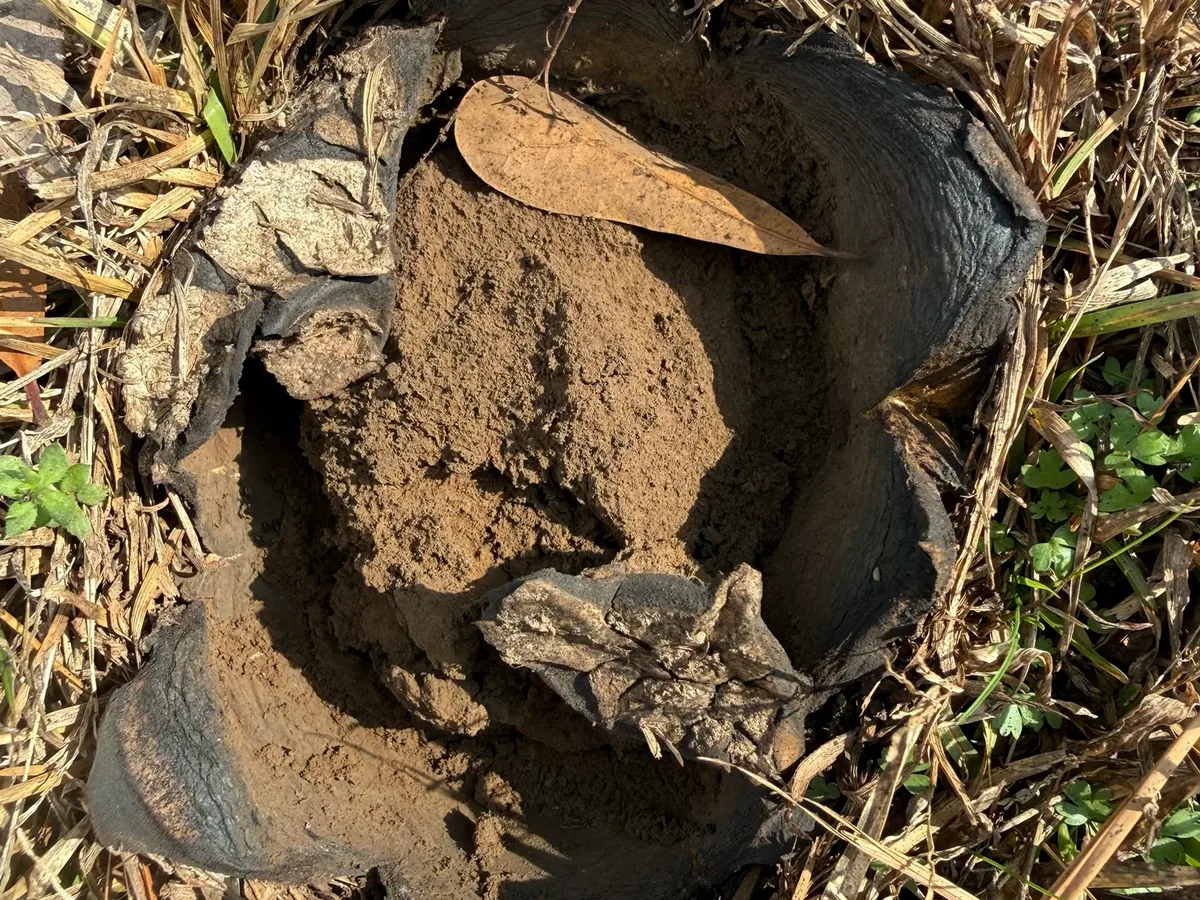 © Needgrace247 (CC BY)
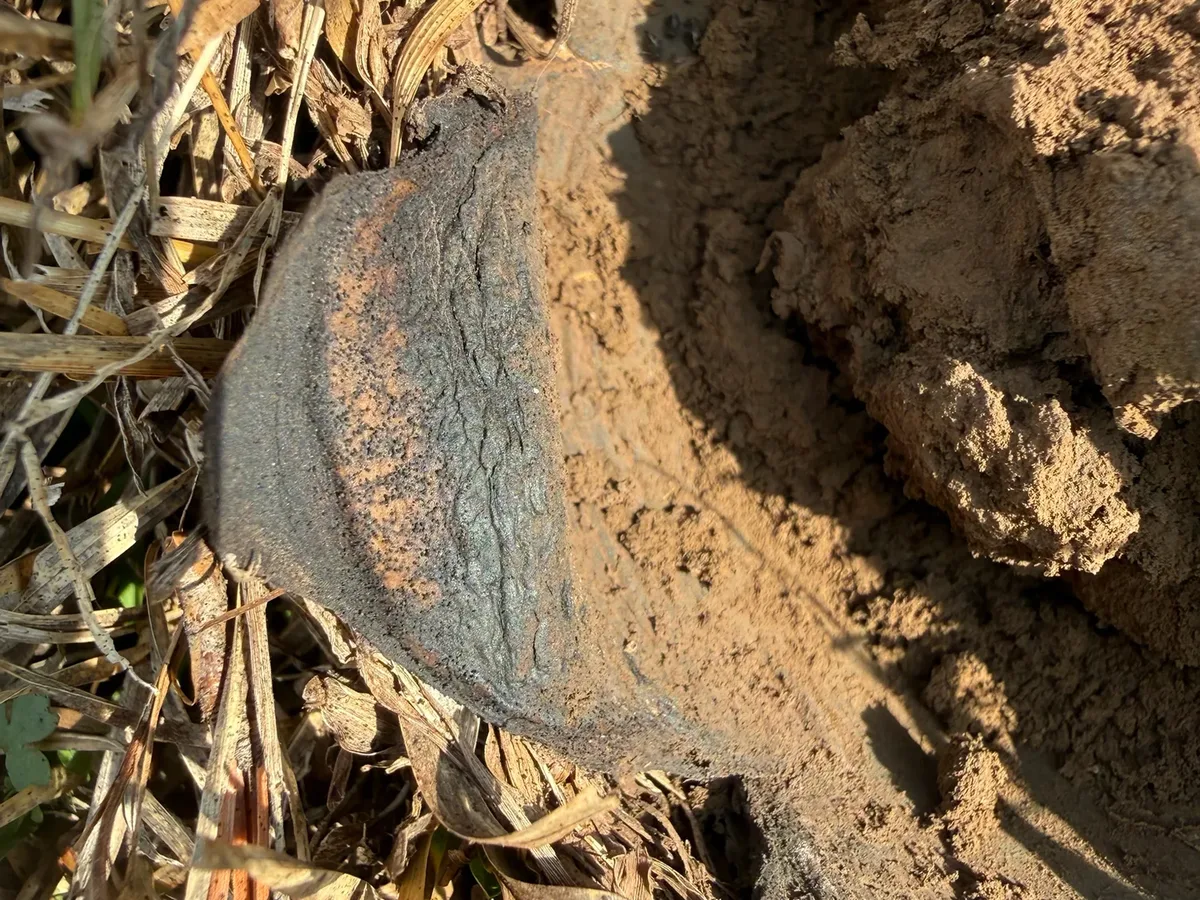 © Needgrace247 (CC BY)
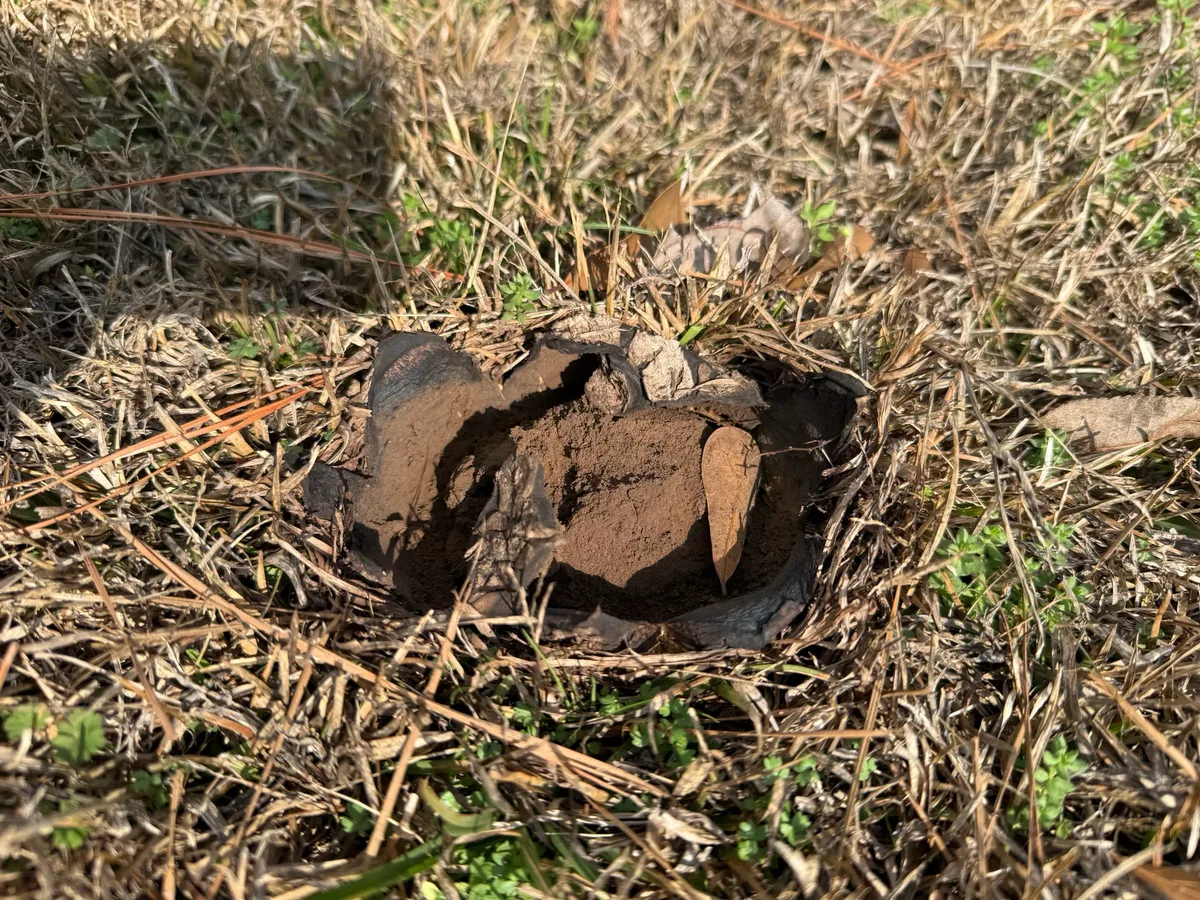 © Needgrace247 (CC BY)© Michelle W. (鍾偉瑋) (CC BY)© Senna Bryce Robeson (CC BY)
Edible only with the right preparation - or safe for some people but not others. Learn the caveats first.
How to recognise it
Scleroderma polyrhizum is one of the most architecturally dramatic of all gasteroid fungi, yet its most important feature for safety purposes is one you can check in seconds without ever cutting the fruitbody open: grip the base and tug gently, and you will feel a thick tangle of white cord-like rhizomorphs (root-like mycelial strands) anchoring it firmly into the ground.
No edible puffball produces these dense anchoring cords; they are characteristic of Scleroderma and are always present in this species.
When young and closed, the fruitbody is subglobose to somewhat flattened, 6-20 cm across, cream to pale buff or greyish-buff, with a thick, stiff outer wall that develops a cracked, areolate (plate-like) surface texture as it grows, aging to tan-brown or greyish-brown. The surface is never smooth and papery-thin in the way of a true puffball.
The decisive diagnostic: cut the fruitbody in half vertically, at any stage of development - from the youngest, most button-like specimen through to the half-open star - and the interior is always dark purple-black to purplish-grey.
This is an absolute, infallible character that separates every Scleroderma from every edible puffball at every stage of development. A genuine edible puffball (Calvatia, Lycoperdon, Langermannia) cut open at the edible stage is pure, solid, brilliant white throughout, with no trace of purple, grey, or darkness.
The mature spectacle of S. polyrhizum is genuinely remarkable: as the exoperidium dries and cracks, it peels back in 6-15 ray-like lobes that recurve toward the ground, spreading flat or even folding under the spore mass - resembling a flattened starfish or a many-petalled flower lying on the ground, with a powdery dark olive-brown spore cloud released by wind, rain splash, or passing animals.
Why it's dangerous
Not lethal under normal circumstances in healthy adults, but significant enough to cause considerable distress. The risk of confusion with edible puffballs means that untrained foragers face a real hazard.
Children, elderly individuals, and anyone with reduced kidney or liver function should be treated as higher risk. If ingestion of any Scleroderma species is suspected, contact a poison control centre.
The primary danger is not the toxicity level of S. polyrhizum itself, but the potential for it to serve as a gateway error into a broader pattern of reckless puffball collection - any forager who gets lucky once and eats an accidentally correctly identified puffball without checking the interior will sooner or later misidentify a Scleroderma or a worse species.
Toxin
The toxin profile of Scleroderma polyrhizum is incompletely characterised. The dark purple-black gleba contains unidentified secondary metabolites that act as gastrointestinal irritants.
Proposed but unresolved attributions in the literature:
- Possible low-level muscarine-related compounds have been discussed in the older literature, but this attribution is not confirmed with modern analytical methods.
- Some authors attribute the toxicity to anthraquinone-related pigments.
The outer exoperidium (leathery wall) may be less toxic than the gleba, but no part of the fruitbody is considered safe to eat. Cooking, boiling, or drying does not reliably deactivate the toxic components.
Symptoms
Gastrointestinal illness typically appears within 30 minutes to 3 hours of ingestion:
- nausea
- vomiting
- abdominal cramping
- diarrhoea
Symptoms are generally self-limiting and resolve within 24 hours with adequate fluid intake and rest.
No cases of delayed organ toxicity or mortality have been reliably attributed to Scleroderma polyrhizum.
Inhalation of the dry spore mass can cause coughing and respiratory irritation.
If symptoms are severe, prolonged (beyond 24 hours), or accompanied by signs of liver involvement, seek medical attention.
Staying safe
Scleroderma polyrhizum is toxic and must not be eaten.
The main toxic effects documented in Scleroderma poisoning cases are gastrointestinal: nausea, vomiting, abdominal cramps, and diarrhoea, typically appearing within 30 minutes to 3 hours of ingestion and resolving within 24 hours with supportive care.
The exact chemical basis of the toxicity is not fully characterised; the dark gleba (spore mass) is rich in uncharacterised secondary metabolites.
There is no evidence of lethal toxicity in healthy adults from ingestion of S. polyrhizum, but the illness can be distressing and in vulnerable individuals (children, elderly, those with compromised liver or kidney function) warrants medical attention.
The highest practical risk this species poses is through misidentification: the young fruitbody can be collected in error as a puffball by inexperienced foragers.
The one infallible safety check is to always cut a suspected puffball in half - the interior of an edible puffball is pure white; the interior of any Scleroderma is dark purple-black. Never deviate from this check.
The dried spore mass may also cause respiratory irritation if inhaled in quantity, so avoid crushing open mature fruitbodies in confined spaces.
Where & when it grows
Habitat
A fungus of open, disturbed, often dry ground rather than closed forest.
In South America, expect to find it in:
- Cerrado savanna margins
- dry grassland (campo sujo, campo limpo)
- roadsides and earth tracks
- garden beds
- eucalyptus and pine plantations
- sandy coastal habitats
- degraded pasture
Its tolerance of compacted and nutrient-poor soils allows it to colonise places that exclude most other species. It is not a forest interior species.
In common with many Scleroderma species, it is possibly weakly ectomycorrhizal with certain tree hosts (particularly Eucalyptus and Pinus in plantation settings) as well as saprotrophic - the relationship is not firmly resolved and may be facultative.
The thick white rhizomorphic mat at the base is always visible when you pull the fruitbody free.
When
Fruiting peaks in the austral late summer to autumn in temperate parts of South America (southern Brazil, Uruguay, Argentina: roughly February through May), triggered by moderately moist conditions on warm soils.
In tropical and subtropical areas (Cerrado, coastal Atlantic Forest margins) fruiting follows the onset of the wet season and can occur from October through April.
Fruitbodies are persistent - the opened, dried 'star' husks can remain visible on the ground surface for many months after spore dispersal, so a location may appear productive year-round. Check whether the interior is still powdery-spore-bearing (productive) or is already an empty shell.
How it grows
Saprotrophic (and possibly facultatively ectomycorrhizal in plantation settings). Fruitbodies develop underground or at the soil surface, anchored by a dense mat of white mycelial cords (rhizomorphs) that bind to soil particles and organic debris.
Development is slower than in thin-walled puffballs - the thick exoperidium takes weeks to months to mature fully. Fruitbodies arise singly or in loose groups from perennial mycelium and may appear in the same spot over successive years.
Once mature, the star-form persists on the soil surface for a long time, serving as a vehicle for gradual wind-dispersal of the powdery spore mass.
Fruiting conditions
A warm-season, dry-soil saprotroph. Fruitbodies initiate after significant rainfall (25+ mm over two weeks) on warm sandy or compacted soils (optimally 16-24 °C); development is slow because the thick peridium takes longer to form than in thin-walled puffballs, so the lag from rain to visible fruitbodies is typically 10-21 days. In South America, peak season is the austral late summer to autumn (February-May in temperate areas); in tropical zones it follows the wet season onset. The dried star-husks persist on the soil surface for months.
Look-alikes
The most important confusions are with edible puffballs, which this species can superficially resemble at the young, closed stage.
- 1Giant puffball (Calvatia gigantea) is typically much larger (10-70 cm), has a smooth to slightly finely cracked white to cream exterior, and the flesh is pure, brilliant white throughout at the edible stage - never purple or grey. It lacks the thick rhizomorphic cords at the base.
- 2Common puffball (Lycoperdon perlatum) is smaller (3-6 cm), has a uniformly white interior at the edible stage, and the exterior is covered with small removable spines, clearly different from the cracked plate-like areolate surface of S. polyrhizum.
- 3Calvatia cyathiformis and related South American species are puffballs with the same white interior at the edible stage.
- 4The Common earthball (Scleroderma citrinum), also inedible and toxic, shares the genus and the purple-black interior but is generally smaller (3-8 cm), rounder, more yellow-ochre, with coarser, more distinctly wart-like scales on the surface rather than the cracked areolate pattern of S. polyrhizum. Both are poisonous.
- 5Astraeus hygrometricus (hygroscopic earthstar) is sometimes confused at the star-open stage due to superficial resemblance in shape, but the Astraeus interior is white-grey and the peridium rays are hygroscopic (opening in moisture, closing in dry conditions); it is considered edible when young.
Also poisonous and inedible. Same genus, same dark purple-black interior. Smaller (3-8 cm), more spherical, lemon-yellow to ochre-brown exterior with more prominent raised wart-like scales rather than the cracked areolate pattern of S. polyrhizum. Lacks the prominent star-splitting dehiscence and the heavy rhizomorphic base of S. polyrhizum. Both must not be eaten.
Edible when young and white inside. Much smaller (3-6 cm), pear-shaped, exterior covered with small removable spines and granules giving a characteristic pattern clearly different from S. polyrhizum's cracked plate surface. Interior pure white at the edible stage. Base not rhizomorphic. Cut the specimen open before picking any puffball to confirm pure white interior.
Edible and choice at the correct stage. Much larger (10-70 cm), smooth to faintly cracked white exterior without plate-like areolation, and the interior is pure brilliant white at the edible stage - never purple or dark. Lacks the dense white rhizomorphic cord mat at the base. The decisive check: cut in half - pure white = possible puffball; purple-black interior = Scleroderma, do not eat.
Edible when young and white inside. Superficially similar to an open, star-split S. polyrhizum because it also splits into ray-like lobes. However, Astraeus rays are hygroscopic - they close tightly in dry conditions and open flat or recurve only when moist - while S. polyrhizum rays remain spread or recurved once open regardless of moisture. Astraeus interior is a whitish-grey (immature) to grey-brown papery endoperidium without the purple-black Scleroderma gleba. The gleba of Astraeus is pale grey-brown, not the deep purple-black of S. polyrhizum.
Also poisonous. Another Scleroderma with the same dark interior. Smaller, more distinctly dotted-scaly surface with isolated dark brown scales on a pale yellowish background (resembling leopard spots). Less rhizomorphic base than S. polyrhizum. Also inedible. The purple-black interior identifies any Scleroderma species regardless of surface pattern.
A reference guide - never an edibility guarantee. When in doubt, leave it out.