Leopard earthball
Scleroderma areolatumsyn. Scleroderma lycoperdoides var. areolatum, Scleroderma areolatum Ehrenb.
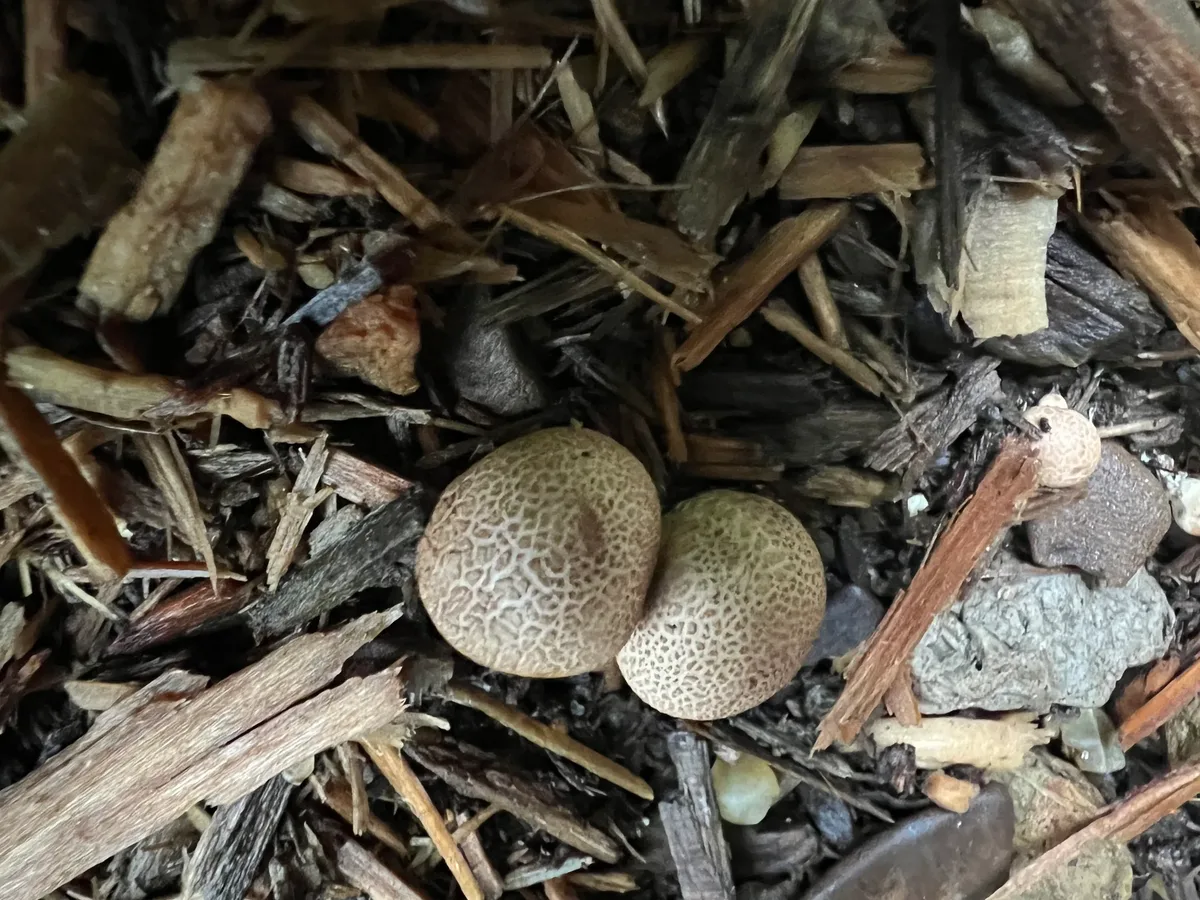 © Brian C. Hunt (CC BY)
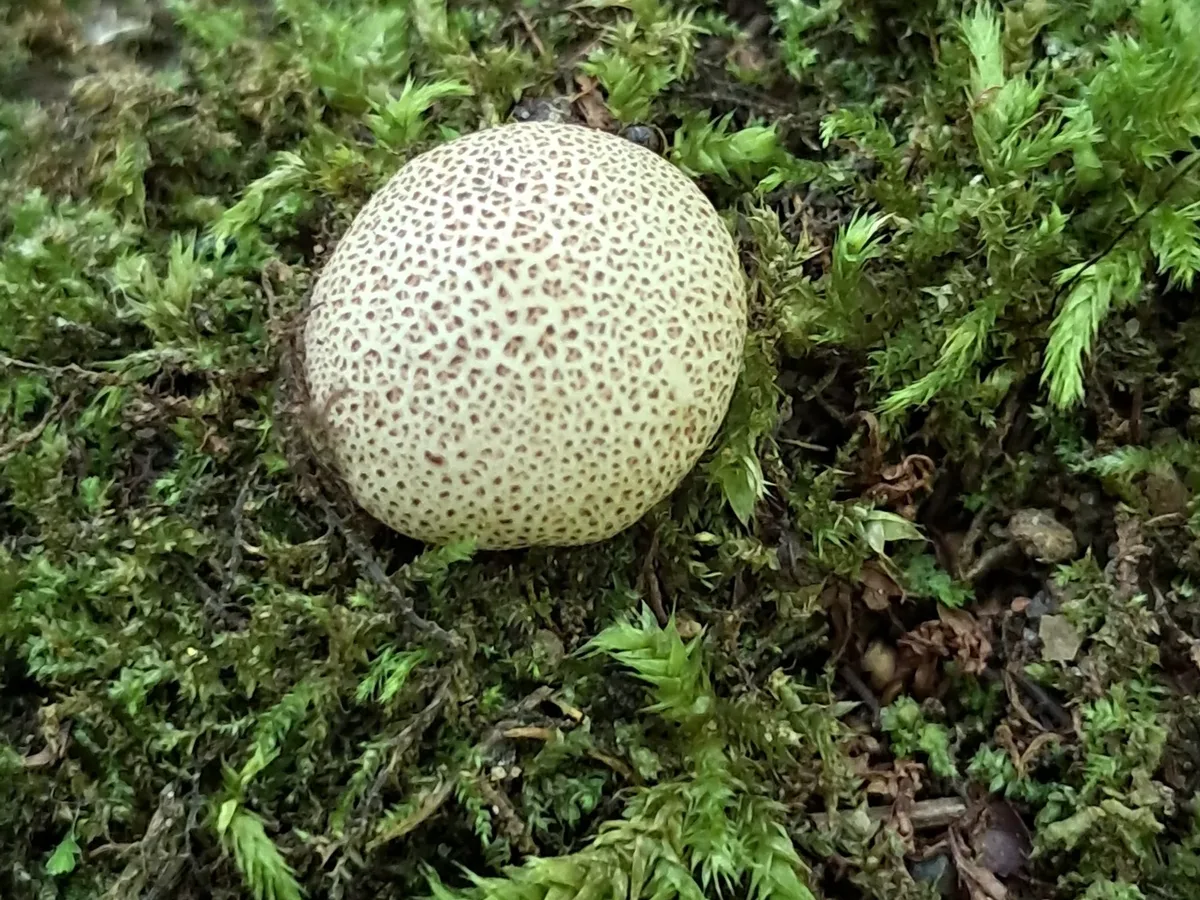 © Alex Reitan (CC BY)
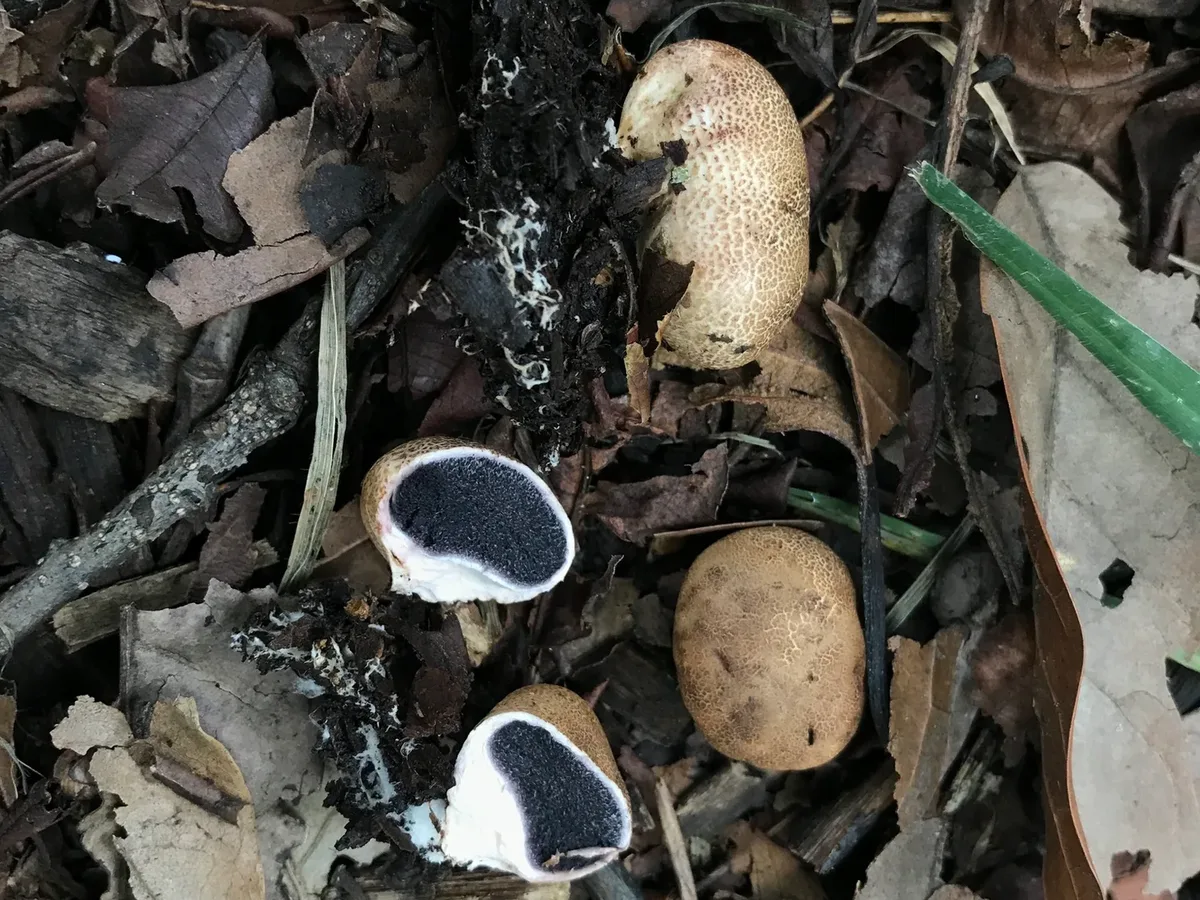 © Matthew Rozanoff (CC BY)
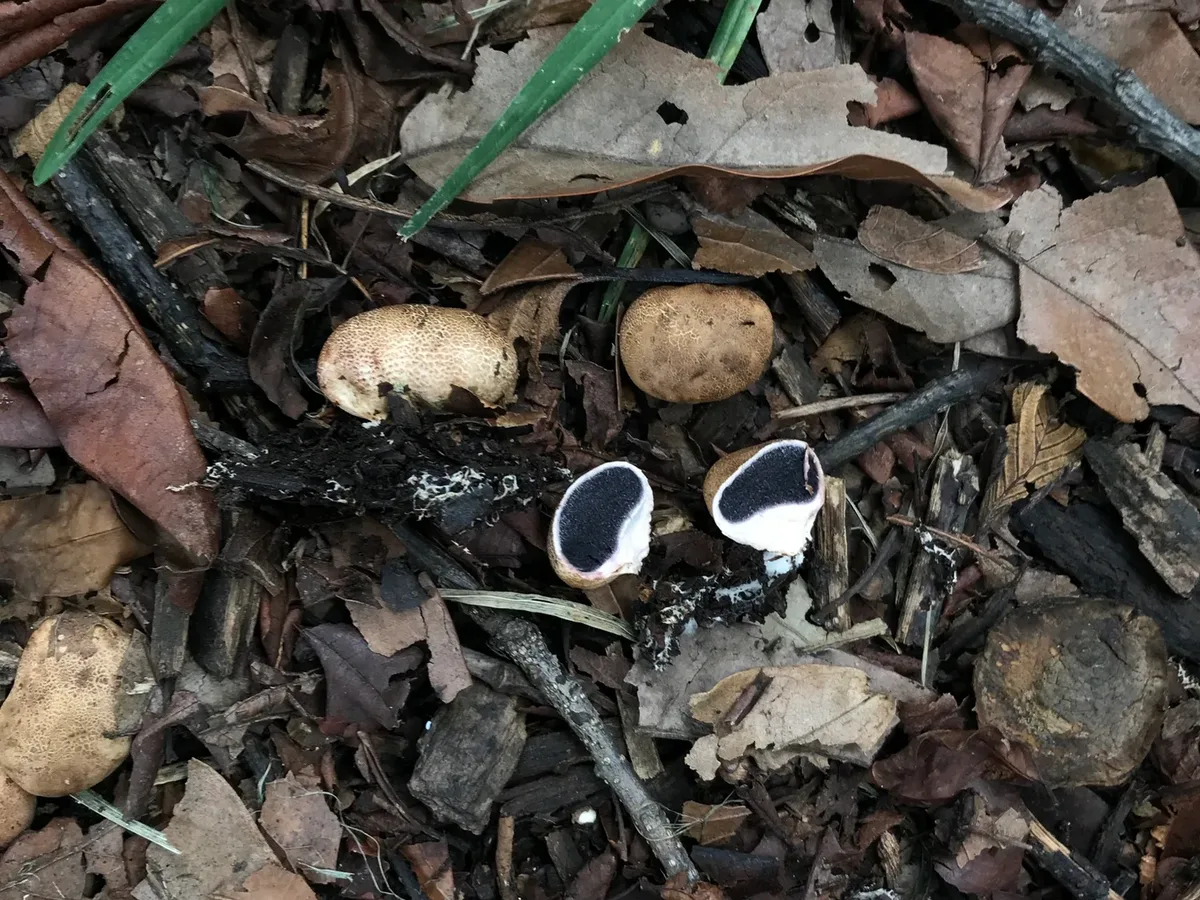 © Matthew Rozanoff (CC BY)
 © Tenoch Cuauhtémoc Perez (CC BY)
 © Alex Reitan (CC BY)
 hhkaaks (CC0)© Brian C. Hunt (CC BY)© Alex Reitan (CC BY)
Edible only with the right preparation - or safe for some people but not others. Learn the caveats first.
How to recognise it
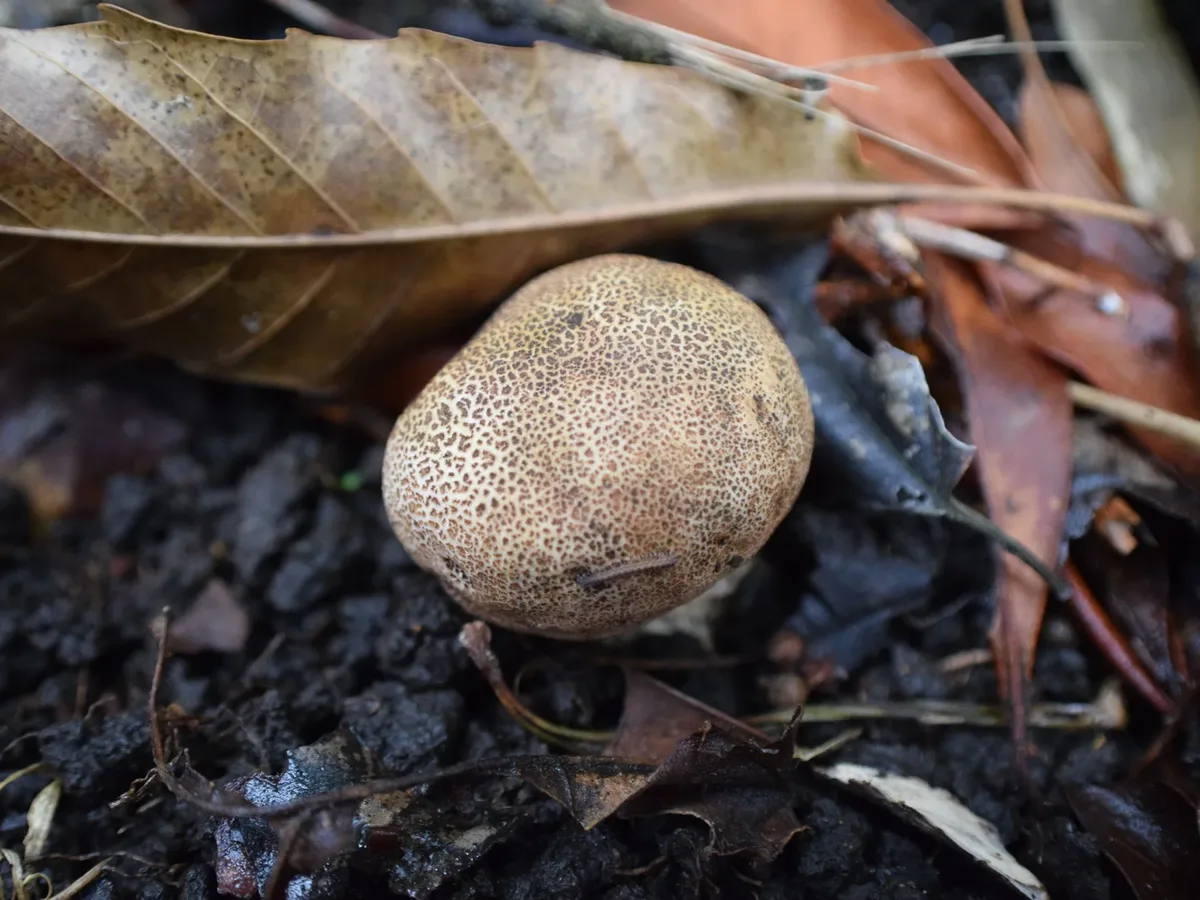
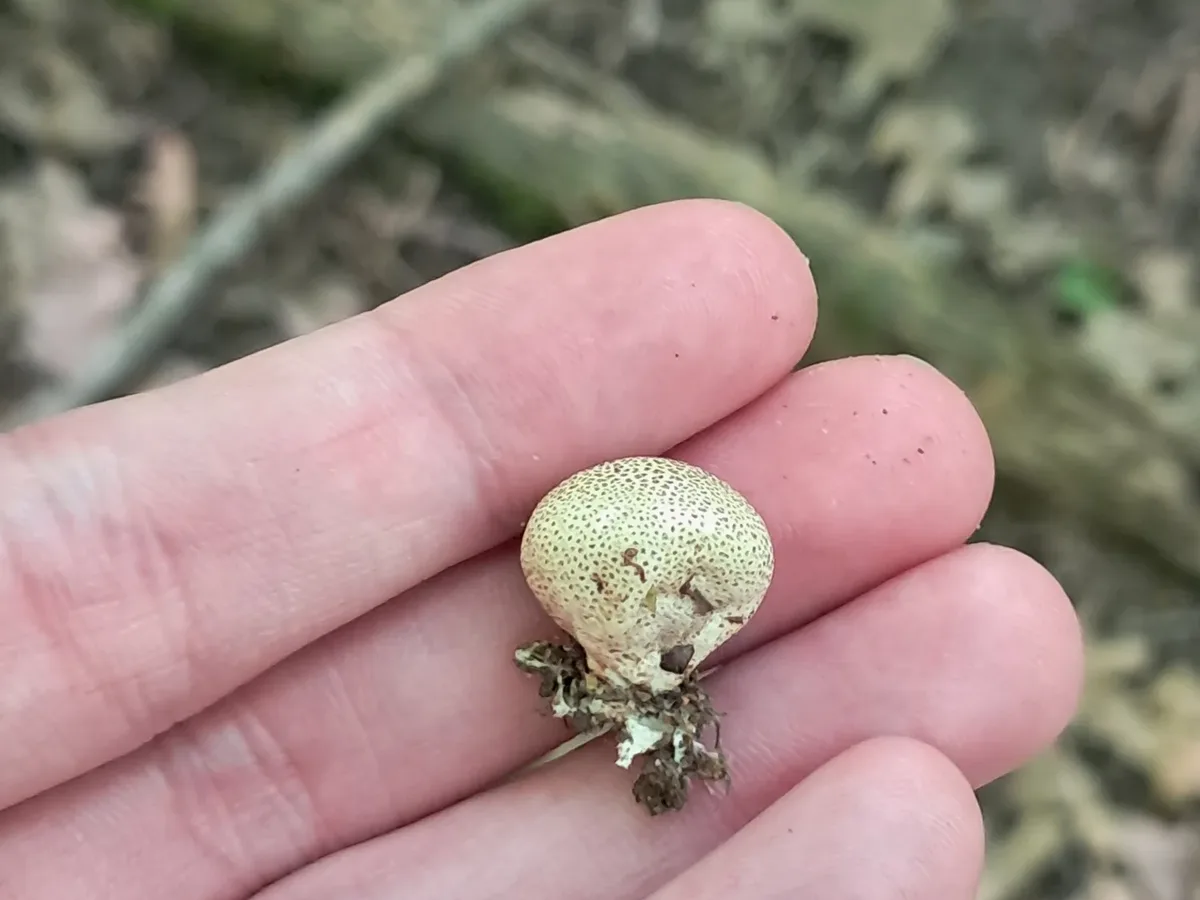
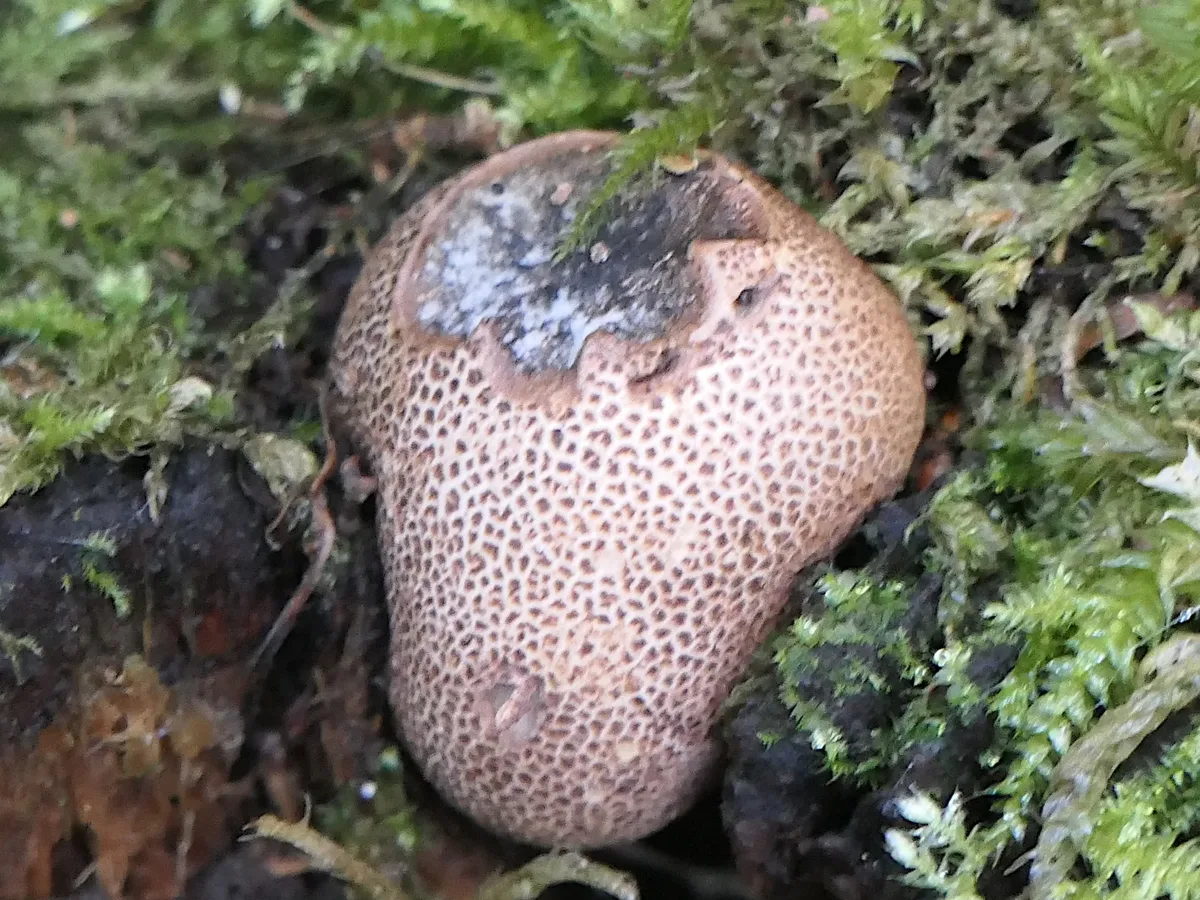
Scleroderma areolatum is one of the most visually distinctive of the earthballs, immediately recognisable once you know the pattern: a small, pale, puffball-like sphere or pear-shape covered in discrete dark brown to blackish raised spots scattered across a paler background - the leopard's coat that gives this species its common name.
The fruitbody is relatively small by earthball standards, typically 2-6 cm across, and notably lacks the thick, tough, cracked-rind peridium that characterises its larger relative S. citrinum. Instead the wall here is thinner and the surface is patterned with organised dark areoles rather than broken into irregular polygonal plates.
The base narrows more distinctly than in S. citrinum, forming a short stalk-like structure that anchors the fruitbody to the soil via white mycelial cords - a character that helps separate it from truly stalk-less puffballs.
Like all Scleroderma species, the diagnostic cut-test is decisive: open the fruitbody and the interior is lilac-grey to violet even in young specimens, darkening rapidly to purple-brown and finally powdery black-brown at maturity. This coloured interior is absolutely unlike any edible puffball, which remains uniformly white throughout the edible stage.
The peridium, though thinner than S. citrinum's, is still tougher and firmer than the papery skin of Lycoperdon puffballs. Old specimens persist as blackened, eroded husks.
Why it's dangerous
Scleroderma areolatum is a poisonous species that should not be eaten or experimented with, but it is not classified as lethally toxic.
The primary risk is straightforward misidentification: a naive forager who has learned to gather round puffballs from the ground may collect small leopard earthballs in error, particularly in urban parks and gardens where this species commonly appears.
The cut-test is the definitive preventive measure - every candidate puffball must be bisected before being placed in a basket, and any interior colour other than uniform white means the specimen must be discarded.
Because S. areolatum tends to occur in human-modified environments (parks, gardens, roadsides) rather than only in remote bush, it is perhaps more likely to be encountered by beginners than other earthball species.
Children attracted by the small spotted appearance should be discouraged from handling or mouthing specimens.
Toxin
The toxic compounds in Scleroderma areolatum have not been fully characterised at the biochemical level.
The genus Scleroderma is known to contain two relevant groups of compounds:
- Irritant sesquiterpene-type compounds (related to sclerodermin, identified in S. citrinum)
- Various dark pigment compounds in the gleba, responsible for the characteristic purple-black interior coloration
These irritants affect the gastrointestinal tract and in some cases the autonomic nervous system. They are heat-stable and are not rendered safe by cooking; there is no preparation method that makes this species edible.
The thin peridium of S. areolatum relative to S. citrinum may mean slightly different concentrations of these compounds, but this distinction carries no practical safety benefit: both are toxic and neither is safe to eat.
Symptoms
Ingestion of Scleroderma areolatum causes gastrointestinal irritation, with symptoms typically developing within 30 minutes to 3 hours of consumption.
Expected effects include:
- Nausea
- Vomiting
- Abdominal cramps
- Diarrhoea
In more significant ingestions, systemic effects including sweating, flushing, dizziness, and headache have been reported for Scleroderma species generally.
The majority of cases resolve within 12-24 hours with rest and rehydration, but medical attention is appropriate, particularly if children are involved or if symptoms are severe.
Inhalation of the dry spore mass from mature specimens can cause respiratory irritation.
Deaths attributable specifically and solely to S. areolatum have not been reliably documented in the medical literature; it is a toxic species but not a lethal one under normal conditions of exposure.
Staying safe
Scleroderma areolatum must not be eaten. It is a poisonous species causing gastrointestinal irritation, and its toxic compounds are heat-stable and not destroyed by any cooking method.
The single most important field safety rule for anyone collecting puffballs is the cut-test: bisect every specimen from top to base before collecting it - pure white interior = potential edible puffball; any other colour = discard immediately. This test costs one second and eliminates earthball poisoning risk entirely.
Do not allow earthball specimens to contaminate a basket of true puffballs, and wash hands after handling.
If ingestion is suspected, contact a poisons information service:
- In Australia call 13 11 26 (Poisons Information Centre)
- In New Zealand call 0800 764 766 (National Poisons Centre)
- In the UK call 111
- In the US call 1-800-222-1222
Where & when it grows
Habitat
The leopard earthball is a generalist by earthball standards, turning up in native bush, suburban parks, gardens, and disturbed urban ground across a wide geographic range.
In Australia and New Zealand, it fruits in eucalyptus and acacia woodland, along forest tracks, in urban parks with established trees, and occasionally in garden mulch or lawn margins near trees - reflecting its broad ectomycorrhizal host tolerance.
Its apparent comfort in urban and semi-disturbed settings makes it one of the more commonly encountered Scleroderma species in populated areas of southeastern Australia and New Zealand, where naive foragers are more likely to encounter it.
The soil is typically well-drained and can be sandy, loamy, or even compacted; pH tolerance is wide. In the Northern Hemisphere it occupies similar habitat types with Northern Hemisphere tree hosts.
Its urban tolerance is an important safety consideration: it turns up in the same parks and gardens where beginners often gather their first puffballs.
When
In the Southern Hemisphere the main fruiting season is austral autumn (March-June), peaking in April-May when the combination of cooling soils and returning autumn rainfall creates the characteristic trigger for ectomycorrhizal fruiting.
In subtropical coastal parts of Australia, occasional fruiting can occur after significant summer rainfall.
In the Northern Hemisphere, the season runs from late summer through autumn (August-November), corresponding to the Northern Hemisphere earthball peak.
Individual fruitbodies develop slowly over several weeks, and the tough peridium means that old specimens persist on the ground well beyond the active fruiting period - dried, dark-stained husks can be found many months after the main season.
How it grows
Like all Scleroderma species, S. areolatum is an obligate ectomycorrhizal fungus - it cannot complete its life cycle without a living tree partner, with which it trades carbon from photosynthesis for water and minerals via an underground mycelial network.
The visible fruitbodies are the reproductive surface of this hidden organism, emerging from established mycelium that can persist for years in the same patch of soil.
Fruitbodies typically appear singly or in small scattered groups rather than in tight clusters, and the same spots may produce mushrooms across multiple seasons.
The species does not fruit in isolation from trees; its presence always implies a host root-zone nearby, even in urban settings (street trees, park trees, garden shrubs in the Fagaceae or Myrtaceae families).
Fruiting conditions
In the Southern Hemisphere, fruiting is triggered by autumn rainfall (March-June) as soil temperatures cool from summer highs. Fruiting can also occur opportunistically after summer rain in warmer coastal areas. Flush lag from a meaningful rain event to visible fruitbodies is 7-18 days. The species tolerates a relatively wide soil-temperature window and urban conditions, making it more flexible in fruiting timing than strictly forest-dependent earthballs. In the Northern Hemisphere, the season runs August-November with a comparable trigger of autumn rains on warm soil.
Look-alikes
The most realistic and most important confusion is with small edible puffballs, particularly the common puffball (Lycoperdon perlatum) and the sandy puffball or other small Lycoperdon species found in similar habitats. In both Australia and the Northern Hemisphere, small Lycoperdon puffballs are common on or near woodland ground and are a popular edible for beginners.
The separation is straightforward and absolute: cut the candidate in half from apex to base. Edible Lycoperdon puffballs are ALWAYS uniformly white inside at the edible stage - pure, unmarbled, featureless white. Scleroderma areolatum is lilac-grey to violet-grey inside even when young, rapidly darkening to purple-brown. No edible puffball has a coloured interior.
Secondary distinguishing features include:
- The dark leopard-spot scales on the S. areolatum peridium (Lycoperdon has fine spines, granules, or warts but not large dark spots)
- The firmer, tougher peridium of the earthball
- The distinct stalk-like base
The larger common earthball (S. citrinum) is a closely related poisonous species but distinguished by its larger size, strongly ochre-yellow cracked-rind peridium, and lack of the distinct leopard-spot pattern.
Scleroderma verrucosum (scaly earthball) is also similar, with a thin-walled, scaly surface, but tends to have a more elongated base and less distinctive spot pattern; it is also poisonous.
True truffles (Tuber spp.) are hypogeous (underground) and lack the surface patterning, but young earthballs are occasionally dug up in truffle searches; the dark marbled interior of a truffle versus the uniform dark gleba of an earthball allows distinction.
S. citrinum is larger (3-10 cm versus 2-6 cm), more ochre-yellow, with a thick cracked-rind peridium (2-4 mm) that breaks into irregular polygonal plates rather than the organised discrete dark scales of S. areolatum. S. citrinum also lacks the distinct stalk-like base. Both are poisonous; distinguishing them from each other matters for identification records but not for practical safety - neither should be eaten.
The single most reliable separator is the cut test: L. perlatum is uniformly pure white inside when young and edible; S. areolatum is lilac-grey to violet inside even when apparently fresh. The puffball has a thin, papery skin covered in small conical spines that leave a reticulate scar when they fall, not large dark leopard-spot scales. The puffball skin is far thinner and more papery than the earthball's firmer peridium. Cut every specimen before collecting - no exceptions.
This is a synonym for S. citrinum; see common earthball entry above. Larger and more strongly ochre, with thick cracked rind, no leopard-spot pattern. Both are poisonous.
Various small Lycoperdon species occur in woodland and gardens in similar habitats to the leopard earthball. All are uniformly white inside when young. None have the organised large dark-spot scale pattern of S. areolatum. The cut test is the definitive check in all cases.
S. verrucosum has a similarly thin peridium and a pronounced stalk-like base, and can look superficially similar to S. areolatum, but the surface pattern is less distinctly spotted - more irregular warts and scales than organised leopard spots. Also poisonous. Both are mycologically important to separate but carry equivalent caution-class risk.
A reference guide - never an edibility guarantee. When in doubt, leave it out.