Split gill
Schizophyllum commune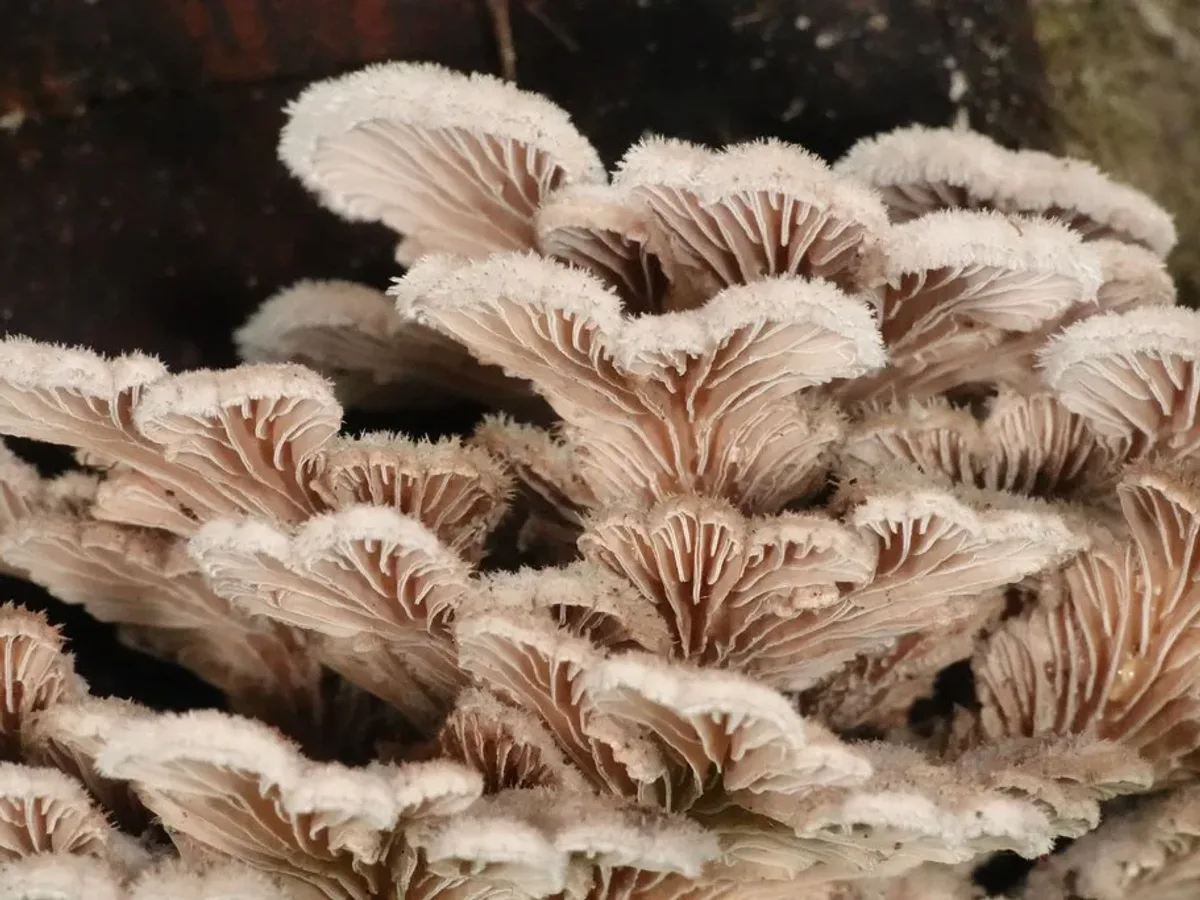 © dhobern (CC BY 2.0)
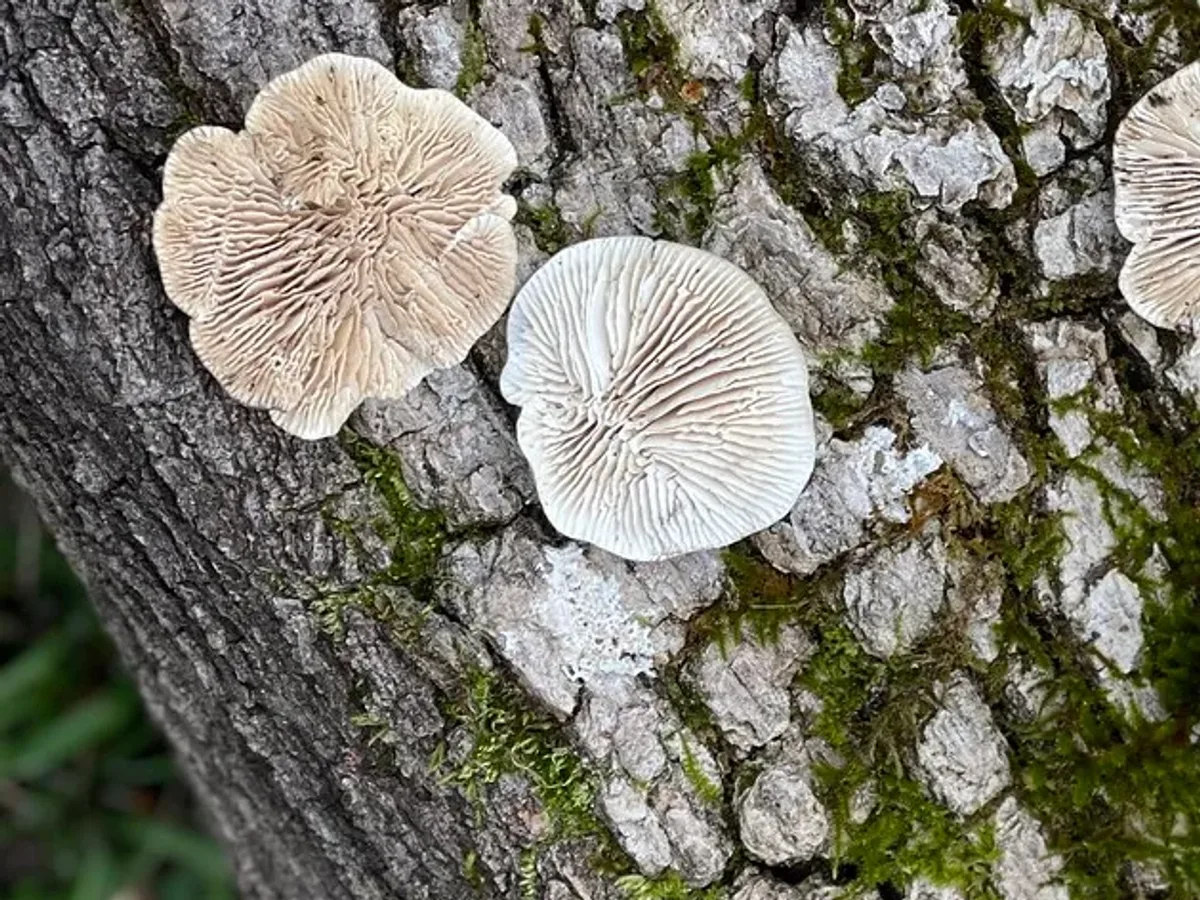 © sarahstierch (CC BY 2.0)
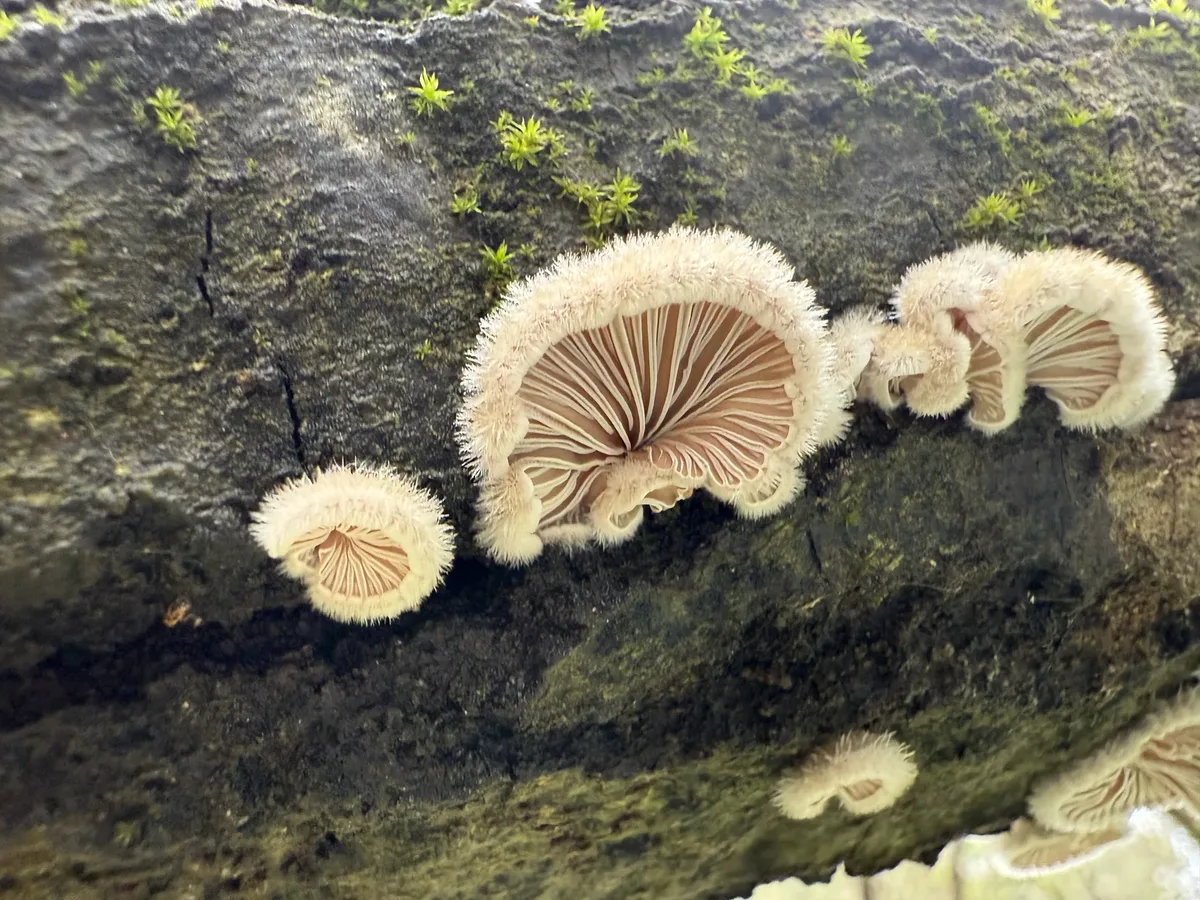 © Rachel Lee Harper (CC BY)
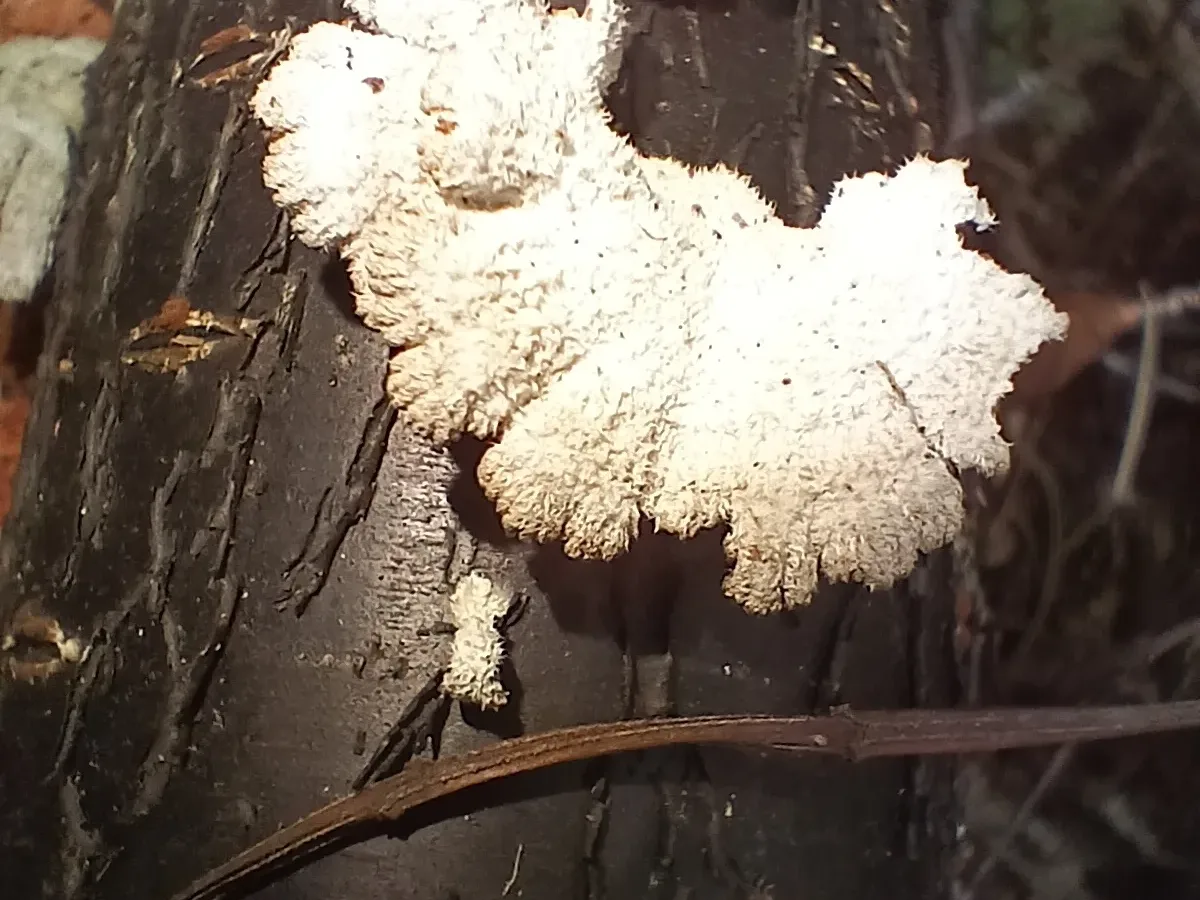 Matt H (CC0)
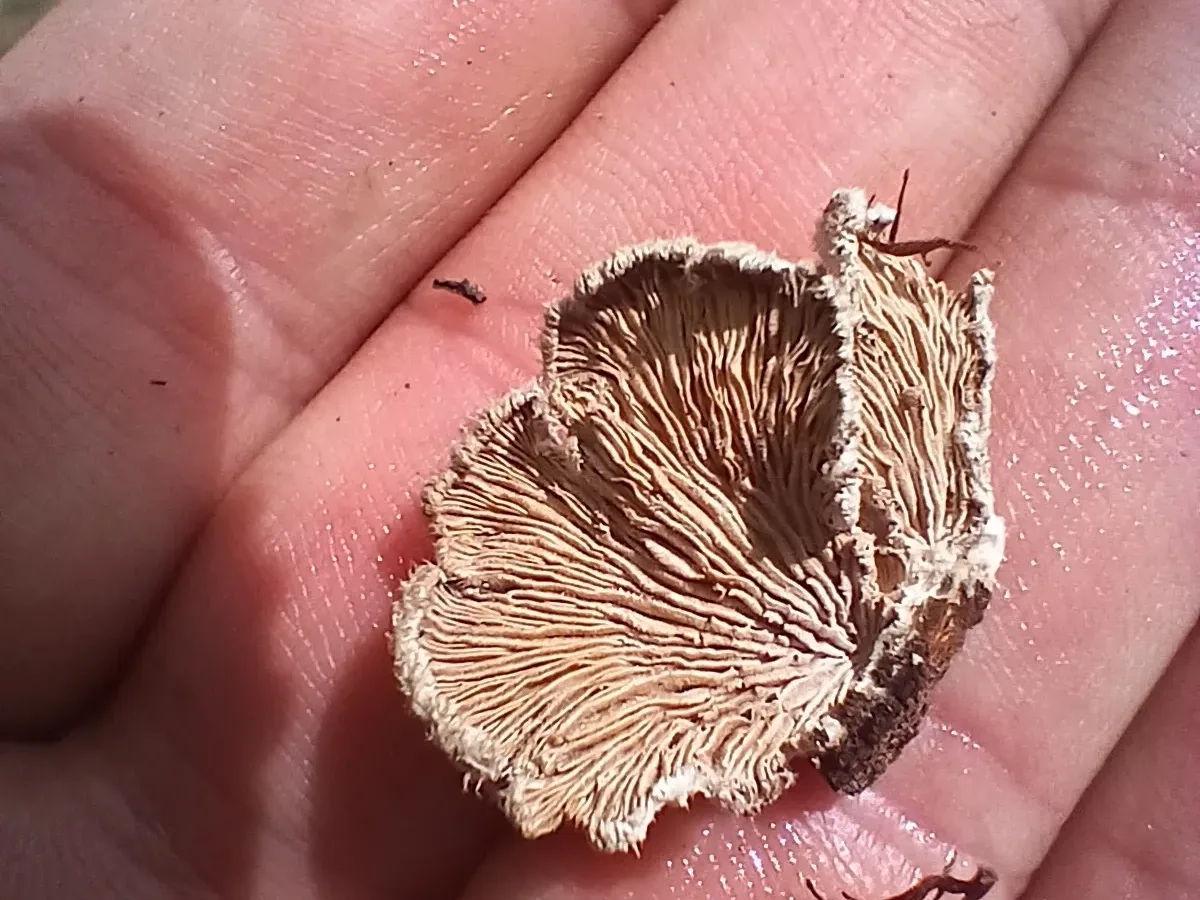 Matt H (CC0)
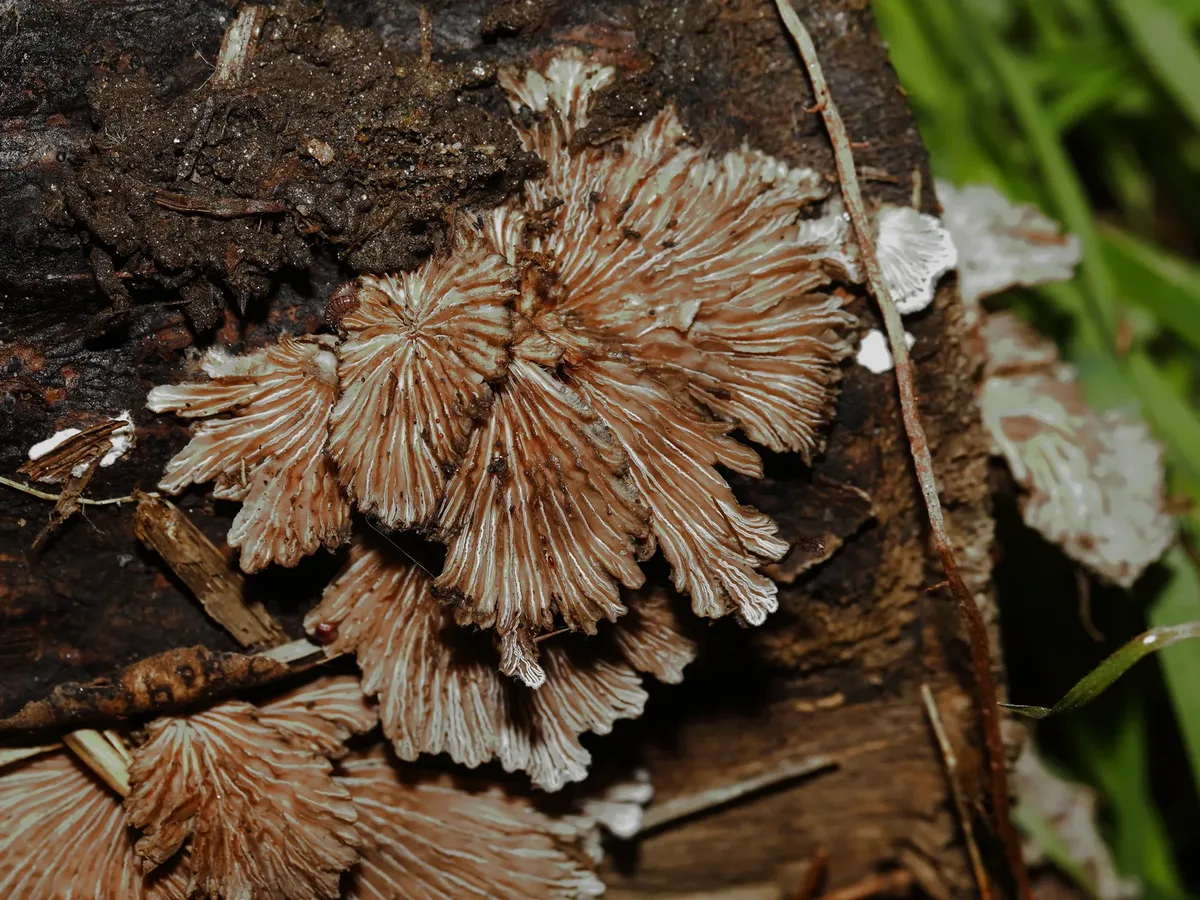 © Lucas Benaiche (CC BY)
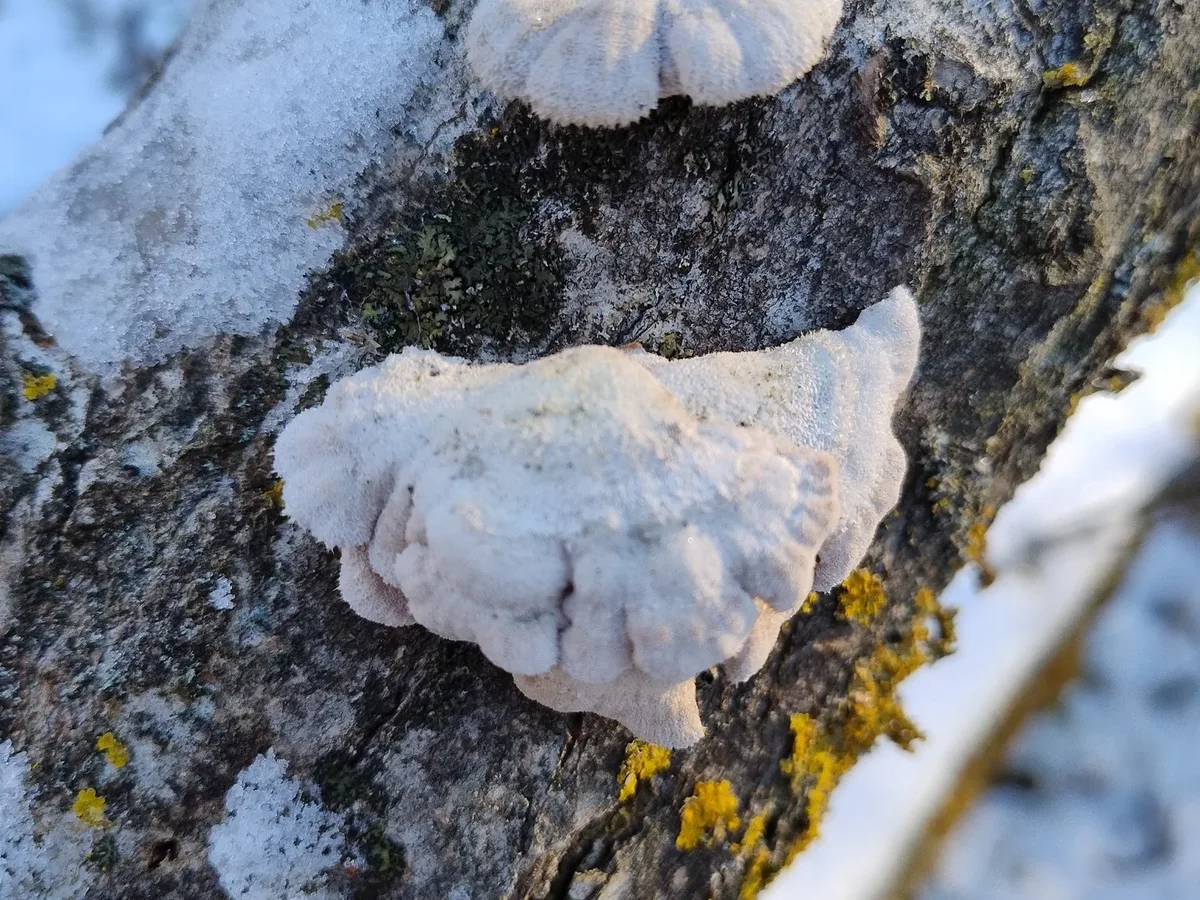 Richard Mar (CC0)
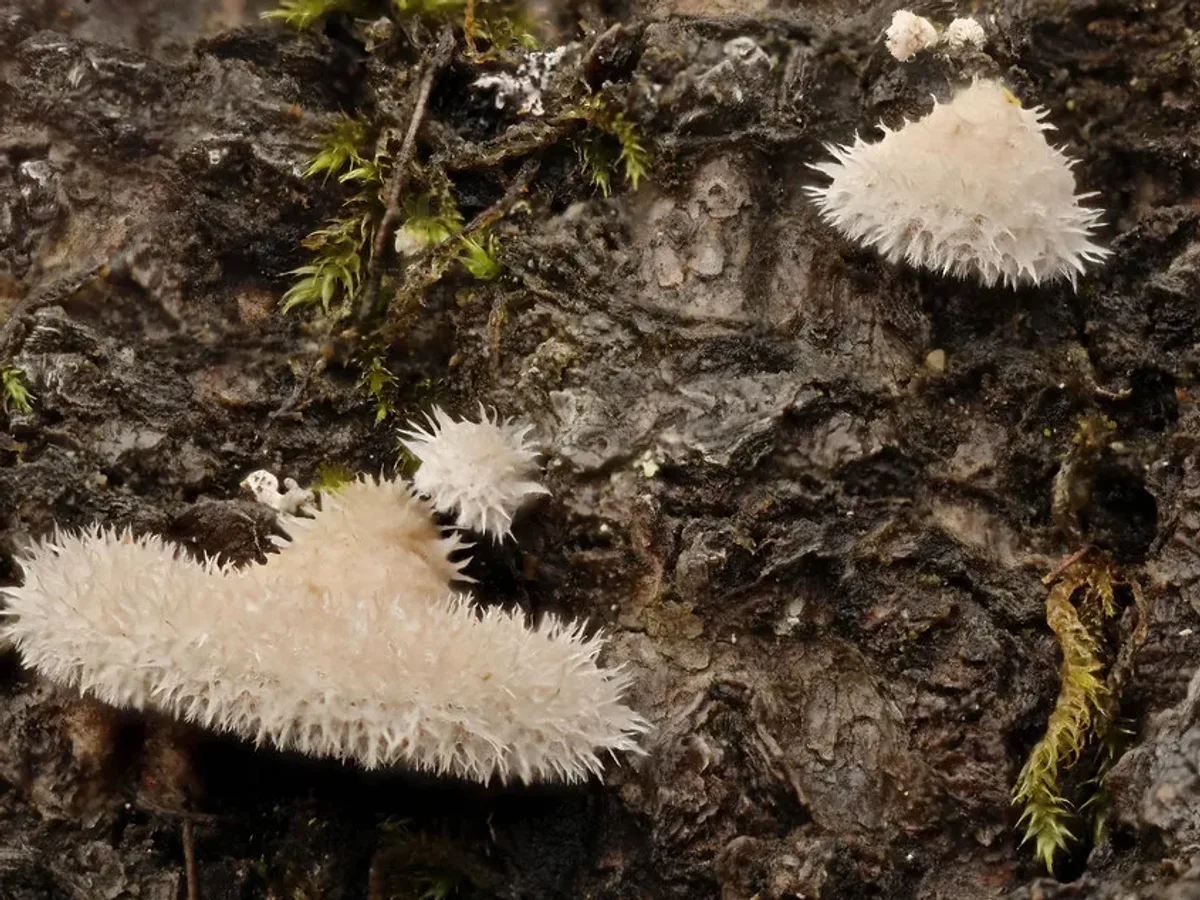 janetgraham84new (CC0)
 © dhobern (CC BY 2.0)
 janetgraham84new (CC0)
 janetgraham84new (CC0)© dhobern (CC BY 2.0)© sarahstierch (CC BY 2.0)
Good to eat, once you have identified it with certainty and cooked it through.
How to recognise it
Cap
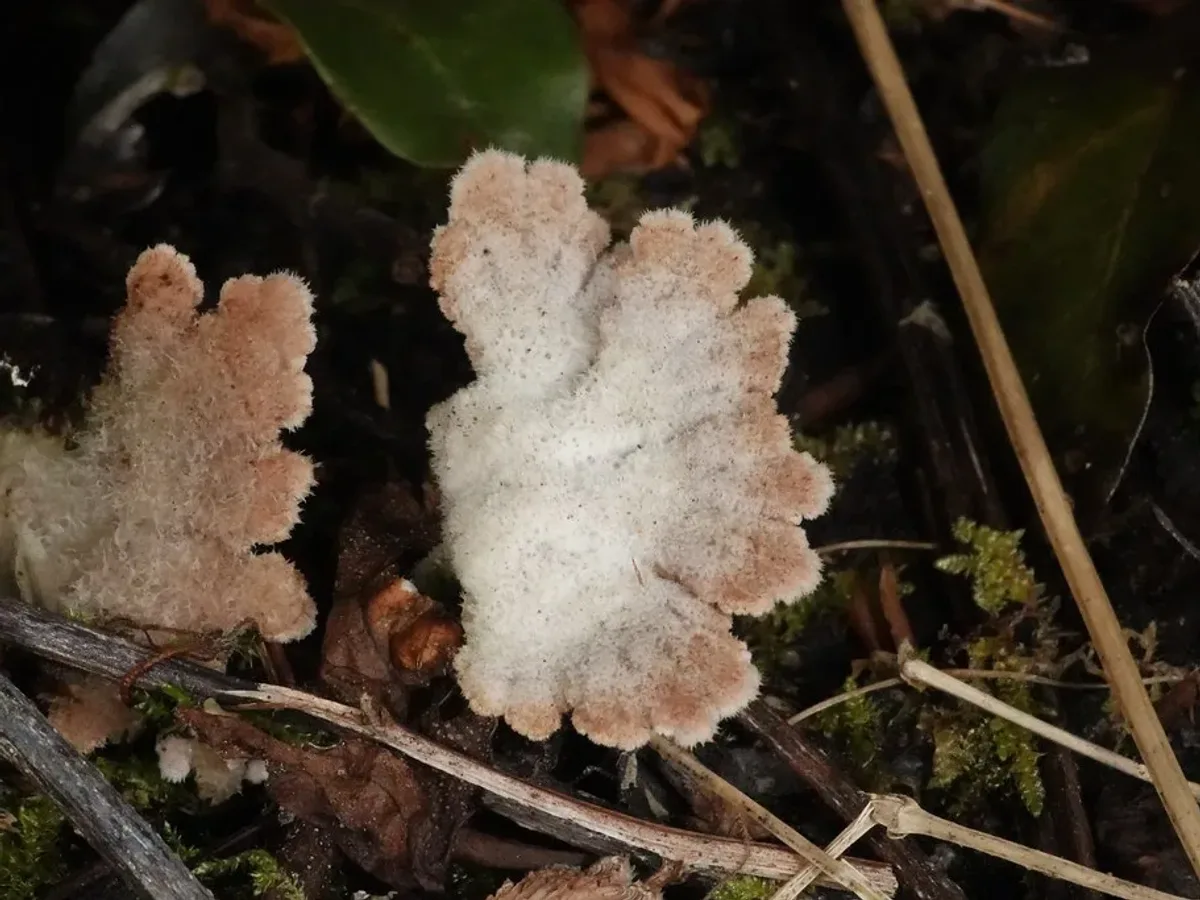
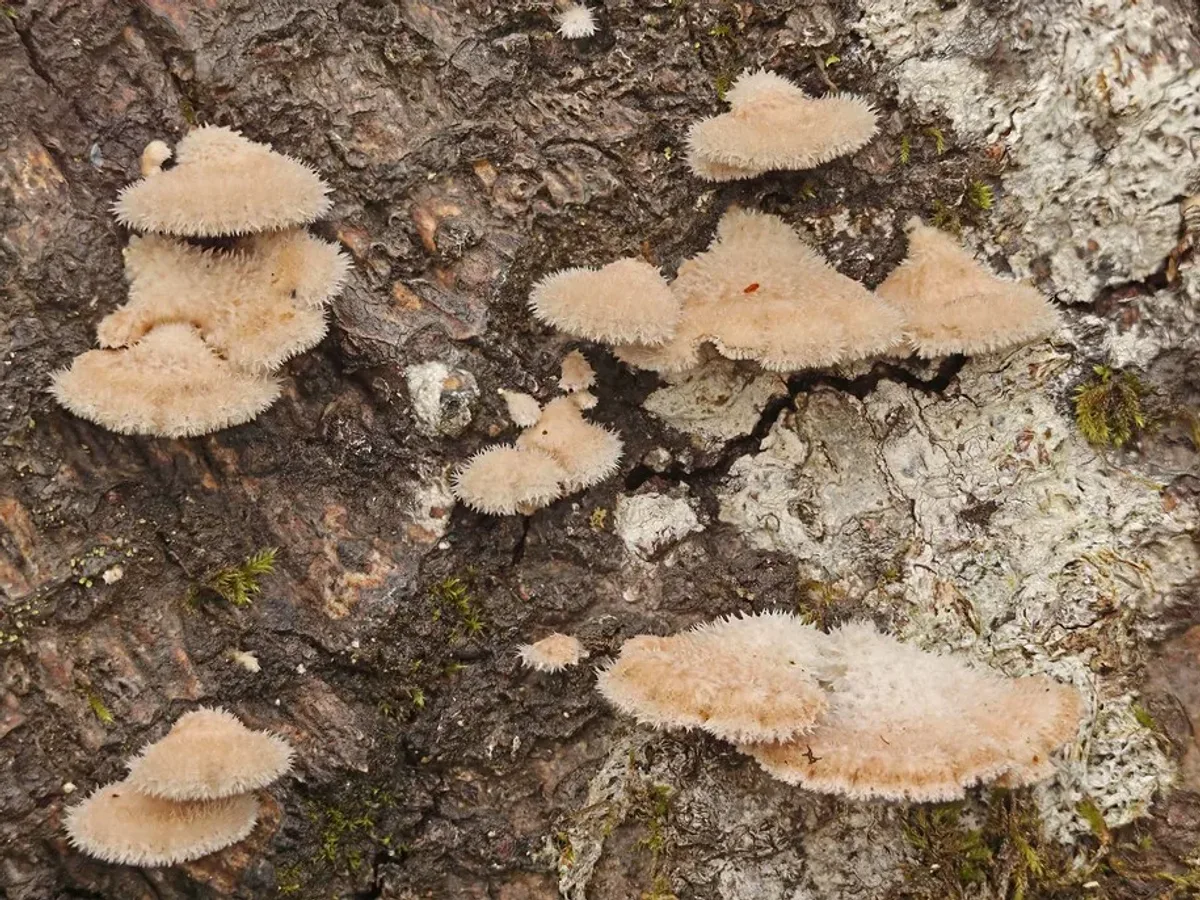
Schizophyllum commune is small - typically 1 to 4 cm across, occasionally reaching 5 cm on particularly well-nourished wood - and built in the shape of a hand fan or an oyster shell folded laterally, sometimes deeply lobed at the margin.
The upper surface is covered in a mat of short, felty hairs that gives it a silvery grey to greyish-white appearance in dry conditions; when wet it takes on a slightly deeper, ash-grey tone. That hairy coat is not decoration - it is an evolutionary adaptation that traps a boundary layer of air and limits water loss, part of the desiccation strategy that lets the fungus survive weeks without rain.
Stem
The attachment to wood is typically at a narrow lateral point (no true stipe), so the fruitbody projects outright like a bracket.
Gills
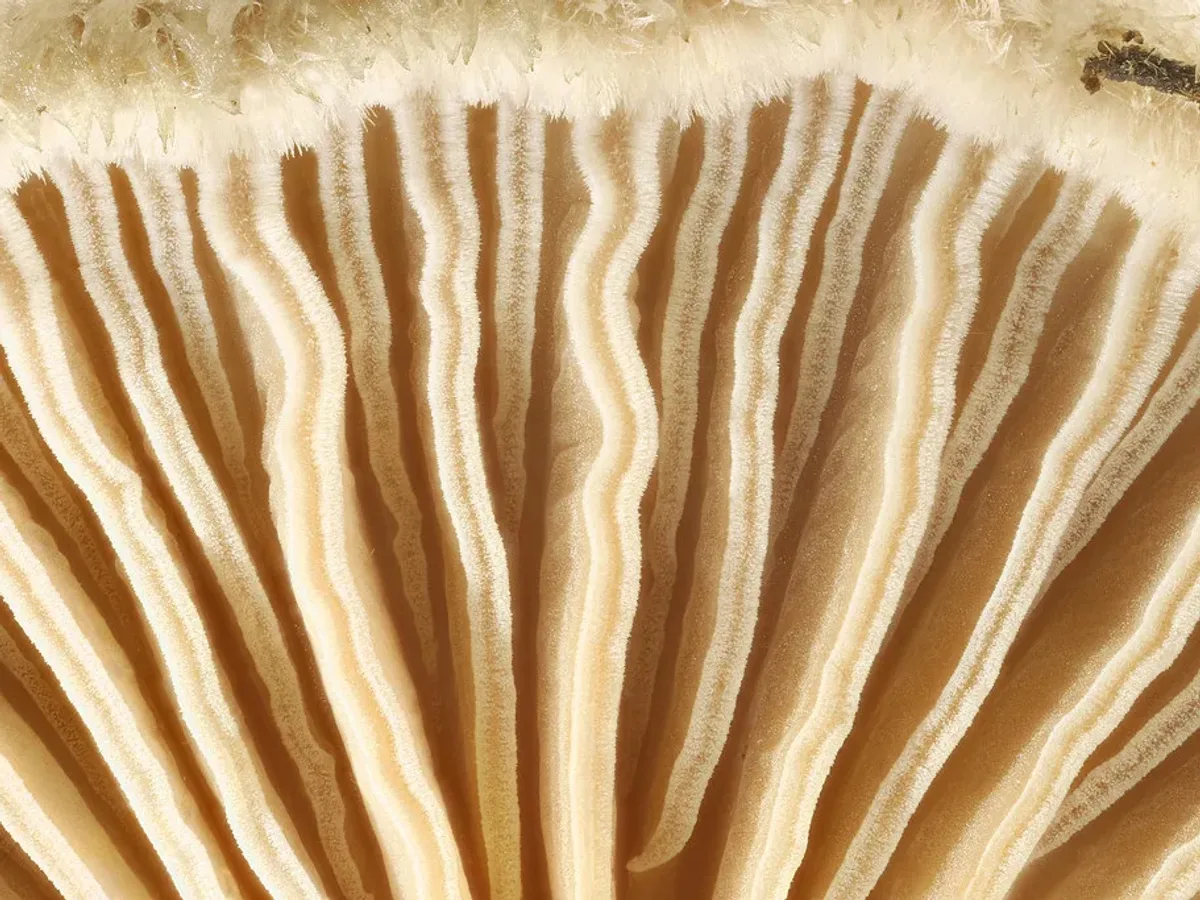
Turn it over and you encounter the feature that makes this species unmistakable: what appear to be gills but are, technically, paired blade-like ridges that split lengthwise down their centre and curl back in dry weather, closing the spore-bearing surface like a clenching hand and protecting it from desiccation. When humidity returns those same ridges uncurl and sporulation resumes within hours.
Flesh
The flesh is thin, pale, and persistently tough and leathery - it does not soften simply by aging or by moisture, which has direct implications for cooking.
Where & when it grows
Habitat
Schizophyllum commune is arguably the most geographically widespread mushroom on Earth, recorded on every continent except Antarctica, but in sub-Saharan Africa it is an especially constant presence.
It colonises the dead wood of a huge range of tree species - hardwoods and softwoods alike - and shows no meaningful host specificity, having been recorded on over 300 woody plant taxa worldwide.
In the West African context it appears on fallen logs, standing deadwood, felled timber, dead branches still attached to standing trees, and woody agricultural residues including yam stakes, cassava stems, and banana pseudostems.
It is equally at home in closed rainforest understorey and in open Guinea savanna, where trees are sparse and the dry season intense. In East and southern Africa it follows a broadly similar pattern, fruiting on both indigenous and plantation timber.
Unlike mycorrhizal fungi whose distribution tracks that of specific tree partners, S. commune has no such constraint - wherever dead lignocellulosic material exists and moisture occasionally permits, so does this fungus.
When
Schizophyllum commune does not have a season in the conventional sense; it fruits every month of the year across sub-Saharan Africa.
What makes this possible is an extraordinary physiological mechanism: the fruitbodies tolerate near-complete desiccation, losing almost all their free water content without dying. In this dried state the split gills curl tightly inward, protecting the hymenium, and metabolic activity falls to near zero.
When rain arrives - even a brief shower - the dried fruitbodies reabsorb moisture within minutes to hours and resume active sporulation, sometimes before a new flush would have had time to develop. A single fruitbody can cycle through this hydration-desiccation sequence repeatedly across many months.
The practical result for foragers is that visible fruitbodies are present even at the peak of the dry season; a post-rain survey of any dead wood is likely to yield freshly rehydrated specimens alongside older, more weathered ones.
The mycelium inside the wood meanwhile remains active in far less extreme conditions than its surface fruitbodies endure, continuing to digest lignin and cellulose year-round.
How it grows
As a saprotrophic white-rot fungus, Schizophyllum commune secretes extracellular enzymes - principally laccases and peroxidases - that depolymerise lignin, the tough aromatic polymer that gives wood structural rigidity.
Once lignin is degraded, the remaining white cellulose is also broken down over time, leaving the wood pale, fibrous, and spongy. The process is slow: the fungus occupies wood over months to years, often growing alongside other saprotrophic species in successional sequences.
Fruitbodies typically appear in overlapping clusters or rows along grain lines, reflecting the mycelial spread through the wood beneath.
In agricultural and cultivation contexts, S. commune's tolerance for a wide range of lignocellulosic substrates makes it highly amenable to low-input production. Substrates used successfully in small-scale cultivation trials across Nigeria, Ghana, and Kenya include:
- sawdust blocks
- rice straw
- banana leaves
- coconut husk
- sorghum stover
- cassava peels
Spawn run on these substrates typically takes one to three weeks, and pin formation follows exposure to fresh air and indirect light - a cycle that aligns well with ambient tropical conditions without the controlled environment rooms required by more temperature-sensitive species.
Fruiting conditions
Desiccation-tolerant wood-decay fungus; existing dried fruitbodies rehydrate and resume sporulation within days of rainfall rather than producing a discrete new flush.
Look-alikes
Schizophyllum commune has no recorded dangerous lookalikes in sub-Saharan Africa. The combination of features - the hairy grey upper surface, the bracket-like attachment to dead wood, and above all the paired, lengthwise-split blade-ridges on the underside - is functionally unique among African saprotrophic fungi and is not replicated by any known toxic species.
Two fan-shaped wood-dwellers can look broadly similar:
- Small Crepidotus species also grow on dead wood and can produce similarly fan-shaped fruitbodies, but their undersides bear normal, unsplit gills (not the split-blade structure of Schizophyllum) and they produce a brown spore print rather than white.
- Tiny oyster-shaped Pleurotus species share the bracket habit and pale colour but are larger, have white true gills (not split blades), and produce a lilac-white spore print.
Any forager who confirms the split-gill structure on the underside - the defining character that gave the genus its name, from the Greek schizo (to split) and phyllon (leaf) - can proceed with confidence. Spore print (white) can be taken as secondary confirmation.
In the kitchen
Picking & cleaning
When harvesting from the wild, pick fruitbodies that are plump and fully expanded - the fan shape should be complete and the split gills clearly visible on the underside.
Avoid fruitbodies that:
- have turned brown
- feel brittle-dry (not just dehydrated but truly aged)
- show signs of insect damage or secondary mould colonisation
Because S. commune grows directly on wood with no stipe to pull, detach it cleanly with a knife at its attachment point. Multiple flushes often grow in overlapping shelves; take individual fruitbodies rather than peeling off the whole colony so the remaining mycelium continues to fruit.
Rinse harvested specimens well - the hairy upper surface traps bark particles, insect debris, and soil dust - and inspect the split gill surface, which can harbour small arthropods.
If using rehydrated dry-season specimens found still attached to wood, pick only those that are fully plump after rainfall; partially rehydrated ones will be chewier than usual even after cooking.
On cultivated blocks, harvest when caps are fully open and before spore drop becomes visible (a white powder settling on surfaces below is the sign to act immediately).
Cooking
Schizophyllum commune's leathery toughness is the central challenge in the kitchen, and the solution in traditional West African cooking is straightforward: time and liquid.
The mushroom is most commonly added to soups and stews early in the cooking process and simmered for 30 to 60 minutes - alongside dried stockfish, palm oil, crayfish, and leafy vegetables in Nigerian egusi or bitterleaf soups, or in the thicker groundnut-based stews of Ghana and Cameroon.
During prolonged simmering the texture softens from leathery to chewy-firm, and the mushroom absorbs the surrounding liquid, picking up the flavour profile of the broth. The umami contribution is real: S. commune contains glutamate and ribonucleotides that enhance the savouriness of the surrounding stock, which explains its use as a soup base ingredient rather than a garnish.
In areas where it is cultivated and available in larger volumes it is sometimes dried in the sun after harvest and stored for months, then rehydrated directly in the cooking pot. Pre-soaking dried specimens for 20 to 30 minutes before cooking accelerates the softening process.
Stir-fry preparation is possible with cultivated specimens harvested at peak freshness, but still requires longer cooking than typical button mushrooms - a 15-minute sauté over moderate heat produces the best texture results.
The grey colour lightens slightly on cooking; expect a pale buff to cream tone in the finished dish.
Good to know
Schizophyllum commune is widely consumed as food across West, East, and central Africa, and its safety record in culinary use is well established.
The main practical concern is its tough, leathery texture: insufficiently cooked specimens are unpalatable and indigestible, not dangerous, but prolonged heat is needed to break down the cell walls adequately.
There is one medical caveat worth understanding clearly. S. commune is classified as an opportunistic pathogen in clinical literature, meaning it can rarely cause infection (schizophyllosis) in people with severely compromised immune systems - typically those with advanced HIV/AIDS, haematological malignancies, or long-term immunosuppressive therapy. In these documented cases, inhalation of spores (rather than consumption of cooked fruitbodies) has been implicated.
For immunocompetent individuals, eating properly cooked S. commune carries no known risk. High-risk immunocompromised individuals should consult a physician before including any wild-harvested fungus in their diet, and should in any case avoid environments with heavy airborne spore loads.
As food, the species is considered safe and nutritious for the general population.
A reference guide - never an edibility guarantee. When in doubt, leave it out.