Late oyster
Sarcomyxa serotinasyn. Pleurotus serotinus, Panellus serotinus, Hohenbuehelia serotina, Agaricus serotinus
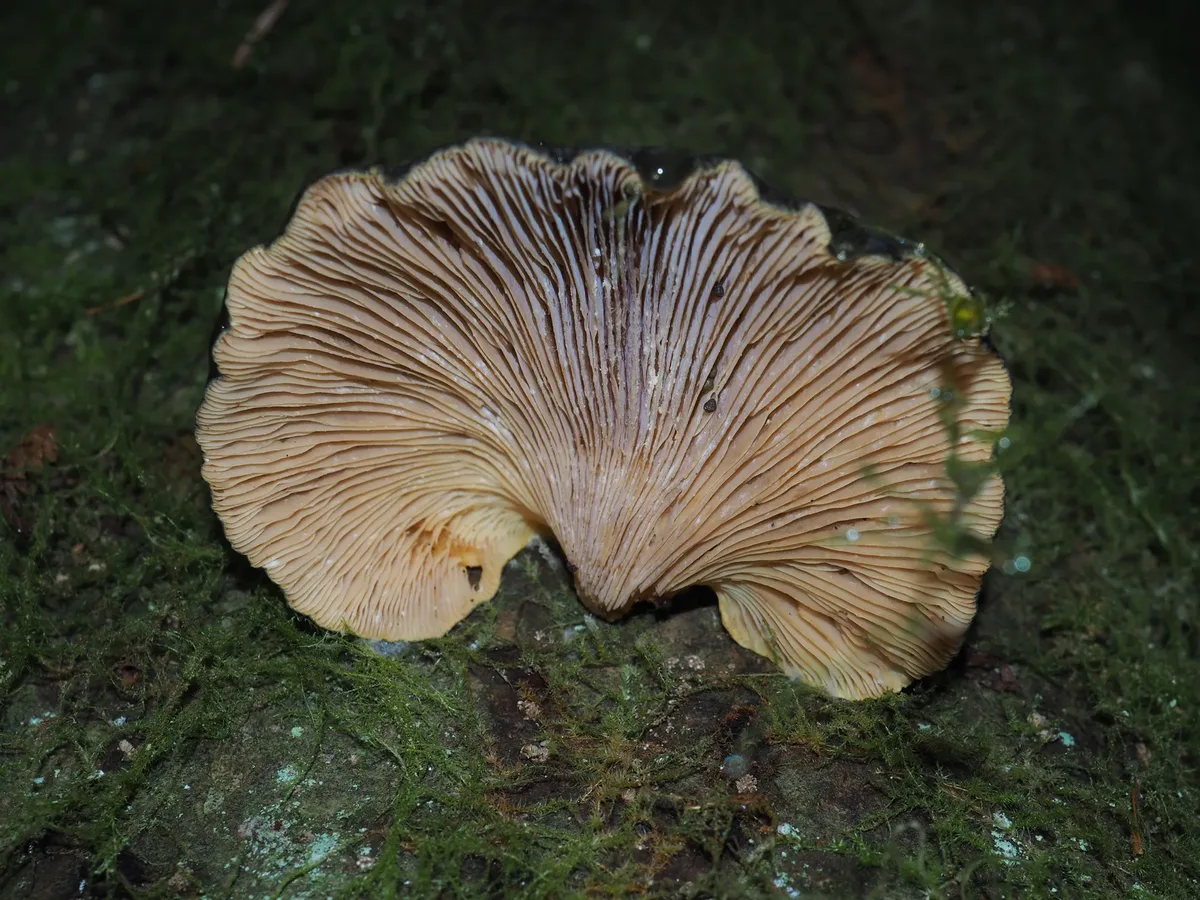 © Mark Stluka (CC BY)
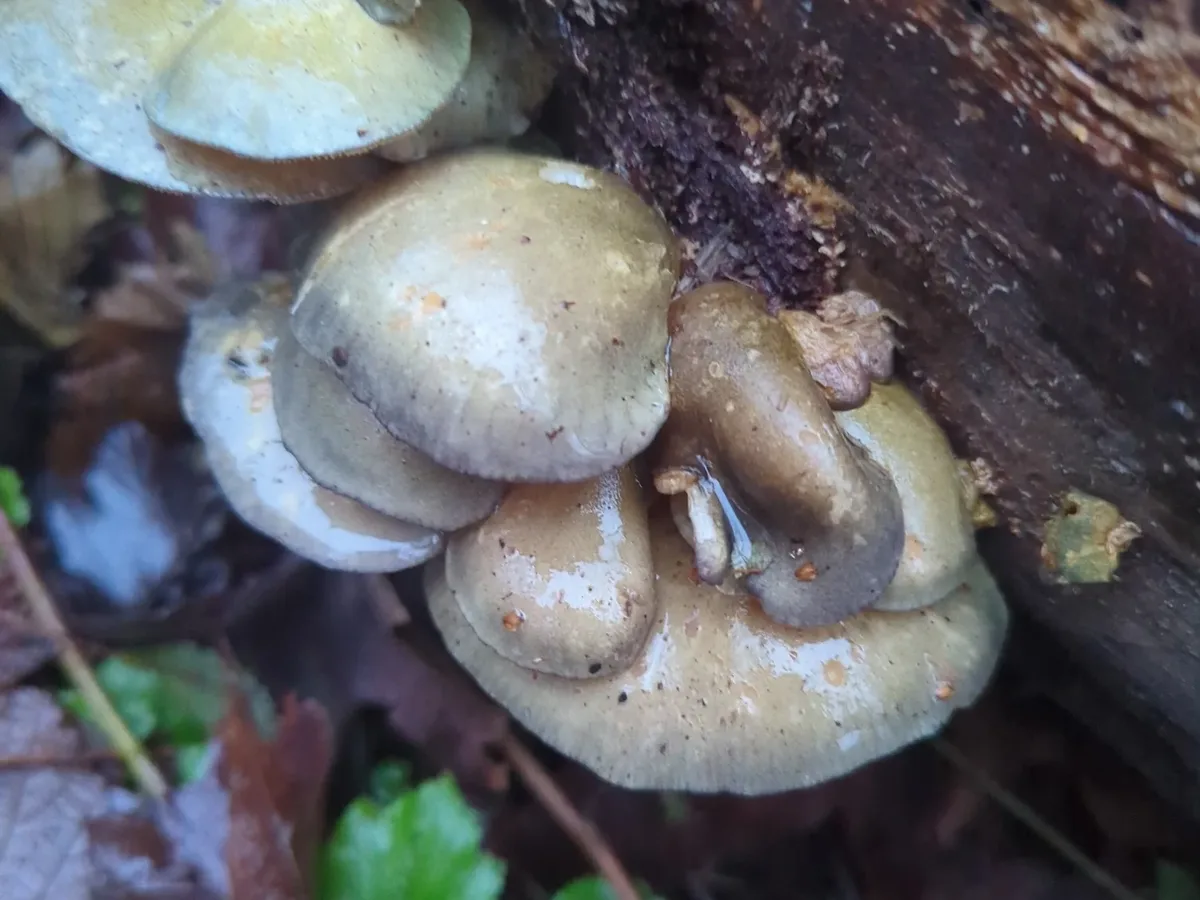 © Dominique Menard (CC BY)
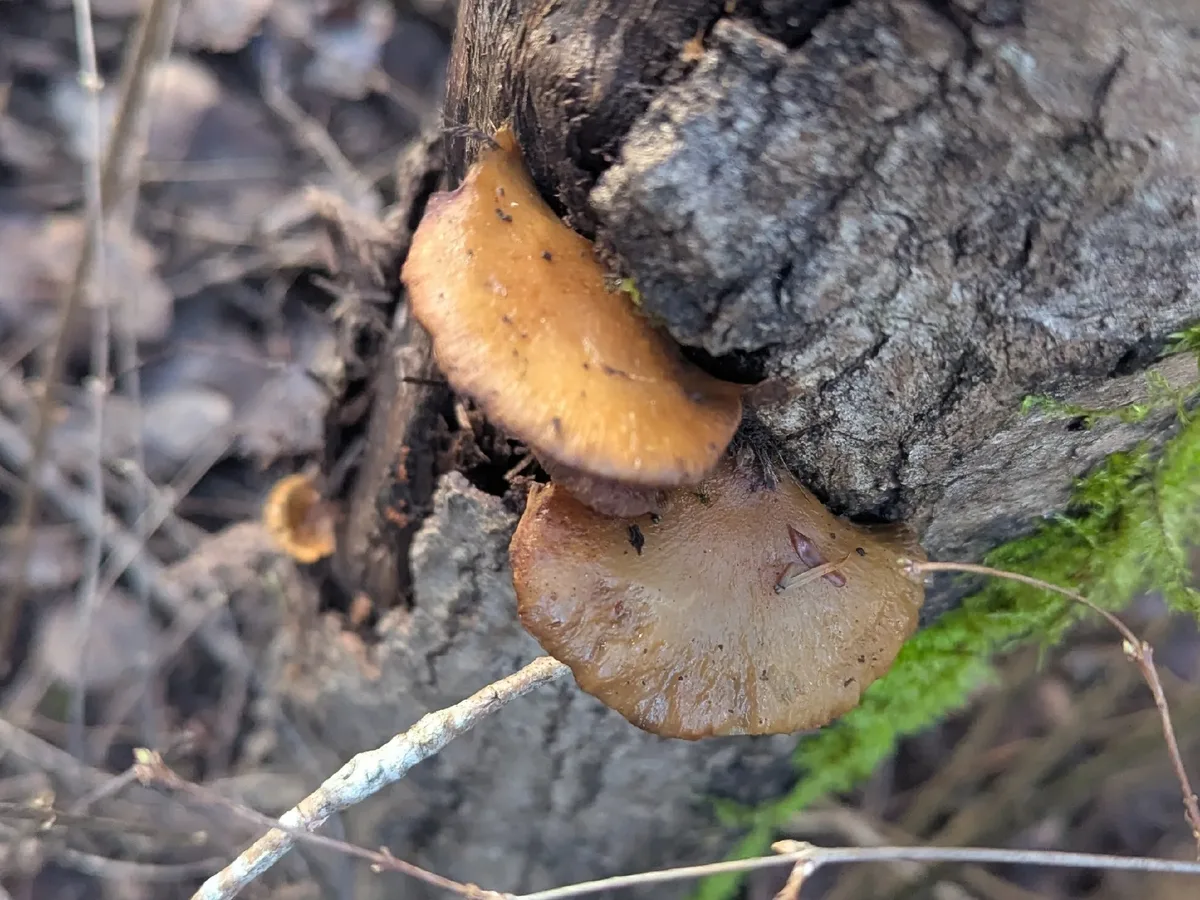 funnieanimals (CC0)
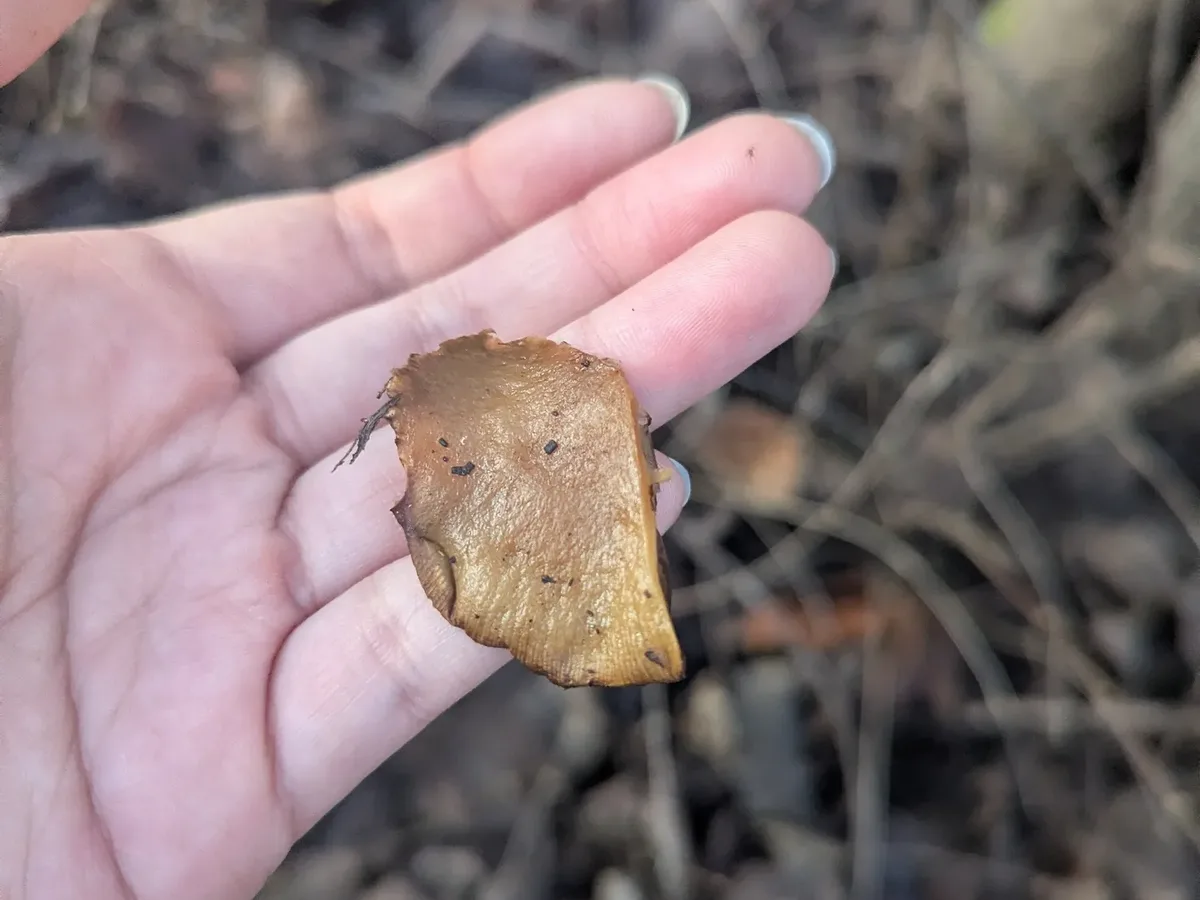 funnieanimals (CC0)
 © Dominique Menard (CC BY)
 © Dominique Menard (CC BY)
 © Simone Littledale (CC BY)
 © Simone Littledale (CC BY)© Mark Stluka (CC BY)© Dominique Menard (CC BY)
Good to eat, once you have identified it with certainty and cooked it through.
Never eat a mushroom you are not 100% sure of - check the look-alikes below, and always cook wild mushrooms.
How to recognise it
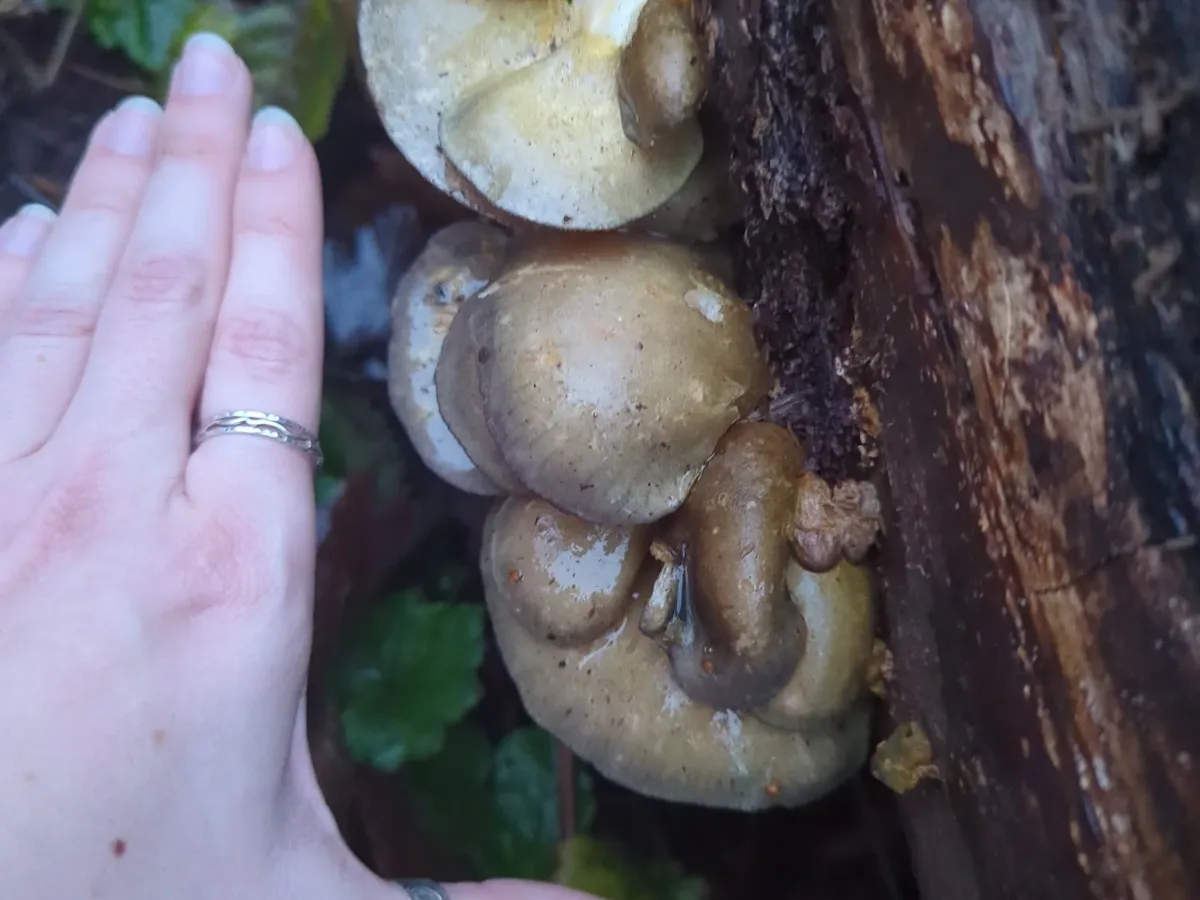
The late oyster has one of the most distinctive looks of any autumn mushroom: an olive to olive-brown cap that turns conspicuously slimy and gelatinous in wet weather, paired with a short, stout stem stub cloaked in dark rusty-brown velvety hairs.
Cap
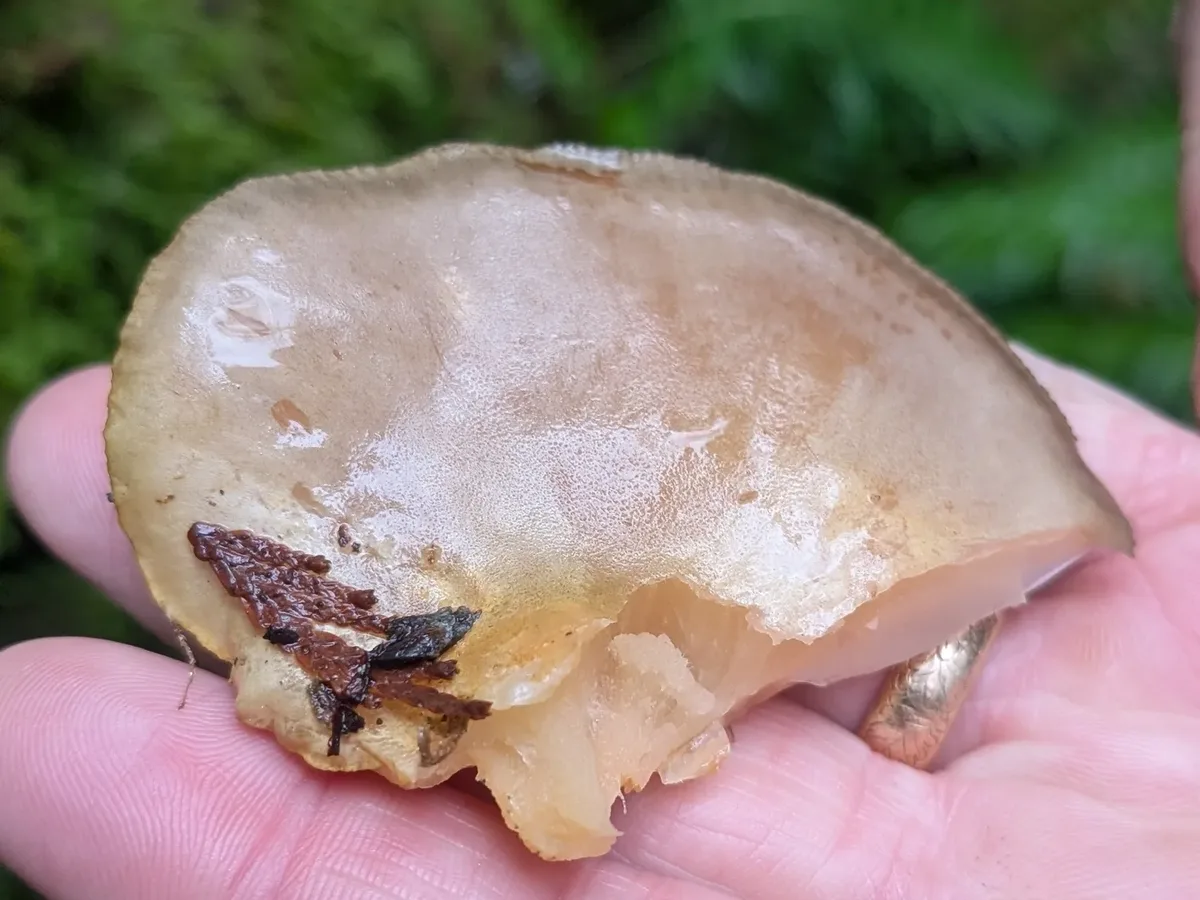
The cap is 3-12 cm across, convex and kidney-shaped, with the margin staying inrolled even in maturity. In dry spells the sliminess retreats and the cap fades to yellowish-olive or brownish-olive, but that characteristic colour never quite leaves.
Gills
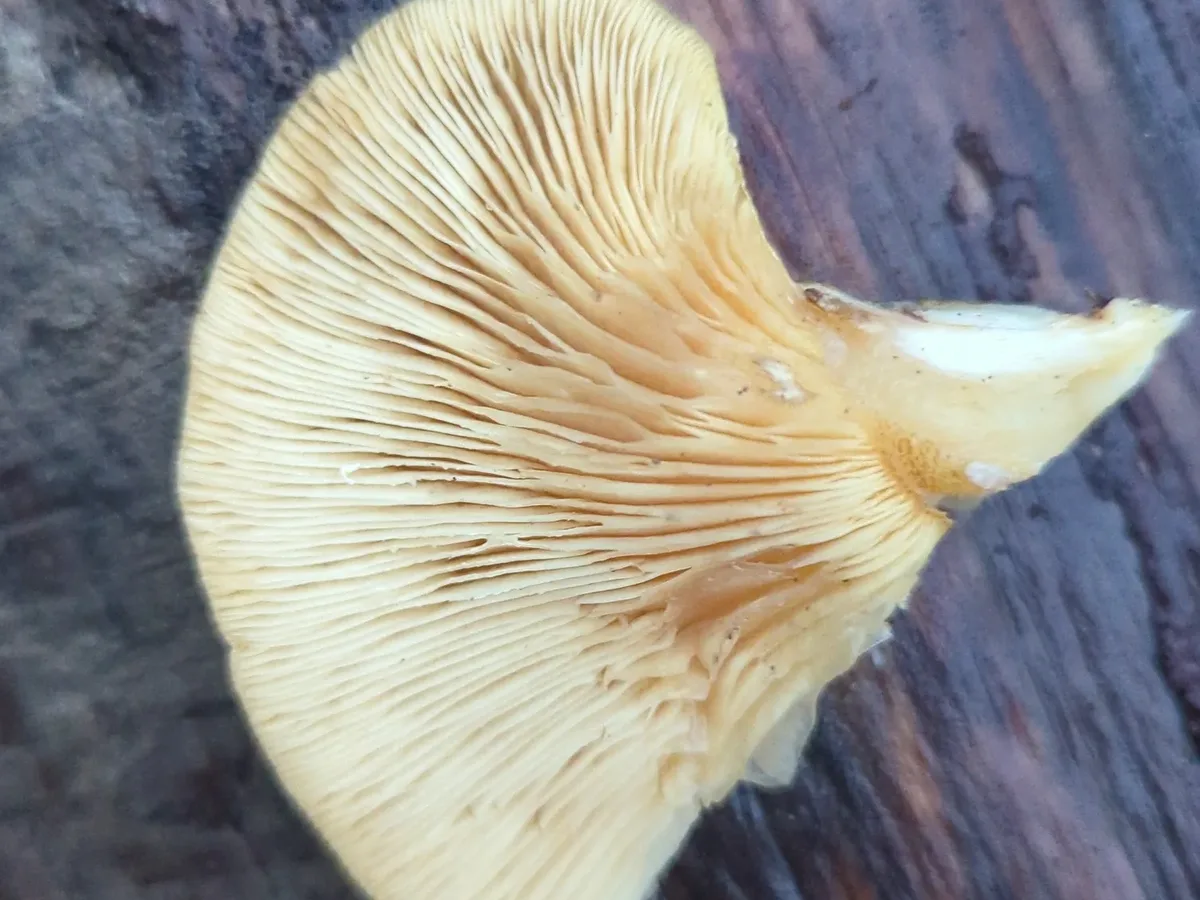
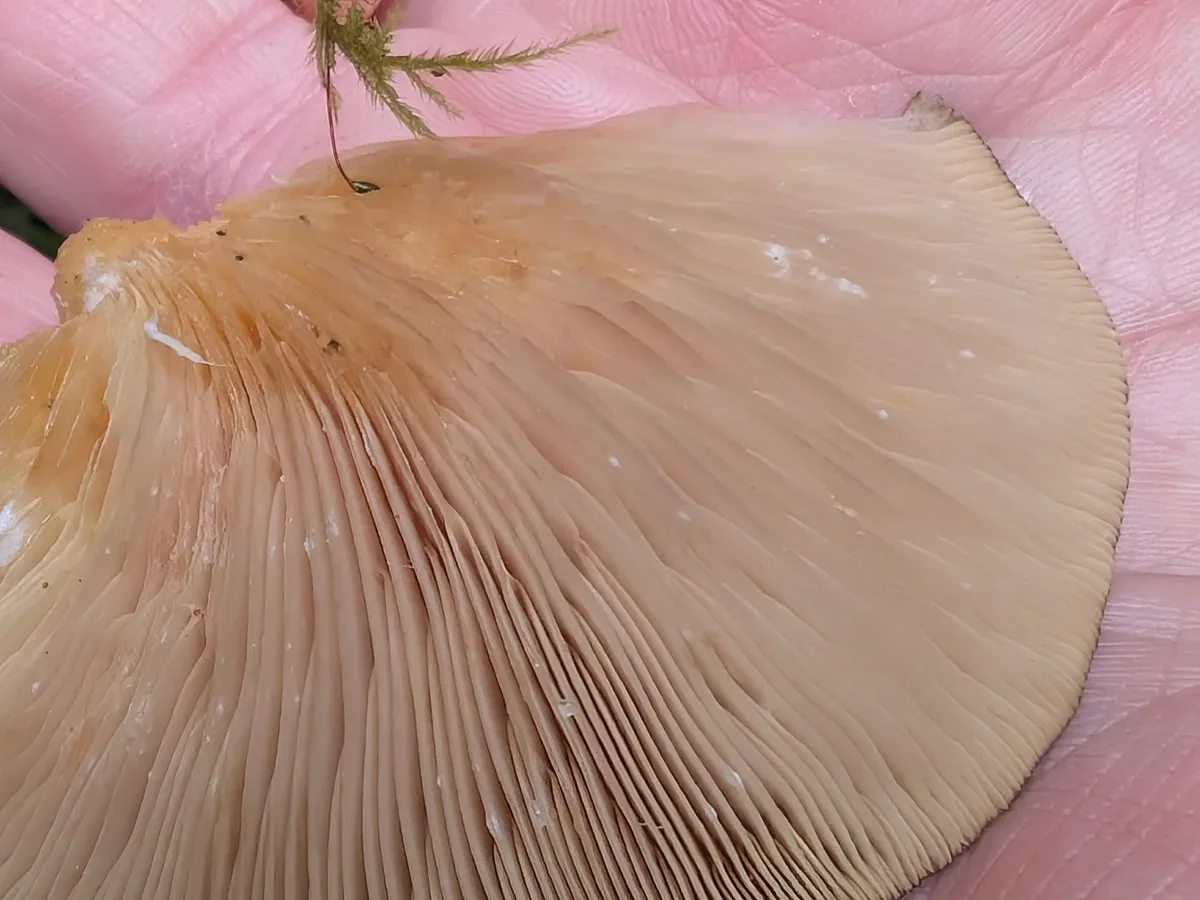
Gills run almost to the stem tip (decurrent), are crowded and narrow, and show a clean cream to pale yellowish-white - they stand out vividly against the dark stem.
Stem
The stem itself is the feature that clinches identification: always short and stout (0.5-2 cm), set laterally or eccentrically, and densely furred in dark-brown to near-black velvety tomentum - a combination no other common oyster-type mushroom carries.
Flesh
The flesh is white and firm, with a slightly gelatinous quality near the cuticle. Spore print white to cream. Spores are narrow and cylindrical-allantoid (sausage-shaped), 3-5 × 1-1.5 µm.
Where & when it grows
Habitat
Sarcomyxa serotina is a wood-rotter, quietly dismantling the dead and dying limbs of broadleaf trees - beech, alder, hornbeam, birch, oak, and ash are all favoured hosts; conifers are an occasional exception.
Look for it in moist, shaded spots: old beech stands, alder-lined streams, the damp corners of mixed forest where fallen logs have been lying long enough to soften.
Fruiting bodies appear singly or in small clusters of two to six, shelving directly from the wood with no long stem reaching the ground.
It is widespread across northern and central Europe and is equally at home in the beech and hardwood forests of Japan and eastern North America.
When
One of the most distinctly autumnal and cold-tolerant of all edible mushrooms.
The late oyster begins to appear with the first autumn chills in September (August at high latitudes or elevations), reaches peak abundance in October and November, and persists through December or even into January in milder winters.
It frequently fruits after the first frosts and can be found beneath light snow - this remarkable cold tolerance distinguishes it from almost all competing species.
Timing is a major identification aid: an olive-capped oyster-type mushroom found in November or later is almost certainly this species.
How it grows
Fruiting bodies push out directly from bark and wood, favouring the upper surfaces and sides of fallen logs and the lower portions of standing dead trunks.
After rain combined with a sustained cold snap, they develop over several days, emerging as small rounded knobs that expand into their characteristic kidney shape.
The thick gelatinous cuticle protects the cap through freeze-thaw cycles, letting this species shrug off conditions that would finish off most other fungi.
Growth posture is shelf-like, with caps held horizontally and gills facing downward. There are no visible rhizomorphs or mycelial sheets at the substrate surface - the fungus simply appears, attached and still, patient as the season closes around it.
Fruiting conditions
Cold-adapted; primary trigger is dropping air and soil temperatures in autumn combined with adequate moisture. Flushes readily at or near freezing and can survive light frost events. Warm spells interrupt fruiting; sustained cold (2-8 °C) combined with autumn rains are optimal.
Look-alikes
The most dangerous look-alike is Galerina marginata (deadly, amatoxins).
Galerina marginata grows in similar situations on dead wood but has a brown cap that lacks any gelatinous sliminess, a ring (annulus) on the stem, and a rusty-brown spore print. Note this ring can wash off or disappear in older specimens, so its absence alone does not exclude Galerina.
Never eat an oyster-like mushroom from dead wood without first confirming a white spore print.
- Omphalotus olearius and related jack-o-lantern species (severely poisonous) are orange rather than olive and grow in dense clusters at the base of living oaks.
- Pleurotus ostreatus (true oyster mushroom, edible) has a grey to grey-brown non-slimy cap, lacks the dark-tomentose stub stem, and typically has a broader season.
- Crepidotus species are small (under 3 cm), have brownish spores, no true stem, and occur on very small twigs.
- Phyllotopsis nidulans (inedible, very smelly) is orange-yellow and lacks the olive-slime cap.
The key diagnostic triad is collectively unique:
- 1olive-viscid cap;
- 2dark-velvety lateral stub stem;
- 3white gills and white spore print, late autumn.
Cap brown, NOT olive-green, and NOT gelatinous-slimy. Usually has a ring (annulus) on the stem, though this can wash off or disappear in older or rain-soaked specimens - never rely on its absence alone. Spore print rusty-brown, never white. Found on similar dead wood in the same season. Contains alpha-amanitin; confusion has caused fatalities. ALWAYS take a spore print: if it is any shade of rusty-brown, do not eat.
Much smaller (under 3 cm), pale tan to ochre-buff cap, dry and scurfy not slimy, intensely bitter taste, kidney-shaped with a short tough stem. Gills crowded but paler and not decurrent. Bioluminescent in North American populations.
Much smaller (under 3 cm), white to buff cap, no stem at all, brown spore print. Grows on small twigs and herbaceous stems rather than large logs.
Orange throughout (cap, gills, and stem), not olive-coloured. Non-slimy cap. Grows in large dense clusters at the base of living oaks. Gills bioluminescent in darkness. Causes severe gastrointestinal poisoning.
Bright orange-yellow cap and gills, never olive. Extremely unpleasant sulphury-rotten odour. No gelatinous cuticle and no dark stem tomentum.
Cap grey to grey-brown, not olive-green, and not viscid-gelatinous. Stem (if present) is pale and lacks dark-brown velvety tomentum. Spore print lilac-white. Typically broader, flatter caps in larger overlapping clusters. Fruits mainly in spring and autumn.
In the kitchen
Picking & cleaning
Cut the fruiting body at the base of the stub stem with a knife; the dark velvety tomentum of the stem base is best removed as it can impart an earthy, slightly bitter taste.
The gelatinous cuticle of the cap peels away easily with fingernails or a knife and should be removed before cooking - it is edible but becomes very slimy when heated.
Younger, firmer specimens with caps 4-8 cm are best; older individuals soften and become very mucilaginous. Handle carefully as the caps bruise and discolour if crushed.
Cooking
Remove the gelatinous cuticle from the cap before cooking - it peels cleanly and its removal improves texture significantly. The dark velvety stem base may be trimmed away.
The white firm flesh is mild in flavour with a gentle umami quality.
It is particularly popular in Japanese cuisine where it is used in hot pots (nabe), miso soups, and stir-fries.
In European cooking it suits:
- sautéeing in butter with garlic and thyme
- adding to cream sauces
- incorporating into risotto
It holds its shape well during cooking, better than Pleurotus ostreatus.
Do not eat raw.
Dried and powdered, it adds depth to stocks and seasoning blends. It pairs well with root vegetables and robust autumnal flavours.
Good to know
Sarcomyxa serotina is considered edible and is widely eaten in Japan (where it is sold in markets as 'mukitake').
However, consume only after thorough cooking; raw or lightly cooked specimens can cause gastrointestinal distress in some individuals. Always peel the gelatinous cap skin before cooking.
The principal safety concern is misidentification. Galerina marginata, which shares the same decaying hardwood habitat and similarly small lateral or eccentric growth form, is deadly - it contains alpha-amanitin and has killed foragers who confused it with edible oyster-like mushrooms.
Before harvesting, always confirm:
- 1the cap is olive-green/olive-brown and conspicuously slimy in moist conditions;
- 2the stem stub is covered in dark rusty-brown velvety hairs;
- 3the gills are white to pale yellow and not rusty-brown;
- 4the spore print is white, not rusty-brown.
Any rusty-brown spore print immediately rules out serotina and indicates a potentially deadly Galerina.
Note that the ring on Galerina's stem can disappear with age or rain - never rely on the absence of a ring to dismiss a Galerina suspect; always take a spore print.
A reference guide - never an edibility guarantee. When in doubt, leave it out.