Bitter tooth
Sarcodon scabrosussyn. Hydnum scabrosum Fr., Hydnum leucopus Pers., Sarcodon leucopus (Pers.) Maas Geest., Hydnum amarum sensu auct., Sarcodon amarescens (Quél.) Quél.
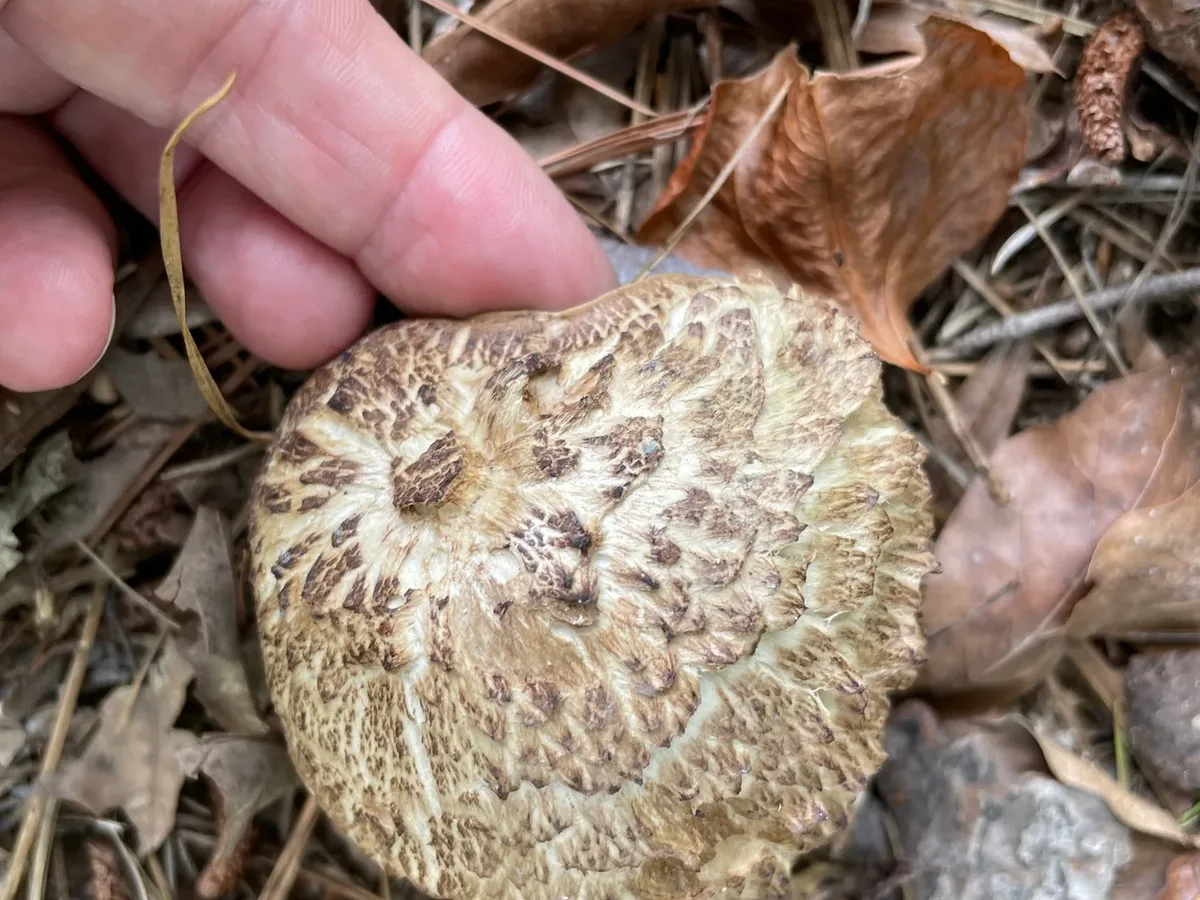 Becky Dill (CC0)
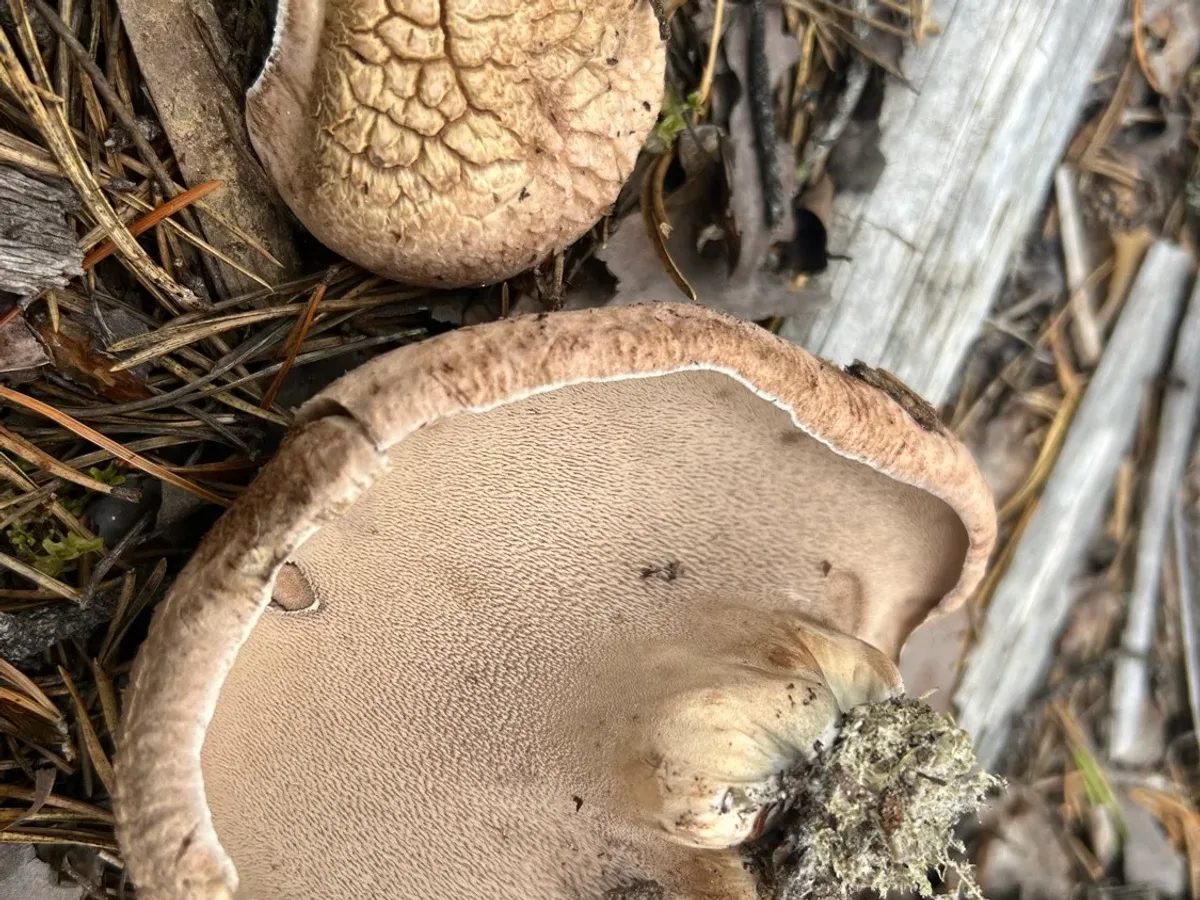 © Leila S. Berg (CC BY)
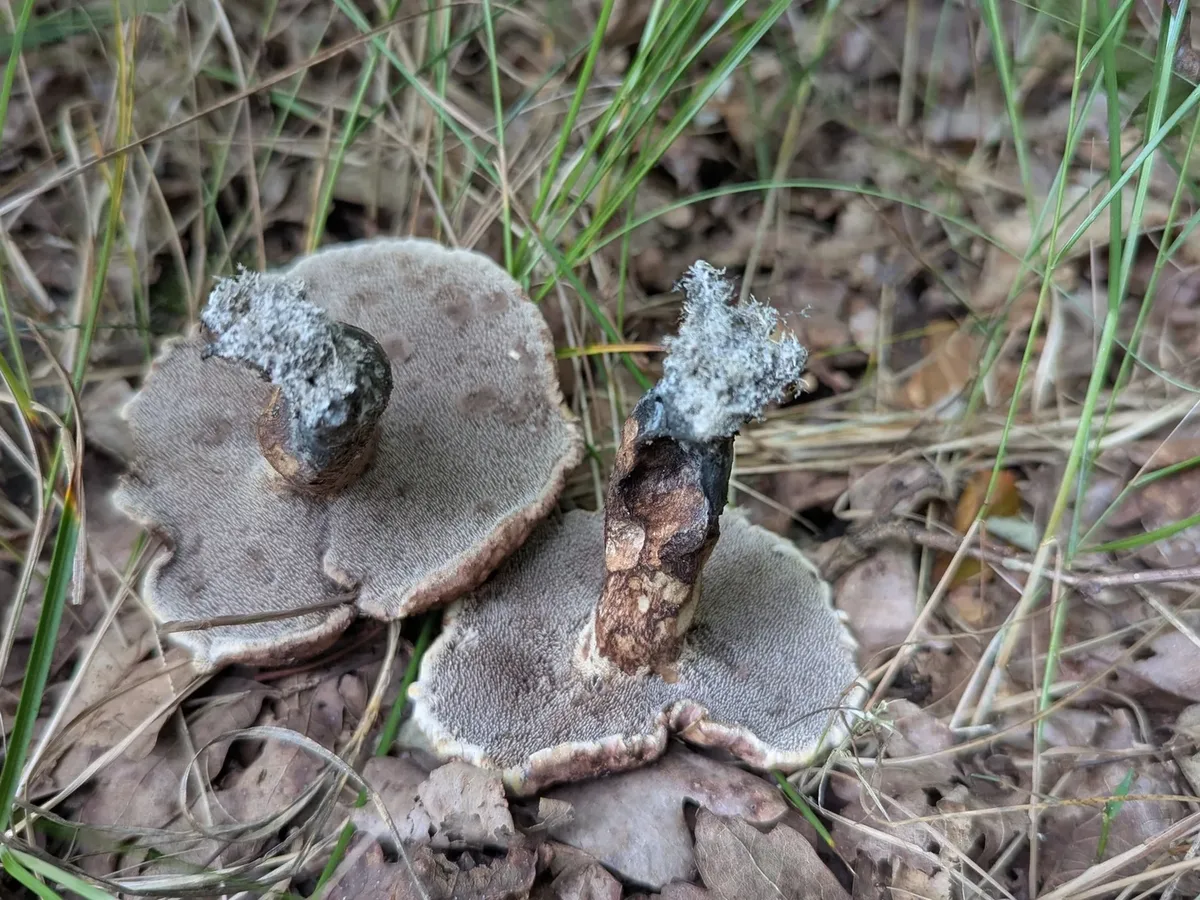 © Michel Langeveld (CC BY)
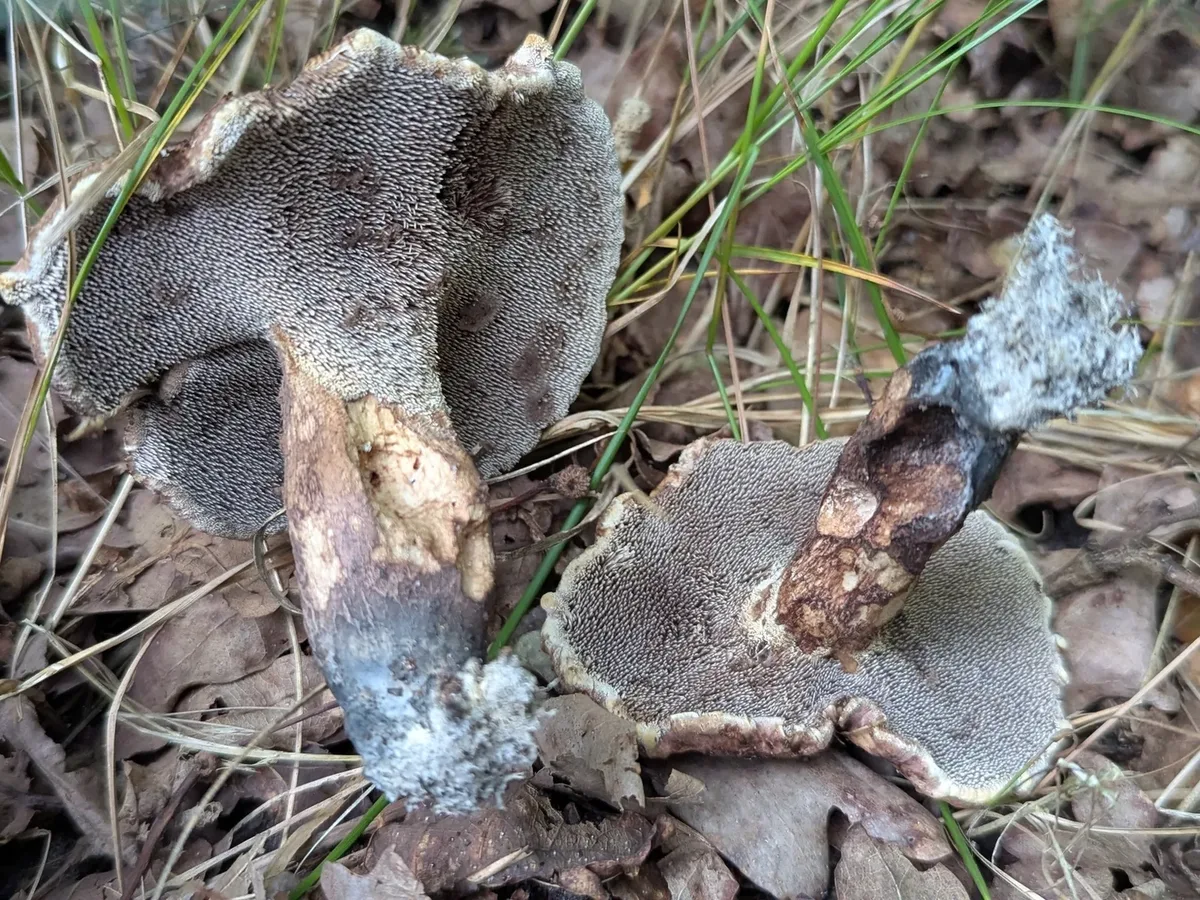 © Michel Langeveld (CC BY)
 © Michel Langeveld (CC BY)
 © Michel Langeveld (CC BY)
 © Michel Langeveld (CC BY)Becky Dill (CC0)© Leila S. Berg (CC BY)
Edible only with the right preparation - or safe for some people but not others. Learn the caveats first.
How to recognise it
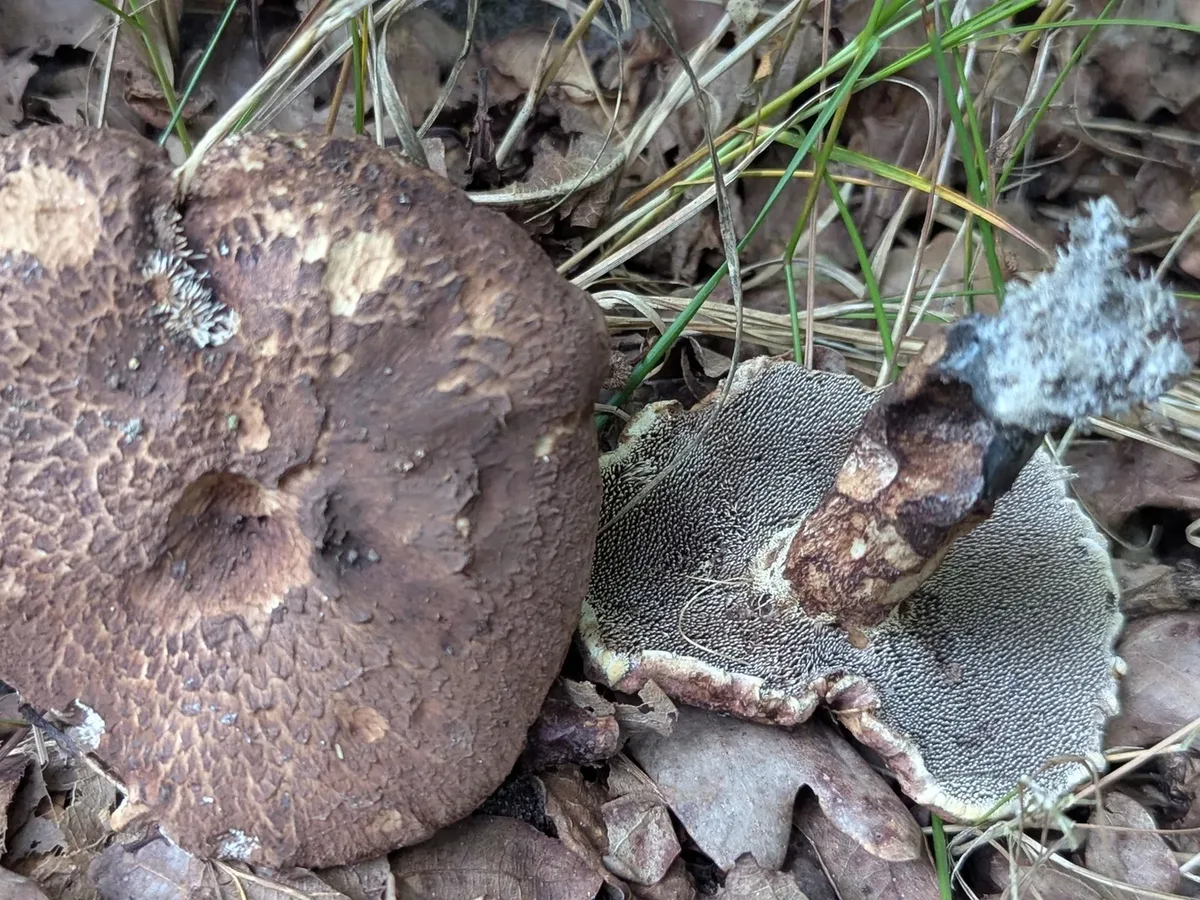
Sarcodon scabrosus looks superficially like Sarcodon imbricatus, the scaly hedgehog - both have large, boldly scaly brown caps with pendant spines below - but two features distinguish it with certainty.
Flesh
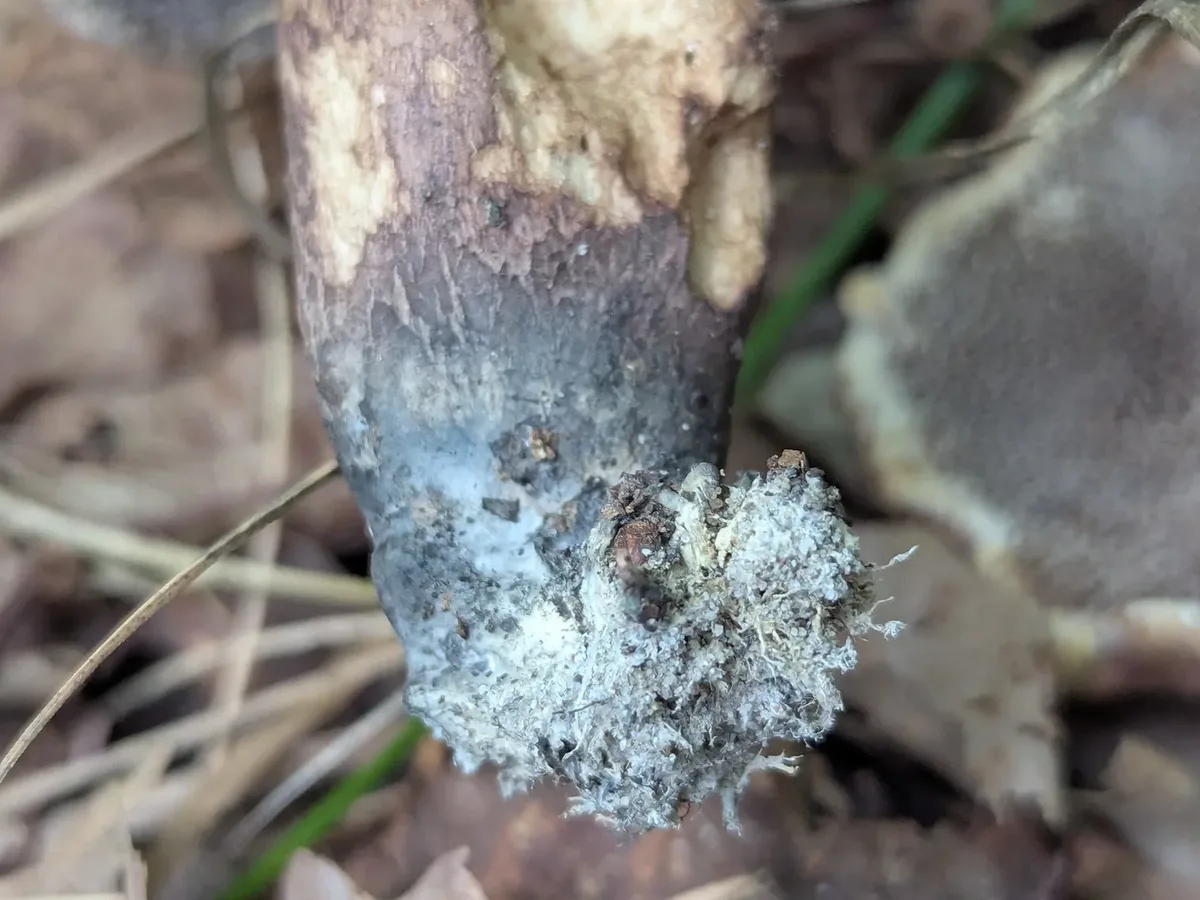
The first and most decisive: cut through the stem at its base and look for blue-green to greenish-black flesh discolouration. This pigmentation is caused by a mixture of sesquiterpene compounds unique to S. scabrosus and is absent in S. imbricatus, which shows a clean pale ivory-grey cut surface.
Even if the specimen is old and the colour has deepened to near-black, the greenish tinge is usually visible in fresh material. In dried or heat-treated specimens the colour may fade, so always check fresh.
Smell & taste
The second character: taste a tiny piece of cap flesh raw - the bitterness in S. scabrosus is intense and immediate, considerably more pronounced than in S. imbricatus even in young specimens.
Cap
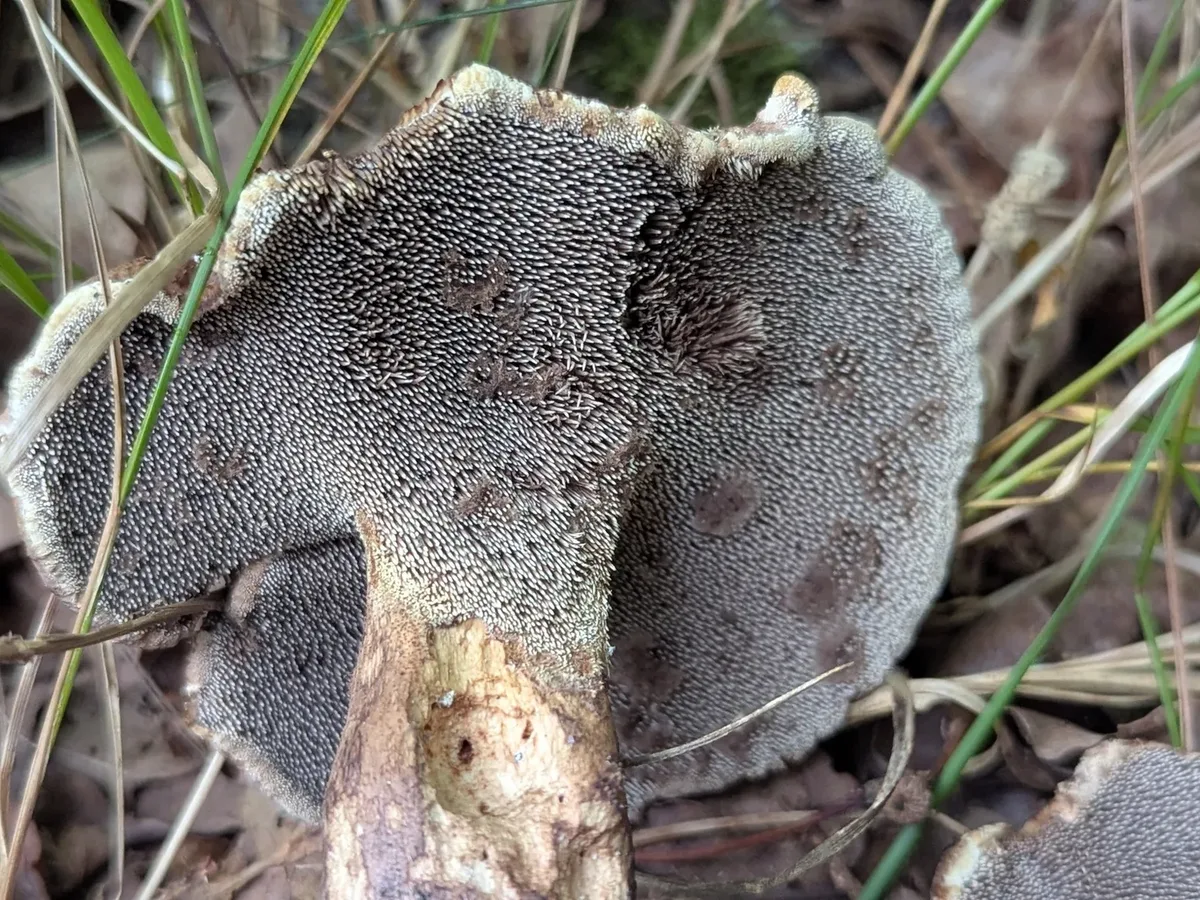
The cap reaches 5-20 cm, with dark brown to blackish-brown erect scales on a pale grey-brown background. The spines are pale initially, greying with age. Spore print purplish-brown.
Why it's dangerous
Moderate - not life-threatening in healthy adults but causes significant gastrointestinal illness.
The primary danger is accidental ingestion following confusion with the edible Sarcodon imbricatus.
The two species share habitat and superficial appearance. The stem-base colour test and taste test are reliable in-field tools that prevent this confusion.
No antidote is required; treatment is symptomatic.
Toxin
The primary toxic compounds are scabrosin esters - specifically scabrosin and related cytomutilin-class sesquiterpene esters isolated from fruiting body tissue.
These compounds are cytotoxic at higher concentrations in laboratory assays and cause gastrointestinal mucosal irritation when ingested.
They are heat-stable and lipophilic, meaning they are not removed by boiling and may be partially concentrated in oil-based cooking.
Scabrosin esters were described in detail by Yue et al. and others in the 1990s-2000s from Chinese material.
Related sesquiterpene compounds contributing to the intense bitterness include sarcodonin homologues, also present in S. imbricatus but in much higher concentration in S. scabrosus.
Symptoms
Onset of symptoms typically within 1-4 hours of ingestion:
- Nausea
- Repeated vomiting
- Abdominal cramps
- Diarrhoea
Symptoms generally resolve within 12-24 hours with supportive care (rehydration).
There are no reports of organ-specific toxicity (hepatotoxic or nephrotoxic effects) in the scientific literature; the toxidrome is a straightforward gastrointestinal irritant syndrome.
Seek medical attention if vomiting is severe or prolonged, particularly in vulnerable individuals.
Staying safe
Sarcodon scabrosus is toxic and should not be eaten.
It contains scabrosin esters - a group of cytomutilin-type sesquiterpene compounds - that cause gastrointestinal irritation: nausea, vomiting, and abdominal cramping within one to several hours of ingestion.
Symptoms are not life-threatening in healthy adults but can be severe enough to require medical attention, and may be more serious in children, elderly, or immunocompromised individuals.
Cooking does not neutralise the toxins. The species has been listed as inedible or toxic in European and East Asian field guides since the early twentieth century.
The key risk scenario is collecting it alongside Sarcodon imbricatus without performing the stem-base colour check. Always cut the stem at its base in the field and look for blue-green discolouration before adding any Sarcodon to your basket.
The bitterness is a reliable secondary warning - taste a small piece raw before cooking any Sarcodon.
Where & when it grows
Habitat
Sarcodon scabrosus is a forest partner, spending most of its life as invisible mycelium threaded through the roots of its host conifers - primarily Scots pine and Norway spruce in European boreal and temperate forests, and a range of Pinus and Picea species in East Asian montane forests.
Like its relative S. imbricatus, it strongly prefers acidic, sandy, nitrogen-poor soils and avoids enriched or recently disturbed ground.
In Japan it occurs alongside Pinus densiflora and P. thunbergii in coastal and lower-montane forests; in Korea it has been recorded in high-elevation Abies and Picea stands.
In Europe the species shares most of its forest habitat with S. imbricatus, which makes careful field separation important. When both species co-occur, S. scabrosus tends to be less abundant and its fruiting bodies are somewhat smaller on average.
When
The fruiting season mirrors that of S. imbricatus: late summer to autumn, peaking from August to October in northern Europe and from September to November in East Asian mountains.
The mushroom needs a period of late-summer warmth followed by a cooling event and adequate rainfall to fruit.
Individual sites are not reliably productive every year - this is not a species that can be counted on at a fixed location the way chanterelles or porcini can.
As with other Sarcodon species, fruiting body development is slow (7-14 days from pin to maturity), and the window for ideal harvest is short before the bitter compounds concentrate further and the flesh deteriorates.
How it grows
Sarcodon scabrosus is ectomycorrhizal and cannot be cultivated. Its mycelium forms long-running associations with the fine roots of host conifers, quietly persisting for many years in established stands.
Fruiting bodies emerge singly or in loose groups, pushing through sandy soil from just below the surface. Full-sized specimens develop over about ten days.
Mycelium does not produce visible rhizomorphs at the soil surface.
Once a productive site is found, revisiting it in subsequent years after similar weather patterns is the most reliable strategy.
Fruiting conditions
Fruiting triggered by the late-summer cooling combined with rainfall on warm mineral-sandy soils. Flushes appear 10-20 days after a sufficient rain event once air and soil temperatures begin dropping in late summer. Not reliably annual; mycelium may skip fruiting in dry years.
Look-alikes
The realistic confusions are almost exclusively within the Sarcodon genus.
Sarcodon imbricatus (scaly hedgehog) is the most important lookalike and the species most commonly confused with S. scabrosus. It shares the same bold scaly cap, spined underside, conifer habitat, and season.
The decisive separation is the stem base cut: S. imbricatus shows clean pale grey-white flesh; S. scabrosus shows blue-green to greenish-black staining.
Flesh taste is also diagnostic - S. imbricatus is mild when young, sometimes only slightly bitter in large old specimens, whereas S. scabrosus is intensely bitter in all stages.
Sarcodon aspratus, another East Asian species, is closely related and has been confused with S. scabrosus. It also has dark cap scales and a bitter taste but is reportedly edible after thorough boiling in some Japanese traditional practice. However, given the close relationship and potential for misidentification, it should be treated with equal caution.
None of the species in this confusion complex are deadly.
Closely related East Asian species with similarly dark scales and bitter taste; sometimes reported edible after prolonged boiling in Japanese traditional cuisine, but chemically similar to S. scabrosus. Has a rougher, more uneven cap surface texture ('aspratus' = roughened); stem base may also show greenish tints. Treat with the same caution as S. scabrosus.
The most important lookalike. Stem base flesh is clean pale grey-white on cutting - never blue-green or black. Flesh is mild to only slightly bitter in young specimens. Cap scales broadly similar but usually paler brown in young S. imbricatus. Both species occur in the same conifer forests in the same season; the stem-base colour test is the definitive field separation.
Considered by some authors a segregate of S. imbricatus. Pale, clean stem base cut surface; mild taste when young. Distinguished from S. scabrosus by the same stem-base and taste criteria. Geographic context (North America / parts of East Asia) also helpful.
Cap surface fibrous-velvety rather than coarsely scaly; spines white to buff; flesh white turning pinkish-grey; distinctive mealy or fenugreek-like smell; usually smaller (3-12 cm). Associates with Scots pine. Neither bitter nor greenish at stem base.
A reference guide - never an edibility guarantee. When in doubt, leave it out.