Thiers' Lepidella
Saproamanita thiersiisyn. Amanita thiersii Bas, Lepidella thiersii (Bas) E.-J.Gilbert
 © Robert Hoard (CC BY)
 © Robert Hoard (CC BY)
 © Robert Hoard (CC BY)
 © Robert Hoard (CC BY)
 © Brian C. Hunt (CC BY)© Robert Hoard (CC BY)© Robert Hoard (CC BY)
Edible only with the right preparation - or safe for some people but not others. Learn the caveats first.
Never eat a mushroom you are not 100% sure of - check the look-alikes below, and always cook wild mushrooms.
How to recognise it
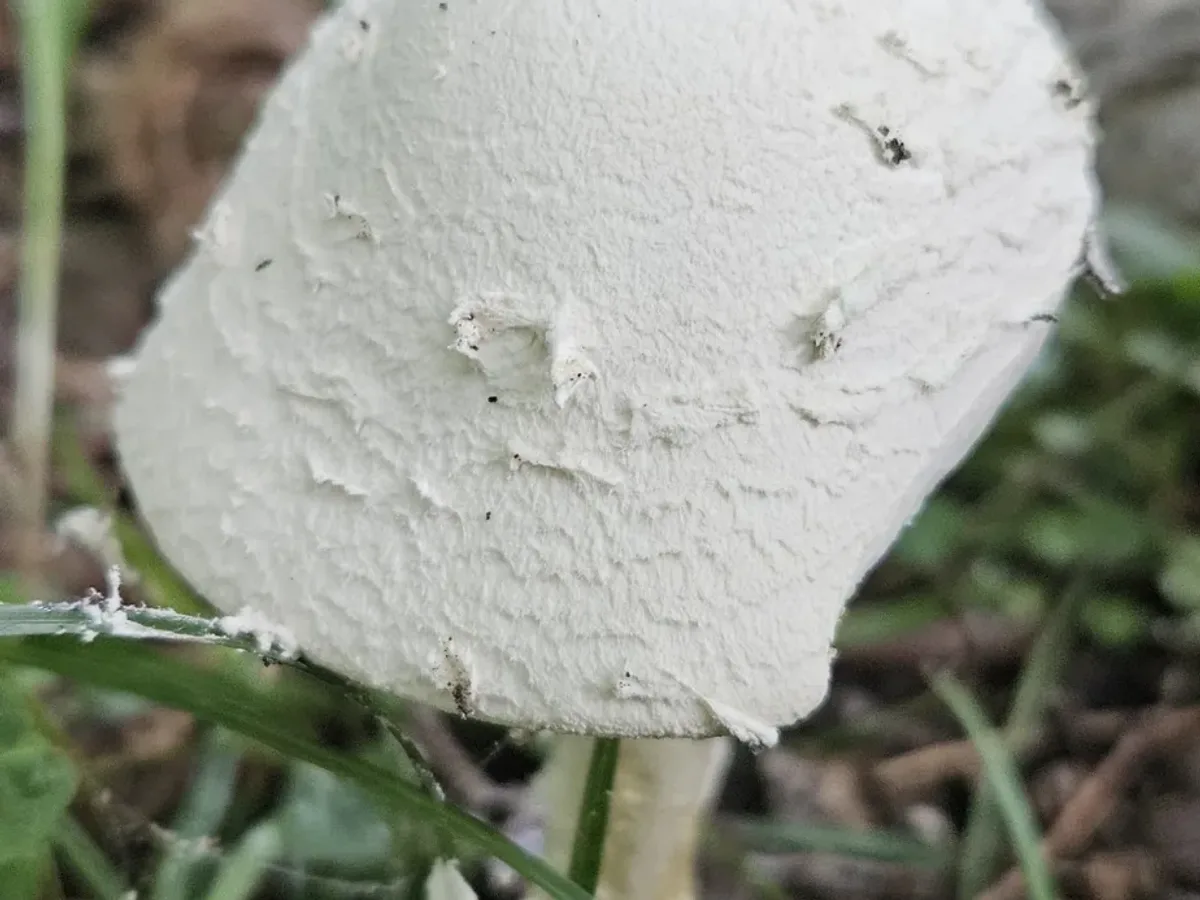
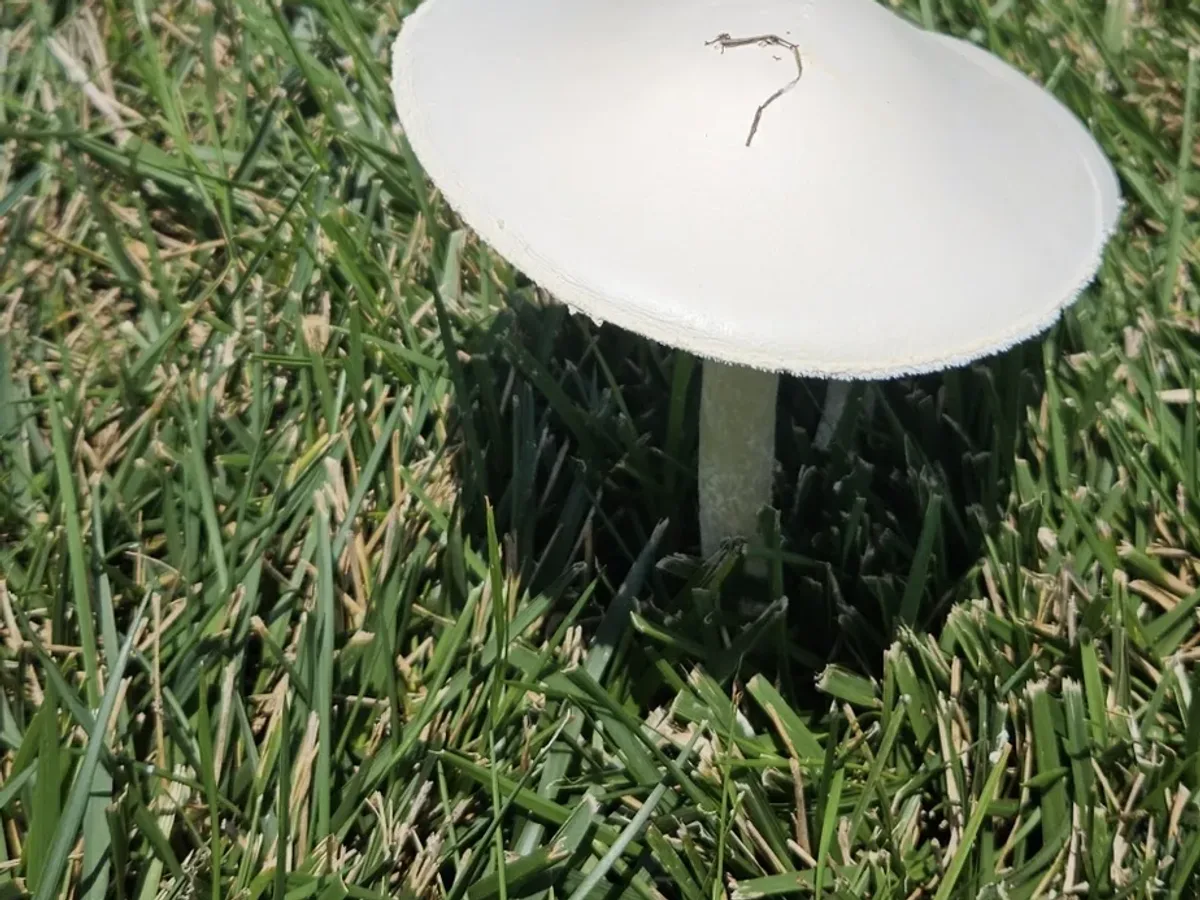
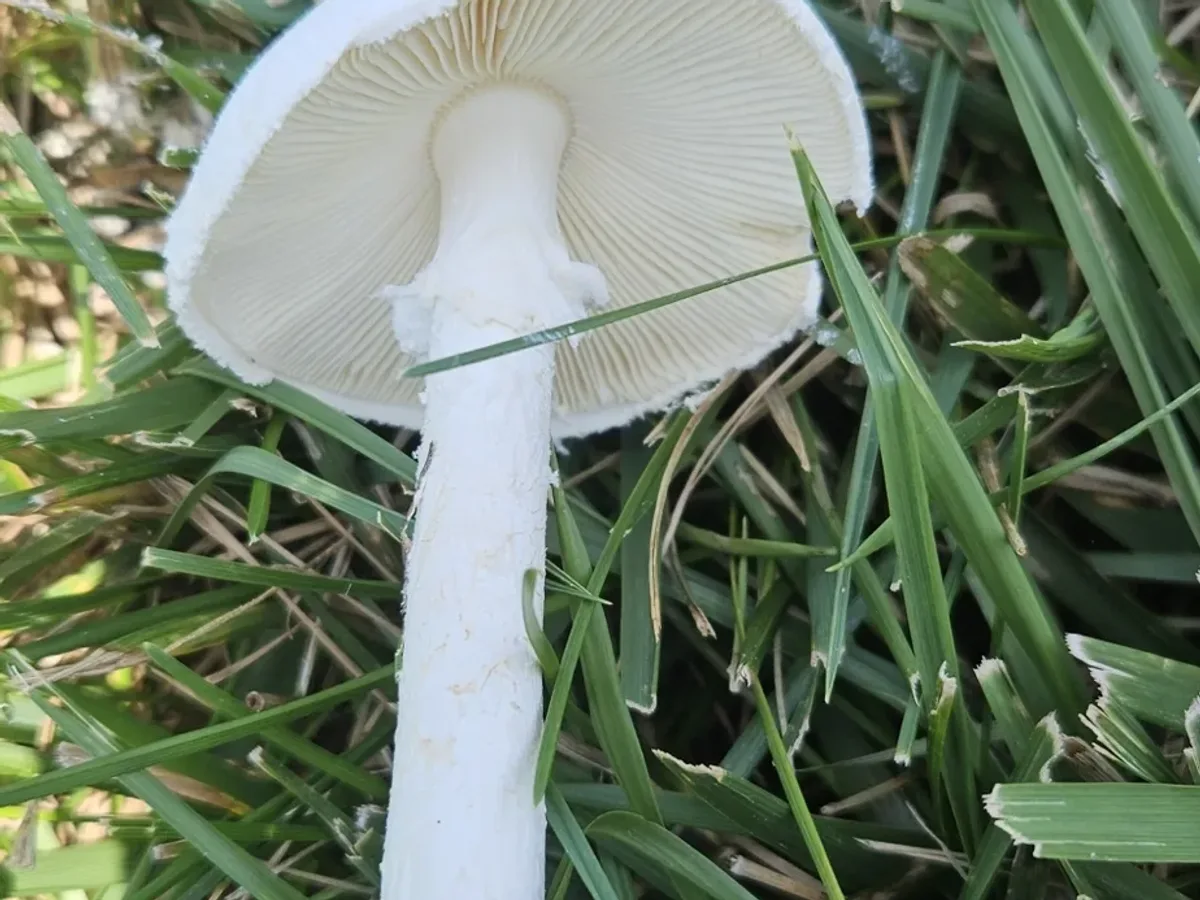
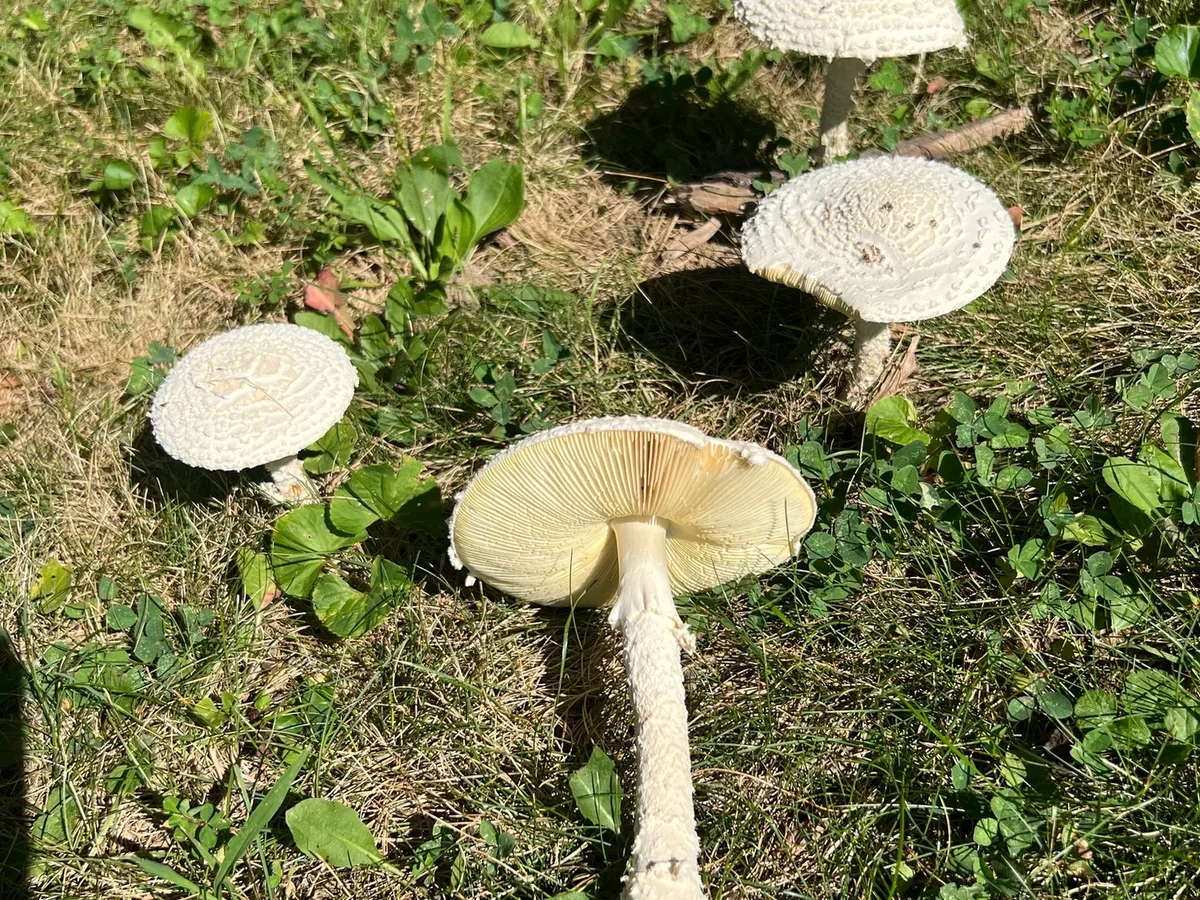
Thiers' Lepidella is a conspicuously all-white mushroom of moderate to large size: the cap, gills, stem, ring, and base covering are all white, and remain white even in maturity.
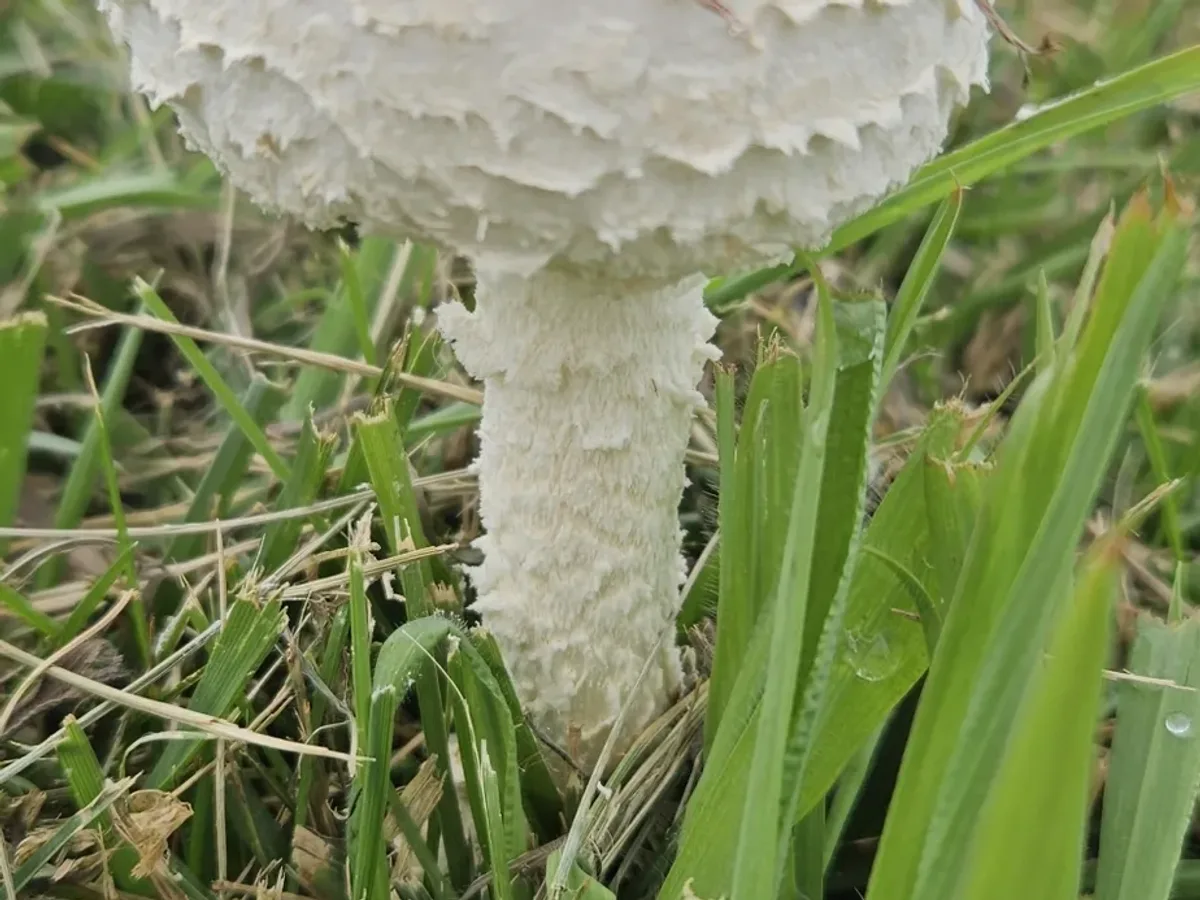
The most immediately striking feature is the dense covering of soft, cottony white warts or fibrous patches on both the cap and the stem - textures that give the whole fruit body a powder-puff or shaggy appearance quite unlike the smooth, clean caps of the destroying angel group.
These warts are universal veil remnants and can be rubbed off by rain, leaving a still-white but now smoother cap that becomes harder to identify.
The base is bulbous with loose, cottony white veil tissue draped around it; this is not the neat, bag-like sac (volva) that defines the destroying angels - a difference that requires careful inspection of the excavated base.
Gills are free, white, and closely spaced. The spore print is white.
Microscopically, the inamyloid spores (not staining blue-black in Melzer's reagent) firmly place this species in Saproamanita rather than the broader Amanita genus.
Where & when it grows
Habitat
Thiers' Lepidella is a saprotroph - it decomposes organic matter in soil rather than forming the tree-root partnerships (ectomycorrhiza) that are nearly universal in the Amanita family.
This biological distinction has a direct practical consequence: you will find it in open grassy places, lawns, parks, roadsides, and golf courses rather than under forest trees.
In the Gulf Coast states of the USA (Texas, Louisiana, Mississippi, Alabama, Florida) it is one of the characteristic white summer lawn mushrooms, sometimes appearing in abundance on well-watered grass after summer rain. In the southern Great Plains it fruits in disturbed roadsides and pastures.
South American records come from warm subtropical grassland, parks, and urban green spaces in Brazil and Argentina.
The absence of a tree association means it can appear far from any woodland, which should itself be a useful clue when making an initial identification.
When
A warm-season species. In the Gulf Coast and southern Great Plains of North America, fruiting runs from late spring (May) through summer into early autumn (October), with the highest density of records in June, July and August when heat and humidity are both high.
Fruiting typically follows summer thunderstorms or irrigation, with fruit bodies appearing within a few days of adequate rainfall when soil temperatures are warm.
In subtropical South America the equivalent season is the Southern Hemisphere warm wet season (roughly October-April).
How it grows
Saprotrophic, growing singly or in scattered groups on lawns, in parks, on roadsides, and in other open grassy habitats.
It may appear repeatedly in the same location year after year because it colonises the soil organic matter rather than depending on a particular host tree root system.
The fruit bodies emerge quickly after summer rain. In hot humid weather they can mature, sporulate, and collapse within just a few days.
Fruiting conditions
Warm-season saprotroph that fruits rapidly after summer rainfall once soil temperatures are high. In the Gulf Coast states of the USA, peak fruiting follows summer thunderstorms or irrigation events in June-August when soil temperatures regularly exceed 20 °C. The lag to fruiting is shorter than for mycorrhizal species (3-7 days) because the fungus does not depend on metabolic synchronisation with a host tree.
Look-alikes
The most dangerous confusion is with the destroying angels - Amanita virosa, Amanita bisporigera, and Amanita verna - all of which are pure white, ring-bearing, and deadly.
They differ from Saproamanita thiersii by:
- a free, sack-like volva at the stem base (Saproamanita thiersii has only cottony scattered tissue, not a bag)
- a preference for woodland rather than open lawns and parks
- amyloid spores (staining blue-black in Melzer's reagent) versus the inamyloid spores of Saproamanita
In the field, the habitat (open lawn versus under forest trees) is the first important clue; the base structure is the essential safety check.
Amanita phalloides (death cap), introduced to North America, is greenish-yellow to olive and grows under trees - colour and habitat separate it from the lawn-dwelling, all-white Saproamanita.
The meadow mushroom (Agaricus campestris) and horse mushroom (Agaricus arvensis) grow in similar open habitats but have free, pinkish to chocolate-brown gills and a brown spore print, completely unlike the white gills and white spore print of Saproamanita thiersii.
Typically greenish-yellow to olive-brown (rarely nearly white), growing under trees, with a pronounced sac-like volva and amyloid spores. Greenish hues and woodland habitat separate it from Saproamanita thiersii. Contains lethal amatoxins.
The North American destroying angel (and its close relatives A. virosa and A. verna) is also pure white with a ring, but bears a distinct, free, sac-like volva at the base - carefully dig up the base and look for a neat white bag enclosing the bulb. Saproamanita thiersii has only scattered cottony tissue, not a clean sac. Destroying angel also grows under trees (ectomycorrhizal), not on open lawns. Any doubt: do not eat. Contains lethal amatoxins.
Entirely white with a shaggy, cottony stem and a prominent sac-like volva. It grows in woodland under conifers or broadleaved trees, not on open lawns. Spores are amyloid (Saproamanita spores are not). Contains lethal amatoxins.
A white woodland species of spring and early summer with a free volva, amyloid spores, and the same habitat requirement for ectomycorrhizal tree partners. Like A. bisporigera and A. virosa, it contains lethal amatoxins.
Another open-habitat species with a ring, but gills become grey-brown to chocolate-brown with age (never remaining white), spore print is dark brown, and the flesh has a distinct anise-almond smell and may yellow slightly when cut or in the base. All of these features separate it cleanly from the permanently white-gilled Saproamanita.
Grows in open grassy places like Saproamanita thiersii but has gills that are pinkish when young and become dark chocolate-brown with maturity, producing a brown spore print. The flesh may stain slightly yellowish when cut. Not an Amanita relative; white-gilled, white-spore-print Saproamanita thiersii is unambiguous when gills are inspected.
In the kitchen
Picking & cleaning
Thiers' Lepidella is not eaten and should not be collected for the table. Its edibility is essentially unknown - it has not been documented as toxic in the classical sense, but it has never been demonstrated safe to eat either, and the absence of evidence for toxicity does not constitute evidence for safety.
More critically, it is an all-white Amanita with a ring, and picking it creates a real risk of habituating collectors to handling white Amanitas carelessly.
Any white, ring-bearing Amanita demands that you excavate the entire base and examine it for a free sac-like volva before drawing any conclusion about the species - the destroying angel (Amanita virosa and relatives) bears a volva that is absolutely lethal and is superficially similar in cap colour, gill colour, and stem colour.
Never collect a white, ring-bearing mushroom from lawns or parks without performing this full base inspection.
Cooking
Not eaten. Thiers' Lepidella has no established culinary use and its safety for human consumption is undocumented. Do not attempt to eat it.
If you believe someone has consumed this or any other all-white Amanita, treat the situation as a medical emergency: contact a poison control centre immediately and seek emergency care without waiting for symptoms.
Destroying angel poisoning presents with a deceptively quiet latency period of 6-24 hours before symptoms begin, and by the time liver failure becomes clinically obvious, the window for effective treatment may have already narrowed.
Good to know
Thiers' Lepidella should not be eaten. Its toxicological profile has never been fully characterised - no confirmed poisoning cases have been published, but this most likely reflects that the species is unfamiliar and largely untouched rather than that it has been studied and found safe.
The more immediate safety concern is confusion: it is an all-white, ring-bearing member of the Amanita family, a group that contains the deadliest fungi on Earth.
Correctly identifying it in the field is non-trivial. The textural details of the base are subtle, and rain-washed or slug-damaged specimens become harder to evaluate.
Unless you have direct microscopy capability and experience with Amanita base morphology, the only safe course of action when encountering any all-white Amanita is to leave it alone.
A reference guide - never an edibility guarantee. When in doubt, leave it out.