Russula viridirubrolimbata
Russula viridirubrolimbatasyn. Russula viridirubrolimbata Singer
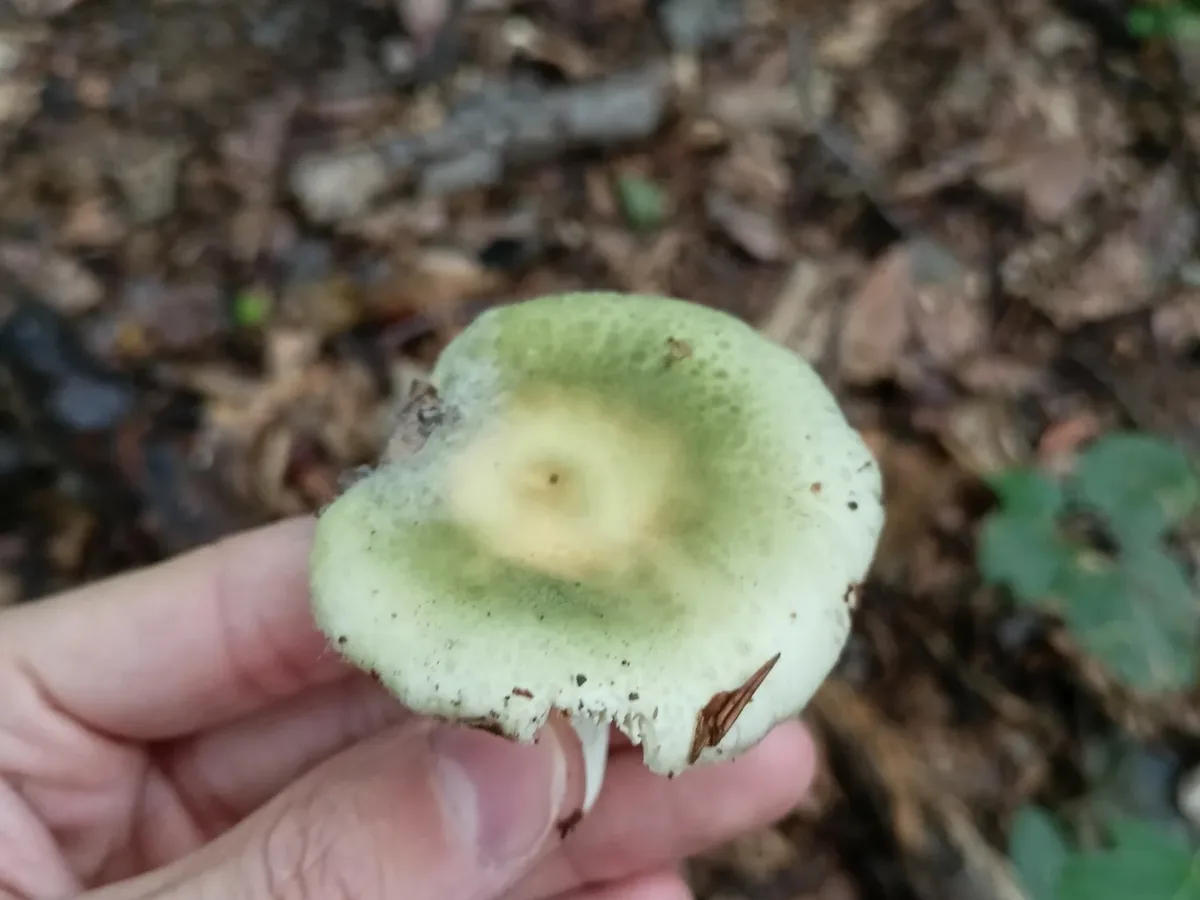 © Evgenij Samarin (CC BY)
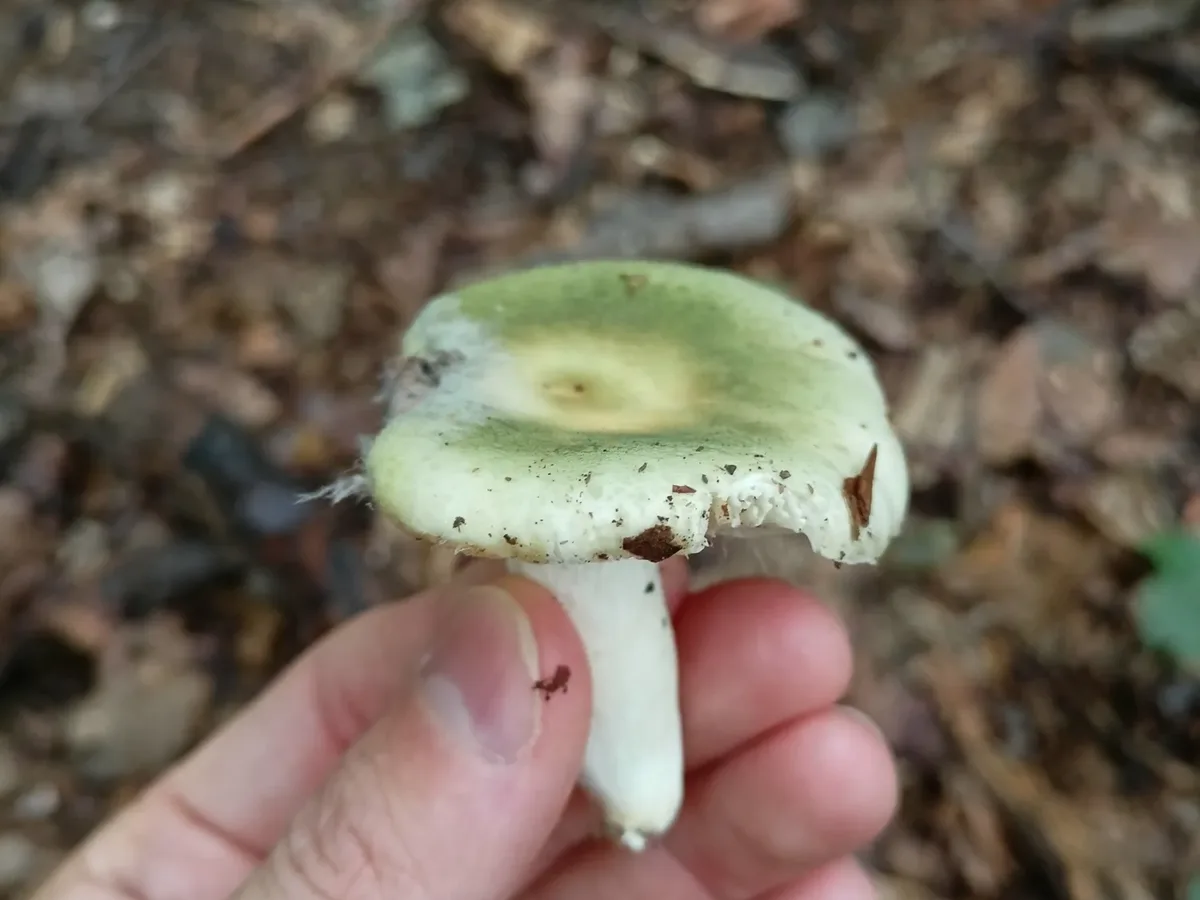 © Evgenij Samarin (CC BY)
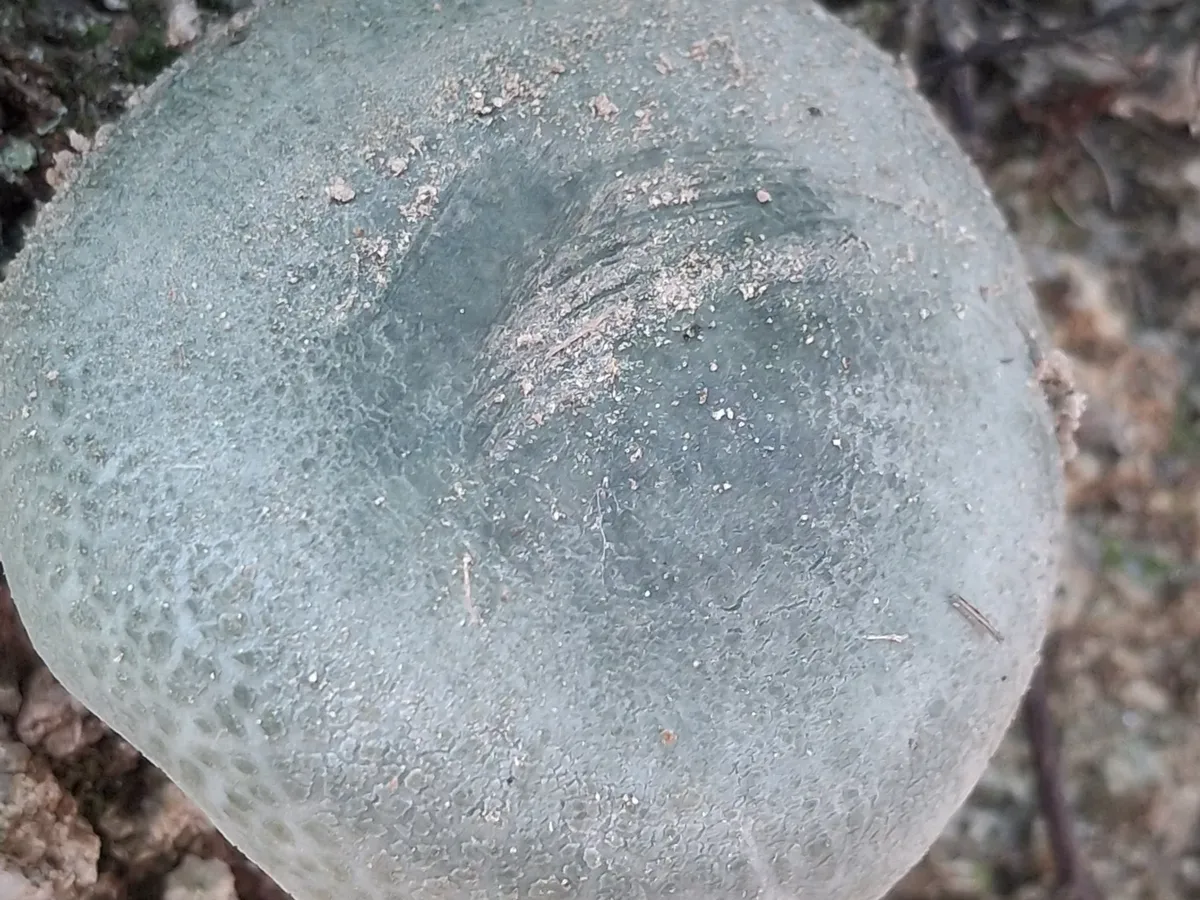 © Carminda Santos (CC BY)
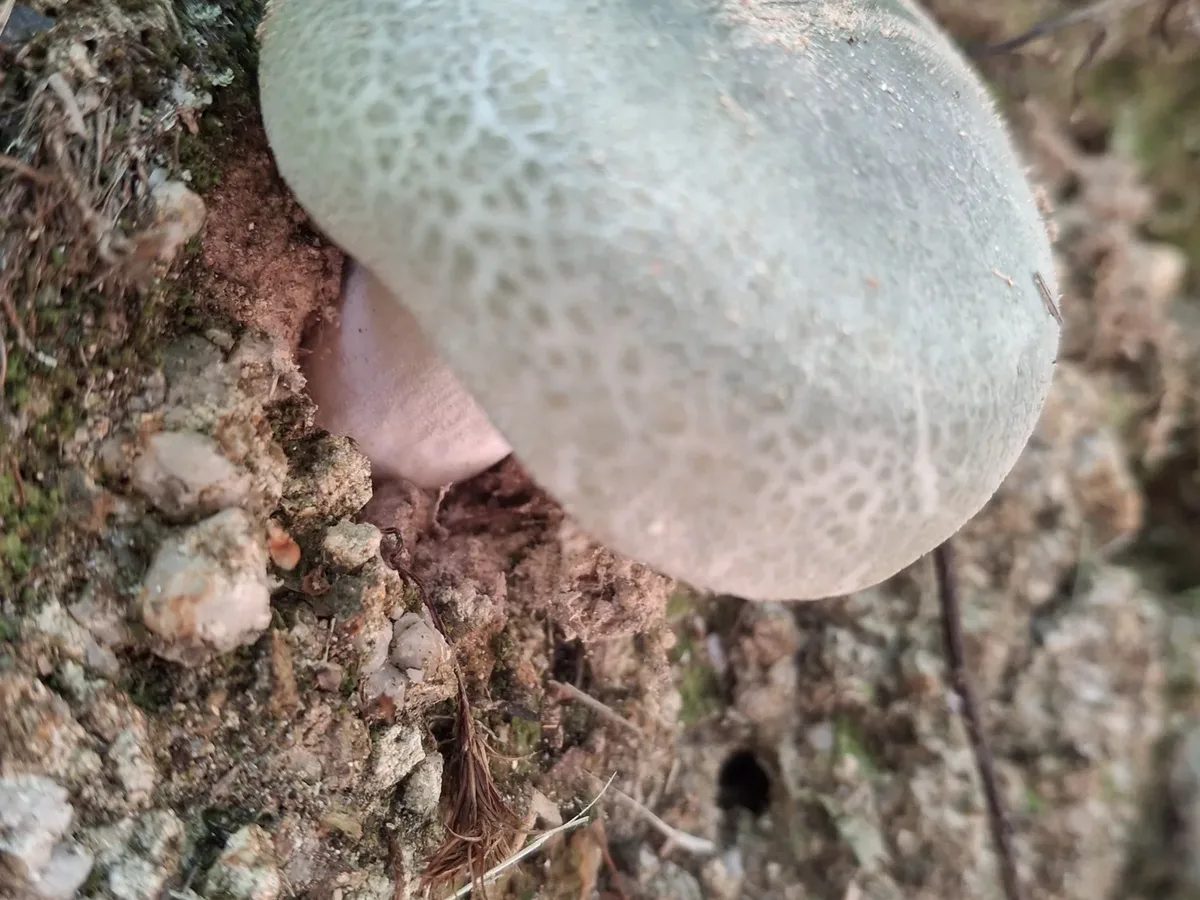 © Carminda Santos (CC BY)
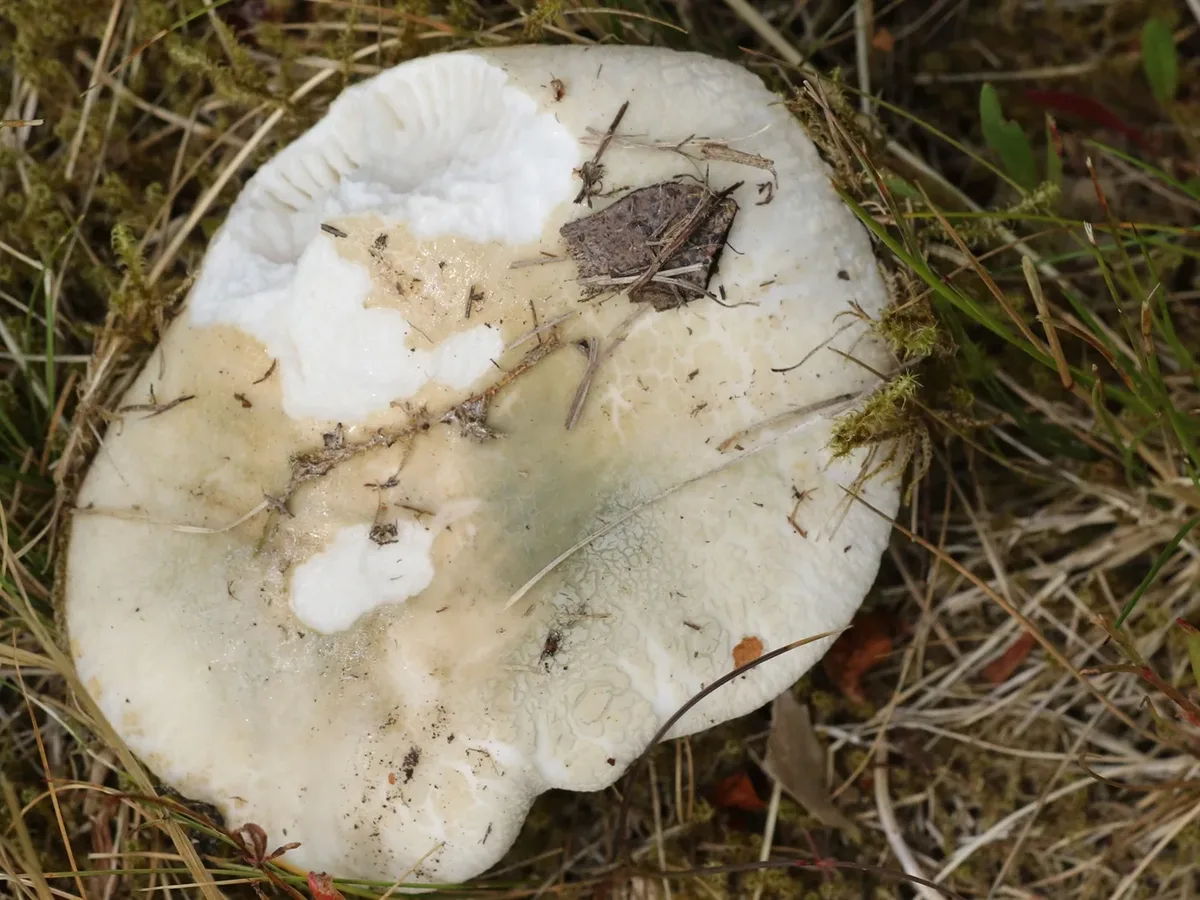 © Arild Omberg (CC BY)
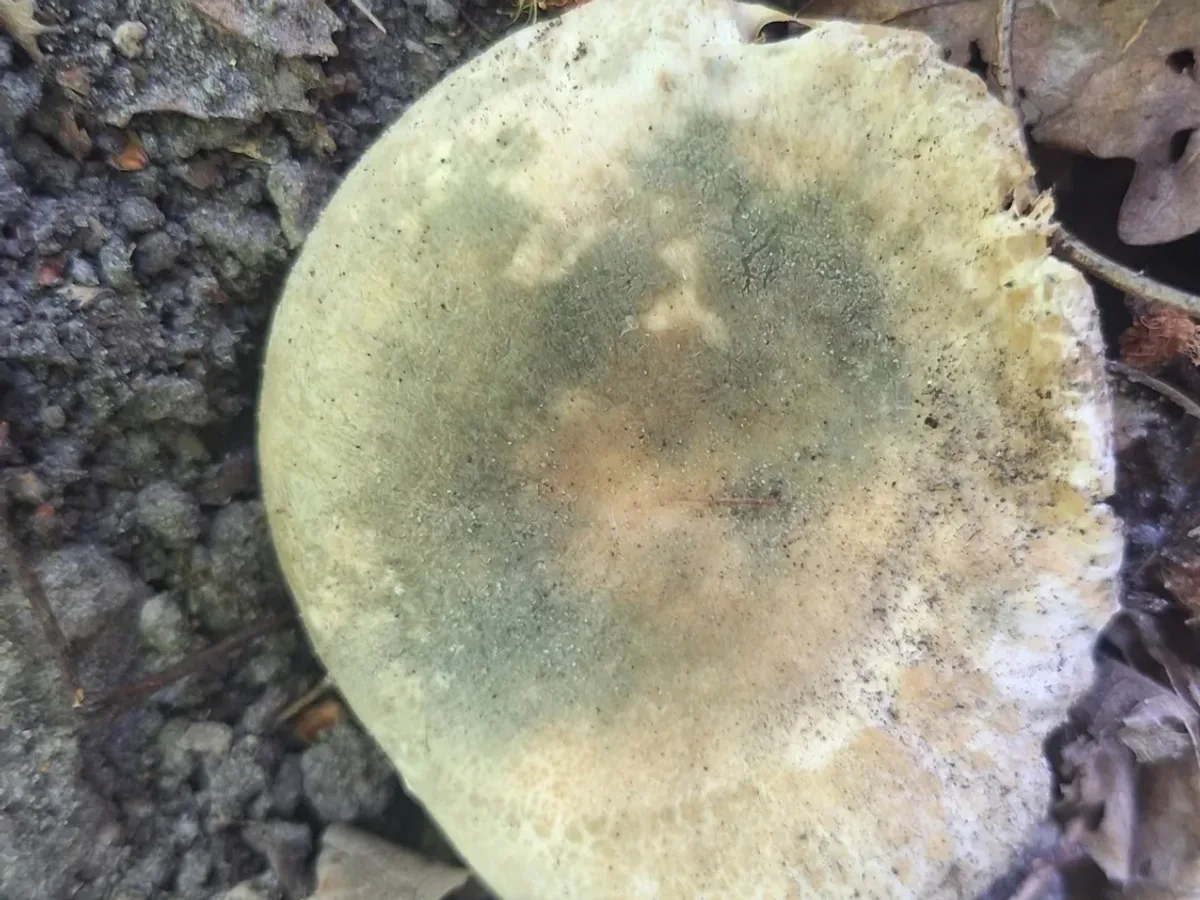 © yellowplant (CC BY)
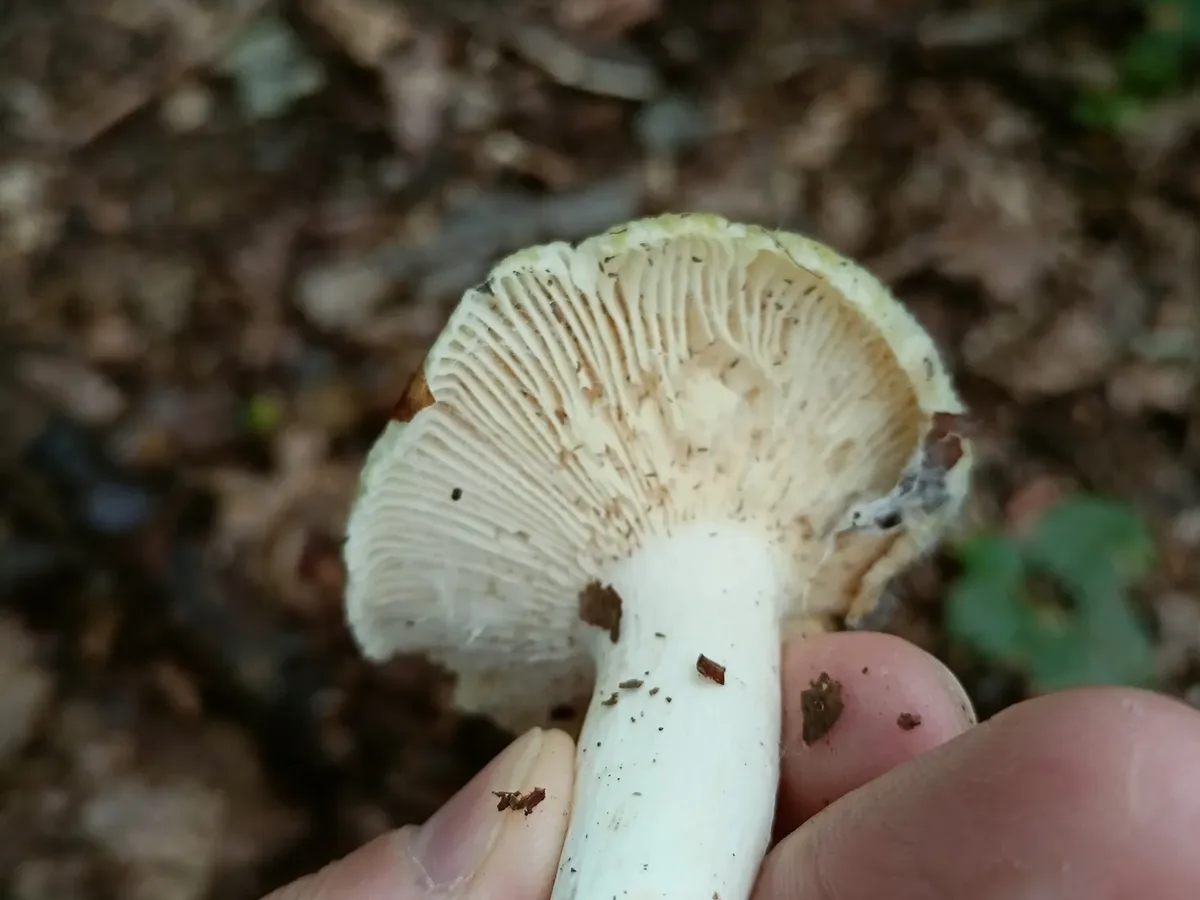 © Evgenij Samarin (CC BY)© Evgenij Samarin (CC BY)© Evgenij Samarin (CC BY)
Good to eat, once you have identified it with certainty and cooked it through.
Never eat a mushroom you are not 100% sure of - check the look-alikes below, and always cook wild mushrooms.
How to recognise it
Russula viridirubrolimbata is immediately recognisable by its bicoloured cap.
Cap
The centre is olive-green to grass-green while the outer zone and margin are distinctly reddish to blood-red, creating a sharply contrasted green-on-red pattern unique among common Yunnan market russulas.
The cap is 5-12 cm, convex to broadly flattening and slightly depressed with age. The surface is dry in typical conditions, slightly viscid when wet, and the cuticle peels a third of the way inward.
Gills
The gills are white to cream, moderately crowded, and brittle - run a finger across them and they crumble or snap exactly like chalk. This is the universal russula characteristic, distinguishing them from the flexible, greasy gills of Russula cyanoxantha and, crucially, from the free, non-brittle gills of any deadly Amanita.
Stem
The stem is white, firm, 4-9 cm tall, with no ring and no volva whatsoever at the base.
Flesh
Flesh white, firm, unchanging on exposure to air or cutting, with a mild, slightly nutty taste.
Spore print white to pale cream.
Where & when it grows
Habitat
A forest species of the warm-temperate to subtropical montane zone, found in the pine-oak and mixed broadleaved forests characteristic of Yunnan province at 1500-2800 m elevation.
It is ectomycorrhizal, meaning it forms an obligate underground partnership with the roots of living trees - primarily oaks (Quercus), stone oaks (Castanopsis, Lithocarpus) and Yunnan pine (Pinus yunnanensis). As a result it always grows on the forest floor beneath or near these trees, never on dead wood.
It favours the well-drained but moisture-retaining red and yellow clay soils of the Yunnan highlands.
When
The fruiting season coincides precisely with the East Asian summer monsoon. In Yunnan this means heavy rains from June onwards, and the mushroom fruits prolifically from late June through September, with stragglers into October as rains taper.
It is a warm-season species: cool or dry conditions suppress fruiting entirely. Peak market availability in Yunnan is July and August.
How it grows
Grows singly or in scattered individuals on the forest floor, never clustered or in tight rings, and never on wood.
New fruit bodies appear within about one week of heavy monsoon rains once the soil has warmed to at least 15 °C.
Because it is mycorrhizal it will not grow away from its host trees - finding it in the open or on cultivated land would be a strong signal that something is wrong with the identification.
Fruiting conditions
Monsoon-driven: fruits after sustained heavy rainfall when soil temperatures reach 15-24 °C. Ectomycorrhizal with oaks, Castanopsis and Yunnan pine in montane forest. New fruit bodies appear roughly 5-10 days after a soaking rain.
Look-alikes
The most dangerous confusion is not with another russula but with a deadly Amanita.
Several green-tinged or bicoloured Amanita species grow in the same Yunnan forests, most notably Amanita phalloides s.l. and related amatoxin-containing species. These have:
- A membranous volva at the stem base
- Usually a ring on the stem
- Free (not attached) gills
- Fibrous (not chalky) flesh
The bicoloured green-to-red cap of R. viridirubrolimbata is distinctive within the genus, but a hasty picker could overlook the colour pattern and simply see 'a white-gilled woodland mushroom', at which point the base of the stem becomes the sole safety check.
Within the genus Russula, the dangerous confusion is with Russula subnigricans, which causes rhabdomyolysis (severe skeletal muscle breakdown) and is lethal.
R. subnigricans is a dull brownish-white to greyish mushroom without the striking green-red bicolour, and its flesh slowly reddens then may darken when cut - but both features require careful observation, and the two species share the same forest and fruiting season.
Any russula in Yunnan whose flesh reddens when broken should be treated as potentially R. subnigricans and must not be eaten.
Other russulas with reddish cap tones (e.g. Russula sanguinea, R. emetica-group species) are acrid and peppery - a chewed-and-spat taste test would confirm acridity - but acridity alone does not indicate safety, and many look-alike species should simply be left alone unless verified by an expert.
Russula subnigricans grows in the same Yunnan forests and has caused fatal rhabdomyolysis (severe muscle breakdown). It is a dull brownish-white to greyish mushroom without R. viridirubrolimbata's striking green-red bicolour. Its flesh slowly reddens when cut and may later darken. Never eat any Yunnan russula whose flesh reddens or darkens when broken.
The deadliest possible confusion. The death cap and its Asian relatives have amatoxins that cause delayed liver failure with no early warning - the taste is mild. Key Amanita features absent from all russulas: a membranous sac-like volva at the base, a ring (skirt) on the stem, free (not attached) gills, and fibrous flesh that does not snap. R. viridirubrolimbata has NO volva, NO ring, attached brittle crumbling gills, and chalky-snapping white flesh. Always dig up the full stem and verify the base before eating any white-gilled forest mushroom.
Species with reddish or pink caps and sharply acrid, peppery taste (causes gastrointestinal upset). R. viridirubrolimbata has a mild taste and the distinctive green centre. A chewed-and-spat taste test will confirm acridity in sickener-type russulas, but acridity is not a reliable safety screen - other unsafe species can be mild.
The green russula (qingtou jun) is one of Yunnan's most prized edibles. It has a uniformly green cap with a mosaic/cracked angular pattern across the whole surface, lacking the distinct reddish-red border zone of R. viridirubrolimbata. Edible and safe, but requires the same Amanita exclusion check.
In the kitchen
Picking & cleaning
When harvesting, always extract the full stem by gently rotating and lifting, or by digging carefully with a knife, so that the very base of the stem is exposed.
This step is not optional: it is the only way to confirm the absence of a volva (membranous sac or girdled bulb at the base), which - if present - would indicate a deadly Amanita rather than a russula.
Confirm that:
- The gills are brittle and crumbling (not flexible or greasy)
- The stem is solid-to-hollow and white (not fibrous)
- There is no ring
Choose young to middle-aged specimens; old ones become soft, watery and attractive to larvae. Transport in a breathable container.
If any feature does not match - especially a volva, a ring, or gills that do not snap - discard the specimen and seek expert advice.
Cooking
Prepared in the standard Yunnan style:
- Stir-fried with garlic, chili and oil
- Added to hot-and-sour soups
- Sauteed in a mixed mushroom dish with other forest finds
The firm, mild flesh holds texture well during cooking. Fully cook the mushroom through - it should never be eaten raw or only lightly heated.
The mild taste makes it a background player rather than the star of a dish; it benefits from bold seasoning.
Store fresh specimens in a breathable bag in the refrigerator and use within two days.
Good to know
Russula viridirubrolimbata is regarded as an edible species and is sold in the Yunnan wild mushroom markets. It is not among the premium-priced elite (such as Matsutake, boletes, or the highly prized Russula griseocarnosa and R. virescens), but it is collected and consumed without reported problems when properly identified.
The safety case rests entirely on correct identification. The distinctive bicoloured green-red cap is the primary field character, and it must be backed up by confirming:
- Brittle gills
- White, unchanging flesh
- No ring
- Critically, no volva at the stem base
The lethal amatoxins in Amanita phalloides cause a clinically silent latency period of 6-24 hours before liver failure; the mild taste means no warning is given at the time of eating.
Never eat a white-gilled woodland mushroom without inspecting the full stem base.
Additionally, never eat any wild Russula raw - mild-tasting russulas, including this species, can cause gastrointestinal upset when raw and should always be cooked thoroughly.
A reference guide - never an edibility guarantee. When in doubt, leave it out.