The Flirt
Russula vescasyn. Russula vesca var. vesca, Russula mitis Rea
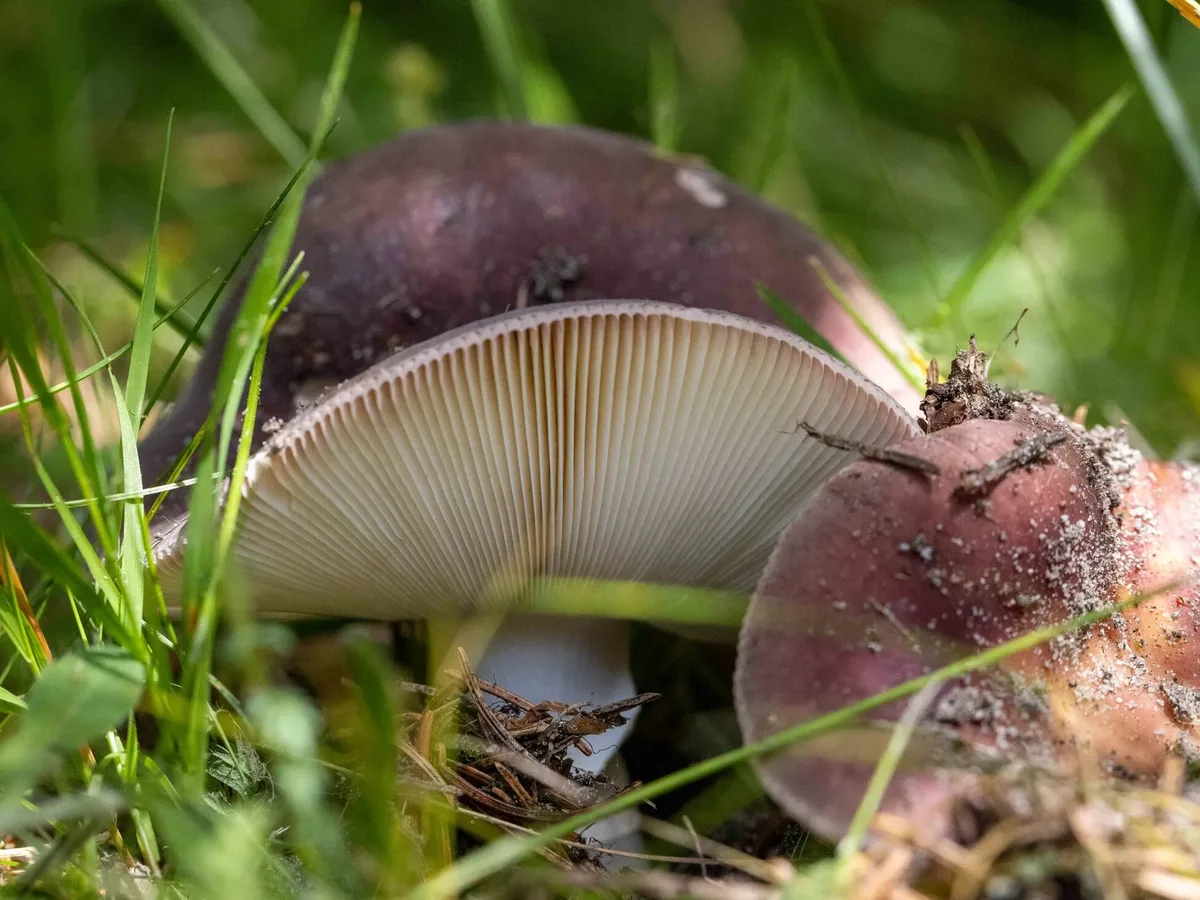 © Zack Abbey (CC BY)
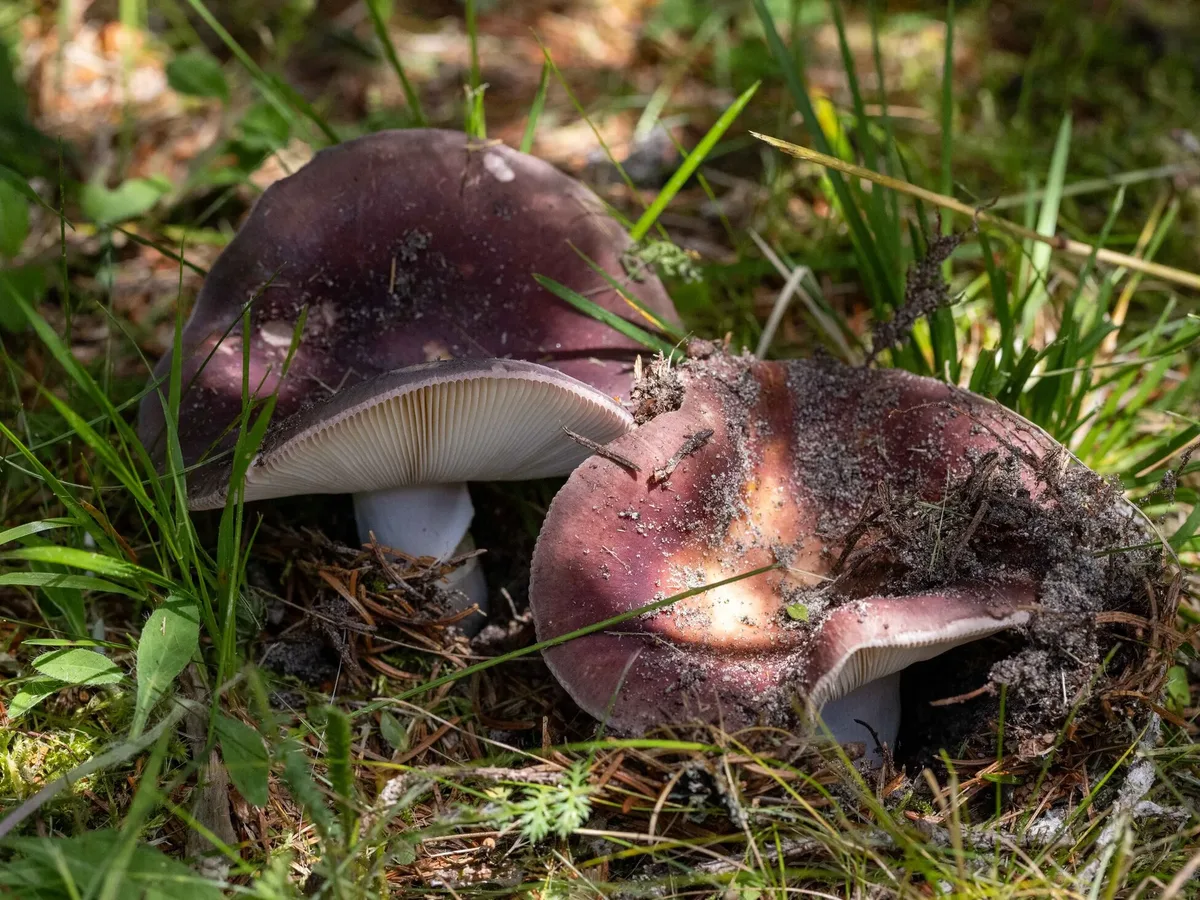 © Zack Abbey (CC BY)
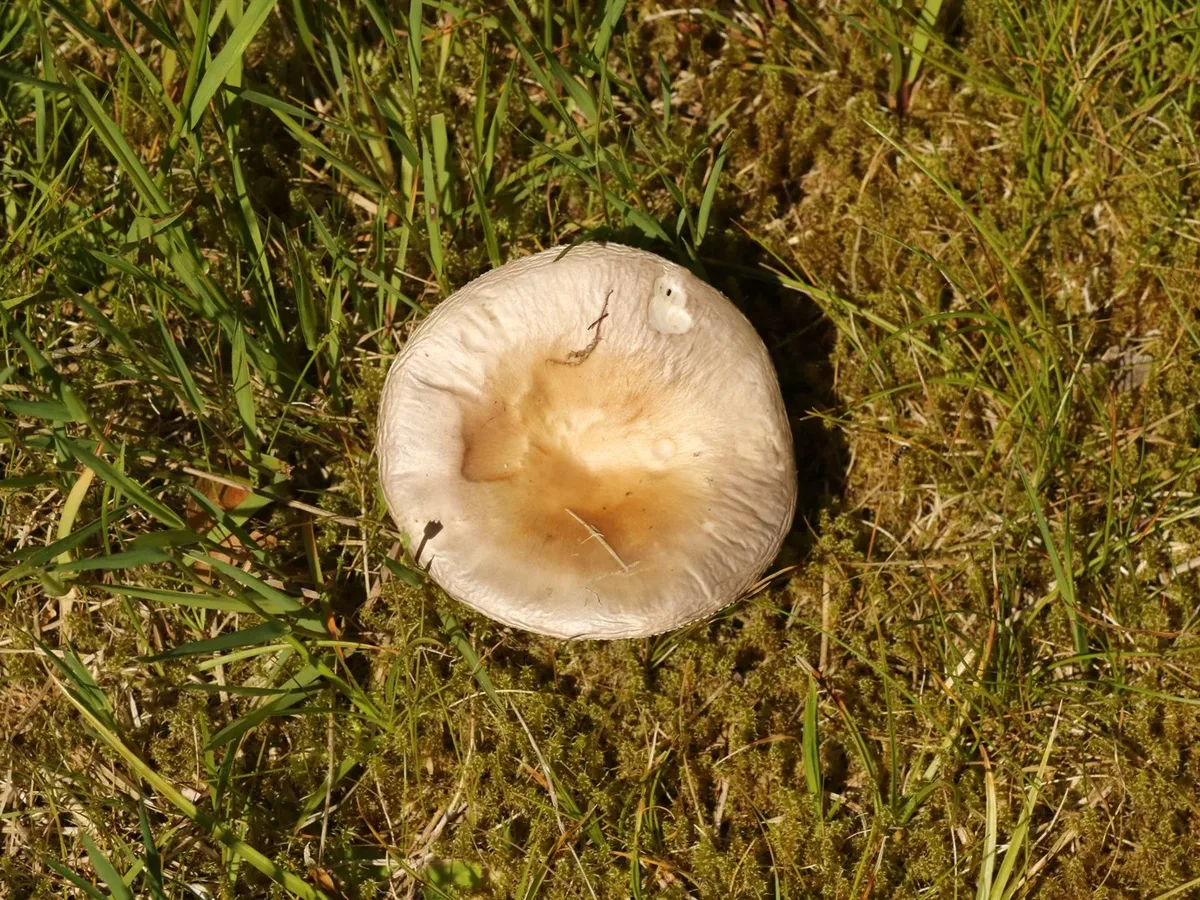 © Arild Omberg (CC BY)
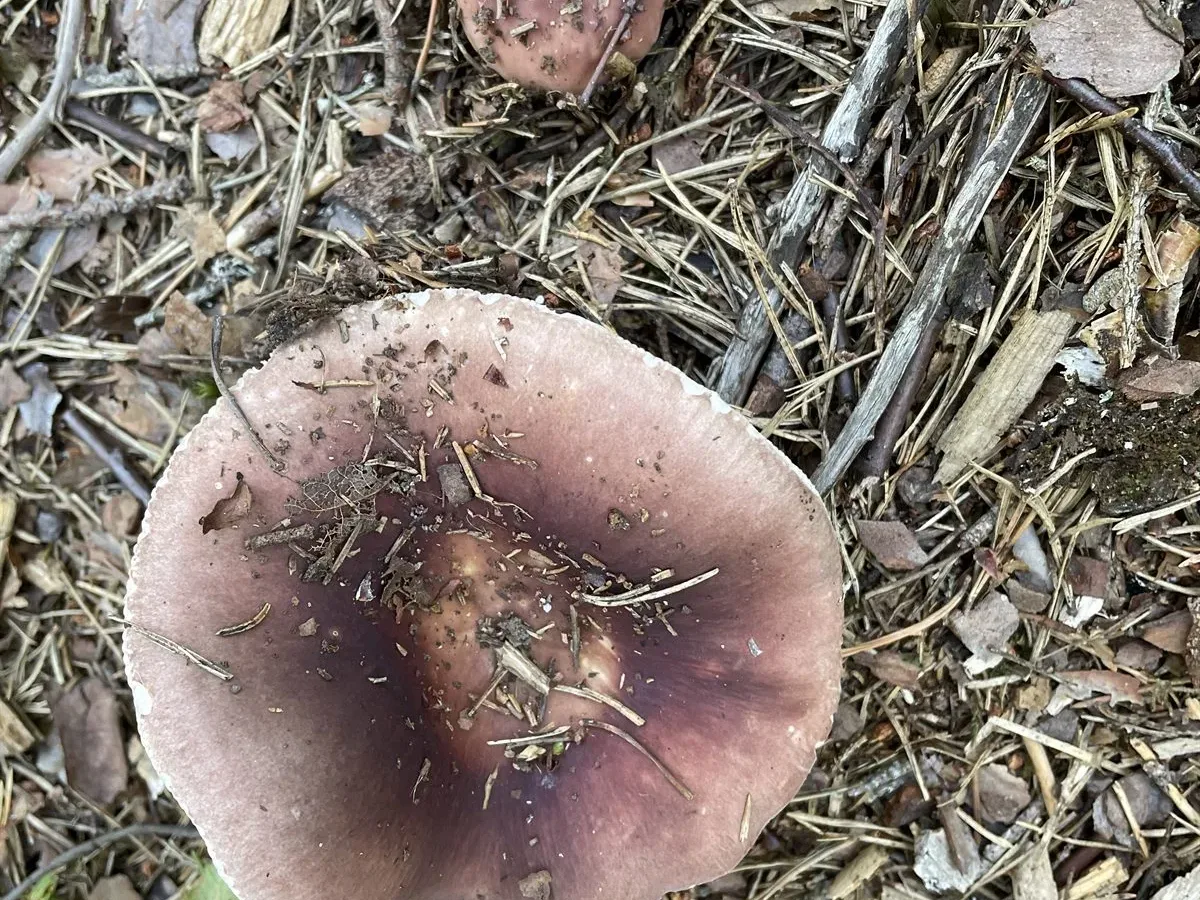 © Bjørn Eidhammer (CC BY)
 © Bjørn Eidhammer (CC BY)
 © Ulrik Andreassen (CC BY)
 © Ulrik Andreassen (CC BY)
 © Bjørn Eidhammer (CC BY)
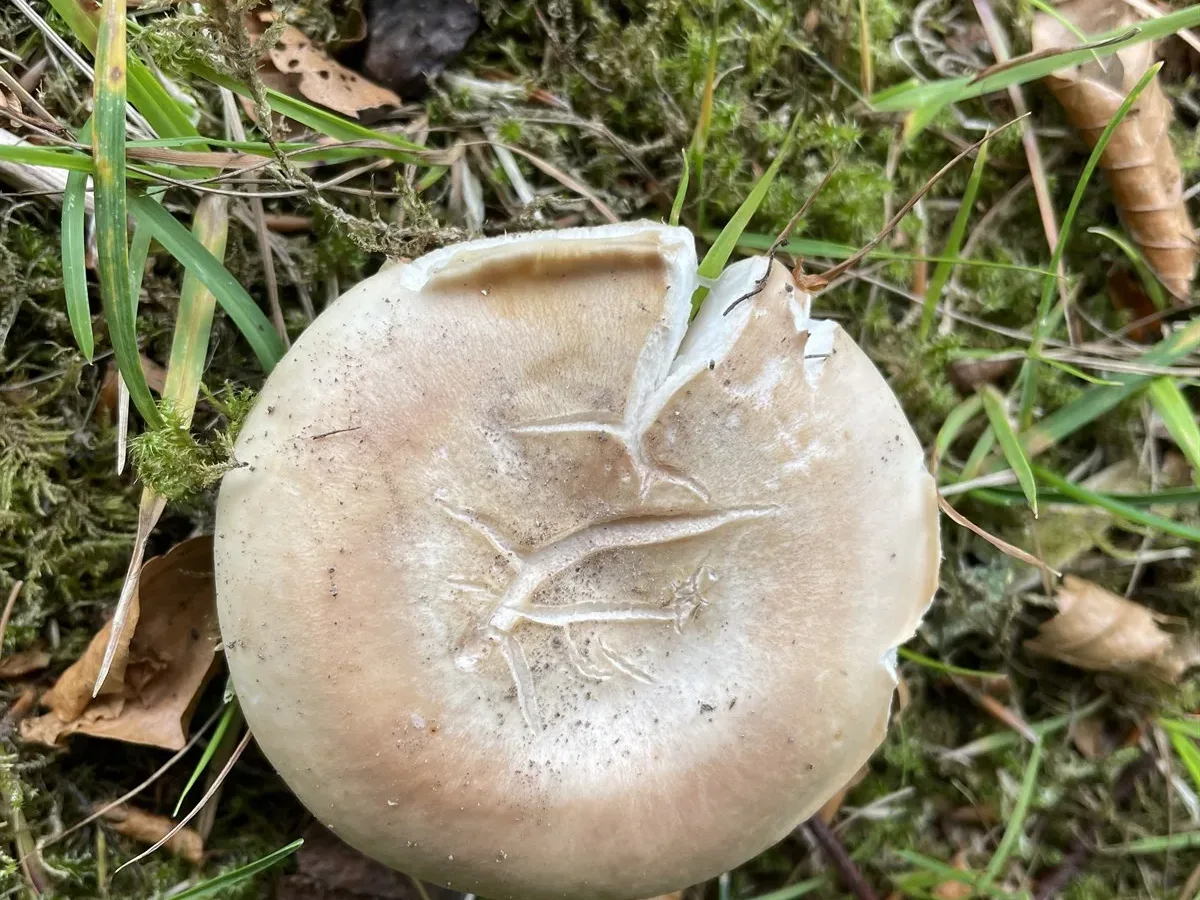 © Bjørn Eidhammer (CC BY)© Zack Abbey (CC BY)© Zack Abbey (CC BY)
Good to eat, once you have identified it with certainty and cooked it through.
Never eat a mushroom you are not 100% sure of - check the look-alikes below, and always cook wild mushrooms.
How to recognise it
Russula vesca is a medium-sized, firm-fleshed brittlegill best recognised by its washed-out, undistinguished cap colour combined with one very reliable field character.
Cap
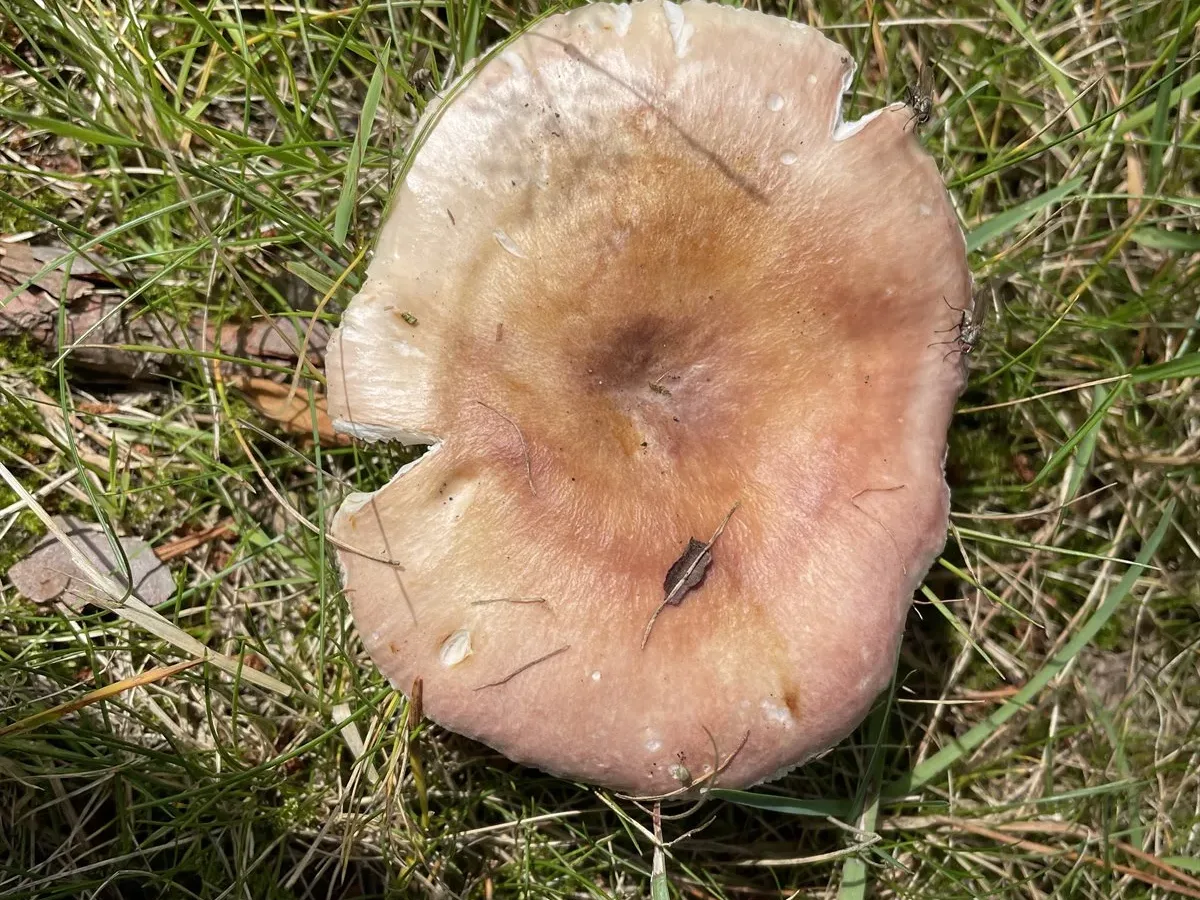
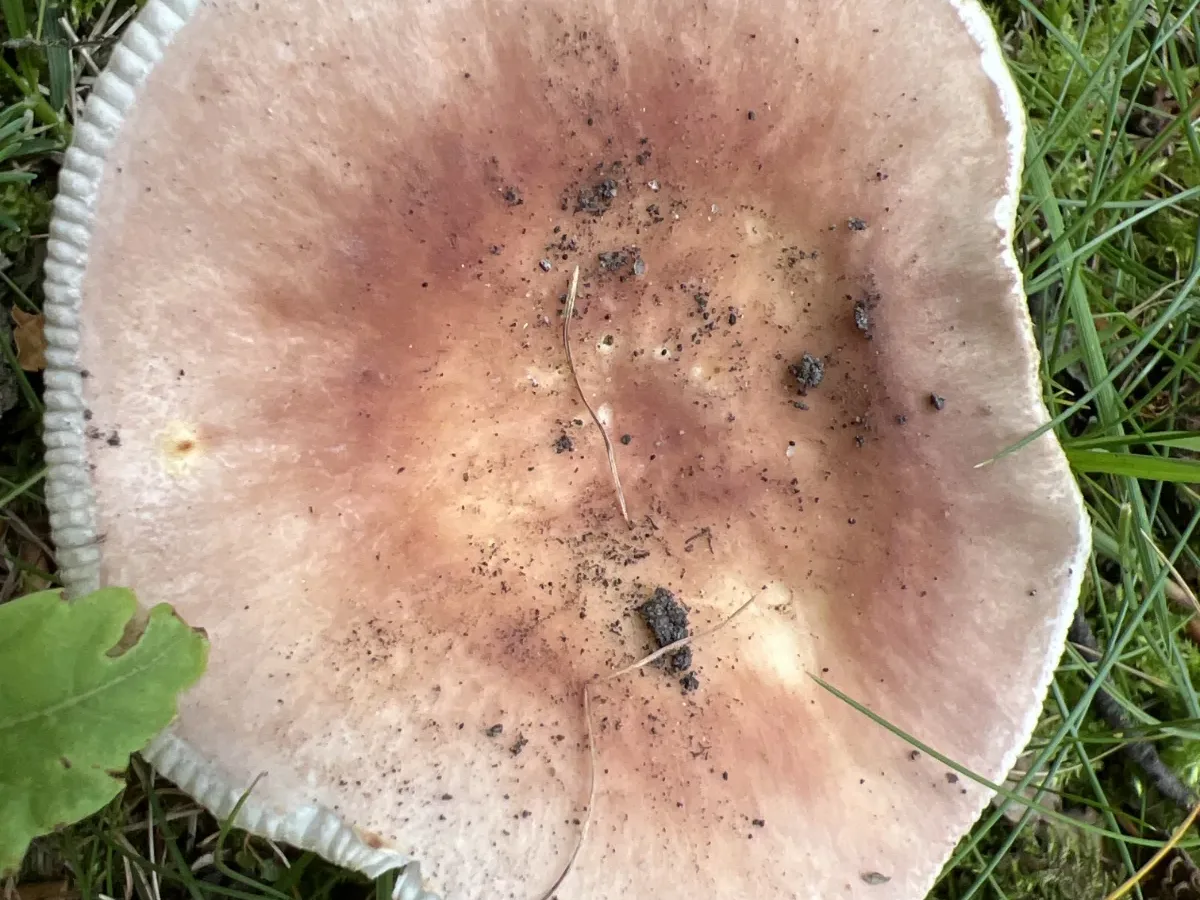
The cap, 5-10 cm across, starts hemispherical and expands to flat or slightly depressed. Its colour is muted and inconstant - dull wine-red, flesh-brown, ochre-buff or pinkish-tan, usually paler and more ochraceous toward the centre and often patchily faded (the shade is classically described as 'old ham').
The skin is matte, becoming a little greasy in wet weather and frequently finely wrinkled.
The single most useful diagnostic is that the cuticle is slightly too short for the cap: as the mushroom matures the skin pulls back from the rim, exposing a narrow (about 1 mm) band of white flesh and the white tips of the outermost gills, giving a finely toothed or beaded margin. This 'bare-toothed' look earned the English names The Flirt and Bare-toothed Russula.
Gills
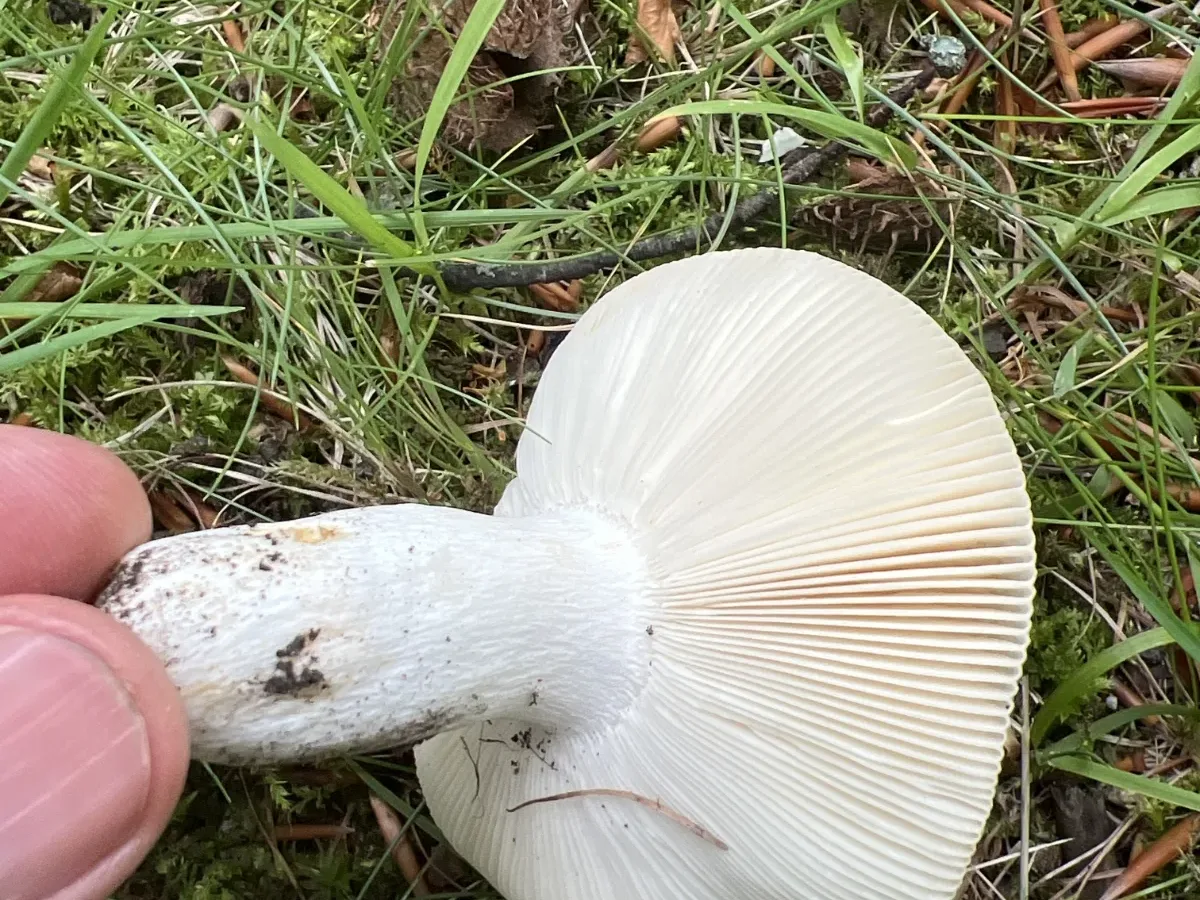
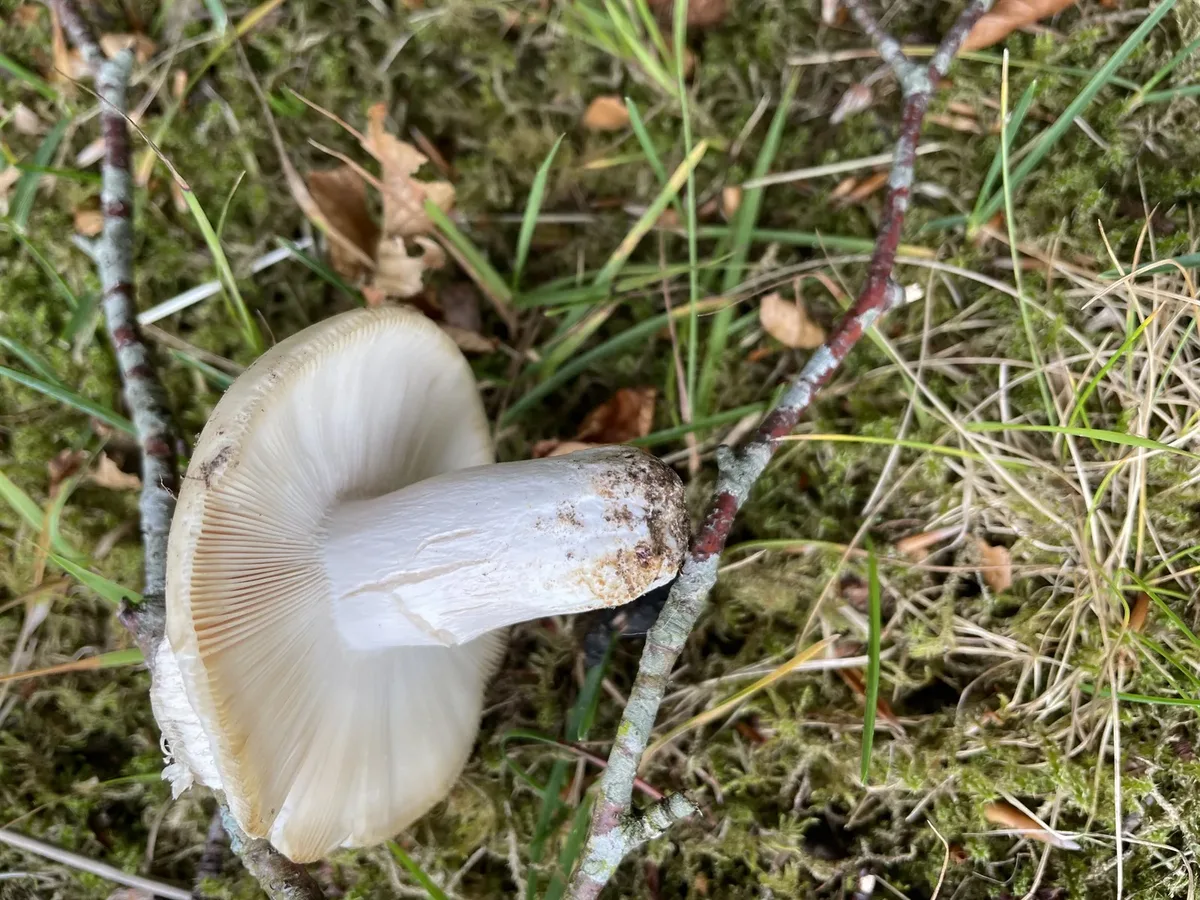
Gills are white to cream, crowded, fairly narrow and sometimes forked near the stem, often acquiring rusty spots with age.
Spore print is white to very pale cream.
Stem
The white stem is short, firm and cylindrical, commonly tapering to a somewhat pointed base and browning toward the foot in older specimens.
Flesh
The flesh is white and notably hard and compact for a Russula.
Where & when it grows
Habitat
Russula vesca lives as a mycorrhizal partner of broadleaved trees - above all oak and beech, but also birch, hazel, sweet chestnut and lime - and occasionally turns up under conifers in mixed stands.
Like all mycorrhizal fungi, it exists mostly as an unseen network of threads woven through the root tips of its host trees, exchanging minerals for sugars in a partnership that may persist for many years before a fruitbody ever appears above ground.
It favours well-drained, slightly acid to neutral soils and is common across temperate Europe, often found on woodland banks, beside paths and in grassy clearings within established woods.
It is one of the most frequently encountered Russulas, reliably present wherever its tree partners grow.
When
Russula vesca is an early starter, with fruitbodies often appearing from early to mid summer (June) after warm, humid weather.
The main season runs from late July through September, and in mild seasons it can persist into October.
Because it fruits earlier than most edible Russulas, it is often the first good brittlegill a forager finds.
How it grows
Fruitbodies appear singly, scattered or in small loose groups on the woodland floor, pushing up within days of warm summer rains. It is often among the first Russulas to break through the leaf litter as the season turns.
The flesh is unusually firm and dense, so caps hold their shape well and can be found in good condition well after emergence.
That said, this species is very attractive to insect larvae, and older specimens are frequently riddled with maggot tunnels in the stem and cap flesh. Checking for infestation early is worthwhile.
Fruiting conditions
Fruits after sustained warm, humid weather in summer; among the earliest Russulas, responding to warm-season rains with relatively short flush lag in established broadleaf woods.
Look-alikes
Russula vesca can be confused with several other broad-capped Russulas.
- Russula heterophylla is similar in stature but green-tinged and lacks the retracted toothed margin.
- Mild brown-capped species such as Russula mustelina (under conifers) and the variable R. cyanoxantha (with greasy, flexible gills) are also edible and not dangerous.
More importantly, the wider genus Russula includes pungently acrid, gastric-upsetting species (e.g. R. emetica and relatives) which announce themselves with a fiercely hot taste - any acrid Russula should be rejected.
No European Russula is known to be deadly, but the genus is not entirely without lethal members: the East-Asian R. subnigricans causes fatal rhabdomyolysis, so the 'all Russulas are at worst a stomach upset' rule applies to Europe only and not worldwide.
In all regions, novices sometimes confuse young firm-fleshed brittlegills at a glance with other white-spored, white-gilled woodland mushrooms (including the deadly Amanita species), so the genus must be confirmed before relying on species-level features.
Deadly. Although unrelated, beginners must not confuse white-gilled mushrooms. The death cap has a stem RING, a sac-like VOLVA at the swollen base, a greenish smooth cap and tough (not brittle) flesh. Russula has no ring and no volva, brittle crumbly flesh and gills, and a tapering base. Always check the stem base.
Deadly. Pure white with a stem ring and a bag-like volva at the base, flesh fibrous not brittle. Russula vesca has white-to-tinted caps, no ring, no volva, and characteristic crumbly flesh - never harvest any white mushroom with a basal sac.
Edible; cap mottled lilac, grey, green and purple, and crucially its gills are soft, greasy and flexible (they do not shatter like a typical Russula). R. vesca has brittle gills and the toothed cap rim.
Edible; cap usually green-tinged to olive-brown, gills very crowded and somewhat forked, and it lacks the retracted, white-toothed cap margin characteristic of R. vesca. FeSO4 reaction on stem is also salmon but the colour and habitat differ.
Inedible/mildly toxic (causes vomiting and diarrhoea if eaten); bright scarlet cap, white stem, and a fiercely ACRID, hot, peppery taste. R. vesca is always mild and nutty - reject any Russula with a peppery or burning taste.
In the kitchen
Picking & cleaning
Pick young to middle-aged, firm specimens; lift or twist the whole fruitbody so you can check the stem base and the spore-bearing surface.
Russulas have brittle, crumbly flesh and gills (the gills shatter rather than bend), which is itself a useful confirmation of the genus.
Slice the stem lengthways at collection to reject insect-damaged finds, which are extremely common in this species.
Confirm:
- the white toothed cap margin
- the firm white flesh
- the white-to-cream gills
- a mild, nutty taste of a tiny chewed-and-spat fragment
Cooking
A good edible, prized in many regions for its firm texture and pleasant, faintly nutty flavour, which intensifies on cooking. The species name 'vesca' is Latin for 'edible'.
The flesh holds together well when fried or sautéed and is excellent in mixed-mushroom dishes, omelettes, sauces and soups.
There is no need to peel the cap, though the skin is easily removed if preferred. Discard tough or insect-eaten stem bases.
As with all Russulas it should be cooked, not eaten raw, and is best used young and firm before the flesh becomes soft or maggoty.
Good to know
The crucial safety rule with any brittlegill is to confirm you have a Russula (or Lactarius) before applying the mild-taste test, and never to eat any white-gilled mushroom whose identity is not certain.
The taste test (chew a small piece briefly, then spit it all out) reliably separates the mild, edible R. vesca from acrid, gastric-upsetting Russulas. But it must only be done once the genus is sure - brittle, crumbly white flesh and gills are key genus indicators.
Critically, beginners must learn to distinguish brittlegills from the white-gilled, white-spored deadly Amanita species (death cap and destroying angels), which have a ring on the stem and a sac-like volva at the swollen base - features Russula never has.
The 'no deadly Russula' reassurance holds for European species only: the Asian R. subnigricans is genuinely lethal, so identification must always be to species, not merely to genus.
As with all wild mushrooms:
- eat only a small portion when trying it for the first time
- cook thoroughly
- avoid maggot-infested specimens
A reference guide - never an edibility guarantee. When in doubt, leave it out.