Old man russula
Russula senecissyn. Russula senecis Imai, Russula olivobrunnea T. Bau & Y.J. Hao
 © Min-Hsuan NI (CC BY)
 © Atsushi Nakajima (CC BY)
 © Atsushi Nakajima (CC BY)
 © Atsushi Nakajima (CC BY)
 © Atsushi Nakajima (CC BY)
 © Min-Hsuan NI (CC BY)© Min-Hsuan NI (CC BY)© Atsushi Nakajima (CC BY)
Edible only with the right preparation - or safe for some people but not others. Learn the caveats first.
Never eat a mushroom you are not 100% sure of - check the look-alikes below, and always cook wild mushrooms.
How to recognise it
Russula senecis is a medium-sized, earthy-coloured russula.
Cap
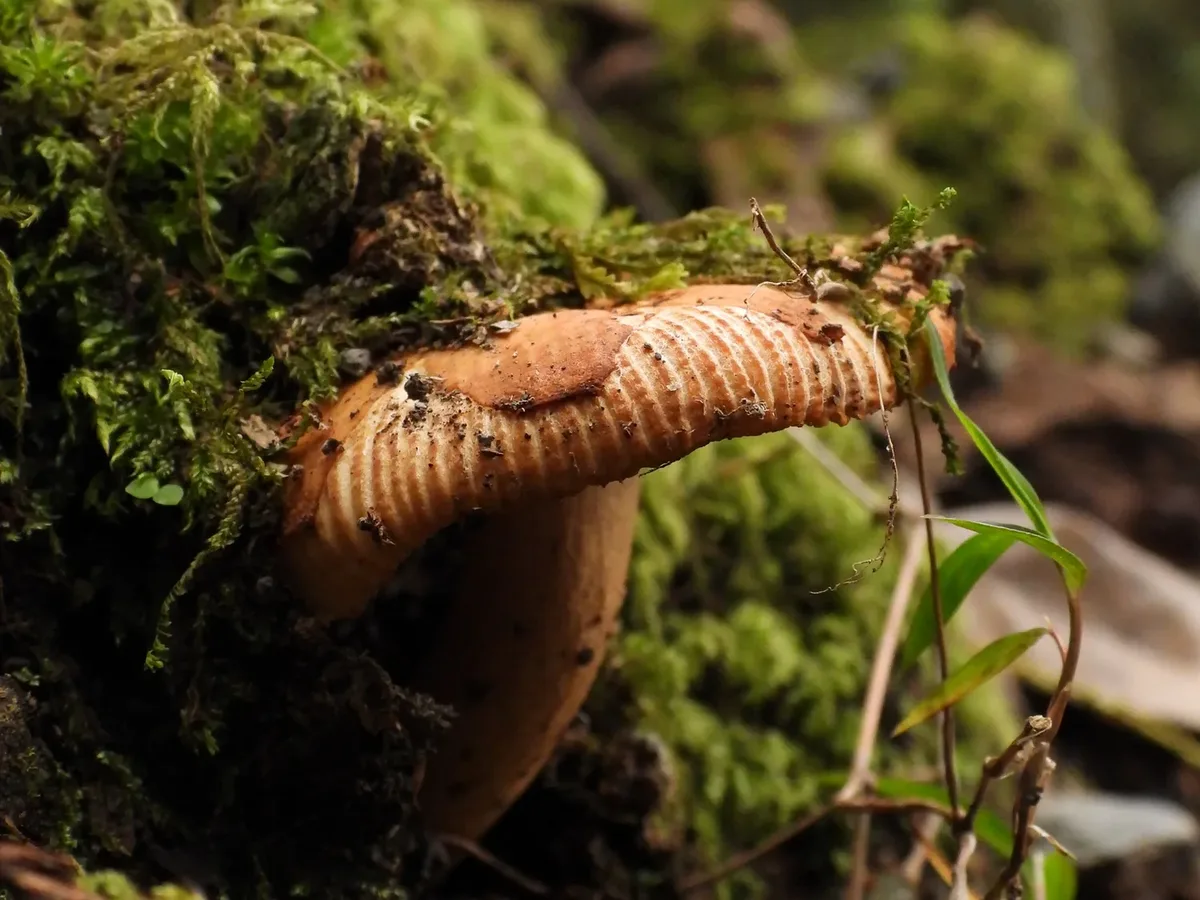
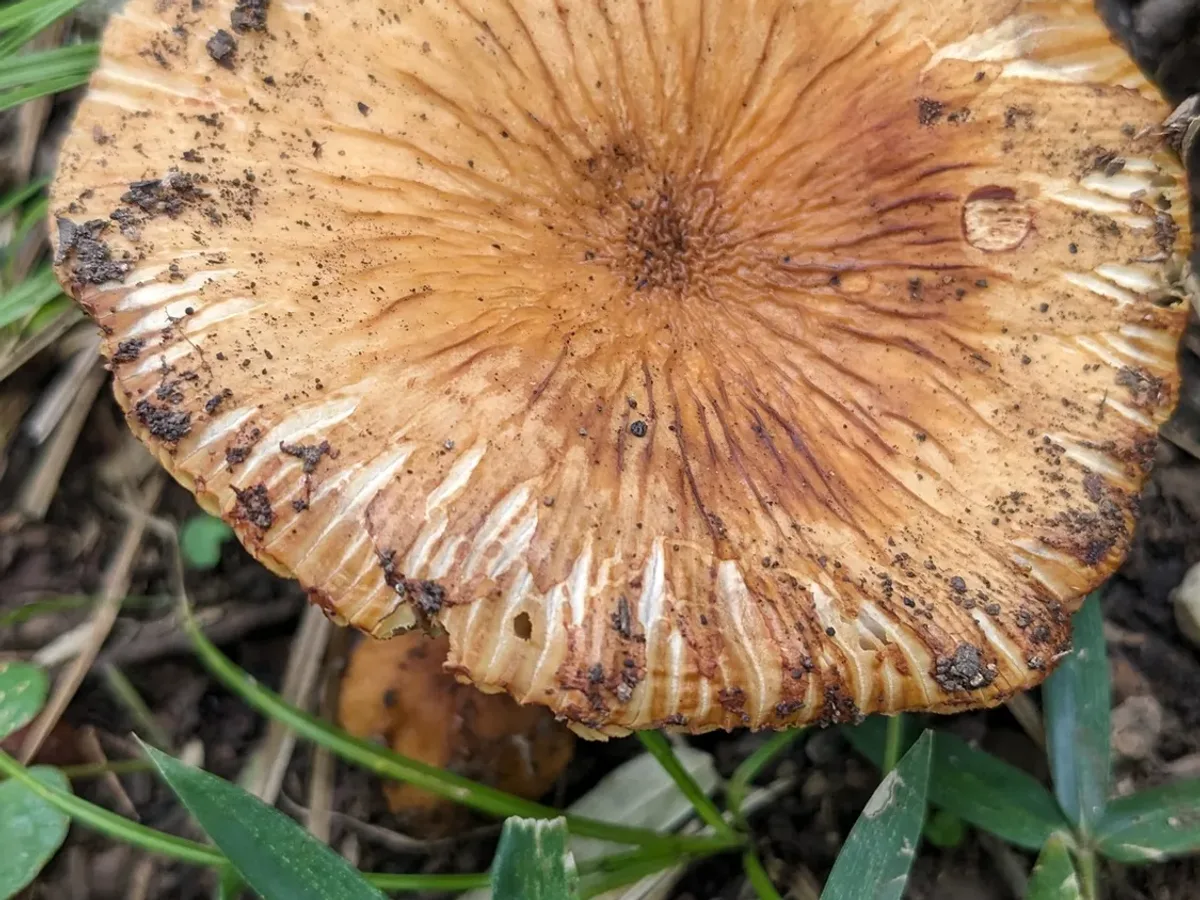
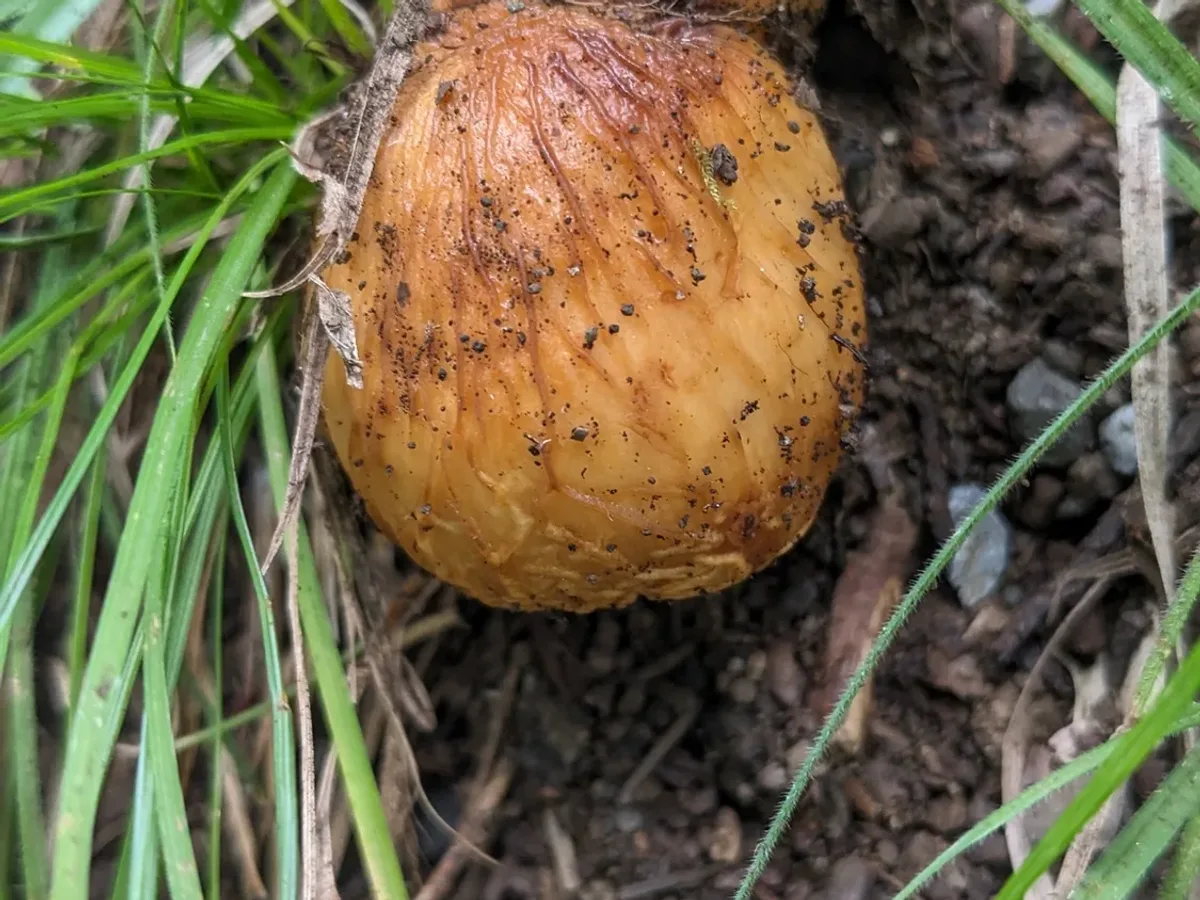
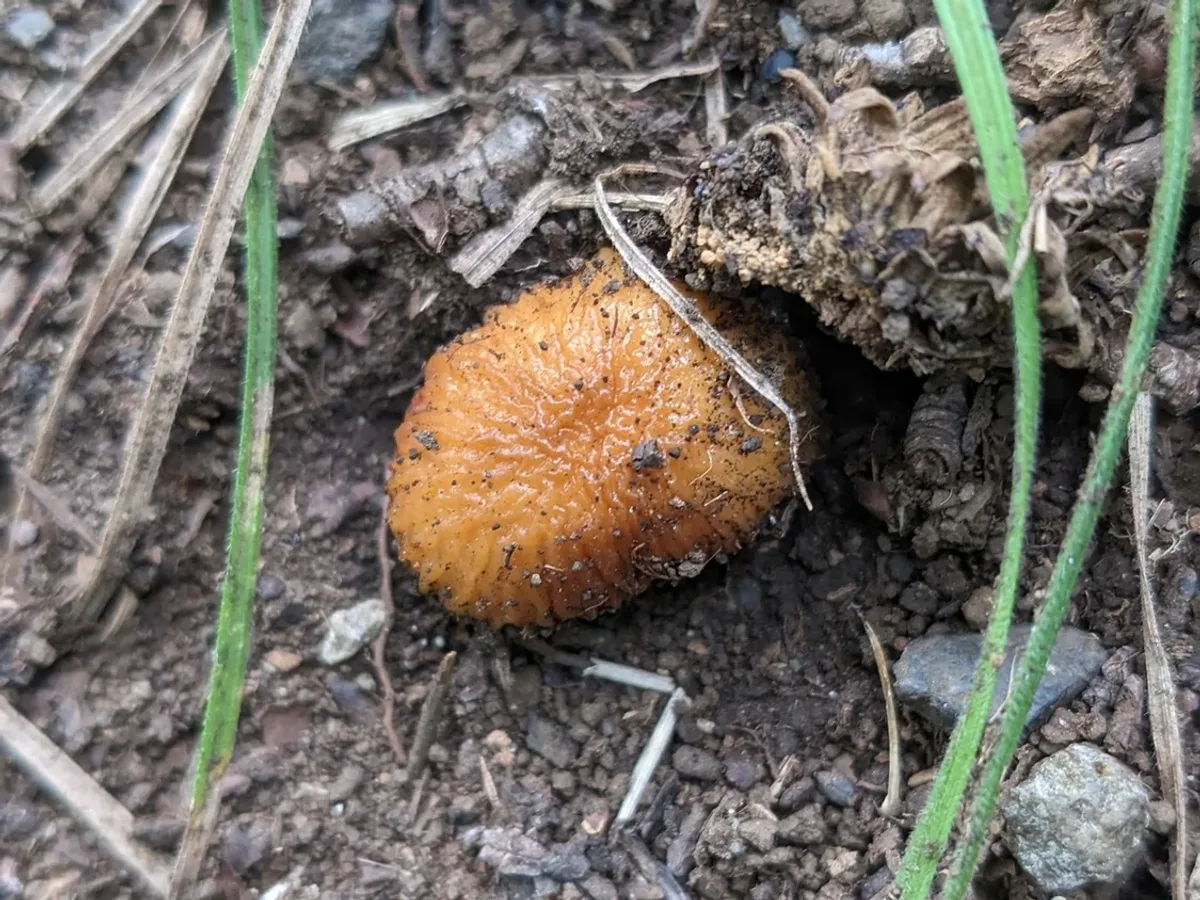
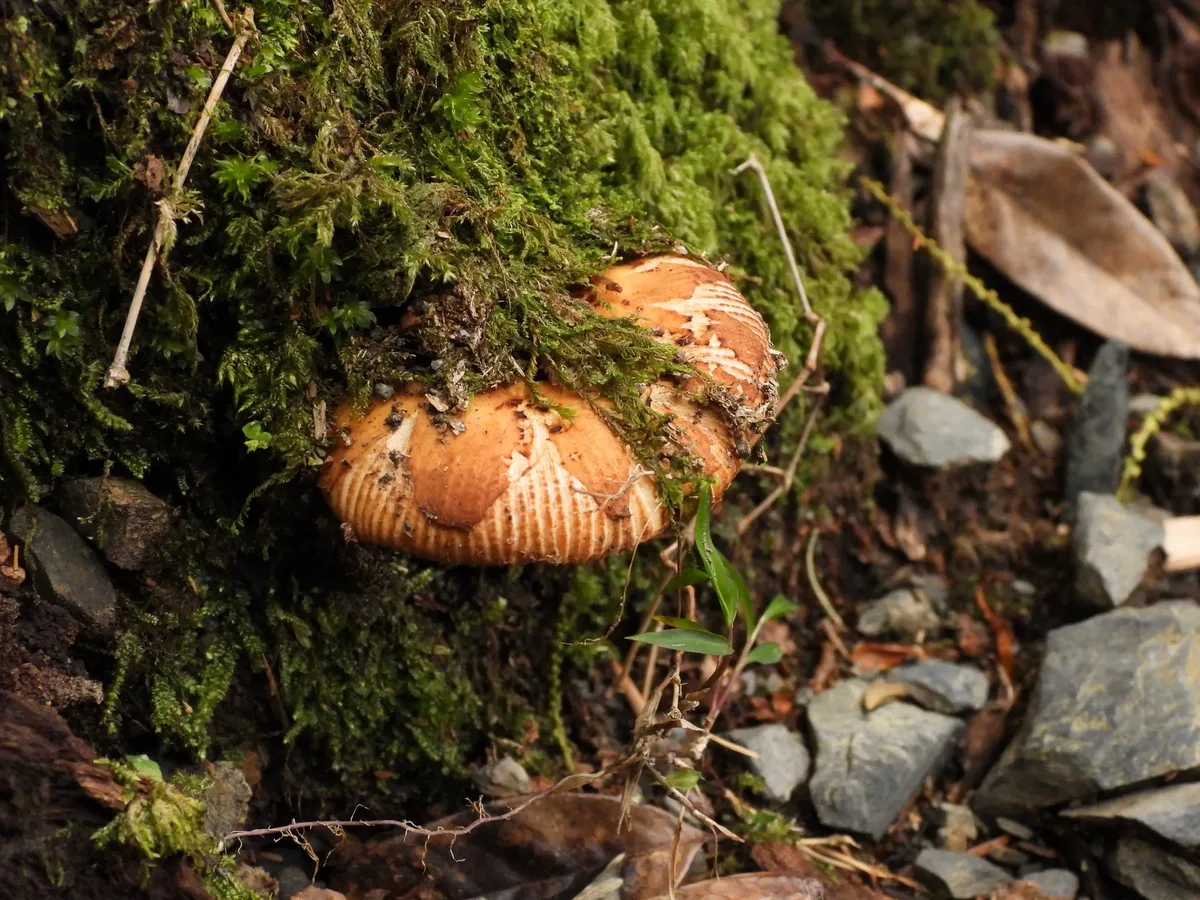
The cap surface is quite unlike most of its genus: dry and granular to powdery, it cracks radially with age into a rough, almost corky texture that gives older caps a distinctly weathered look. Most russulas have smooth, slightly greasy caps; this one looks and feels more like old bark.
The cap is 4-10 cm across, tawny ochre to honey-brown or olive-brown, typically darker at the centre. The margin becomes grooved and striate in old specimens - the 'senecis' epithet (Latin: of an old person) fits.
Gills
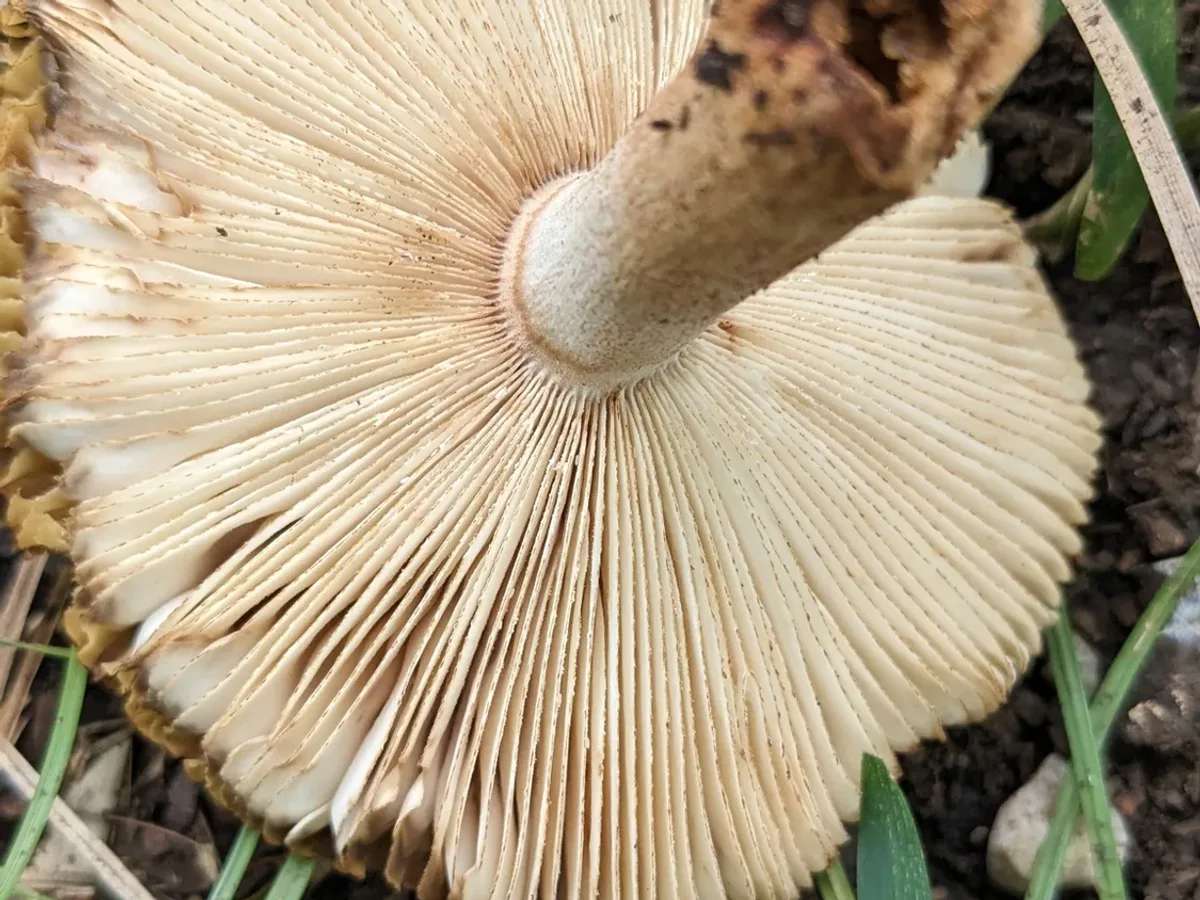
The gills start cream and fade to ochraceous-brown; like all russulas they are brittle and chalky rather than flexible.
Stem
The stem begins white but stains dull yellowish-brown from the base upward as it ages. There is no ring and no volva - the absence of those structures is crucial for separating any russula from potentially deadly Amanita species.
Flesh
Flesh is white, staining yellowish-brown on cutting.
Smell & taste
The taste is sharply acrid and peppery, and the smell is moderately unpleasant.
Why it's dangerous
Not acutely lethal, but the gastrointestinal reaction can be significant, particularly in children or individuals with pre-existing GI conditions.
The greater danger lies in its forest context: the same habitat harbours deadly amatoxin-containing Amanita species, and any confusion at the identification stage carries extreme risk.
Always identify with full rigour before consumption of any species in these forests.
Toxin
The acrid-tasting compounds in peppery russulas are primarily sesquiterpene derivatives (such as velutinal ester compounds) that act as chemical deterrents and irritants.
These are gastrointestinal irritants producing nausea, vomiting, and abdominal cramping when consumed in any quantity.
They are not amatoxins or orellanin - they do not cause the delayed organ failure seen with deadly Amanita or Cortinarius poisonings.
Symptoms
Burning and irritation of the mouth, lips and throat upon chewing (the acrid taste itself is a physiological warning).
If swallowed in quantity: nausea, vomiting, abdominal pain and diarrhoea, typically beginning within 30 minutes to 2 hours of ingestion and resolving within 12-24 hours with supportive care.
Not life-threatening in normal exposure.
Staying safe
Russula senecis is inedible and should be treated as a mild gastrointestinal hazard. The strongly acrid, peppery taste is a direct warning: it reflects the presence of sesquiterpene or related compounds that irritate mucous membranes and the gastrointestinal tract.
Consuming it raw causes burning in the mouth and throat. Cooking partially degrades these compounds in some acrid Russula species but does not eliminate the risk in this case and is not reliably protective.
The primary safety message for any forager in subtropical Asian forests is: confirm the absence of a volva and ring before eating any white- or pale-stemmed, white-gilled mushroom.
The deadly Amanita exitialis and related white-spored amatoxin-containing species occur in the same habitats, and their amatoxins cause delayed, severe and often fatal liver and kidney failure with no early warning symptoms.
The mild taste of such species will NOT alert you - do not rely on taste tests for safety.
Russula senecis itself has the strong acrid taste that makes accidental large consumption unlikely, but it is best left in the field.
Where & when it grows
Habitat
Found in warm, humid subtropical and tropical woodland across East and Southeast Asia:
- mixed dipterocarp forest
- humid oak and chinquapin forest
- monsoon broadleaf woodland
Like all russulas it is ectomycorrhizal - its underground mycelium threads through the fine roots of living host trees in a partnership that may persist for decades, trading mineral nutrients for the tree's sugars.
Always look for it near large oak, stone oak, chinquapin, or dipterocarp trees rather than on dead wood.
It favours the deep, humid leaf litter of older, structurally diverse forest, and is less common in plantations. Older, undisturbed forest stands are often the best places to look.
When
Fruiting is driven by the summer monsoon.
Fruit bodies appear from June onward once heavy seasonal rains have warmed and soaked the soil - soil temperature above about 22-25 degrees C at 5 cm depth seems to be a key trigger.
A flush typically emerges 4-8 days after a soaking rain of 25 mm or more, provided temperatures remain warm and humidity stays high.
Peak fruiting falls in July and August across most of the range, when monsoon conditions are most sustained. Fruiting tapers off as the monsoon recedes, though scattered individuals can appear through October.
How it grows
Fruits singly or in small, loosely scattered groups directly from humus-rich forest soil, never from wood. It does not grow in dense clusters.
As a mycorrhizal species, each fruit body is connected underground to a living host tree, and the same individual mycelium may push up several fruit bodies in the same spot across multiple years.
Fruiting conditions
Monsoon-driven flush species; requires warm, humid soils (above 20 degrees C) and heavy seasonal rainfall. Fruiting is strongly tied to the summer monsoon; flushes emerge 4-8 days after soaking rain events of 25+ mm under continued warm and humid conditions.
Look-alikes
The greatest danger in the field is not confusion between russula species but misidentifying any pale or brownish-capped Amanita as a russula.
Several deadly or seriously toxic Amanitas occur in the same subtropical Asian forests, including Amanita exitialis (destroying angel of South China) and Amanita phalloides (death cap, recorded in parts of East Asia).
All Amanitas can be separated from russulas by the presence of at least one of:
- a ring (skirt) on the stem
- a volva (membranous sac or girdling ring around the bulbous stem base)
- free (not attached) gills
- fibrous, non-chalky flesh
Russula senecis has attached, brittle gills, chalky flesh, no ring, and no volva.
Within the genus, Russula japonica is another brownish, acrid russula of Japanese-East Asian forests that can look similar; it is also inedible.
If in doubt about any brownish-capped woodland mushroom, do not eat it.
Has been recorded in East Asian temperate forests including Japan and China and is one of the most lethal fungi known. Young fruit bodies in the egg stage can be pale and rounded; mature caps are olive-green to yellowish-green but can be paler. It always has a membranous sac-like volva at the base and a ring on the stem; its gills are free and white; its flesh is fibrous and non-brittle. R. senecis is a russula and has none of these structures. The death cap's mild taste means a taste test is completely unreliable as a safety check.
A deadly amatoxin-containing Amanita described from Guangdong, China and one of the most dangerous fungi in Southeast Asia. It has a white to pale cap that can show subtle grey or brownish tones, white gills that are free from the stem, a ring on the stem, and a membranous volva (sac) enclosing the bulbous base. Russula senecis has NO ring, NO volva, attached brittle gills, and chalky flesh that snaps rather than tearing. Always dig up the whole stem and check the base before any identification in South Chinese or Southeast Asian forest.
Has a similar pale brown to brownish cap but is separated by its thick, widely spaced gills and flesh that turns red then black where cut or bruised - a reaction that does not occur in R. senecis. Also inedible due to acrid taste.
Another acrid, brownish-yellow russula of East Asian oak and chinquapin forest. It is also inedible due to its strongly peppery taste. R. japonica tends toward a more uniformly yellowish-ochre cap that is less prone to cracking and granularity than R. senecis, but the two can be difficult to separate in the field. Both are inedible and the practical outcome is the same: leave them both.
A reference guide - never an edibility guarantee. When in doubt, leave it out.