Primrose Brittlegill
Russula sardoniasyn. Russula drimeia Cooke, Russula torulosa auct. p.p., Russula sardonia var. sardonia, Agaricus sardonius With.
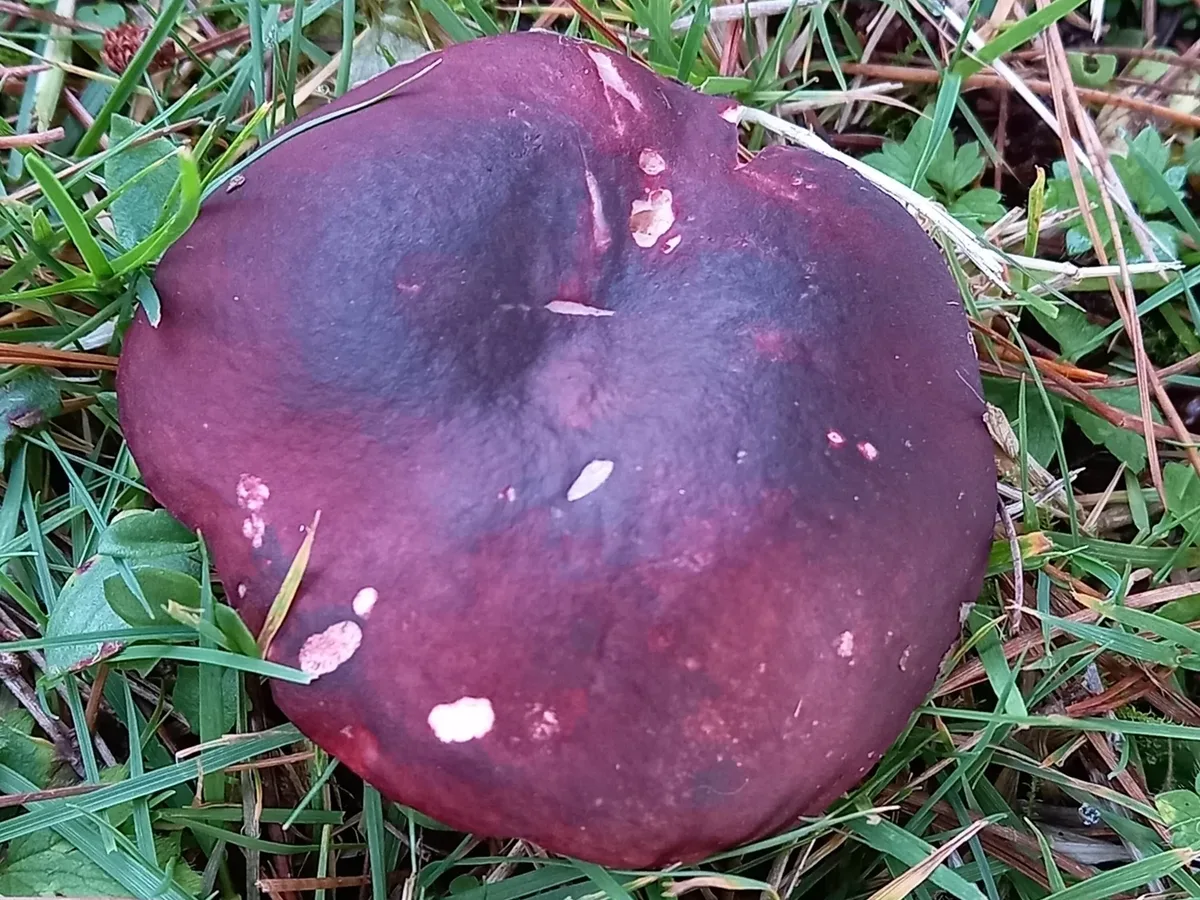 © Rafael Ancatrio (CC BY)
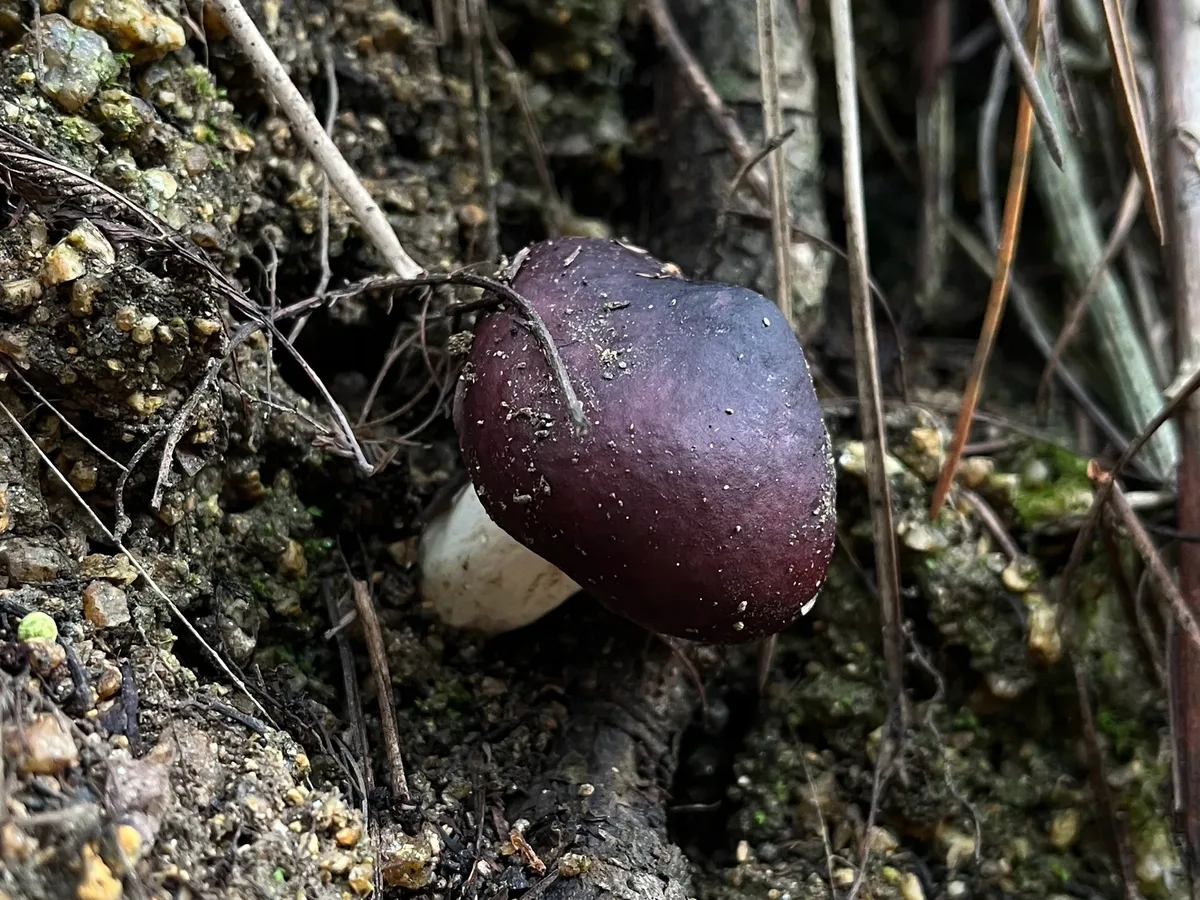 © Cristian Riquelme (CC BY)
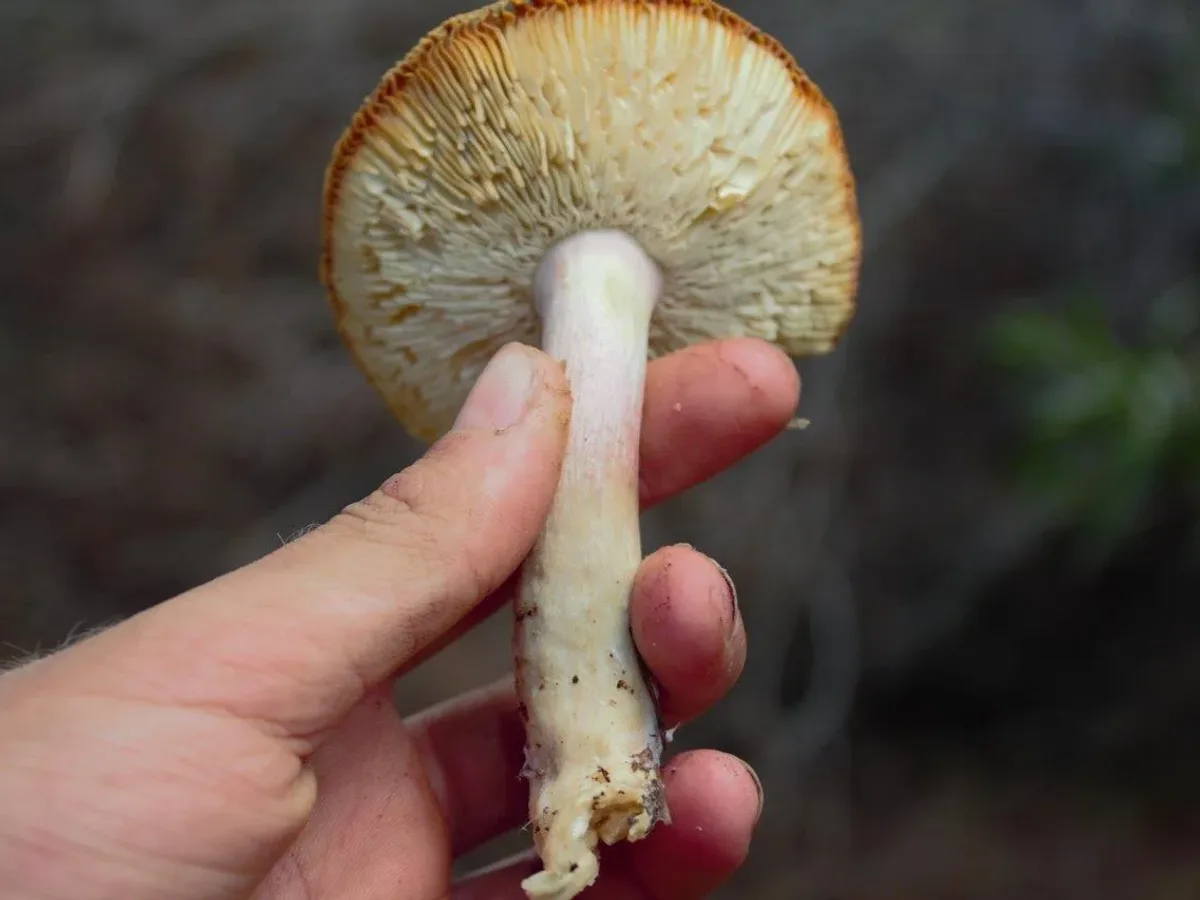 Jean-Max Van Pul (CC0)
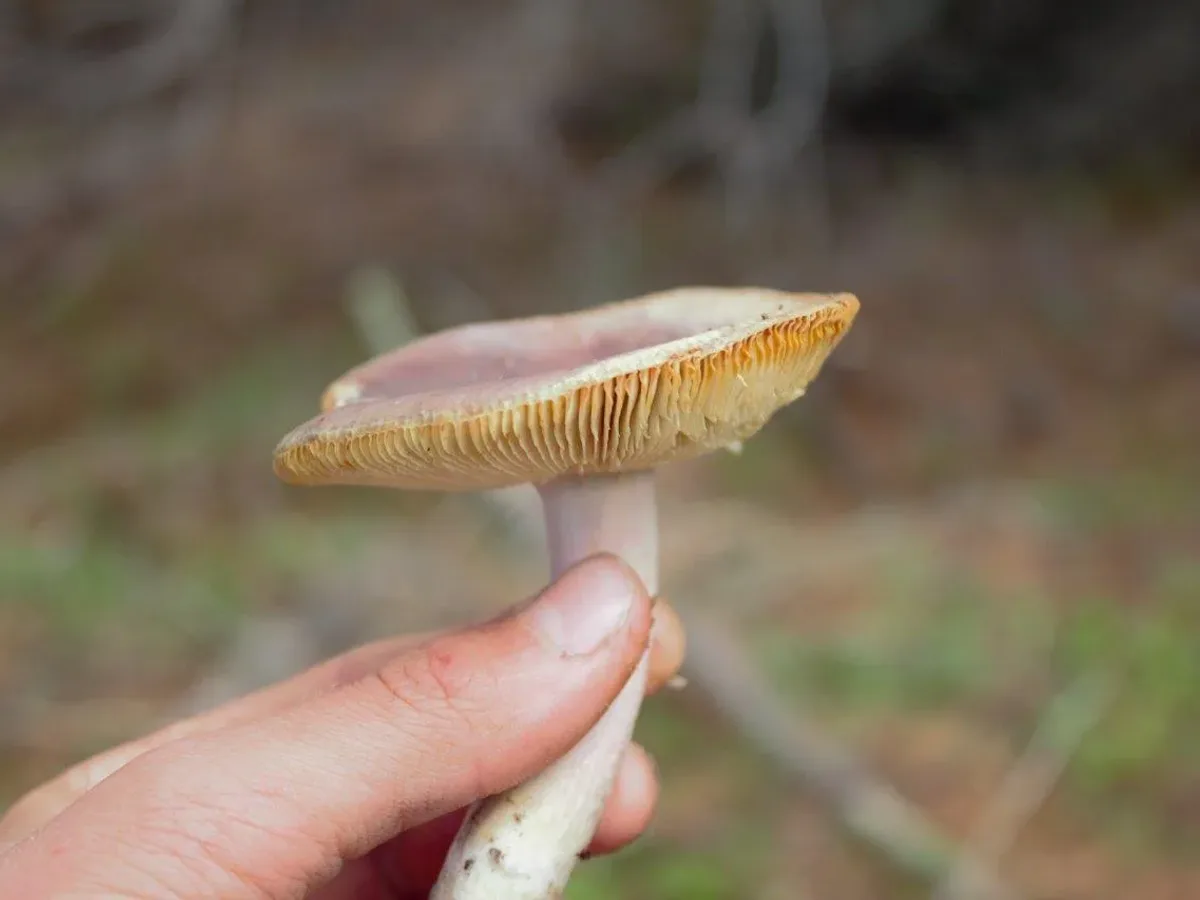 Jean-Max Van Pul (CC0)
 © Cristian Riquelme (CC BY)
 © Nicola van Berkel (CC BY-SA)
 © Nicola van Berkel (CC BY-SA)
 Julia Ariadna (CC0)
 Julia Ariadna (CC0)
 © Rafael Ancatrio (CC BY)© Rafael Ancatrio (CC BY)© Cristian Riquelme (CC BY)
Edible only with the right preparation - or safe for some people but not others. Learn the caveats first.
How to recognise it
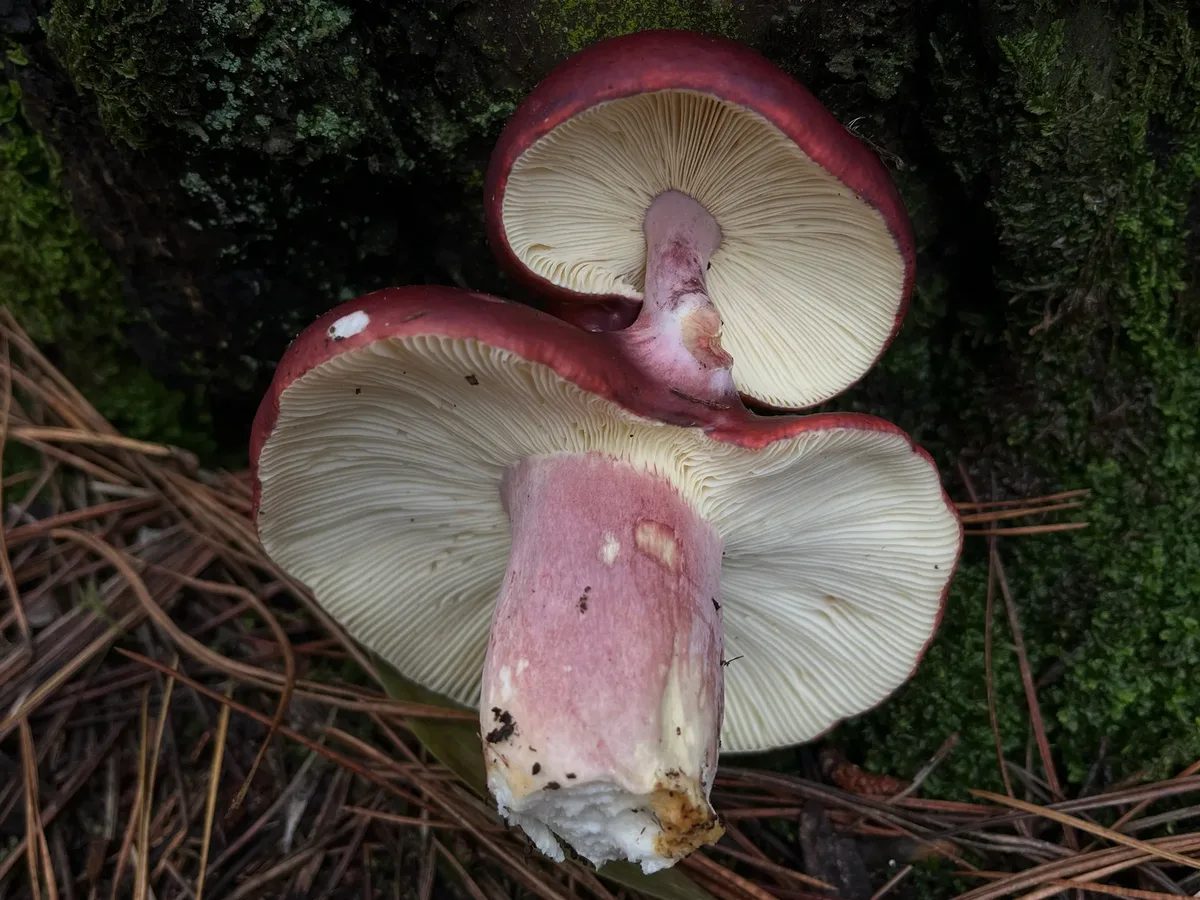
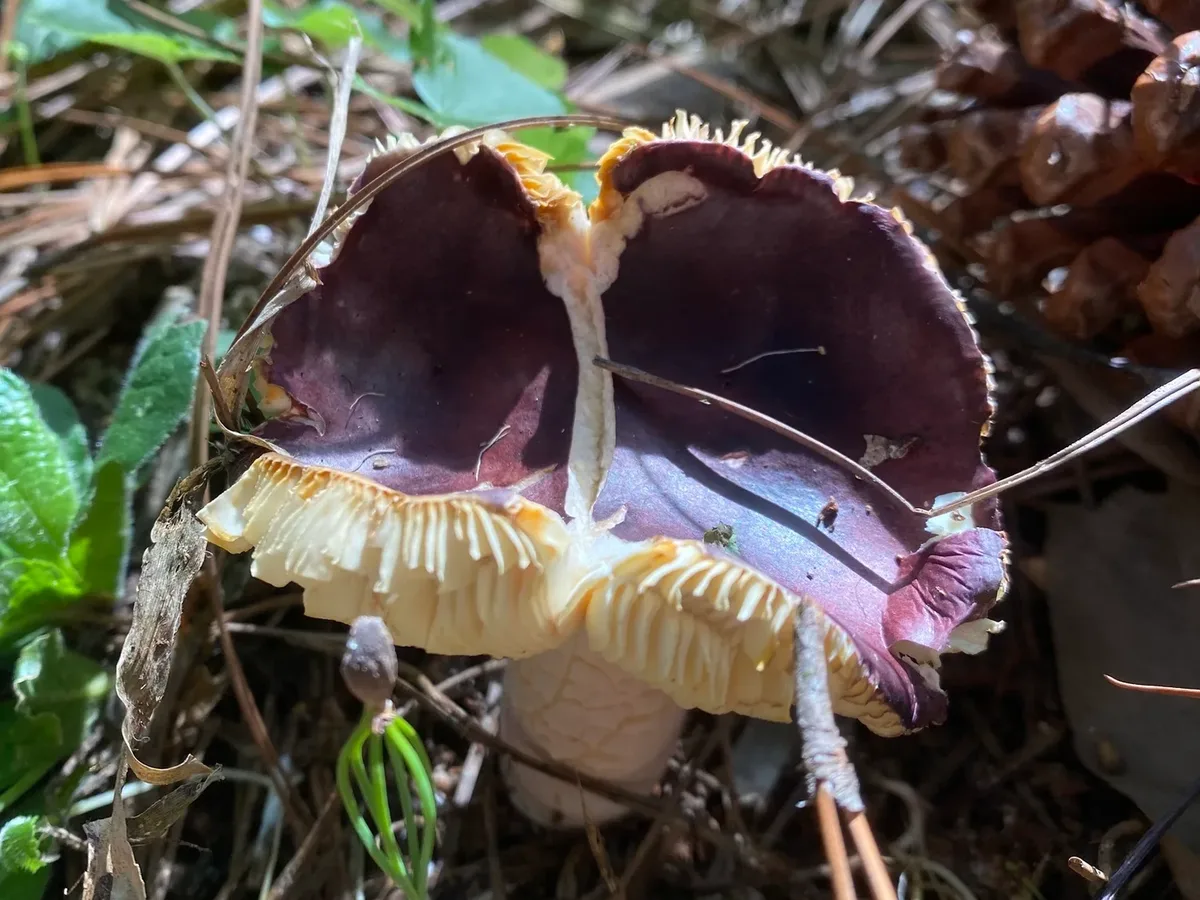
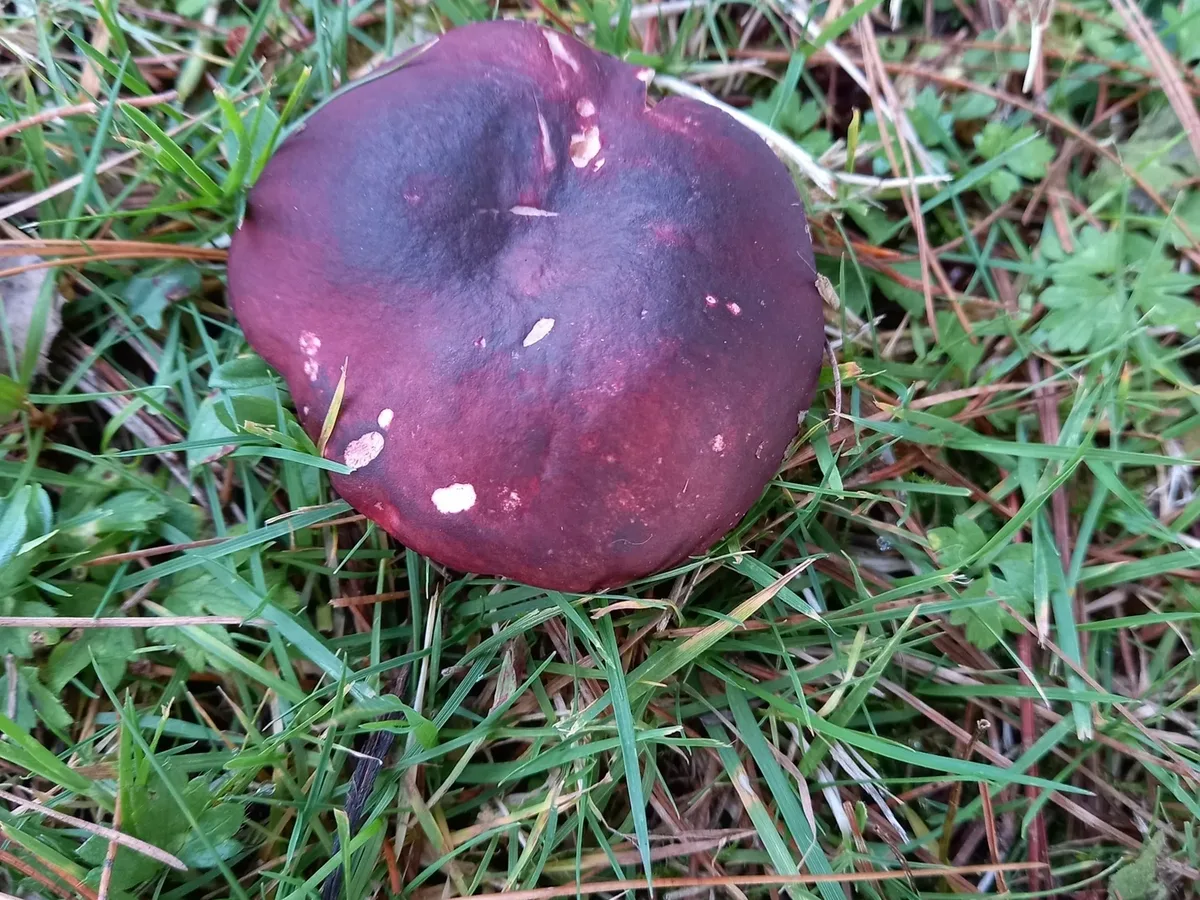
The Primrose Brittlegill is a medium-sized conifer-ground mushroom whose colours shift in a way that initially seems to make it hard to pin down. Young caps are frequently a deep, almost purplish blood-red.
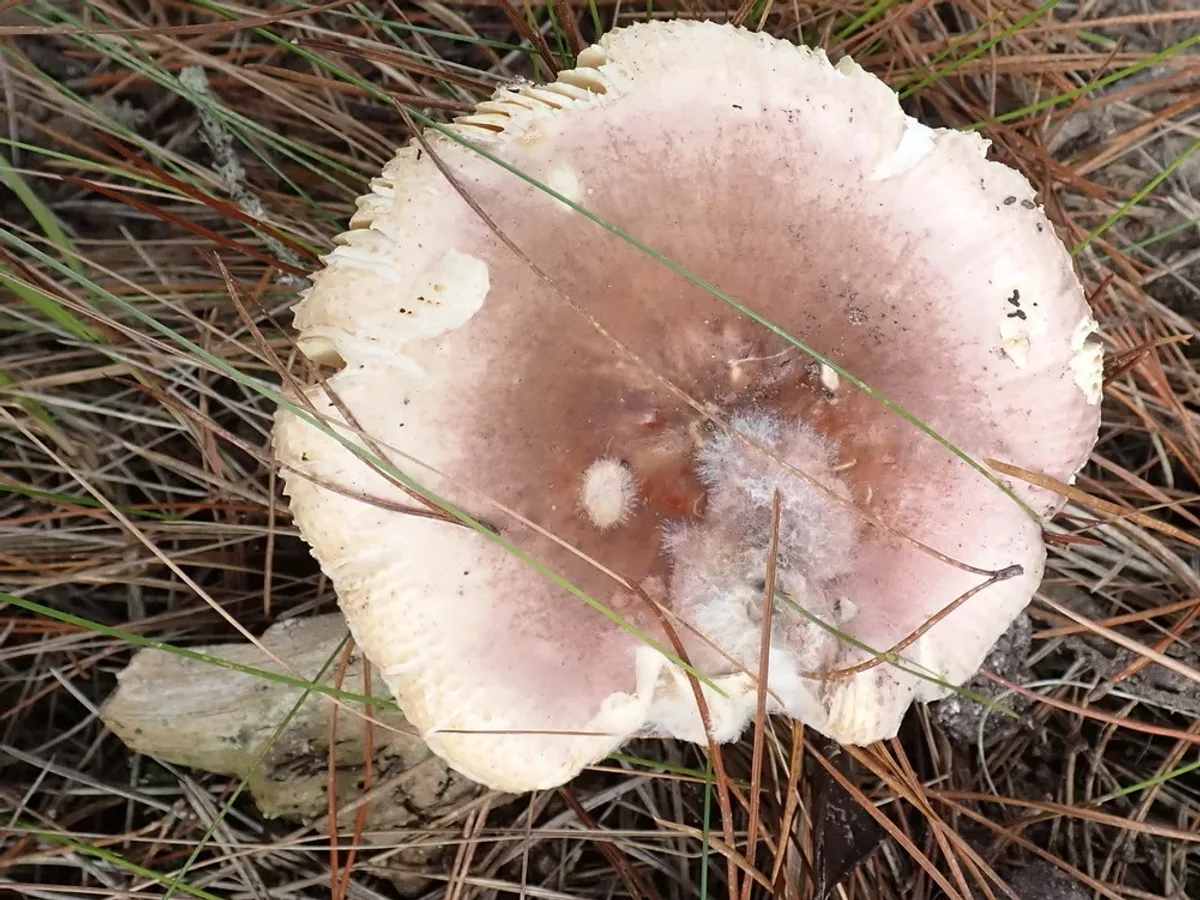
As they age, and as rain, sun and handling bleach or modify the pigments, the red often gives way to yellowish, straw or primrose tones - hence the English name. The key is to recognise this variability as part of the species' identity rather than a problem.
Three characters cut through the variation and should be checked together:
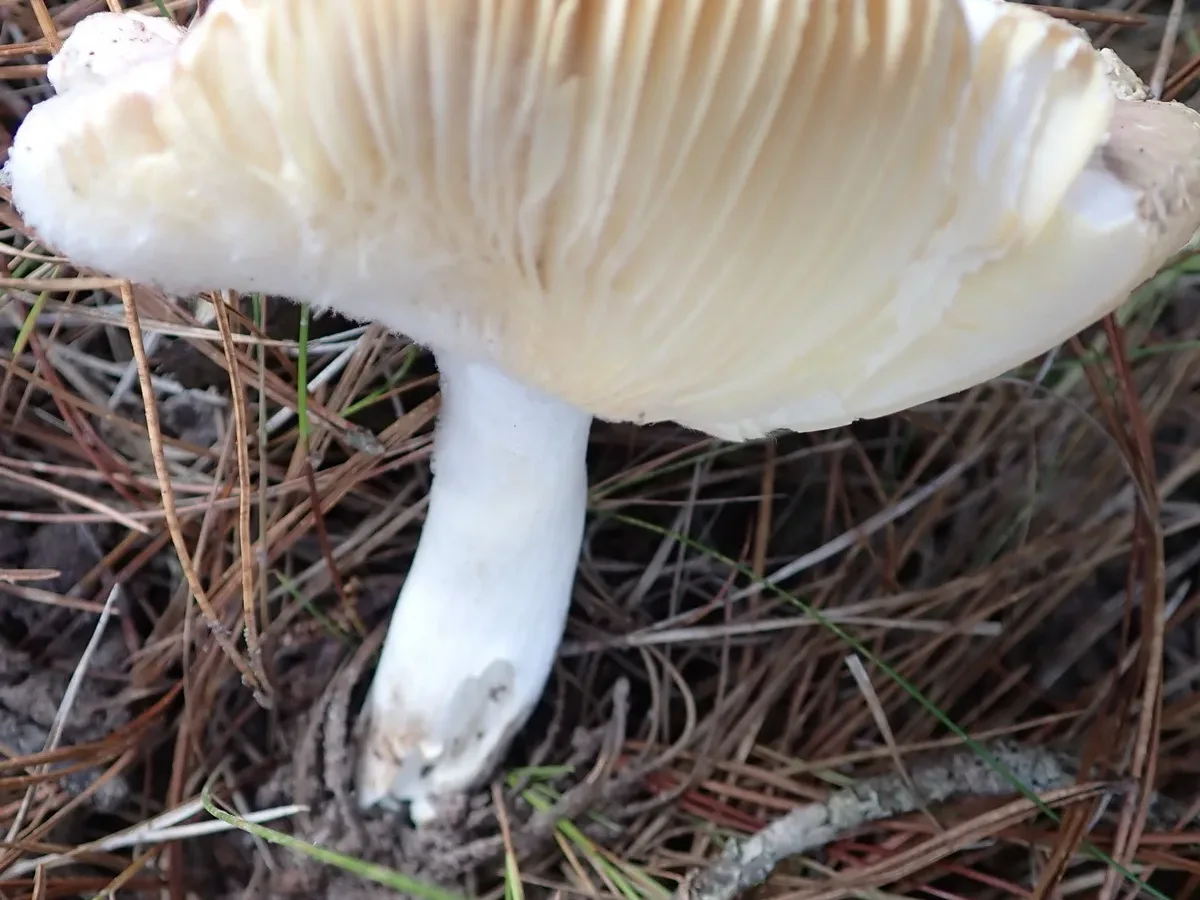
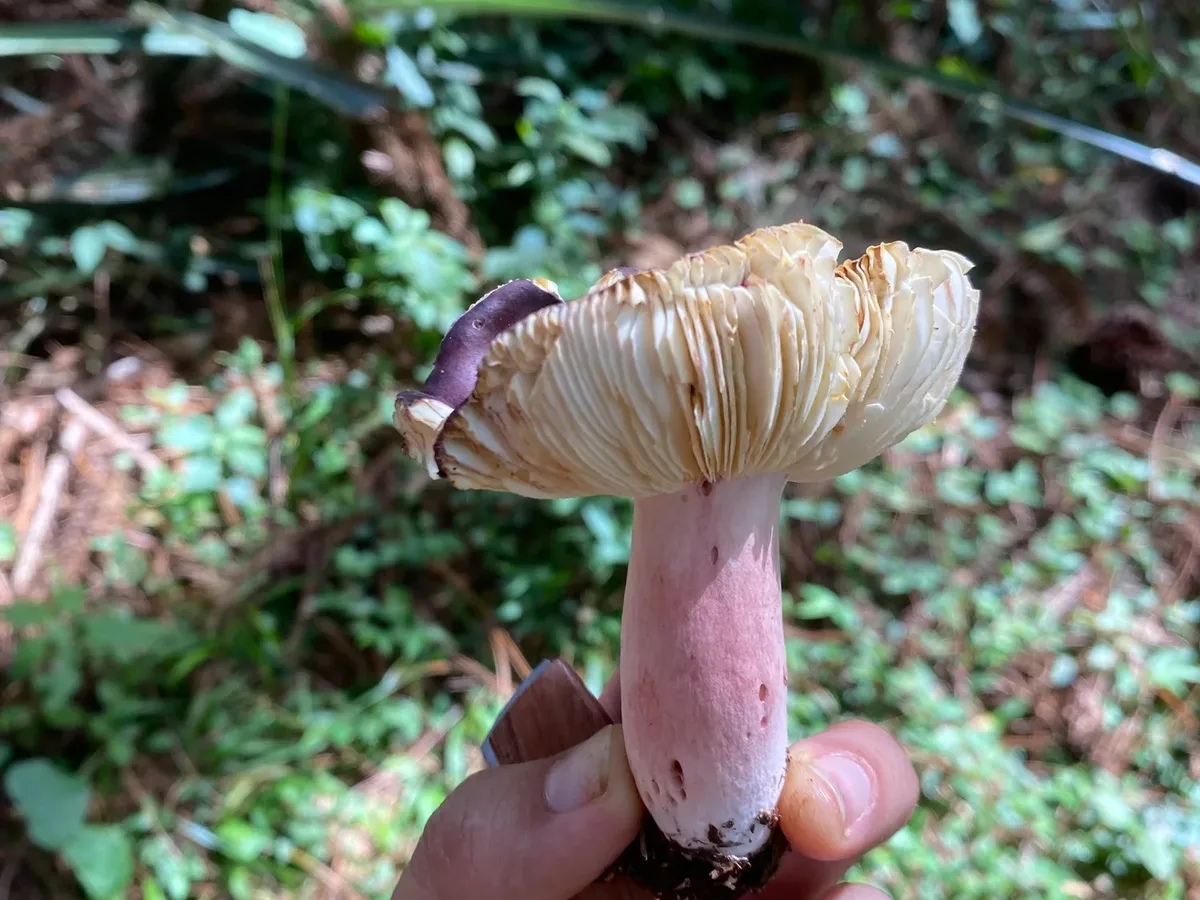
- 1The gills are pale yellow (primrose-yellow) to cream rather than the pure white seen in many red brittlegills, and they may be flushed with violet or lilac near the stem.
- 2The stem is frequently and conspicuously washed with violet-purple, most strongly at the base.
- 3The taste is searing and immediate.
A fourth, very reliable confirmatory test is the ammonia reaction: a small drop of dilute household ammonia placed on the gills or flesh gives a striking red to scarlet colour change that is diagnostic for R. sardonia within the acrid red brittlegill group.
The cap cuticle peels only to roughly one-third of the radius, which helps separate it from R. emetica, where peeling is nearly complete.
The spore print is pale cream to pale ochre-yellow, a faint but perceptible yellow tone.
Why it's dangerous
Recovery is the norm, usually within a few hours to a day.
The main practical risks are dehydration from severe vomiting and diarrhoea in those who have consumed a significant portion. Children, the elderly and individuals with underlying gastrointestinal conditions are more vulnerable.
Seek medical advice if symptoms are severe, prolonged or if there is any doubt about the identification. The acrid taste and brittlegill texture together make gross misidentification as a lethal species (such as Amanita phalloides, which is odourless and mild-tasting) extremely unlikely.
Toxin
The acrid burning compounds in R. sardonia are sesquiterpenoids - principally lactarorufin A and closely related furanoid sesquiterpenes - chemically analogous to the irritants in acrid Lactarius milkcaps.
These compounds act as direct gastrointestinal irritants rather than systemic toxins. They are partially heat-labile but are not reliably denatured by standard cooking times.
The violet pigments in the gills and stem are anthocyanin-like compounds unrelated to the toxicity.
Symptoms
Poisoning is gastrointestinal in character:
- nausea
- vomiting
- abdominal cramps
- watery diarrhoea
These typically begin within 30 minutes to 3 hours of ingestion, placing it in the early-onset (benign-outcome) category.
The intensity is related to the dose consumed. A small piece accidentally swallowed during a taste test will cause mild discomfort at worst, while a portion consumed in a meal can cause prolonged and debilitating vomiting.
Staying safe
Russula sardonia is poisonous, reliably producing gastrointestinal illness if eaten raw or inadequately cooked.
The searing acrid taste is a practical safety signal built into the mushroom itself - anyone who tastes a raw piece will not voluntarily swallow it. But this is not reliable protection for children, for people with reduced sensitivity, or in dishes where the bitterness is masked by strong flavours.
Some older European traditions (particularly from eastern Europe) describe detoxifying acrid brittlegills by prolonged boiling with repeated water changes or by aggressive salt-pickling. Modern mycological consensus is that these methods are unreliable for R. sardonia specifically, and the resulting food has no worthwhile culinary merit.
This encyclopedia does not endorse any preparation method that preserves a poisonous species as edible.
Importantly, R. sardonia has no deadly lookalikes: it will not be confused with an amatoxin-containing species by anyone applying standard brittlegill identification criteria (brittle chalk-snapping flesh, lack of ring and volva, ground habitat).
However, always identify wild mushrooms fully before any consumption decision.
Where & when it grows
Habitat
Russula sardonia is a conifer specialist, found almost exclusively on the ground beneath pines and spruces, growing from the ectomycorrhizal network woven among their roots.
Within the pine woodland setting it tolerates a range of soils but tends to prefer slightly drier and more mineral (less boggy or peaty) ground than the closely related Sickener (R. emetica), which favours wet Sphagnum hollows.
In central and western Europe, Scots pine woodland on sandy heaths and well-drained loam is the most productive habitat; in montane areas, mixed pine-spruce stands up to subalpine elevations are also productive.
The species avoids beech woodland, where the beechwood sickener (R. nobilis) takes over the same ecological role.
When
The season runs from mid-summer, once the first significant rainfall arrives after the warm June-July period, through to the end of autumn before hard frost kills the fruit bodies. Peak abundance falls between late August and early October across central Europe.
The triggers are the same as for most ectomycorrhizal forest mushrooms: meaningful rainfall (at least 20-30 mm over 10-14 days) combined with cooling soils, with a flush lag of roughly 5-10 days from rain to emergence.
In warm years with dry late summers the species may barely appear until late September; in cool, wet years it begins fruiting as early as late July.
How it grows
Fruit bodies appear singly or scattered on the forest floor beneath pines, usually emerging from mineral soil, leaf litter or needle duff.
They are ectomycorrhizal - growing from root associations rather than breaking down dead material - so they return to the same tree root systems year after year, and the same spots often fruit repeatedly across seasons. They never appear in clusters on wood.
Growth is typically rapid once triggered, with fruit bodies pushing up within 5-10 days of sufficient rain.
Fruiting conditions
Triggered by soaking rain on acidic, well-drained pine woodland soils as temperatures begin cooling from late summer; flushes appear within roughly one to one-and-a-half weeks of significant rainfall.
Look-alikes
Several red and purplish brittlegills share conifer woodland and can be confused with R. sardonia, none of them deadly.
- The Sickener (Russula emetica) is perhaps the most frequent confusion: it grows in similarly acidic ground under conifers, but its gills are pure white (not yellow), its stem is also white (not purple-flushed), its cap skin peels readily all the way to the centre (versus only one-third in sardonia), and its spore print is white (versus pale yellow). Both species are acrid and poisonous.
- The Bloody Brittlegill (Russula sanguinea) has a blood-red cap with pink-flushed stem under pine, but its gills are white to very faintly cream and more decurrent; it also lacks the ammonia-red reaction.
- The Beechwood Sickener (Russula nobilis / R. mairei) lives with beech, not conifers, and lacks the purple stem flush.
- Russula torulosa, a closely related species sometimes confused with sardonia even in older literature, also has a purple-flushed stem and acrid taste; it tends to have a more uniformly wine-crimson cap without yellow tones, and grows in similar pine habitats in southern and central Europe. The two species were long treated as synonyms and some field guides still conflate them; both are inedible.
- Edible mild-tasting brittlegills with reddish caps (such as Russula paludosa with its mildly pleasant taste, or Russula vinosa / decolorans with greyish flesh reactions) can look broadly similar from above.
The key differentiator is always the acrid taste: a searing, burning peppery sensation on any part of the tongue means the mushroom is not safe to eat, regardless of other features.
Grows exclusively with beech, not conifers; cap stays firmer and convex, skin peels only about one-third of the way, often smells faintly of coconut, stem is white without purple flush. Also acrid and poisonous.
Blood-red cap under pine, stem flushed pink rather than purple, gills white to very faintly cream and slightly decurrent, no yellow gill tones. Ammonia reaction absent. Also acrid and inedible.
A genuinely edible red brittlegill under conifers, similar in habitat and general coloration. Separated by the taste: mild, pleasant and nutty rather than acrid. Gills white to pale cream (not yellow), no purple stem flush. The taste test is definitive - R. sardonia burns immediately; R. paludosa does not.
Historically confused with and sometimes treated as a synonym of R. sardonia; has a uniformly deep wine-crimson to purple-red cap without the yellowish/primrose tones, and a similarly purple-flushed stem. Both are acrid and inedible. Microscopy or ammonia reaction may be needed for certain separation.
Also acrid and conifer-associated but has pure white gills (not primrose-yellow), a white stem (not purple-flushed), and the cap skin peels nearly to the centre (versus only one-third in sardonia). Spore print white rather than pale ochre. Ammonia test does NOT give red reaction. Both are poisonous.
A reference guide - never an edibility guarantee. When in doubt, leave it out.