Bloody brittlegill
Russula sanguineasyn. Russula sanguinaria, Agaricus sanguineus, Russula rosacea var. sanguinea
 © Ulrik Andreassen (CC BY)
 © Мария Стрельникова (CC BY)
 © Мария Стрельникова (CC BY)
 © Мария Стрельникова (CC BY)
 © Мария Стрельникова (CC BY)
 © Per Marstad (CC BY)
 © Petri Roponen (CC BY-SA)
 © Ulrik Andreassen (CC BY)© Ulrik Andreassen (CC BY)© Мария Стрельникова (CC BY)
Edible only with the right preparation - or safe for some people but not others. Learn the caveats first.
Never eat a mushroom you are not 100% sure of - check the look-alikes below, and always cook wild mushrooms.
How to recognise it
Russula sanguinea is one of the most brightly coloured Russula species in European pine forest.
Cap
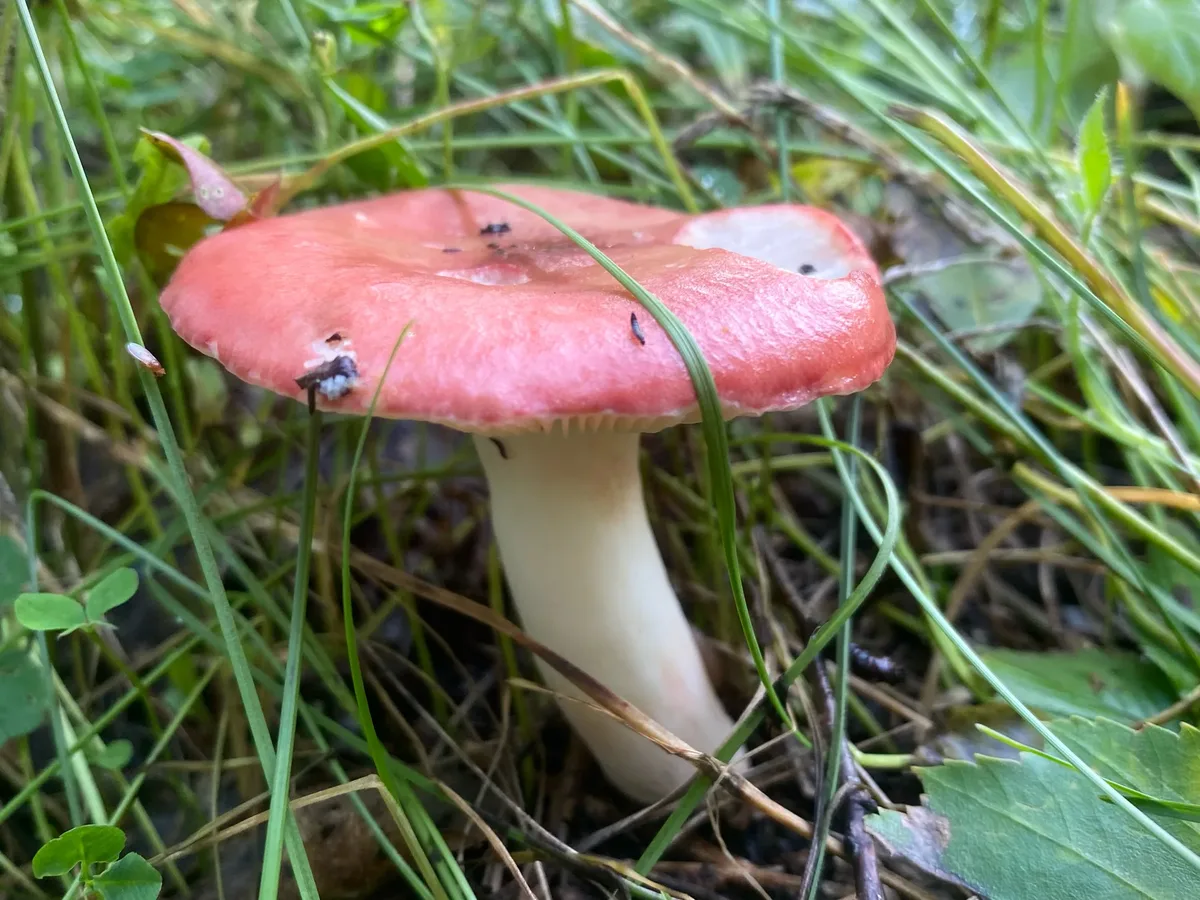
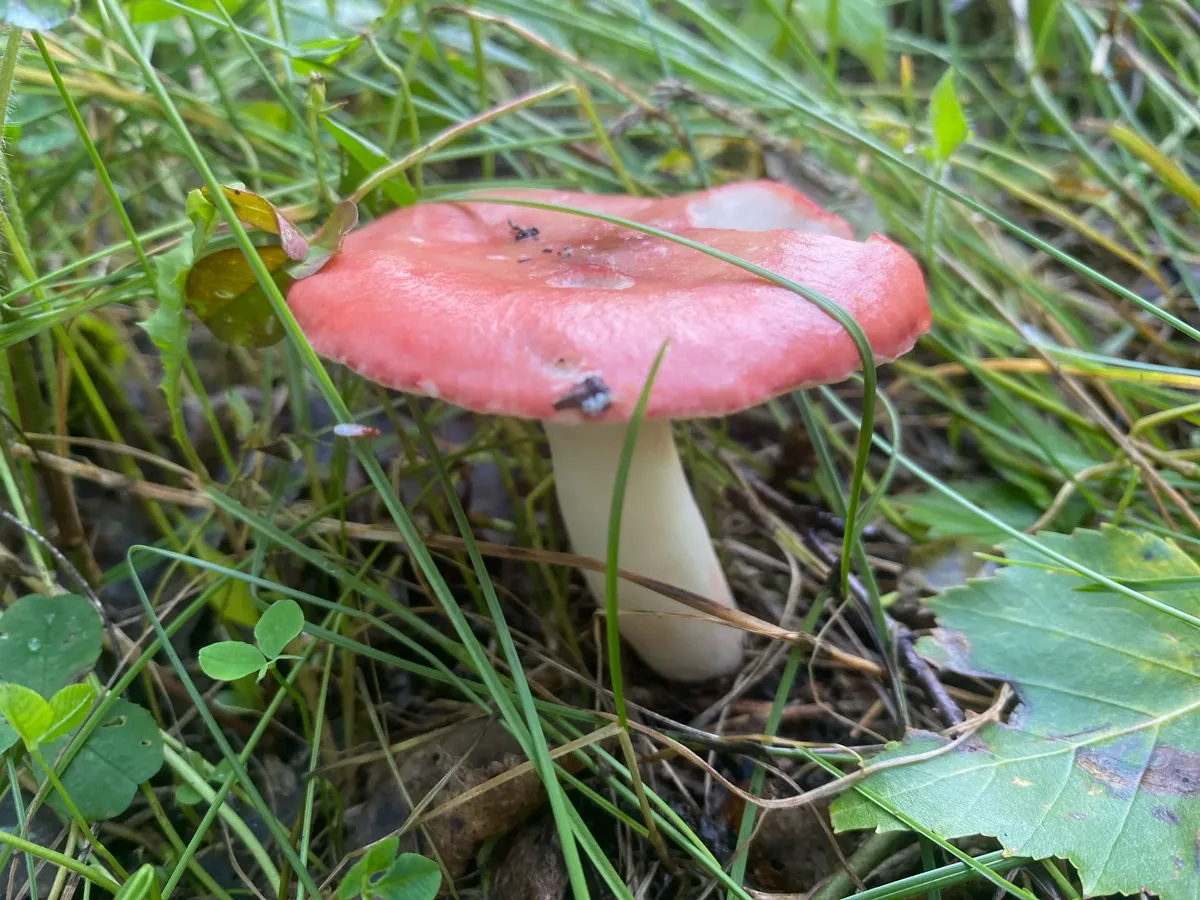
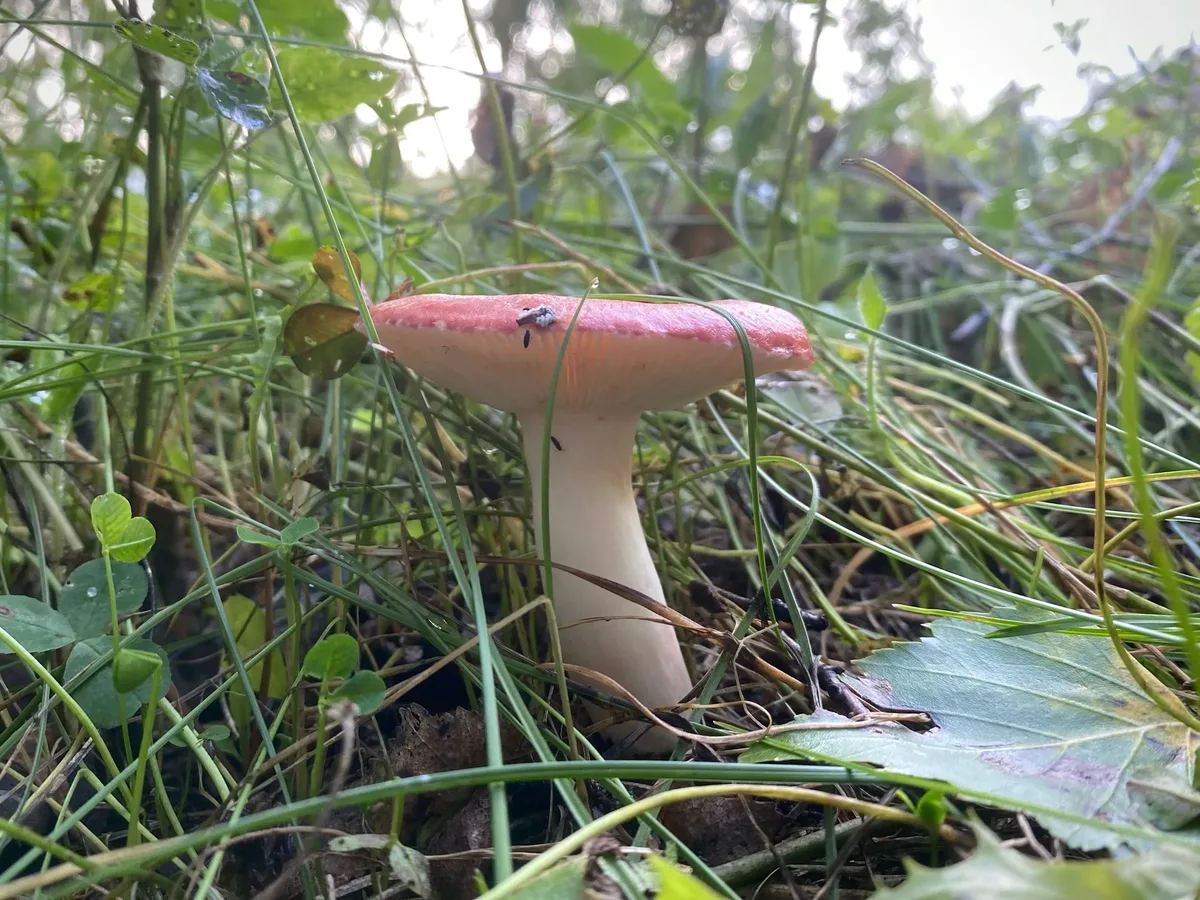
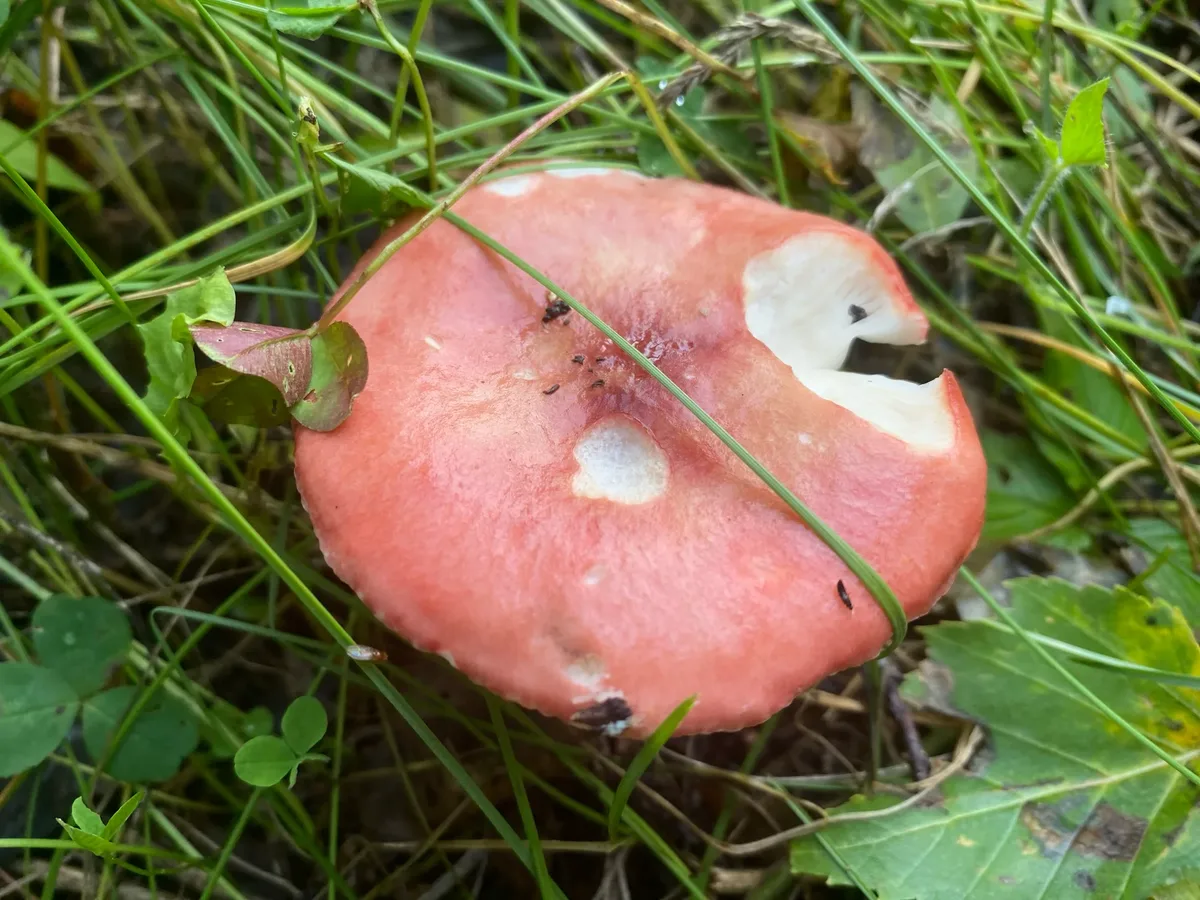
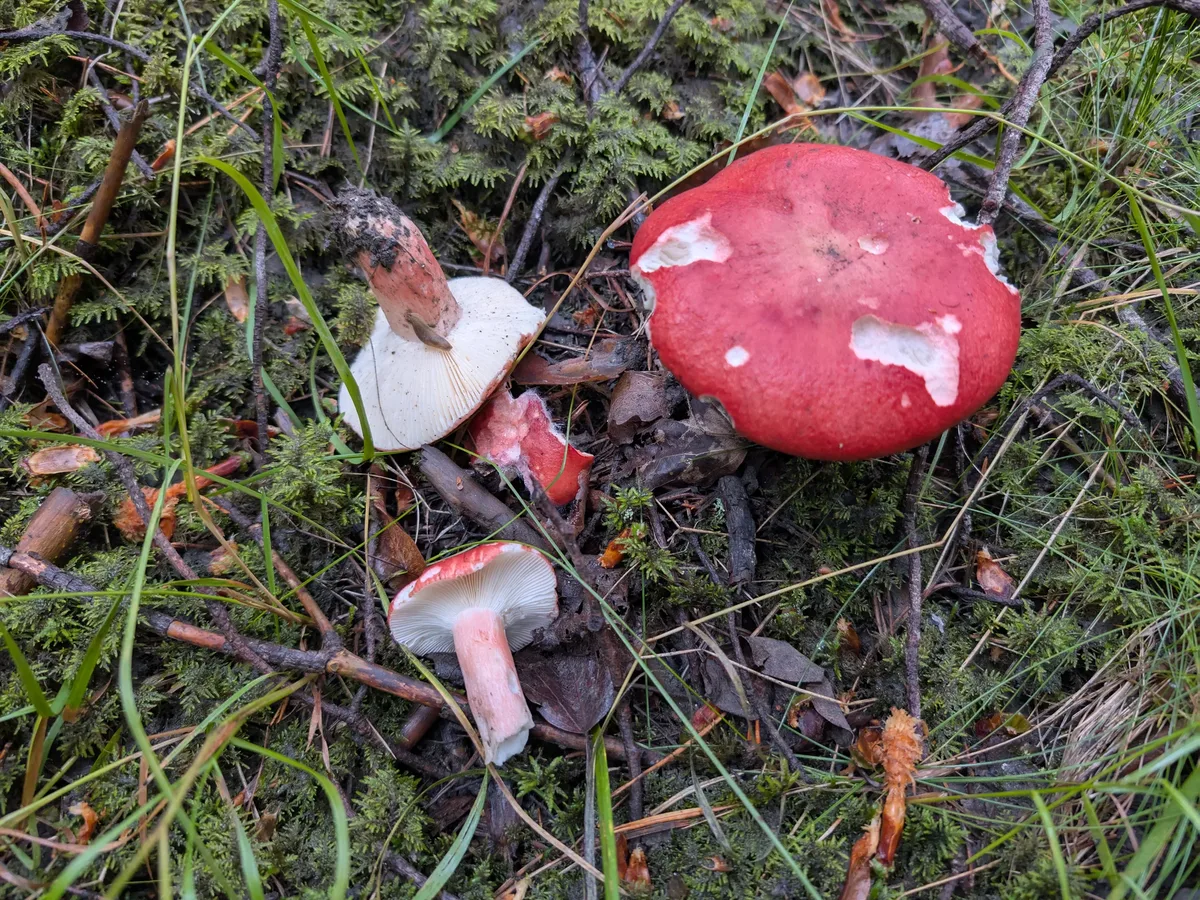
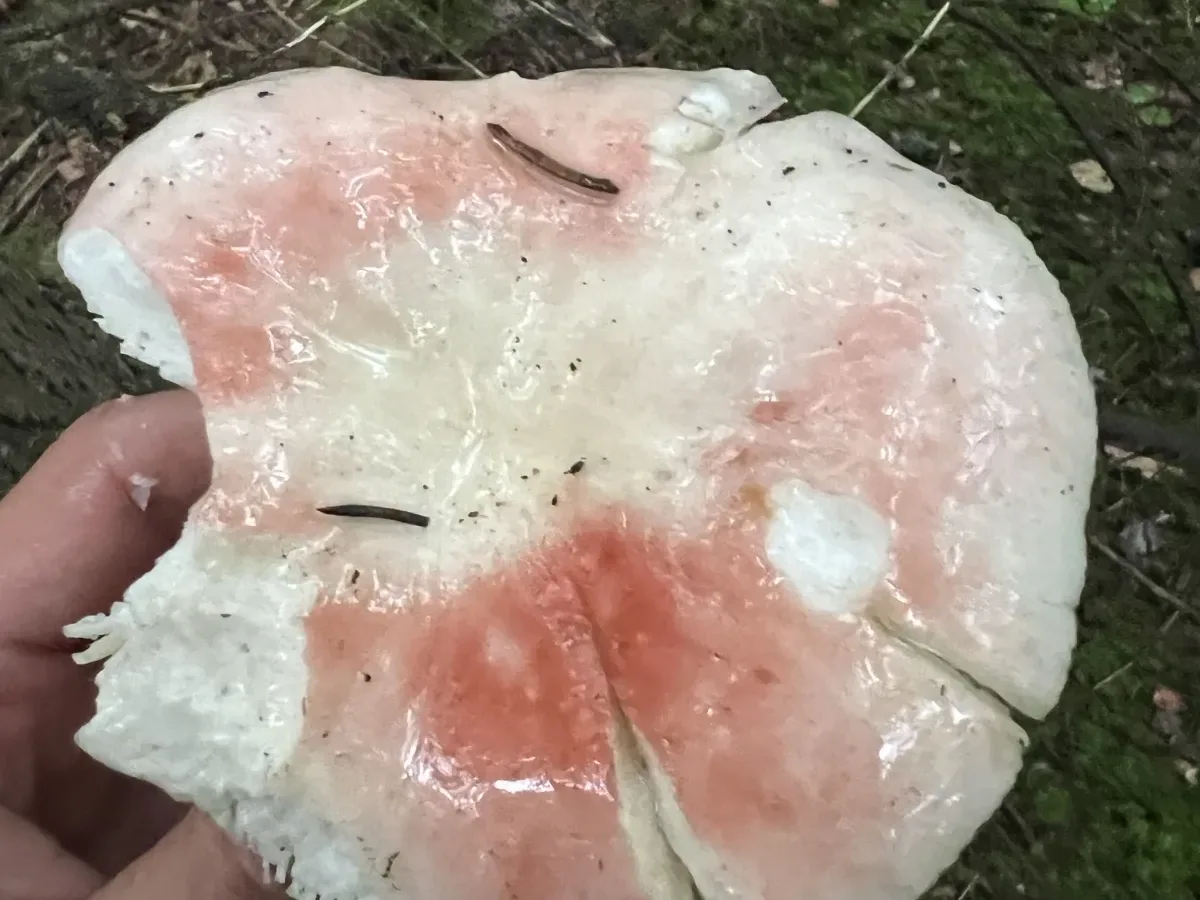
The cap (5-10 cm) starts convex, gradually flattening and becoming shallowly depressed. The blood-red to carmine-red surface is usually darkest at the centre, fading toward the margin to pale rose or pinkish-cream in older or sun-bleached specimens.
The cuticle is slightly viscid in wet weather and peels moderately from the margin inward.
Gills / Pores
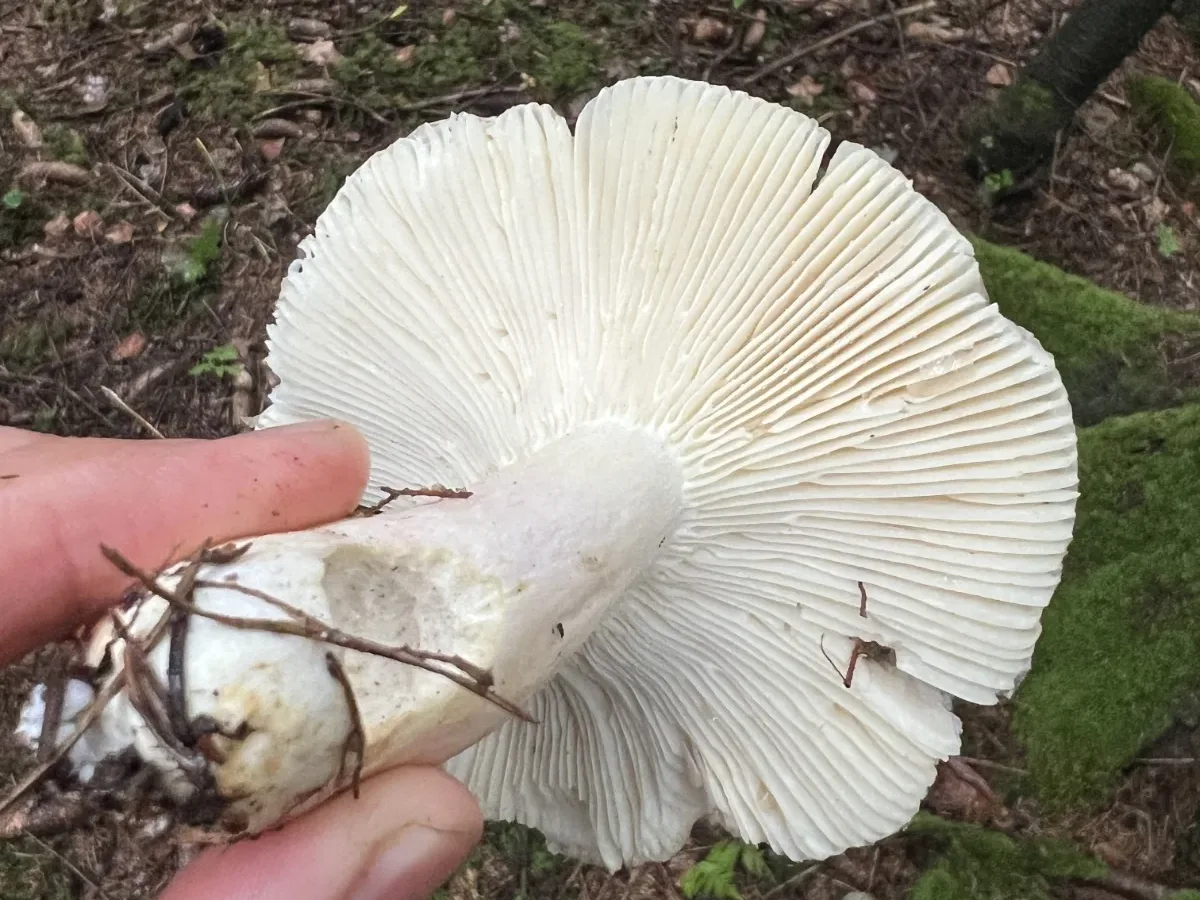
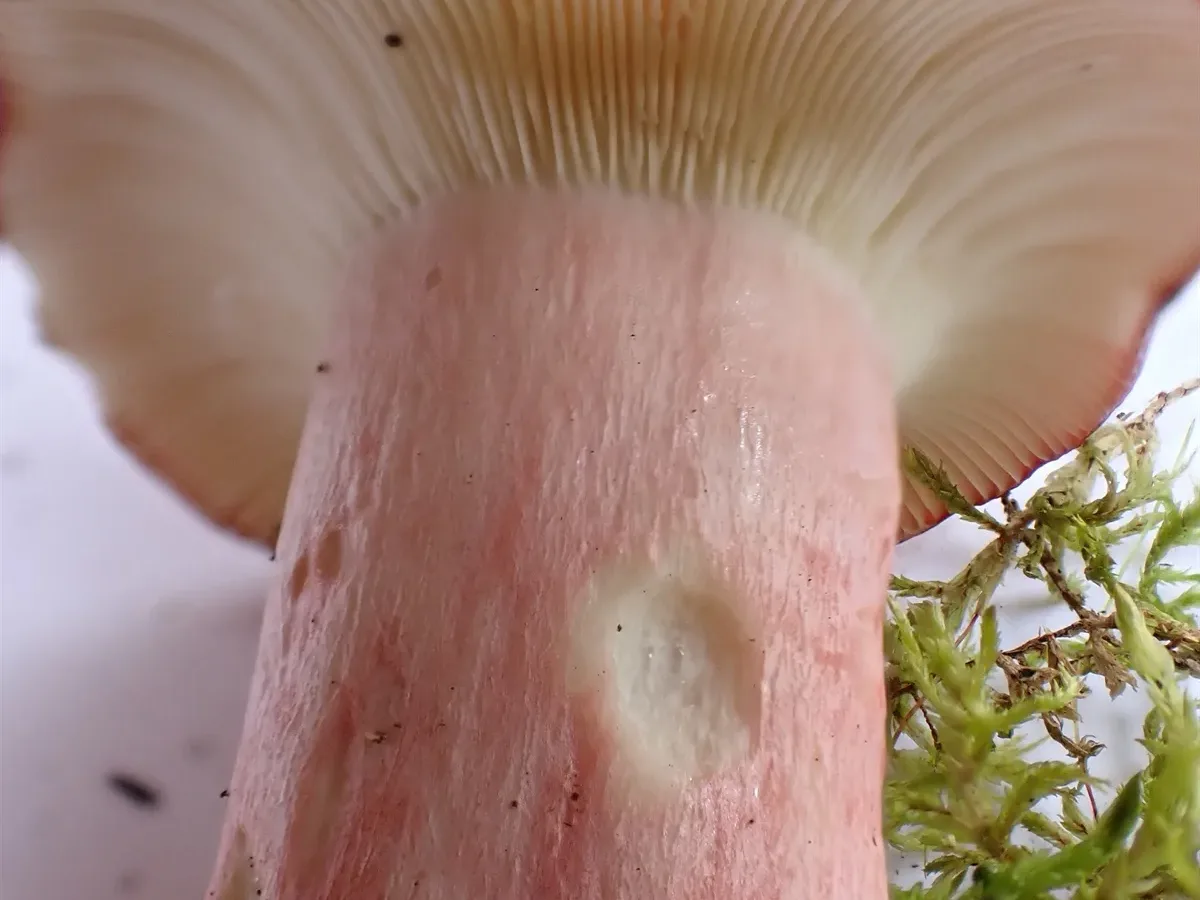
The gills are white to cream - conspicuously pale against the vivid cap - moderately crowded, and occasionally flushed faintly reddish along their edges in old age.
Stem
The most important field character after the cap colour is the stem: it is white but frequently shows prominent reddish-pink streaks or a general reddish flush, especially toward the base - a detail that sets it apart from many other red-capped Russula species. No ring, no volva.
Flesh
The flesh is pure white throughout and does not change colour when cut.
Smell & taste
The most reliable identification test is the taste: the raw flesh of R. sanguinea is intensely acrid and peppery, burning the tongue strongly within seconds even from a tiny fragment - one of the most sharply acrid of all European Russula species.
The spore print is white.
Why it's dangerous
The direct danger from Russula sanguinea is limited to transient gastrointestinal illness. The greater danger is the possibility of misidentification in both directions:
- 1eating R. sanguinea in the mistaken belief it is an edible red Russula, or
- 2more seriously, eating a deadly Cortinarius rubellus while believing it to be R. sanguinea or another inoffensive red mushroom in pine forest.
Any symptom of illness after consuming mushrooms picked in pine forest, especially if delayed, requires immediate medical attention and presentation of the mushroom or its photograph.
Toxin
Russula sanguinea contains irritant sesquiterpene compounds responsible for its strongly acrid taste. These compounds cause gastrointestinal irritation when the fungus is consumed.
Unlike the toxins of deadly species (amatoxins, orellanine), these irritants cause acute but typically self-limiting gastroenteritis.
The exact chemical identity of all active irritants in R. sanguinea has not been fully characterised, but the biting pungency is analogous to capsaicin-type irritation and likely involves similar mucous-membrane activation pathways.
Symptoms
If consumed, Russula sanguinea causes gastrointestinal irritation: nausea, vomiting, abdominal cramps, and diarrhoea typically appearing within 30 minutes to 3 hours of ingestion. Symptoms are usually self-limiting and resolve within 6-24 hours.
Severe or prolonged symptoms, or any symptom onset delayed by more than 6 hours, should prompt urgent medical evaluation to rule out confusion with a more dangerous species (particularly Cortinarius, which has delayed onset of 2-6 weeks).
Staying safe
Russula sanguinea is not edible. Its intensely acrid flesh contains irritant compounds (likely sesquiterpenes) that cause gastrointestinal upset - nausea, vomiting, diarrhoea - even after cooking.
It is NOT a deadly species; fatalities are not reported from R. sanguinea alone. The greatest safety concern is not the species itself but misidentifying it as an edible red Russula.
Conversely, if a forager dismisses a red pine-forest Russula as 'just the sickener' without proper checks, they risk missing a deadly Cortinarius.
Always positively identify the genus (brittle flesh, no ring, no volva, no latex) before tasting. And always distinguish Russula in pine woodland from:
- Cortinarius (cortina veil remnants, rusty spore print, fibrous flesh)
- Amanita (ring, volva)
Where & when it grows
Habitat
Russula sanguinea is one of the most host-faithful Russula species in Europe, associating almost exclusively with Scots pine (Pinus sylvestris) through a mycorrhizal partnership that ties it inseparably to pine-dominated ground.
It colonises dry to mesic pine woodland - both old-growth and managed plantation - on acidic, sandy, or gravelly soils with a heather, bilberry, or lichen-moss understory. It does not grow under broadleaf trees and very rarely under spruce.
Its presence in a stand is a reliable sign of Pinus association. Widespread across northern, central, and western Europe wherever Scots pine is native or widely planted, it can be locally abundant.
When
The bloody brittlegill fruits from midsummer (July) through to the onset of the first hard frosts in October. Peak fruiting coincides with warm, moist late-summer conditions - typically August through September - when soil temperatures remain above 10 °C and periodic rain maintains adequate soil moisture without waterlogging.
It is one of the more thermophilic Russula species in pine woods, appearing earlier in the season than many co-occurring species. Fruitbodies may appear within 7-14 days after adequate rain following a warm dry spell.
How it grows
Fruitbodies appear singly or in small scattered groups on the forest floor among pine needles, moss, and bare sandy soil - never clustered or in tufts, as you might expect from a wood-decomposer.
The mycelium lives in the soil year-round, woven around pine roots, and only pushes up a fruitbody when conditions are right: typically 20-35 mm of rain over 10-14 days with soil temperatures in the 10-20 °C range.
When those conditions arrive, the vivid red caps can seem to appear almost overnight against the pale sandy or mossy substrate, conspicuous from several metres away.
Fruiting conditions
Thermophilic species appearing relatively early in the autumn mushroom season; responds to warm late-summer rain with soil temperatures of 10-20 °C. Sandy pine soils drain quickly so more rain (or repeated rain events) may be needed to trigger reliable flushing compared to heavier forest soils.
Look-alikes
The vivid blood-red cap in pine woodland can cause confusion with several species, both harmful and harmless.
- Russula emetica (the sickener) is also red-capped and grows under conifers including pine, and is similarly acrid and poisonous. It differs in having a distinctly more cherry-bright or scarlet-red cap, white stem without any reddish flush, and a preference for boggy ground rather than dry sandy pine woods. Both species cause gastrointestinal illness and neither should be eaten.
- Russula nobilis (beechwood sickener) is bright red and acrid but grows strictly under beech, not pine.
- Russula paludosa (swamp brittlegill) is a large red Russula of wet pine bogs with a mild (not acrid) taste and pale ochre spore print - it is considered edible in Scandinavia.
- Russula velenovskyi is a smaller red Russula of broadleaf woodland.
- Critically dangerous confusion: young Amanita muscaria (fly agaric) can appear as a vivid red or orange-red mushroom in pine forest before the white veil fragments become obvious. It always has white universal veil remnants on the cap (the 'spots'), develops a skirt-like ring on the stem, and has a volva at the stem base; the flesh is firm and uniform white, not brittle, and the gills are white and free. It must never be eaten.
- More dangerously, Cortinarius rubellus (deadly webcap) occurs in the same pine forest habitat and can show reddish-brown to tawny tones. It has a cobweb-like cortina on young specimens, rusty-brown gills, fibrous (not brittle) flesh, and a rusty-brown spore print - and it contains orellanine, a nephrotoxin causing fatal kidney failure with symptom onset delayed 2-6 weeks after ingestion.
Anyone picking red mushrooms in pine forest must reliably distinguish brittle-fleshed Russula from the fibrous-fleshed Cortinarius.
Cortinarius rubellus grows in the same pine forest habitat and has reddish-brown to tawny-red tones. Decisive differences: Cortinarius has fibrous flesh (not chalk-brittle), a cobweb cortina veil on young specimens leaving rusty-brown ring zone on stem, rusty-brown gills at maturity, and a rusty-brown spore print. Russula sanguinea has chalky-brittle flesh, no cortina, cream gills, and white spore print. C. rubellus contains orellanine - a kidney toxin causing fatal renal failure with symptom onset 2-6 weeks after ingestion.
Russula nobilis (syn. R. mairei) is bright red-capped and strongly acrid, causing gastrointestinal illness. It grows exclusively under beech, not pine, so habitat immediately separates it from R. sanguinea. White spore print.
Young button-stage fly agarics in pine forest can appear red before the white veil breaks up. They have white universal veil remnants ('warts') on the cap, develop a skirt-like ring on the stem, have a volva at the stem base, free white gills, and fibrous (not brittle) flesh. None of these features are present in Russula. Toxic but not usually deadly in adults at normal doses.
Also acrid-tasting and inedible. Russula emetica is cherry-red to scarlet, has a white stem without any reddish flush, grows preferentially in boggy ground under conifers, and has white (not cream) spore print. Both species are poisonous due to gastrointestinal irritants.
Russula paludosa is a large (cap to 15 cm), red-capped Russula of wet boggy pine forest. It has a MILD (not acrid) taste and pale ochre spore print. It is considered edible and good in Scandinavia. The taste test is decisive: R. paludosa does not burn the tongue.
A reference guide - never an edibility guarantee. When in doubt, leave it out.