Rosy Brittlegill
Russula roseasyn. Russula lepida Fr., Agaricus roseus Pers., Russula lepida var. lactea Quél., Russula rosea (Pers.) Gray
 © victor laborde (CC BY)
 © Daniel Ghyselinck (CC BY)
 © Ola Vestre (CC BY)
 © Ola Vestre (CC BY)
 © W Rao (CC BY)
 © victor laborde (CC BY)
 © victor laborde (CC BY)© victor laborde (CC BY)© Daniel Ghyselinck (CC BY)
Good to eat, once you have identified it with certainty and cooked it through.
Never eat a mushroom you are not 100% sure of - check the look-alikes below, and always cook wild mushrooms.
How to recognise it
Cap
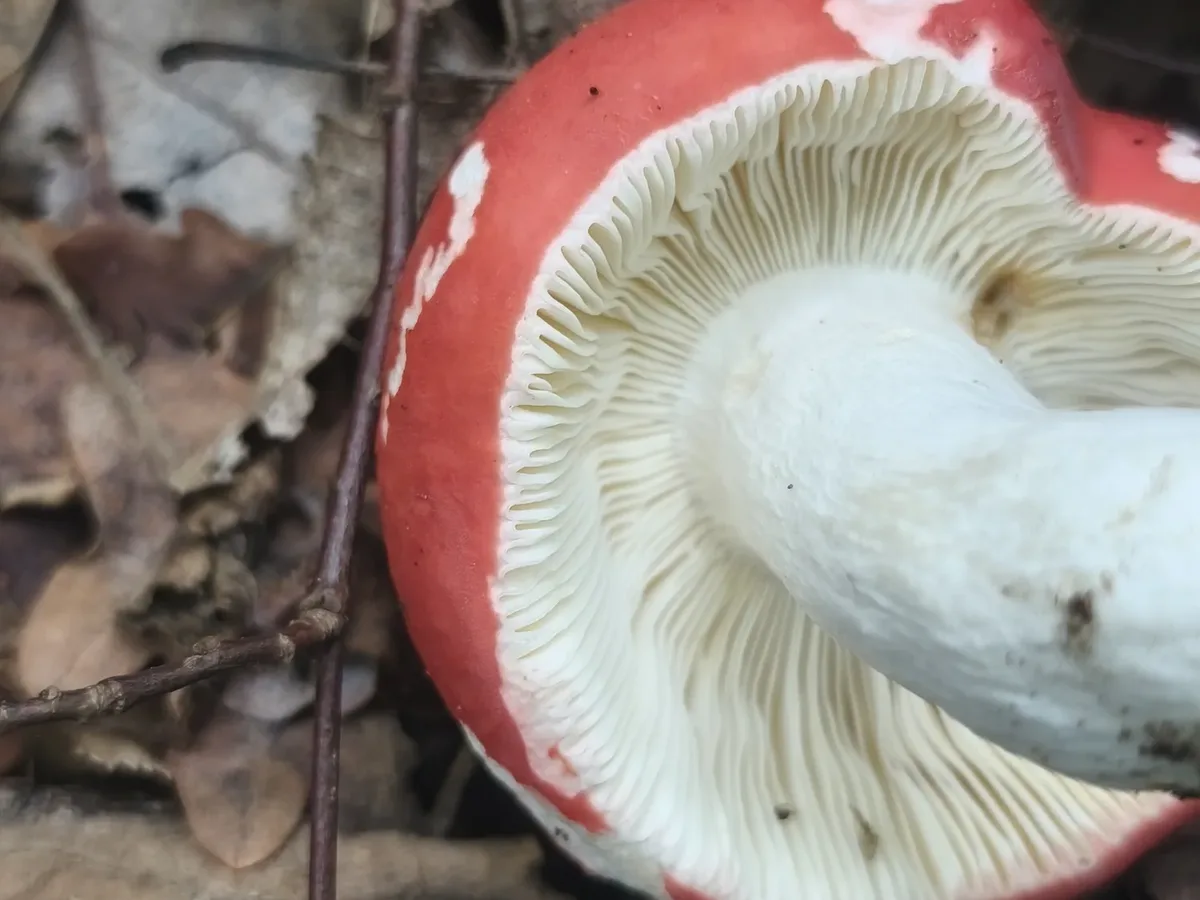
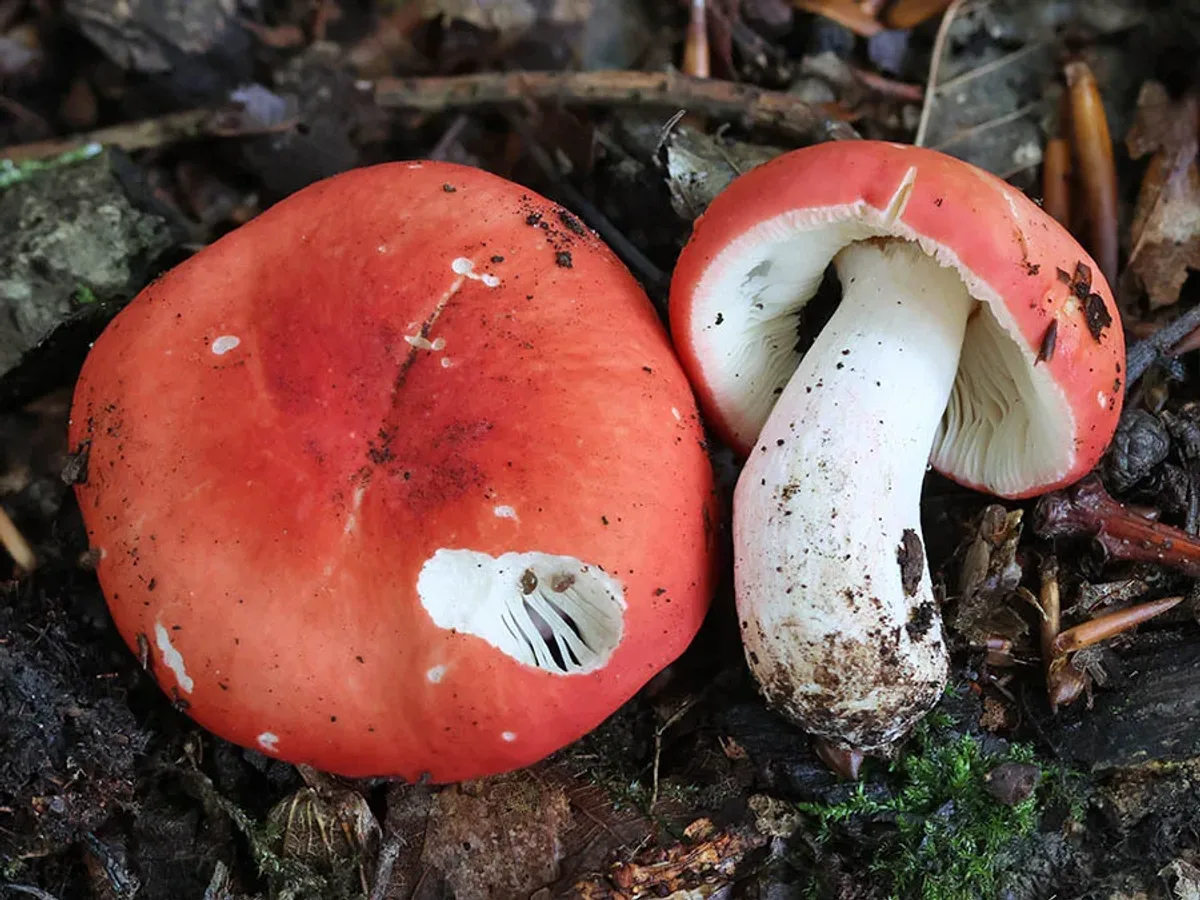
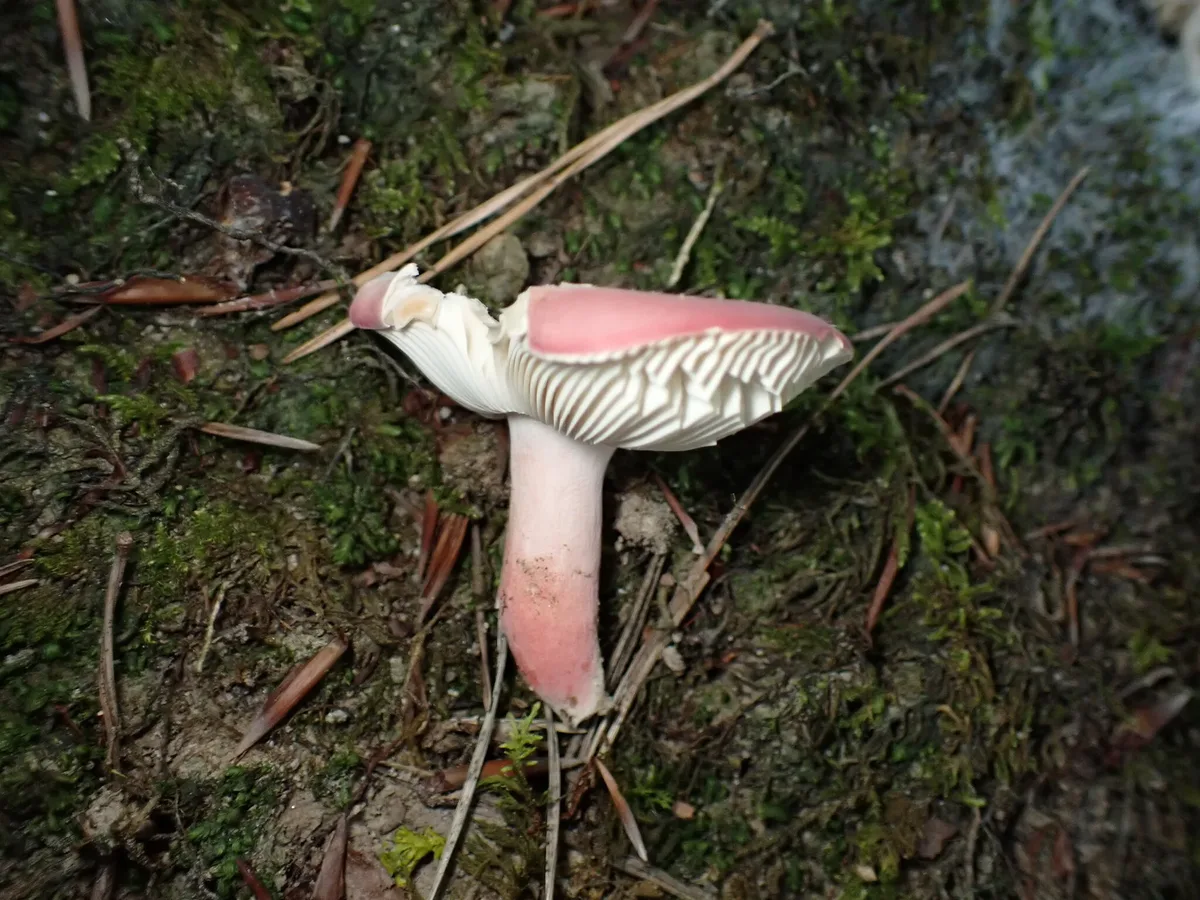
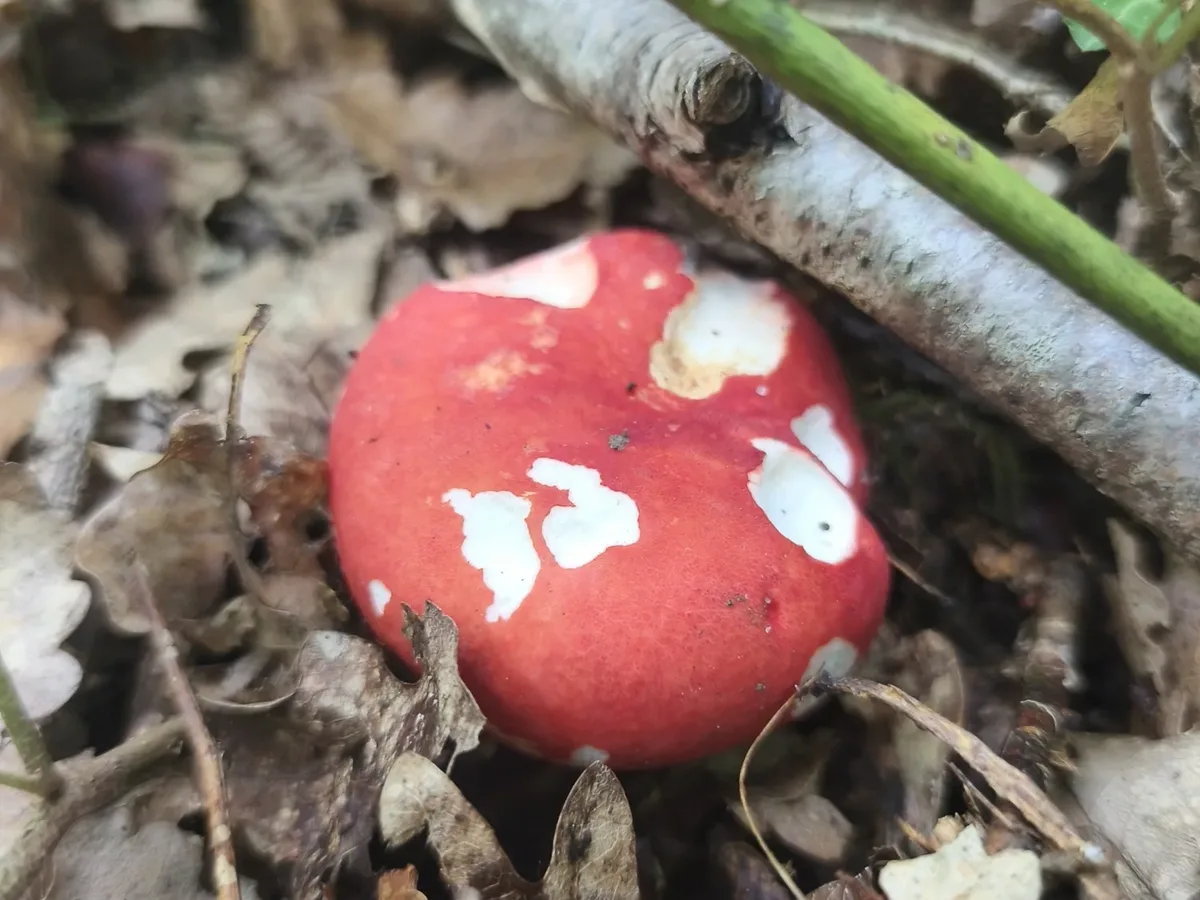
Russula rosea is one of the most visually distinctive brittlegills in the East Asian forest: its cap glows rose-red to coral-pink, with the richest colour concentrated at the centre and gradually fading to a delicate blush or pale salmon near the margin.
Caps run 4-12 cm and pass through the usual Russula progression - hemispherical in youth, then flat, then shallowly dish-shaped in maturity.
The surface is smooth and slightly tacky in wet weather, quickly drying; the cap skin peels from the margin inward for roughly a third to halfway, which is a useful genus confirmation.
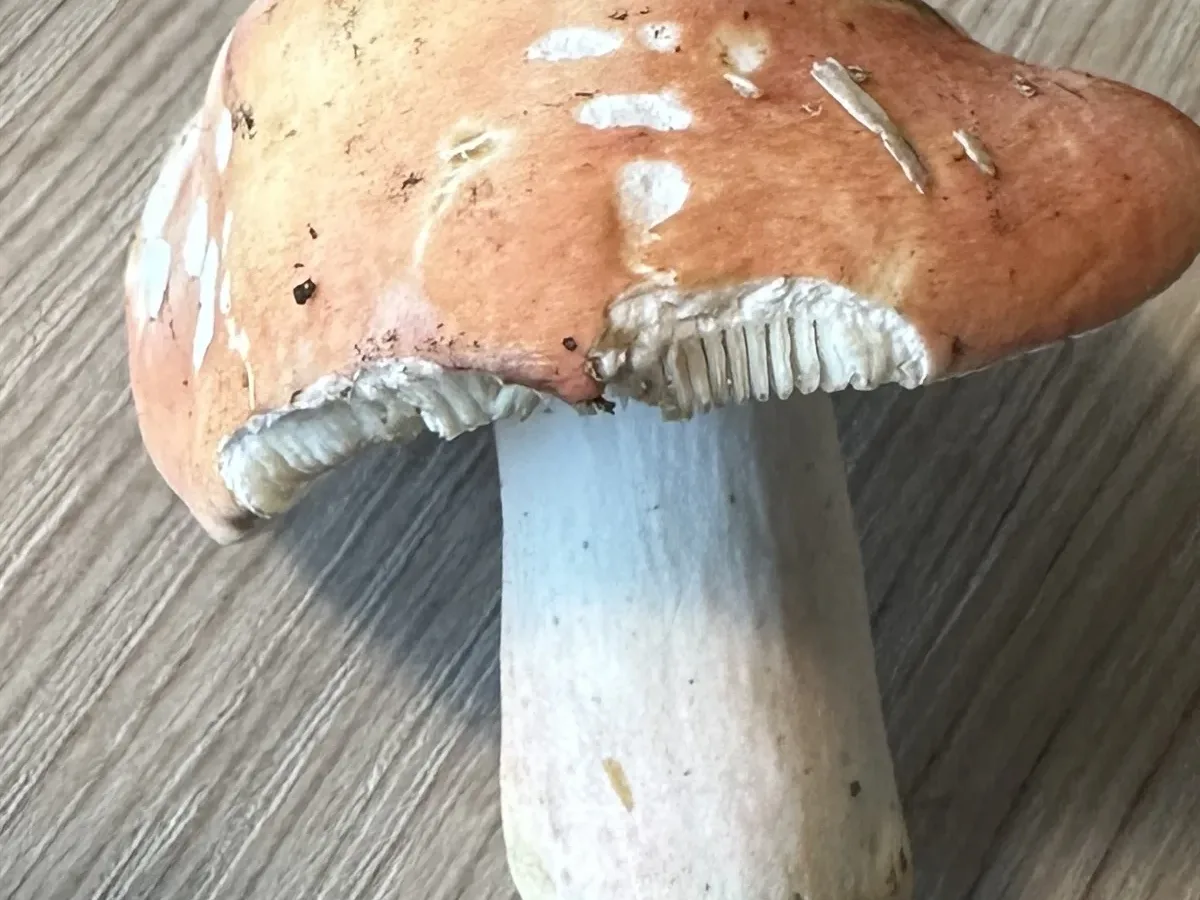
In wet conditions or deep shade the colour can bleach considerably, so pale, washed-out specimens in heavy forest can look more salmon than rose-red; checking whether the cuticle peels and confirming the brittle gills are still the most reliable moves.
Gills
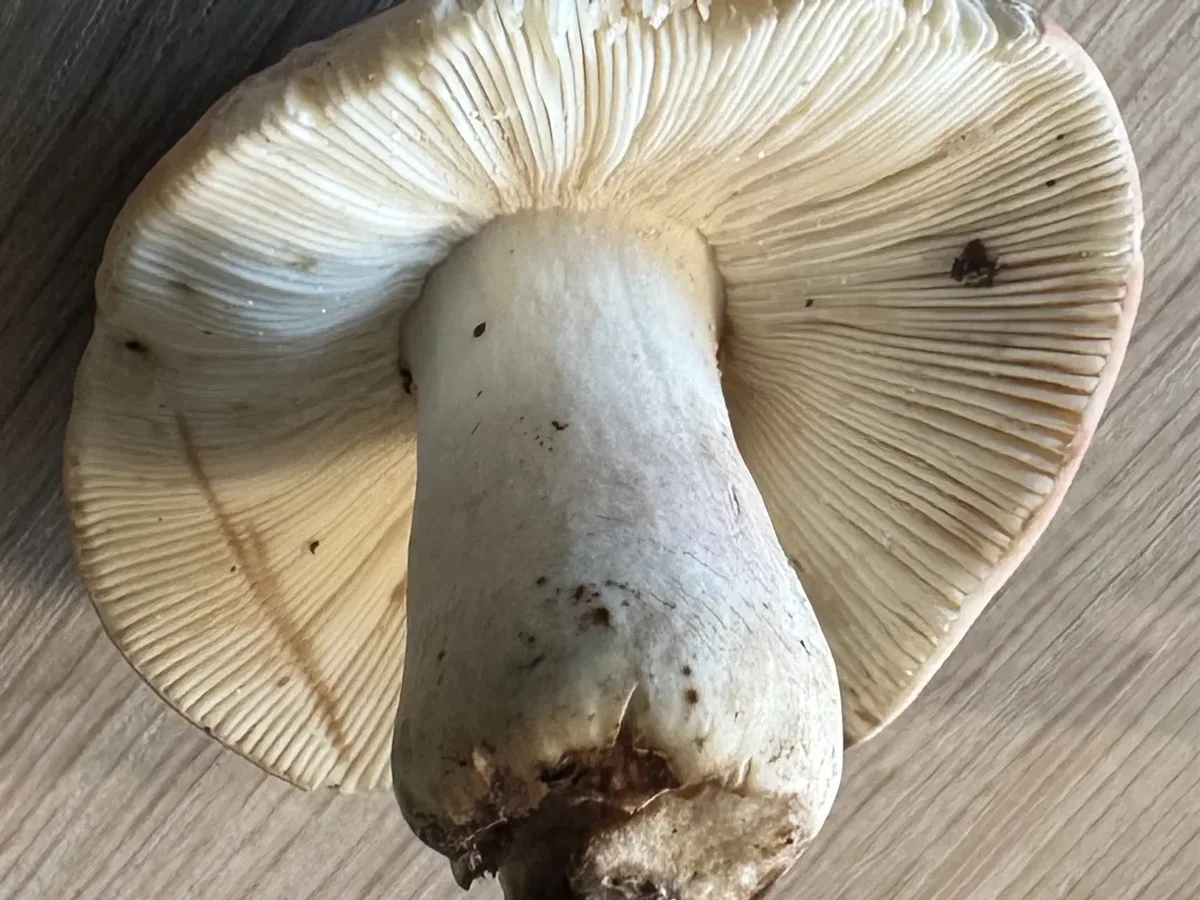
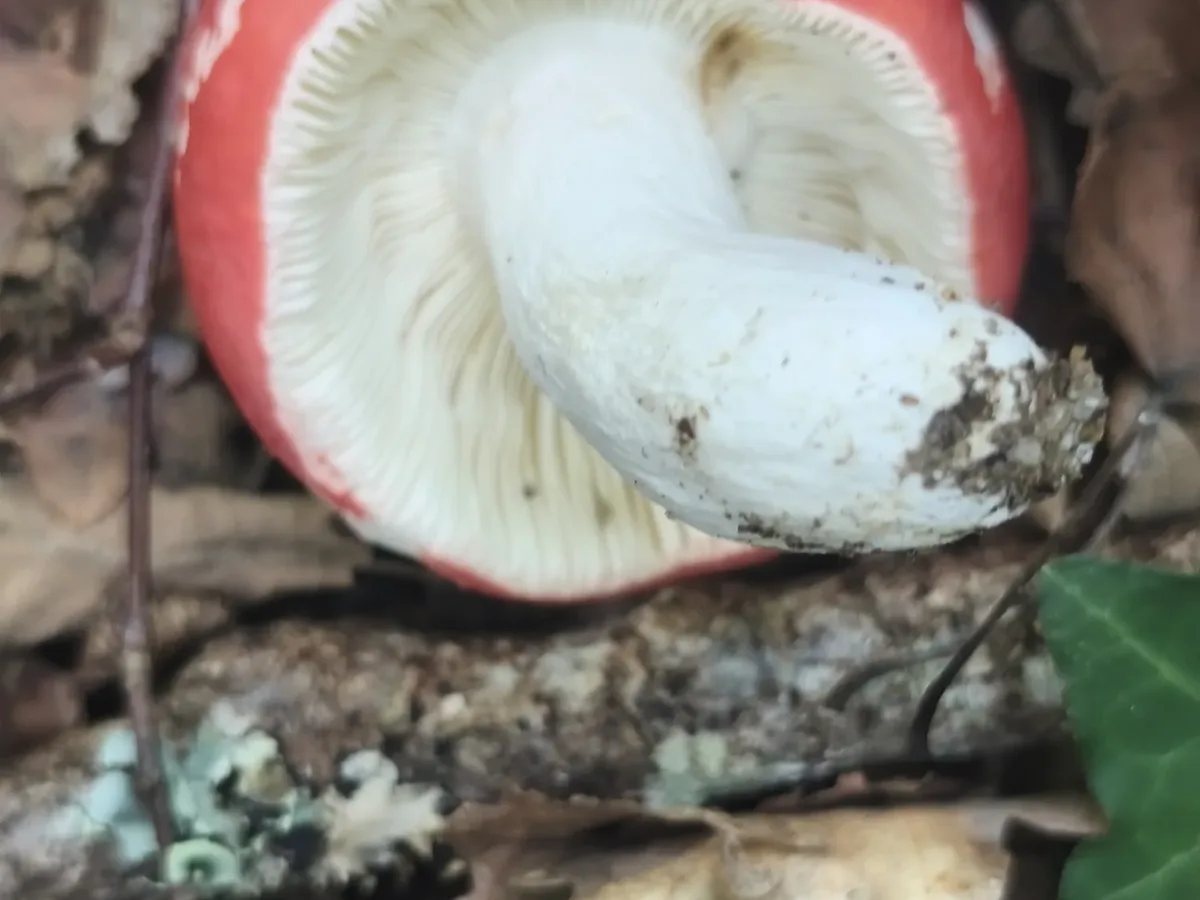
The gills are white to faintly cream, moderately spaced, and - like all russulas - break cleanly into dry, chalk-like fragments when pressed; they do not bend or feel greasy, which distinguishes every Russula from the flexible-gilled Russula cyanoxantha and, critically, from the free, non-brittle gills of any Amanita.
Stem
The stem is white (sometimes faintly rose-tinged where exposed to light), cylindrical and firm when young, and carries absolutely no ring and no volva at any stage.
Flesh
The flesh is white throughout, firm, and unchanging in colour when cut.
Smell & taste
The smell is mild and slightly pleasant; the taste, confirmed by chewing a small fragment and then spitting it out, is mild and distinctly non-acrid - there is no burning sensation on the tongue that would indicate a sickener-type species.
Where & when it grows
Habitat
This species is an obligate ectomycorrhizal partner of living broadleaved and mixed-forest trees: its underground mycelium wraps the root tips of its host, trading soil minerals and water for the tree's sugars.
As a result, it can only fruit within the active root zone of a host, so you will always find it on the forest floor near - and genetically connected to - a living oak, Castanopsis, Lithocarpus, or related beech-family tree.
In East Asia the species is most at home in:
- The warm-temperate evergreen oak forests that cover the hills of southern China
- The mixed broadleaved-pine forests of the Japanese archipelago
- The montane forests of northern Thailand and Vietnam
Elevations of 600-2200 m offer the most consistent records, with the species becoming less frequent in hot, humid lowland tropical forest.
The soil is typically well-drained, humus-rich, and mildly acidic. It will not grow on deadwood, in fields, or in habitats without mature host trees.
When
The fruiting window is entirely governed by monsoon rainfall.
In the subtropical zone of southern China (Guangdong, Fujian, Guangxi) the season can open in late May when the first heavy pre-monsoon rains arrive; in the cooler montane forests of Yunnan and Sichuan the start shifts to late June.
The bulk of fruiting across the region occurs from late June through September, when warm, humid conditions and sustained rainfall combine optimally. Japanese populations peak in July and August.
The season closes as monsoon rains diminish and night temperatures drop below roughly 10 °C in October.
Individual fruit bodies appear within roughly one week of soaking rain and can persist for another one to two weeks before degrading.
How it grows
Grows singly or in scattered small groups on the forest floor; never in tight clusters, and never on wood.
The fruit body develops entirely below or just at the soil surface in the button stage, pushing up through the leaf litter as the cap expands.
Because R. rosea is fully mycorrhizal, finding it reliably means returning to the same patches of suitable host trees in successive seasons - the mycelial network persists in the soil from year to year and will fruit again whenever conditions are right.
Fruiting conditions
Monsoon-driven ectomycorrhizal species. Fruiting triggered by sustained heavy monsoon rainfall once soil temperatures reach 14-26 °C. New fruit bodies appear within 5-12 days of soaking rain. Season tracks the East Asian summer monsoon from late May/June through September-October, with peak fruiting in July and August across most of the range.
Look-alikes
The most immediately dangerous confusion in East Asian forest is with Russula subnigricans, a deadly species that causes fatal rhabdomyolysis (catastrophic muscle breakdown and kidney failure) and has been responsible for multiple deaths in China and Japan.
R. subnigricans is typically a dull brownish-white to greyish-tan mushroom - not rose-pink - but young or discoloured specimens can occasionally show pinkish or reddish-brown tones, and the two can share the same forest patch.
The critical distinguishing feature of R. subnigricans is that its flesh slowly reddens when cut or broken, and may later darken toward grey or black; R. rosea flesh stays white throughout. Never eat any russula-type mushroom from East Asian forest whose flesh reddens when broken, regardless of cap colour.
A second serious hazard is confusion with Amanita species sharing the same habitat: several Asian Amanita species carry deadly amatoxins and can have pale pink, salmon, or even rose-tinted caps.
Amanitas have a set of features, all absent in R. rosea:
- A volva at the stem base
- A ring on the stem
- Free gills (not attached to the stem)
- Fibrous flesh
Among non-deadly russulas, various acrid pink or red-capped species in the Russula emetica group grow in the same forests and cause gastrointestinal upset; they are reliably separated by their sharply acrid, burning taste on a chewed-and-spat fragment, whereas R. rosea is consistently mild.
Asian relatives of the death cap (Amanita phalloides s.l., A. exitialis, A. subjunquillea, and others) grow in the same broadleaved forests and carry deadly amatoxins. Several have pale pinkish, cream, or greenish caps. Every Amanita has features entirely absent from Russula: a membranous sac-like volva or girdled bulb at the stem base; a skirt-like ring partway up the stem; free (non-attached) gills; and fibrous, non-chalky flesh. Russula rosea has NO volva, NO ring, attached brittle gills, and chalky-snapping white flesh. Always excavate the complete stem base and verify the absence of a volva before consuming any white-gilled forest mushroom.
The most critical lookalike in East Asian forest. Russula subnigricans has caused multiple fatal poisonings in China and Japan, killing through cycloprop-2-ene carboxylic acid-induced rhabdomyolysis (catastrophic skeletal muscle breakdown and acute kidney failure). It is typically a dull brownish-white, greyish-tan, or greyish-brown mushroom rather than rose-pink, but young or weathered specimens can show reddish-brown or pinkish-brown tones that narrow the visual gap. The single most important distinguishing character: the flesh of R. subnigricans slowly turns reddish-pink when cut or broken, and may subsequently darken toward grey-brown. R. rosea flesh stays pure white throughout without any colour change on exposure to air. Never eat any russula from East Asian forest whose flesh shows any colour change when broken.
Russula virescens has a green, cracked-mosaic cap surface - completely different from R. rosea's smooth rose-pink - and is one of the most prized edibles in Yunnan markets. Unlikely to be confused with R. rosea, but included because both are collected together in the same forests and markets. Safe and highly regarded.
Russula pseudointegra is a closely related European species with similar rose-red to scarlet cap and mild taste. It is regarded as edible. In East Asia it is replaced by R. rosea, so the confusion risk is primarily for foragers working across both continents. Both are mild-tasting and edible - but apply the same volva and flesh-colour checks regardless.
Various acrid pink or red-capped russulas in the Russula emetica group share colour overlap with R. rosea and grow in the same East Asian forests. They cause gastrointestinal upset (nausea, vomiting, diarrhoea) but are not lethal. The definitive separation is the taste test: bite a small piece, chew for ten seconds, and spit - acrid russulas produce a sharp, burning, pepper-like sensation on the tongue that persists. R. rosea tastes mild throughout, with no acridity whatsoever.
In the kitchen
Picking & cleaning
Always extract the full stem by gently twisting and lifting, or by carefully easing around the base with a knife, so that the complete stem base is visible before the mushroom goes into your basket.
This is not optional: the only reliable way to rule out a deadly Amanita is to confirm with your eyes that there is no volva (a membranous sac, cup, or series of concentric rings at the very base of the stem) and no ring on the stem - these are the defining Amanita features, and neither is present on any Russula at any stage of growth.
Once the base is confirmed clean, press the gills firmly with a fingertip: they should snap and crumble in dry fragments (this is the genus-level confirmation).
Taste a small piece by chewing for ten seconds and spitting - the flesh should be mild with no burning or peppery sensation.
Collect young to middle-aged caps; old or larvae-ridden specimens are not worth taking. Use a breathable basket, not a plastic bag, and cook within one to two days.
Cooking
A pleasant, versatile table mushroom with firm, mild-tasting white flesh that holds texture well in the heat.
In China and Japan it is typically:
- Stir-fried with garlic, ginger, and sesame oil
- Added to hot-and-sour or miso soup
- Combined with other wild mushrooms in mixed preparations
The mild flavour absorbs seasoning readily without overwhelming other ingredients.
Trim and discard the stem base, slice or quarter the caps, and cook thoroughly over high heat until the flesh is fully tender throughout - do not serve undercooked or raw.
Store fresh caps in a breathable container in the refrigerator and use within two days; they can also be briefly blanched, cooled, and frozen.
Good to know
Russula rosea is regarded as a safe edible species in Chinese and Japanese mycological literature, and is collected for food across its range in southern China and Japan without documented toxicity when properly identified and cooked.
The safety case rests entirely on complete, rigorous identification. The rose-pink cap and mild taste are positive indicators, but they are not sufficient on their own.
The absolute safety protocol requires confirming:
- 1No volva and no ring at the stem base - ruling out deadly Amanita.
- 2Brittle, crumbling gills - ruling out non-Russula genera.
- 3Flesh that stays white when cut - ruling out Russula subnigricans, which causes fatal rhabdomyolysis in East Asia.
- 4Mild non-acrid taste - ruling out gastrointestinally toxic acrid russulas.
The lethal amatoxins of Asian death caps are tasteless and odourless, providing no warning at the moment of eating; symptoms of liver failure are delayed 6-24 hours and can then progress rapidly.
Never eat any white-gilled forest mushroom from East Asia without conducting the full stem-base inspection.
Always cook thoroughly; no wild Russula should be eaten raw.
A reference guide - never an edibility guarantee. When in doubt, leave it out.