Gooseberry brittlegill
Russula queletiisyn. Russula queletii Fr., Russula sardonia var. atropurpurea (Krombh.) Neuh.
 © Inger-Lise Fonneland (CC BY)
 David A. Krause (CC0)
 David A. Krause (CC0)
 David A. Krause (CC0)
 © Inger-Lise Fonneland (CC BY)
 © Ulrik Andreassen (CC BY)
 © Ulrik Andreassen (CC BY)
 © Inger-Lise Fonneland (CC BY)© Inger-Lise Fonneland (CC BY)David A. Krause (CC0)
Edible only with the right preparation - or safe for some people but not others. Learn the caveats first.
How to recognise it
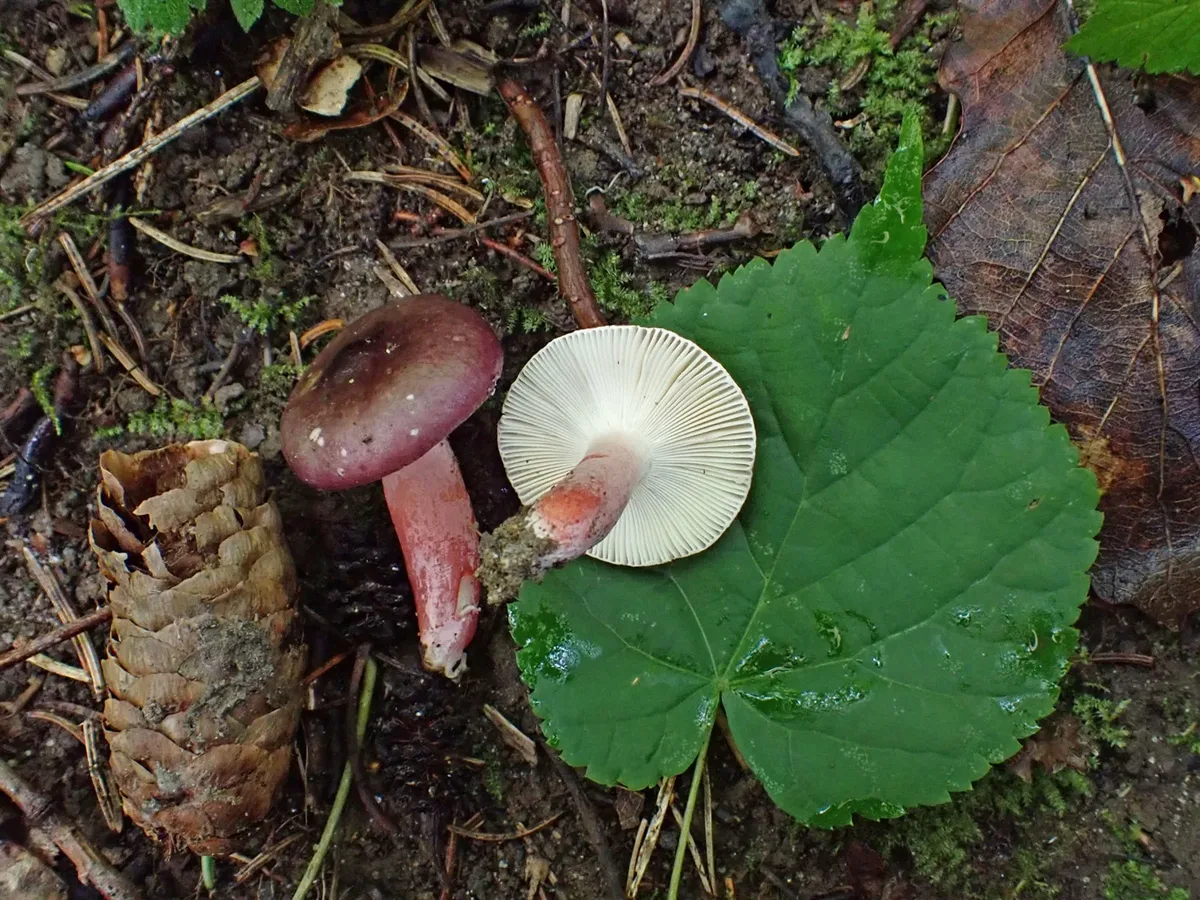
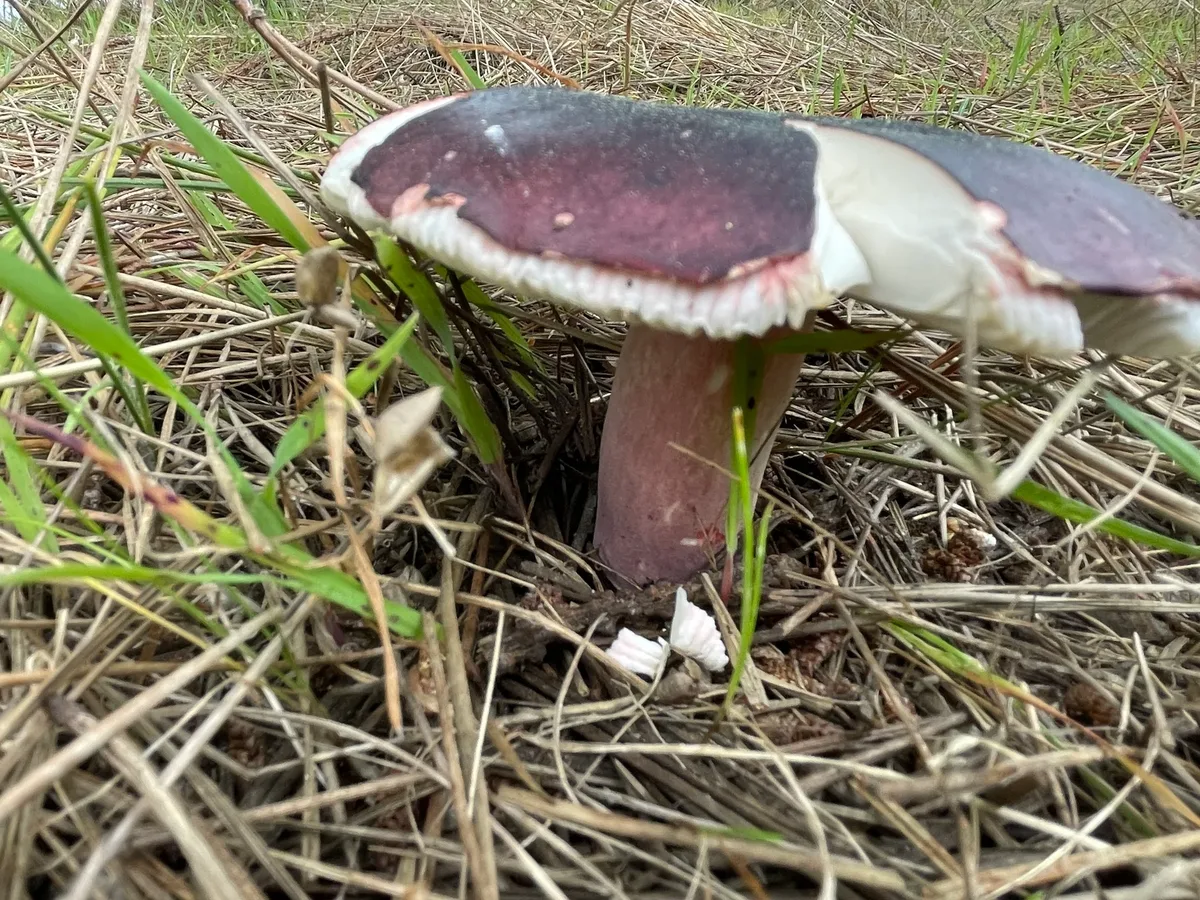
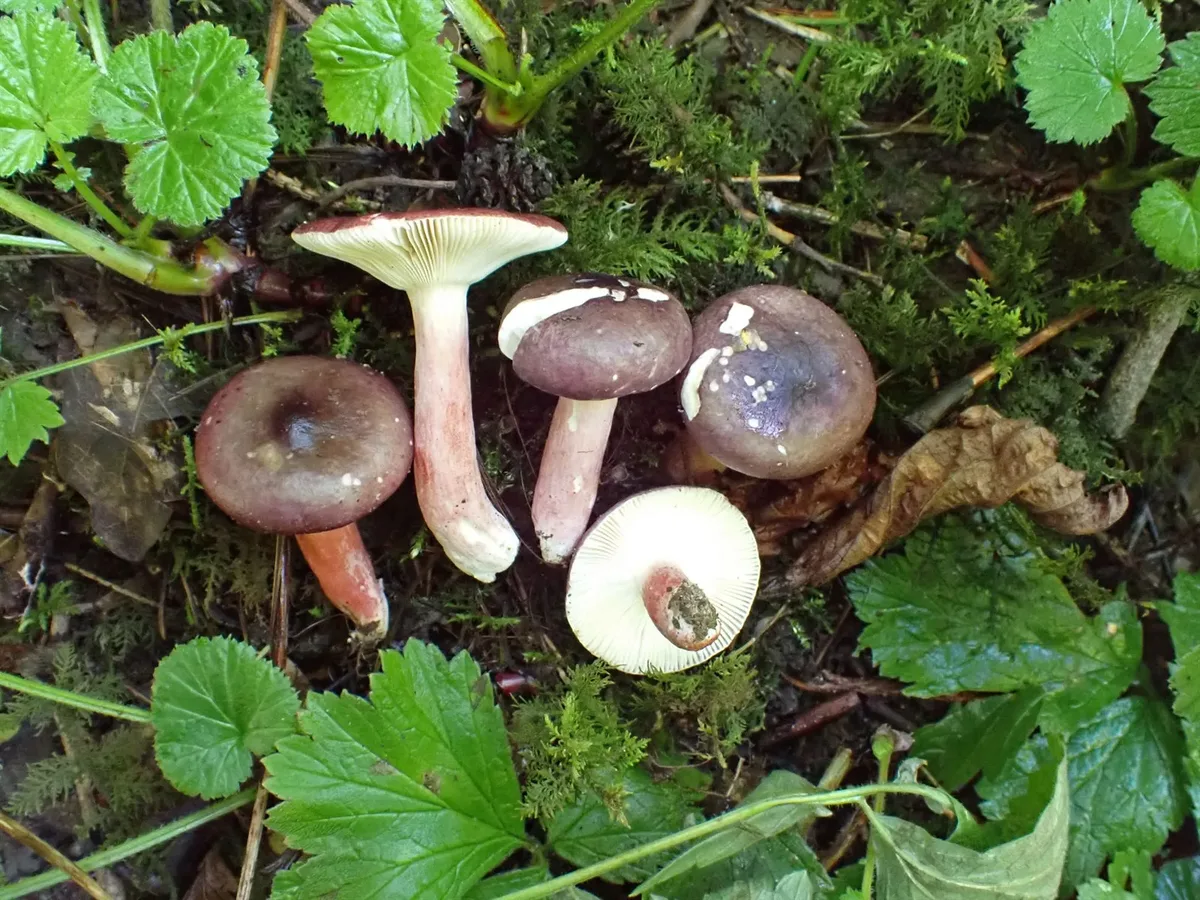
Russula queletii is a small to medium-sized brittlegill distinguished by its striking deep cherry-red to magenta-purple cap, an intensely acrid taste, and a pleasant fruity - specifically gooseberry-like - smell.
Cap
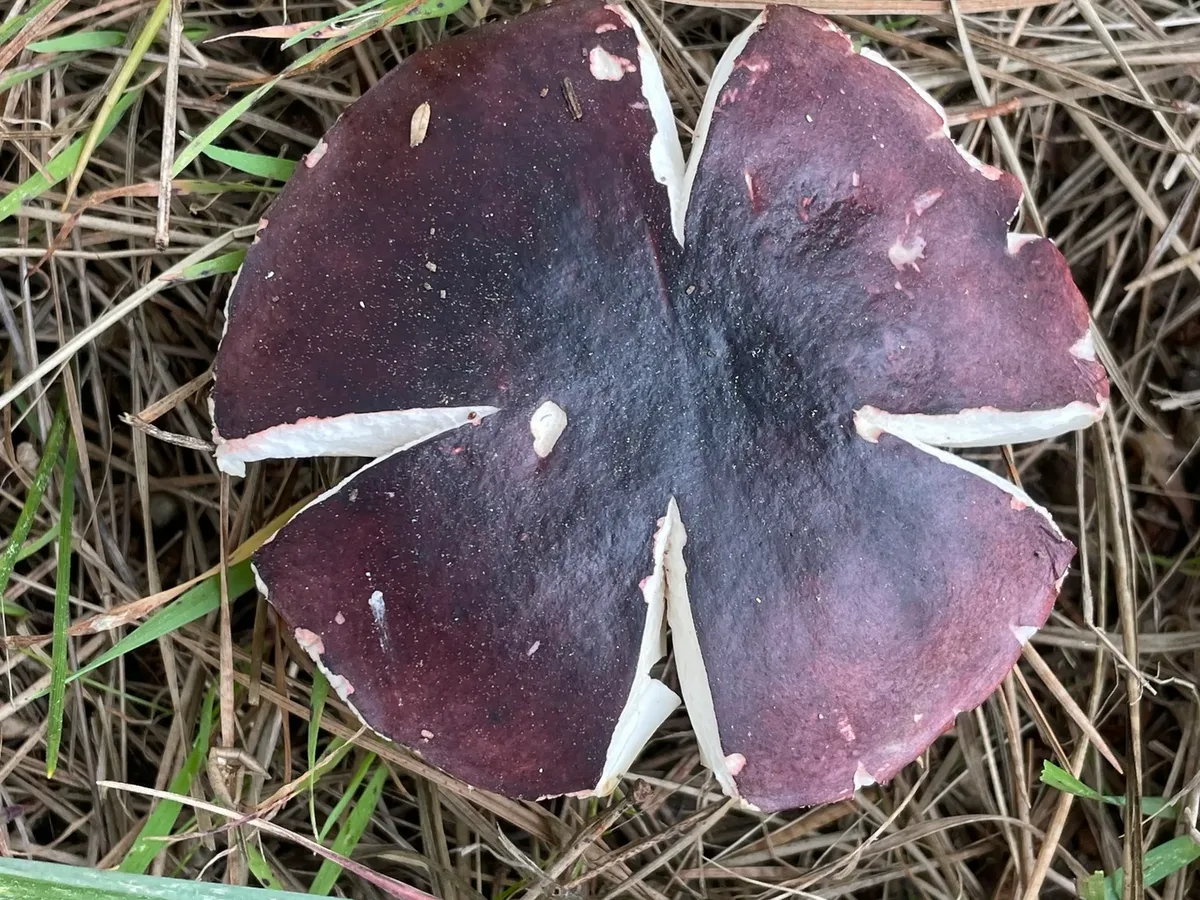
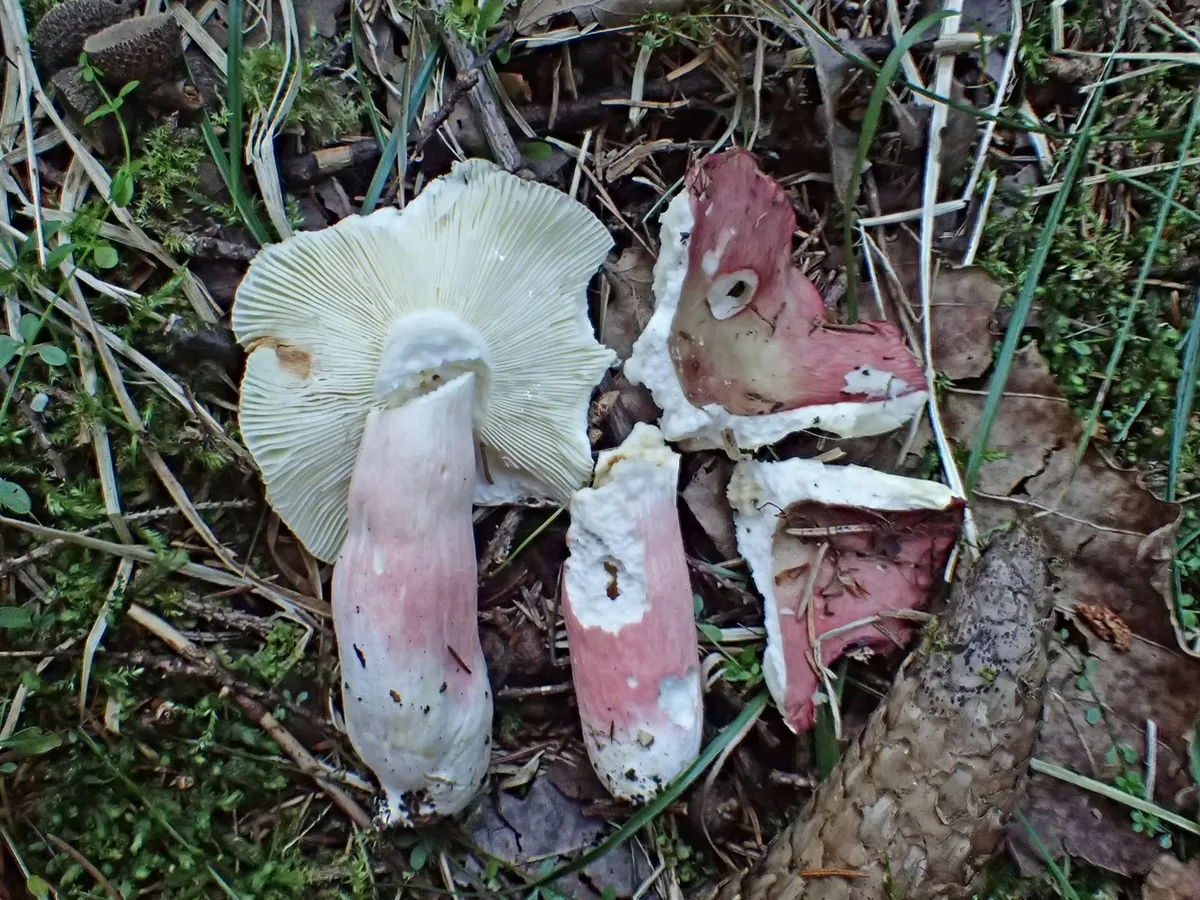
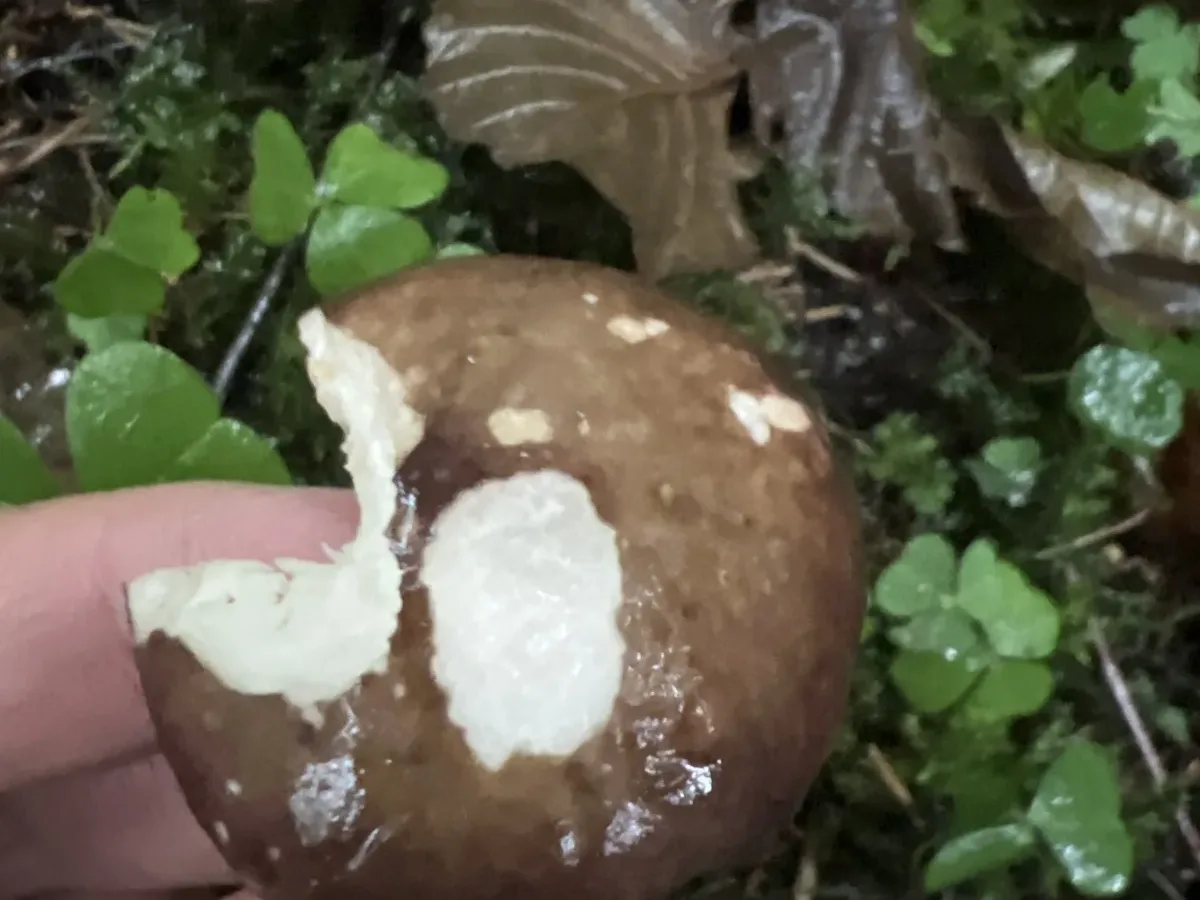
The cap (4-8 cm) opens convex and flattens with age, its vivid colour darkest at the centre and washing out to pinkish or wine-red toward the margin.
The surface is slightly viscid when freshly wet but quickly dries to a smooth, matte finish. The cuticle separates easily and peels halfway toward the centre.
Gills
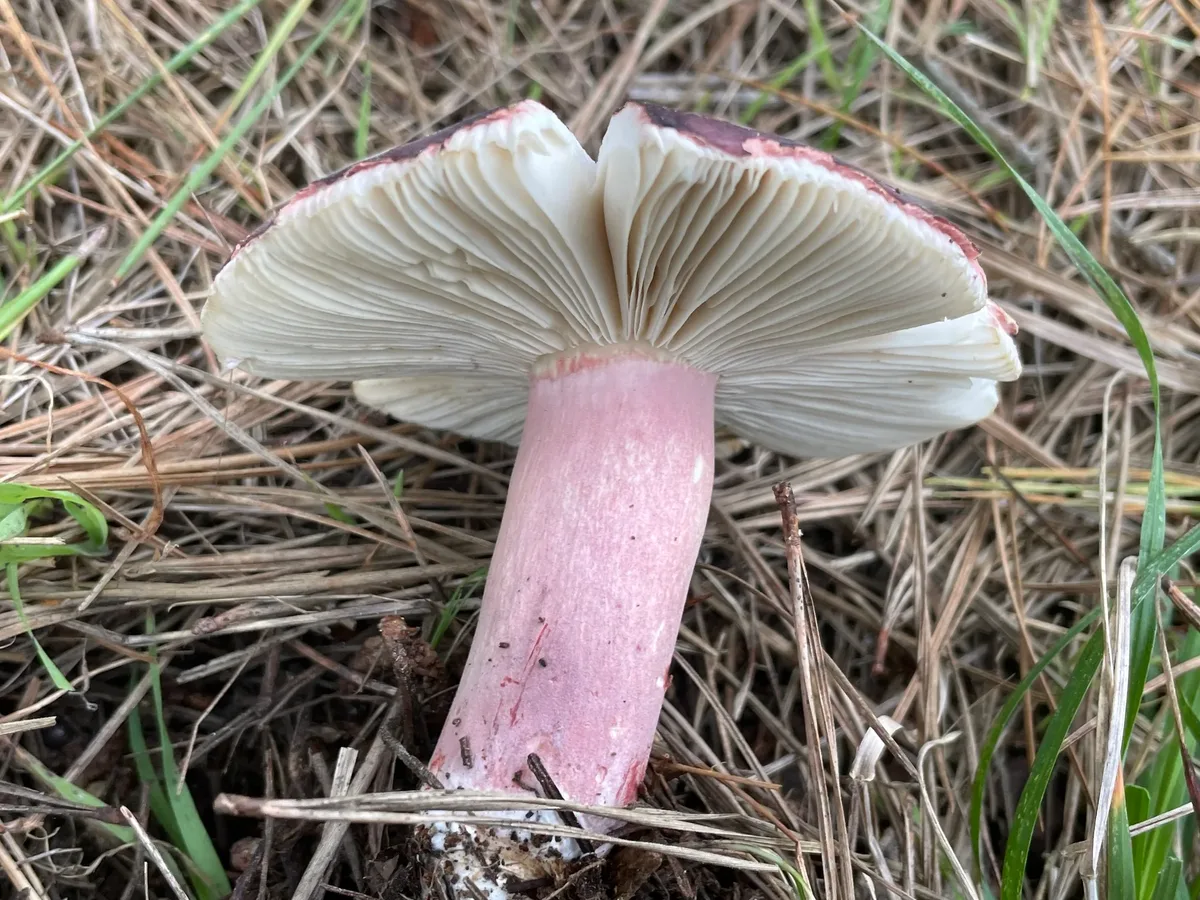
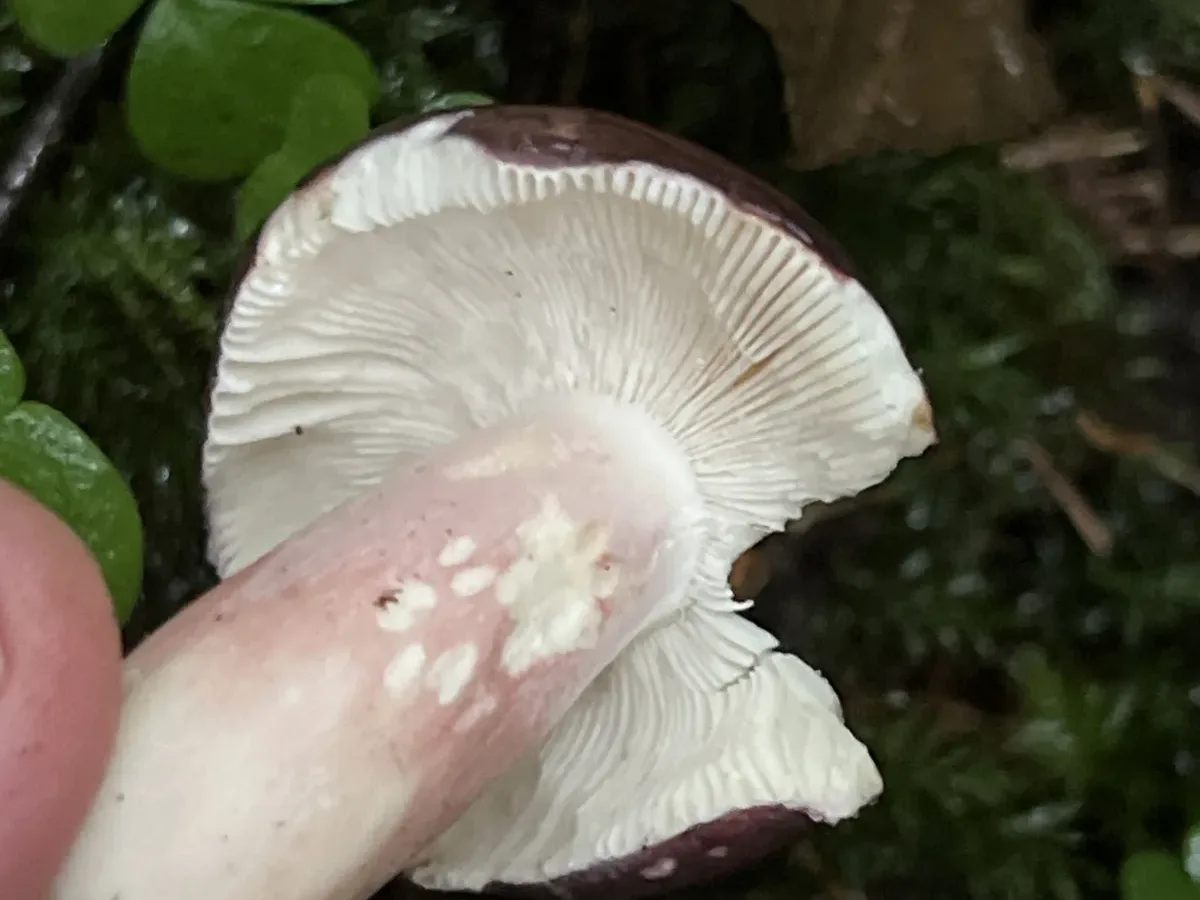
Gills are cream, crowded, and brittle - they shatter rather than bend, confirming the Russula genus. They may take on faint blue or greenish hues near the stem attachment, though this character is not consistent.
Stem
The stem is white with a distinctive violet-pink to wine-red suffusion, especially toward the foot.
Flesh
The flesh is pure white and firm, producing no milky latex on cutting. The spore print is pale cream.
Smell & taste
The taste is the single most important field character: raw flesh is fiercely, persistently acrid and peppery, a heat that builds quickly and does not fade. This alone immediately signals the species is not safe to eat.
The fruity gooseberry or redcurrant scent, combined with the purple-red cap and spruce association, makes this one of the more recognisable acrid Russulas in European spruce woodland.
Why it's dangerous
Not life-threatening. Russula queletii is a GI irritant, not a systemic poison. It contains no amatoxins and does not cause liver or kidney damage.
However, severe vomiting and diarrhoea carry secondary risks (dehydration, electrolyte imbalance) if extreme, especially in vulnerable individuals.
The species should be treated as firmly off-limits for the table, regardless of preparation method.
Toxin
The principal toxic agents in acrid Russulas, including R. queletii, are sesquiterpene derivatives - most notably compounds in the velutinal ester group - which are potent irritants of the gastrointestinal mucosa.
These compounds are responsible for the intensely hot, peppery taste, a direct pharmacological signal of irritant activity. They are more concentrated in the gills and cuticle than in the stem flesh.
The mechanism of toxicity is local irritation and inflammation of the GI tract rather than systemic absorption. This is why symptoms begin quickly (within 30 minutes to 2 hours of ingestion) and why fatalities do not occur in otherwise healthy adults eating normal quantities.
Symptoms
Ingestion typically causes rapid onset of intense burning in the mouth and throat, followed - usually within 30 minutes to 2 hours - by nausea, vomiting, abdominal cramping, and diarrhoea.
Symptoms are self-limiting and resolve within 24 hours in most cases. Supportive care (fluids, rest) is adequate treatment.
Medical attention is advisable if vomiting is severe or prolonged, particularly for children or the elderly.
Staying safe
Russula queletii is toxic and must not be eaten.
Its toxicity is attributable to acrid sesquiterpene compounds, principally stizolobic acid derivatives and related irritants concentrated in the gills and cap flesh. These cause gastrointestinal inflammation, cramping, nausea, vomiting, and diarrhoea if the raw or insufficiently cooked flesh is consumed.
In contrast to some accounts that claim brief blanching or prolonged cooking destroys the toxins in acrid Russulas, the risk from R. queletii is considered too high for any culinary use to be recommended.
Some older European sources listed certain acrid Russulas as edible after prolonged parboiling and discarding of the water. Modern mycological guidance does not endorse this for R. queletii - the safety margin is too narrow and individual reactions vary.
The species is not associated with amatoxins, orellanin, or any systemic (non-gastrointestinal) organ toxicity; fatalities are not on record.
Nonetheless, GI illness can be severe, particularly in children or individuals with gastrointestinal sensitivities.
The intensely acrid taste is itself a natural warning: the practical risk of accidental ingestion in meaningful quantity is low because the burning taste discourages swallowing.
Where & when it grows
Habitat
Russula queletii grows exclusively in a mycorrhizal partnership with spruce, overwhelmingly Norway spruce (Picea abies) across its central and western European range.
It is therefore a reliable indicator of genuine spruce forest - it will not be found in purely deciduous woodland.
It typically grows on acidic, deep needle-litter substrates in mature spruce plantations, semi-natural montane spruce stands, and spruce-dominated mixed conifer forests.
The fungus is widespread in the mountain ranges of central Europe (Alps, Jura, Vosges, Black Forest, Bavarian Forest, Carpathians) where spruce is the dominant tree, and extends northward into Scandinavia and the British Isles wherever significant spruce stands occur.
When
Fruitbodies appear from July through October, with the main season running August through September.
Like most Russulas it responds to accumulated warm-season rainfall followed by a short fruiting lag - typically appearing 7-14 days after sufficient rain (15-25 mm over two weeks), when soil temperatures remain in the 10-18 °C range.
It is one of the more reliably recurring autumn species in spruce forest and can persist into October in mild years.
How it grows
Fruitbodies arise singly or in loose scatter across the needle-litter floor beneath spruce - rarely in tight groups.
They can appear seemingly overnight after rain, the firm caps pushing through the duff with that characteristic brittlegill snap if disturbed too early.
In good condition the sturdy flesh holds for a week or two before softening. Older stems go hollow and maggots find their way in, as they do with most Russulas.
Fruiting conditions
Standard mycorrhizal Russula fruiting pattern in spruce forest: warm-season rains accumulating 15-25 mm over two weeks trigger flushing after a 7-14 day lag, when soil temperature remains in the 10-18 °C range. Primary season July-October, peaking August-September.
Look-alikes
Several other red-capped Russulas occur in similar habitats and can cause confusion.
- Russula sardonia (Primrose brittlegill) also grows under conifers (especially pine) and has a purple-red to violet cap, but it has pale primrose-yellow gills in maturity - quite distinct from the cream gills of R. queletii - and smells of geranium rather than gooseberries; it is equally acrid.
- Russula atropurpurea (Purple brittlegill, sometimes confused with R. queletii) tends to be slightly larger with a darker blackish-purple cap and occurs mainly under broadleaved trees (especially oak and beech), while R. queletii is strictly under spruce; both are acrid and inedible.
- Russula emetica (The Sickener) is brilliant scarlet-red with a pure white stem (without violet tints) and grows in boggy or wet spruce woodland; also intensely acrid and inedible.
- Russula nobilis (Beechwood sickener) grows under beech with a similar red cap but is excluded by the different tree association.
None of the species realistically confused with R. queletii are deadly.
However, beginners should be aware that the broader practice of identifying any red-capped mushroom requires care: red Russula species must be distinguished as a genus (brittle flesh, no ring, no volva) from unrelated red-capped fungi before species-level characters are applied.
Scarlet to cherry-red cap with pure white stem, specifically under beech (Fagus). Habitat (beech vs. spruce) immediately separates it from R. queletii. Also acrid, also inedible.
Small (3-5 cm), with a fragile, frail build; cap variable in colour - often pinkish, lilac, or greenish-purple - with a distinctly grooved (striate) margin; faintly fruity smell; acrid taste. Much less robust than R. queletii. Inedible.
Similar purple-red cap under conifers but has strikingly pale primrose-yellow gills in maturity (cream in R. queletii), a geranium-like smell instead of gooseberry, and tends to grow under pine rather than spruce. Both are intensely acrid and inedible.
Very dark blackish-purple cap; grows predominantly under oak and beech (broadleaved trees), not spruce. Acrid and inedible. Habitat is the decisive separator - R. queletii is strictly under spruce.
Bright scarlet-red cap with a pure white stem (no violet or wine-red tints); grows in wet, boggy spruce or pine woodland; also intensely acrid. R. queletii has a distinctly purple-red (not pure scarlet) cap and a stem flushed wine-red to violet. Both are toxic.
A reference guide - never an edibility guarantee. When in doubt, leave it out.