Scarlet Brittlegill
Russula pseudointegrasyn. Russula pseudointegra Arnould & Goris
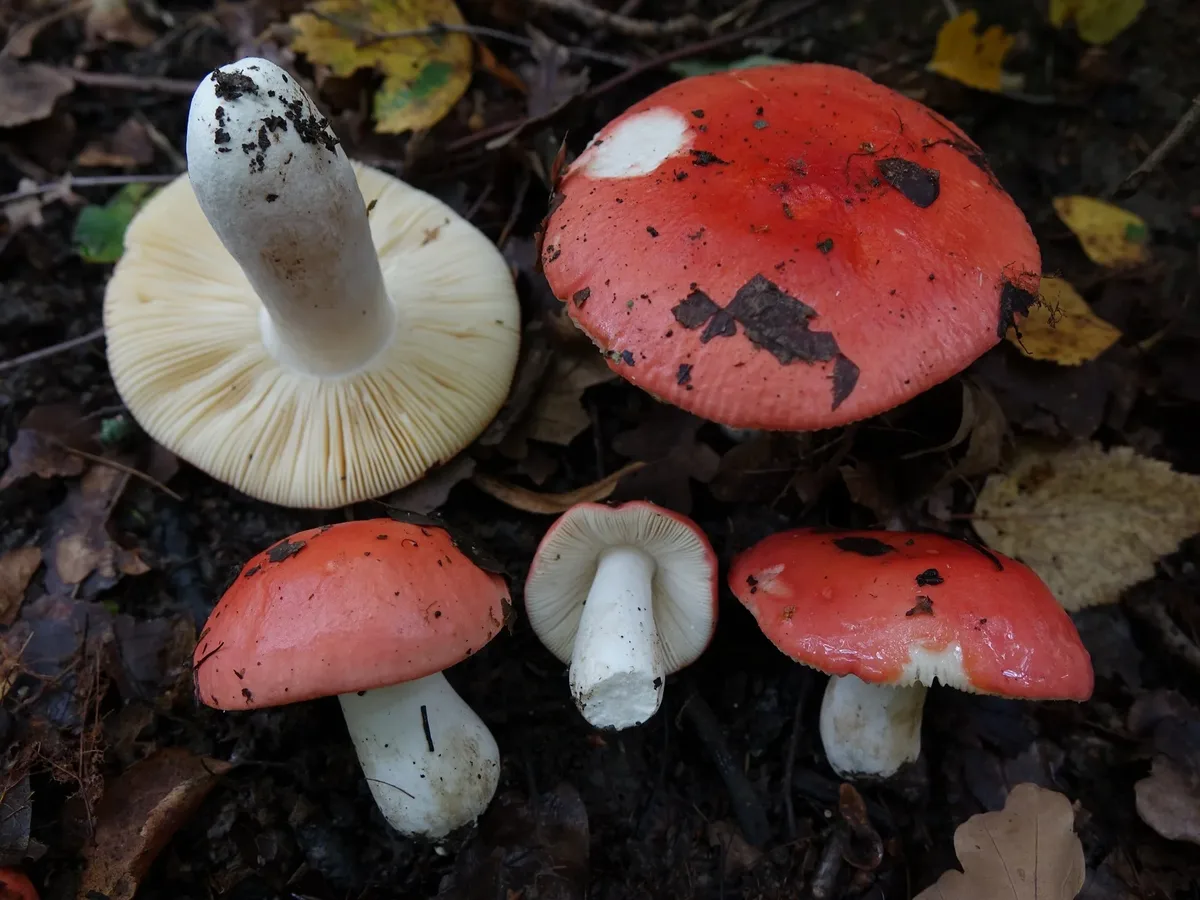 © Allar Antson (CC BY-SA)
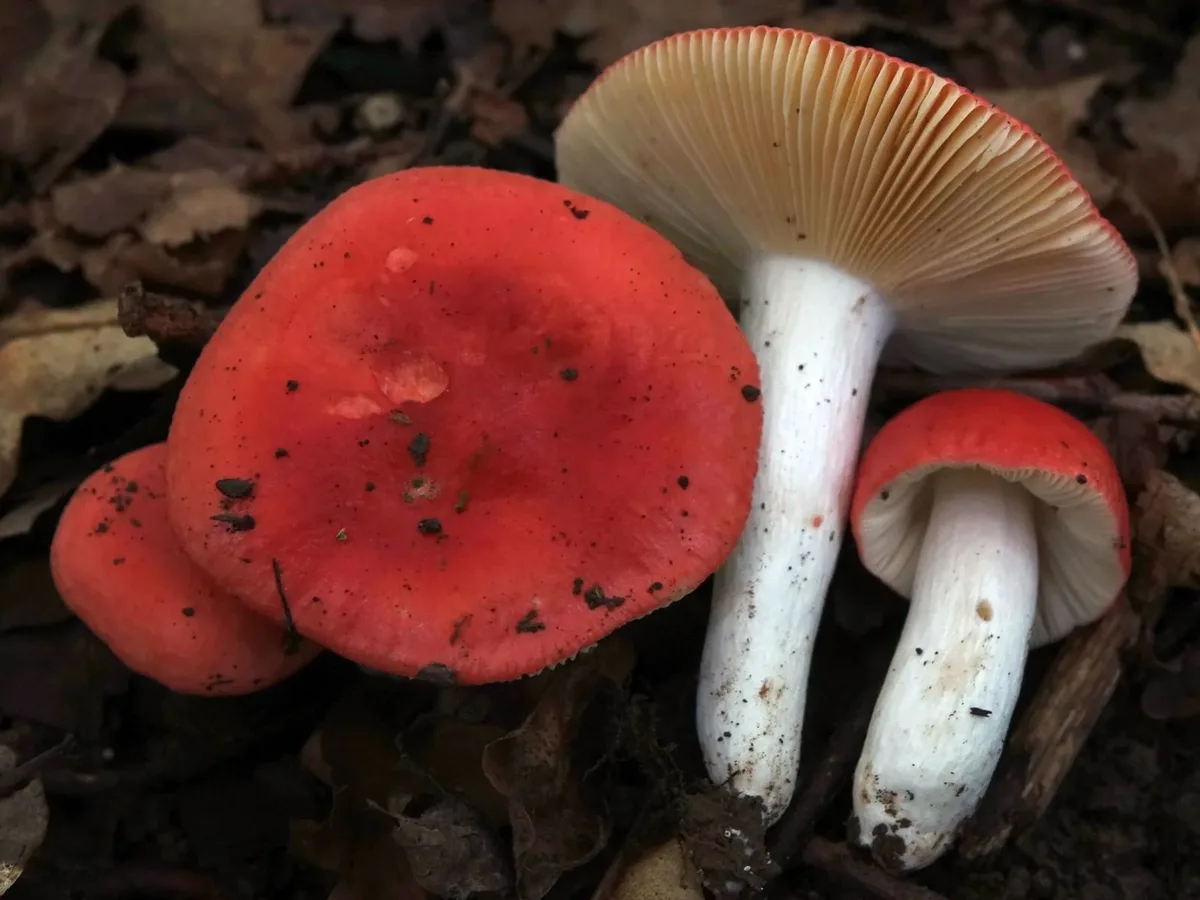 © Sven Pruul (CC BY-SA)
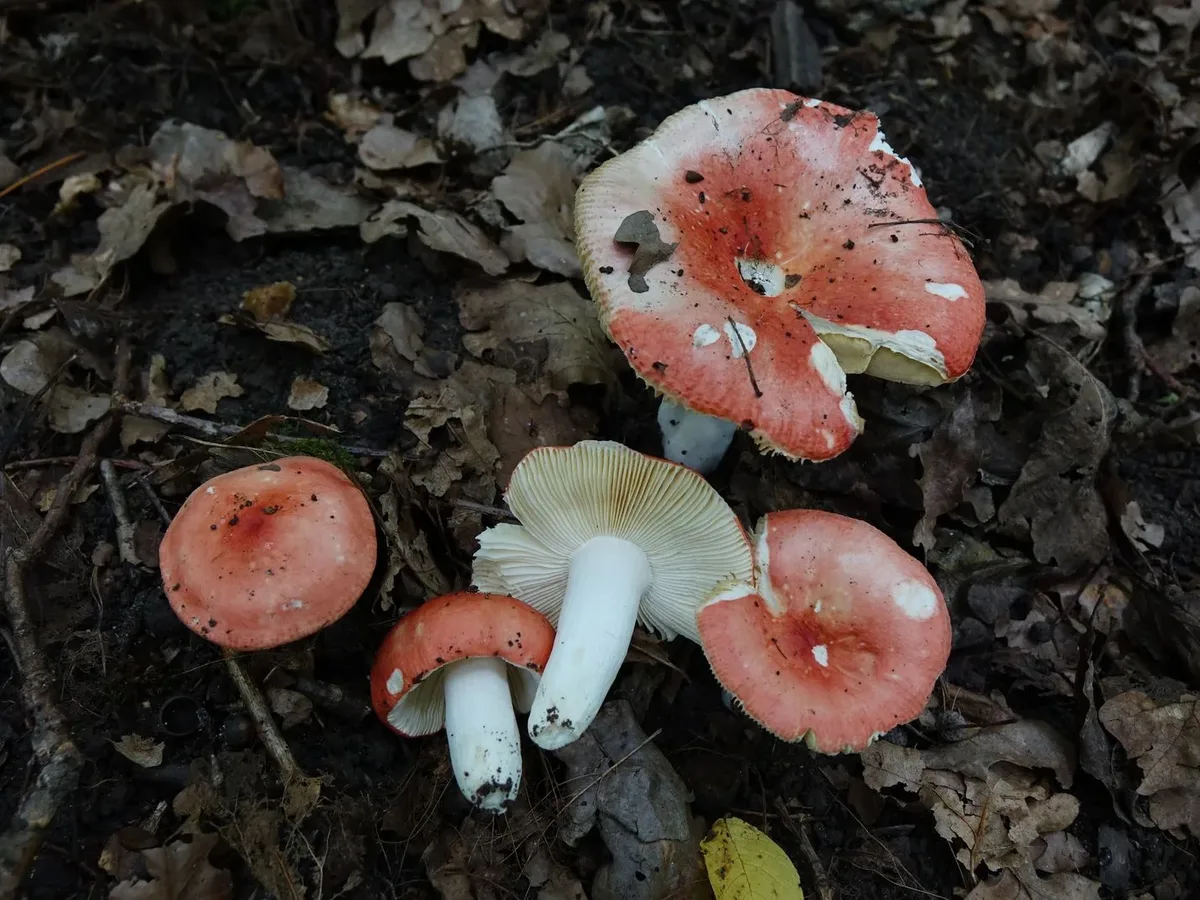 © Allar Antson (CC BY-SA)
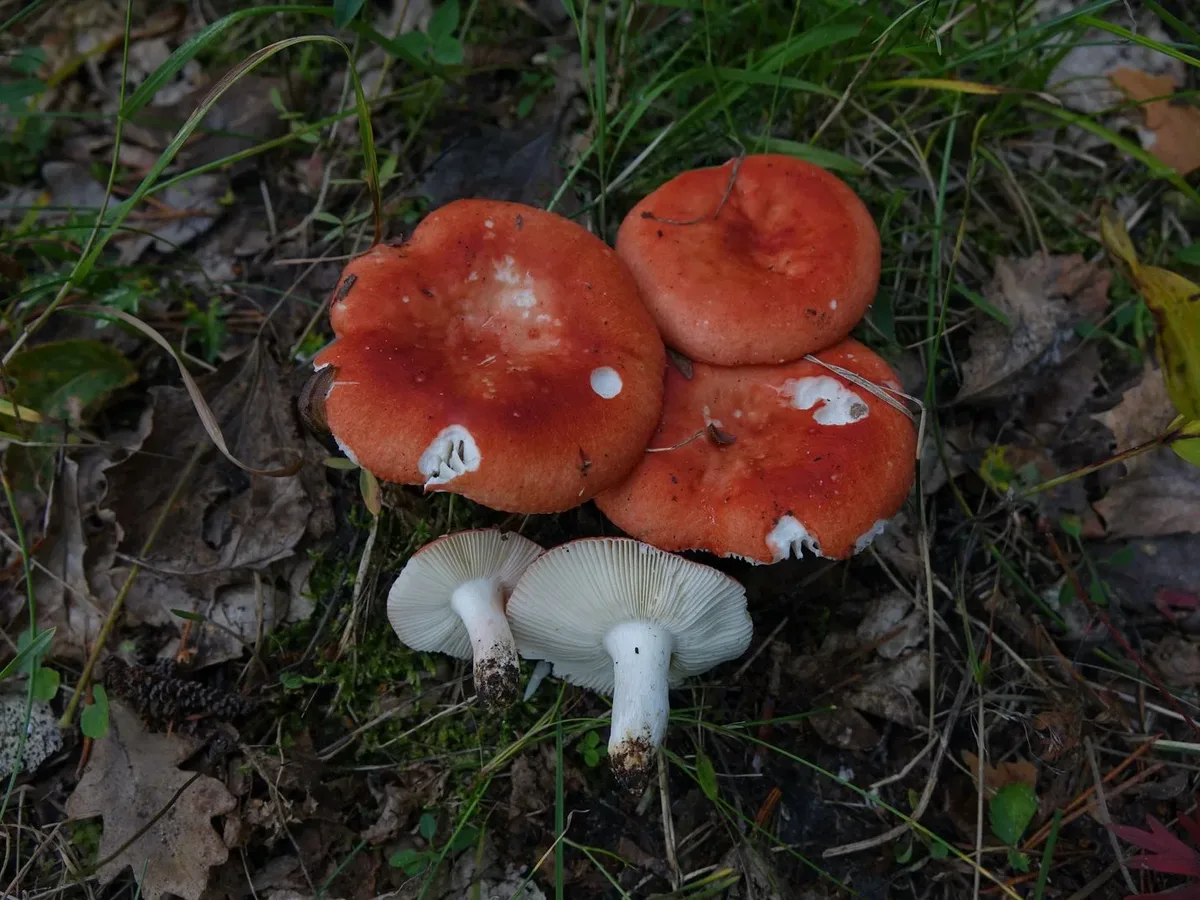 © Allar Antson (CC BY-SA)
 © Allar Antson (CC BY-SA)
 © Allar Antson (CC BY-SA)
 © Maarit Piitulainen (CC BY-SA)
 © Petri Roponen (CC BY-SA)
 © Petri Roponen (CC BY-SA)© Allar Antson (CC BY-SA)© Sven Pruul (CC BY-SA)
Edible only with the right preparation - or safe for some people but not others. Learn the caveats first.
Never eat a mushroom you are not 100% sure of - check the look-alikes below, and always cook wild mushrooms.
How to recognise it
Cap
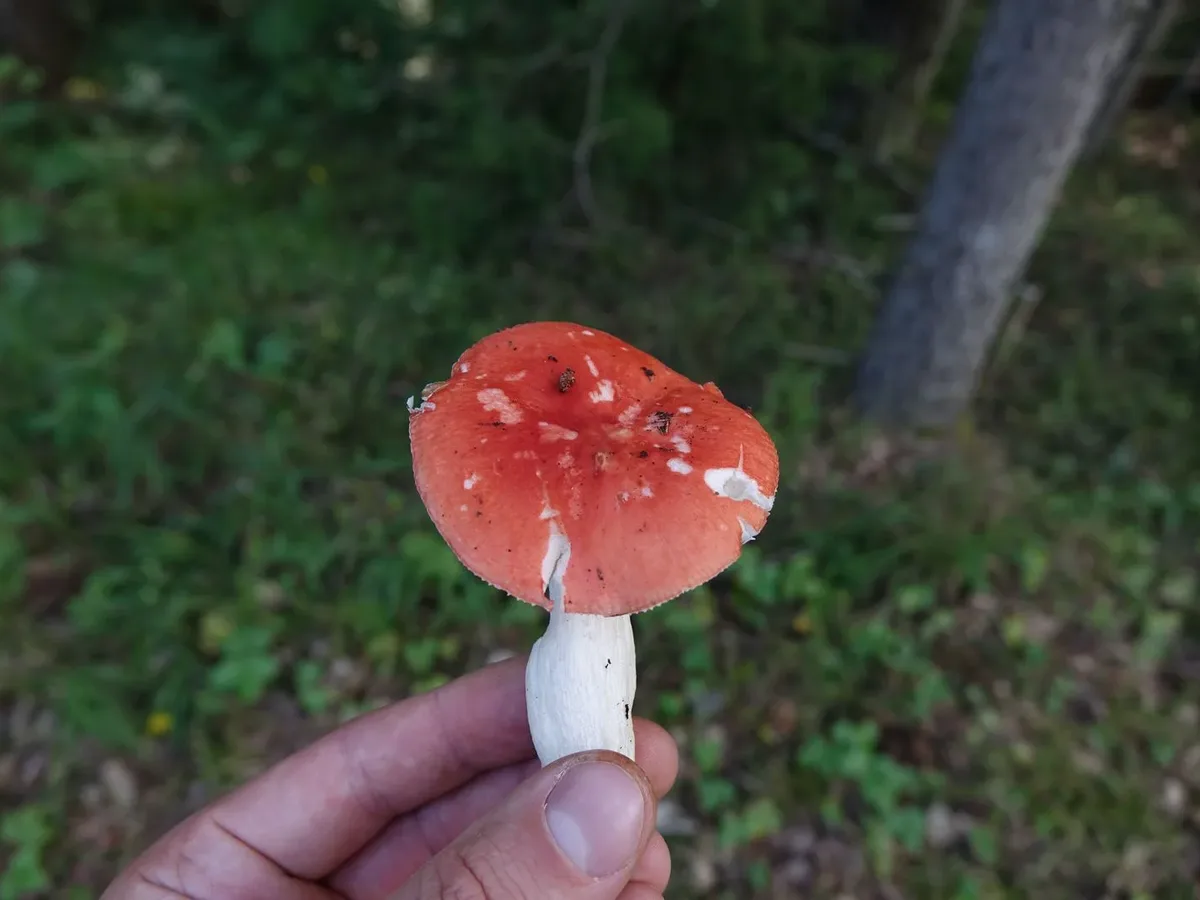
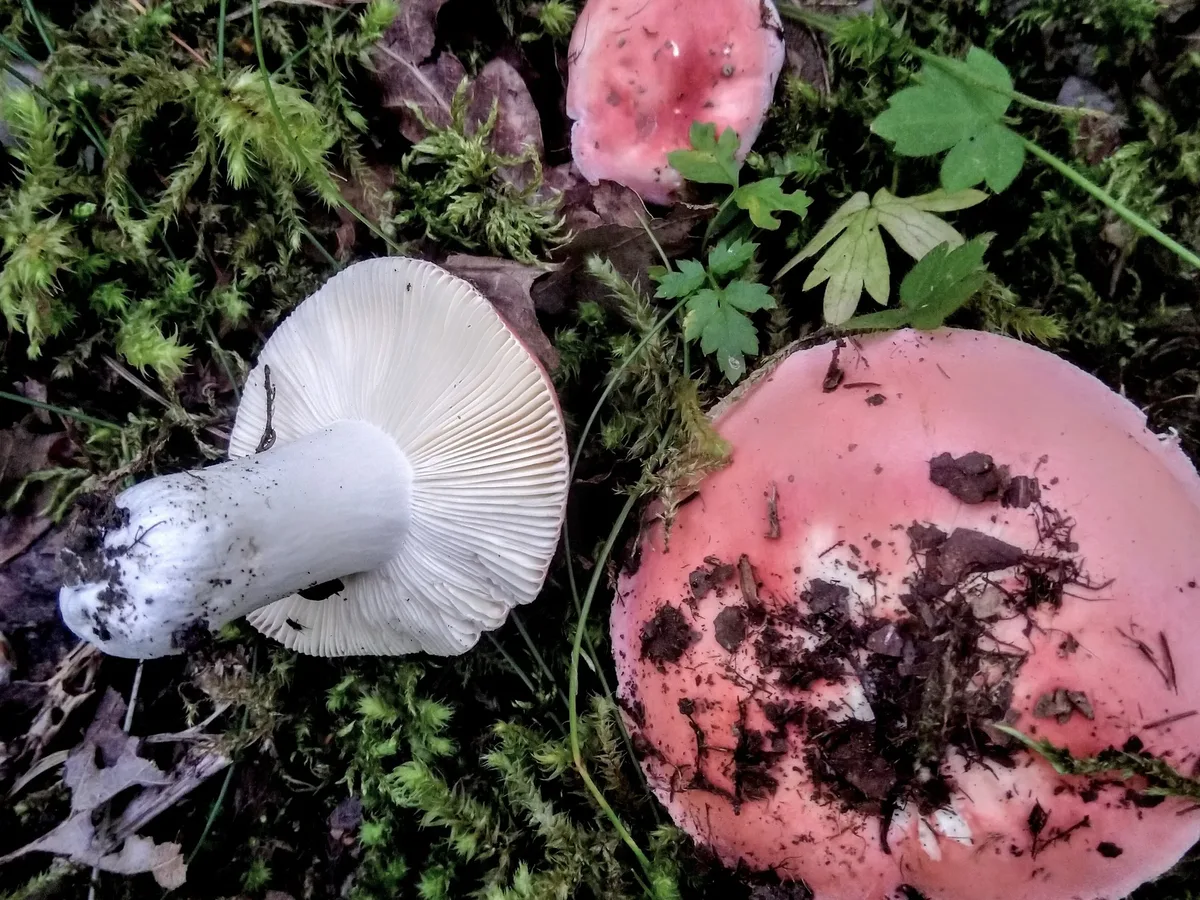
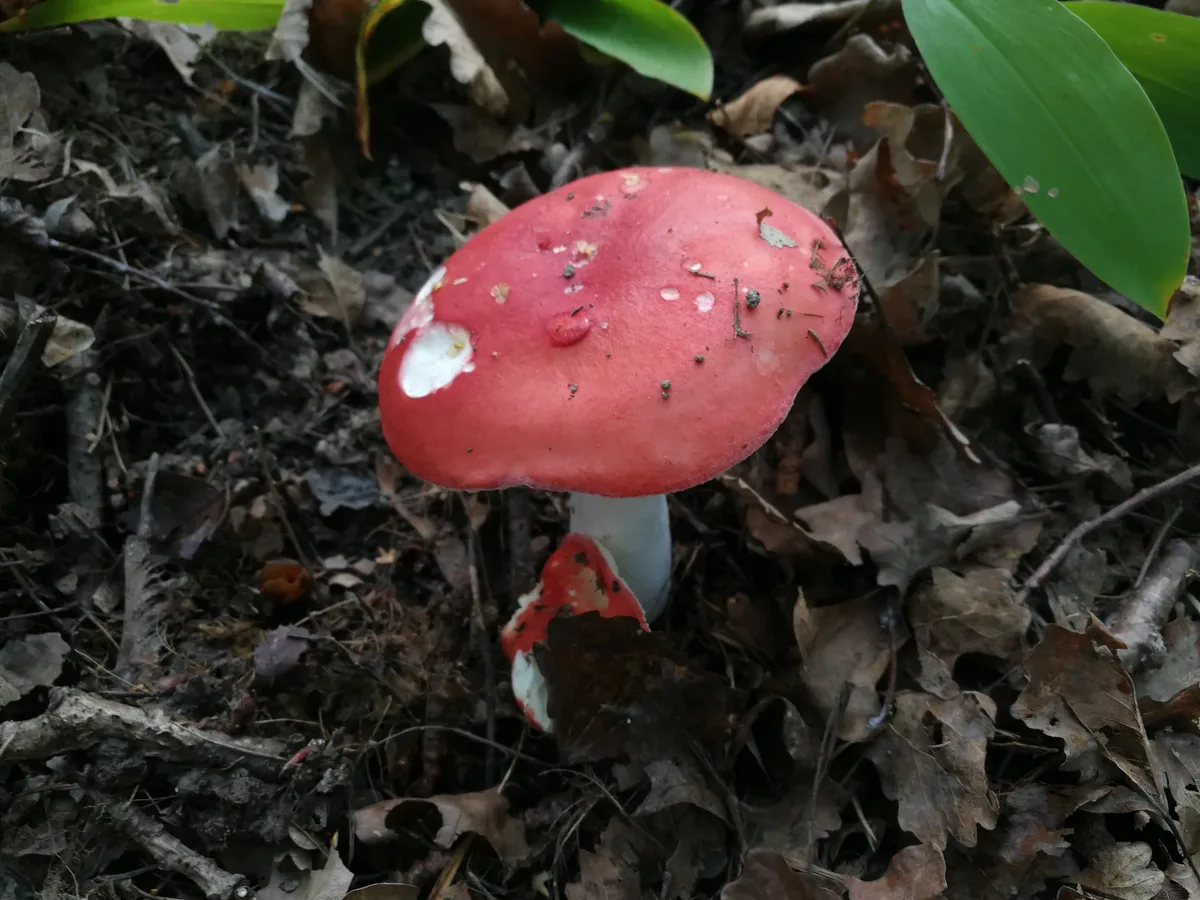
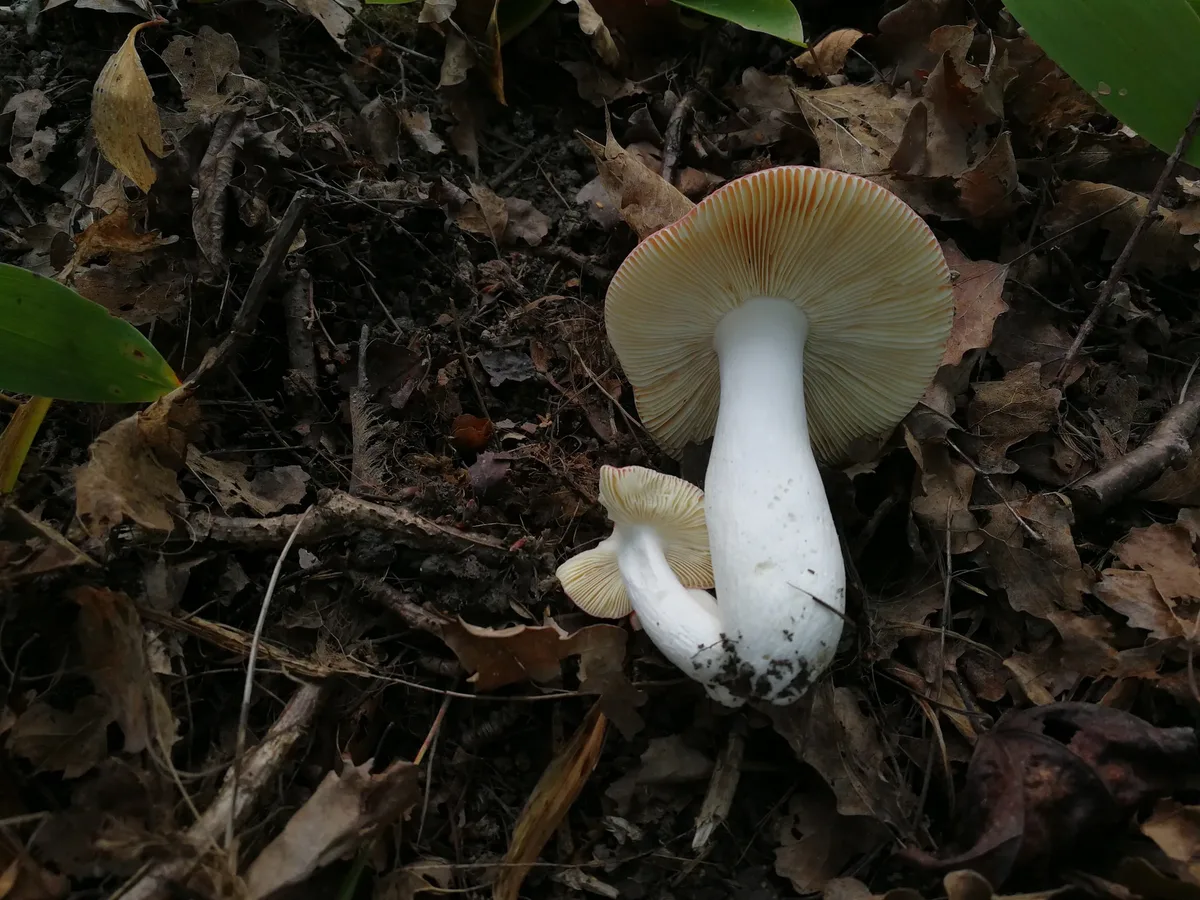
Russula pseudointegra presents itself as a bold, saturated scarlet to blood-red mushroom with a smooth cap (4-10 cm) that begins convex and eventually becomes broadly flattened or shallowly funnelled.
The surface is slightly greasy when wet and has a clean, vivid colour that holds even into maturity, though it can fade to pale salmon-orange near the margin in old age or after heavy rain. The cuticle peels roughly one-quarter to one-third from the margin - confirming genus.
Gills
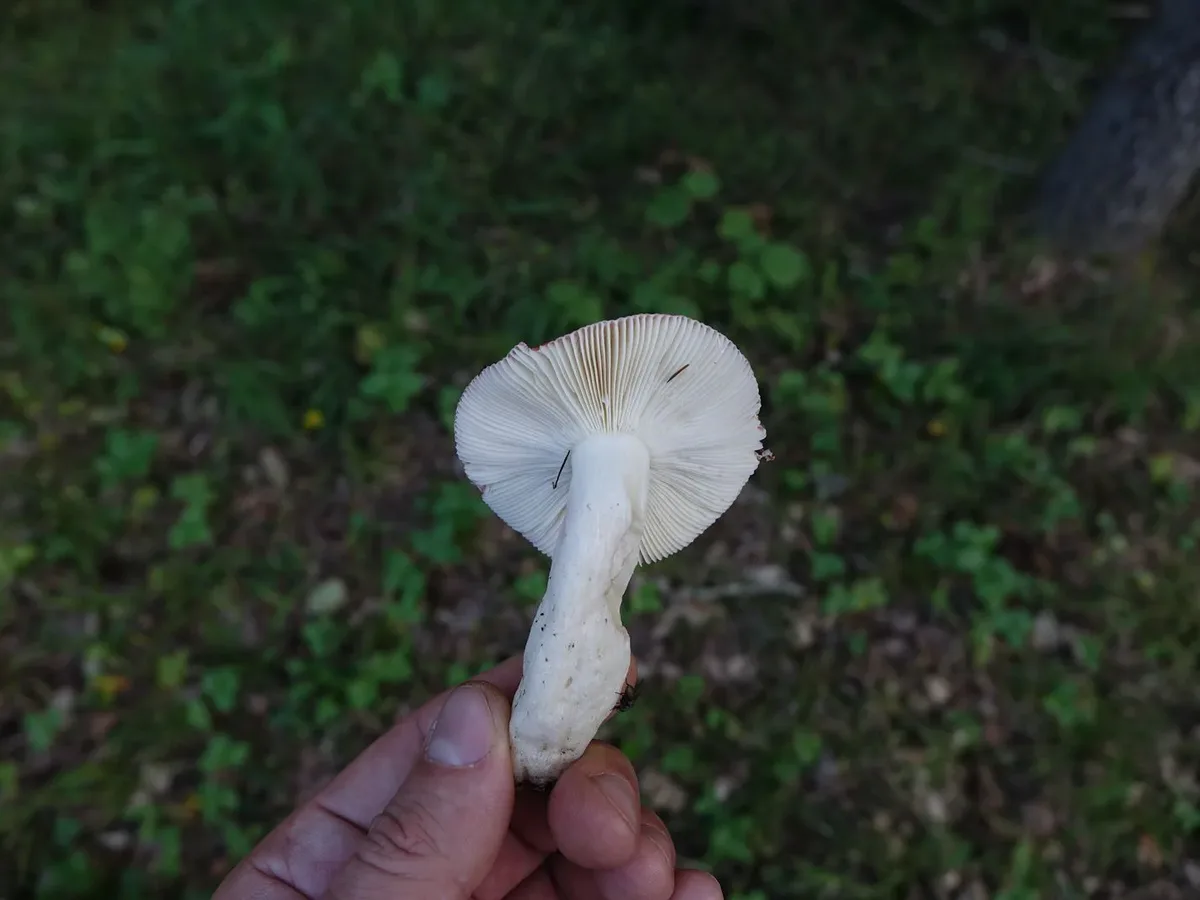
Beneath, the gills are white to cream, moderately crowded, and brittle in the defining Russula way: press them and they snap and crumble rather than flexing.
Stem
The stem is white, sometimes pale pink-flushed at the base, firm, and solid without any ring or volva at any stage.
Flesh
The flesh is white, chalk-like, and firm.
Taste
The single most useful confirmation, after establishing genus by the absent volva and ring plus brittle gills, is the taste: a small fragment chewed and spat reveals a distinct, persistent, building acridity - fiery and peppery - that immediately places this mushroom in the acrid red Russula group and rules out eating it.
Why it's dangerous
Moderate as a direct poisoning hazard - Russula pseudointegra's sesquiterpene irritants are not life-threatening in typical exposures, and no fatalities are on record attributable specifically to this species.
The real danger in the East and Southeast Asian context is the landscape: R. pseudointegra shares habitat, season, and superficial appearance with Russula subnigricans, a genuinely lethal species.
The failure mode is not 'eating R. pseudointegra knowing it is that species' but 'eating what a forager believes is a harmless red russula while R. subnigricans is also present and visually similar'. Rhabdomyolysis from R. subnigricans is documented in multiple fatal poisonings in rural China and Japan.
The conservative response to ANY uncertain red or scarlet Russula in East Asia is rejection, and the acrid taste of R. pseudointegra itself is at least a clear deterrent - the danger would escalate if a forager encountered a mild-tasting specimen or confused it with the mild-tasting but deadly R. subnigricans.
Toxin
The primary toxins in Russula pseudointegra are sesquiterpene compounds - acrid aldehydes and related pungent lactones present in the cell sap of the flesh and gills. These are direct gastrointestinal irritants that act on the mucous membranes of the upper and lower digestive tract.
They are the same class of compounds responsible for the peppery acridity of Russula emetica and related acrid species across the globe.
No systemic or delayed-action toxins (hepatotoxins, nephrotoxins, or rhabdomyolytic agents) have been specifically identified in R. pseudointegra.
The rhabdomyolytic compound in the related R. subnigricans has been identified as cycloprop-2-ene carboxylic acid (and related cyclopropyl fatty acids), but this is a chemically distinct mechanism not attributed to R. pseudointegra.
Symptoms
If ingested:
- Burning sensation in the mouth and throat immediately on chewing.
- Then nausea, vomiting, abdominal cramping, and diarrhoea, typically within 30 minutes to 2 hours.
Symptoms are usually self-limiting and resolve with supportive care - rest and fluid replacement - within 6-12 hours.
There are no known hepatotoxic, nephrotoxic, or neurotoxic effects from R. pseudointegra specifically.
However, if after eating a red Russula in East or Southeast Asia the patient develops muscle pain, weakness, dark urine (myoglobinuria), or persisting fatigue beyond 12 hours, treat this as a medical emergency and seek hospital care immediately - these signs suggest rhabdomyolysis from R. subnigricans or a related toxidrome, a potentially fatal condition requiring urgent renal support.
Staying safe
Russula pseudointegra is a poisonous species: the acridity in its flesh signals sesquiterpene irritant compounds that cause gastrointestinal distress on ingestion.
Nausea, vomiting, stomach cramping, and diarrhoea can be expected if eaten, typically within 30 minutes to 2 hours. These effects are self-limiting in healthy adults but can be severe in children, the elderly, and anyone with a compromised digestive system.
The overriding safety concern in East and Southeast Asia, however, is not this species itself but the broader context in which it is encountered: the same forests contain Russula subnigricans, which causes rhabdomyolysis - the catastrophic breakdown of muscle tissue - and has killed foragers in China and Japan.
Rhabdomyolysis from R. subnigricans presents hours after ingestion with muscle pain, weakness, and eventually kidney failure; there is no antidote.
Any acrid or uncertain red-to-dark Russula in East or Southeast Asia must be rejected outright, and foragers must resist the cultural habit of treating 'mild = safe, red Russula' as a binary: mildness does not reliably separate R. bella (reportedly edible) from R. subnigricans (deadly) to an untrained eye.
If any doubt exists about a red Russula's identity in this region, do not eat it.
Where & when it grows
Habitat
This species is rooted in the mycorrhizal ecology of subtropical and warm-temperate broadleaf forest in East and Southeast Asia.
The underground mycelium locks into a mutually beneficial exchange of nutrients with the roots of living oaks, chestnuts, stone oaks (Lithocarpus), and related Fagaceae - meaning it can only grow in the immediate vicinity of these trees and never on deadwood or in open ground.
It is at home on the acidic, humus-rich soils of hilly and montane forest in southern and south-western China (Yunnan being a particularly species-rich mycological province), Japan, and Korea.
In Yunnan it is a regular inhabitant of the complex mixed forests where pine (Pinus yunnanensis, P. massoniana) intergrades with subtropical broadleaf Castanopsis woodland - a floristic transition zone of exceptional mycological diversity.
Foragers in these landscapes will encounter many scarlet and red Russula species simultaneously, which is precisely why a careful, species-level identification protocol matters here.
When
Fruiting is driven by the summer monsoon. Warm, saturated soil temperatures - typically 18-26 °C at 10 cm depth - combined with consistent rainfall of the monsoonal rainy season trigger the ectomycorrhizal flush.
In southern China and Japan this means caps first appear in June and continue producing waves through July, August, and into September, with the peak fruiting typically occurring in July to early August when warmth and moisture reach their seasonal maximum.
Fruiting tails off through September and October as temperatures cool and monsoon rains diminish, ending before the first cool nights of autumn.
Unlike temperate European russulas that have a long, low-intensity season, R. pseudointegra tends to fruit in more concentrated flushes tied to rain events within the monsoon window.
How it grows
Grows singly or in scattered groups on the forest floor among leaf litter and duff beneath host trees. Never tufted, never on wood.
The fruitbodies emerge from the soil relatively quickly after soaking rain - caps can reach full size within five to eight days under warm, humid conditions.
Being a mycorrhizal organism, it does not reappear unless the living host tree network beneath remains intact; habitat disturbance (clear-felling, road construction) ends the colony permanently.
Fruiting conditions
Monsoon-driven mycorrhizal species; flushes following sustained monsoonal rainfall when soil temperatures are warm (18-28 °C). Caps emerge 5-10 days after soaking rain. Season tightly bounded by the monsoon window - late June to September in most of its range.
Look-alikes
The East and Southeast Asian forest is home to several scarlet or deep-red Russula species that share the same forest and season, making careful identification essential.
The most important lookalike from a safety standpoint is Russula subnigricans - a deadly species documented causing fatal rhabdomyolysis in China and Japan.
R. subnigricans typically shows:
- A more greyish-brown to dark purplish-brown or sooty-red cap (rather than vivid scarlet)
- Crowded gills
- Flesh that reddens only slightly on cutting
- Growth in broadleaf forest at comparable elevations
It is nonetheless in the genus Russula, has no ring or volva, and can be superficially mistaken by any forager who conflates 'red russula' with a safe category. Treat any uncertain blackening or darkening Russula in this region as potentially R. subnigricans.
Within the acrid red group, Russula emetica and closely related species have a similar scarlet cap and acrid taste but are GI irritants rather than lethal; the distinction matters clinically even though both should be avoided.
Russula bella is another colourful red-capped Asian species with mild taste and is reportedly eaten locally - the taste test is the critical separator (mild = might be edible, acrid = do not eat).
Any red-capped mushroom with a ring and volva is an Amanita, not a Russula, and potentially deadly regardless of cap colour.
Various East Asian Amanita species bear red to orange-red caps with white scales or warts and can superficially catch a forager's eye in the same forest as red Russula species. All Amanita possess a volva, a ring, and free white gills. Russula pseudointegra has attached or slightly decurrent brittle gills, no ring, and no volva. Confirm all three Russula traits before dismissing an Amanita hypothesis.
The most dangerous confusion in the same region. R. subnigricans typically has a more greyish-brown, sooty, or dull purplish-dark cap (not vivid scarlet), more crowded gills, and flesh that reddens only faintly on cut before slowly darkening. It causes fatal rhabdomyolysis via cycloprop-2-ene carboxylic acid and related cyclopropyl fatty acids - a mechanism completely different from acrid GI irritation. Critically, R. subnigricans may have a mild or only slightly acrid taste, meaning the taste test does NOT reliably distinguish it from an edible red russula. Treat any dark, sooty, or greyish-red Russula in East Asia as potentially R. subnigricans and do not eat it.
Young Amanita muscaria buttons enclosed in white veil tissue can emerge in the same forest and be mistaken for any red-capped cap before expansion. Amanita has a clearly visible sac-like volva at the stem base when dug up, a ring on the stem, and free gills - none of these are present in any Russula. Always excavate the complete stem base before drawing any identification conclusion.
A vivid red-capped Asian Russula with a mild (non-acrid) taste, found in broadleaf forests of China and Japan. R. bella is reportedly consumed locally after cooking. The taste test is critical: R. bella is mild; R. pseudointegra is sharply acrid. Never eat an Asian red Russula without a careful taste check, and cross-reference with R. subnigricans which also occurs in the same forests and may be only mildly acrid.
Closely similar in overall appearance: scarlet to blood-red cap, white brittle gills, white stem, acrid taste. R. emetica in Europe is characteristically associated with Sphagnum bogs and birch woodland; in Asia allied acrid scarlet species occur in broadleaf forest. Both are acrid GI irritants and should not be eaten; the practical distinction matters more for taxonomic study than safety.
A reference guide - never an edibility guarantee. When in doubt, leave it out.