Pectinate Brittlegill
Russula pectinatoidessyn. Russula pectinatoides Peck, Russula pectinata var. pectinatoides (Peck) Singer
 © Bjørn Eidhammer (CC BY)
 © Rafael Ancatrio (CC BY)
 © Rafael Ancatrio (CC BY)
 © Rafael Ancatrio (CC BY)
 © Rafael Ancatrio (CC BY)
 © Ulrik Andreassen (CC BY)
 © Bjørn Eidhammer (CC BY)
 © Bjørn Eidhammer (CC BY)© Bjørn Eidhammer (CC BY)© Rafael Ancatrio (CC BY)
Edible only with the right preparation - or safe for some people but not others. Learn the caveats first.
Never eat a mushroom you are not 100% sure of - check the look-alikes below, and always cook wild mushrooms.
How to recognise it
Russula pectinatoides is a medium-sized, pale-capped brittlegill whose identity is encoded in two features you can read without picking it up.
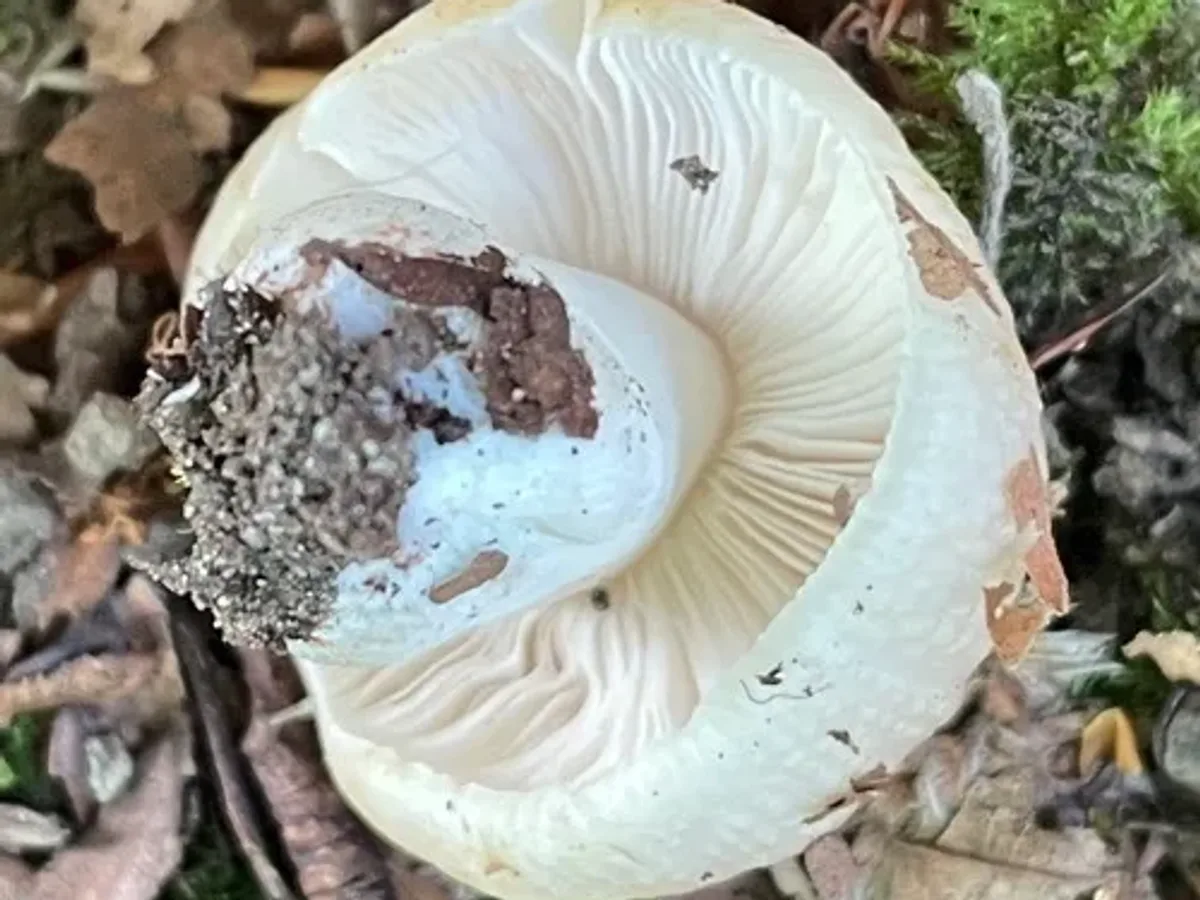
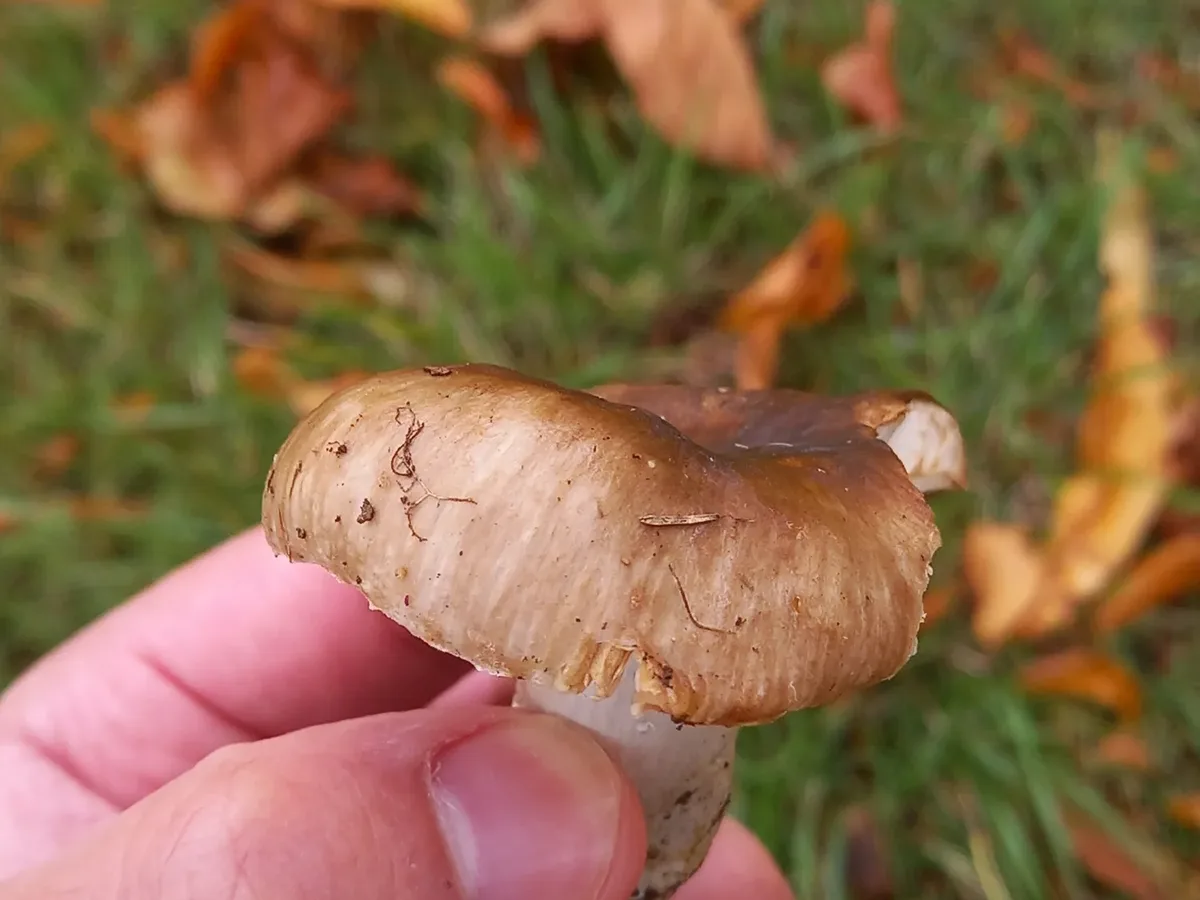
First, look at the cap margin: it is unmistakably pectinate - strongly ribbed and comb-like, with distinct furrows and rounded nodules extending well inward from the rim, a feature visible at a glance in all but the youngest, most tightly closed buttons.
Second, lean in and smell it: the odour is distinctly fetid, recalling stale crabmeat, rancid fish, or sweetish putrefaction.
Together these two traits place the fungus immediately in the Russula section Ingratae, the "unpleasant" russulas, and specifically in the pectinate-margined subset.
Cap
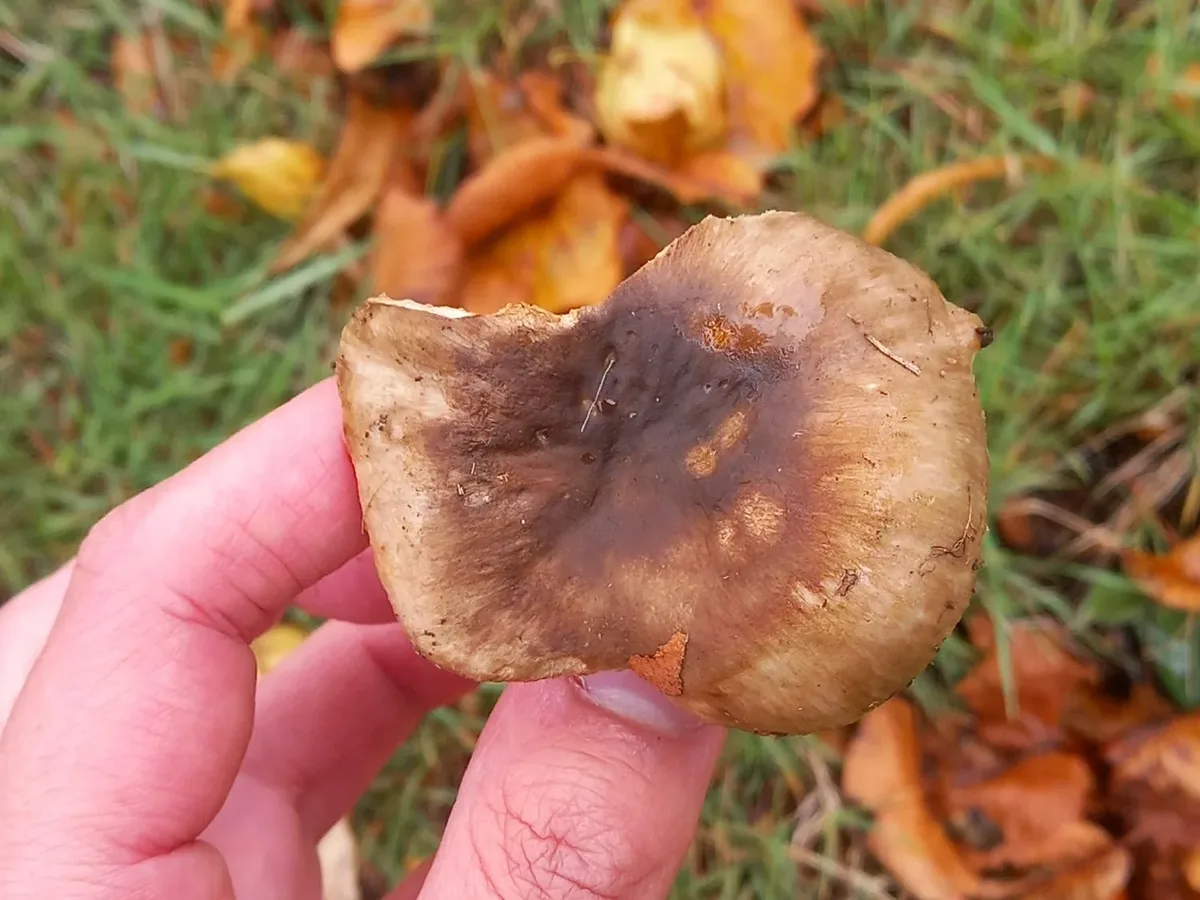
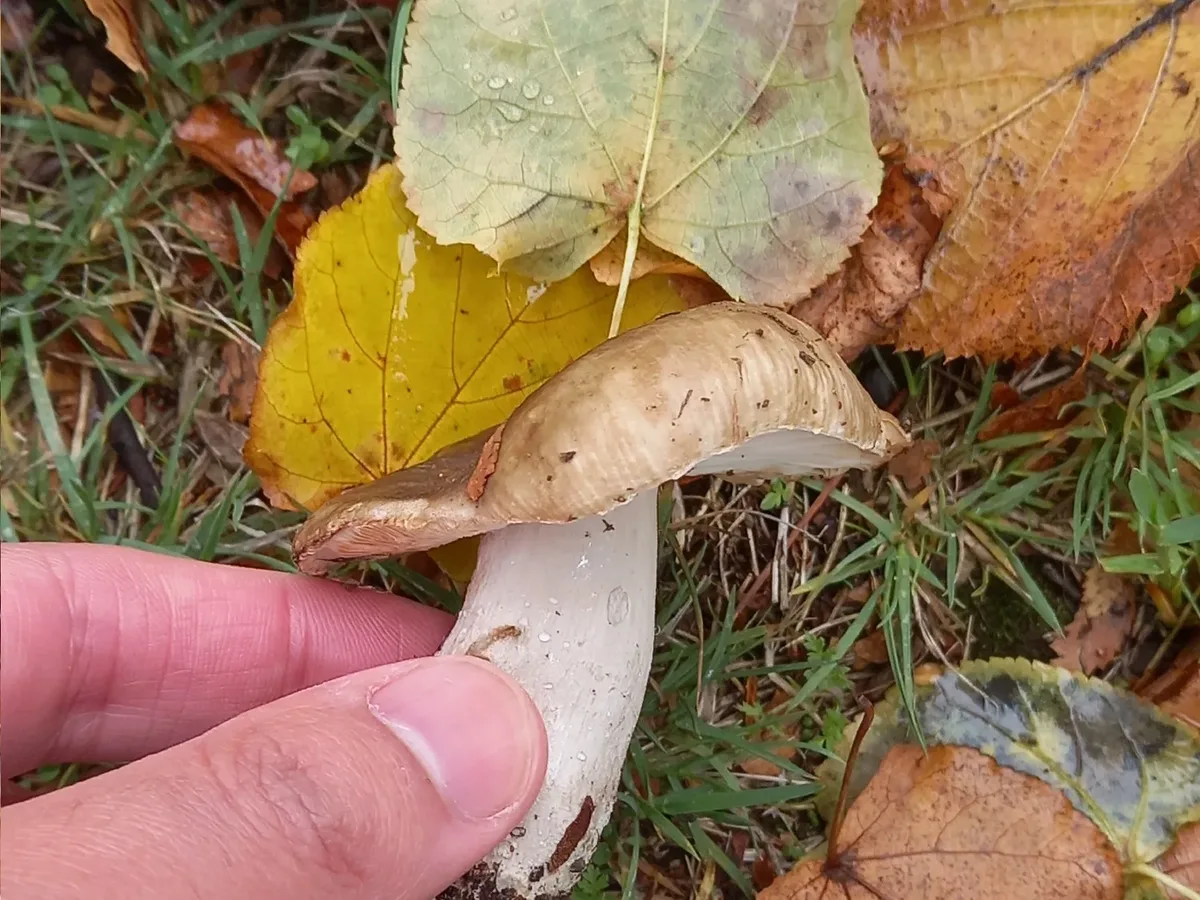
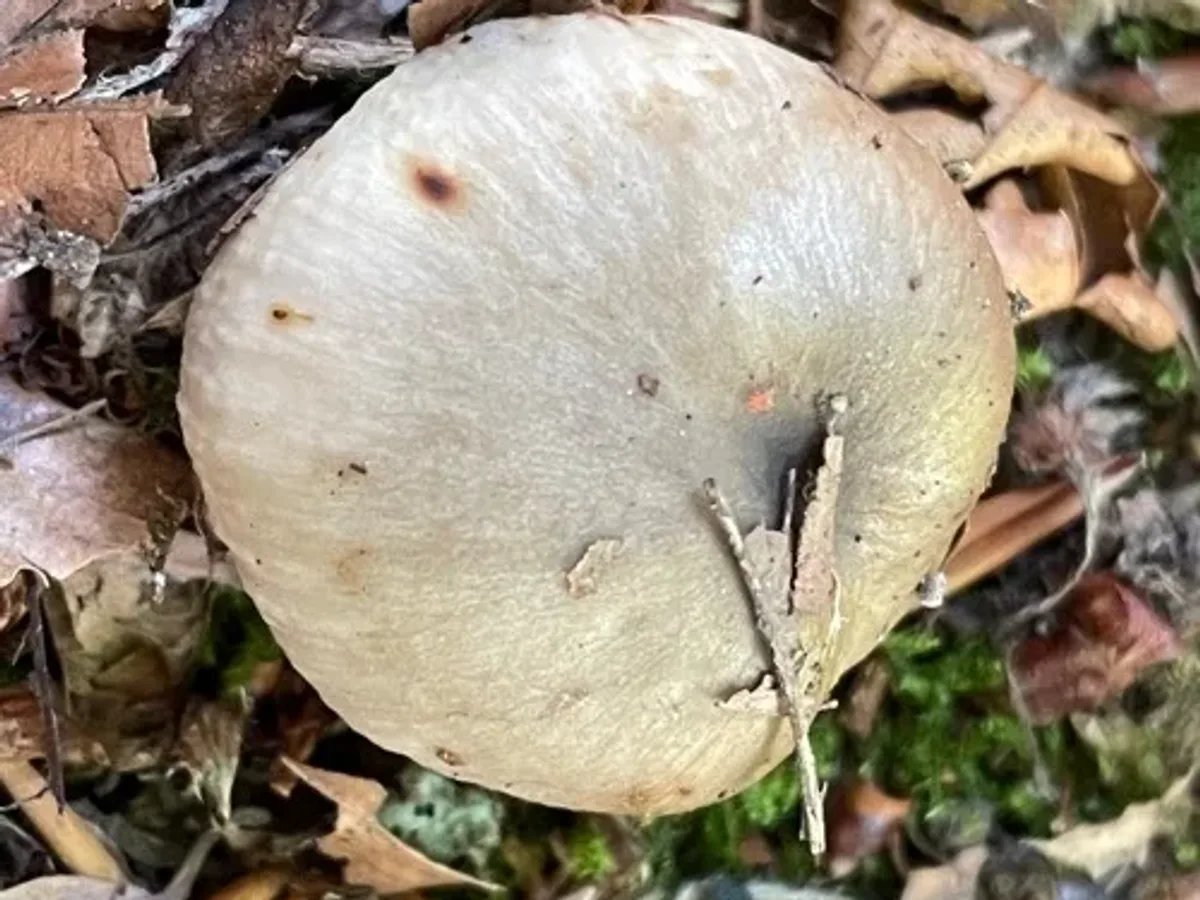
The cap is 4-10 cm, convex in youth, flattening to a broad, shallow-dished plate in age, pale buff to ochraceous-honey or pale straw-yellow - colouring that can look almost washed-out against dark forest litter. The surface is dry and slightly dull, with the cuticle peelable about halfway.
Gills / Pores
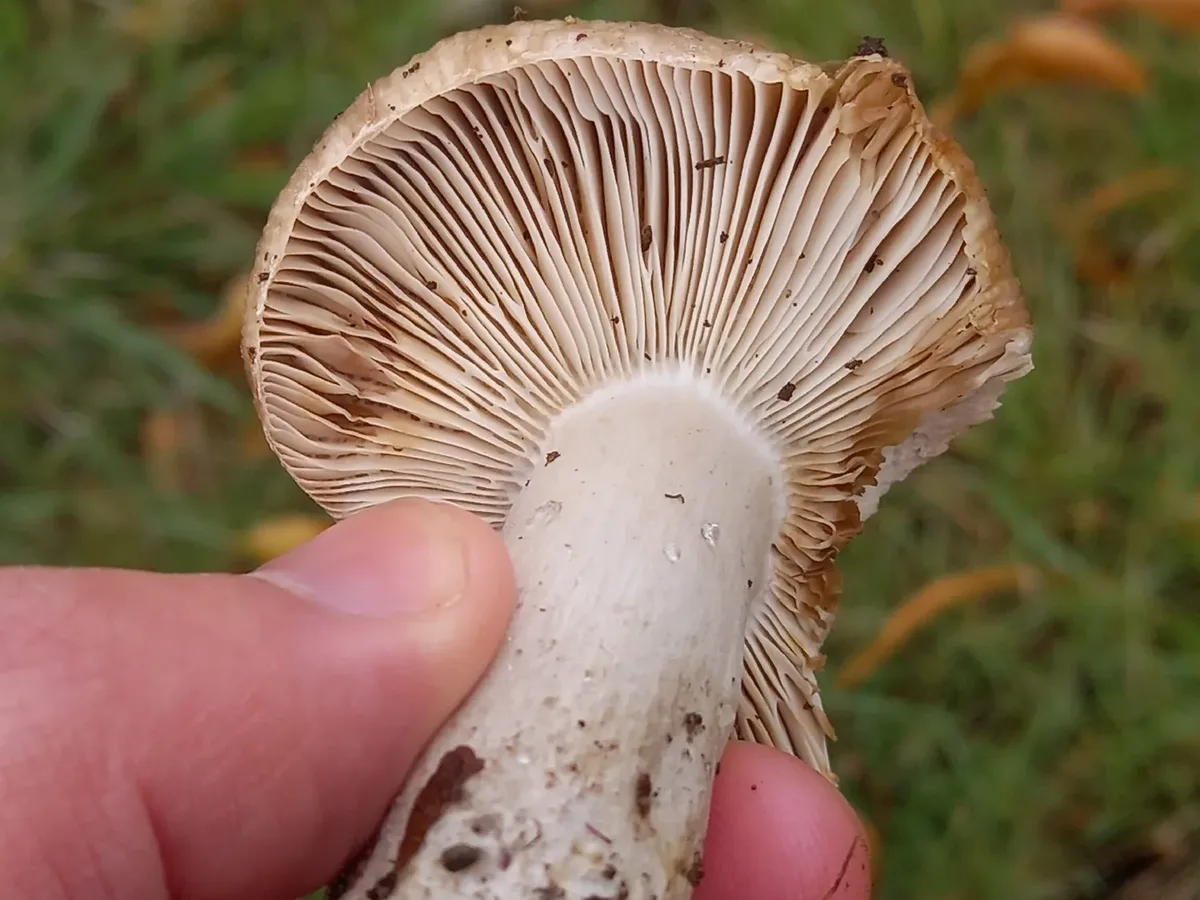
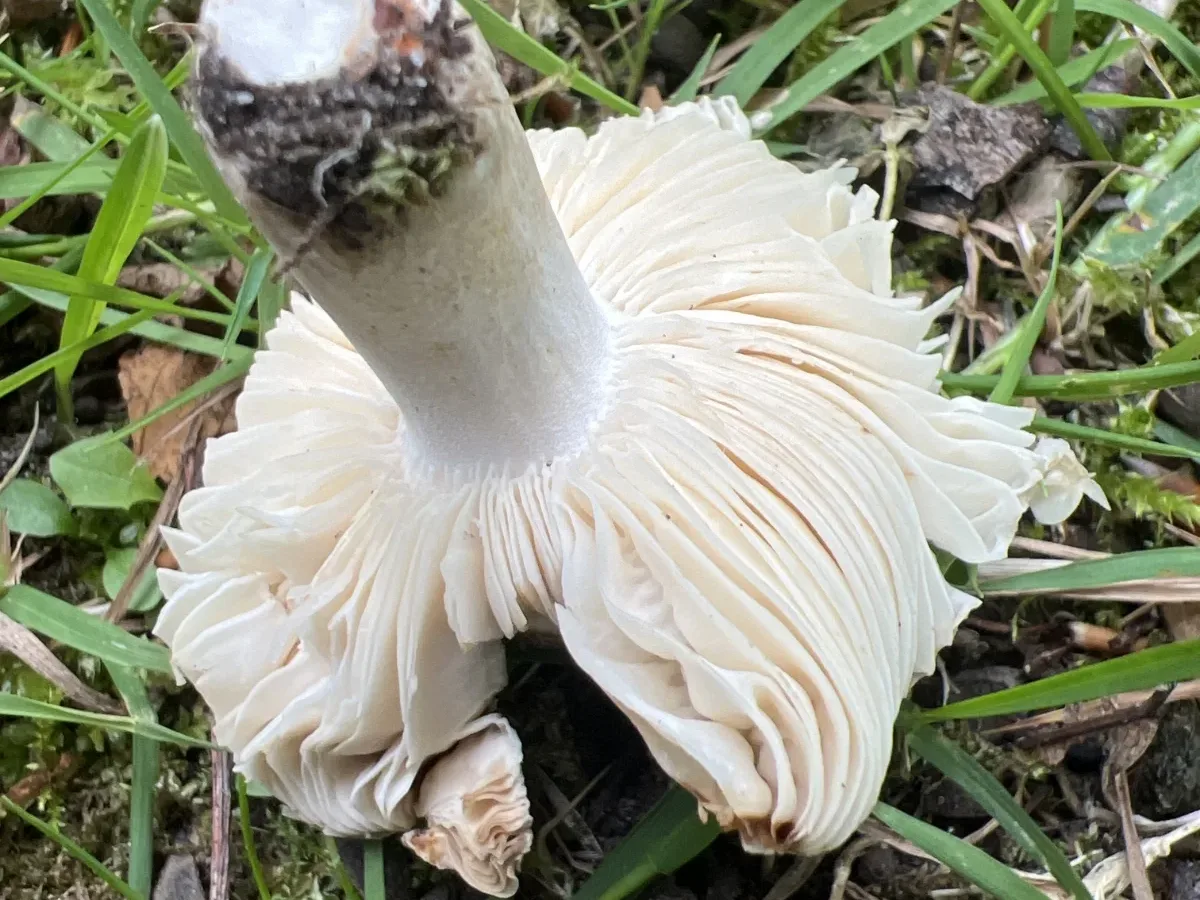
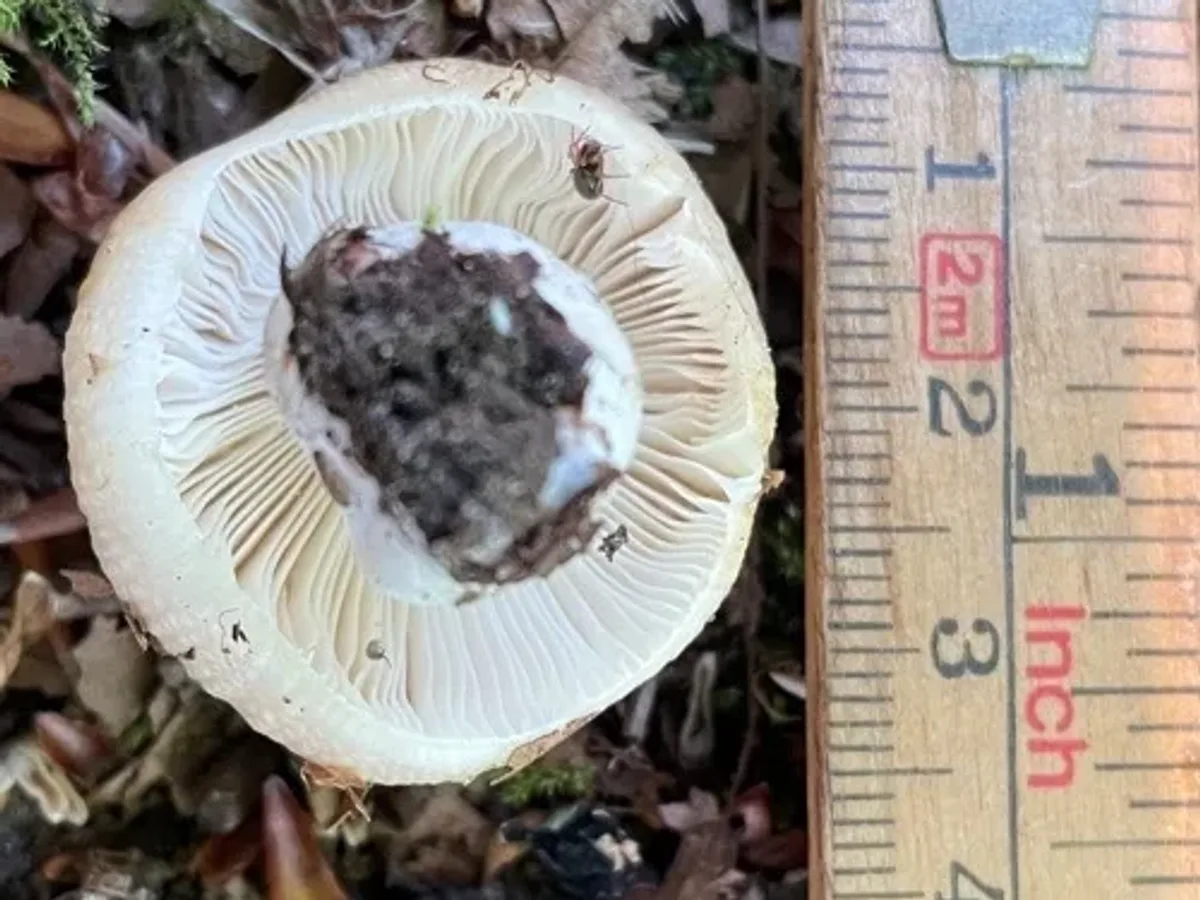
Underneath, the gills are white to pale cream, moderately crowded, and classically brittle: run a finger along them and they crumble like chalk. The spore print is white to very faintly cream.
Stem
The stem is white, firm when young, becoming somewhat spongy-hollow inside with age, with no ring and no volva at the base.
Flesh
Flesh is white and firm, not staining or changing colour on cutting.
Why it's dangerous
Low direct toxicity - R. pectinatoides is a GI irritant, not acutely dangerous, and its fetid smell is a strong natural deterrent against accidental consumption.
The serious danger in the same habitat is misidentification risk: collecting near Amanita phalloides or A. bisporigera in the same woodland and confusing an edible-looking find with either of these deadly species.
Always follow the full identification protocol before any wild mushroom is brought to the kitchen:
- Check the stem base for a volva
- Check for a ring
- Check gill attachment type
- Check spore print
Toxin
The irritant compounds in Russula pectinatoides and the other Ingratae-section russulas are sesquiterpene aldehydes and related volatile pungent molecules - the same class responsible for the characteristic fetid odour. These substances act as irritants to the gastrointestinal mucosa.
No single fully-isolated, structurally-characterised lethal toxin has been identified in R. pectinatoides specifically. The irritancy is an empirical class effect shared across the fetid-smelling russulas of section Ingratae.
Symptoms
If ingested: gastrointestinal irritation within 1-4 hours, including nausea, abdominal cramping, vomiting, and diarrhoea.
Symptoms are typically self-limiting and resolve without specific medical treatment over several hours. Serious systemic toxicity is not documented for this species.
The overpowering fetid smell is usually sufficient to prevent accidental ingestion in any quantity.
Staying safe
Russula pectinatoides is classified as causing gastrointestinal irritation and is not edible. The irritant compounds responsible belong to the sesquiterpene family characteristic of the Russula section Ingratae - pungent, nausea-inducing aldehydes and related substances that resist ordinary cooking and cause gastrointestinal upset (nausea, vomiting, diarrhoea) when ingested.
The extremely fetid, rancid-fish smell is itself a natural deterrent; this is the primary reason the species is rarely if ever eaten accidentally.
However, the clinical threat in the habitat where R. pectinatoides grows is not from the mushroom itself but from the potential misidentification of any pale-capped, white-gilled, white-stemmed woodland mushroom as something edible - with Amanita phalloides as the lethal risk. The death cap carries amatoxins that destroy liver cells over 6-24 hours, with no early warning and a deceptively pleasant mild taste.
Before handling any white-gilled forest mushroom for culinary purposes, always dig up the entire stem and inspect the base. A membranous volva (cup or sac) at the base, combined with a ring on the stem and free gills, means Amanita - do not eat it.
R. pectinatoides has NO volva, NO ring, attached crumbling gills, and - unmistakably - a powerful rancid-fishy smell. If in any doubt, leave it.
Where & when it grows
Habitat
Russula pectinatoides is a forest dweller, always found on the floor of deciduous or mixed broadleaved woodland within the root zone of living trees.
It is ectomycorrhizal - the underground mycelium networks with the fine roots of oaks, beeches, and related hardwoods, exchanging mineral nutrients for photosynthetic sugars in a partnership that can persist for decades. This biological dependency means the mushroom is always physically near its host trees, and never appears in open grassland, on dead wood, or in purely coniferous plantation without a broadleaved component.
In North America it associates primarily with oaks; in South America it is found with introduced oaks, Nothofagus, and native Atlantic forest trees.
Soils are typically moist, humus-rich, and mildly acidic to neutral, sheltered under a closed or semi-closed canopy.
When
In the Northern Hemisphere, fruiting begins in early to midsummer (June-July) and continues in waves through October. The densest flush is typically from late July to September, after warm, soaking rain.
In the Southern Hemisphere range (Brazil, Argentina), the season aligns with local late summer and autumn conditions (roughly February-June), driven by the same combination of warm soils and rainfall.
Like all ectomycorrhizal russulas, it does not produce a single extended continuous fruiting but rather flushes following rainfall events, then retreats until the next trigger.
How it grows
Grows singly or in loose, scattered troops on the forest floor - never in tight clusters and never on wood or above-ground substrate.
Being ectomycorrhizal, individual fruit bodies emerge from a shared underground mycelial network anchored to tree roots. The same patch of forest floor can produce fruit bodies year after year at the same tree.
Growth from pinhead to mature cap takes roughly one to two weeks under suitable warm, moist conditions, and the cap texture becomes increasingly soft and larva-ridden as it ages.
Fruiting conditions
Ectomycorrhizal; flushes follow soaking rain when soils are warm (14-24 °C). In the Northern Hemisphere, peak fruiting is late July to September. In the Southern Hemisphere range, equivalent conditions occur in late summer to autumn (February-June).
Look-alikes
The primary danger in any Russula hunt is habitat overlap with deadly Amanita species, and Russula pectinatoides is no exception.
Amanita phalloides (death cap) grows in the same broadleaved woodland, particularly under oaks and beeches, is white-gilled and white-stemmed, and causes delayed liver failure in any quantity. However, the death cap typically has an olive-green to yellowish-green or brownish cap - not the pale buff-honey of R. pectinatoides - and it has a membranous volva at the stem base, a ring on the stem, and free (not attached) gills. R. pectinatoides has none of these.
The greater identification challenge within the genus is distinguishing it from related fetid-smelling, pectinate-margined russulas:
- Russula pectinata (the European Comb Brittlegill) is extremely closely related and considered by some authors to be conspecific or treated as a variety; it is also a GI irritant with the same fetid smell, pale ochre-buff cap, and pectinate margin.
- Russula laurocerasi (almond-scented brittlegill) is another Ingratae section species with a similar honey-buff cap and striate margin but a markedly different, sweet almond/marzipan smell that immediately separates it from the rancid-fish odour of R. pectinatoides.
- Russula foetens, the most strongly smelling member of the section, is larger (cap up to 15 cm), with a markedly more strongly tuberculate margin and an even more overpowering fetid odour; it is also a GI irritant.
None of the above are deadly, but none are edible.
The deadliest forest mushroom, growing in the same broadleaved woodland under oaks and beeches. Amanita phalloides typically has an olive-green to yellowish or brownish cap - lighter variants can approach pale ochre - with a membranous volva (cup) at the stem base, a ring (skirt) on the stem, free (not attached) gills, and fibrous (not chalky-brittle) flesh. Critically, it has NO fetid smell: the taste is mild and even pleasant, so a taste test provides NO warning. Russula pectinatoides has no volva, no ring, attached crumbling gills, chalky-brittle flesh, and a powerful rancid-fish odour. Always dig up the full stem base and confirm no volva before collecting any white-gilled woodland mushroom.
Pure white in all stages - cap, gills, stem, and volva - deadly in any quantity from amatoxins. Distinguished from R. pectinatoides by its white (not buff-ochre) cap, the presence of a membranous white volva at the stem base, a delicate ring on the stem, free gills, and fibrous (not chalky) flesh. R. pectinatoides has no volva, no ring, brittle crumbling gills, and a strongly fetid smell. Amanita bisporigera is particularly relevant to North American and South American collections.
Another pectinate-margined, pale honey-buff Russula of the Ingratae section, but immediately distinguished by its sweet almond or marzipan smell (from benzaldehyde) that replaces the rancid-fish odour of R. pectinatoides entirely. If it smells like almonds or cherry kernels rather than bad seafood, it is R. laurocerasi. Also a GI irritant.
Very closely related and considered by some mycologists to be conspecific or a variety of R. pectinatoides. Russula pectinata is the European equivalent with the same fetid fishy smell, pale ochre-buff cap, and strongly pectinate margin. Separation between the two in the field is extremely difficult and relies on minor spore ornamentation differences visible only under microscopy. Both are GI irritants and neither should be eaten.
Russula foetens is the largest and most offensively smelling member of the Ingratae section - cap up to 15 cm, with an even more pronounced fetid odour and a very strongly tuberculate, deeply ridged margin. The cap colour is a richer amber-ochre to tawny-honey than the pale buff of R. pectinatoides. Both are GI irritants. R. foetens tends to be larger, smells even more strongly, and has a deeply ribbed margin; R. pectinatoides is smaller and paler. Both are inedible.
A reference guide - never an edibility guarantee. When in doubt, leave it out.