Swamp brittlegill
Russula paludosasyn. Russula integra var. paludosa (Britzelm.) Britzelm., Russula heterophylla var. paludosa Britzelm.
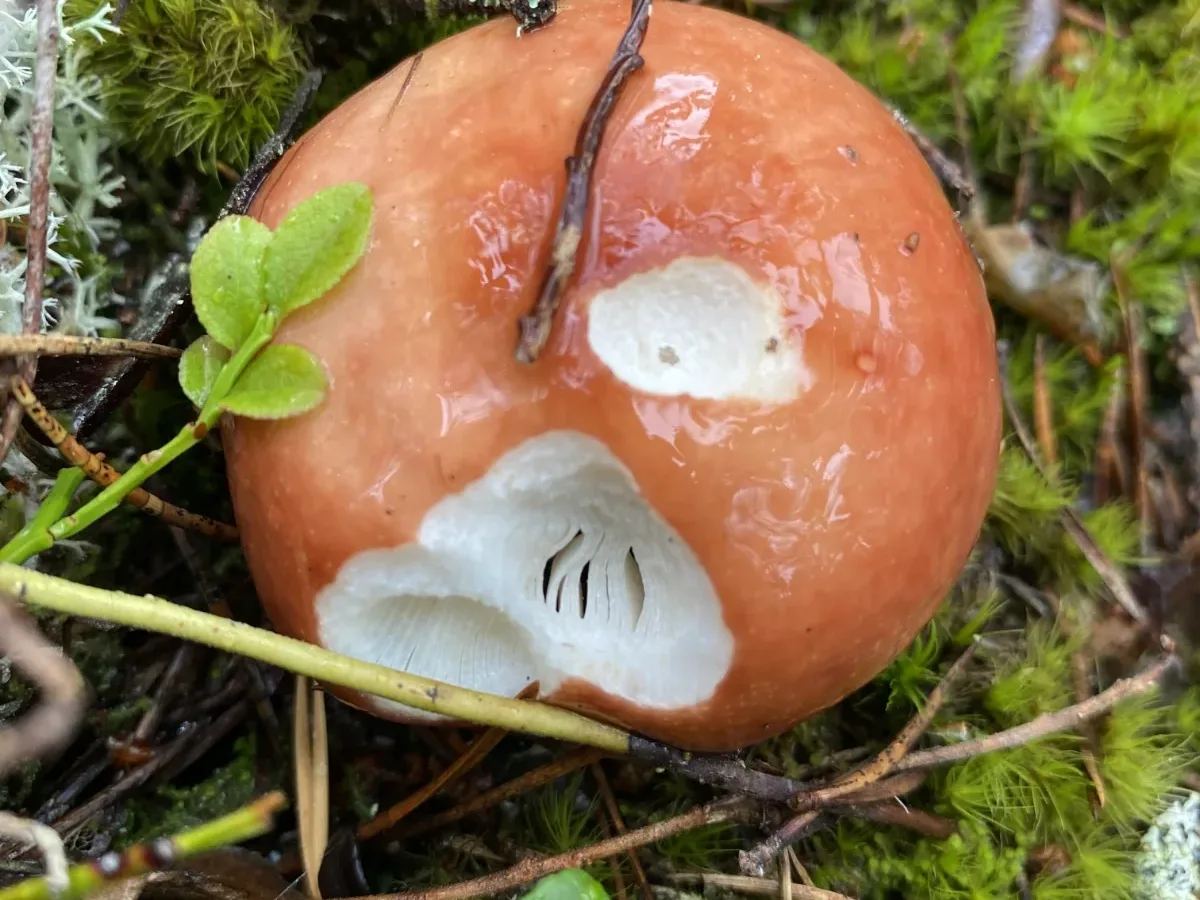 © Anne Marit Strøm (CC BY)
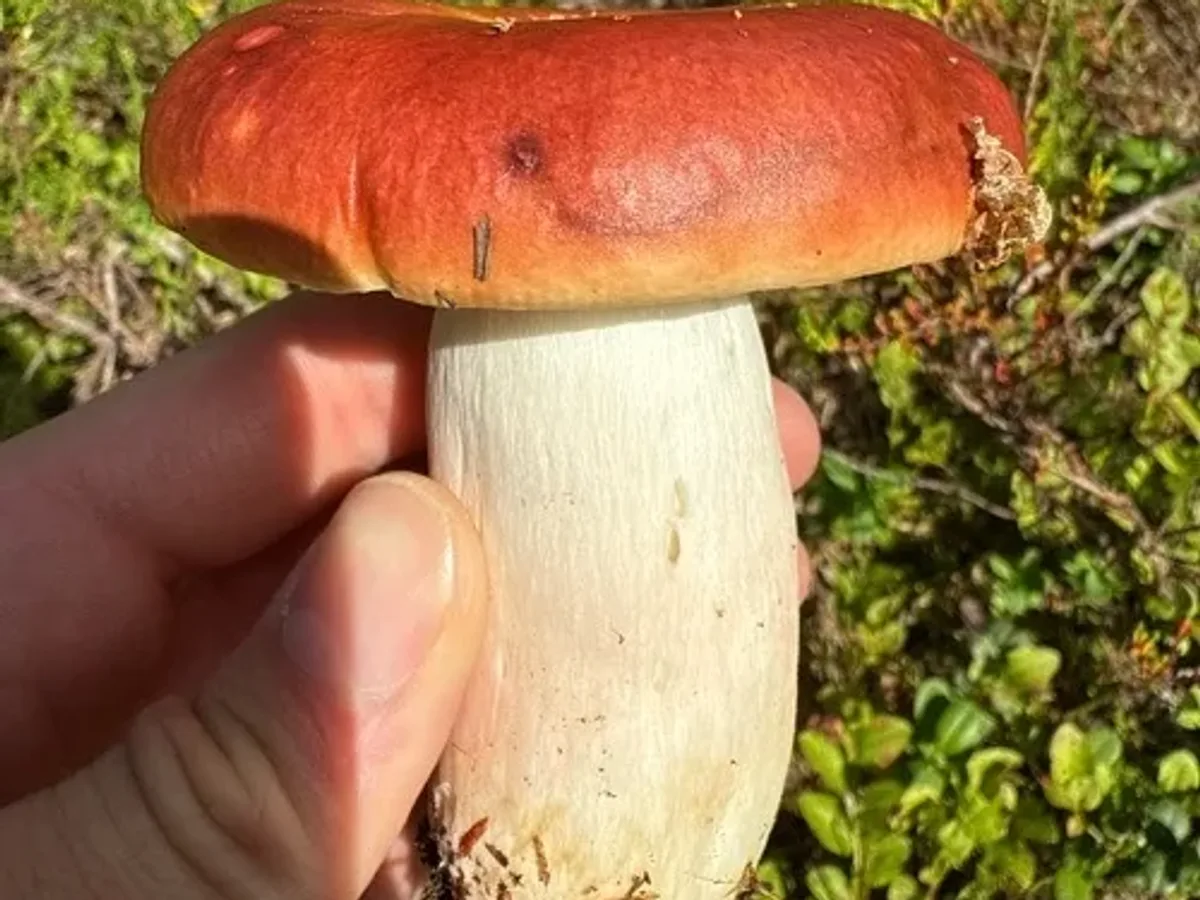 © Magnus Vandbakk (CC BY-SA)
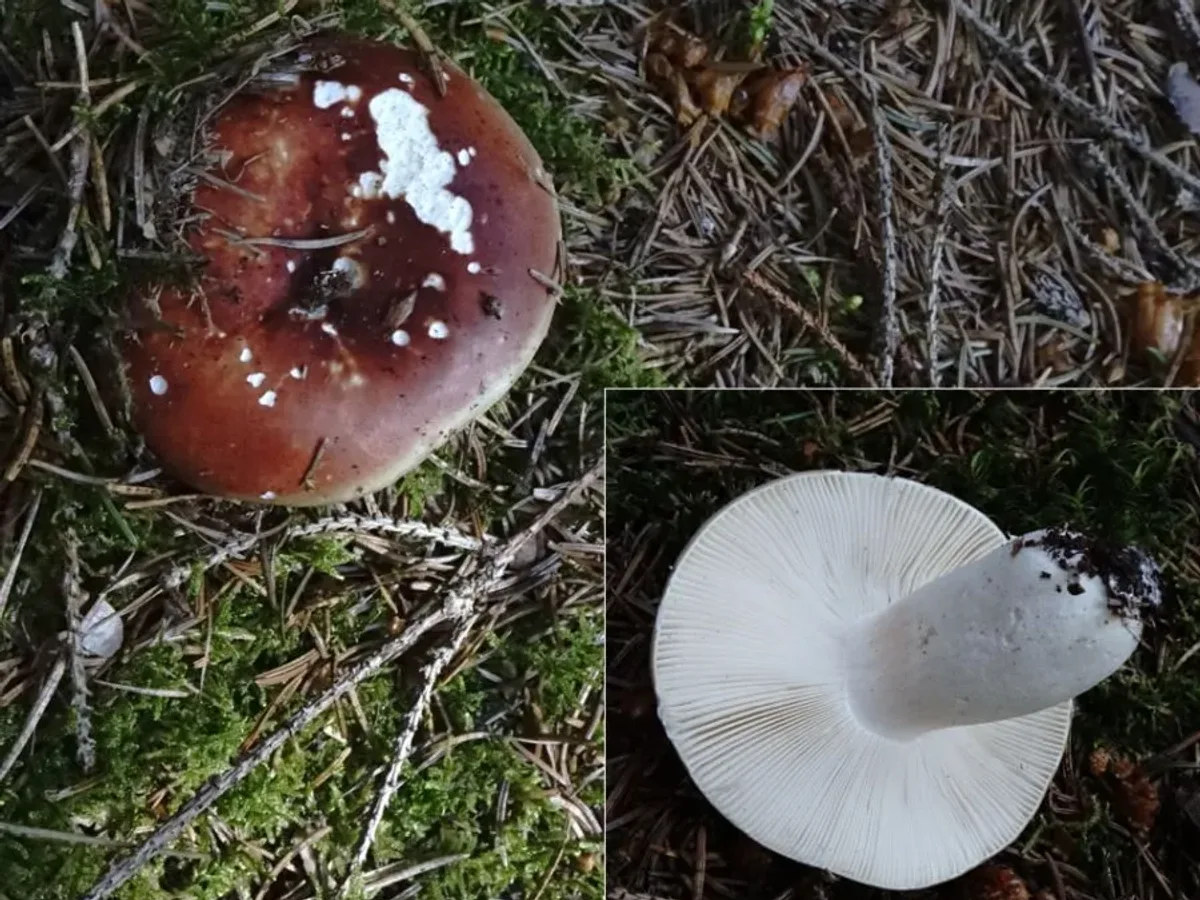 © Sven Pruul (CC BY-SA)
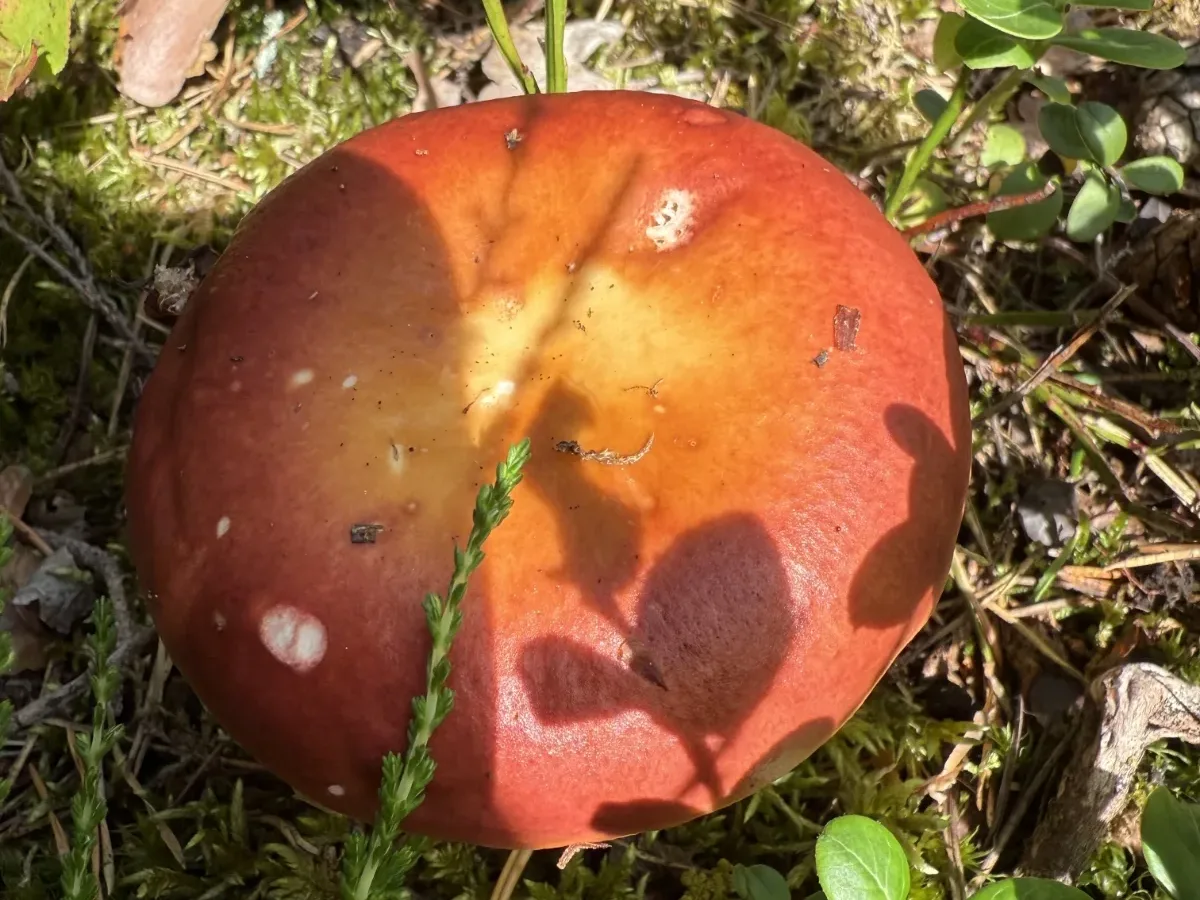 © Magnus Vandbakk (CC BY-SA)
 © Magnus Vandbakk (CC BY-SA)
 © Magnus Vandbakk (CC BY-SA)
 © Nils Edvard Stokke (CC BY)
 © Nils Edvard Stokke (CC BY)
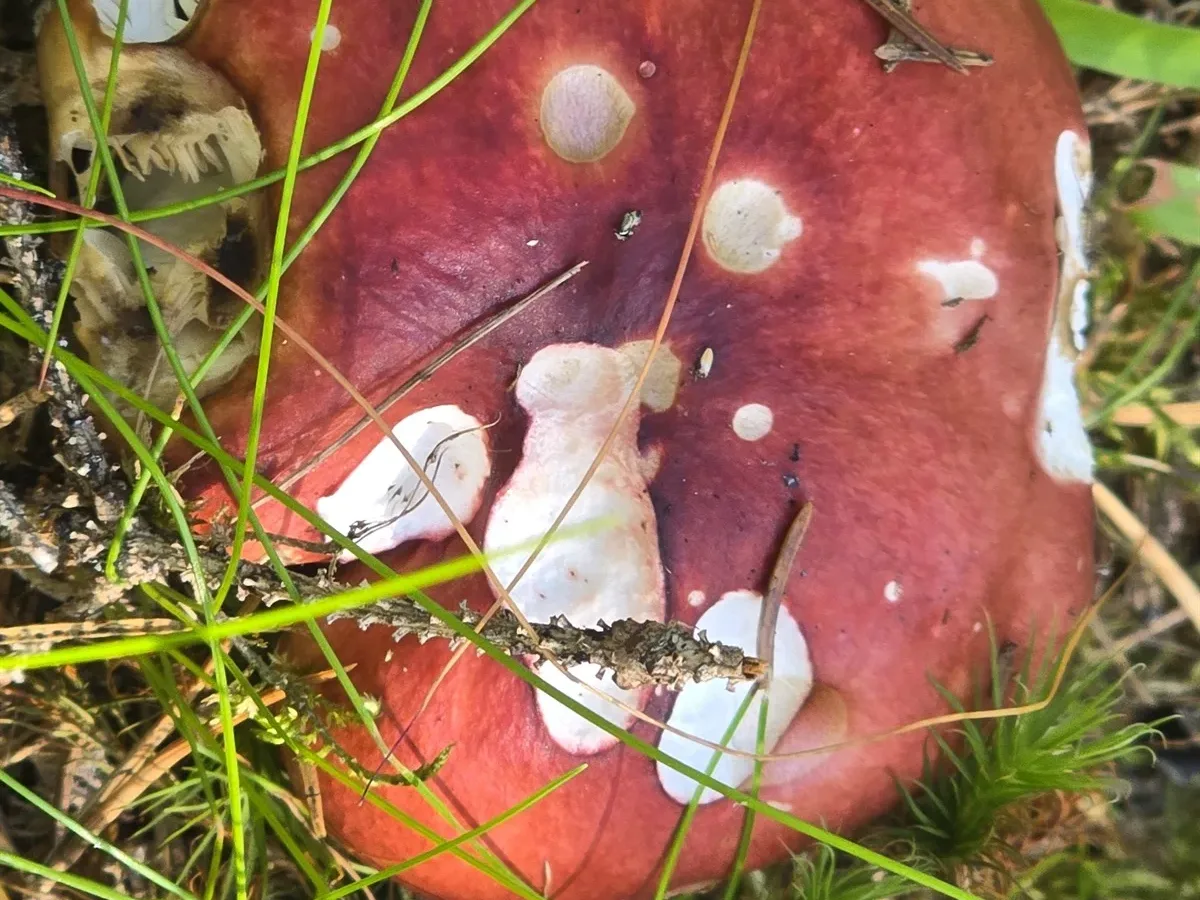 © Nils Edvard Stokke (CC BY)
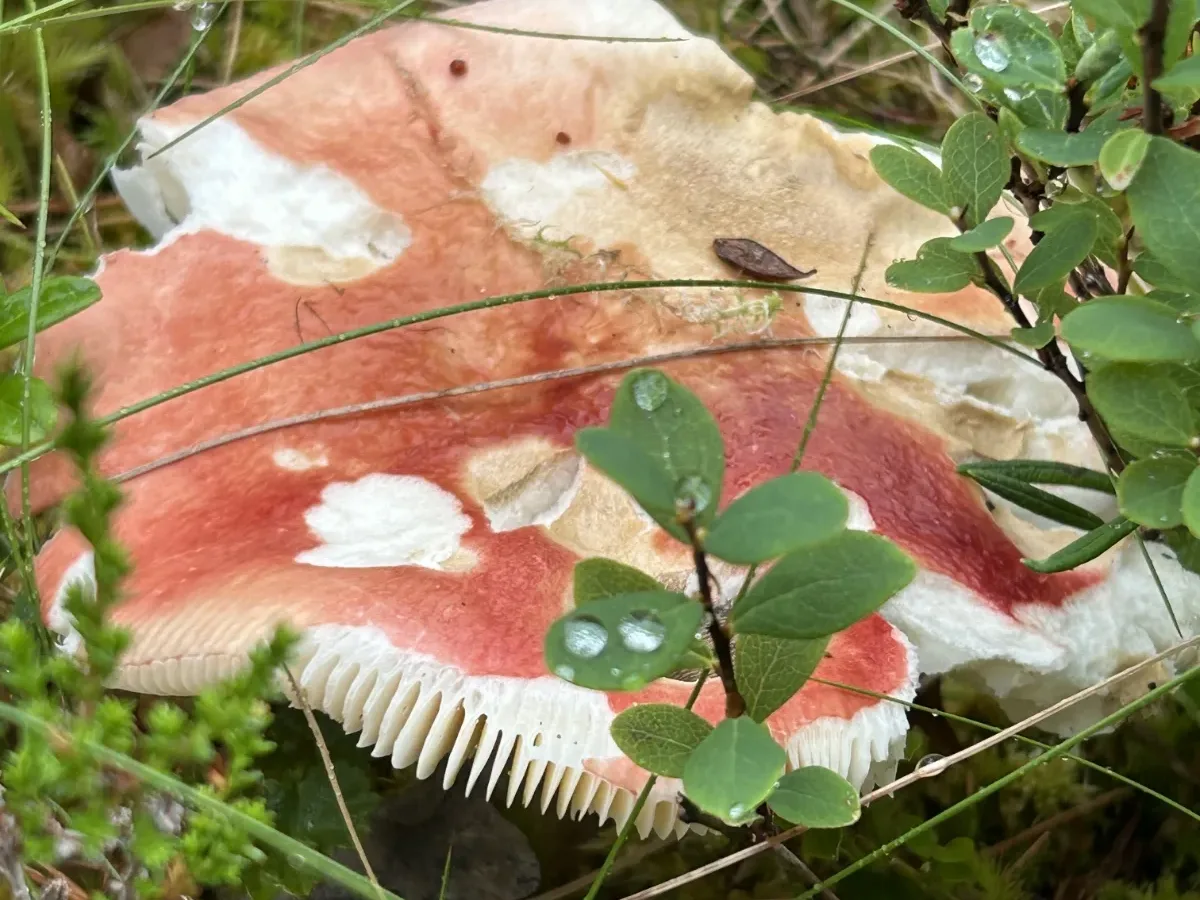 © Gjermund Holsæter (CC BY)© Anne Marit Strøm (CC BY)© Magnus Vandbakk (CC BY-SA)
Good to eat, once you have identified it with certainty and cooked it through.
Never eat a mushroom you are not 100% sure of - check the look-alikes below, and always cook wild mushrooms.
How to recognise it
Russula paludosa is one of the largest and most striking red-capped russulas in northern Europe.
Cap
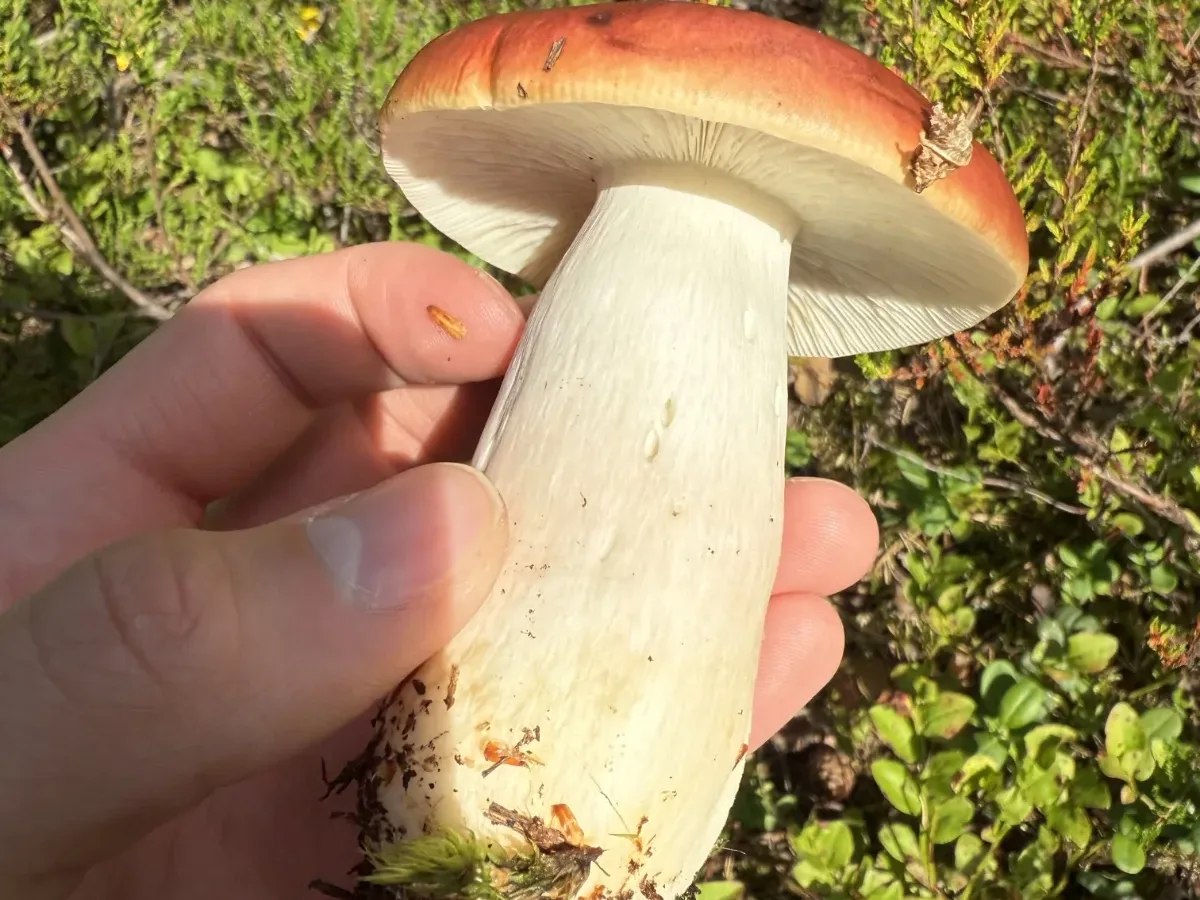
The cap reaches 6-15 cm across and opens broadly convex before flattening or shallowly funnelling in older specimens.
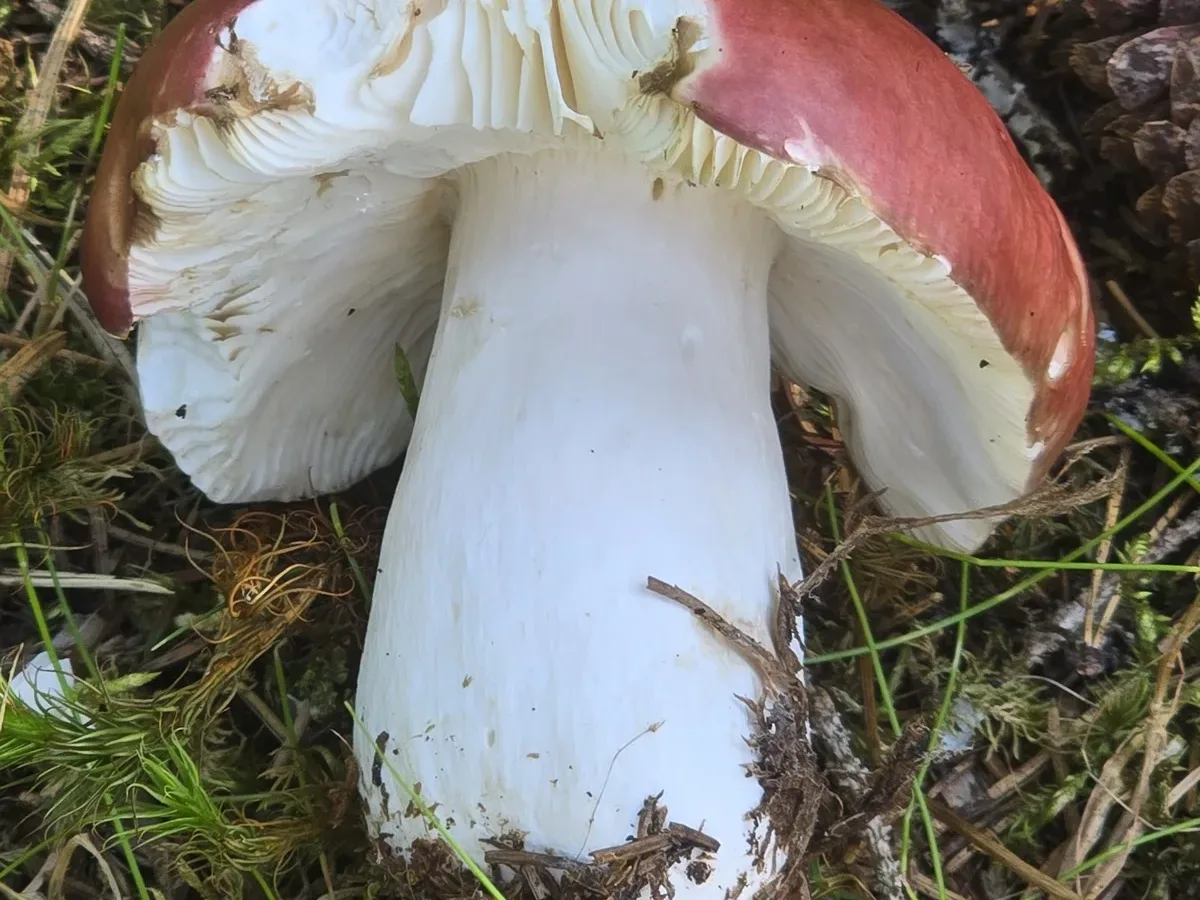
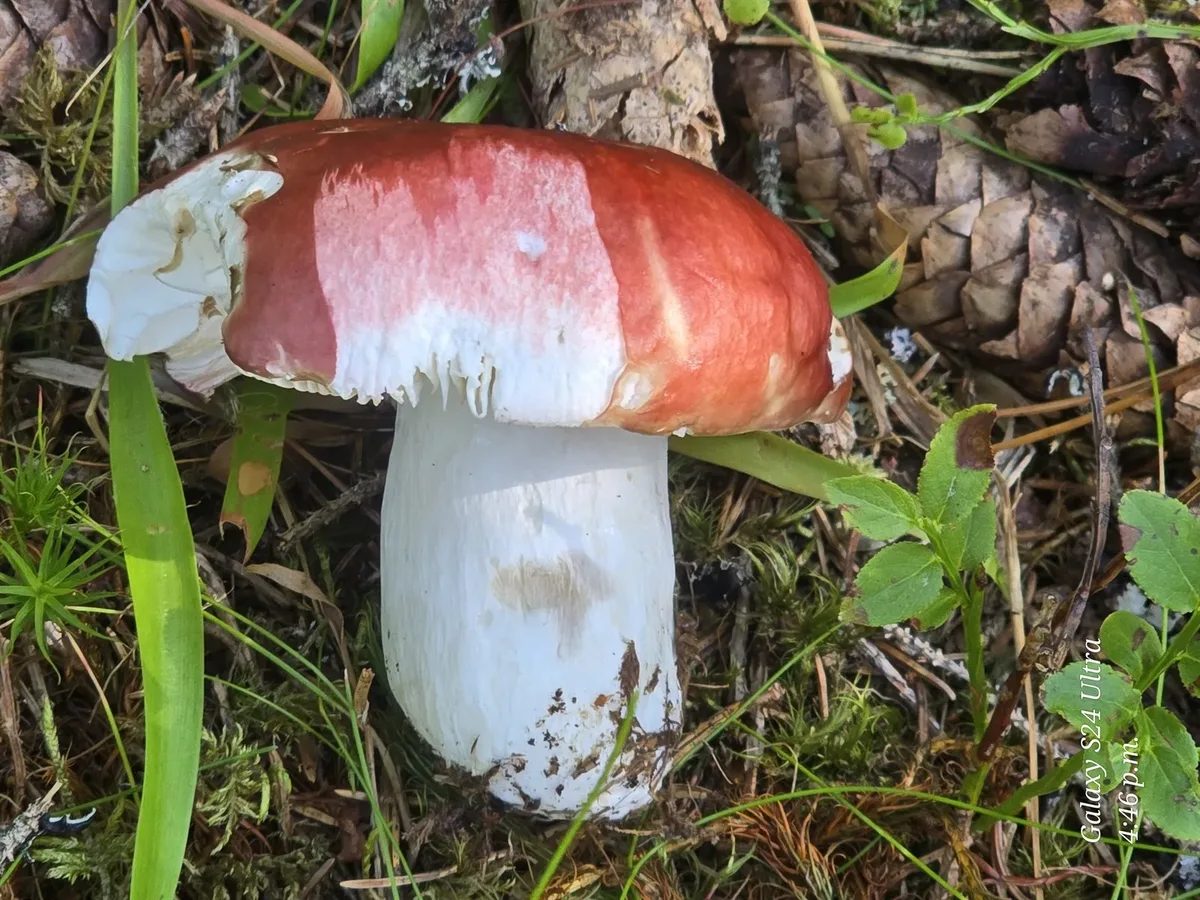
When damp, the surface is smooth and viscid, coloured a vivid rose-red to coral or blood-red. With age it fades inward, leaving older caps blotchy - ochre or buff at the centre, persistent red toward the margin.
The cuticle peels cleanly for at least half to two-thirds of the radius; try it before tasting - it's one of the reassuring textural confirmations that you have a Russula.
Gills
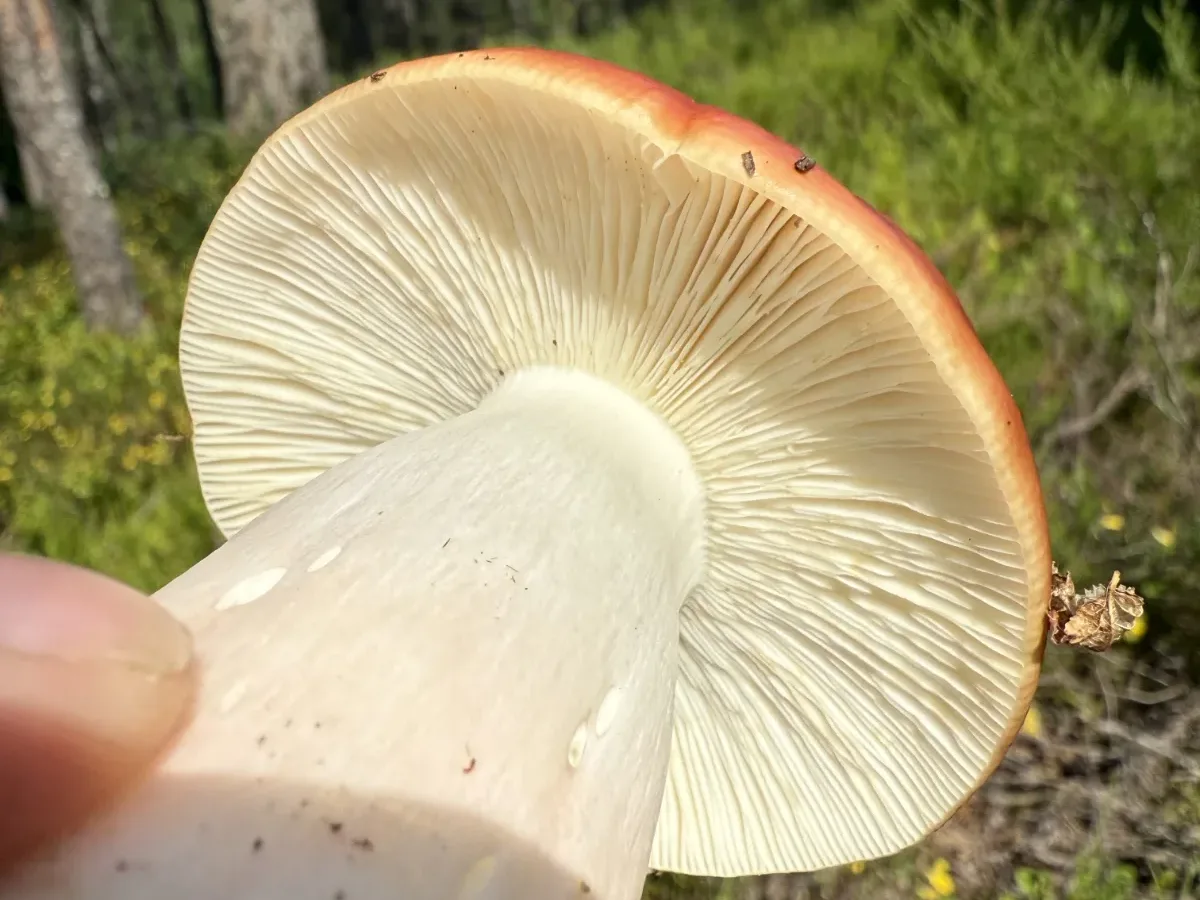
Gills are white to pale cream, crowded, and adnate. They may turn faintly ivory-yellow with age but are never strongly yellow.
Stem
The stem is stout - 5-12 cm tall, 1.5-3.5 cm wide - white, occasionally tinged pink at the base, dry, and solid when young, turning spongy in old age.
Flesh
Flesh is white throughout, firm, and mild to taste (not acrid, not bitter); it does not discolour on cutting. A thin red or pinkish layer lies directly beneath the cap cuticle.
Smell
The smell is pleasant, faintly fruity.
Spore print pale cream to very pale ochre (Romagnesi Ia-IIa).
Microscopically, spores are 8-11 × 6.5-9 µm, broadly ellipsoid with fine warts partly connected by ridges into an incomplete reticulum.
Where & when it grows
Habitat
Look for this species where the forest floor turns soft underfoot - at the mossy margins of raised bogs, in Sphagnum-carpeted depressions within pine heath, and in damp mixed pine-spruce stands on acidic, peaty or sandy soils.
It is one of the most abundant red russulas in Scandinavian boreal forest, a near-constant companion of Scots pine (Pinus sylvestris), to which it is bound by an ectomycorrhizal partnership that threads through the soil unseen for years. Norway spruce (Picea abies) is a secondary host.
The swamp brittlegill is absent from pure deciduous woodland and is genuinely more at home in waterlogged ground than most of its relatives - it thrives where other russulas struggle.
When
Fruiting bodies appear from July - occasionally late June after a warm, wet start to summer - through October.
The main flush runs August to mid-September across Scandinavia and northern Europe. In the montane pine forests of central Europe the peak shifts a few weeks later, to September and October.
Tallriska tends to beat most of the other red russulas out of the ground each season, making it one of the earlier signs that the boreal autumn flush has begun.
How it grows
Solitary or scattered, occasionally in loose troops of 3-10.
Fruiting bodies push up through Sphagnum moss, needle litter, or wet sandy soil. Young caps emerge tightly rounded and can be half-buried in moss, easy to miss until they swell.
After summer rain, expansion is rapid - caps can reach full size within four to six days, as if the wet boggy substrate had been saving its energy for exactly this moment.
Fruiting conditions
Favours warm summer rain events followed by moderate temperatures; boggy substrate retains moisture well, so fruiting can persist longer after rainfall than in dry forest soils. Sphagnum moss buffers soil temperature and moisture, extending the fruiting window.
Look-alikes
The most dangerous confusion is with Russula emetica (The Sickener) and closely related acrid red species (R. mairei, R. nobilis, R. rhodopus), all of which have a strong, burning-acrid taste and produce gastric upset.
R. paludosa differs by its mild, non-acrid taste - always test a small piece on the tongue and wait 30 seconds. Russula emetica is also usually smaller (cap 3-9 cm), has a whiter spore print, and favours wetter acidic habitats. Russula rhodopus, another boggy-pine associate with a red cap, is also acrid and can overlap in habitat; the taste test is essential.
A critical confusion with a deadly species exists with Amanita muscaria (Fly agaric): young buttons before the white warts are washed off can superficially resemble a red-capped Russula when the volva is not yet prominent.
However, Amanita has features that are entirely absent in Russula:
- free gills
- a ring on the stem
- a volva at the base
- fibrous (non-granular, non-brittle) flesh
Always check the stem base carefully and snap the flesh; Russula snaps like chalk.
A second deadly confusion applies specifically in boggy pine forest: Cortinarius rubellus (Deadly webcap) grows in the same Sphagnum-rich pine habitat and can produce reddish-brown to tawny caps. It has:
- a cobweb-like cortina on young specimens
- rusty-brown gills
- rusty-brown spore print
- fibrous (not brittle) flesh that does not snap cleanly
It contains orellanine, a kidney toxin with delayed onset of 2-3 weeks after ingestion - by which time irreversible renal failure may have occurred. Never eat a reddish forest mushroom in boggy pine terrain without confirming brittle chalk-snapping flesh, pale cream spore print, and mild non-acrid taste.
Russula xerampelina (Crab brittlegill) is also robust and red, but has a distinctive shellfish or crab odour, an ochre-yellow spore print, and stem flesh turns grey-green with FeSO4 reagent. Edible and not dangerous.
Russula integra has a darker, more uniform brown-red to purplish cap and yellower spore print with a sweet smell; edible.
Grows in the same Sphagnum-rich boggy pine habitat. Cap tawny-red to rust-brown, with a cobweb cortina veil on young specimens. Gills and spore print rusty brown (not pale cream). Flesh is fibrous - does NOT snap like chalk. No acrid taste but also no pleasant fruity smell. Contains orellanine, a deadly kidney toxin with delayed onset 2-3 weeks post-ingestion. Always confirm pale spore print + chalk-brittle flesh + mild taste before eating any reddish mushroom from boggy pine forest.
Only a very early-stage Amanita muscaria button (before warts are washed off) could be confused with a red Russula. Amanita has a ring on the stem, a basal volva (bag at the base), free gills, and fibrous (non-brittle, non-chalk-snapping) flesh - all absent in Russula paludosa. Always check the stem base and snap the flesh to test for brittleness.
Acrid taste, strongly associated with beech, whiter spore print, cap more scarlet-red; largely a different habitat. Causes gastrointestinal illness.
Smaller, acrid-tasting, found in the same boggy pine habitat - the most ecologically similar toxic species. Pink-flushed stem base is more pronounced; spore print white. Taste test is the critical separator; spit out any acrid material.
Similar size and red cap, but has a distinctive shellfish or crab odour, yellower (ochre) spore print, and flesh and stem turn greenish-grey with FeSO4 reagent. Edible and not a safety concern once distinguished.
Cap more uniformly brown-red to purplish-red; spore print deeper ochre-yellow; mild sweet taste; associated more with spruce and fir rather than pine-bog. Edible.
R. emetica has a strong burning-acrid taste (vs. mild in R. paludosa); tends to be smaller (cap 3-9 cm); spore print white to very pale cream; typically in wetter bog habitats with Sphagnum, often under conifers or birch. Taste test is definitive - spit out and do not swallow.
In the kitchen
Picking & cleaning
Choose young to medium-aged specimens: firm caps, undamaged edges, flesh that snaps cleanly. The generous size means a small haul goes a long way.
Cut at the base rather than pulling, so the underground mycelium stays intact.
The viscid cuticle peels away easily in strips - do it in the field or at home; the flesh beneath cooks better without it.
In boggy sites, specimens age and waterlog quickly, so check for maggot damage before adding anything to the basket.
Before eating, always confirm:
- mild taste (never burning or acrid)
- white flesh that does not discolour on cutting
- a pale cream spore print
Cooking
The flavour is mild and pleasant, described as nutty or faintly sweet.
The large cap is versatile:
- sauté in butter with garlic and herbs
- use in mixed mushroom sauces
- add to soups and risottos
- pickle in vinegar brine
Remove the viscid cuticle before cooking for better texture. The firm flesh holds up well to heat.
Blanching before consumption is sometimes recommended for red russulas as a general precaution, though it is not strictly necessary for confirmed R. paludosa. Avoid raw consumption.
Pairs well with cream sauces, game, and pine-nut-based preparations that complement its northern forest character.
Good to know
Russula paludosa is considered edible and is widely gathered in Scandinavia, Finland, and the Baltic states. However, two layers of safety checks are essential.
- 1The taste test for any red Russula: place a small piece on the tongue and wait 30 seconds. A hot, burning, acrid taste indicates a toxic species (most likely R. emetica or R. rhodopus) and the piece must be spat out immediately. R. paludosa tastes mild to pleasantly nutty.
- 2Always confirm brittle chalk-snapping flesh with no ring, no volva, and no cobweb cortina on the stem, to exclude Amanita and Cortinarius species that share the same boggy pine habitat.
Cortinarius rubellus in particular is deadly and occurs in the same habitat; it has rusty-brown gills and spores and fibrous (non-brittle) flesh.
Do not eat any red-capped mushroom from boggy pine forest without completing all these checks.
A reference guide - never an edibility guarantee. When in doubt, leave it out.