Olive brittlegill
Russula olivaceasyn. Russula olivascens
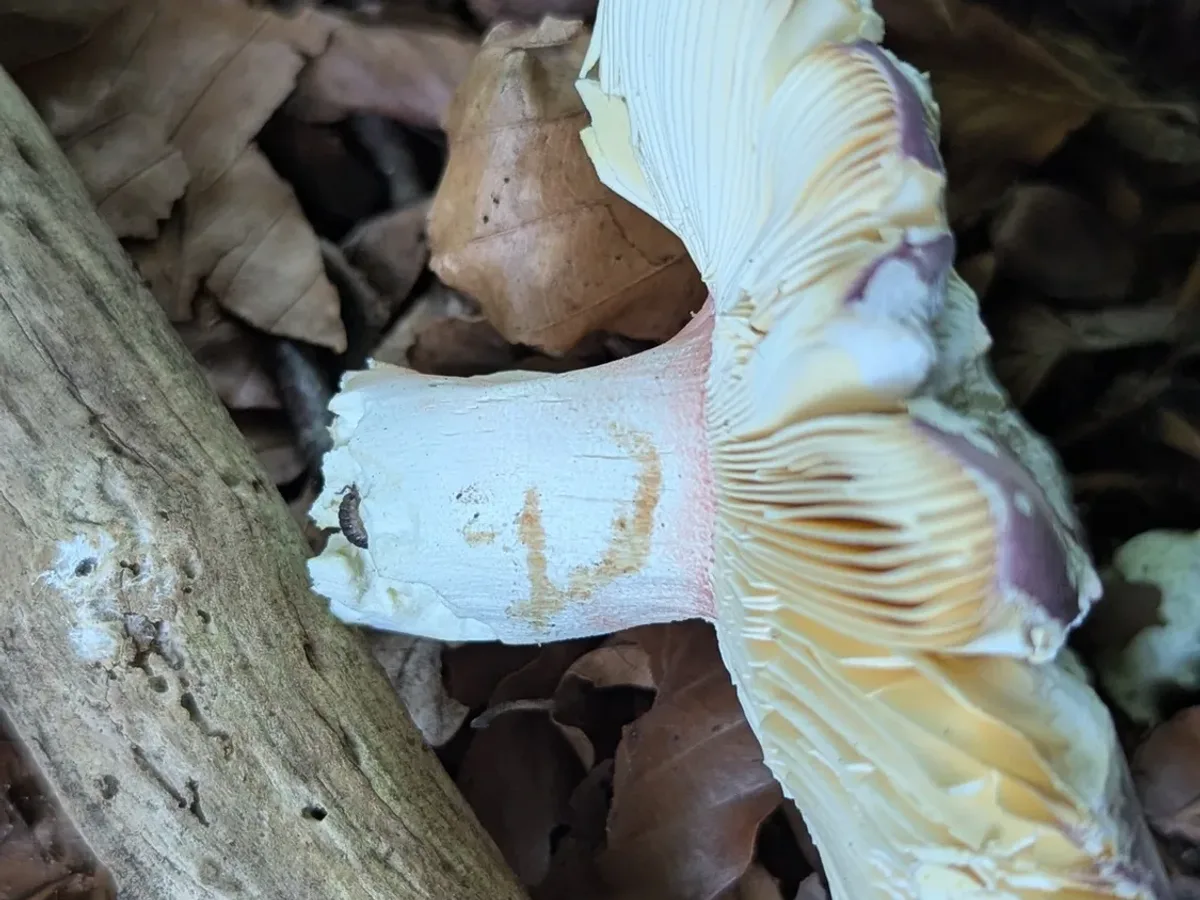 © Michel Langeveld (CC BY)
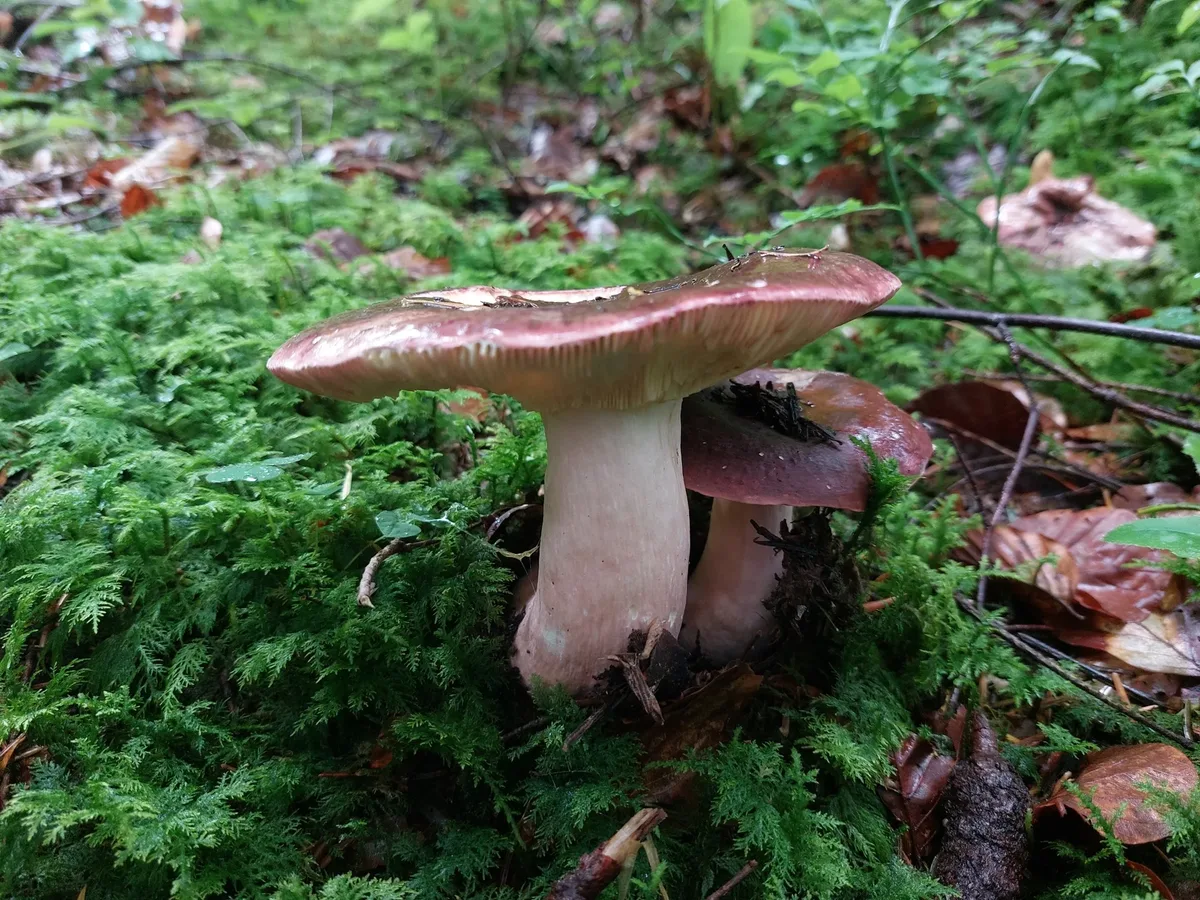 © vcpd (CC BY-SA)
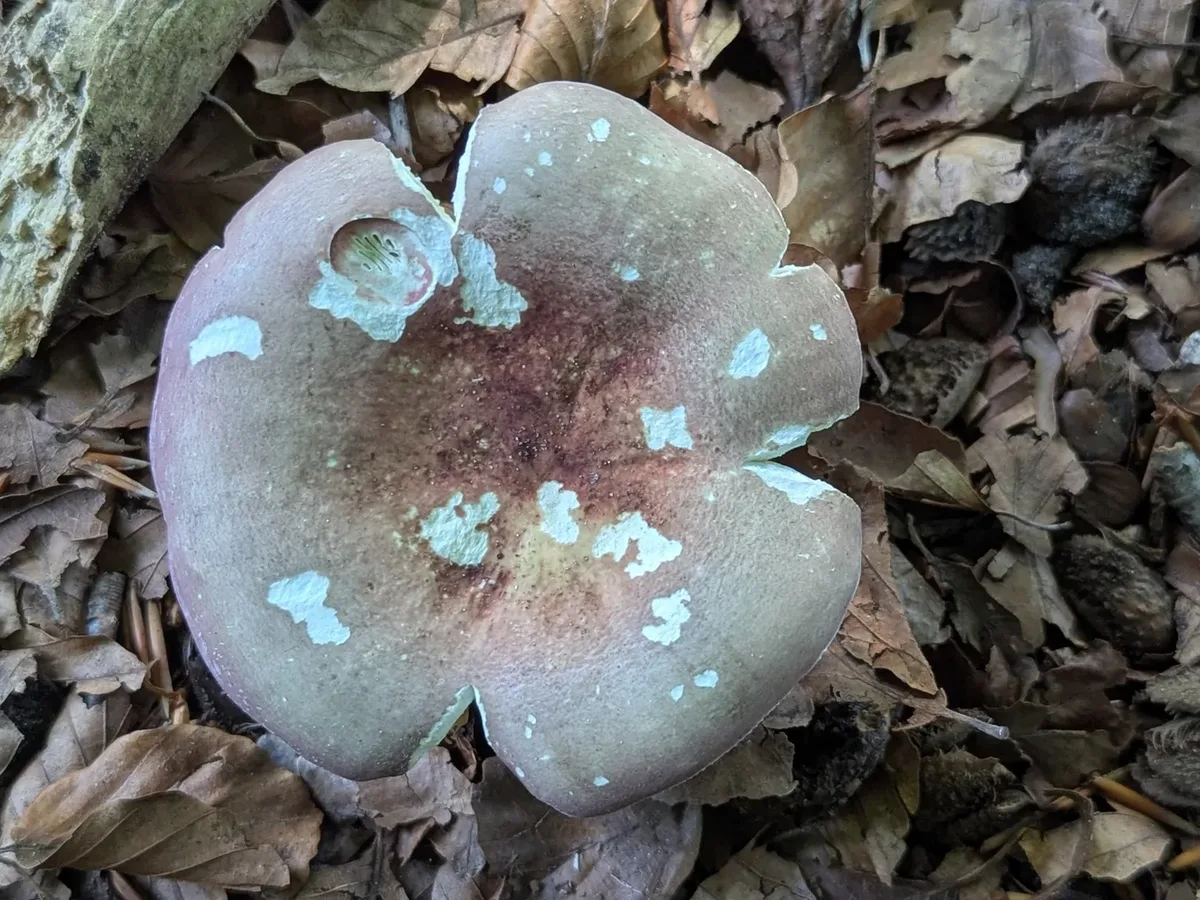 © Michel Langeveld (CC BY)
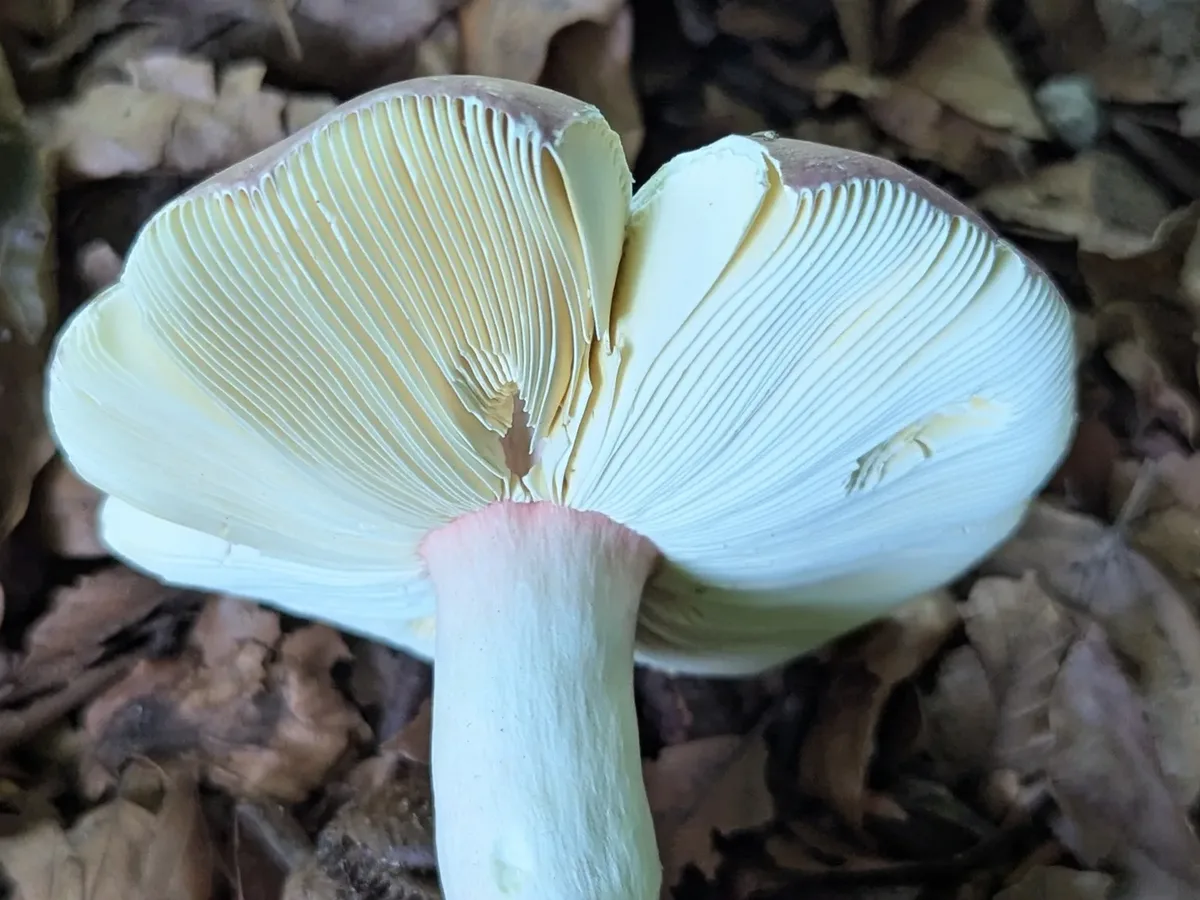 © Michel Langeveld (CC BY)
 © Michel Langeveld (CC BY)
 © Michel Langeveld (CC BY)© Michel Langeveld (CC BY)© vcpd (CC BY-SA)
Good to eat, once you have identified it with certainty and cooked it through.
Never eat a mushroom you are not 100% sure of - check the look-alikes below, and always cook wild mushrooms.
How to recognise it
Russula olivacea is one of the larger and more visually distinctive brittlegills in central European forests.
The overall look is large, robust, and colorfully variegated - which makes it one of the more recognizable russulas once you know it.
Cap
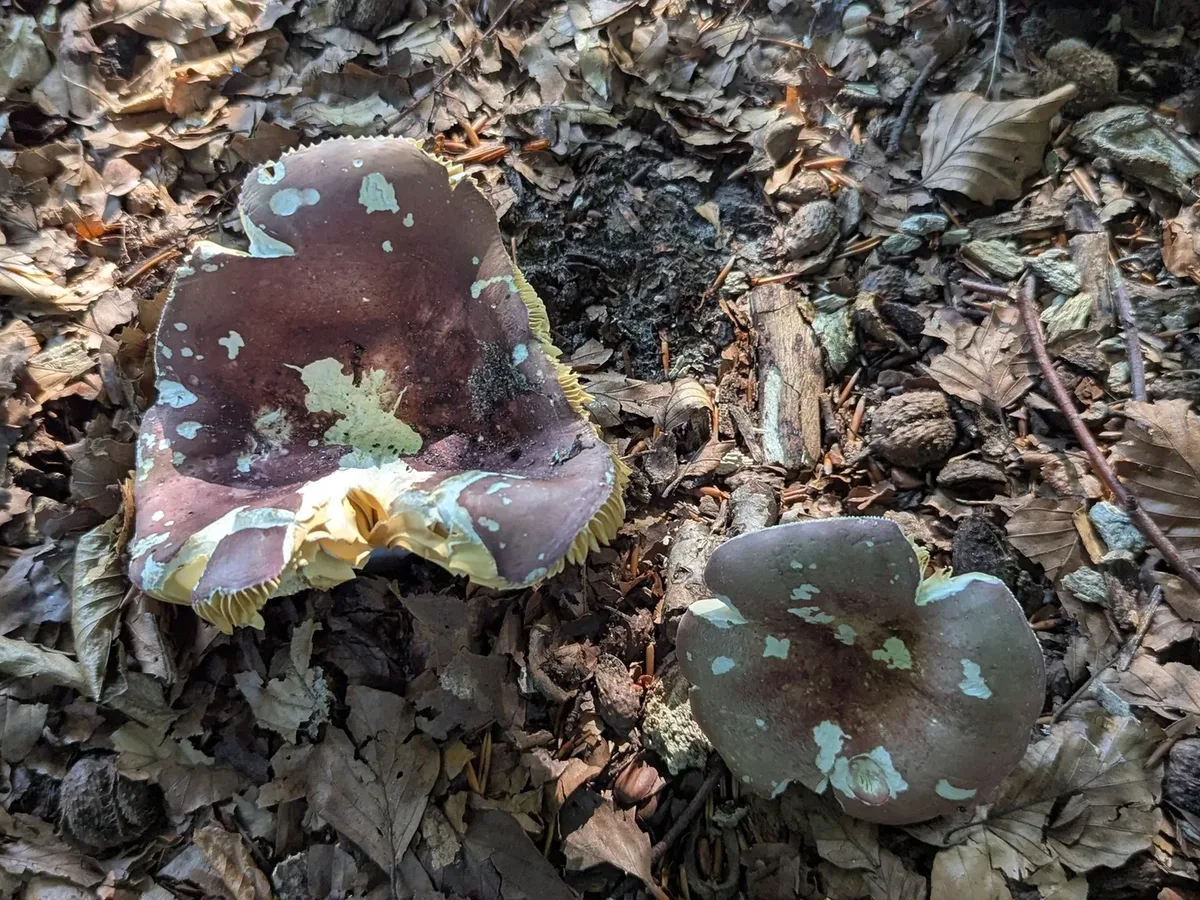
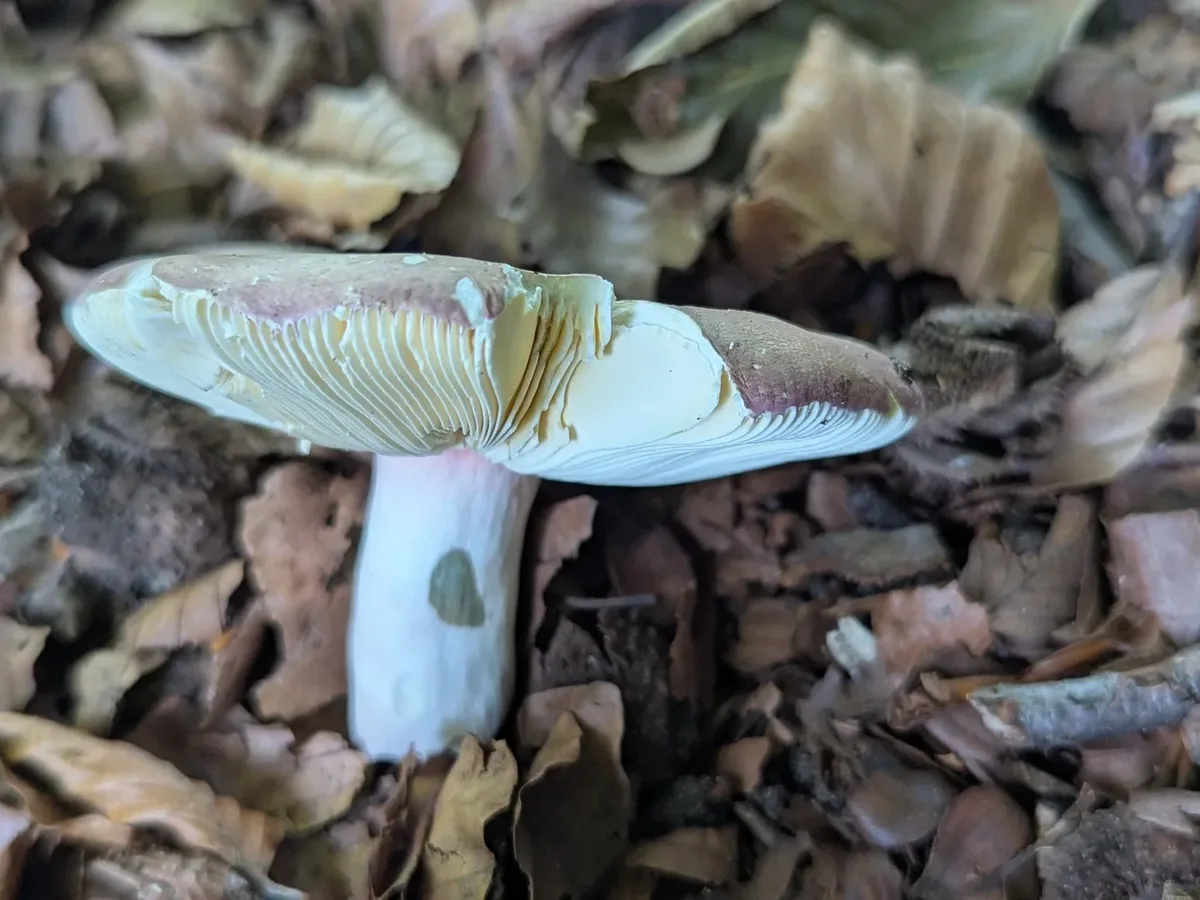
The cap (8-15 cm) combines olive-green, olive-brown, wine-purple, and reddish-violet tones in variable sectors on the same individual - no two caps look quite the same - with a darker, more olive center graduating outward.
The cuticle peels less than in many russulas (only one-quarter to one-third from the margin).
Gills
Pale cream early, deepening to ochre-yellow at maturity, quite brittle.
The spore print is a warm pale ochre.
Stem
White to faintly pinkish-lilac, solid when young.
Flesh
White, does not change color on cutting, firm and brittle.
Smell & taste
A mild or very slightly acrid taste, with a pleasant faint fruity smell.
Where & when it grows
Habitat
Found in humid broadleaf forest, almost always under or near beech.
Also grows with oaks, hornbeam, and sweet chestnut, but beech is its characteristic partner across most of its European range.
Favors shaded positions on slightly acid to neutral soils, often where leaf litter is deep.
Grows singly or in small scattered groups.
When
Late summer and autumn.
In central and western Europe, first fruiting bodies typically appear in July or early August. The main flush runs from late August through September, tailing off through October.
Peak weeks in most regions are weeks 35-39 (late August to late September).
How it grows
Ectomycorrhizal. The fungus maintains a long-term mutualistic relationship with its host tree roots, exchanging mineral nutrients (primarily phosphorus) for photosynthetically derived carbohydrates.
Fruiting is triggered by the combination of soil moisture from late-summer or early-autumn rainfall and a slight cooling of soil temperature.
It does not grow in clusters or on dead wood - always from the soil, always near live trees.
Fruiting conditions
Typical late-summer mycorrhizal fruiting pattern: requires at least 20 mm of rain in the preceding two weeks and soil temperature dropping below 18 °C. Flush typically emerges 7-14 days after triggering rain event. Peak fruiting in weeks 35-39 in central Europe.
Look-alikes
The most important lookalike is the death cap (Amanita phalloides), which can have a greenish or olive-tinted cap and grows under similar trees in the same season.
The separation is absolute:
- Amanita phalloides has a persistent skirt-like ring on the stem and a cup-like volva at the stem base; Russula olivacea has neither.
- Amanita flesh is fibrous and pulls apart in strings, while Russula flesh is brittle and crumbles.
Never collect a large greenish or olive-capped mushroom without checking the stem base - if a volva is present, discard the entire specimen.
Within Russula, R. olivacea is sometimes confused with other large bicolored species:
- R. atropurpurea - darker, more uniformly purplish-red cap, grows with oak and pine, similar edibility
- R. heterophylla - greener cap, milder, edible
These confusions carry no toxicological risk as all are edible or mildly unpalatable, but correct identification improves confidence.
Amanita phalloides can have a similar olive or greenish cap and grows under the same beech and oak trees in the same season. Critical differences: A. phalloides has a skirt-like ring (annulus) on the stem and a sac-like volva at the stem base buried in the soil; Russula olivacea has neither. A. phalloides flesh is fibrous and tears into strings; R. olivacea flesh is brittle and crumbles like chalk. Always dig out the full stem base before collecting any large olive or greenish mushroom in broadleaf woodland.
More uniformly dark purplish-red cap, usually without the olive tones; grows with oak and pine rather than beech; acrid taste in many forms; edibility similar but variable. No safety risk - both species are non-poisonous, though R. atropurpurea should be cooked.
Predominantly green cap without purple sectors; slimier surface; grows with oak; mild taste; edible. No safety risk.
Rosy-red to orange-red cap, not olive or bicolored purple-olive; typically in wetter conifer-edge habitats; edible. No safety risk.
In the kitchen
Picking & cleaning
Confirm the russula hallmarks before collecting:
- the stem snaps cleanly like chalk and does not string into fibres (as it would in an Amanita)
- no milky latex exudes from the broken gills (as would occur in a Lactarius)
Always dig out the whole fruiting body to inspect the stem base - in Russula there is no volva and no ring, whereas in the deadly Amanita both are present.
The variable bicolored cap and large size are useful positive recognition features.
Harvest only firm, young fruiting bodies; avoid specimens that are soft, waterlogged, or insect-tunneled.
Cooking
The flesh is firm enough to hold up to most cooking methods and has a mild, pleasant flavor without distinctive aroma.
Slice thickly and fry in butter or oil until fully cooked.
Works well in mixed mushroom dishes, risotto, soups, or as a side; pairs with garlic and herbs.
Not prized as a standalone mushroom but a reliable, abundant find when beech forests are fruiting well.
Always cook thoroughly.
Good to know
Russula olivacea is not poisonous. The primary risk in collecting it is misidentification as Amanita phalloides (death cap), which is lethal.
The russula test must be performed on every specimen before collecting:
- no ring
- no volva
- brittle non-fibrous flesh
- no latex
The slightly variable or partly acrid taste means a small number of individuals or forms may cause mild gastrointestinal discomfort if eaten raw or in large quantity; cooking eliminates this risk.
Do not eat raw.
A reference guide - never an edibility guarantee. When in doubt, leave it out.