Ochre brittlegill
Russula ochroleucasyn. Russula ochroleuca var. ochroleuca, Agaricus ochroleucus Pers., Russula granulosa Cooke
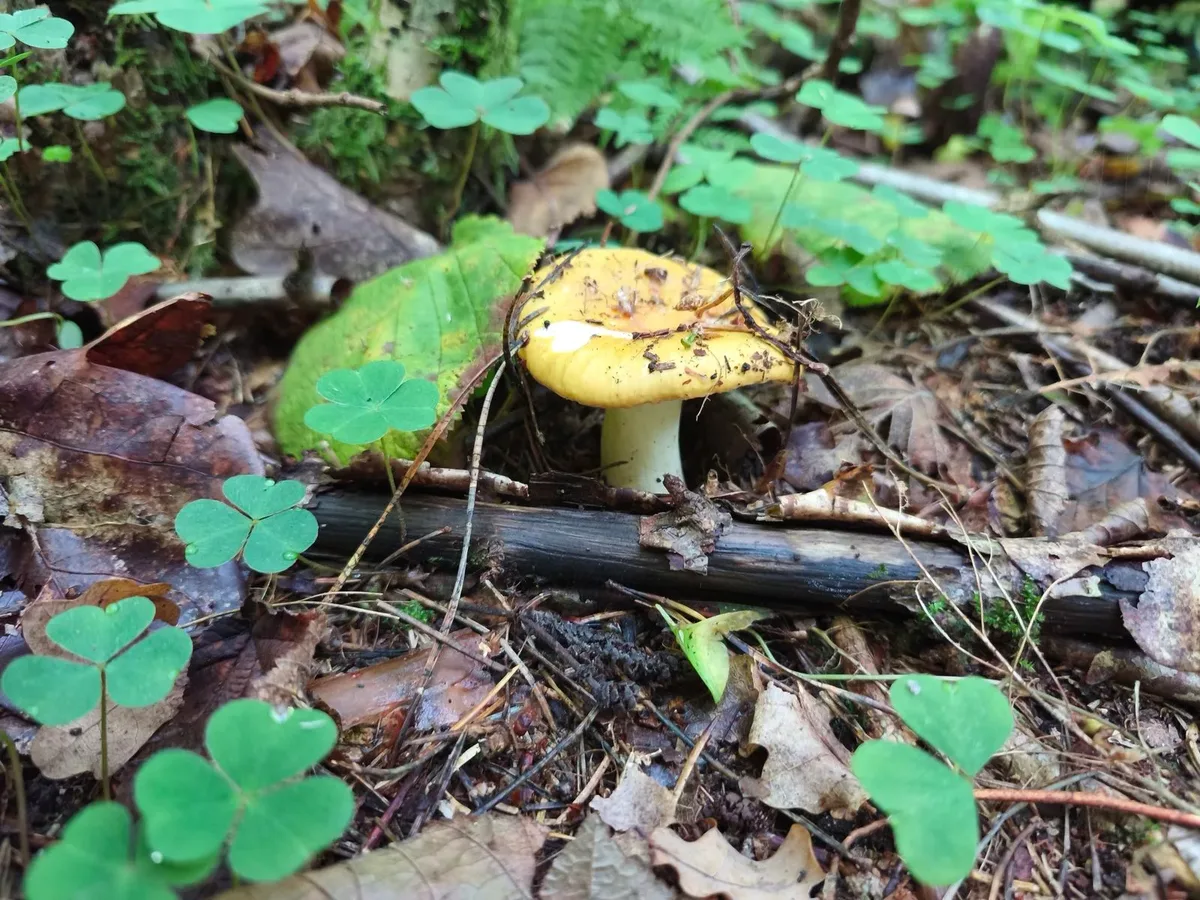 © Dunin Karwicki (CC BY-SA)
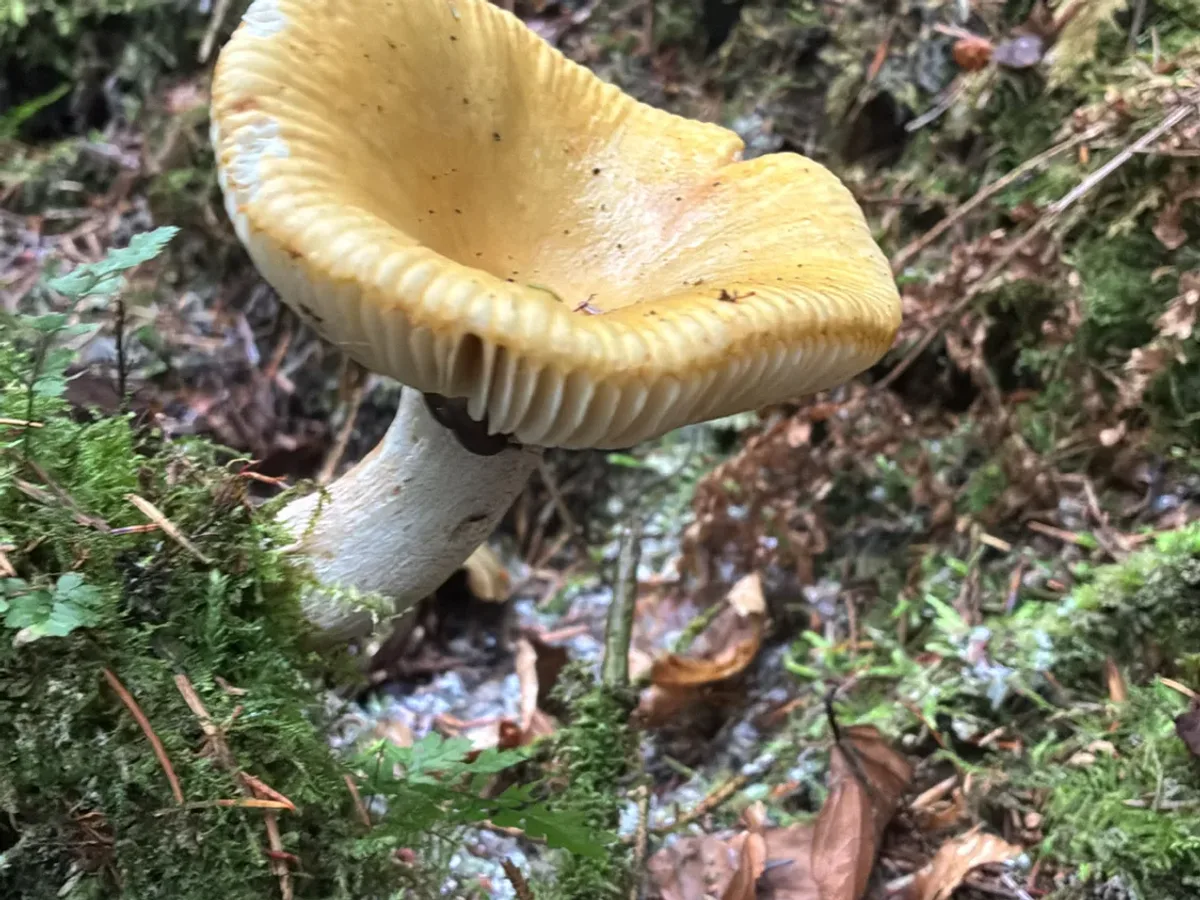 © Rocco Lieghio (CC BY)
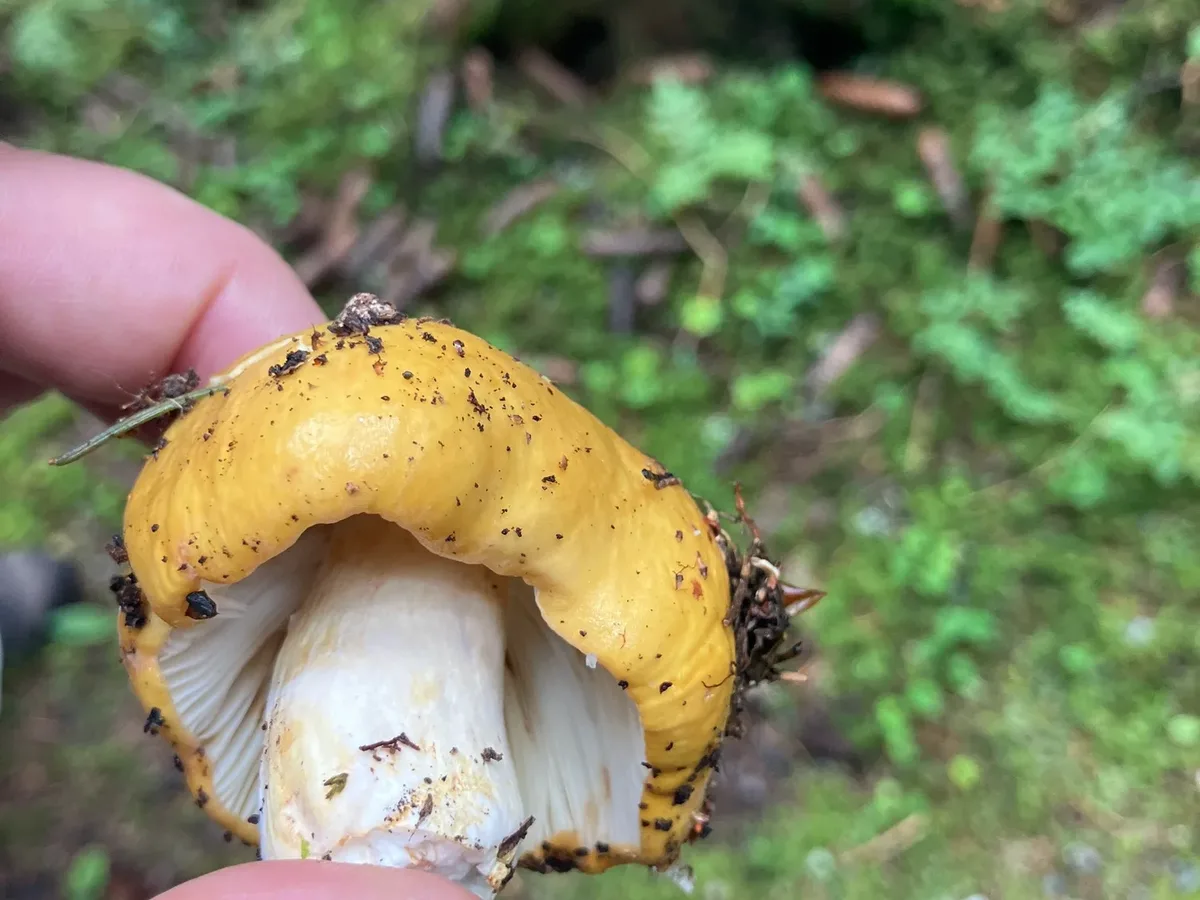 empressmoth (CC0)
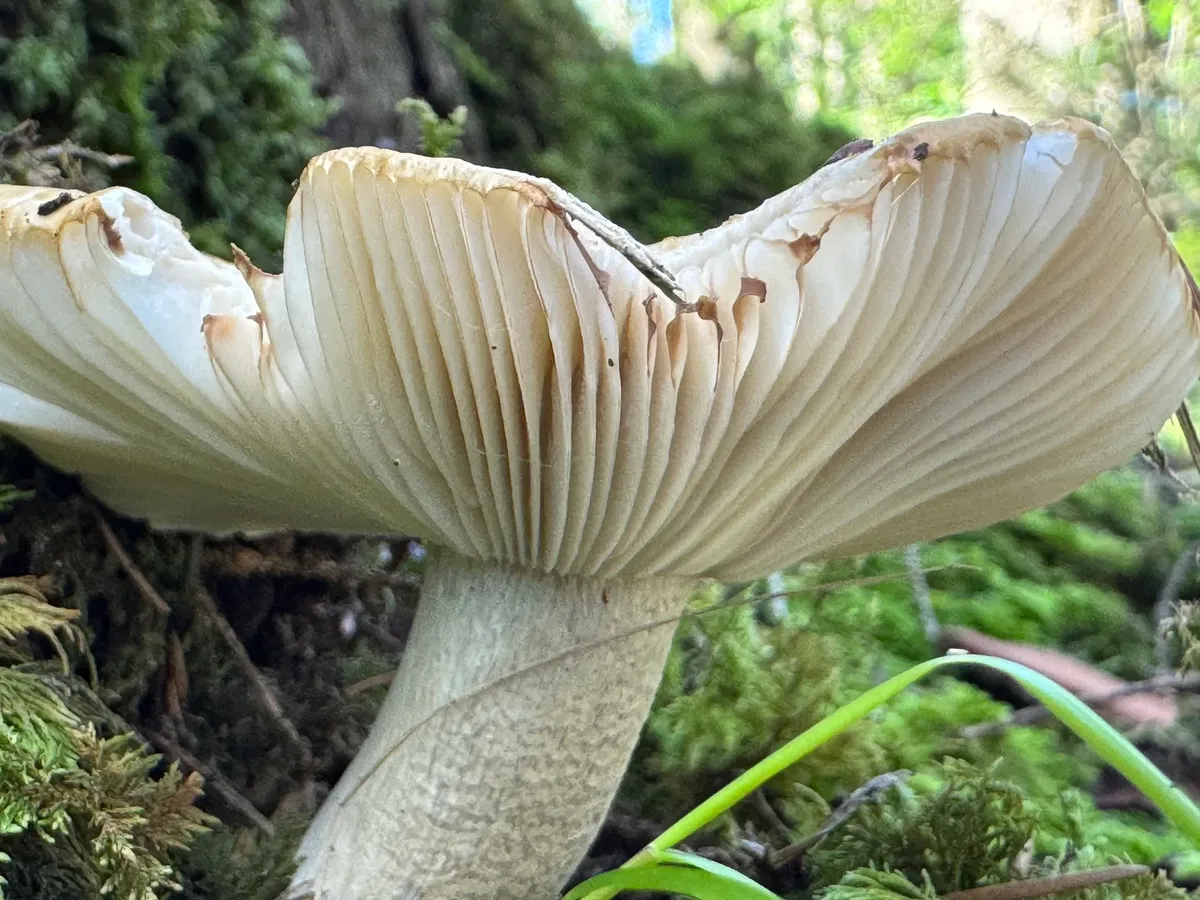 © chrisdt (CC BY)
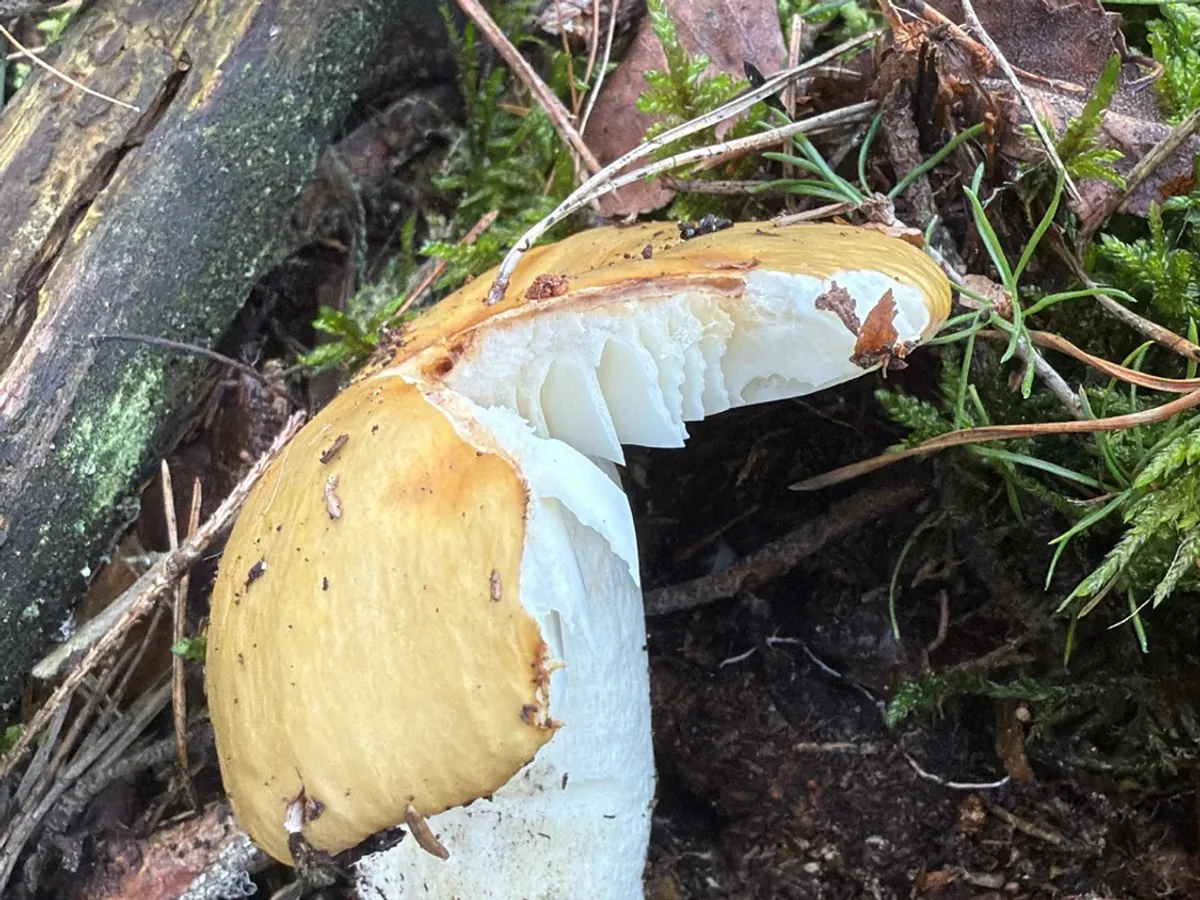 © Petr Harant (CC BY)
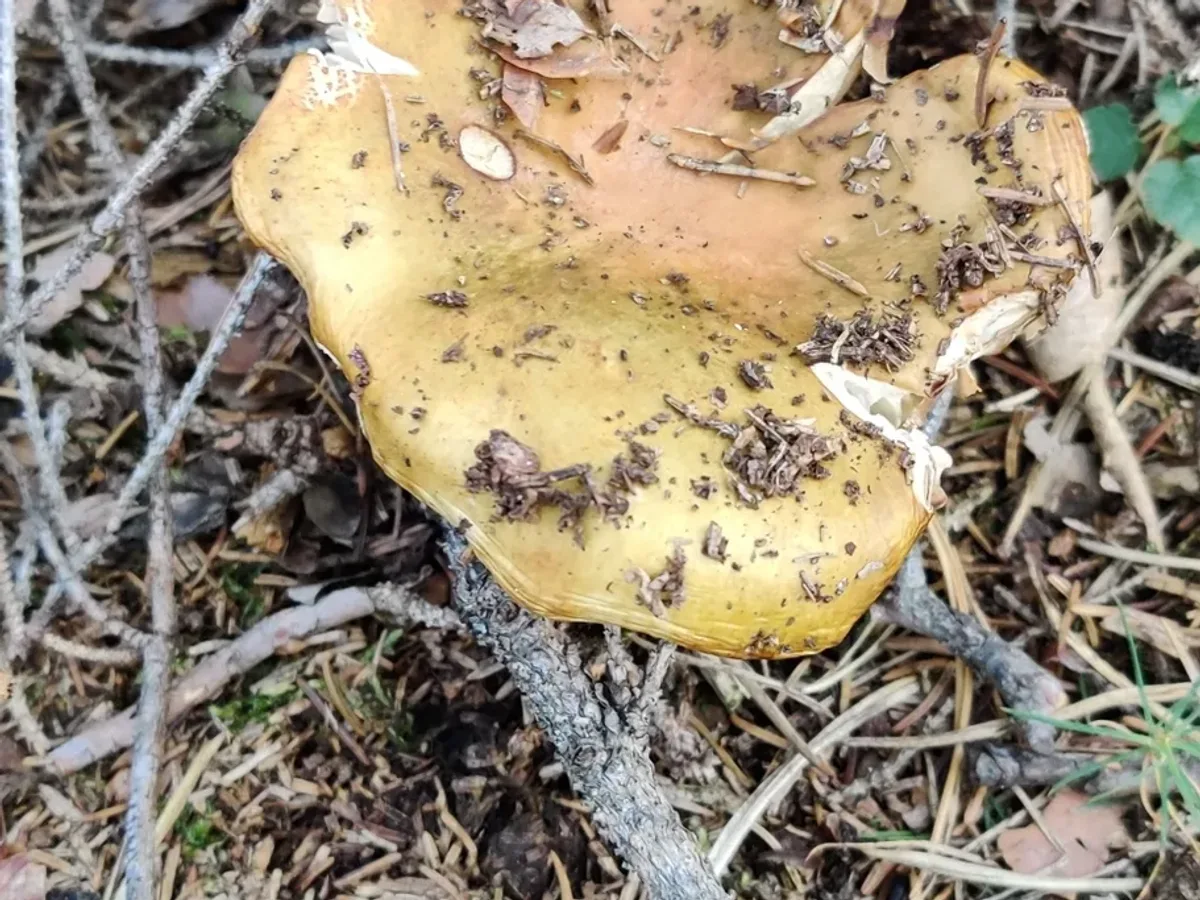 © Ondřej Křivan (CC BY)
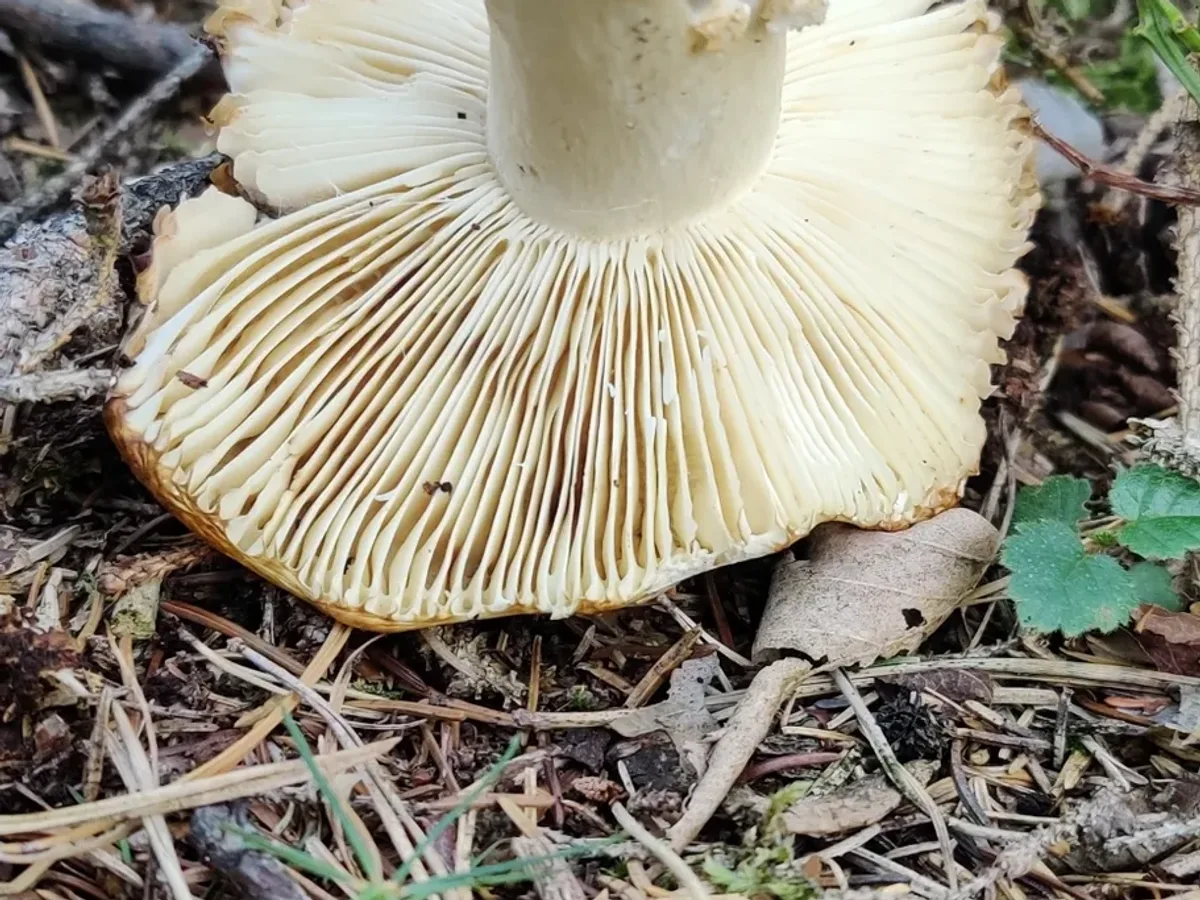 © Ondřej Křivan (CC BY)
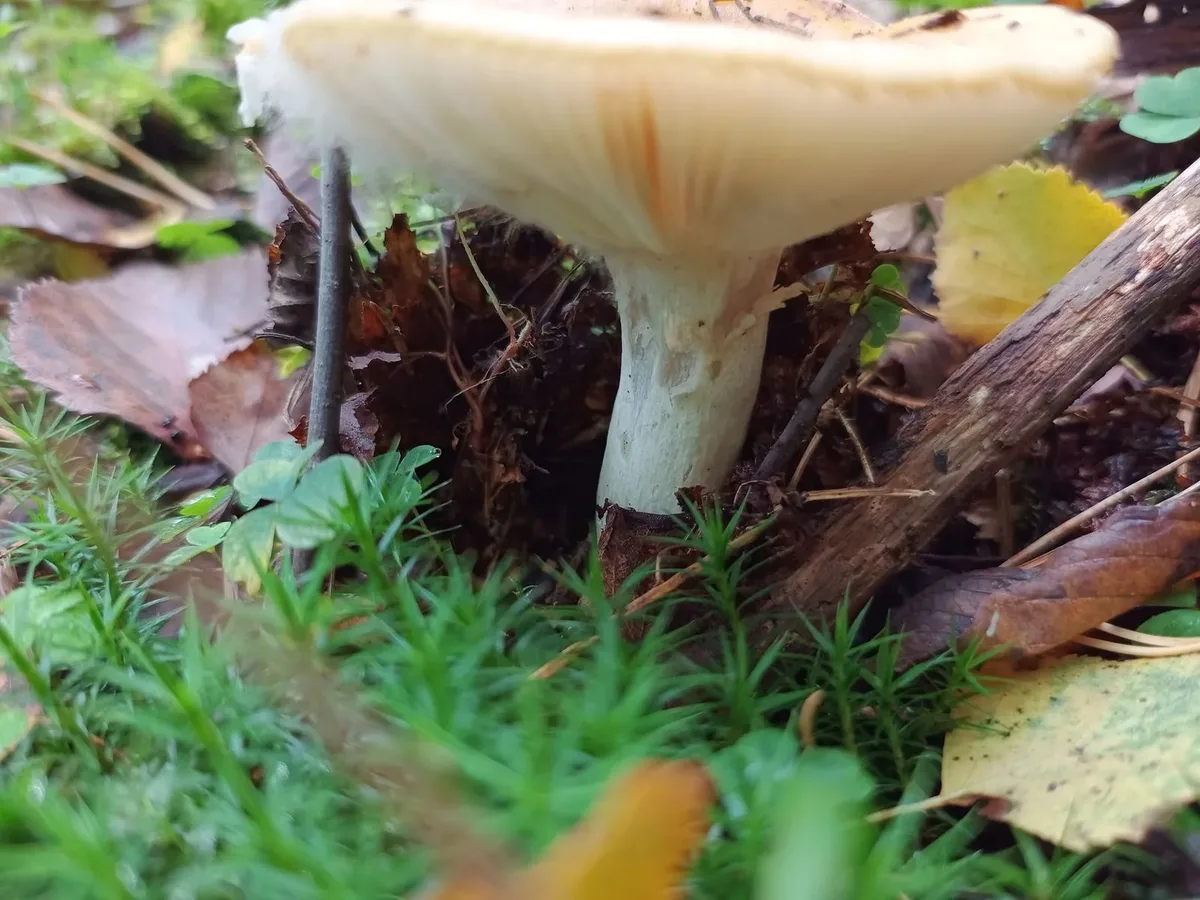 © Maksymilian Nowak (CC BY-SA)
 © Maksymilian Nowak (CC BY-SA)© Dunin Karwicki (CC BY-SA)© Rocco Lieghio (CC BY)
Edible only with the right preparation - or safe for some people but not others. Learn the caveats first.
Never eat a mushroom you are not 100% sure of - check the look-alikes below, and always cook wild mushrooms.
How to recognise it
Russula ochroleuca is one of the commonest and most frequently misidentified mushrooms in European woodland.
Cap
The cap is 4-10 cm across and passes through the typical Russula lifecycle: rounded in youth, broadly convex, then flat and finally shallowly funnel-shaped in old age.
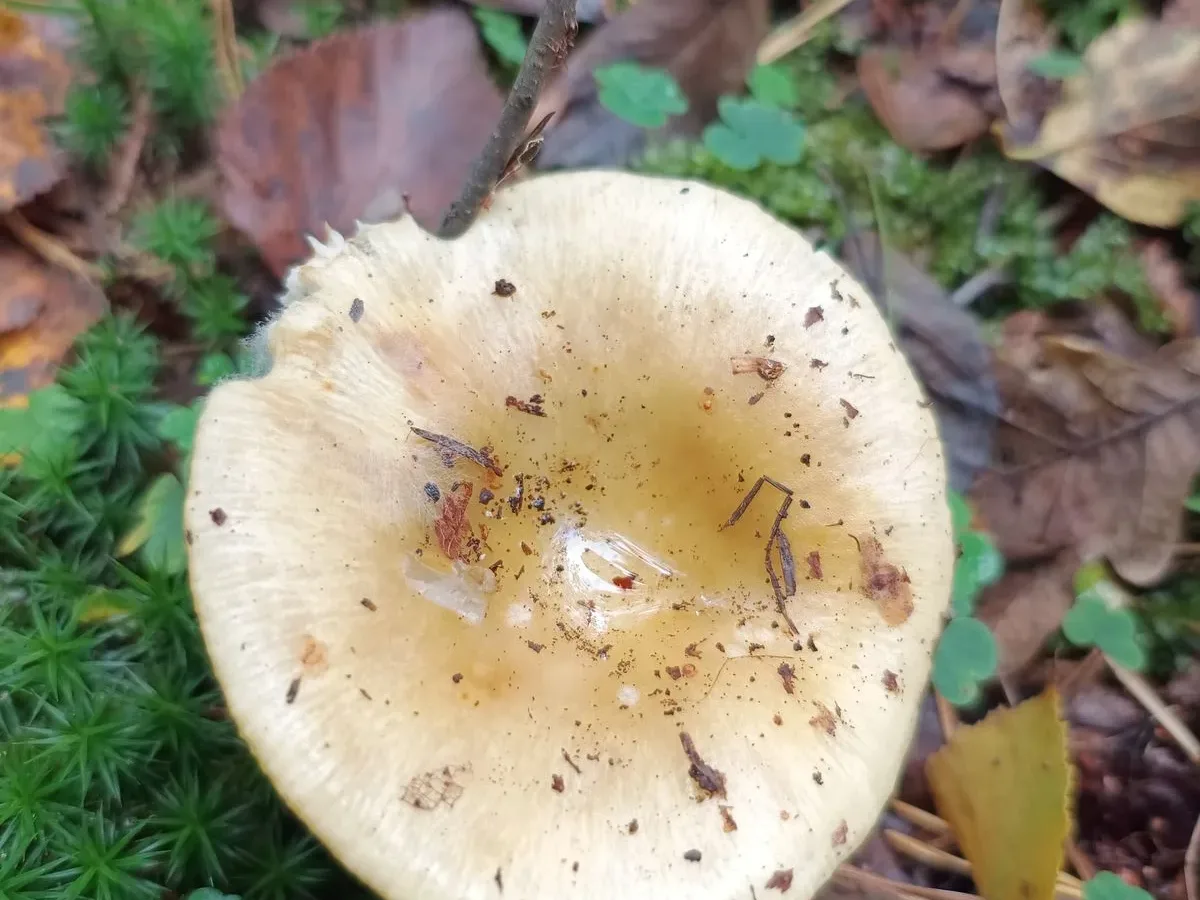
The defining colour is ochre-yellow to honey-buff, sometimes almost watery pale cream when rain-washed, with the centre consistently a shade deeper than the margin. The cap surface is smooth and slightly sticky in wet weather.
A key diagnostic detail is the peeling cuticle: it can be lifted from the cap margin and peeled inward, but only about a third to halfway - unlike the Sickener (Russula emetica) where the red skin peels almost to the centre.
Gills
The gills are white to cream, brittle and easily crumbled, adnate to the stem, moderately crowded.
Stem
The stem is white, 3-7 cm, and firmly chalky when young - snap it: it breaks cleanly across like a stick of chalk and never pulls apart into fibres, which is the single most important structural character of all Russula species.
Flesh
The flesh is white throughout, firm and granular. The spore print is white.
Taste
The taste varies from completely mild in some specimens to distinctly acrid-bitter in others; individual samples from the same site can differ.
This variability means the taste test alone is not entirely reliable as a 'go/no-go' signal for this species.
Why it's dangerous
Poisonings from R. ochroleuca are not life-threatening in healthy adults. The main practical risk is dehydration from repeated vomiting and diarrhoea, especially in the young, elderly or frail.
More importantly, any time a forager reports GI symptoms after eating an ochre-yellow mushroom, the possibility of Amanita phalloides poisoning must be actively excluded. The symptoms of amatoxin poisoning can be superficially similar in the early phase but lead to acute liver and kidney failure within days if untreated.
Seek medical attention promptly and bring a sample or photographs of the mushroom eaten.
Toxin
The exact acrid principles in Russula ochroleuca are not fully isolated. Like other acrid Russula species they are believed to be sesquiterpene-based irritants (possibly including compounds related to lactarorufin and other furan derivatives known from acrid milkcaps), which act as direct mucous-membrane and GI-tract irritants.
These are thought to be heat-sensitive but not reliably destroyed at all normal cooking temperatures, explaining why cooked samples still cause problems in some individuals.
The mushroom is not cytotoxic in the same way as amatoxins, and there are no reported fatalities.
Symptoms
Symptoms are gastrointestinal: nausea, vomiting, diarrhoea, and cramping abdominal pain.
Onset is typically 30 minutes to 3 hours after ingestion, consistent with a local irritant mechanism rather than a delayed systemic toxin.
Severity varies - some people eating small cooked portions experience little, while others develop pronounced vomiting within an hour.
Symptoms are self-limiting and full recovery is expected within a few hours to a day, but dehydration is a practical risk in severe episodes or in children.
Staying safe
Russula ochroleuca is classified as caution in this library, not as edible, for three reinforcing reasons:
- 1The toxin content is variable: some specimens test nearly mild, others are sharply acrid, and the acrid principle (likely sesquiterpenoid gastrointestinal irritants) is not fully destroyed by normal cooking.
- 2Published case series document gastrointestinal poisonings from apparently well-cooked samples, including vomiting and diarrhoea.
- 3The risk of misidentification is non-trivial: it shares a woodland habitat and general ochre-buff coloration with young Amanita phalloides, which is deadly.
A careful mycologist who confirms the full Russula character set (chalk-brittle snap, no ring, no volva, white gills and flesh) is not going to pick up a Death Cap by mistake, but that careful check must never be skipped.
As a general rule for this species: enjoy it as a beautiful and common indicator of healthy woodland, but leave it in the field.
Where & when it grows
Habitat
Russula ochroleuca is among the most ecologically flexible of European brittlegills, happy in pure spruce and pine plantations as well as in mixed deciduous and birch-dominated heathland; it also occurs under oak and beech, though less commonly.
It forms ectomycorrhizal partnerships, meaning it grows on the ground in a nutritional exchange with living tree roots - you will not find it on fallen logs or on open grassland without trees nearby.
It is widespread and very common throughout temperate and boreal Europe, extending from Atlantic Britain and Scandinavia east through central Europe and into Russia; also recorded from North America. Acidic to slightly acidic soils are preferred, as with most forest russulas.
When
One of the later-season brittlegills, with fruit bodies appearing from midsummer and persisting well into late autumn.
The main flush runs from late August through October, and in mild oceanic climates - western Britain, Atlantic France, the Danish coast - a few specimens may survive until November. The season ends wherever hard overnight frosts set in.
Russula ochroleuca is often the most abundant brittlegill still standing in October woodland, when many other species have already finished.
How it grows
Like all Russula species, R. ochroleuca is an ectomycorrhizal symbiont: the mycelium threads through the soil in a long-running partnership with the roots of surrounding trees, trading minerals and water for carbohydrates.
This relationship can persist for decades - the same woodland spots reliably produce caps year after year, the fungus quietly present underground long before a single fruit body appears.
Given adequate soaking rain and soil temperatures in the 8-18 °C range, new caps can emerge within a week to ten days. Individual fruit bodies are typically scattered, though small loose groups are not uncommon.
Fruiting conditions
Triggered by adequate soaking rain once summer heat has faded; soils in the 8-18 °C range promote the main late-summer to autumn flush. One of the more cold-tolerant brittlegills, persisting later in autumn than most.
Look-alikes
Several species can be confused with the Ochre brittlegill, and one of the lookalike relationships carries a fatal risk.
The most important danger is confusion with pale or yellowish specimens of the Death Cap (Amanita phalloides): the immature buttons of A. phalloides emerging from their egg-like universal veil can appear as pale, ochre-tinted mushrooms before the ring, volva and free gills are clearly developed.
The critical distinction is the Russula structure - a brittlegill snaps cleanly like chalk and has no ring, no skirt, no swollen base and no volva (the 'cup' at the base); A. phalloides buttons cut in half reveal a layered, egg-like interior.
Never assume a pale ochre mushroom in the woods is a Russula without checking the whole stem base and confirming the brittle, chalk-snap texture.
Within the Russula genus:
- Russula claroflava (Yellow Swamp Brittlegill) is a close visual match but grows strictly in wet ground with birch, has a brighter butter-yellow cap, flesh that turns grey on exposure, and is considered edible when cooked.
- Russula lutea (Honey Brittlegill) is smaller, softer, more orange-yellow and found under oaks and mixed hardwoods; it has a pale ochre spore print distinguishing it from R. ochroleuca.
- Russula fellea (Geranium Brittlegill) is very similar in cap colour but typically has a straw-yellow to honey-buff tint, a distinct smell of geraniums or dried straw, and is consistently intensely acrid.
Amanita citrina (False Death Cap) can be pale buff-yellow and is a beginner confusion: it has a ring, a volva, free gills and a soft fibrous (non-brittle) stem. It is not deadly but contains bufotenine-related compounds and is not edible.
The immature buttons and pale ochre-tinted forms of the Death Cap can superficially resemble ochre brittlegills before the ring and free gills are clearly visible. The decisive test: a Russula has a chalk-brittle stem that snaps cleanly, NO ring or skirt, and NO swollen volva at the base. Amanita phalloides has a ring (annulus), a cup-like volva at the base, free (non-attached) gills, and a stem that tears into fibres rather than snapping. Always dig up the entire stem base and check.
Pale buff-yellowish cap with white to pale buff patches, and a distinct smell of raw potatoes. Has a ring, a marginate-bulbous volva at the stem base, and free gills - none of which a brittlegill has. Not deadly but not edible.
Very similar straw-buff to honey-ochre cap, but has a characteristic smell of geraniums or dried hay, a straw-coloured (not white) spore print, and is consistently and intensely acrid. Not edible; no deadly risk.
Smaller (3-6 cm), more orange-yellow to apricot, softer flesh, found under oaks and mixed hardwoods; spore print ochre (clearly coloured, not white). Considered edible but only mildly flavoured.
Bright, saturated butter-yellow (more vivid than the ochre-buff of R. ochroleuca); flesh turns grey-black slowly when cut or bruised; grows strictly in wet, boggy ground under birch. Considered edible when cooked.
A reference guide - never an edibility guarantee. When in doubt, leave it out.