Beechwood Sickener
Russula nobilissyn. Russula mairei Singer, Russula fageticola (A. Blytt) Kühner & Romagn., Russula emetica var. fageticola
 © Perry Gunnar Larsen (CC BY)
 © Michel Langeveld (CC BY)
 © Bjørn Eidhammer (CC BY)
 © Michel Langeveld (CC BY)
 © Michel Langeveld (CC BY)
 © Michel Langeveld (CC BY)
 © Michel Langeveld (CC BY)
 © Rocco Lieghio (CC BY)
 © Rocco Lieghio (CC BY)© Perry Gunnar Larsen (CC BY)© Michel Langeveld (CC BY)
Edible only with the right preparation - or safe for some people but not others. Learn the caveats first.
How to recognise it
Cap
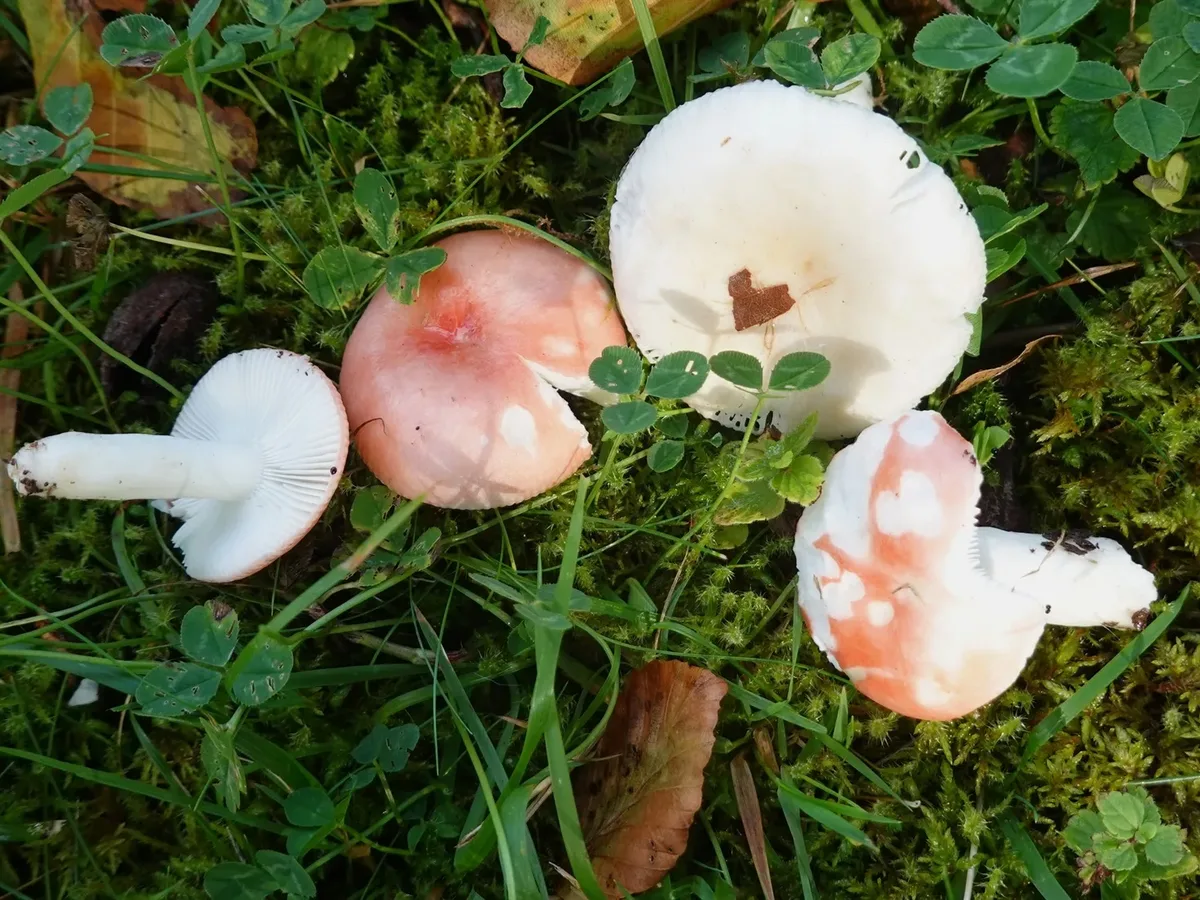
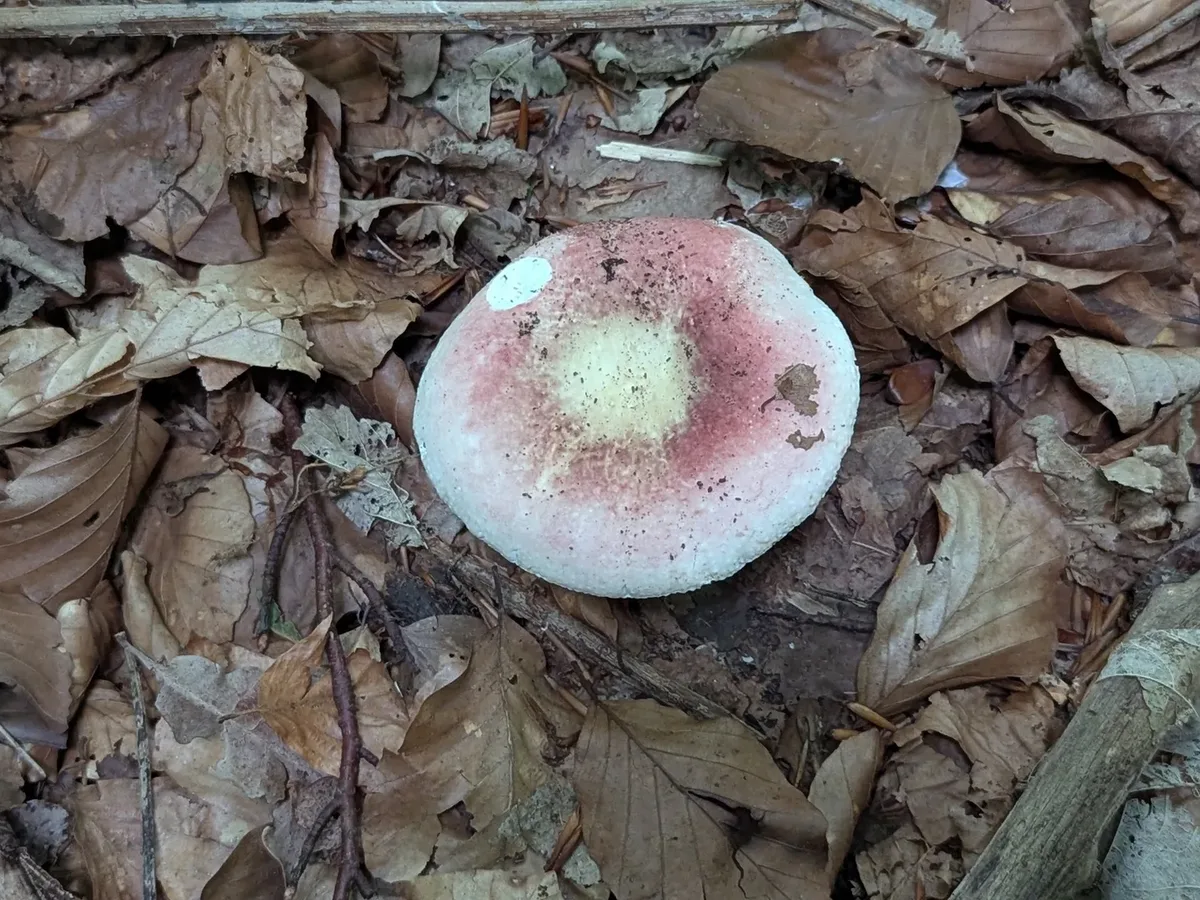
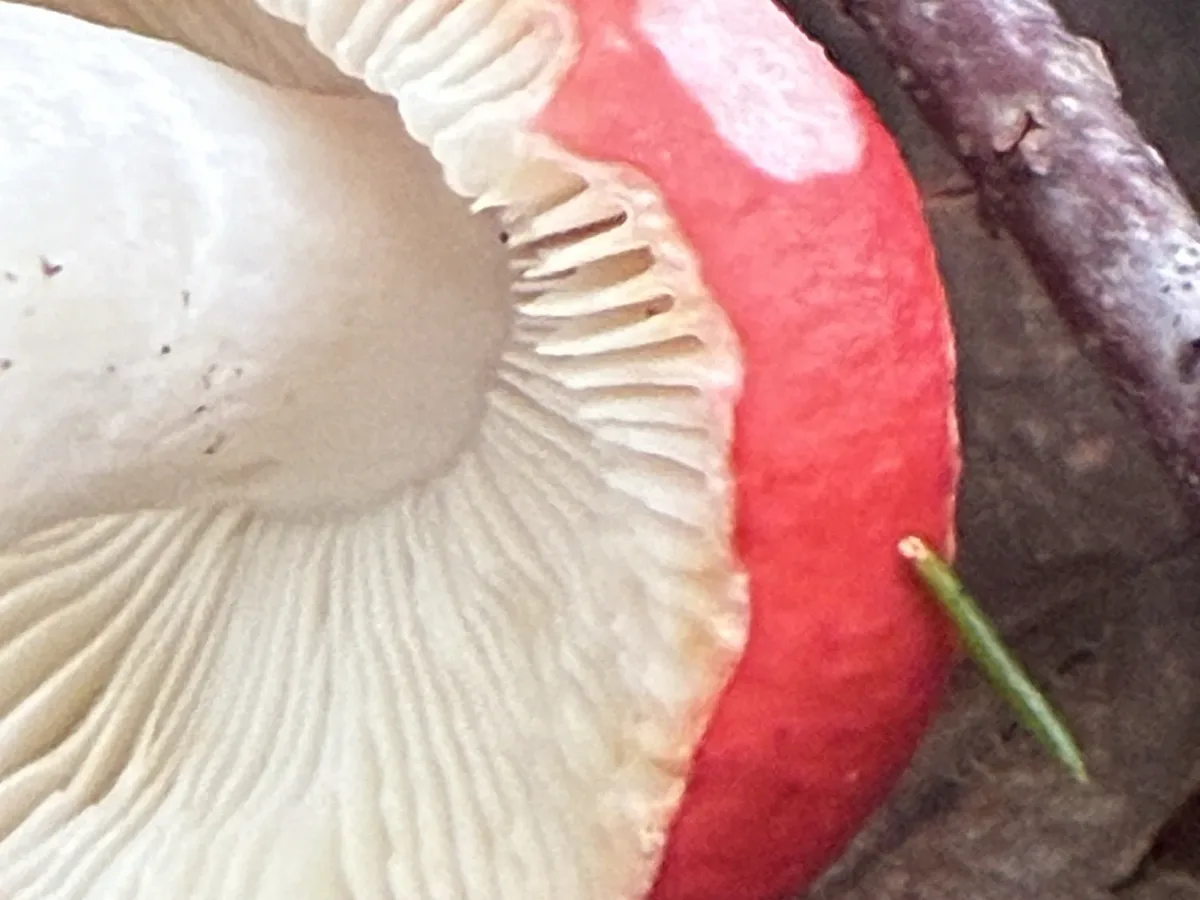
Russula nobilis is a red-capped brittlegill of medium size (3-9 cm cap diameter) with a striking, confident look about it: the cap stays convex and dome-shaped longer than most red Russulas, giving young specimens a pleasingly rounded profile that persists well into maturity.
It eventually flattens but rarely slumps into a funnel - that persistence is a useful first pointer away from the sickener (R. emetica), which collapses more readily with age.
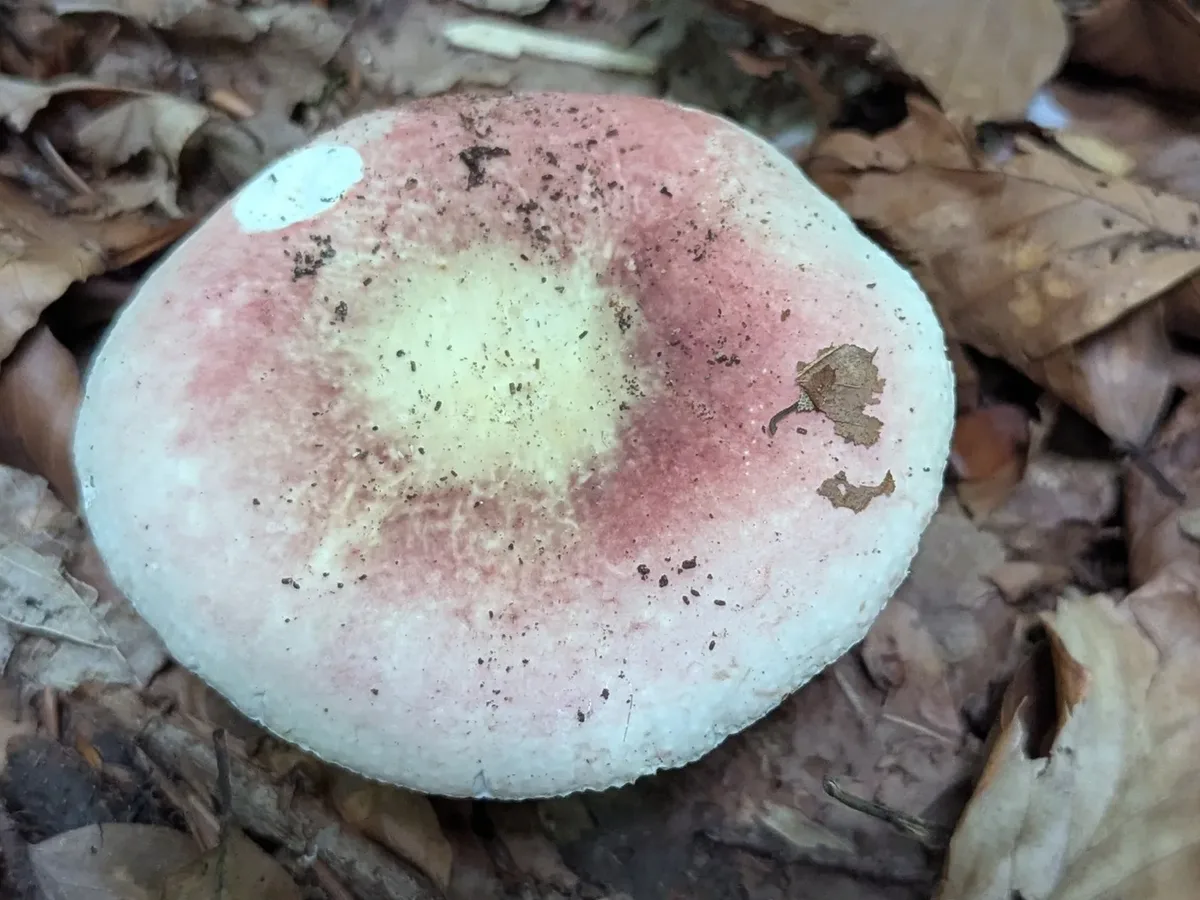
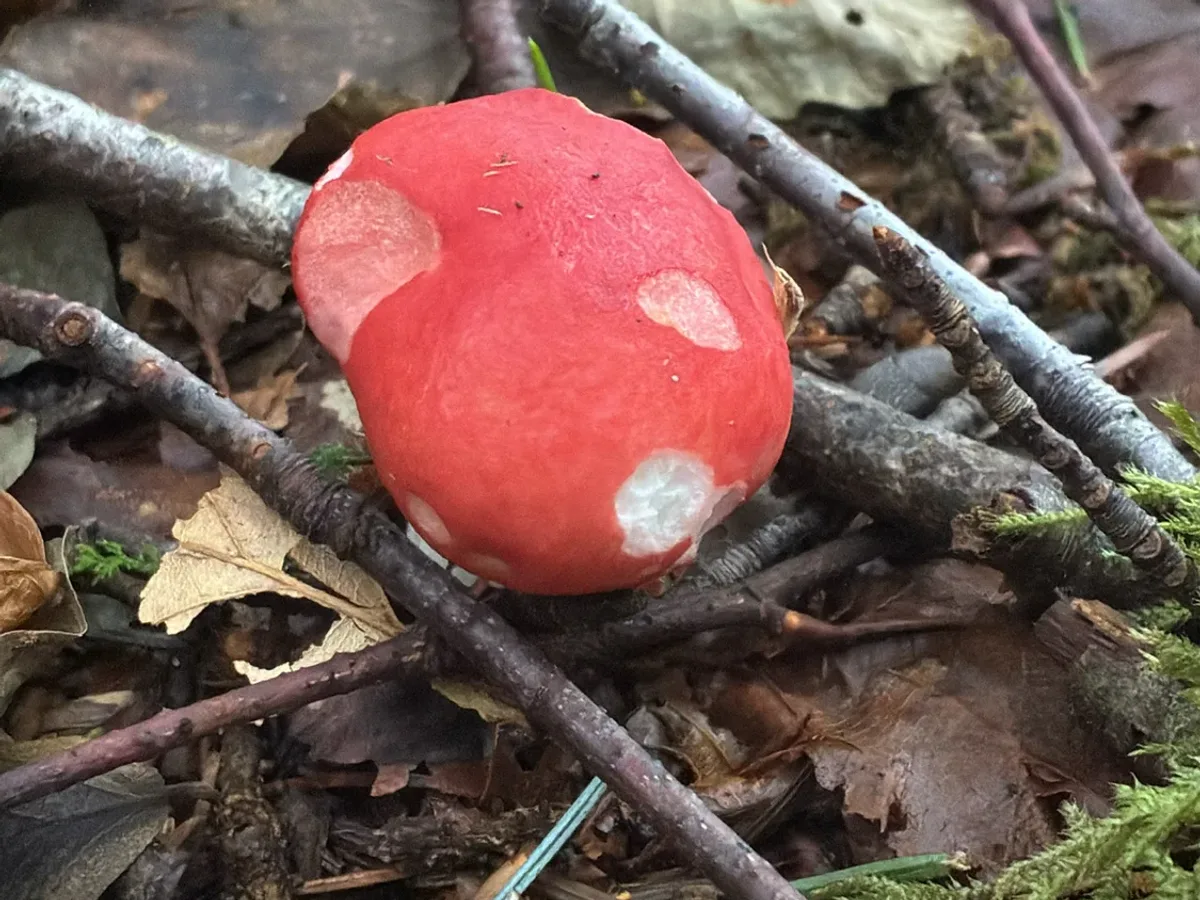
The colour is bright scarlet to cherry-red, occasionally leaning coral-pink toward the margin, and the surface is smooth and lightly sticky when fresh.
Peel the red skin and it comes away cleanly but only to about one-third of the way from the rim - noticeably short of the almost-to-centre peeling in R. emetica.
Gills
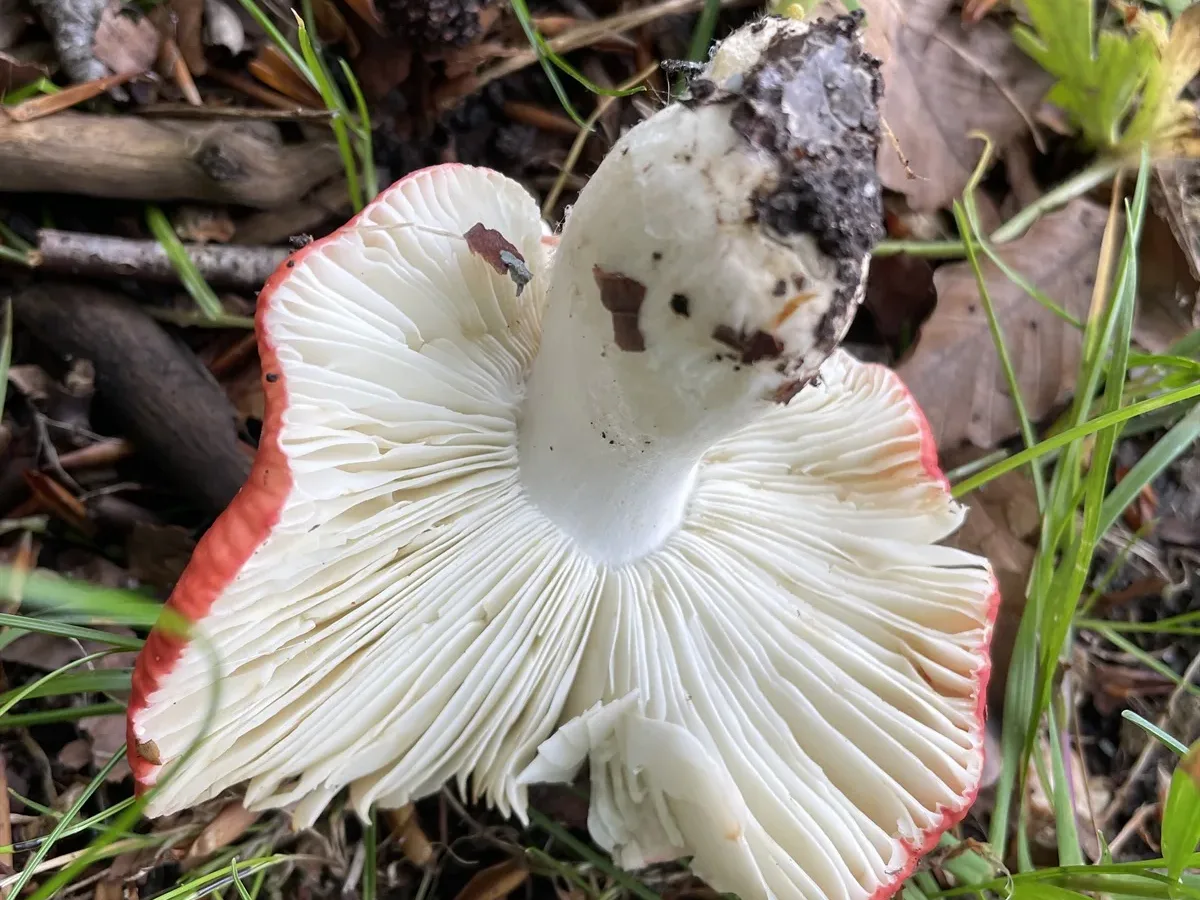
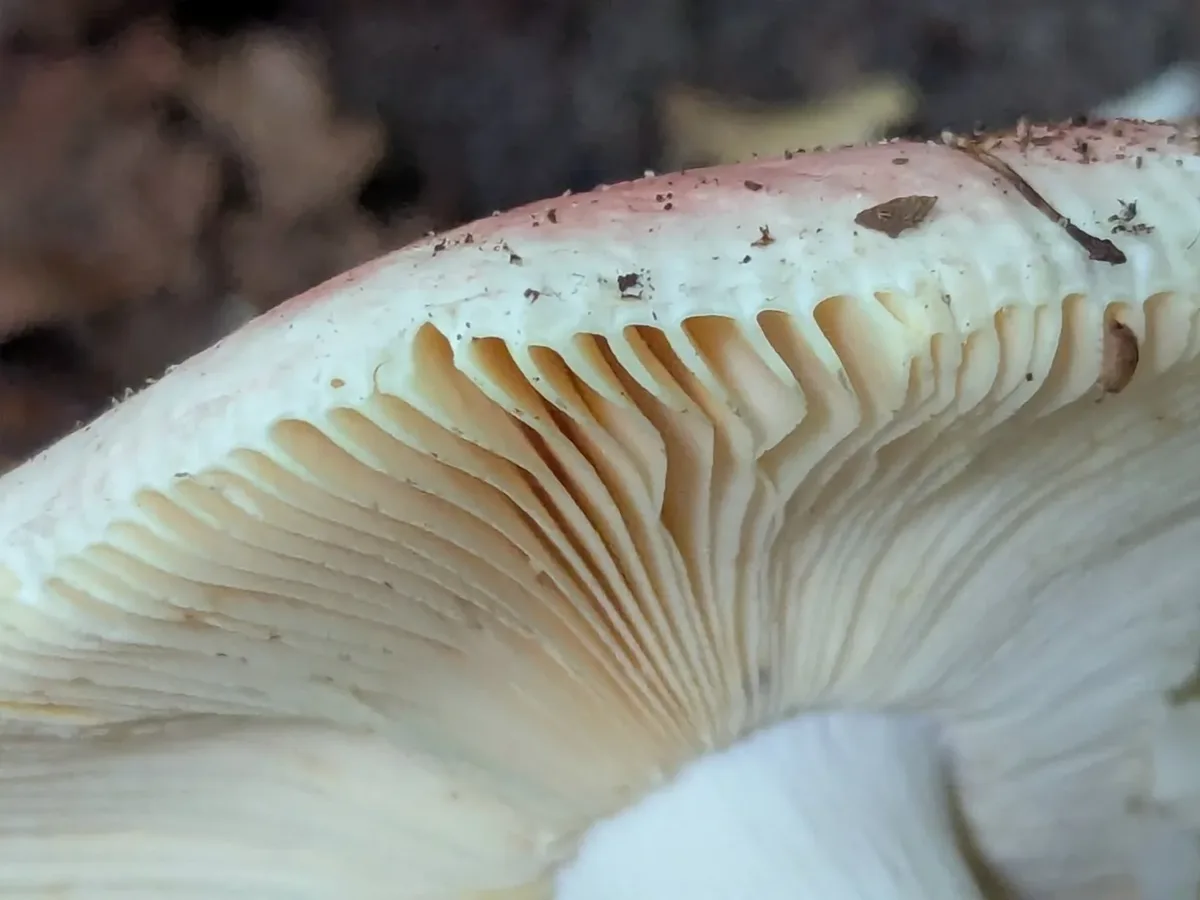
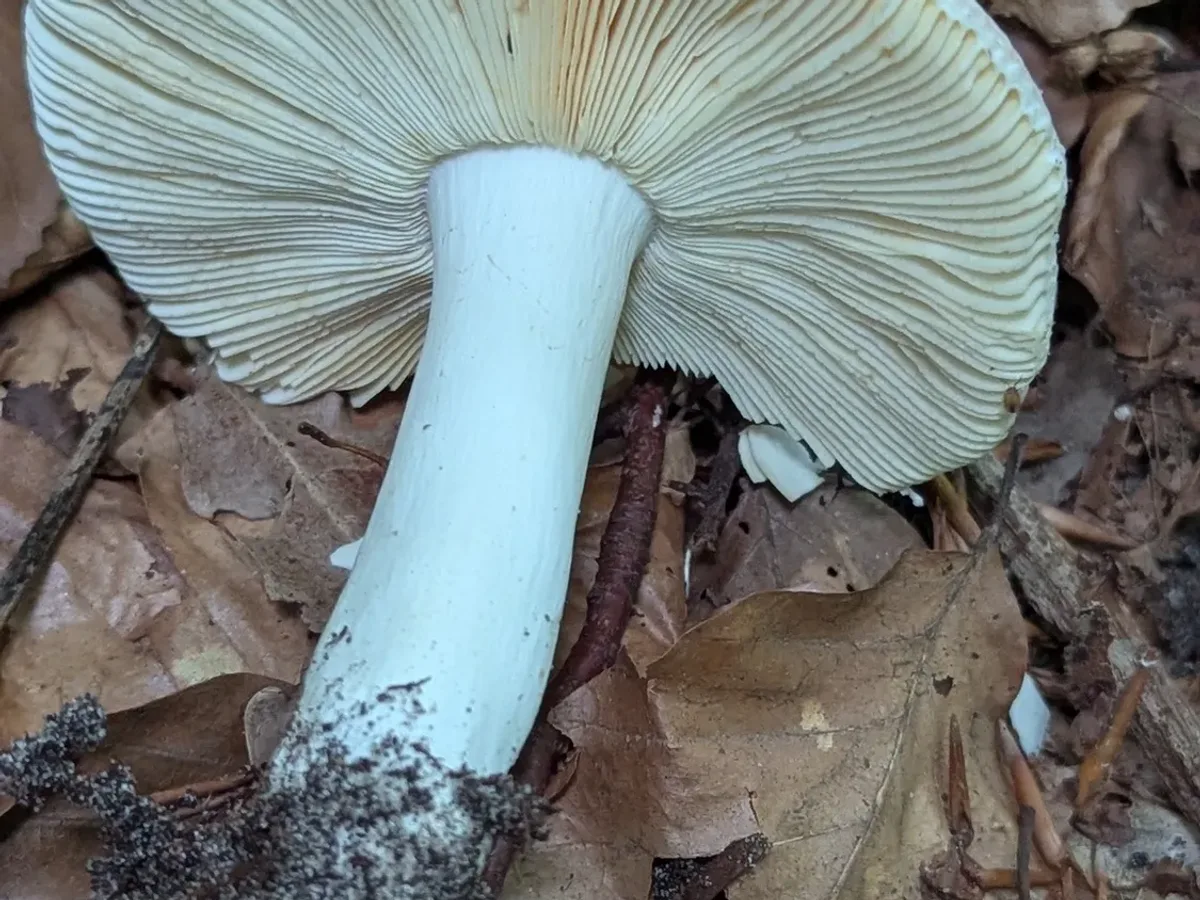
Beneath, the gills are pure white, brittle and moderately spaced.
Stem
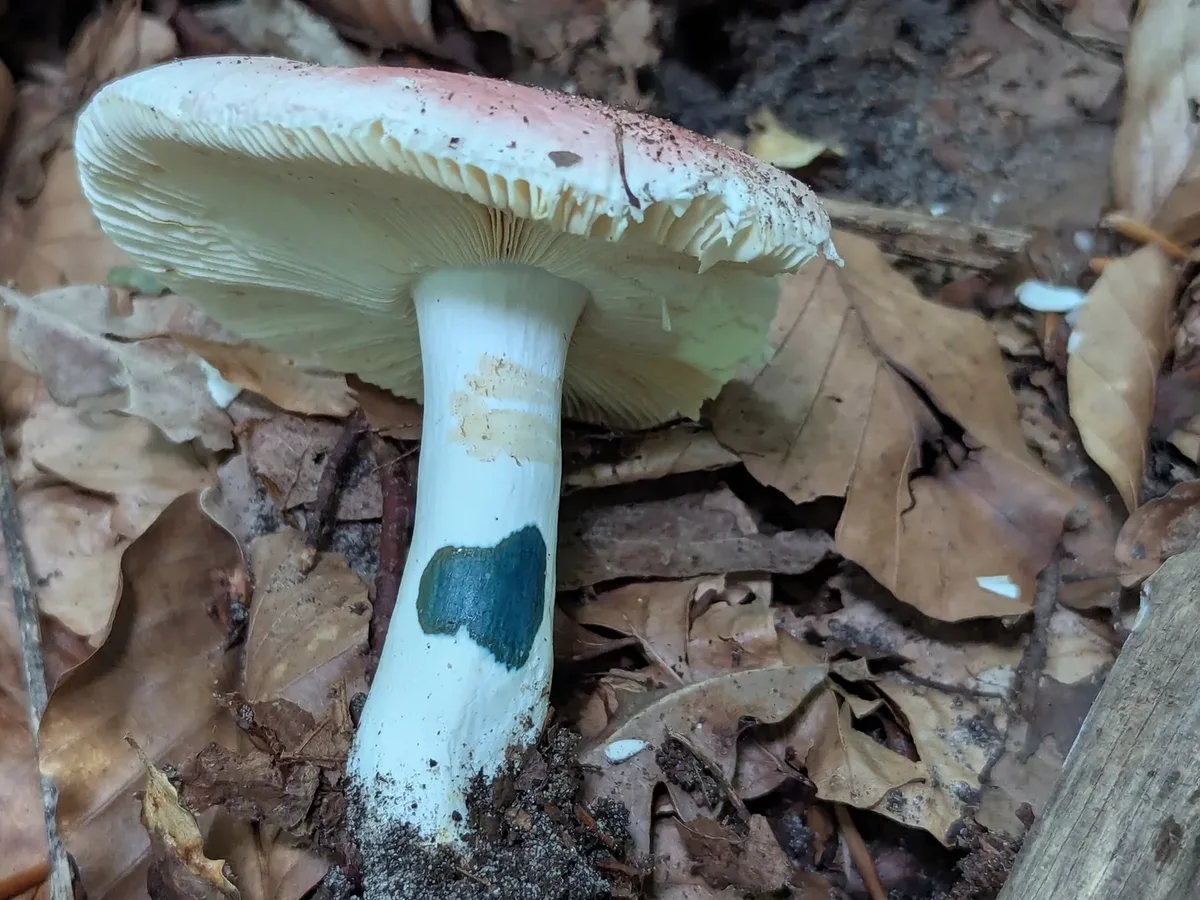
The stem is chalk-white, cylindrical and brittle throughout - snap it and the texture is crumbly like chalk, the hallmark of the brittlegill genus.
Smell & taste
The smell is subtle, sometimes hinting at coconut or fenugreek in fresh material, but not always present.
The decisive test: a tiny fragment on the tongue produces a fierce, burning, acrid sensation that immediately rules out the mild-tasting edible red Russulas.
Spore print white.
Why it's dangerous
Not life-threatening for healthy adults in typical foraging quantities, but unpleasant and potentially serious for vulnerable individuals through dehydration.
In the beech-wood foraging context, the main danger is confusing it with a mild edible red Russula rather than with a deadly species.
Seek medical advice if:
- symptoms are severe or prolonged
- children or elderly individuals are affected
- there is any uncertainty about which species was consumed
Toxin
The poisoning is caused by acrid, heat-labile sesquiterpenoid compounds - principally furanoid terpenoids similar to those found in R. emetica and acrid Lactarius species - that act as direct irritants of the gastrointestinal mucosa.
These compounds are responsible for both the burning taste sensation and the subsequent gut inflammation.
They are believed to be somewhat heat-sensitive, meaning thorough cooking reduces but does not reliably eliminate the toxicity.
Traditional methods of repeated parboiling and water-change reduce the acrid principle, but the result is a tasteless product of no value, and the practice is not recommended.
Symptoms
Onset is rapid, typically 30 minutes to 3 hours after ingestion - a characteristic of direct gastrointestinal irritants.
Symptoms include:
- nausea
- repeated vomiting
- watery diarrhoea
- abdominal cramping
The illness is self-limiting and resolves on its own once the irritant material has been expelled, usually within several hours to a day.
Dehydration is the main medical concern, especially in children and older adults.
Staying safe
Russula nobilis causes gastrointestinal poisoning characterised by nausea, vomiting and diarrhoea. It is not considered life-threatening in normal circumstances, but eating it will reliably make you ill.
The poisoning mechanism is based on acrid sesquiterpenoid irritants that attack the digestive lining directly.
The burning taste is an excellent natural warning; no one who properly applies the taste test and spits out the fragment should eat this species in error.
The primary risk is accidental collection alongside mild-tasting edible red Russulas in beech woodland, which makes the taste test non-negotiable when harvesting red brittlegills.
Never eat any Russula from a beech wood without confirming a mild, nutty taste.
Keep the species firmly separated from any edibles in your basket, as even a small amount of a poisonous Russula mixed into a dish can spoil it and cause symptoms.
Where & when it grows
Habitat
The common name says everything: Russula nobilis is one of the most habitat-faithful mushrooms in European temperate woodland.
It grows exclusively under beech (Fagus sylvatica), forming an ectomycorrhizal partnership with beech roots and extracting carbohydrates in exchange for soil mineral uptake.
It is not found with conifers, birch, oak or any other tree, so the presence of beech trees nearby is a prerequisite for this species.
Within beech woodland it favours moderately moist, calcareous to neutral soils and tends to emerge in the deep leaf litter of closed-canopy stands, on banks and along paths.
It is widespread and locally abundant across western, central and southern Europe wherever old beech woodland survives.
When
The season runs from mid-summer to autumn, generally July to October in western and central Europe, with the main flush concentrated between early August and mid-September.
Fruiting is triggered by warm to mild temperatures combined with adequate soil moisture from summer rains. The first caps typically follow 7-14 days after significant rainfall when soils are between about 10 °C and 18 °C.
The season ends abruptly with the first freezing temperatures.
How it grows
Fruit bodies emerge singly, scattered or in loose groups from the beech-leaf litter - rarely densely clustered.
The mycelium lives underground year-round, woven into the fine roots of the surrounding beeches in an ectomycorrhizal partnership that can persist for decades: the fungus exchanges soil minerals for tree sugars. In a good beech stand the same network will push up fresh caps in the same spots summer after summer, given enough rain at the right temperature.
The brittle flesh is granular and snaps cleanly rather than tearing in fibres - the defining texture of all brittlegills, and the first thing to check before any species-level identification.
Fruiting conditions
Fruiting triggered by moderate summer-to-autumn rainfall under closed-canopy beech on calcareous to neutral soils; flush follows roughly one to two weeks after significant rain when soil temperatures are in the 10-18 °C range.
Look-alikes
Russula nobilis sits in a group of red, acrid brittlegills that require care to separate from one another and from the mild edible red species.
- The Sickener (Russula emetica) is the closest relative and greatest source of confusion: it grows with conifers and on Sphagnum/boggy ground rather than with beech, its cap becomes funnel-shaped with age (R. nobilis stays more dome-like), and its skin peels almost to the centre whereas R. nobilis peels only one-third of the way. Both are acrid and poisonous, so the distinction is of limited practical importance for the forager except as a teaching point.
- Russula sardonia grows with pine and has gills and a stem often flushed lilac or yellow, and is likewise acrid.
- Russula lepida (Coral Brittlegill) grows with beech and has a similar red cap, but it is mild or only faintly hot in taste, its flesh is very hard and dry and often coral-pink, and its smell is faintly fruity; it is edible but of only moderate quality.
- Russula rosea is another mild beech-associate with a pinker, often matte cap.
In all cases, the taste test is the decisive separator within the beech-wood context: mild is edible, acrid is not.
No deadly species is routinely confused with R. nobilis, since it possesses all the standard Russula features (brittle snapping flesh, no ring, no volva) that separate brittlegills cleanly from the deadly Amanitas.
Also grows with beech. Cap more coral-pink to pale red, flesh notably very hard and dry, smell faintly fruity. Taste is mild or only very faintly peppery (edible, though of modest quality). Confirms that the taste test is essential in beech woods.
Grows under beech; cap pinkish-rose rather than bright scarlet, with a distinctly matte, dry surface that rarely peels; taste mild. Edible but average in quality - the mild taste separates it from R. nobilis.
Red to orange-red cap with distinctive white warts, a skirt-like ring on the stem, a swollen basal volva and tough fibrous (non-brittle) flesh. A brittlegill has none of these features and snaps like chalk. Not a realistic confusion for anyone who checks both.
Grows with conifers (pine), not beech. Cap dark blood-red to purple-red, gills and stem frequently flushed pale yellow or lilac, and the gills turn pink with a drop of household ammonia. Fiercely acrid; inedible.
Grows with conifers and on Sphagnum/boggy ground, not with beech. Cap becomes deeply funnel-shaped with age; skin peels almost to the centre (vs. only one-third in R. nobilis). Also acrid and poisonous - no safer to eat.
A reference guide - never an edibility guarantee. When in doubt, leave it out.