Nauseous brittlegill
Russula nauseosasyn. Russula nauseosum, Agaricus nauseosum
 © Tove Jacobsen (CC BY)
 © Roar Pettersen (CC BY)
 © Roar Pettersen (CC BY)
 © Manuela Fiorini (CC BY)
 © Manuela Fiorini (CC BY)
 © Siv Moen (CC BY)
 © Per Marstad (CC BY)
 © Tove Jacobsen (CC BY)© Tove Jacobsen (CC BY)© Roar Pettersen (CC BY)
Edible only with the right preparation - or safe for some people but not others. Learn the caveats first.
How to recognise it
Russula nauseosa is a small to medium-sized brittlegill sitting firmly in the 'acrid and inedible' camp.
Cap
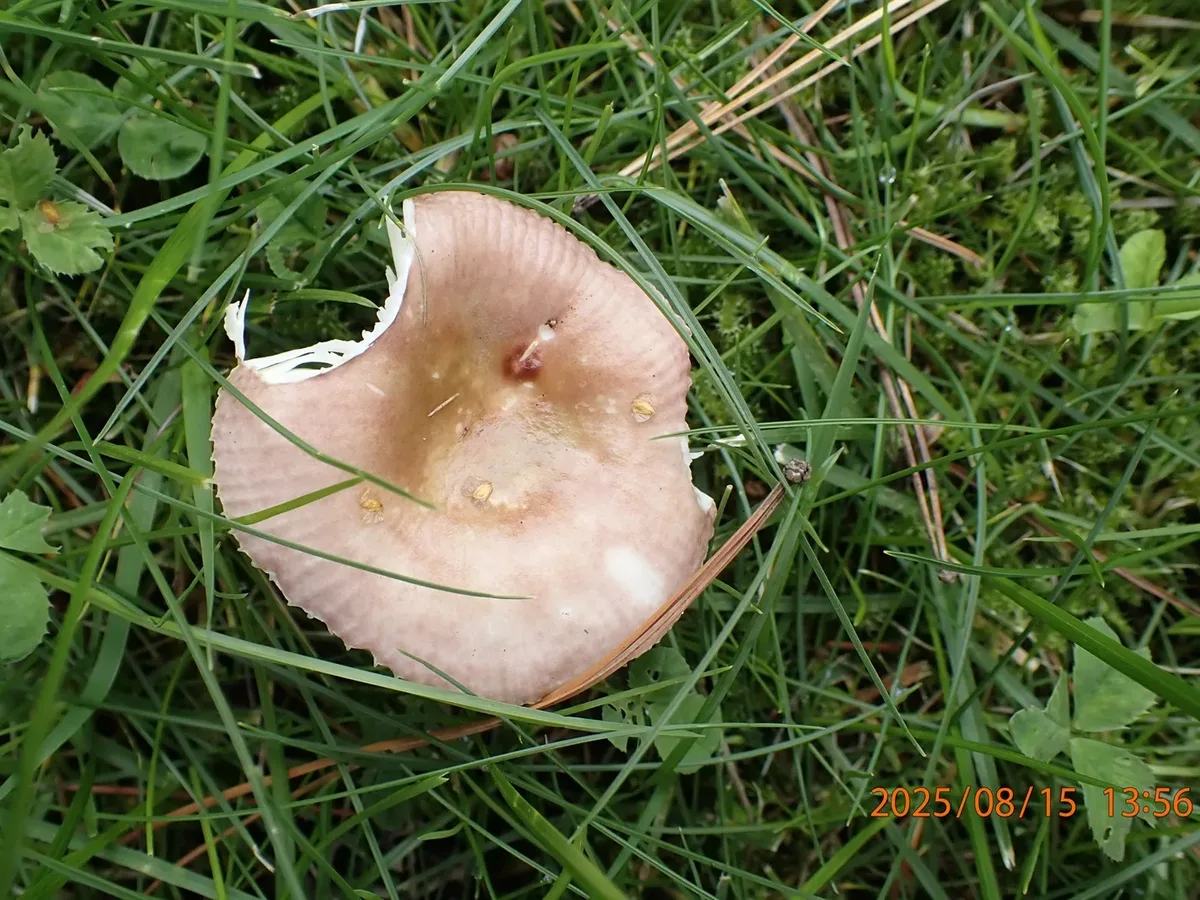
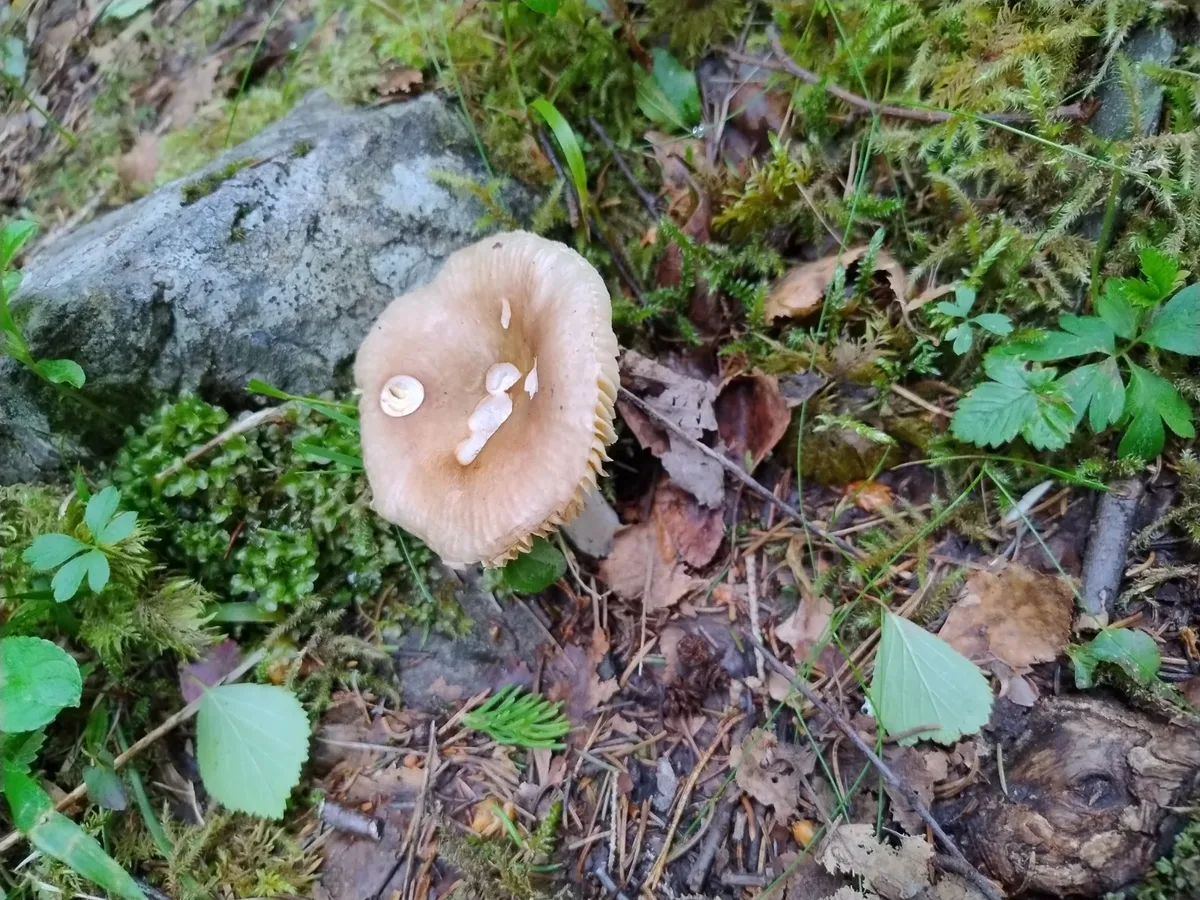
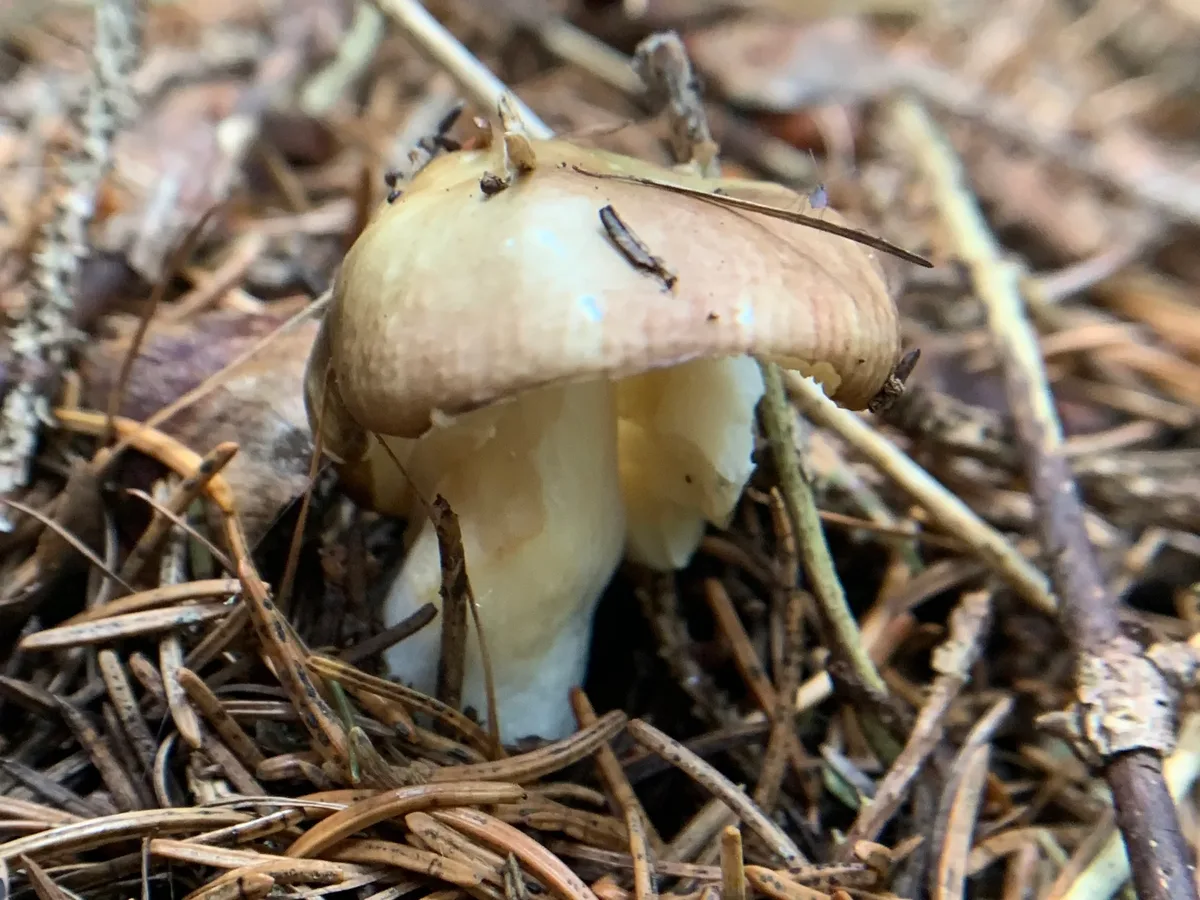
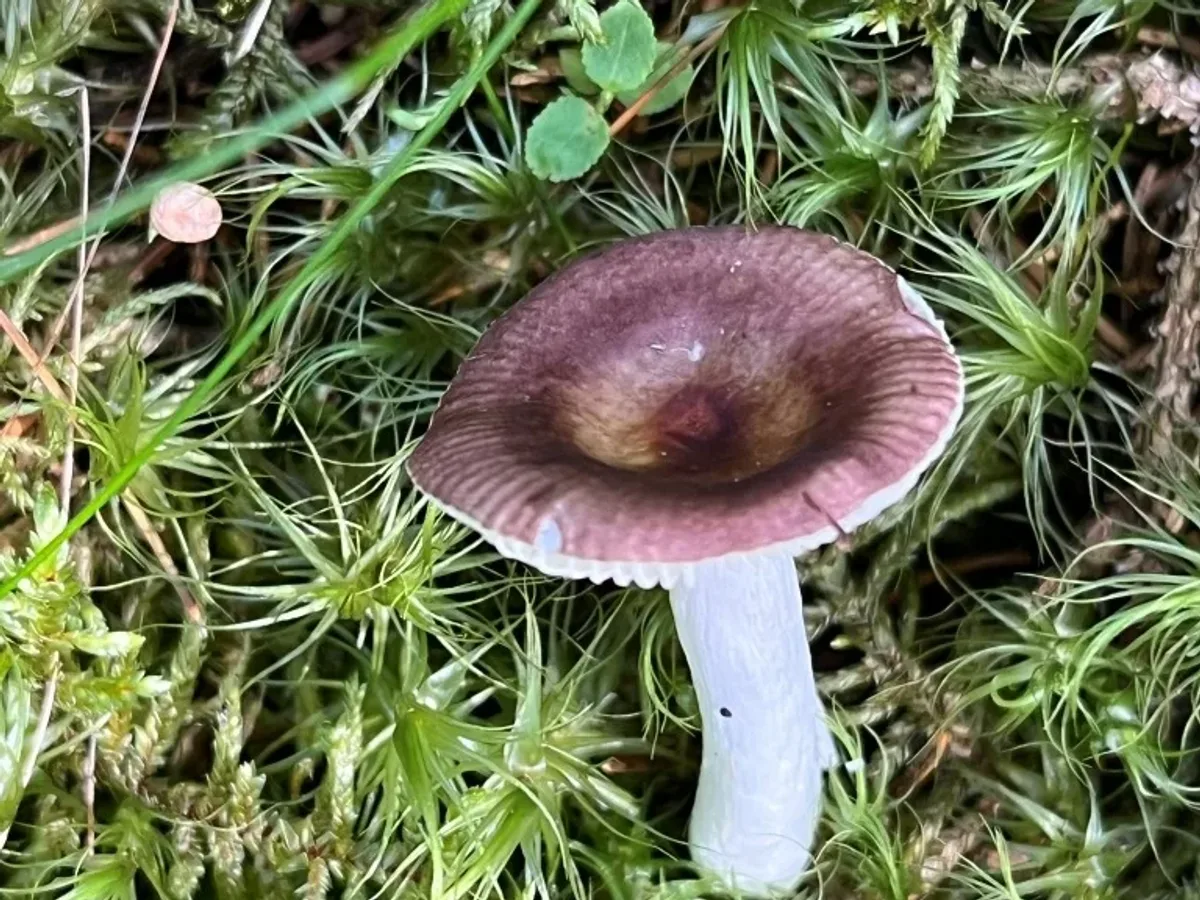
The cap (3-7 cm) goes through the classic Russula shape arc - hemispherical when young, soon convex, then flattening and finally slightly depressed at the centre.
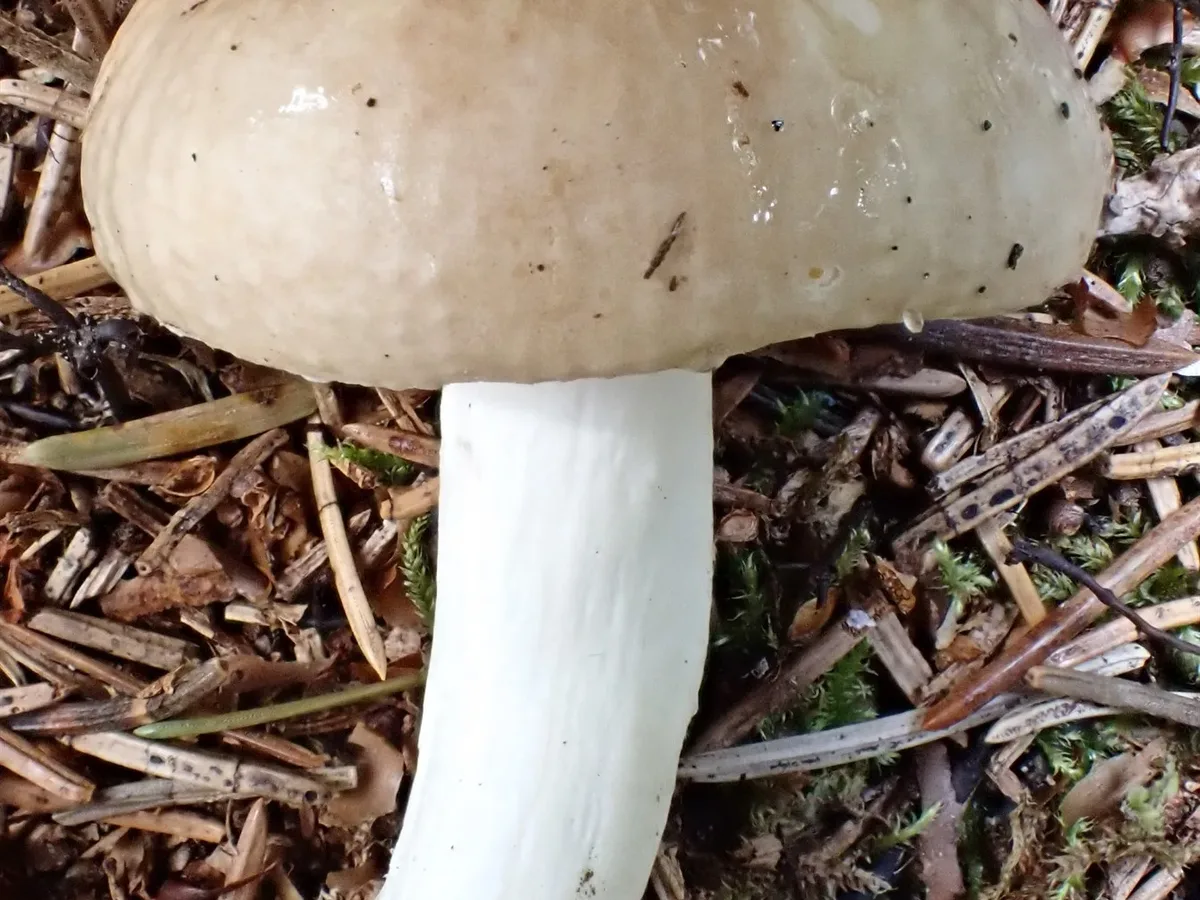
Its most useful visual character is colour variability and fading. Fresh caps start reddish-violet, lilac-rose, or purplish-wine-red, then bleach unevenly from the centre outward, often leaving a pale straw or dirty-ochre disc surrounded by a pinkish-purple margin.
This two-toned, faded look is a genuine pointer once you know to look for it.
The cuticle is smooth and lightly greasy when wet, and peels back from the margin quite willingly - a genus-level trait.
Gills
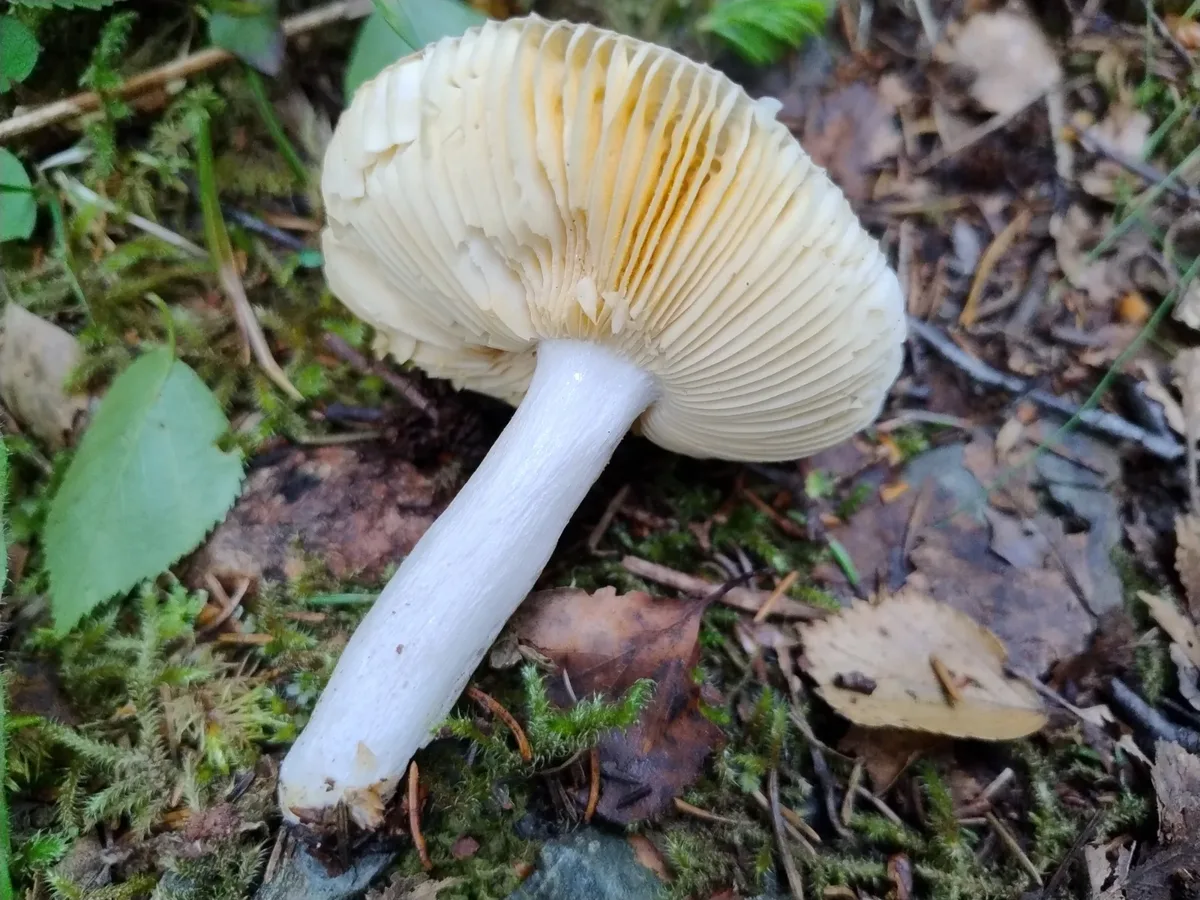
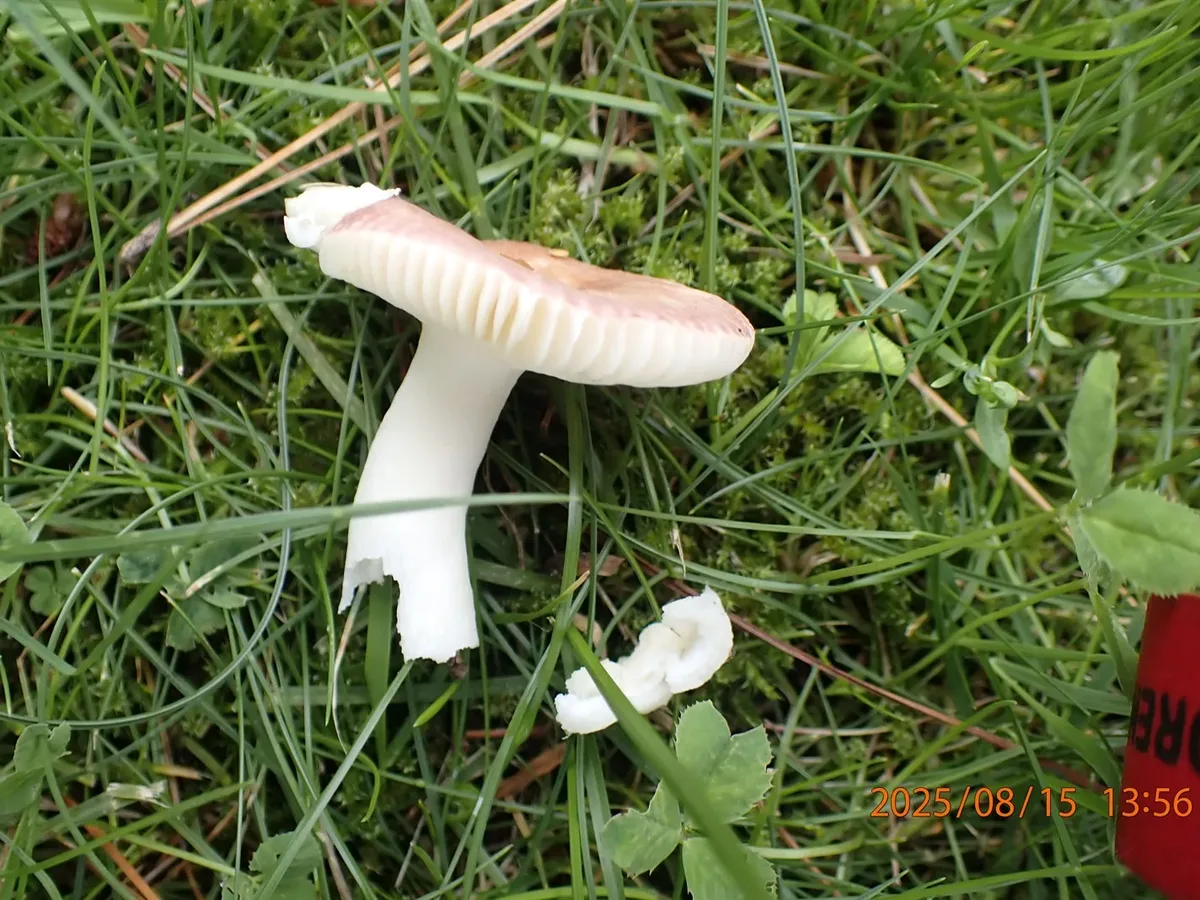
Gills are white to pale cream, fairly closely spaced, and almost comically brittle: they snap cleanly rather than bending, and release no milky exudate whatsoever.
Stem
The stem is slender and fragile relative to the cap, white, and goes hollow in older specimens.
Spore print is white to very pale cream.
Smell & taste
The most dependable identification cues are the nose and the palate. Break the cap and the smell is immediately apparent - sweetish-nauseating, reminiscent of cheap sweets with a chemical undertone.
A small nibble of raw flesh (always spat out at once) will hit you with a sharp, burning acridity within seconds.
Together, smell and taste make this species hard to mistake once you know what to expect.
Why it's dangerous
Russula nauseosa is mildly but genuinely poisonous and should not be eaten.
The main risk is misidentification - collecting it in the belief that any mild-looking or pale Russula is safe, without performing the taste test.
The acrid-tasting Russula group (which includes R. nauseosa, R. emetica, R. fragilis, and several others) is well known to foragers as the 'do not eat' Russulas, and the taste test is the safest field screen.
The species is not life-threatening but causes unpleasant illness. The nauseous smell is also a strong warning signal that experienced foragers recognise immediately.
Toxin
The exact toxic compound responsible for gastrointestinal irritation in Russula nauseosa and related acrid Russulas has not been fully characterised.
The primary candidates are sesquiterpene compounds - particularly isovelleral and related dialdehydes found in the acrid Russula group - which cause irritation of the oral mucosa and gastrointestinal tract.
These compounds are thermolabile in some species, where cooking destroys them. But R. nauseosa is not considered safe even when cooked and should not be eaten.
The sharp, burning acrid taste is the direct sensory expression of these compounds in the raw mushroom.
Symptoms
Ingestion causes gastrointestinal irritation:
- Nausea (which the species name directly references)
- Vomiting
- Abdominal cramps
- Diarrhoea
Onset is typically within 30 minutes to 2 hours of ingestion. Symptoms are self-limiting and resolve within 24 hours in most cases with supportive care (rest, hydration).
Serious complications are rare, but ingestion of large quantities or consumption by children warrants medical attention. There is no antidote; treatment is symptomatic.
Staying safe
The most important safe-handling rule for Russula nauseosa - and for the entire genus - is to always perform the raw taste-test before collecting any specimen for the basket.
- Nibble a small piece of raw flesh.
- Hold it briefly on the tongue.
- Spit it out immediately.
An acrid, burning, or nauseous taste means discard the mushroom entirely.
This applies every single time, even if you believe you recognise the species, because you cannot rely on colour alone.
R. nauseosa fades unpredictably and dramatically: a fresh violet-purple cap can bleach to pale straw or dirty ochre within hours or after rain, making visual identification unreliable even for experienced collectors.
A pale, faded specimen that 'looks harmless' may still be this species, and the acrid taste test is the only reliable in-field screen.
Do not eat R. nauseosa even after cooking - cooking does not reliably destroy the irritant sesquiterpene compounds responsible for the gastrointestinal symptoms in this species, and the mushroom is not considered safe by heat treatment.
If a person has accidentally ingested this species in any significant quantity - particularly a child, or an adult who has eaten a full meal of it believing it was edible - seek medical attention promptly rather than waiting to see whether symptoms develop.
Even though R. nauseosa is not life-threatening to healthy adults in small amounts, the gastrointestinal irritation can be severe, and children are more vulnerable to the effects.
Keep this species, and all unidentified mushrooms, away from children at all times.
Where & when it grows
Habitat
This is a boreal specialist, most at home in mature Norway spruce (Picea abies) forests across northern and central Scandinavia and Finland.
Like all Russulas it is mycorrhizal, weaving an invisible partnership with living tree roots - primarily spruce here, occasionally birch or pine in mixed stands - through a mycelial network that can persist in the soil for years between fruiting seasons.
The ideal microhabitat is the deep, acidic litter layer beneath a dense spruce canopy carpeted with feather moss or bilberry.
Heavily disturbed, nutrient-enriched, or waterlogged ground is not to its liking - look in structurally mature, semi-natural boreal forest rather than commercial plantations or urban woodlands.
In Norway and Sweden it is most frequent in upland and northern spruce zones, thinning out southward.
When
R. nauseosa is a mid-to-late summer and autumn mushroom. It can appear as early as July in warm years but peaks through August and September across most of its Nordic range.
Fruiting is tied to soil temperature and moisture. Once the ground in spruce forest cools below roughly 15 °C and the first autumn rains arrive, fruiting bodies push up and can persist for one to three weeks.
In upland or far-northern locations the season runs earlier and shorter. By October most have collapsed and decayed, though a few stragglers still appear in mild autumns.
How it grows
Solitary to scattered, never in dense clusters, always anchored to the ectomycorrhizal network of its spruce hosts.
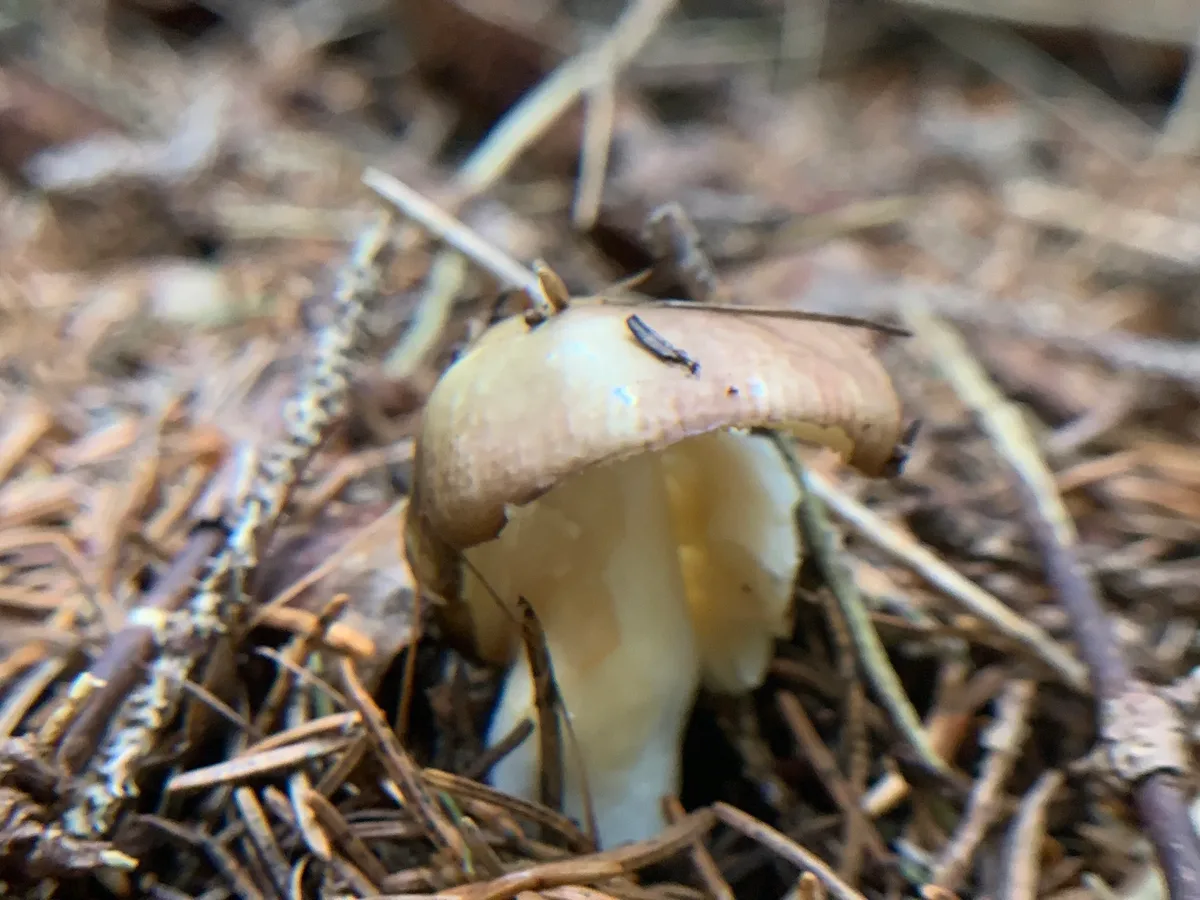
Young buttons emerge as small, firm spheres with the cap tightly closed. Under moist conditions they expand to full size in just a few days.
The flesh is thin and very brittle - this species falls apart quickly, and older specimens become waterlogged, soft, and colour-drained after rain.
It is not rare, but its small size and the sheer number of other Russula species growing alongside it in boreal forest mean it is easily walked past.
Fruiting conditions
Typical mycorrhizal spruce-forest Russula fruiting pattern: triggered by late-summer rainfall after soil cooling in boreal forest. The 14-day minimum rainfall threshold and 7-14-day flush lag are standard for this ecological guild; no specific quantitative data exists for R. nauseosa specifically.
Look-alikes
Several other small to medium Russulas can be confused with R. nauseosa, particularly in the variable, faded colour phase.
- Russula emetica (The sickener) is the most similar - it shares reddish-purple tones, acrid taste, and a white stem, but typically has a brighter cherry-red to scarlet cap (less violet-purple), slightly larger size, and is more specifically associated with Sphagnum bogs and spruce-bog margins; it is also acrid and inedible.
- Russula fragilis (Fragile brittlegill) is very small and fragile with a dark purplish-violet cap, but its cap is usually darker and more uniformly coloured without the bleached centre; it also has a mild-to-acrid mixed taste and is inedible.
- Russula puellaris (Girlish brittlegill) is similar in size and has a lilac to ochre-fading cap but has a yellow spore print (ochre class IIIa-IVa) and a mild taste - it is considered edible, and the yellow spore print and mild taste are the key separators.
- Russula sardonia (Primrose brittlegill) and R. queletii (Quelets brittlegill) are more robustly built, darker, and have specific associations with pine.
None of the realistic confusions with R. nauseosa involve deadly species - the danger is primarily confusing a mildly poisonous acrid Russula with a mild-tasting edible one, underscoring why the taste test is non-negotiable before collecting any Russula.
Very small and fragile; cap purplish-violet, usually darker and more uniformly coloured than the fading R. nauseosa; taste mixed mild-acrid; white spore print; inedible. Found under deciduous trees as well as conifers.
Visually similar in size and fading lilac-ochre colour pattern, but MILD tasting (the critical separator), and spore print is distinctly ochre-yellow (class III-IV) rather than white. Considered edible. Always taste-test before collecting - mild = potentially edible Russula, acrid = leave behind.
Cap pale ochre to yellowish, not violet-purple; taste acrid; white spore print; extremely common in northern forests. Inedible but not dangerous in small quantities. Separates from R. nauseosa by cap colour and lack of the sweetish-nauseating smell.
Cap typically brighter cherry-red to scarlet rather than the more violet-purple tones of R. nauseosa; usually associated with Sphagnum bog margins rather than dry spruce forest; both are acrid and inedible. R. emetica often has a more purely red cap that does not fade to ochre as strongly at the centre.
A reference guide - never an edibility guarantee. When in doubt, leave it out.