Russet brittlegill
Russula mustelinasyn. Agaricus mustelinus, Russula mustelina Fr.
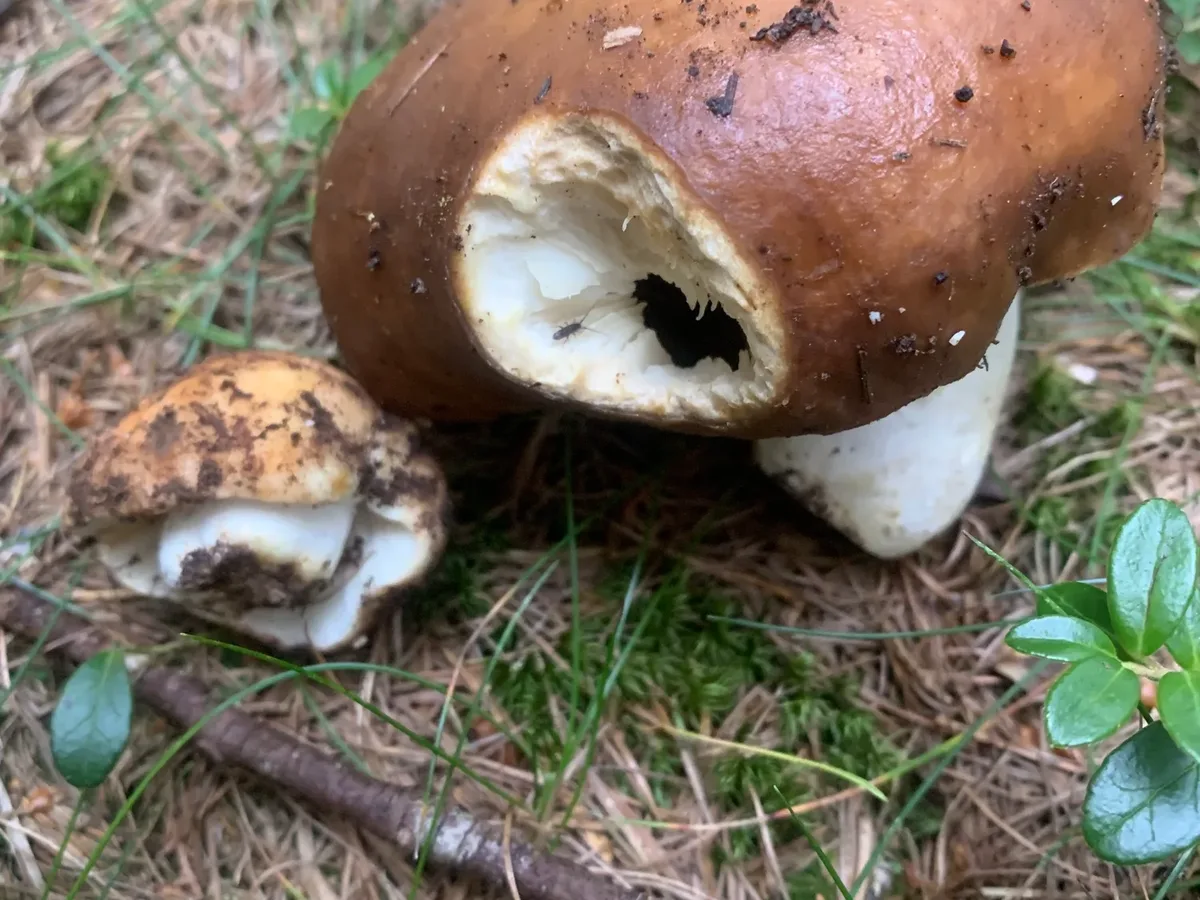 © Manuela Fiorini (CC BY)
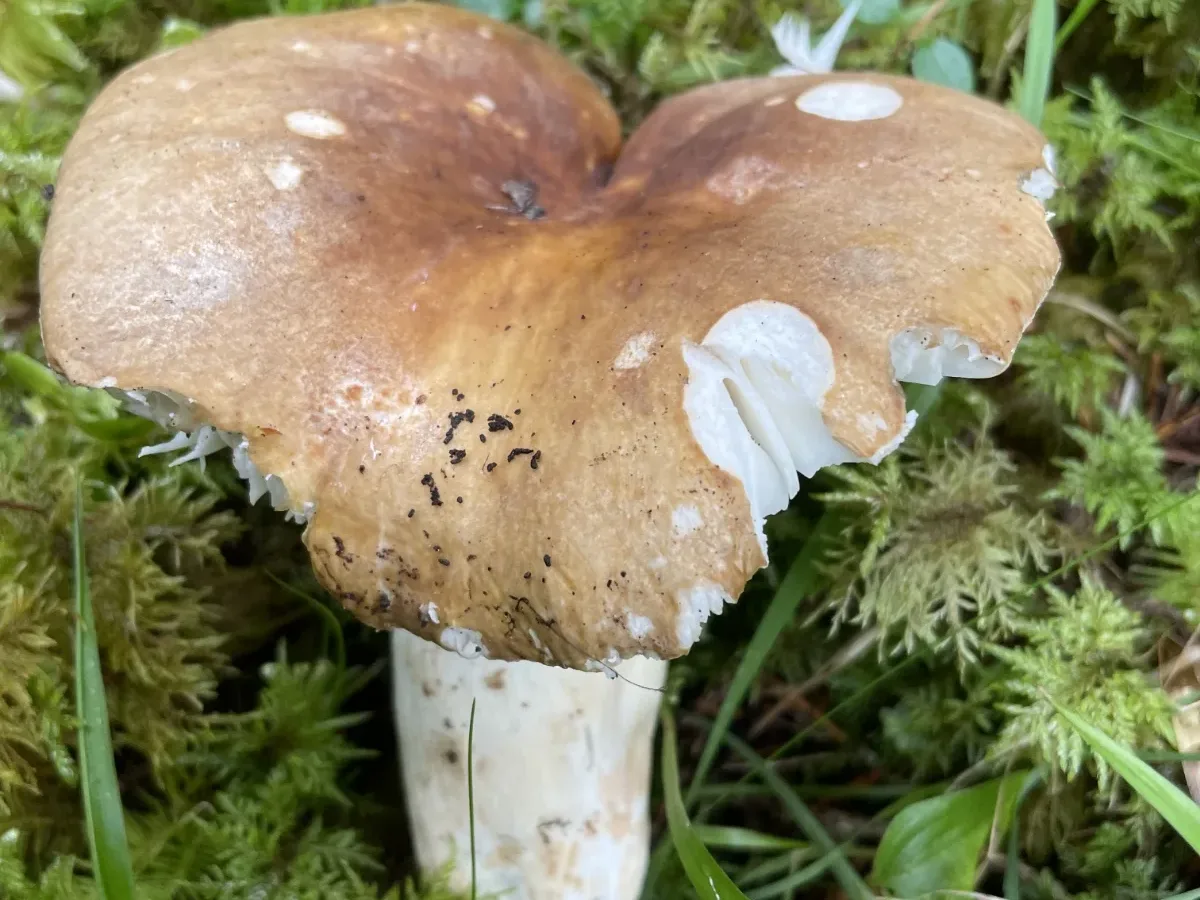 © Marte Kristoffersen (CC BY)
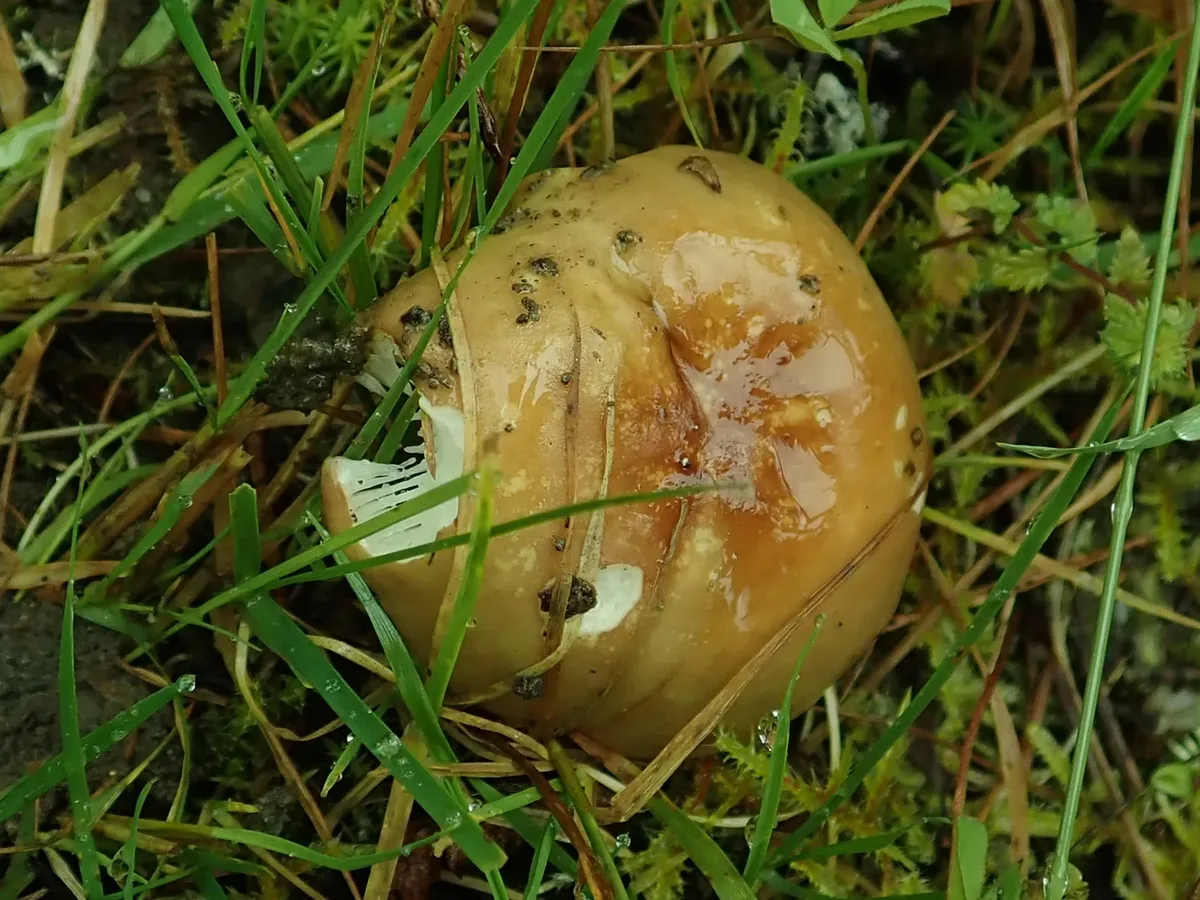 © Gunnar Bureid (CC BY)
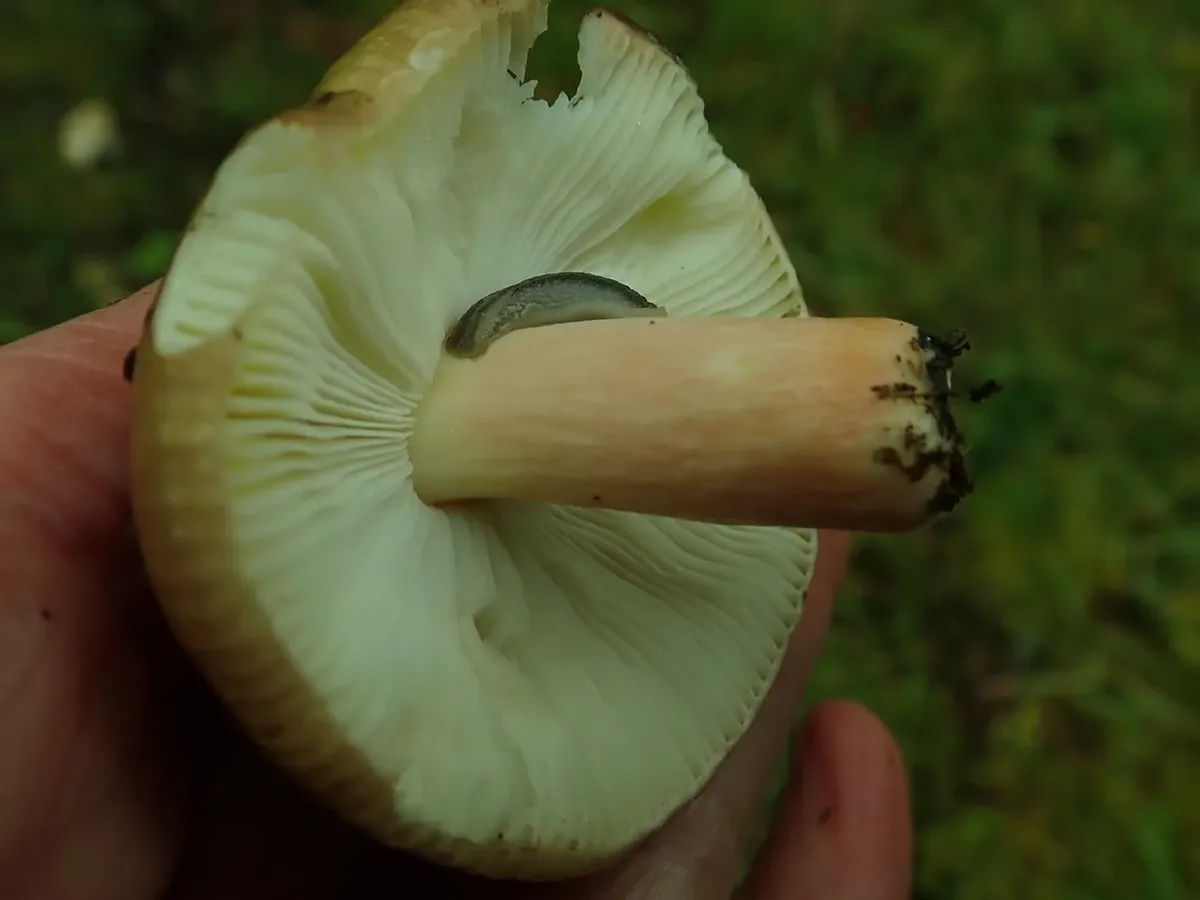 © Gunnar Bureid (CC BY)
 © Gunnar Bureid (CC BY)
 © Else Landsem (CC BY)© Manuela Fiorini (CC BY)© Marte Kristoffersen (CC BY)
Good to eat, once you have identified it with certainty and cooked it through.
Never eat a mushroom you are not 100% sure of - check the look-alikes below, and always cook wild mushrooms.
How to recognise it
Russula mustelina is one of the sturdiest and most solid members of the genus.
Cap
The cap (6-14 cm) is notably thick and fleshy, starting convex and becoming broadly flat and eventually shallowly funnel-shaped in old age.
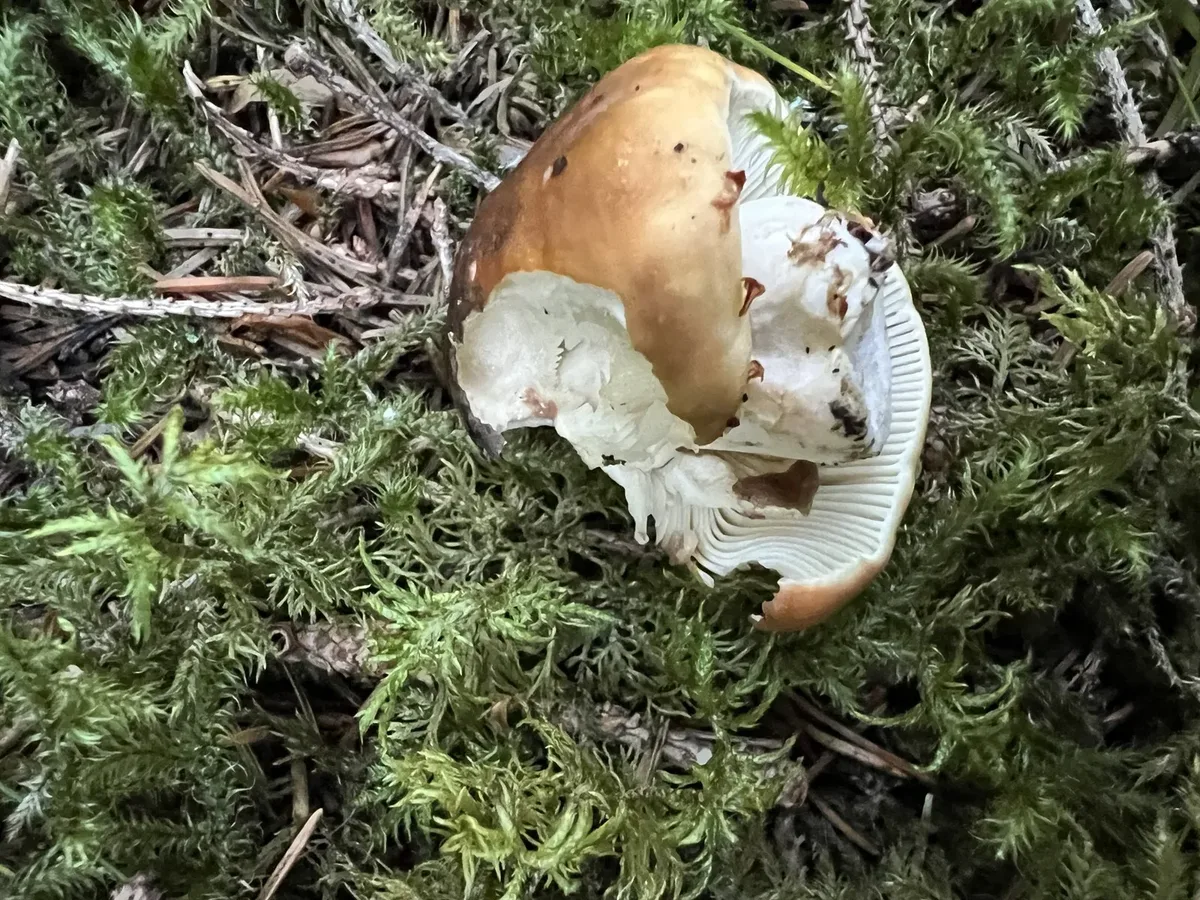
The colour is a characteristic russet to tawny-brown - a warm, rich brown with yellow or ochre undertones that recall the coat of a weasel (mustelina means 'weasel-coloured' in Latin).
The surface is dry to slightly moist, never slimy, and the cuticle peels only reluctantly from the margin, providing an important contrast with many other Russula species.
Gills / Pores
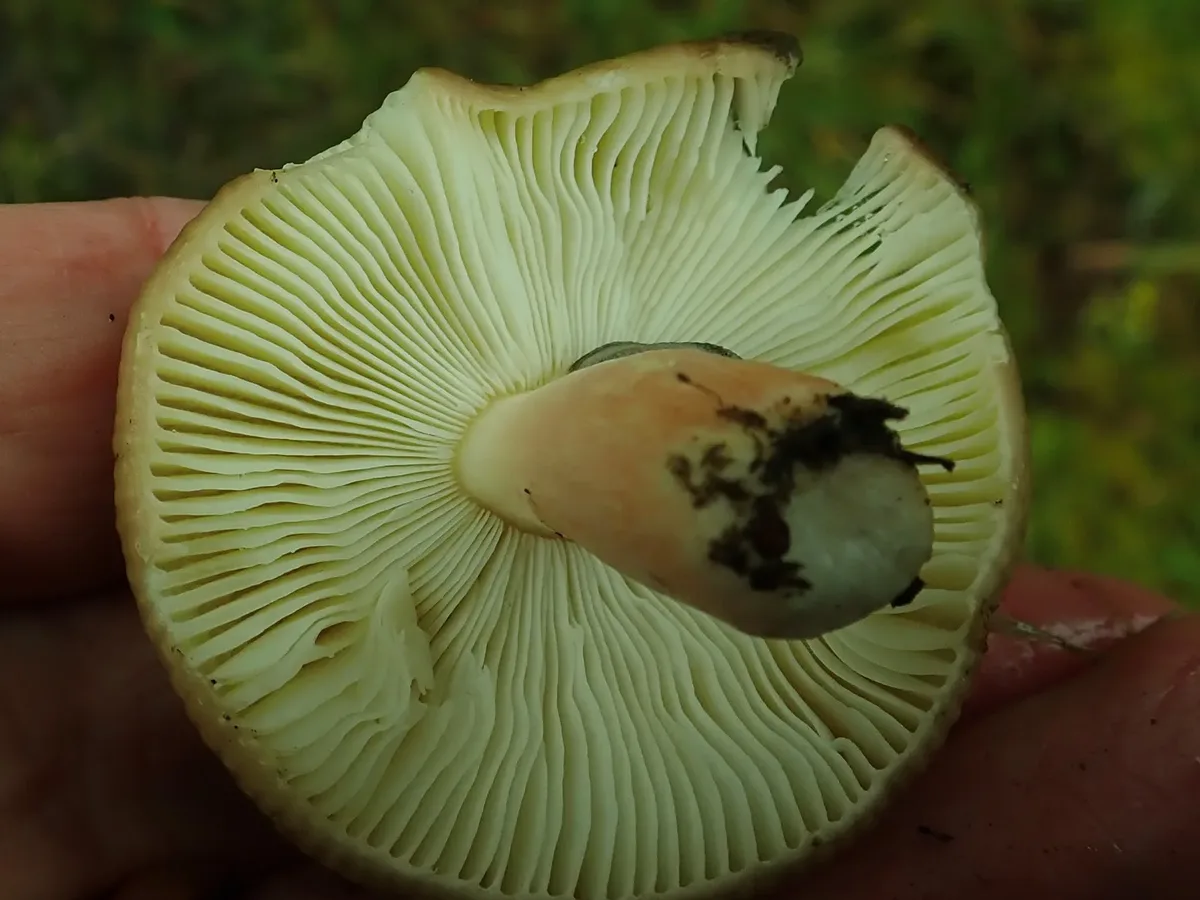
The gills are white to creamy-ivory and fairly closely spaced.
Stem
The stem is conspicuously stout and solid - cut it open and the flesh is uniformly dense white throughout, which distinguishes it from brownish-capped Cortinarius species whose flesh is more fibrous.
Smell & taste
The odour is mild and pleasant with a faint floury or slightly fruity note; it is emphatically not the shellfish smell of R. xerampelina.
The spore print is white to very pale cream - paler than the ochre print of R. xerampelina - and this character, combined with the mild taste and non-staining white flesh, anchors the identification.
Where & when it grows
Habitat
This species is a characteristic inhabitant of productive boreal spruce forest and montane fir-spruce woodland.
In Scandinavia, look for it in mature Norway spruce stands on damp, humus-rich ground with a thick carpet of mosses such as Hylocomium splendens and Pleurozium schreberi.
It is not a pioneer; it favours old or undisturbed stands where the mycorrhizal network beneath the trees is well established.
In the mountains of central Europe (Alps, Carpathians, Black Forest) it inhabits subalpine spruce and silver-fir stands at mid to high elevation.
It is virtually never found in the open or in broadleaf-only woodland. The presence of mature Picea abies is the most reliable habitat indicator.
When
Russula mustelina is among the earlier large Russula species to fruit in the boreal season, emerging from mid-July onward in Scandinavia, with peak fruiting in August and the first half of September.
It may persist into October, especially in sheltered montane ravines or during warm autumns.
Fruiting is triggered by summer rains after a period of warmth, when soil temperatures are still in the 10-18 °C range.
The compact, dense fruitbodies are more resistant to frost damage than many other species and may survive light overnight frosts intact.
How it grows
Fruitbodies appear singly or in scattered small groups across the forest floor, typically among mosses or partially buried in deep humus. They are never clustered or growing from wood.
Their dense, heavy structure means they push up through deep moss rather than standing free; scan for brown convex caps half-hidden in the moss layer.
The caps are very firm and often remain in excellent condition for longer than many other Russula species, making them rewarding to find even later in the season.
Fruiting conditions
Fruiting is triggered by summer rains when soil temperatures are in the 10-18 °C range, typically from mid-July onward in boreal Scandinavia. Flushes peak after 20+ mm of rain within a 14-day window followed by continued mild, overcast conditions. The dense fruitbodies persist longer than most russulas and tolerate light early-autumn frosts. Fruiting diminishes sharply once soil temperatures drop below 6-7 °C.
Look-alikes
The most dangerous confusion is with brownish, russet-coloured Cortinarius species that grow in the same spruce forests. Russula mustelina differs from all Cortinarius species in having:
- 1Brittle, non-fibrous flesh that snaps cleanly rather than tearing fibrous threads
- 2White to cream (not rusty-brown) spore print
- 3No cobweb-like cortina veil remnant on the stem or gill edge
- 4Stem flesh that is uniformly white and non-staining on cutting
The deadly Cortinarius rubellus (fool's webcap) and Cortinarius speciosissimus grow in exactly the same boreal spruce habitat, have similar brownish-tawny colours, and contain orellanine - a lethal kidney toxin with onset delayed by 2-3 weeks. These species have rusty-brown spore prints, fibrous flesh, and young specimens show fine veil fibres.
- Russula claroflava has a yellow (not brown) cap.
- Russula vinosa is purplish-grey, grows under spruce on waterlogged or boggy ground, and tastes mild but has a slightly different aspect.
- Russula decolorans is orange-red to brick-red, with grey-staining flesh on bruising.
- The non-deadly Russula adusta (sooty russula) is whitish-grey to smoky, turning grey on bruising.
None of the genuine lookalikes share the exact warm russet-brown colour plus mild white-fleshed combination of R. mustelina, but the Cortinarius risk demands that the brittle flesh test (snap a gill: if it snaps cleanly with no elastic or fibrous resistance, it is Russula; if it bends or has fibrous threads, abandon it) and spore-print check are always performed.
Cortinarius orellanus is tawny-orange to russet-brown with fibrous flesh, rusty-brown spore print, cobwebby cortina on young caps, and strongly ochre-brown gills. Like C. rubellus it contains orellanine and is lethal. It more typically grows under broadleaf trees (oak, beech) but can occur in mixed stands at forest edges. Flesh is not brittle-snapping; spore print is never white.
Cortinarius rubellus grows in the same boreal spruce forests as Russula mustelina and can show similar tawny-russet-brown colours. It is distinguished by fibrous (not brittle) flesh that tears rather than snapping cleanly; a rusty-brown spore print (vs. white/cream); faint cobwebby cortina veil remnants on young specimens around the stem; and orange-brown gills that develop a deep rusty colour with age. It contains orellanine, a lethal kidney toxin causing irreversible renal failure with symptoms delayed 2-3 weeks. Never eat a brownish forest mushroom without confirming the clean snap of Russula flesh and a white spore print.
Russula decolorans has an orange-red to brick-red or tawny-orange cap (brighter and more orange than the brown of R. mustelina), and the flesh turns distinctly grey when cut or bruised - an unmistakable colour change absent in R. mustelina. Grows under Scots pine and occasionally spruce. Edible.
Russula adusta is whitish to pale grey-brown, darkening to grey or sooty-grey when bruised or in age - the cap colour is cooler and less warm than the russet-brown of R. mustelina. Flesh whitens, then slowly greys on bruising; taste is mild to slightly acrid. Grows under conifers; edibility poor, usually considered inedible due to bitterness.
Cortinarius semisanguineus has a dull yellowish-brown to ochraceous cap but blood-red gills on the underside - a striking character absent in Russula mustelina. It also has fibrous flesh and a rusty-brown spore print. The distinctive red gills make separation straightforward upon flipping the cap.
Russula vinosa (syn. R. obscura) has a distinctive purplish-grey to violet-brown cap, different from the warm russet-brown of R. mustelina, and grows under spruce on wet or boggy ground. Flesh can show slight greyish tinges. Edible but mediocre.
In the kitchen
Picking & cleaning
Select firm, solid specimens with intact caps and no signs of waterlogging, insect damage, or mould. The flesh should be white, firm, and dry throughout.
Because R. mustelina is a robust species, it transports well and resists bruising better than more fragile brittlegills.
Confirm the identity before picking. The key characters to verify are:
- Russet-brown cap with reluctantly peeling cuticle
- Stout white non-staining stem
- Mild taste
- White (not ochre) spore print
Always take a spore print if there is any doubt, and confirm the taste is mild - never acrid or hot.
Do not collect specimens growing in unusual habitats (without spruce nearby), as this increases the risk of confusion with brownish Cortinarius species.
Cooking
Russula mustelina has a pleasant mild flavour and firm texture that holds up well to heat.
Sauté in butter with garlic over moderately high heat until golden-brown; the firm flesh does not collapse and develops a satisfying texture.
It works well in mixed mushroom dishes, risotto, pasta sauces, and soups. The mild, slightly nutty flavour blends harmoniously with stronger-flavoured species rather than competing with them.
Drying is also effective: the dried caps regain reasonable texture after rehydration and have a concentrated, pleasant aroma.
Do not eat raw - as with all Russula species, cooking is standard practice and ensures any minor irritants are neutralised. Remove any badly insect-damaged flesh before cooking.
Good to know
Russula mustelina is a genuinely good edible species, well regarded across Scandinavia and central Europe. But the key safety obligation is absolute certainty that the specimen is not a brownish Cortinarius species.
The deadly webcaps (Cortinarius rubellus, C. orellanus) share the same spruce-forest habitat and broadly similar colouring.
The definitive separation is:
- Brittle non-fibrous flesh (snap a piece - Russula snaps cleanly, Cortinarius tears fibrous threads)
- White to cream spore print (vs. rusty-brown in Cortinarius)
- No veil remnants on stem (Cortinarius young specimens always show cobwebby cortina)
- Mild non-acrid taste
If any of these tests cannot be performed with confidence - for example in poor light, with deteriorated specimens, or by a beginner - do not eat the specimen.
The consequence of a Cortinarius orellanus or C. rubellus misidentification is potentially fatal kidney failure, with symptoms delayed so long that emergency treatment may be too late.
A reference guide - never an edibility guarantee. When in doubt, leave it out.