Kalimna Russula
Russula kalimnasyn. Russula kalimna Cleland, Russula kalimna (Cleland) Cleland
 © Leuba Ridgway (CC BY)
 © Torbjorn von Strokirch (CC BY)
 © Sofia Zvolanek (CC BY)
 © Sofia Zvolanek (CC BY)
 © Sofia Zvolanek (CC BY)
 © Sofia Zvolanek (CC BY)
 © Leuba Ridgway (CC BY)
 © Leuba Ridgway (CC BY)© Leuba Ridgway (CC BY)© Torbjorn von Strokirch (CC BY)
Edible only with the right preparation - or safe for some people but not others. Learn the caveats first.
Never eat a mushroom you are not 100% sure of - check the look-alikes below, and always cook wild mushrooms.
How to recognise it
Cap
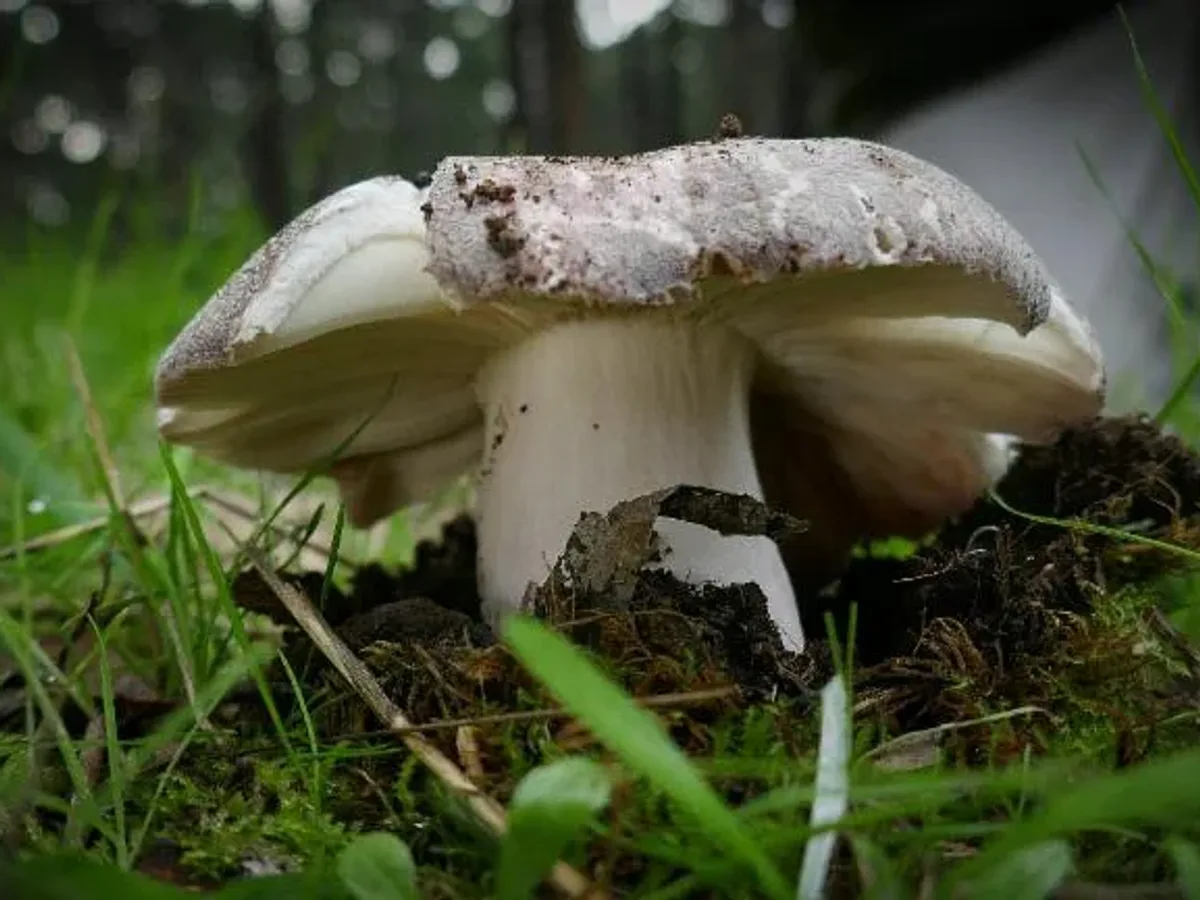
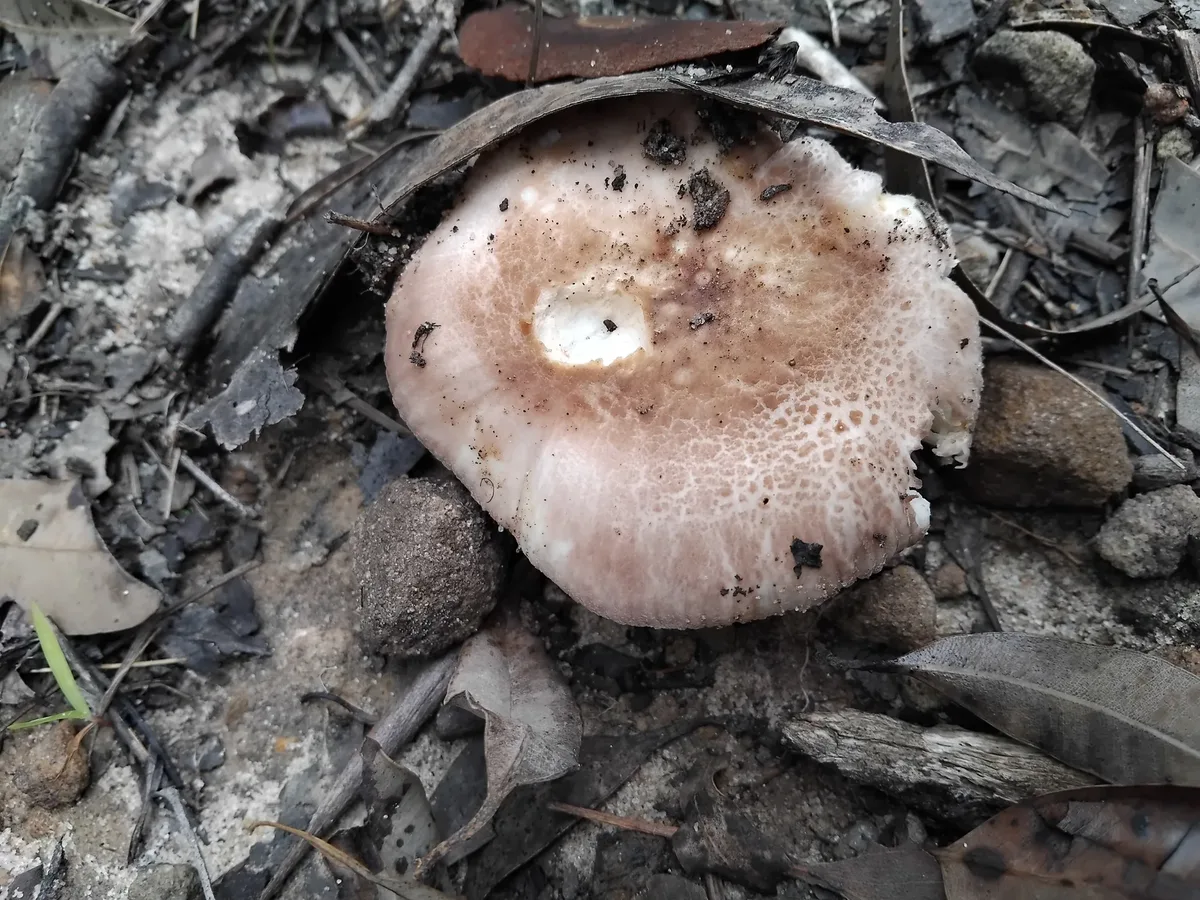
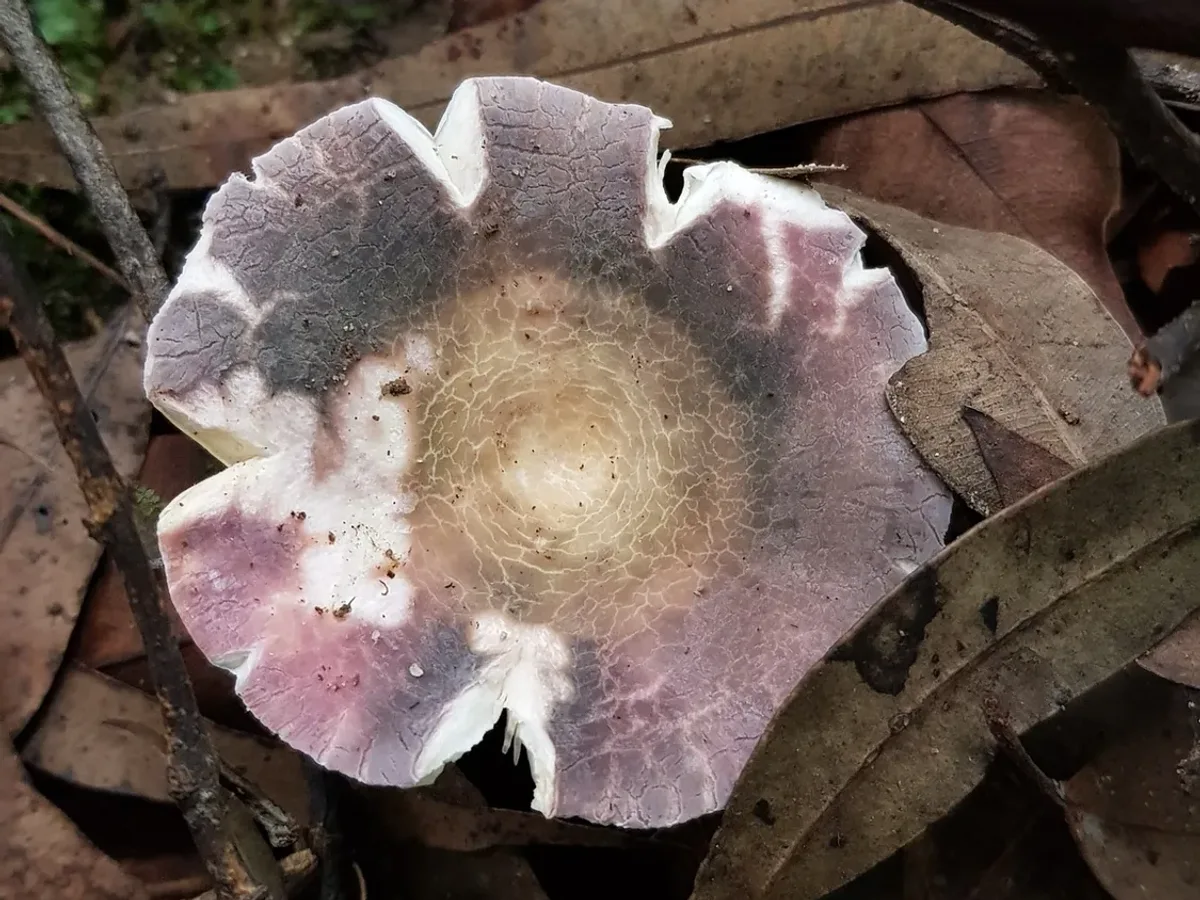
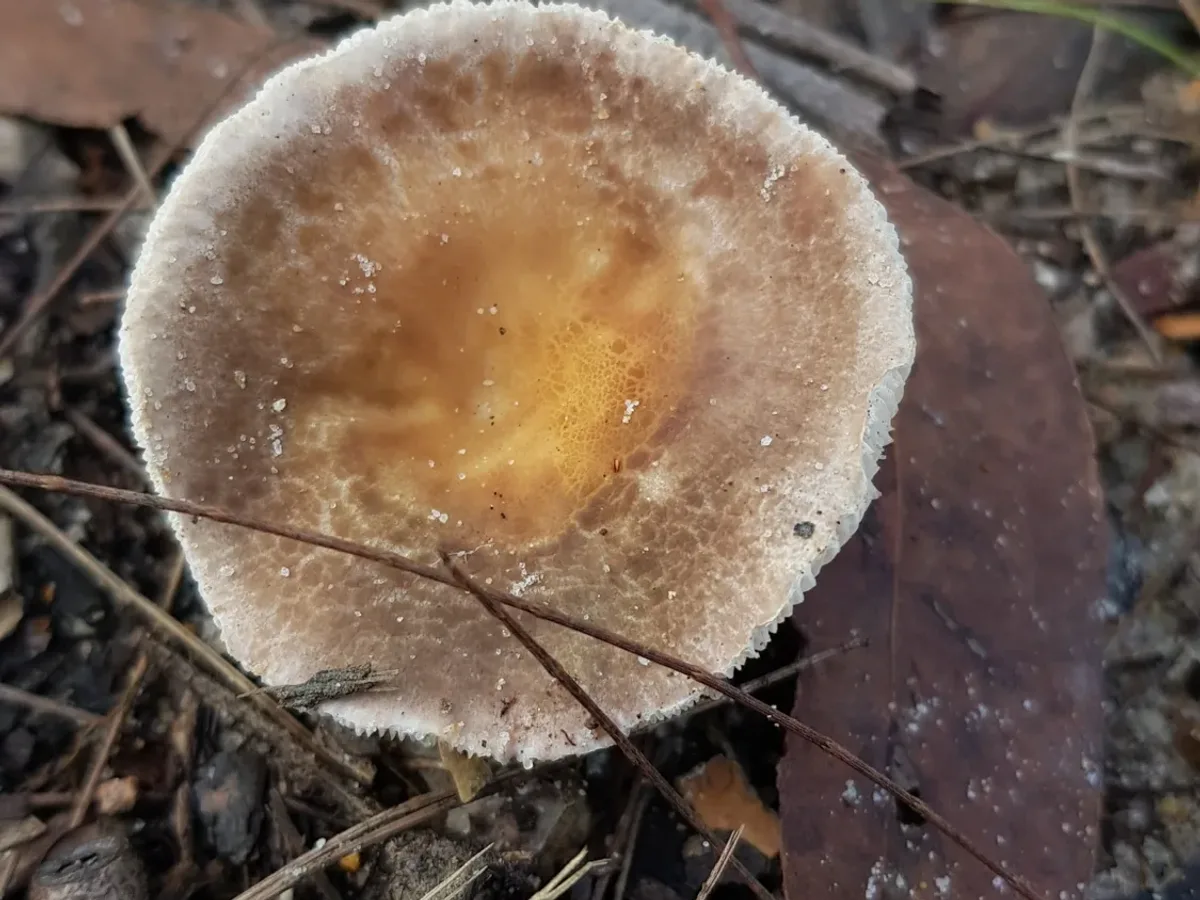
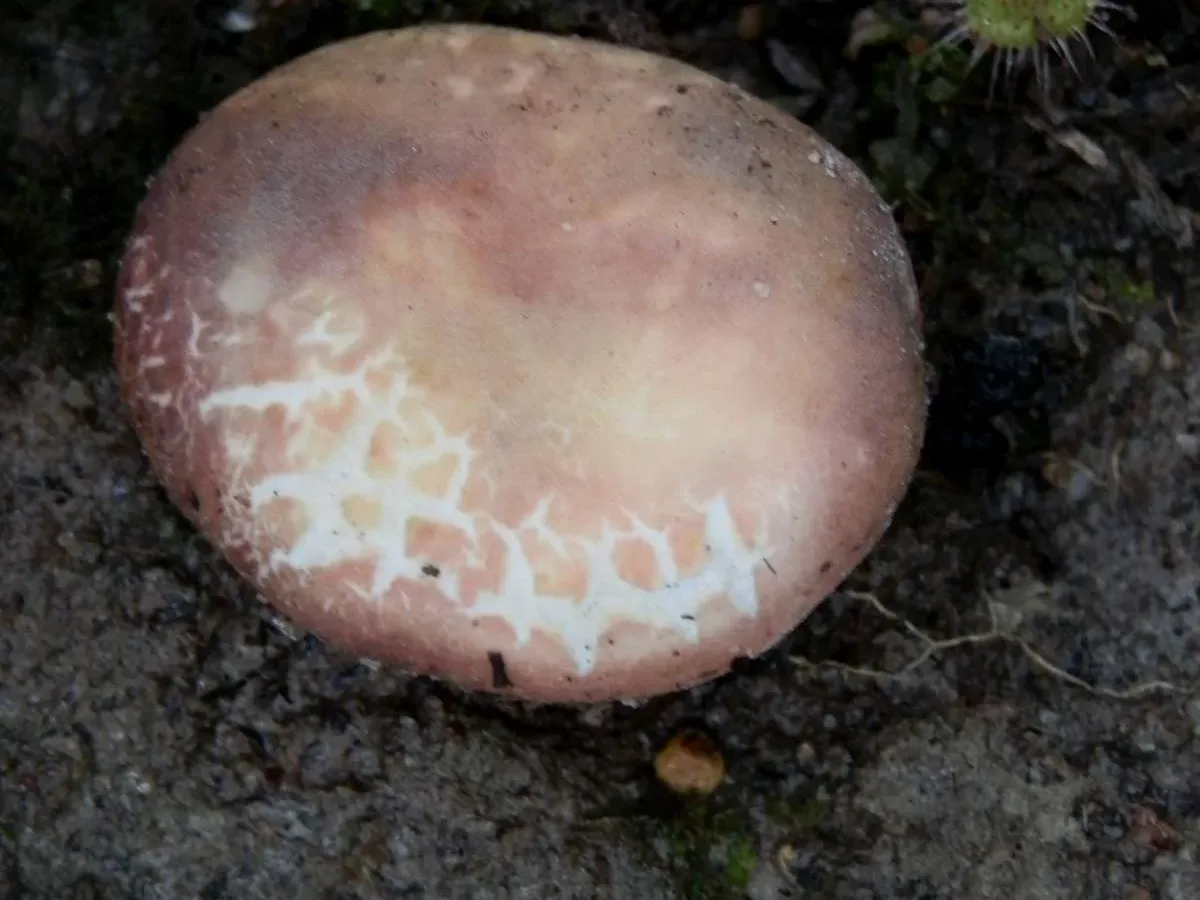
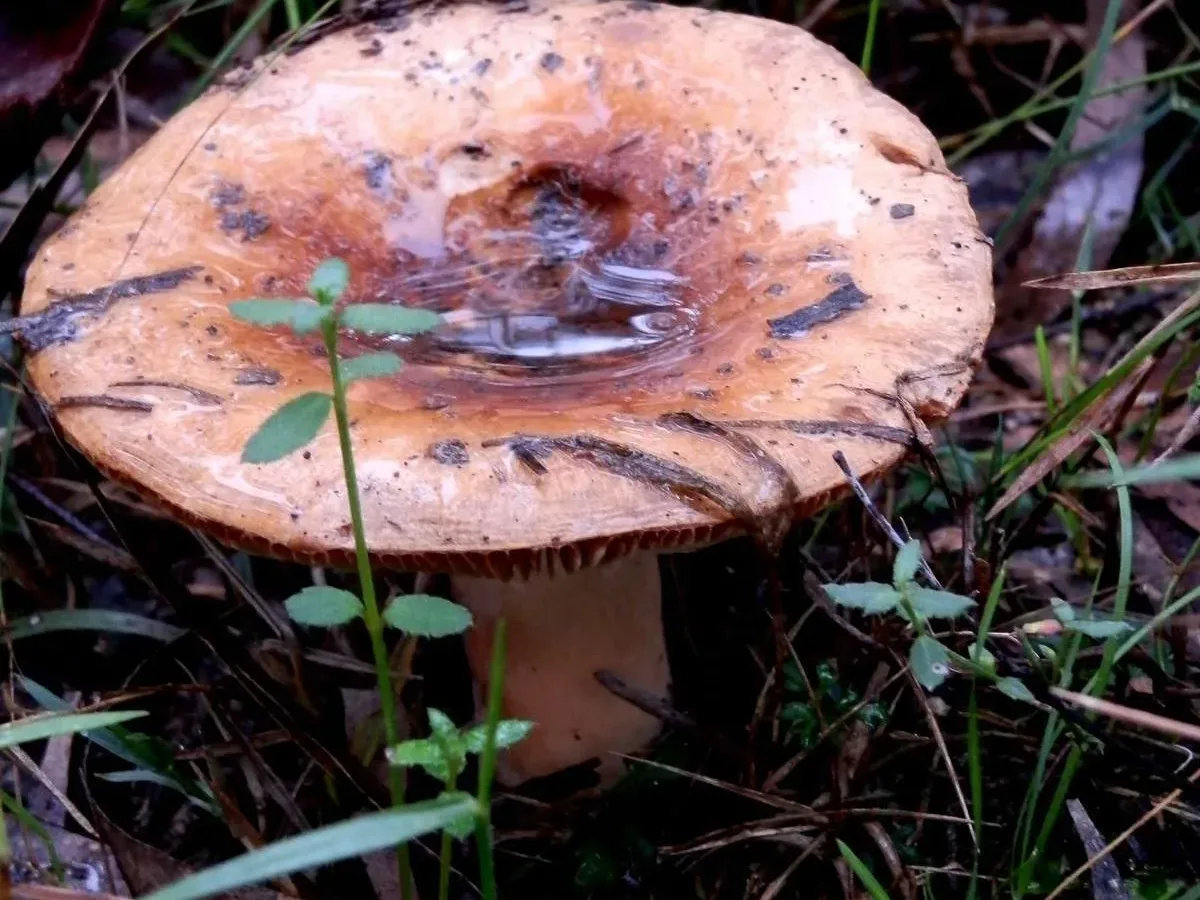
Russula kalimna is a medium to large brittlegill in warm rose-red, carmine, or purplish-pink tones - colours that sit in the richer, more saturated end of the Russula colour spectrum and give it an immediately attractive quality on the forest floor.
The cap begins convex and tightly rounded, expanding over several days to broadly flat or very shallowly bowl-shaped, and the surface has a slight stickiness when wet that dries to a smooth, dull finish.
The cuticle peels away readily from the cap margin, about one-third to halfway toward the centre - a typical Russula feature that can be a useful check.
Cap colour tends to be most intense at the centre, fading toward the margin to paler salmon or cream tones; weathered or old specimens can bleach significantly to ochre-buff, so colour alone is not a reliable primary identifier.
Gills
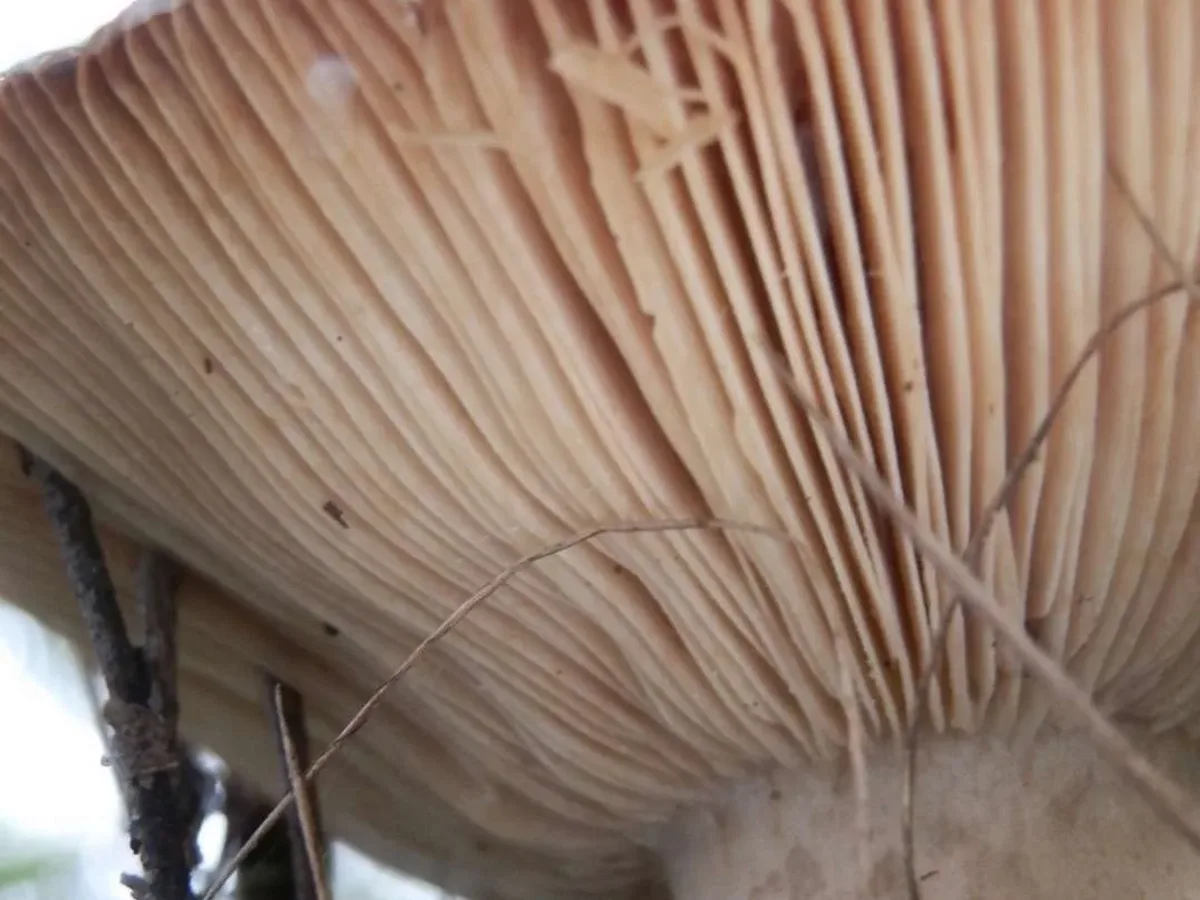
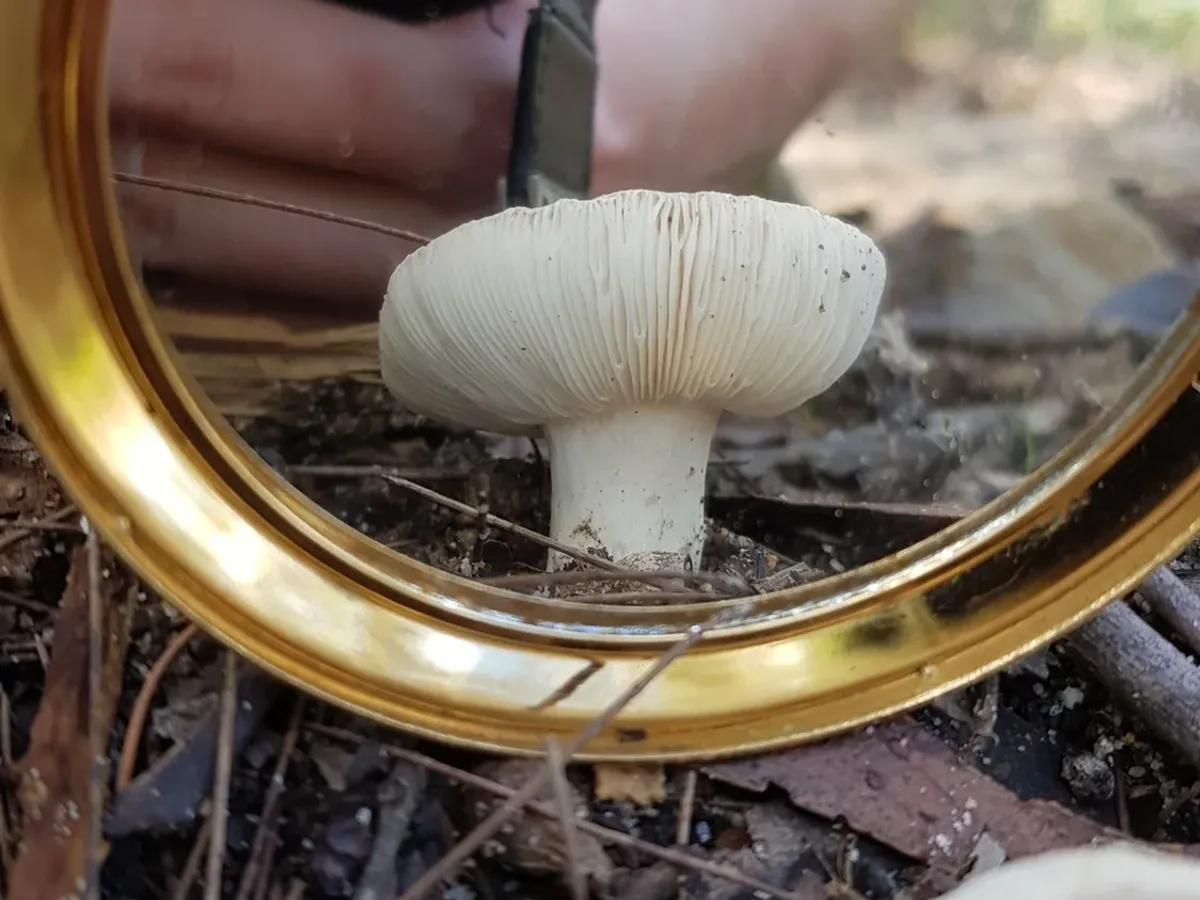
The gills are the genus signature: white to pale cream, moderately crowded, and absolutely brittle - they snap and crumble like chalk, rather than bending as a thin blade would. This brittleness, a consequence of the cellular (non-fibrous) tissue architecture unique to the genus, is one of the most reliable ways to confirm you are looking at a Russula.
Stem
The stem is white, cylindrical, firm when young and gradually becoming hollow and spongy as the mushroom matures, with a smooth surface and - critically - no ring and no volva at the base.
Flesh
Flesh is white throughout and does not change colour when cut.
Smell & taste
The smell is mild, faintly pleasant or slightly fruity, and the taste is mild without any burning or peppery acridity.
Where & when it grows
Habitat
Russula kalimna is an obligate ectomycorrhizal species, meaning that its underground mycelium forms a deep, mutually beneficial partnership with the root systems of living native trees, and it cannot survive without them.
It fruits in the native sclerophyll forests and cool-temperate woodlands of southeastern Australia - Victoria, New South Wales, Tasmania, and South Australia - where it threads its mycelium through the soils of eucalyptus forest and occasionally Nothofagus stands.
The habitat is typically shaded to partly shaded, with well-developed leaf litter and humus, on mildly acidic to neutral soils.
It is a species of undisturbed or lightly disturbed forest rather than heavily logged or cleared land; the long-lived mycelial networks on which it depends take years to establish with host trees.
Look for it among the leaf litter directly beneath or near eucalyptus canopy, appearing singly or in small loose groupings - never in dense clusters and never growing from wood.
When
Fruiting belongs to the Southern Hemisphere autumn and early winter, broadly March through July, following the same seasonal logic as most ectomycorrhizal fungi in Australian native forests: the combination of falling soil temperatures and adequate autumn rainfall triggers the flush.
In practice this means the best fruiting typically follows a period of 20-30 mm of rain when soil temperatures have cooled to roughly 8-15 °C, usually from April into June in most of the range.
At higher-elevation sites in Tasmania and the Victorian Alps, fruiting can begin in March as temperatures cool earlier; in milder lowland areas the main season may compress into May and June.
The species does not fruit in the hot, dry Australian summer, and winter cold suppresses further activity by July in most locations.
How it grows
As an ectomycorrhizal partner of established forest trees, Russula kalimna grows singly or in small scattered troops, emerging directly from the soil among leaf litter. Dense clustering or growth from wood are never features of this species.
The fruitbody develops from a small, firm button beneath the litter surface, emerging and expanding over five to ten days under suitable conditions.
Because the underlying mycelial network is perennial and anchored to long-lived tree roots, the same microsites can produce fruiting bodies in successive years when autumn conditions are favourable.
Individual specimens develop relatively quickly once conditions are right - emerging within a week or so of triggering rainfall.
Fruiting conditions
Southern Hemisphere autumn species. Fruiting is triggered when soil temperatures cool below approximately 15 °C following summer, combined with adequate autumn rainfall (20+ mm in the preceding two weeks). Flush lag from rain event to emergent caps typically 7-14 days. Peak fruiting April-June; extends to early July at higher elevations or wetter sites.
Look-alikes
Within its native Australian range, Russula kalimna may be confused with other red to pink-capped native Russula species. Australian red and pink Russula species include a range of mildly to moderately acrid forms, and some may cause gastrointestinal upset if eaten.
The reliable field test is taste: a small piece of gill or cap flesh, chewed for a few seconds and then spat out, will reveal acridity (a burning, peppery sensation) in the unsafe forms. R. kalimna has a mild, inoffensive taste, but this test must be applied to every individual collection and spitting out is essential - taste alone cannot detect the deadly amatoxins of Amanita species.
Beyond other russulas, the most important caution is the presence of potentially deadly Amanita species in Australian native forests. The introduced death cap (Amanita phalloides) is now established in southeastern Australia around planted oaks and exotic trees; native white to pale Amanita species also occur.
Any Amanita has at least one of these features:
- A volva (membranous sac) at the stem base
- A ring (skirt) on the stem
- Free gills that do not attach to the stem
Its flesh is fibrous rather than chalk-brittle. Russula kalimna has NONE of these features: no volva, no ring, attached gills, and flesh that crumbles rather than being fibrous.
Colour can occasionally overlap superficially if cap pigments fade, so the structural check (dig up the stem base; feel the gills; snap the flesh) is mandatory before eating any unknown species.
The introduced death cap is now established in southeastern Australia near planted oaks and exotic trees, and its cap can occasionally take on greenish, yellowish, or pale-brownish tones rather than the classic olive-green of European specimens - but more importantly, any pale-capped woodland mushroom found near the same habitat demands structural checking. Amanita phalloides always has: a membranous volva (sac) at the stem base, a skirt-like ring on the upper stem, and free gills that do not attach to the stem. Russula kalimna has none of these: no volva, no ring, gills attached to the stem, and flesh that crumbles like chalk. The death cap's amatoxin content is not detectable by taste, smell, or any field test - the only safe separation is the structural check.
Various native Australian Amanita species occur in eucalyptus forest and can have pale to reddish-buff or whitish caps. As with all Amanitas, they possess at minimum a volva at the stem base and/or a ring on the stem, and their gills are free (not attached to the stem). Russula lacks all of these. Dig up the entire stem base on any collected specimen and rule out a volva before eating. The toxicity of many native Australian Amanita species is not fully characterised - treat any Amanita found in Australian native forest as potentially seriously toxic.
Several Australian native Russula species have red, pink, or rose-coloured caps and may superficially resemble R. kalimna. Acrid forms cause gastrointestinal upset. The defining test is taste: chew a small fragment of gill or cap for 5-10 seconds and spit it out - any burning, peppery, or intensely acrid sensation means the species is NOT R. kalimna and should not be eaten. R. kalimna is mild throughout. Note that this test must be applied fresh in the field; do not rely on memory from another collection.
In the kitchen
Picking & cleaning
Select young to middle-aged specimens: the cap should be opening from convex toward plane but still firm, the gills white or only just beginning to cream, and the flesh free of soft or maggot-riddled patches.
Twist or cut the stem cleanly at the base, and - as with every unidentified or newly collected mushroom - extract the entire stem and inspect the very base carefully for any sign of a volva (a membranous sac or girdled swelling). No such structure exists on any Russula, but its presence would immediately indicate an Amanita and a potential for deadly toxicity.
The gills should be gently tested: run a fingertip across them and confirm they snap and crumble rather than flexing.
The taste of a small fragment, chewed briefly and spat out, can also confirm mildness - acrid, burning Russula species are not safe to eat raw and that peppery heat is noticeable immediately.
Carry in a basket that allows air circulation, and use within a day or two of picking. Do not collect in areas recently sprayed or subject to pollution.
Cooking
The flavour is mild and pleasant - typical of edible mild russulas - with a clean, slightly nutty quality.
The firm flesh of young caps holds up reasonably well to heat, sautéing in butter or olive oil until just cooked through. It suits:
- Mixed mushroom preparations
- Simple pasta dishes
- Risotto
- Omelettes
Discard the stems if they have become spongy or hollow. The species is not strongly flavoured enough to carry a dish on its own but makes a worthwhile contribution in combination with other fungi or aromatics.
Cook thoroughly; like all wild mushrooms it should never be eaten raw.
Good to know
Russula kalimna is documented in Australian mycological literature as an edible species with no reported toxicity.
The mild taste confirms the absence of the acrid sesquiterpene irritants that make peppery russulas unsuitable for the table, and the characteristic brittle, chalky flesh and lack of ring or volva distinguish it from the deadly Amanita species with which it shares forest habitat.
That said, a number of points demand careful attention:
- 1Not every red or pink Russula in Australian native forest is safe: some are acrid and will cause gastrointestinal upset, so always taste-test a small fragment (chew and spit) and reject any that is burning or peppery.
- 2The death cap (Amanita phalloides) has expanded its range in southeastern Australia around introduced oak trees, and various other potentially toxic native Amanita species occur in eucalyptus forest; the structural separation from Russula is absolute (volva, ring, free gills, fibrous flesh on Amanita; none of those on Russula) but must be actively checked, not assumed.
- 3The mild taste of a russula does NOT protect against Amanita amatoxin poisoning - death caps are also mild-tasting.
Always dig up the whole stem and confirm there is no volva, and confirm gill brittleness and chalk-snapping flesh before eating. If in any doubt, leave it in the forest.
Cook thoroughly before eating; no wild mushroom should be consumed raw.
A reference guide - never an edibility guarantee. When in doubt, leave it out.