False charcoal burner
Russula griseasyn. Agaricus griseus Fr., Russula grisea (Pers.) Fr., Russula grisea var. grisea
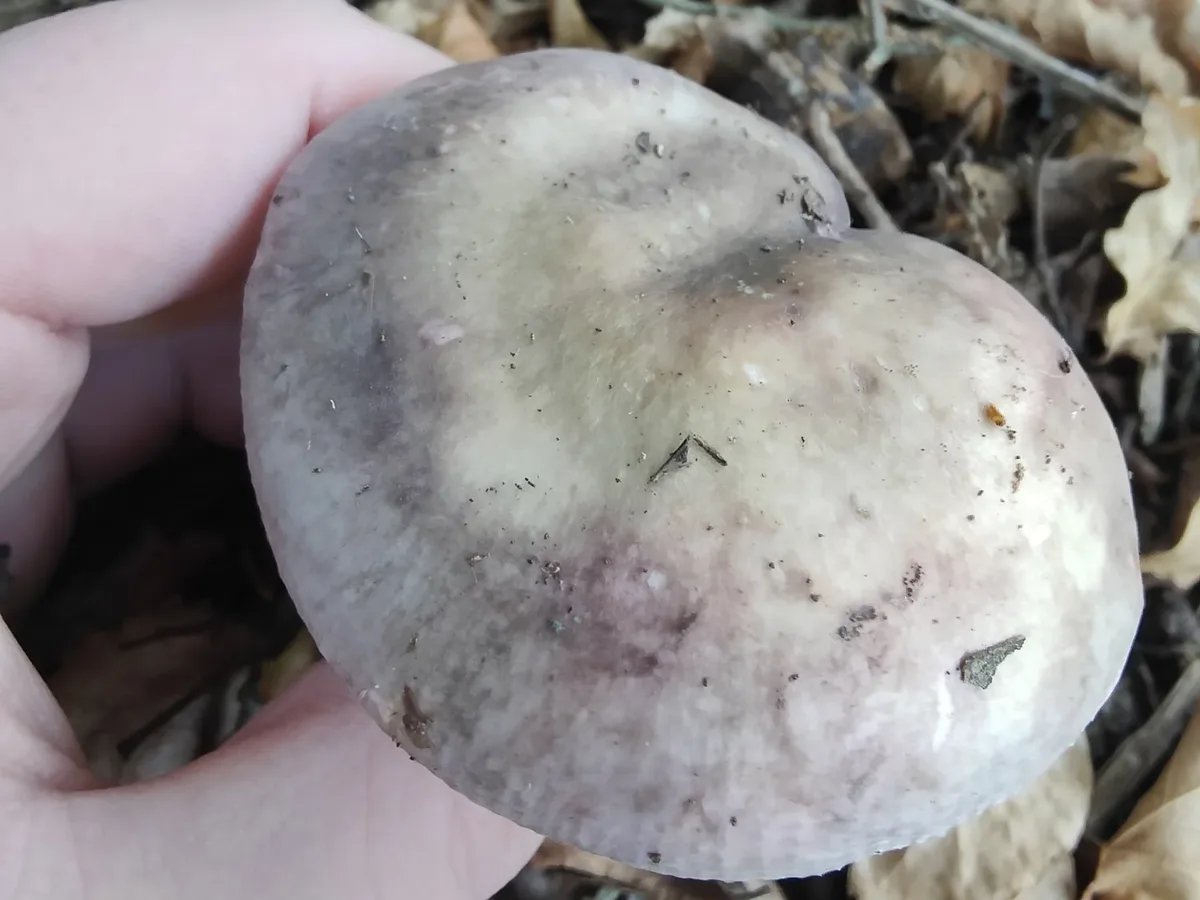 © Bryan Menger (CC BY)
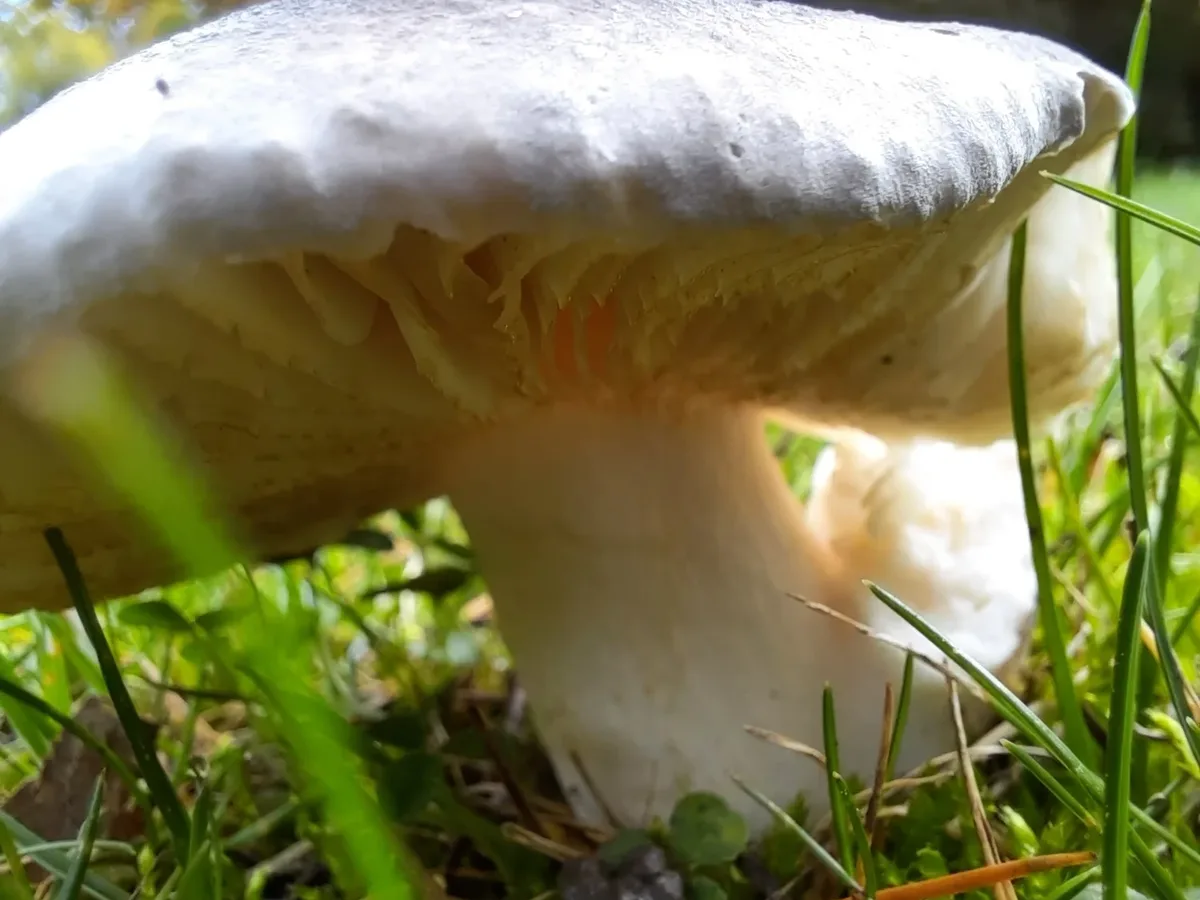 Max Elysian (CC0)
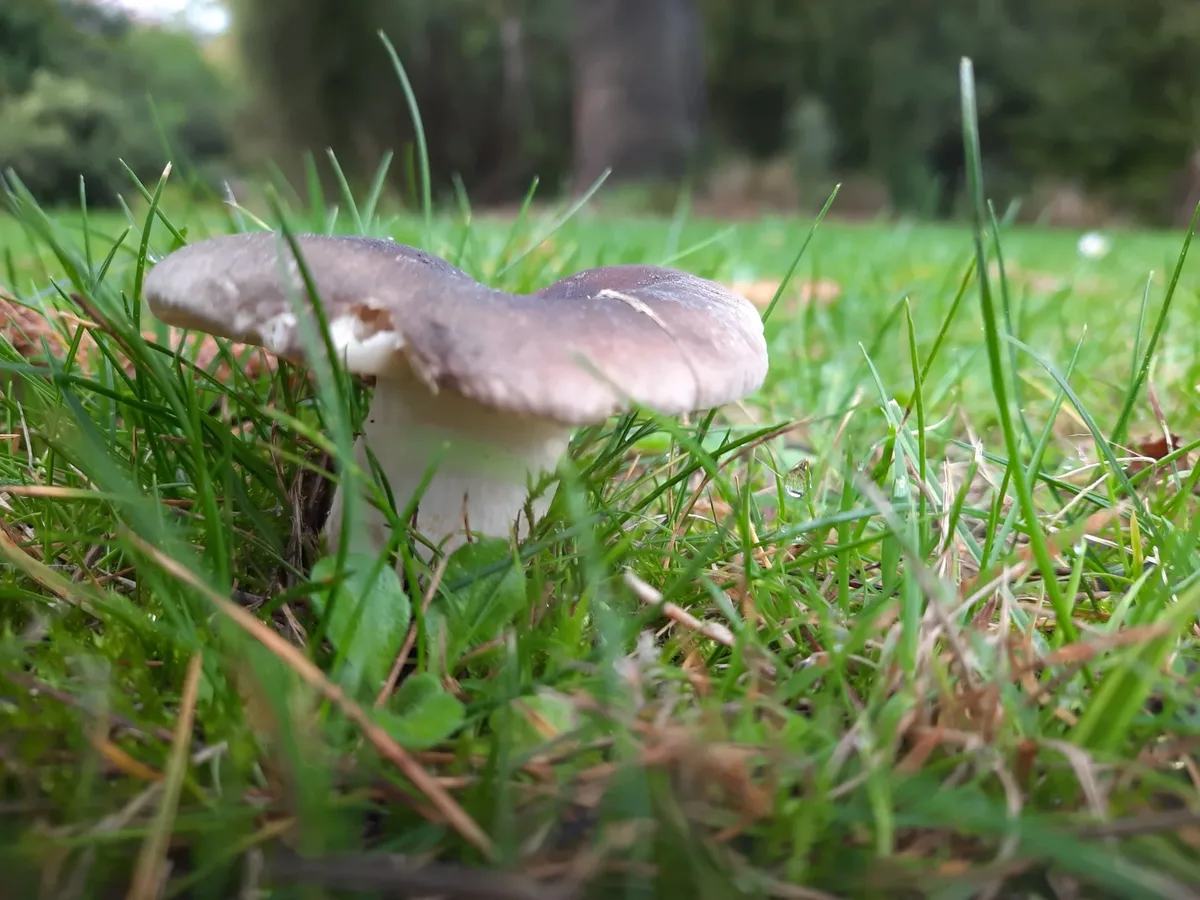 Max Elysian (CC0)
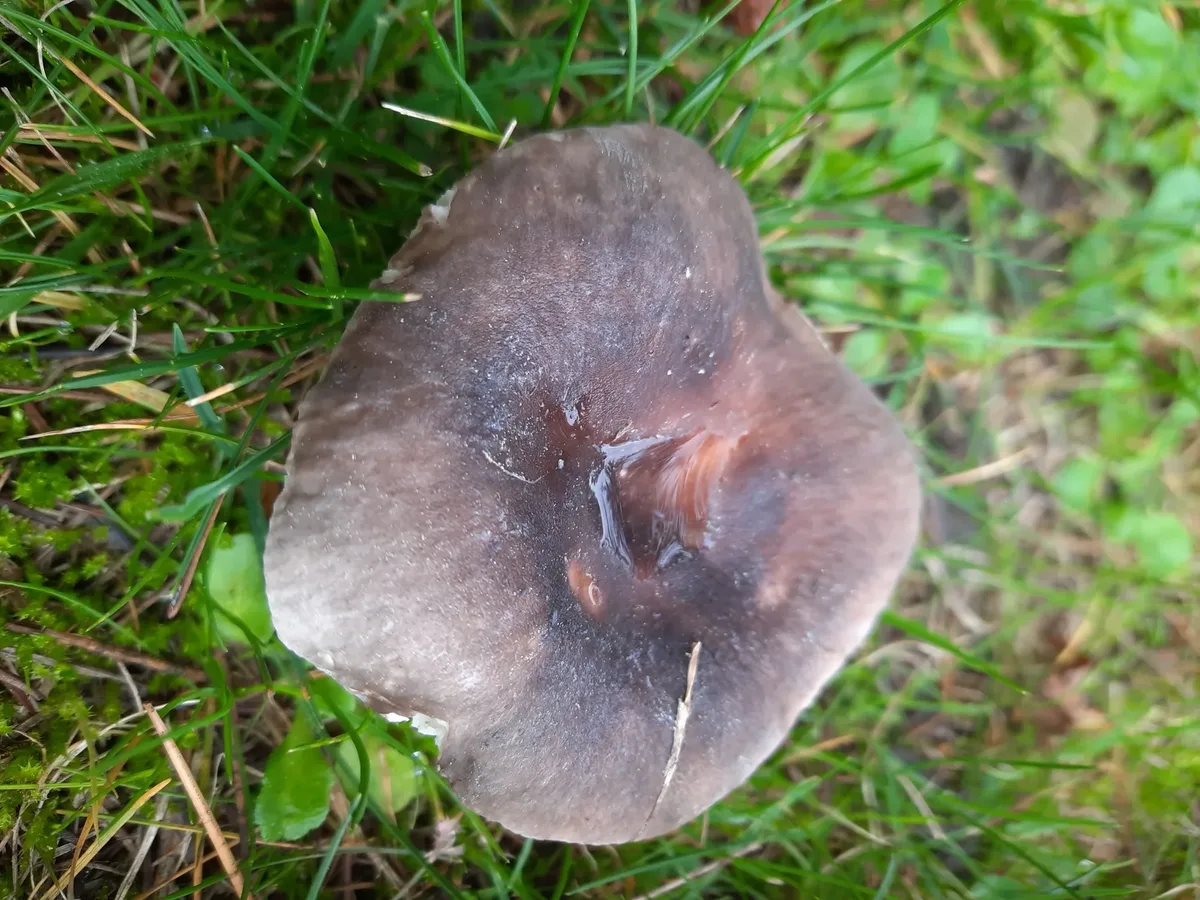 Max Elysian (CC0)
 © Daniel Ghyselinck (CC BY)
 szegedigombasz (CC0)
 szegedigombasz (CC0)
 © Bryan Menger (CC BY)© Bryan Menger (CC BY)Max Elysian (CC0)
Good to eat, once you have identified it with certainty and cooked it through.
Never eat a mushroom you are not 100% sure of - check the look-alikes below, and always cook wild mushrooms.
How to recognise it
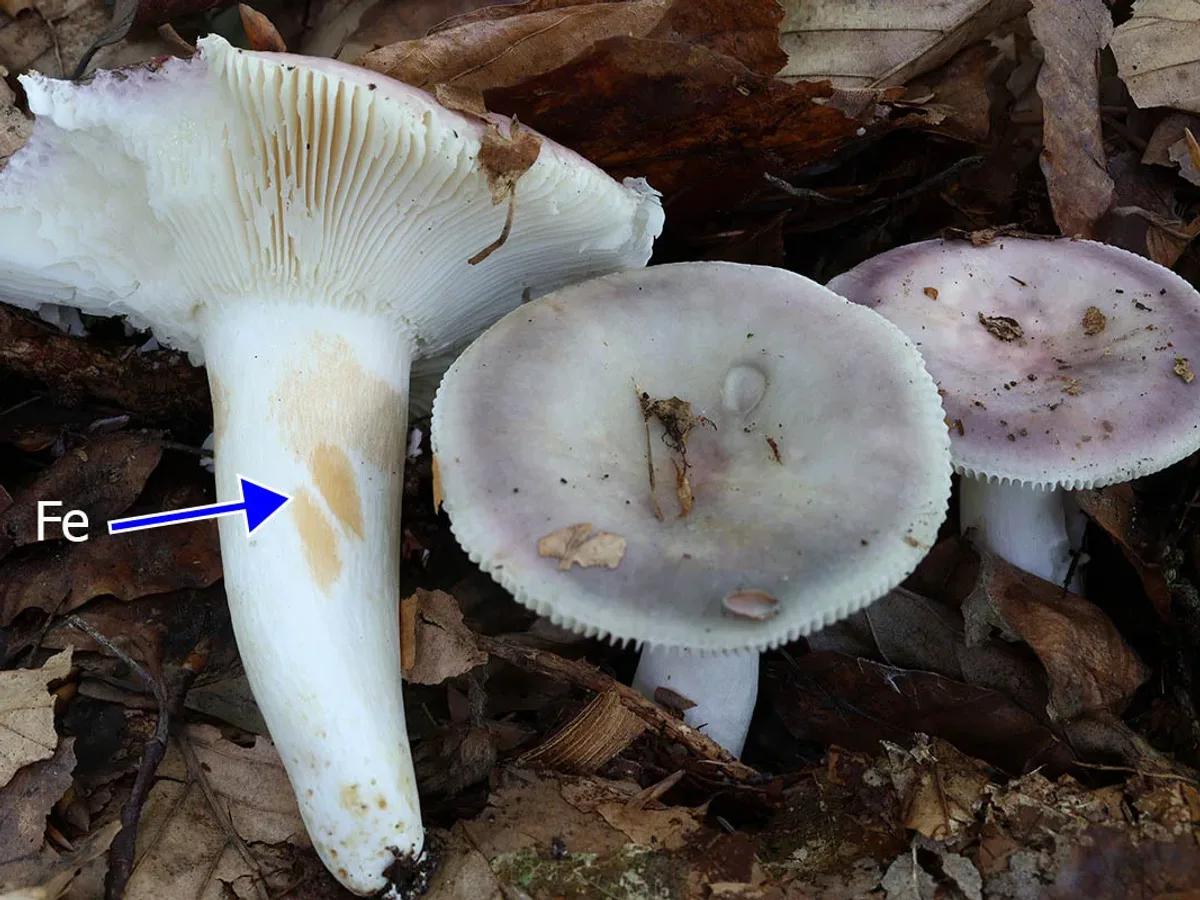
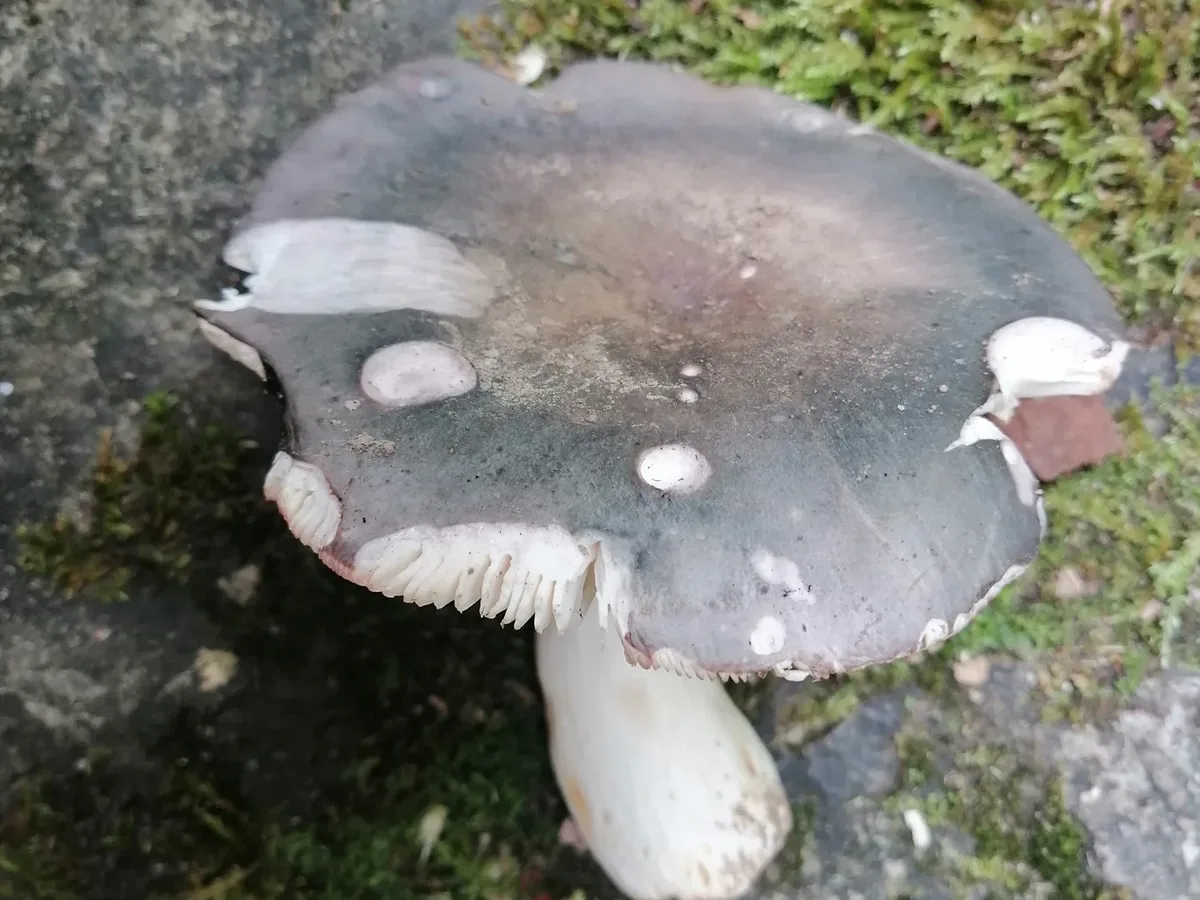
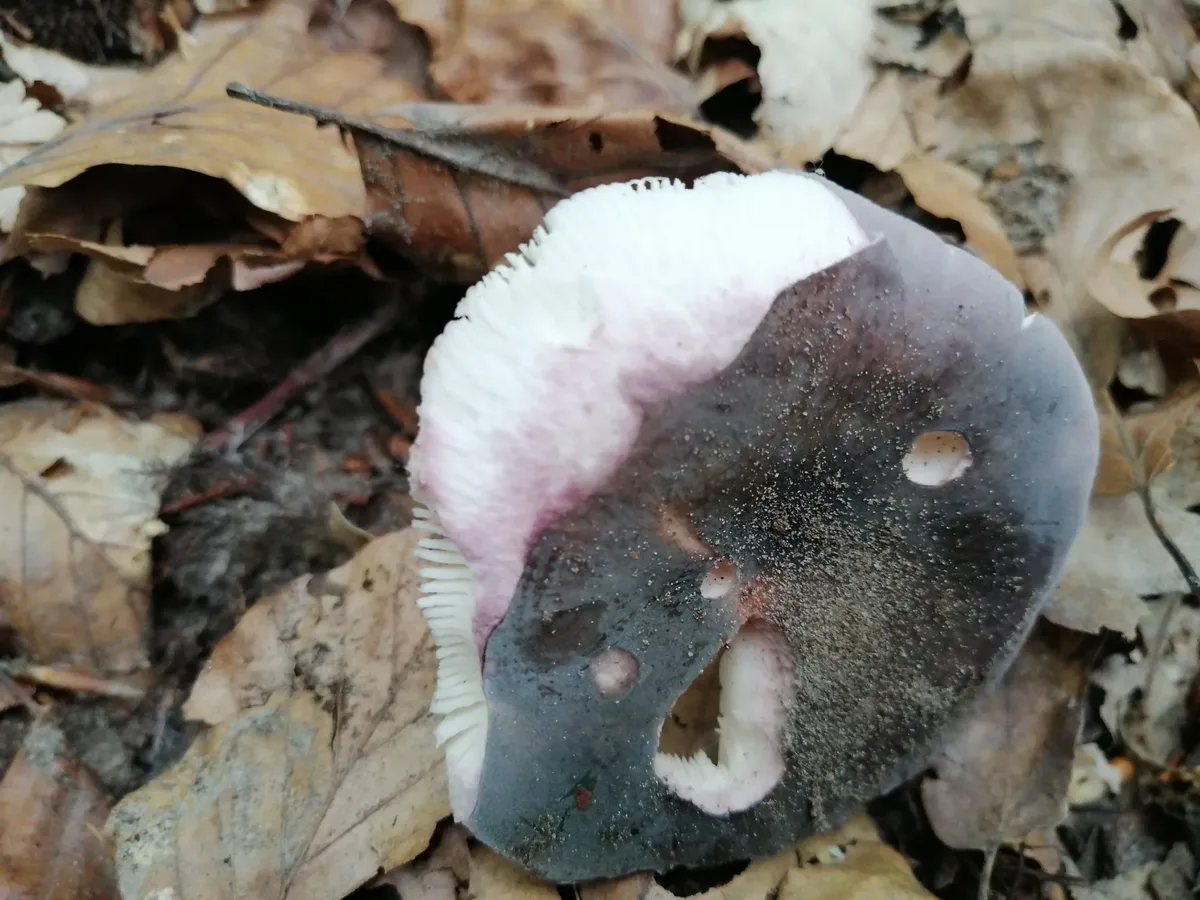
Russula grisea is a medium-sized, solidly built brittlegill with a quietly elegant look: its cap runs the full grey spectrum from cool ash through blue-grey to grey-violet, giving it a smoky, understated presence on the forest floor.
Cap
The cap, 5-10 cm across, is convex and dome-shaped when young, gradually flattening and becoming slightly depressed with age.
The surface is matte to barely viscid in wet weather and rarely striate at the margin except in older specimens.
Colour typically deepens toward the disc and fades toward the paler rim - that gentle gradient is a useful field pointer.
Gills
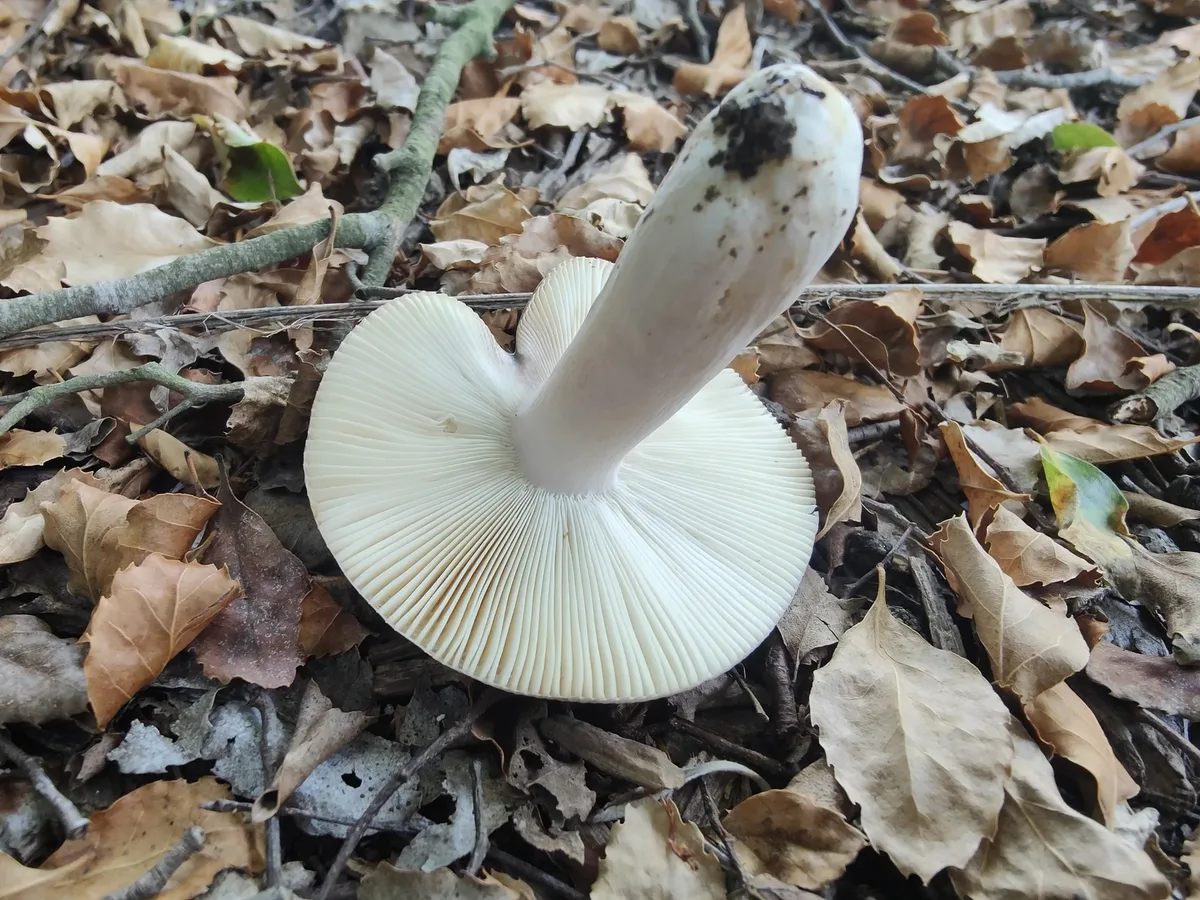
The gills are white to creamy, firm and characteristically brittle: they snap cleanly rather than bend, which is one of the clearest differences from the Charcoal Burner (Russula cyanoxantha), whose gills are notably greasy and flexible.
Stem
The stem is white, cylindrical to slightly club-shaped, firm when young and spongy in age.
Flesh
The flesh is white throughout, unchanging, odourless and - critically - always mild in taste; always confirm this before picking for the table.
Where & when it grows
Habitat
Found in well-established broadleaf and mixed woodland, almost exclusively under beech and oak in central and western Europe, with a preference for humus-rich, moderately acid to circumneutral soils.
The species is a true mycorrhizal partner of its host trees, so it will not appear in grasslands, parks or young plantations without mature host trees nearby.
It is a common species in mature beech-oak forest throughout France, Germany, the Benelux countries, Britain and adjacent regions, typically fruiting in the understorey alongside other mycorrhizal Russulas and boletes.
When
Russula grisea is an early-to-mid season brittlegill that arrives ahead of the main autumn Russula rush.
Fruitbodies can appear from June onward after warm, moist spells, continuing through July, August and September, with stragglers persisting into October in mild autumns.
It often surfaces alongside R. vesca while the beech-oak canopy is still fully green - a welcome find for foragers who don't want to wait for October.
How it grows
Fruitbodies arise singly or in small scattered groups from the woodland soil, drawing on the mycorrhizal thread-network that connects the fungus to the roots of nearby beech and oak.
Like most Russulas, caps can push up quickly after rain, and the flesh is notably firm and dense when fresh.
Older specimens become spongy in the stem and are eagerly colonised by fungal gnats and other insects, so maggot damage is very common. Always slice the stem vertically to check before putting any specimen in the basket.
Fruiting conditions
Fruits after warm, humid summer and early autumn weather in broadleaf woodland; flush follows significant rainfall (18+ mm over 14 days) once soil temperatures exceed about 11 °C. Among the earlier-appearing edible Russulas, sometimes fruiting before the main autumn Russula season.
Look-alikes
The most important lookalike concern is with young Amanita phalloides (Death Cap) and related deadly Amanitas before their caps fully open: juvenile buttons of A. phalloides can appear olive-grey to brownish-grey and occur in the same beech-oak woodland habitat.
The critical distinction is that Amanita species always have features that Russula lacks:
- a sac-like volva (cup or sheath) at the base of the stem
- a ring (annulus) on the stem
- fibrous, not brittle, flesh
Russula has none of these. Always dig up the base of any grey-capped mushroom to check for a volva before harvesting.
Within the Russula genus itself, the closest lookalike is the Charcoal Burner (Russula cyanoxantha): it overlaps strongly in habitat and cap colour but is distinguished by its greasy, soft, flexible gills (rather than the firm, brittle gills of R. grisea) and often a more mixed violet-green-grey cap palette. Both are edible.
Russula parazurea is another grey brittlegill of similar appearance that occurs in the same forests; it too is edible and mild.
Acrid-tasting grey Russulas such as Russula atrorubens or some grey-capped forms of R. sardonia should be rejected on taste alone - any peppery or burning sensation means the specimen must not be eaten.
None of the acrid grey European Russulas are deadly, but they cause significant gastrointestinal distress.
Deadly. Young buttons of A. phalloides can be grey-green to grey-olive and occur in the same beech-oak woodland. The death cap always has a sac-like volva (basal cup) concealed in the soil, a ring (skirt) on the stem and fibrous, non-brittle flesh. Russula has no ring, no volva and chalky-brittle gills and flesh. Always excavate the stem base completely before harvesting any grey-capped woodland mushroom.
Deadly (amatoxins). Direct confusion with R. grisea is genuinely unlikely: A. virosa is pure white throughout, whereas R. grisea is characteristically ash-grey to blue-grey - a conspicuous and consistent difference. The structural check applies regardless: any white or pale mushroom in the same habitat must be examined for the presence of a sac-like volva at the stem base, a ring on the stem and fibrous (non-brittle) flesh. Russula has none of these; its flesh and gills are chalky and crumble rather than tear.
Not deadly but causes significant gastrointestinal distress. Distinguished definitively by taste: any grey-capped Russula with an acrid, burning or peppery flavour on even a tiny fragment must be rejected. Russula grisea is always completely mild - this is a non-negotiable field test.
Edible. The closest lookalike: also grey to grey-violet in woodland, also mild taste. Distinguished from R. grisea by its soft, greasy, flexible gills (a very distinctive character - press gently and they bend without snapping) and typically more mixed violet-green-grey or purplish hues. Both are edible so confusion is not dangerous, but the gill flexibility test is the clearest separator.
Edible. Another grey brittlegill of similar habitat; distinguished by a slightly bluish-grey cap with a whitish pruinose (powdery) bloom, and microscopic spore ornamentation differences. Both are edible; separation is mainly academic in the field.
In the kitchen
Picking & cleaning
- 1Lift or gently twist the whole fruitbody clear of the soil so the stem base can be inspected - check for any sac-like volva (bag) that would indicate an Amanita, a genus that must never be confused with Russula.
- 2Brittlegills have crumbly, chalky-firm flesh and gills that shatter rather than bend - confirm this before collecting.
- 3Taste a tiny fragment of raw flesh: Russula grisea is always mild; reject anything that is acrid, burning or peppery.
- 4Collect only young, firm, maggot-free specimens.
- 5Wipe rather than wash where possible.
Cooking
Russula grisea is a genuinely worthwhile edible: firm, white flesh, a clean mild flavour and a texture that holds together well under heat.
It is best sautéed in butter or olive oil and works equally well in omelettes, pasta sauces, risottos and mixed woodland mushroom dishes.
The flesh does not discolour, and its neutral flavour makes it a natural partner for stronger-tasting species in a mixed pan. The cap skin can be peeled if preferred but need not be.
Always cook thoroughly; raw Russulas should not be eaten. Discard any maggot-riddled stems or caps, which are common in this species.
Good to know
The key safety principle with Russula grisea is to confirm, absolutely, that you have a Russula and not an Amanita before eating.
- Russula lacks a ring and a volva.
- Its flesh and gills are brittle and chalky, crumbling rather than tearing.
- The stem base is round, solid and tapers - never swollen with a surrounding sac.
Amanita phalloides, which grows in the same beech-oak woodland and can be grey-capped when young, is responsible for the majority of fatal mushroom poisoning deaths in Europe.
Never harvest any grey-capped woodland mushroom from among leaf litter without digging out the full base.
Once the genus is confirmed as Russula, taste a small fragment: R. grisea is always mild. Any acrid, peppery or burning taste means the specimen is a different, gastrointestinally irritating Russula and must be discarded.
Mild taste alone is not a guarantee of the species but is a necessary check.
As with all wild fungi, eat a modest portion when trying the species for the first time, cook thoroughly, and do not serve to pregnant women, small children or immunocompromised individuals without medical advice.
A reference guide - never an edibility guarantee. When in doubt, leave it out.