Russula fuegiana
Russula fuegianasyn. Russula fuegiana Singer
 © Cristian Riquelme (CC BY)
 © Cristian Riquelme (CC BY)
 © Pablo Silva (CC BY)
 © Pablo Silva (CC BY)
 © Pablo Silva (CC BY)
 © Cristian Riquelme (CC BY)
 © Pablo Silva (CC BY)
 © Pablo Silva (CC BY)
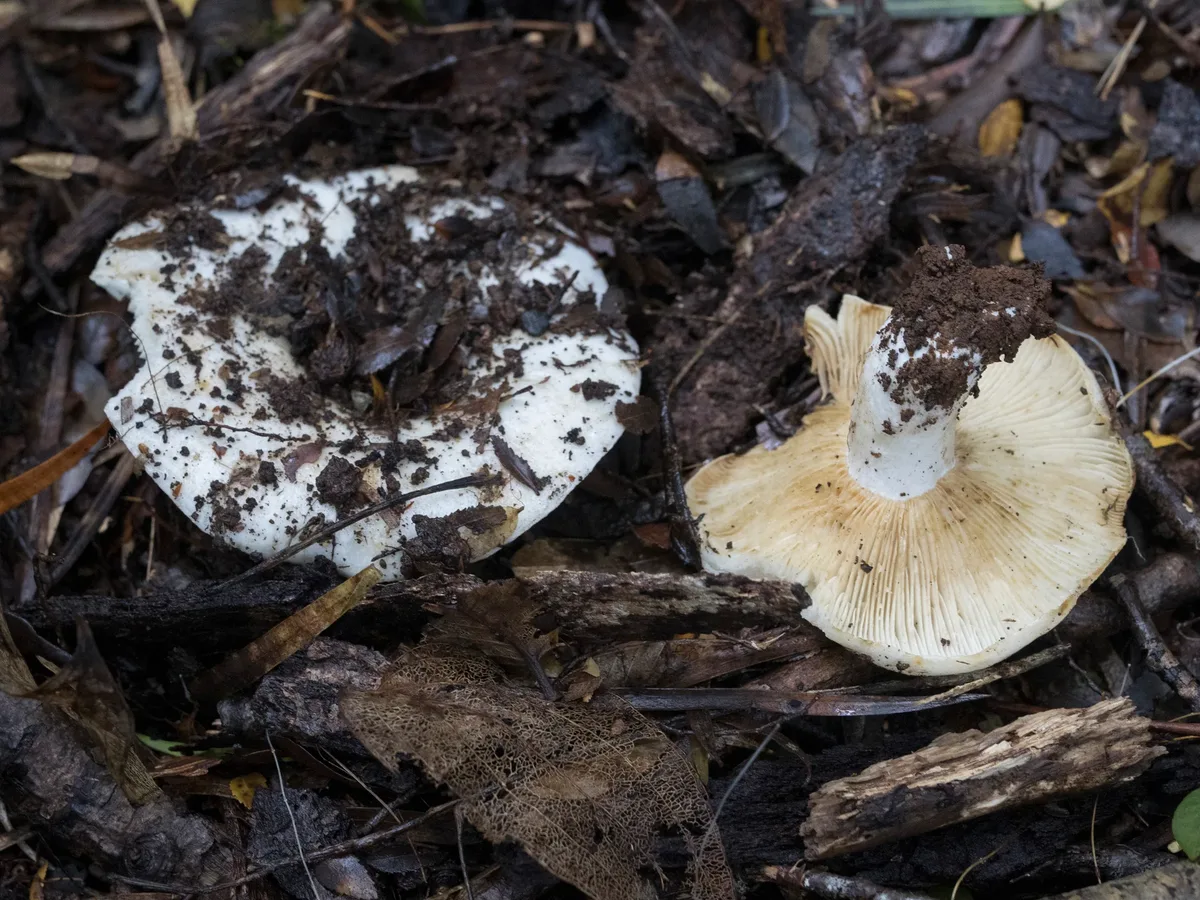 © Pablo Silva (CC BY)© Cristian Riquelme (CC BY)© Cristian Riquelme (CC BY)
Edible only with the right preparation - or safe for some people but not others. Learn the caveats first.
Never eat a mushroom you are not 100% sure of - check the look-alikes below, and always cook wild mushrooms.
How to recognise it
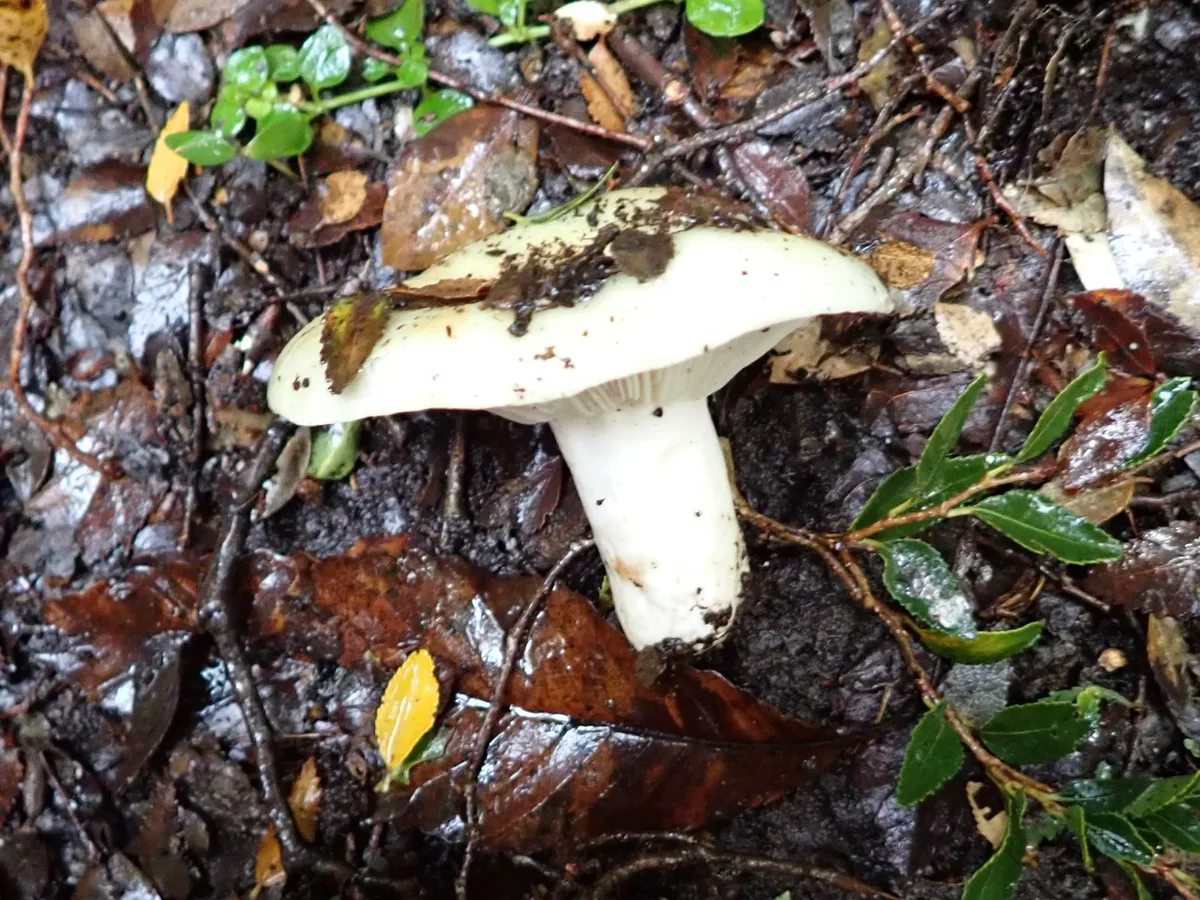
Russula fuegiana is a medium-sized brittlegill of the austral Nothofagus understorey.
Cap
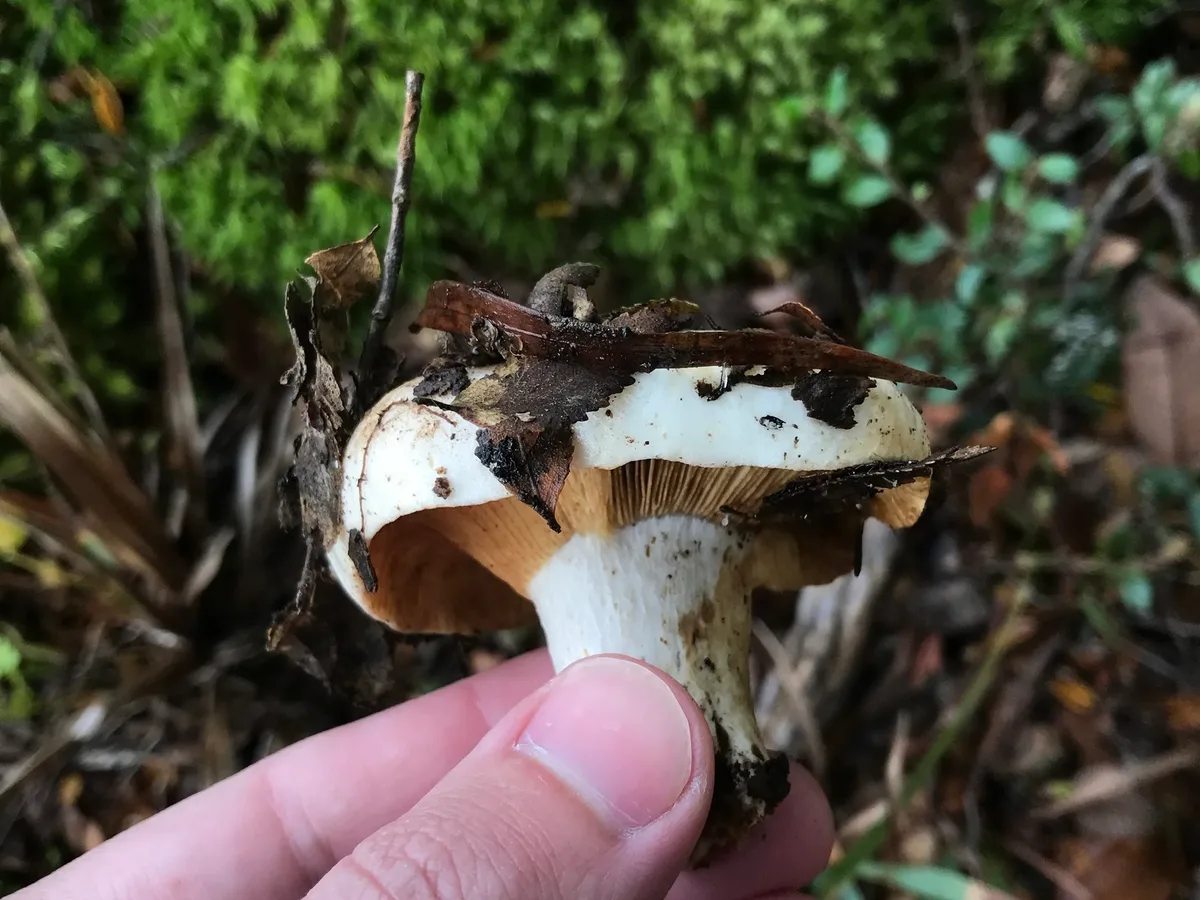
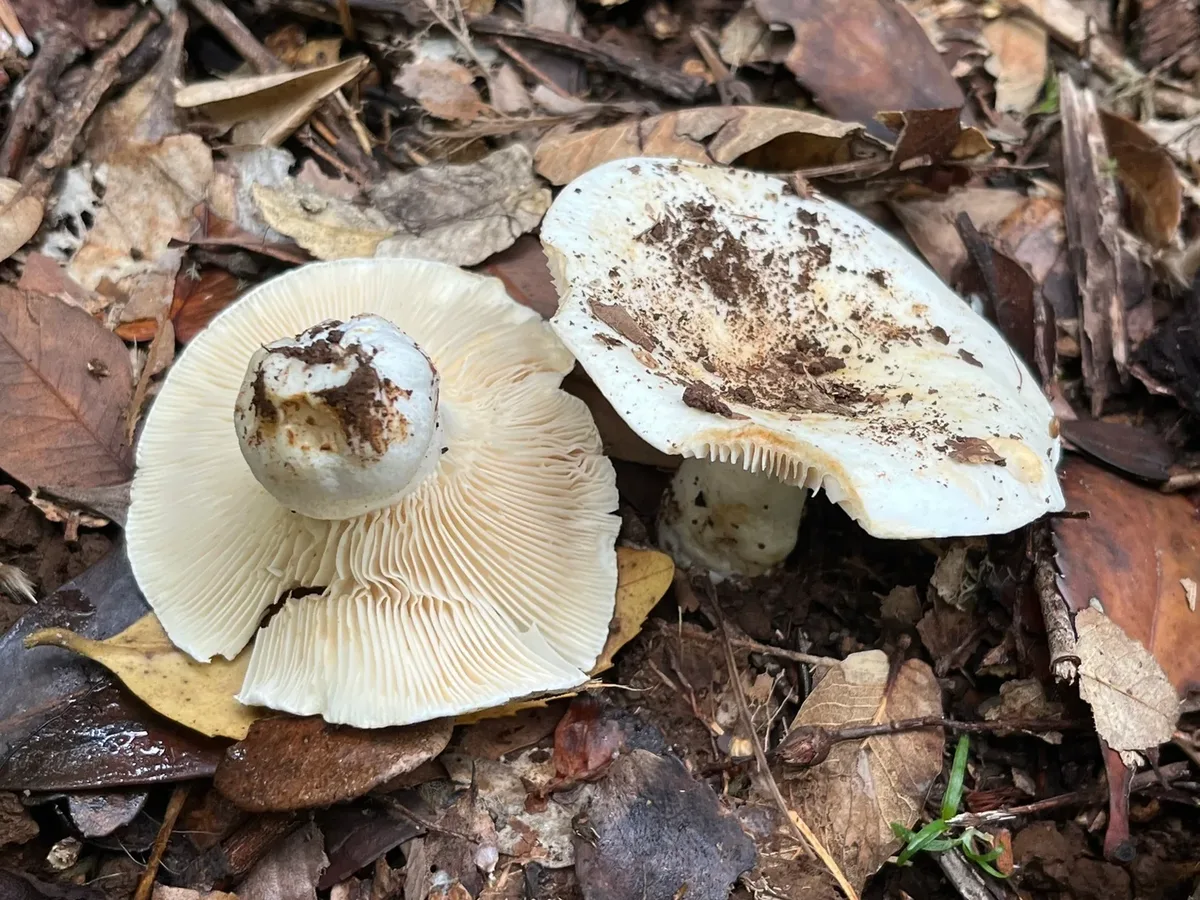
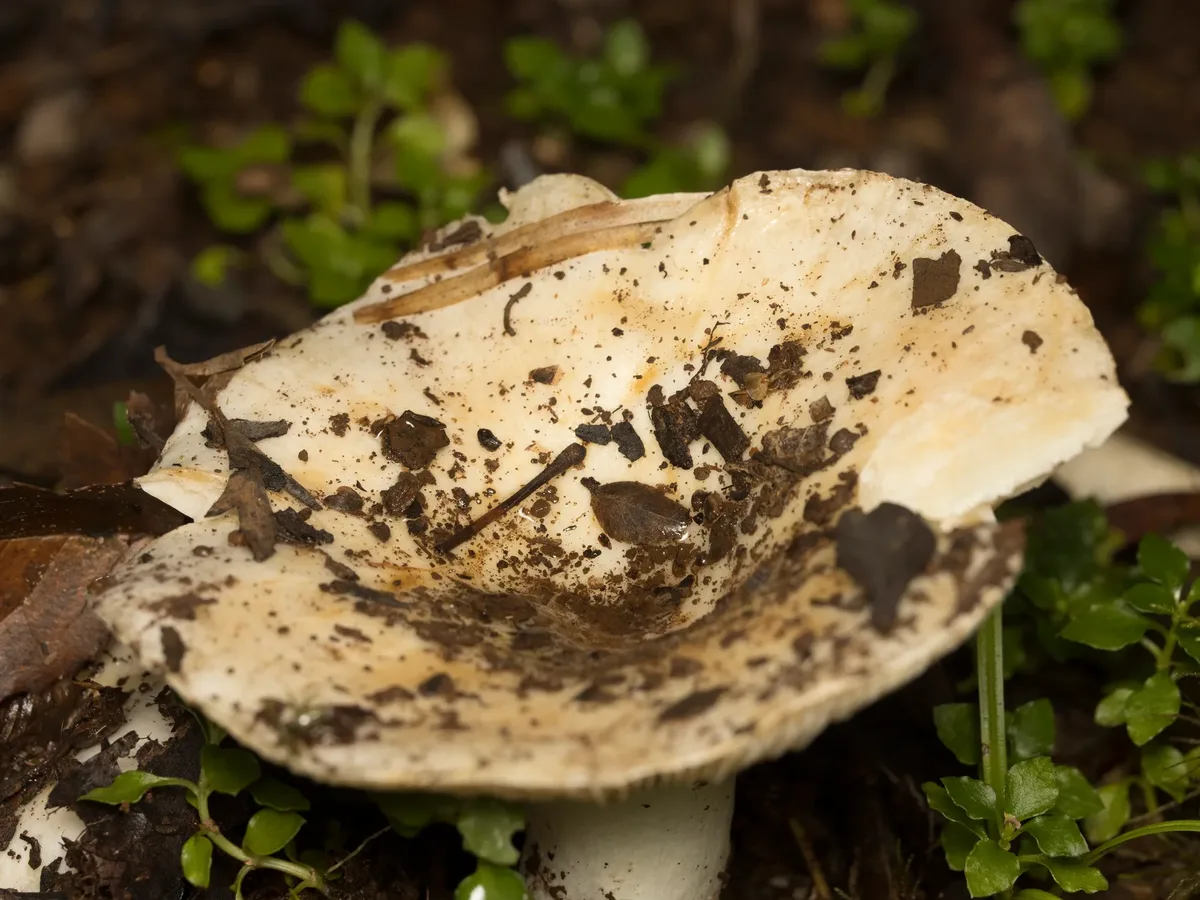
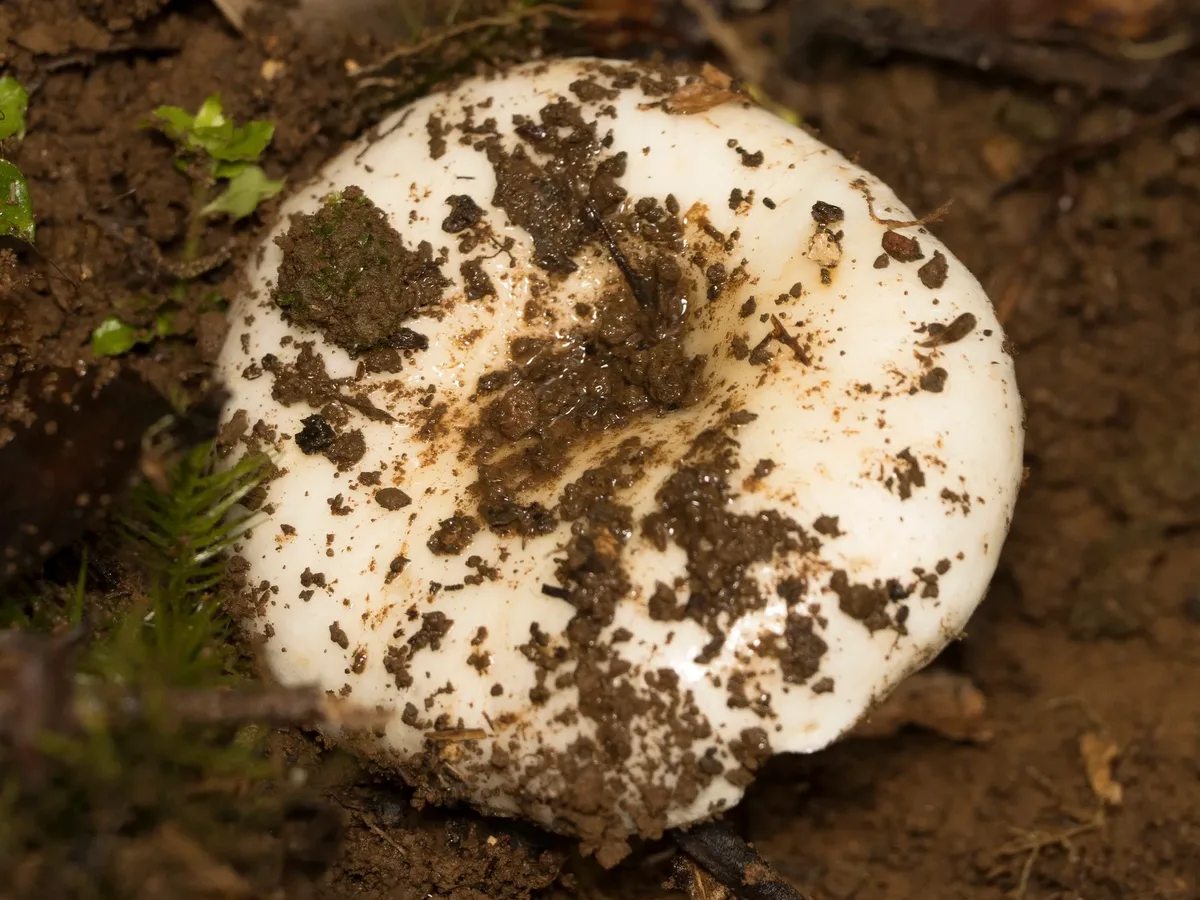
Ochraceous-brown to tawny or pale yellowish-brown tones - earthy colours that blend easily into the carpet of beech leaves around it. The cap starts as a tight dome and broadens over several days to a flattened plate, sometimes developing a gentle central depression in old specimens.
The surface is smooth and slightly greasy in wet weather; the cuticle can be peeled partway from the margin, a feature shared throughout the genus.
Gills
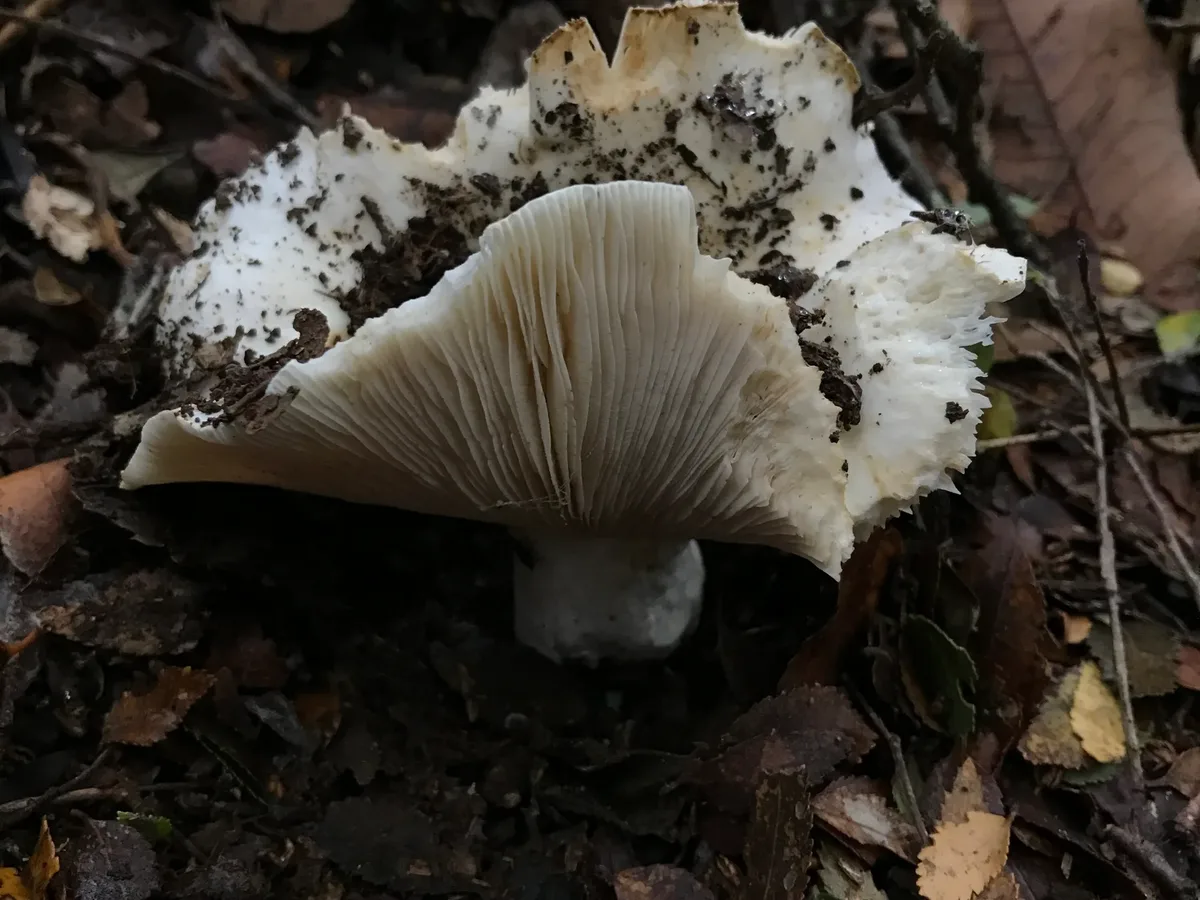
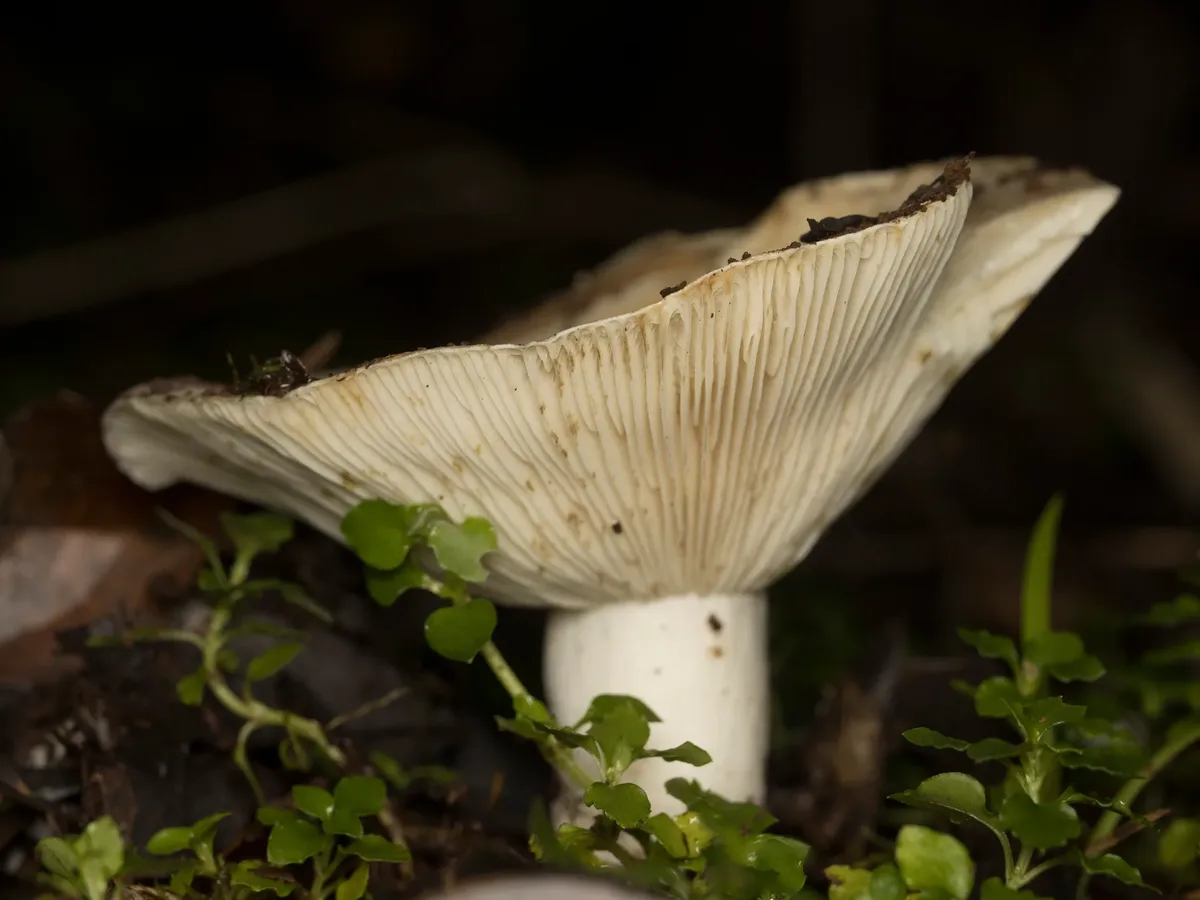
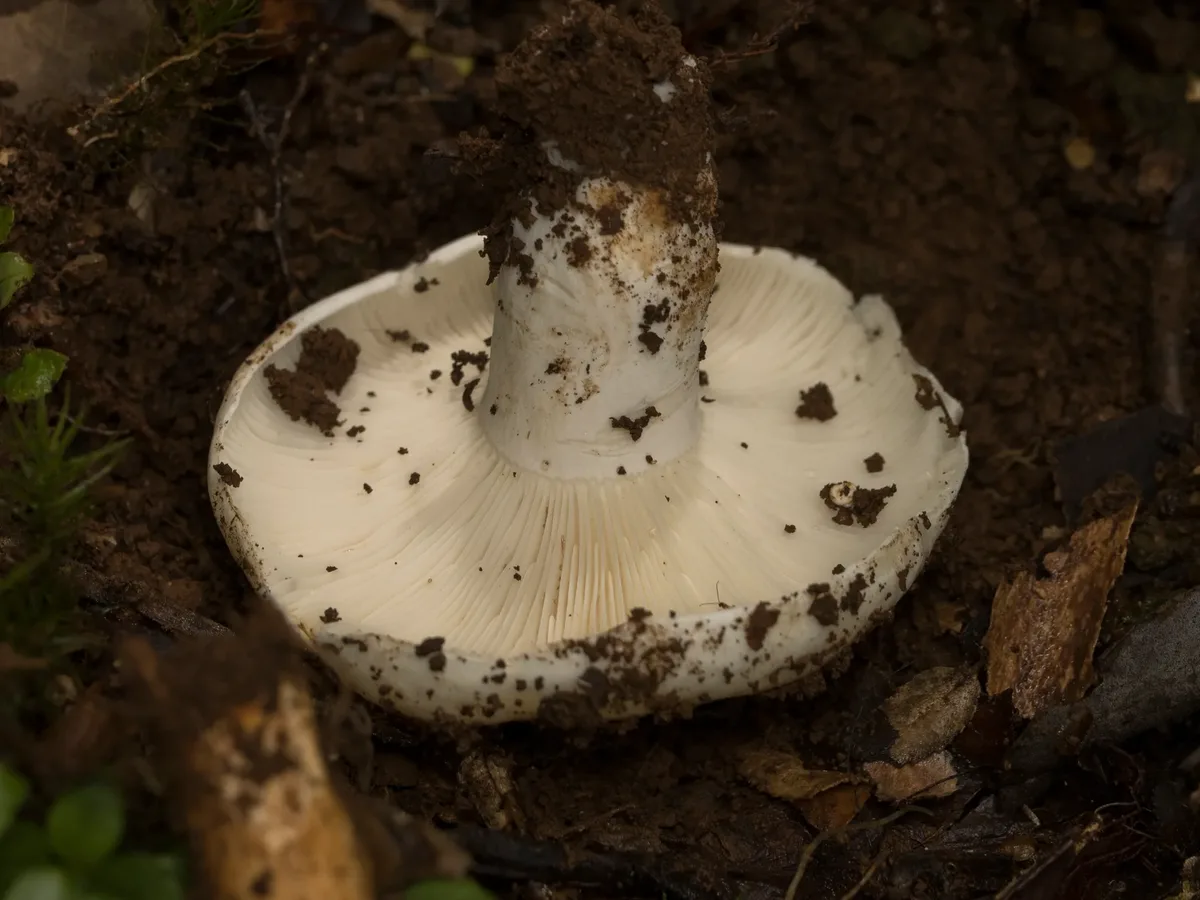
White to pale ivory, moderately crowded, and classically brittle: pressing a thumb across them causes them to crumble and powder rather than bend - the definitive tactile identity of any Russula, and the character that separates every brittlegill from the far more dangerous free-gilled Amanitas.
Stem
White, cylindrical, and firm in younger specimens, becoming spongy in the centre with age, and bearing no ring and no volva at its base.
Flesh
White, firm, and does not change colour when cut or broken - no reddening, no greying, no blackening.
Taste
Mild in most collections but reportedly tends toward slightly bitter or acrid in some specimens; any notably peppery or burning sensation on the tongue is a signal to discard.
Where & when it grows
Habitat
This species exists entirely within the mycorrhizal economy of the southernmost Nothofagus forests on earth. Its mycelium threads invisibly through the roots of lenga beech (Nothofagus pumilio) and evergreen beech (Nothofagus betuloides) in the subantarctic forest zone of Tierra del Fuego and southern Patagonia, exchanging mineral nutrients and water for photosynthetic sugars - a mutualism that sustains both partners and anchors the species to these forests absolutely.
Without living Nothofagus, there is no Russula fuegiana.
Fruiting bodies push up through thick beech litter in humid, sheltered sites. The most productive microhabitats are:
- valley floors
- stream margins
- the wind-protected interiors of closed-canopy stands
Soils are cool, acidic, and often heavily organic. Altitude ranges from near sea level in sheltered Fuegian inlets up to the treeline ecotone where the forest gives way to Patagonian steppe, typically around 700-900 m in the latitude of Tierra del Fuego.
When
The fruiting season tracks the Southern Hemisphere autumn. After the short, cool Fuegian summer (December-January), dropping soil temperatures and post-summer rain in February and March trigger the main fruiting flush.
March and April are the peak months across most of the range; at the most southerly sites, where summer is briefer, the season may compress noticeably. By May, rapidly falling temperatures and the onset of austral winter suppress new growth at most sites.
The perennial ectomycorrhizal mycelium persists underground between fruiting seasons, so established sites can fruit annually under suitable conditions - a feature exploited by experienced local observers who return to productive patches in March and April each year.
How it grows
Grows singly or in loose, scattered groups on the forest floor, never in tight clusters and never on wood.
Because the mycelium is anchored to living beech roots, fruiting bodies always appear within the root zone of a host tree - close to the trunk or within the canopy drip-line. The same micro-sites often fruit in consecutive years.
Individual fruit bodies develop over roughly one to two weeks and have a fairly narrow prime window. Past it, the flesh softens, the cap flattens and becomes more irregular, and insect larvae colonise the stem.
Fruiting conditions
Southern Hemisphere autumn species fruiting February-May in cold Nothofagus forest. Triggered by post-summer rainfall (20+ mm over 14 days) as soil temperatures cool below ~14 °C. Ectomycorrhizal; perennial mycelium means established sites can produce fruit bodies annually. Peak timing March-April across Tierra del Fuego and southern Patagonia. Flush lag is relatively long (up to 21 days) given the cold soil conditions and slow mycelial response at this latitude.
Look-alikes
The most dangerous confusion in these forests is with Amanita species, several of which occur in South American Nothofagus forests and contain lethal amatoxins.
In Patagonia and Tierra del Fuego, Amanita phalloides has been documented (likely introduced with European trees, but potentially present near settlements and forest edges), and native amatoxin-containing Amanitas also occur in the South American temperate zone. An Amanita can share the pale brownish or ochraceous cap colour of R. fuegiana; both are white-gilled and white-stemmed woodland mushrooms.
The absolute separation - every Amanita has:
- a membranous volva (sac or cup) at the stem base - sometimes buried below the soil surface and requiring careful digging to reveal
- usually a ring (skirt) on the stem
- free gills (not attached to the stem)
- fibrous flesh, not chalky-brittle
R. fuegiana has NO volva, NO ring, attached brittle crumbling gills, and chalky flesh that snaps and powders.
Within the genus Russula, the Nothofagus forests of South America host a suite of native Russula species that are poorly characterised and largely unresolved molecularly; some are acrid, some mild, and the edibility of most is formally unknown. None are documented as deadly in South America, but the 'mild russula = safe' shortcut from European foraging culture does not transfer automatically to uncharacterised austral species.
If a collection of any pale ochraceous Russula in Patagonian beech forest shows flesh that reddens or darkens when broken, it should be immediately discarded - that pattern is associated in other regions with the rhabdomyolytic Russula subnigricans group, which has caused deaths.
The death cap can produce a pale ochraceous-brown, yellowish-olive, or buff-brown cap that falls within the colour range of R. fuegiana, and is also white-gilled and white-stemmed in Nothofagus forest settings. It has been documented in southern South America. It is lethal from amatoxins and has a mild, even pleasant taste - a taste test will NOT protect you. The death cap ALWAYS has a membranous volva (cup or sac) at the stem base - dig the full base out of the soil to check - and usually a ring (skirt) on the stem; its gills are free (not attached) and its flesh is fibrous rather than chalky. R. fuegiana has NO volva, NO ring, attached brittle crumbling gills, and chalky-snapping flesh. Always dig out and inspect the stem base before collecting any pale brown mushroom in Patagonian forest.
Several native amatoxin-containing Amanita species have been documented in South American Nothofagus and mixed forest, some with pale brownish or buff caps that could resemble a pale Russula. All retain the diagnostic Amanita features: volva at base, ring on stem, free gills, fibrous flesh. R. fuegiana has none of these. Inspecting the stem base is mandatory.
Acrid, peppery russulas cause gastrointestinal upset (vomiting, diarrhoea) and are rejected by a sharply burning taste on the tongue. If a sample of R. fuegiana tastes markedly acrid, it may belong to a closely related peppery species; however, a mild taste does not guarantee safety either. Treat any acrid specimen as unfit to eat.
Several other poorly resolved native Russula species co-occur in Patagonian and Fuegian Nothofagus forest, some sharing a similar pale brownish or tawny cap and white gills. None are documented as deadly in South America, but none are confirmed safe either. Reliable separation from R. fuegiana requires microscopic examination of spore ornamentation and often molecular work. Any co-occurring Russula whose flesh reddens or darkens on cutting should be discarded immediately - that colour change is associated with rhabdomyolytic species in other regions.
A closely related or ecologically analogous Russula from Nothofagus forest in New Zealand, with reddish to vinaceous-brown cap tones (typically richer red than R. fuegiana's paler ochre-brown). Both are ectomycorrhizal on Nothofagus, both have white brittle gills and no ring or volva, and both are of unestablished edibility. Their ranges do not overlap geographically, but the parallel ecology underscores why Southern Hemisphere beech-forest russulas as a group warrant caution rather than confidence.
In the kitchen
Picking & cleaning
Russula fuegiana is not recommended for eating; see Safety.
If collecting for identification or scientific purposes:
- 1Twist or cut the stem at the base and immediately examine the base carefully for any trace of a volva (a membranous sac, cup, or girdled swelling) - its complete absence confirms Russula rather than a potentially deadly Amanita.
- 2Press the gills gently: they should crumble and not flex.
- 3Taste a tiny fragment of gill tissue, then spit it out and rinse: a mild result is consistent with R. fuegiana, while a sharply acrid or burning taste may indicate a related peppery species.
Do not swallow any tissue in this test.
Cooking
Not recommended. Russula fuegiana has no established safety record and no culinary tradition.
Even if future research were to confirm safety for particular collections, the practical identification difficulty in a group of poorly resolved austral Russula species - compounded by the serious risk of Amanita misidentification in the same forest - makes this an inappropriate species to collect for food. Leave it in the forest.
Good to know
Russula fuegiana should not be eaten. It is a scientifically documented but poorly characterised species from one of the world's most remote and botanically underexplored forest systems.
Its edibility has never been formally assessed. There is:
- no established culinary tradition for this mushroom among the indigenous communities of Tierra del Fuego (the Yaghan and Selknam peoples did not traditionally rely on wild fungi as a food staple)
- no modern toxicological data
- field accounts noting variability in taste from mild to somewhat acrid - acrid russulas cause gastrointestinal upset from irritant sesquiterpene compounds
The caution classification reflects genuine scientific uncertainty, not confirmed safety.
Beyond the species itself, the primary life-threatening risk in these forests is misidentifying any white-gilled, white-stemmed, brownish-capped mushroom as a Russula when it is actually an Amanita.
Amatoxin-containing Amanitas have been documented in South American Nothofagus forest zones; their amatoxins destroy the liver over several days, with an insidious latency period of 6-24 hours during which the victim feels well. The mild taste common to the death cap means a taste test provides no protection.
Before any consideration of edibility for any Patagonian forest mushroom:
- 1Dig out the full stem base and confirm there is no volva and no ring.
- 2Confirm the gills are brittle and attached.
- 3Confirm the flesh is white and does not redden or darken.
If any of these checks fails, or if any doubt remains, do not eat it.
A reference guide - never an edibility guarantee. When in doubt, leave it out.