Russula font-queri
Russula font-querisyn. Russula fontqueri Singer
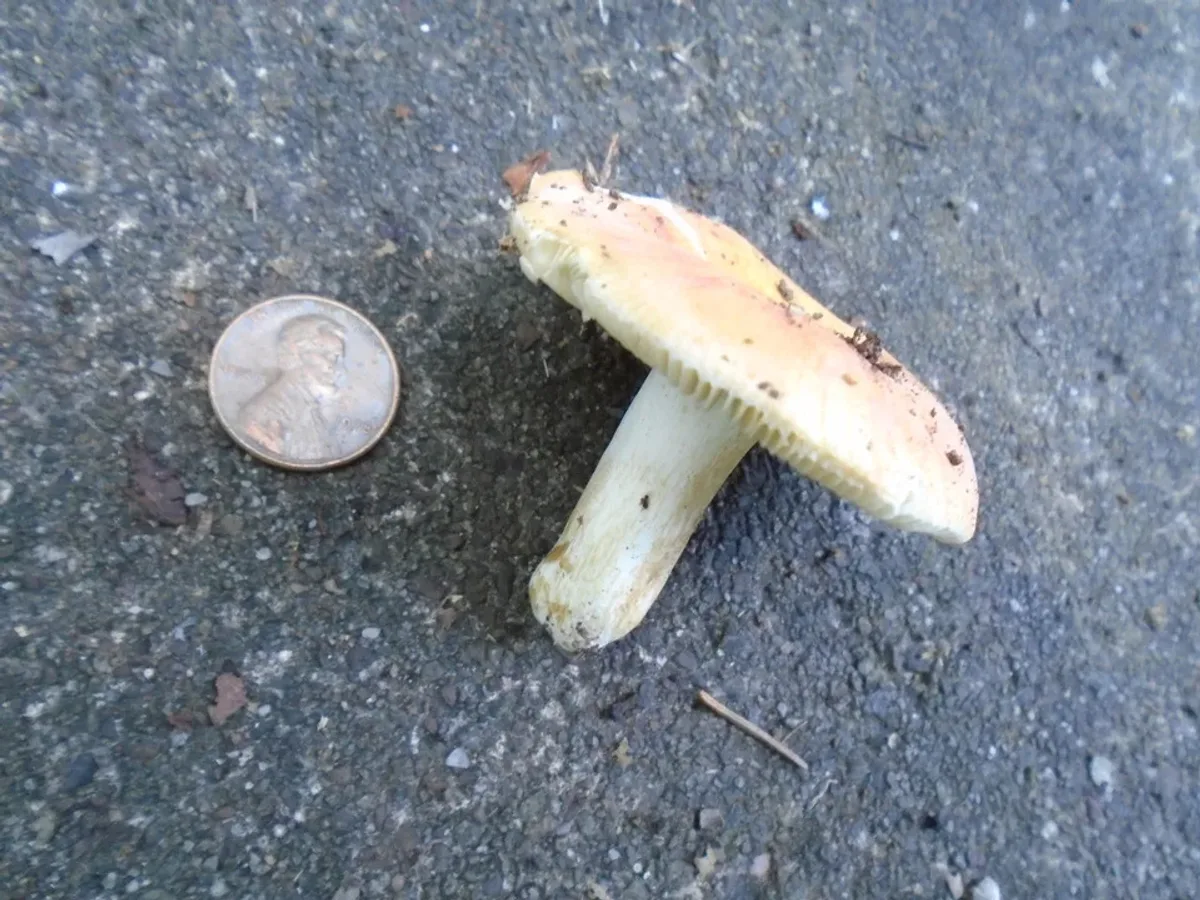 © Dave W (CC BY-SA)
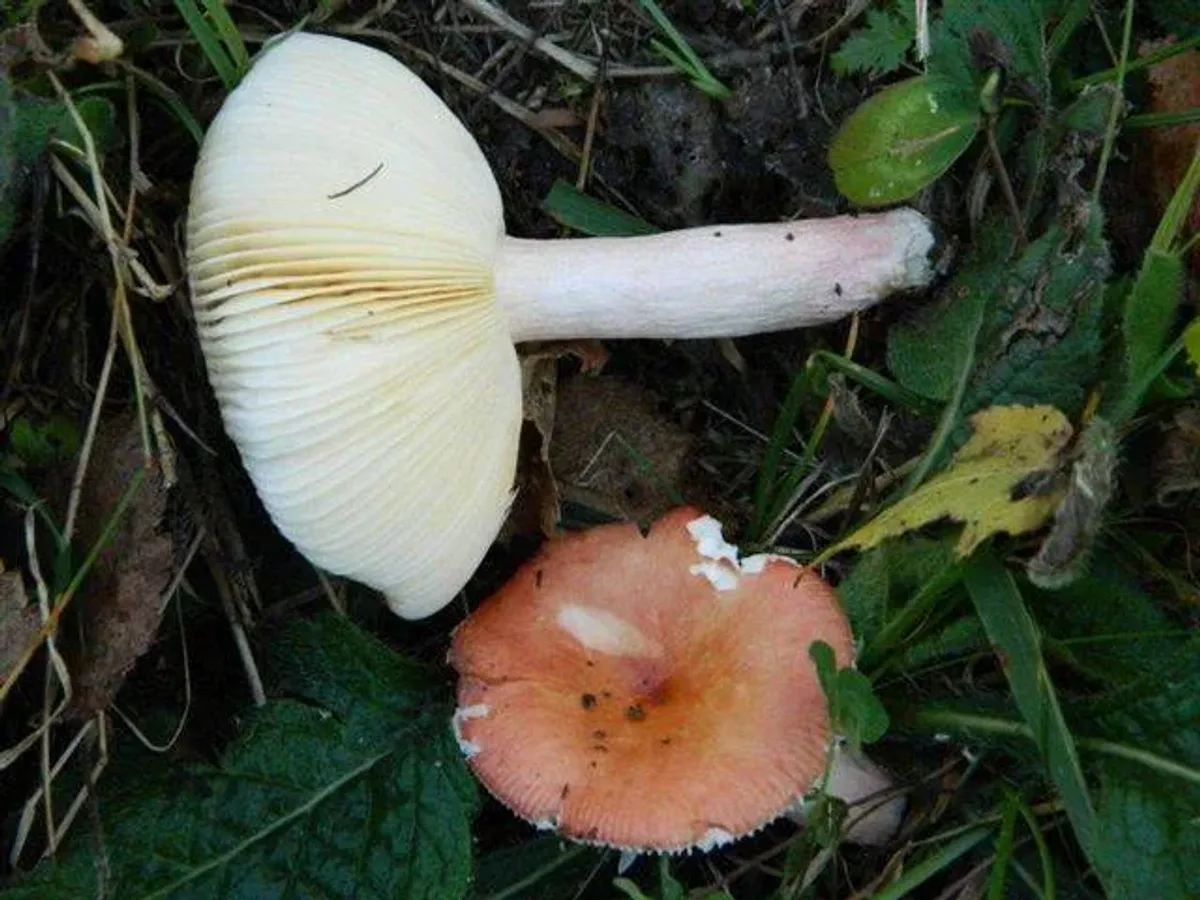 © James Baker (CC BY-SA)
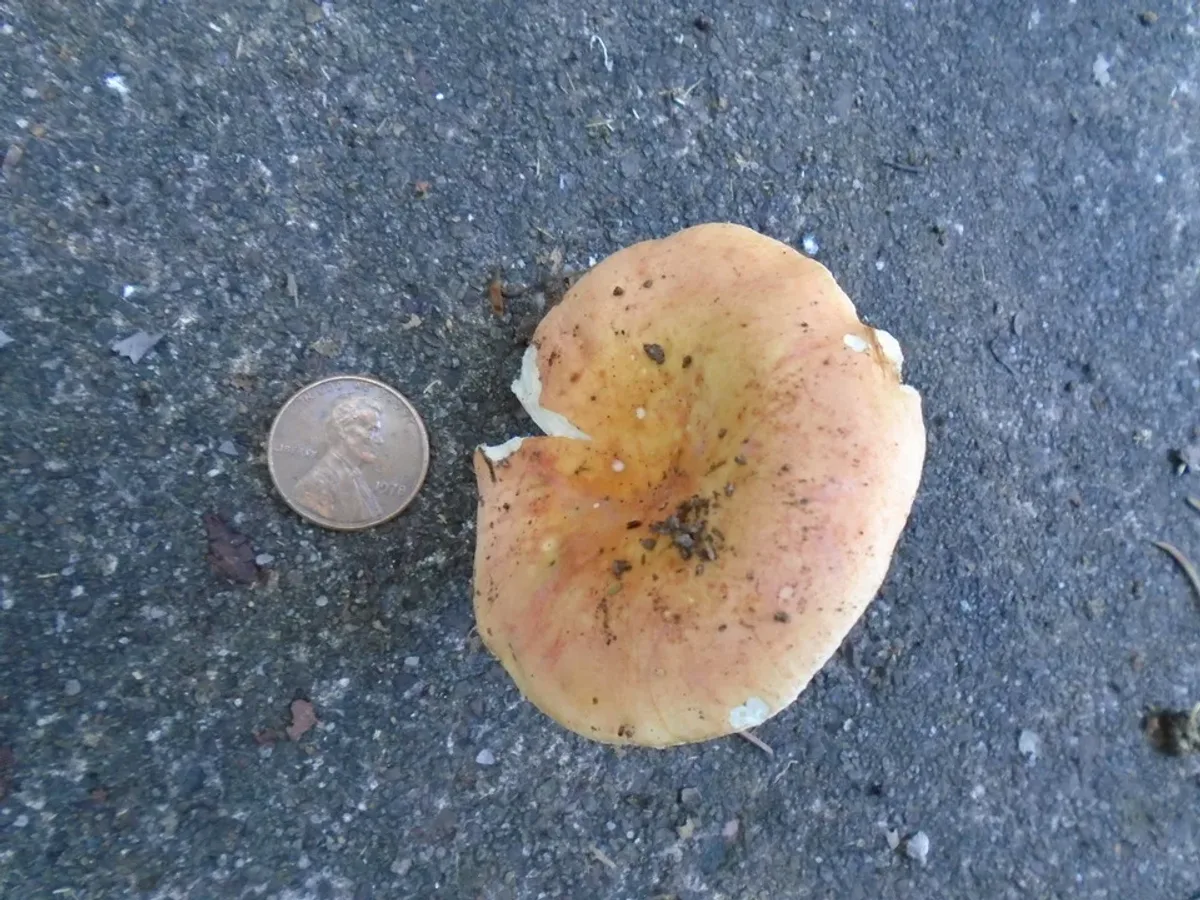 © Dave W (CC BY-SA)
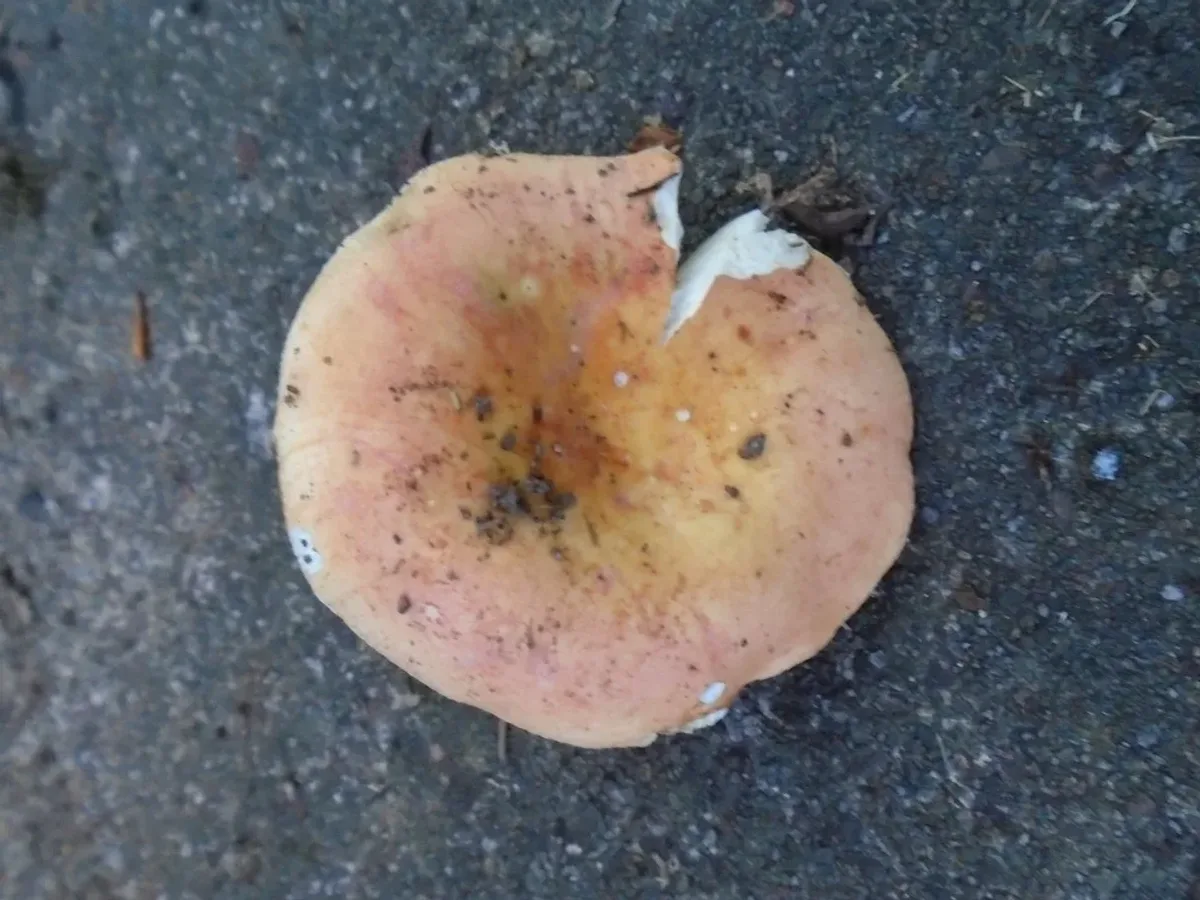 © Dave W (CC BY-SA)
 © Dave W (CC BY-SA)
 © Dave W (CC BY-SA)© Dave W (CC BY-SA)© James Baker (CC BY-SA)
Good to eat, once you have identified it with certainty and cooked it through.
Never eat a mushroom you are not 100% sure of - check the look-alikes below, and always cook wild mushrooms.
How to recognise it
Among the many Russulas of the Mediterranean, font-queri stands out for its quiet palette.
Cap
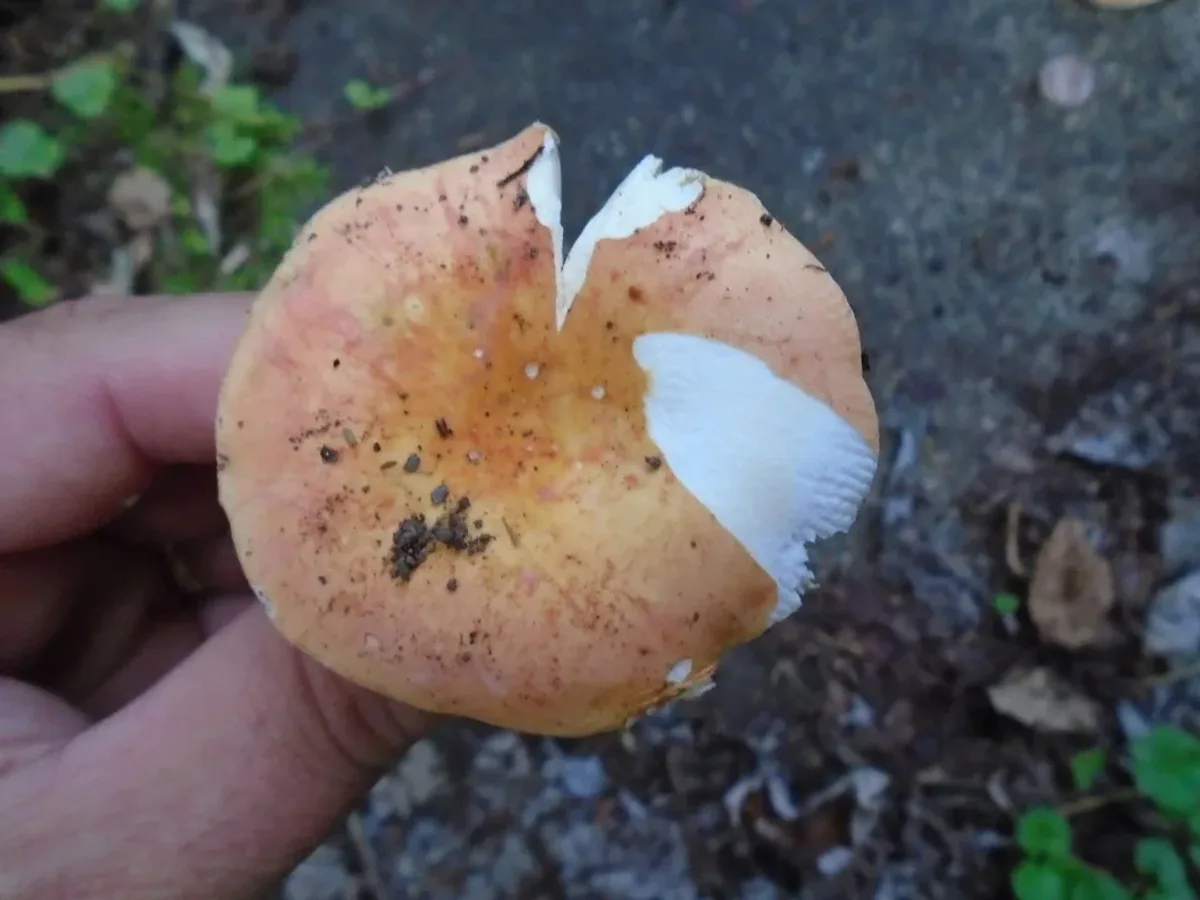
A cap of muted ochre-yellow to straw-buff, smooth and slightly greasy after rain, drying to a chalky matte finish. It opens broadly convex, then settles into a shallow central depression at maturity, measuring 3-8 cm across.
The colour stays consistent across the cap - no dramatic cracking mosaics like R. virescens, no vivid reds or purples - just a calm, warm straw-yellow with sometimes a faint olive tinge at the disc.
The cuticle peels from the margin inward for roughly a third of the cap radius, which is a handy field confirmation.
Gills
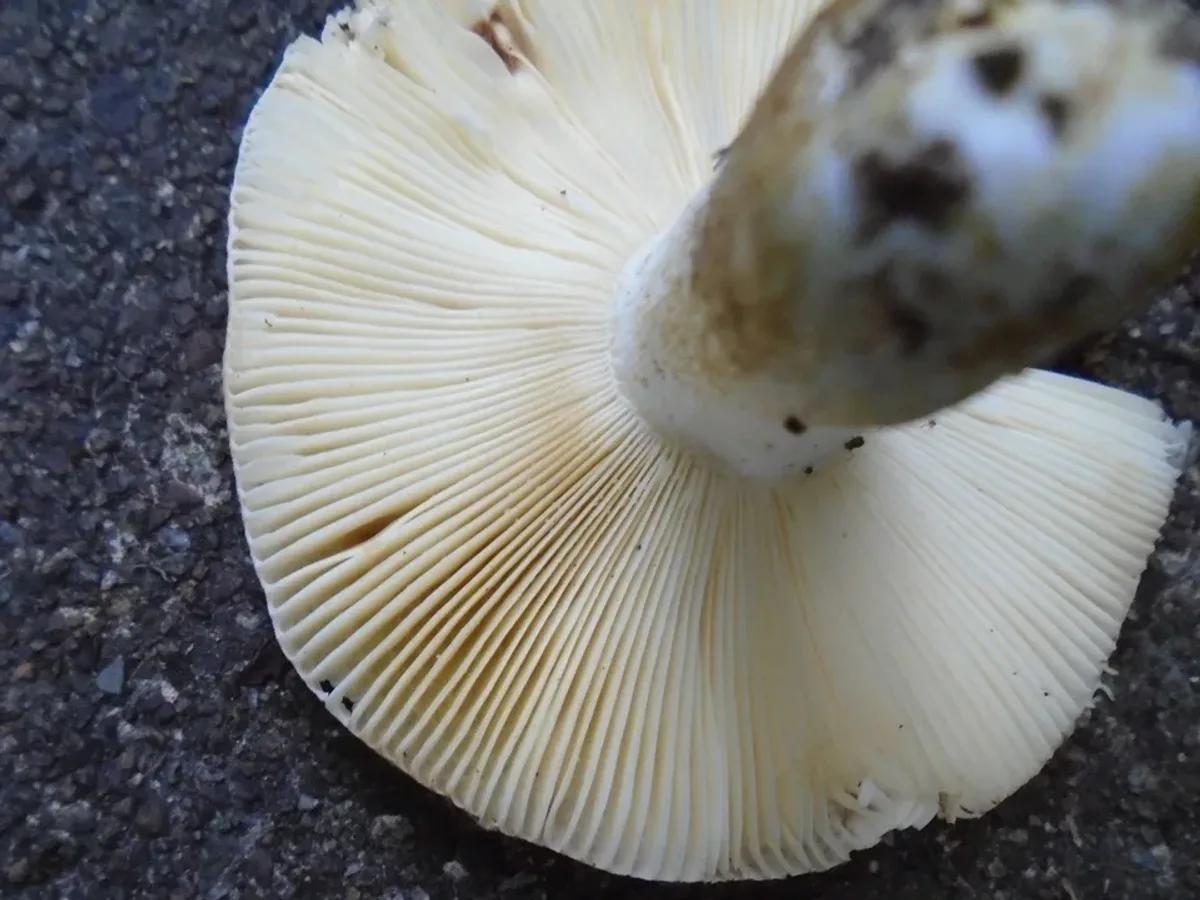
White to cream, modestly crowded, and attached broadly to the stem.
Stem
The white stem is firm and solid, 3-6 cm tall, occasionally picking up a faint yellowish tinge at the base in older specimens.
Flesh
The flesh is firm, white, and stays white when cut.
Smell & taste
Tasting a small fragment (chew briefly, then spit out completely) reveals a mild, slightly nutty flavour - never burning, acrid, or peppery.
Spore print is pale cream.
Ecologically, this species has a tight address: if you find a mild, pale ochre Russula fruiting in Mediterranean Cistus scrubland in autumn, R. font-queri is the most likely candidate.
Where & when it grows
Habitat
This is a Cistus-specialist Russula, forming ectomycorrhizal associations almost exclusively with rockroses (Cistus spp.) in Mediterranean-climate regions.
It is found in the low, aromatic scrubland known as maquis or garrigue, typically on well-drained hillsides, coastal slopes and sunny calcareous banks where Cistus dominates the understorey. It also occurs at the margins of holm oak (Q. ilex) and cork oak (Q. suber) woodland where these trees grow alongside Cistus.
The habitat itself - Mediterranean scrub with Cistus - is diagnostic: if you are not in a landscape dominated by rockrose in the western Mediterranean basin, this species is unlikely.
It appears throughout Iberia, coastal southern France, Corsica, Sardinia, and parts of coastal Italy.
When
Russula font-queri follows the classic Mediterranean autumn-fruiting calendar: all summer long the soil is parched and the mycelium waits; then the first substantial autumn rains arrive, the soil cools, and the fruitbodies push up as if on cue.
Expect the first caps from October, with peak fruiting through November and into early December. A warm, wet spell can nudge the season into January; a hot, dry autumn can suppress it almost entirely.
Once the rain falls, allow roughly one to two weeks before fruitbodies emerge - the typical lag for mycorrhizal species in this climate.
How it grows
Fruitbodies come up singly or scattered across the ground in open Cistus scrub, often tucked under the low, aromatic foliage where you have to look carefully to find them. They are small enough to hide easily.
Because font-queri is mycorrhizal - its mycelium woven quietly through the soil around the same rockrose plants year after year - fruitbodies return to the same patches each season as long as the host Cistus persists.
Expect solitary or loosely scattered individuals rather than dense clusters.
Fruiting conditions
Mediterranean autumn fruiter triggered by the first substantial rains ending summer drought; soil must cool below ~18 °C before fruiting begins. At least 30 mm of rain over two weeks is typically needed to stimulate the flush; lag of 7-14 days before fruitbodies emerge is consistent with other mycorrhizal Cistus-associates in this climate.
Look-alikes
In Mediterranean Cistus scrub, Russula font-queri can be confused with several other pale or ochre-coloured Russulas.
- Russula rosea (syn. R. lepida) has a rosier, deeper red or pink tinge to the cap and firm flesh with a faintly fruity smell; it is edible and not dangerous.
- Russula ochroleuca is widespread across Europe in coniferous and broadleaved woodland but lacks the strict Cistus association; it is edible though mediocre.
- Russula foetens and R. laurocerasi are the most important cautionary lookalikes within the genus: both have ochre-brown caps but are much larger, strongly acrid-tasting, fetid-smelling, and have a more pronounced striate margin - the fiery acrid taste immediately distinguishes them from R. font-queri.
- The most dangerous potential confusion in the wider landscape is with pale Amanita species, particularly young specimens of Amanita phalloides (death cap) before the cap greens up, or Amanita citrina in pale forms. However, Amanita always possesses both a stem ring and a sac-like (or cup-like) volva at the base - features absolutely absent in any Russula.
Confirm the brittle, chalky flesh before trusting any Russula identification.
Deadly. Young buttons of A. phalloides can superficially resemble pale ochre-capped mushrooms in autumn Mediterranean woodland. The death cap has a stem ring (skirt), a sac-like volva buried at the base, smooth non-brittle flesh, and typically a greenish-yellow cap at maturity. Russula font-queri has no ring, no volva, and distinctively brittle, chalky flesh and gills - always dig up the base and check before picking any pale autumn mushroom.
Deadly. Direct visual confusion with R. font-queri is unlikely: A. verna is pure white throughout, while R. font-queri has an ochre-yellow to straw-buff cap. The more realistic concern is collecting a white Amanita growing nearby in adjacent holm-oak (Q. ilex) habitat at the same season. A. verna has a pendant ring, a sac-like volva at the base, and tough non-brittle flesh. Any white mushroom found near holm oak in Mediterranean autumn must be checked for ring and volva; Russula has neither, and its flesh and gills crumble rather than bend.
Inedible (gastrointestinal irritant). Similar ochre-brown colouring but with a distinctive strong smell of bitter almonds or marzipan, a striate cap margin, and a very acrid taste. The almond scent and burning taste distinguish it clearly from the mild, faintly fruity R. font-queri.
Edible but mediocre. Cap ochre-yellow, similar in overall tone to R. font-queri, but it occurs widely in both coniferous and broadleaved woodland across Europe and does not show the Cistus association. Gills are white initially, then pale cream; taste is mild to very slightly acrid. The habitat (no Cistus) is the most useful separator.
Edible. Has a rosier, pinker or deeper red colouring on the cap; firm flesh and a faint fruity smell. Lacks the strict Cistus habitat association. Not dangerous, but confirming the correct mild Russula species still matters for learning correct identification.
Inedible; causes gastrointestinal upset. Much larger (cap to 15 cm), with an ochre-brown greasy cap, strongly striate margin, and a powerful fetid, rancid smell. Taste is fiercely acrid and burning - immediately distinguishable from the mild R. font-queri. Reject any Russula with an acrid taste or strong unpleasant odour.
In the kitchen
Picking & cleaning
- Check the stem base carefully before harvesting: confirm the complete absence of a ring and a basal volva (the two features that would immediately indicate a dangerous Amanita).
- Russulas have distinctively brittle, chalky flesh and gills that shatter rather than bend - establish this first by snapping a gill between fingers.
- Taste a very small piece of the raw flesh, chew briefly, then spit it out completely: R. font-queri is always mild; any burning, hot or acrid sensation means reject the specimen (and wash your mouth).
- Pick only those in good condition - young to mid-aged, firm, with no signs of insect infestation in the flesh.
- Note the habitat: the Cistus context is the key ecological fingerprint.
Cooking
As a mild, firm-fleshed Russula it can be treated like other edible brittlegills:
- Sauté in olive oil with garlic
- Fold into eggs
- Add to autumn stews
- Dry for later use
The caps hold their shape better than the stems when fried, and the texture is pleasantly firm when young, softening with longer cooking.
Because font-queri is not abundant and grows in a distinctive, sometimes fragile garrigue ecosystem, harvest conservatively and avoid uprooting the mycelium.
Always cook thoroughly - no raw consumption.
Good to know
Russula font-queri is documented as edible and not poisonous, but the edibility evidence for this specific species is thin compared with commonly eaten Russulas like R. cyanoxantha or R. virescens. The standard Russula safety protocol applies with particular emphasis here given the species' relative obscurity.
- 1Confirm you are in the correct genus: brittle, chalky flesh and gills are the genus-level check - Russula flesh crumbles and gills shatter rather than bending.
- 2Taste-test a fragment: mild taste is non-negotiable for eating any pale Russula; discard anything acrid.
- 3Most critically, rule out Amanita species before consuming any pale-capped woodland mushroom: examine the stem base for a ring (skirt) and volva (basal sac or cup) - Russula never has either. In the Mediterranean, this Amanita check is especially important because A. phalloides and A. virosa occur in the same autumn season.
- 4Even with a confident identification, try only a small amount the first time to check for personal tolerance, and always cook thoroughly.
A reference guide - never an edibility guarantee. When in doubt, leave it out.