Stinking russula
Russula foetenssyn. Agaricus foetens Pers., Russula foetens (Pers.) Pers., Russula foetens var. foetens
 © Nils Edvard Stokke (CC BY)
 © Мария Стрельникова (CC BY)
 © Nils Edvard Stokke (CC BY)
 © Bjørn Eidhammer (CC BY)
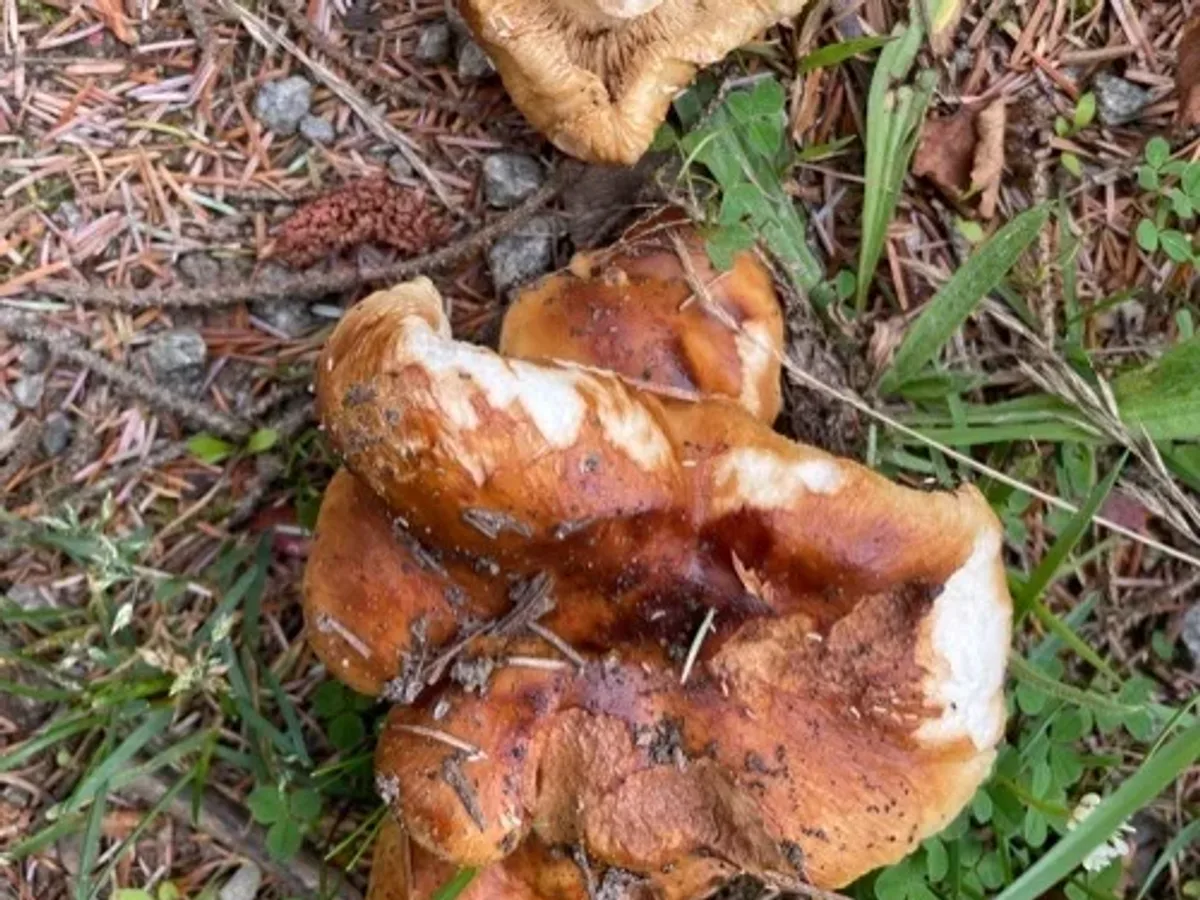 © Bjørn Eidhammer (CC BY)
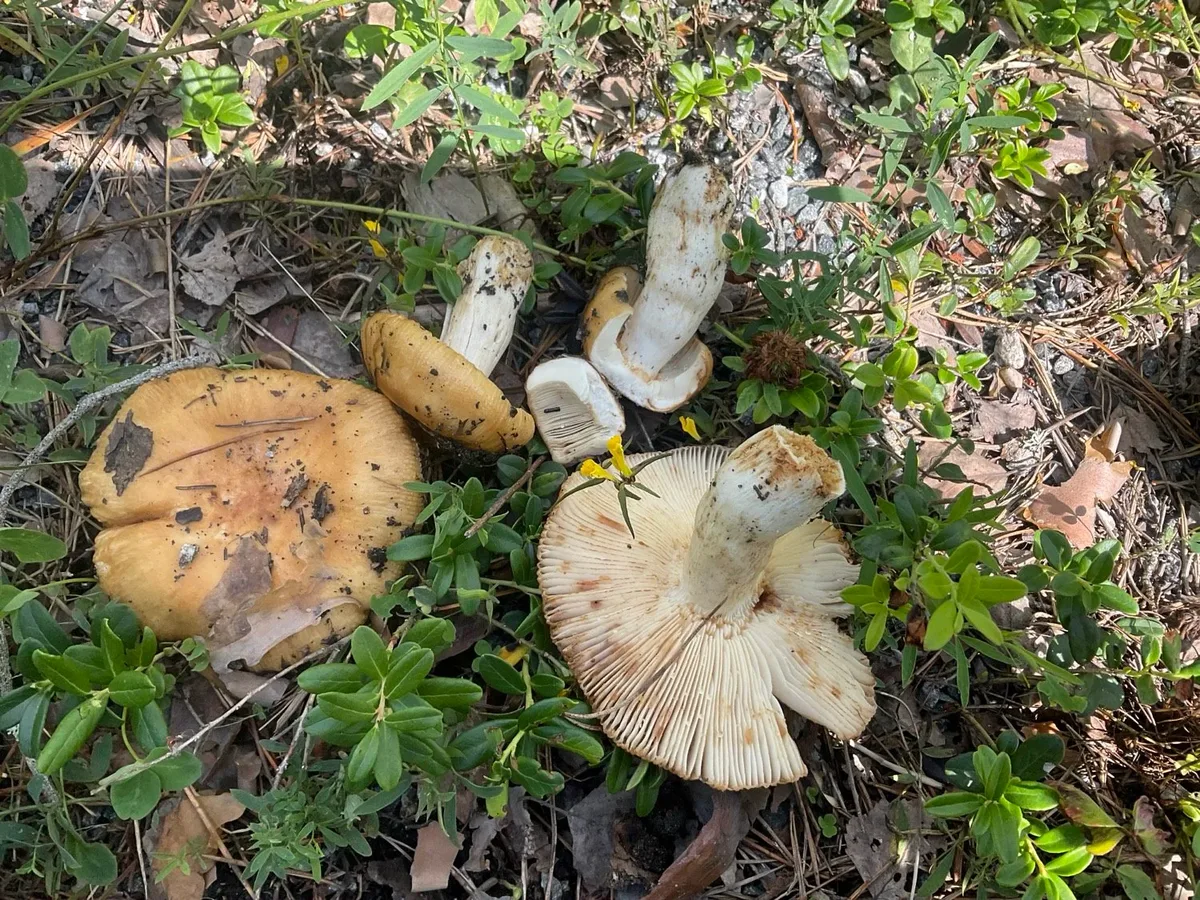 © Leila S. Berg (CC BY)
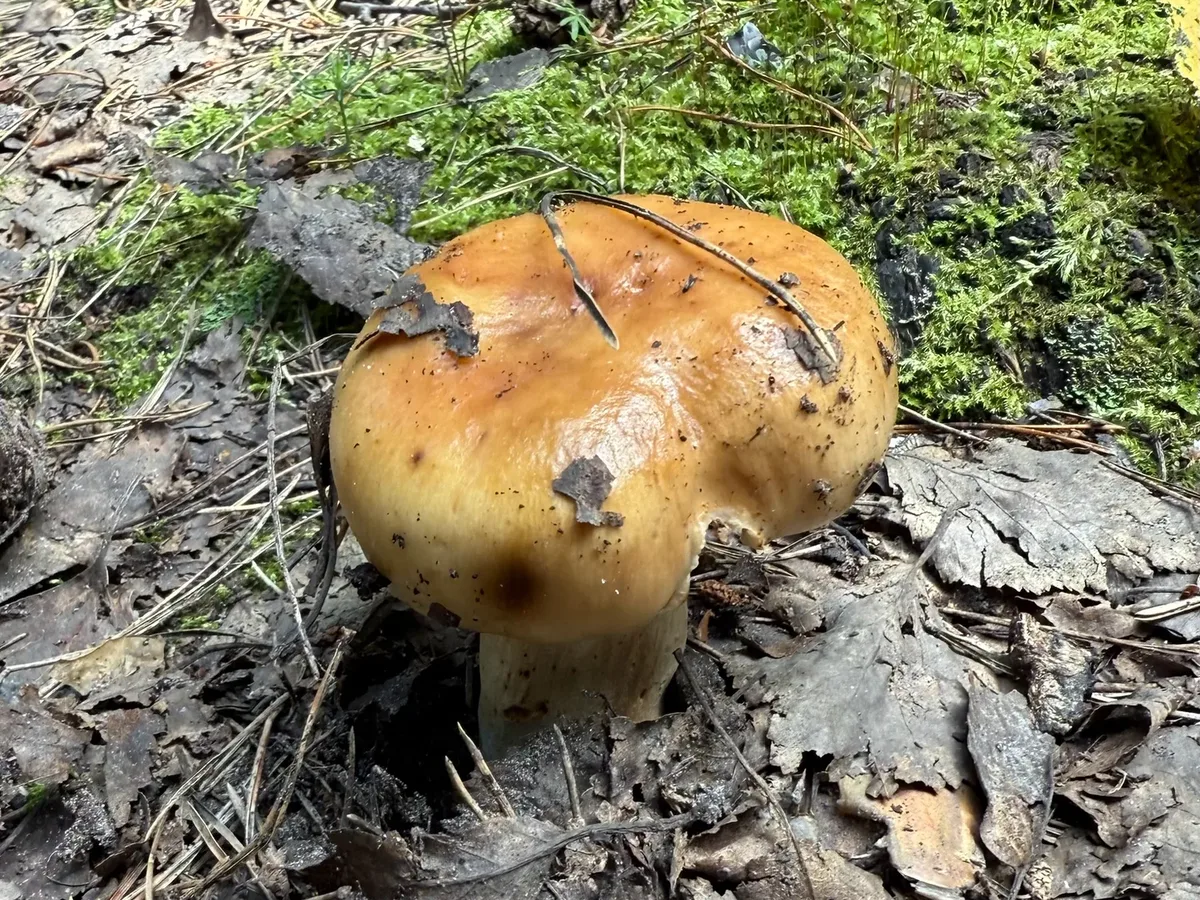 © Мария Стрельникова (CC BY)
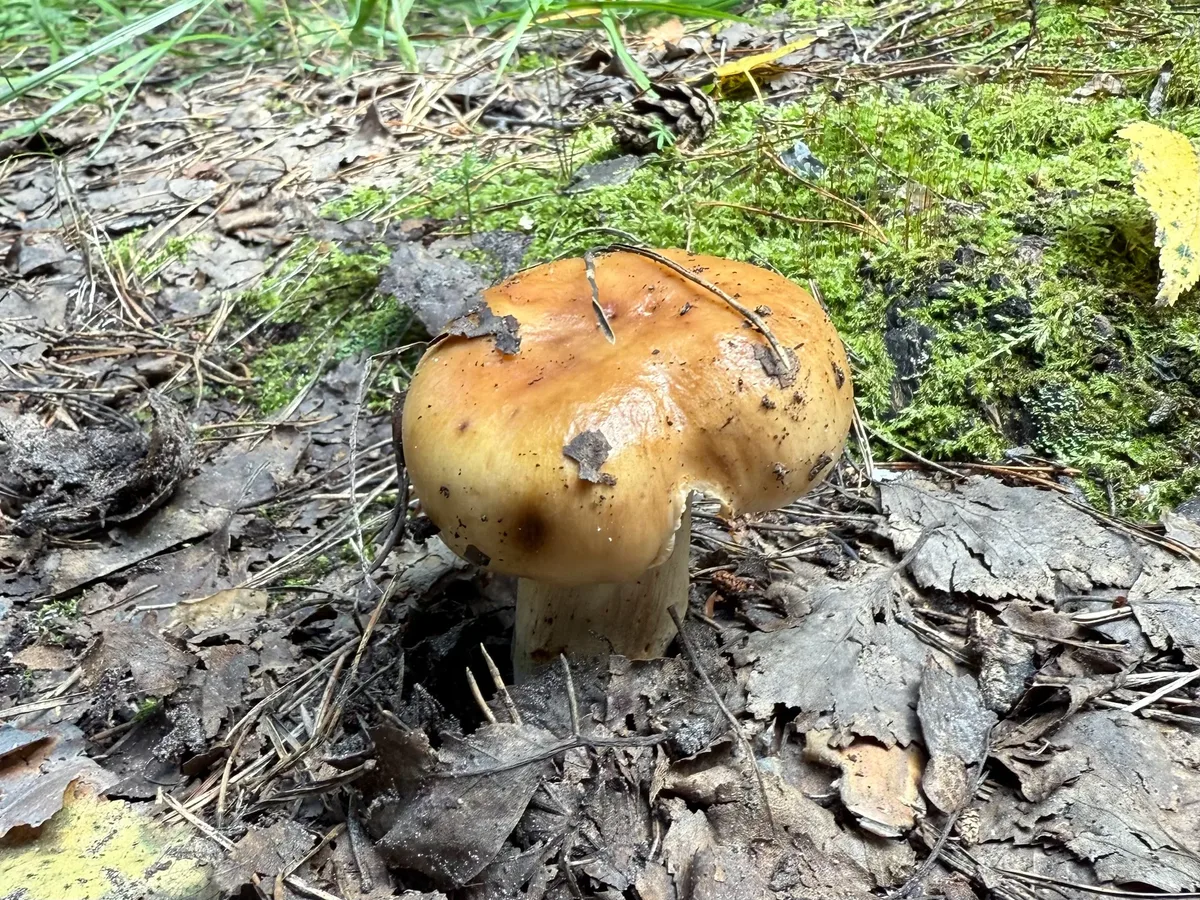 © Мария Стрельникова (CC BY)
 © Siv Moen (CC BY)© Nils Edvard Stokke (CC BY)© Мария Стрельникова (CC BY)
Edible only with the right preparation - or safe for some people but not others. Learn the caveats first.
Never eat a mushroom you are not 100% sure of - check the look-alikes below, and always cook wild mushrooms.
How to recognise it
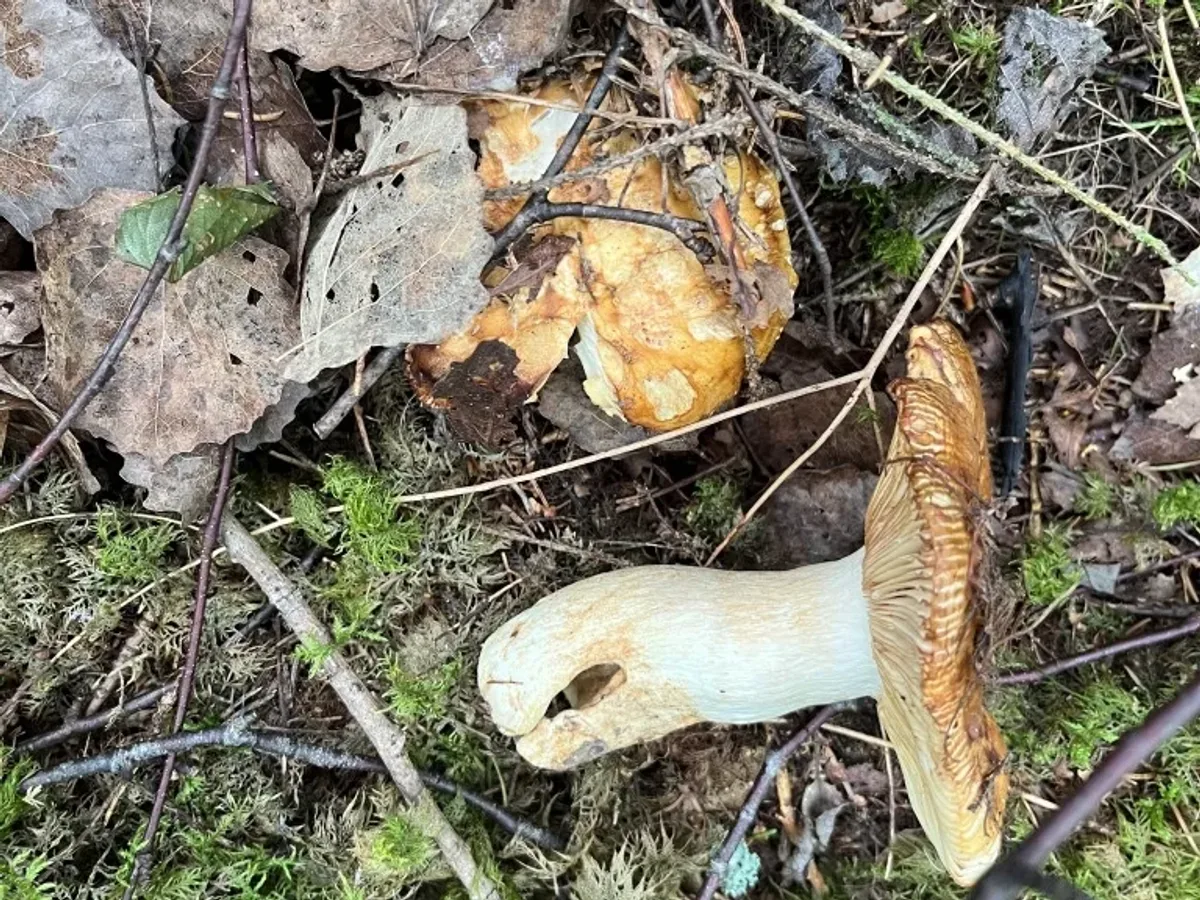
Russula foetens is a large, robustly built brittlegill, immediately recognisable to any forager who has encountered it before - chiefly because of its extraordinary smell.
Cap
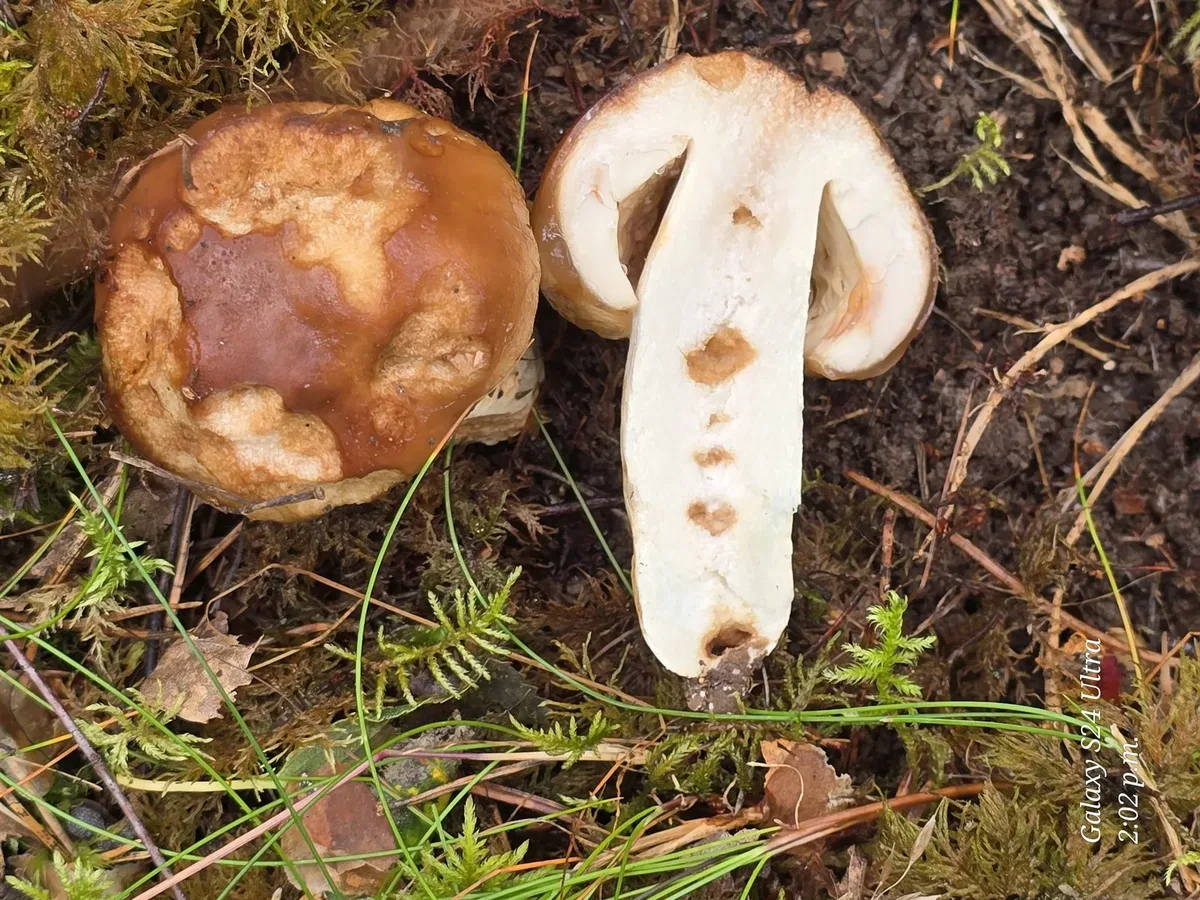
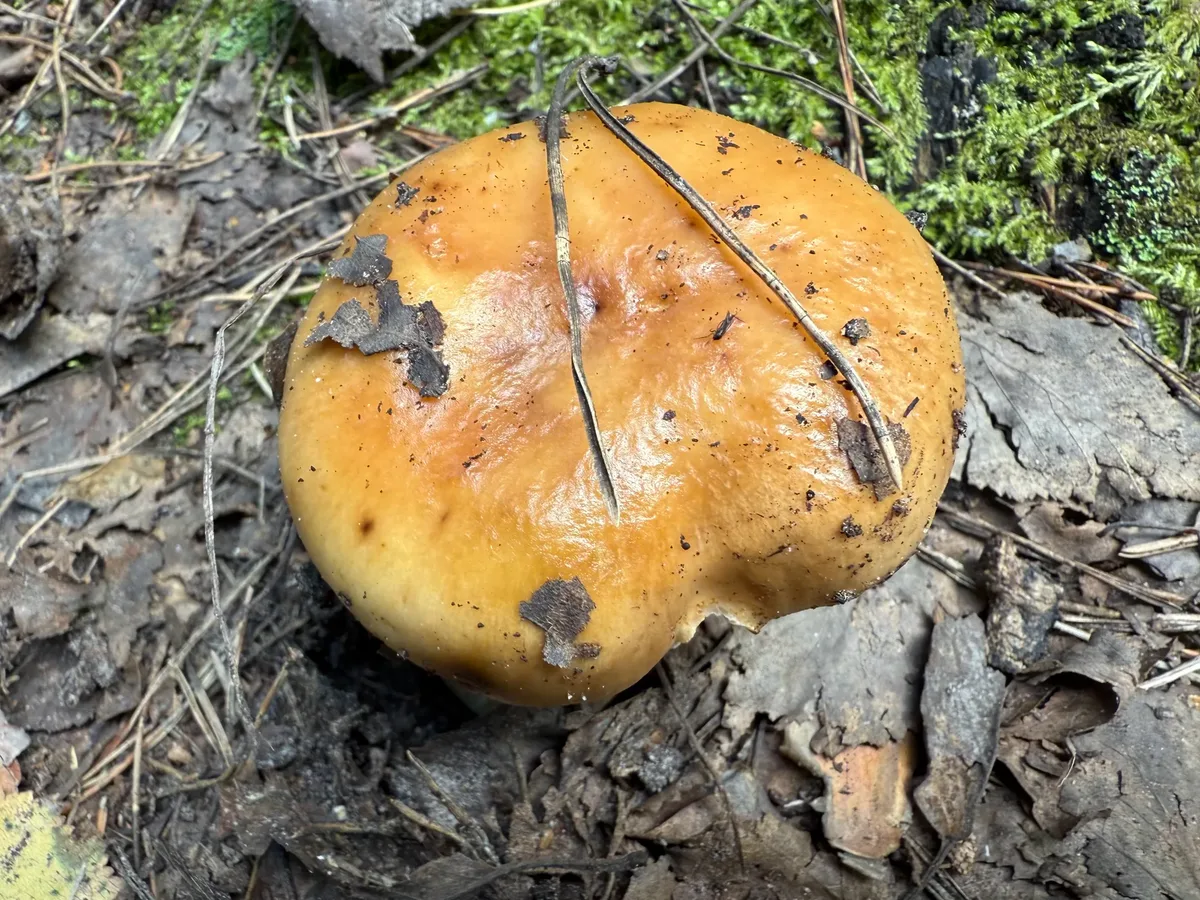
The cap begins as a tight globe, honey-buff to ochraceous-brown, and expands into a broad, slightly depressed disc that may reach 15 cm across.
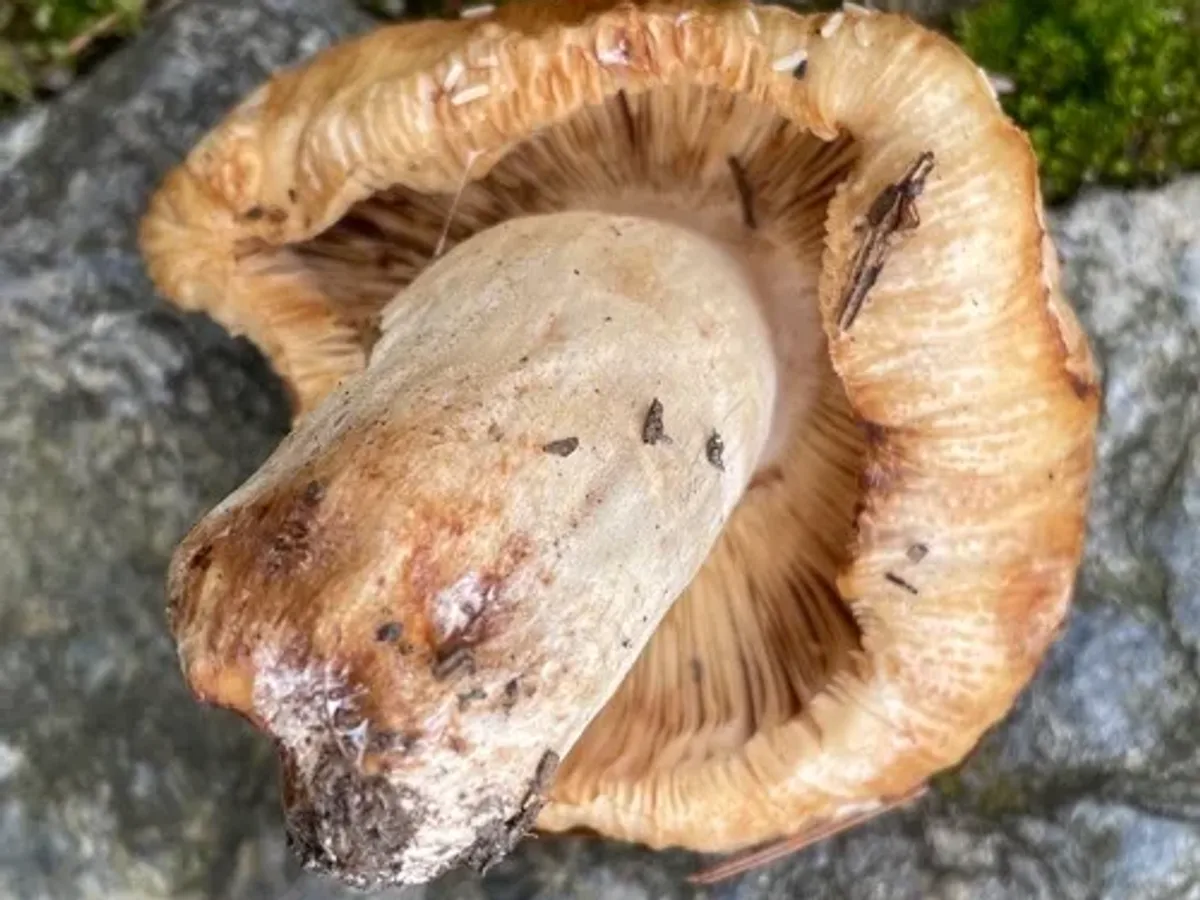
What sets the cap apart visually is its margin: unlike the smooth edge of most russulas, the outer third of R. foetens is deeply grooved and tuberculate-striate, the cuticle ribbed and crenate, giving the rim an almost corrugated texture.
The surface is viscid (sticky to the touch when damp) and the cuticle peels readily for much of the radius.
Gills
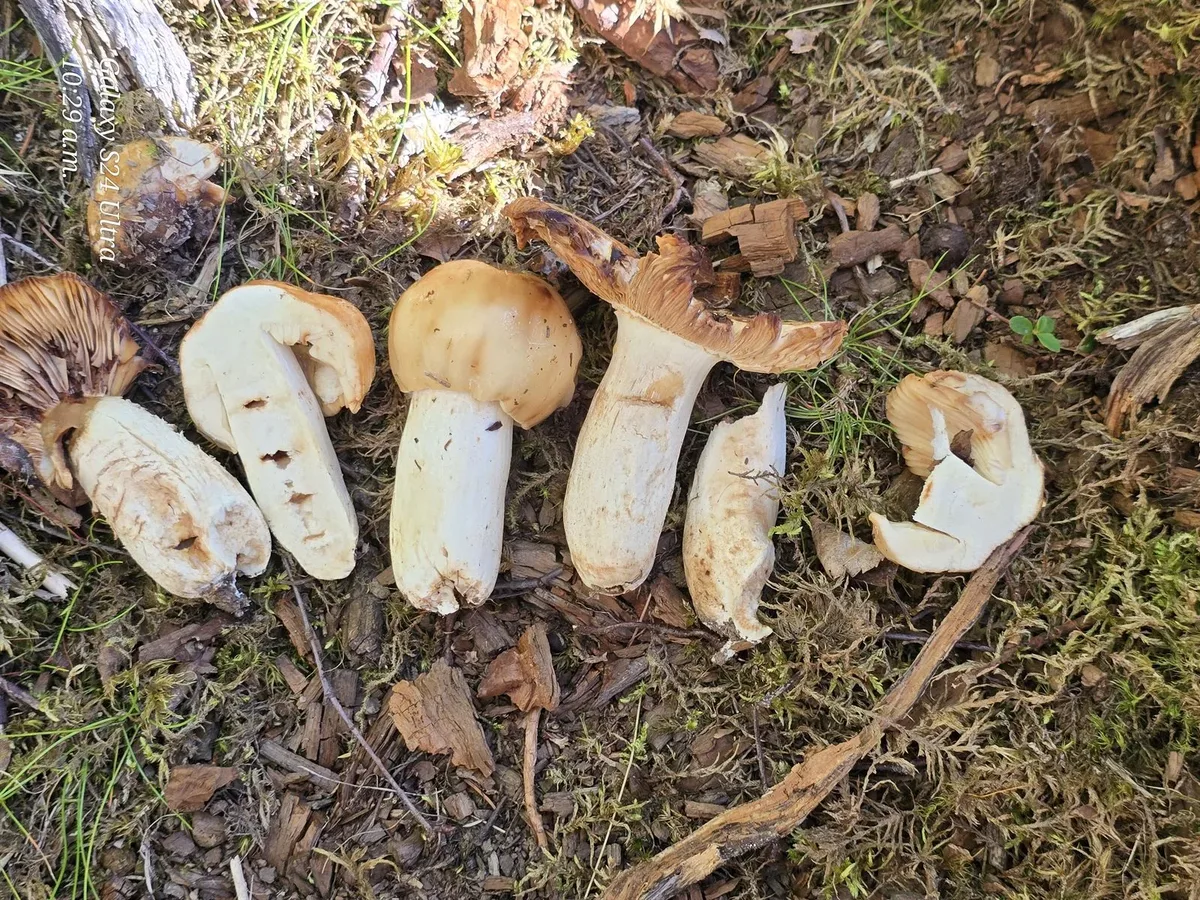
White to pale cream, moderately crowded, and characteristically brittle - rub them and they crumble to a powdery dust, as in all true Russula species.
Notably, young, fresh specimens in humid conditions often bead clear droplets of liquid along the gill edges (guttation), which dries as rusty-brown spots on older gills.
Stem
White to pale cream, solid and firm in young specimens but quickly becoming hollow and spongy; the hollow centre is a useful age indicator.
Flesh
White, firm when fresh but soon softening, and uniformly white on cut without any colour change reaction.
Smell & taste
The taste is fiercely acrid - even the tiniest fragment pressed against the tip of the tongue produces an intense burning sensation that lingers.
And the smell: rancid, fetid, penetrating, a blend of overripe almond oil, stale fish, and something almost chemical.
This combination of deeply grooved cap margin, guttating gills, hollow stem, fierce acridity, and overwhelming stench makes R. foetens one of the most distinctive fungi in the temperate forest.
Why it's dangerous
Moderate direct toxicity: Russula foetens causes reliable gastrointestinal illness when consumed but is not acutely lethal.
The greater danger is indirect: the button stage is easily overlooked, and in the same habitat where R. foetens grows, the deadly death cap (Amanita phalloides) and destroying angel (Amanita virosa group) also occur.
Anyone who collects pale, soil-emerging mushrooms in deciduous forests of eastern North America without a thorough stem-base inspection protocol is at genuine risk of a fatal Amanita poisoning event.
Toxin
The acridity and gastrointestinal irritant properties of Russula foetens are attributed to acrid sesquiterpene compounds - the same chemical class responsible for the burning taste in the broader group of acrid Russula and Lactarius species.
These are pungent, lipid-soluble molecules that bind rapidly to oral and gastrointestinal mucosa.
The characteristic fetid odour - distinct from the acridity - arises from aromatic volatile compounds including benzaldehyde derivatives and fatty acid breakdown products, and may serve as an ecological deterrent to invertebrate and vertebrate consumers.
No single fully-characterised and named toxin unique to R. foetens has been isolated in the literature; the irritant effect is empirically well-established across a broad range of accidental ingestion reports.
Symptoms
Consumption causes an immediate, intense burning sensation in the mouth and throat.
If swallowed, onset of gastrointestinal symptoms typically occurs within 30 minutes to 2 hours: nausea, cramping abdominal pain, vomiting, and diarrhoea.
Symptoms are generally self-limiting, resolving within 6-12 hours without specific treatment in otherwise healthy adults.
Medical attention is advisable:
- for severe or prolonged vomiting
- for any ingestion by children or immunocompromised individuals
- critically, whenever there is any uncertainty about the identity of what was ingested, as amatoxin poisoning from misidentified Amanita species presents with an almost identical initial gastroenteritis phase that then recedes before causing fatal liver failure
Staying safe
Russula foetens contains acrid irritant compounds (attributed to sesquiterpene esters and related volatiles) that cause significant gastrointestinal distress if ingested - nausea, vomiting, cramps, and diarrhoea are well-documented outcomes of intentional or accidental consumption.
It is not acutely life-threatening at normal ingestion amounts, but it is poisonous and should not be consumed under any circumstances.
The primary safety concern at the field level is the confusion risk in the button stage: very young, unexpanded specimens have not yet developed the full diagnostic combination of striate margin, fetid odour, and acrid taste, making them more likely to be collected in error alongside other, edible species. Any forager working a mixed basket must inspect each item individually before cooking.
CRITICAL SAFETY RULE: always dig up the full stem of any pale, soil-emerging mushroom and confirm the absence of a membranous volva at the base and a ring on the stem.
A volva, a ring, or free white gills indicate Amanita - which in this habitat may be the deadly death cap or destroying angel - and the basket must be discarded entirely.
Do not rely on smell alone when gathering mixed baskets, as strong-smelling species can mask the fainter odours of accompanying mushrooms.
Where & when it grows
Habitat
Russula foetens is an ectomycorrhizal species, meaning it forms a mutually beneficial partnership with the root systems of living trees, exchanging soil minerals and water for photosynthetically fixed sugars.
It has broad host affinities, associating with numerous broadleaved and coniferous trees, but in eastern North America it is most consistently found under American beech (Fagus grandifolia), northern red oak (Quercus rubra), and sugar maple (Acer saccharum), often on the well-shaded floor of mature second-growth or old-growth forest.
It favours moist, humus-rich, mildly acidic soils in sheltered positions - valley bottoms, stream sides, and north-facing slopes retain the cool moisture this species seems to prefer. Look for it in dense leaf litter where the soil stays damp even between rain events, often accompanied by other large brittlegills such as Russula variata or R. crustosa.
In European forests the associations shift toward beech and sessile oak. Because mycorrhizal fungi return to the same partner root systems year after year, productive spots reliably fruit each season as long as the host tree remains healthy.
When
In eastern North America, R. foetens is primarily a summer-to-early-autumn species, appearing from late June after the ground has warmed and summer rains begin in earnest.
Fruiting peaks through July and August - the hot, humid weeks of high summer that many other woodland mushrooms avoid - and tapers off by late September as soil temperatures cool. The species can occasionally linger into October in warmer years or more southerly latitudes.
In Europe the season is shifted slightly later, peaking in August and September.
Finding a fresh, intact specimen demands catching it young: R. foetens degrades quickly, the spongy flesh collapsing and the smell intensifying until even hardened foragers give it a wide berth.
How it grows
Solitary or in small scattered groups of two to five fruiting bodies, never in dense clusters. As a mycorrhizal species it does not decay wood and will not be found on stumps or logs.
The entire fruiting body develops underground, pushing up through the leaf litter as a pale buff globe before expanding to full size over roughly five to ten days.
Maggot infestation (primarily dipterous larvae) is exceptionally common, often rendering the stem hollow and the flesh riddled with tunnels well before the cap reaches full size - a useful reminder that even if the smell does not deter you, the flesh quality rarely justifies collection.
Fruiting conditions
A summer-specialist that fruits best during warm, humid periods. Requires warm soils (above 14 °C) and significant recent rainfall; flushes appear within 5-12 days of adequate rain. Peak fruiting in eastern North America occurs during the humid heat of July and August, often after summer convective thunderstorms that deliver 25+ mm of rain over one to two weeks.
Look-alikes
The most dangerous confusion scenario with Russula foetens involves very young, unexpanded button-stage specimens before the smell has fully developed and before the striate cap margin becomes visible.
At the egg stage, any large, pallid mushroom in a forest setting carries a baseline risk of confusion with a deadly destroying angel (Amanita virosa group) or death cap (Amanita phalloides).
Young R. foetens buttons are pale, white to buff, and emerge from the soil in the same habitats as deadly Amanita species. The absolute rule - check the stem base for a volva - applies here with full force.
Within the genus Russula, no North American species is likely to be eaten in confusion with R. foetens once the fruit body is mature: the smell alone is a definitive deterrent. Nonetheless two similar species merit mention.
- Russula laurocerasi (almond-scented brittlegill) shares the striate cap margin and the ochre-buff colouration but has a sweeter, marzipan-like smell rather than a fetid one, and is also considered inedible due to acridity.
- Russula pectinatoides is smaller, with a paler, buff-grey cap, a similar grooved margin, and a milder but still unpleasant smell, and is also acrid and inedible.
Neither is dangerous, but both confirm the principle that a strongly grooved, ochre-capped, acrid russula found in summer hardwood forest is in an 'avoid' group regardless of exact identity.
At the egg/button stage, before cap expansion, Amanita phalloides emerges as a white to pale buff oval from a membranous volva sac in the soil - superficially similar to a young R. foetens button. The decisive diagnostic: Amanita phalloides has a membranous volva (cup or sac) at the stem base, a skirt-like ring (annulus) on the stem, and free gills; its flesh is fibrous and does not crumble. R. foetens has NO volva, NO ring, attached gills that crumble when rubbed, and chalky-brittle flesh. Always dig up the entire stem to the base and confirm the absence of a volva before eating any pale forest mushroom.
Pure white in all stages, with a prominent silky-white volva and a delicate ring on the stem - both absent in R. foetens. Destroying angel gills are free, white, and do not crumble brittlely; the flesh is fibrous. R. foetens gills attach to the stem and crumble to powder when rubbed, the cap margin is deeply striate in age, and the acrid taste and fetid odour are fully definitive once the cap has expanded. However, at the button stage these features have not yet developed; never skip the stem-base check.
Closely similar in cap colour (honey-ochre to buff-brown), striate margin, and size. Distinguished by smell: R. laurocerasi has a distinctly sweet, marzipan or almond-like odour (not fetid or rancid), though some find it slightly sickly. Both species are acrid and inedible. When in doubt, the smell character is the most reliable field separator.
Smaller (cap 4-8 cm), paler buff to greyish-buff, with a similar but less dramatically grooved striate margin and a mild but unpleasant smell (rancid but less intense than R. foetens). Also acrid and inedible. The less intense odour and smaller size are the main separators; neither species should be eaten.
A much smaller species (cap 2-5 cm) with a pink to purple-red cap, striate margin, and mild to slightly acrid taste. Not confused when mature but young buttons of similar pale colouration can mislead novices. R. foetens is far larger, more robustly built, and unmistakeably fetid in smell.
A reference guide - never an edibility guarantee. When in doubt, leave it out.