Yellow Brittlegill
Russula flavidasyn. Russula flavida Frost & Peck, Russula lutea sensu auct. mult. (misapplied)
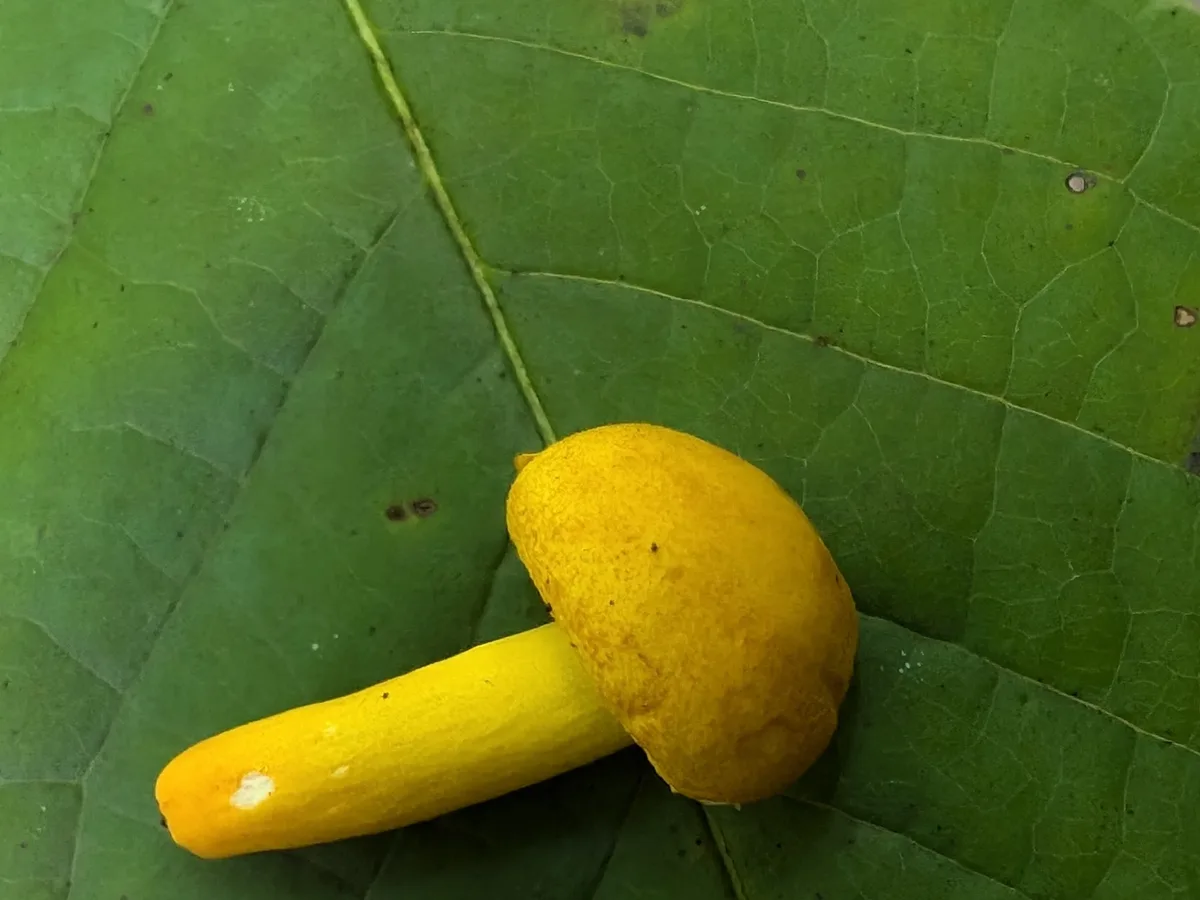 Christine Braaten (CC0)
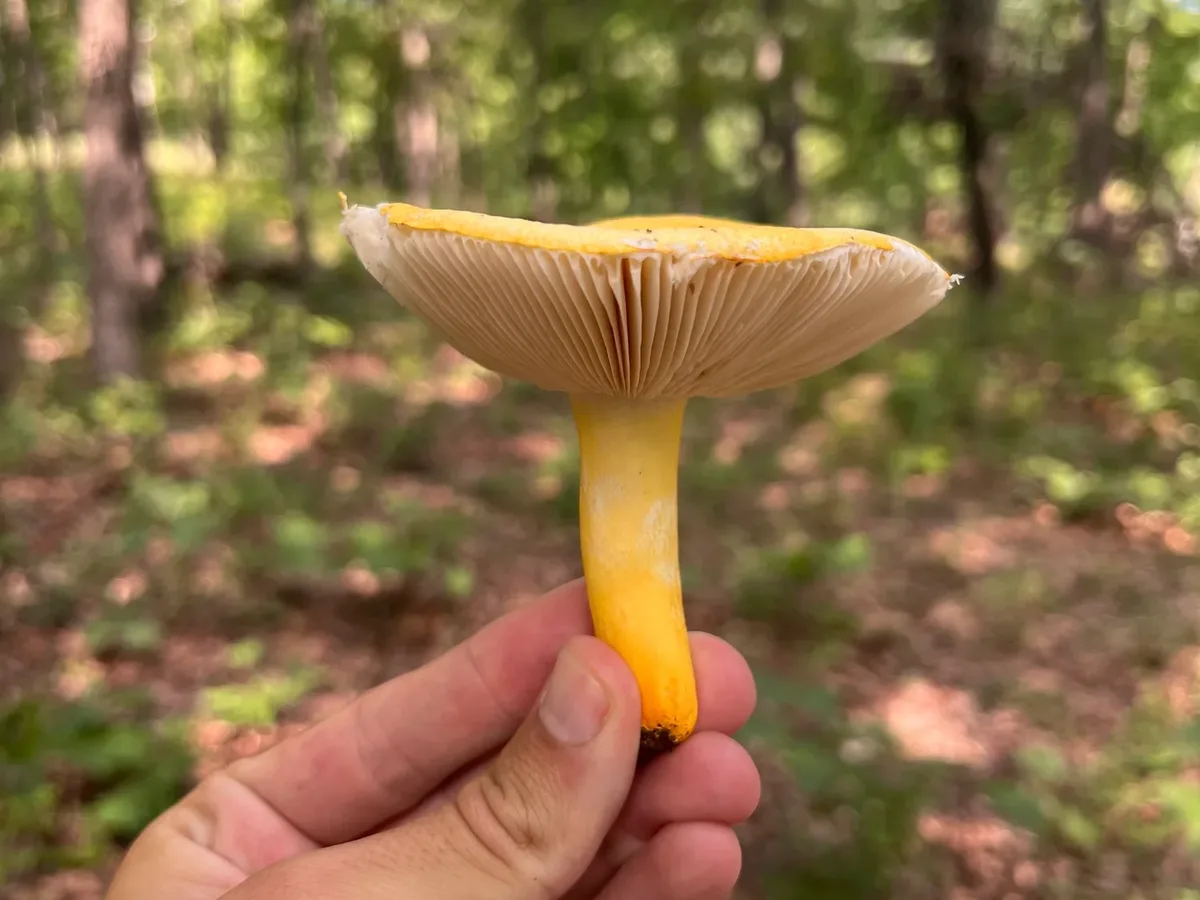 © Nathan Aaron (CC BY)
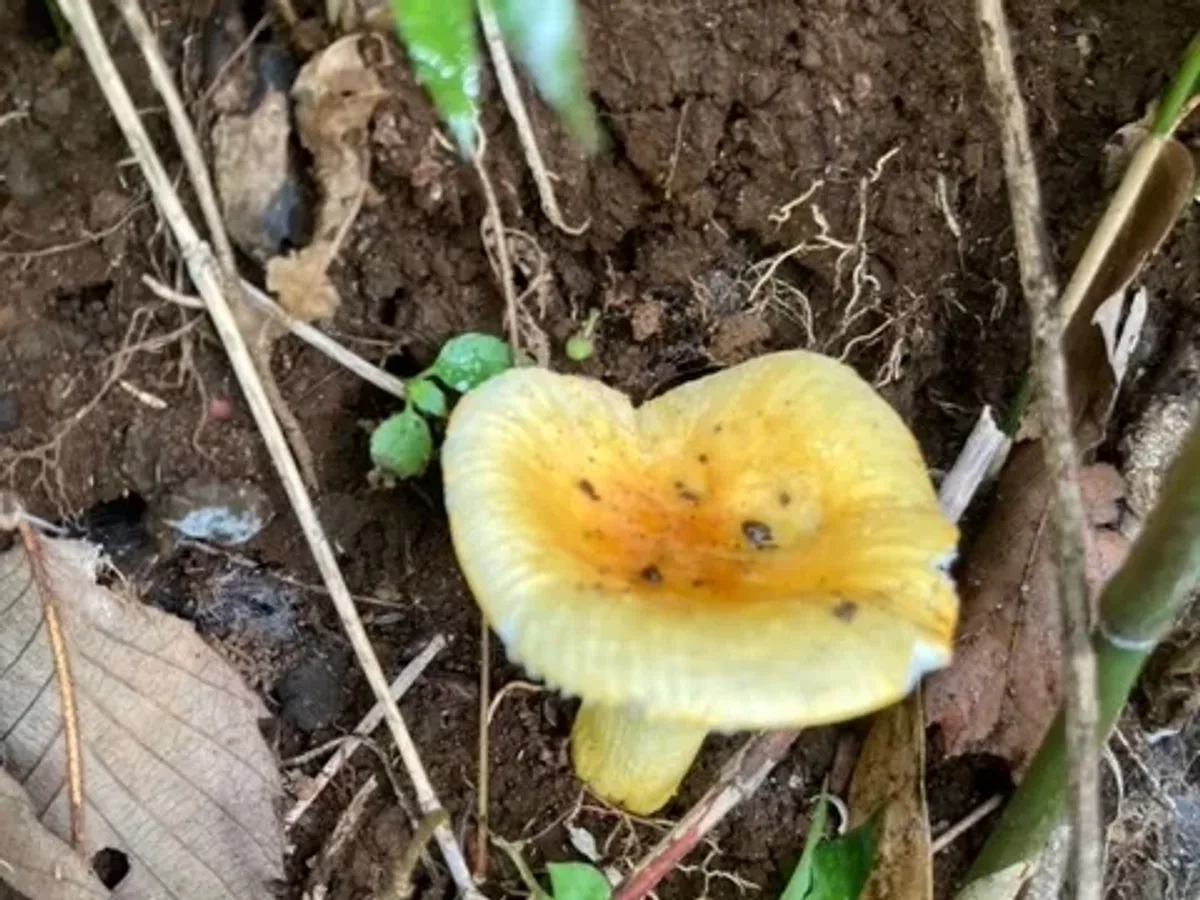 © Atsushi Nakajima (CC BY)
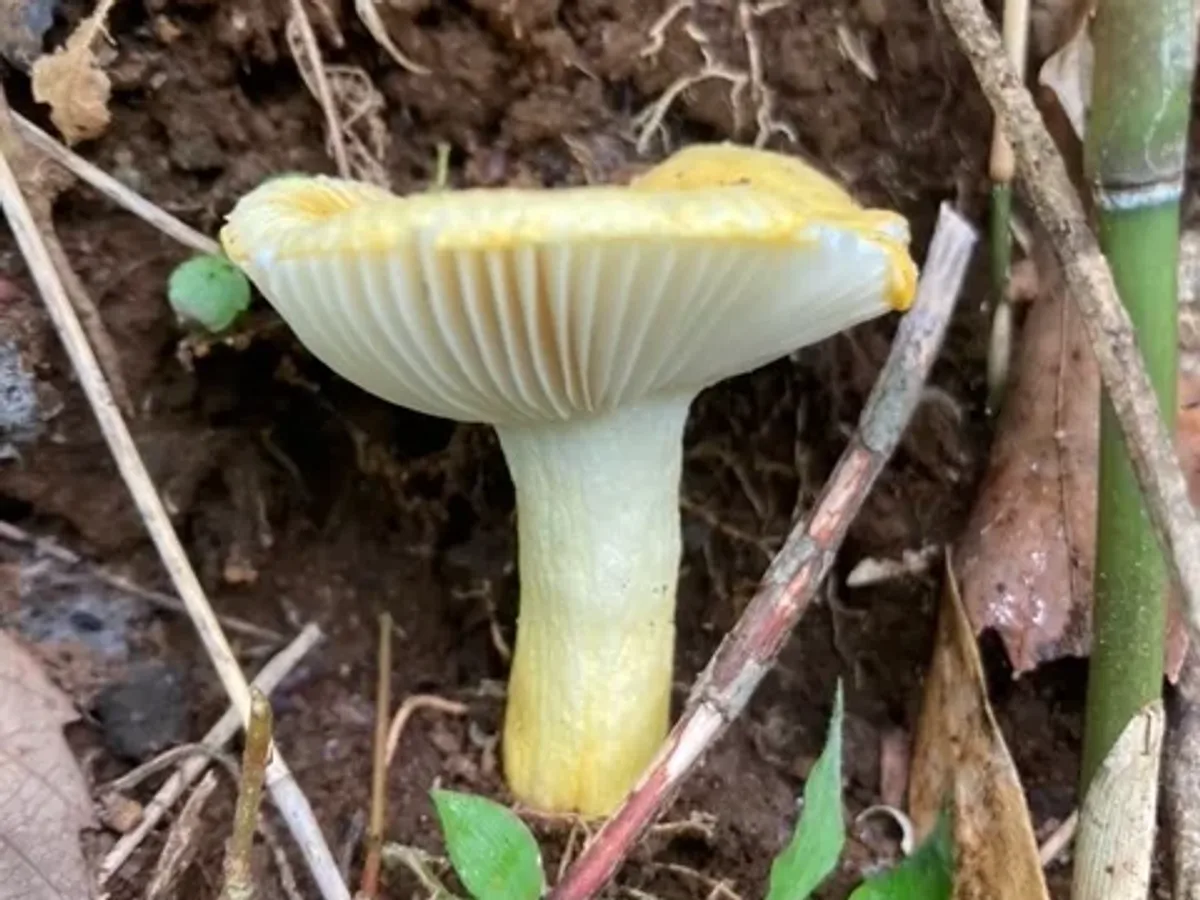 © Atsushi Nakajima (CC BY)
 © Atsushi Nakajima (CC BY)
 © Nathan Aaron (CC BY)
 Christine Braaten (CC0)
 Christine Braaten (CC0)
 Christine Braaten (CC0)Christine Braaten (CC0)© Nathan Aaron (CC BY)
Edible only with the right preparation - or safe for some people but not others. Learn the caveats first.
Never eat a mushroom you are not 100% sure of - check the look-alikes below, and always cook wild mushrooms.
How to recognise it
Cap
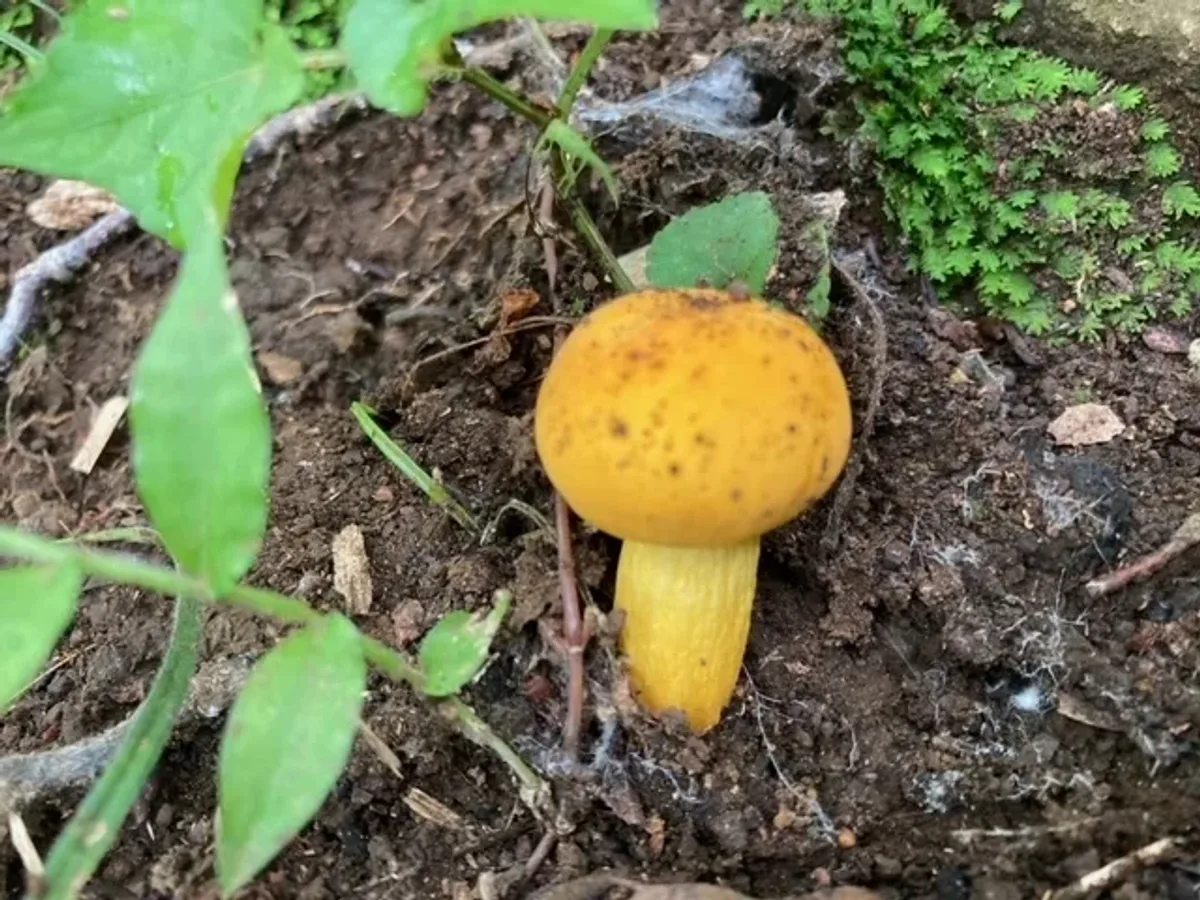
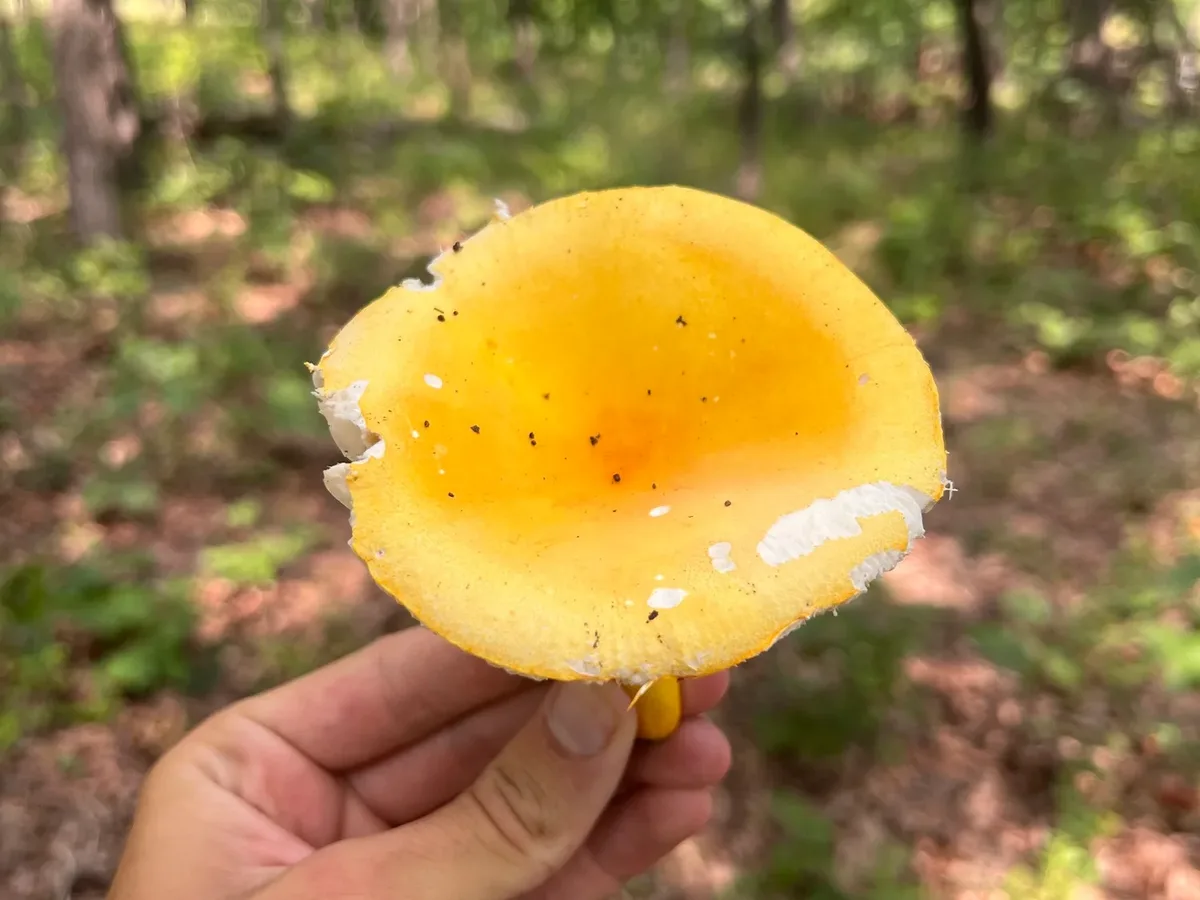
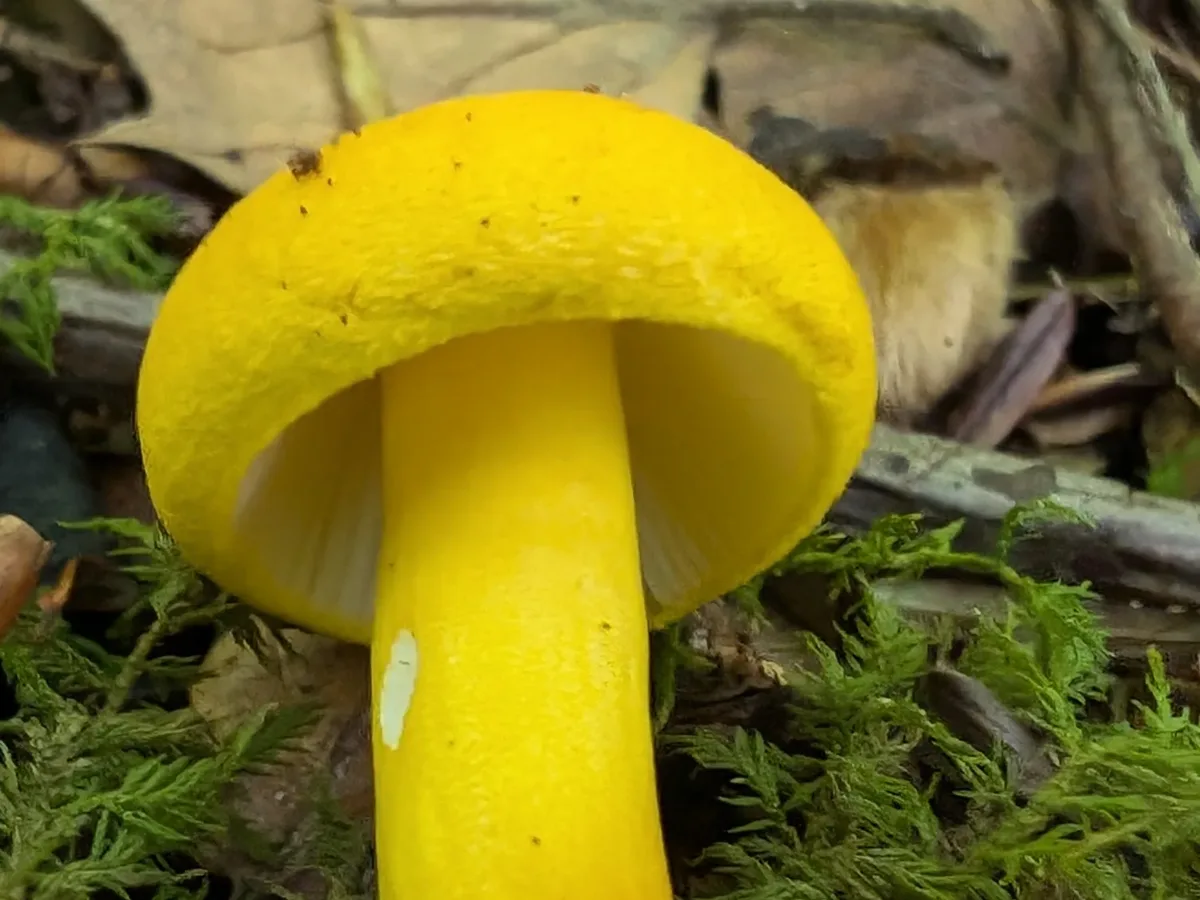
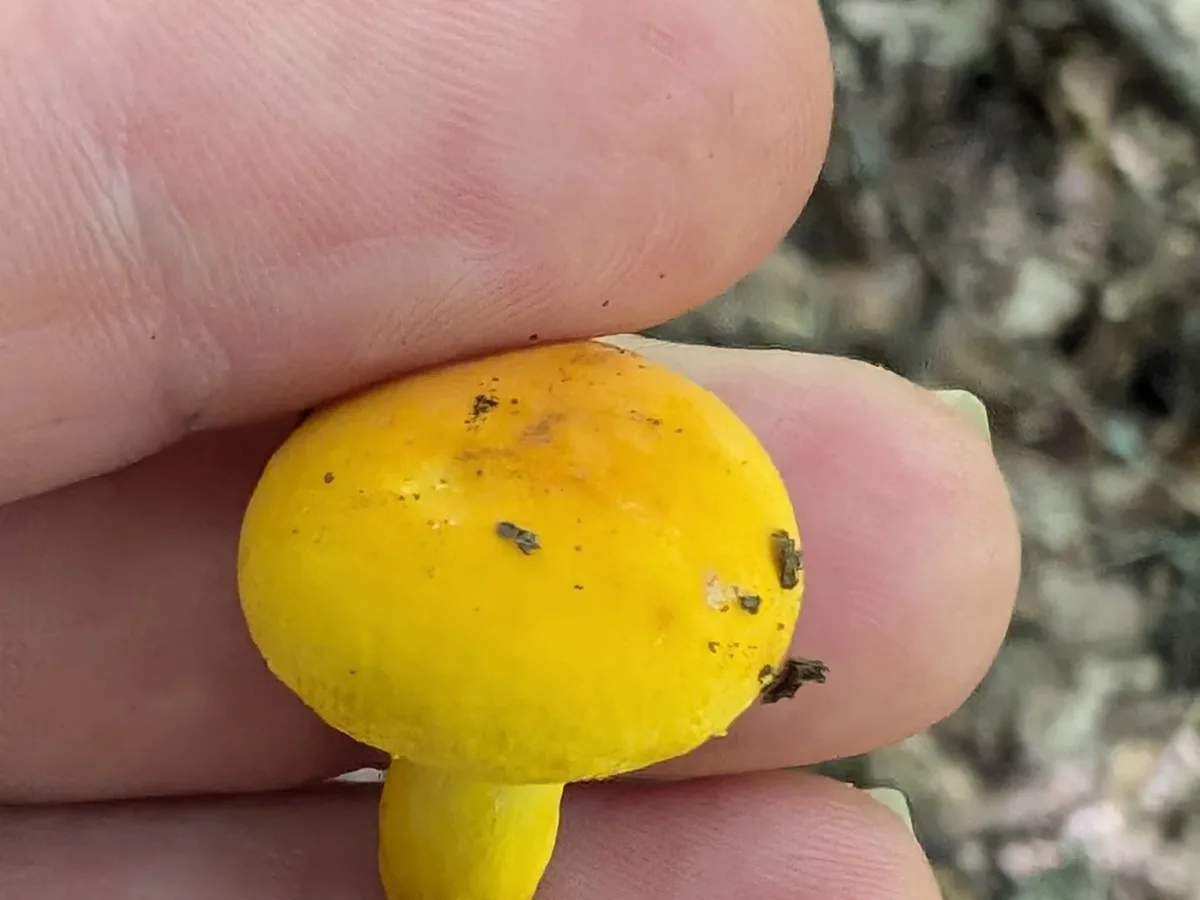
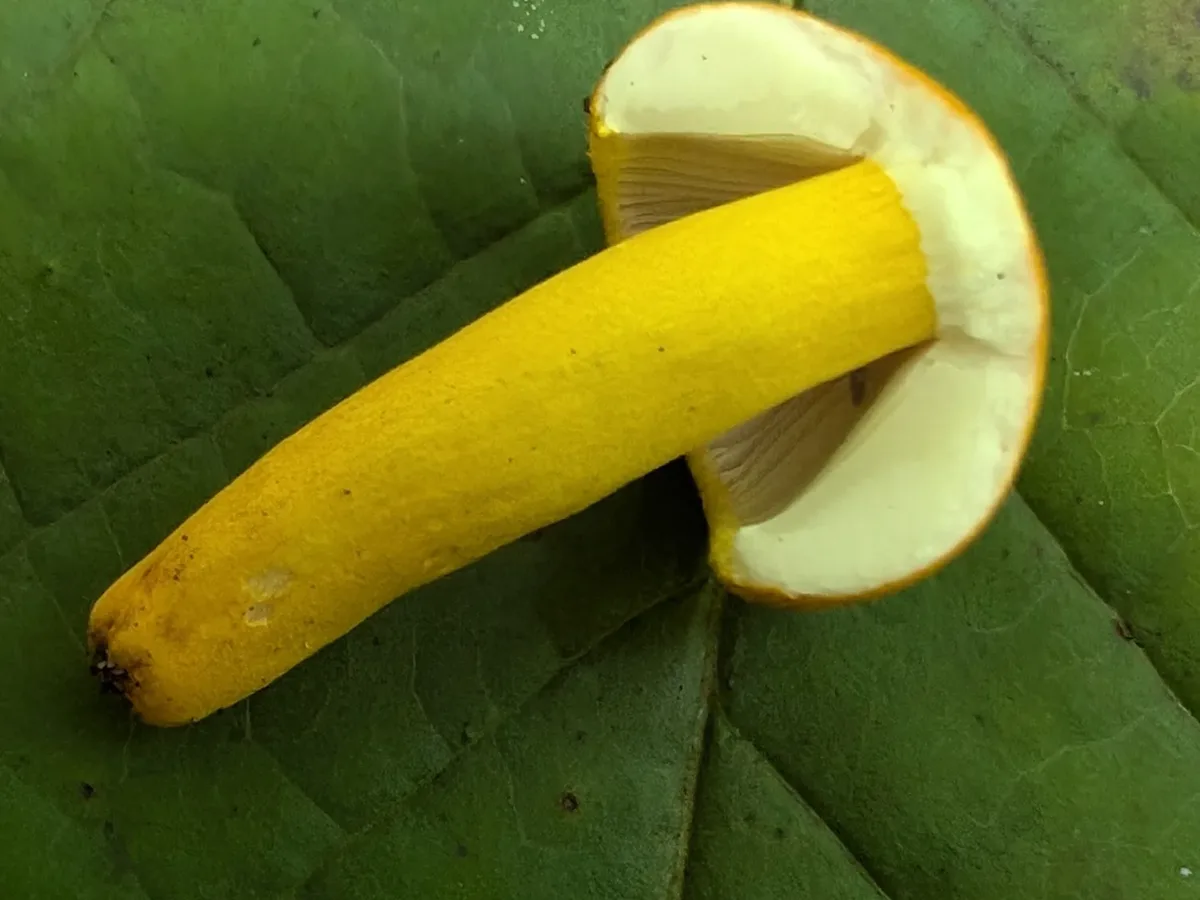
Russula flavida is immediately recognisable by its uniformly bright lemon-yellow to golden-yellow cap, a colour that is consistent across the whole surface from the centre to the margin without the orange tones or yellow gill-edges of Russula aurea.
The cap is 4-10 cm, convex and domed when young, gradually flattening and becoming slightly depressed in the centre at maturity.
The surface is smooth, dry in typical weather and slightly tacky when wet; the cuticle peels readily from roughly the outer half.
Gills
Underneath, the gills are white to cream, moderately crowded, and distinctly brittle: pressed sideways with a fingertip they snap and crumble like chalk, never bending or greasing - this brittleness is the universal hallmark of the genus Russula and one of the most important characters to confirm.
Stem
The stem is white, sometimes with a faint yellowish tinge toward the top, cylindrical and firm in young specimens, becoming spongy and hollow with age, 3-7 cm tall.
There is no ring on the stem and no volva (membranous cup or girdled swelling) at the base under any circumstances - the absence of both is diagnostic for the whole genus.
Flesh
Flesh is white, firm and unchanging when cut or broken: no reddening, no greyening, no blackening.
Smell & taste
The smell is mild or faintly fruity; the taste is mild to pleasant, never acrid or peppery.
Spore print white to pale cream.
Where & when it grows
Habitat
A forest mushroom bound to living trees through ectomycorrhiza.
In its primary East and Southeast Asian range, Russula flavida grows in subtropical to warm-temperate broadleaved and mixed forest - typically beneath Castanopsis, stone oaks (Lithocarpus), evergreen oaks (Quercus), and dipterocarp species in lowland to montane settings.
It favours well-drained but moisture-retaining soils and is most productive in the dappled shade of closed-canopy forest where monsoon rain penetrates the leaf litter steadily.
Historical collections from eastern North America were made in broadleaved-hardwood forest under oaks and chestnuts, suggesting the species or a close relative has a wider distribution than currently documented in Asia.
Because it is mycorrhizal, finding it away from a suitable tree host - in a garden, on a lawn, on wood - should prompt serious doubt about the identification.
When
Fruiting is monsoon-driven in the primary Asian range. The season opens in June once sustained rainfall begins and soil temperatures rise above about 15 °C, and continues through September or October.
The flush typically crests in July-August in lowland subtropical areas and in August-September at higher elevations.
Individual fruit bodies develop quickly - within five to eight days of a soaking rain - but do not persist long in warm, humid conditions.
The species can produce several successive flushes through a single monsoon season if rainfall is intermittent rather than continuous.
How it grows
Solitary or scattered on the forest floor, never in tight clusters and never on decaying wood.
As an ectomycorrhizal partner, Russula flavida exchanges minerals and water for photosynthate with its host tree. Fruiting bodies emerge within the root zone of that tree, so a single productive patch can be revisited across multiple seasons as long as the host is healthy.
New buttons push through the leaf litter rapidly after heavy rain and reach full size within a week.
Fruiting conditions
Monsoon-driven: fruiting requires sustained heavy rainfall and warm soil temperatures (15-26 °C). Ectomycorrhizal with Castanopsis, oak, and Lithocarpus in subtropical and warm-temperate forest. Flush appears 5-10 days after a soaking rain event; multiple flushes possible in a single monsoon season.
Look-alikes
The most critical confusions in East and Southeast Asia are not within the genus Russula but with yellow or yellow-green Amanita species sharing the same forest.
Several Amanita species with yellow or ochre caps grow under the same Castanopsis and oak trees. All Amanita have a membranous volva at the stem base, a ring on the stem (sometimes fragile and evanescent, but present when young), free white gills, and fibrous flesh that does not crumble like chalk.
Russula flavida has NONE of these features: no volva, no ring, brittle gills that snap, and chalky-breaking white flesh.
A second dangerous confusion is with Russula subnigricans, documented in China and Japan as a cause of fatal rhabdomyolysis (skeletal muscle breakdown). R. subnigricans is duller brownish-grey to greyish-white rather than bright yellow, and its flesh slowly reddens when cut - both features immediately distinguish it from R. flavida - but the overlap in habitat and fruiting season means a forager should be aware of it.
Within the edible Russula complex:
- R. aurea (Gilded brittlegill) has yellow-orange gill edges and more orange-tinged cap tones alongside yellow - its gills are never purely white.
- R. claroflava (Yellow swamp brittlegill) is paler lemon-yellow and has flesh and gills that turn grey-to-black on damage - a dramatic and unmistakable colour change absent in R. flavida.
- R. lutea is a smaller, more uniformly saturated yellow species sometimes confused with R. flavida, but also edible and mild.
The deadliest possible confusion. Amanita phalloides and its East Asian relatives carry amatoxins that cause delayed liver failure - the taste is mild and gives no warning during the 6-24-hour silent latency period. All Amanita have a membranous volva (sac or girdled swelling) at the base of the stem, usually a ring (skirt) on the stem, and free gills that are not attached to the stem; the flesh is fibrous and does not crumble like chalk. Russula flavida has NO volva, NO ring, and brittle gills that crumble and snap. Always dig up the full stem and verify the base before eating any yellow or pale-capped forest mushroom.
A deadly East Asian Amanita with a pale yellow to ochre-yellow cap, white gills, and ring - growing in the same broadleaved and mixed forests as Russula flavida. Distinguished from R. flavida by the obvious ring on the stem, the membranous volva at the base, and free (not attached) white gills. It has caused fatal amatoxin poisonings in China and Korea. Never eat a yellow-capped woodland mushroom without first confirming the absence of ring and volva.
A deadly East Asian russula that causes fatal rhabdomyolysis (catastrophic skeletal muscle breakdown). It is dull brownish-white to greyish, NOT bright yellow - a major colour difference from R. flavida - and its flesh slowly reddens when cut and may eventually darken, while R. flavida flesh is white and unchanging. Both species share the same subtropical forest and monsoon fruiting season. If you encounter any russula in East Asia whose flesh reddens when broken, do not eat it.
Russula aurea has a more orange-yellow cap with warm orange tones rather than pure lemon-yellow, and its gills have distinctive yellow edges against a white background - a feature absent in R. flavida, which has uniformly white to cream gills. Also edible and mild; found in Europe and temperate Asia.
A smaller (3-7 cm), more uniformly saturated chrome-yellow to egg-yolk-yellow species, often with a more deeply coloured cap centre; gills tend to be paler or cream-yellow rather than white. Also edible and mild; sometimes confused with R. flavida in the field, but the distinction is low-stakes as both are safe.
Paler lemon-yellow cap; flesh and gills turn grey then black on handling or bruising - a striking colour change entirely absent in R. flavida, whose flesh remains white. Grows under birch in wet or boggy ground; also edible.
In the kitchen
Picking & cleaning
Always extract the full stem by gently rotating and lifting, or by carefully using a knife to expose the very base. This is not an optional courtesy step - it is the single most important safety action.
The absence of a volva (a membranous sac, cup, or girdled swelling at the stem base) confirms you are not holding a deadly Amanita.
Confirm also:
- gills that crumble rather than bend
- white, unchanging flesh
- no ring on the stem
Choose firm young to middle-aged caps; old specimens become waterlogged, soft and larva-ridden. Carry in a breathable basket.
If any feature does not match - particularly any structure at the stem base, any ring on the stem, or gills that do not snap - set the mushroom down and do not eat it.
Cooking
Mild-flavoured and firm-fleshed, Russula flavida holds its texture in the pan without becoming excessively watery.
In Yunnan-style cooking it is stir-fried with garlic, chili, and oil, or added to broth-based soups and hot-pots. In Japanese preparation it may be simmered or lightly grilled.
The neutral, slightly nutty taste makes it a versatile ingredient in mixed-mushroom dishes rather than a standalone centrepiece.
Discard the tough lower portion of the stem if spongy. Always cook fully - no wild russula should be eaten raw.
Good to know
Russula flavida is considered edible and is collected for food in parts of China and Japan, but it warrants a caution classification in the East and Southeast Asian context for two reasons:
- 1The molecular taxonomy of yellow russulas in Asia is incompletely resolved: some collections labelled R. flavida in field guides may represent related but distinct species whose safety is less well established.
- 2More importantly, R. flavida shares its forest habitat with genuinely deadly species - both lethal Amanita (which carry amatoxins causing delayed liver failure with no warning taste) and the rhabdomyolysis-causing Russula subnigricans.
The identification protocol must therefore be executed with full rigour every time:
- extract the complete stem
- confirm the absence of a volva and ring
- confirm brittle crumbling gills
- confirm that the white flesh does not redden when cut
None of these features are shared with the deadly lookalikes.
The amatoxins of Amanita phalloides-group species produce a clinically silent 6-24-hour latency period before liver failure - the mild taste gives zero warning.
Never eat any white-gilled forest mushroom without completing the full identification checklist. As with all wild mushrooms, never eat Russula flavida raw; always cook thoroughly.
A reference guide - never an edibility guarantee. When in doubt, leave it out.